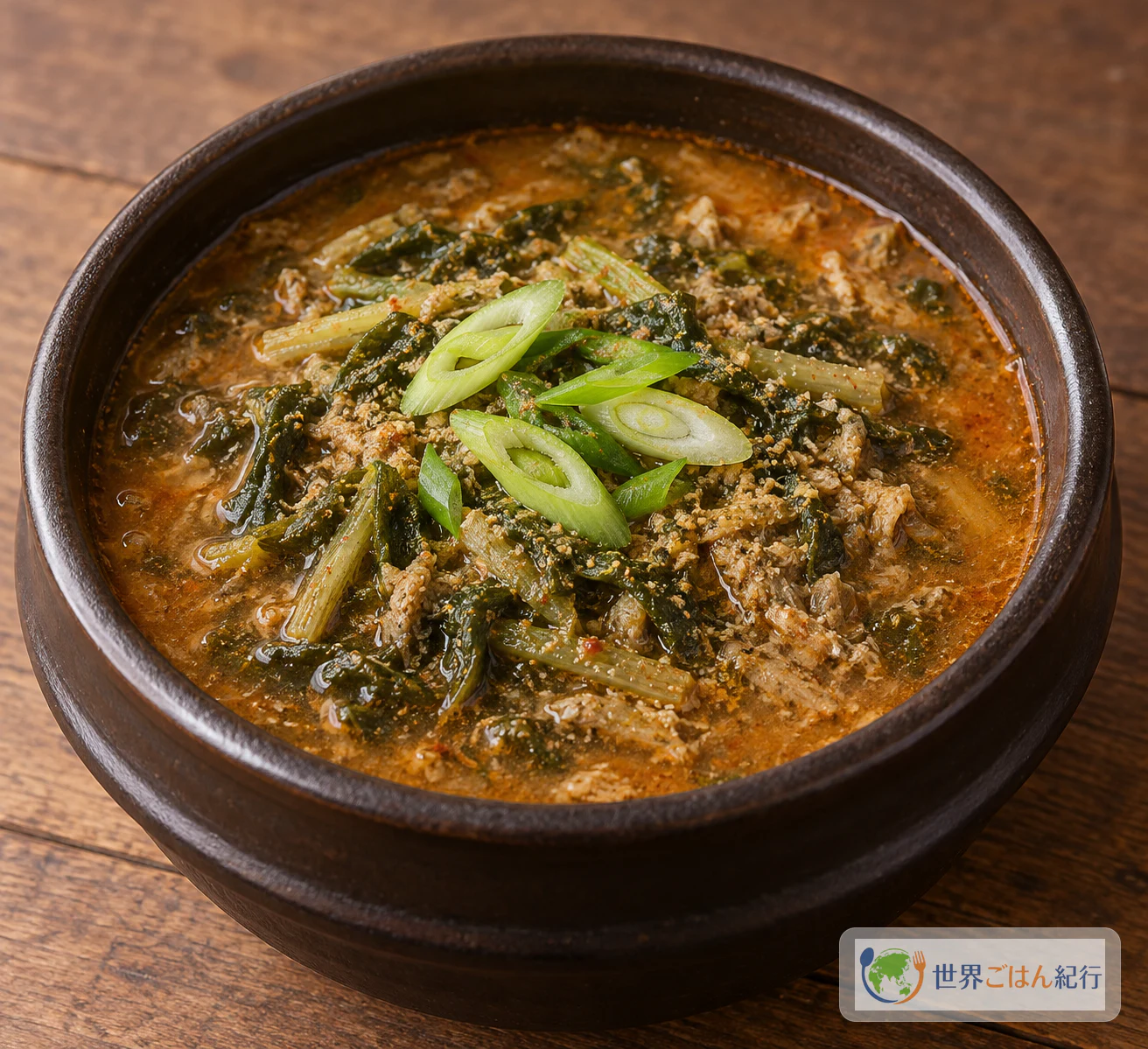
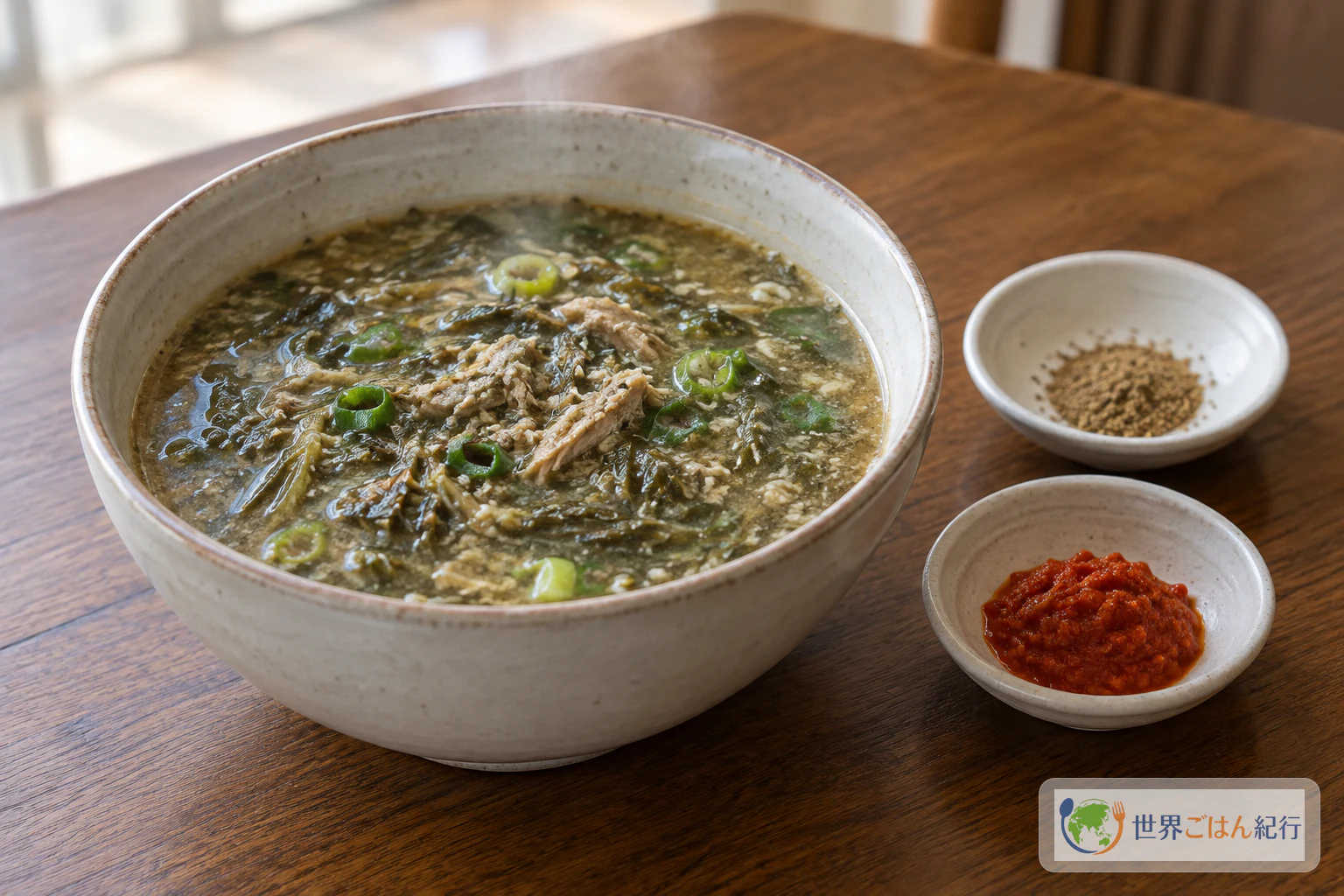
Chueotang: Loach Soup Built from Tender Fish, Dried Greens and Perilla
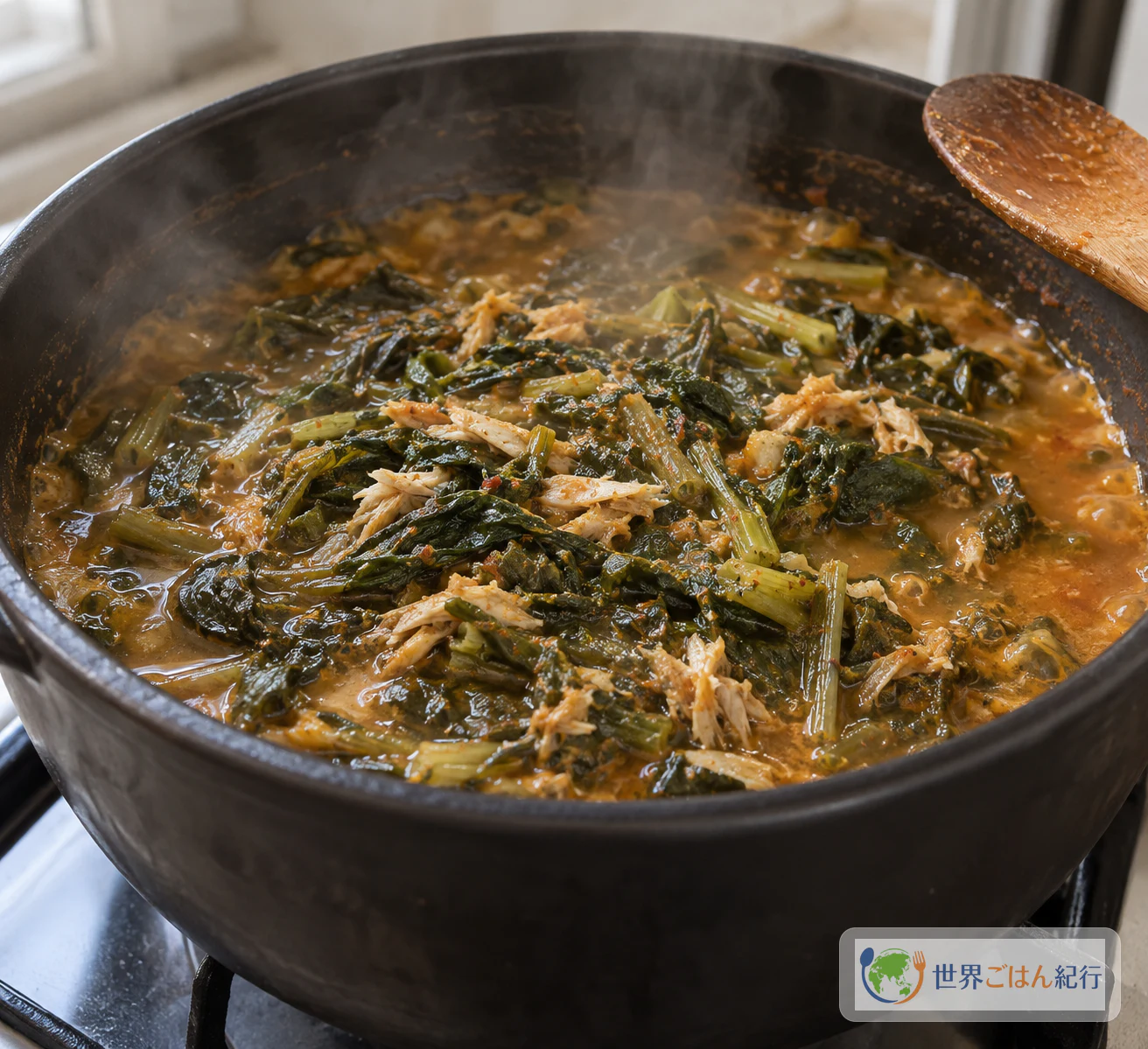
Cook real loach until tender, separate the flesh by rubbing it through a sieve, and simmer it in its own cooking liquid with dried radish greens seasoned with doenjang and gochujang. Keep the sansho powder and chopped chili seasoning at the table, not in the pot.
In Korea, loach (미꾸라지, mikkuraji) was traditionally in season from roughly July through November, and chueotang was eaten as an autumn dish. The Encyclopedia of Korean Culture also notes that since loach farming spread, the soup can be enjoyed throughout the year. It defines chueotang as a seasoned soup made with loach, and records chutang (추탕) as another name for it.
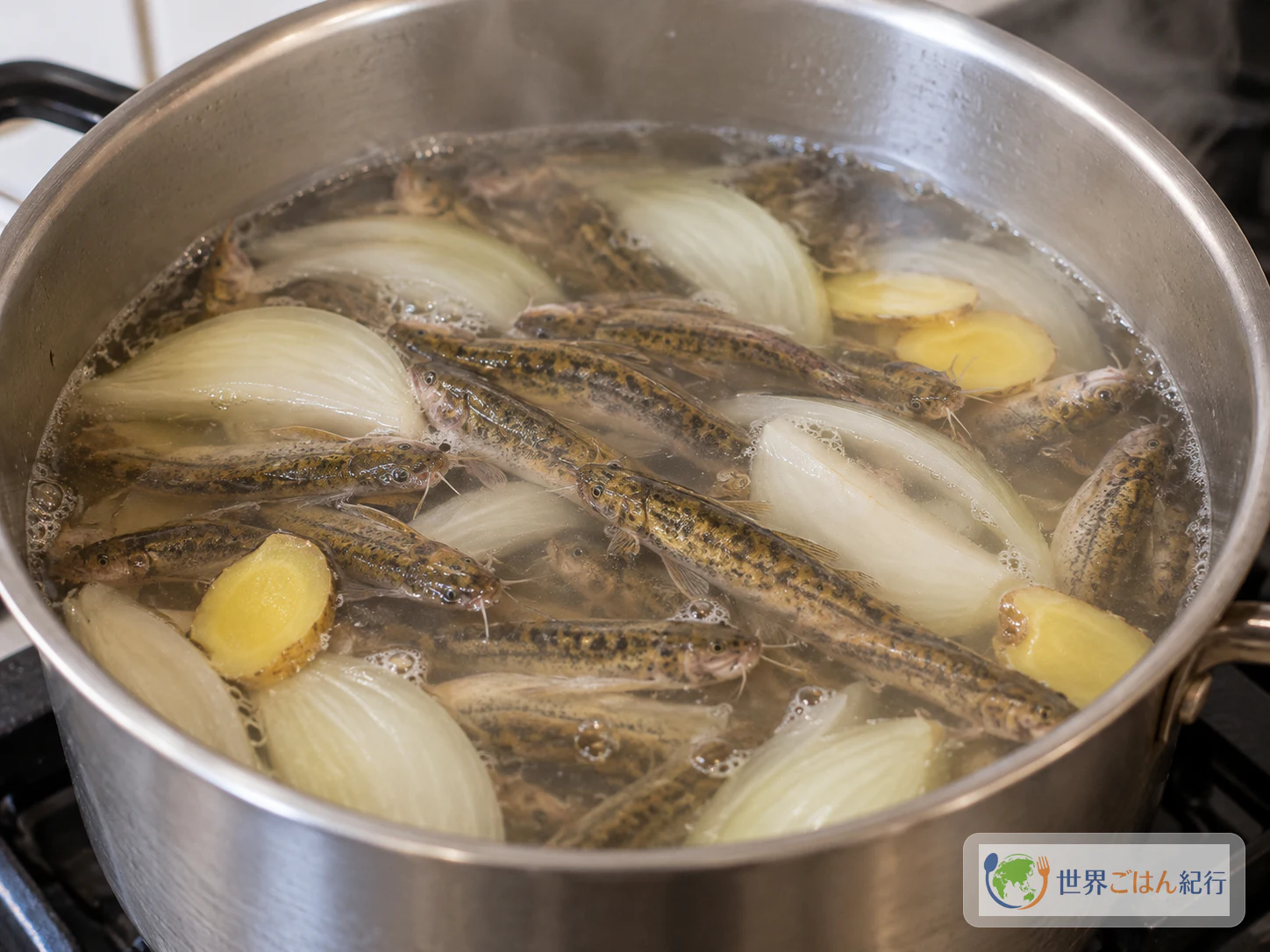
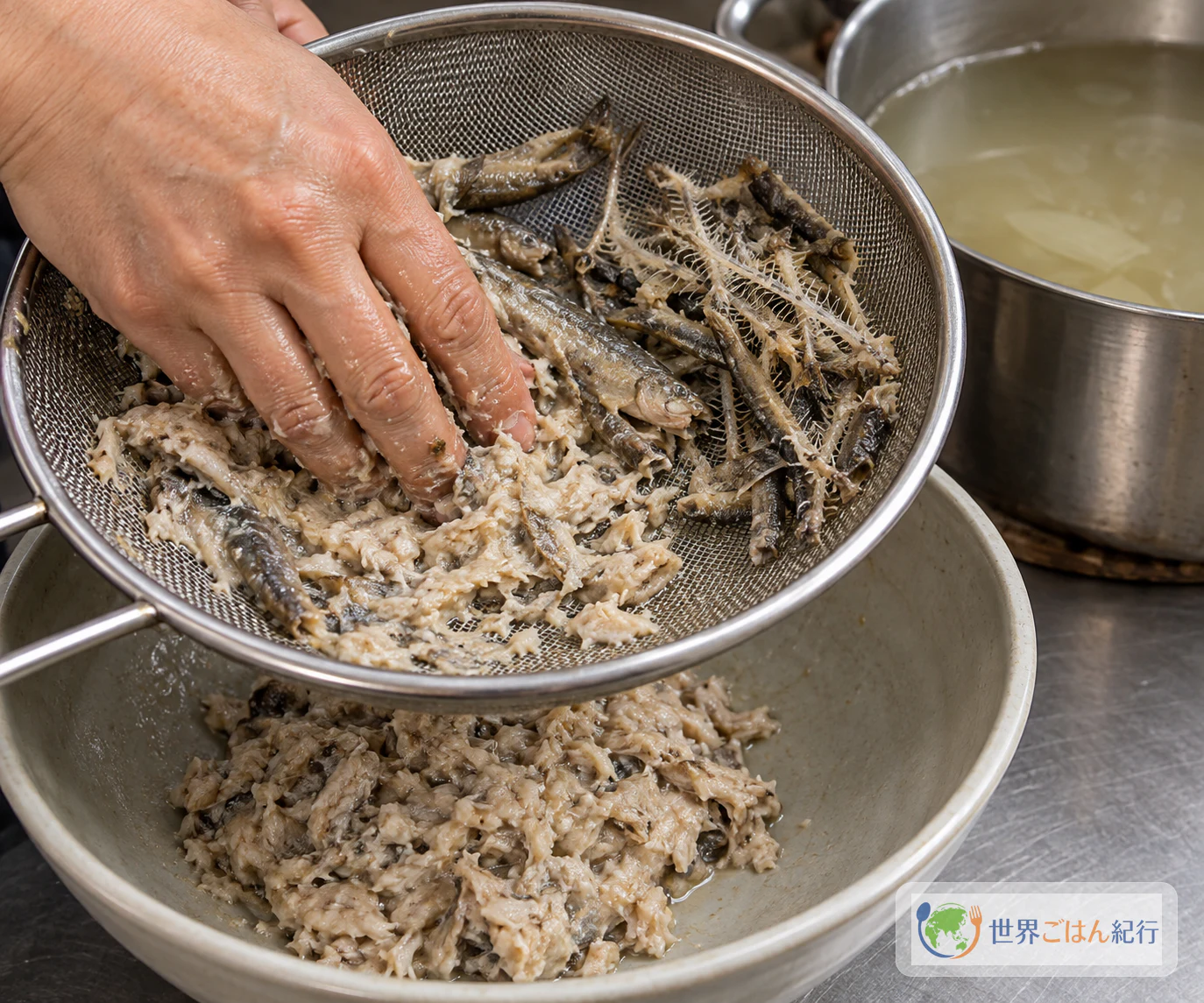
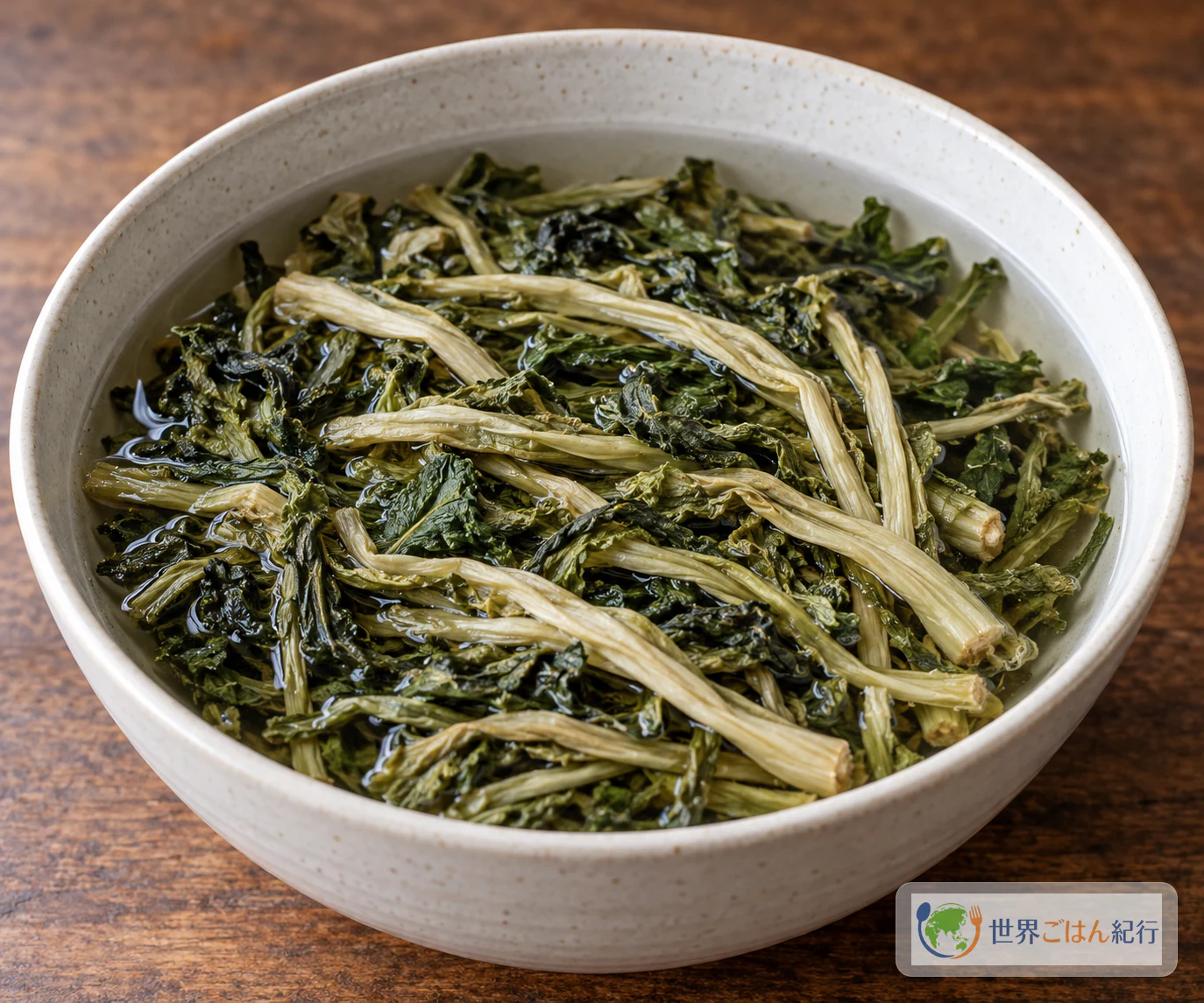
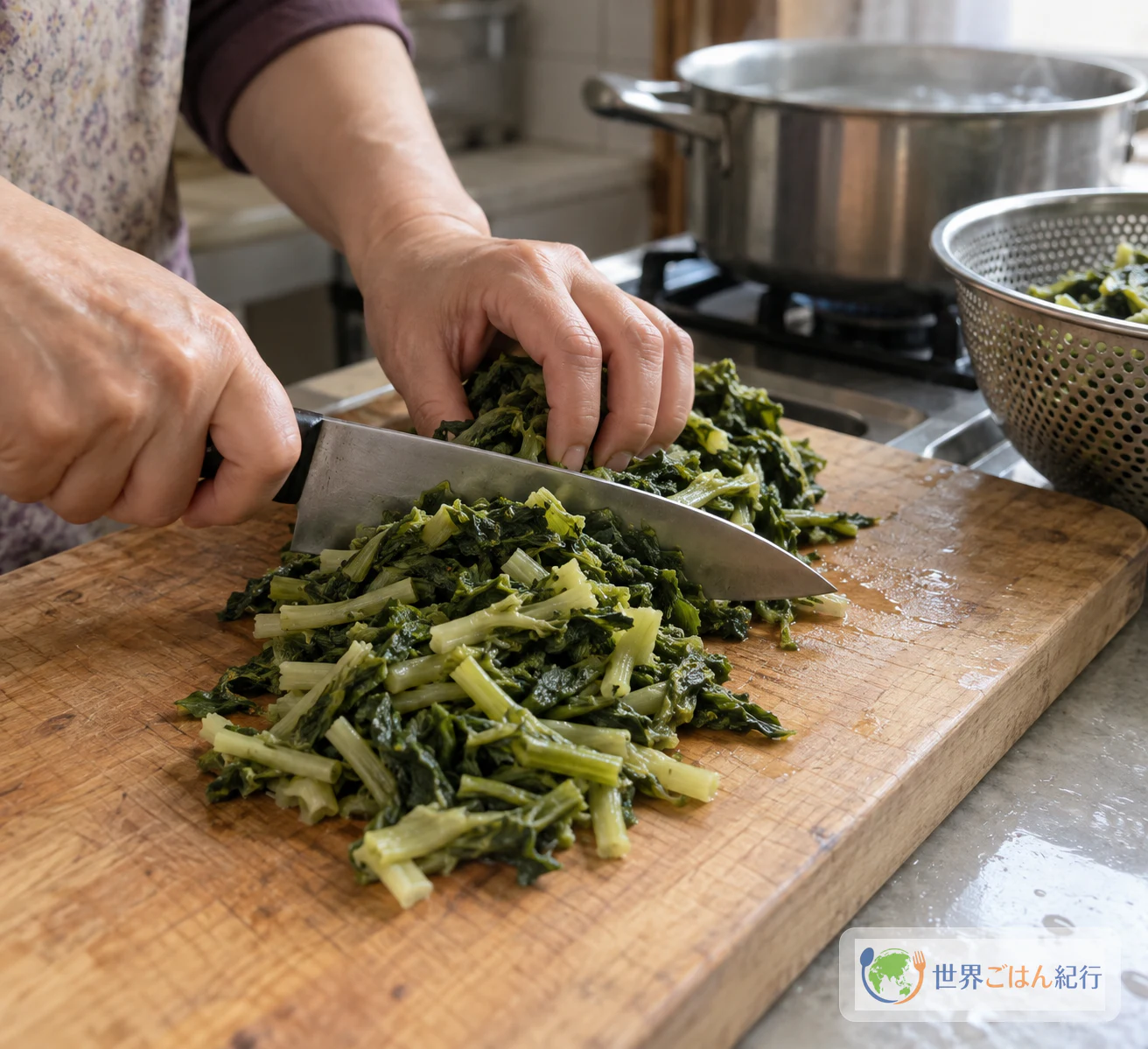
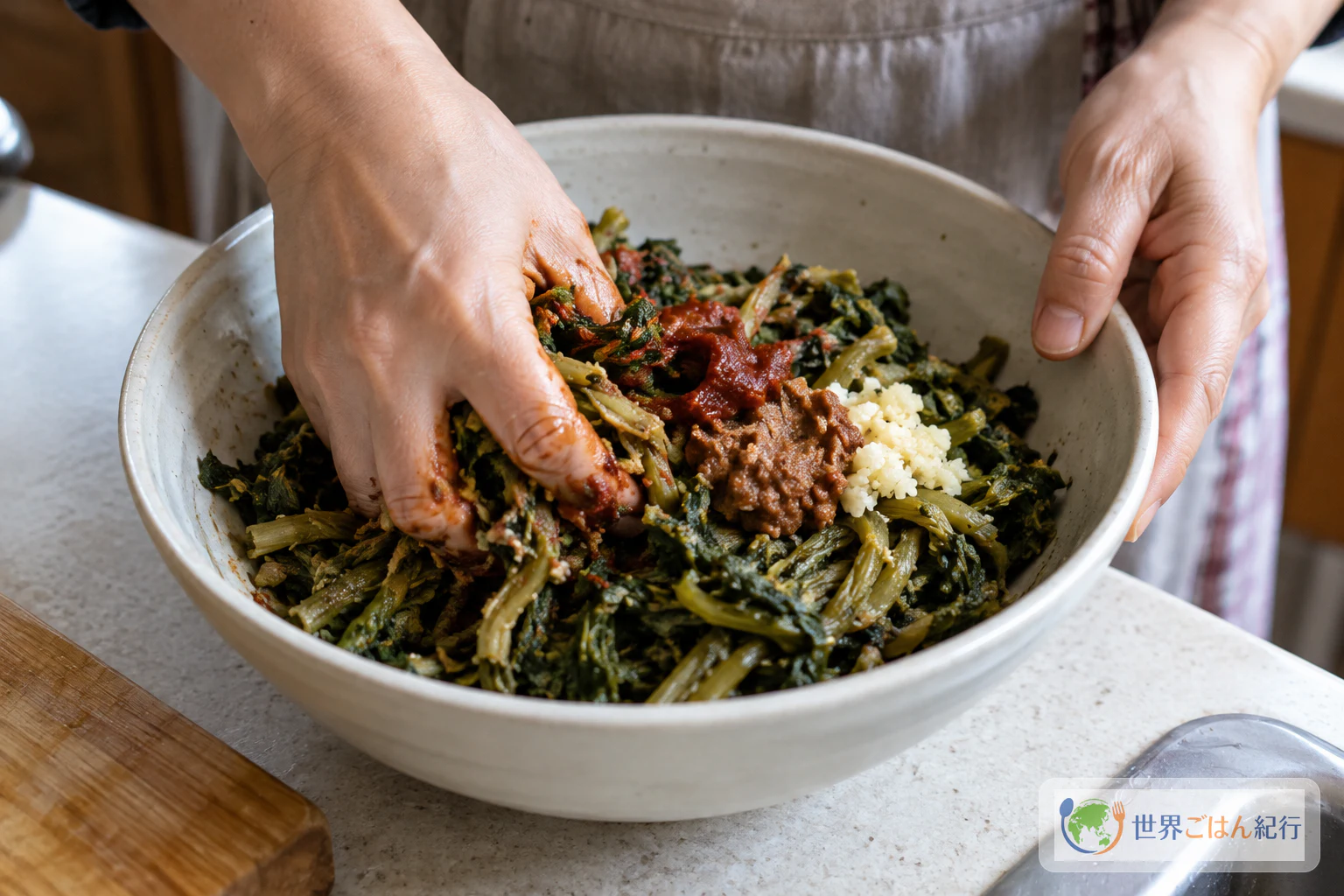
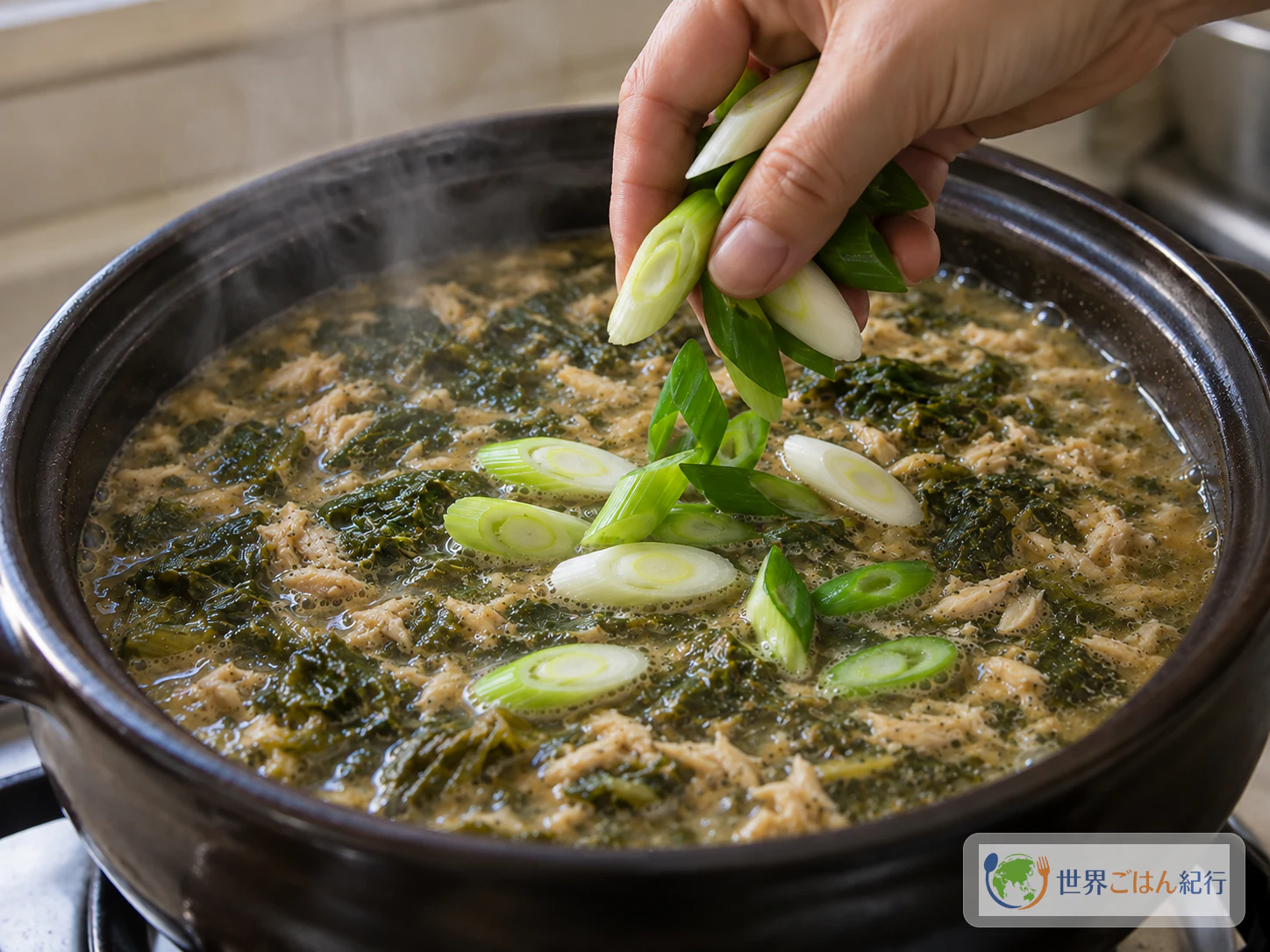
This article follows one written recipe: the chueotang published on Nongsaro, the food and agriculture information portal of Korea's Rural Development Administration (RDA). In this version, loach is simmered in water with onion and ginger until tender, then lifted into a sieve and rubbed by hand so the flesh comes away. That flesh goes back into the fish's own cooking liquid together with dried radish greens (무청시래기, mucheong siraegi) that have been soaked, blanched once, chopped and seasoned with doenjang, gochujang and garlic. Ground perilla seed, more garlic, soup soy sauce, salt, pepper and green onion finish the pot.
The flavor comes entirely from these pieces: the fish cooking liquid, the separated flesh, the seasoned greens and the perilla. No meat stock, seafood stock, oil or extra vegetables are added. The recipe also calls for actual loach; canned mackerel, canned saury or other fish make a different dish, not a substitute for this one.
In Korean the dish is written 추어탕, romanized as chueotang (sometimes chueo-tang). The source recipe does not assign this version to any particular region, so it is presented here simply as one Korean chueotang, not as a named regional style.
How This Version Works: Separating the Flesh, Then Simmering Again
The key step in this recipe is what happens after the first simmer. Once the loach is tender, it goes into a sieve (체), and you rub it by hand so the cooked flesh separates and the bones stay behind. The sieve here is for the fish, not for straining the stock: the cooking liquid stays in the pot, and you only lift out the onion and ginger.
The dried radish greens are prepared separately. They are soaked in water, blanched once in boiling water, chopped finely, and then mixed with doenjang, gochujang and garlic before they enter the soup. The perilla powder is added to the soup later, near the end.
The Encyclopedia of Korean Culture distinguishes this kind of flesh-separated preparation from a Jeolla-region version that uses the loach whole. That version is described further down as a separate style; nothing from it is mixed into this recipe.
Ingredients: One Written Recipe, Amounts as Given
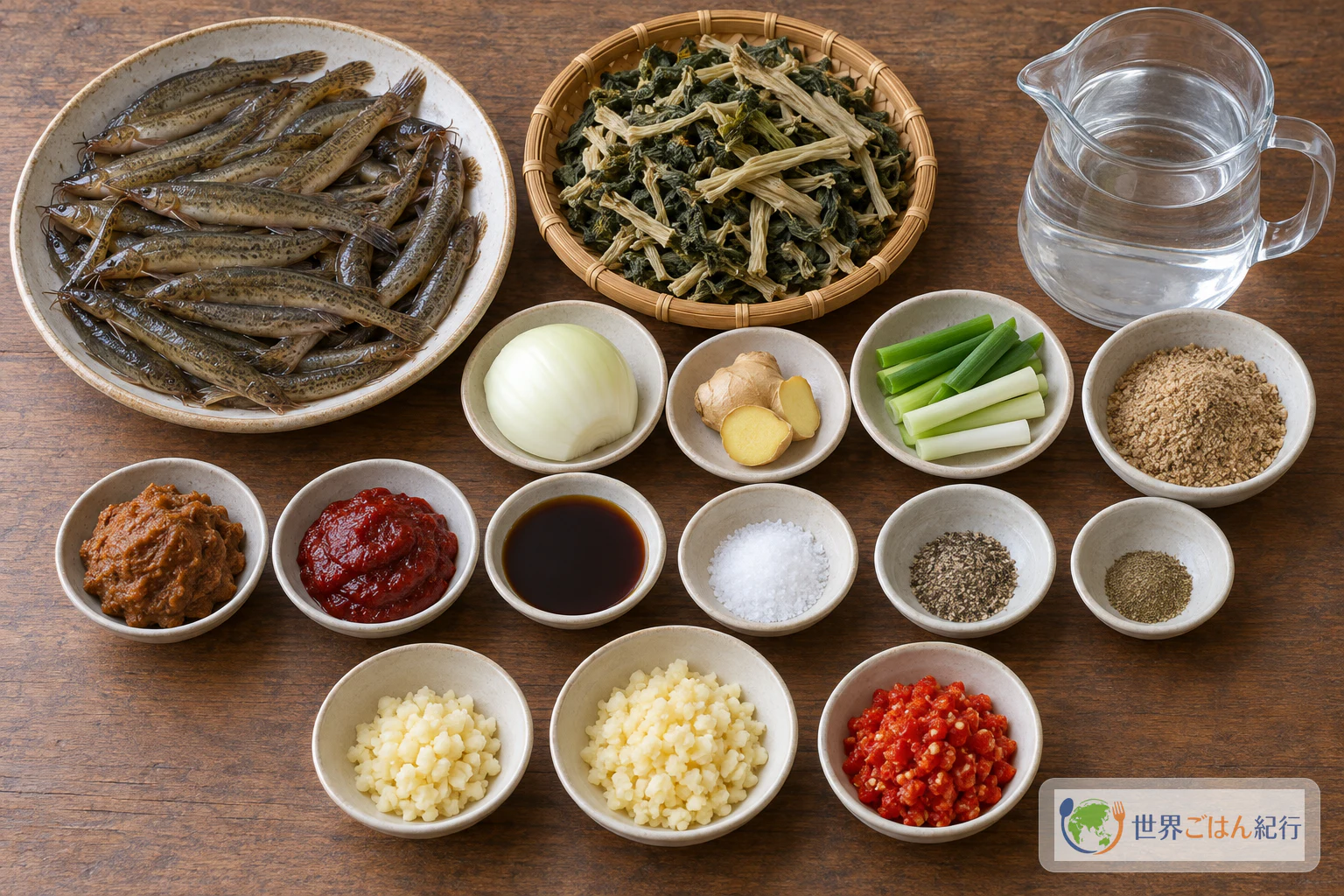
These are the amounts from the RDA recipe, kept in the source's own units. The source does not state a number of servings, so none is given here.
The source measures seasonings in 큰술 (keunsul, Korean tablespoon) and 작은술 (jageunsul, Korean teaspoon). They are kept exactly as written; this recipe does not convert them to any other spoon measure.
The garlic appears twice on purpose: 1 큰술 goes into the greens and 2 큰술 goes into the soup at a later stage. Keep them as two portions so neither stage gets the other's share.
Equipment
- A pot for simmering the loach and finishing the soup
- A sieve (체) and a bowl to set under it
- A second pot of boiling water for blanching the greens
- A bowl for soaking the dried greens
- A mixing bowl for seasoning the greens
- A cutting board and knife
Finding and Choosing the Ingredients
Loach (미꾸라지). Use real loach; this is what defines the dish. Canned mackerel, canned saury or other fish are not equivalent replacements and are not part of this recipe. The source does not say whether the loach should be live or frozen, or how it should be cleaned beforehand, so this recipe does not add a cleaning or killing step. How to handle the loach you buy depends on the product, so check with your supplier.
Dried radish greens (무청시래기). The National Institute of Korean Language defines siraegi (시래기) as the dried leaves and stems of radish, or dried leaves of napa cabbage. The recipe specifically names 무청시래기, which points to radish greens, so look for dried radish leaves and stems; in Japanese shops they may be labelled 干し大根葉 or 乾燥大根葉. Dried cabbage leaves or fresh radish leaves have not been confirmed to give the same result.
Ground perilla seed (들깻가루). Perilla (들깨) is a different plant from sesame. The Encyclopedia of Korean Culture notes that its seeds can be roasted and ground as a seasoning, and RDA's agricultural dictionary maps 들깨 to perilla and to Japanese えごま (egoma), so ground perilla may be sold as egoma powder. The recipe does not specify a roast or grind, and a matching label does not guarantee the same flavor. Sesame powder and sesame oil are different ingredients and are not substitutes here.
Doenjang, gochujang and soup soy sauce (된장, 고추장, 국간장). Look for these under their Korean names. They should not be quietly swapped for Japanese miso, doubanjiang, or Japanese soy sauce; the source names no brand or salt level.
Sansho powder (산초가루). Japanese sansho is a possible thing to look for, but it has not been confirmed to be the same as Korean 산초가루, so treat it as a different product. Because this is a table condiment, you can leave it out if you cannot find the Korean ingredient.
Chopped chili seasoning (고추 다진 양념). The source gives only the name and the amount, 2 큰술, with no ingredients, method or heat level. Keep it as its own side condiment under its Korean name; this recipe does not replace it with gochujang, chojang, chili flakes or a homemade chili sauce.
Method: From Tender Loach to a Finished Bowl
The source gives no times for simmering the loach, soaking the greens or blanching them. Judge each stage by the cue in the recipe: the loach is ready when tender, and the greens are blanched once.
Where Things Go Off Track
Most problems with this recipe come from blending in steps or ingredients from a different version. This table covers the points where it is easiest to drift.
| Condition | What's going on | What to do |
|---|---|---|
| The flesh won't come away in the sieve | The recipe's cue for moving on is a tender fish | Move the loach to the sieve only once it is tender |
| The cooking liquid ended up in the bowl under the sieve | The sieve was used to strain the stock | The sieve is for separating the flesh. Keep the liquid in the pot and lift out only the onion and ginger |
| All the garlic went in at once | The two garlic portions were combined | 1 큰술 belongs in the greens and 2 큰술 in the soup at step 6. Keep them separate next time |
| The pot tastes of sansho or chili | The table condiments were stirred into the pot | Serve them in their own dishes so each person adds them to taste |
| Unsure how much soaked greens to use | The source does not say whether 80 g is the dry or soaked weight | This recipe does not convert it. Note which basis you used so you can adjust next time |
| The soup seems to need more liquid or stock | The recipe adds no water, stock or oil after the first simmer | No top-up is specified, so the recipe gives no guidance on adding liquid. Avoid adding meat or seafood stock, which moves the dish away from this version |
Another Style: Jeolla Chueotang with Whole Loach
The Encyclopedia of Korean Culture describes a Jeolla-region version that uses the loach whole rather than separating the flesh. That version is cooked in a meat broth, with whole tofu, gochujang, ginger, green chili and a little flour. Because its broth, ingredients and method are all different, it is a distinct way of making chueotang, not an adjustment to this recipe. If you want to explore it, treat it as its own dish rather than adding tofu or meat stock to this pot.
Within this recipe, the main room for personal adjustment is at the table: each person adds as much sansho powder and chopped chili seasoning as they like.
Chueotang in Korean Food Culture
The Encyclopedia of Korean Culture defines chueotang as a seasoned soup made with loach, also called chutang. It notes that loach was traditionally in season from about July to November, and that chueotang was used as an autumn seasonal dish. With aquaculture, loach is now available year-round, and so is the soup.
The encyclopedia also records both flesh-separated preparations, like the one followed here, and the whole-loach style of Jeolla. The origin and etymology of the name are not settled by these sources, so this article does not assert them.
Frequently Asked Questions
Can I use canned mackerel or another fish instead of loach?
Not for this recipe. The source specifies actual loach, and canned mackerel, canned saury or other fish make a different dish. If you can't find loach, the honest answer is that this version of chueotang isn't possible without it.
Does the loach have to be live?
The RDA recipe does not specify whether the loach should be live or frozen, or how to clean it before cooking. This recipe therefore adds no such step. Check with your supplier about how to handle the specific product you buy.
Is the 80 g of dried radish greens measured dry or after soaking?
The source doesn't say. Siraegi is defined as dried greens, but the recipe does not state the measuring basis, so this article does not convert it to a soaked weight.
Can I use Japanese miso and soy sauce instead of doenjang and soup soy sauce?
They are not treated as the same ingredients here. Doenjang, gochujang and guk-ganjang (soup soy sauce) are kept under their Korean names; look for them by those names rather than substituting Japanese miso, doubanjiang or Japanese soy sauce.
Can I replace ground perilla with ground sesame?
No. Perilla and sesame are different plants, and sesame powder or sesame oil is not an equivalent swap. Look for ground perilla seed, which may be labelled egoma powder in Japanese shops; the recipe does not specify whether it should be roasted.
Is Japanese sansho the same as Korean 산초가루?
That has not been confirmed. Japanese sansho is a possible thing to look for, but treat it as a different product. Since sansho powder is a table condiment, you can leave it out if you can't find the Korean ingredient.
How do I make the chopped chili seasoning?
The source gives only the name, 고추 다진 양념, and the amount, 2 큰술, without its ingredients or method. This recipe does not invent a blend. Serve a prepared chopped chili seasoning on the side if you have one, and keep it out of the pot.
Should I serve rice or side dishes with it?
The source recipe does not include rice or side dishes, so none are part of this recipe. It specifies only the sansho powder and chopped chili seasoning on the side.
Sources
- Rural Development Administration (RDA), Nongsaro Agri-Food Information System, "추어탕 — 이달의 수산물." The written recipe followed here: actual loach 300 g, the full ingredient list and amounts, the separate seasoning for the dried radish greens, the sieve-and-rub method for separating the flesh, the order of the finishing seasonings, and the condiments served on the side. https://www.nongsaro.go.kr/mfood/kfi/foodMonth/view?cntntsNo=97476&dtlCode=4&menuId=PS03924&tabCode=3
- Academy of Korean Studies, Encyclopedia of Korean Culture (한국민족문화대백과사전), "추어탕." The definition of chueotang as a seasoned loach soup, the other name chutang, the distinction between flesh-separated preparations and the Jeolla whole-loach style, and the seasonal background (loach in season roughly July to November, an autumn dish, now year-round with aquaculture). Not used as the source of the recipe amounts. https://encykorea.aks.ac.kr/Article/E0057883
- National Institute of Korean Language, Basic Korean Dictionary (한국어기초사전), "시래기." The definition of siraegi as dried radish leaves and stems or dried napa cabbage leaves. https://krdict.korean.go.kr/eng/dicSearch/SearchView?ParaWordNo=65993&nation=eng
- Academy of Korean Studies, Encyclopedia of Korean Culture (한국민족문화대백과사전), "들깨." Perilla as a plant whose seeds may be roasted and ground as a seasoning, distinct from sesame. https://encykorea.aks.ac.kr/Article/E0017105
- Rural Development Administration (RDA), Nongsaro agricultural term dictionary, search: "들깨." The mapping of 들깨 to perilla and Japanese えごま (egoma). https://nongsaro.go.kr/portal/ps/psq/psqb/farmTermDicLst.ps?menuId=PS00064&searchWord=%EB%93%A4%EA%B9%A8