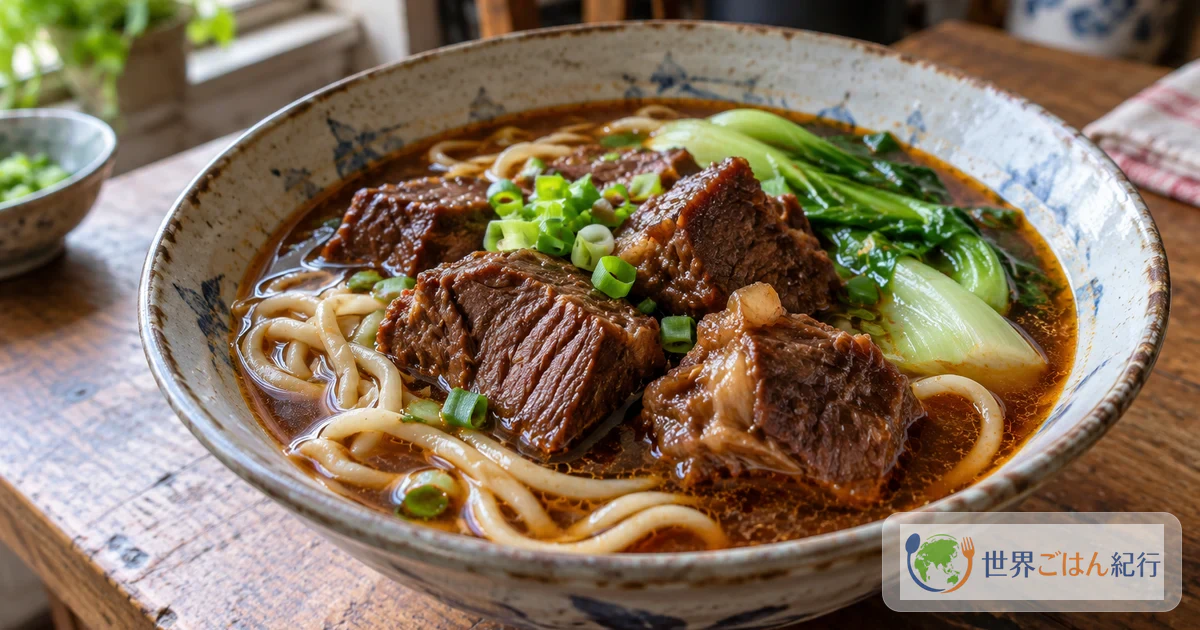
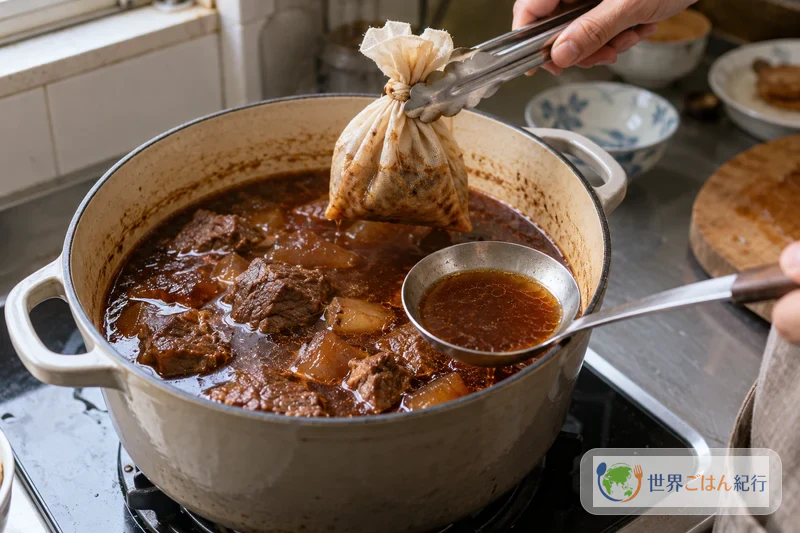
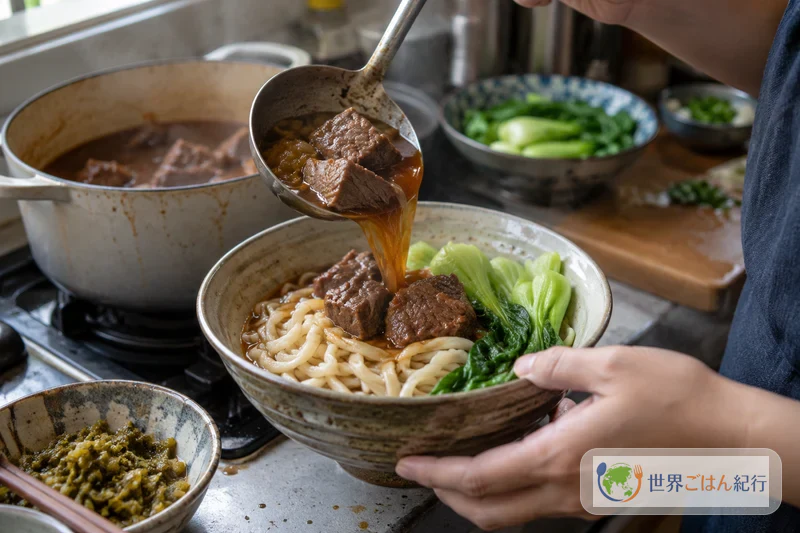
Through the steam, the shop owner ladles reddish-brown broth from a big pot and heaps cubed beef on the noodles. In an alley in Taipei or beside a market in Kaohsiung, there is a shop at lunchtime with a line of people holding bowls. Hong shao beef noodle soup (紅燒牛肉麵, hóngshāo niúròu miàn) is noodles in a broth of beef braised with soy sauce, doubanjiang, and star anise, one of the most beloved noodle dishes in Taiwan.
A bowl born in the military villages
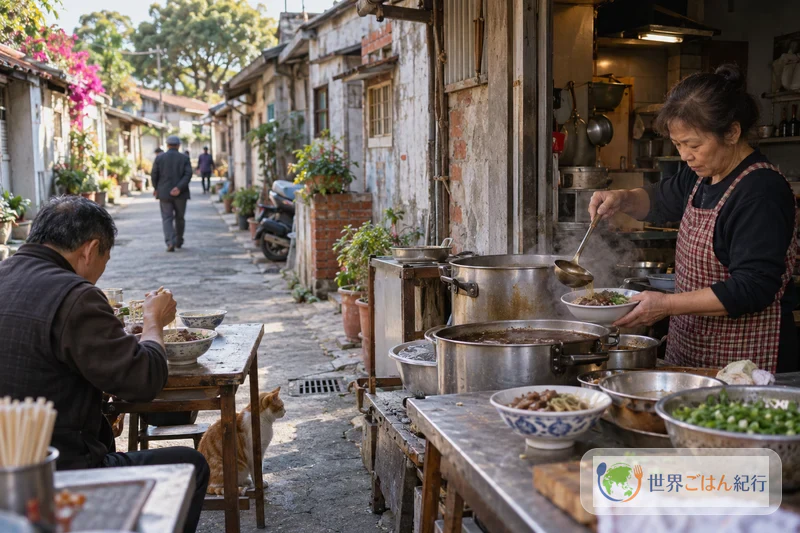
The history of beef noodle soup overlaps with Taiwan's postwar history. Around 1949, many soldiers and their families crossed from the mainland to Taiwan with the Nationalists, who had lost the Chinese Civil War. The settlements where these military families lived are called "juancun" (眷村, military dependents' villages). Encyclopedic explanations in English say that Sichuan-born veterans who settled in Kaohsiung began selling it in the military villages, and that this was the start of Taiwanese beef noodle soup.
Some accounts name a more specific place. A 2018 Taipei Times article introduces the view that Gangshan in Kaohsiung may be the real hometown of beef noodle soup. The person who spread this idea was the essayist Lu Yaodong, who lived long in Taipei. He thought "Sichuan-style" beef noodle soup was a dish born in Taiwan and might have originated in the military villages of Gangshan. The evidence he cited was Gangshan's spicy doubanjiang. This doubanjiang was made and sold by a man named Liu Mingde, who came from the mainland in 1948, and was not an old local product. However, this is one leading theory, and the origin has not been firmly established.
In Taiwan some shops call beef noodle soup "Sichuan beef noodle soup," but because Sichuan Province has a separate beef noodle dish of its own, imagining the authentic place from the name alone causes confusion. Taiwan's hong shao beef noodle soup is best appreciated as a dish that grew up in Taiwan.
In Taiwan, cattle were originally important workers for plowing fields, and there were not a few people who avoided eating beef. For that reason, those who ate beef noodle soup at first are said to have been mainly people who came from the mainland. In time, this bowl spread through the cities and changed the habit of eating beef itself. Today Taipei holds a beef noodle festival every year where cooks compete, and it has become a national dish.
Three styles: red-braised, clear-simmered, and tomato
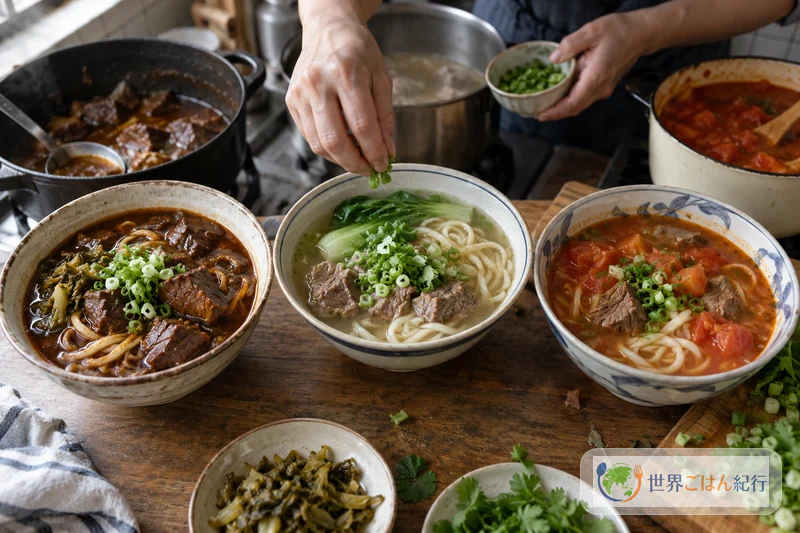
Taiwanese beef noodle soup falls roughly into three styles. The best known is hong shao (紅燒, red-braised), simmered with soy sauce and doubanjiang. The broth is reddish brown, sweet-spicy, and rich. Qing dun (清燉, clear-simmered) is a clear broth without soy sauce, scented with Sichuan peppercorn and white pepper, putting the flavor of the beef itself in front. Fan qie (番茄, tomato) is a sour broth with simmered tomatoes. This recipe makes the red-braised style, but it also uses a little tomato. The acidity of the tomato tightens the sweetness of the soy sauce so the broth does not become too heavy.
The usual toppings are chopped pickled mustard greens (suan cai) and scallions. At the shop counter, small dishes of simmered dried tofu and seaweed are lined up, and you pick what you like to eat with your bowl. At home, even just having pickled mustard greens ready brings the mood of a Taiwanese eatery much closer.
Ingredients (serves 4)
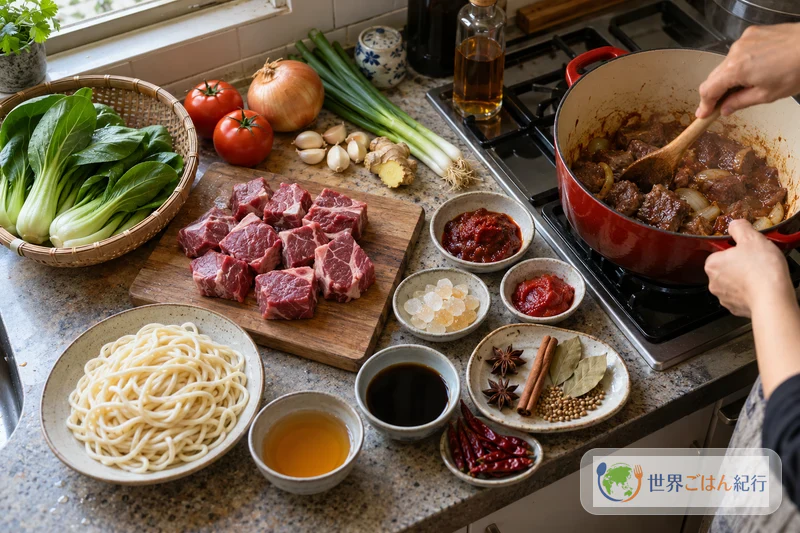
Dark soy sauce is a kind of Chinese soy sauce that is deeply colored with a thick, syrupy sweetness. The deep reddish-brown color of the broth is decided by this one bottle, so getting it from an Asian grocery or online changes the result. If you cannot find it, you can make the dish with a little more regular soy sauce, but the color of the broth will be lighter.
The more sinew beef shank has, the more meltingly tender it becomes when simmered for a long time. Buying it in a whole piece and cutting it into 4 cm cubes yourself gives you a size that is uniform and resists falling apart.
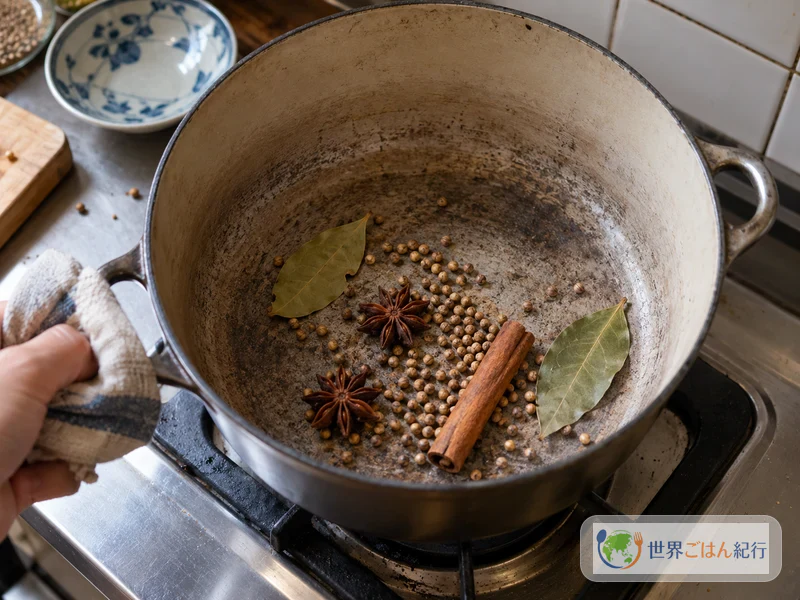
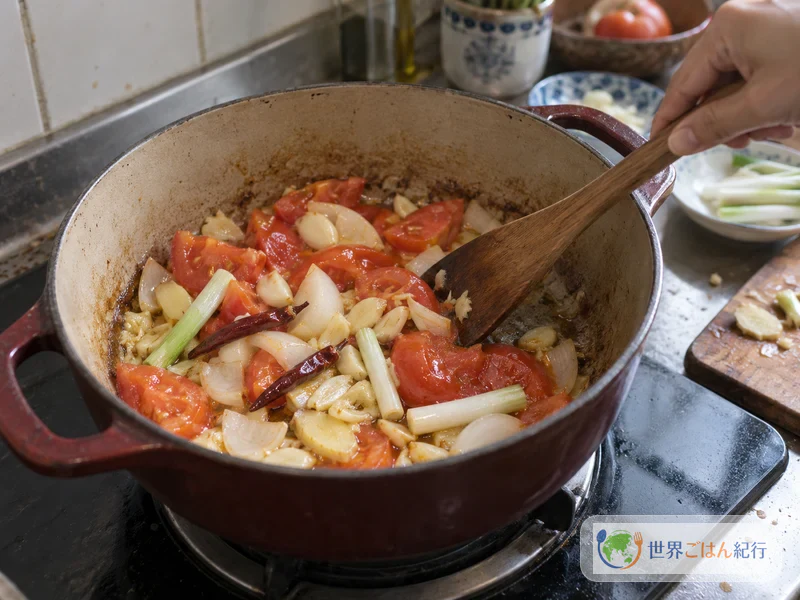
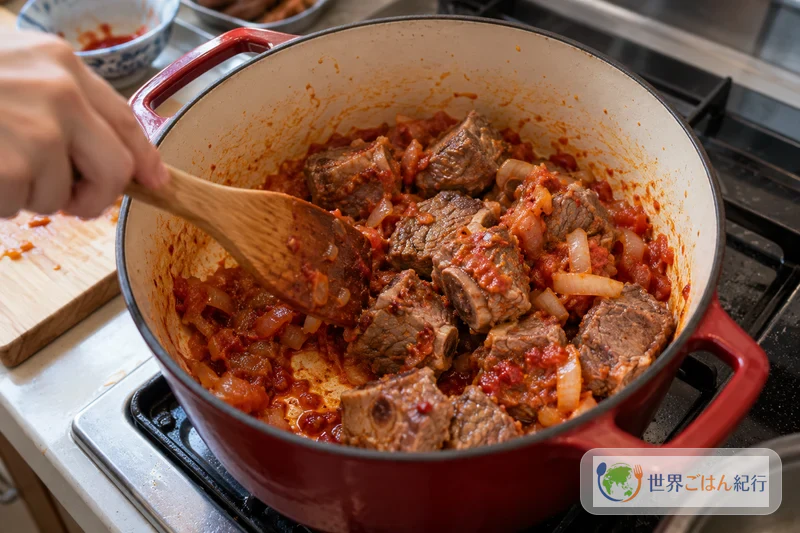
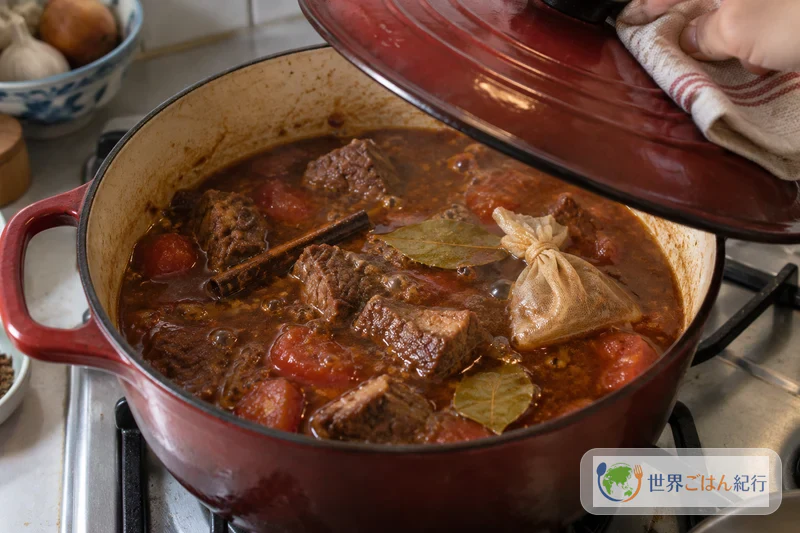
How to make Taiwanese beef noodle soup
Prep takes about 20 minutes, cooking including the braise about 2 hours 30 minutes, and the whole about 2 hours 50 minutes. The 2 hours of braising is nearly hands-off, so prepare the noodles and greens in the meantime.
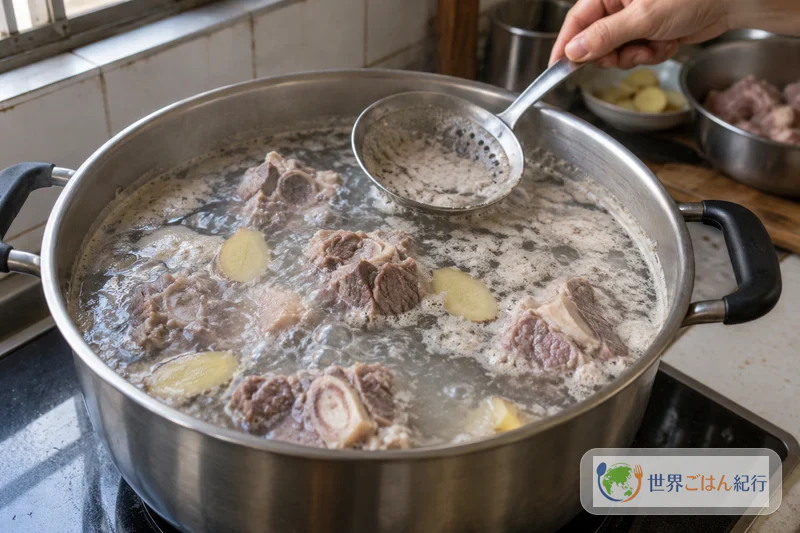
Parboiling and braising involve handling a large amount of boiling water. Hold the pot with both hands, and when draining into a colander, pour it in the sink, turned so that steam does not hit your face. When sautéing the doubanjiang the oil splatters easily, so keep your hands away.
If the broth reduces during the braise and the beef shows above the surface, add boiling water until the ingredients are covered again. Adding cold water stops the simmer and takes time to come back up to temperature.
Serving and how it is eaten in Taiwan
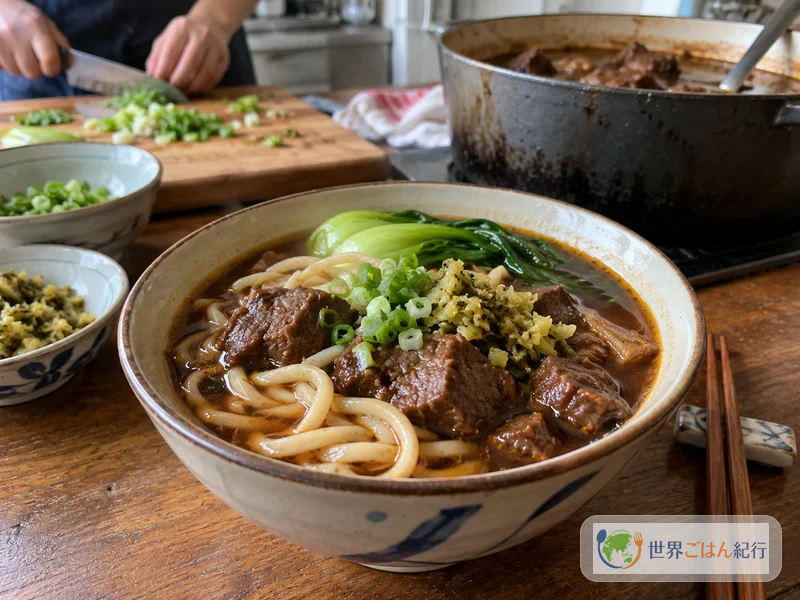
In Taiwanese shops, you first slurp the noodles, bite into the beef in between, and add suan cai partway through to change the flavor as you go. When the sourness and saltiness of the pickled greens come in, the rich broth suddenly lightens. Changing the flavor midway with the condiments on the table is also part of the enjoyment of beef noodle soup. A few drops of chile oil bring up aroma and heat.
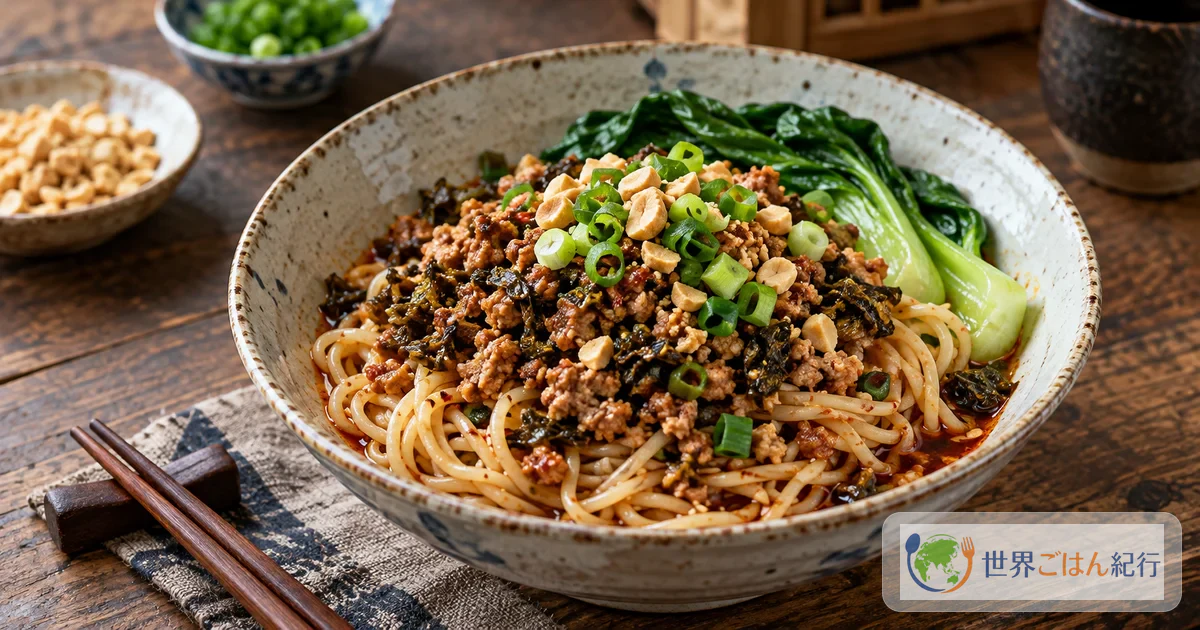
There are dishes pairing beef and noodles in the same bowl in northwest China as well. Compared with Shaanxi's biangbiang noodles, wide hand-pulled noodles dressed with chile and hot oil, you see how much the Taiwanese bowl is a soup dish even though both use wheat noodles. To add one more dish of a Taiwanese eatery, lu rou fan, sweet-savory braised pork over rice, is also recommended.
Variations and making ahead
With a pressure cooker, the braising time can be shortened considerably. Some English-language recipes put similar ingredients in a pressure cooker and cook at high pressure for 40 minutes. In that case, use a little less water in step 5, and after pressure cooking, taste the broth and adjust with water.
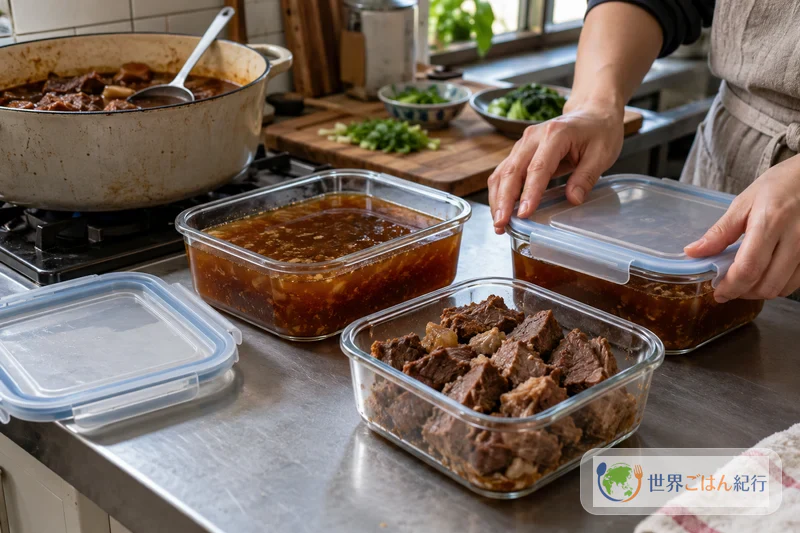
If you want less heat, leave out the red chiles and reduce the doubanjiang to 2 tsp. If you want it hotter, use more chile oil at the finish. If you make the broth ahead, on a weeknight you only need to boil noodles to have a Taiwanese bowl. Let the broth and beef cool a little before refrigerating, and removing the fat that has set white on the surface before reheating gives a cleaner taste.
Frequently asked questions
Is store-bought doubanjiang fine?
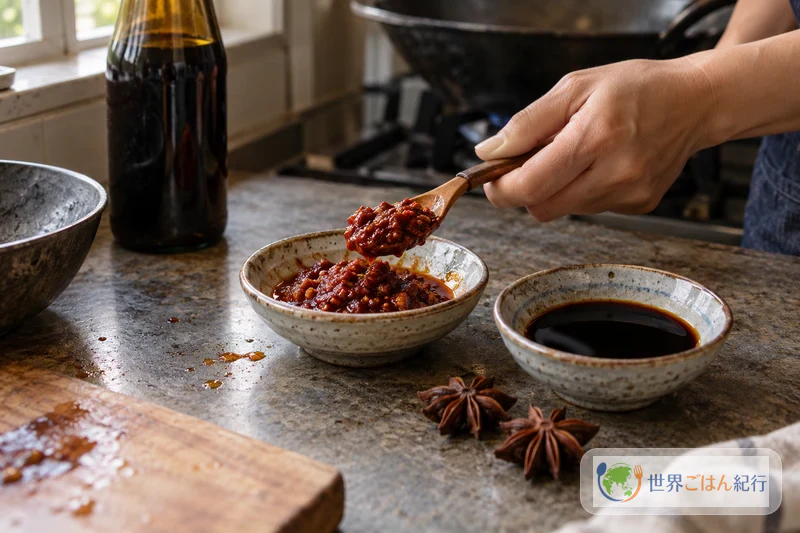
Yes. An ordinary Sichuan-style doubanjiang is enough to make it delicious. The saltiness and heat differ by product, so start with just 1 tbsp and adjust with soy sauce and salt at the final tasting.
Can I make it with cuts other than beef shank?
Chuck and short rib also work. They are fattier than shank, so skimming a bit more of the fat floating on the broth at the end keeps it from being heavy.
What if I do not have Shaoxing wine?
Sake can substitute. You lose the aged aroma of Shaoxing wine, but the broth turns out lighter in taste. If you do not want to use alcohol, replace it with the same amount of water and adjust with soy sauce.
How long can I keep it?
Refrigerate it as soon as it has cooled a little and finish it soon. When reheating, heat it in a pot until the whole thing is thoroughly boiling. Boiling the noodles just before eating keeps them from getting soggy and tastes best.
Sources
- Wikipedia, "Taiwanese beef noodle soup." Accessed and checked: October 22, 2026. https://en.wikipedia.org/wiki/Taiwanese_beef_noodle_soup
- Taipei Times, Steven Crook, "Highways and Byways: Gangshan: the real hometown of beef noodle soup?," published August 24, 2018. Accessed and checked: October 22, 2026. https://taipeitimes.com/News/feat/archives/2018/08/24/2003699078
- Flavour Network, "Taiwanese Beef Noodle Soup." Accessed and checked: October 22, 2026. https://www.flavournetwork.ca/recipe/taiwanese-beef-noodle-soup-recipe/
- Marion's Kitchen, "Taiwanese Beef Noodle Soup." Accessed and checked: October 22, 2026. https://www.marionskitchen.com/?p=21885