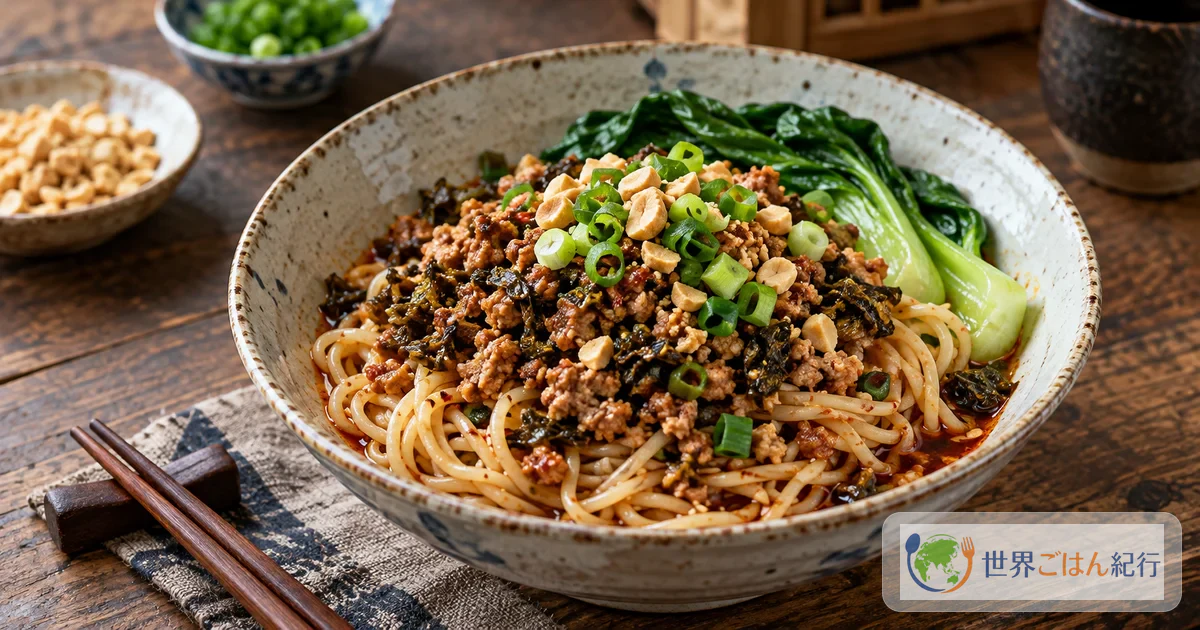
Steam rises from the bowl, a mound of chopped garlic, scallion and chili sits on the noodles, and then hot oil hits it with a sizzle. In that one second, the whole kitchen changes. That is biangbiang noodles.
In Xi'an, in Shaanxi province, these wide noodles are named "biang biang" for the sound they make when slapped against the work surface. The word is written 𰻞𰻞麵 in the local character, and the hot-oil version is also called youpo chemian (油泼扯面). What is hard at home is not a special wok but resting the dough long enough and handling hot oil safely. Get those two right and, even without bread flour, you can pull a thin, chewy, belt-like noodle.
Background: Shaanxi's wheat culture on the table

Biangbiang noodles are the wide noodle that symbolizes the wheat culture of Shaanxi cooking in northwest China. They are not cut thin and even. Instead, a rested, oiled piece of dough is pulled out by hand and lengthened with light slaps against the table. Local descriptions often compare them to a belt, and some shops let you order by the number of noodles you want to eat.
There are several theories about the name, but in practice it helps to remember it as "the sound of noodles being slapped" because it tells you how to make them. This is not a dish of violent slamming: you let gravity stretch a well-rested dough and only tap it on the table at the end to thin it out. In a home kitchen, a work surface wider than a cutting board, or a clean baking sheet, makes it easier.
Even within Chinese cooking, the aroma here is more direct than in mapo tofu (in Japanese). Rather than frying doubanjiang to move flavor into the oil, you open up chili, garlic, Sichuan pepper and scallion with hot oil poured over freshly boiled noodles. It also differs from chow mein (in Japanese), where store-bought noodles are seared against the wok: here the texture comes from resting and pulling the dough yourself. And unlike Buddha's delight (in Japanese), which layers the savor of dried ingredients, this is a dish about the force of flour, oil and aromatics.
Biangbiang noodles in a Xi'an shop look less like neatly twirled pasta and more like a lunch you toss in a deep bowl with black vinegar sauce and aromatic oil. It is not a dish shared from a platter; each person gets a bowl and meets the width of the noodle and the aroma of the oil head-on. At home, rather than forcing every noodle to the same width, it is closer in spirit to pull the rested dough without cutting it and keep the flow going: pour hot oil over chili and garlic as soon as the noodles are boiled. Counter space is the biggest obstacle in a home kitchen, so divide the dough into 4 pieces and pull and boil them one at a time. You can get it to the table without imitating the shop's scale.
Ingredients and amounts for a home kitchen

This makes 2 servings. Because the noodles are pulled thin, the amount of flour looks generous but turns out to be right once eaten. Salt here helps the noodles stretch; it is not the main seasoning.
Because the noodle is made from wheat flour alone, leaving enough time to rest raises your success rate more than forcing more gluten. Even if the dough seems dry for the amount of flour, after kneading and resting 10 minutes the surface settles. If you panic and add water, it turns sticky before it stretches and tears when you peel it off the counter.
Ingredients and tools worth sourcing

What is worth seeking out is not the flour or oil but the Sichuan pepper and cumin that shape the aroma, and a heavy pot that holds hot oil steadily. For black vinegar, Zhenjiang vinegar from a Chinese grocery is enough; only if you cannot find it, approximate it with rice vinegar and a little balsamic.
Buy Sichuan pepper whole rather than ground, and crush it lightly right before use for a brighter aroma. In biangbiang noodles you do not need the strong numbing of mapo tofu; a little behind the oil's aroma is easier to eat.
Cumin is not essential, but it adds a dry aroma reminiscent of lamb skewers and Xi'an-style noodles. Crush it coarsely just before pouring the oil, and it keeps more fragrance than a powder that has sat open for a long time.
The finishing oil can be heated in a small pot, but a thick-walled wok holds its oil temperature better and is also handy for draining after blanching greens or for stir-fries on another day. Thin-walled pots can overheat the oil suddenly, so keep the heat lower.
Method: pull, slap, pour
Clear a wide work surface first. If you have to move bowls or seasonings while pulling the noodles, the dough sticks to your hands and tears. The hot oil step is short, so have the soy sauce, black vinegar, chili, garlic and scallion all ready before boiling the noodles.
Where to draw the line on substitutions
What you should protect in biangbiang noodles is the width of the noodle, the acidity of black vinegar, and the hot oil over chili and garlic. Keep those and you can replace much of the flour and greens.
| What gives it local character | Why it matters | Substitute |
|---|---|---|
| Wide hand-pulled noodle | The surface area that catches oil and vinegar is the heart of the flavor | Soft flour if you have no all-purpose. For store-bought, wide knife-cut-style dried noodles |
| Zhenjiang black vinegar | Its toasty acidity cuts the oil | Rice vinegar alone is thin, so add a little balsamic |
| Lajiao mian (chili flakes) | Not powdery; the aroma opens in oil | Korean chili flakes or coarse chili flakes. Add a little hotter flake if the heat is weak |
| Sichuan peppercorn | Gives dimension to the oil's aroma | If you only have ground, add a little at the end. Japanese sansho smells different, so go lightly |
| Cumin | A dry aroma tied to Xi'an street food | Can be omitted. If used, crush whole seeds coarsely |
If you lack black vinegar, leaning on ponzu turns it into a different dish. Ponzu has a strong citrus and dashi aroma that steals the lead from the chili oil. For acidity use rice vinegar; for depth, stop at a very little balsamic.
Common failures and how to fix them

Biangbiang noodles are decided less by cooking than by waiting for the dough. Most failures come not from the flour ratio but from too little rest, too much added water and oil that is not hot enough.
| What happened | Cause | Fix |
|---|---|---|
| Tears as soon as you pull | Not rested enough, dry surface | Re-oil, wrap again and rest another 20 minutes |
| Noodles thick, like udon | Stopping out of fear before stretching | Hold both ends, let gravity pull it down, and tap lightly on the counter to thin it |
| Noodles stick together while boiling | Too many at once, too little water | Add one at a time, use 2 L or more water, and lift them off the pot bottom with chopsticks |
| Chili tastes powdery | Oil not hot enough, oil not hitting the aromatics | Heat to about 180°C and pour directly onto the chili mound |
| Too heavy | Not enough black vinegar, too much sugar | Add 1 tsp black vinegar and serve with greens or cucumber |
Noodles that tear a little do not ruin the flavor. At home, thin edges and a slightly thicker center actually give a better chew. Rather than fixating on one perfect strand, prioritize not undercooking the noodles and getting the oil hot.
Storage and making ahead

If you make ahead, keep the boiled noodles, sauce, aromatics and greens separate. Once the hot oil has gone on, the aroma fades with time, but the noodles are still good cold thanks to the black vinegar. For a lunch box, cut the oil by 1 tbsp and add more greens.
| What to store | How | Guide |
|---|---|---|
| Rested dough | Keep oiled in a sealed container in the refrigerator | Half a day. Bring to room temperature 30 minutes before using |
| Boiled noodles | Toss with a little oil and refrigerate | Same day. Reheat in boiling water for 10 seconds |
| Sauce | Mix only soy sauce, black vinegar and sugar and refrigerate | 2 days |
| Aromatics | Garlic and scallion are best cut fresh | Pre-chopped loses aroma |
Refrigerated dough turns firm, so do not pull it as soon as you take it out. Wait until the surface oil works in and the dough relaxes a little, and it will tear less.
Menu ideas and how to eat it
One bowl of biangbiang noodles is a meal, but oil and wheat are strong, so a side with acidity or moisture keeps it enjoyable to the end. A cucumber dressed in black vinegar, salted daikon, cold tomato or a light seaweed soup all work well.
When eating, wait only 10 seconds after pouring the oil, then lift the black vinegar sauce from the bottom of the bowl up through the noodles. Wait too long and the chili absorbs the oil and turns heavy; mix too much and the edges of the wide noodles break. Put black vinegar on the table, and adding about 1 tsp for the last few bites keeps the oil's aroma while lightening the finish.
On days when you cannot spare time to rest hand-made dough, escape to lo mein (in Japanese), where store-bought noodles soak up the sauce, and it becomes a feasible weeknight dinner. Comparing it with lagman (in Japanese), which builds aroma differently, laksa (in Japanese), eaten with coconut and soup, and the sweet-and-sour stir-fried pad thai (in Japanese) also helps show what is distinctive here. These are not noodles wrapped in soup; they are dry noodles that raise aromatics with hot oil.
To share the heat within a family, vary the chili and Sichuan pepper bowl by bowl. For children or anyone who dislikes heat, use 1/2 tsp chili, toss the noodles with just the black vinegar and soy sauce first, and let people add chili oil at the table so everyone can share the same noodles.
FAQ
Will it really stretch with only soft flour?
Yes. Adding bread flour gives more chew, but if under-kneaded the dough springs back harder. Start with soft flour alone and rest it at least 45 minutes; it is easier to handle.
Can I substitute store-bought kishimen or fettuccine?
You can, but the springiness will not be that of biangbiang noodles. If you must use store-bought, pick wide knife-cut-style dried noodles or flat noodles and make only the hot-oil sauce with this formula to get closer.
Can I make it with less oil?
Down to half works. But if the oil does not hit the chili and garlic enough, a powdery taste remains. If you cut the oil, use a smaller bowl and pile the aromatics high in the center before pouring.
What meat goes well?
Lamb, thin-sliced beef or ground pork. Lamb pairs best with cumin, but at home thin-sliced beef stir-fried with salt, cumin and a little soy sauce is easy to top. When adding meat, reduce the salt in the sauce to balance the total.
Are there allergy concerns?
This dish uses wheat. Many soy sauces also contain wheat, so avoid it if you have a wheat allergy. If you use sesame oil, also watch for sesame allergy.