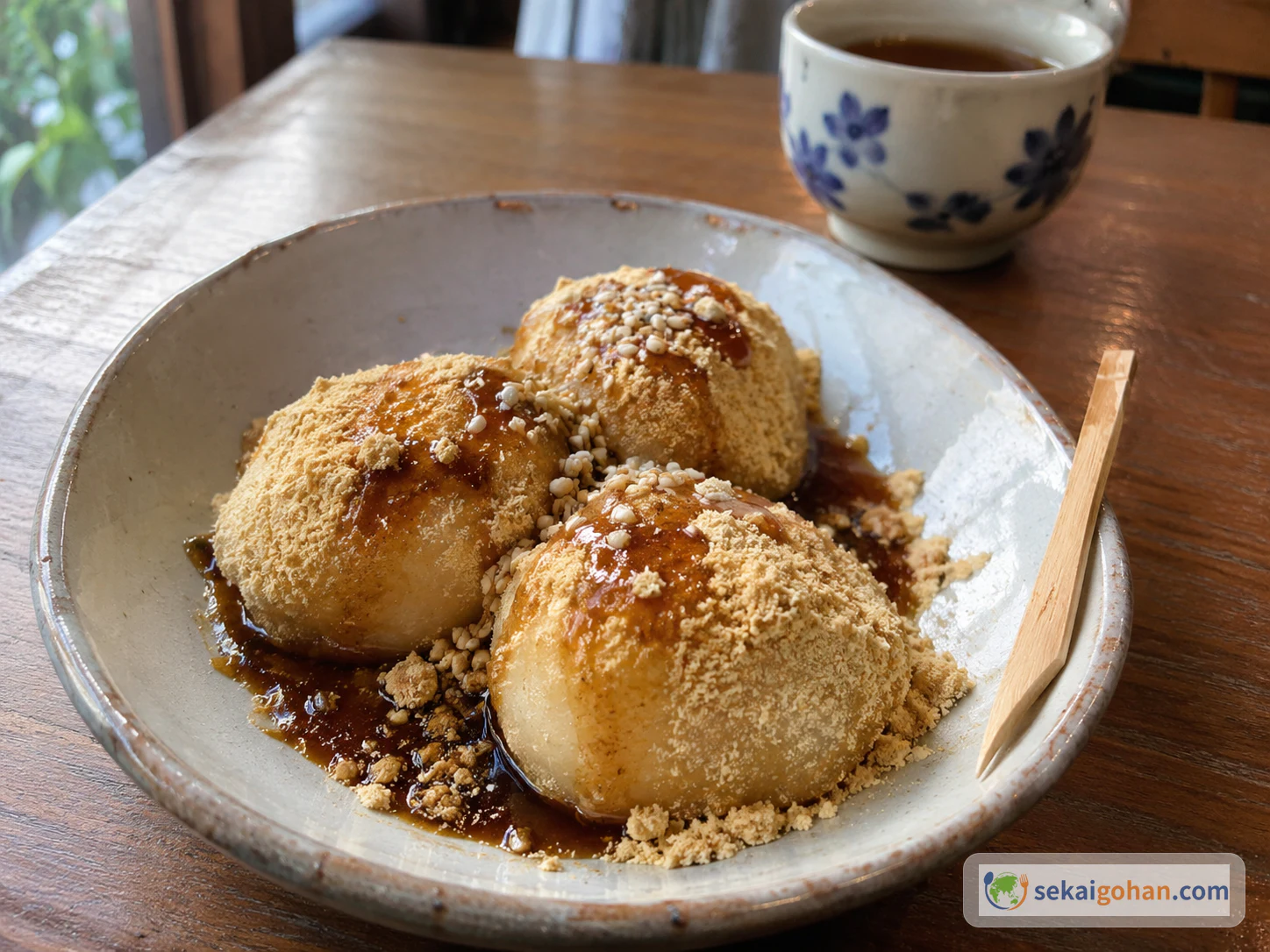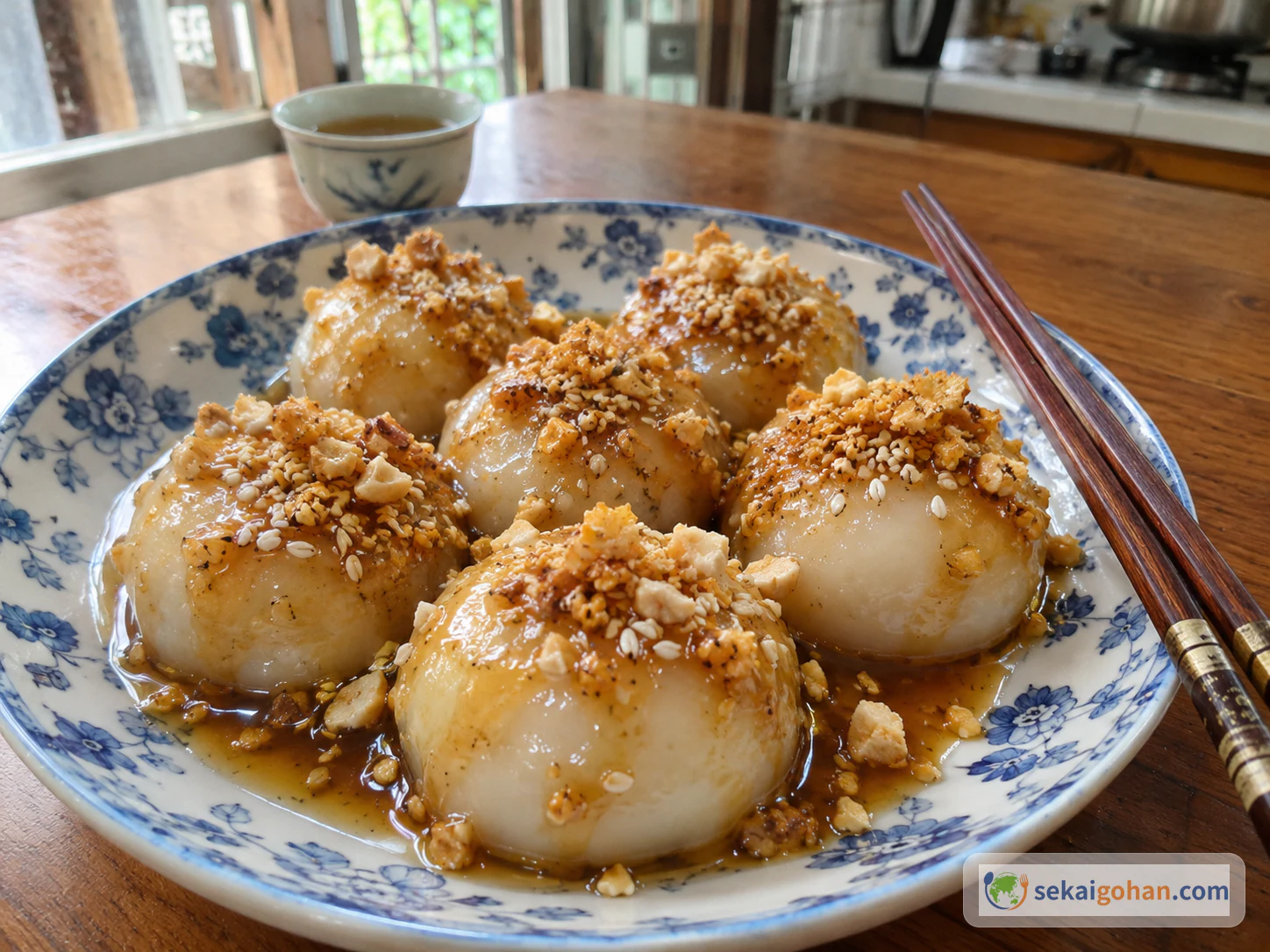
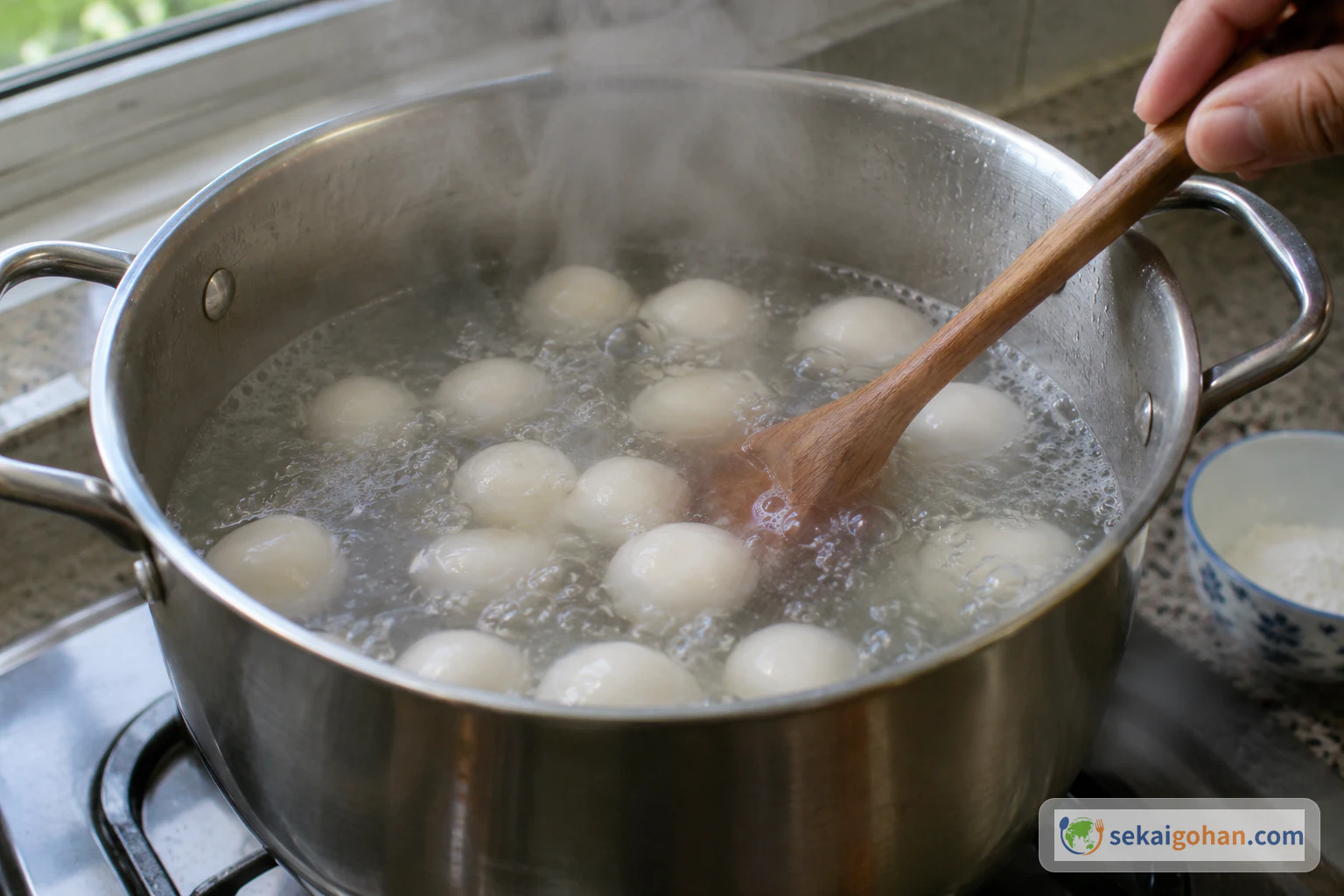
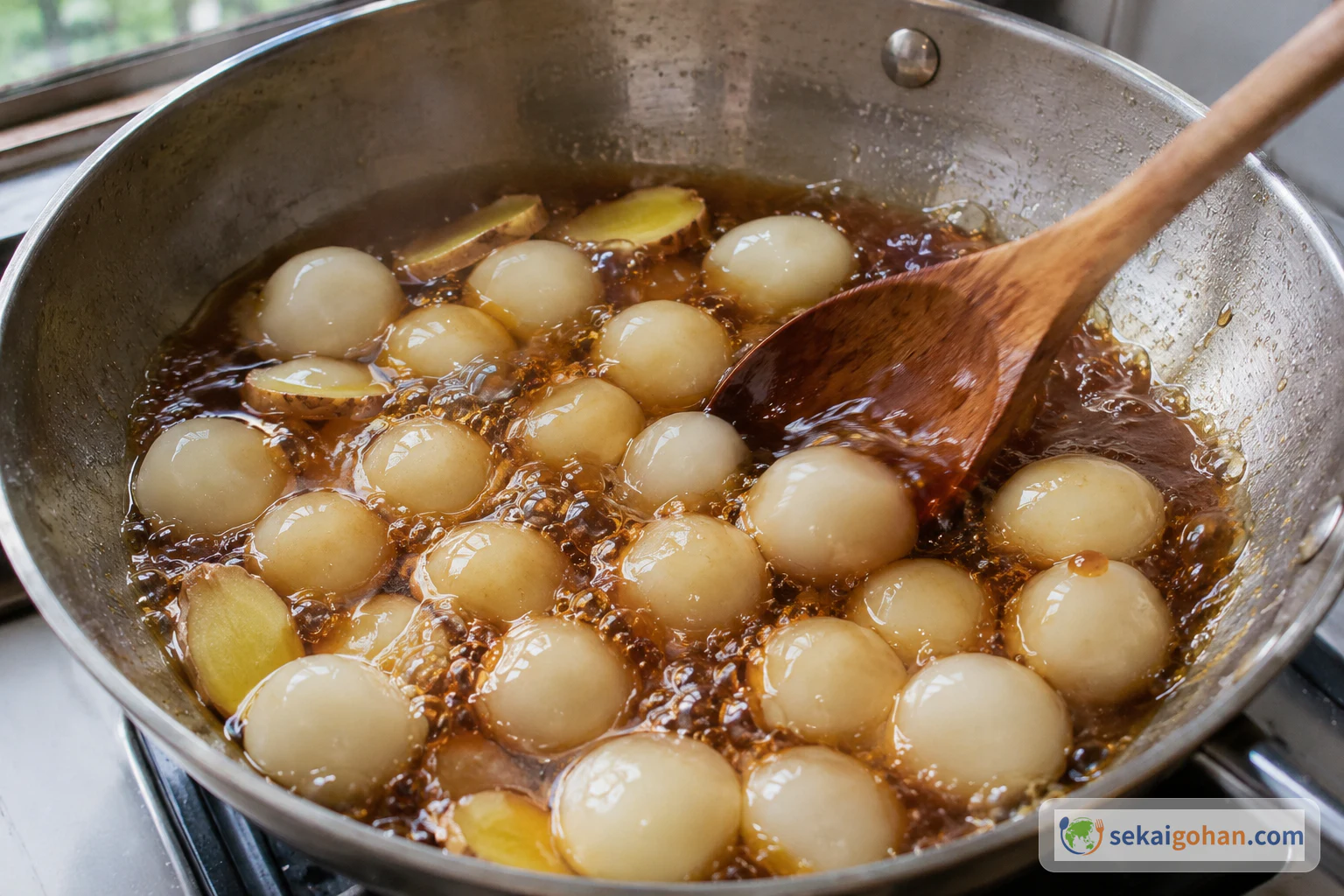
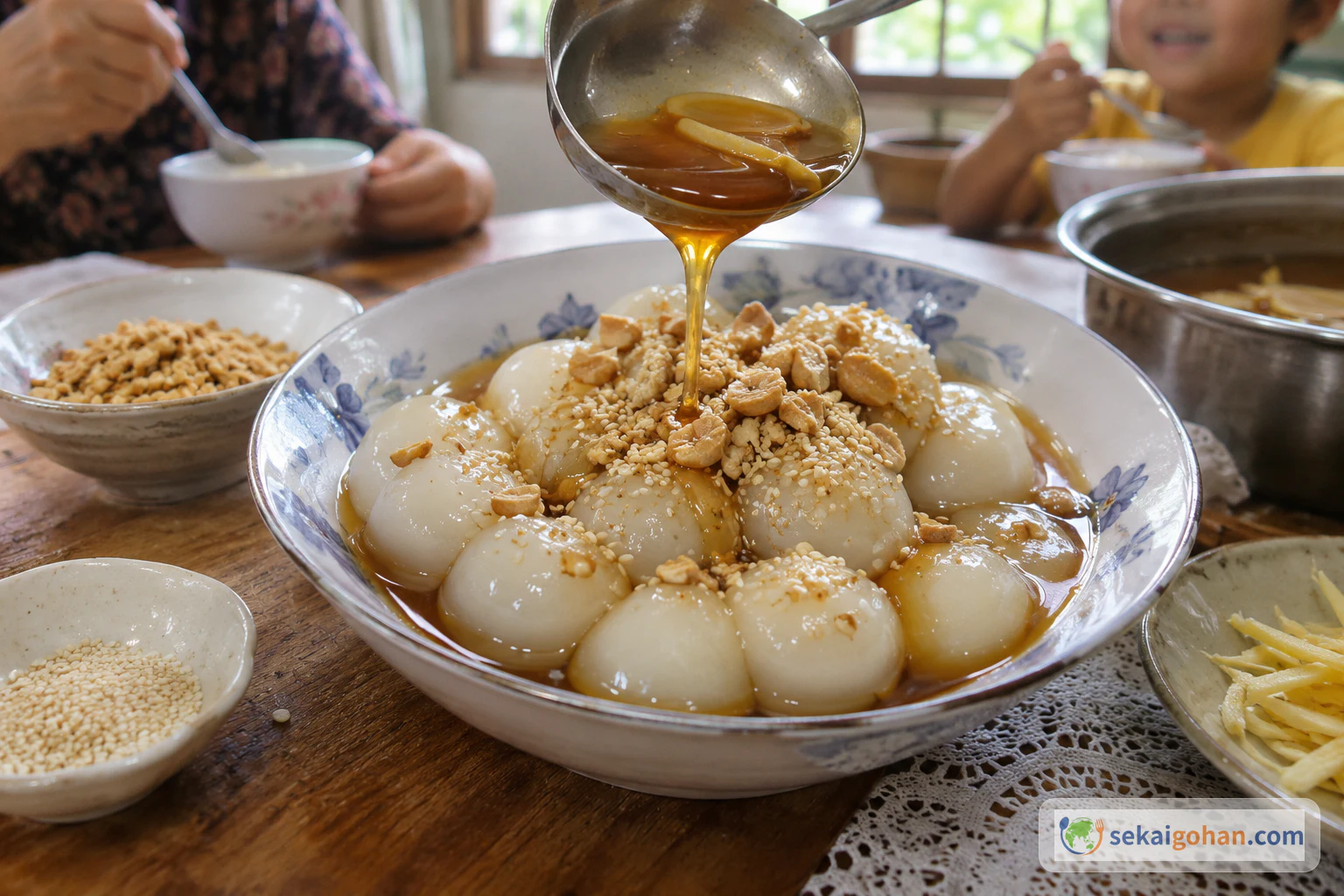
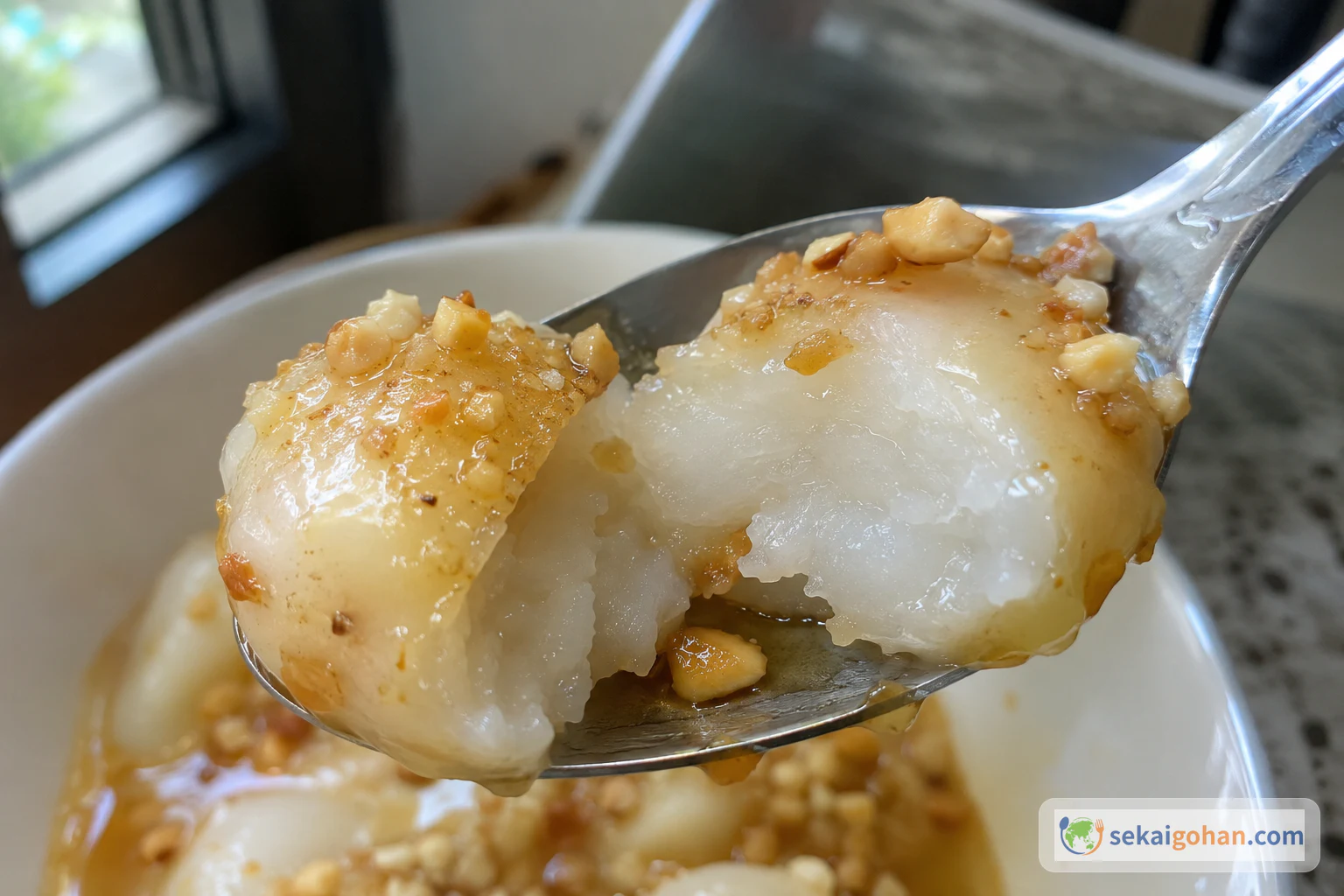
Drop the small white balls into boiling water and stir right away. A moment later they rise one by one and bob at the surface. From there they go into a pan of dark amber syrup that smells of ginger, where they turn slowly until every side is glossy. Then come crushed toasted peanuts and sesame, and they stay on because the syrup holds them. Tong bat lat is a Cantonese sweet from Guangdong, and it is strongly tied to the town of Dongkeng in Dongguan. Each bite is soft, chewy plain rice dough, then the deep sweetness of brown sugar with a little ginger heat, then the crunch of roasted nuts.
The Sweet That Will Not Let Go of Its Sugar
The name says how the dish should behave. Tong bat lat means "sugar that won't come off": you can shake the ball and the syrup and peanuts still cling to it. People take that as a picture of sweetness and happiness that last. In Cantonese it is said tong4 bat1 lat1, in Mandarin táng bù shuǎi, and in Guangdong it also goes by the name ruyi guo (如意果). It is a classic Cantonese dessert.
糖不甩 is written Tong bat lat, Tong but lut or Tang bu shuai, depending on whether it follows Cantonese or Mandarin. Search all three when you look for slab sugar or for photos of how the dish is made locally.
Dongkeng and the Dongguan heritage list
Dongguan lists tong bat lat on its municipal register of intangible cultural heritage as a traditional craft. It was added in the second batch, in 2010, with Dongkeng town as its home, and Huang Ruizhu was named its keeper in 2017. In Dongkeng the balls are cooked first, then simmered in hot syrup in a wok, and eaten with crushed fried peanuts or with shredded fried egg. The town also makes a pumpkin version with the same idea.
Where the dish began is not settled, and Dongkeng's best-known explanations are stories. In one, opium addiction was spreading in 1839. The immortal Lü Dongbin hid a cure inside glutinous rice balls, cooked them in syrup and sold them in Dongkeng, and that is how the name spread. Another story links the sweet to a man named Ding Renchang in 1883. People tell both stories, but they are told as legend, not as established history.
In a Dongkeng custom handed down by word of mouth, a matchmaker visits the bride's family and waits to see what they serve. A bowl of tong bat lat means yes, because the pair will stick like the sugar. Sweet beancurd-skin soup with beaten egg stirred in means the answer is no.
Ingredients
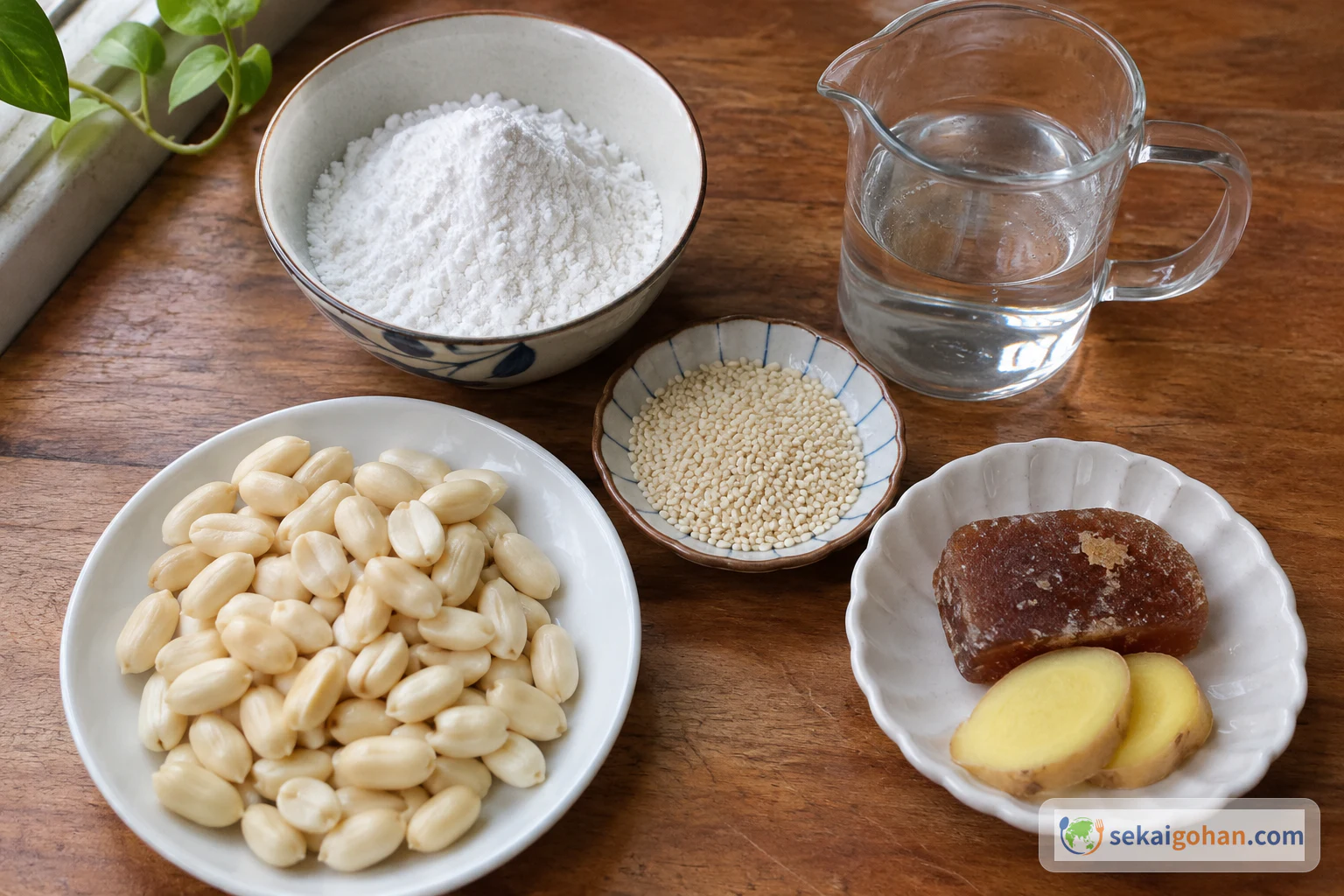
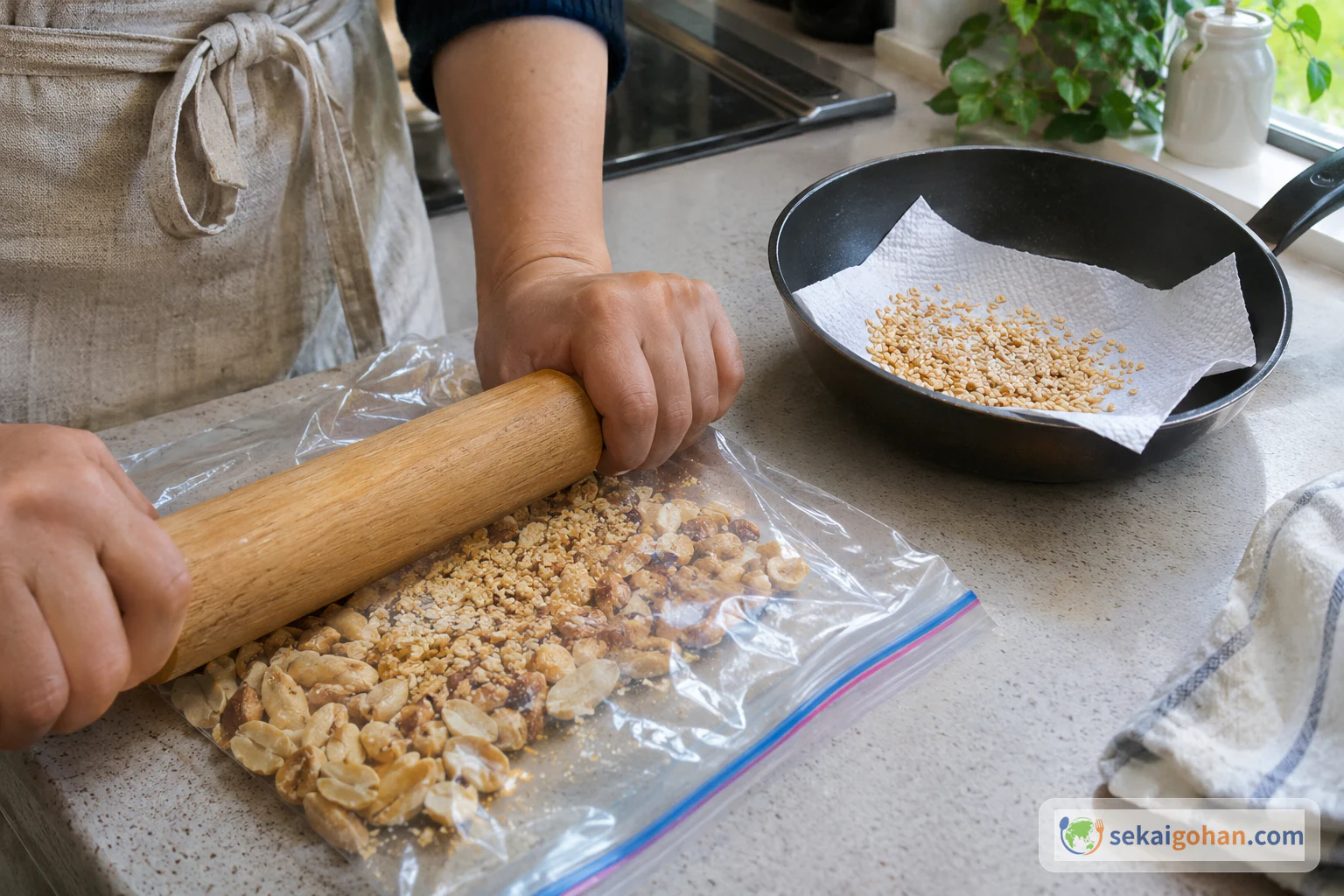
The topping has peanuts and sesame. If someone at the table cannot eat peanuts, use roasted almonds. Almonds are a tree nut, so check for that allergy as well. Glutinous rice flour is the only flour here.
Equipment
- Frying pan and kitchen paper
- Plastic bag and rolling pin
- Mixing bowl and measuring cup
- Board for rolling the dough
- Small heavy saucepan, for the syrup
- Second saucepan or wok, for boiling the balls
- Slotted spoon and wooden spoon
Buying the Sugar, the Flour and the Peanuts
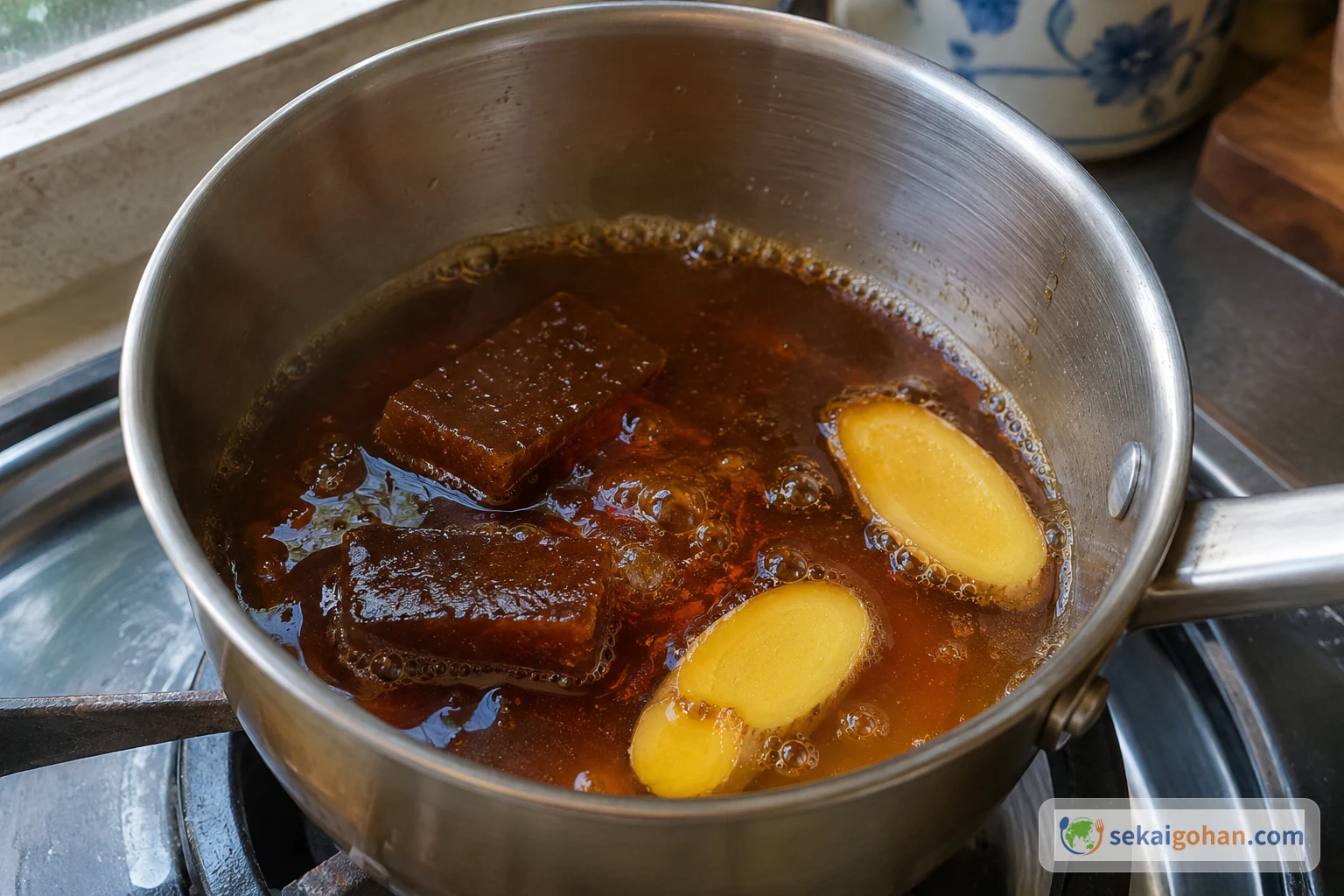
Slab sugar is the one thing worth a trip to a Chinese grocery. Look for Chinese brown sugar in pieces, sold as flat, hard, dark amber slabs. Together with the ginger it gives the syrup both its sweetness and its body, and that syrup is what holds the topping in place. Buy glutinous rice flour, and read the label carefully, because plain rice flour sits right next to it on the shelf and makes a different dough. For the old ginger, choose a firm, mature knob that you can cut into slices.
Raw, skinned peanuts give you the cleanest toast and colour. The topping is the flexible part of the dish. In Guangdong, desiccated coconut is often added to the peanuts and sesame. Roasted almonds can replace the peanuts completely. Dongkeng cooks sometimes serve shredded fried egg in place of nuts. Whatever goes on top, keep the plain chewy ball, the ginger slab-sugar syrup and the order of syrup first, topping second. Those three things are what make it tong bat lat.
Method
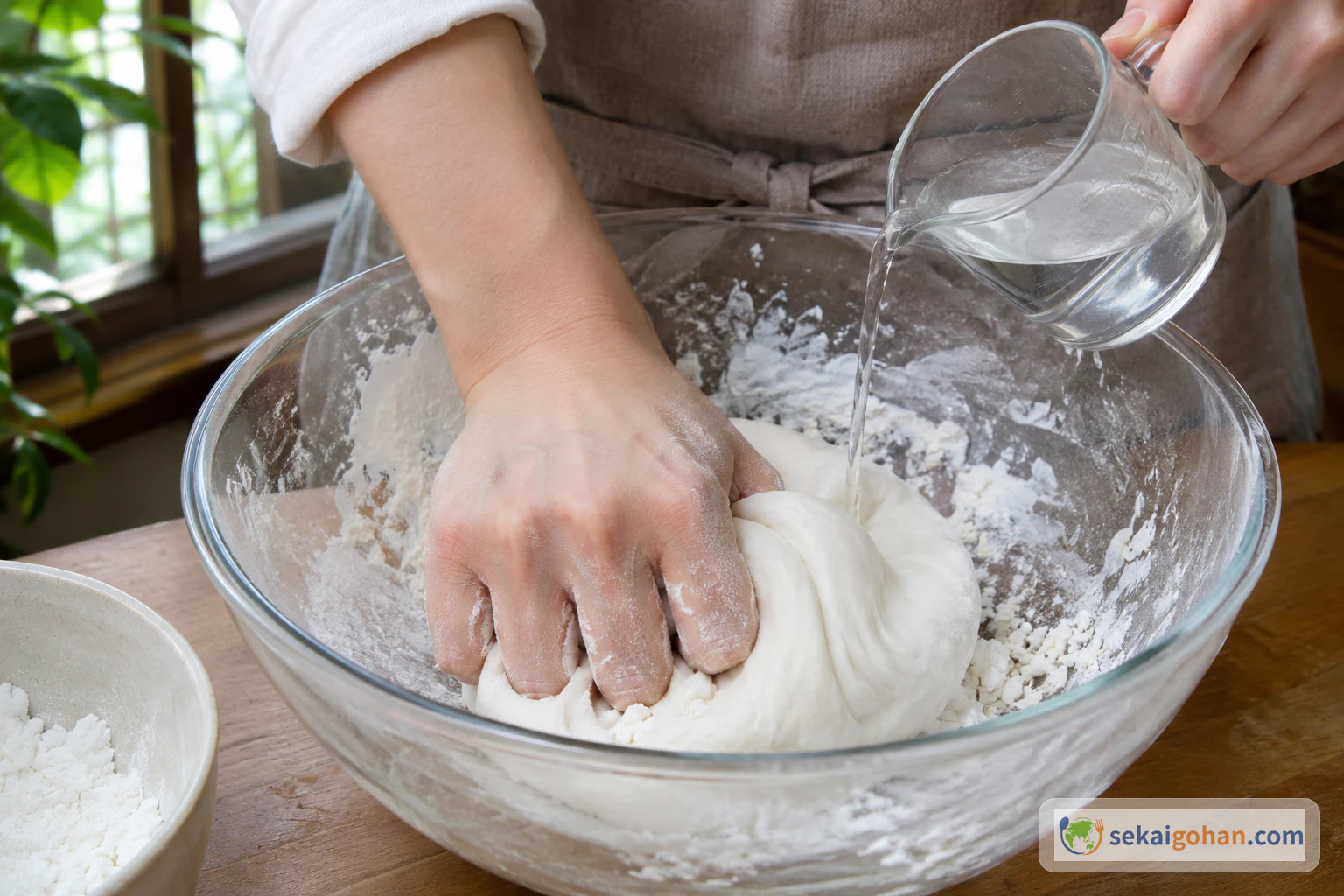
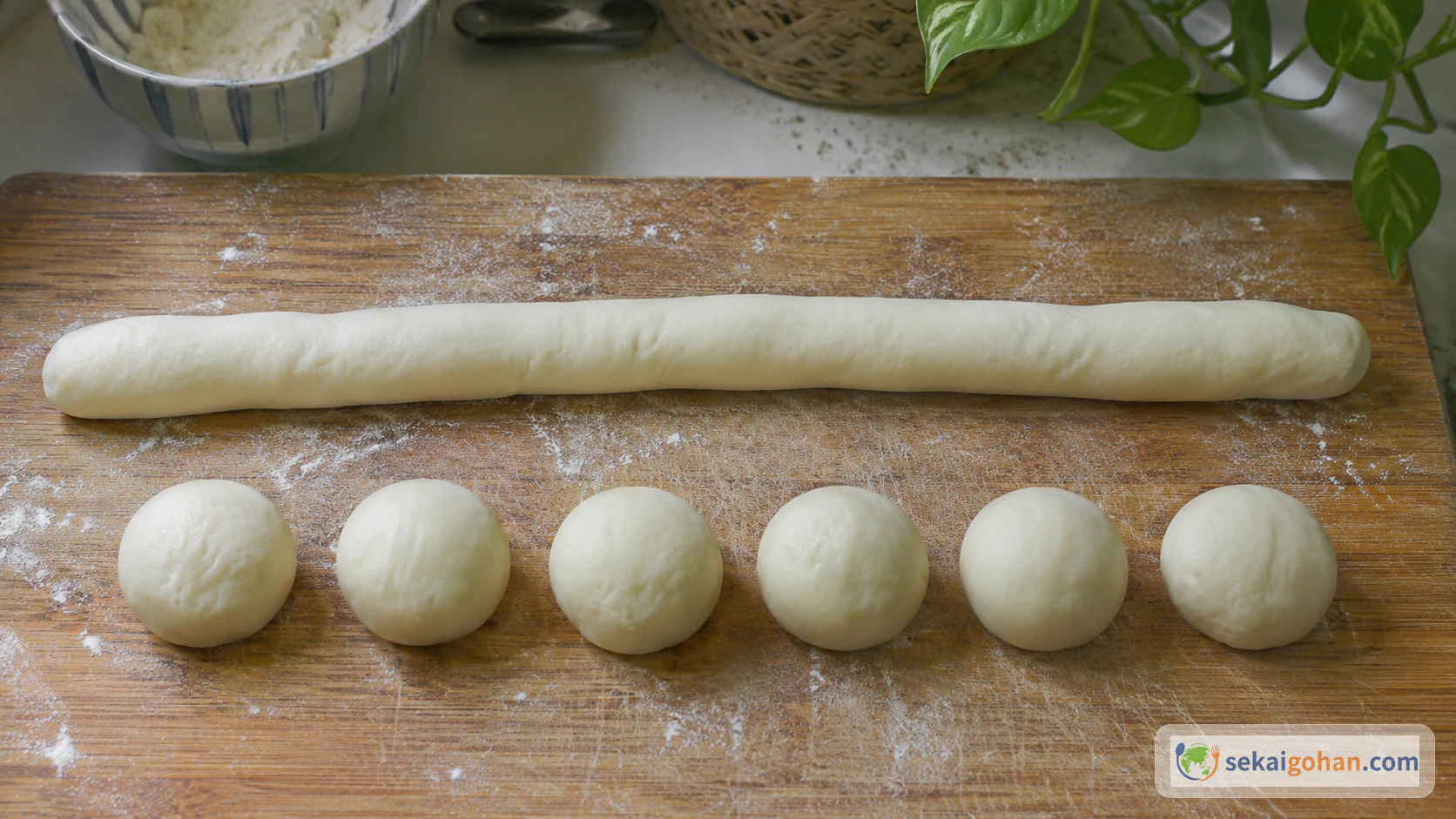
Toast and crush the topping first, so it is cool and ready at the end. Next make and shape the dough. While the syrup simmers, which is your hands-off stretch, bring a second pot of water to a boil. The balls then go from the boiling water straight into the hot syrup, and the dish comes together in the last minutes.
When It Goes Wrong
| What you see | Why | What to do |
|---|---|---|
| The balls slump, go mushy or fall apart | They boiled too long | Lift them as soon as they float and let the syrup finish them |
| The dough crumbles and shows dry flour | Too little water | Knead in room-temperature water a little at a time |
| The dough is wet and sticks to your hands | Too much water | Work in a little more flour until the surface is smooth |
| Balls stick to the bottom of the pot | The water was not stirred when they went in | Stir right away every time you add the balls |
| The peanuts taste greasy | Too much oil in the pan | Wipe the pan so only a thin film is left before toasting |
Serving and Variations
At the table
Tong bat lat is a sweet to share. Serve it in the bowl where it was topped, so everyone can pick a ball and some syrup with chopsticks or a spoon. In Dongkeng it also carries the meaning from the matchmaking custom, where a bowl of it means yes.
Glutinous rice balls are sticky and hard to bite through. For older people and young children, serve fewer balls, cut them smaller and make sure every bite is chewed well.
Variations
- Coconut in the topping. Toast the peanuts and sesame, let them cool, then mix them with desiccated coconut and a little sugar. You get a sweeter, fluffier coat that is common in Guangdong.
- Shredded fried egg. Cook a thin egg, cut it into strips and serve it in place of nuts, as some cooks in Dongkeng do. It makes a softer, savoury contrast to the sugar.
- Roasted almonds. Crush them like the peanuts. The crunch stays the same and the flavour turns milder and more buttery.
- Pumpkin tong bat lat. Dongkeng makes a pumpkin version of the ball, which gives it an orange colour.
Frequently Asked Questions
How is tong bat lat different from tangyuan?
The two are often called twins, because both are glutinous rice balls. Tangyuan is the better-known glutinous rice ball. This version has no filling, gets coated in thick syrup, and is topped with crushed peanuts and sesame.
Can I hide sugar inside the ball?
Yes, some households press a small piece of slab sugar into the centre of each ball before boiling. Wrap the dough around it well so it is fully sealed, then go on as usual. As the ball cooks, the sugar melts into a small pocket of syrup inside.
Should the balls soak in syrup, or just get sprinkled?
Both ways exist. In this recipe the balls simmer in the syrup and the topping goes on last. In Dongkeng the cooked balls go into hot syrup in a wok, and crushed fried peanuts are scattered over them. Either way, the syrup goes on first, because it is what holds the topping on.