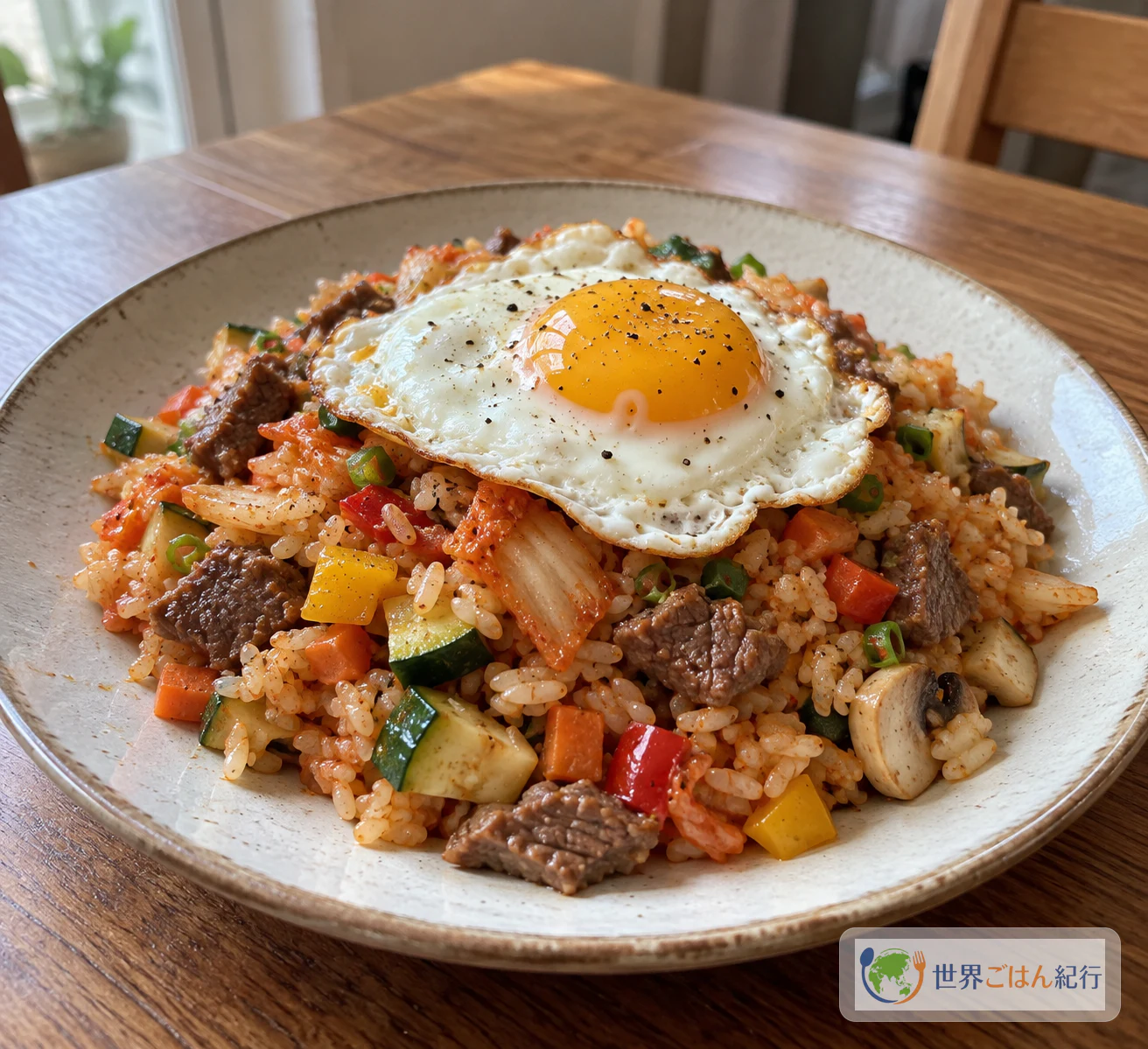
Bokkeumbap: Cooked Rice and Vegetables Brought Together in One Hot Pan
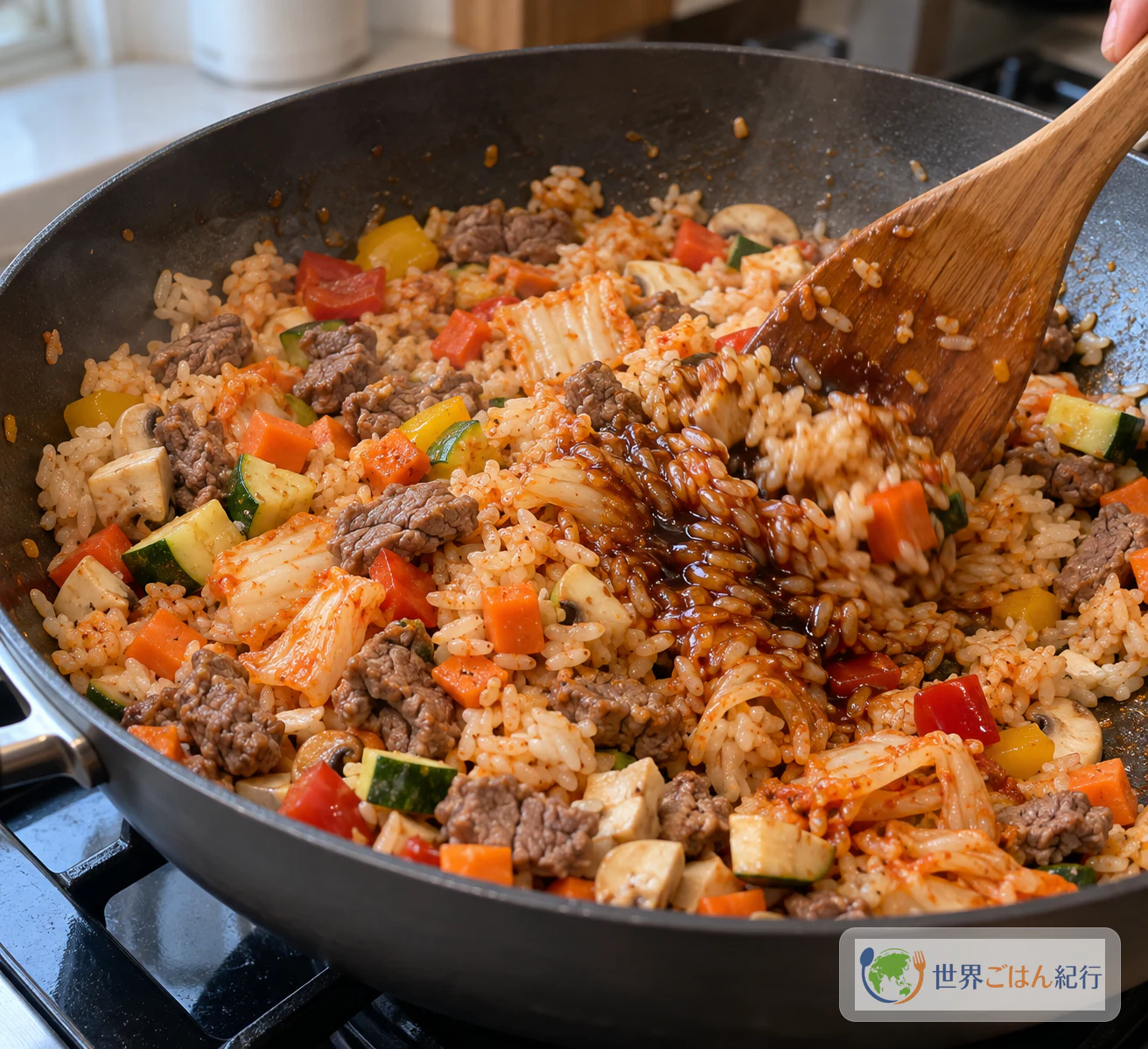
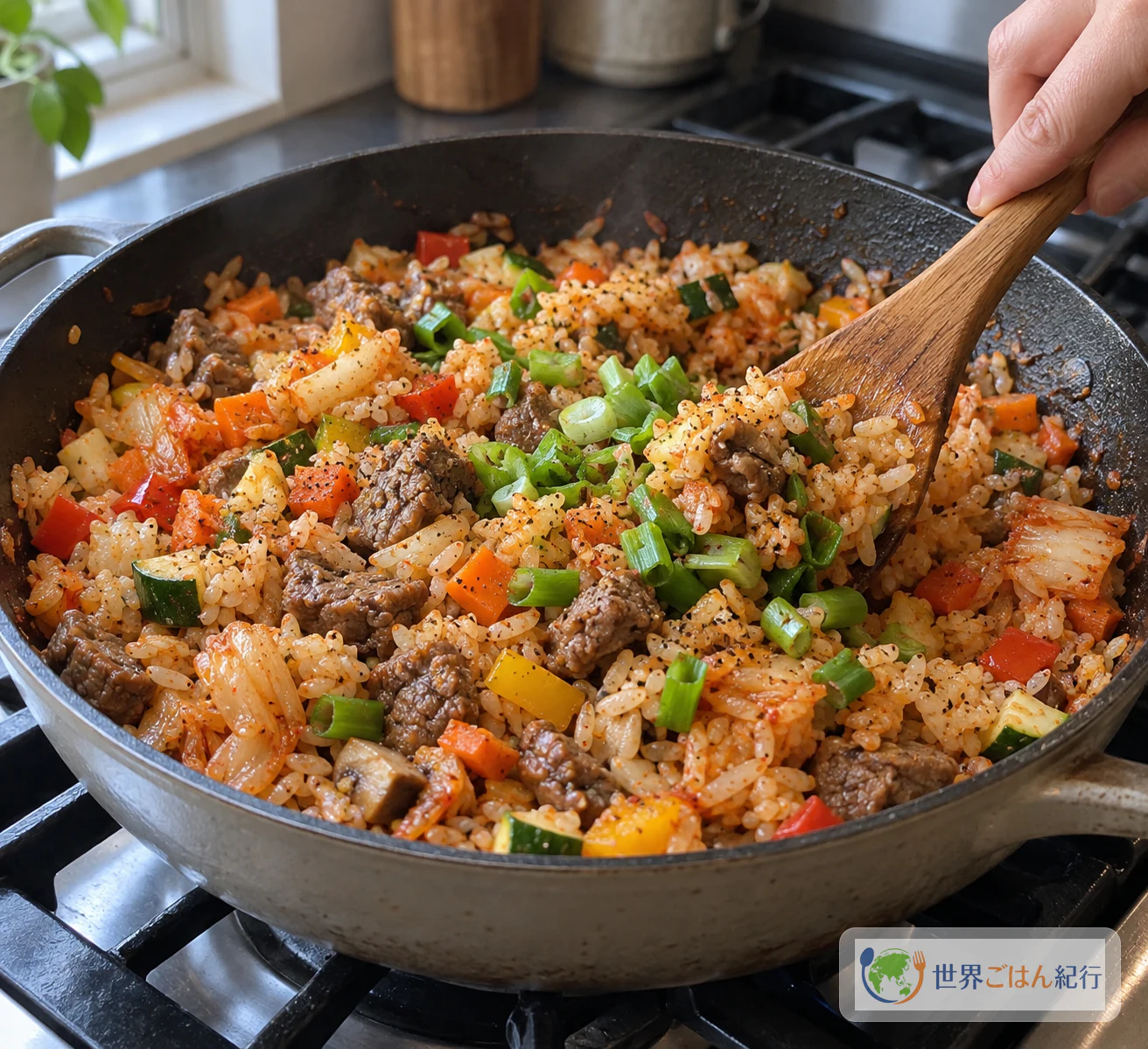
Add each ingredient in order over high heat, break the rice into separate grains, and add the toasted sesame oil only after the heat is off. The oyster sauce and the sesame oil go in at different times.
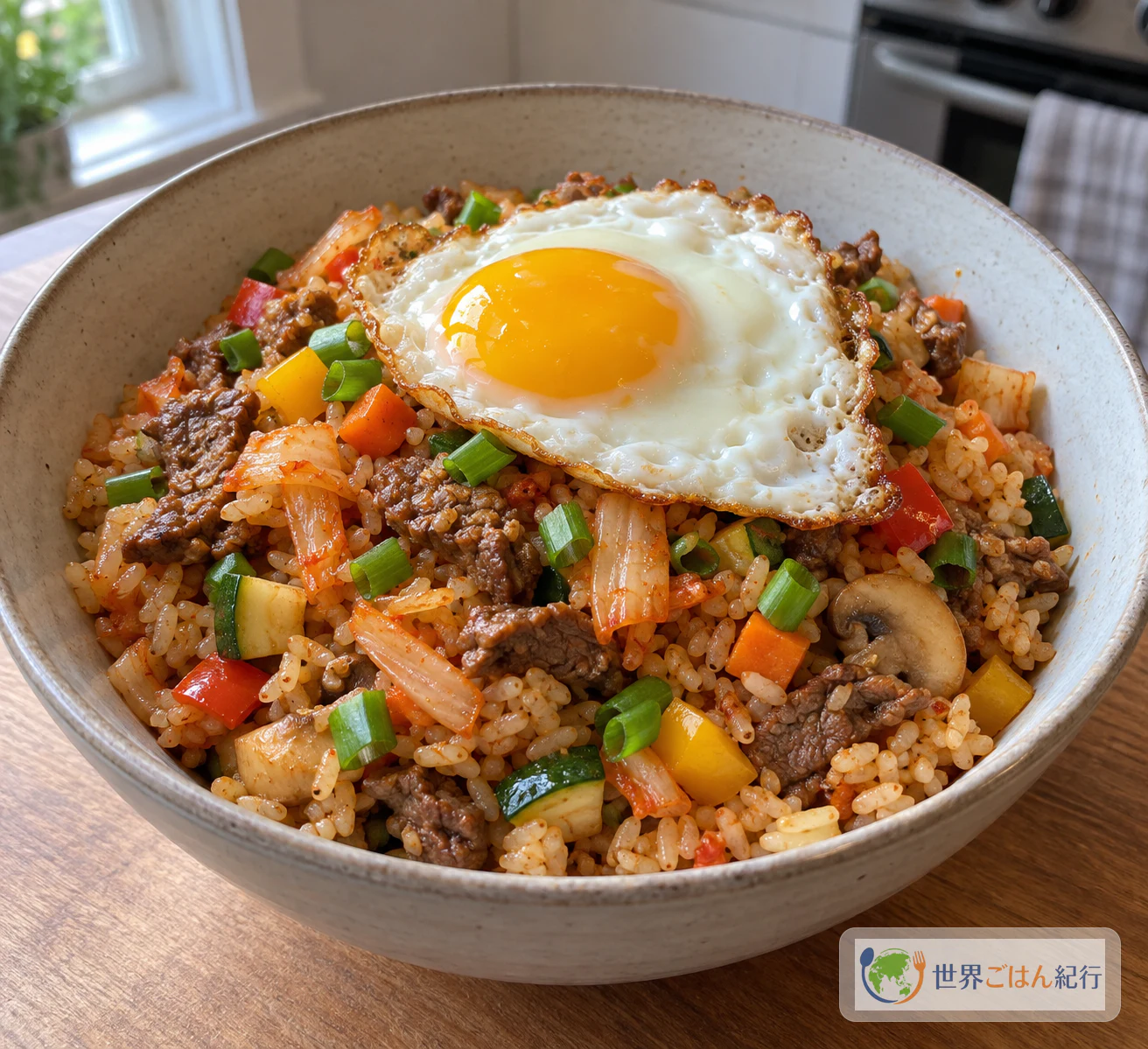
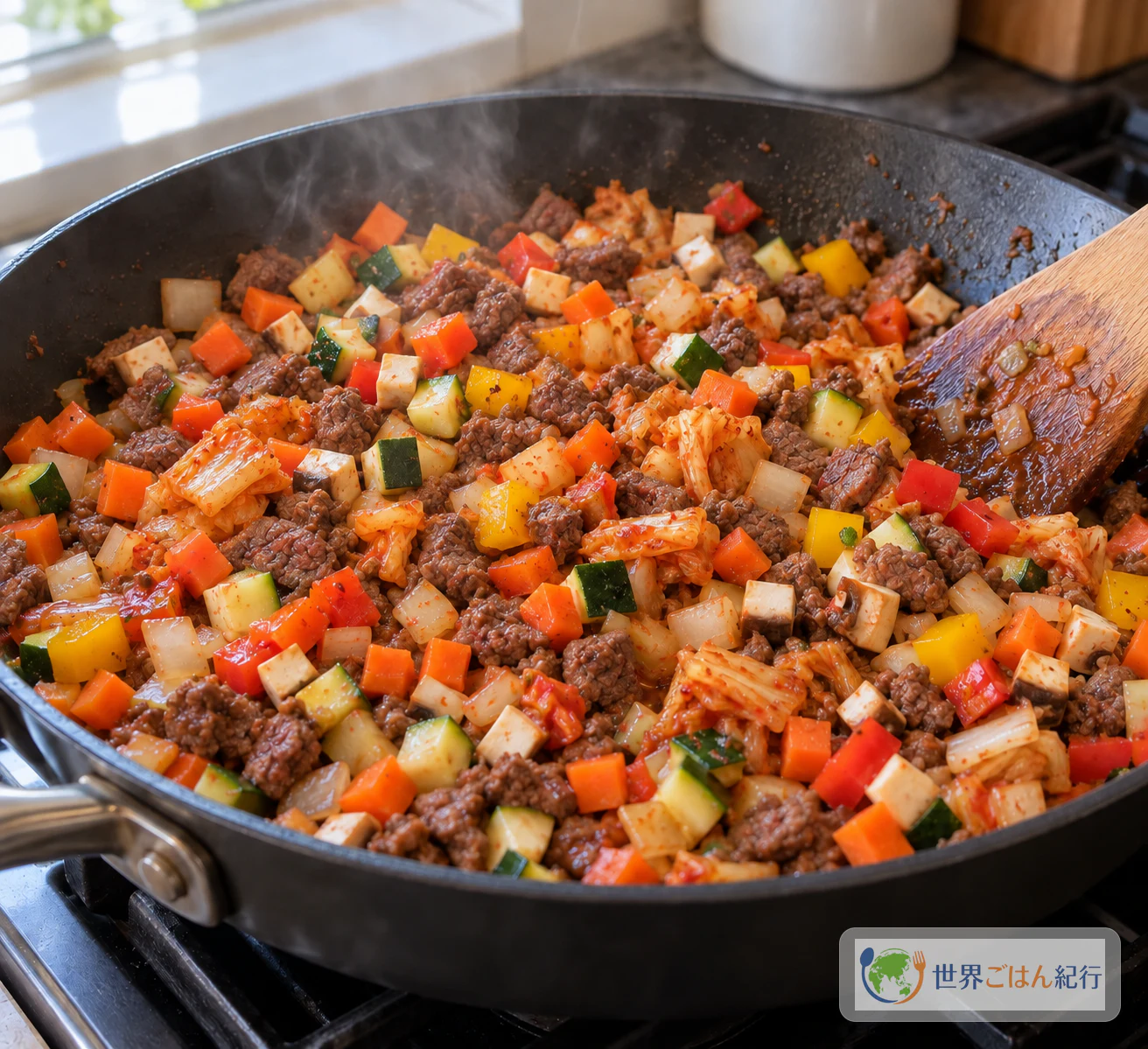
A bowl of cooked rice, a few vegetables cut into small cubes, some beef and a spoonful of chopped kimchi: in a heavy pan over high heat, these become a single plate. Maangchi presents her bokkeumbap as something to make for family meals, to pack in a lunchbox, or to bring to a potluck, and that is the spirit of this recipe: everyday cooked rice turned into a full meal.
Bokkeumbap (볶음밥) simply means fried rice, and in Korea it is a broad name rather than one fixed recipe. This article makes one specific version: Maangchi's general bokkeumbap with beef, colorful vegetables, a small amount of kimchi and oyster sauce, finished with toasted sesame oil and topped with a fried egg. It is one home version, not the single standard for all of Korea.
This recipe follows Maangchi's published version as written. The amounts and timings below are hers, kept in her original units; they are not the results of our own kitchen testing.
What Bokkeumbap Is, and Which Version This Is
The Korea Tourism Organization (VISITKOREA) introduces the dish as "Fried Rice (볶음밥 / Bokkeumbap)": cooled rice stir-fried with vegetables, with additions such as egg, shrimp, chives or pork. It also notes that kimchi fried rice is one of the fried rice dishes commonly found in Korean restaurants.
Kimchi fried rice (김치볶음밥, kimchi-bokkeumbap) is a distinct, kimchi-centered type, and Maangchi publishes it as a separate recipe. The version here uses only a little kimchi alongside beef and several vegetables, so don't mix the two recipes' ingredients or amounts. It is also a different dish from the Chinese home-style fried rice on this site; neither is presented as the origin or the better version of the other.
If you are exploring Korean rice dishes, bibimbap mixes rice with toppings at the table rather than stir-frying it, and kimchi jjigae shows kimchi in a simmered stew instead of a pan-fried rice.
The materials consulted for this article do not establish when or where bokkeumbap originated, so this article does not tell an origin story.
Ingredients for 2–3 Servings
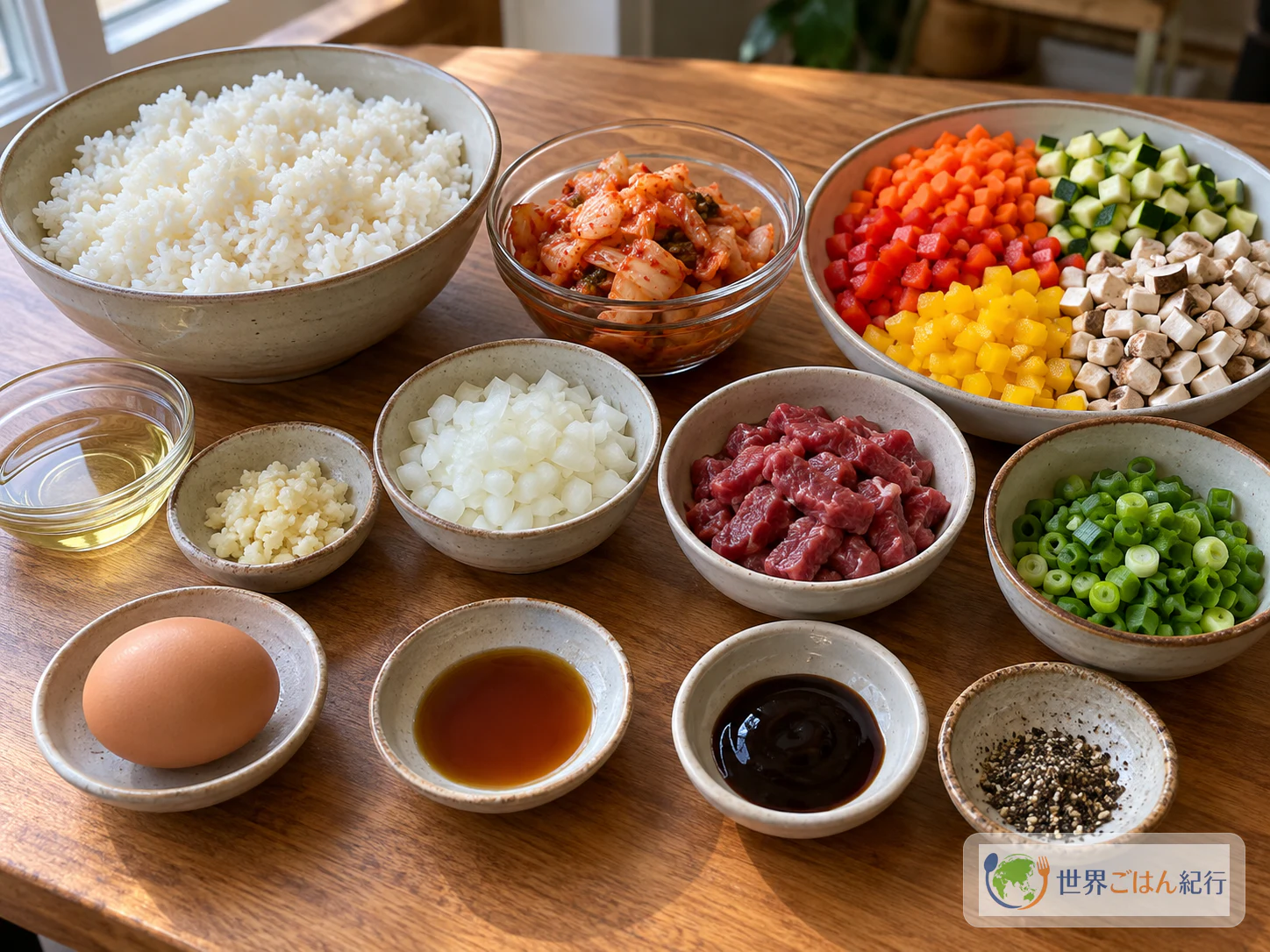
Maangchi's recipe makes 2–3 servings and takes about 20 minutes including preparation. The amounts keep the original cups, ounces and spoons; the cups are the recipe's own cup measure. The vegetables are given only as a combined total of 3 cups, with no amount for each individual vegetable.
Equipment
- A large heavy-bottomed frying pan
- A spatula for stir-frying and breaking up rice
- A knife and cutting board
- A pan for frying the egg
Choosing and Substituting
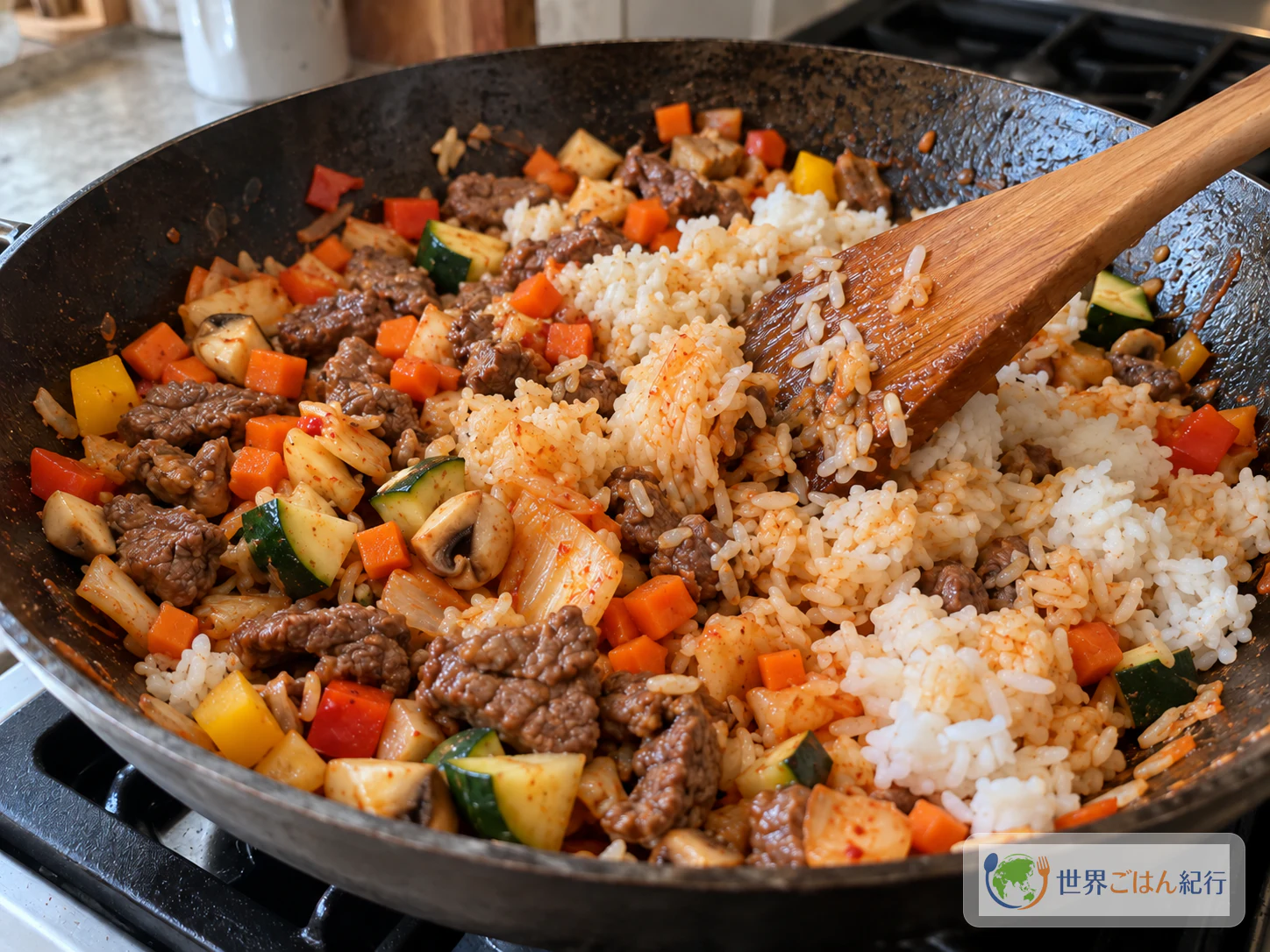
Rice. Maangchi's recipe accepts either freshly cooked or cold rice. If the rice is cold, break up the clumps so the grains separate before it goes into the pan; warm rice can go in as it is. Use only cold rice that was cooled and refrigerated safely, and never rice that has sat out at room temperature for an unknown time.
Beef. The recipe suggests chicken, pork or ham as alternatives to beef. This version uses beef. If you switch, the cooking will change with the ingredient, so make sure raw meat is thoroughly cooked before moving on.
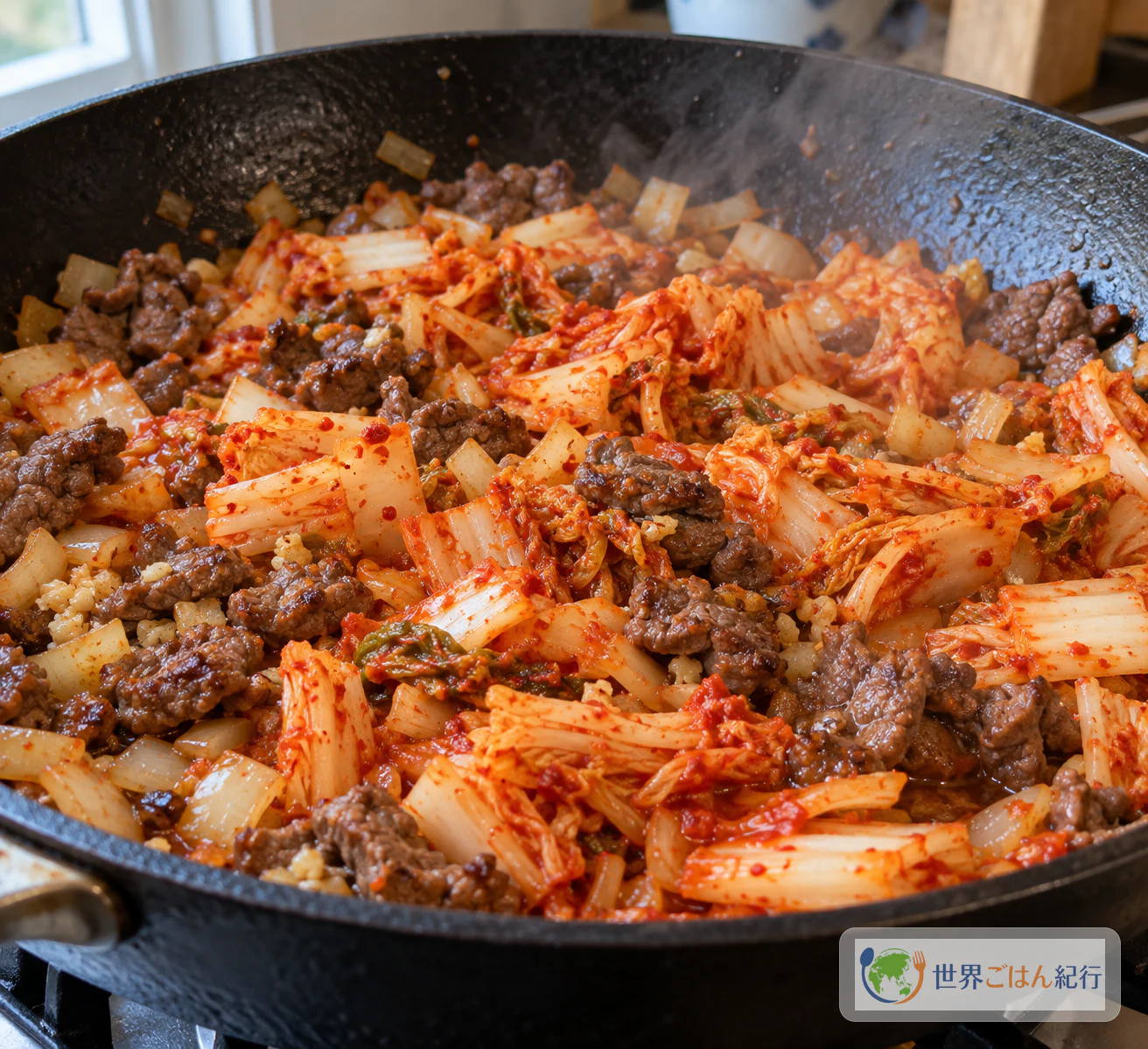
Kimchi. Kimchi ranges in heat and sourness, and that comes through even in the small 1/3 cup used here. Keep the amount; this is not kimchi fried rice.
Vegetables. Carrot, zucchini, red and yellow bell peppers and white mushrooms are the examples given, measured together to 3 cups. Cut everything to the same 1/4-inch cube.
Optional ingredients left out of this version. The original recipe also lists 1–2 chopped green chili peppers as optional, and Oaxacan cheese (1/2 cup, split into threads) as an optional finish, with mozzarella or cheddar as alternatives. This version leaves out both; the author also notes sometimes leaving the cheese out. Cheese is not presented here as an essential or traditional Korean ingredient (see Variations).
Oyster sauce is made from oysters, which matters for anyone with a shellfish allergy. This dish also contains egg and beef, and bottled sauces and kimchi can contain wheat, soy, fish or other allergens depending on the product. Check the labels of the exact products you buy.
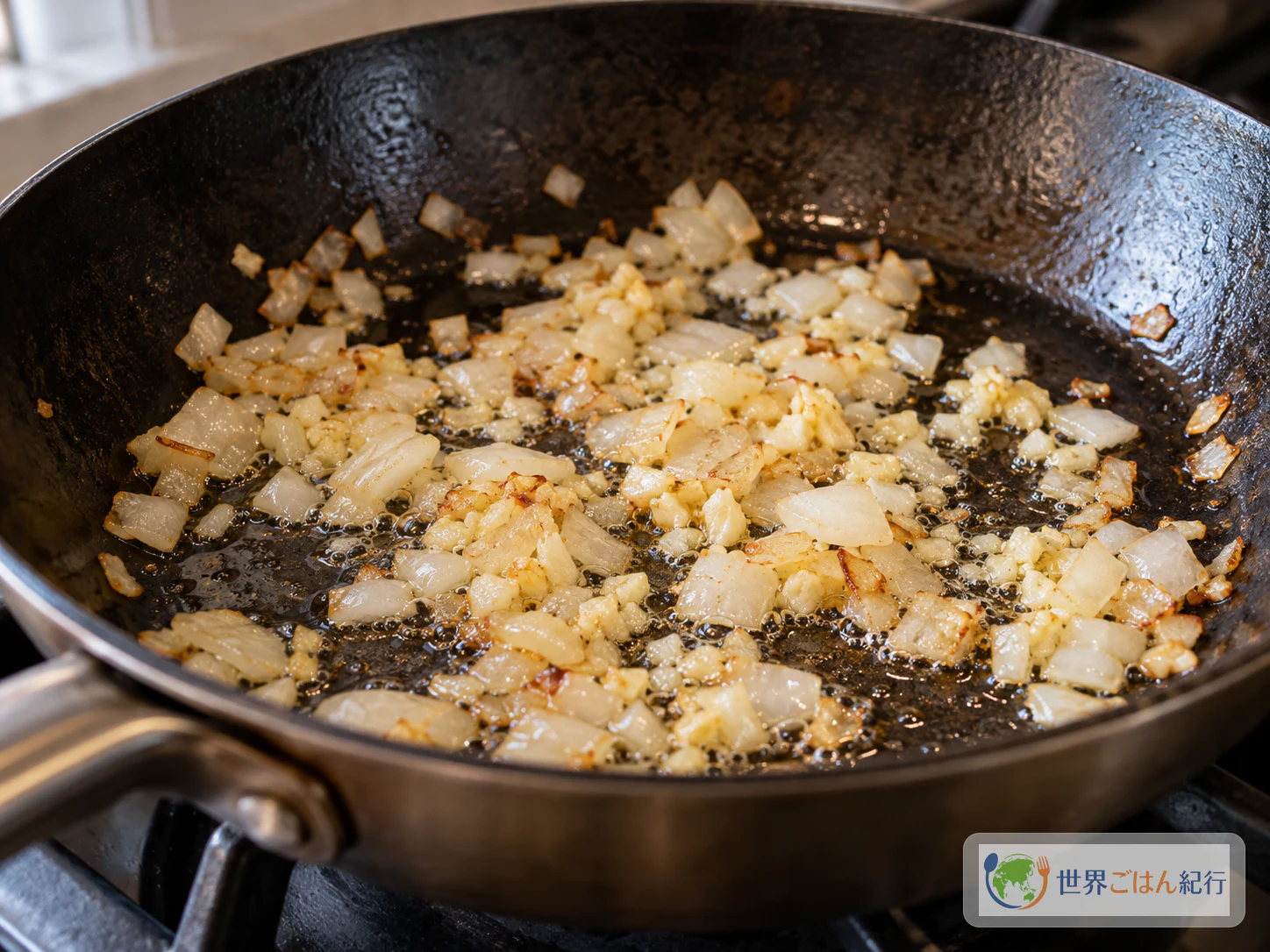
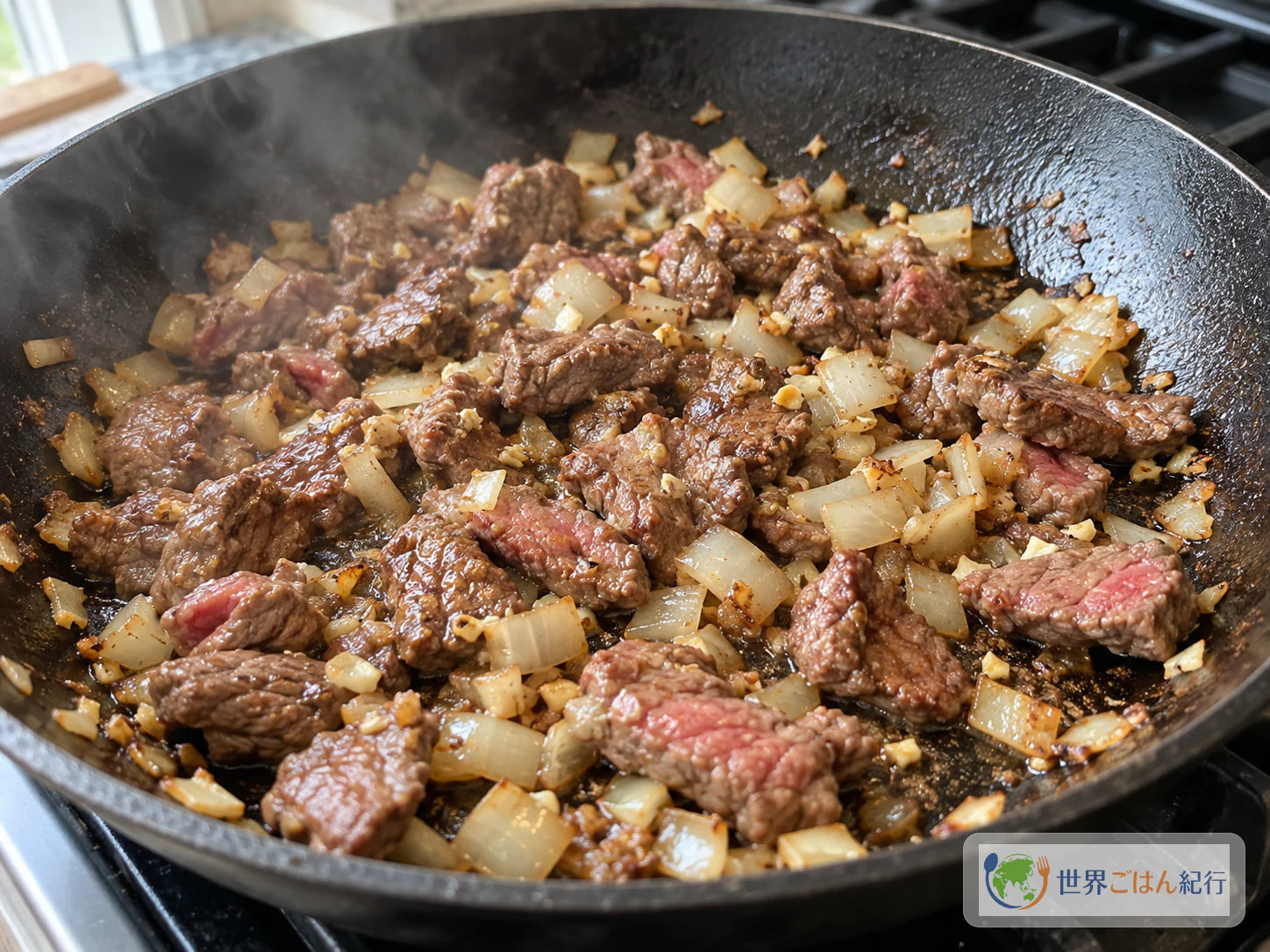
Method: Aromatics, Beef, Kimchi, Vegetables, Then Rice
Each stage takes only a few minutes, so have every ingredient cut and the cold rice broken up before you start. If your pan is small and the ingredients pile up, it can be easier to cook in batches.
Troubleshooting
| Problem | Likely cause | What to do |
|---|---|---|
| Clumps of rice remain | Cold rice went in without being broken up | Break up cold rice before adding it, and keep breaking clumps with the spatula during the 3–5 minutes in step 5 |
| The pan stops sizzling and the ingredients steam | Too much in the pan at once, or heat not high enough | The recipe calls for a heavy pan over high heat. In a smaller pan, cook in batches |
| The oyster sauce tastes too strong | Personal preference | This recipe keeps the source's 2 tbsp. If you use less, treat it as your own adjustment rather than part of this recipe |
| Too spicy | Heat from the kimchi | This version already leaves out the optional green chili. The kimchi still brings some heat; choose a milder kimchi next time |
| Little sesame aroma | Sesame oil added while cooking on the heat | Add the toasted sesame oil only after turning off the heat, as in step 7 |
Variations
- Other meats. Maangchi suggests chicken, pork or ham in place of beef. Cook raw meat thoroughly before adding the next ingredient.
- Green chili. The original lists 1–2 chopped green chili peppers as optional. The rest of the recipe holds together without them.
- Cheese. The original lists Oaxacan cheese (1/2 cup, split into threads), with mozzarella or cheddar as alternatives, and describes it as half-melting from the heat of the rice. Its recipe steps do not say when to add it, and the author notes sometimes leaving it out. If you use it, scattering it over the rice right after plating is an editorial suggestion, not part of the original steps. It is an optional finish, not a traditional element of Korean cooking.
- Other fillings. VISITKOREA mentions egg, shrimp, chives or pork as common additions to bokkeumbap in general. These are ideas from the wider dish, not part of this recipe's amounts.
- Kimchi fried rice. If you want kimchi at the center, that is kimchi fried rice, a separate recipe with its own proportions. Don't simply increase the kimchi here.
Leftovers and Cooked Rice Safety
Use only cooked rice that has been stored safely. If you cook rice ahead, divide it into small portions, cool it promptly and refrigerate it. Do not use rice that has been left at room temperature for an unknown time.
Frying previously chilled cooked rice counts as reheating it: do not cool and reheat that rice again. For bokkeumbap made with freshly cooked rice, follow general leftover guidance from the UK Food Standards Agency: cool leftovers and put them in the refrigerator, reheat them only once, and heat them until they are steaming hot all the way through. If you use a microwave, stir partway so no cold spots remain.
The sources for this article do not give a rice-specific cooling time or storage period, so none is stated here. For how long to keep cooked rice, check the official food safety guidance where you live.
Frequently Asked Questions
Is bokkeumbap the same as kimchi fried rice?
No. Bokkeumbap is the broad Korean name for fried rice, made with many different fillings. Kimchi fried rice (김치볶음밥) is one specific type centered on kimchi, and it is common in Korean restaurants. This recipe is a general version with beef, vegetables and only a little kimchi.
Can I make it without cold rice?
Yes. Maangchi's recipe works with freshly cooked rice too; add warm rice as it is. Cold rice needs its clumps broken up before it goes in.
Can I use something other than beef?
The recipe suggests chicken, pork or ham. Make sure any raw meat is fully cooked before you add the kimchi.
Is cheese required?
No. Cheese is an optional finish in the original, and the author sometimes leaves it out. This version is made without it, and it is not presented as a traditional Korean ingredient.
How should I handle rice cooked in advance?
Use only rice that was cooled promptly in small portions and refrigerated. Frying refrigerated rice already counts as its reheating, so do not reheat it again. For leftovers made with freshly cooked rice, refrigerate after quick cooling, reheat only once, and heat until steaming hot throughout. Check your local official guidance for rice storage periods.
Sources
- Maangchi, "Fried rice (Bokkeumbap)." The ingredients, amounts, order of cooking and step times used in this recipe; the 2–3 servings and about 20 minutes including preparation; handling cold and freshly cooked rice; the beef alternatives and optional ingredients; its use for family meals, lunchboxes and potlucks; and kimchi fried rice as a separate recipe. https://www.maangchi.com/recipe/bokkeumbap
- Korea Tourism Organization / VISITKOREA, "Fried Rice (볶음밥 / Bokkeumbap)." The Korean name of the dish, its description as cooled rice stir-fried with vegetables with additions such as egg, shrimp, chives or pork, and kimchi fried rice as a common type in Korean restaurants. Not used for the recipe's amounts. https://english.visitkorea.or.kr/svc/contents/contentsView.do?vcontsId=178056
- Food Standards Agency (UK Government), "Cooking your food." General guidance on cooling and refrigerating leftovers, reheating them only once until steaming hot throughout, and stirring during microwave reheating. It does not give rice-specific storage periods. https://www.food.gov.uk/safety-hygiene/cooking-your-food