
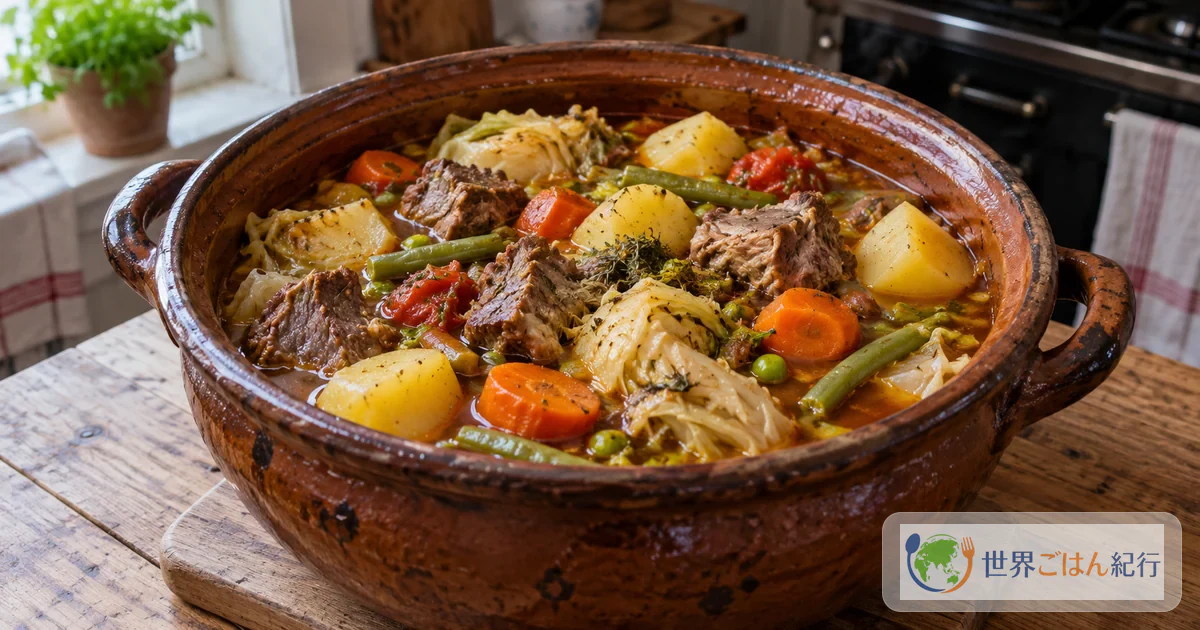
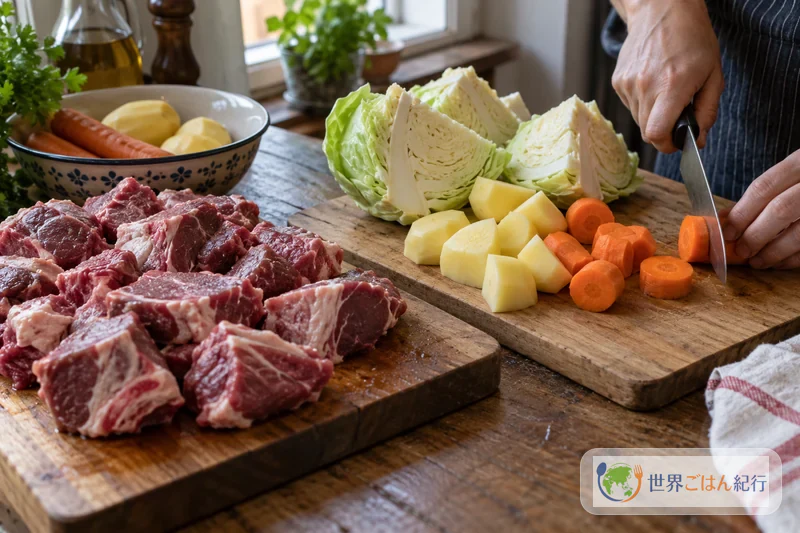
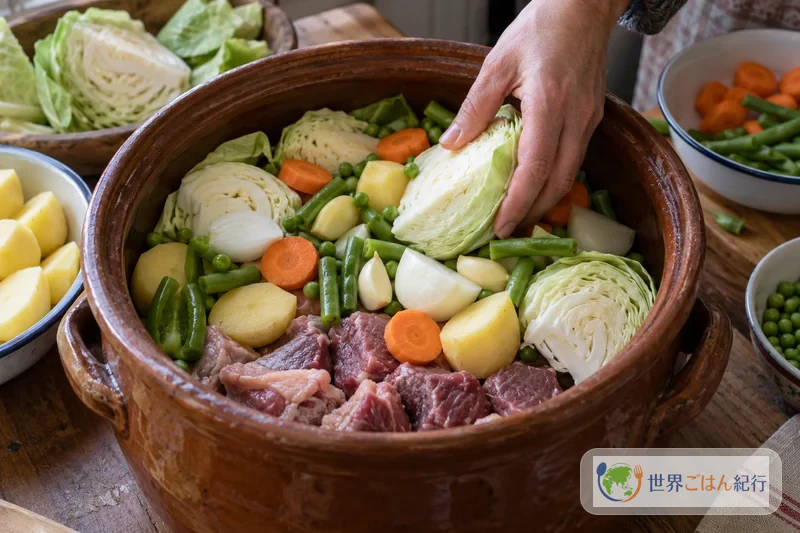
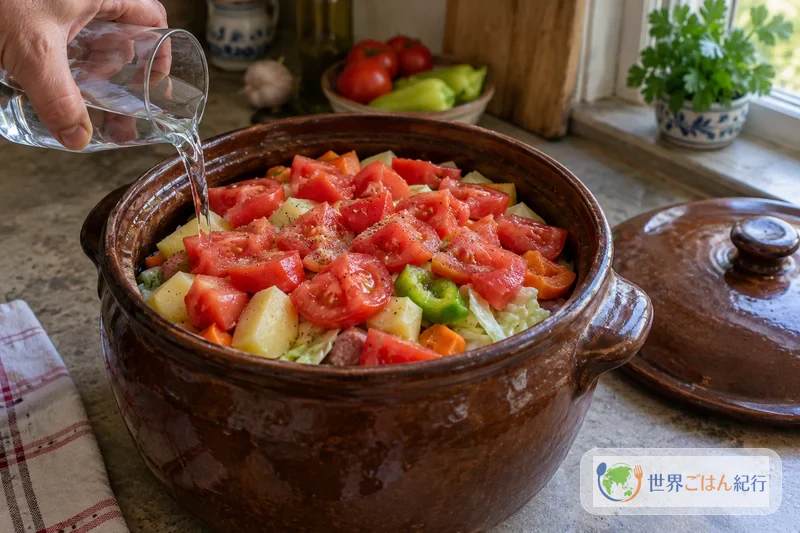
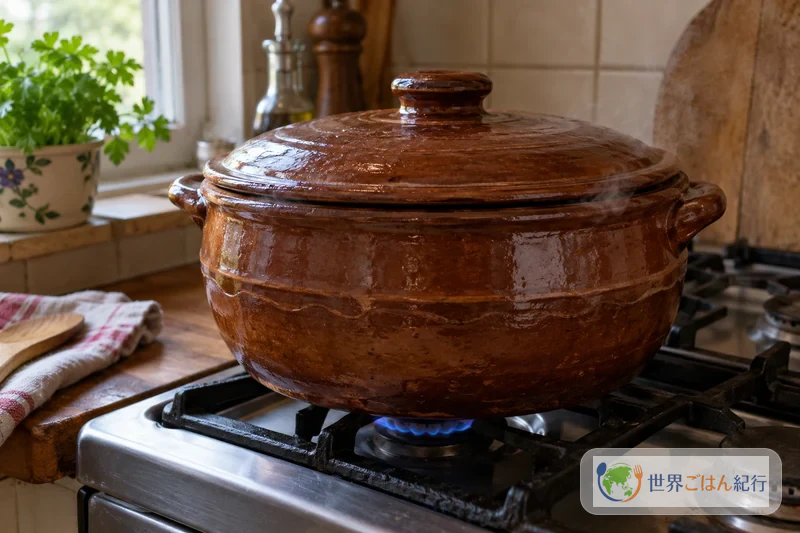
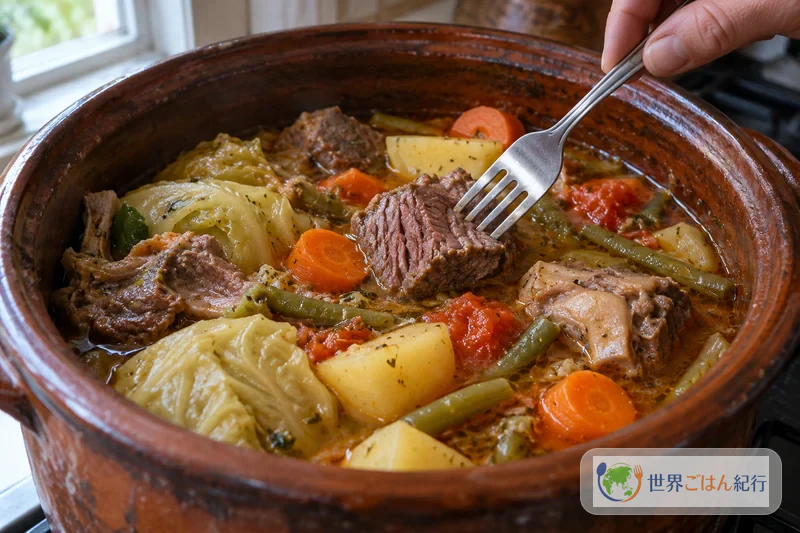
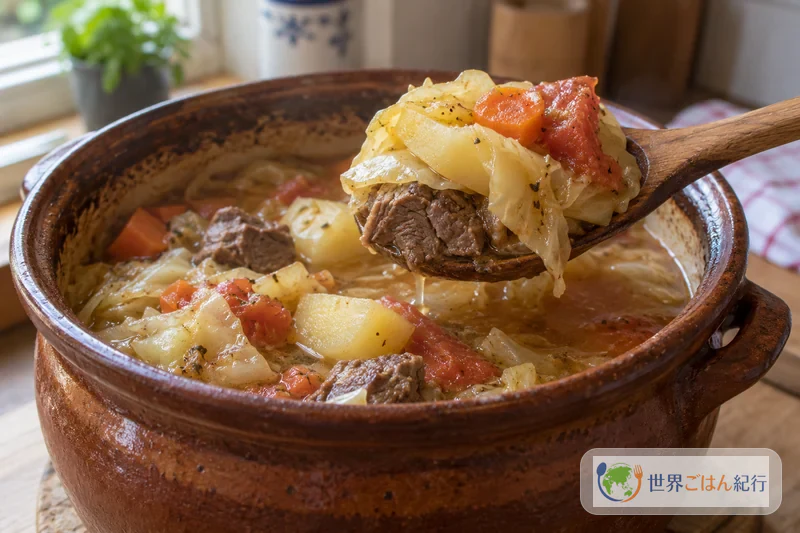
In the bottom of a deep ceramic pot, lay big-cut meat, and over it pile cabbage, potato, carrot, tomato, and peppers one after another without stirring. Pour in a little water, put on the lid, and then for 3 hours never lift it. Bosnia and Herzegovina's bosanski lonac, called "the Bosnian pot," is a stew that is just layer, cover, and wait.
The meat is not browned and the vegetables are not parboiled. The fat and savoriness from the meat soak into the vegetables layered above, and the moisture of the vegetables braises the meat tender. Because it takes so little effort, keep to just two things: cut big, and don't stir.
The Pot Miners Set in the Morning and Ate at Midday
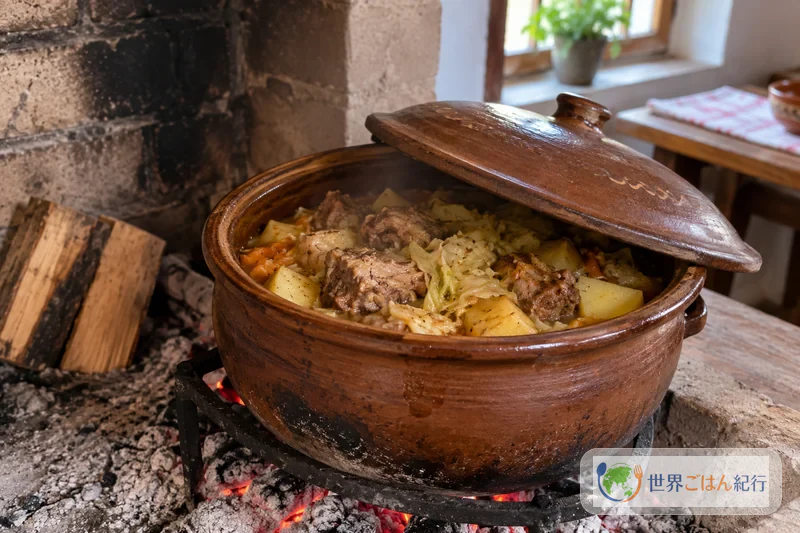
Bosanski lonac is known as the national dish of Bosnia and Herzegovina. Lonac means "pot," and originally referred to the ceramic or clay pot used for stewing. In the old days ingredients were layered in a ceramic pot and stewed over a hearth fire or in a hole dug in the ground. Today few homes have a hearth, and most households make it in an ordinary pot on the stove.
The story often told about its origin is of medieval Bosnian miners. According to Balkan Lunch Box, which introduces Bosnian cooking, the miners each brought ingredients they had at home and layered them in a clay pot, built a fire, and left it to stew while they worked. Then, at their one break of the day, they gathered around the pot just as it was done. As a tale of how the dish came about, it is still often told in Bosnia.
Bosanski lonac has been eaten for hundreds of years in the homes of poor farmers and wealthy nobles alike. It is said that wealthy houses used plenty of meat and costly ingredients, while poor houses put in what they had on hand. Because the pot takes in anything, it is sometimes compared to Bosnia itself, a country where many peoples and cultures overlap.
There is no fixed recipe, and the vegetables and meat vary by household and region. Beef and lamb are now the most common meats, but in the past all kinds of meat were used. Vegetables are cabbage, potato, carrot, and tomato, plus green beans, peas, peppers, okra, eggplant, zucchini, and more. Layering seasonal vegetables is also part of the enjoyment of this pot.
Ingredients (serves 6)
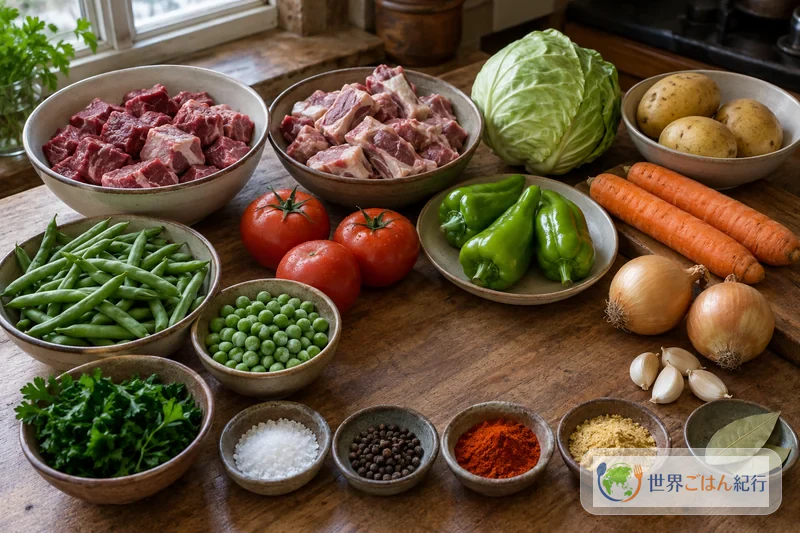
In Bosnian homes a granulated seasoning of dried vegetables and salt called Vegeta is often used. It can be found at import food stores or online, but if you can't get it, granulated bouillon is enough. For the meat, combining two or more kinds, like beef and lamb, layers savoriness and gives depth. If you make it with only one kind, combine different cuts, such as beef shoulder and beef shank. Mixing in a little bone-in meat adds even more richness to the broth.
The iron rule is to cut every vegetable large. If chopped fine, they melt away over the 3 hours and the fun of a layered pot is lost. Cutting the cabbage into wedges with the core on keeps it from breaking down and holds its shape.
How to Make Bosanski Lonac
Prep takes about 25 minutes. Cut the meat and vegetables evenly and just layer them in the pot. The stew takes 3 hours, and you do not lift the lid in that time. It can be made on the stove or in the oven.
The reason not to stir while it simmers is to keep the layers. Stirring breaks the softened vegetables into a thick, muddy broth. Scooping through the layers with the shapes of the meat and vegetables intact is what makes it this dish.
Bosanski lonac is a stew that is said to taste better 1–2 days after making. Cool it slightly, refrigerate, and the next day reheat over low heat for 15 minutes or more until it is thoroughly hot all the way through. If there is too little liquid, add about 100 ml water.
If you use a clay or ceramic pot, it can crack from sudden temperature changes. Don't put a cold pot straight over high heat or set a hot pot in a cold place. When using it in the oven, putting the pot in a cold oven and heating them together is safer. Also check beforehand that the pot is oven-safe.
Served with Bread and Pickles
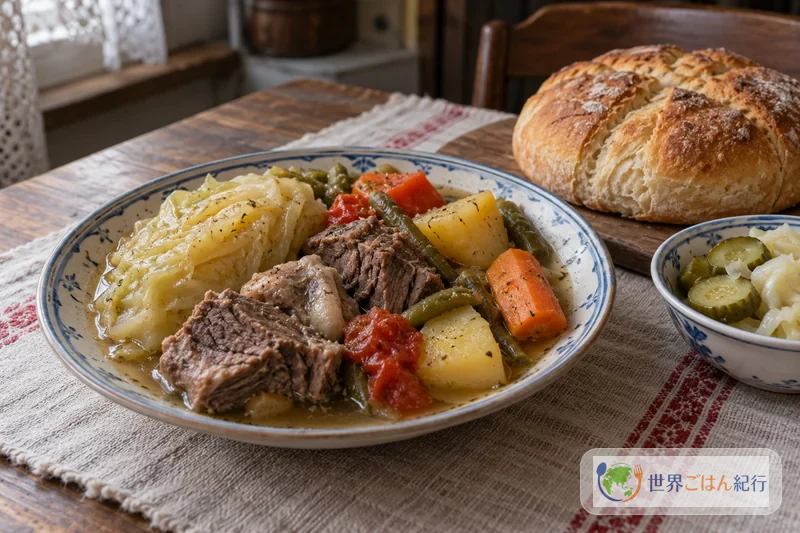
Bosanski lonac is eaten warm with bread. In Bosnia, a round bread called pogača, turšija (vegetables pickled in vinegar), and pickled cabbage are often served with it. Sour pickles refresh the heaviness of the sweet cooking juices of meat and vegetables. At home, preparing a round loaf like a country loaf and cucumber or cabbage pickles brings it closer to a Bosnian table.
Among stews of the same Balkan peninsula, Serbia's mućkalica (in Japanese) is a dish of seared meat stewed with paprika and tomato. For a Bosnian snack, also try burek (in Japanese), a thin dough rolled around meat and baked.
FAQ
Wouldn't it taste better if I browned the meat first?
Some recipes these days brown the meat first, but in the old-fashioned method the meat is layered without browning and its juices become the broth. Browning adds toastiness, but if you want a clean broth, layer it as is without browning.
Can I make it with chicken or sausage?
It isn't impossible, but Balkan Lunch Box recommends avoiding chicken, smoked meat, and processed meat. Because it is a long-stewed dish, beef and lamb with fat and sinew are better suited.
Can I make it in a pressure cooker?
Yes. The layering steps are the same; for pressure time follow the stew guidance in your pressure cooker's manual. When you open it, check the tenderness of the meat.
Can I leave out the cabbage?
You can make it without. There are other Bosnian stews starring cabbage, so some people leave the cabbage out of bosanski lonac. In that case, increase other vegetables such as green beans or eggplant.
Sources
- Balkan Lunch Box, Aida, "Bosnian Pot Stew (Bosanski Lonac)." Accessed and checked 22 October 2026. https://balkanlunchbox.com/bosnian-pot-stew-bosanski-lonac-recipe
- Holocaust Memorial Day Trust, "Recipe from Bosnia: Bosanski Lonac." Accessed and checked 22 October 2026. https://www.hmd.org.uk/?p=6069
- Wikipedia, "Bosnian pot." Accessed and checked 22 October 2026. https://en.wikipedia.org/wiki/Bosnian_pot


