The "Boat of Cheese" Raised in the Caucasus Mountains
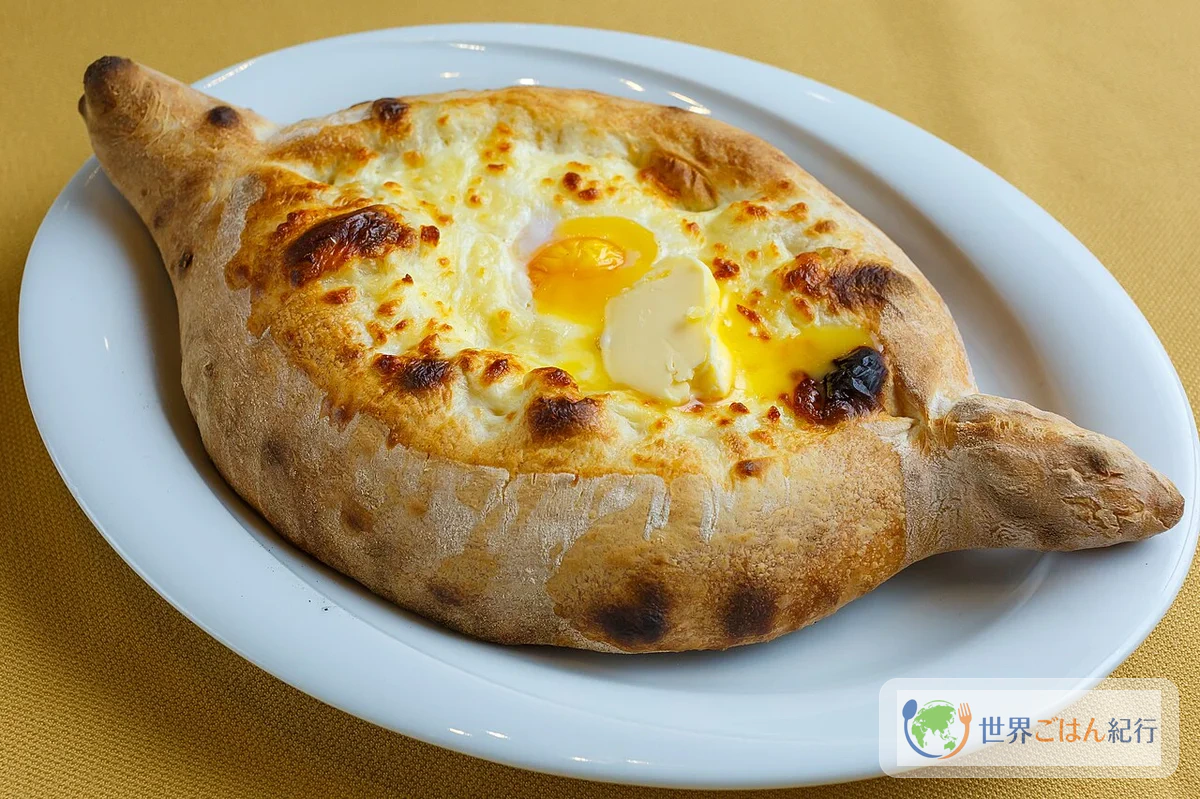
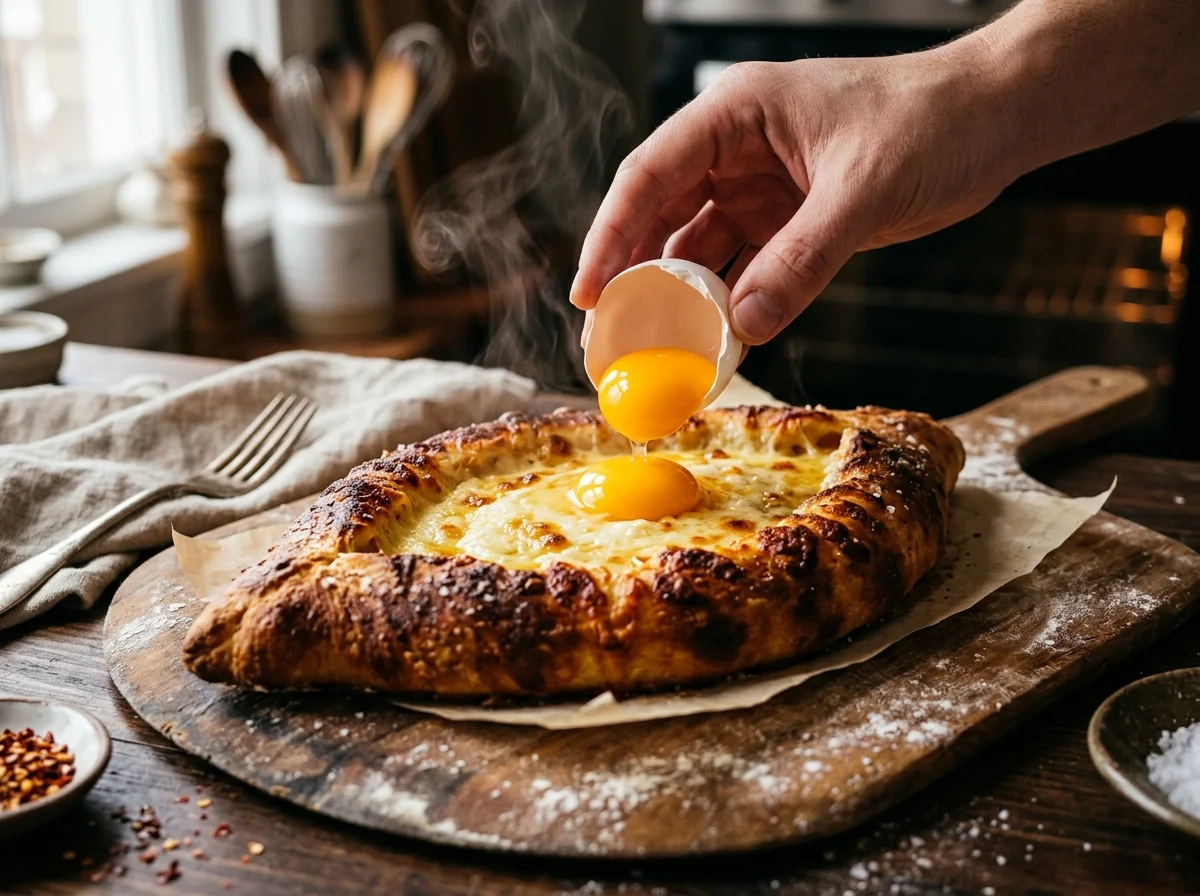
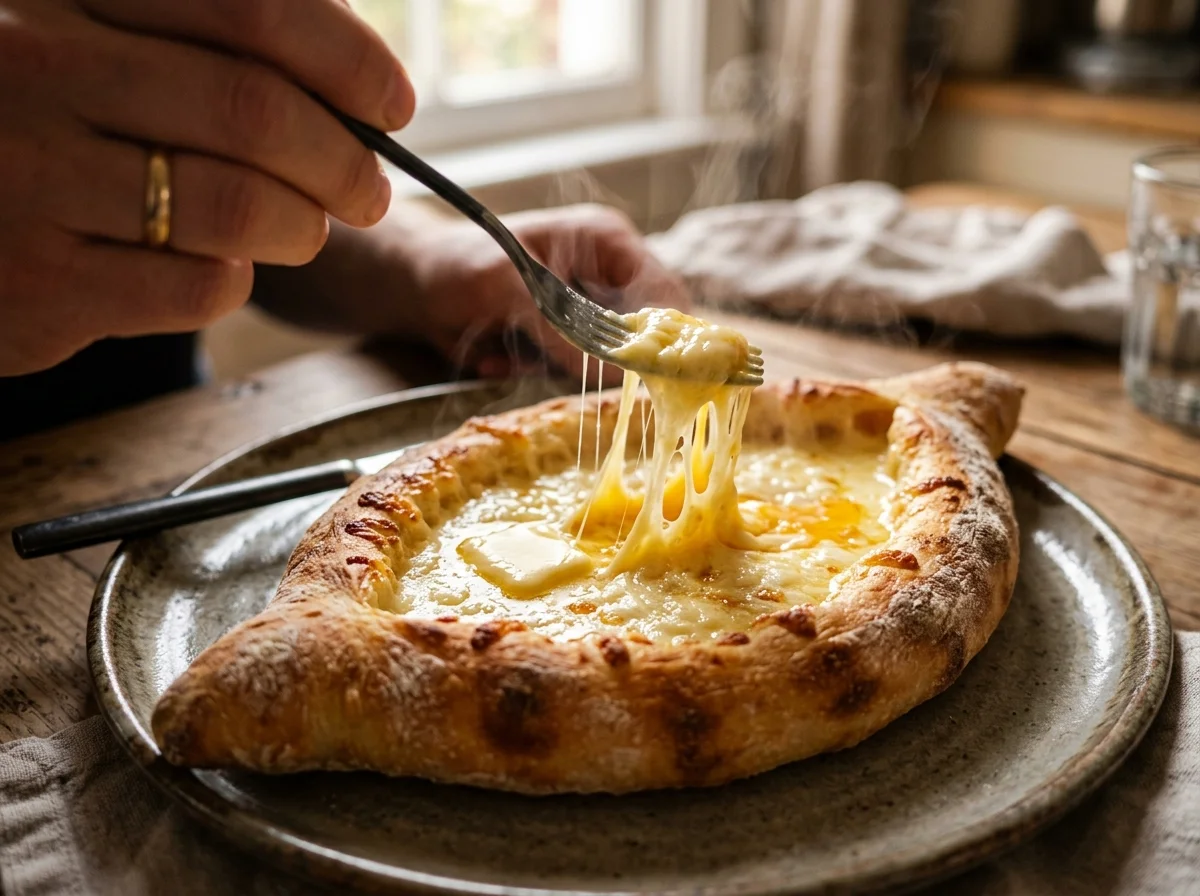
Break the bread open and hot cheese flows out. Break the yolk, stir it into the butter, then tear off a piece of the crust and drag it through. Khachapuri (ხაჭაპური) from Georgia (formerly called Gruzia in Russian) is a signature dish of Georgian cuisine (in Japanese), and once you have it you won't forget it.
"Khachapuri" means "cheese bread" in Georgian, a compound of "ხაჭო (khacho) = curd cheese" and "პური (puri) = bread." Its history is said to reach back at least to the Middle Ages, and the usual explanation is that herders in the Caucasus wrapped cheese in bread dough to store and carry it.
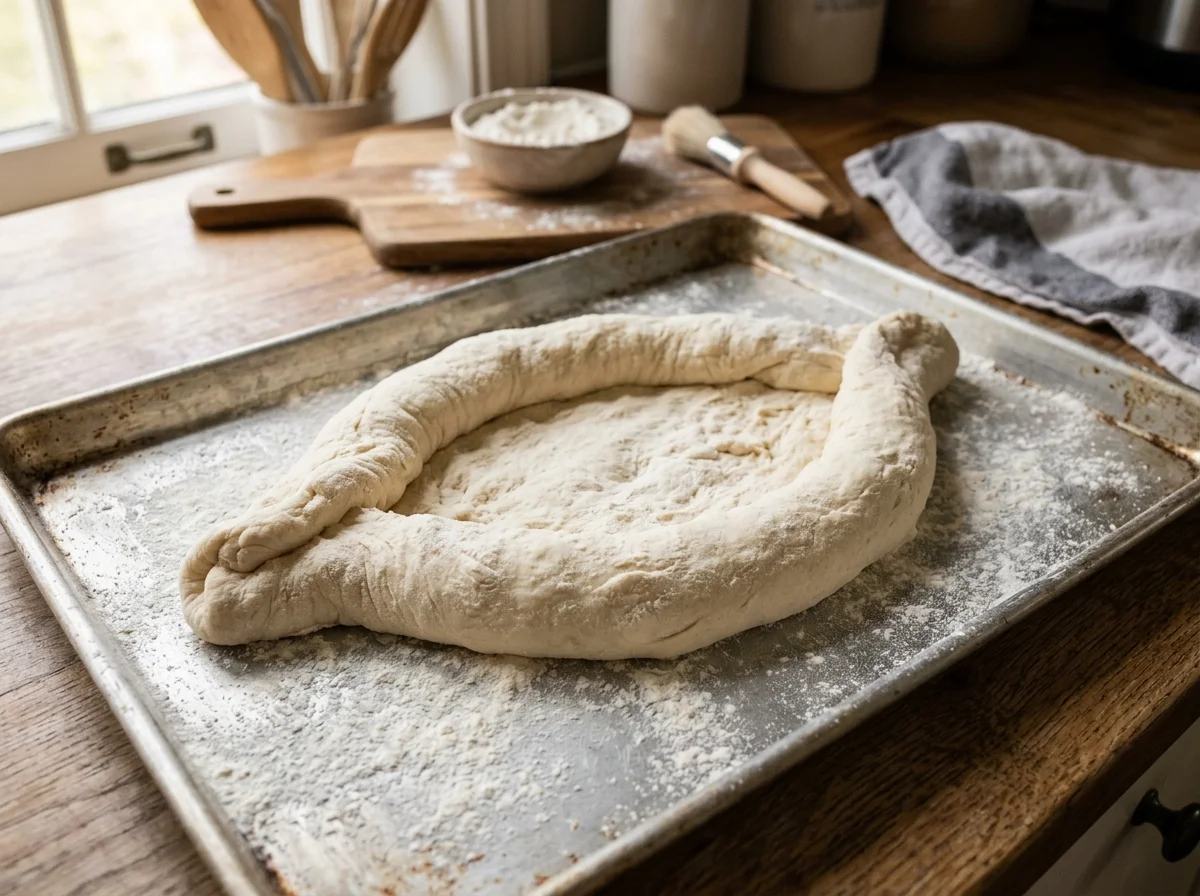
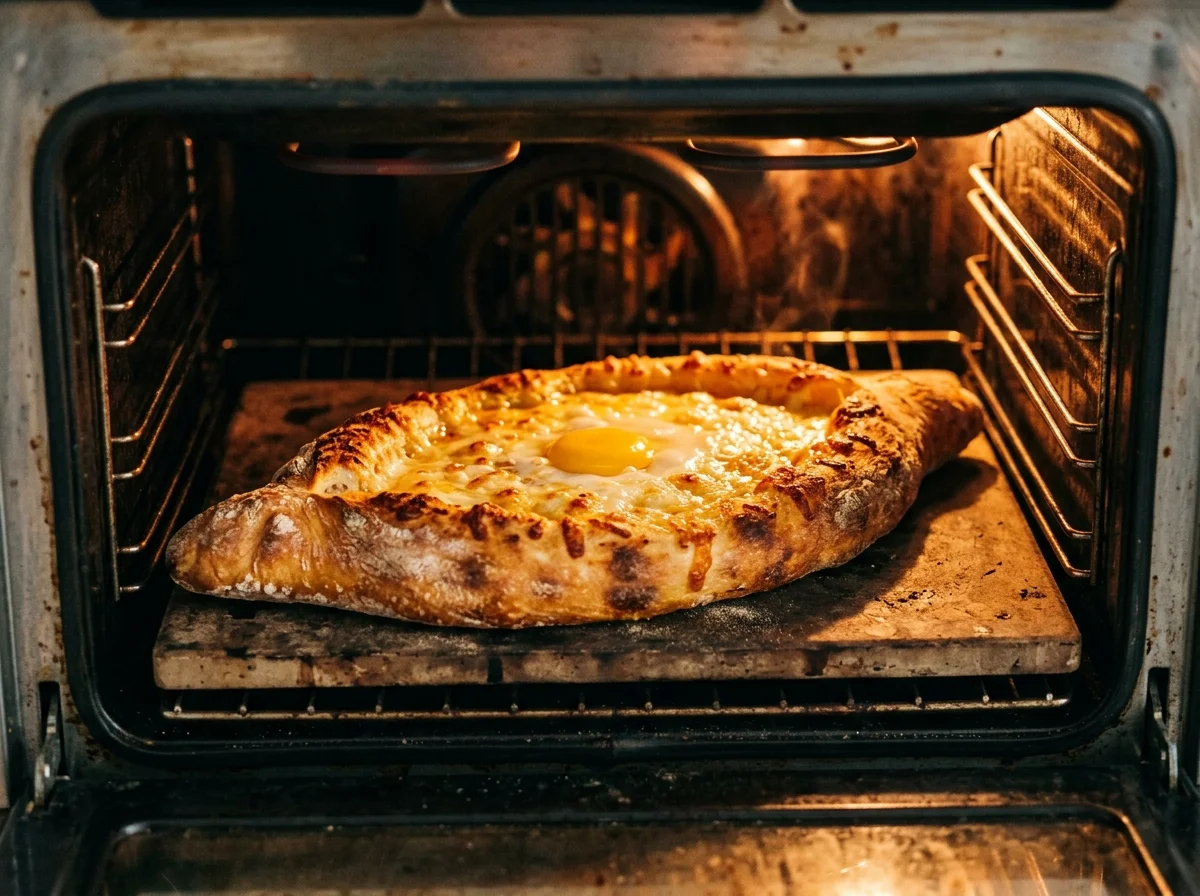
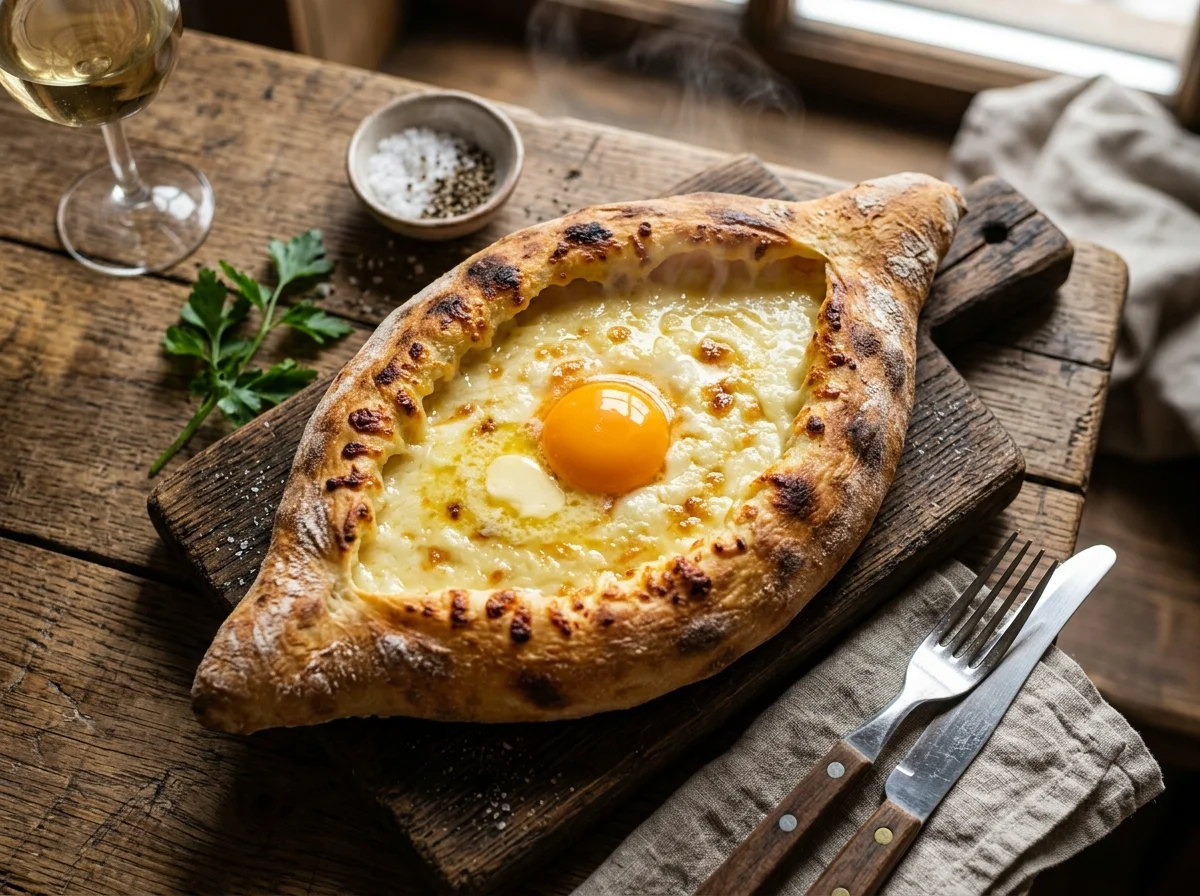
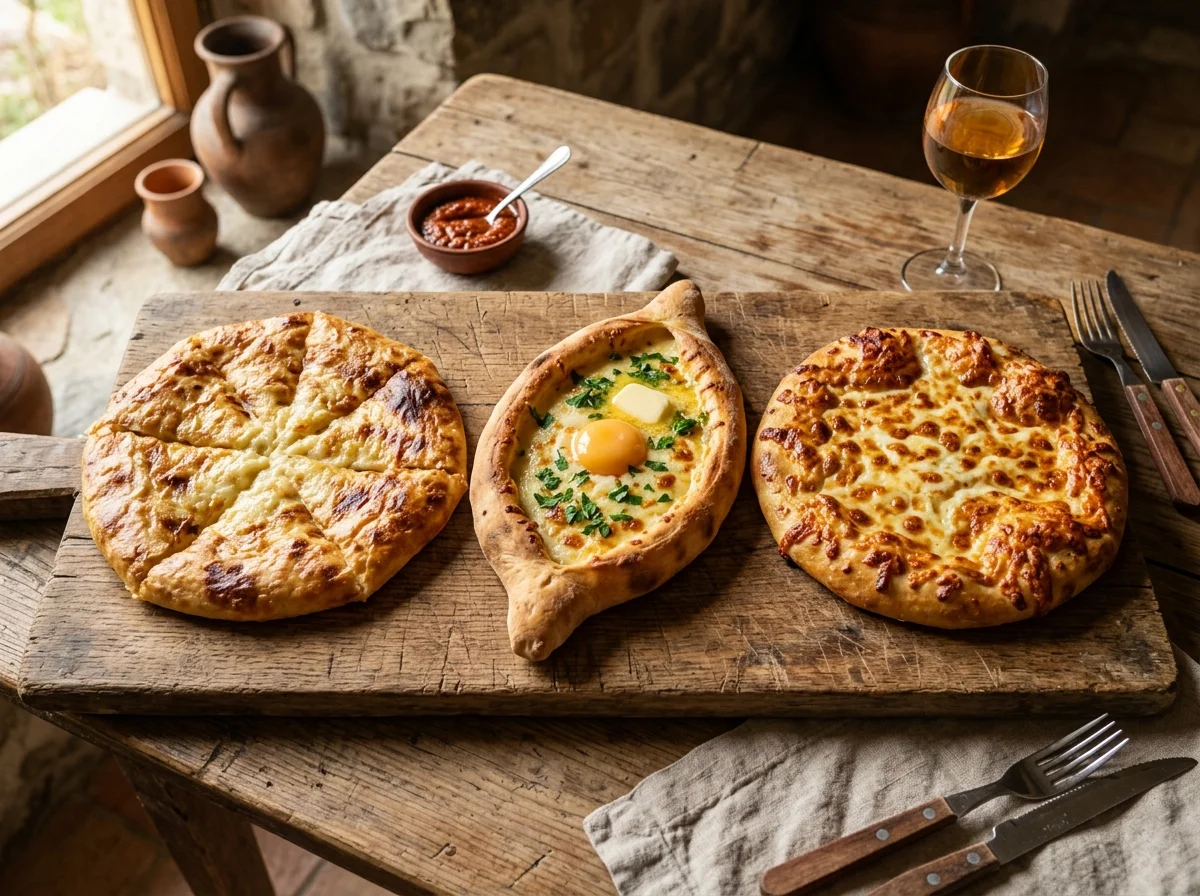
Different regions of Georgia have different shapes of khachapuri. The most famous is Adjaruli khachapuri (boat-shaped) from the Adjara region on the Black Sea coast, an open boat holding cheese, egg and butter. In the Imereti region, Imeruli khachapuri (round) is the mainstream: the cheese is fully enclosed in the dough.
This article draws on English-language Georgian food sites and recipes by Georgian cooks to give a khachapuri you can make from ingredients available at an ordinary grocery store. It centers on the Adjaruli (boat) style, with the Imeruli (round) method alongside. Pair it with borscht (in Japanese) and you can recreate an Eastern European and Caucasus table at home.
Ingredients (serves 4, makes 2 breads)
If you can't find feta, mix 150 g cottage cheese with 1 tsp salt to approximate its saltiness and tang. Ricotta salata is also a good substitute. Look for feta at well-stocked supermarkets or Greek and Mediterranean groceries.
This dish contains wheat, milk and egg. Some feta is made from sheep or goat milk, so if you have a cow's milk allergy, check the ingredient label. For gluten-free you can use a rice-flour-based bread dough, but the texture is quite different.
Cooking tips
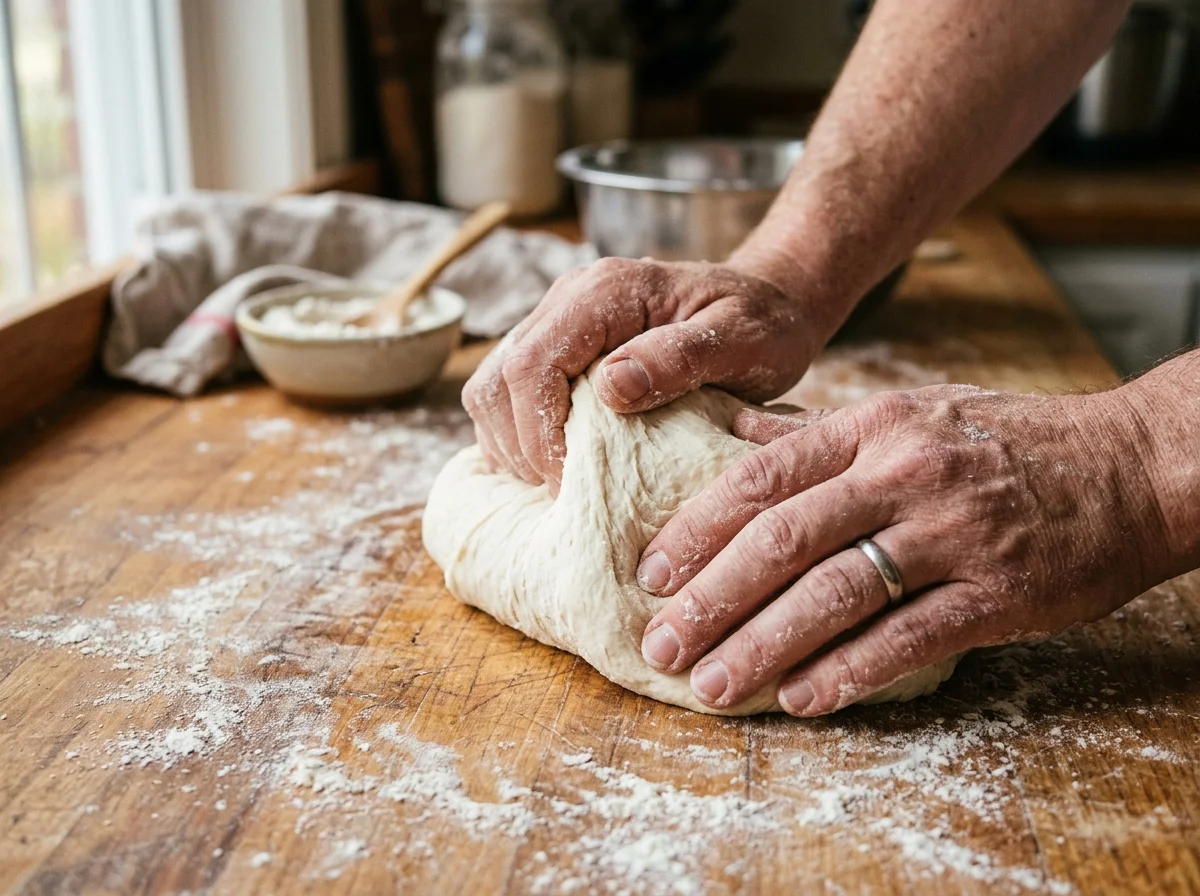
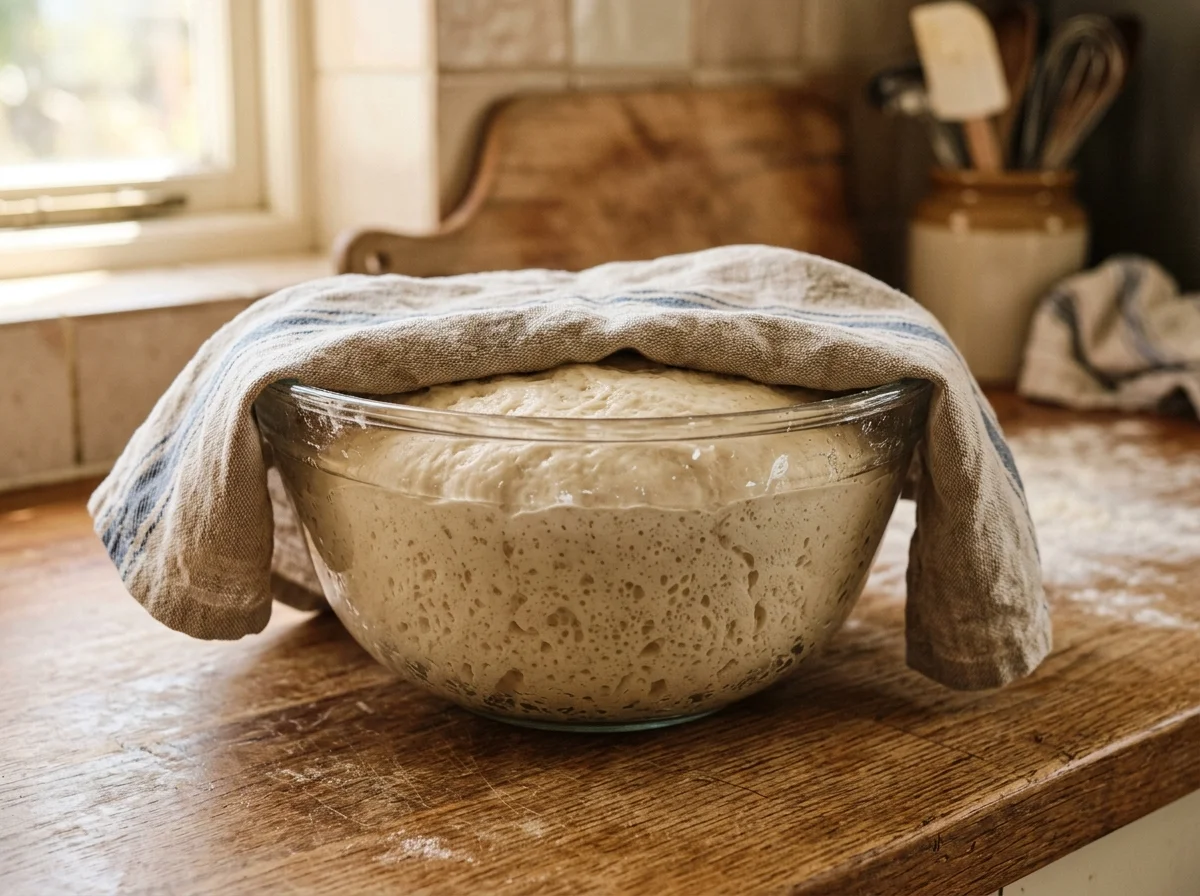
After kneading, seal the dough in plastic wrap and refrigerate, and it can ferment slowly in the cold until the next day. Prepare it the night before, and on the day you only fill and bake. Cold-fermented dough develops plenty of gluten, so it is supple and easy to handle. Take it out of the refrigerator and let it come to room temperature for about 30 minutes before shaping.
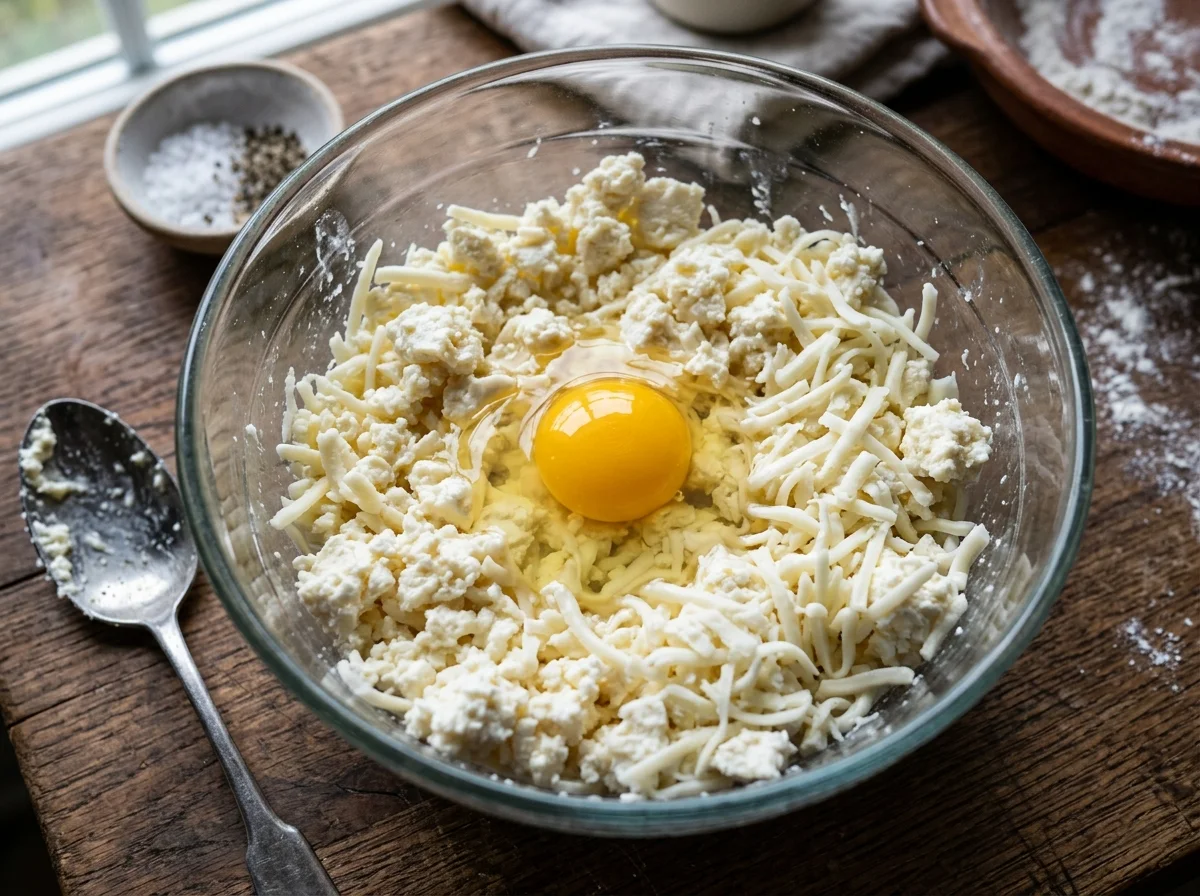
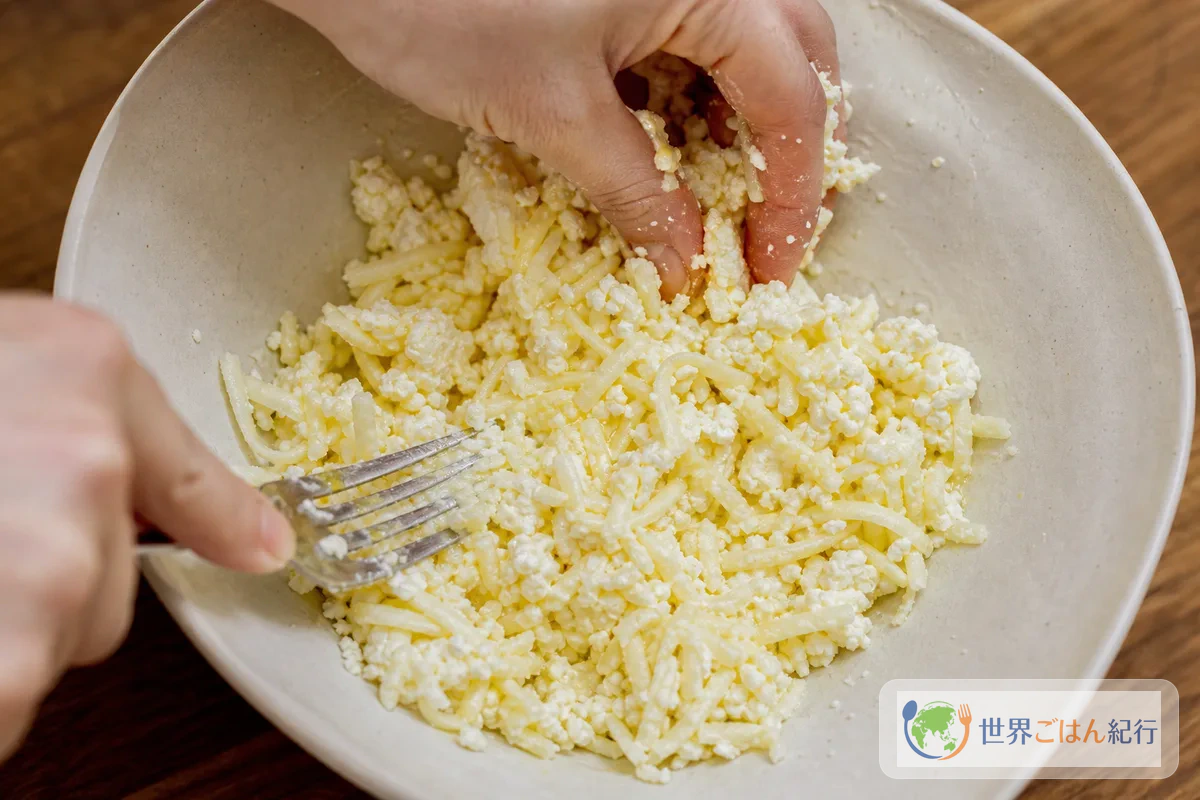
The basic ratio is mozzarella to feta of 5:3. Increasing the feta strengthens the saltiness and tang for a flavor closer to traditional Georgian khachapuri. Increasing the mozzarella makes it milder. Adjust to taste.
Without an oven, cover a skillet and cook over low to medium-low heat for 7–8 minutes per side. In this case the Imeruli (round) style is easier. Lightly oil the bottom of the pan and cover it to steam-bake so the cheese melts. When flipping, use a large plate to turn it over for the least risk of failure.
You can freeze it before baking (after filling the dough with cheese). Wrap the baking sheet with plastic and put it in the freezer, then once frozen move it to a freezer bag. To eat, bake from frozen in a 200°C oven for 25–30 minutes. Freezing after baking tends to separate the cheese when reheated in the microwave, so freeze before baking.

Variations
Khachapuri has different variations in each region of Georgia. Once you've mastered the basic Adjaruli, try the other styles.
Megruli khachapuri
A style from the Samegrelo region of western Georgia, characterized by cheese also placed on top of a round Imeruli khachapuri before baking. It is a "double cheese" khachapuri with cheese both inside and outside. To finish, scatter about 50 g shredded mozzarella over the top and bake 2 more minutes until the cheese melts. It looks like a pizza and is irresistible to cheese lovers.
Penovani khachapuri (puff pastry version)
Handy when you're short on time. Roll out store-bought frozen puff pastry sheets into squares, put the cheese filling in the center and fold up the four corners. Bake at 200°C for 20 minutes. The traditional version uses a Georgian layered dough, but frozen puff pastry is an excellent substitute. Its ease makes it simple to work into a weeknight dinner.
Miso twist
Miso and cheese go superbly together. Adding 2 tbsp white miso in place of the feta brings saltiness and fermented umami for a unique flavor. Mixing chopped shiso or myoga into the cheese gives you an original khachapuri with Japanese herbs.
Vegan version
Instead of cheese, use a filling of 300 g drained firm tofu mixed with 2 tbsp white miso, 3 tbsp nutritional yeast, 1 tbsp lemon juice, 1/2 tsp salt and a little turmeric. Instead of the egg yolk, top with soy milk cream colored with turmeric. Though fully vegan, it recreates a cheese-like richness and tang.
Background: the Georgian supra table and khachapuri
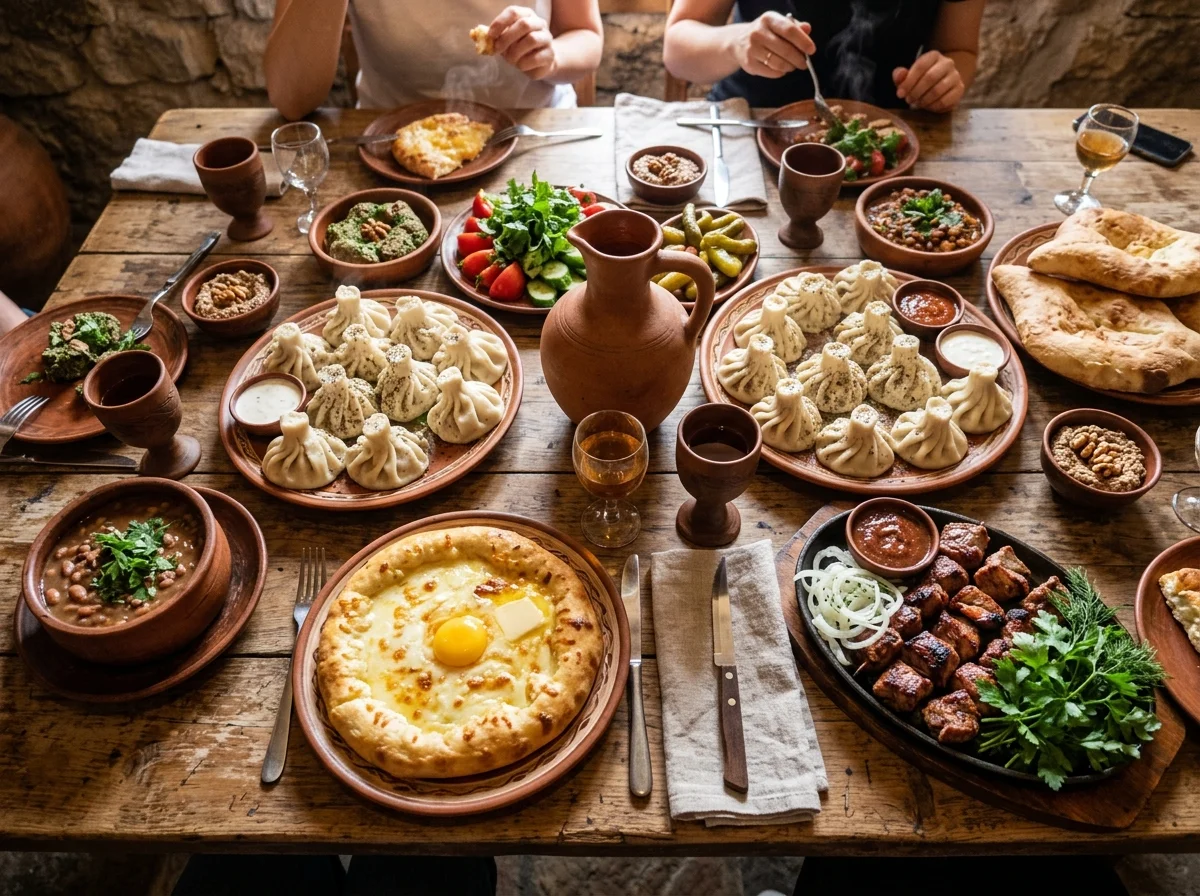
Khachapuri is eaten in Georgia not only in everyday meals. At the traditional Georgian feast called the supra (სუფრა), khachapuri is always placed at the center of the table. A supra is not just a dinner party but a ceremonial feast in which toasts are repeated under the direction of the tamada (toastmaster).
Georgia is considered one of the birthplaces of wine, and traces of winemaking 8,000 years old have been excavated (University of Pennsylvania Museum, 2017). This wine culture, the supra tradition and khachapuri form a trinity that shapes Georgian identity.
Khachapuri culture by region
Each region of Georgia has its own khachapuri, and lively debates over "our khachapuri is the best" are everyday local pride.
While Adjaruli is the most popular with tourists, locals love Imeruli as "everyday khachapuri." In the Guria region on the Black Sea coast, Gurulis khachapuri, with a whole boiled egg inside, is made as a holiday feast.
"The quality of the cheese decides everything"
A recurring theme in Georgian food philosophy is a commitment to the quality of ingredients. In Georgia, sulguni cheese is handmade by small farms in various places, and the saltiness and elasticity vary by origin.
Whatever the kitchen, choosing the best cheese you can affects the result. Making it only with cheap pizza cheese from the supermarket tends to give a vague flavor, and adding feta gives a more defined taste.
FAQ
If you'd like to explore more of Eastern European and Caucasus cooking, see borscht (in Japanese) too. If you like Middle Eastern food, we also recommend hummus (in Japanese) and falafel (in Japanese). Turkish kebab, Lebanese tabbouleh and Israeli shakshuka and other Mediterranean and Middle Eastern flavors go superbly with khachapuri. A world food party with Peruvian ceviche (in Japanese) would be fun too.
Q1. Is khachapuri good cold?
It is overwhelmingly best fresh from the oven, but it can be eaten cold. Because the cheese sets as it cools, warm it in the microwave for 30 seconds to 1 minute, or reheat it in a toaster oven until the surface is crisp, to bring it close to fresh. However, the soft yolk of the Adjaruli style cannot be reproduced by reheating, so we strongly recommend eating it fresh whenever possible.
Q2. Can I make it without fermenting?
There are recipes without yeast. Substituting 2 tsp baking powder removes the rising time, but the airy bread texture is lost and the result is somewhat heavy. Keep it in mind as an emergency method for "I have no time but I really want it."
Q3. Is it OK for children?
The combination of dough and cheese is popular with children. However, it is safer to avoid the soft yolk of the Adjaruli style for small children. A version made as Imeruli (round) with the cheese filling cooked through is safe. If salt is a concern, reduce the feta and increase the proportion of mozzarella.
Q4. What drinks go with khachapuri?
In Georgia, it is typically paired with white wine (especially amber wine). Saperavi (red) and Rkatsiteli (white) are Georgian wines to look for. For non-alcoholic options, a yogurt drink (ayran or lassi) offsets the richness of the cheese. Sparkling water also goes well.
Q5. What can I do with leftover cheese filling?
Wrap it in spring roll wrappers and fry for instant cheese sticks. It is also good spread on bread and toasted. It can be a pizza topping, or tossed with boiled pasta for a Georgian-style cheese pasta. Use it up within 2 days.
Sources
- Tasting Table, "How to Make Khachapuri" (https://www.tastingtable.com/khachapuri-recipe), accessed 2024
- University of Pennsylvania Museum, "Earliest Known Winemaking" (https://www.penn.museum/sites/wine/), accessed 2017