Deep in the Oven, Meat and Vegetables Become One Pot
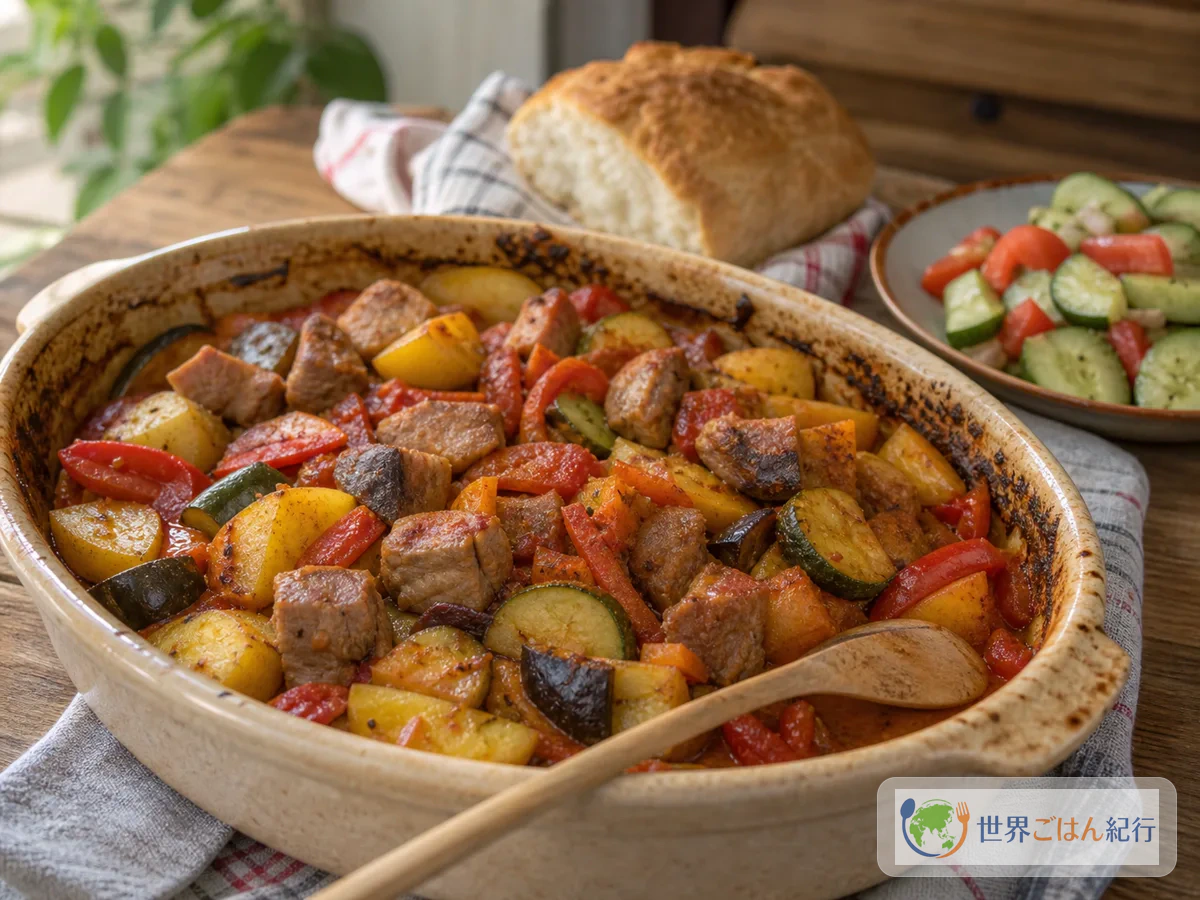
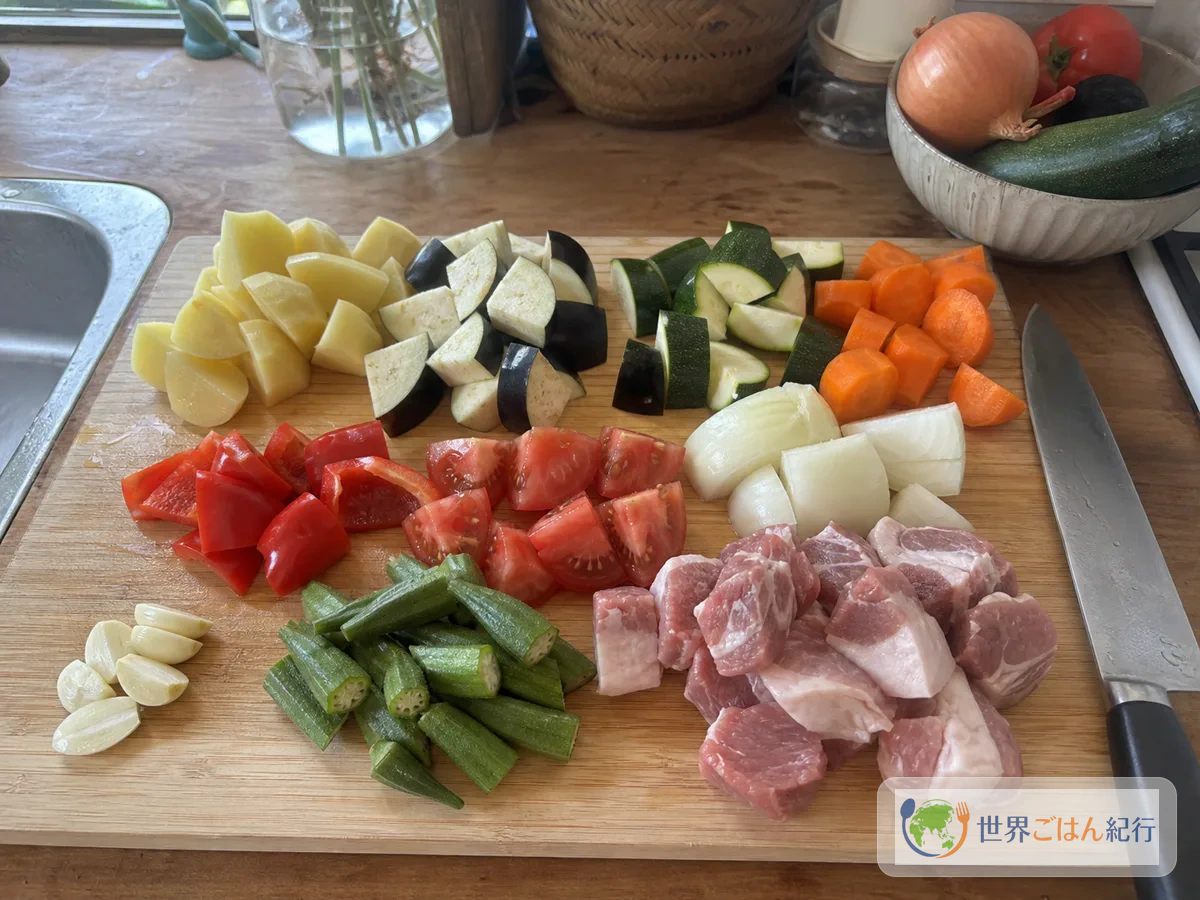
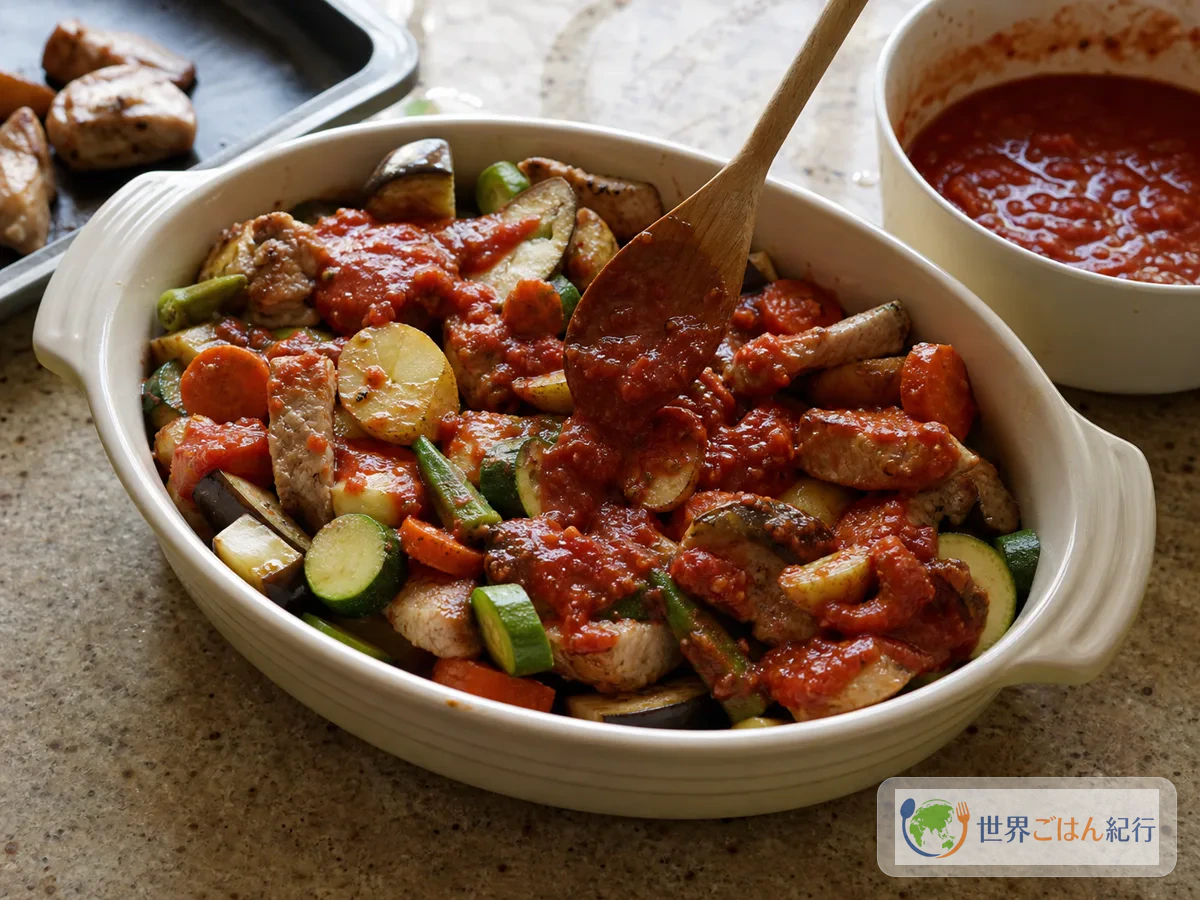
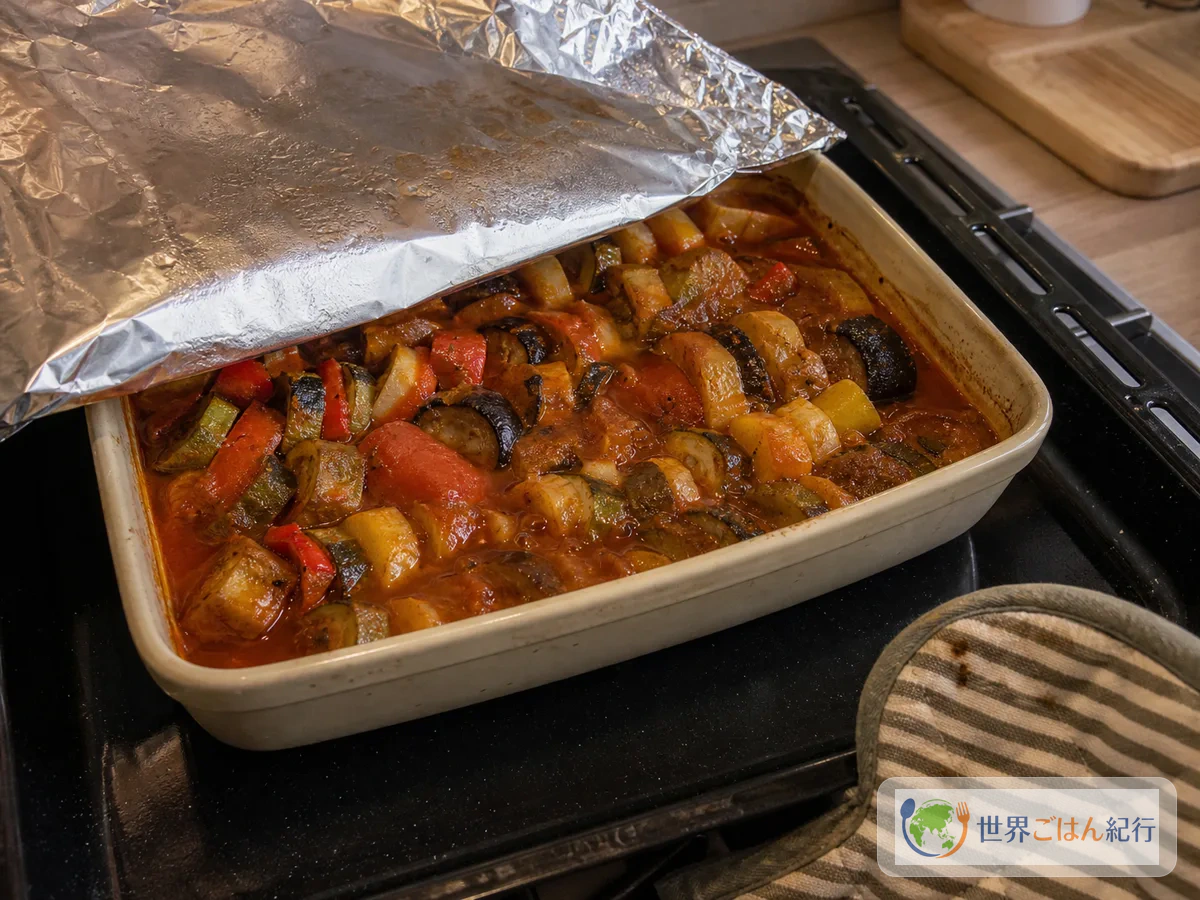
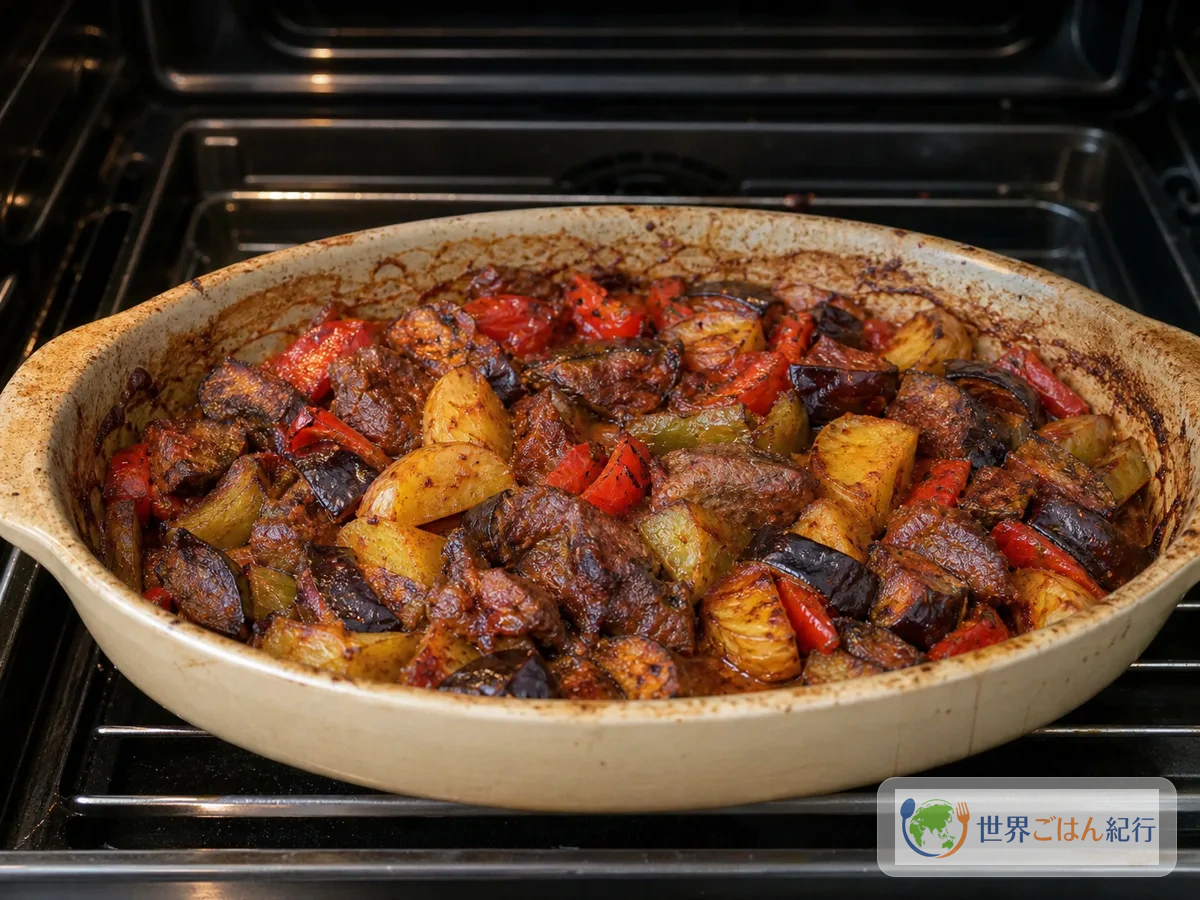
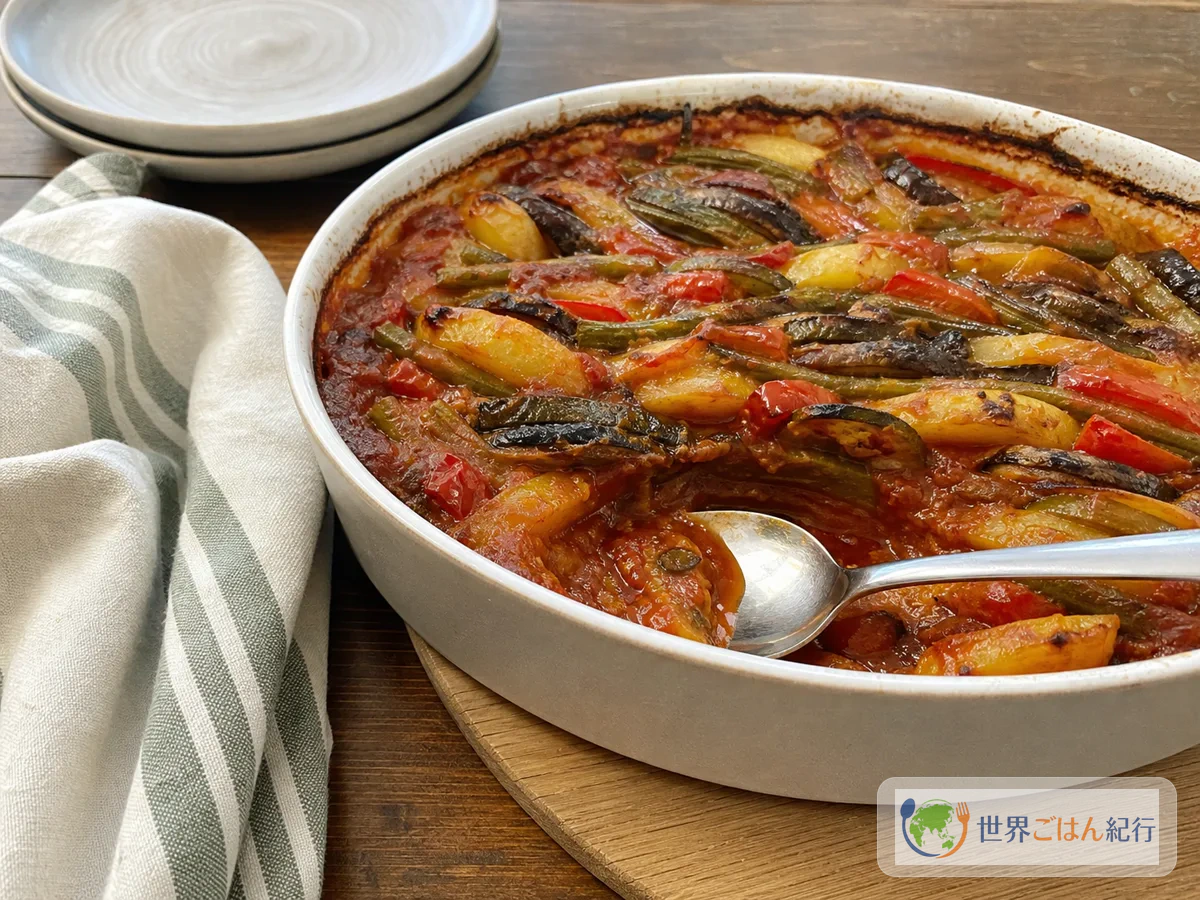
On a Sunday afternoon, cut the potatoes big, set the eggplant and zucchini down in chunks with their skins on, and suddenly the cutting board looks like a market crate. Layer on the seared pork shoulder and a red pepper sauce and slide the whole baking dish into the oven. Come back to the kitchen after a while and the tang of tomato has rounded out, the fat of the meat has seeped into the corners of the vegetables, and dinner is already underway before you open the pan.
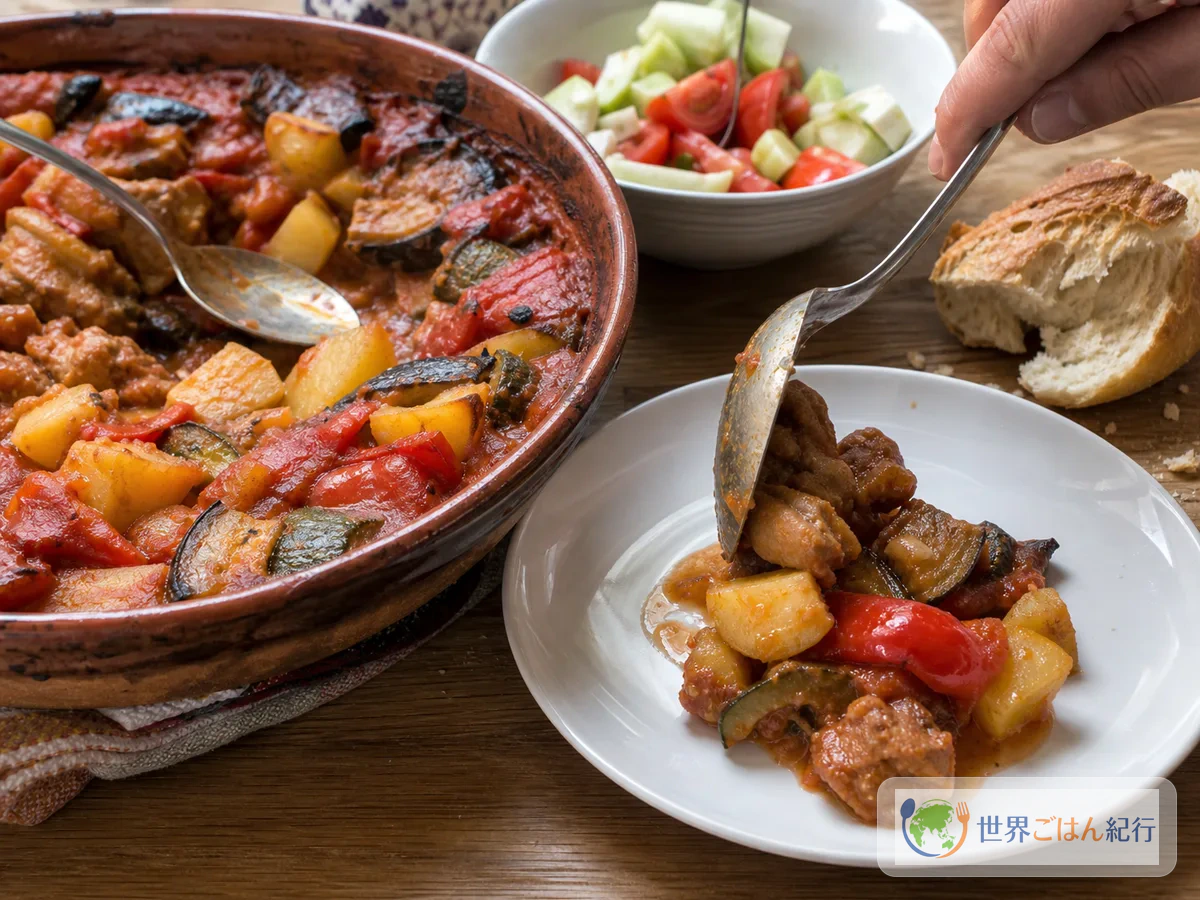
Turli tava (Турли тава) is an oven-baked dish of meat and seasonal vegetables eaten in North Macedonia and around the Balkans. Tava means a pan or baking dish, and it is easy to remember the name as "a tava with all sorts in it." The meat varies by household and restaurant, with pork, beef, lamb, or chicken, and the vegetables are whatever is in season, such as potato, eggplant, zucchini, bell pepper, tomato, okra, and carrot, cut large.
The hard part when making it elsewhere is not the flavor but the moisture. Eggplant, zucchini, and tomato all go in one dish, so if you bake without thinking it easily becomes "the cooking liquid of roasted vegetables." In this article you sear the meat first, reduce the sauce a little, cover at first to cook through, and finally uncover to bake it firm. Even without a clay pot or local earthenware, a baking dish of about 20 cm to 28 cm and a home oven can take it to a concentration fit for the table.
If you want to know a similar kitchen flow first, North Macedonia's bean dish tavče gravče (in Japanese) helps you grasp the sense of baking firm in a tava. For the direction of moving the sear from the meat into a red sauce, Serbia's mućkalica (in Japanese) is a close dish too.
Even in local introductions, the combinations of meat and vegetables vary quite a lot. This article makes pork shoulder the star because it is easy to gather and its baking time is predictable. It does not deny the household flavors of lamb or beef; it is a home version leaning toward a combination that is hard to fail the first time.
What Kind of Dish Is It?
Turli tava is less a dish where you make a tomato stew and then move it to a dish than one where the meat, vegetables, and sauce come together in a single tava. Descriptions on Wikipedia and TasteAtlas also share the points of North Macedonia, the Balkans, oven baking, and the combination of meat and vegetables. In the home recipe on Macedonian Cuisine, the flow of layering meat and vegetables and putting them in the oven is central.
The Turkish word türlü, close in name, is widely seen as the name of dishes that combine various vegetables. The Balkan Turli Tava is an extension of that, but what to protect here is "the browning of the meat," "the red sauce of pepper and tomato," and "finishing in the baking dish." If you lean too far toward simmering tender in a pot like ratatouille, it may look similar, but the baked-dish aroma that makes you want to dip bread weakens.
What matters is not cutting the vegetables too small. Potatoes 2.5 cm to 3 cm, eggplant and zucchini in thick half-moons, and bell pepper in large chunks. Cut small they cook faster, but moisture comes out as they bake and everything in the dish becomes the same red stew. The goodness of turli tava is that, in the same dish, the potato takes up sauce, the eggplant slightly collapses, the meat keeps its browning, and the pepper turns sweet, each with a different expression.
Locally it is often served with bread, white cheese, salad, and yogurt-based sides. At a home table, baguette or country loaf, a cucumber and tomato salad, and plain yogurt with a little salt mixed in go well. You can eat it over rice too, but the first time, scooping the sauce with bread makes you feel the Balkan baked-dish character more.
Ingredients (serves 4)
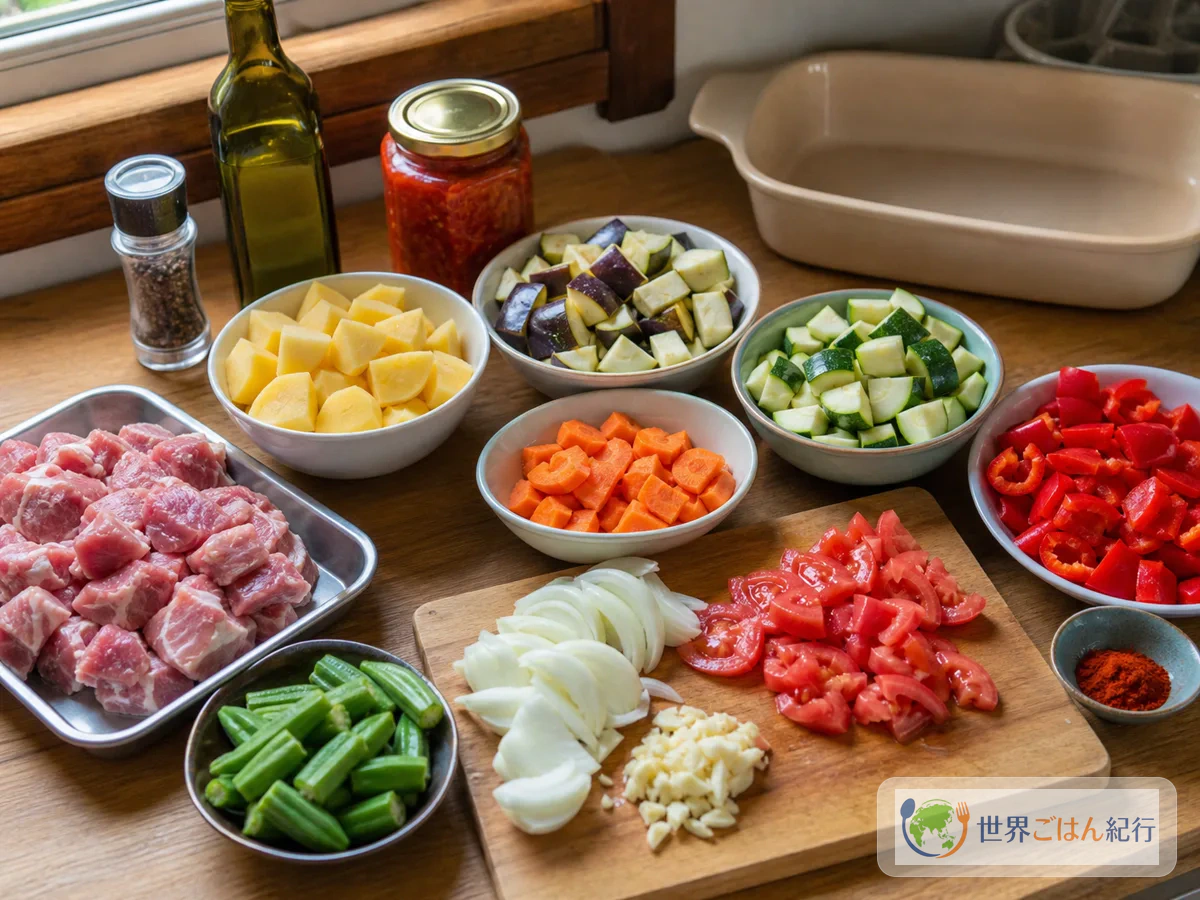
This quantity is a main dish for four. For a baking dish, a deep 20 cm square works, or an oval or rectangle of about 22 cm to 28 cm is easy to use. A dish too shallow lets the liquid overflow partway, and one too deep makes the top slow to bake firm.
This recipe uses pork. Cook pork through to the center, and if you are concerned, confirm 75°C or more at the center with a thermometer. Commercial ajvar and tomato paste may be handled in the same facility as wheat, nuts, and dairy depending on the product. If you have allergies, check the labels.
What to Wonder About When Shopping
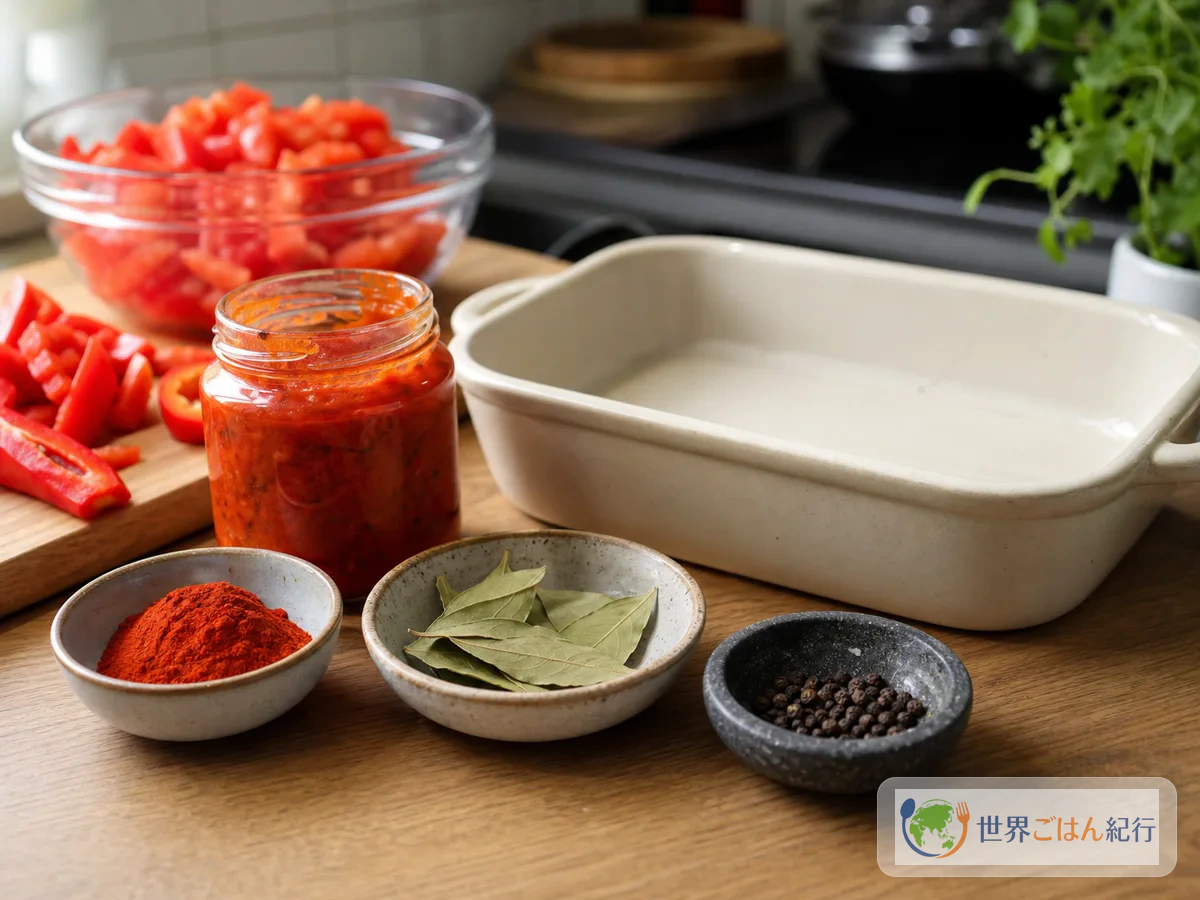
Meat and vegetables are fine from a neighborhood grocery. What may be worth seeking out are ajvar, smoked paprika, and a baking dish. Ajvar is a red pepper paste widely used in the Balkans that adds a sweet redness hard to get from tomato alone. It is not required, but adding it moves the dish from "tomato-flavored roasted vegetables" toward "a pepper baking dish."
For the first time, the order of priority is sweet paprika powder, ajvar, and a baking dish. Smoked paprika is a helper for when you feel the aroma of open-fire roasted meat and vegetables is missing. If your existing gratin dish is deep and you can cover it firmly with aluminum foil as a lid, there is no need to buy a new dish.
Smoked paprika at 1/2 teaspoon is enough. It supplements the aroma of charcoal, so making it the star lets the smell of smoked powder win. Using sweet paprika as the foundation and smoked paprika only a little at the end makes it hard to fail.
Even without an earthenware tava, a baking dish at least 4 cm deep will do. Make sure it is one that can go in the oven, not a dish for direct flame.
Method: Brown the Meat, Layer the Vegetables, and Steam-Bake
For turli tava, it is steadier to build the browning of the meat and the concentration of the sauce first rather than mixing everything and baking from the start. The oven temperature changes partway. In the first half you cover and cook at 190°C, and in the second half you uncover at 200°C to drive off moisture in the dish.
Choices for Getting Closer to the Original
| What you wonder about | What to protect | What you may substitute |
|---|---|---|
| Meat | Brown the surface | Swap pork shoulder for lamb, beef chuck, or chicken thigh |
| Tava | Bake firm in the oven | Swap an earthenware tava for a heatproof gratin dish |
| Red flavor | Build a base of sweet paprika and tomato | Without ajvar, increase roasted peppers or tomato paste |
| Vegetables | Cut large and don't let too much moisture out | Swap okra for green beans, zucchini for a little pumpkin |
| How to eat | Serve with bread or salad to catch the sauce | If serving over white rice, make the sauce a bit richer |
If you don't have ajvar, mix 1 tbsp tomato paste, 1 tsp sweet paprika, and 1 tsp olive oil and use that. If you can broil red peppers until the skin blackens, peel, and chop them, it gets even closer. Ketchup brings forward sweetness and vinegar, so it holds together better not to use it as a substitute in this dish.
When you change the meat, change the baking time too. Beef chuck can be made in the same size, but if it is a tough cut, extend the covered steam-bake in the first half by 10 minutes. For chicken thigh, cut 3.5 cm cubes, shorten the step 2 browning to 1 minute 30 seconds per side, and confirm 75°C or more in step 6. Lamb is strongly aromatic, so halve the bay leaf and serve with a little lemon to make it easier to eat.
Where Things Go Wrong
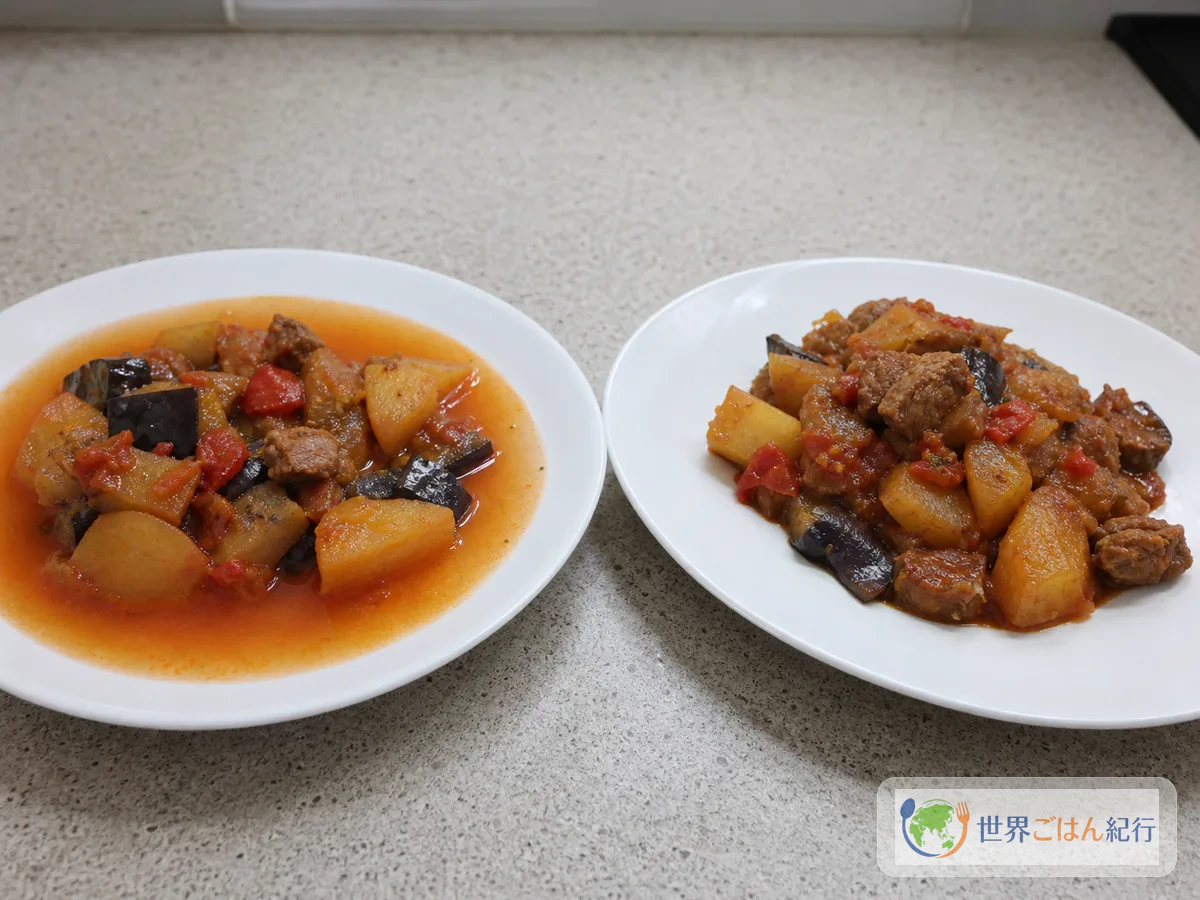
The most common failure is watery results. There are three causes: cutting the vegetables too small, putting in the sauce without reducing it, and a short uncovered baking at the end. Because this dish uses many watery vegetables, stop the initial water at 150 ml. If you can see liquid sloshing at the bottom of the dish before baking, it is already too much.
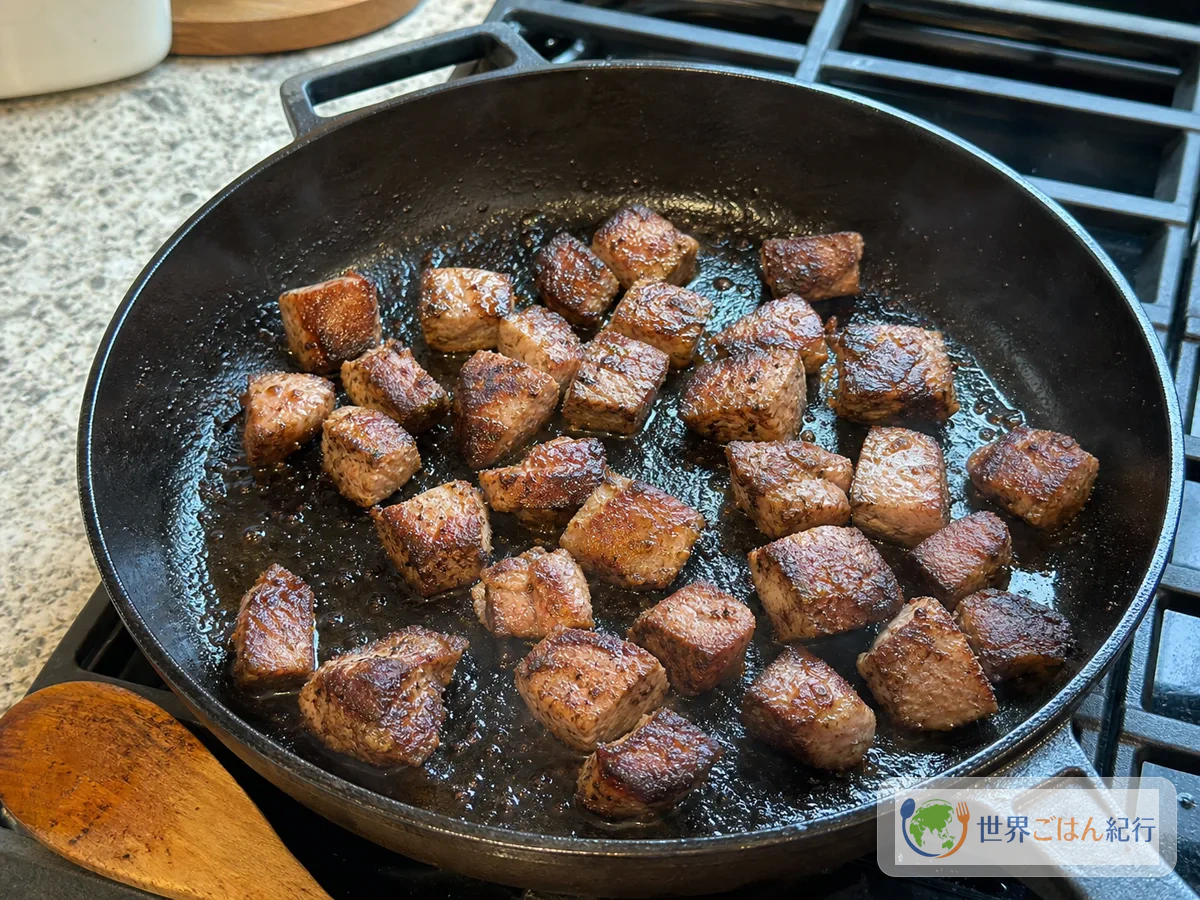
If the meat is tough, either it was cooked too far at the browning stage, or a lean cut was cut too small. In step 2, brown only the surface and return it to the dish half-raw. Cooking the meat through to the center is the oven's job. Made with stew-cut scraps or thin slices, fat and fibers show before the presence of meat, so cut from a block if you can.
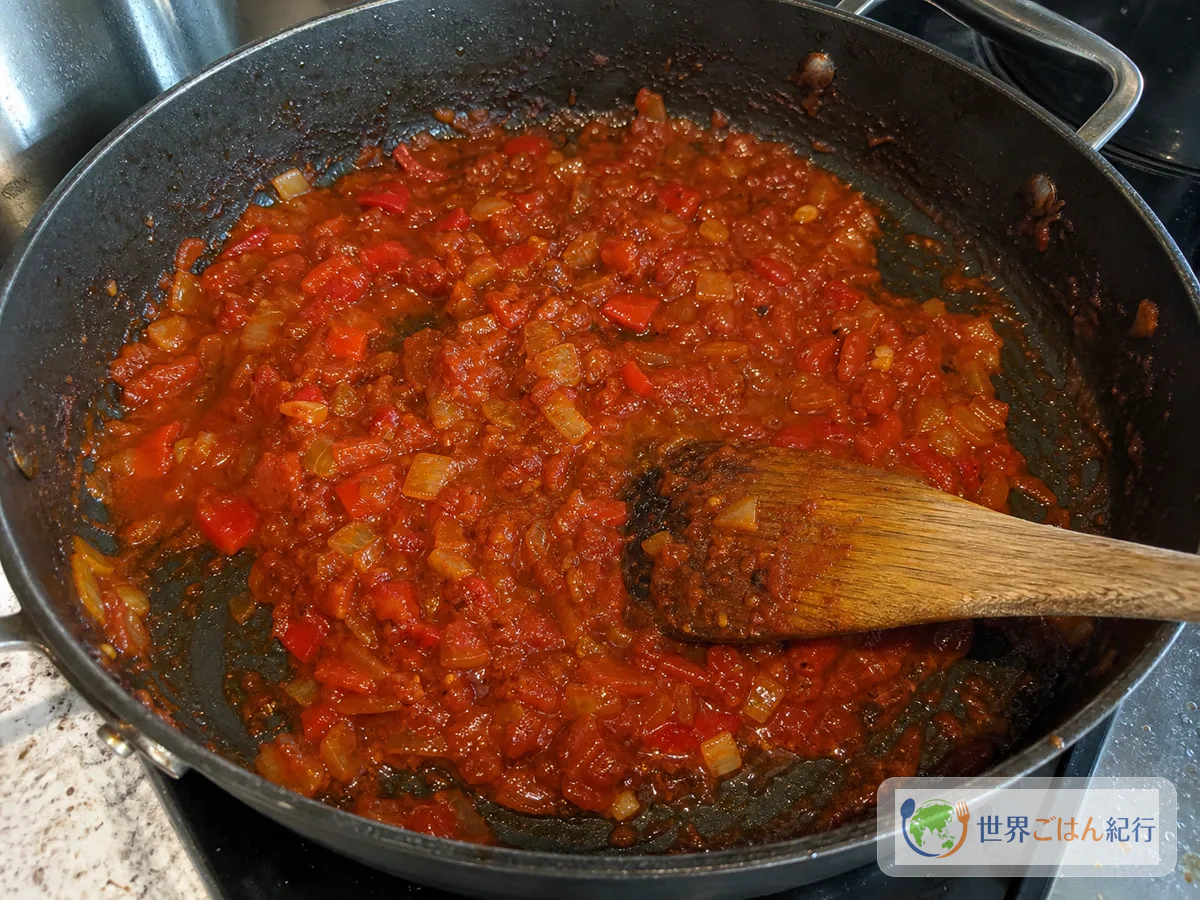
If the flavor is blurry, suspect a lack of aroma rather than salt. Cook the paprika over low heat without scorching it, and cook off the acidity of the tomato for 4 to 5 minutes. Adding only salt after baking tends to leave the liquid at the bottom of the dish salty and the inside of the vegetables bland. If adjusting at the finish, a pinch of salt, a few drops of lemon, and chopped parsley bring back the outline better.
Storing and Eating the Next Day
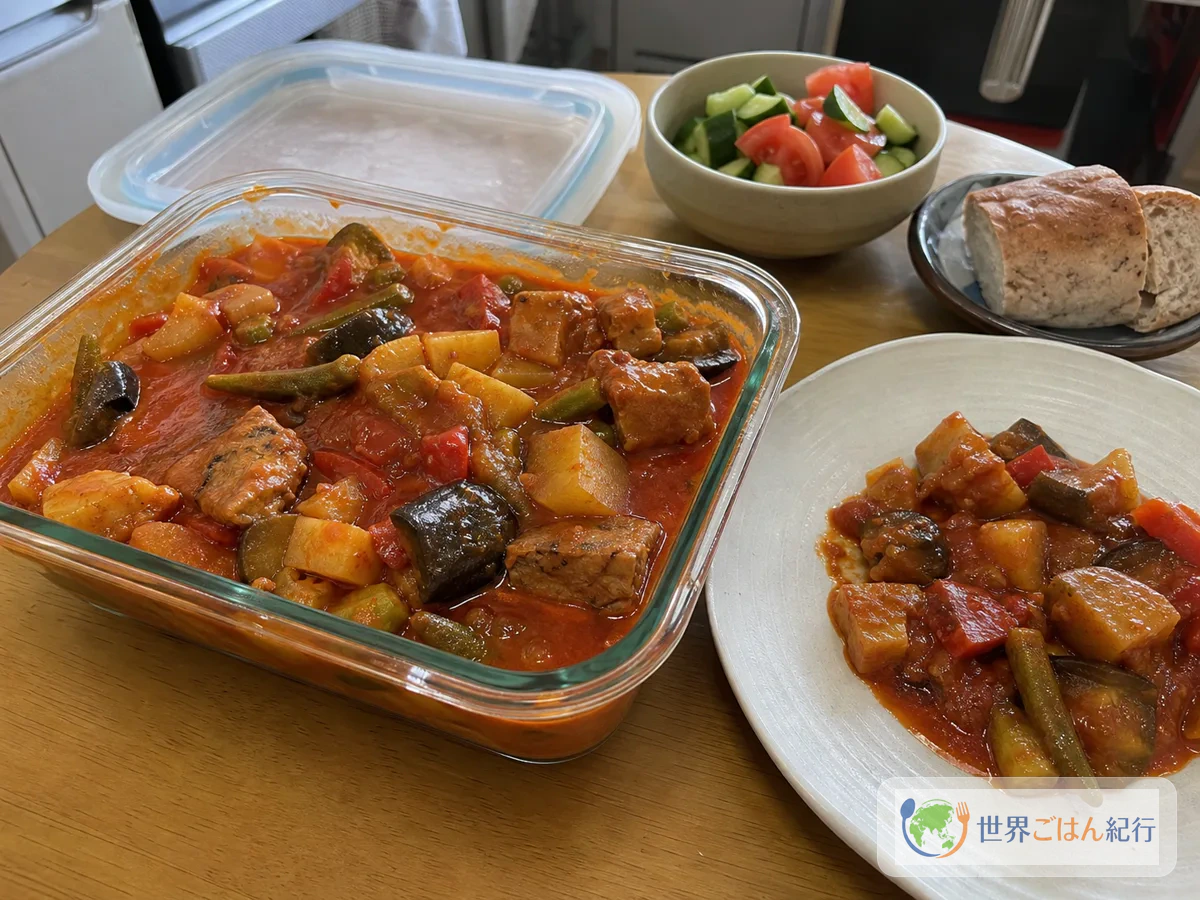
For storage, cool slightly and move to a shallow container and refrigerate. Because this dish is high in the moisture of pork and vegetables, do not leave it long at room temperature. It can be frozen, but the texture of potato and eggplant breaks down. If you freeze it, use fewer potatoes and divide into single servings, laid flat. This article does not give a storage-day guideline because no source for one could be confirmed.
For reheating, the guide is 12 minutes at 180°C in an oven, or in a microwave one serving at 600 W for 2 minutes, stir once, and 40 seconds more. When cold the sauce looks stiff, but it relaxes as it warms. If you add water, keep to 1 tbsp, and if you add too much, move it to a small pot and reduce over medium heat for 2 minutes.
The next day, putting it on bread as a light open-faced sandwich is easy. Adding about 2 tsp yogurt cuts the fat of the red sauce and makes it easier to eat. With rice, crush it slightly coarse and warm, add black pepper and parsley, and it can go in a lunch box as the main.
FAQ
Can I make it without ajvar?
Yes. Mix 1 tbsp tomato paste, 1 tsp sweet paprika, and 1 tsp olive oil and add it with the tomatoes in step 3. If you can roast and chop red peppers, it gets closer. Ajvar is a shortcut, but turli tava itself is a home dish of baking seasonal vegetables and meat, so it is not a dish you can't make without it.
What do I do if I don't have an oven?
You can make it in a deep skillet. In step 4, return the ingredients to the skillet, cover, and steam-braise over medium-low heat for 25 minutes until a bamboo skewer goes through the potatoes. Then uncover and cook over medium heat for 8 to 10 minutes, driving off moisture without scorching the bottom. However, the top will not color, so it leans more toward a stew than the oven version.
Is the okra necessary?
It is not essential. Because the seasonal vegetables in local home versions vary, it works without okra. But adding okra helps the sauce hold together a little and keeps moisture from floating at the bottom of the dish. When leaving it out, adding 50 g more potato steadies the moisture balance better than increasing the zucchini.
Can I make it spicy?
Yes. In step 3, add 1/4 tsp chili flakes, or 1 seeded green chile. Even when adding heat, don't try to make it spicy by increasing the smoked paprika. The smoky aroma gets strong and hides the sweetness of the vegetables.
Can I prepare it the day before?
You can prepare through step 4 and leave it refrigerated for half a day. Rest it 20 minutes at room temperature just before baking, and if still cold, extend step 5 by 5 minutes. If you bake it fully and eat it the next day, the sauce tends to stiffen on reheating, so after moving it to a dish, drizzle 1 tbsp water over it and warm it in a 180°C oven.
What to Cook Next
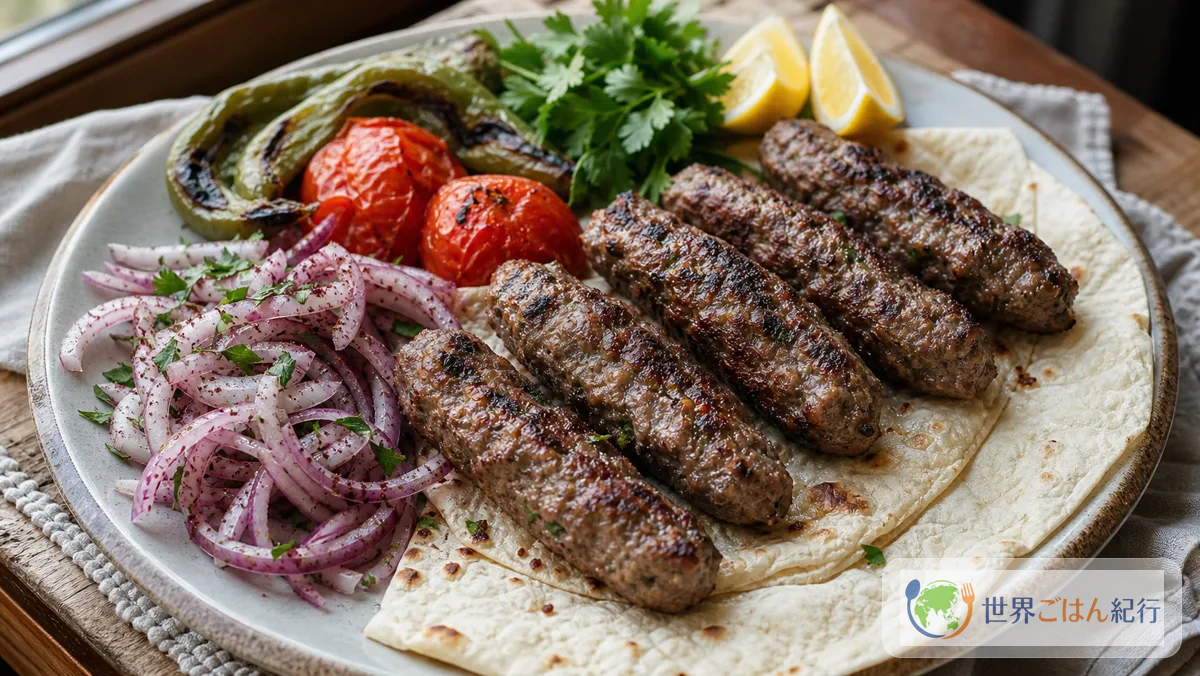
To continue with North Macedonian tava dishes, the bean dish baked firm, tavče gravče (in Japanese), is a natural next plate. To compare the direction of meat and red sauce, go on to Serbia's mućkalica (in Japanese) and get the sense of returning seared meat to a stew. As Balkan grilled dishes, ćevapi (in Japanese), grilled minced meat, and Greek moussaka, layered in the oven, connect to a similar table.
Sources
- Wikipedia, "Türlü": https://en.wikipedia.org/wiki/T%C3%BCrl%C3%BC
- TasteAtlas, "Turli Tava": https://www.tasteatlas.com/turli-tava
- Macedonian Cuisine, "Turlitava": https://www.macedoniancuisine.com/2016/01/turlitava.html