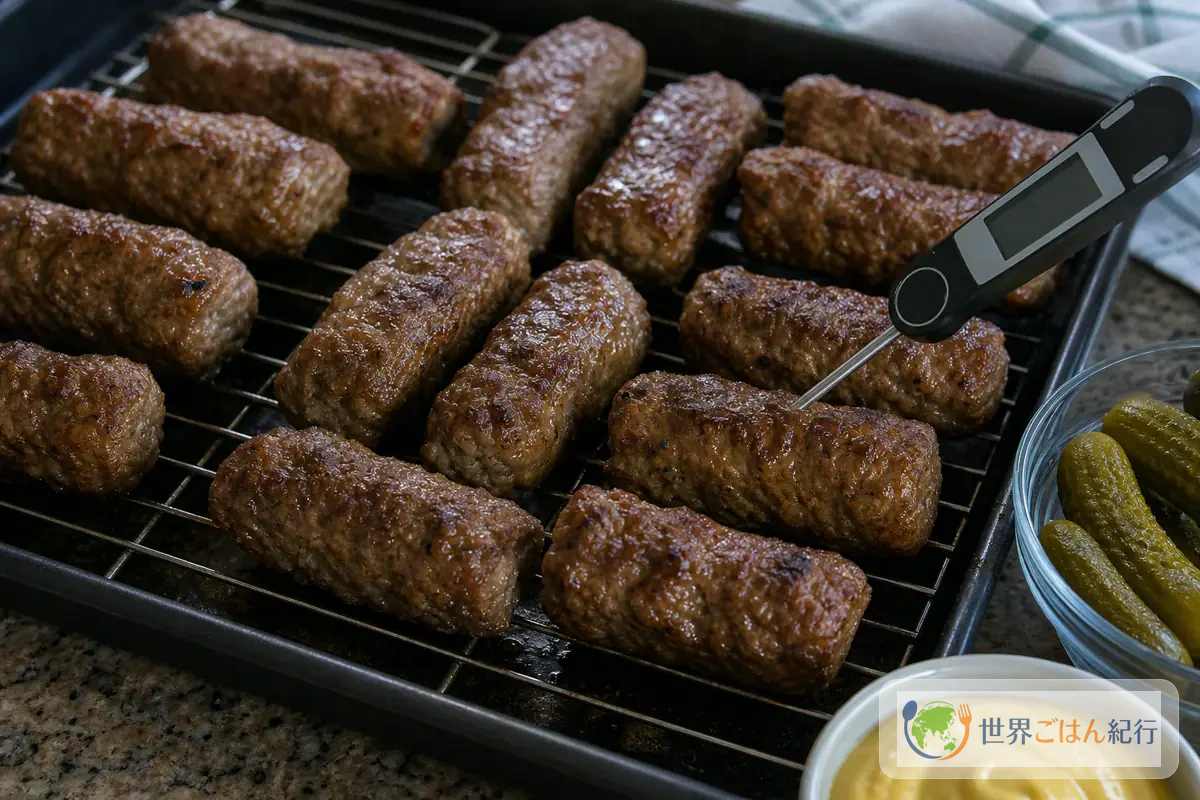
Over evening charcoal, little tubes of meat puff up
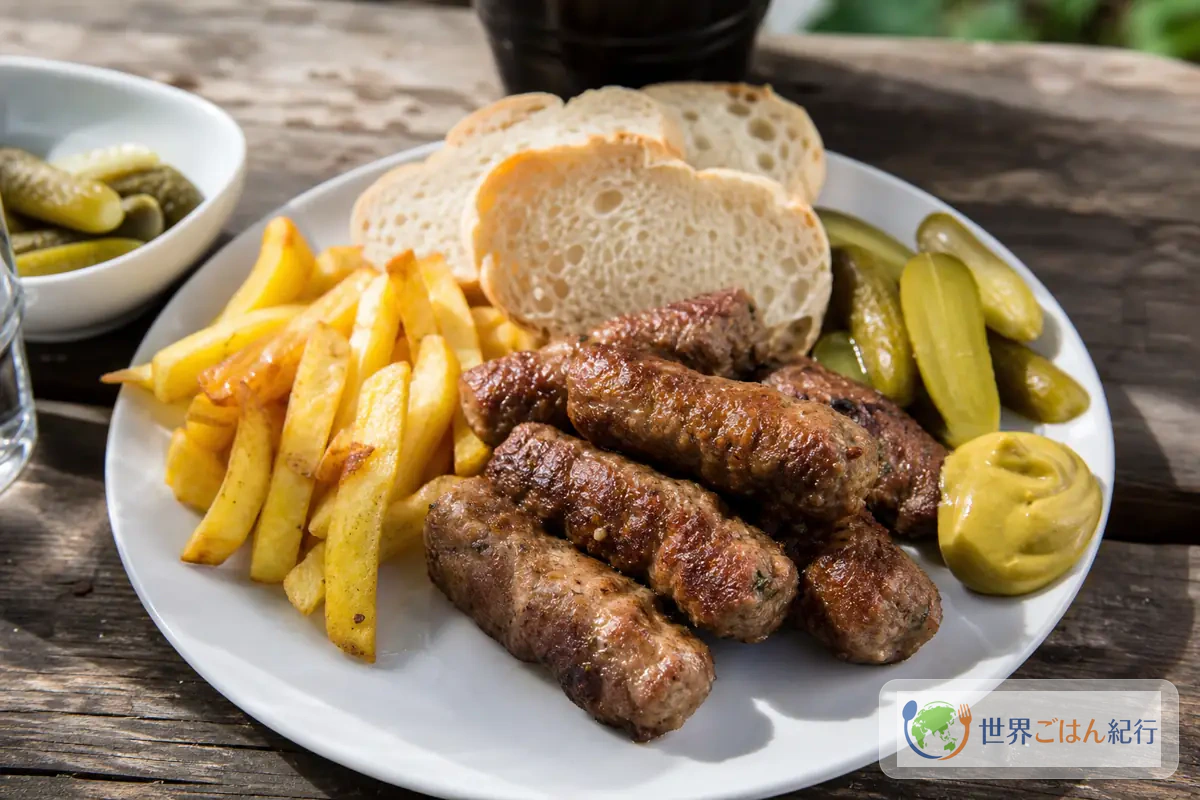
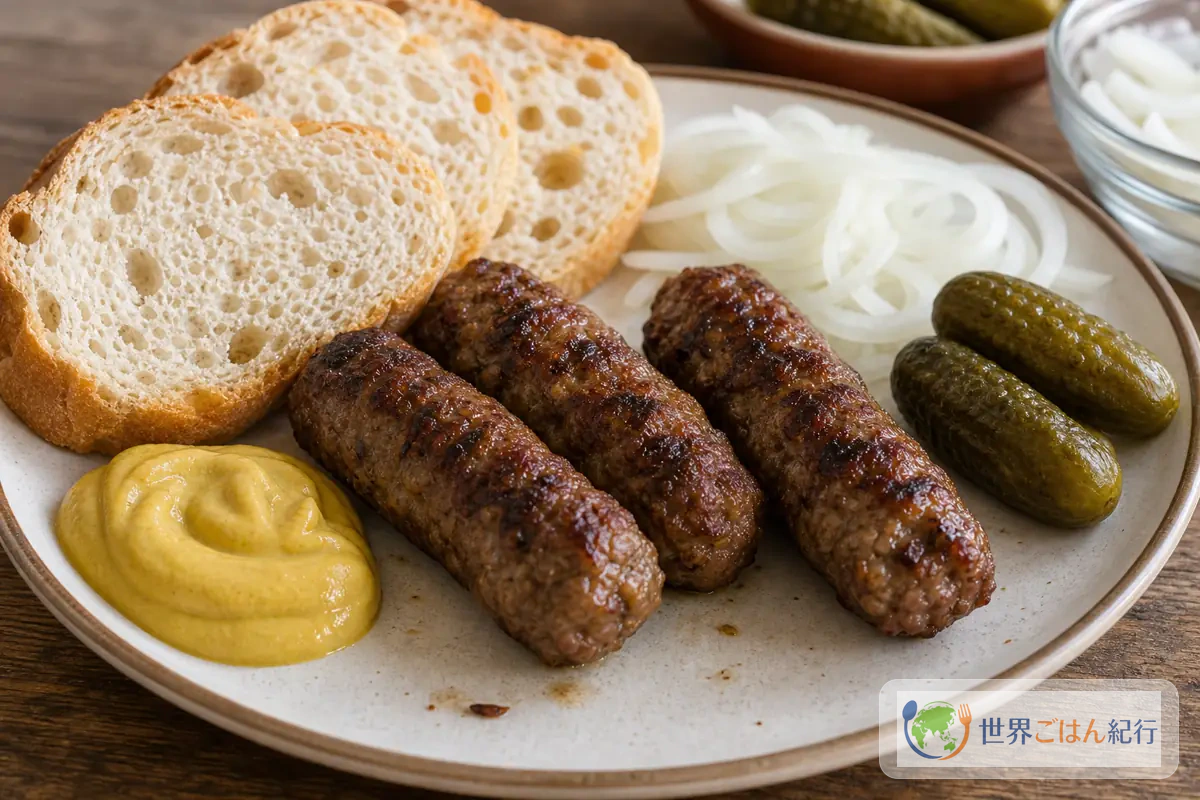
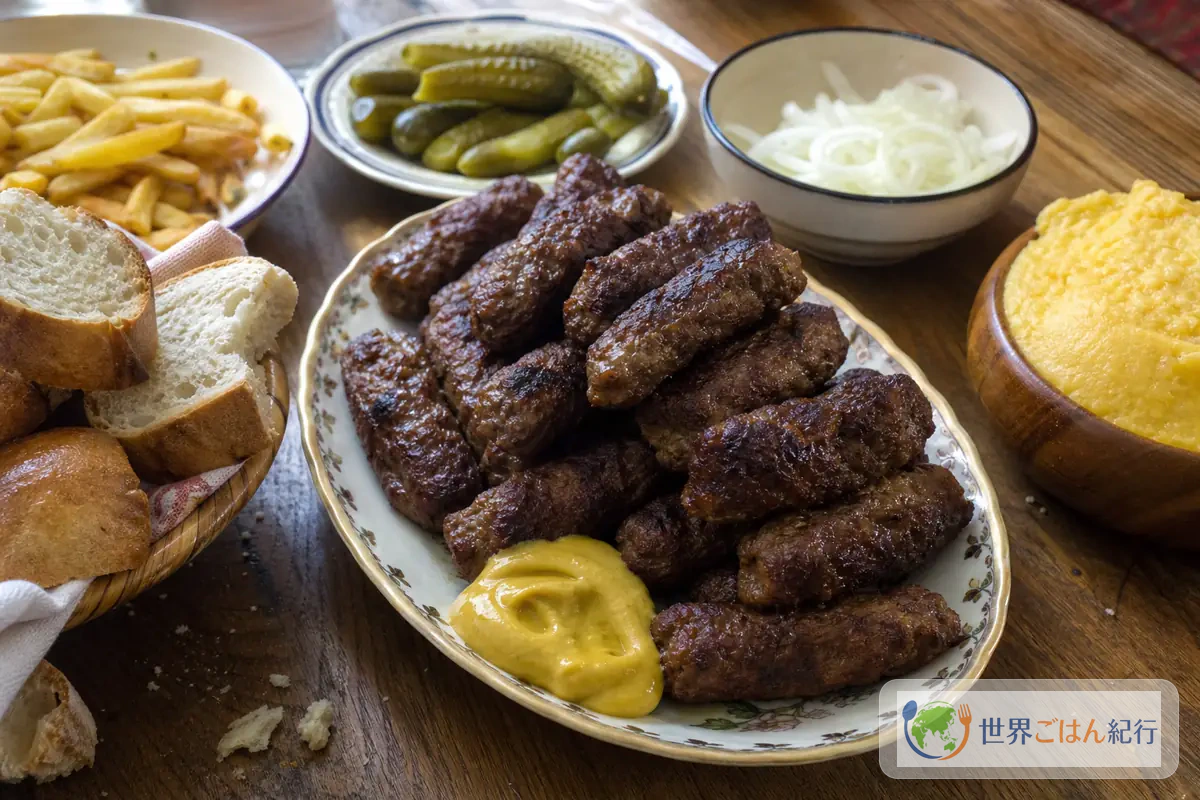
The smell of meat on an outdoor grill stops people in their tracks in any country. In Romania, the star of that smell is mititei. Ground meat is rolled into short cylinders and grilled without casings. The outside is fragrant and browned, the inside springy and light, and the plate comes with yellow mustard, bread, pickles and sometimes french fries.
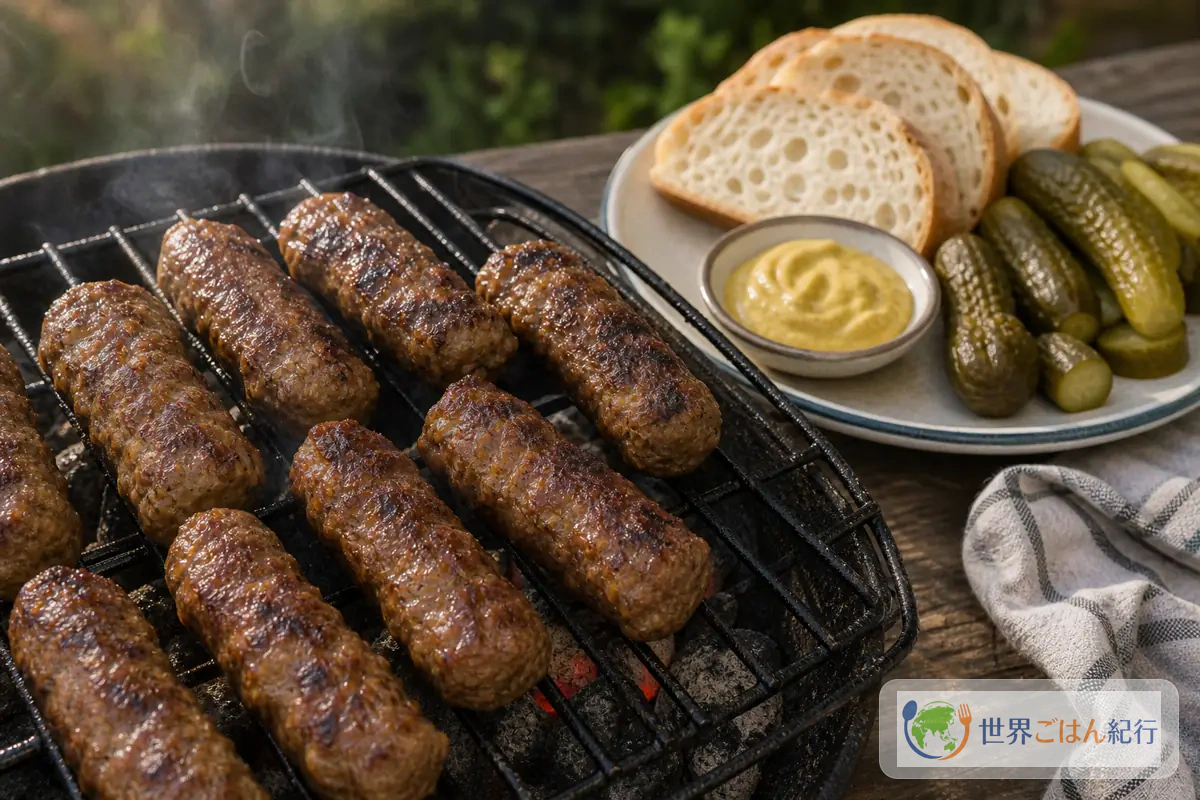
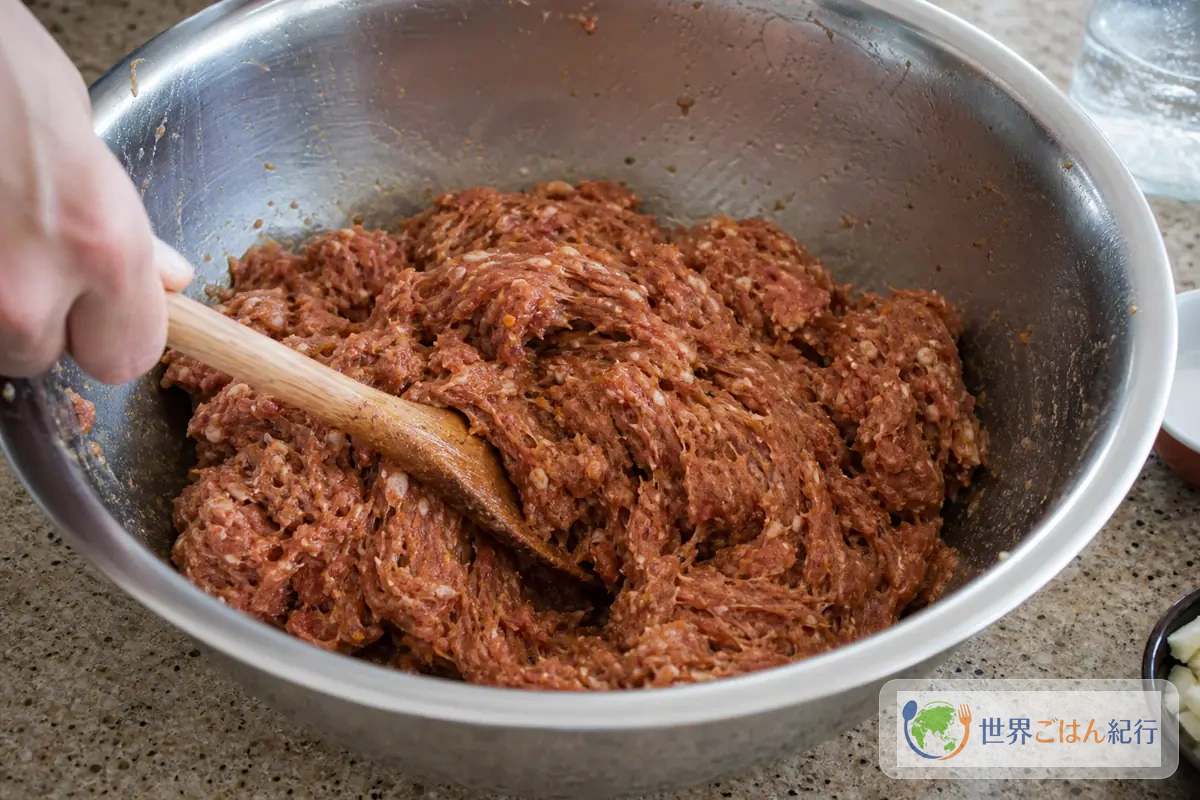
The hard part at home is the "mix" more than the look. Roll it like an ordinary hamburger patty and cook it right away, and it turns hard, cracks easily and loses its juices. For Romanian mici, cold stock or water is worked in a little at a time, a small amount of baking soda is added, and the mix rests in the refrigerator before shaping. Keep to that and, though skinless, you get a snappy, sausage-like bite.
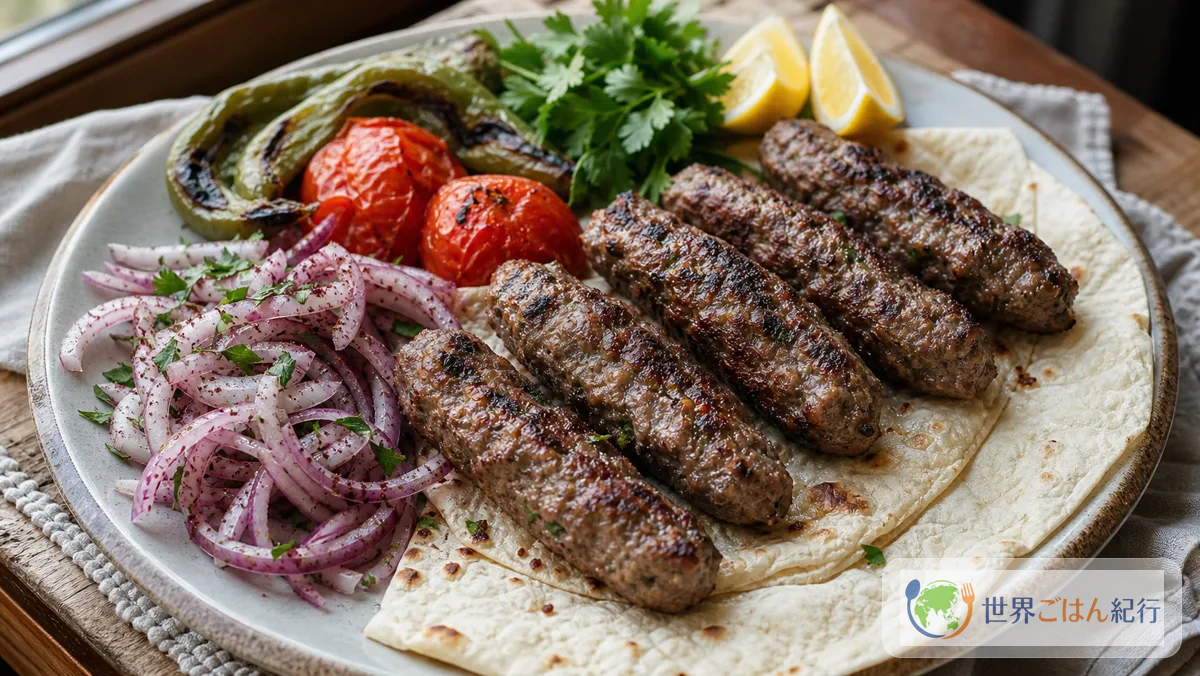
Among grilled ground-meat dishes, Serbia's cevapi leans more toward Balkan aromas, and Turkey's kofte toward spice and onion. Mititei uses garlic, an herb close to cimbru (savory), pepper, coriander, cumin and a little paprika, and its Romanian character lies in being eaten with mustard at the end.
In Romanian both mici and mititei are used. Both carry the sense of "little ones," and in English-language recipes the shorter mici is used more often. This article uses "mititei" and also gives the local name mici.
Mici versus mititei, and the core to keep at home
Wikipedia's Mititei entry and Chef's Pencil's explanation present mititei as a skinless grilled sausage of ground beef, lamb, pork and similar meats, combined with garlic, black pepper, thyme, coriander, anise, savory and sometimes paprika. Reading the local recipes, the kinds of meat and the spice blends vary quite a lot, but these three things are common.
| Element to keep | Closer to the local style | A practical answer in a home kitchen |
|---|---|---|
| Meat fat | Beef plus lamb or pork fat | A beef-pork blend of 7 parts beef to 3 parts pork, plus a little lamb if you have it |
| Cold liquid | Work in bone broth or cold water | Add cold sparkling water or cold water a little at a time |
| Herbs | Cimbru, coriander, cumin, pepper, garlic | Substitute dried thyme and a little dried oregano, and add aroma with cumin and paprika |
| The table | Mustard, bread, pickles, beer | Mustard, baguette, cucumber pickles, french fries |
Savory (summer savory) is hard to find in an ordinary supermarket. Buying it online is fine, but you don't need to get stuck on it the first time. Combining 1 tsp dried thyme with 1/4 tsp dried oregano is not perfect, but leaves a green, warm aroma when the meat is grilled.
Baking soda matters too. A lot of it leaves bitterness and a soapy aftertaste, but a small amount acts on the pH of the meat mixture and makes it slightly lighter when grilled. Savori Urbane's Romanian-language recipe also stresses not overdoing the baking soda. In this article it is held to just under 1/2 tsp, about 2 g, for 700 g of meat.
Ingredients (serves 4) — measure the meat, herbs and liquid separately
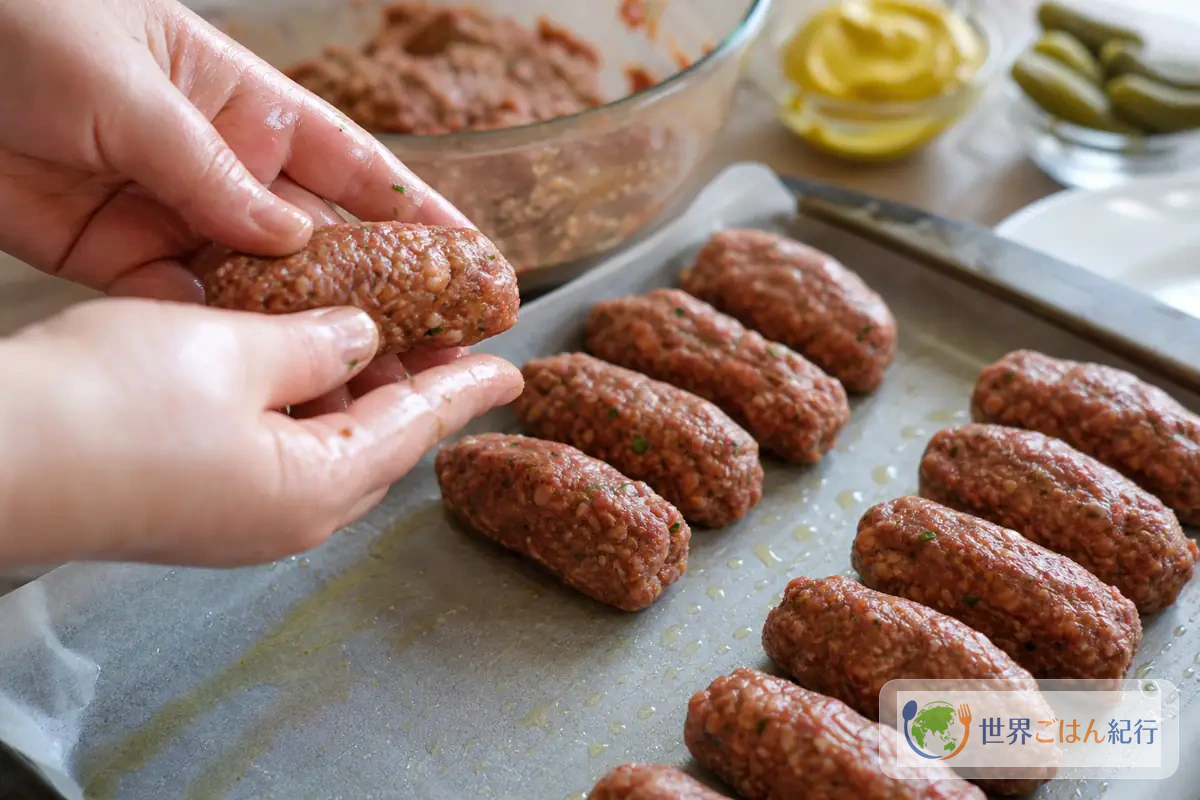
For 4 people this makes 12 mititei about 9 cm long. As a main dish, 3 per person; as an appetizer or something to nibble with drinks, it is enough for 6 people. The meat mixture needs time to rest in the refrigerator, so preparing it that morning or the night before makes the time just before grilling easier.
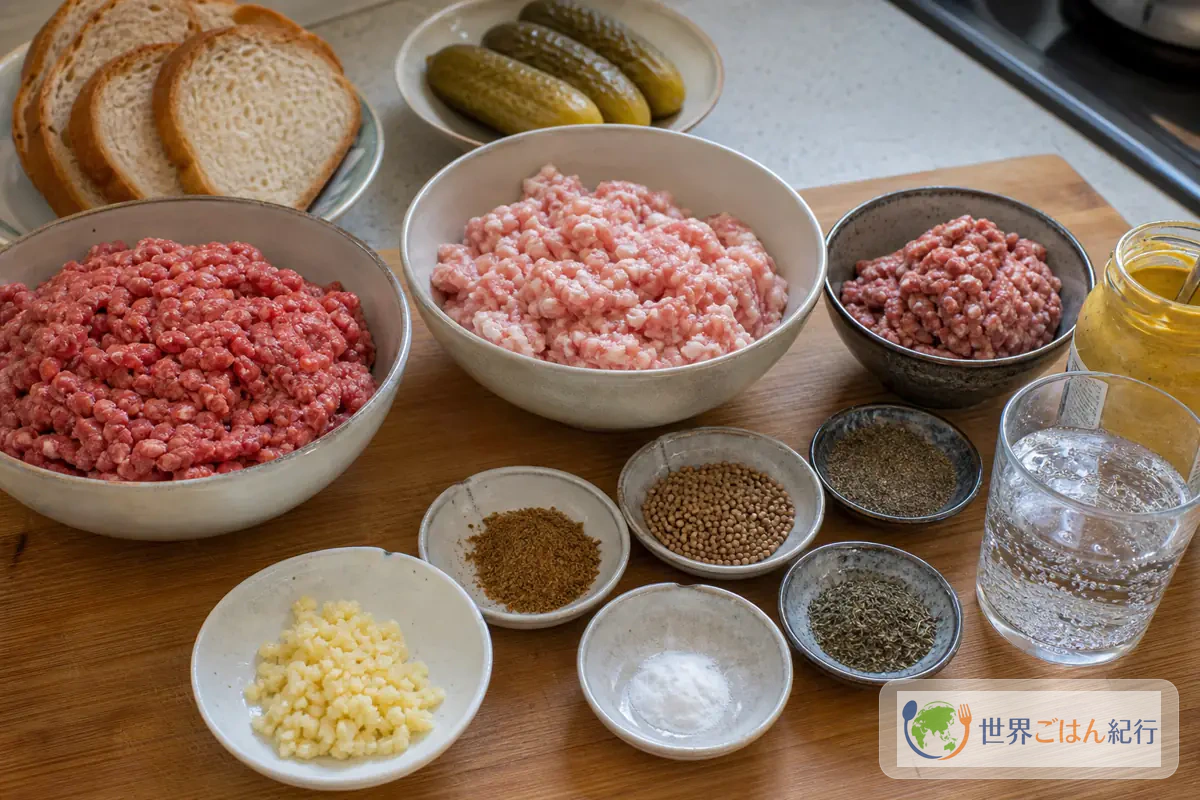
This dish uses beef, pork and lamb. Store-bought mustard and bread may contain wheat, egg or soy, so check labels before serving. Because it is ground meat, use 71 °C or above at the center as the guide, and do not judge by color alone.
Ingredients and tools for this dish
The meat, bread and pickles can be gathered at a regular supermarket. The things worth tracking down are the paprika and cumin that set the aroma, and a thermometer for cooking ground-meat dishes through safely. If you can get savory, you can add it, but thyme and oregano get you close enough the first time.
Method — don't grill right away; chill, then grill
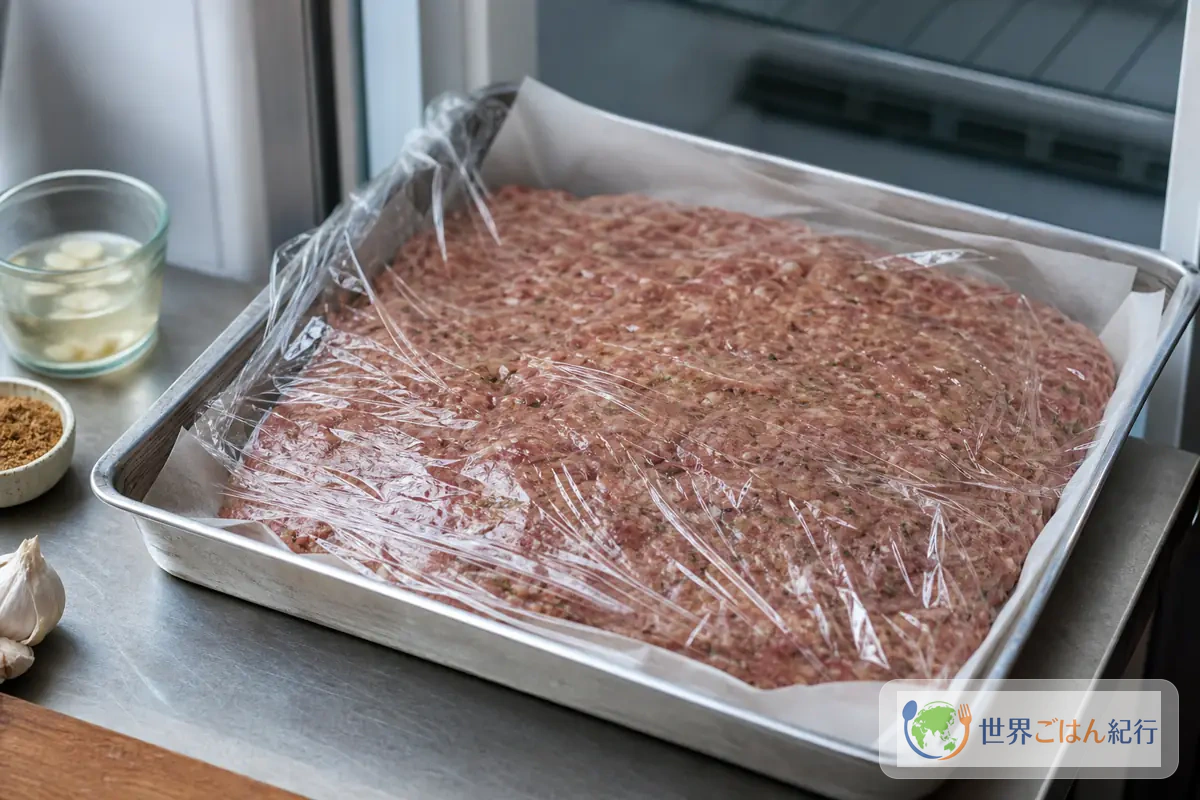
Mititei is not a dish that tastes good the moment it is mixed. Add cold liquid and knead well, rest it in the refrigerator, shape it while cold, and set the surface on a hot grate. If the meat mixture goes slack it sticks to the grate; if the liquid is short, the cut surface turns crumbly.
Branches and substitutes when cooking at home
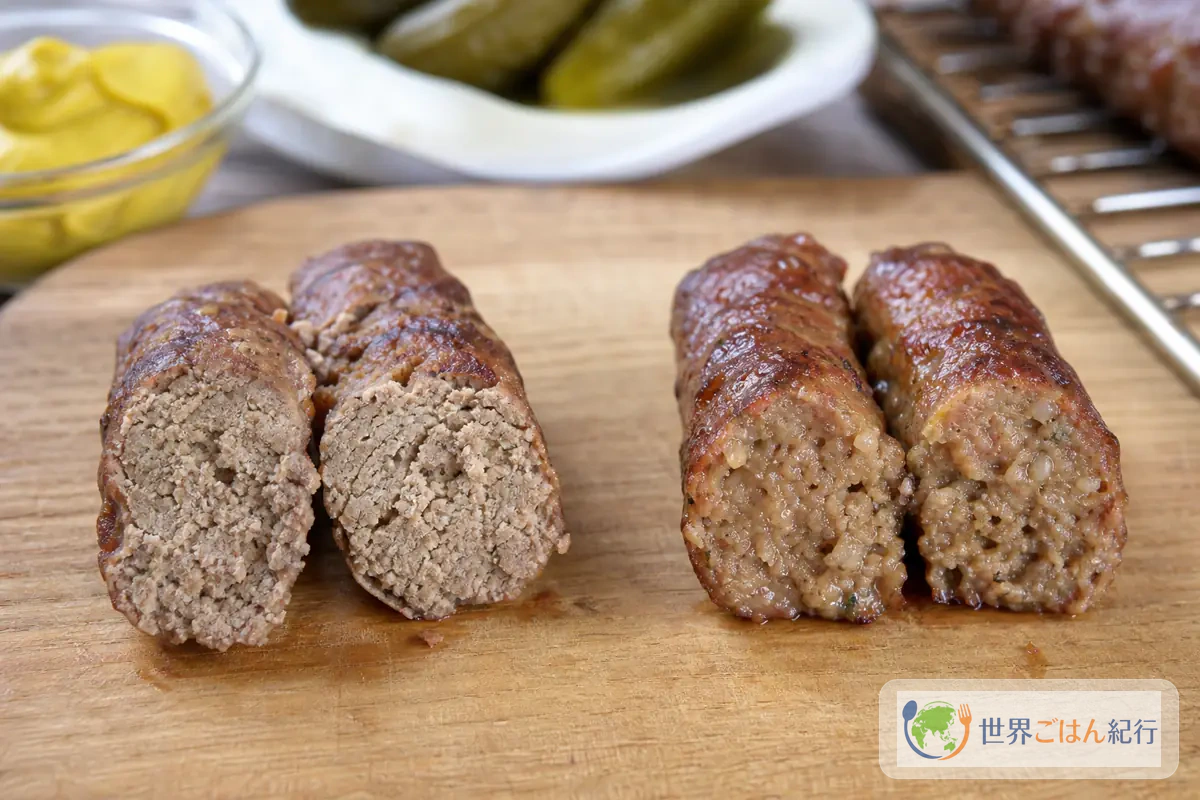
When making mititei at home, you don't have to match the local method in every respect. What matters is the skinless-sausage texture and the table combination of a Romanian grill dish.
| Where you hesitate | Closer to the local style | A practical answer at home | Judgment |
|---|---|---|---|
| Meat blend | Mix beef, lamb and pork | Beef-pork blend plus a little lamb, or 7 parts beef to 3 parts pork | Too little fat makes it hard |
| Liquid | Work in bone broth | Cold sparkling water or cold water | Avoid warm water, which melts the fat |
| Herbs | Cimbru, savory | Thyme plus a little oregano | Don't add too much oregano |
| Cooking method | Charcoal | Grill pan, broiler, electric griddle | Check the internal temperature without charring over high heat |
| How to eat | Mustard, bread, pickles | Smooth mustard, baguette, cucumber pickles | Making ketchup the center turns it into a different dish |
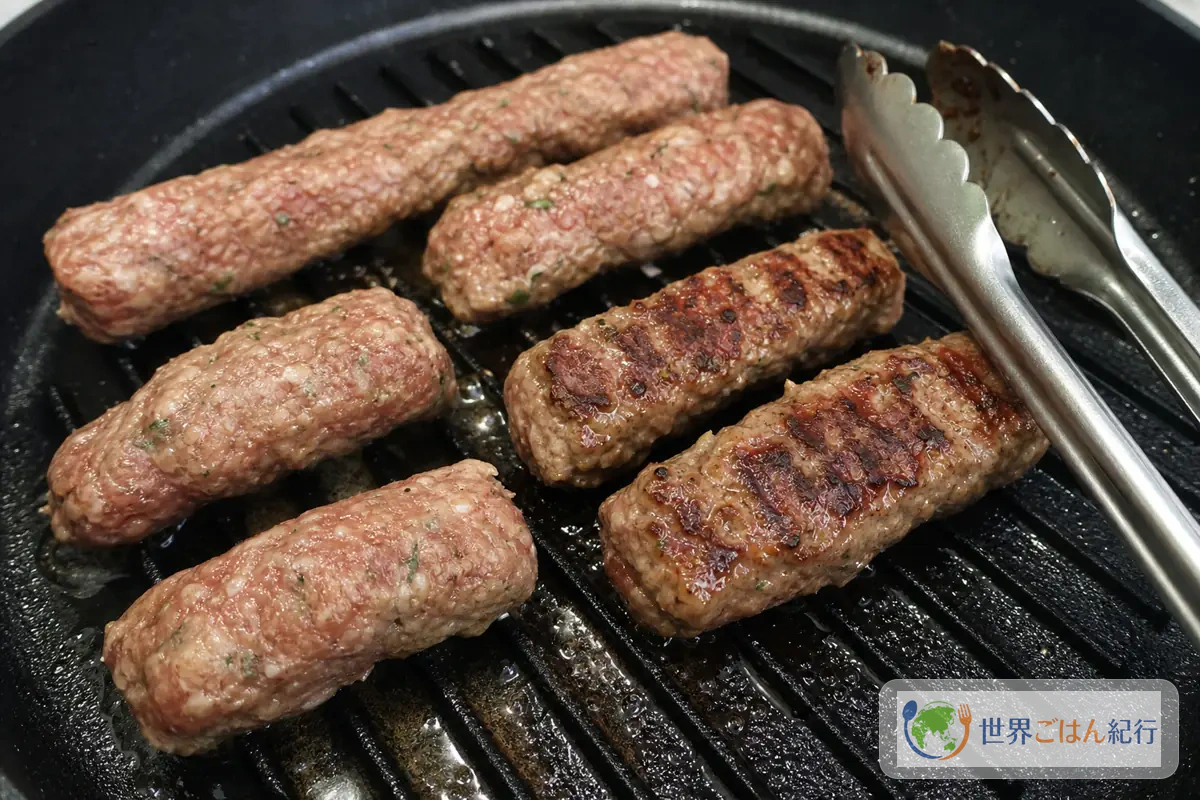
If using a broiler, lightly oil the grate and cook over medium heat 4 minutes on one side, turn and cook 4 minutes, then check and cook 2 to 3 minutes more. The surface scorches easily, so on appliances with strong top heat, loosely cover with aluminum foil. For an electric griddle, preheat to 200 °C and cook each side without the lid. Steaming under a lid turns them closer to meatballs, so aim to drive off surface moisture.
To bring out the outdoor feel of the local style, warm bread lightly next to the mititei as they grill. When a little of the juices and mustard soak into the cut face of the bread, the flavor comes together better than over white rice. To lean toward an Eastern European table, serve the sauerkraut used in sarmale or turn plăcintă into an appetizer, which also makes a natural cluster within the Romanian pages.
Causes of failure, storage and frequently asked questions
The cut surface is crumbly
It is one of: too little liquid, too little fat, too little kneading, or overcooking. Add 120 ml of cold sparkling water for 700 g of meat a little at a time and knead until the meat takes it in. Made with lean beef alone it dries out easily, so add ground pork or a little lamb. In grilling, it also matters not to keep cooking once the center is past 71 °C.
They crack while grilling
The meat mixture may have been warm, the resting time short, or you grilled with cracks left on the surface after shaping. Return them to the refrigerator for even 10 minutes after shaping, and stroke the surface with water before grilling. Don't touch them for the first 2 minutes, and turn them once they have set.
Is the baking soda really needed?
Without it you can still grill meat cylinders, but the light springiness that makes mititei what they are is harder to get. If using it, about 2 g for 700 g of meat is enough. More brings bitterness, so don't go to 1 tsp or more just because you want more lift.
I don't have savory
Substitute 1 tsp dried thyme and 1/4 tsp dried oregano. Adding a lot of basil or rosemary makes it a different grilled meat rather than Romanian mici. If you buy savory, next time you can also use it to compare with cevapi and lula kebab.
Can I prepare it the day before?
Yes. Kneading the meat, pressing plastic wrap onto it and leaving it in the refrigerator overnight actually suits it. If you finish shaping the day before, lightly oil the surface and cover so it doesn't dry out. Keep it in the refrigerator until just before grilling.
How do I store and reheat?
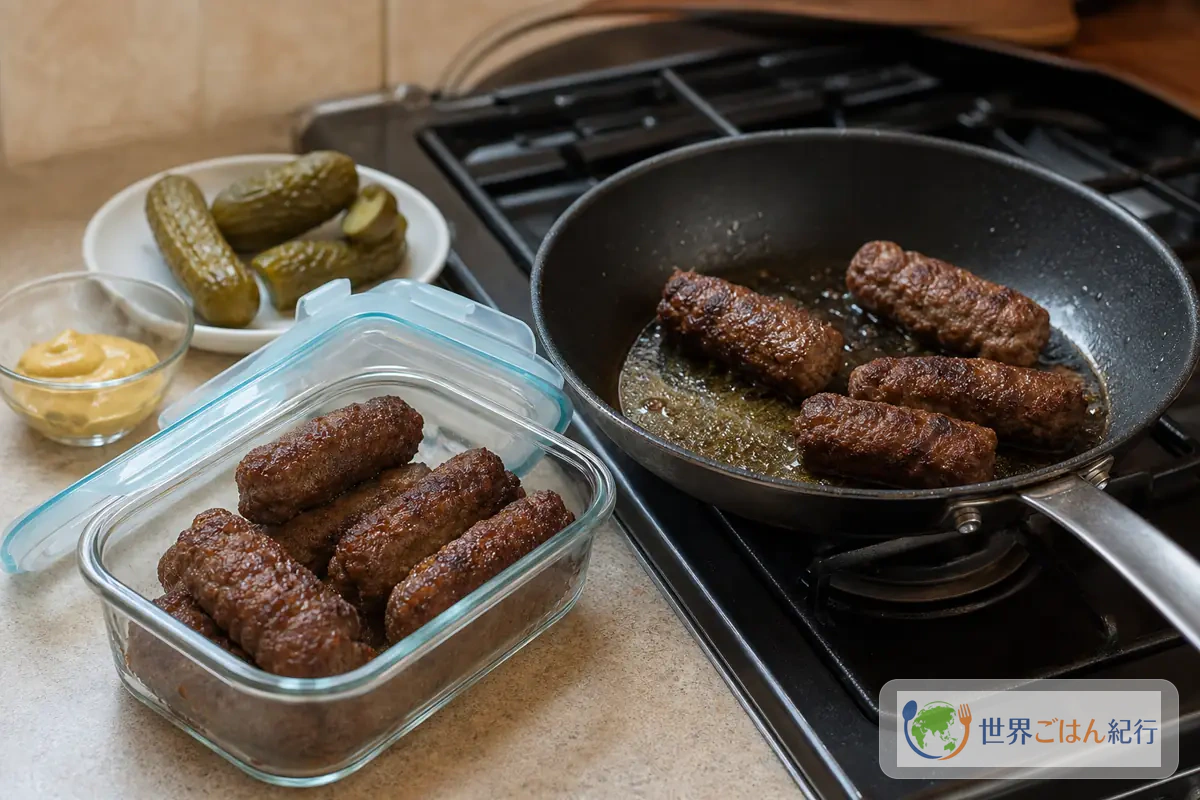
Cool grilled mititei in a shallow container and eat them within 2 days refrigerated. Reheat in a skillet over low heat for 2 minutes per side, or in a toaster oven at 200 °C for about 5 minutes. A microwave alone tends to soften the surface, so finishing in a skillet to bring the surface back makes them easier to eat. USDA FSIS gives 71.1 °C for ground meat and says leftovers should be reheated to a sufficient temperature.
What do I serve with it to make a meal?
The minimum is mititei, mustard, bread and pickles. To add vegetables, a salad of sliced red onion or tomato goes well. To widen it into an Eastern European table, make cornmeal mamaliga (in Japanese), tangy sarmale and the stewed goulash on separate days, and you start to see the thread linking meat, acidity and starch.