
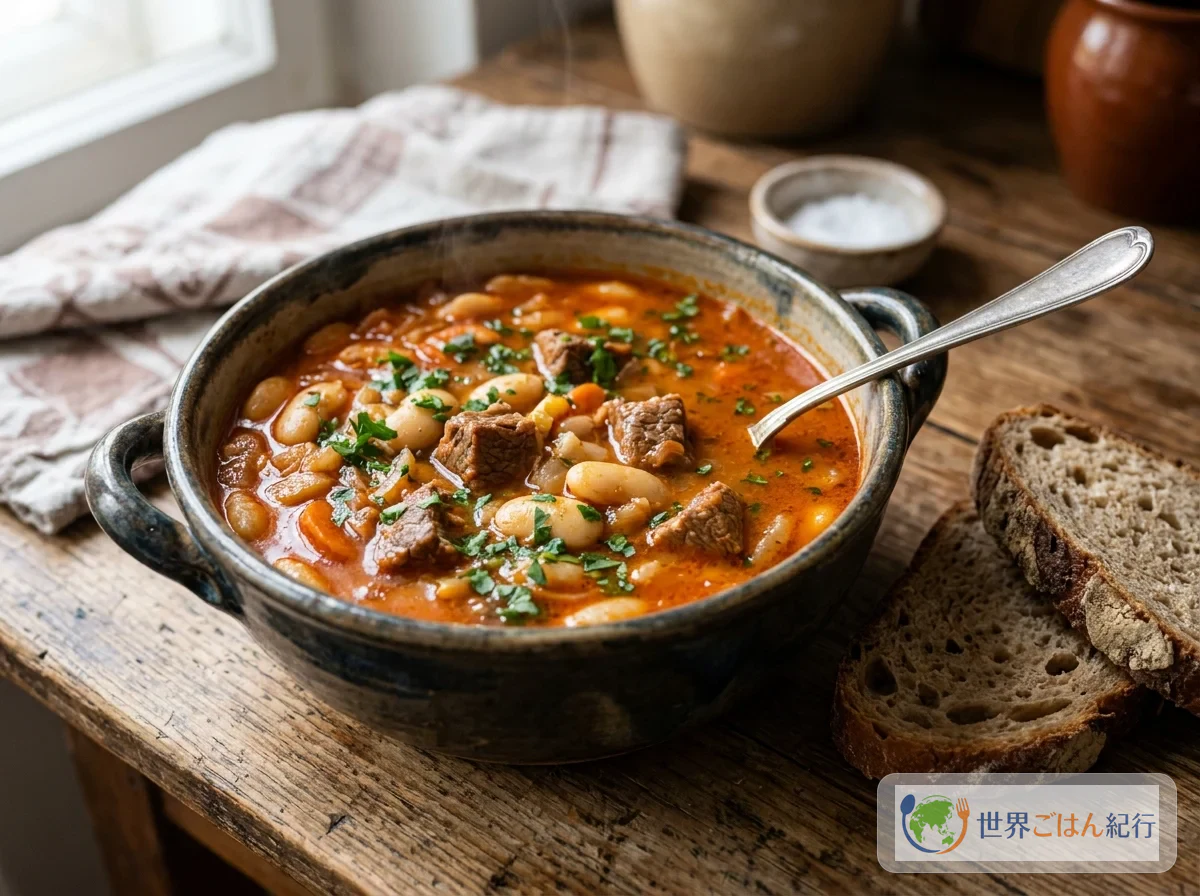
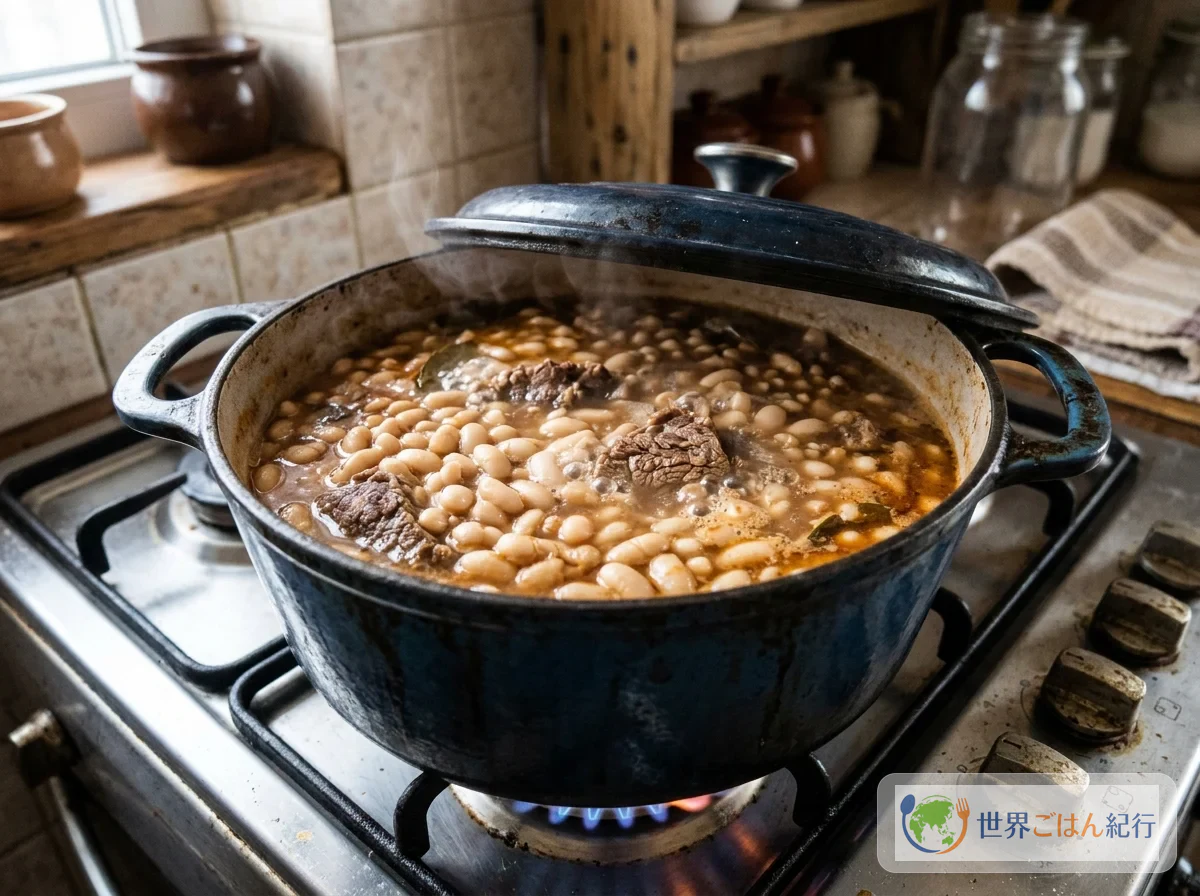
At midday in Belgrade, a reddish steam rises from a big pot in a canteen. Inside is white bean soup: thick broth tinted with paprika, bits of meat peeking out between the beans. You tear off a piece of crusty bread, dunk it, and bite into a raw onion between spoonfuls. They say nothing is more familiar to Serbians than pasulj, which simply means "beans."
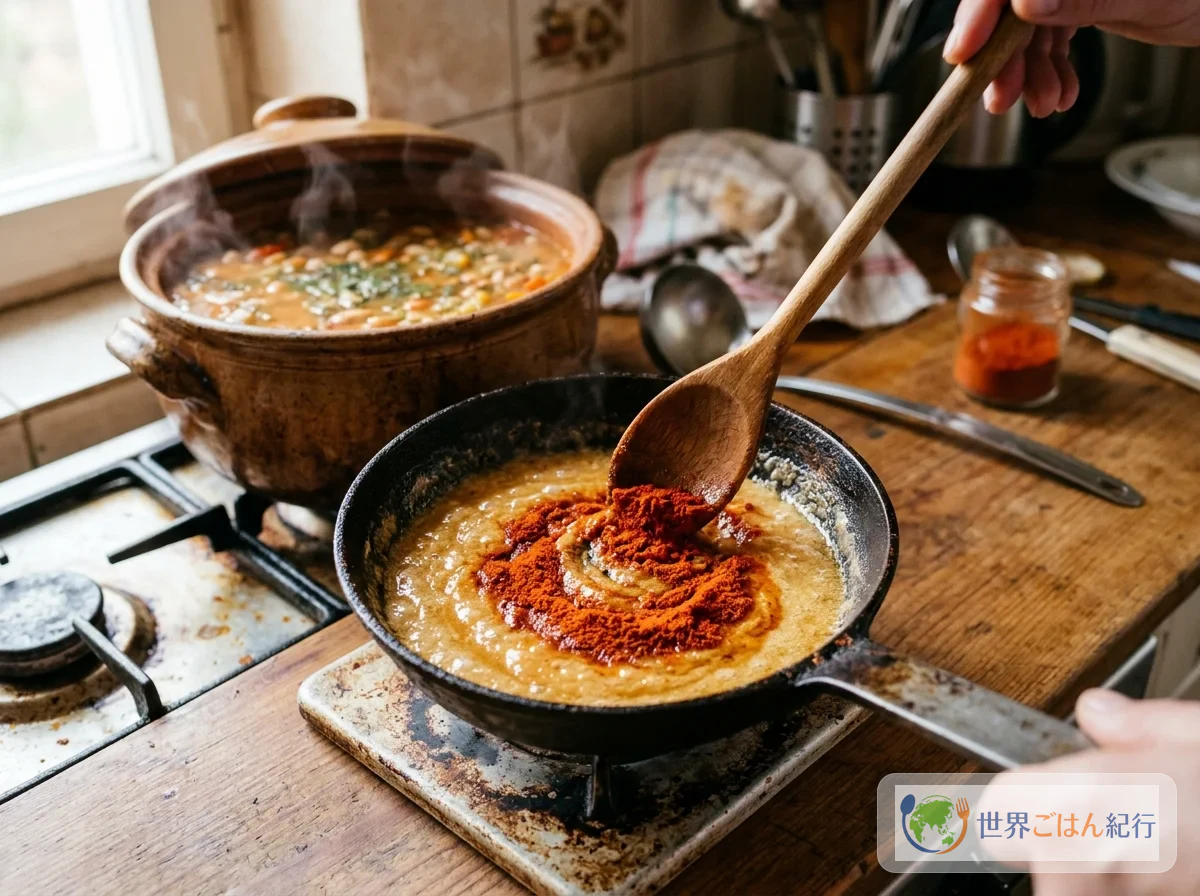
That the name is just the word for "beans" shows how deeply it is rooted in the everyday table. The method is humble: soak dried beans overnight and simmer them with meat and aromatics. The finish, though, is a roux of flour fried in oil, called zaprška. Do not stir the beans while they cook, and add the roux at the end. Follow these two rules and the beans keep their shape in a thick, velvety broth.
Beans Beloved in Former Yugoslav Barracks
The food-rating site Taste Atlas published a "100 Best Bean Dishes in the World" list in 2024, and three Serbian dishes made it. According to the Serbian daily Kurir, they are pasulj at number 6, brothy pasulj (čorbast pasulj) at number 29, and the baked bean dish prebranac at around number 40 (Kurir reported 39th and N1 reported 40th). Pasulj is described as white beans simmered into a thick soup with sausage, bacon, or ham, plus onion and carrot, seasoned with paprika, bay leaf, and garlic. It is eaten not only in Serbia but across the Balkans.
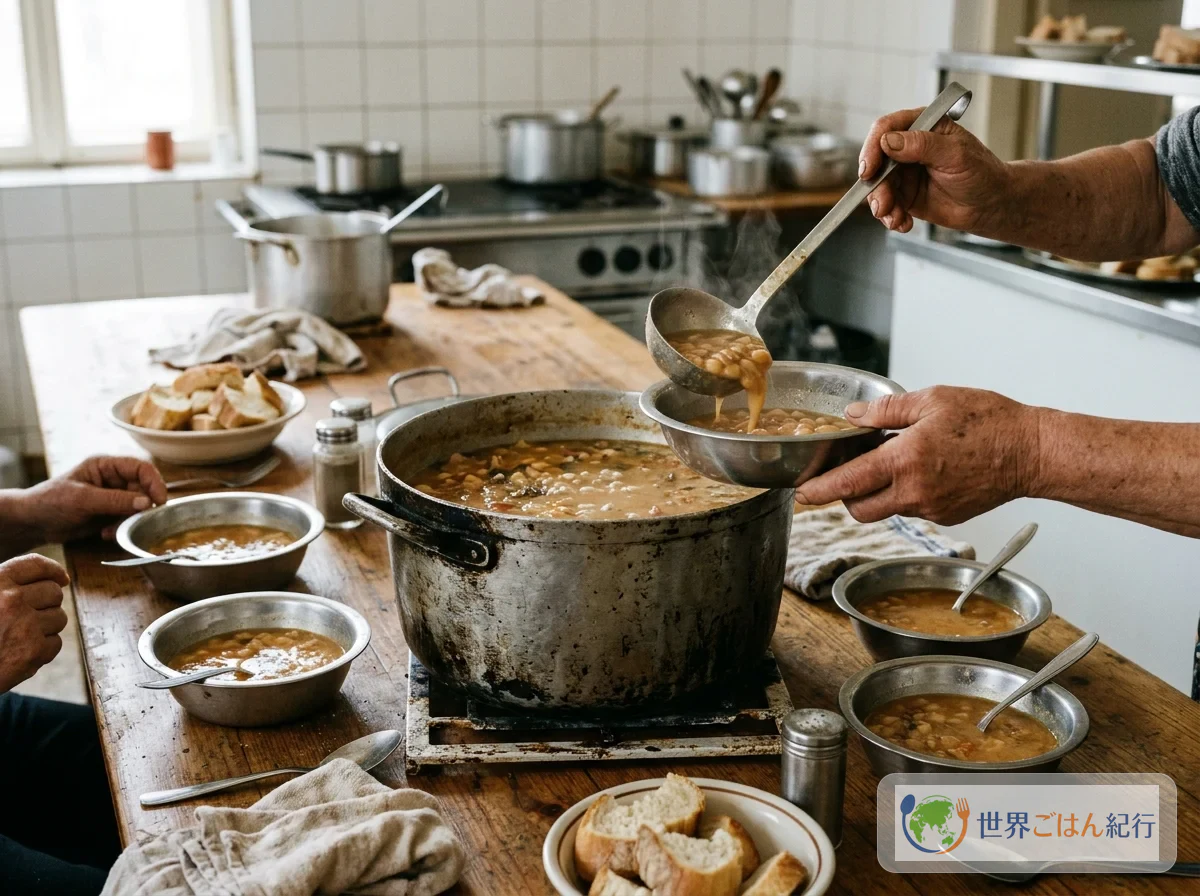
Kurir also writes that brothy pasulj was a staple of the army of the former Yugoslavia because it is easy to make and nourishing. A dish that could be made in huge quantities in one pot and filled soldiers' stomachs with cheap beans suited the army canteen perfectly. Under the name soldier's pasulj (vojnički pasulj), recipe articles describing the army canteen method still appear in the Serbian media today.
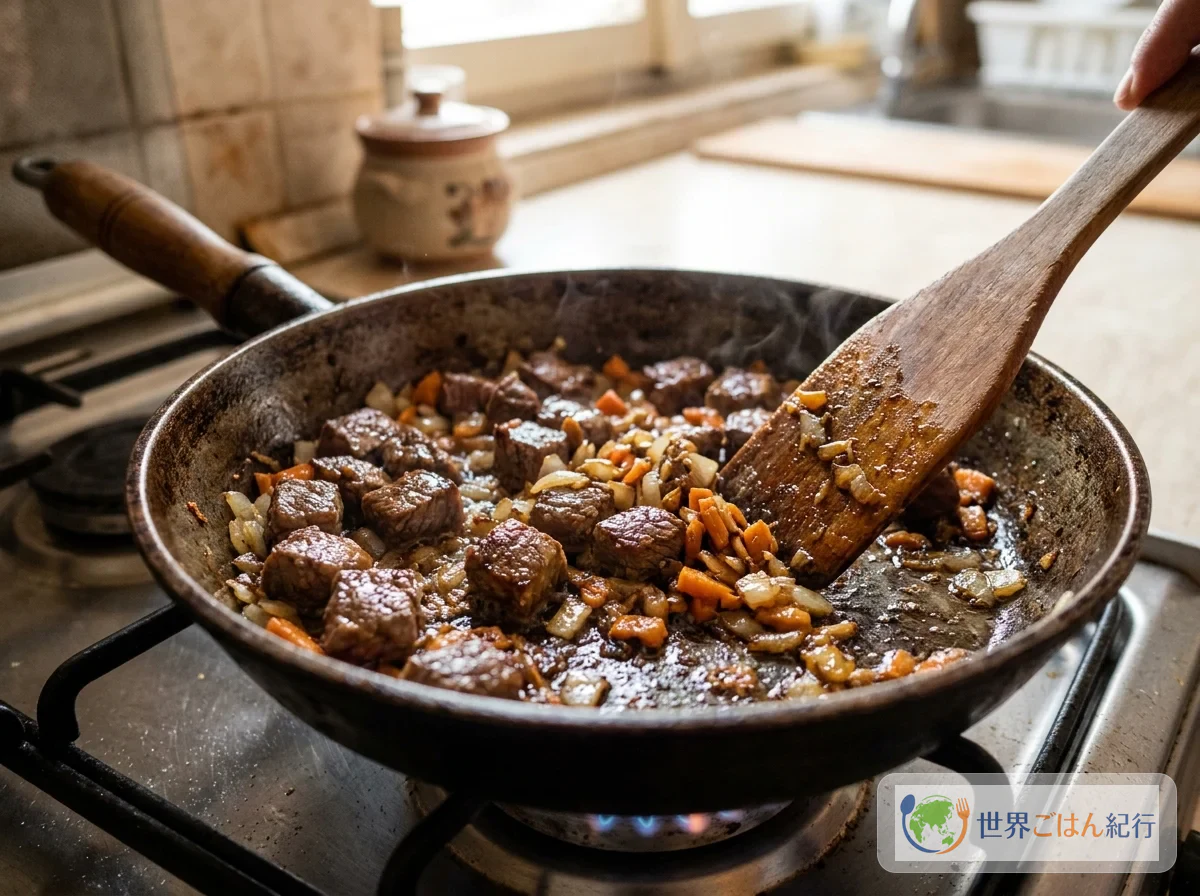
The best-known way to cook Serbian pasulj is with smoked meat or spare ribs. Smoked meat adds a smoky aroma and bones add richness. Kurir describes the "soldier's pasulj" this recipe is based on as characteristic for using beef, which is not usually put in this dish.
This recipe is based on the "JNA soldier's pasulj" that Kurir cited from the Serbian regional news site 021.rs. The original gives a single batch in small units, so the quantities are tripled to a convenient amount for four people. Because it is simmered with beef instead of smoked meat, the smoky note is restrained and the flavors of beans and beef come through directly.
Ingredients (serves 4)
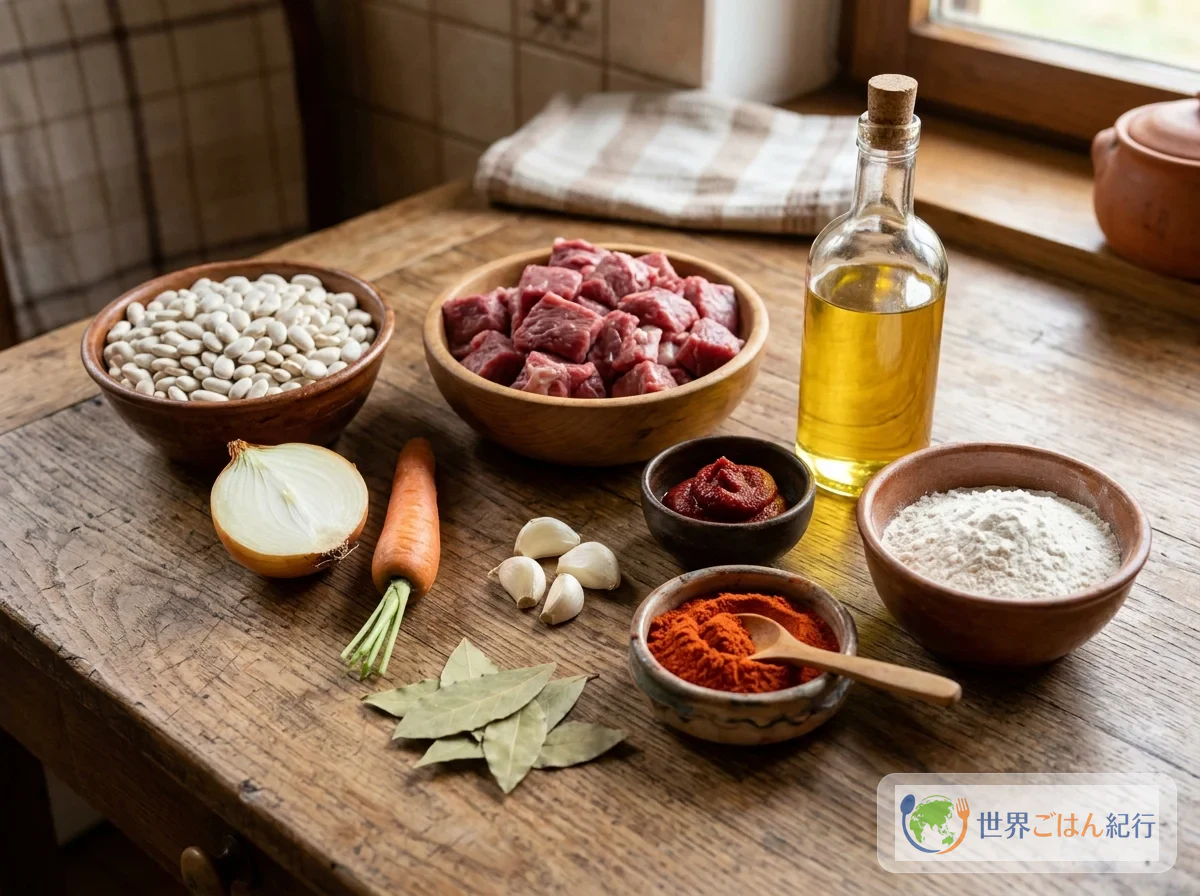
This is a home-sized version with the ingredients of the "soldier's pasulj" published in Kurir tripled.
In Serbia no particular bean variety is specified, and the Kurir article says any dried beans will do. Any white bean sold by name in your market is fine. Paprika powder and bay leaf are available in the spice aisle of most supermarkets. Paprika decides the color and aroma of the soup, so in this recipe you add it while making the roux to bring out its fragrance.
For a smoky aroma, replace half the beef with a block of bacon or smoked sausage. The taste comes closer to the smoked-meat pasulj commonly made in Serbia. It adds saltiness, so go light on the final salt.
How to Make Pasulj
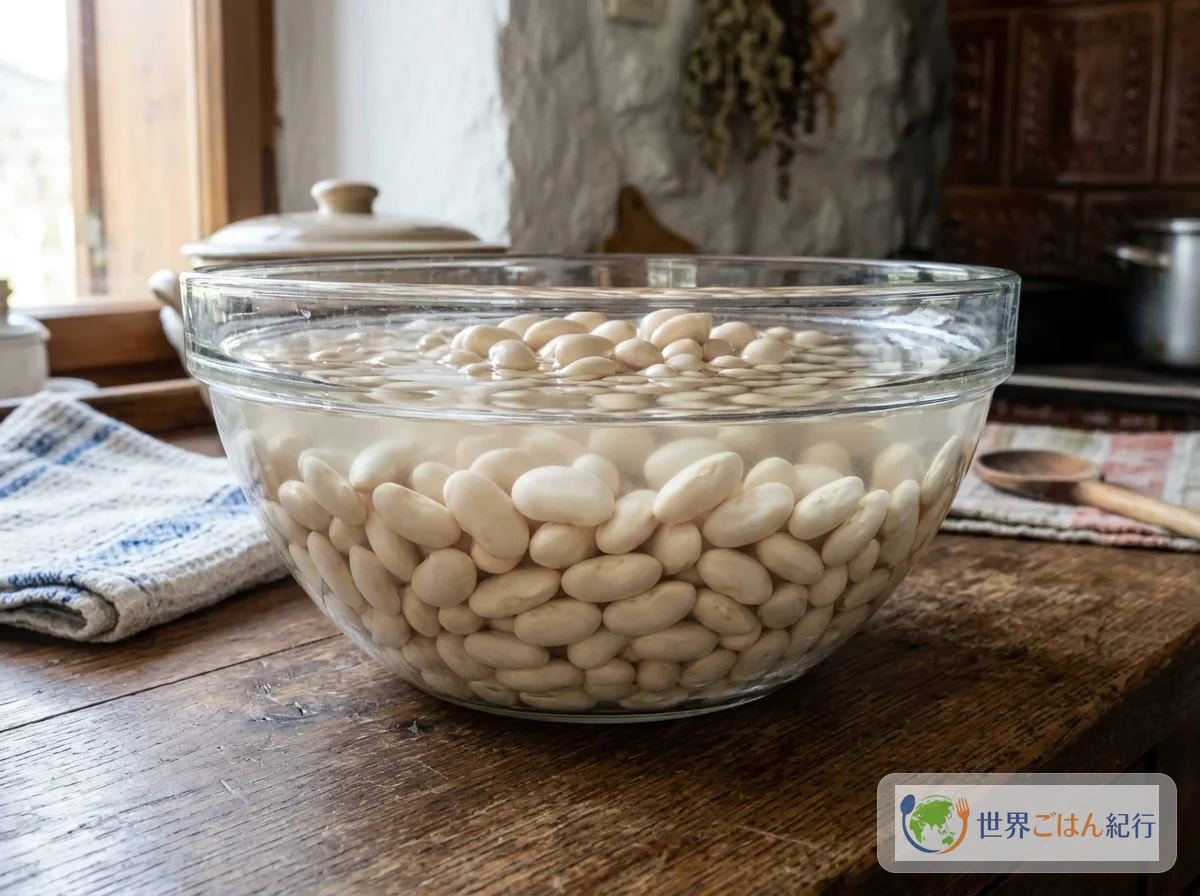
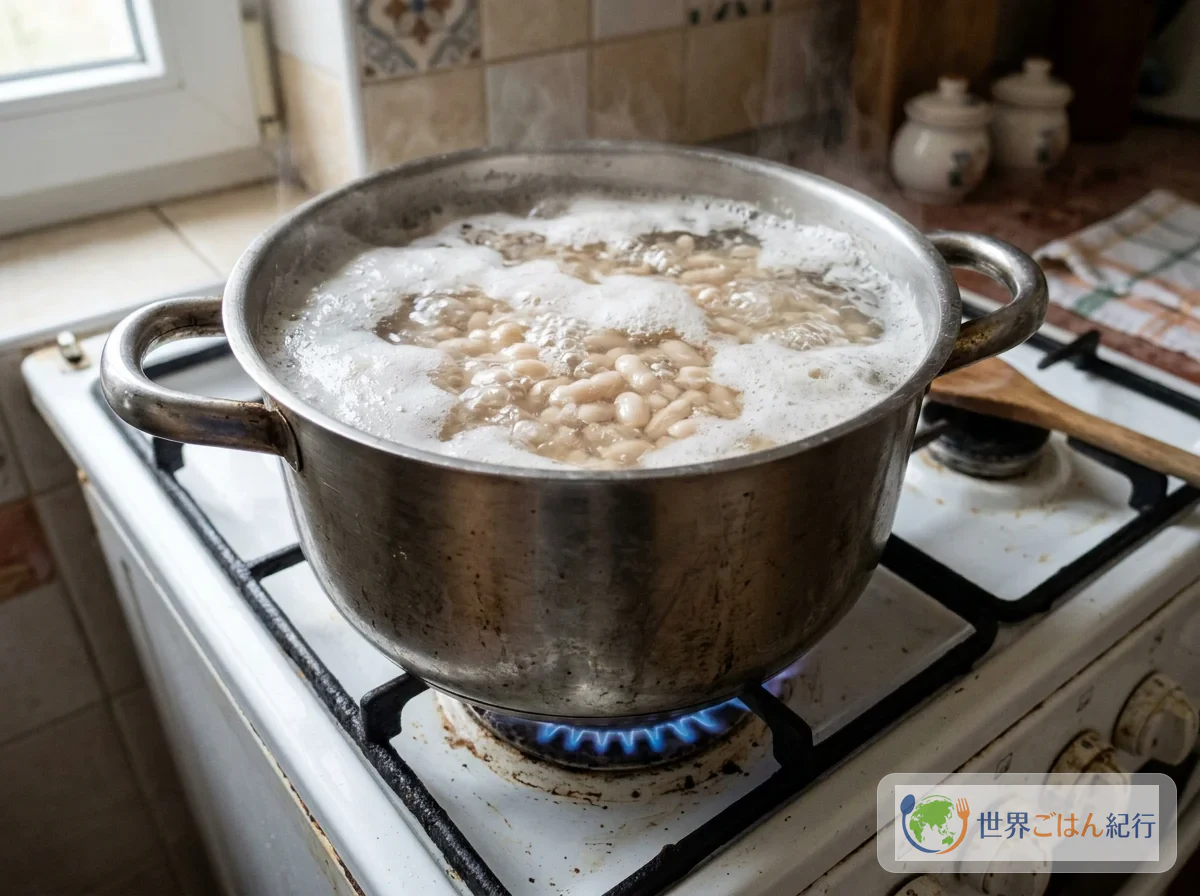
The beans soak overnight (about 12 hours), then simmer for around 2 hours in total. The time it takes for beans to soften varies with the variety and age of the beans.
Eating white beans and other kidney beans raw or undercooked can cause food poisoning with nausea, vomiting, and diarrhea. The cause is a protein called lectin, and Japan's Ministry of Health, Labour and Welfare explains that there is no problem if the beans are soaked in water sufficiently and then boiled until soft at a full boil. Do not eat beans that have only been roasted or briefly boiled.
Paprika powder scorches and turns bitter instantly in hot oil. Stir it in after taking the roux off the heat for a vivid color and fragrant result.
Smoked Meat, Beef, or No Meat
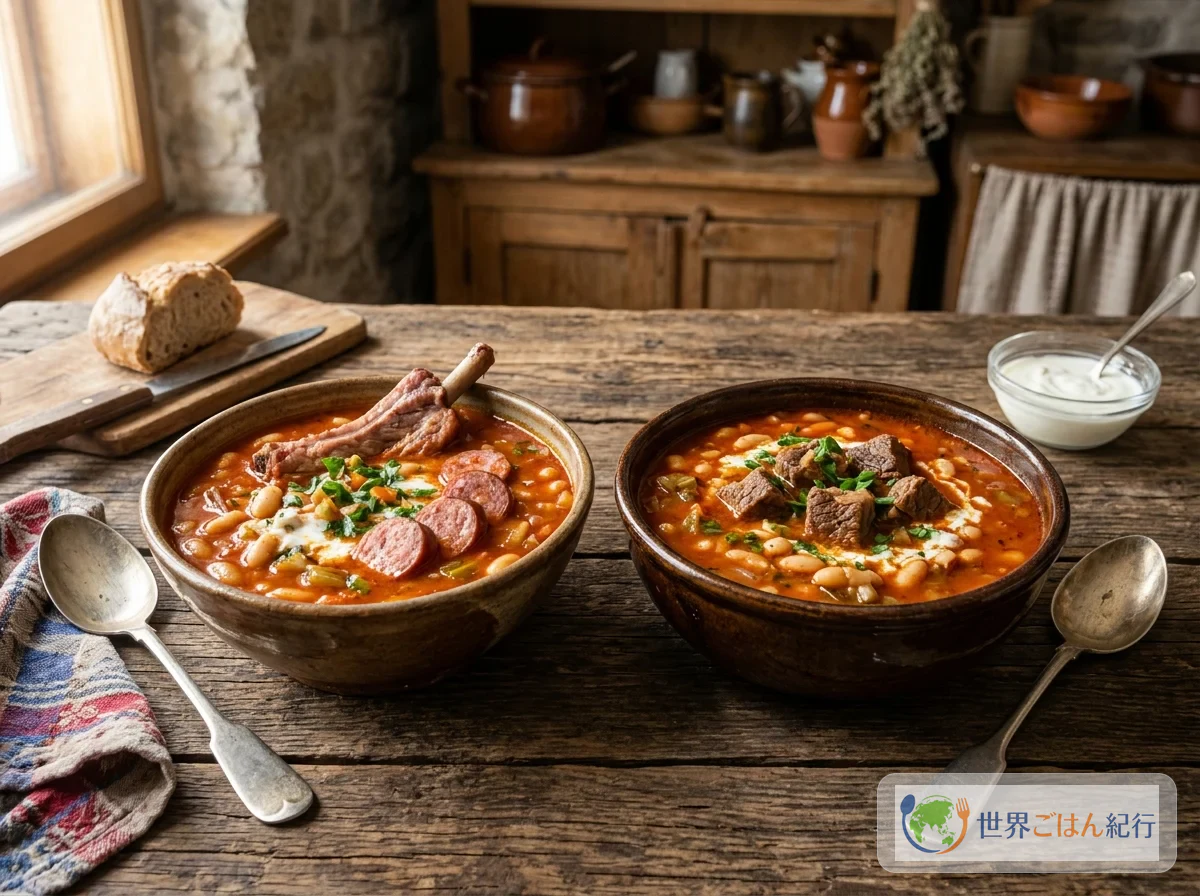
The meat in Serbian pasulj differs from house to house. The best-known version uses smoked bacon, pork spare ribs, or sausage, and the number 29 brothy pasulj that Kurir mentions also says smoked meat and spare ribs add a smoky aroma. If you use smoked meat, put it in the pot from the start with the beans and simmer together until the beans are soft. The smoke flavor transferring to all the broth is the greatest treat of this pasulj.
Kurir lists crusty bread and raw onion as accompaniments to pasulj. Biting a raw onion between spoonfuls clears the heaviness of the beans and roux.
Served with Crusty Bread
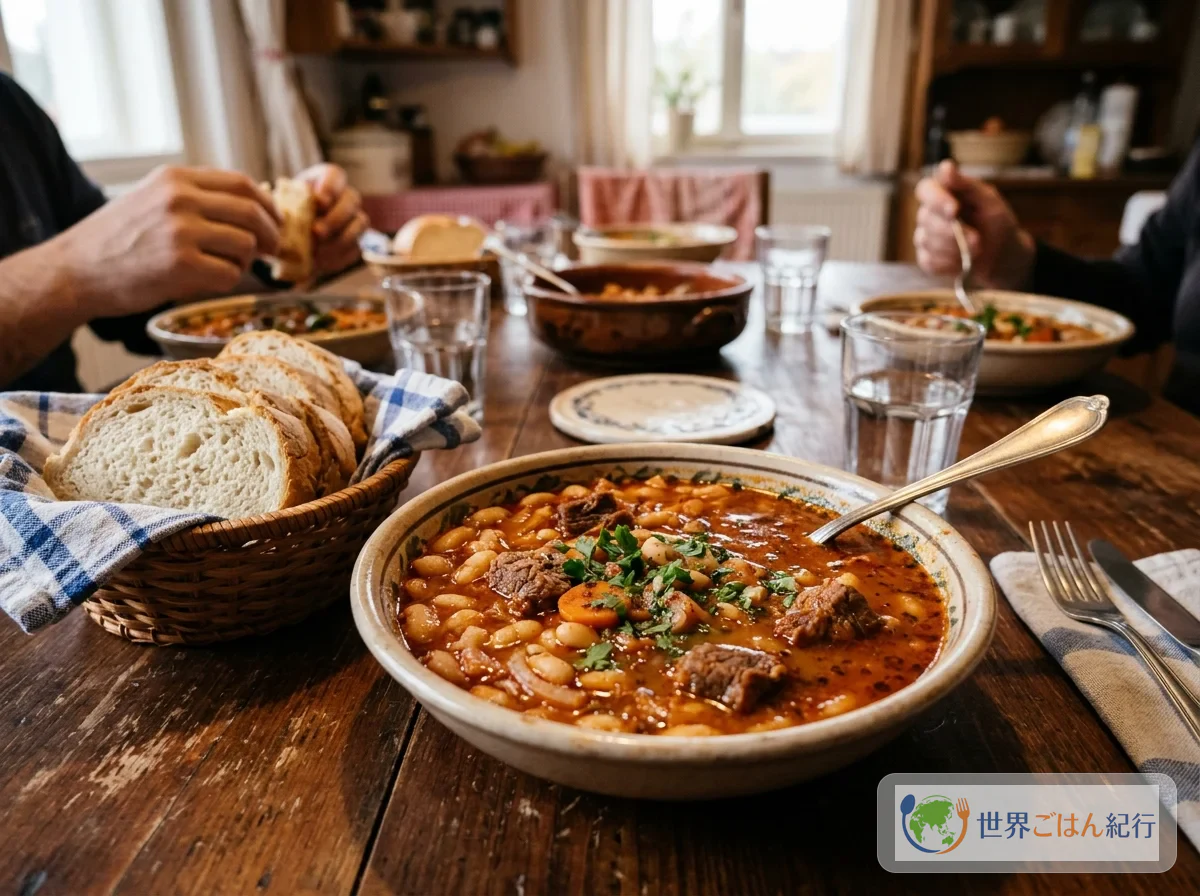
Ladle it generously into deep bowls and serve with crusty bread. Tear the bread, dunk it, and let it soak up the thick broth. Cut the raw onion into wedges, place them at the edge of the plate, and bite into them between spoonfuls.
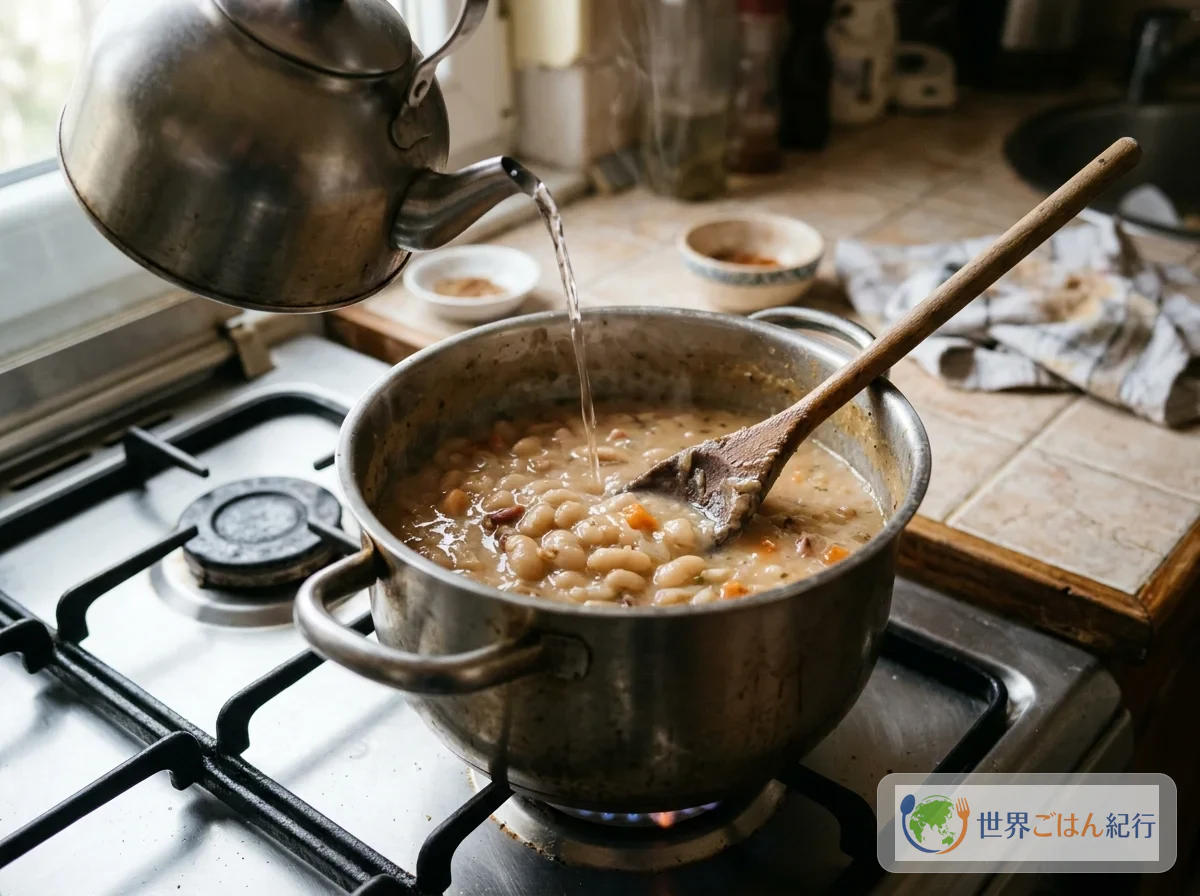
Pasulj is also a dish that people make in a big pot at home and eat over several meals. Reheating lets the beans soak up more broth and thicken, so loosen it with a little hot water. Another Serbian dish, mućkalica (in Japanese), a braise of pork and paprika, lets you compare different ways of using paprika.
FAQ
Can I make it with canned white beans?
Yes. Canned beans are already cooked, so skip the parboiling and simmer them with the browned meat for 30–40 minutes to make the beef tender, then add the roux. The beans break easily, so do not stir until you add the roux.
The beans will not soften.
Older beans can stay hard even after long cooking. Add lukewarm water as needed and extend the cooking time in 30-minute steps. Do not add the roux until the beans can be lightly crushed when pressed with a finger.
My roux clumped when I added it.
Dilute the roux in a small bowl with a little of the pot's broth, added gradually, and then return it to the pot; this makes clumps less likely. Clumps that have already formed can be broken up by whisking in the pot.
How can I make it spicy?
Replace some of the paprika added to the roux with hot paprika powder, or add a little coarsely ground chile at the end.
Can I make it ahead?
Cool it, refrigerate, and when reheating add a little hot water and bring everything to a full boil, stirring from the bottom. This article does not give a storage-time guideline because no source for one could be confirmed.
Sources
- Kurir, Jasmina Milivojević, "Originalni recept za vojnički pasulj iz JNA," 23 December 2024. Accessed and checked 22 October 2026. https://www.kurir.rs/zabava/zena/9534432/originalni-recept-za-vojnicki-pasulj-iz-jna
- Kurir, "Ova 3 jela iz Srbije našla su se na listi 100 najboljih jela od pasulja," November 2024. Accessed and checked 22 October 2026. https://www.kurir.rs/zabava/zanimljivosti/9496504/ova-3-jela-iz-srbije-nasla-su-se-na-listi-100-najboljih-jela-od-pasulja
- N1, "Taste Atlas objavio 100 najboljih jela od pasulja na svetu: Na listi tri specijaliteta iz Srbije." Accessed and checked 22 October 2026. https://n1info.rs/magazin/lifestyle/taste-atlas-objavio-100-najboljih-jela-od-pasulja-na-svetu-na-listi-tri-specijaliteta-iz-srbije/
- Ministry of Health, Labour and Welfare (Japan), "Health incidents from eating white kidney beans" (in Japanese), 22 May 2006. Accessed and checked 22 October 2026. https://www.mhlw.go.jp/houdou/2006/05/h0522-4.html


