Crack the golden crust, and a jeweled pilaf spills out
Azerbaijan sits at the eastern end of the Caucasus Mountains, on the shore of the Caspian Sea. For centuries it was a key stop on the Silk Road, a place where East and West met. Its proudest festive dish is shah plov (Şah plov).
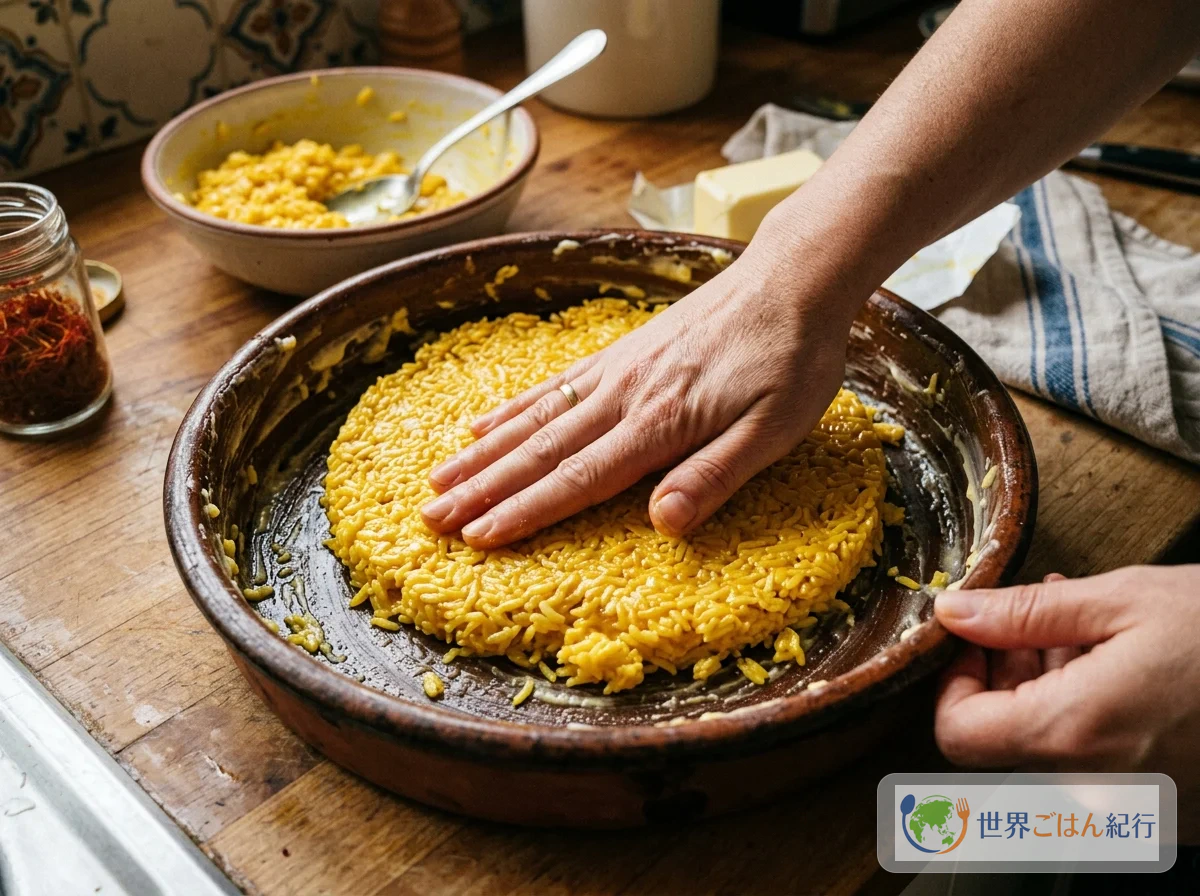
Shah plov is a rice dish quite unlike any other: the inside of the pot is lined with a thin saffron-tinted dough (qazmaq), then filled with layers of pilaf and dried fruit and baked-steamed until the crust is crisp. "Shah" is the Persian word for king, and this is a dish fit for a royal banquet, handed down over generations.
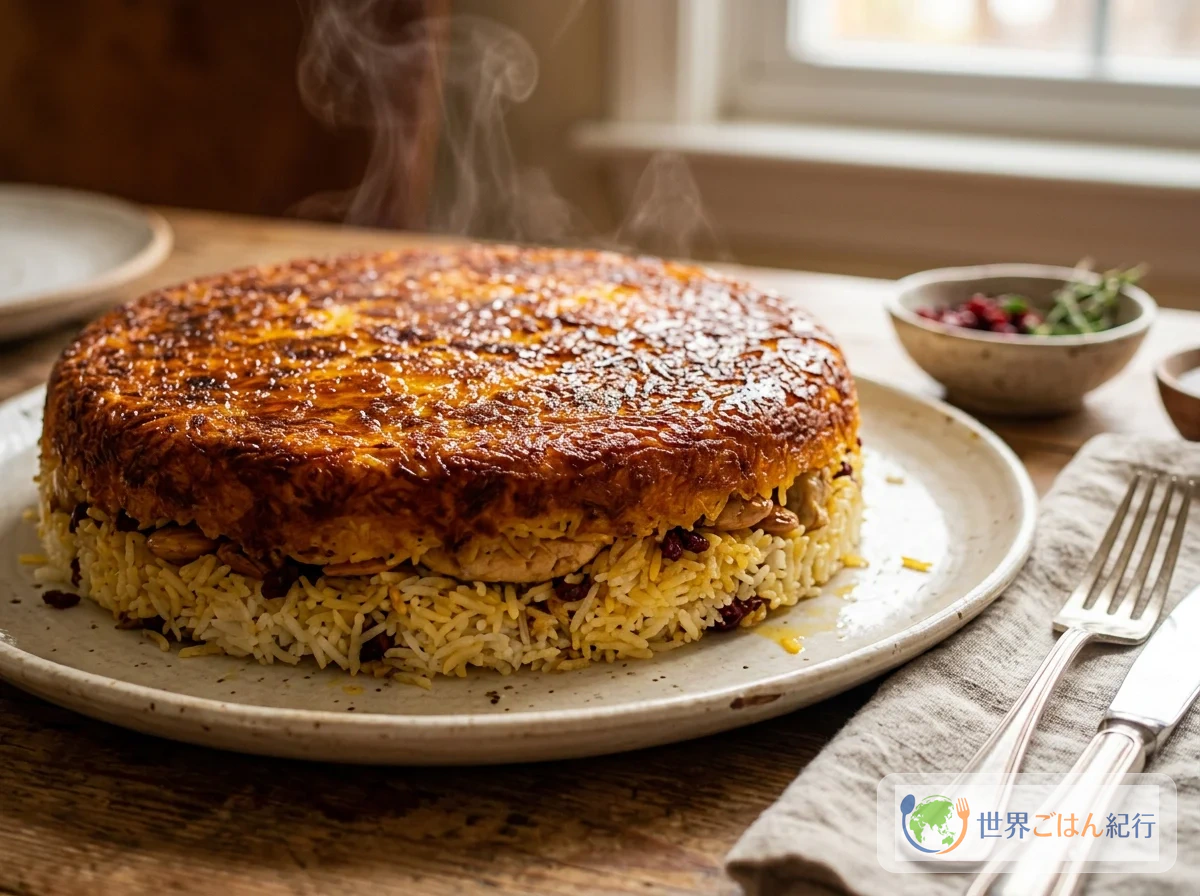
When the finished shah plov is turned out of the pot, a crisp, golden dome of pastry appears. Break it open and out come saffron-scented rice, amber dried apricots, deep red cranberries, and glossy prunes. This "unveiling" is the heart of shah plov, and a favorite moment at Azerbaijani weddings and holidays.
In Azerbaijani, şah means king and plov means pilaf, so the name translates to "the king's pilaf." Azerbaijan is said to have more than 200 kinds of plov, and shah plov is one of the showpieces of a celebration table.
In English you can find a fair number of shah plov recipes, many from cooks of the Azerbaijani diaspora, but the dish is still far less familiar than its neighbors such as Georgian khinkali (in Japanese) or Uzbek plov (in Japanese). This guide walks you through every part of it in a home kitchen: the dough, the dried-fruit mix, and the saffron water.
Ingredients (serves 6)
Tips for success
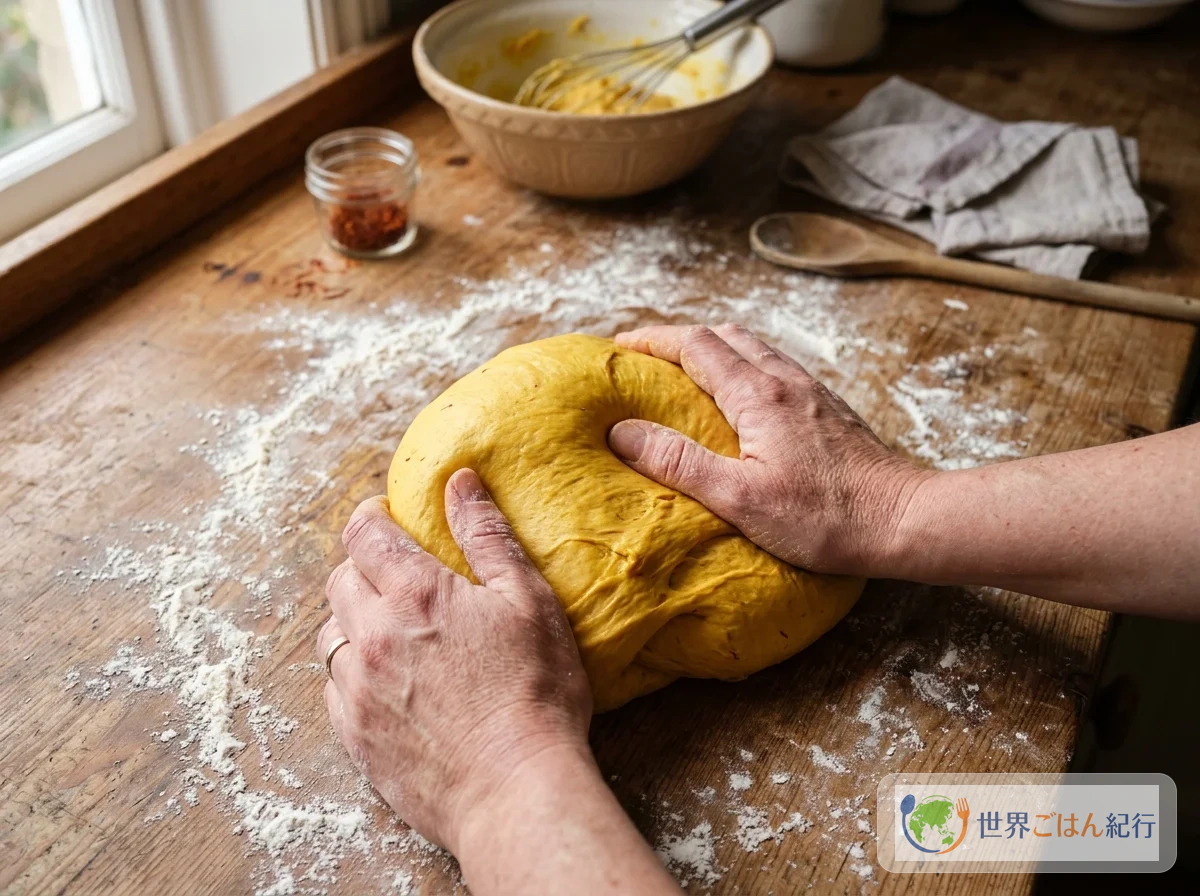
Shah plov succeeds or fails on an unbroken qazmaq. If the dough tears while you line the pot, rice and butter leak through the gaps and scorch. Three safeguards: (1) roll the dough to an even 3 mm; (2) butter the pot generously so the dough doesn't stick; (3) don't rush the rolling, and add more flour if it starts to tear. Handle it gently.
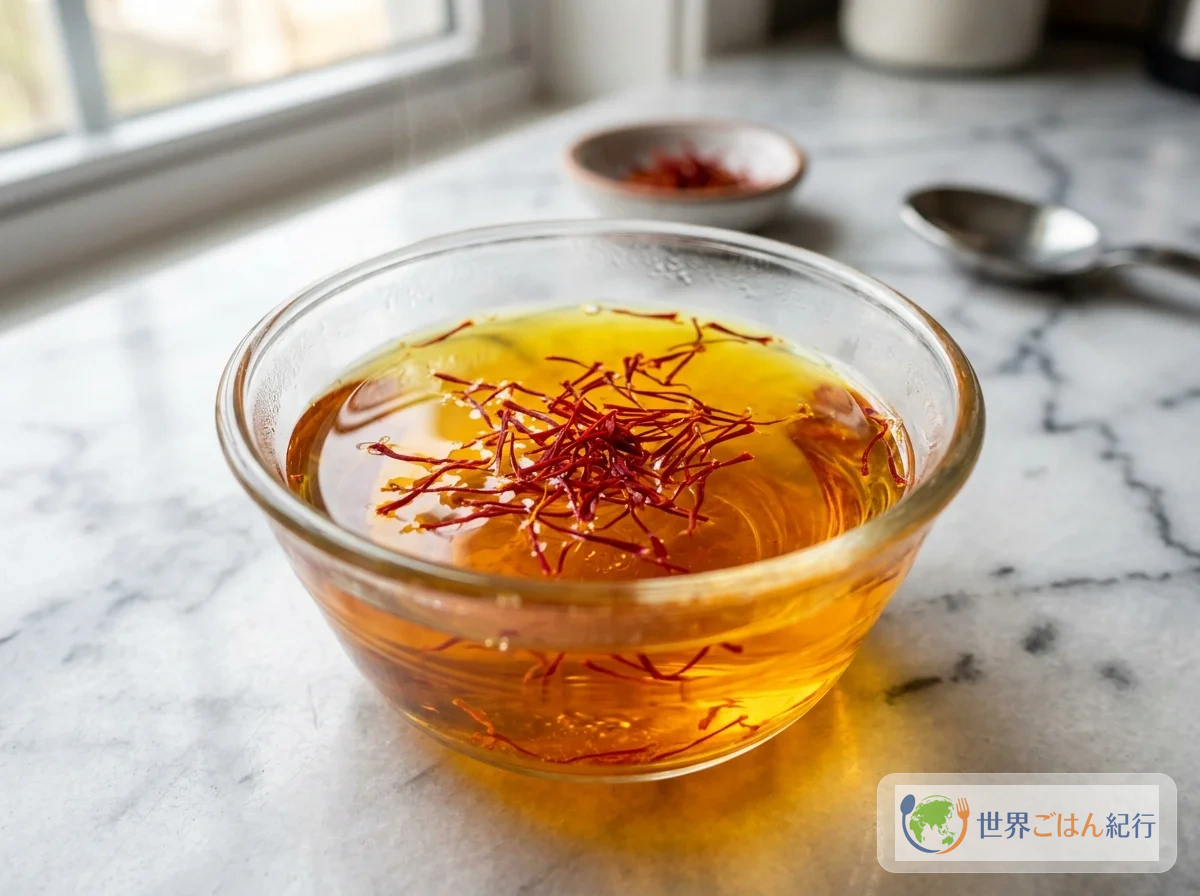
If you can't get good saffron, 1 tsp turmeric plus a pinch of saffron powder will make up the color. It won't replace the aroma, though, so the essential flavor of shah plov suffers. If your budget allows, good saffron from a Middle Eastern or Iranian grocer is worth it. In dishes built on saffron, such as Bahraini machboos, it pays not to skimp.
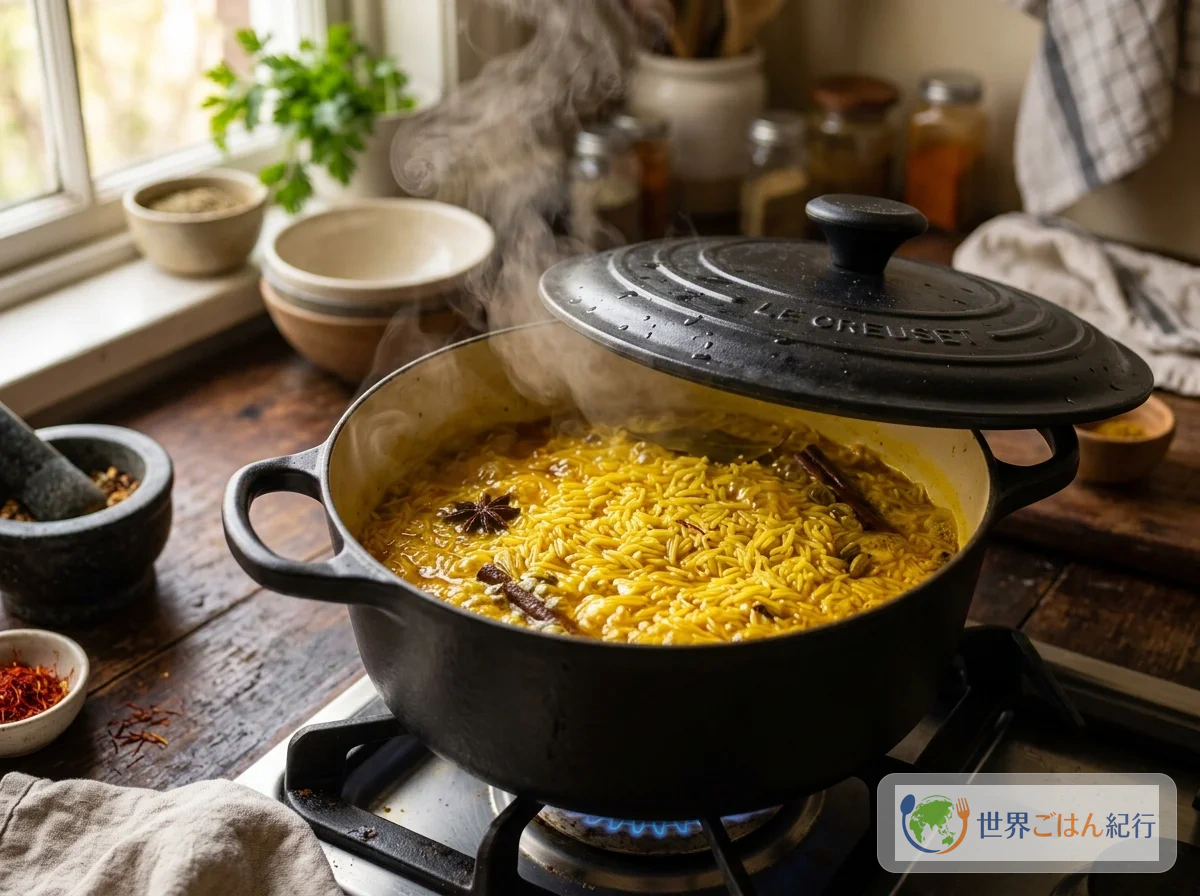
During the long steaming, a light, intermittent sizzle from the bottom is normal: it means the qazmaq is browning well. A loud, hard sizzle means the heat is too high; drop it to the lowest setting right away. A toasty smell is good, a burnt smell is not. Listening and smelling is how you get a crisp qazmaq.
For first-timers, turning the shah plov onto the platter is the most nerve-racking step. The trick is to do it in one decisive move. Go slowly and the rice and fruit shift. Hold the pot firmly, press the platter tight against it, and flip it briskly.
Variations
Shah plov with lamb
In a traditional variation, 300 g lamb shoulder is cut into bite-size pieces, sautéed with spices, and added to the layers of pilaf. Season it with 1 tsp cumin, 1/2 tsp coriander, and black pepper. The lamb's robust flavor plays beautifully against the sweet dried fruit, and the full festive version is made this way.
Shah plov with chicken
If you're not a fan of lamb, 300 g boneless chicken thigh works. Season it with salt, pepper, and turmeric, brown both sides in a skillet, and tuck it between the rice and the dried fruit. It's milder than the lamb version.
Quick qazmaq with spring roll wrappers
If you don't have time to make the dough, layer 3–4 spring roll wrappers instead. Brush melted butter between the sheets and line the pot. You won't get the thickness and chew of a handmade dough, but the crispness comes through well.
Phyllo for a refined version
Store-bought phyllo dough, used in Greek and Turkish cooking, gives you almost the delicacy of handmade dough. Layer 4–5 sheets with melted butter and line the pot. It bakes up flaky and layered, different from a handmade qazmaq but delicious in its own right, and close to the many-layered texture of Turkish baklava (in Japanese).
Customizing the dried fruit
Every Azerbaijani household has its own fruit mix. These combinations are traditional too:
- Persian style: dried cherries + barberries (zereshk) + almonds
- Caspian coast style: dried figs + dates + pistachios
- Autumn harvest style: dried persimmons + walnuts + dried apples
Dried persimmons with walnuts are a particularly good pairing if you can find them.
Background
Azerbaijan: the culmination of pilaf culture
Azerbaijan is known for the sheer variety of its rice dishes. It is said to have more than 200 kinds of plov, each named for its fillings or cooking method.
Behind this variety lies the country's geography. From the warm Caspian lowlands to the high Caucasus, many climate zones coexist in a small country, and each region developed its own ingredients and plov traditions. On top of that, Persian, Ottoman, and Russian influences have layered over one another, enriching its pilaf culture.
Note that the pilafs inscribed on UNESCO's intangible cultural heritage lists in 2016 were Uzbekistan's "Palov culture and tradition" and Tajikistan's "Oshi palav," not Azerbaijani plov. In that same year, Azerbaijan was inscribed together with Iran, Kazakhstan, Kyrgyzstan, and Turkey for the culture of making and sharing flatbread (lavash and others). Some families use lavash as the crust for shah plov, a link to that flatbread culture.
Qazmaq: from the crust on the bottom of the pot to a royal dish
Qazmaq, the key to shah plov, has its origins in the crust that forms on the bottom of a pilaf pot. In Iran this crust is called tahdig and is prized as the best part of the pilaf.
Azerbaijan took the idea further. Beyond a simple crust, cooks developed the technique of deliberately lining the bottom of the pot with bread dough or lavash (thin flatbread) to create a crisp layer, and eventually refined it into the method of wrapping the entire pot in dough, as in shah plov.
Iranian tahdig means "bottom of the pot" and is prized as the best part of a pilaf. Azerbaijani qazmaq likewise forms a crisp layer on the bottom of the pot, and the two are often discussed side by side as rice dishes of the same Persian culinary sphere. Shah plov can be seen as that layer extended around the whole pot.
Where the Silk Road and dried fruit meet
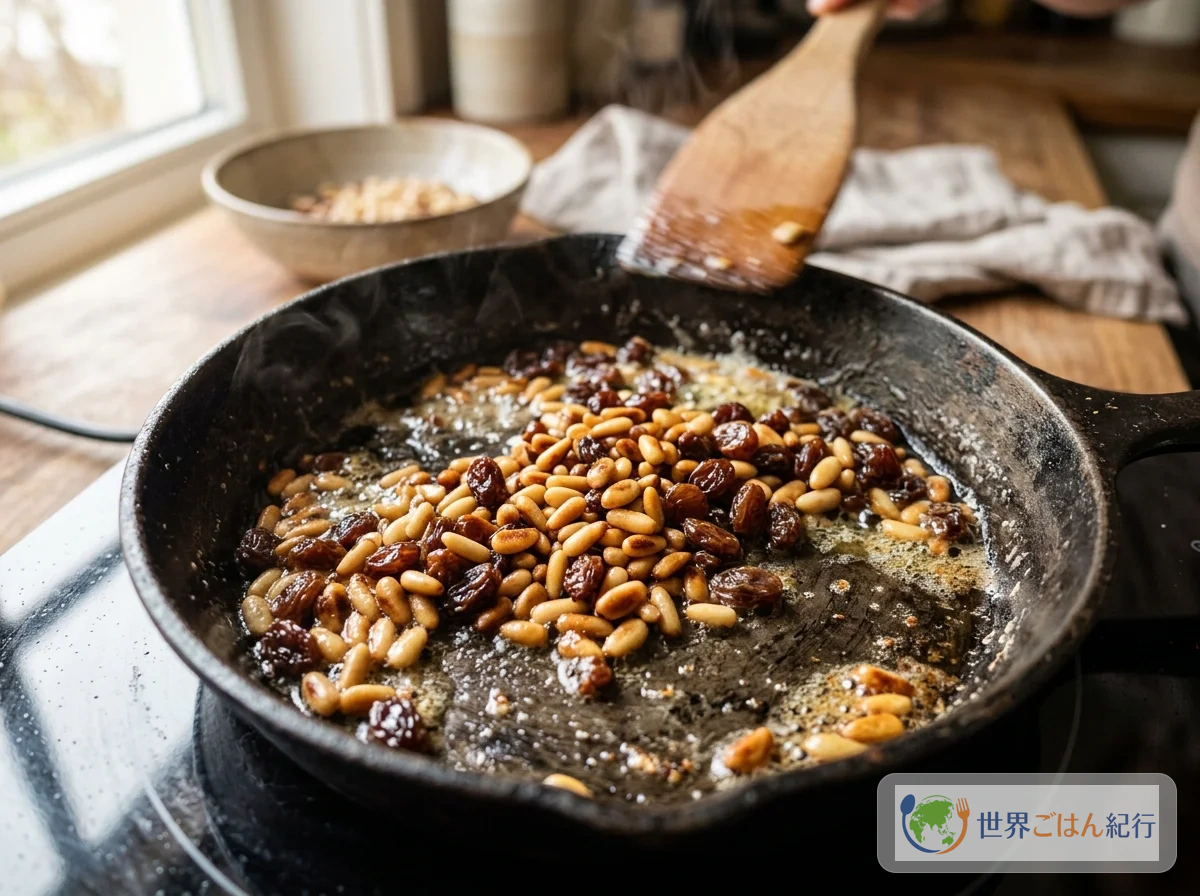
The dried fruit in shah plov also reflects Azerbaijan's place on the Silk Road trade routes. Dried apricots, prunes, raisins, and chestnuts keep well, and goods like these traveled the trade routes through dry country.
With all of them sharing one pot, shah plov is quite literally a crossroads of the Silk Road condensed onto a single plate. Shah plov, too, is a dish that grew up in a land where several food cultures meet.
Novruz and shah plov
Azerbaijan's most important holiday is Novruz, the Persian New Year, celebrated at the spring equinox (March 20–21). On the Novruz table in Azerbaijan you'll find sprouted wheat (samani) and pastries such as shekerbura and pakhlava, and plov is often cooked as a celebration dish. The "haft-sin" (seven items whose Persian names begin with S) belongs to Iranian Novruz and is not a fixed rule of the Azerbaijani table.
At weddings and other celebrations, too, a dough-wrapped shah plov lifts the mood the moment it is cut open.
Shah plov in Baku today
Today some restaurants in Baku serve shah plov as a signature dish. It is both a family celebration dish and a plate through which many travelers first meet Azerbaijani food.
Nutrition (per serving, 1/6 of the recipe)
This is a plate built mainly on carbohydrates from rice and dried fruit and fat from butter. It's fairly low in protein, so serving it with a lamb or chicken dish, or with yogurt, makes for a more balanced table.
| Nutrient | Amount |
|---|---|
| Calories | 580 kcal |
| Protein | 14 g |
| Fat | 22 g |
| Carbohydrates | 82 g |
| Dietary fiber | 4 g |
| Sodium | 420 mg |
Dried fruit is high in sugar, but it also provides minerals such as potassium. Because this dish uses a lot of butter and rice, enjoy it as a celebration treat and adjust portions as you like.
More dishes to cook with it
- An introduction to Georgian cuisine (in Japanese) - Shares ingredients and aromas from the same region.
- Fërgesë (in Japanese) - Shares ingredients and aromas from the same region.
- Piti (in Japanese) - Shares ingredients and aromas from the same region.
FAQ
Here are the questions first-time shah plov cooks ask most often, from handling the dough to choosing a pot and storing leftovers.
Q1. The qazmaq stuck to the pot. How do I get it out?
If the qazmaq won't come out when you flip the pot, set the bottom of the pot on a damp towel for 10 seconds. The sudden temperature change loosens the butter, making the dough easier to release. If it still won't budge, warm the pot over very low heat for 5 seconds and try again. Next time, the best prevention is to butter the pot more generously than you think you need.
Q2. I can't find basmati rice. Can I use short-grain rice?
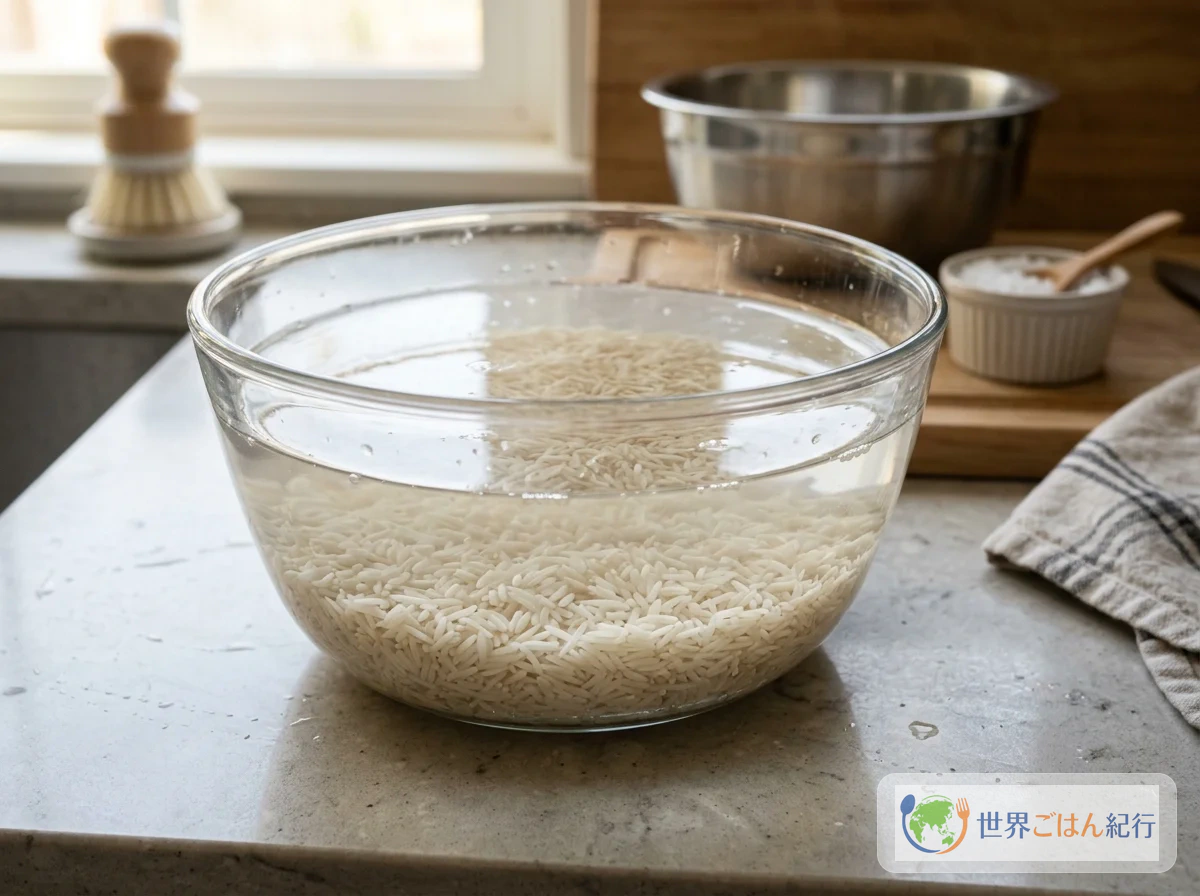
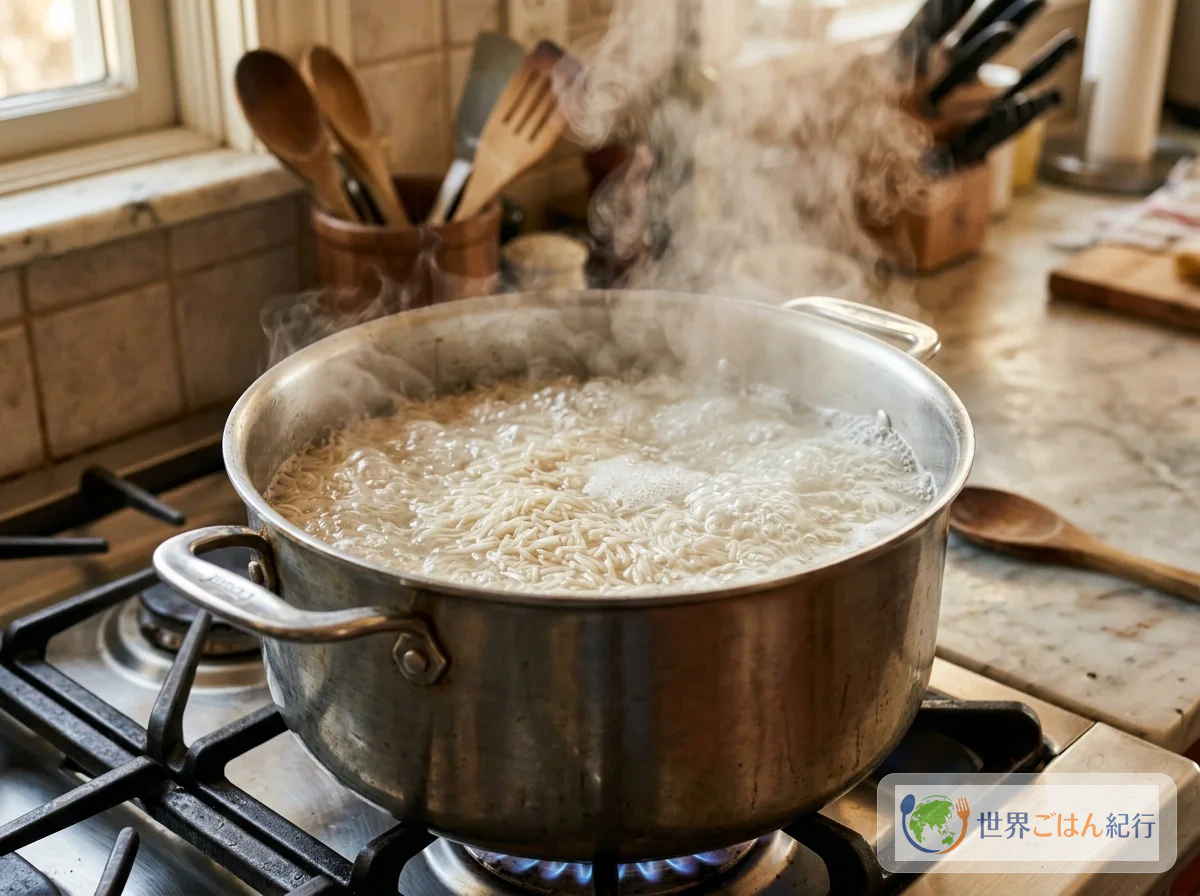
Short-grain (japonica) rice, such as Japanese rice, will work, but the result is very different. Because it is much stickier, you'll get something closer to a soft, seasoned rice than a fluffy, separate-grained pilaf. Long-grain jasmine rice comes much closer to basmati, so use jasmine if you can't get basmati. Whatever rice you use, don't change the 7-minute parboil that leaves a small core.
Q3. Saffron is too expensive. Can I make it without?
For color alone, 1 tsp turmeric will give you a yellow pilaf. But the essence of shah plov is the aroma of saffron, so with turmeric it becomes a different dish. As a compromise, 1/4 tsp saffron powder (cheaper than threads) gives you at least some aroma and color. Remember that 0.5 g of saffron serves six.
Q4. I smell burning while it's steaming.
Turn the heat down to the lowest setting immediately. Slipping a sheet of aluminum foil between the pot and the burner grate to spread the heat also helps. If part of the qazmaq does burn, cut off the burnt part with a knife after flipping; the rest is perfectly fine to eat. Next time, stick strictly to medium heat for the first 10 minutes only and low heat after that.
Q5. How do I store leftover shah plov?
Store the qazmaq and the pilaf separately. Keep the pilaf in an airtight container in the refrigerator for 3 days, or freeze it for 1 month. Once the qazmaq absorbs moisture it won't get its crunch back, so ideally finish it the same day. To reheat, microwave the pilaf and crisp the qazmaq in a toaster oven for 2 minutes; it will regain some of its crunch.
Related rice and noodle dishes from the Caucasus and Central Asia
If shah plov has caught your interest, explore the many pilaf and grain traditions along the Silk Road. Even under the same name, each country has a completely different philosophy.
- Khinkali (in Japanese) — Georgia's hand-pleated soup dumplings, a sibling dish from the same Caucasus craft tradition
- Piti (in Japanese) — An Azerbaijani soup baked in clay pots, a festive dish alongside shah plov
- Lagman — Kyrgyzstan's hand-pulled noodles, from the eastern end of Silk Road food culture
- Qurutob (in Japanese) — Tajikistan's national dish, a taste of simple Central Asian cooking
- Machboos — Bahrain's spiced rice, a Middle Eastern pilaf that shares saffron
Sources
Recipes and technique
- Ansari, Anna. "Shah Plov: Azeri King Crown Rice Recipe." Sous Chef. https://www.souschef.co.uk/blogs/the-bureau-of-taste/shah-plov-azeri-king-crown-rice-recipe — shah plov with chestnuts, dried apricots, prunes, and saffron (checked 22 October 2026)
- Azerbaijan Tourism Board. "Azerbaijani plov." https://azerbaijan.travel/azerbaijani-plov — how Azerbaijani-style plov is made (checked 22 October 2026)
Culture and history
- National Geographic. "What is plov? Meet the rice dish at the heart of Nowruz celebrations." https://www.nationalgeographic.com/travel/article/everything-you-need-to-know-about-plov — the many kinds of Azerbaijani plov, shah plov, and plov at Novruz (checked 22 October 2026)
- UNESCO Intangible Cultural Heritage. "Flatbread making and sharing culture: Lavash, Katyrma, Jupka, Yufka" (2016). https://ich.unesco.org/en/RL/01181 — the flatbread culture inscribed jointly by five countries including Azerbaijan (checked 22 October 2026)
- UNESCO Intangible Cultural Heritage. "Palov culture and tradition" (Uzbekistan, 2016). https://ich.unesco.org/en/RL/01166 — Uzbekistan's palov, inscribed in 2016 (checked 22 October 2026)
- Marton, Renee. Rice: A Global History. Reaktion Books, 2014. — a history of rice dishes around the world
- Zubaida, S. & Tapper, R. (eds.). A Taste of Thyme: Culinary Cultures of the Middle East. I.B. Tauris. — a foundational study of Middle Eastern and Caucasian food cultures