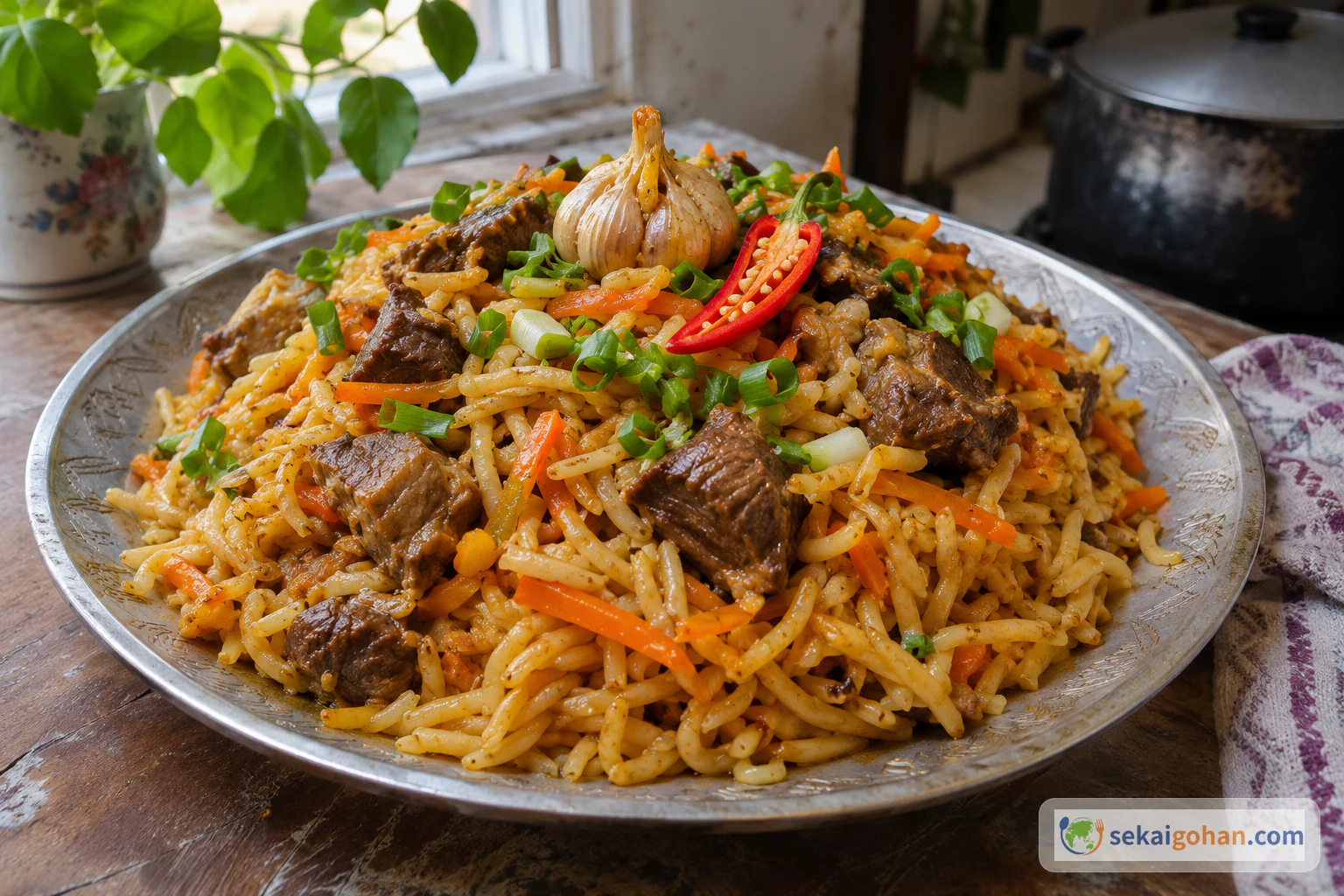
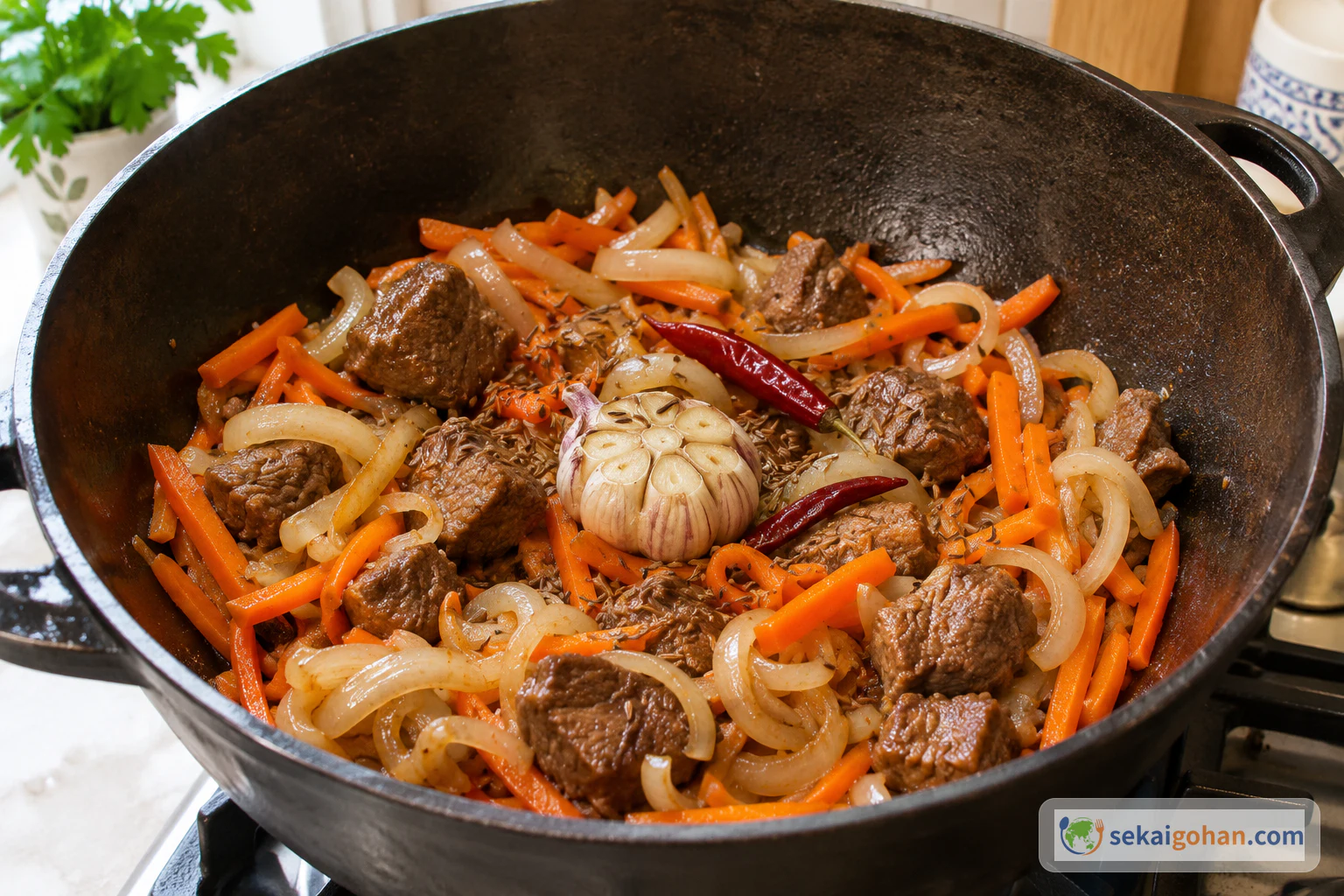
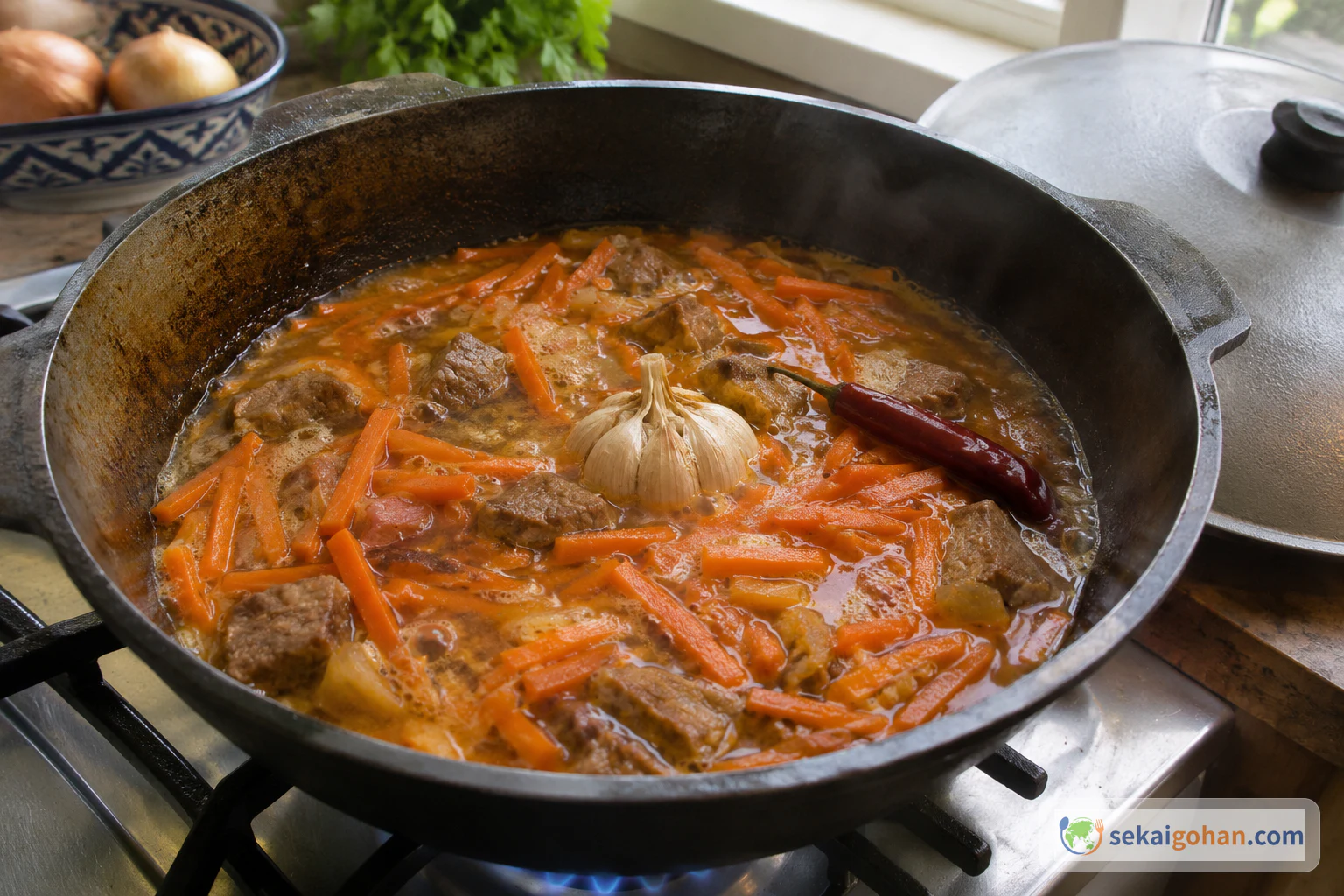
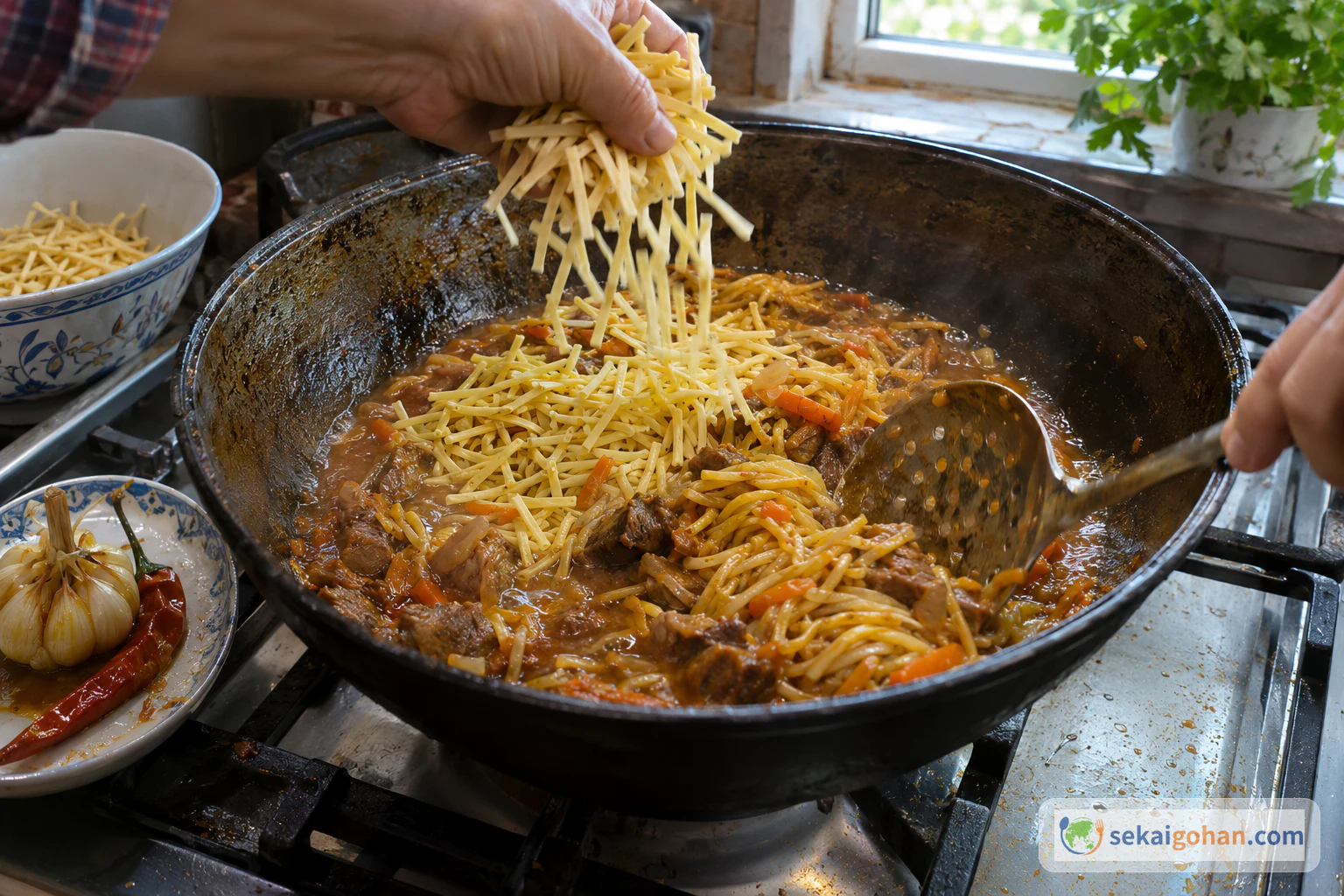
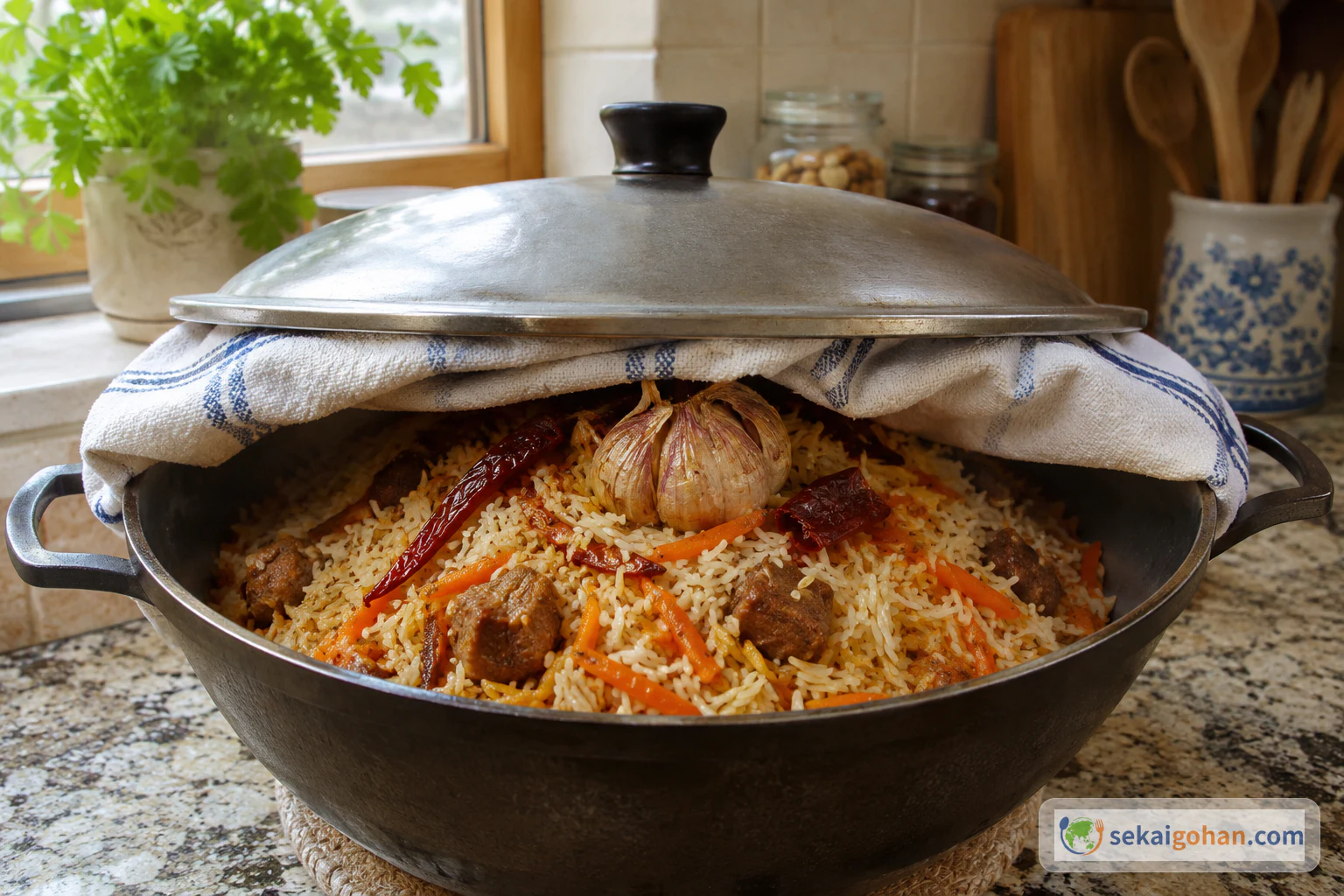
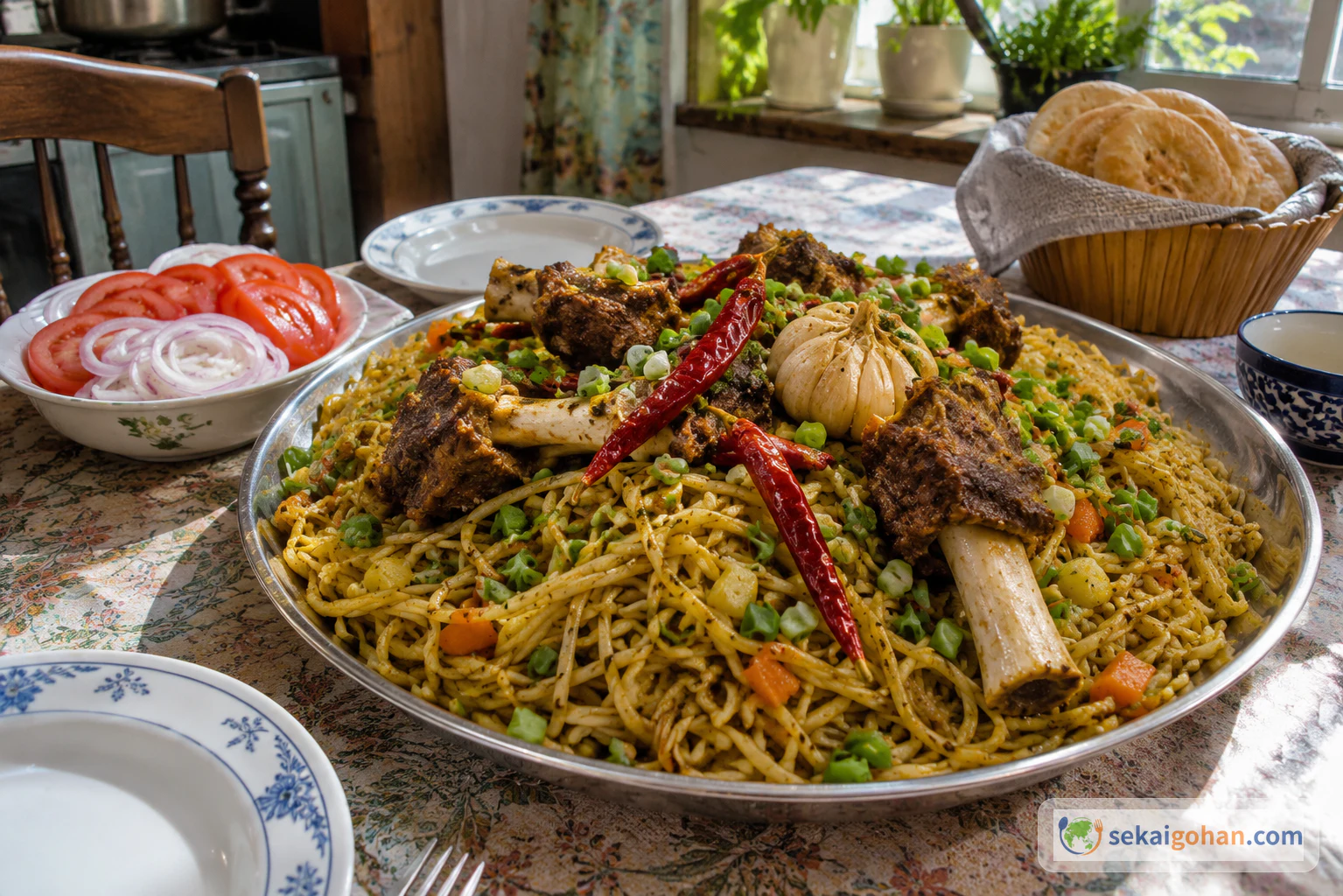
When the lid comes off after the long rest, the pot holds a mound of tiny golden pieces that look exactly like rice, until you lift a spoonful and see they are short strands of noodle. A whole head of garlic and a couple of dried chilies sit on top, and the smell is cumin, browned meat and sweet carrot. This is ugro palav: Tajik pilaf in which homemade egg noodles, cut fine and dried, take the place of rice. It gets the same platter and the same shared table as any palav, and tastes like a good plov but with more chew. Each piece of noodle soaks up the meat juices and keeps a little bite.
Pilaf Without Rice: Where Ugro Palav Belongs
Palav, the dish other Central Asian countries call osh or plov, is Tajikistan's national dish. It is cooked in a kazan, the deep cauldron with a narrow bottom. Cubed meat, long strips of carrot and rice go into oil or mutton fat, and a whole head of garlic is usually set on top when it is served. One large platter goes in the middle of the table and everyone eats from it. Eating by hand is the traditional way, and you still see it often in villages. Pilaf is one of the most loved dishes in the country and almost always comes out when there are guests. Isfara, Penjikent and Khujand are especially famous for their palav.
Ugro palav and oshi-palav are two popular kinds. The base is the same as rice palav. Onion is fried in oil, lamb or beef is browned, and carrot strips go in. That meat, onion and carrot mixture is called zirvak (also written zerbak). Where rice palav adds rice to the zirvak, ugro palav adds homemade noodles. In some kitchens the noodles are fried golden first and chopped to the size of rice grains. In others the dough is baked golden in the oven and then crushed. In the method below, the noodles are cut fine, dried overnight and put into the pot dry, where they cook in the meat broth. If you know the rice-based Uzbek plov, you will recognise every step until the noodles go in.
Neighbours and namesakes
Ugro palav is also made in Uzbekistan. Some cooks count it as Tajik rather than Uzbek, and it is common in the borderlands between the two countries, so where it began is not settled. In Tajik food writing it is described as a pilaf that belongs to Tajikistan in particular. Palav itself has other relatives. Gelak-palav is made with meatballs, and shawla is a looser, porridge-like rice dish. When guests turn up and there is no time to make noodles, cooks use store-bought pasta and call the result macaroni plov.
In Tajik, ugro means the fine homemade noodle, and it is also the name of a popular noodle soup, served alongside shurbo among the country's soups. Ugro palav is the pilaf, cooked until the liquid is gone and served heaped on a platter. If you want a Tajik dish to eat with a spoon, look at the soup. For a different side of the same table, try qurutob. More dishes from the country are on the Tajikistan page.
Rice palav in Tajikistan usually gets chickpeas, raisins, quince or apricots. Ugro palav keeps to meat, carrot, onion, garlic, chili and cumin, so the noodles carry most of the flavour. If you are coming to this from other Central Asian noodle dishes like lagman, the main difference is the shape. Ugro is cut so short and fine that it eats like grain.
Ingredients (serves 4)
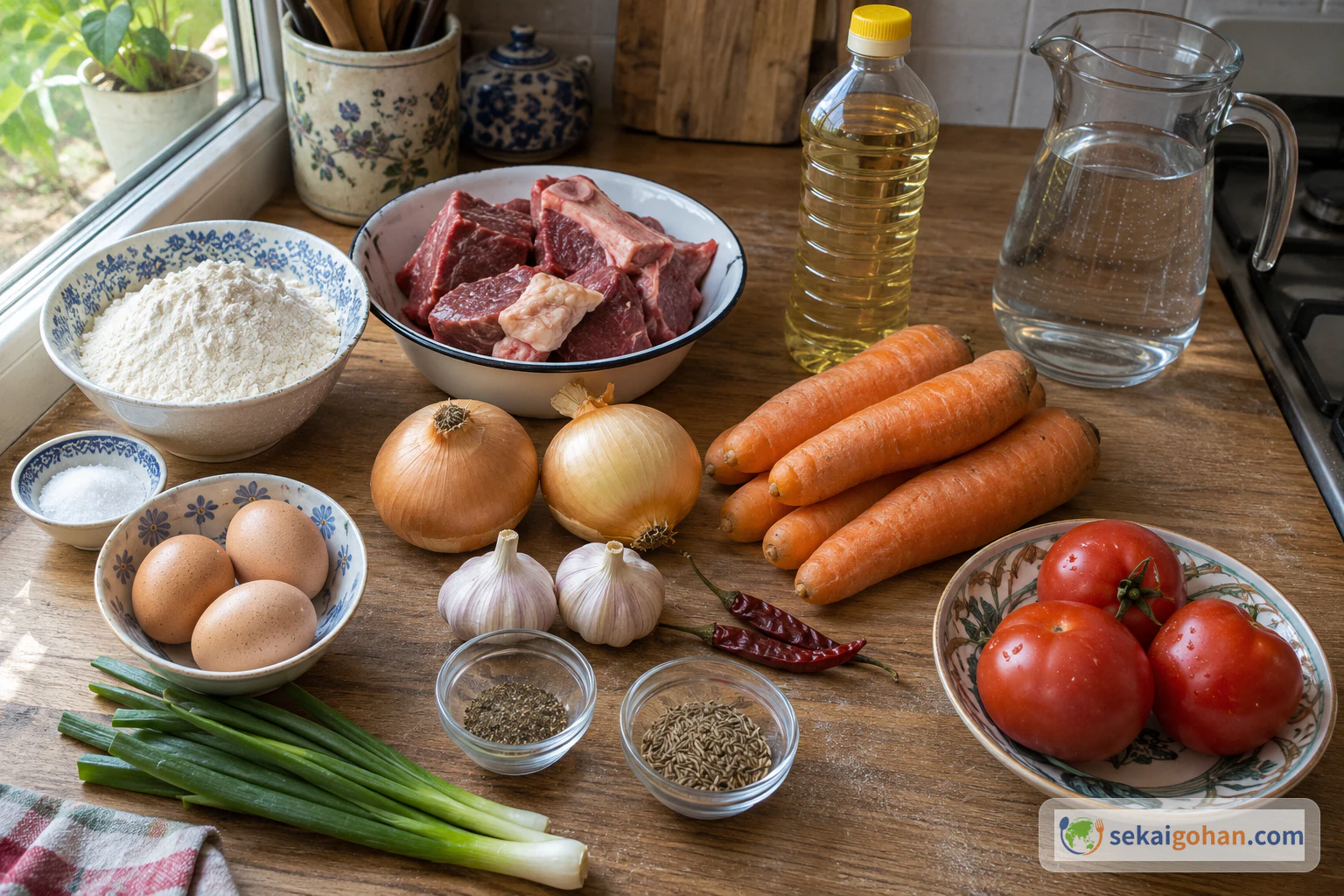
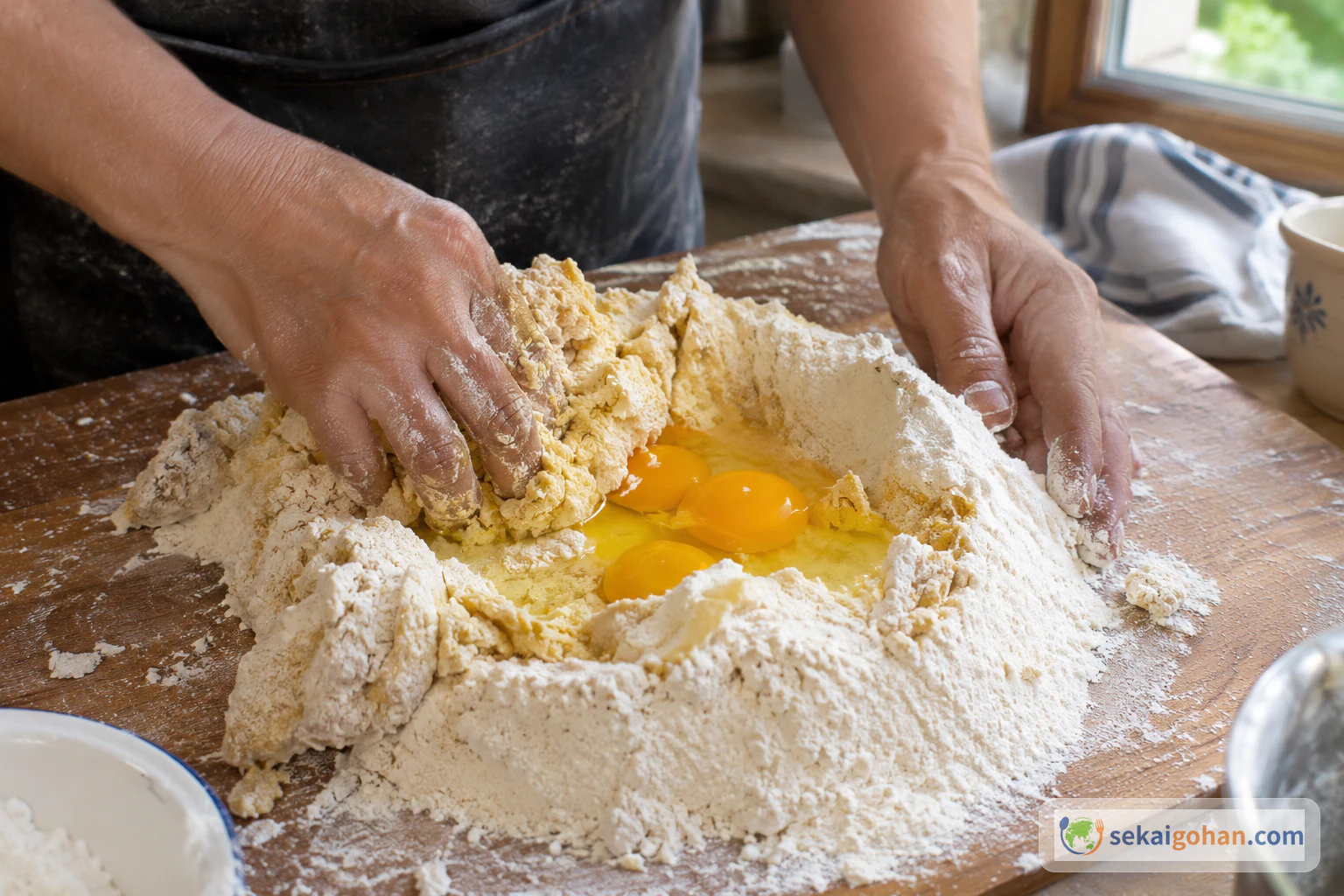
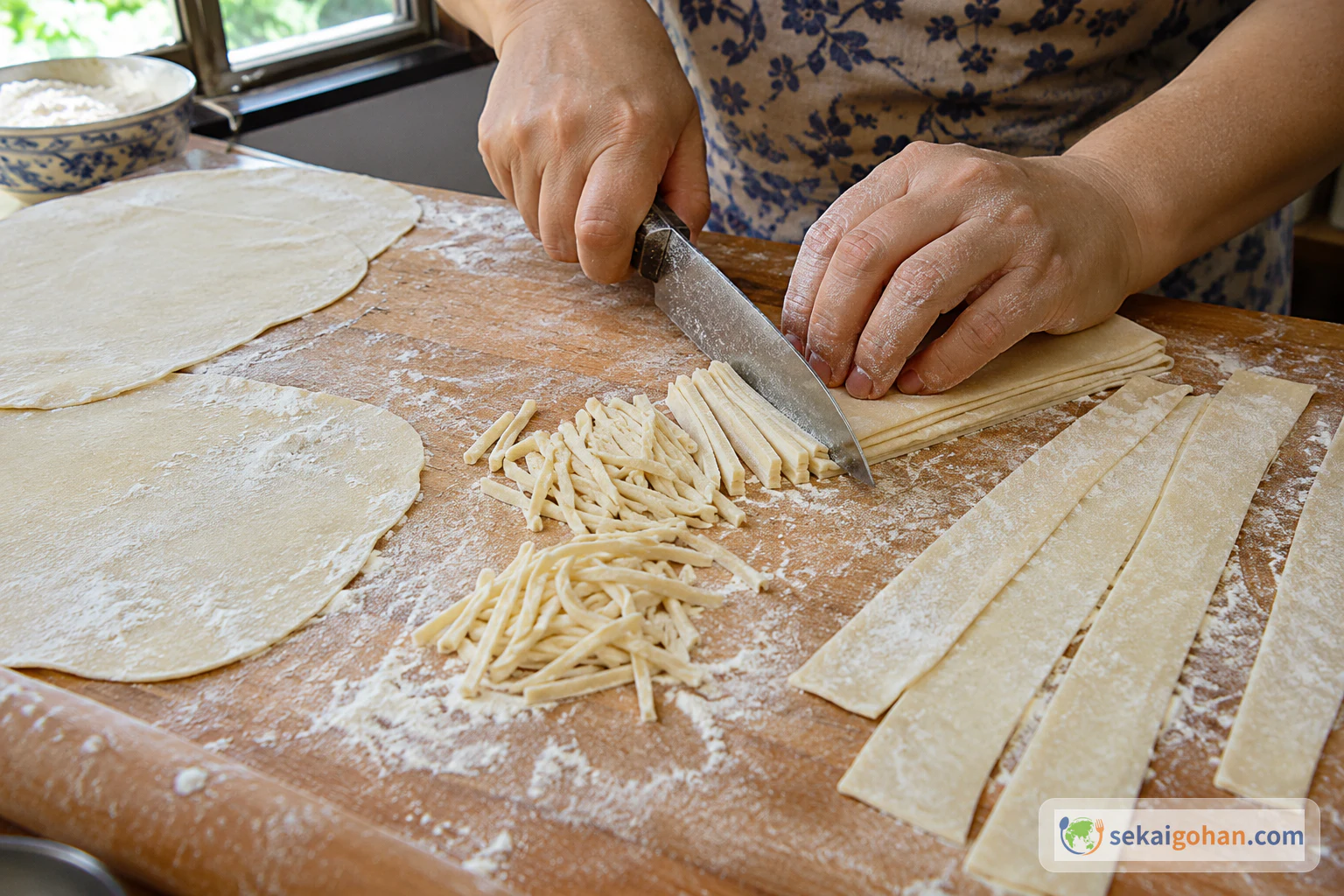
Ugro dough should be firm and hard to knead. Add the flour little by little until it stops sticking. A soft dough smears when you cut it, the strands stick together, and later they cook into a paste instead of separate grains.
This dish contains wheat (flour) and egg (in the noodle dough). If you use store-bought pasta instead, check the label for egg and other allergens.
Equipment
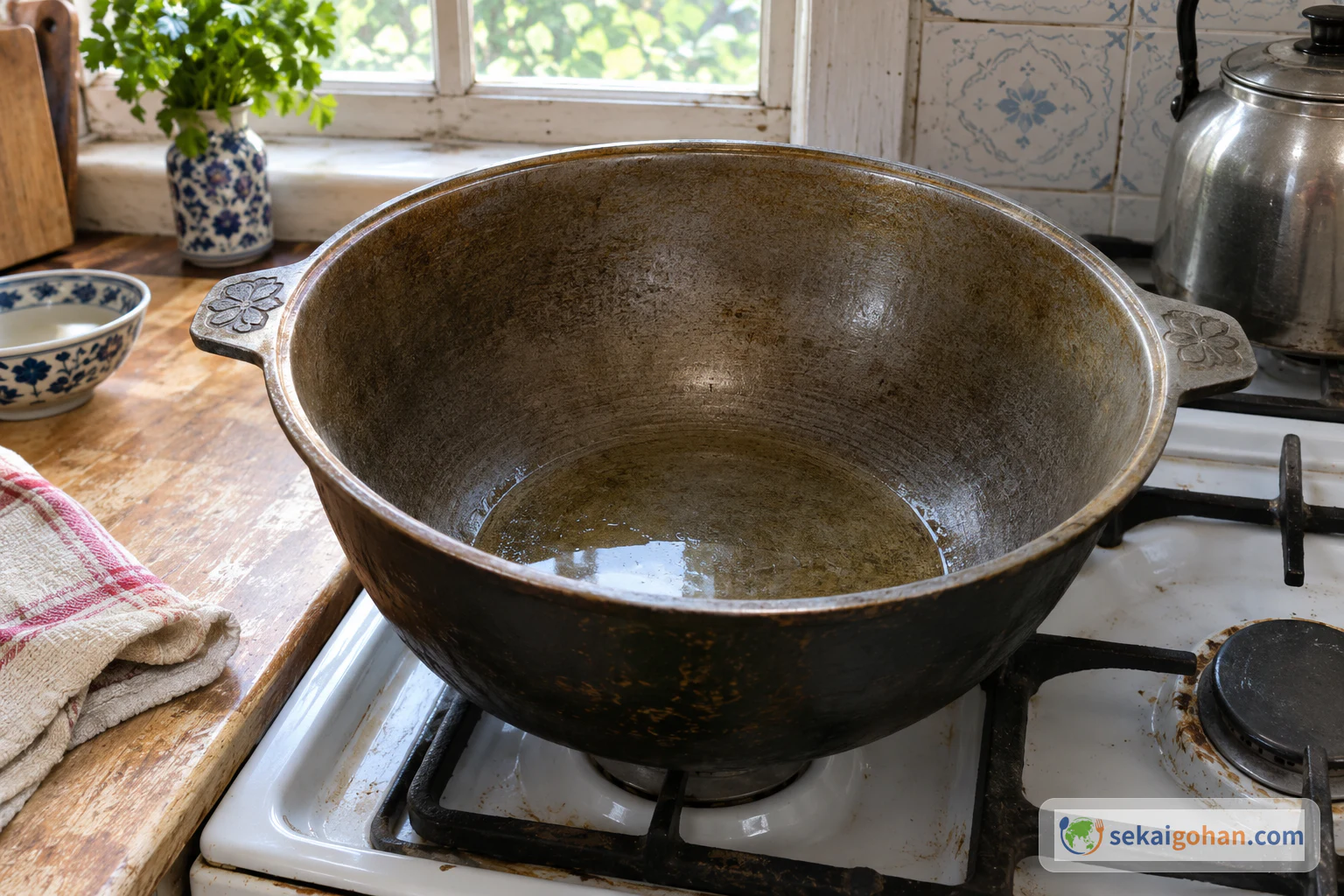
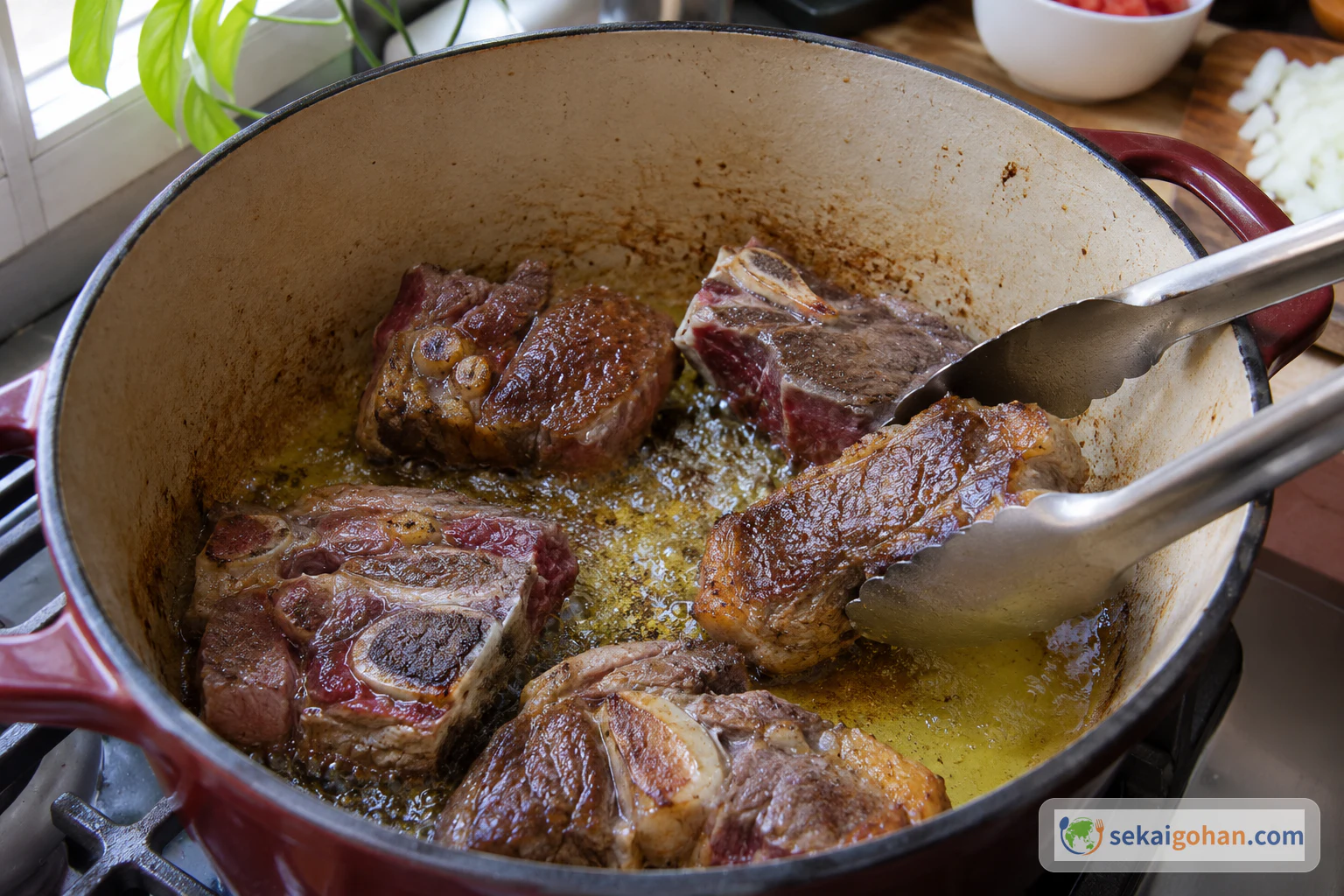
The kazan's narrow bottom and thick walls let the zirvak fry hard and then simmer gently. Use the heaviest deep pot you have. A cast-iron pot, a thick wok or a heavy stockpot all work.
- Heavy deep pot, kazan or wok, with a well-fitting lid
- Wide, flat work surface and a rolling pin
- Large sharp knife for cutting the noodles
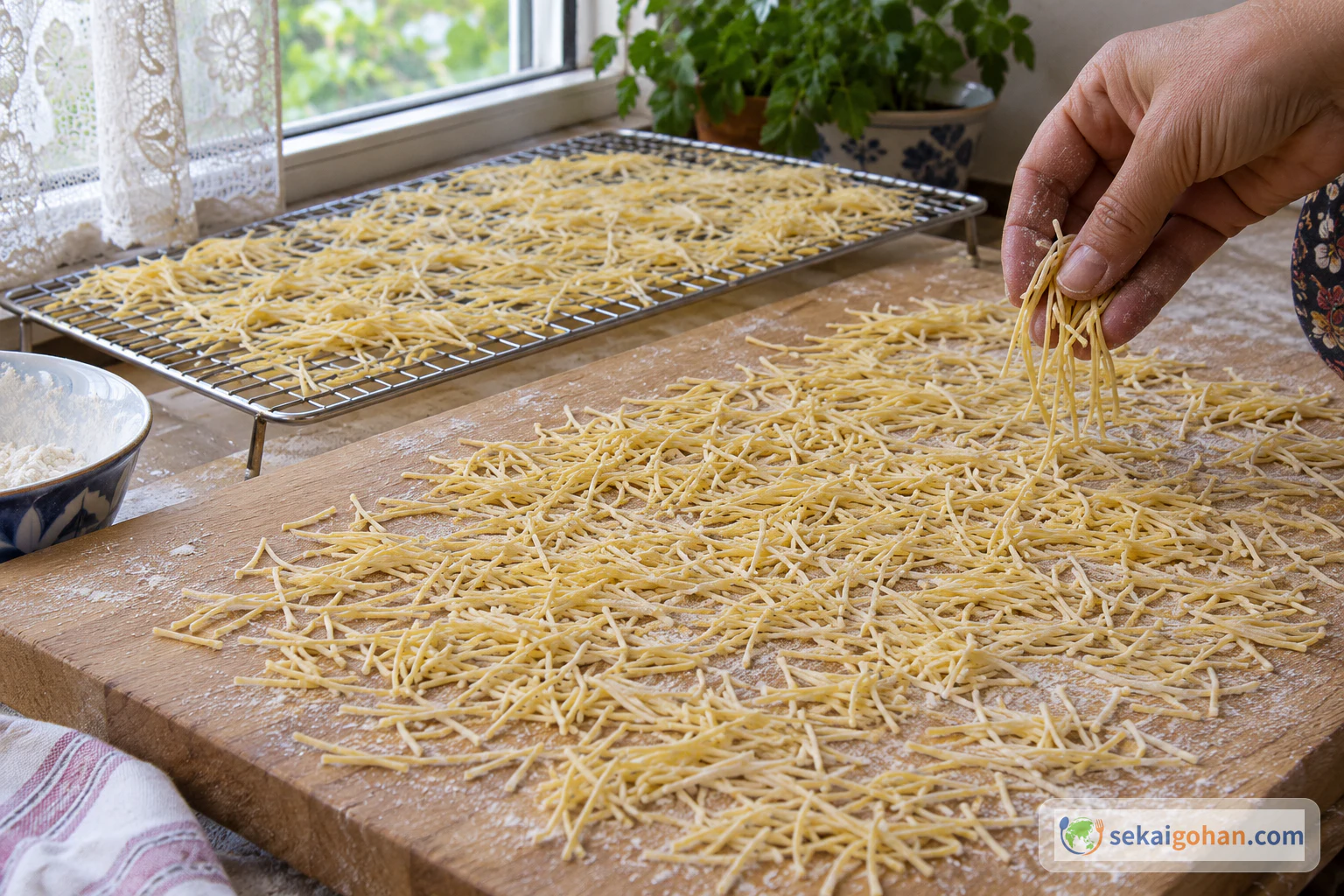
- Wooden board or wire rack for drying the noodles
- Wide slotted spoon or skimmer
- Clean kitchen towel, or a deep bowl that fits upside down over the pot
- Large round serving platter
Choosing and Substituting
Cumin seed (zira) is the one spice to look for. Buy it whole, from a Central Asian, Middle Eastern or Indian grocer or online. The seeds go in twice and give the palav its smell. Small whole dried red chilies are easy to find. Bread flour or all-purpose flour both make a good, firm egg dough.
Lamb gives the most Central Asian flavour. Veal is the other good choice, and young veal cooks faster. Either way, include some bone-in pieces like ribs, because they brown first and season the oil. In Tajikistan the frying fat is often cottonseed oil or rendered tail fat. Any neutral vegetable oil such as rapeseed (canola) works, though the dish will taste lighter than with tail fat.
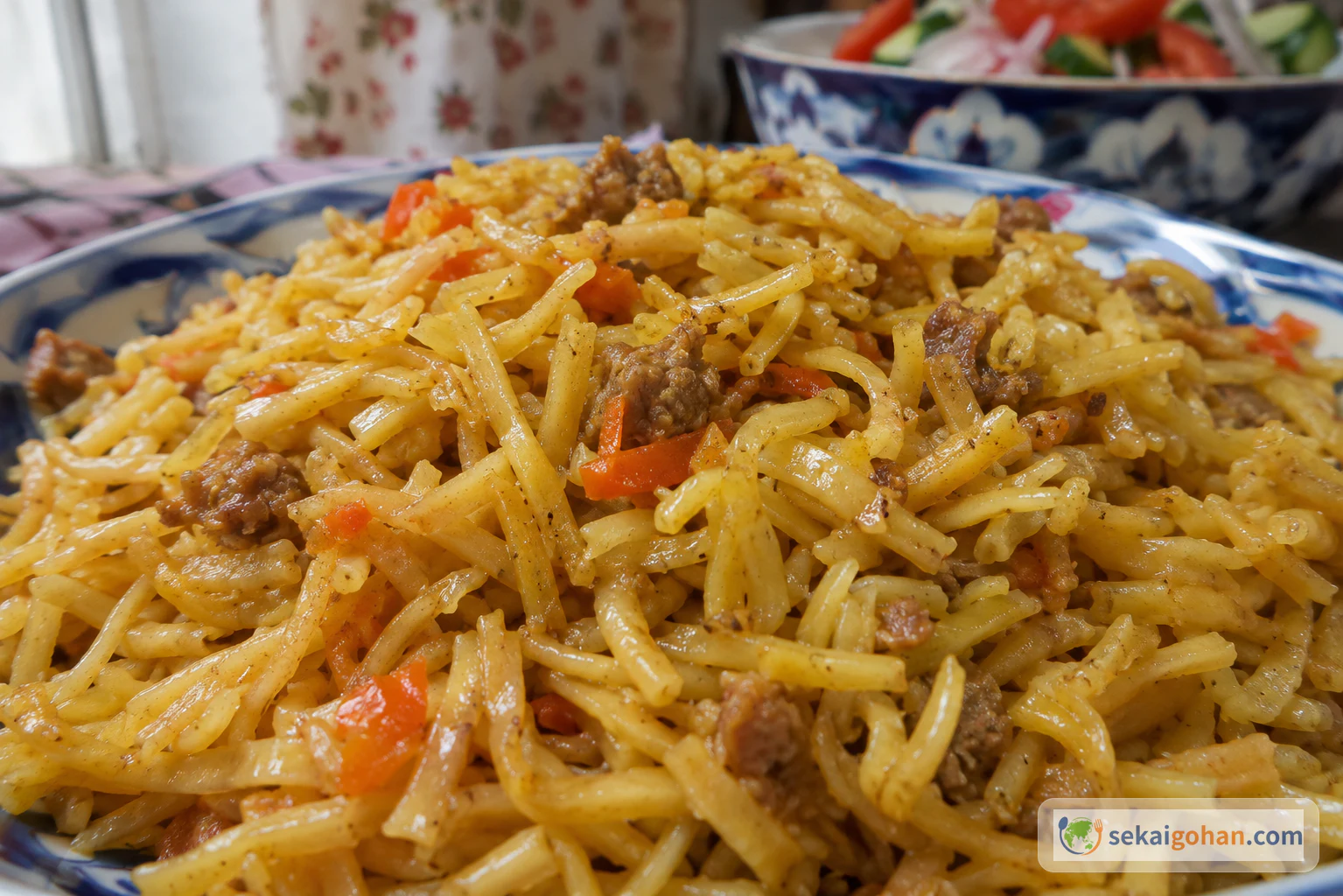
Carrots in Tajikistan are often yellow. Ordinary orange carrots work just as well and only change the colour, giving a redder, brighter platter. The homemade noodles are what make the dish, but small rice-shaped pasta such as orzo or risoni stands in on a busy night, as the variation below shows. It is smoother and more even than hand-cut ugro and has less chew.
Method
Start the day before. The dough rests for about 30 minutes, and the cut noodles then dry overnight. On the cooking day the hands-on part is the frying at the start. After that the zirvak simmers on its own, and the noodles finish in the covered pot with the heat off. Keep the water low throughout, because noodles need less liquid than rice.
When It Goes Wrong
| What you see | Why | What to do |
|---|---|---|
| Noodles clump into lumps in the pot | They were not dried enough or not shaken apart after cutting | Next time dry them fully overnight in a single layer. Now, break up the clumps gently with the slotted spoon before covering |
| The pot goes dry before the noodles are soft | Noodles drink broth fast, and the water is kept low on purpose | Add a few spoonfuls of boiling water at a time and keep folding |
| Noodles turn soft and pasty | Too much water, or cooked too long before covering | Cook only until firm to the bite, since the covered rest finishes them. Next time keep the water at the top of the carrots |
| Garlic or cumin tastes burnt | The spices went in too early or over too high a heat | Add them only after the meat and carrots have coloured, and lower the heat before they go in |
| The finished dish is too salty | The zirvak was salted fully, and the noodles already carry salt | Pile on green onion and serve plenty of the tomato salad alongside. Next time salt the broth lightly |
| The oil smokes before the meat goes in | The oil got too hot | Take the pot off the heat and let it cool a little, then use the salt test to judge |
Serving and Variations
At the table
Ugro palav goes to the table on one platter in the middle for everyone to share. Leave the garlic head on top so whoever wants it can squeeze out the soft cloves. A plate of sliced tomato and thin onion is all it needs on the side, and its sharpness cuts the richness of the oil and meat. Because it can be made with bought pasta in a pinch, this is also the palav cooks reach for when guests arrive unexpectedly.
Eggless dough, baked and crushed
Another Tajik way starts the other way round. Cubed meat is fried with onion and carrot strips, covered with broth and cooked until half done. Meanwhile, noodles made from a plain eggless dough are baked in the oven until golden, cooled, and crushed to the size of rice grains. The crushed pieces are rinsed in cold water, added to the pot with the meat and cooked until everything is done, then served with green onion. Baking gives a toasted, nutty flavour and a drier grain than the egg noodles above. There are no fixed amounts for this version, so judge it by feel.
Quick macaroni plov with orzo
Make the zirvak through step 6. While it simmers, fry orzo or another small rice-shaped pasta in a separate pan with a little oil until golden, then drain it in a sieve. Add it to the zirvak and cook over low heat for 15–20 minutes, folding often, until the liquid has cooked off. It skips the overnight drying and tastes toasty and rich, but the grain is smoother and more even than hand-cut ugro.
Tail fat instead of oil
Cooking the zirvak in rendered tail fat instead of vegetable oil gives a deeper, richer lamb flavour, the way it is often done in Tajikistan. It is hard to buy outside Central Asia. If you find it, use it in the same amount as the oil.
Frequently Asked Questions
Can I fry the noodles before they go in?
Yes. Some cooks fry the homemade noodles golden in oil first and then chop them to the size of rice grains. This gives a toastier taste and firmer pieces. Drain off the extra oil before adding them to the zirvak so the dish does not turn greasy.
Why lift out the garlic, chilies and bones before adding the noodles?
With them out of the way, you can fold the noodles from the bottom without breaking them. They go back on top for the covered rest, so their flavour still reaches the noodles. On the platter they become the garnish.
Can I use beef instead of lamb or veal?
Yes. Beef is also used for palav in Tajikistan. Choose a cut that includes some bone-in pieces for the first browning, and simmer until the meat is tender.
Does it work in a regular saucepan?
It works if the pan is heavy and deep. A thin pan burns the onion and spices during the frying and loses heat during the covered rest. If that is all you have, keep the heat a step lower while frying and seal the lid well with the towel.