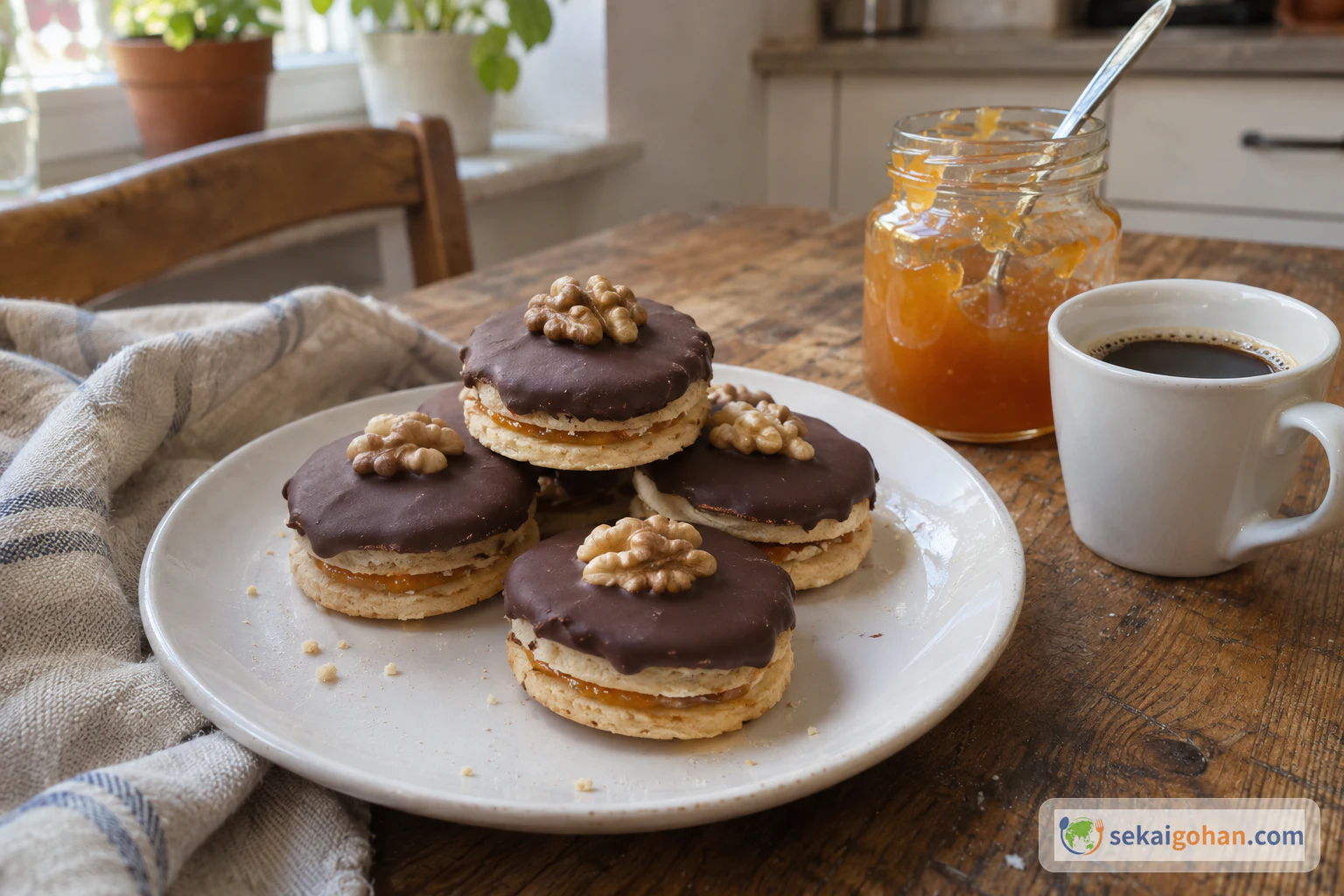
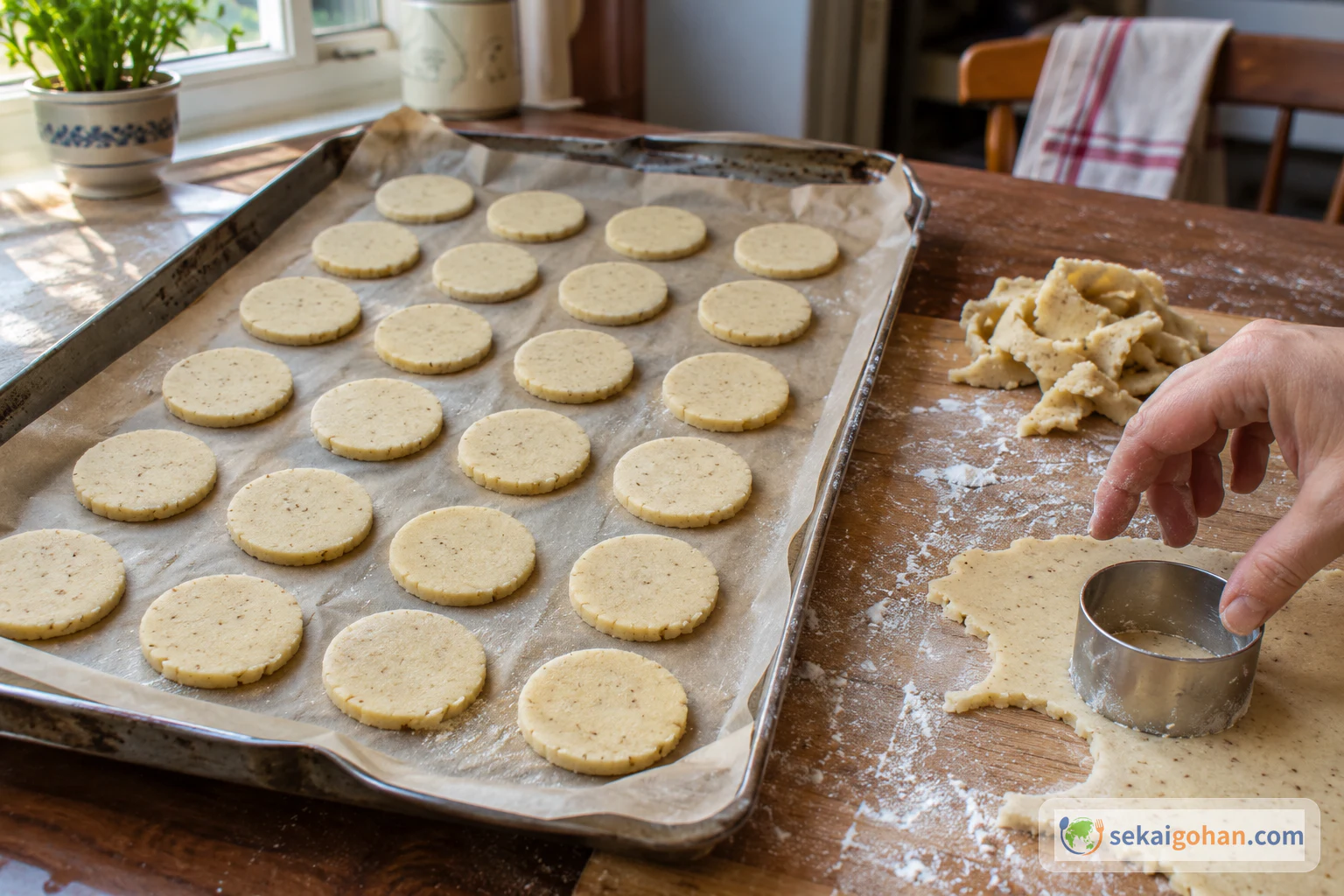
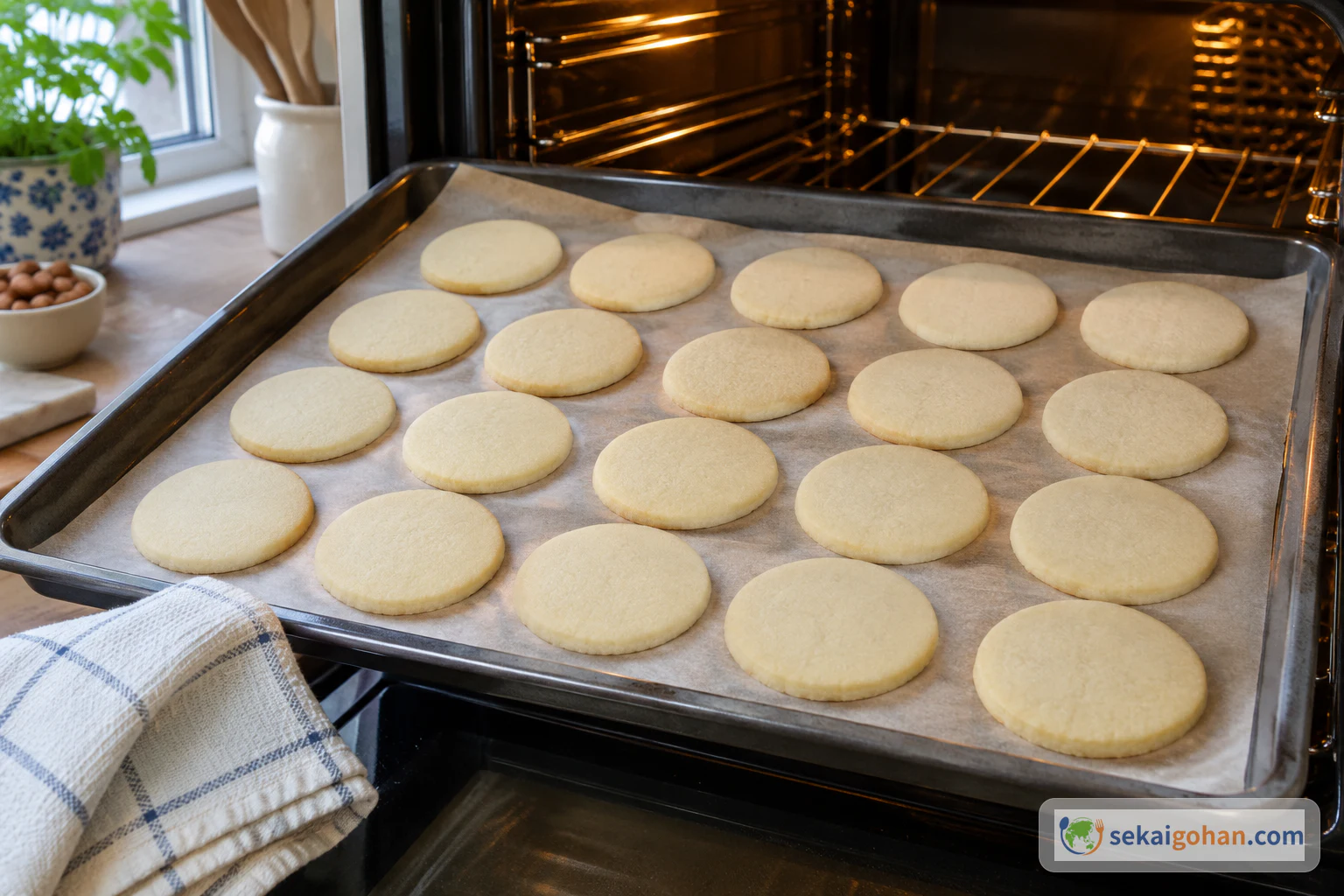
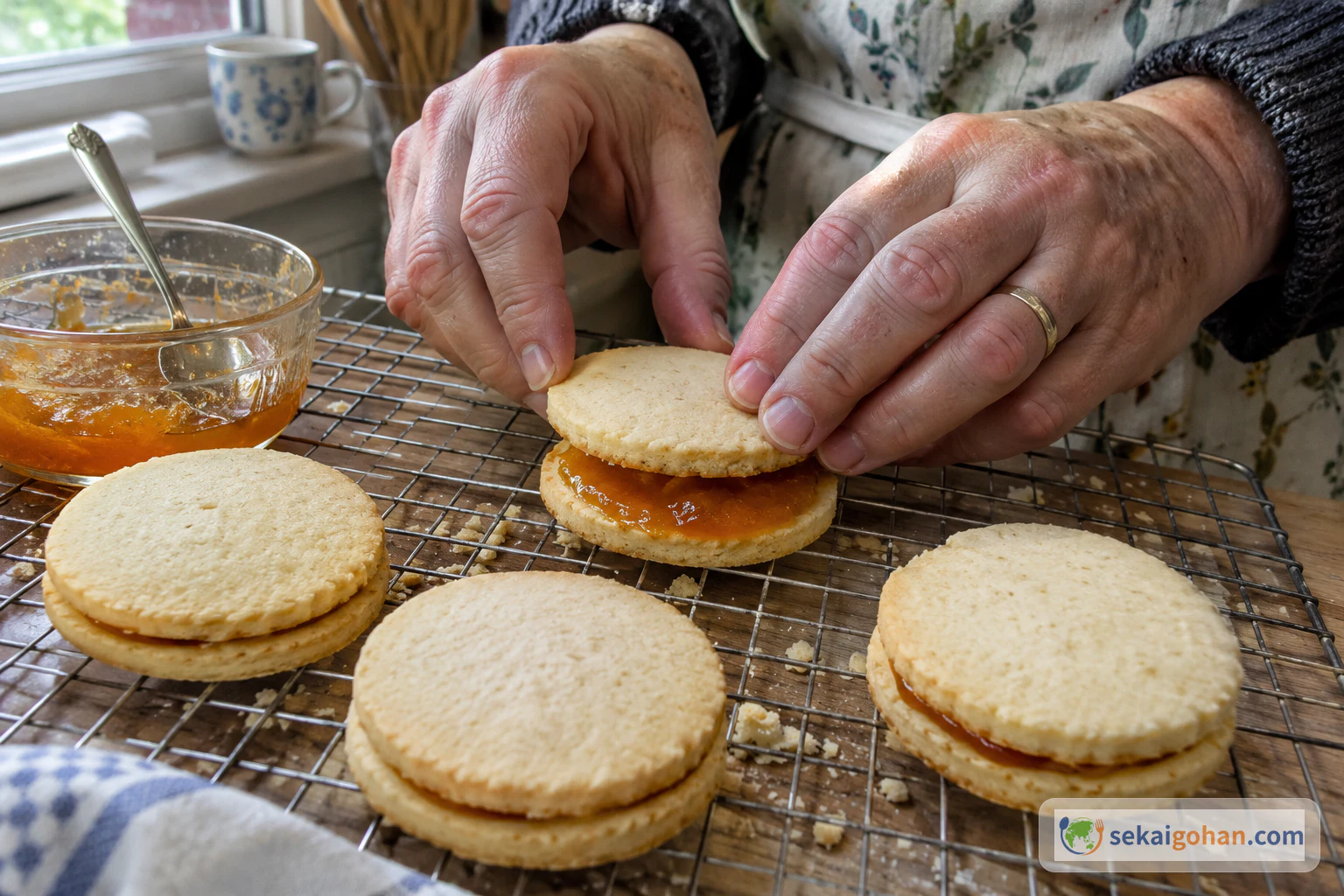
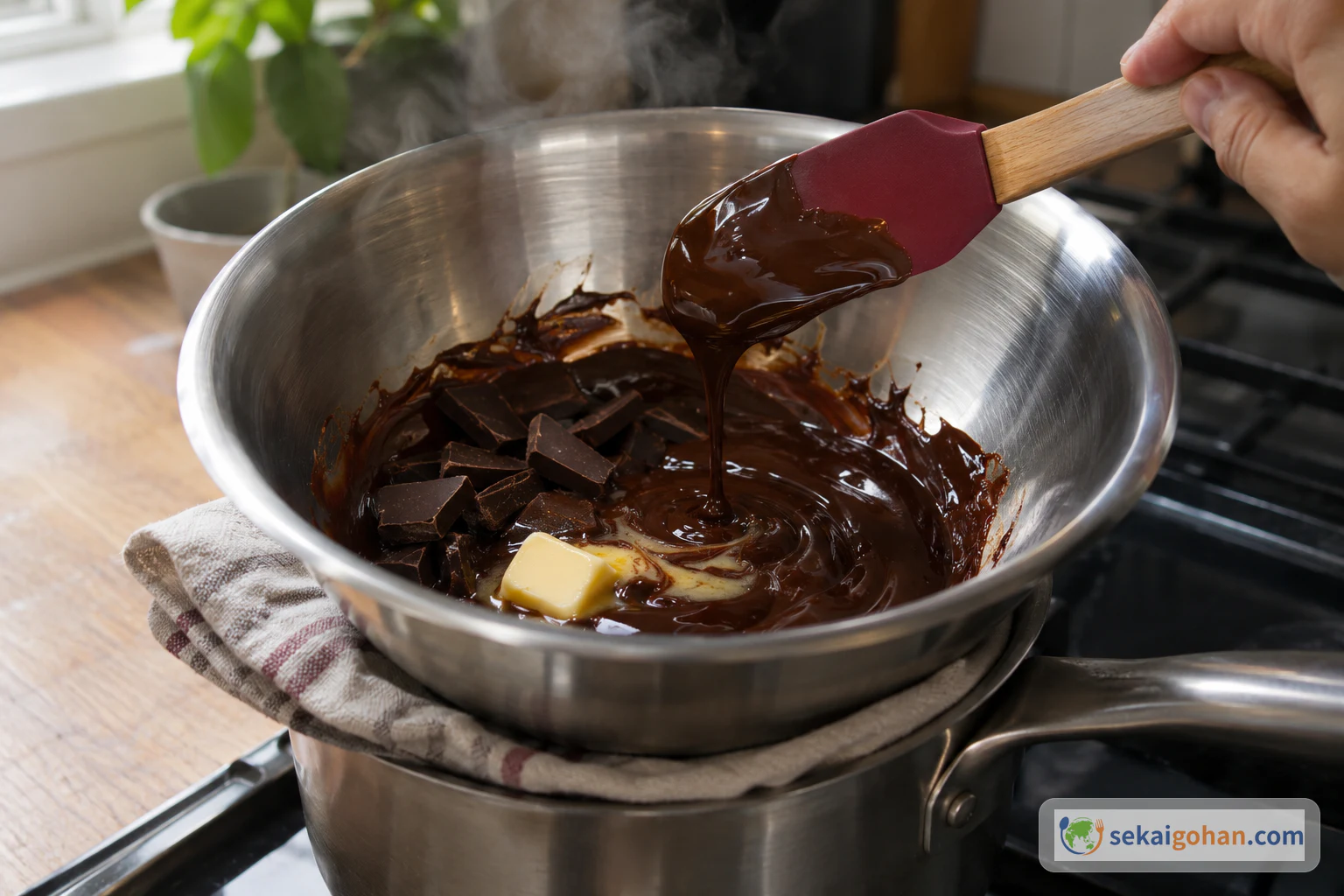
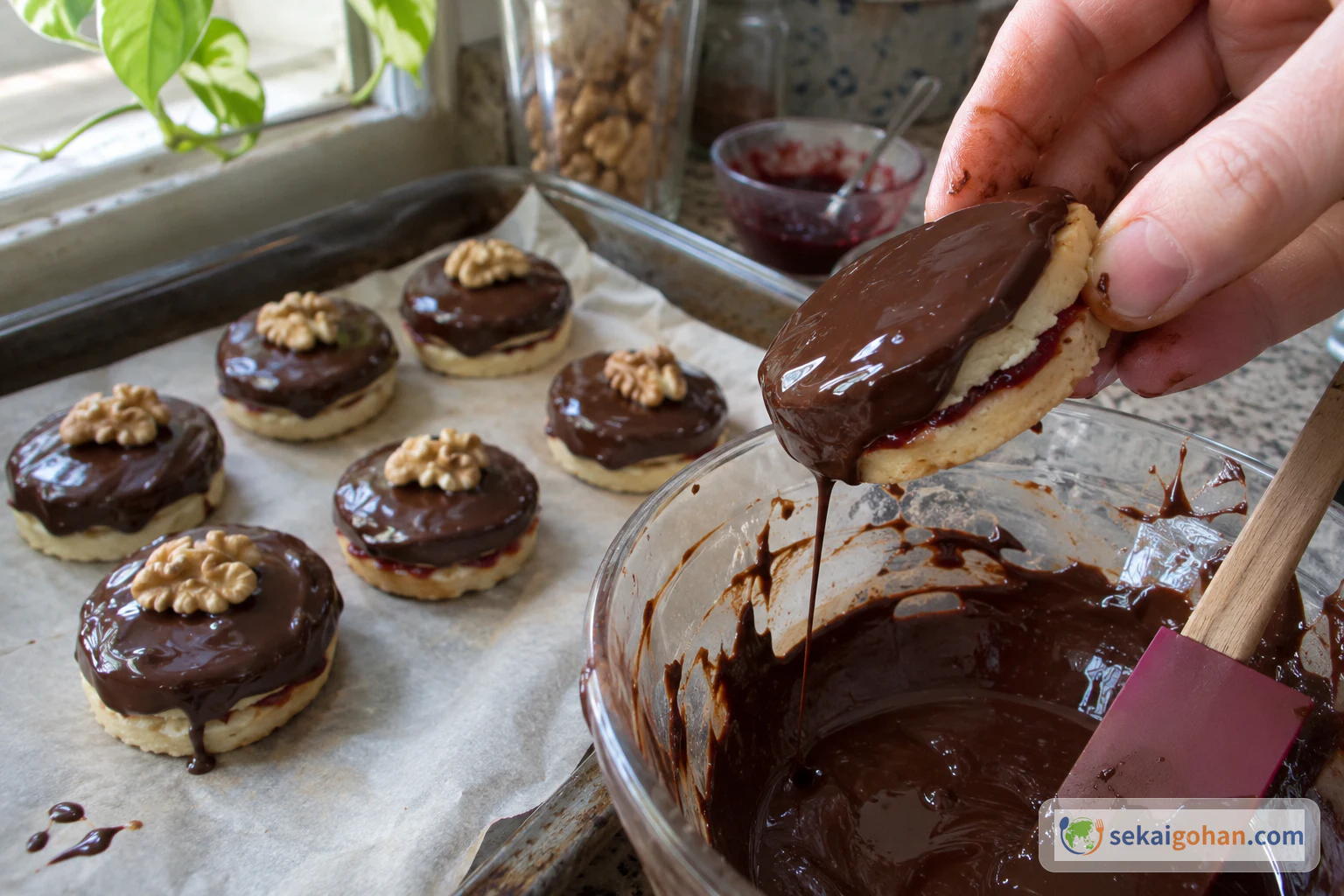
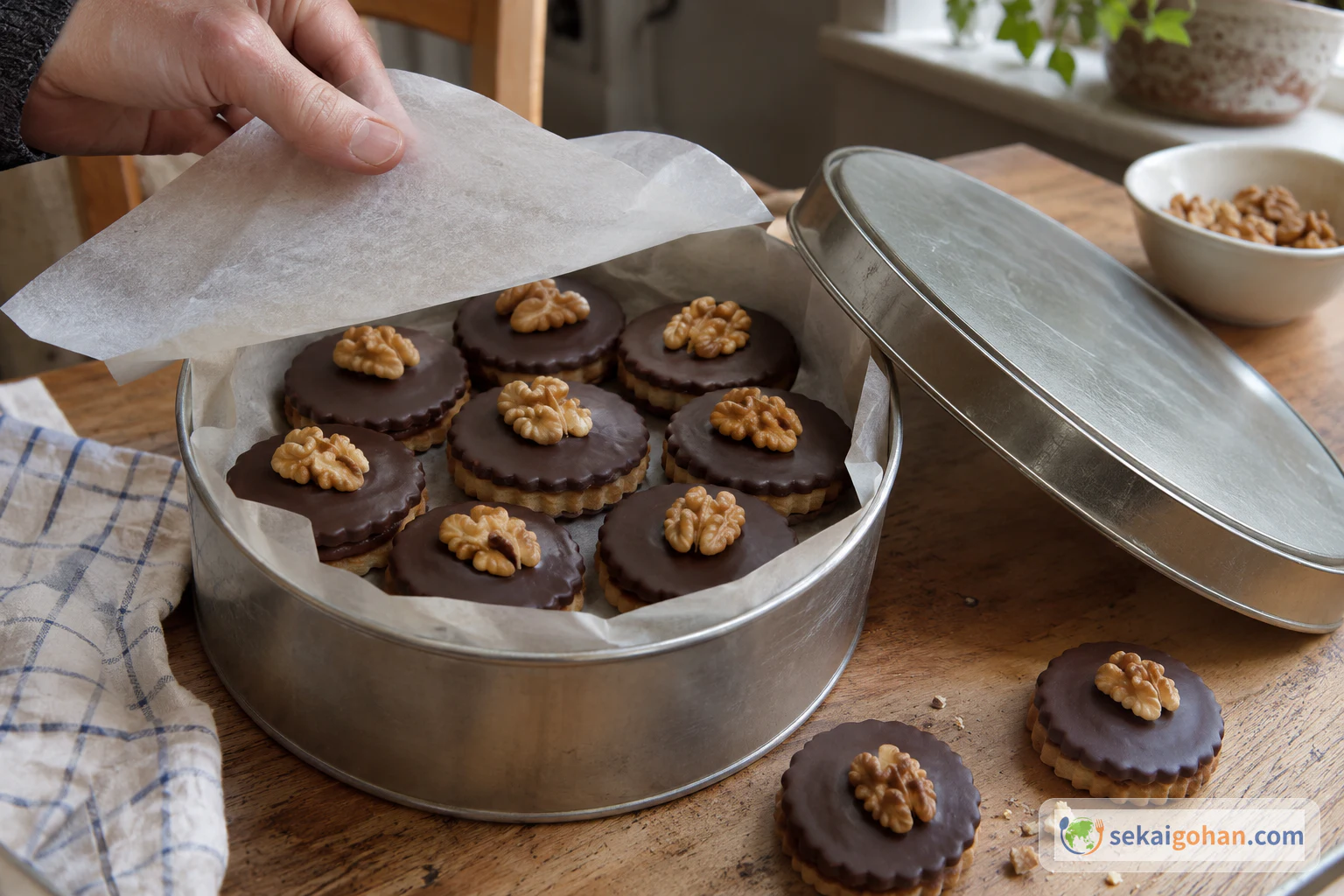
The tray comes out of the oven while the rounds are still pale, with only the faintest blush at the edges and a smell of warm butter and almond filling the kitchen. Once the rounds are cold, each pair is pressed together over tart apricot jam, the top is dipped in dark chocolate, and a walnut half sinks into the chocolate before it sets. Ischler Törtchen are small sandwich cookies, about 2 inches across, named for the spa town of Bad Ischl in Upper Austria and baked in Austrian homes at Christmas. The shortbread crumbles at the first bite, the jam's sharpness cuts through the bitter chocolate, and the walnut adds a last toasty note.
From a Spa Town Pastry Shop to the Christmas Cookie Tin
Bad Ischl and the Zauner pastry shop
Bad Ischl sits in the Salzkammergut lakes region, the town where Emperor Franz Joseph I kept his summer residence. In 1832 the imperial family's physician, Franz Wirer, brought the Viennese confectioner Johann Zauner to town to open a pastry shop fit for the demands of the court, and the first shop opened on Pfarrgasse. As purveyor to the imperial and royal court, Zauner catered celebrations at the Kaiservilla. The business is still in the family, run today by the seventh generation, Philipp Zauner.
In 1958 the confectioner Richard Kurth, who had married into the Zauner family, won a gold medal with Ischler Törtchen at the Brussels World's Fair. The shop's recipe is kept locked in a safe and its Ischler Törtchen are still baked from it: almond shortbread filled with a fine truffle cream, sealed in a thin couverture shell and scattered with chopped pistachios. When the pastry itself was first made is not settled. Its recipe is traced both to the nineteenth century and to the 1950s, and no record so far decides between them.
The jam version at home
What Austrian households bake in December is the version in this article: nut shortbread, a tart jam, a chocolate top. It sits on the Christmas cookie plate among the Weihnachtskekse, and Hungarian pastry shops sell the same jam-and-chocolate pairing as a matter of course. The jam version is the home cousin of the shop's cream-filled pastry, a separate cookie under the same name. Household recipes also differ in their butter-to-flour ratio; a richer dough gives a crumblier round that breaks more easily. For more dishes from the country, see Austria.
In Austria the same cookie also goes by Ischler Kekse or Ischler Krapferl, and in Hungary simply Ischler. "Bad Ischler Törtchen" usually means a cream-filled version, a separate recipe from this one.
Ingredients (makes 35 to 40 cookies)
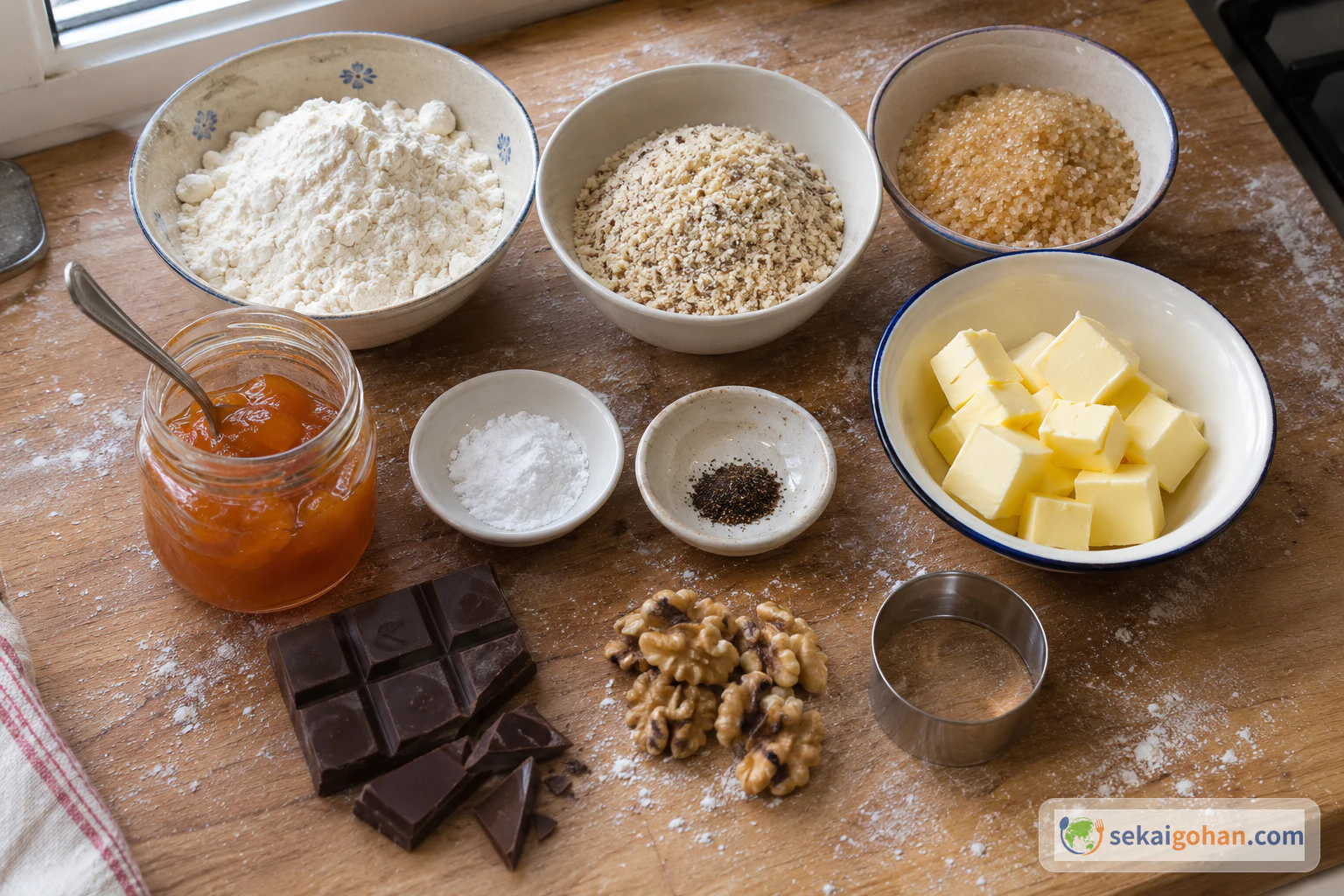
These cookies contain wheat (gluten), milk (butter) and tree nuts (almonds and walnuts). Many dark chocolates also contain soy lecithin or milk, so check the label of the bar you buy. The dough contains no egg.
Equipment
- A 2-inch (5 cm) round cutter (a ring mould works)
- Rolling pin
- Plastic wrap
- Baking sheets and parchment paper
- Wire cooling rack
- Heatproof bowl and a saucepan for a water bath
- Kitchen thermometer, for the chocolate
- An airtight biscuit tin
Choosing and Substituting
Keep the dough to exactly what is in the table. Salt, egg, rum, cinnamon and cocoa belong to other cookies, and each one pulls the flavour away from butter, almond and vanilla. Here is what each swap does:
- Spelt flour → soft wheat flour (cake or pastry flour), same weight. The rounds bake lighter and finer-crumbed. All-purpose flour also works. Wholegrain spelt goes the other way: toastier and firmer.
- Whole cane sugar → white sugar. The sweetness turns flatter and the rounds bake paler.
- Cream of tartar baking powder → ordinary baking powder. Ordinary baking powder rises harder, and too much lift takes away the clean snap. Bake one tray first and check that the rounds stay flat and crisp before you bake the rest.
- Vanilla powder → vanilla extract. The scent cooks off more easily in such a thin cookie.
- Unsalted butter → salted butter. Adds a salty edge that changes the outline of the sweetness.
- Ground almonds → ground hazelnuts. A stronger aroma and a darker dough. Other ground nuts work as well.
- 70% chocolate. A good eating bar is fine. Higher-cocoa chocolate is more bitter and gives more shine but cracks more easily when you bite.
The jam has to be sharp enough to make you notice it. A sweet-only jam makes the cookie heavy against the chocolate. Red currant jam is the sharpest choice; if you cannot find it, raspberry or blackcurrant jam keeps the acidity.
Method
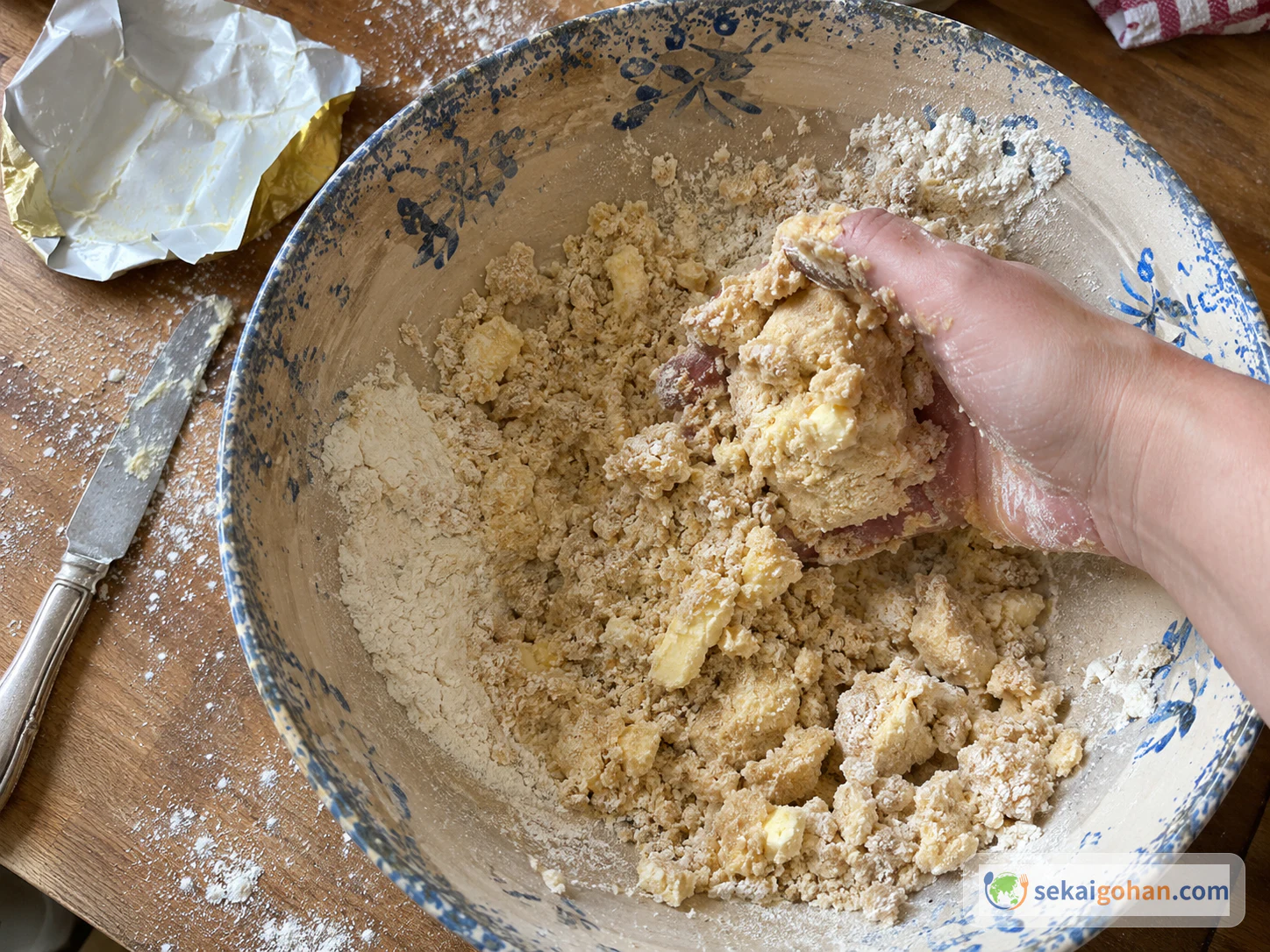
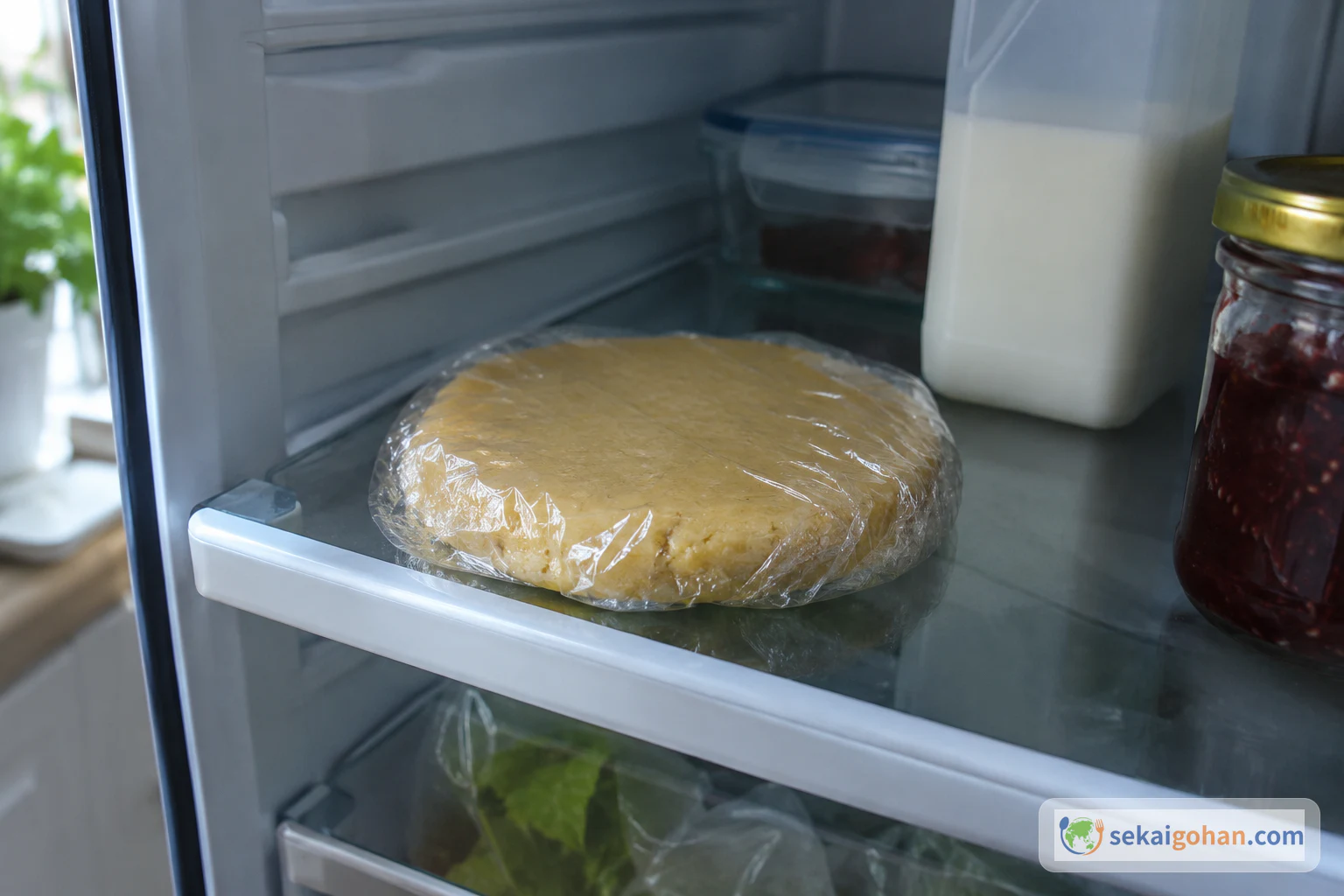
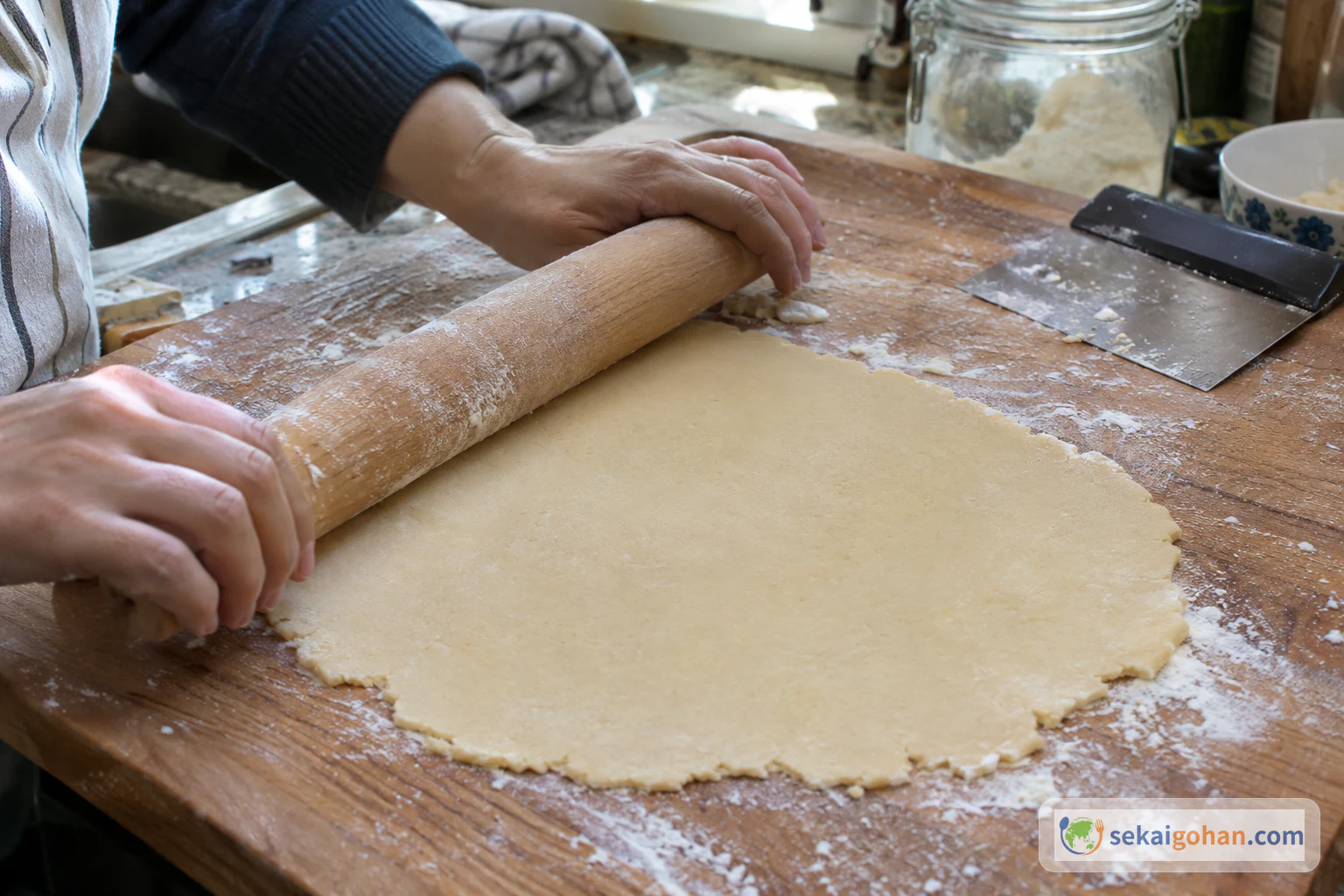
The dough comes together in minutes, then rests in the refrigerator, which is your hands-off time and the moment to heat the oven. Baking runs one tray at a time, so roll and cut the next batch while the first one bakes. The rounds must be completely cold before any jam goes on, and the chocolate is melted last, just before you dip.
When It Goes Wrong
| What you see | Why | What to do |
|---|---|---|
| Edges turned brown | Thin dough overbakes quickly, or the tray sat too high | They are still good to eat, just darker in flavour. On the next tray, check before 8 minutes and bake on the middle rack |
| Dough slumps and sticks in the cutter | Too much kneading, or the butter got warm | Return the dough to the refrigerator for 15 minutes and dust the board lightly again |
| Baked rounds are hard | Overworked dough, or too much flour from rolling | Knead less next time and brush excess flour off the sheet before cutting |
| Jam squeezes out at the sides | Too much jam, or spread to the edge | Use a scant teaspoon and leave a 1/16-inch (1–2 mm) margin |
| Chocolate turns grainy or thick | Water got in, or it got too hot | Stir in a little fresh chocolate. Next time dry the bowl rim and keep to 160°F (70°C) |
| Tops turn whitish and dusty | Temperature swings bring fat to the surface (bloom) | The cookies are fine to eat. Keep the tin somewhere cool and steady |
Serving, Variations and Storage
Serving
Ischler Törtchen belong on the Christmas cookie plate next to a cup of black coffee, and in pastry shops they sell singly as a small dessert to eat with coffee in the afternoon. They taste best from the day after the chocolate sets, once the jam has settled into the shortbread and the layers eat as one.
Variations
- Hazelnuts instead of almonds. A stronger nut aroma and a darker dough. There is an old claim that the first ones were made with hazelnuts.
- Red currant jam. Sharper than apricot, it cuts the sweetness of the chocolate harder.
- Chopped pistachios instead of walnuts. Scatter them over the wet chocolate for green colour and a softer crunch. Use one topping or the other, not both.
- A fully dipped cookie. Coat the whole sandwich for a sealed chocolate shell; it takes more chocolate and hides the jam line.
- Cream instead of jam. A cream of chocolate, rum, powdered sugar and butter, or a whipped chocolate-and-cream filling, turns this into the cream-filled pastry of the same name, which is a different recipe.
Storage
Keep the tin in a cool, dry place and plan to eat the cookies within about one to two weeks as a rough guide. The glaze is softened with butter, so the tops soften on warm, humid days. In that case keep the tin closed and refrigerate it, then let it come up to room temperature unopened so condensation does not form on the chocolate.
Frequently Asked Questions
Why is there no egg or salt in the dough?
Butter alone binds this dough, and that is what gives the rounds their crumbly bite. Doughs with egg yolk exist, but they belong to other versions. Leave both out.
Do I need to temper the chocolate?
No. The butter in the glaze turns the chocolate into a soft, easy coating that sets without tempering. The trade-off is a slightly softer top that dulls in warm rooms, so keep the finished cookies cool.
Are these the same as Linzer cookies?
They share the same family of nut shortbread, but Linzer cookies have a window cut in the top round to show the jam and get no chocolate. Ischler Törtchen keep both rounds whole and finish with chocolate and a walnut.
Can I glaze the cookies on the same day I bake them?
Yes, as soon as the rounds are completely cold and sandwiched. Just give the chocolate time to set fully before packing them, so the tops stay smooth in the tin.