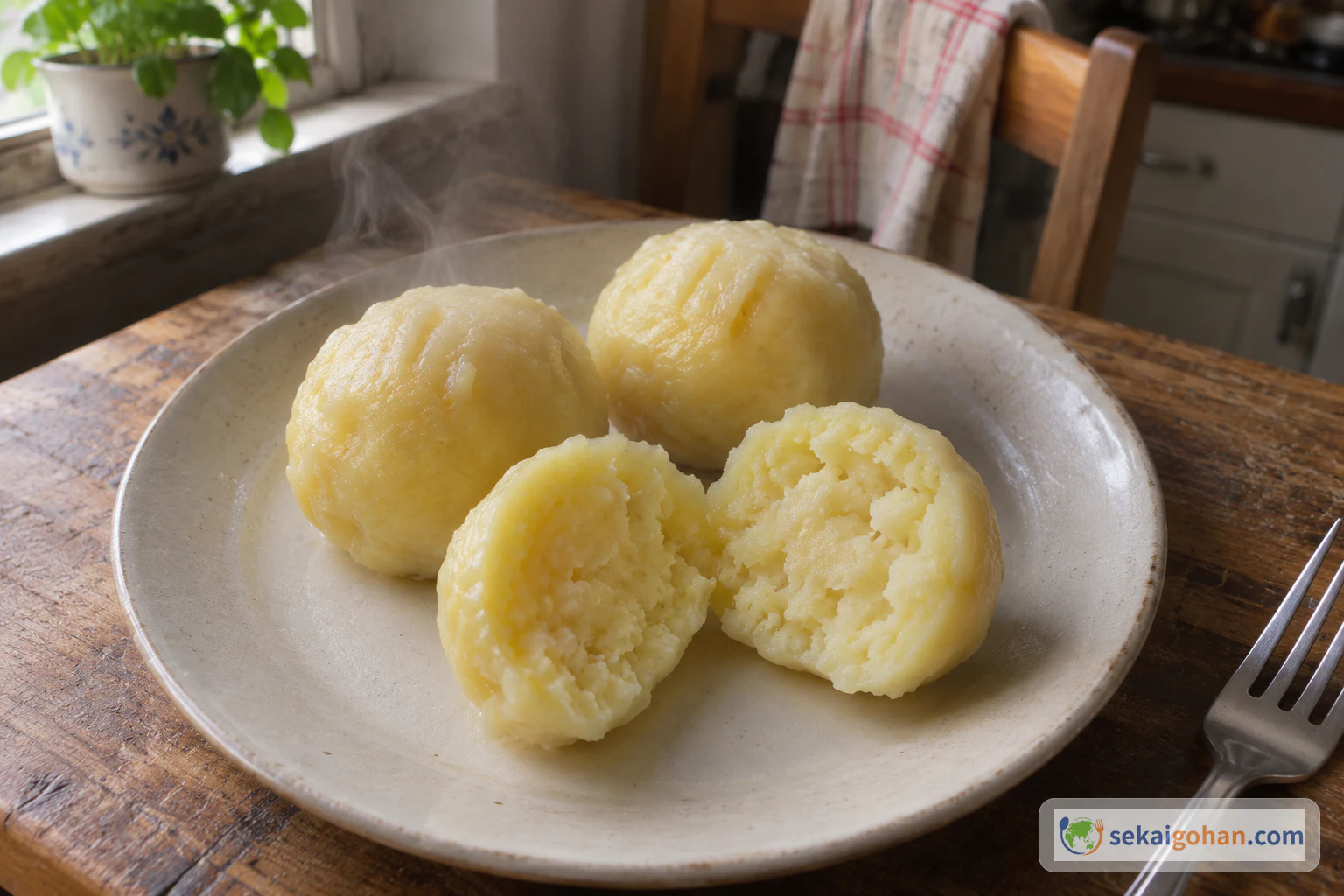
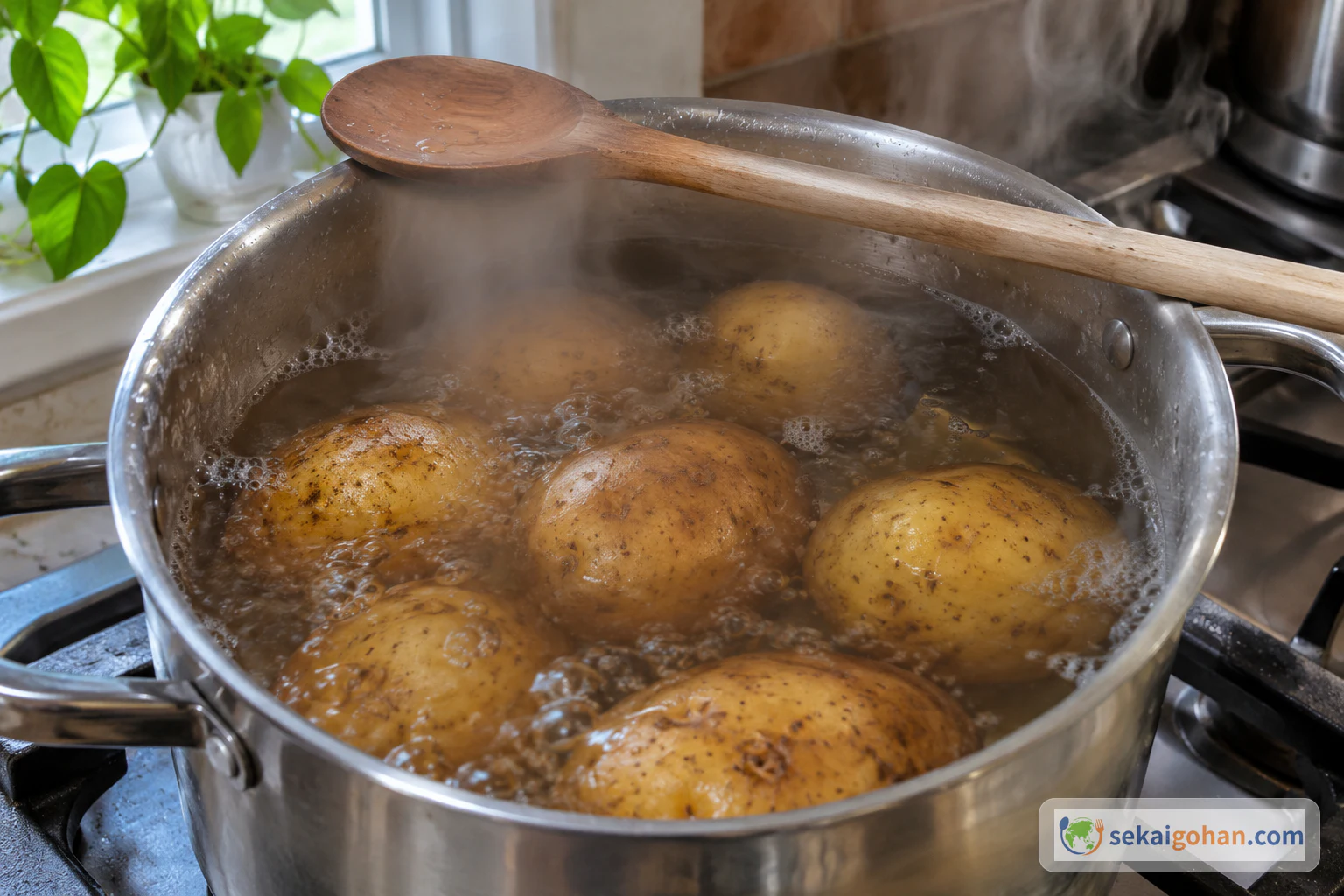
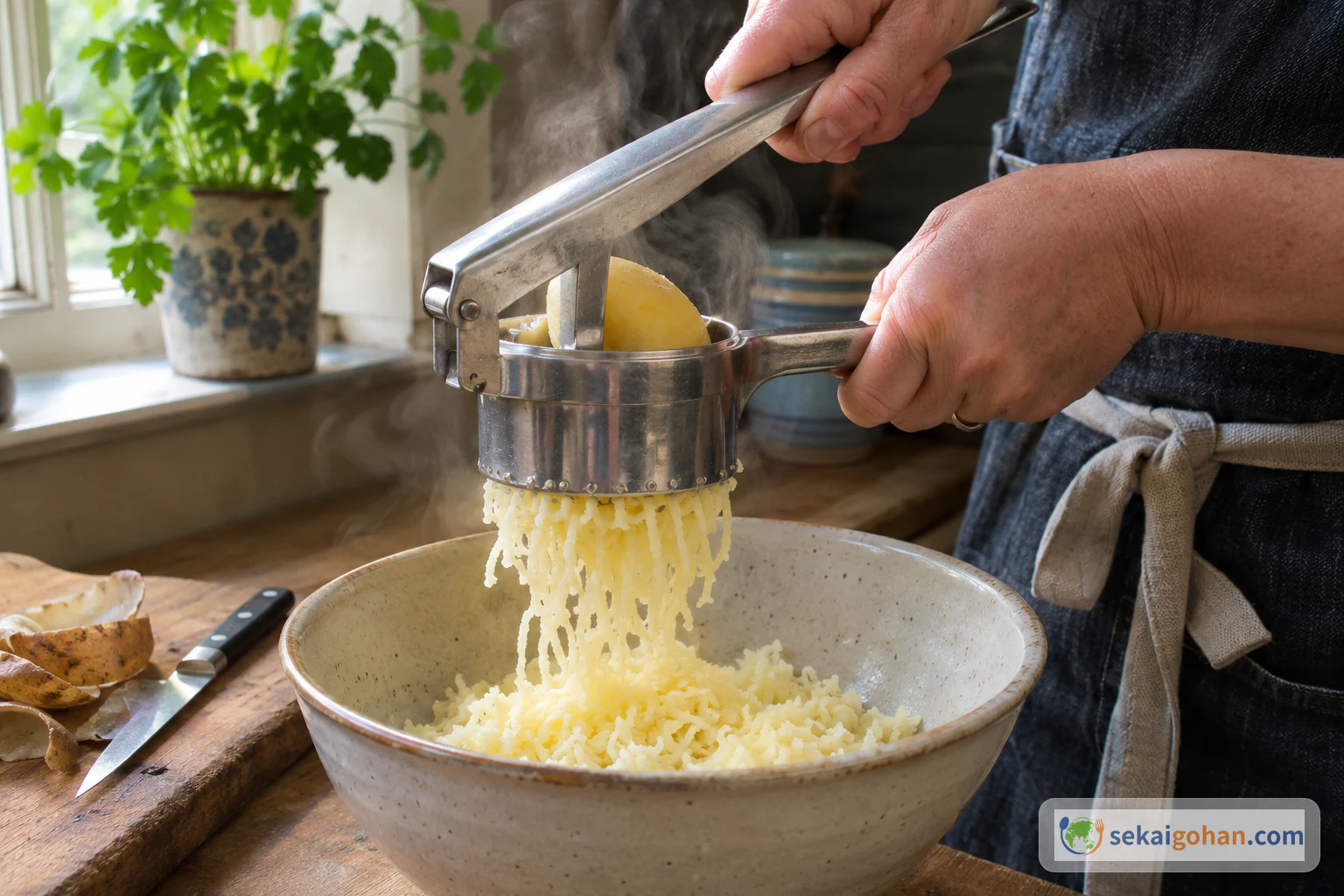
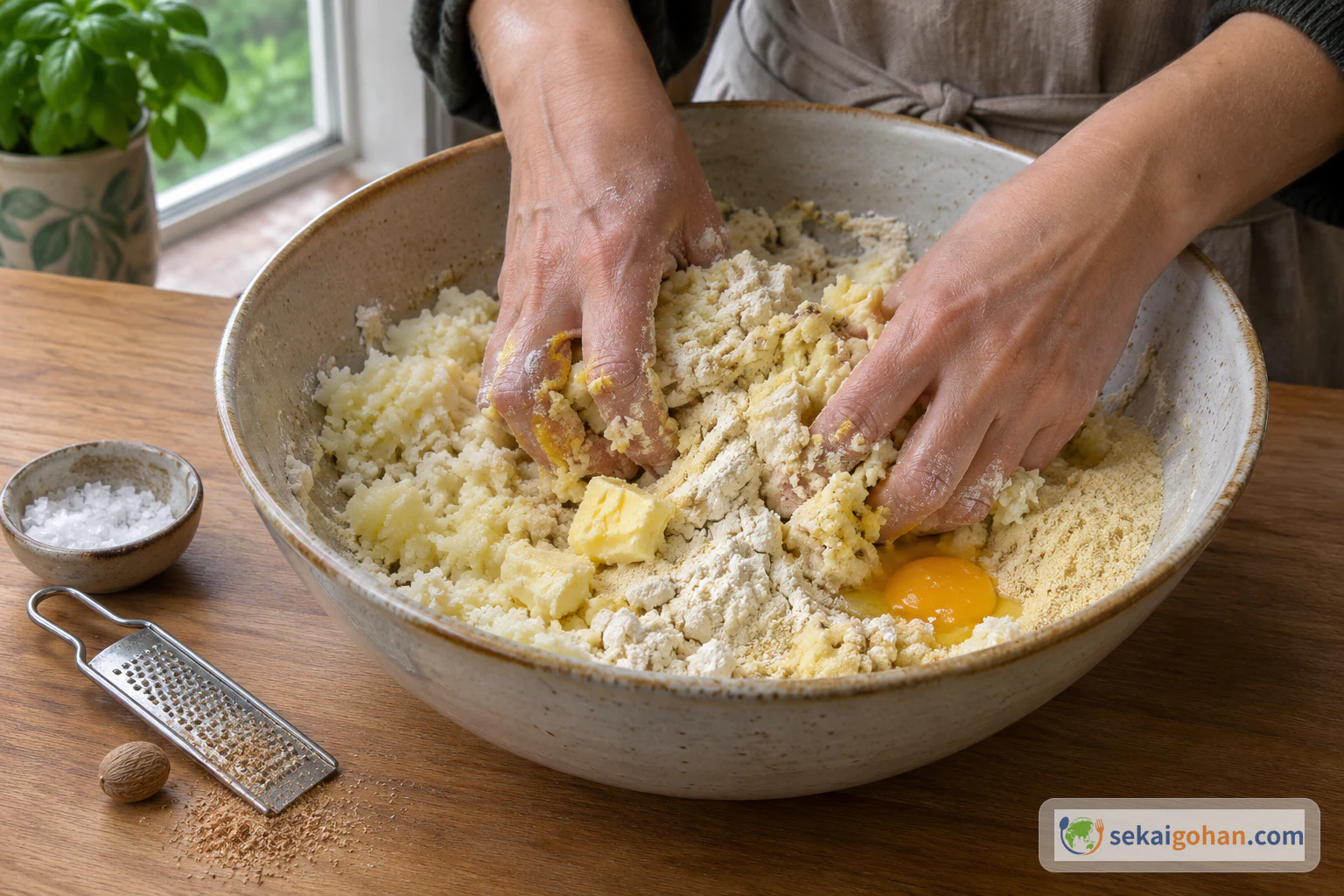
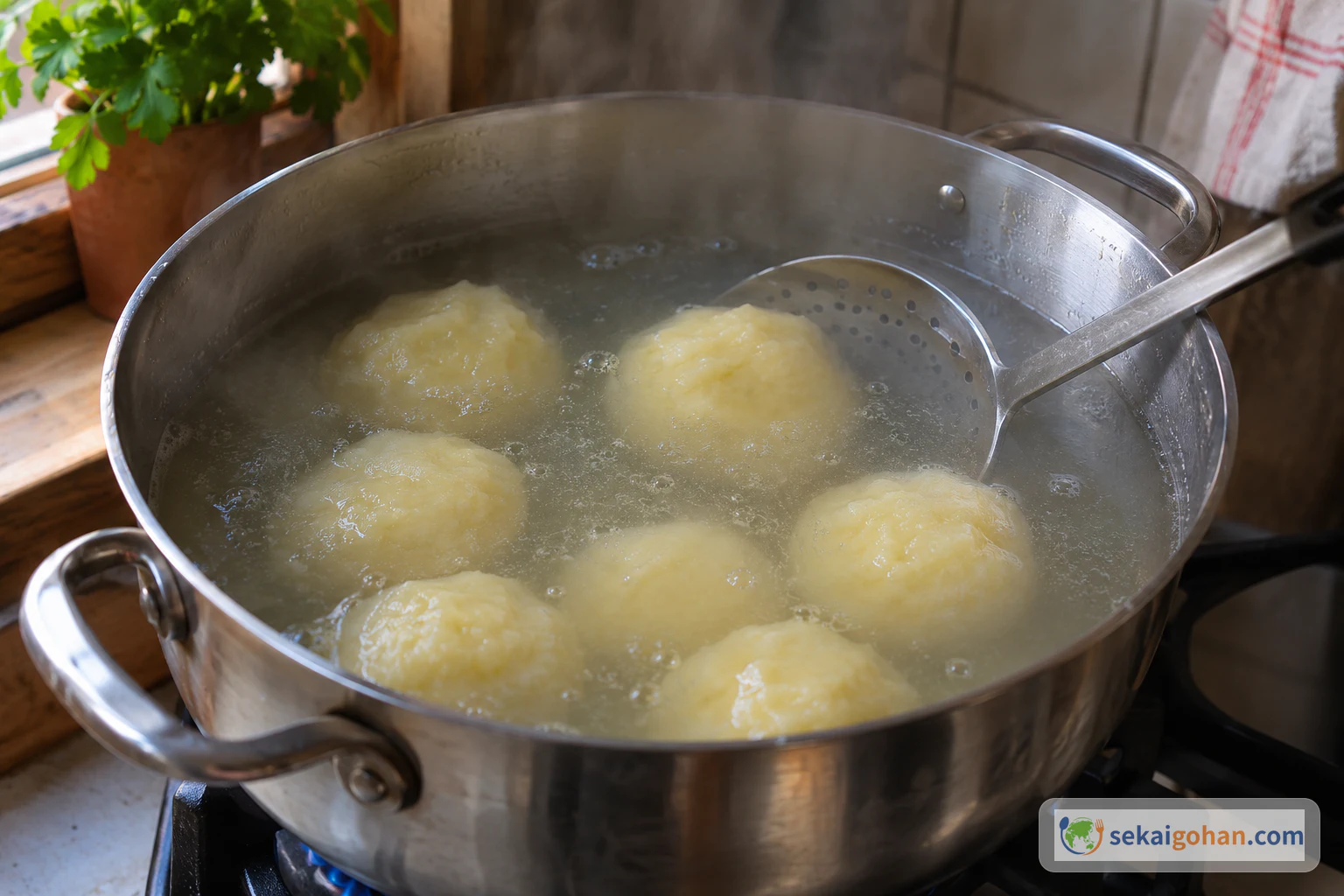
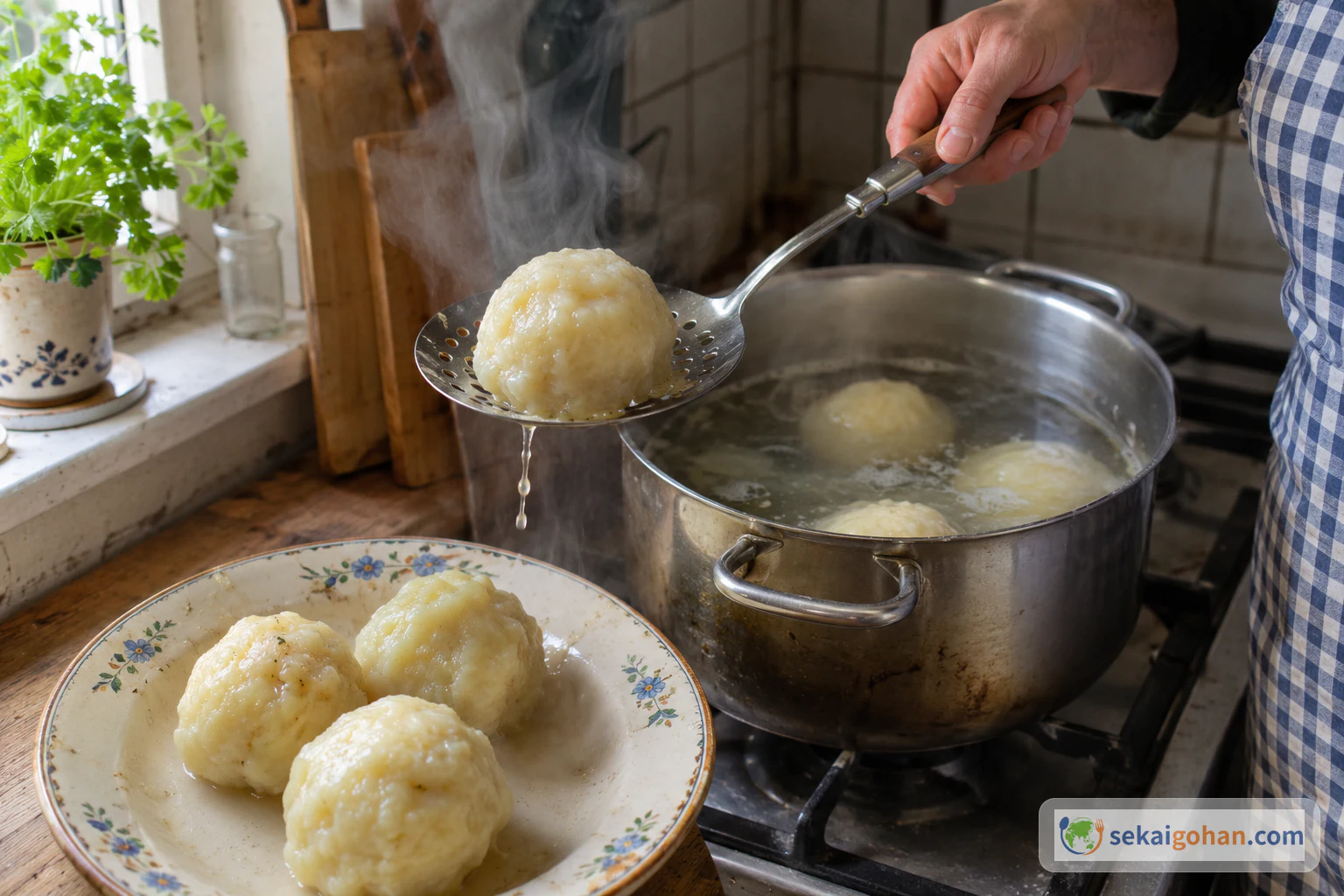
The water in the pot should barely move. Small bubbles rise in a steady thread, steam drifts up, and pale balls of potato dough sit low in the water. Then they lift one by one and float, and the skimmer brings them out whole and glistening. Erdäpfelknödel are Austria's plain potato dumplings: floury potato pressed through a ricer and bound with flour, semolina, butter and egg. They taste of potato and butter with a breath of nutmeg, and at the table they sit beside roast pork and sauerkraut and soak up the gravy.
Austria's Newest Dumpling, in the Oldest Dumpling Country
Erdäpfel is the Austrian word for potatoes (standard German says Kartoffel), and Knödel means dumpling, a word used in southeast Germany, Austria and South Tyrol. In standard German the same dish is called Kartoffelknödel. Knödel goes back to late Middle High German knödel, a diminutive of knode or knote, a small knot or hill. A Czech origin, from knedlík, has also been proposed, and the question is not settled.
The youngest Knödel
Across the Alps, the dumpling turns up at every point in a meal. It comes sweet or savory, filled or plain, as a starter, in soup, as a main course, beside meat or as dessert. It is built from whatever the kitchen holds: potatoes, Semmel rolls, bread, semolina, Topfen, flour, meat. The potato dumpling is the newest of them all. It spread around 200 years ago, once the potato had settled into farms across Austria. Before that, flour dumplings went beside smoked pork (Geselchtes) and sauerkraut, and by around 1900 the Viennese bread dumpling, Semmelknödel, had become the standard side for meat.
Dumplings themselves are far older than the potato in Europe. Dumpling-shaped finds came out of the Neolithic pile dwellings at Mondsee, dated to around 2500–1800 BC. They show how old the dumpling is, while the potato kind belongs to the last two centuries.
Dumpling days and dumpling women
In the countryside, the week once had its Knödeltag, its dumpling day. In Flachgau it fell on Tuesday, Thursday and Sunday; in Lungau on Monday, Tuesday and Thursday; in Tyrol on Tuesday, Thursday and Saturday. Many regions kept Monday as a dumpling day, because Sunday's leftover bread went into Monday's dumplings, and a folk song, "Was is heut für'n Tag," sings about it. In Vienna, the Knödelfrauen sold hot dumplings at the markets for one Kreuzer apiece.
Upper Austria and Tyrol are the heartland. Upper Austria is known as the classic dumpling country, and in Tyrol a saying counts Nudeln, Nocken, Knödel, Plenten as the four elements of the region. For more of the dishes that share these tables, see Austrian cooking.
Plain dumplings and their neighbours
Plain potato dumplings are a side dish, a Beilage, made to catch the sauce of a roast. Fill the same kind of dough with Grammeln, smoked meat or fruit, and it moves toward a main course or dessert. Households differ on the rest: how much flour goes in, whole egg or only the yolk, and how long the dumplings cook all change from kitchen to kitchen.
The dumplings across the borders look similar on the plate and are built differently. Czech knedlíky are a bread dough, boiled in a loaf and sliced. Lithuanian cepelinai start from raw grated potato wrapped around a meat filling. Erdäpfelknödel start from cooked, riced potato and stay unfilled.
Ingredients
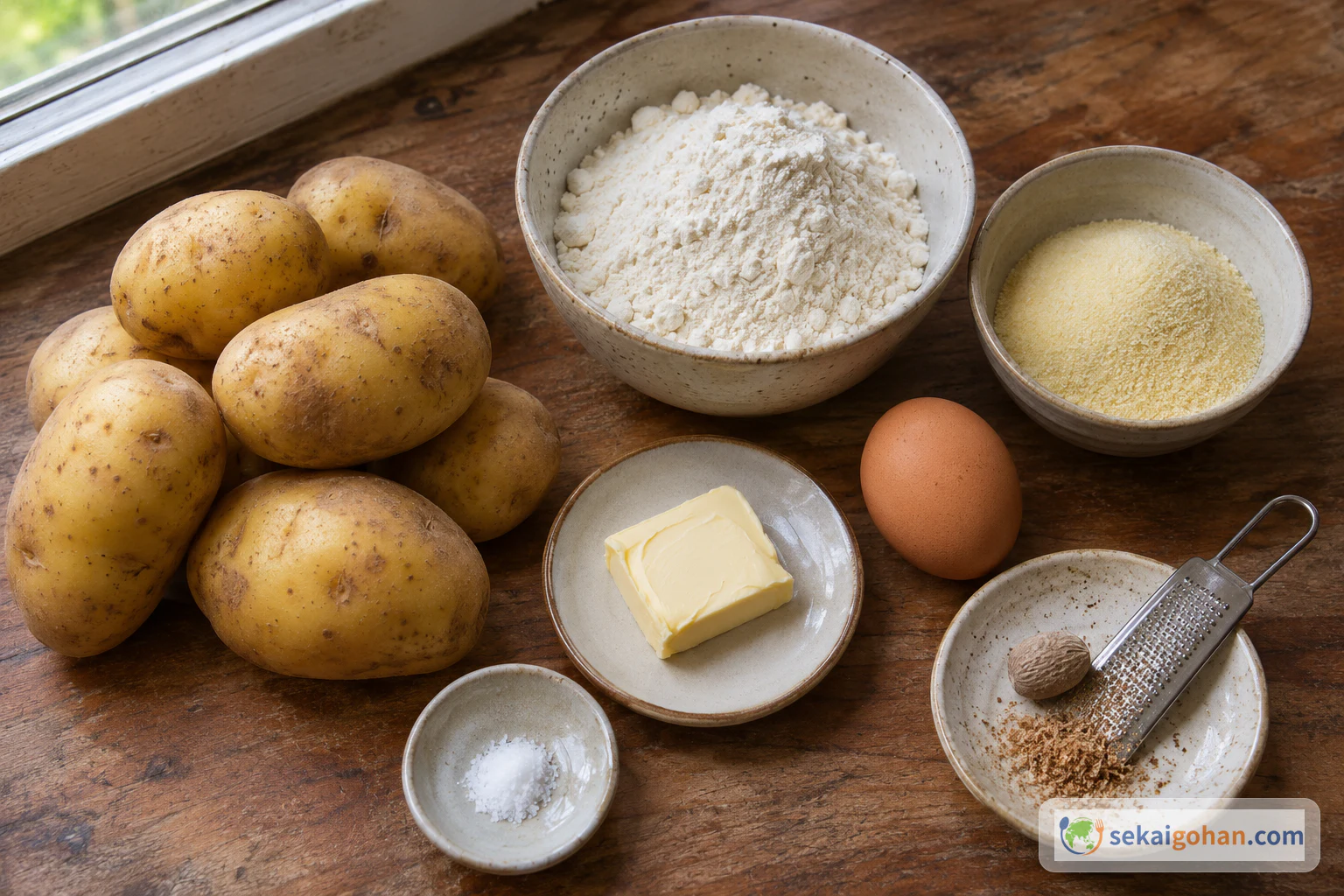
The dough contains wheat (gluten), egg and milk (butter). The Grammelknödel variation is filled with pork.
Equipment
- A large pot, 3¼ quarts (3 L) or bigger, so the dumplings do not crowd and the water does not cool too much
- A potato ricer
- A skimmer (slotted spoon)
- A wide bowl
- A clean board and a knife
- A small bowl of water for wetting your hands
- A steamer (only for the steamed version)
Choosing and Substituting
Floury potatoes decide the dumpling. Buy the mashing kind, never waxy. Waxy potatoes hold too much water. They make a sticky dough that begs for more flour, and the lightness is gone.
Austrian cooks use griffiges Mehl, a coarser flour sold as Knödel or Spätzle flour, which absorbs water readily. A medium-protein all-purpose flour stands in for it. A blend of soft cake flour and bread flour also works. Cake flour alone makes a slack dough that sags.
Durum semolina is the coarse kind sold for pasta, found at Italian shops and online. Keep the semolina. Cornstarch and potato starch bind differently, so the dough takes up water differently and loses its spring. Measure it carefully, because too much semolina makes the dumplings fall apart. Salted butter works if you cut back the salt in the dough. Grate whole nutmeg fresh; ground nutmeg from a jar smells weaker.
A ricer presses the potato into fine, even strands with no fibers left, and that gives the lightest dough. A potato masher, a grater or a fork are fine stand-ins. Only electric machines are out.
Do not use potatoes that are green, heavily sprouted, old or shriveled. Cut green patches and eyes away generously. If a potato dish tastes bitter, do not eat it. Give small children only peeled potatoes, and never reuse the water the potatoes were boiled in.
Method
Start a day ahead if you can. The potatoes boil, then cool in their skins overnight, and that is the only hands-off stretch. Once the potato is riced, everything moves quickly from bowl to pot, so measure the flour, semolina and egg before you peel.
Do not let the mixed dough stand around. Divide, shape and cook it right away, and have the pot of water heating while you roll.
Find the burner setting that holds small bubbles rising steadily before you add anything. Once the dumplings are in, you only need to hold that setting.
When It Goes Wrong
| What you see | Why | What to do |
|---|---|---|
| Dumplings fall apart in the pot | The water boiled too hard, or the dough was too soft | Hold the water at small, steady bubbles. Stop mixing as soon as the dough holds, and add flour a little at a time if it stays soft |
| The center is raw | The water stopped bubbling | Keep the bubbles rising the whole time. When the dumplings float, lift one out and cut it open to check |
| Heavy, dense texture | Kneaded dough, or potato puréed in a machine | Only press the dough together by hand. Rice or mash the potato |
| Sticky dough that will not shape | Wet potatoes, or potatoes not cooled enough | Boil the potatoes the day before so they dry out. Work in a little more flour |
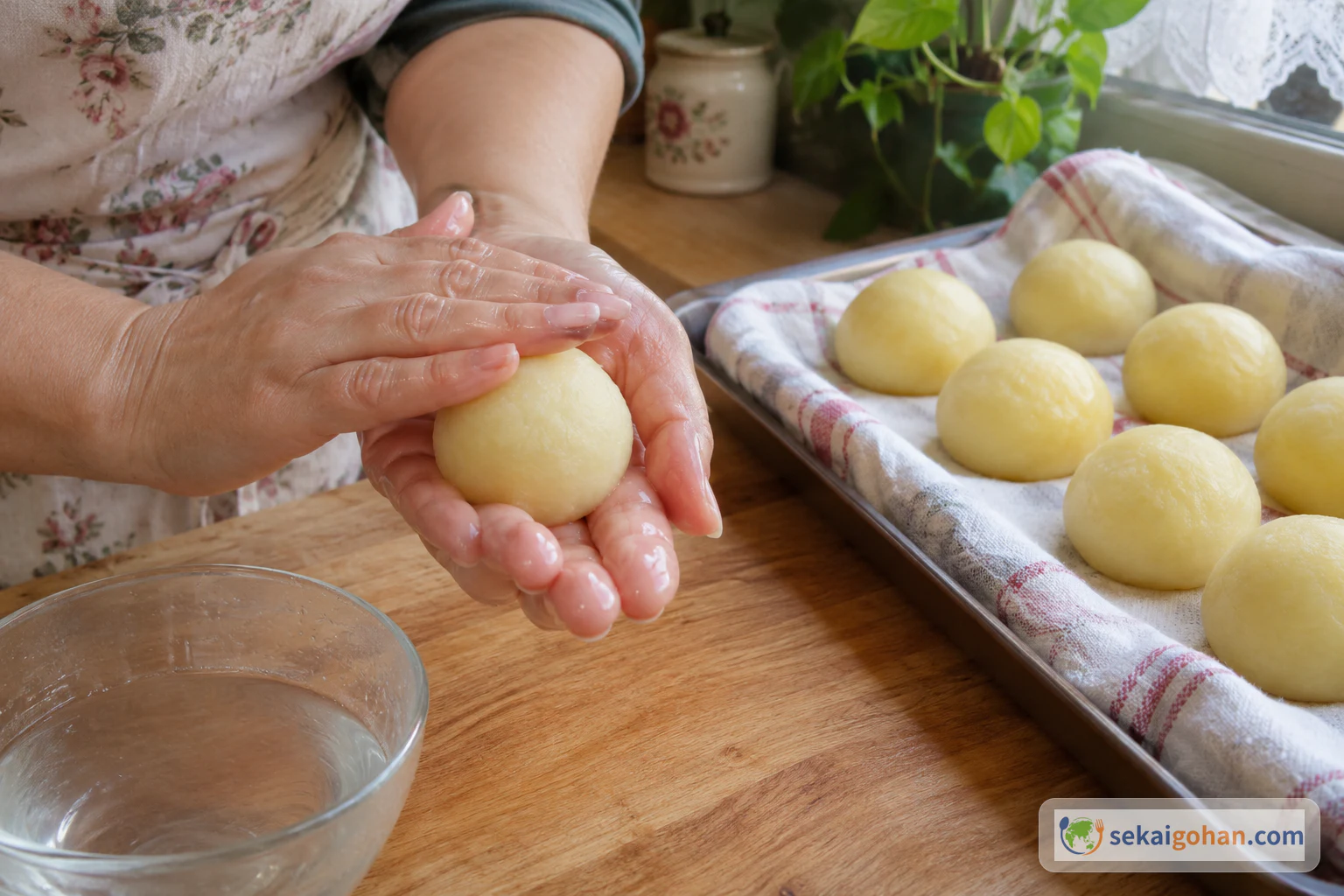
| Cracks on the surface | Rough shaping, or cold butter | Smooth every ball with wet hands, and soften the butter before mixing |
| Bland taste | Not enough salt and nutmeg | Season the riced potato with salt and nutmeg before the flour goes in |
Serving and Variations
On the table
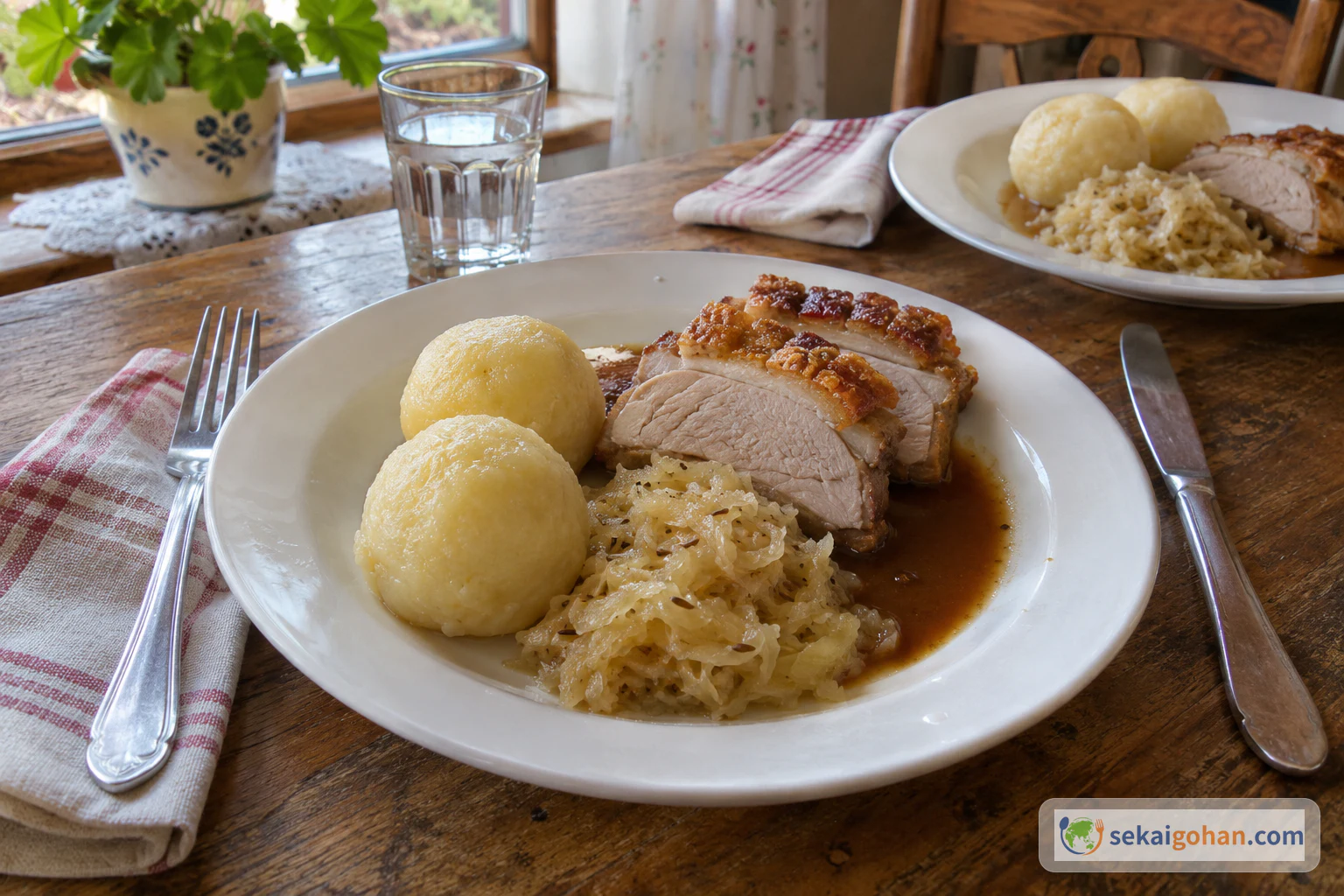
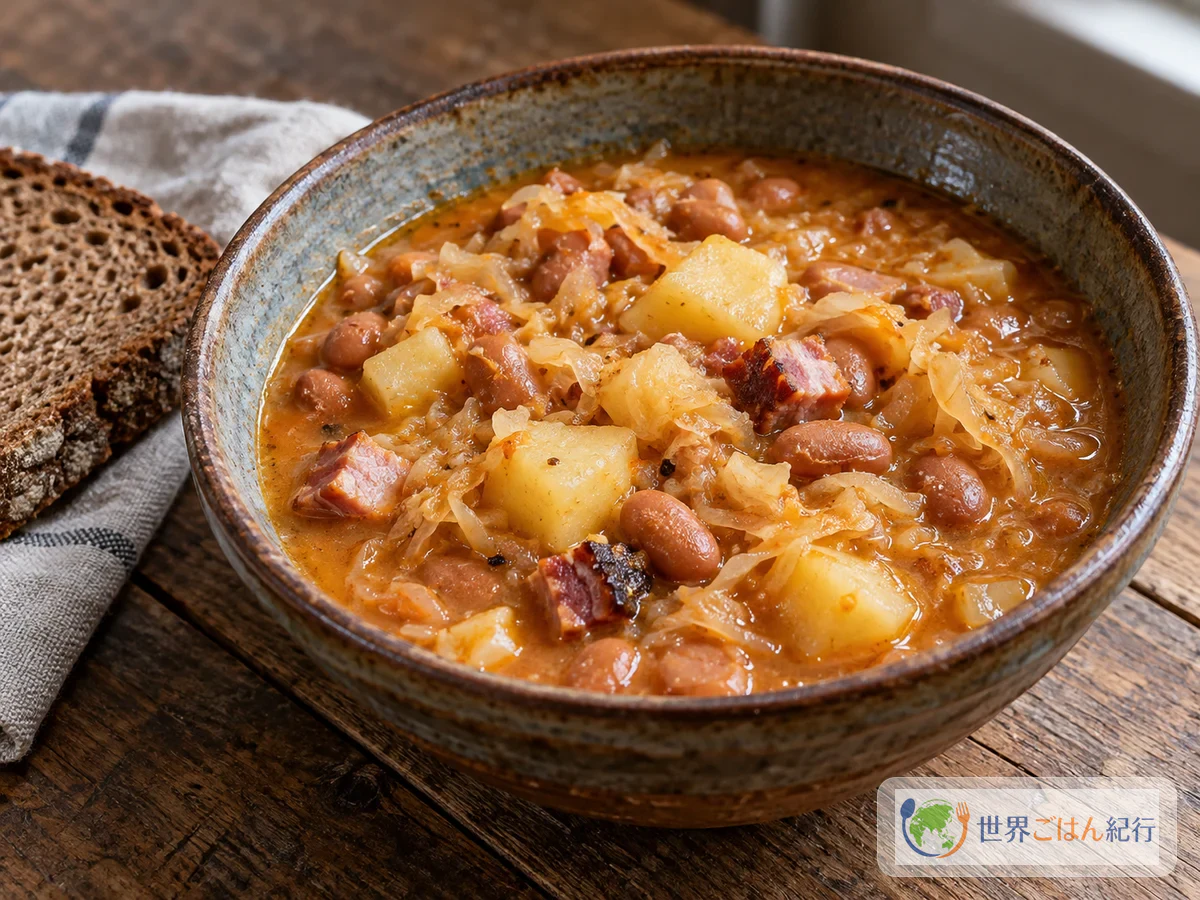
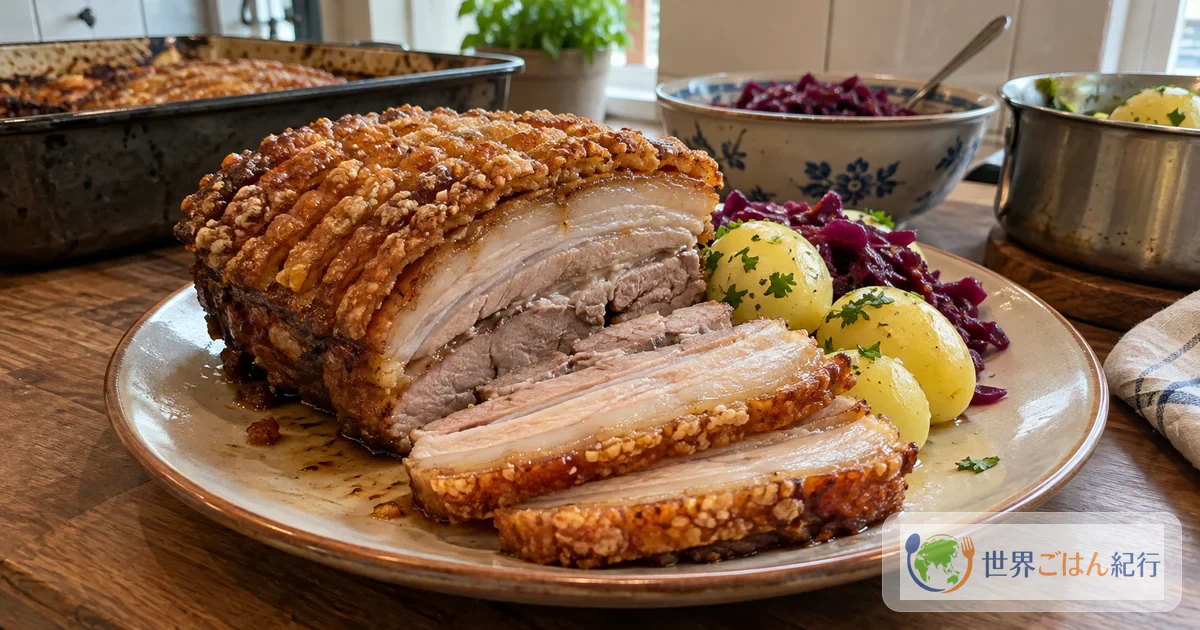
The classic pairing is Schweinsbraten with sauerkraut: roast pork with crackling, the sour cabbage beside it, and the dumpling there to take up the gravy. Roast goose with red cabbage works the same way, and so does Geselchtes, Austrian smoked pork. For a meatless plate, serve them with Eierschwammerl-Gulasch, a goulash of chanterelle mushrooms. Keep the dough the same whatever goes beside it, and pick the pairing by how much sauce you want the dumplings to drink.
Grammelknödel, the filled main course
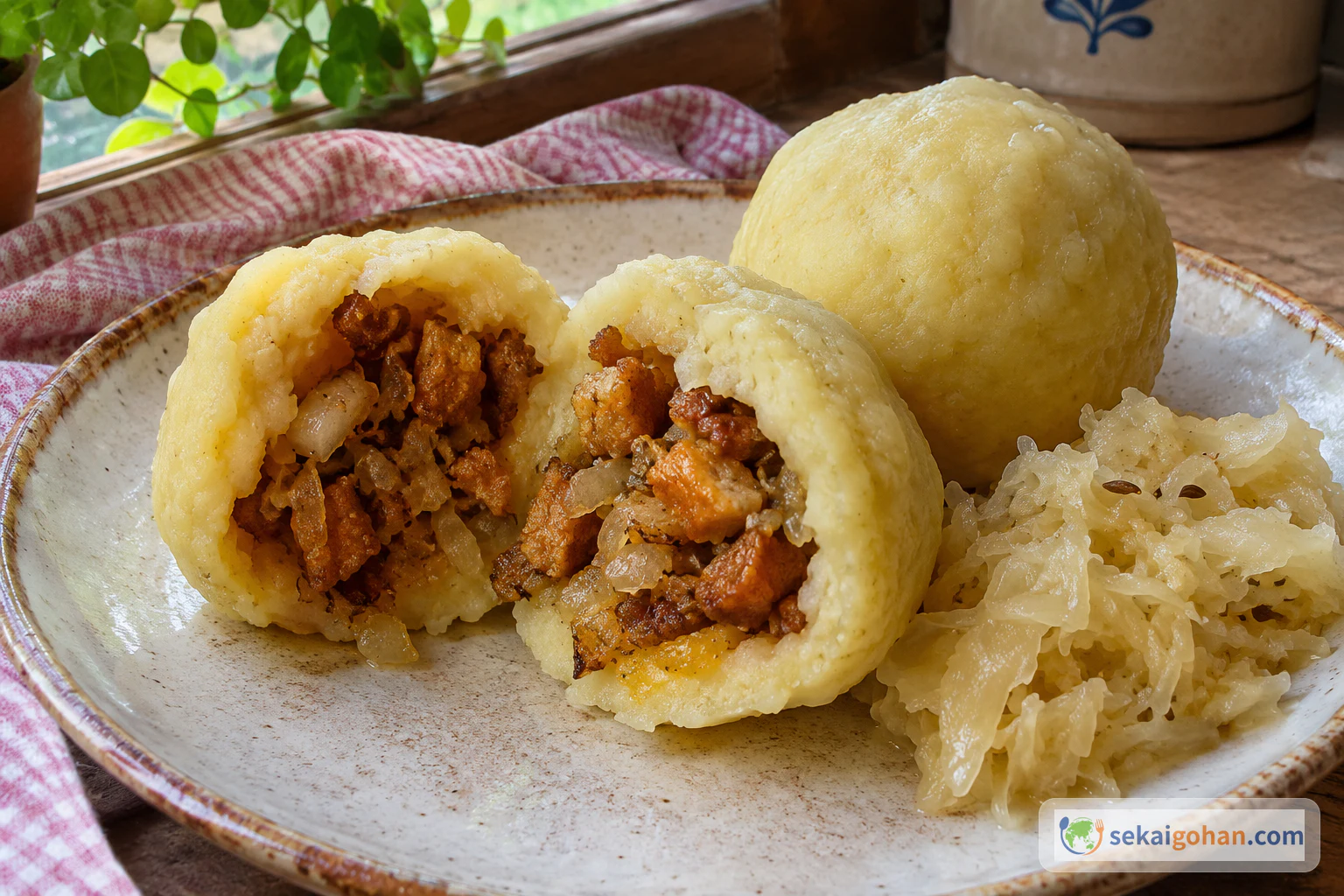
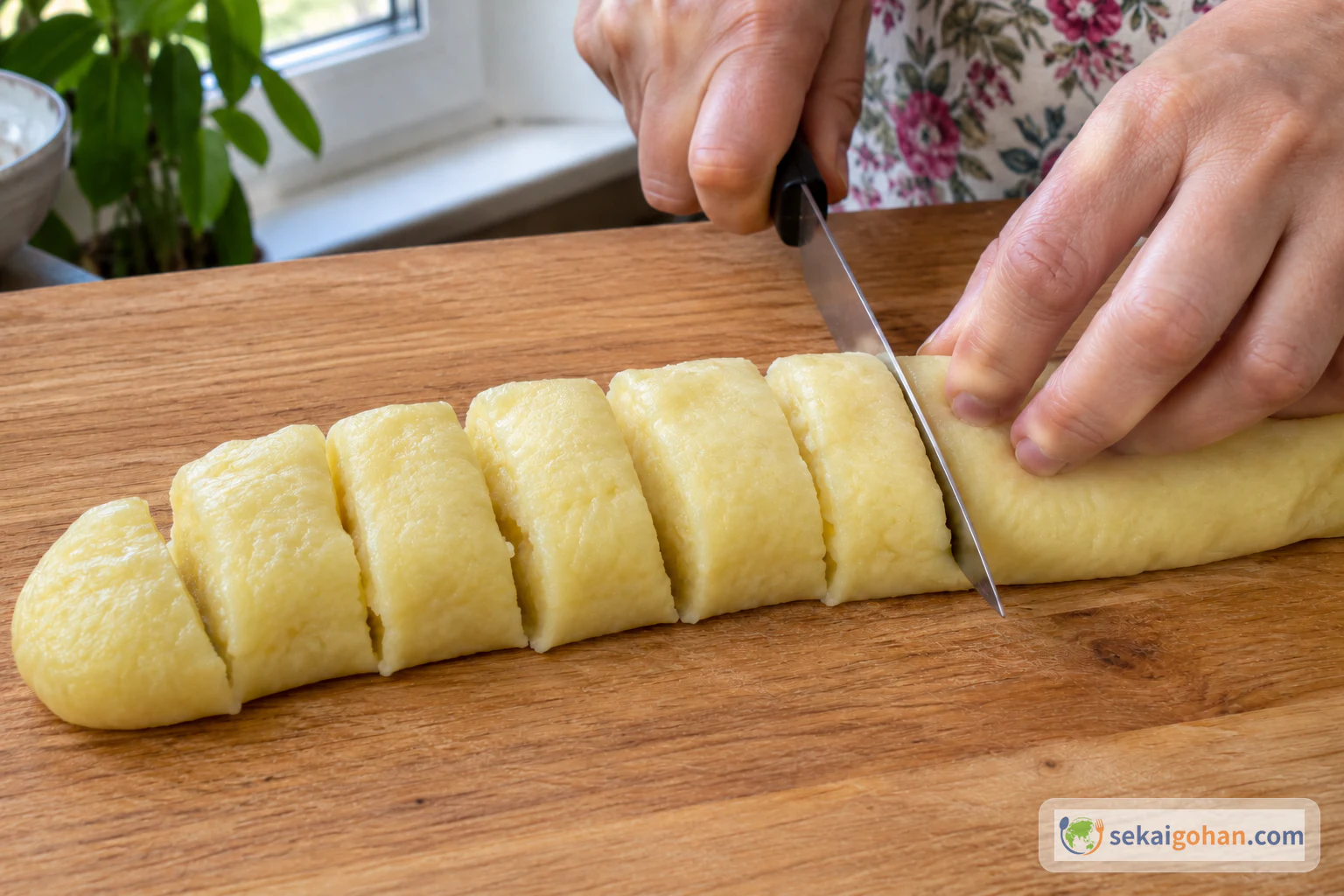
Grammeln are the crisp bits left after pork fat is rendered, and wrapped inside a potato dough they turn the side dish into a main course. This dough is a separate recipe, firmer to hold a filling: 18 oz (500 g) potatoes boiled in their skins the day before, 7 oz (200 g) medium-protein flour, 1¾ oz (50 g) wheat semolina, 2 eggs and salt. Let it rest for 30 minutes. Meanwhile, fry a scant 3 oz (80 g) chopped onion until golden in 3 tbsp lard or oil, mix in 7 oz (200 g) chopped Grammeln, salt and crushed garlic, and form 8 balls, freezing them to firm up if they are too soft to wrap. Roll the dough into a log, cut it into 8 pieces, flatten each one and wrap it around a ball of filling. Simmer gently for 6 minutes, then let them steep in the pot for 6 minutes more. Serve with sauerkraut or a warm or cold cabbage salad (Krautsalat). Where Grammeln are hard to find, thinly sliced pork belly cooked slowly over low heat until the fat renders and the meat turns crisp can stand in for them. This is our own suggestion, not a traditional substitute.
A yolk-only dough
Many traditional versions bind the dough with a single egg yolk in place of the whole egg. Leaving out the white makes the dumplings lighter, and they also hold together less firmly, so shape them with care and keep the water especially quiet.
Next day, sliced and fried with egg
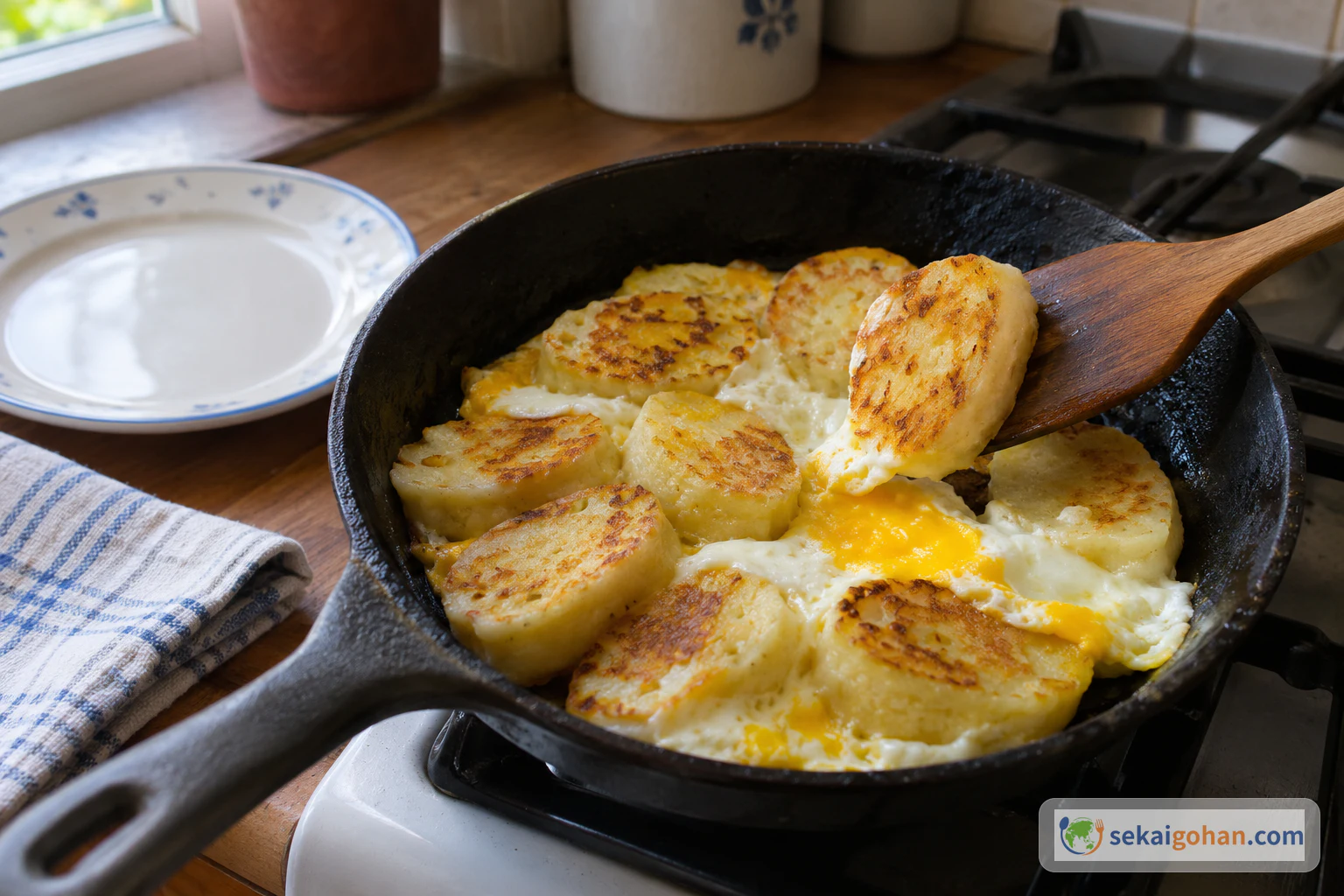
Leftover dumplings turn into breakfast or a light meal. Slice them, brown them in a frying pan and cook them together with egg until the egg is just set.
Frequently Asked Questions
Can I steam the dumplings instead of boiling them?
Yes. Steam the shaped dumplings at 212°F (100°C) for 20 minutes. Steaming frees you from a big pot of water and takes away the risk of a hard boil breaking them.
Can I make them ahead?
They are best freshly cooked, and they also freeze well. Freeze them shaped and uncooked, or after cooking. Whatever is left over the next day is best sliced and fried with egg.
What if I do not own a potato ricer?
Use a potato masher, a grater or a fork. The ricer gives the most even, lightest dough because it leaves no fibers behind, so mash thoroughly until no lumps remain.