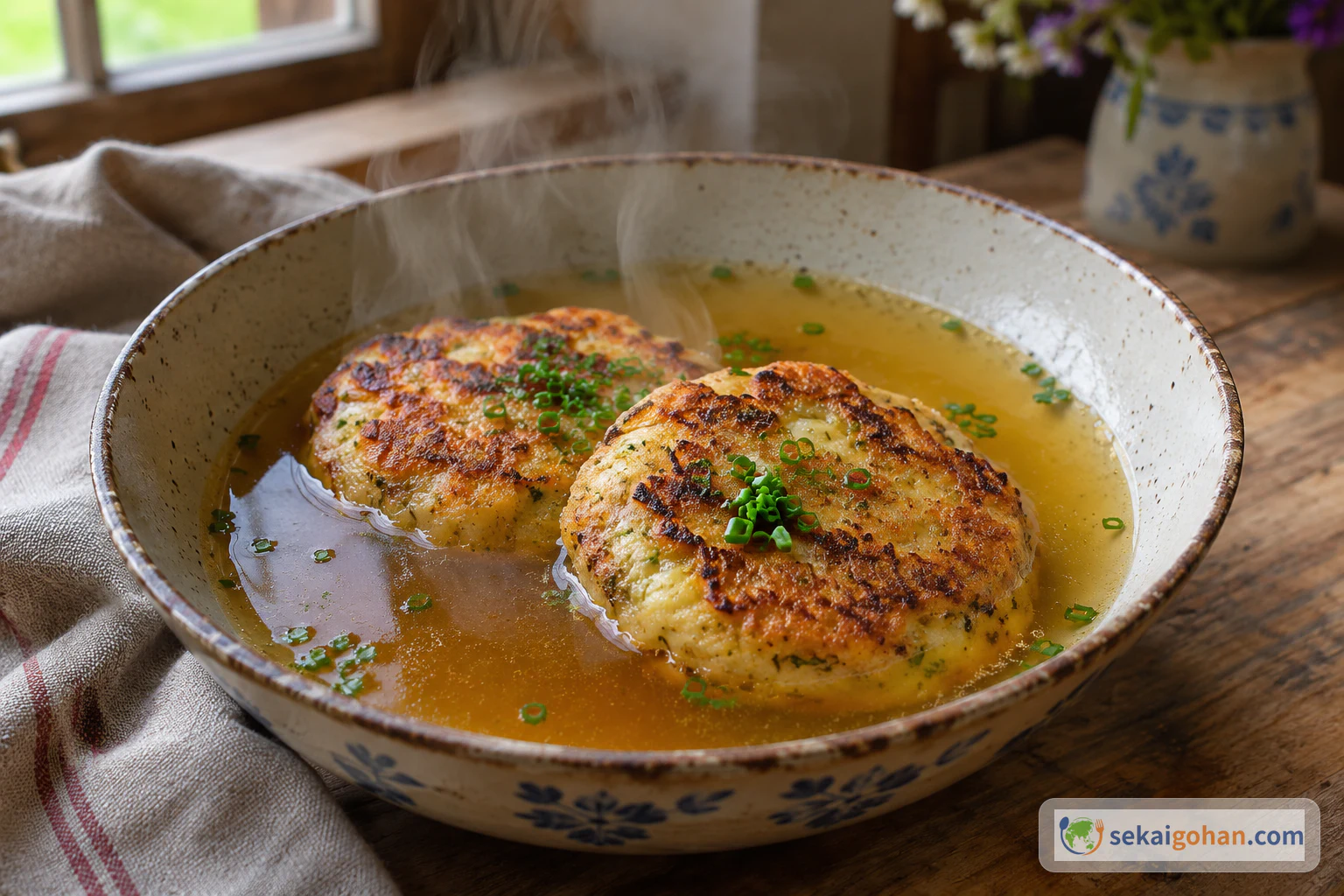
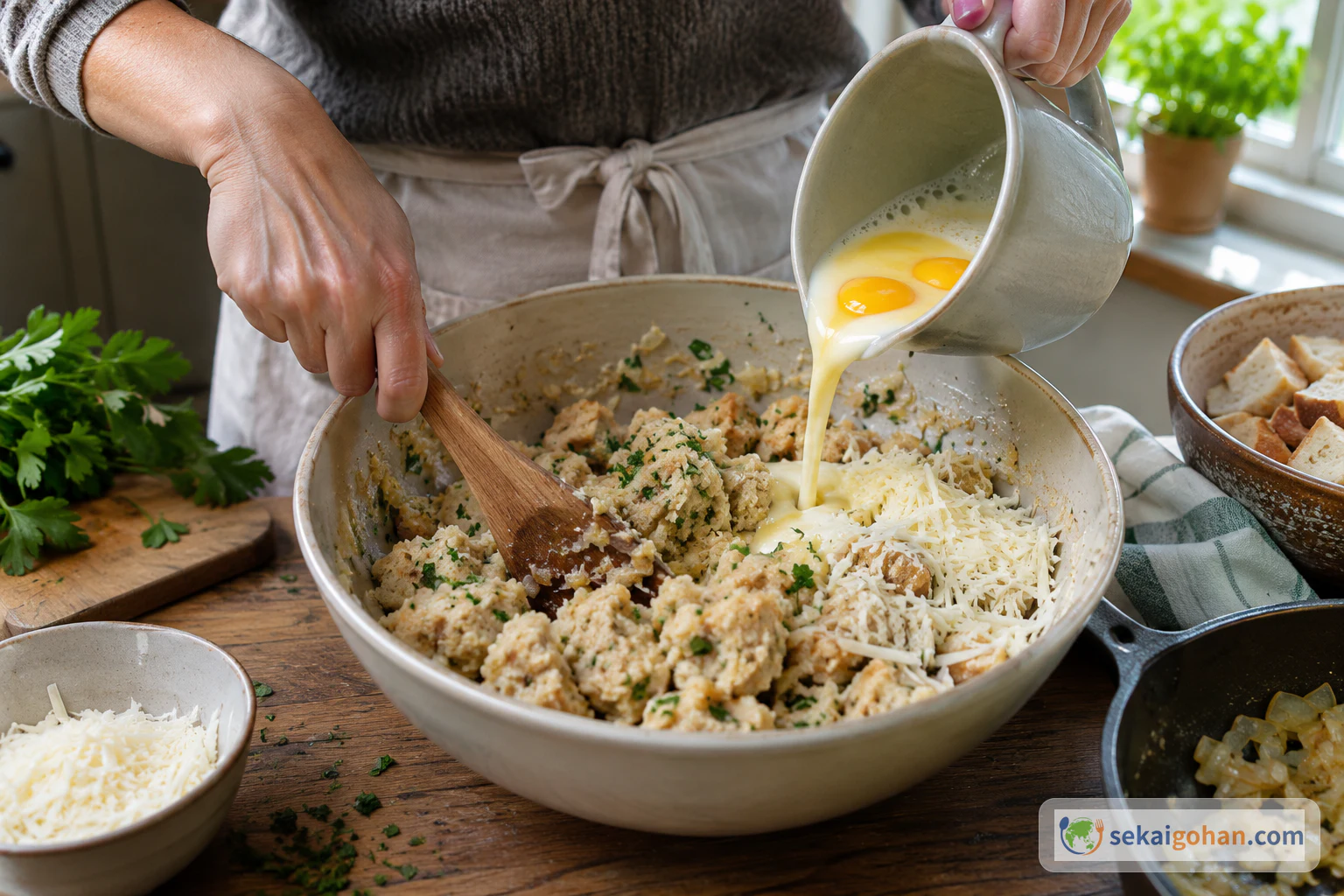
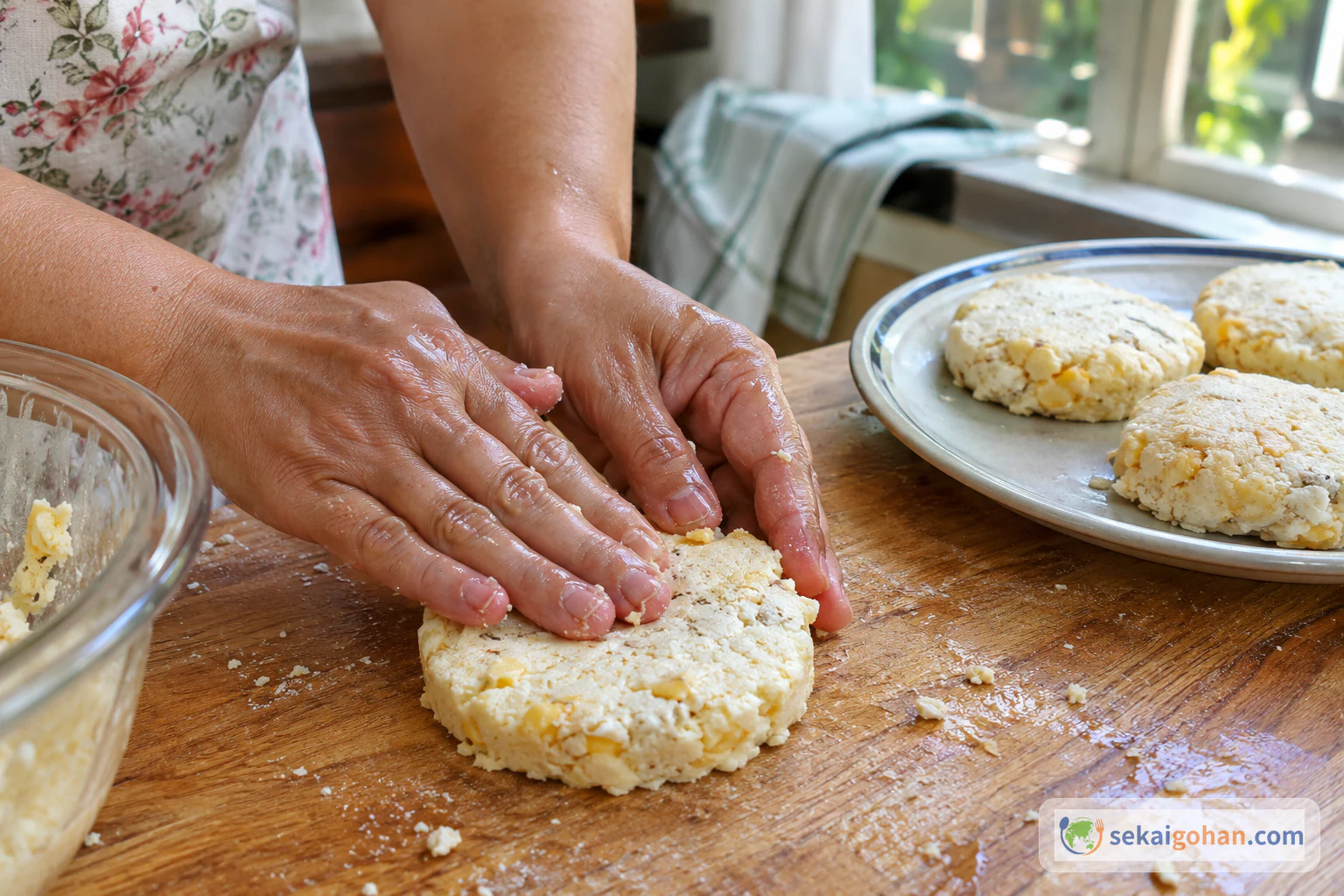
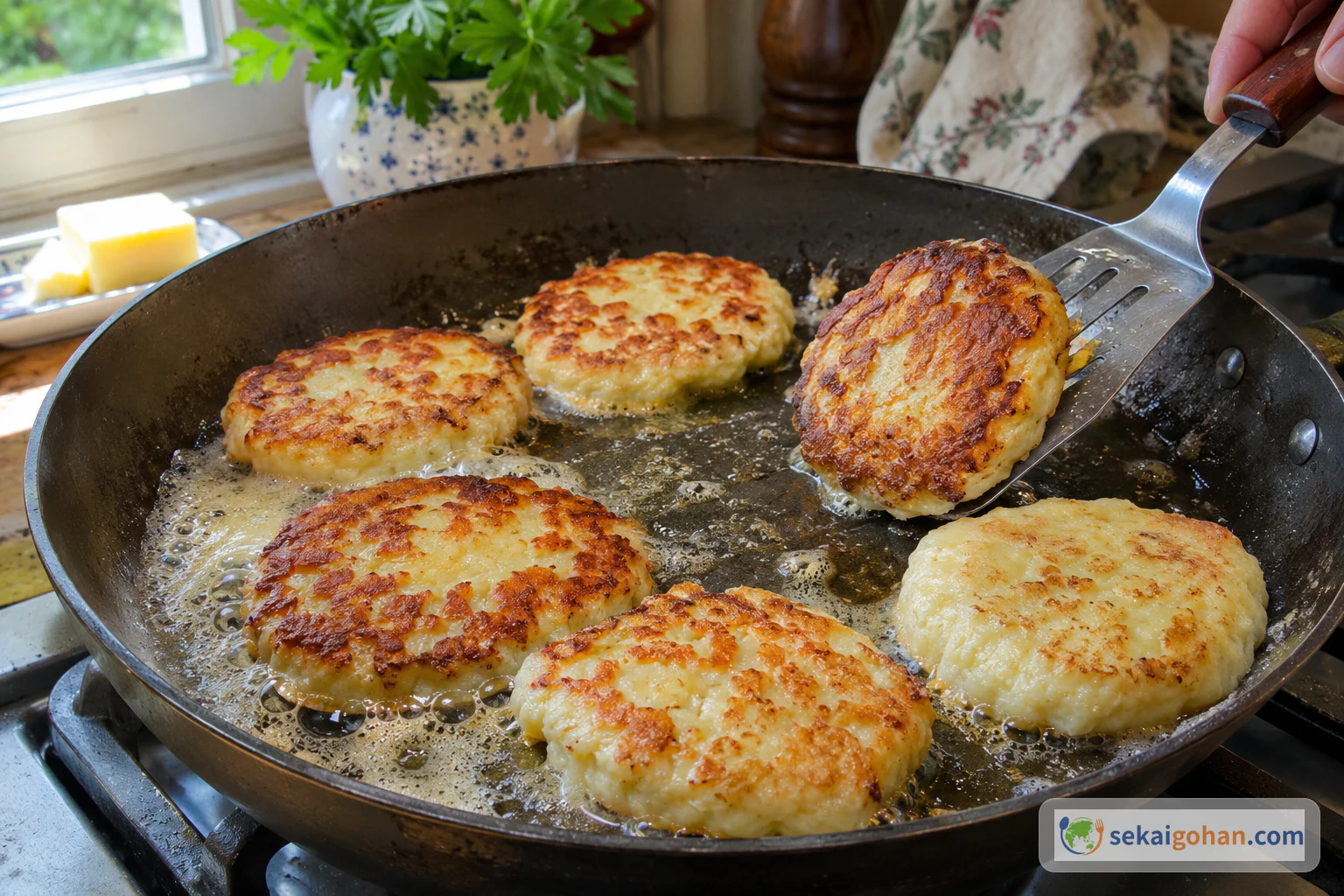
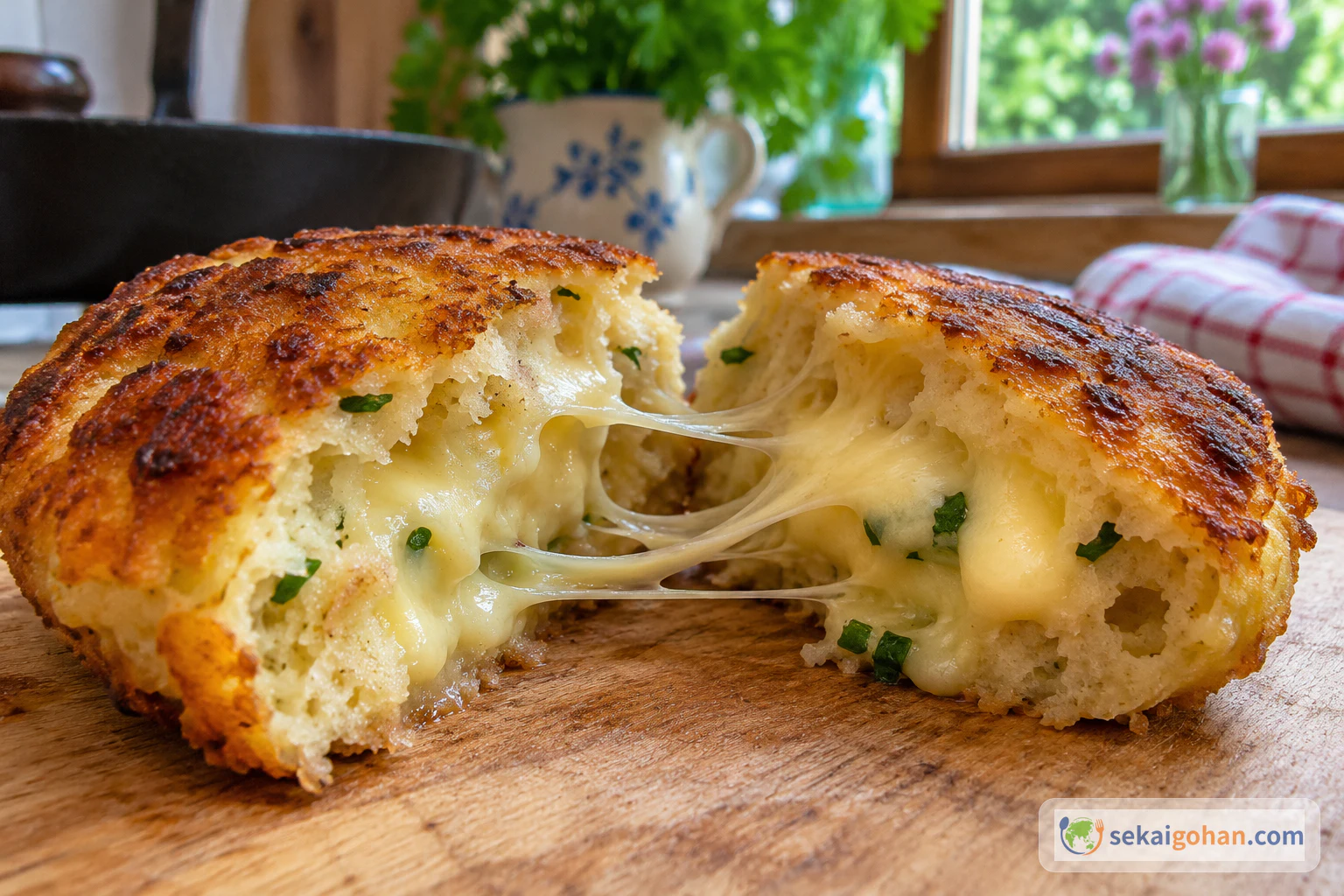
When the pressed patties go into the foaming butter, the smell of browning mountain cheese fills the kitchen and drifts out to the house next door. Kaspressknödel are flat dumplings of dry bread cubes, sharp grated mountain cheese, egg and soft onion, pressed by hand and fried in butter on both sides. The outside turns crisp and deep gold. Inside, the bread is soft and the cheese pulls in strings. In Tyrol they are everyday food, and the only real question at the table is whether they go into a bowl of clear beef broth or onto a plate next to a green salad.
A Dumpling That Gets Pressed, Fried and Never Sauced
The name says how the dish is made. Kas is cheese in the southern dialect, and pressing a dumpling into a flat cake is called pressen, so a Kaspressknödel is a pressed cheese dumpling. Most Central European bread dumplings are rolled into balls, boiled and set next to meat to soak up gravy, like the Czech knedlíky served with svíčková. This one goes the other way. It is flattened into a patty, fried in butter until the crust is brown, and the cheese carries the flavor.
That is why Kaspressknödel are never served with a sauce. Pouring gravy over them counts as bad table manners in Tyrol, because a sauce would soften the crust that the whole method exists to build.
You will see it spelled Kaspressknödel or Kaspressknoedel. In the Zillertal valley in Tyrol it is also called Zerggl, and people there treat it as an unofficial emblem of the valley's cooking.
Water or land
The dish belongs to the western, Alpine side of Austria, and it has been made there for generations. Where it was first made is not settled. In Tyrol it is a favorite on ski days and the kind of food people order at a mountain hut after a long morning outside. In the Pinzgau area of Salzburg, Tuesday, Thursday and Sunday were once known as Knödeltage, dumpling days.
There is an old way to eat them that settles the soup-or-salad question by refusing to choose. You eat one zu Wasser, "by water", in a bowl of hot beef broth, and one zu Lande, "on land", with a green salad. The broth version is a light first course. The salad version is a meal in itself. They are also served as a main course with sauerkraut, whose sourness cuts through the butter and cheese.
The cheese changes with the valley
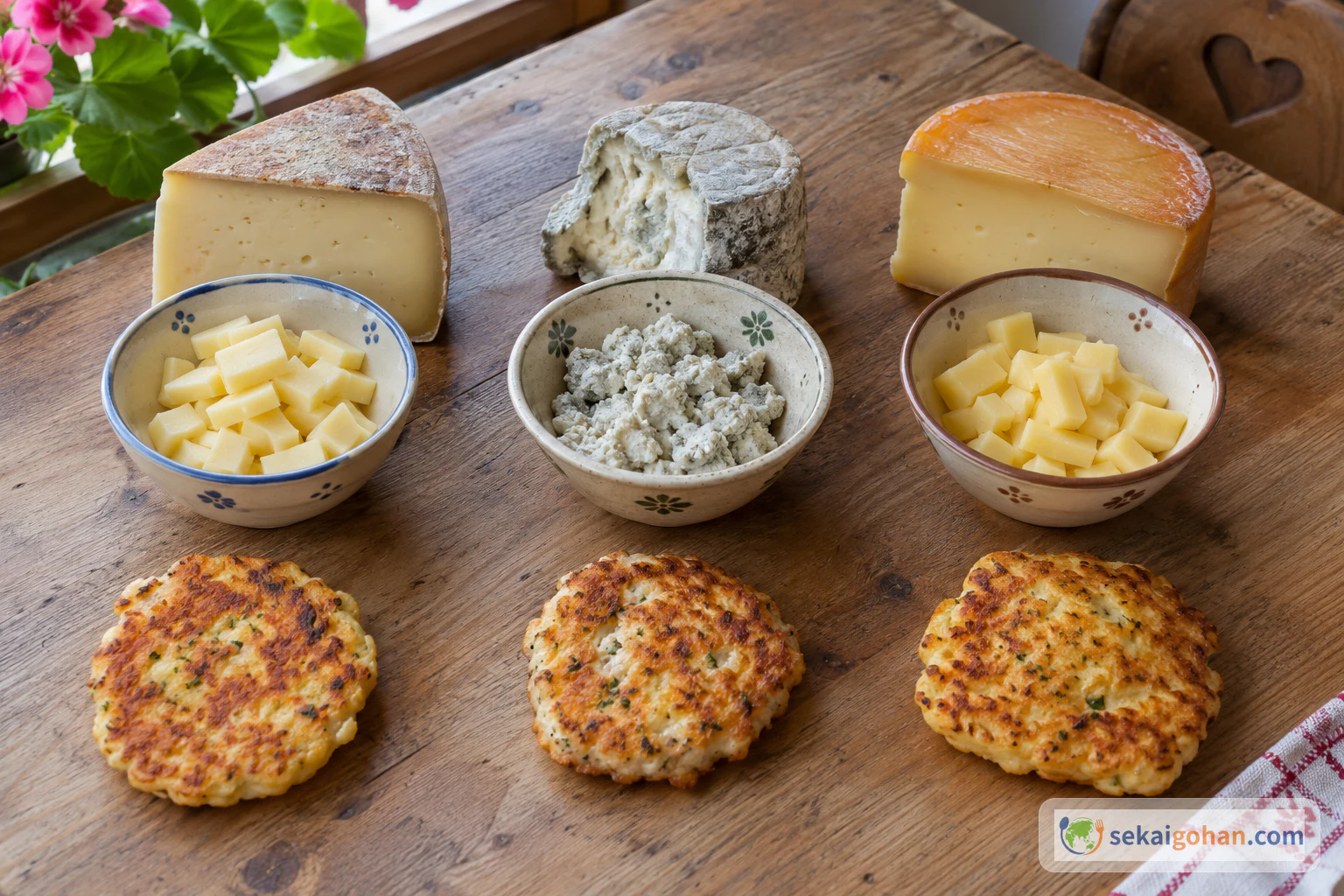
Bread, egg and onion stay the same across the Alps. The cheese decides where you are. In Salzburg, Pinzgau and Pongau dumplings use beer cheese (Bierkäse). Tyrol uses mountain cheese (Bergkäse) and grey cheese (Graukäse), both of which carry the protected g.U. mark. In Vorarlberg the cheese is Sura Kees.
Graukäse explains a lot about the dish. It is made from the skimmed milk left over after butter making, soured by lactic fermentation. It was a poor family's cheese, and the longer it sits the softer it gets, until it is almost runny. One idea about how Kaspressknödel began is that cooks mixed this soft, aging cheese into stale bread rather than throw either away. Nobody can prove it, but the dish fits a mountain kitchen where nothing was wasted.
Ingredients (serves 4)
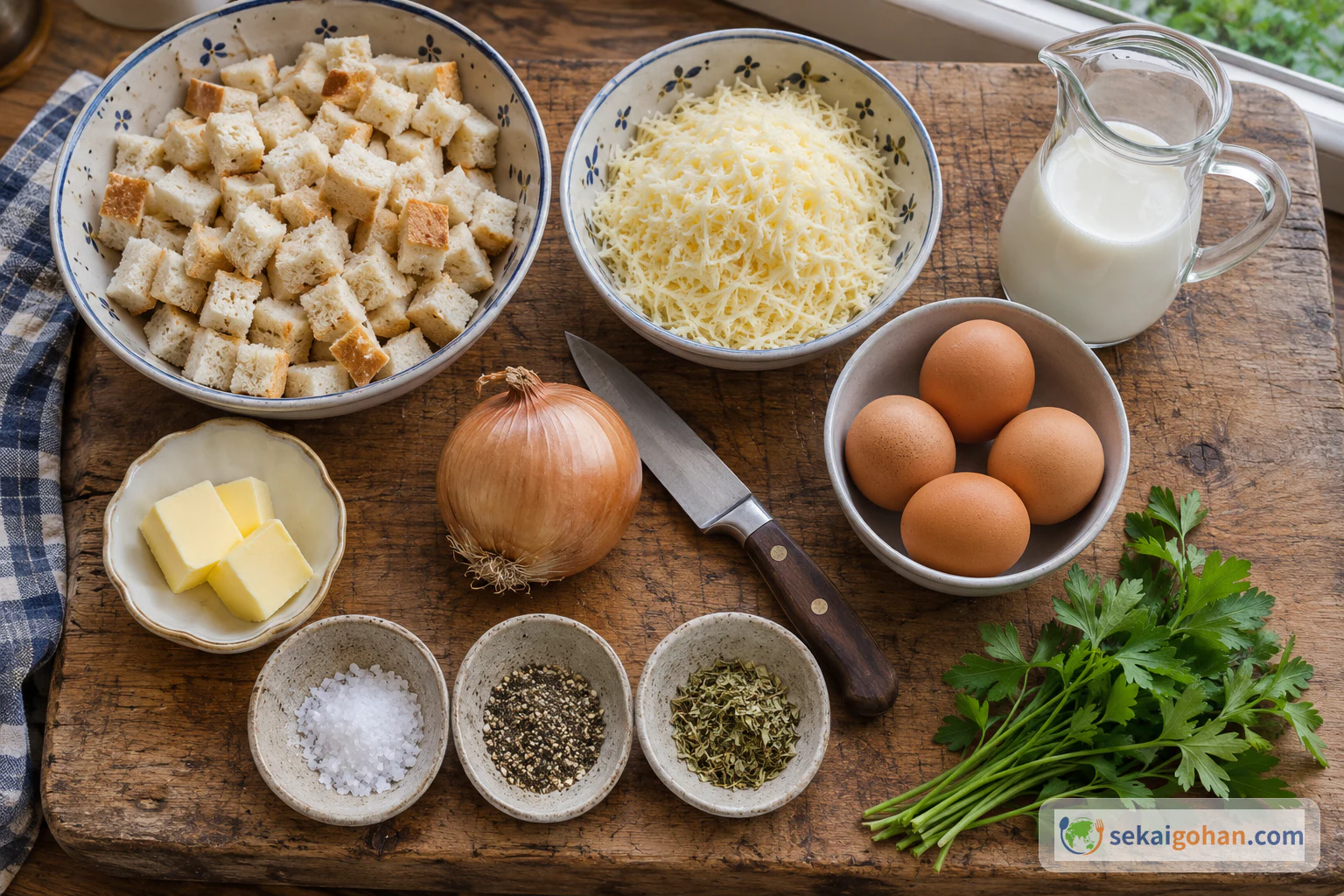
This is the Tyrolean version, made with sharp mountain cheese. The bread and cheese do most of the work. The milk and eggs are there to bind them, so the dough stays coarse and you can see the cubes.
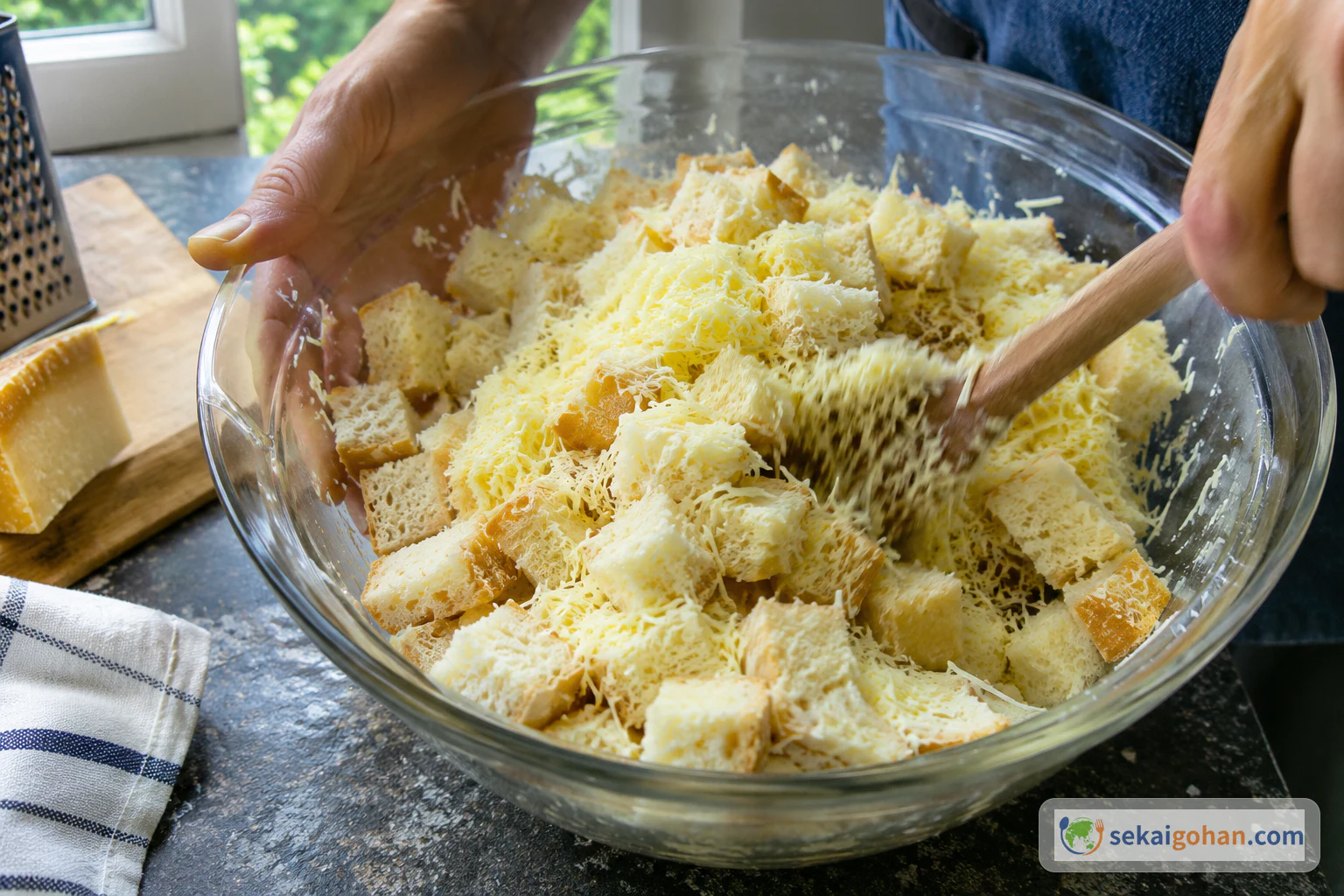
The cubes have to be dry before the milk and eggs go in. Dry bread soaks up the liquid and still holds its shape, so the patty fries up light. Soft, fresh bread turns into a heavy, pasty dough that browns on the outside and stays dense in the middle.
Contains egg, milk (milk, butter, cheese) and wheat (bread). There are no nuts in this recipe. If you buy ready-cut bread cubes, check the label for other allergens.
Equipment
- Wide frying pan
- Large mixing bowl
- Cheese grater
- Knife and cutting board
- Wide spatula for turning
Bread and Cheese: What to Buy Outside Austria
In Austrian shops, Knödelbrot is sold in bags as dry white bread cubes. Outside Austria, make your own. Cut white sandwich bread or a baguette into ⅝-inch (1.5 cm) cubes the day before and leave them out to dry. They are ready when they feel dry and light and rattle in the bowl.
The cheese matters more than anything else on the list. The Tyrolean choice is a sharp, aromatic mountain cheese. Gruyère is the closest match and gives the same nutty depth. Emmental is the classic swap in many Austrian kitchens and gives a milder, sweeter dumpling. A mild melting cheese, such as young Gouda or mozzarella, makes a dumpling that is soft but tastes flat, so skip those.
Dried marjoram is the standard Tyrolean herb and works well here. Parsley is easy to find anywhere. Graukäse is hard to find outside Austria. Leave it out and use mountain cheese only. You end up with the Tyrolean dumpling most people know.
Method: From Bowl to Butter in One Go
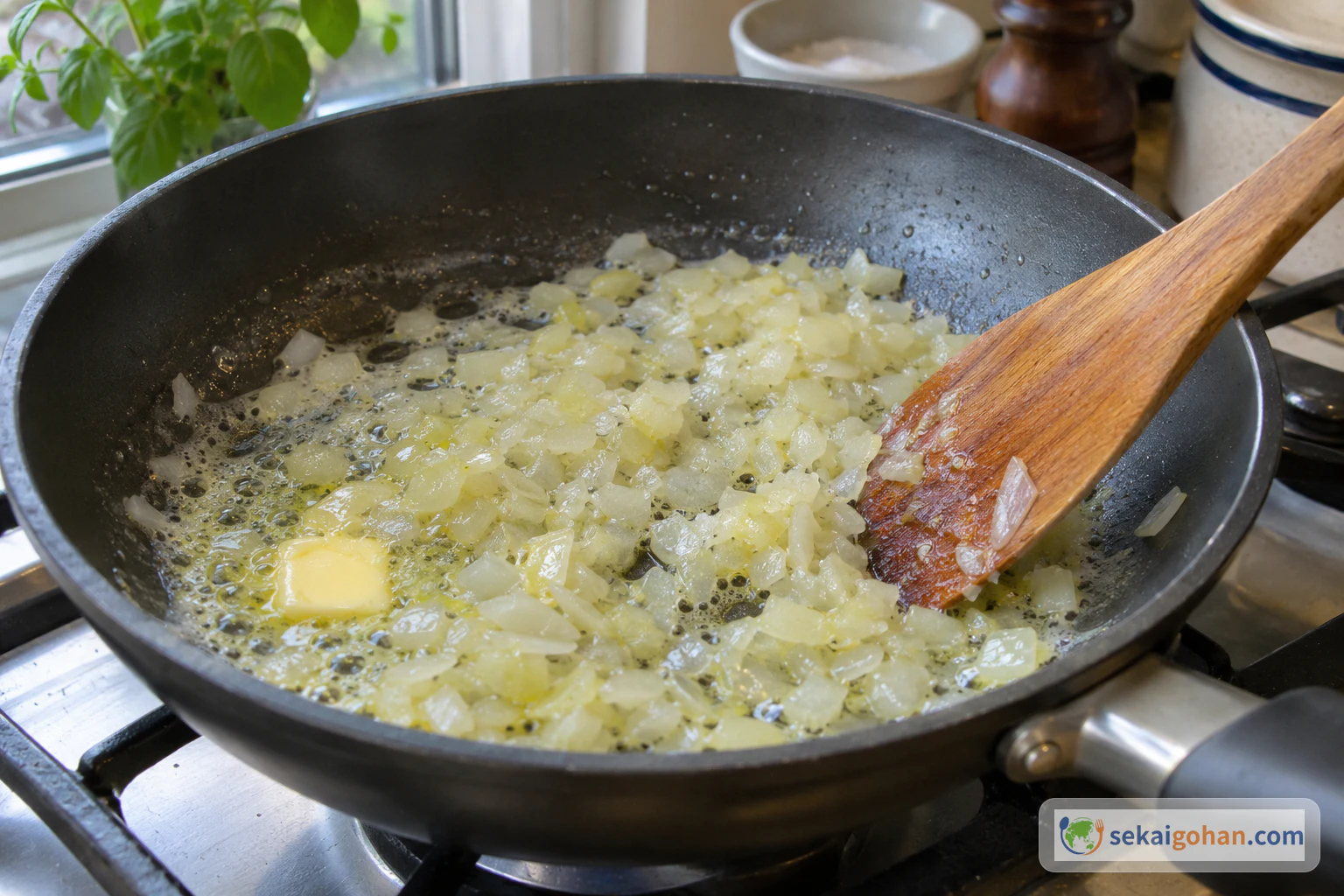
The whole process takes about 45 minutes from chopping the onion to the table, and there is no resting time anywhere in it. Grate the cheese and chop the onion and parsley before you light the stove. Once the onion is soft, everything else follows without a break. The frying needs your attention, because the heat decides whether the middle warms through before the crust darkens.
When It Goes Wrong
- The dough won't hold together → The bread is very dry or the cubes are large, so there isn't enough liquid to go around. Work in a little more milk, a splash at a time, until a squeezed handful holds. Leave the eggs as they are, because more egg changes the dough.
- The patties fall apart in the pan → They were pressed too loosely, or turned before the crust set. Shape the rest with wetter hands and more pressure, and wait until the underside is fully browned before turning.
- Dark outside, cool inside → The heat is too high. Lower it to medium-low, leave the lid off, and fry longer so the heat reaches the middle. Cut one open and check for melted cheese and a steaming center.
- The butter burns and smells acrid → Whole butter can't take high heat. Turn it down, wipe out the burnt butter, and start the next batch in fresh butter.
- The dumplings taste bland in the broth → The dough was under-seasoned for soup. Season the next batch more firmly with pepper and marjoram before shaping, and salt the broth at the table.
At the Table: Broth, Salad and Sauerkraut
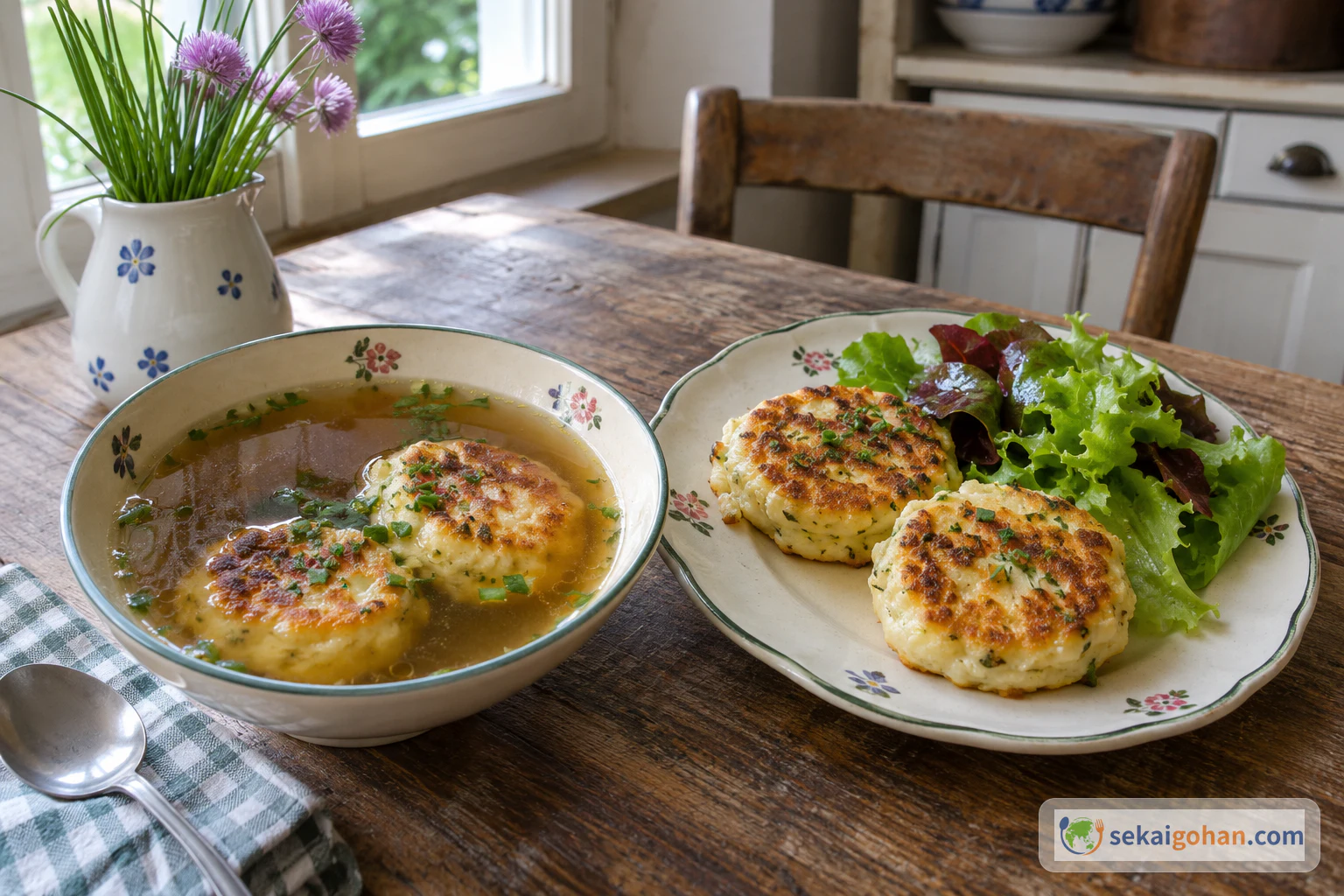
Clear beef broth is the classic setting. A good one tastes of beef, is lightly salted and is clear enough to see the dumpling in the bowl. If you want to make it from scratch, the broth from a pot of Tafelspitz is exactly right. With salad, keep the dressing sharp and simple so the acidity cuts through the butter. With sauerkraut, the dumplings become a full main course. You'll find more dishes from the same kitchens on our Austria page.
Variations
- Soup only. Shape the patties smaller and serve them as a garnish in broth before another main course. They warm through faster, and there is more broth for each bite of cheese.
- With Graukäse. Replace part of the mountain cheese with grey cheese. The dumpling gets a stronger smell and a sour finish that stays after each bite. This is the taste of the Zillertal.
- Zillertal style. Mix in a boiled potato and a little garlic and nutmeg along with the Graukäse. The potato makes the inside softer and creamier.
- Pinzgau beer cheese. Use Bierkäse instead of mountain cheese, whisk the eggs with water, let the dough sit briefly and firm it up with a little flour before frying over gentle heat. The result is milder and denser than the Tyrolean dumpling.
Frequently asked questions
Should the milk be warm or cold?
Room-temperature milk works best here. Cold milk straight from the fridge soaks into dry bread slowly, so the dough takes longer to come together. You don't need to heat it, because the dough goes straight into the pan without resting.
Do I need flour to bind the dough?
No. In the Tyrolean dough, egg and cheese do the binding, and firm pressing with wet hands holds the shape. Some regional versions, such as the Pinzgau beer-cheese dumpling, add a little flour, which makes the inside denser.
Can I fry them in clarified butter?
Yes, and many Austrian kitchens do. Clarified butter handles frying heat better than whole butter and is less likely to scorch, so the crust browns evenly with less risk of burnt flecks. Whole butter browns them nicely too, but you have to keep the heat at medium-low.