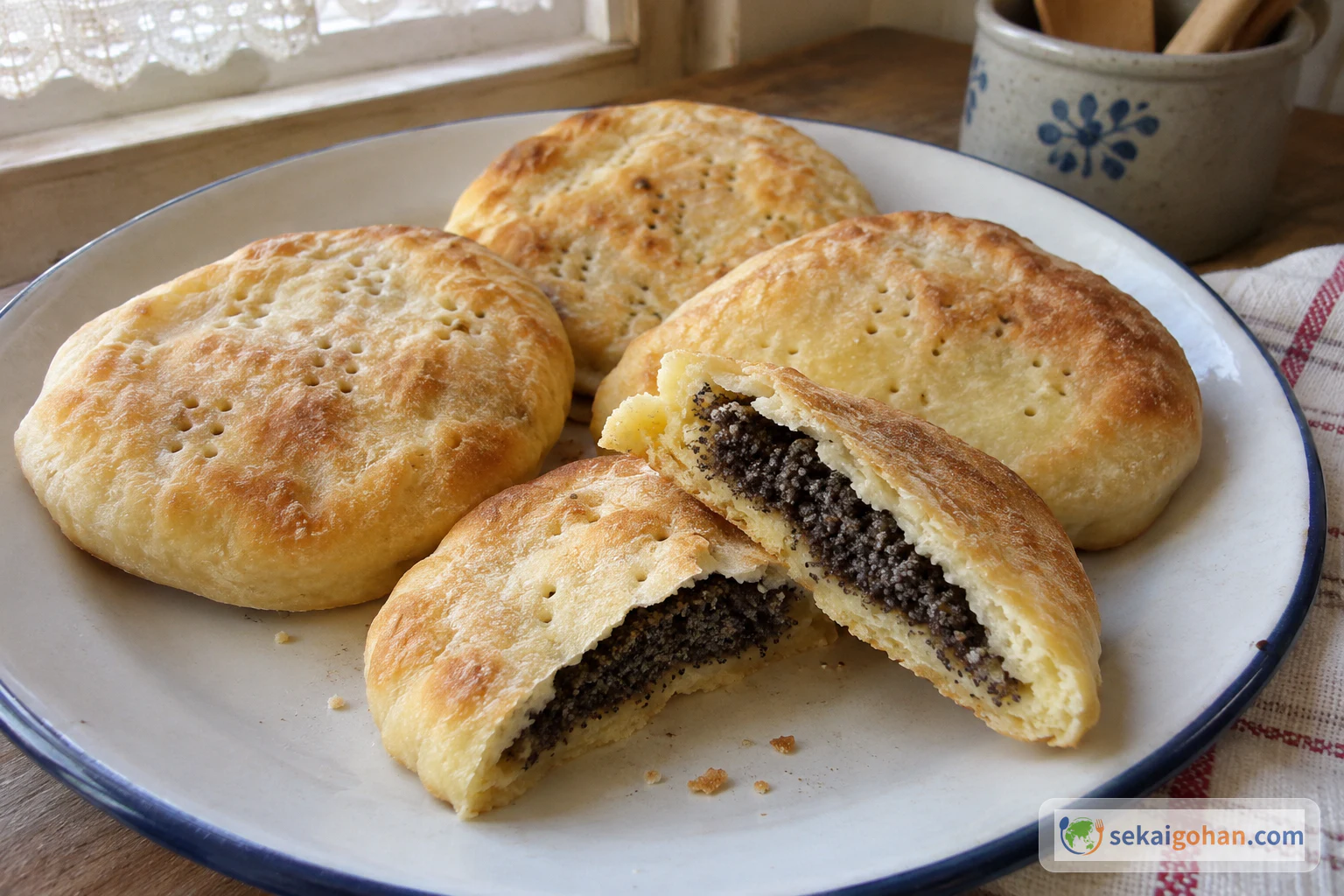
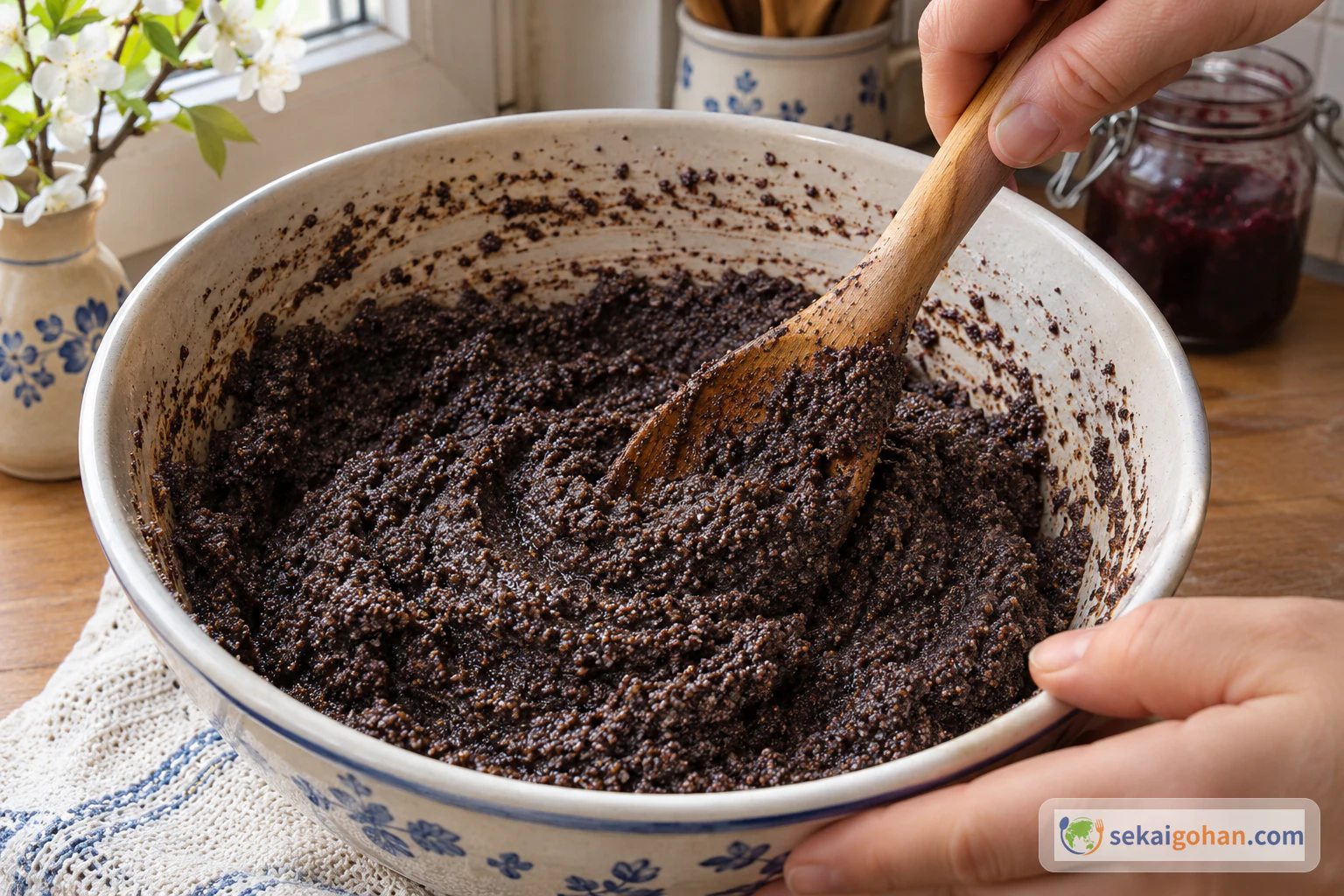
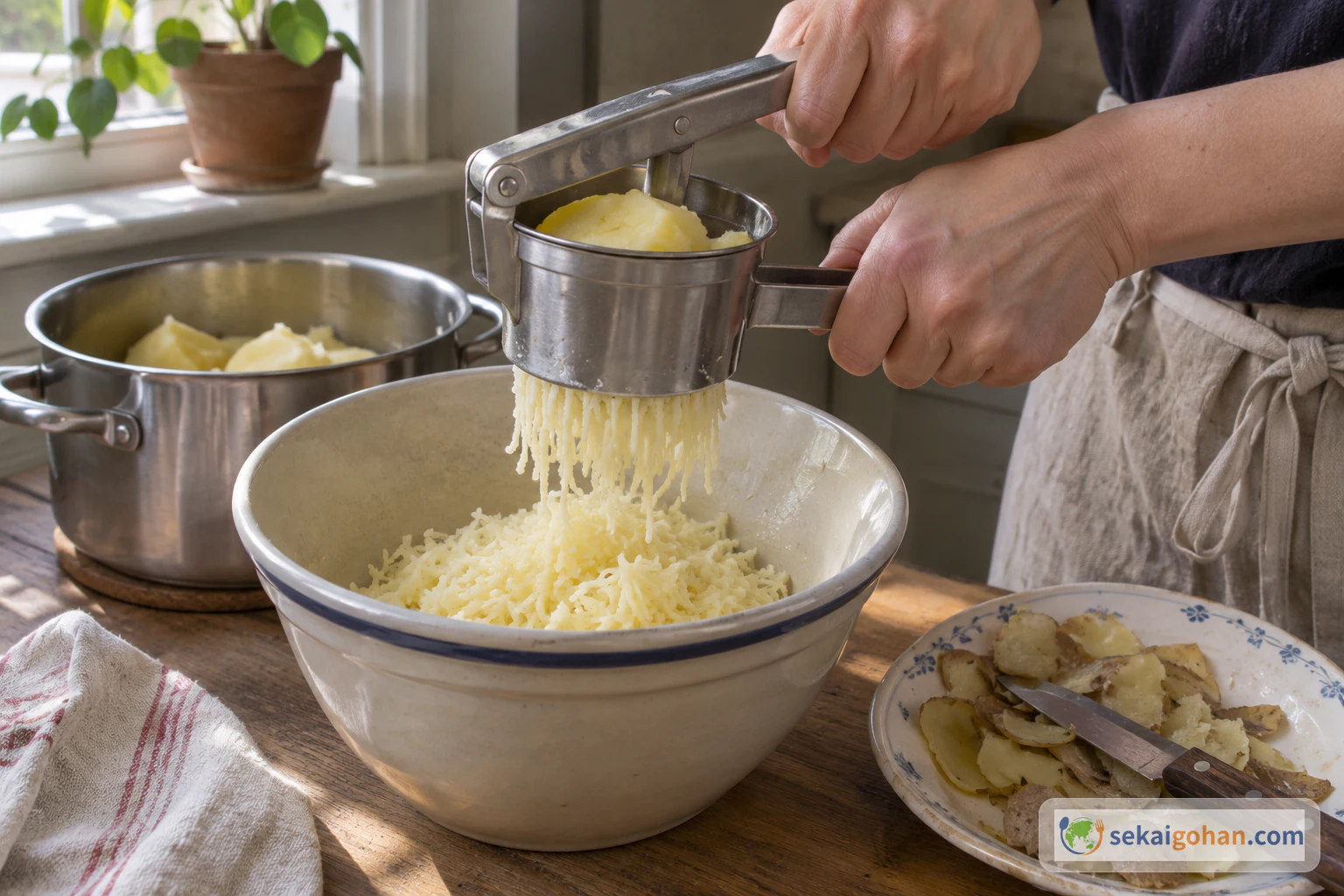
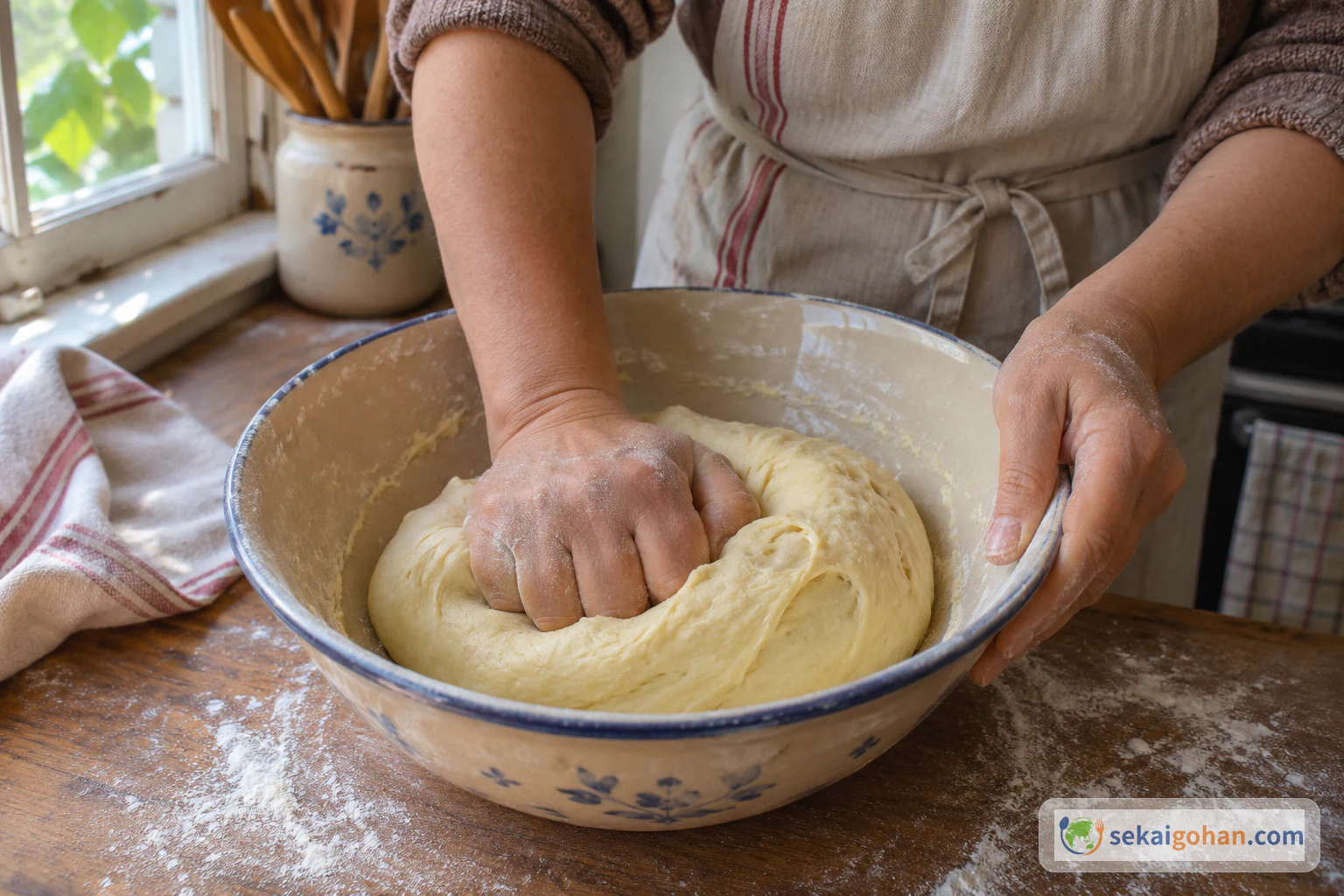
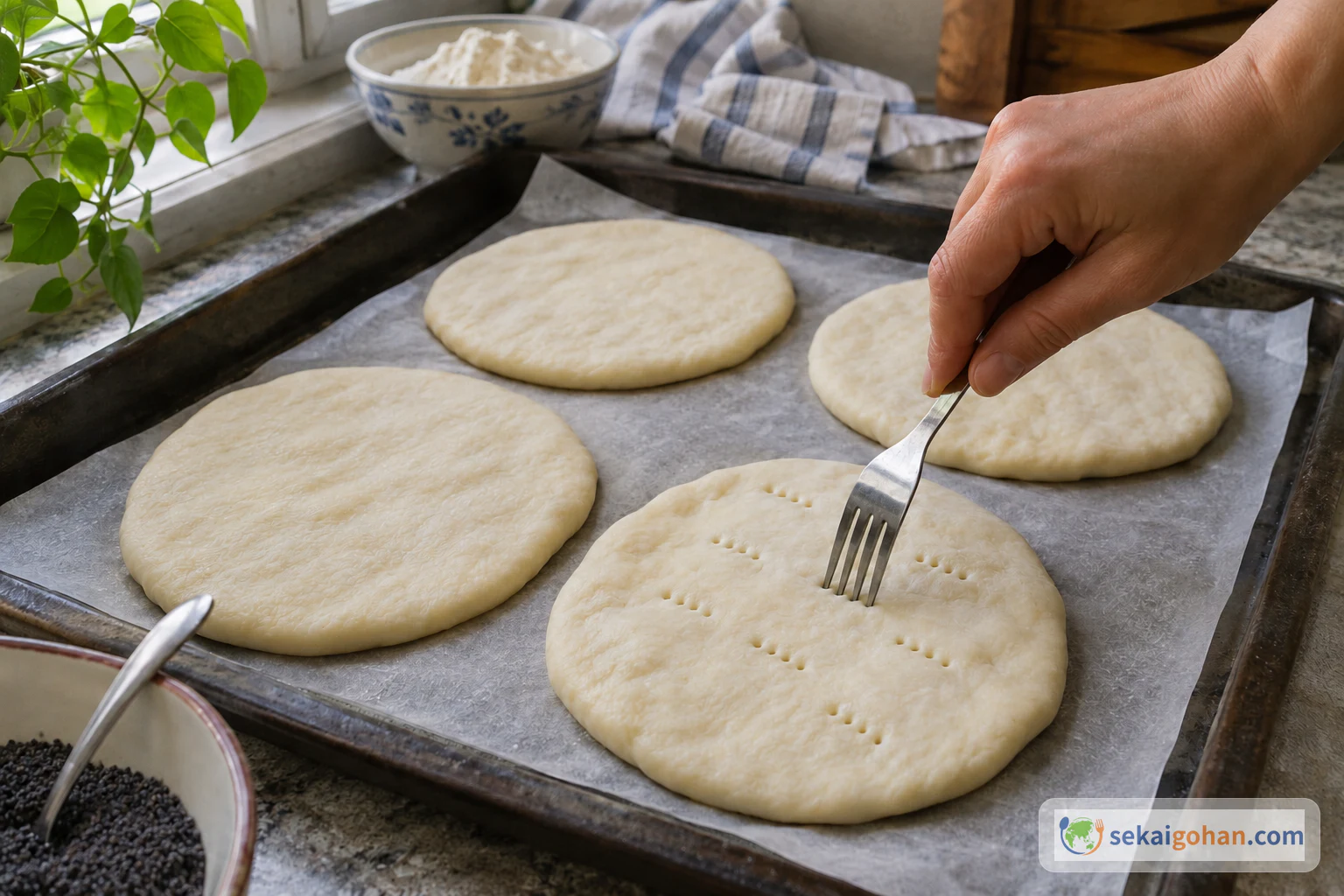
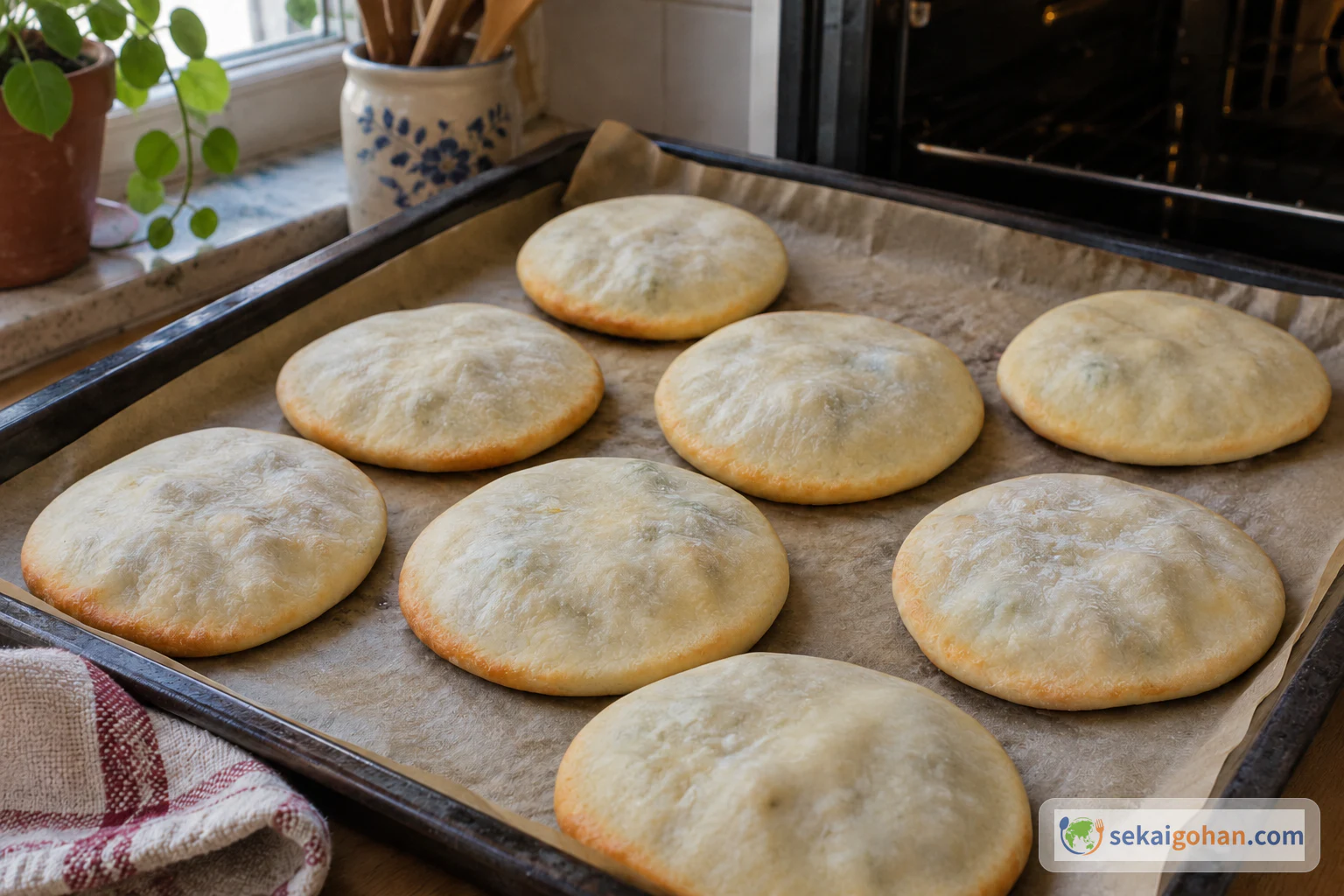
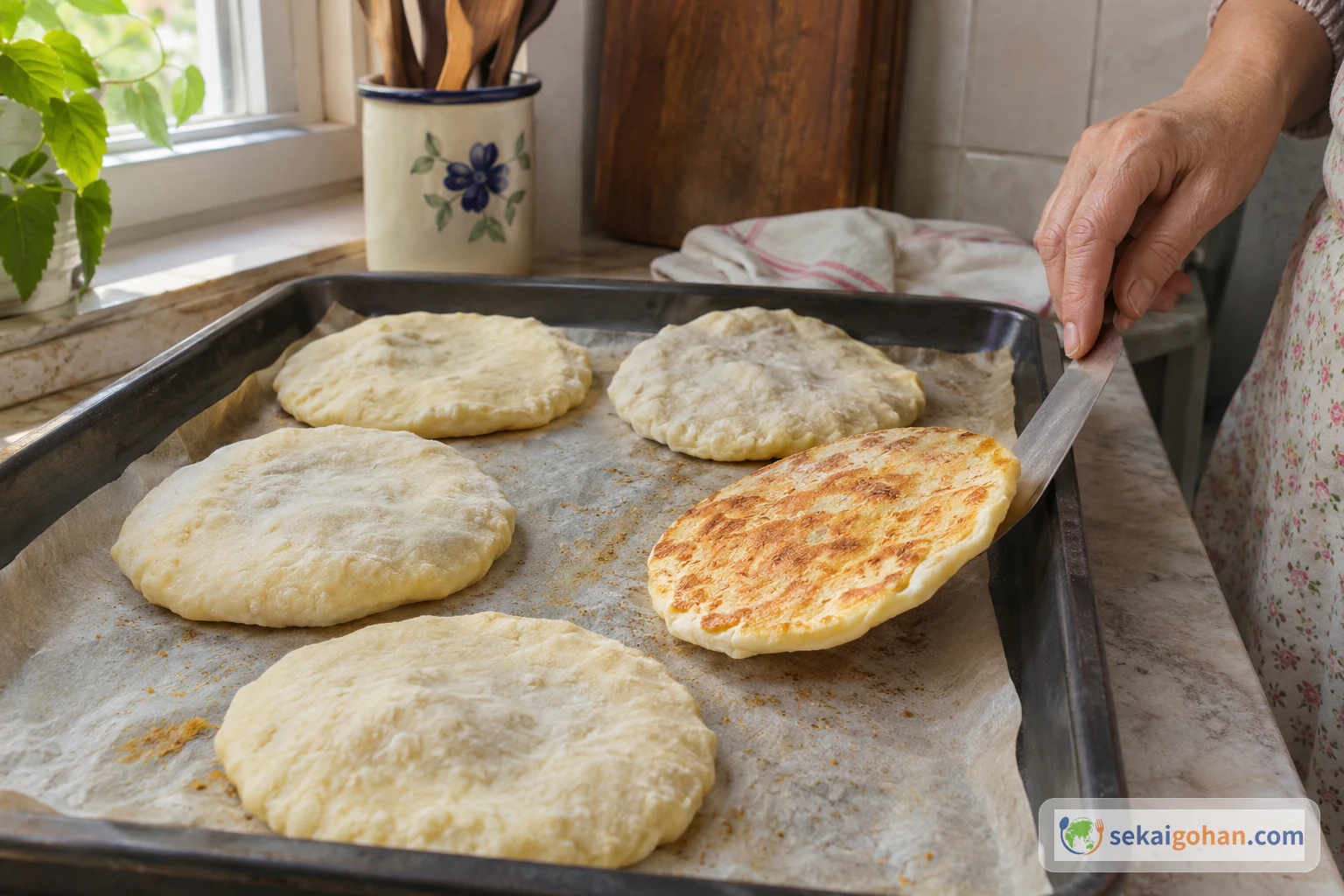
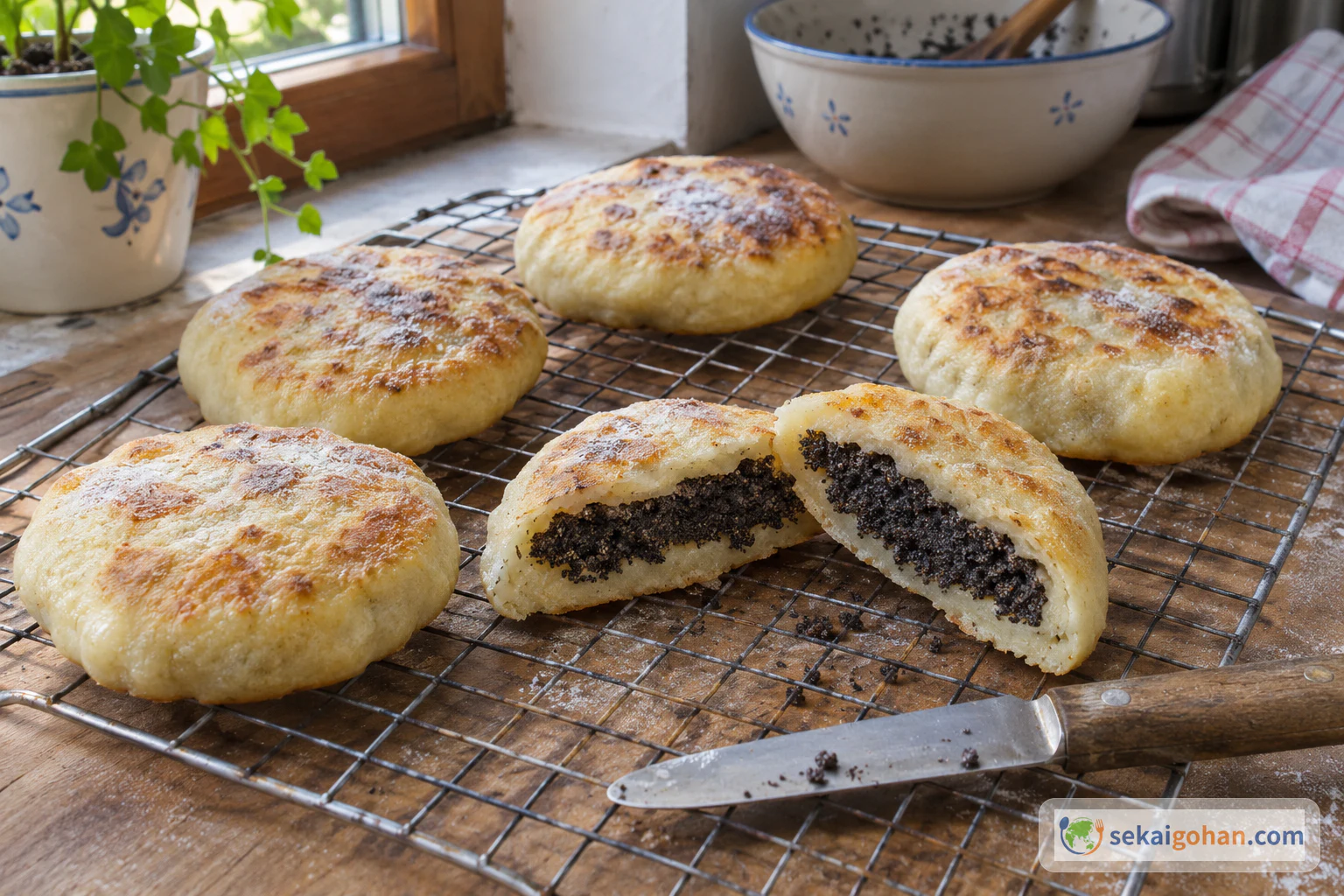
Fifteen minutes into baking, the tray comes out of the oven and every flat round gets turned over. The side that sat on the paper is golden now. The top is still pale and dotted with fork holes. Ten more minutes and both faces match. Break one open once it has cooled and you find a thin, soft potato crust wrapped around a dense, almost black layer of sweetened poppy seed, nutty and faintly bitter, with honey, vanilla and a little plum underneath. These are Mohnzelten, the poppy seed cakes of the Waldviertel in northern Austria, made to be carried into the forest or set out on Christmas Eve.
A Flat Cake from the Poppy Country of Lower Austria
The Waldviertel and its grey poppy
The Waldviertel, the "forest quarter," is a high plateau in the northwest of Lower Austria, running up to the Czech border. It is poppy country. Growing there is recorded as far back as the 13th century. The oldest land register of Zwettl Abbey, drawn up in 1280 under Abbot Ebro, lists it, and so do the tithe books of the later 1200s. The regional crop is usually traced to monastery gardens, where poppy was grown as medicine. The pressed oil had another job: it fed the eternal lamp in the church.
The crop kept growing. Agricultural statistics from 1912 record 1,200 hectares (nearly 3,000 acres) of poppy in the Waldviertel. Around 1930, grey poppy from Zwettl was quoted on the London exchange. After the Second World War, a crop that needed this much handwork lost ground to easier ones. Around 1980 a regional association for special crops brought it back. In 1989 Johann Neuwiesinger, whose family had run an inn and farm in Armschlag since 1881, turned the village into a "Mohndorf," a poppy village, and opened it as the Mohnwirtshaus.
The Waldviertel is known for grey poppy (Graumohn). Northern Upper Austria grows mostly blue poppy (Blaumohn). Grey poppy is what gives a Waldviertel Mohnzelt its dark, matte, slightly grainy filling.
Forest work and Christmas Eve
Mohnzelten fed people through hard days. They were an energy food for tree felling in the forest and for farm work: a sealed parcel of fat-rich poppy and a sturdy potato crust that travels in a pocket. They were also the festive cake of Christmas Eve. Both roles survive. You find them at Waldviertel markets today, above all in the weeks before Christmas. Exactly when someone first wrapped poppy in potato dough and pressed it flat is not settled.
"Zelten" has Germanic roots and means a flat cake. In Austria the word covers flat baked goods with fruit or seeds mixed in or sealed inside, fruit bread included. Some makers press the letters IHS into the underside. They use it as a mark of long standing, not as a specific religious sign.
One name, many household recipes
Every family and bakery in the region has its own formula. Some leave out yeast and use baking powder, with half as much poppy and far more sugar in the filling, which makes a sweeter, more cake-like pastry. One village bakery makes a richer potato dough and stretches the filling with breadcrumbs and a good spoonful of Powidl. Oven heat varies too, from a hot convection oven to a gentler, longer bake. The version below uses a large amount of poppy and a moderate amount of sugar, so the seed itself carries the flavor.
Just over the border, Czech koláče set poppy filling on top of a round yeast bun. Mohnzelten hide it completely, sealed inside and pressed into a disc. If you want to cook more from the same country, start from Austria.
Ingredients (makes 15)
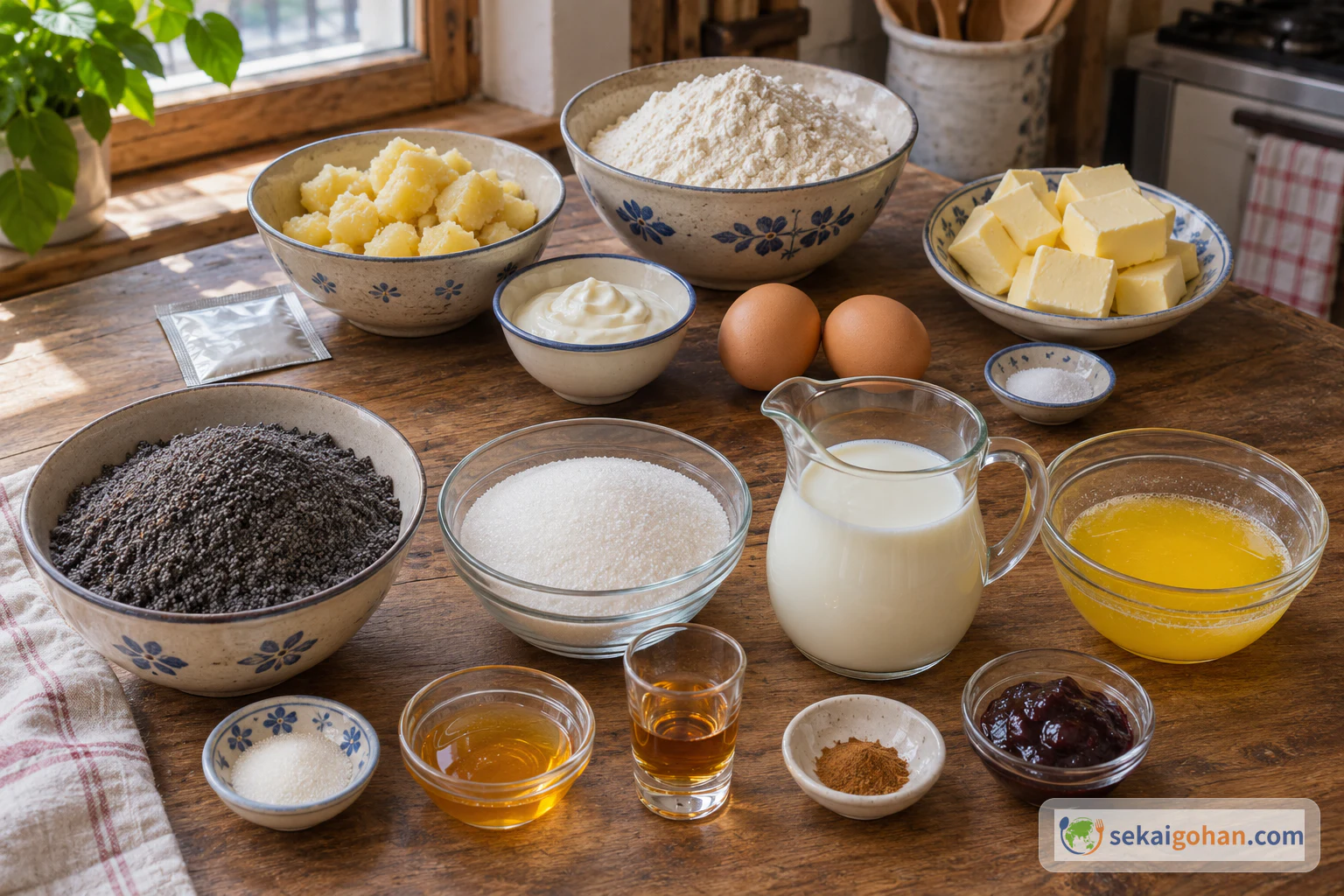
Whole poppy seed passes through the filling untouched and stays gritty in the mouth. Grind it in a spice or coffee mill, or crush it in a bag with a rolling pin, until it looks like dark, damp sand. Only crushed seed drinks up the milk and sets into a firm, sliceable filling.
Mohnzelten contain wheat, egg and milk (butter, sour cream, milk). The rum adds alcohol. If you have never eaten poppy seed before, start with a small piece.
Equipment
- Potato ricer or masher
- Large mixing bowl and a second bowl for the filling
- Knife and a lightly floured board
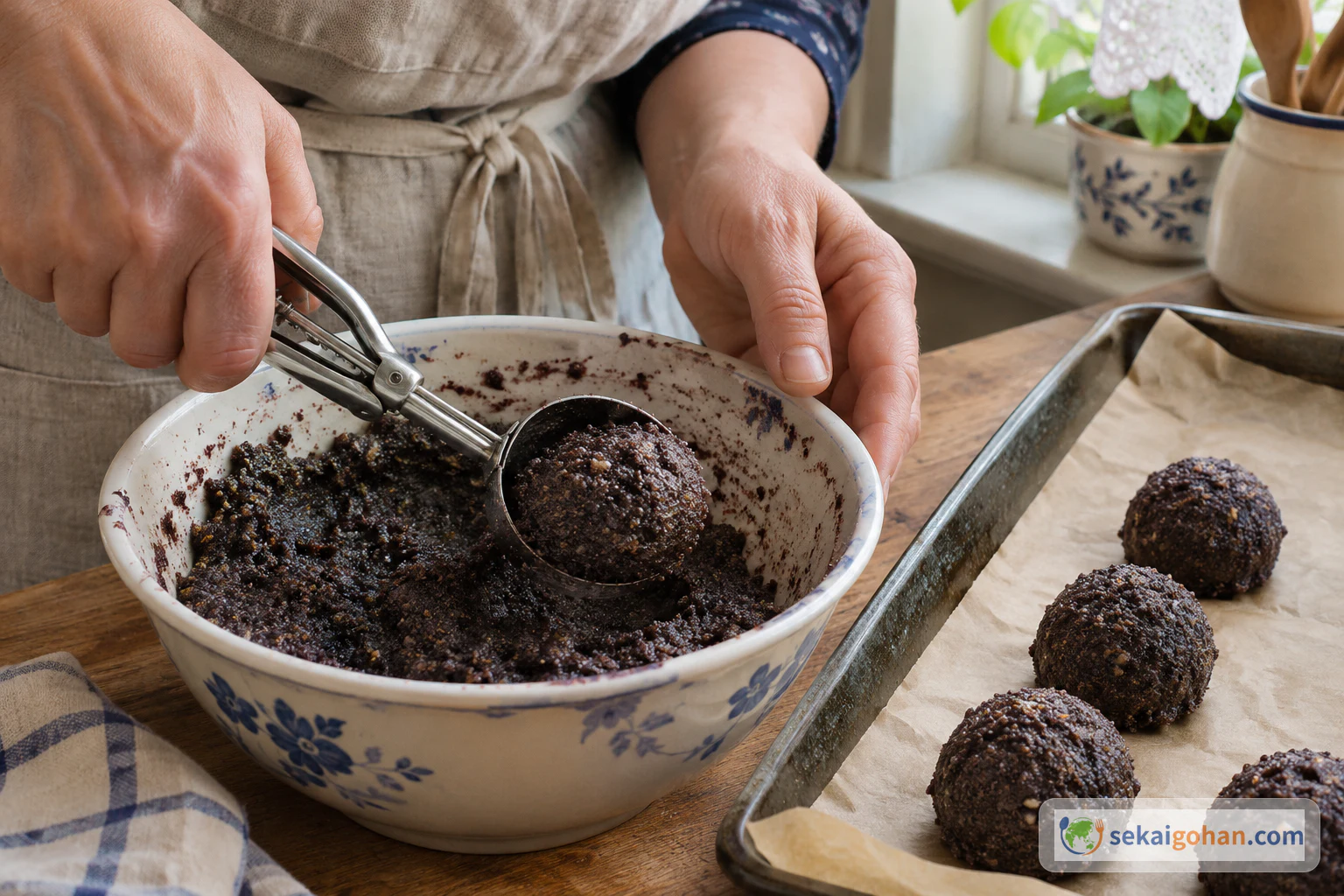
- Ice cream scoop (for portioning the filling)
- Baking sheet lined with parchment paper
- Thin spatula for turning
- Fork
- Wire rack
- Spice or coffee mill, or a rolling pin
- Measuring spoons
Choosing and Swapping Ingredients
The one thing worth tracking down is culinary poppy seed, sold as poppy seed for baking at baking-supply shops, import grocers and online. It is usually sold whole, so check whether you are buying whole or ground and plan to grind it yourself. Grey Waldviertel poppy is a protected regional product and hard to find abroad. The blue-grey poppy seed sold for baking elsewhere is a different variety from a different place, but it makes a good Mohnzelt once ground.
Ready-made poppy seed paste or filling is a different ingredient. Each brand has its own sugar and oil, so it does not replace ground seed one for one, and the filling quantities above stop working.
The rest comes from an ordinary supermarket.
| Ingredient | Good swap | What changes |
|---|---|---|
| Floury potatoes | Any floury, dry-cooking potato; leftovers boiled the day before are ideal | A watery variety loosens the dough and you need more dusting flour |
| Plain soft flour | Soft wheat flour for pastry | Bread flour makes the dough stiff and hard to wrap |
| Butter | Unsalted butter (keep the salt as listed) | Margarine works but the flavor drops |
| Sour cream | Regular sour cream | Heavy cream changes the fat and the tang; stay with sour cream |
| Dry yeast | One standard sachet of instant dry yeast; check the package for the amount meant for this much flour | Leaving it out gives a flat, dense crust; too much brings a yeasty smell |
| Vanilla sugar | A few drops of vanilla extract | Same aroma, slightly less sweetness |
| Powidl | Prune paste or plum jam | Barely noticeable at this small amount |
Method
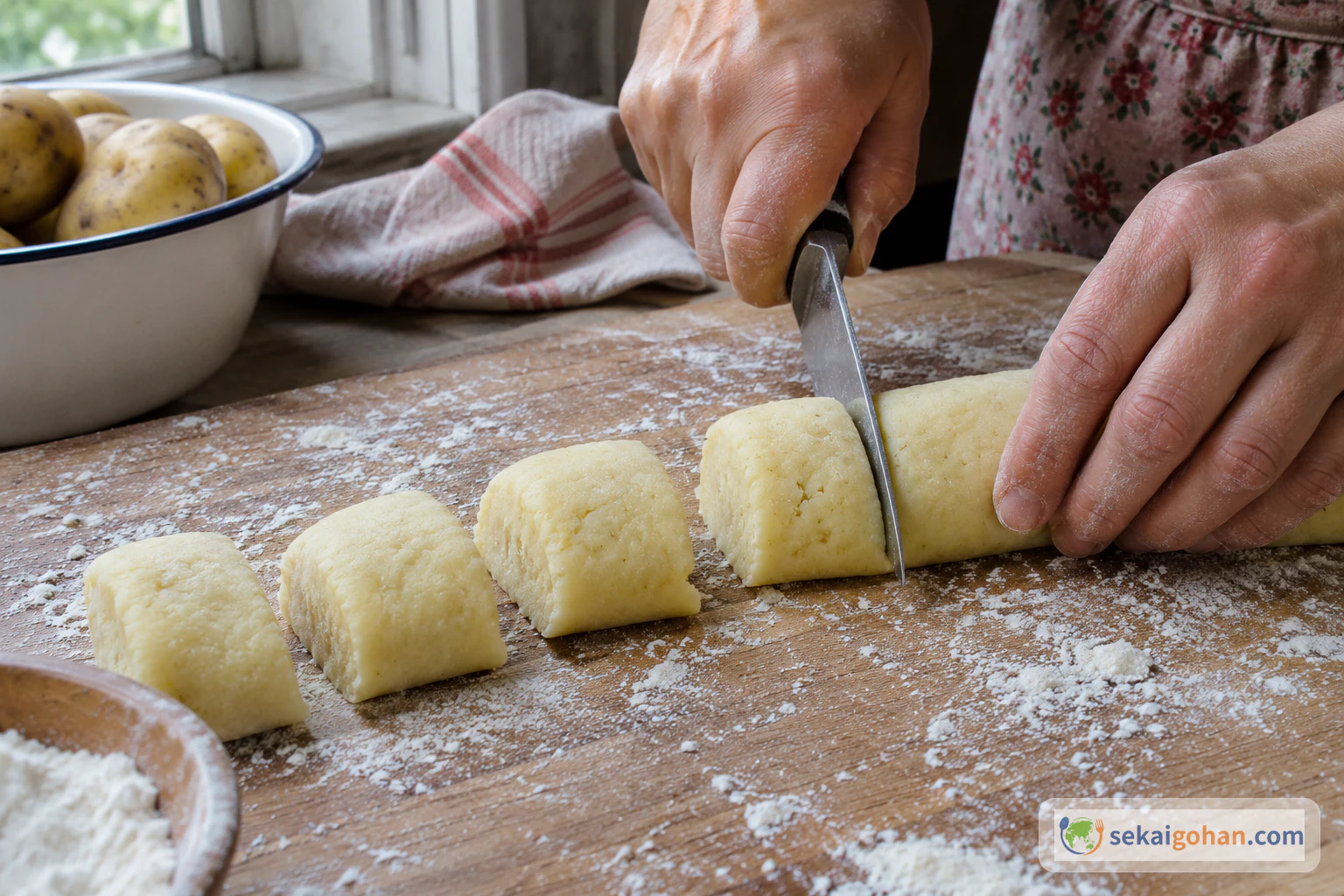
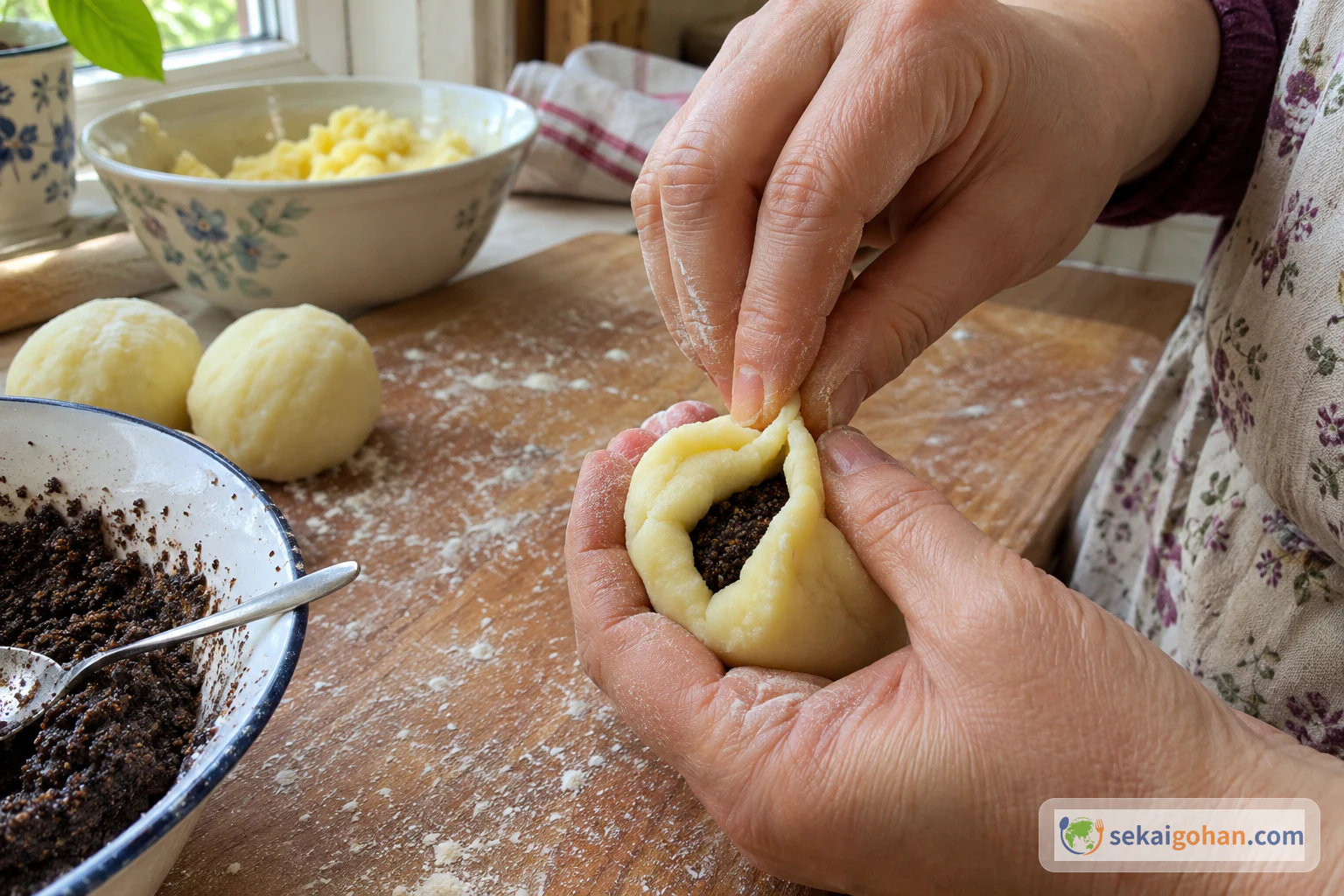
The filling comes first, because it needs several hours in the refrigerator to firm up; make it the day before if you like. Boil the potatoes early too, so they are completely cold when you rice them. After that the hands-on work runs straight through: dough, portioning, wrapping, pressing. The only waiting is the two short bakes and the cooling at the end.
Everything that goes into the wrapping stage should be cold: riced potatoes, butter and filling. Warm potato makes the dough sticky. Warm filling slumps out of shape and leaks in the oven.
Set a timer for the first bake and turn every disc as soon as it rings. The flip is what gives Mohnzelten their even golden color on both faces.
When It Goes Wrong
| What you see | Why | What to do |
|---|---|---|
| Pastries split in the oven and filling leaks out | Seam not fully closed, or filling too soft | Pinch every seam twice. Chill the filling for several hours before rolling it into balls |
| Bottoms dark, tops white | Not turned | Turn at the 15-minute mark every time |
| Dough crumbles and will not wrap | Potatoes riced while hot, or too much flour | Let the potatoes cool completely before ricing and dust with flour sparingly |
| Filling dry and crumbly | Too little milk, or it dried out while chilling | Keep the full amount of milk and press plastic wrap onto the surface in the refrigerator |
| Much too sweet | A higher-sugar formula has crept in | Keep the sugar as listed; the poppy should lead |
| Gritty seeds in the mouth | Whole poppy seed was used | Grind or crush the seed before mixing the filling |
Serving, Variations and Poppy Seed Safety
At the table
Serve Mohnzelten fully cooled, whole or cut in half so the dark layer shows. They are sturdy enough to pack for a walk or a day of outdoor work, which is exactly what they were made for, and they belong on the Christmas Eve table.
Variations
- Freshly ground poppy seed. Grinding the seed just before you mix the filling gives a stronger, nuttier aroma than buying it ground.
- Citrus peel. Grated orange or yuzu peel in the filling adds a bright scent alongside the cinnamon.
- Chopped walnuts. A handful in the filling adds crunch against the soft seed. This is a home variation, not the regional pastry.
- More Powidl. Raising the plum butter from a teaspoon to a tablespoon makes the filling tarter and less sweet.
- Smaller pastries. Divide dough and filling into 20 instead of 15. They bake faster, so judge each side by the color of the underside rather than the clock.
Storage
Let the pastries cool completely, then store them in an airtight container. Warm them briefly in a toaster oven; a microwave toughens the dough.
Poppy seed safety
- Culinary poppy seed is an everyday food. Its alkaloid content is very low, around 0.005%, and baking breaks down most of the opiates.
- After a meal with a lot of poppy seed, morphine can show up in urine and a drug test can come back positive. Skip poppy-heavy food the day before a test.
- Avoid poppy seed during pregnancy as a precaution.
- Do not give poppy seed to babies or small children. A six-week-old infant fell seriously ill with breathing problems after being given a liquid pressed from poppy seeds. In the Waldviertel there was once a custom called Mohnzuzel, soothing children with poppy and honey, and it was disputed even in its own time.
- Do not grow opium poppies at home to harvest seed. In Japan, growing opium poppy without a licence is prohibited by law. The seeds are excluded from the legal definition of the controlled poppy parts, so cooking with them and growing the plant are separate matters.
Frequently Asked Questions
My oven has no convection setting. How do I bake them?
Bake at 425°F (220°C) and judge by color rather than the clock. Turn the discs once the undersides are golden brown, then bake until the second side matches. Use the 15-minute mark as your first check.
Can I leave out the rum?
Yes. The rum is optional, and the filling holds together the same without it. Vanilla sugar and cinnamon carry the aroma on their own.
I ground too much poppy seed. How do I keep it?
Ground poppy seed is 40–50% fat and turns rancid quickly once ground. Seal it airtight and refrigerate it, or freeze it if you will not use it soon. Grind only what you need next time.
Can I make the filling or potatoes a day ahead?
Both work well ahead. The filling only improves after a night in the refrigerator under plastic wrap, and potatoes boiled the day before and chilled rice into dry, separate strands. Make the dough on the day you bake.