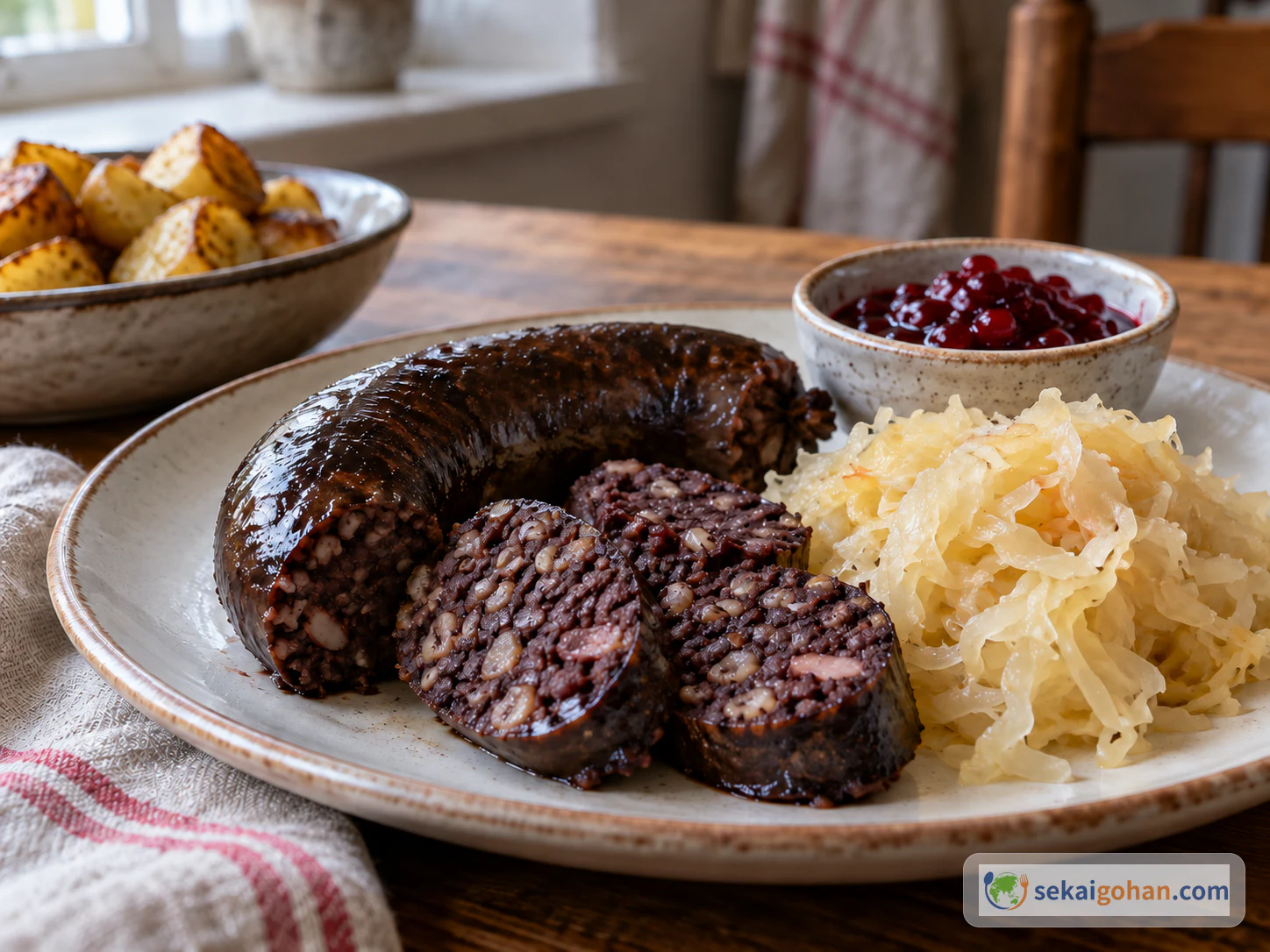
Verivorst: A Crisp-Skinned Sausage for the Estonian Winter Table
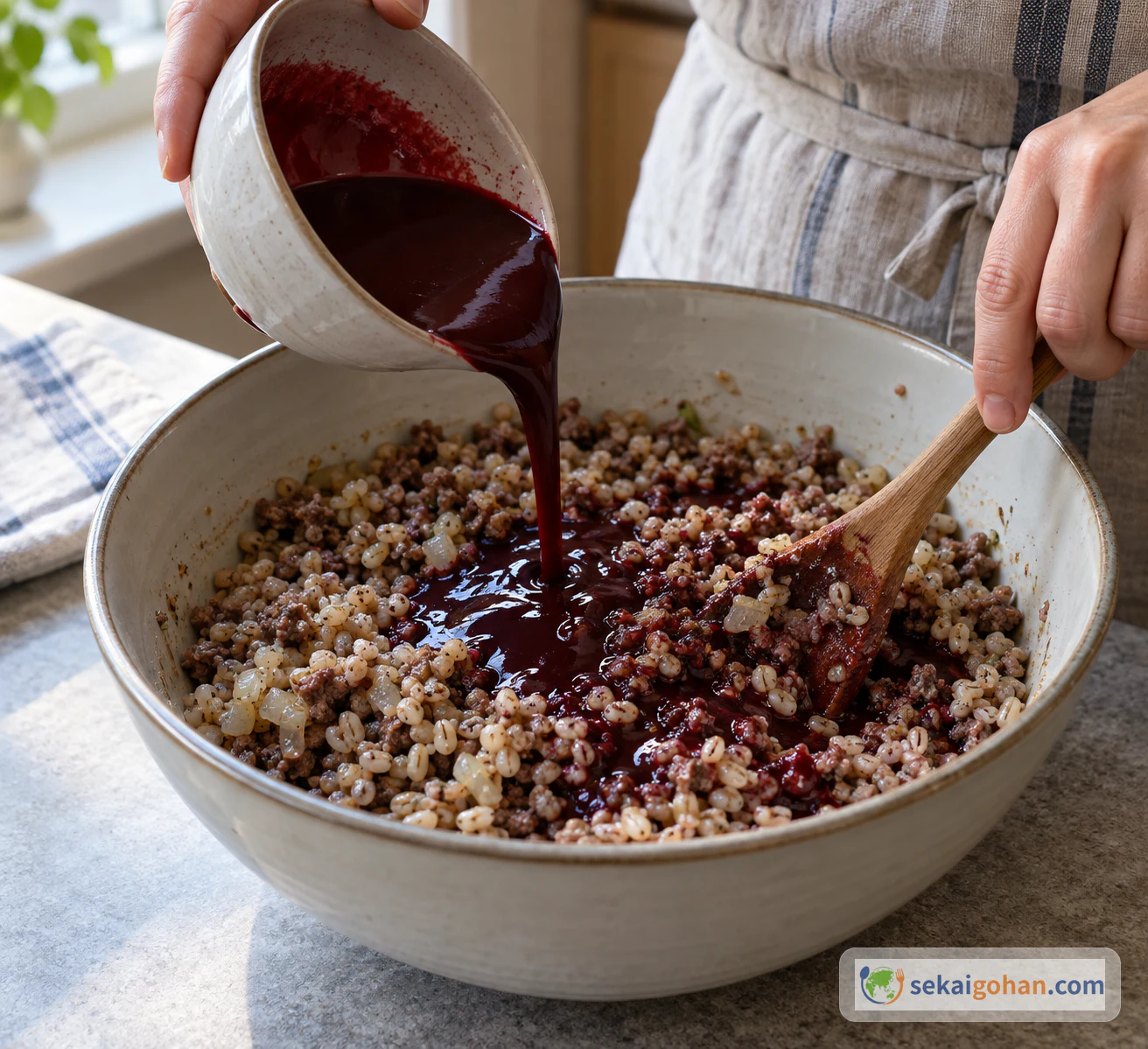
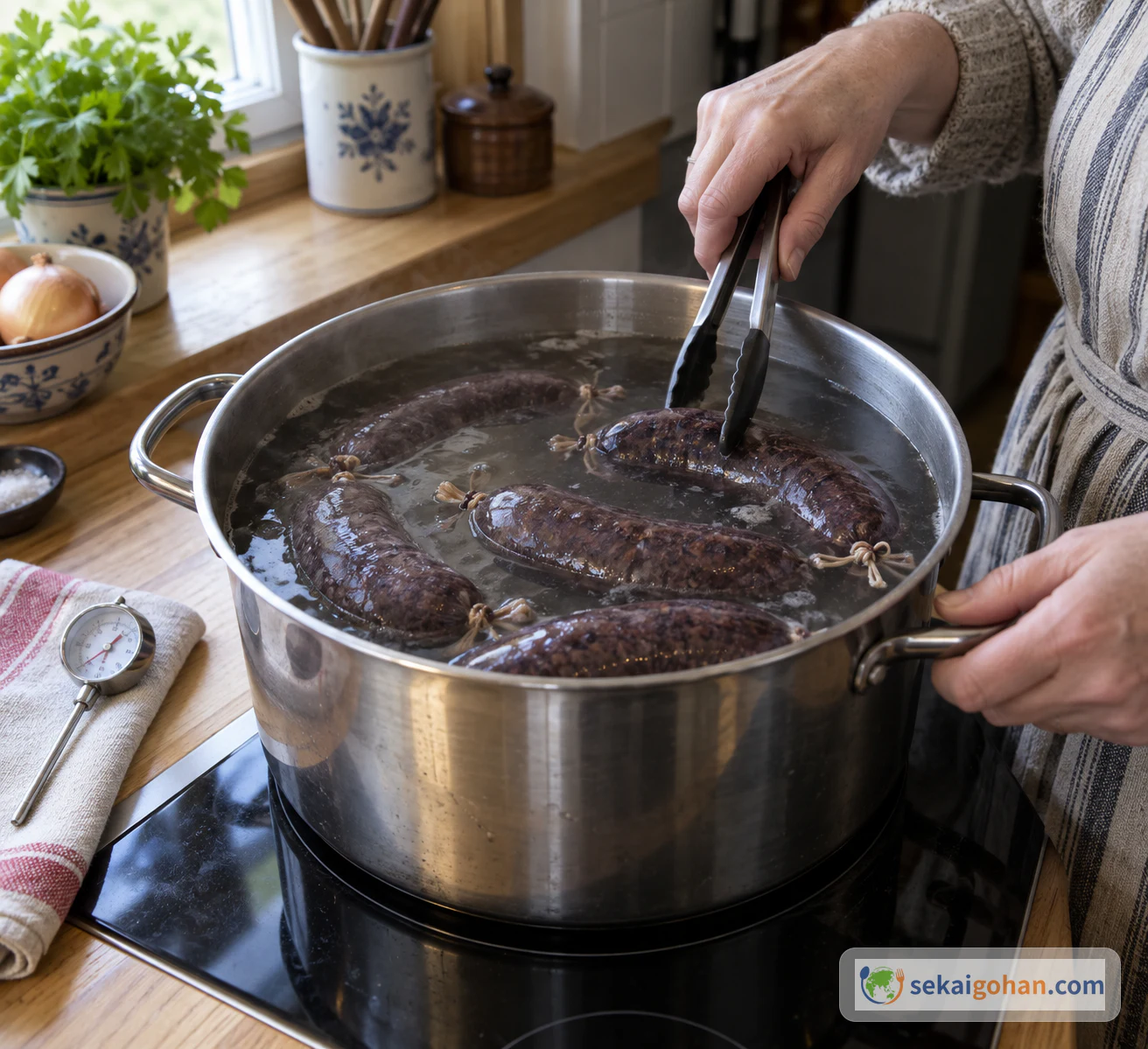
Keep the barley grains separate, cool the filling before the blood goes in, stuff the casings loosely, and never let the poaching water boil. Finish with a thermometer: 75°C at the center for at least 1 minute.
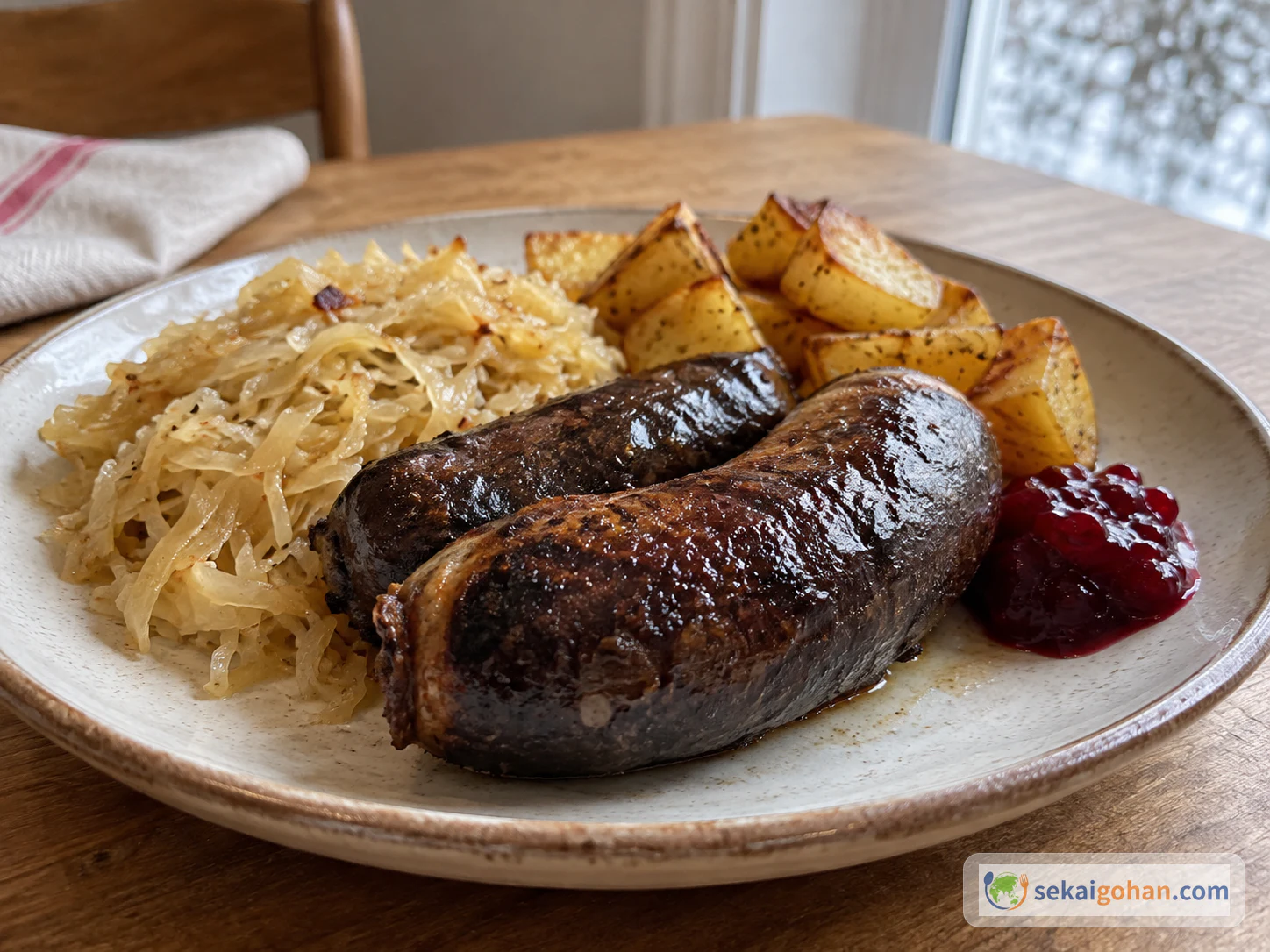
Picture a winter table set for Christmas in Estonia. Visit Estonia places verivorst there alongside sült, sauerkraut, roast potatoes and pork. The local newspaper Harju Elu says it is on most Estonians' Christmas tables. The casing is baked or fried until crisp, and sauerkraut and lingonberry jam often come with it.
Verivorst is a sausage of pig blood, barley groats and pork in natural casing. Before you plan to make it, two things are worth knowing. Food-grade pig blood can be hard to buy, and because both blood and raw pork need careful handling, a food thermometer is essential.
This recipe has not been kitchen-tested. It is an editorial combination of ratios from Estonian sources, which is also why it gives no yield, servings or number of sausages.
How This Recipe Was Put Together
There is no single correct formula for verivorst, and Estonian versions differ widely in meat, fat, barley, spice and blood. This one starts from an entry in the database of the Estonian Folk Culture Centre (Eesti Rahvakultuuri Keskus), recording sausage-making in Abja-Paluoja in Mulgimaa. It is a home-scale version of that record, not a standard for all of Estonia.
| Element | Where it comes from |
|---|---|
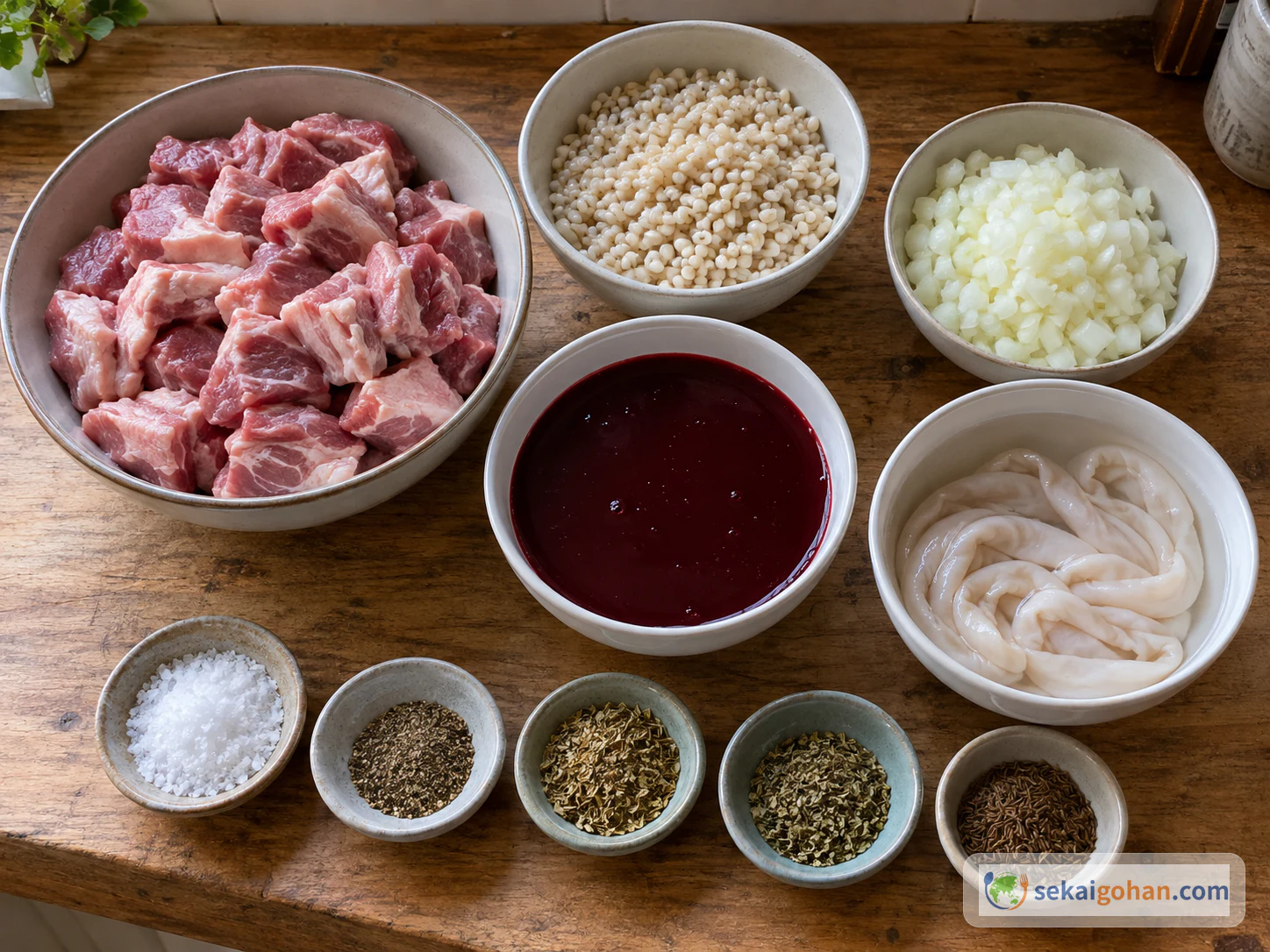
| Pork, barley, onion | One quarter of the Folk Culture Centre's 2.5 kg meat, 2 kg groats and 1 kg onion |
| Blood | An editorial addition. The Centre lists "the blood of one pig" with no volume, so this uses the 1 L blood per 1 kg groats found in Harju Elu and on the Rodoaed blog |
| Water for the barley | An editorial addition, from Harju Elu's 2.5 L per 1 kg groats |
| Marjoram | An editorial addition, half of Katrin Press's 2 heaped tablespoons per 1 kg groats |
| Oregano and caraway | The seasoning list in Visit Estonia's recipe |
| Salt | No source gives a number, so the filling is seasoned using a fried test spoonful, a method from the Ilse blog |
Reading the barley as dry weight is also an editorial judgment. The Centre does not say so outright, but Harju Elu's water quantity implies uncooked groats, and a reader comment on Rodoaed says 1 kg can become 3–4 kg once cooked.
Visit Estonia's own amounts (675 g pork, 1.25 kg barley, 500 ml blood) are not used here. That recipe does not say how the pork divides between salted and fresh, or whether the barley is weighed dry or cooked. Read as dry weight, it works out to 0.4 L of blood per kilogram of barley, far from the roughly 1–2 L in the other Estonian recipes.
The Folk Culture Centre's record also includes garlic and sugar, which this version leaves out.
Ingredients
Equipment
- Large pot for the barley
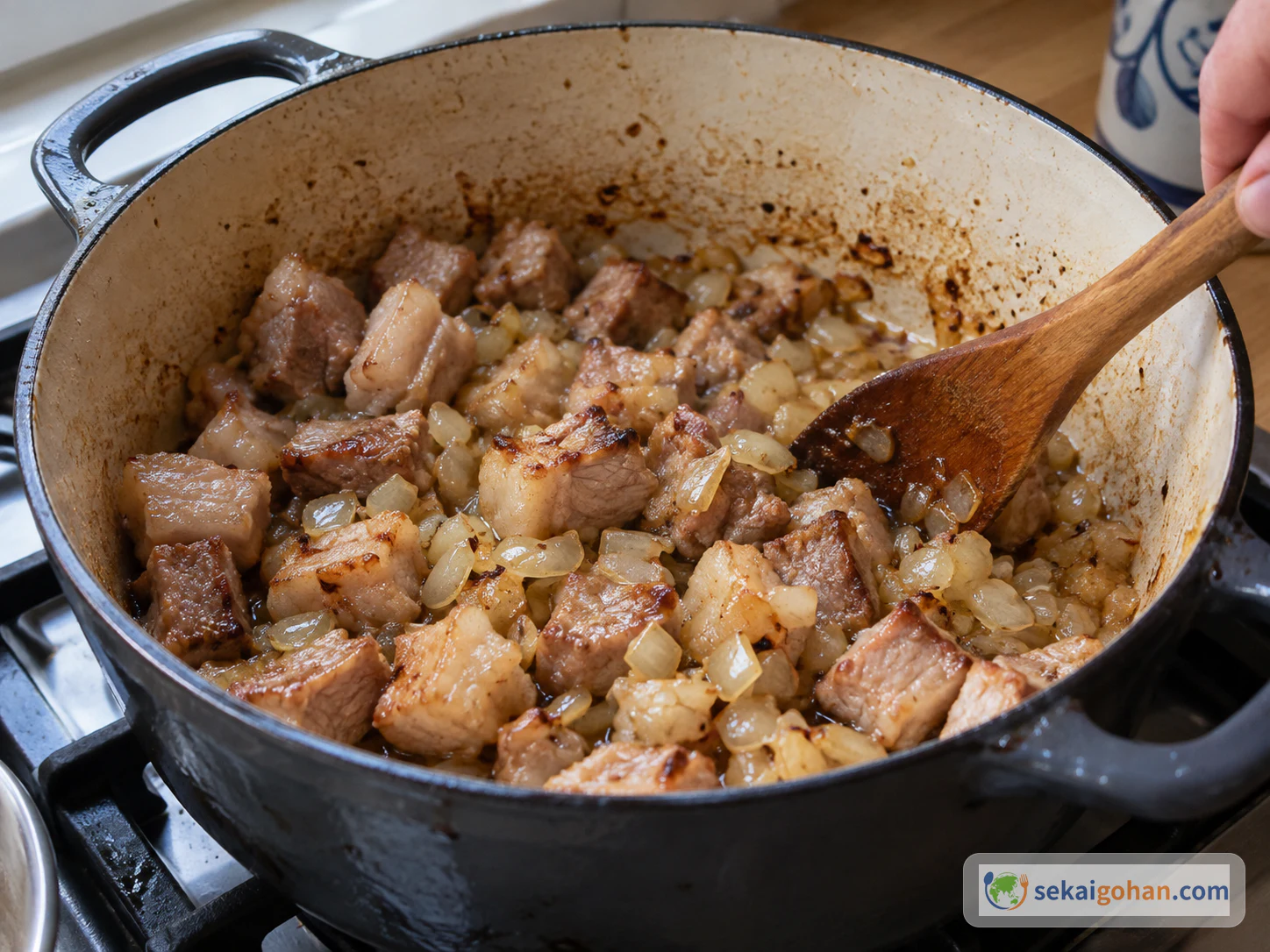
- Heavy pot or frying pan for the pork and onion
- Wide pot for poaching
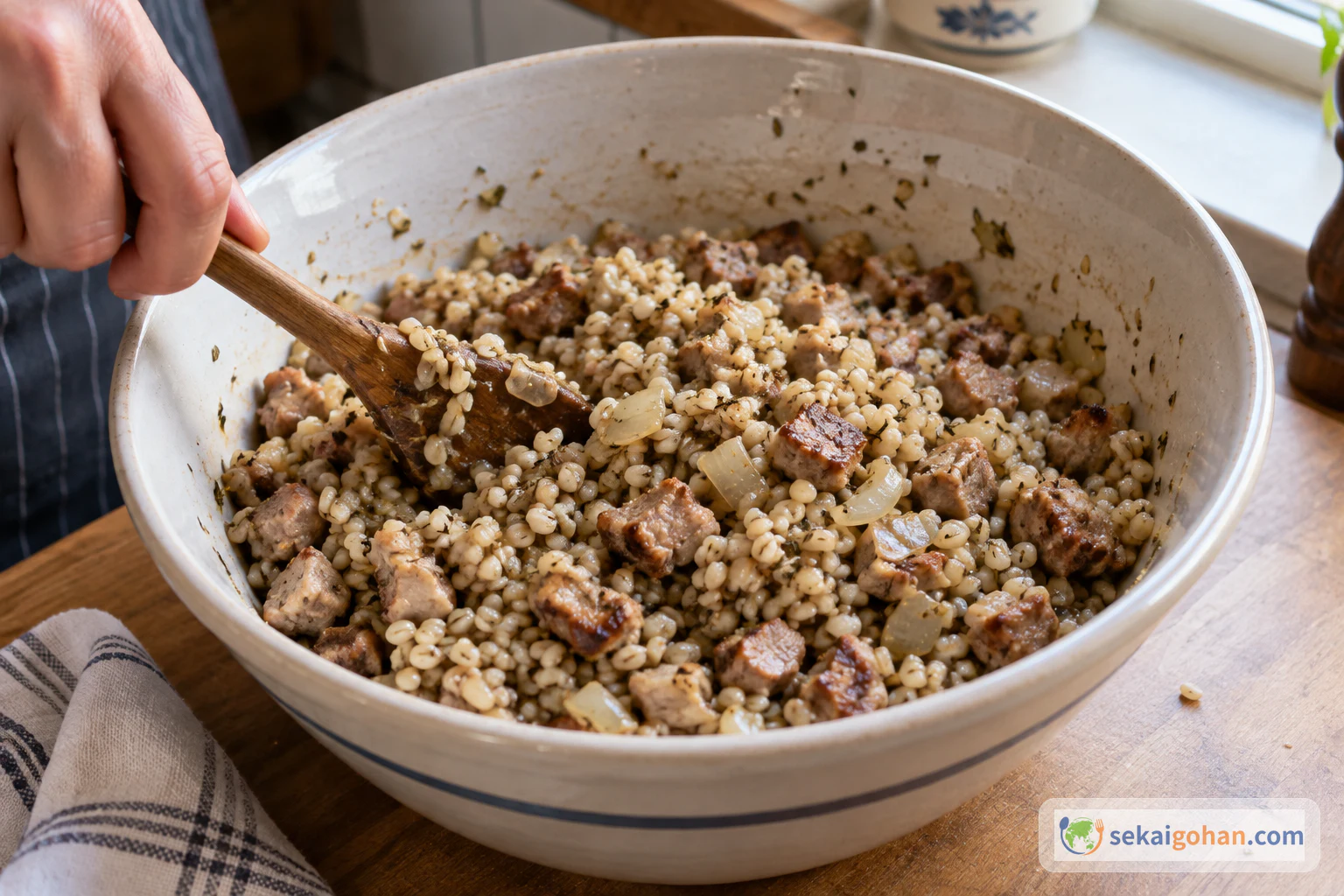
- Large mixing bowl
- Fine sieve for the blood
- Sausage-stuffing funnel
- Kitchen thread
- Clean, fine needle
- Wire rack
- Baking tray
- Food thermometer
- Separate utensils and boards for raw pork and blood
Choosing the Blood, Casings and Barley
Pig blood is the biggest obstacle. Ask a butcher or a business food supplier whether they sell blood specifically for eating, and don't assume they will have it. Use only blood labeled as food-grade, and follow the seller's instructions and dates for thawing frozen blood. If you cannot confirm that it is food-grade, do not use it. Do not convert the recipe to a different blood or to dried blood.
Without both blood and casings, this is not a dish to imitate. A look-alike made from other ingredients is not verivorst. The honest alternative is to buy ready-cooked blood sausage and heat it.
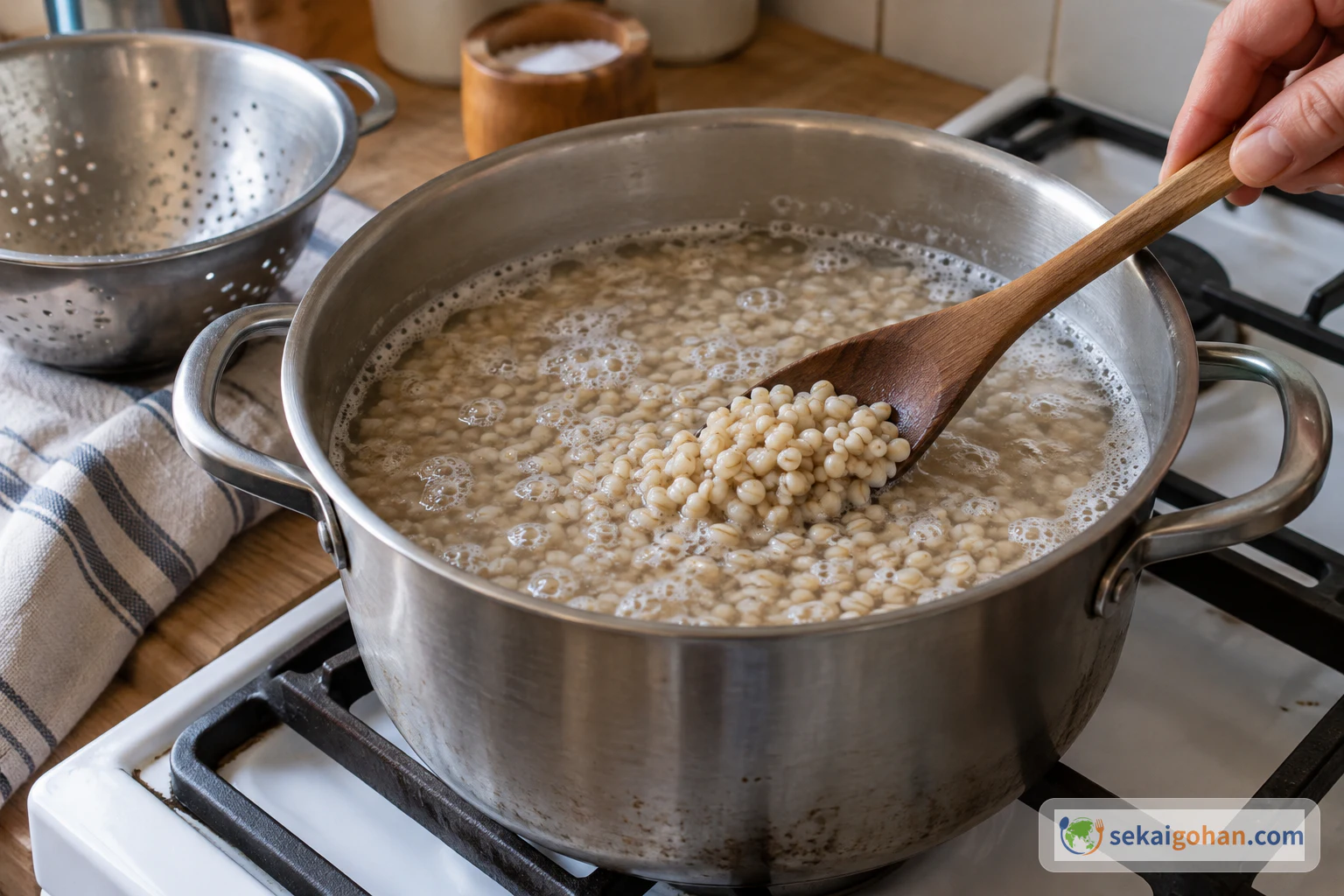
Barley: look for whole pearled grains, sold in Japan as marumugi. Rolled barley is a different product and will change the texture.
Casings: salted natural hog casings need rinsing and soaking before use. Lightly salt any cleaned casings you don't use and keep them in the refrigerator.
How to Make Verivorst
Blood is an excellent medium for bacterial growth, so hygiene and temperature control are essential. Keep it refrigerated until just before use; fresh blood should be stored at 3°C or below. Wash your hands before and after handling raw pork or blood, and keep their juices away from other foods by using separate utensils. Never taste the raw filling.
Troubleshooting
| Problem | Likely cause | What to do |
|---|---|---|
| The barley turned to porridge | Heat too high | Simmer over low heat next time and stop while the grains are separate |
| The blood set when added | Filling still too warm | Next time, cool until you can stir the mixture by hand |
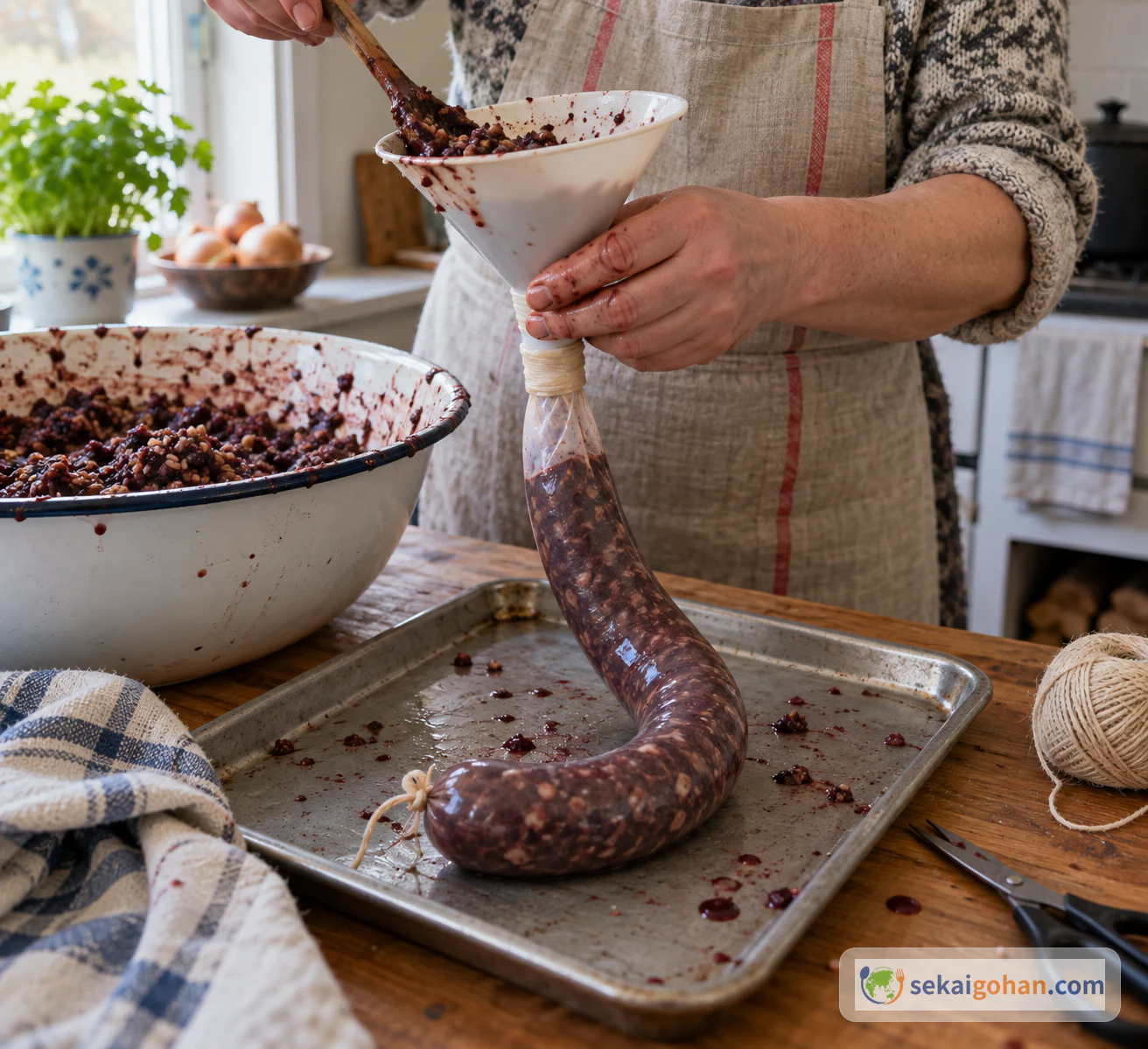
| The filling won't pass through the funnel | Too thick | Fold in more blood, up to about 600 ml in total |
| Casings burst in the pot | Overfilled, or the water boiled | Lower the heat, and fill the next batch to less than three-quarters |
| Sausages float | Trapped air | Prick only where needed with a clean, fine needle |
| The needle hole releases red liquid | Not yet poached enough | Continue poaching below a boil |
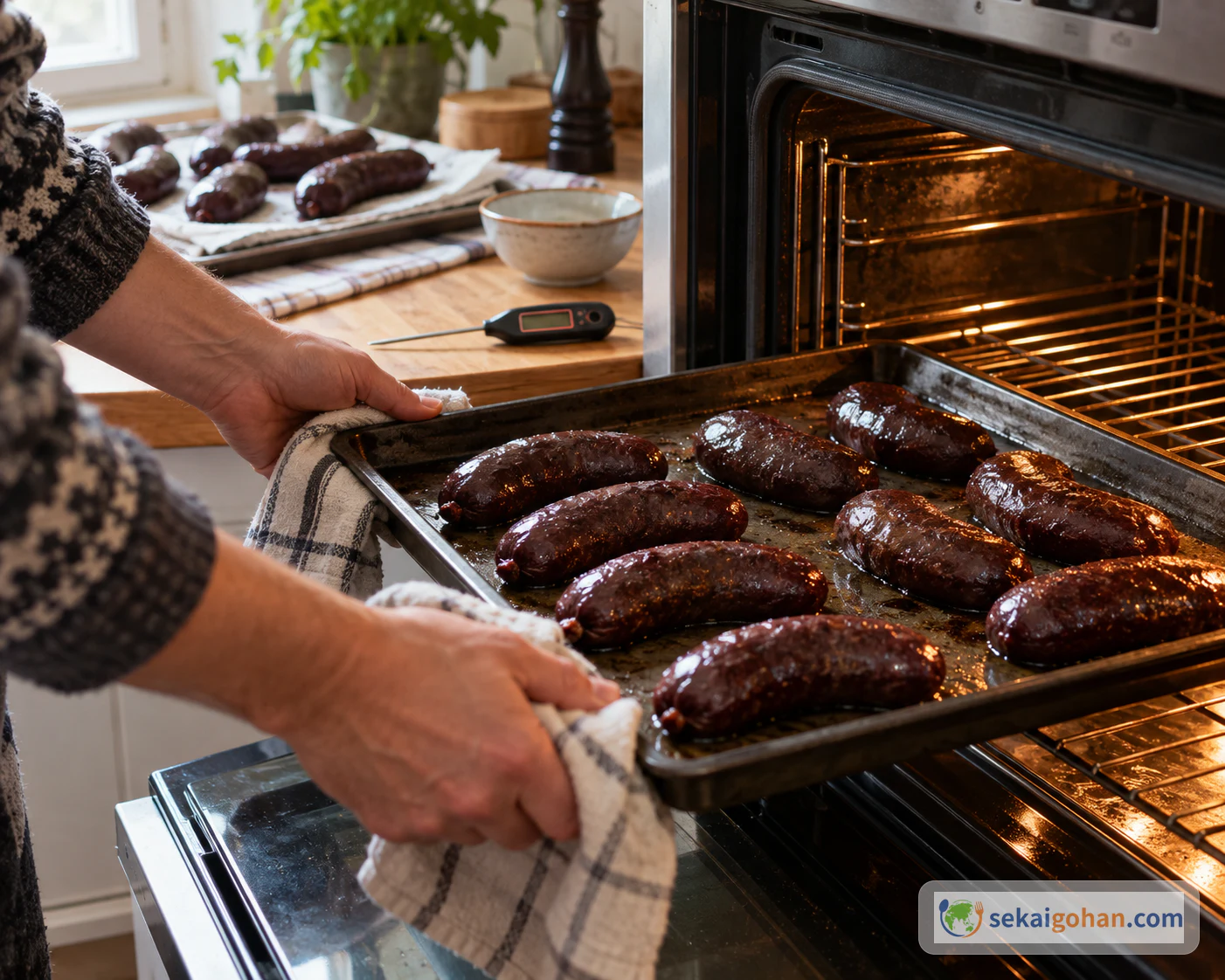
| Casings burst in the oven | Oven too hot | Keep the temperature around 175°C |
| The center is below 75°C | Thick sausage or not enough time | Keep baking until it holds 75°C for at least 1 minute |
Storage and Reheating
Do not leave cooked sausage at room temperature for long. Divide leftovers into shallow containers so that they cool quickly, then refrigerate at 10°C or below or freeze at −15°C or below. Reheat to 75°C or above. Discard anything that has been kept too long. No day count is given here.
Variations: How Other Versions Differ
These are separate recipes rather than add-ons, so don't mix their amounts into the recipe above.
| Version | What differs |
|---|---|
| Estonian Folk Culture Centre (Abja-Paluoja) | Adds a head of garlic and sugar to the marjoram, salt and pepper. Bakes at 180°C for 20–30 minutes |
| Visit Estonia | Uses both salted and fresh pork and a much higher share of barley, seasoned with marjoram, oregano and caraway |
| Harju Elu | Uses 500 g smoked bacon, 300 g onion and 2 tbsp butter per 1 kg groats, with allspice among the seasonings |
| Rodoaed | Uses both fatty fresh pork and smoked pork |
| Meats and Sausages | A technical recipe using head meat, fat, lungs, skins and allspice |
You can also change how you serve it. Pan-frying until crisp is one traditional approach, and it doesn't replace the temperature check.
Verivorst on the Estonian Table
Visit Estonia says many Estonians consider verivorst with sauerkraut and lingonberries a national dish. That is a description of popular opinion rather than an official title. The Estonian Folk Culture Centre's entry likewise calls it one of the national foods. Food traditions also vary by region within Estonia, and you can explore more Estonian recipes, including mulgikapsad, a separate dish that also uses barley and pork.
The Centre's entry describes about ten sausage makers and interested locals gathering at the Abja day center before Christmas, working from knowledge handed down by their ancestors. Today the meat, casings and blood come from local farmers. The same entry says blood sausage spread from the early 19th century through contact with Swedes and Latvians, that slaughter season began on 29 September, and that Christmas food preparation began on St Thomas Day, 21 December. These details are the entry's own account.
A Baltic rural tourism guide associates a pig-blood and barley sausage with autumn and winter solstice tables. It adds that the sausage is now available year-round, and that it is pan-fried until crisp and eaten with cowberry or lingonberry jam. The Meats and Sausages site mentions Christmas service with cranberry sauce, or with sauerkraut and browned potatoes.
The same Baltic guide links verivorst to Finnish mustamakkara and Latvian asinsdesas. They are related by name and region, but that doesn't make them the same recipe. Visit Estonia places the sausage within a broader culture of winter stores, though that doesn't prove preservation was its origin. The materials behind this article do not establish where the dish began or how its name arose.
Frequently Asked Questions
What does verivorst taste like?
This recipe has not been made or tasted, so there are no tasting notes to offer. It is a rich sausage of blood and grain, and it is traditionally served with sour accompaniments such as sauerkraut.
What can I do if I can't get pig blood?
Buy a ready-cooked blood sausage rather than building a substitute and calling it verivorst. Heat it until crisp and to 75°C or above.
Retail supply is hard to confirm. In Japan, for example, the evidence found stops at a business food retailer's listing for 500 g of frozen Spanish pig blood, with no price shown, and a 2017 Ryukyu Shimpo report on wholesale shipments from Okinawan meat centers. Neither shows current retail availability, so contact sellers directly.
Can I use plastic wrap or a mold instead of casings?
This article does not recommend it. It would no longer be the same stuffed sausage, and it would fall outside the recipes used here.
What temperature should verivorst reach?
75°C at the center for at least 1 minute, measured with a thermometer, following home food-safety guidance from Japan's Ministry of Health, Labour and Welfare. FoodSafety.gov in the US gives 71°C for sausage, and this recipe uses the stricter figure. It does not use the 68–70°C poaching endpoint given by Meats and Sausages.
How long can I store it?
The food-safety guidance used here gives no day count, so none is given. Cool quickly in shallow containers, refrigerate at 10°C or below or freeze at −15°C or below, and reheat to 75°C or above.
How many sausages does this make, and how much casing do I need?
Because the recipe has not been kitchen-tested, the yield is unknown. Harju Elu uses 10 m of casing for a batch with 1 kg of barley. This recipe has half the barley but proportionally more meat, so have up to 10 m available and prepare only what you use.
Sources
- Estonian Folk Culture Centre (Eesti Rahvakultuuri Keskus), "Verivorsti tegu ja söömine Abja-Paluojal," entry by Kerstin Rei, compiled 2017. Base ratio of meat, groats and onion; method; sausage-making in Abja-Paluoja; historical background. https://rahvakultuur.ee/2020/03/28/verivorsti-tegu-soomine-abja-paluojal/
- Visit Estonia, "A tour of regional Estonian cuisine." Verivorst considered a national dish by many Estonians; regional variation. https://visitestonia.com/en/what-to-do/regional-flavors
- Visit Estonia, "Die Winter- und Weihnachtsküche in Estland." Christmas table and winter stores; seasonings, poaching, stuffing and baking details. https://visitestonia.com/de/aktivitaeten/die-winter-und-weihnachtskuche-in-estland
- Visit Estonia, "How to enjoy a traditional Christmas dinner in Estonia." English version of the recipe; salted and fresh pork, chunk size, pricking air pockets. https://visitestonia.com/en/how-to-enjoy-a-traditional-christmas-dinner-in-estonia
- Lauku ceļotājs / Country Holidays, "Food and Drinks in Estonia, Finland and Latvia (Go Rural)." Autumn and winter solstice tables, year-round availability, pan-frying, lingonberry jam, related regional names. https://www.celotajs.lv/cont/publ/GoRural_FoodAndDrinks/pdf/GoRural_FoodAndDrinks_en.pdf
- Harju Elu, "Teeme ise verivorsti!", 2021-12-13. Christmas table; ratios of blood and water to groats; casing length; no-boil poaching; baking range; smoked-bacon version. https://harjuelu.ee/teeme-ise-verivorsti/
- Rodoaed blog, "Eesti verivorsti retsept (kodune)." Supports the 1 L per 1 kg blood ratio and the dry-weight reading; fresh and smoked pork version. https://rodoaed.ee/verivorsti-kodus-tegemine-3/
- Katrin Press, "Verivorst." Marjoram guide, funnel-flow consistency, sausage length, not over-salting, non-bloody cue when pricked. http://www.katrinpress.com/blog/verivorstid
- Ilse, "Kodused verivorstid," 2011-12-19. Cooling by hand test, straining the blood, frying a test spoonful, not overfilling, avoiding a very hot oven, casing storage. http://ilse.riiul.com/eesti/kodused-verivorstid/
- Meats and Sausages, "Verivorst." Serving with cranberry sauce or with sauerkraut and potatoes; a separate technical formula, used for comparison only. https://www.meatsandsausages.com/sausage-recipes/blood/verivorst
- Japan Ministry of Health, Labour and Welfare, "家庭でできる食中毒予防の6つのポイント" (Six points for preventing food poisoning at home). Center temperature, refrigeration and freezing temperatures, handwashing, cooling leftovers, reheating. https://www.mhlw.go.jp/www1/houdou/0903/h0331-1.html
- Food Safety Authority of Ireland, "Harvesting Blood for Making Black Pudding," September 2013. Written for approved slaughterhouses; blood as a medium for bacterial growth, cold storage, and blood fit for human consumption. https://www.fsai.ie/getmedia/3f0a24a8-c964-4b0d-a896-5a0238193787/Harvesting-Blood-for-Black-Pudding-FINAL.pdf?ext=.pdf
- FoodSafety.gov (U.S. Department of Health and Human Services), "Cook to a Safe Minimum Internal Temperature." 71°C for ground meat and sausage, measured with a food thermometer. https://www.foodsafety.gov/food-safety-charts/safe-minimum-internal-temperatures
- Ryukyu Shimpo, report on the resumption of pig blood shipments from Okinawan meat centers, 2017. Wholesale supply only. https://ryukyushimpo.jp/news/entry-559311.html
- Shokuraku Net, "【業務】冷凍 スペイン産 豚の血液 500g." Business listing for frozen Spanish pig blood, with no price shown; consumer purchase and stock not confirmed. https://shop.shokuraku.com/item/info?itemabb=12582311