Salade Niçoise: Raw Summer Vegetables, Salted Fish and Olive Oil on One Platter
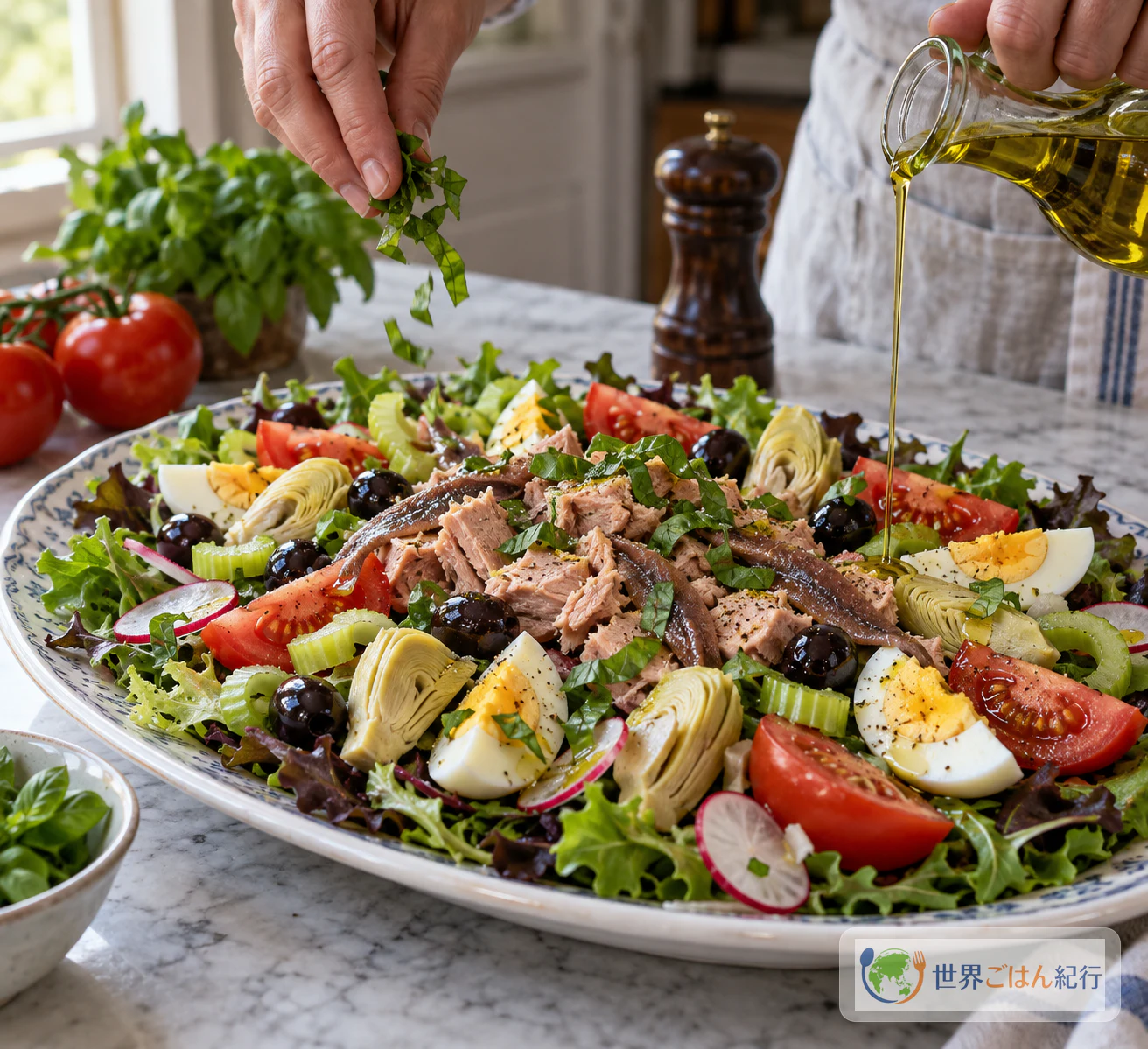
Crisp raw vegetables with their water drained off, ripe tomatoes, the salt of anchovies and olives, good olive oil and the scent of basil. Arrange everything so each ingredient is visible, add the oil and pepper only at the table, and mix it there just before sharing it out.
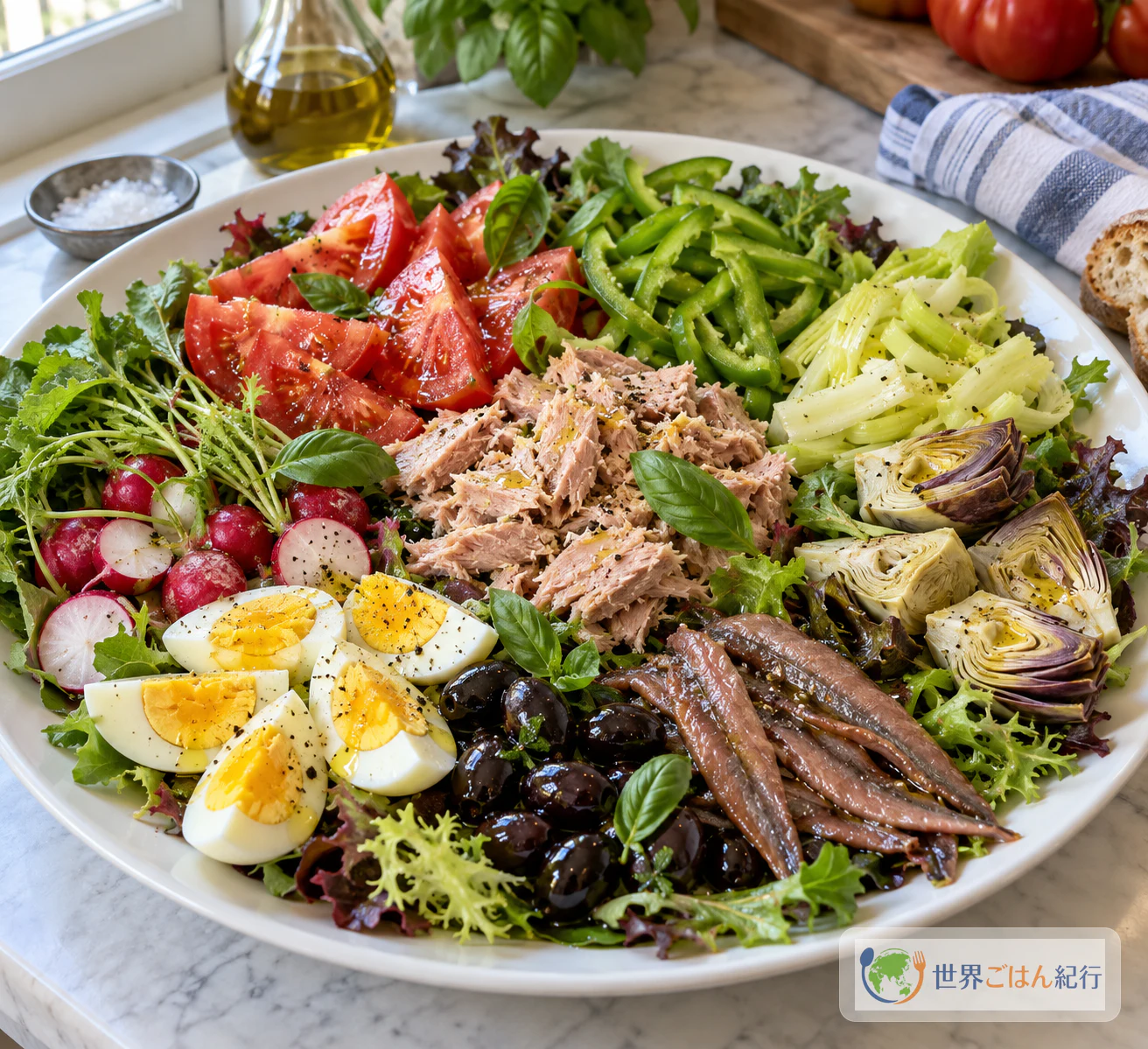
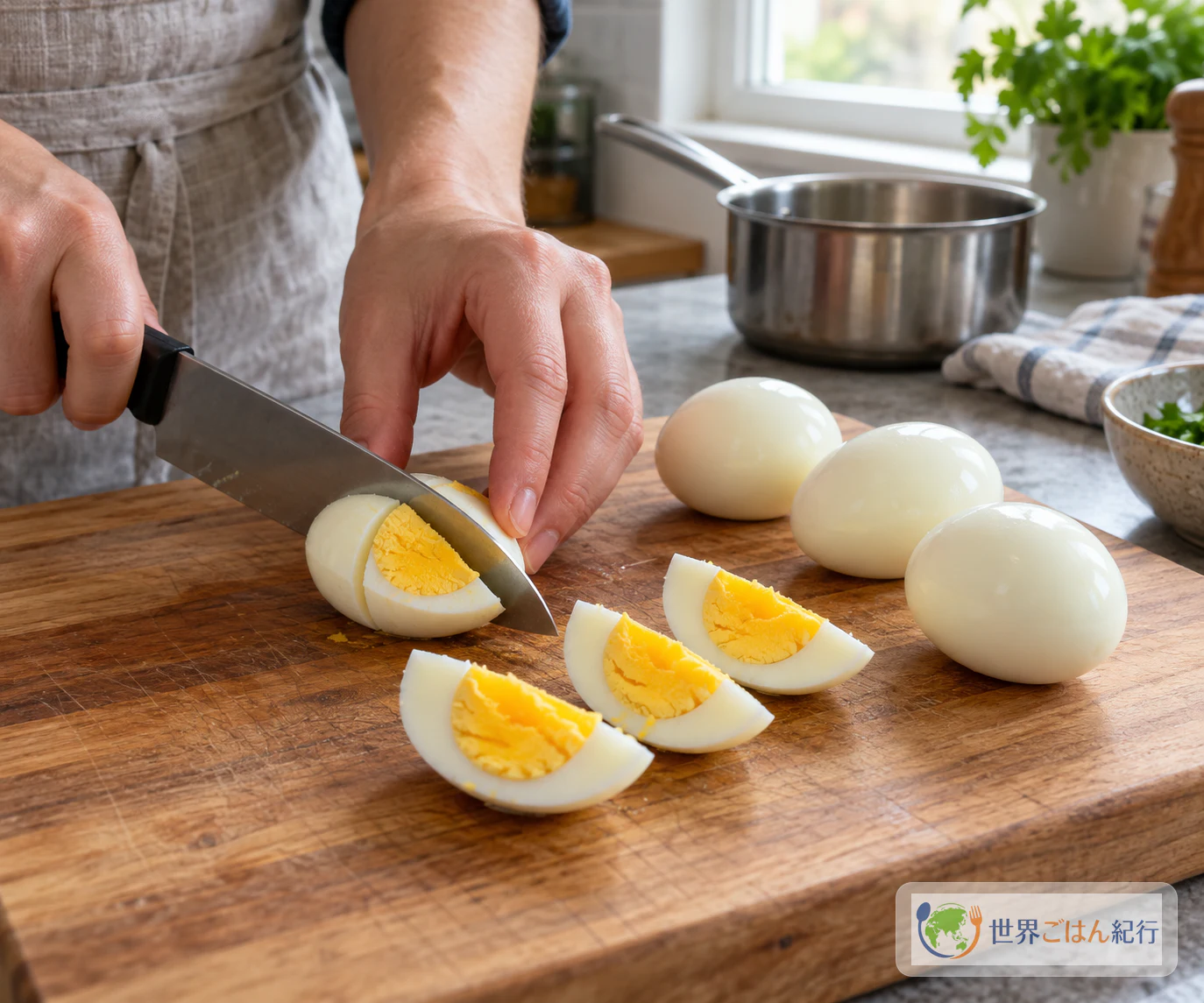
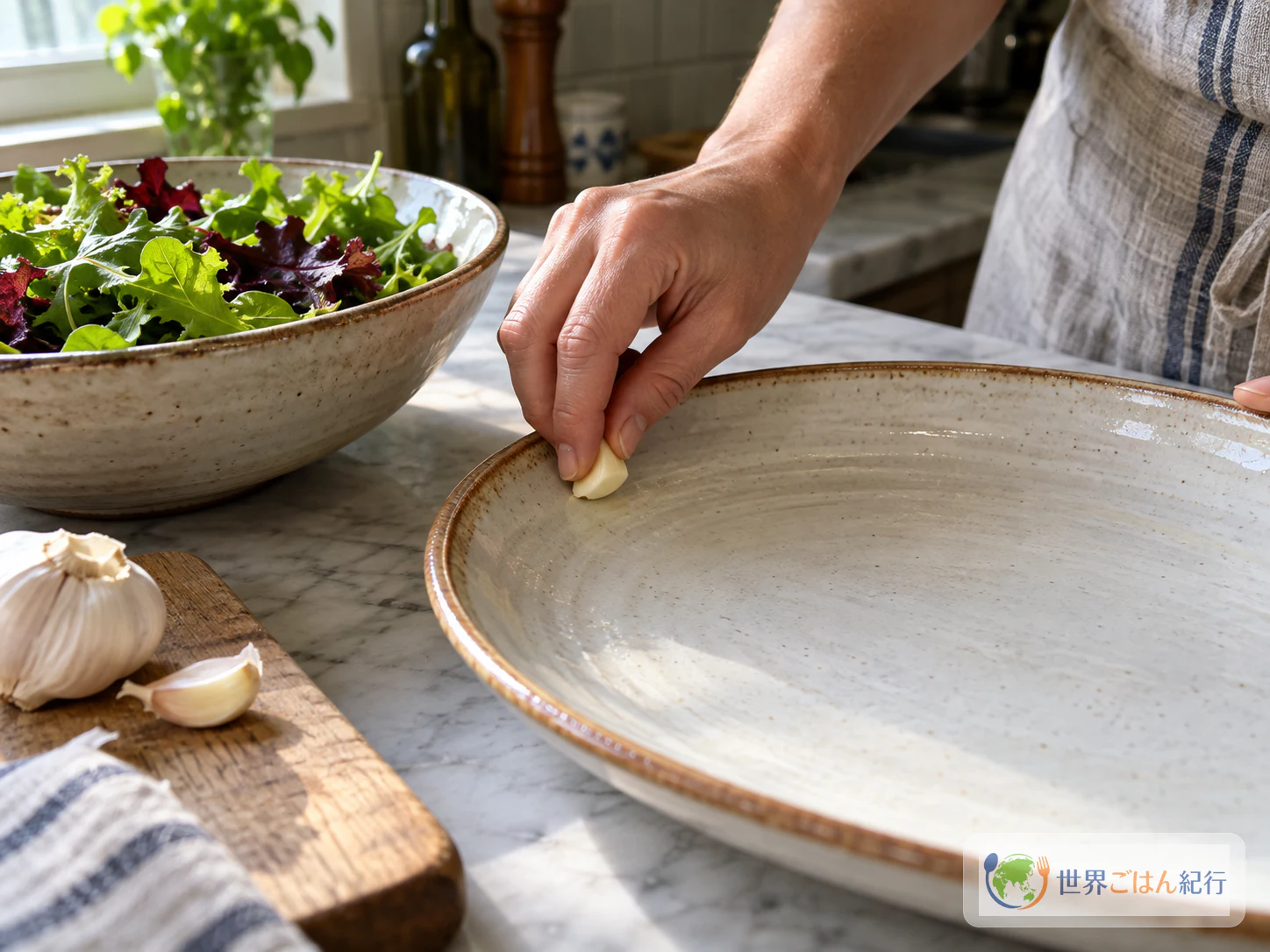
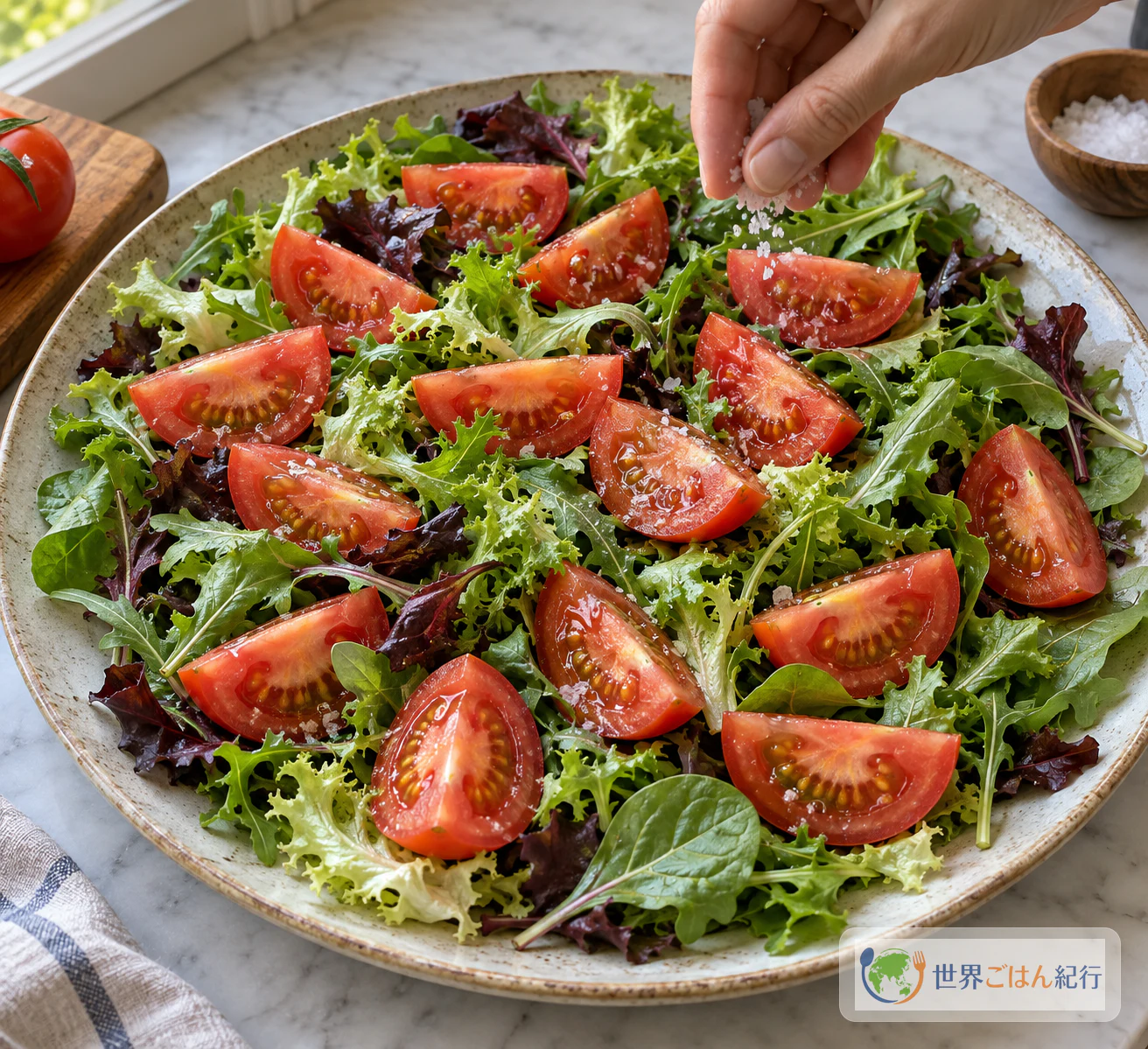
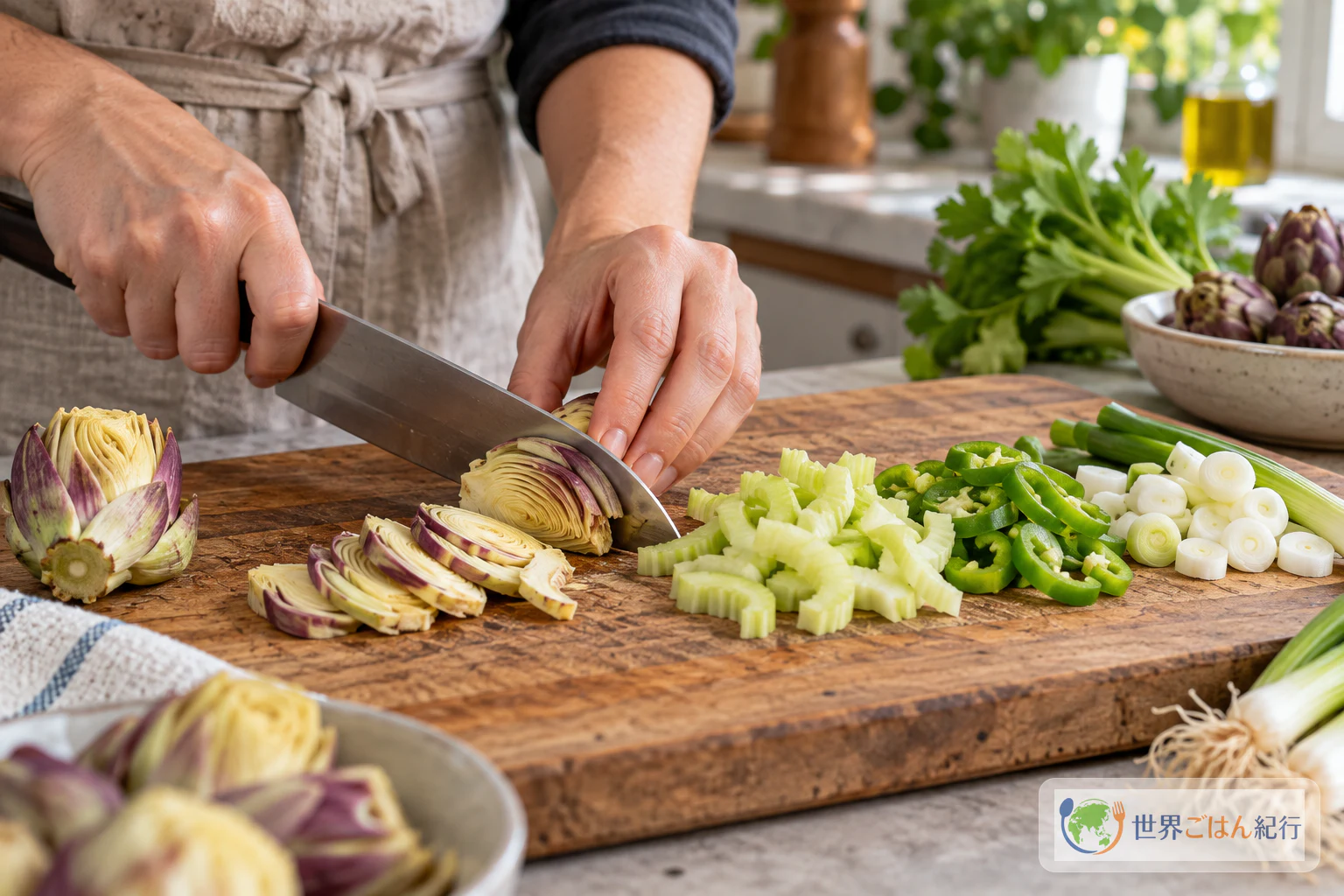
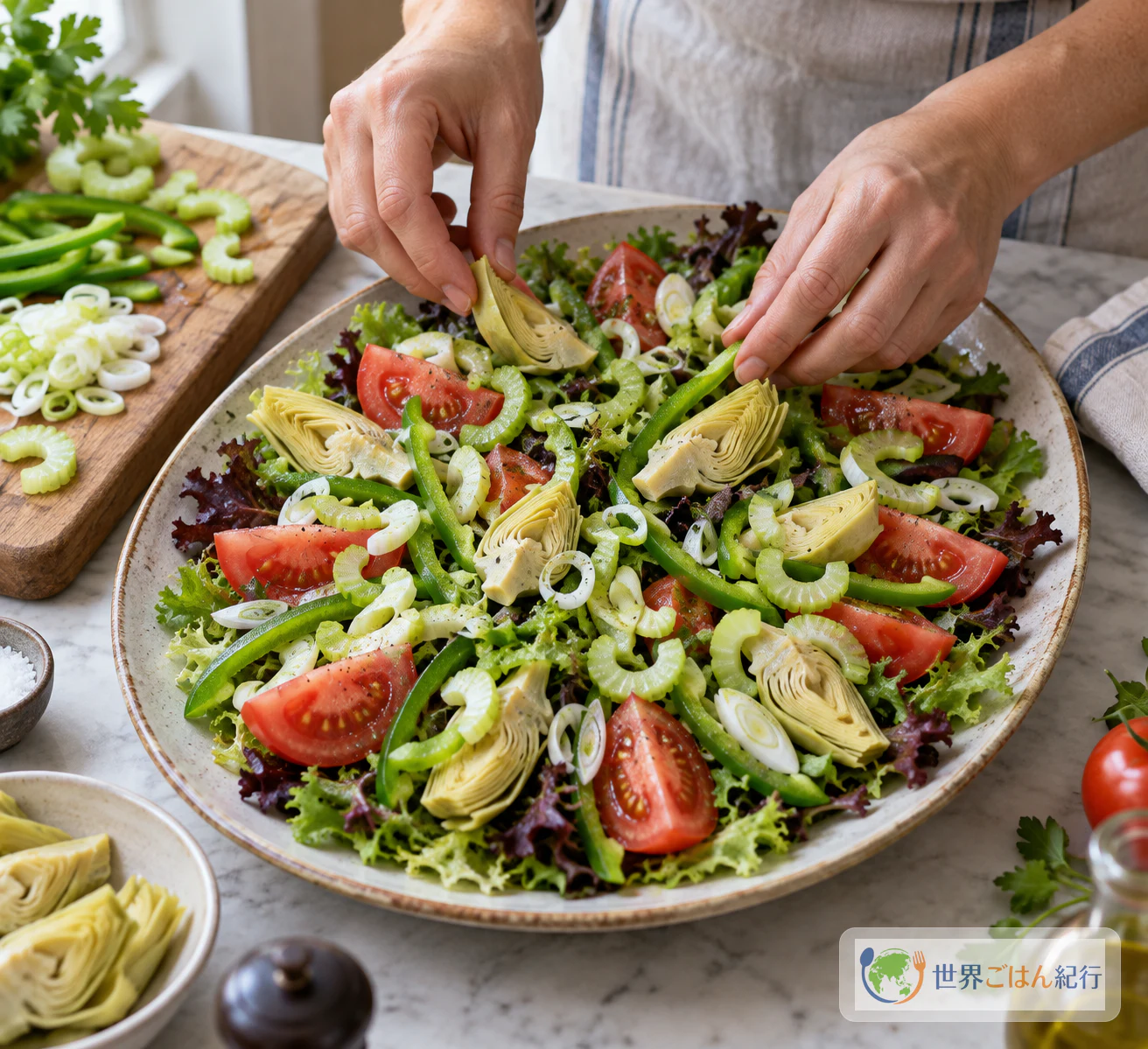
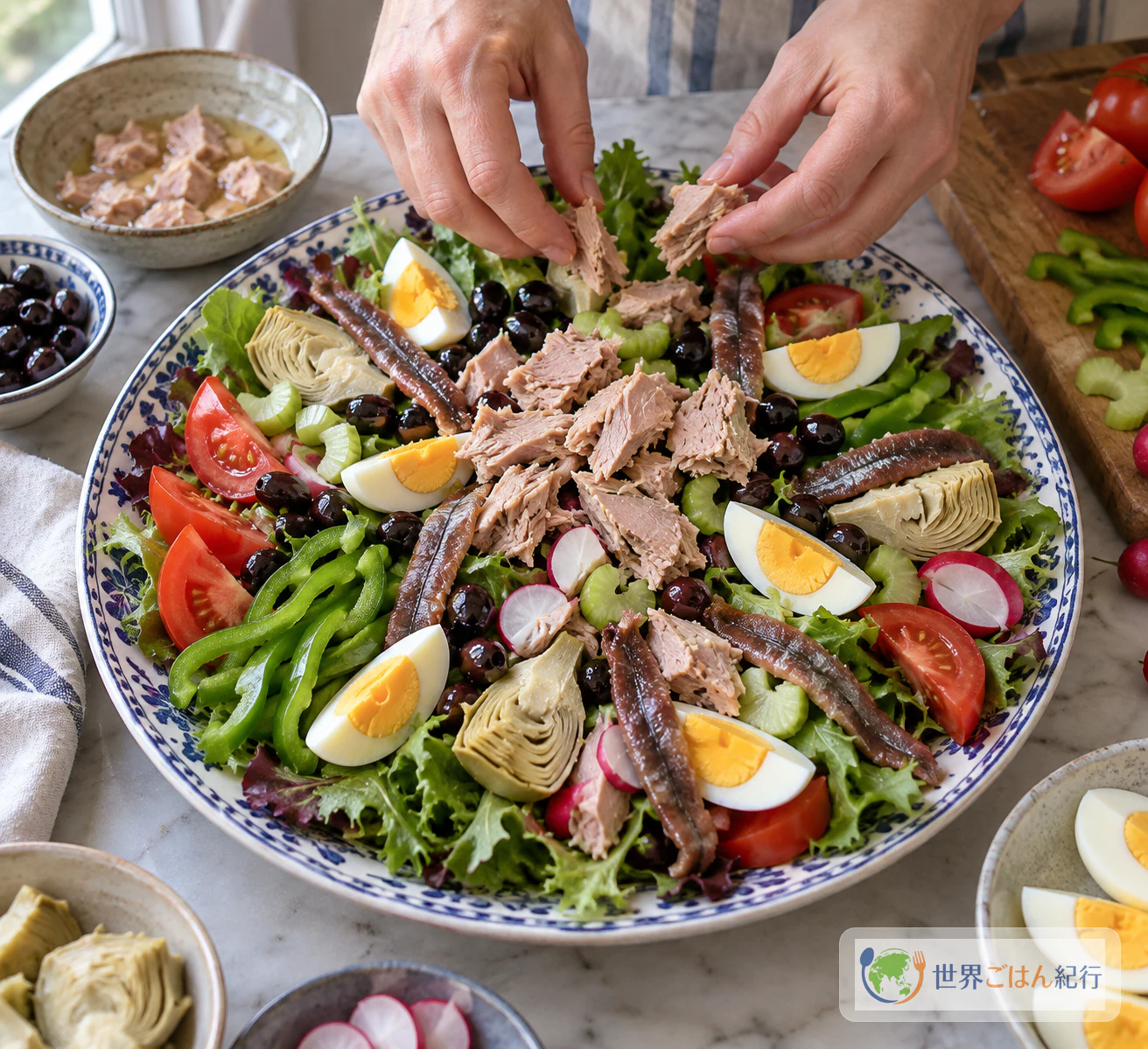
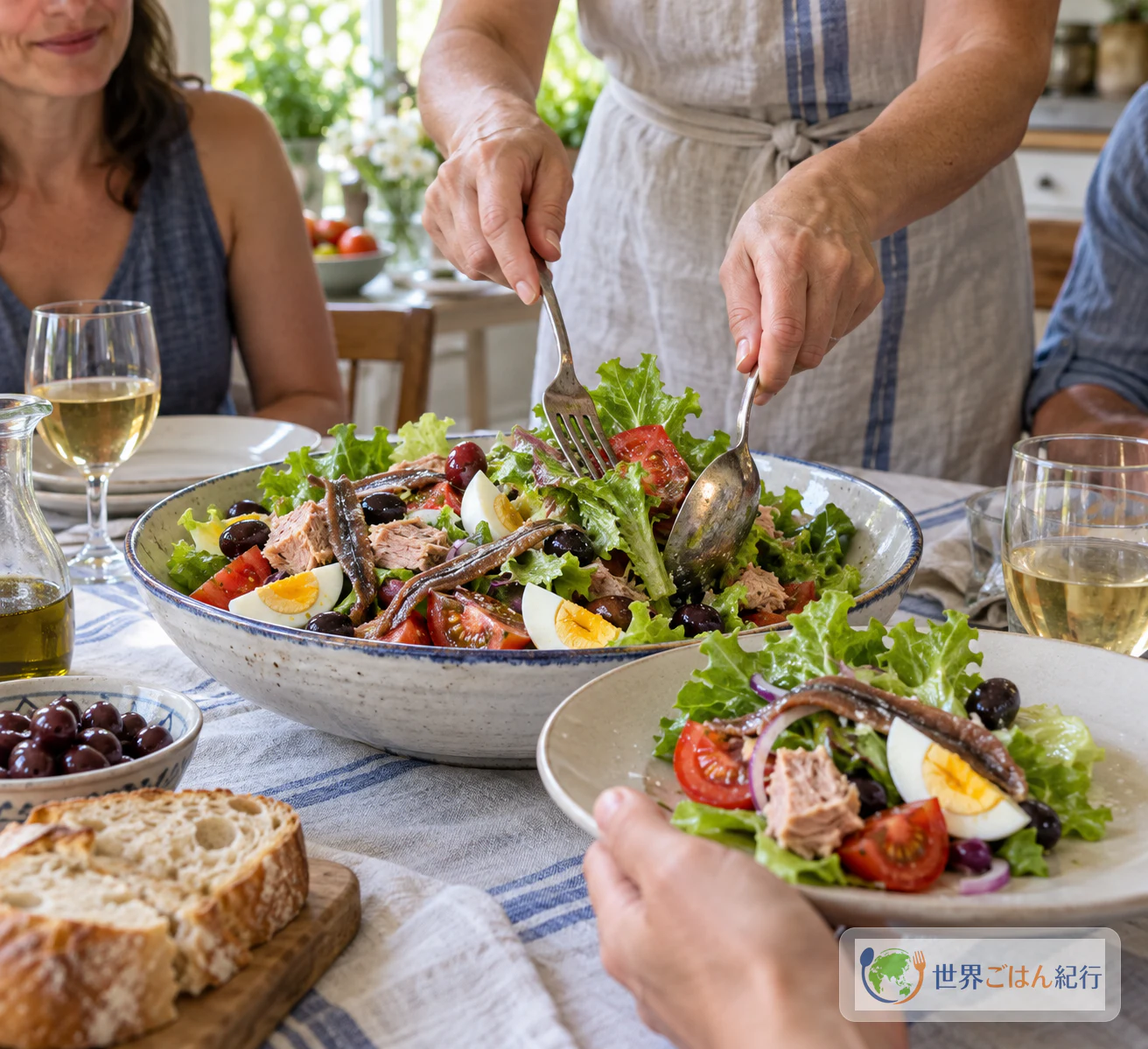
A wide, shallow platter is rubbed with a cut clove of garlic. Young salad leaves go down first, then wedges of ripe tomato, then thin slices of raw celery heart, small green peppers, young onions and tender artichoke. Tuna in large pieces, quartered hard-boiled eggs, anchovies and small black olives are set on top. Only when the platter reaches the table is olive oil poured over and pepper ground on, and then the salad is mixed in front of the guests and divided so everyone gets a bit of everything.
That is the salade niçoise described in the City of Nice's official recipe, which also gives the dish its Niçois name, La Salada Nissarda. It is a spring and summer dish built almost entirely from raw produce; the only thing that is cooked is the egg.
This article follows that official recipe for 8 people. Many salads sold under the same name around the world add boiled potatoes and green beans; those are explained further down as a separate, international style rather than folded into this recipe.
From Nice's Markets to the Table: The Official Version and Its Variants
The City of Nice lists salade niçoise among the representative dishes of its local cuisine. The city describes a food culture in which local growers sell their fruit and vegetables at the markets and restaurants buy from them, and it explains the Cuisine Nissarde label, which sets standards for recipes, ingredients and how dishes are served. According to the Nice Côte d'Azur Tourist Office, the official salade niçoise recipe was reviewed and approved by the Cuisine Nissarde technical committee. For more dishes from the country, see the France page.
The city's own recipe places it in spring and summer and builds it from fresh raw vegetables laid out on a flat platter. The tourist office's version shares this picture of local vegetables arranged on a plate, with olive oil added just before eating, and mentions cucumber and wine vinegar as options; its quantities differ from the city's recipe, so the two are not mixed here.
France.fr, France's official tourism site, also gives the name la salada nissarda and recounts a story placing the dish's origin in 19th-century Nice; that is the site's account, not an independently established date. The same page notes that traditionalists keep cooked vegetables out of the salad, and it presents a creative version with potatoes, green beans and a seared tuna steak. Neither needs to be called "wrong": the Nice recipe is the local reference, and the potato-and-bean salad is a version that travelled.
| City of Nice official recipe | International style (as on France.fr) | |
|---|---|---|
| Vegetables | Raw only: leaves, tomato, young onion, celery heart, artichoke, green pepper, radish | Adds cooked potatoes and green beans |
| Fish | Tuna in olive oil and salted anchovies | Seared tuna steak |
| Dressing | Olive oil and pepper at the table, then mixed in front of guests | Tossed with a dressing |
Ingredients (Serves 8, City of Nice Official Recipe)
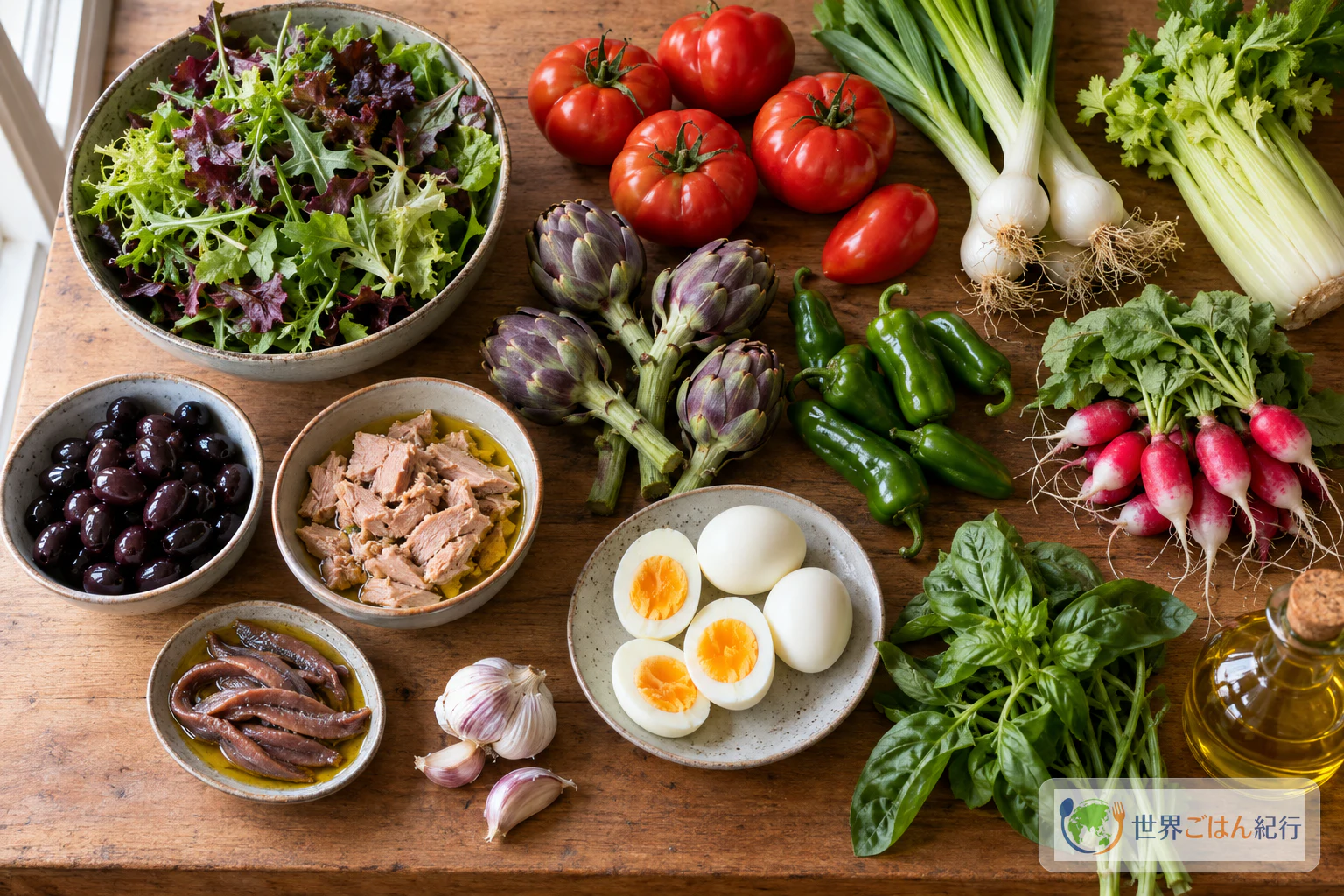
These are the City of Nice's amounts for 8. The seasonal fava beans and cucumber that the city lists as optional are left out of this version; see "Variations" if you want to add them.
The city's ingredient list gives 20 g of garlic, while its method uses one peeled clove to rub the platter. Use the clove as the method says; do not add the rest of the garlic to the salad. The recipe also mentions red wine vinegar at the end without an amount or a step, so it is not used in this version.
Equipment
- A wide, shallow serving platter
- A small saucepan for the eggs
- A knife and cutting board
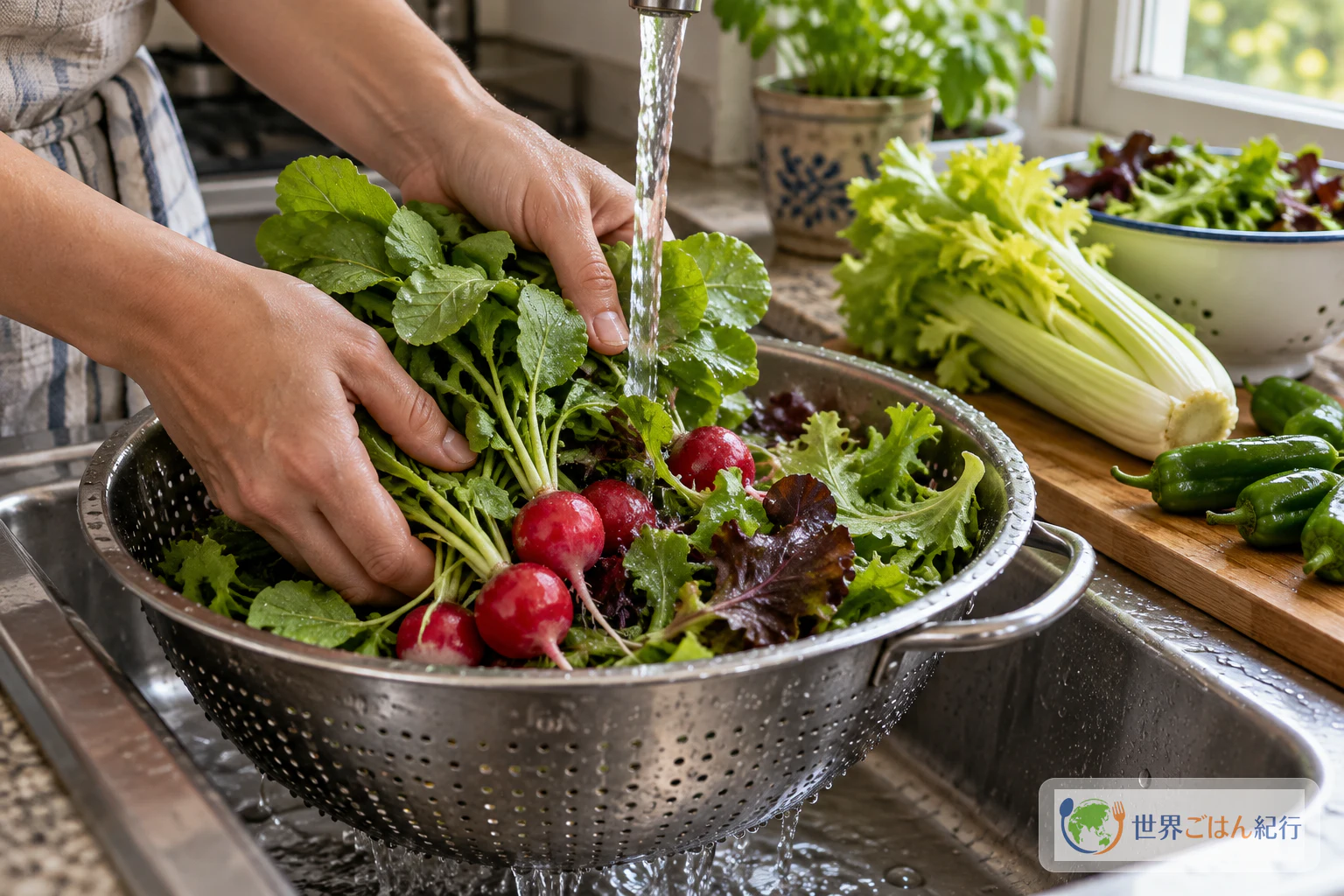
- A colander for draining the washed vegetables
- A fork and spoon for mixing and serving at the table
Choosing and Substituting
Some of the Nice ingredients are seasonal and local, so here is how to choose sensibly elsewhere. These are substitutions, not equivalents; each changes the result a little.
- Mesclun: a mixed salad of young leaves works. The bitterness and the mix of leaves will not be the same as in Nice.
- Cébettes: use the white part of scallions or slim new onions. Their sharpness differs, so slice thin.
- Small violet artichokes: use only the tender heart raw. If you cannot find them, leave them out, or use canned artichoke hearts, well drained, as a separate option; the texture and moisture will not match raw artichoke. Do not try to convert the 400 g into a trimmed weight.
- Small green salad peppers: an ordinary green pepper, cut into thin strips, can stand in.
- Long radishes: ordinary radishes are fine. Keep any tender leaves.
- Nice black olives: ordinary brine-cured black olives can be used, though the variety's aroma and saltiness differ. Taste before adding salt.
- Tuna: the recipe does not say whether 200 g is the full can or drained weight. Here, weigh the tuna you will actually place on the salad, and do not add the can's oil to the 100 ml of olive oil. Tuna packed in water gives a weaker olive-oil aroma and a different finish.
- Salted anchovies: prepare whole salted anchovies or fillets according to the product's label so they are ready to eat.
The eggs are the only cooked ingredient, and no raw fish is used. Prepare the raw vegetables with clean hands, tools and platter. Assemble the salad close to eating time, do not leave it out at room temperature for long after plating, and refrigerate any leftovers promptly. Check labels on canned tuna, anchovies and olives for allergens and processing information.
Method: Arrange Everything, Then Mix It at the Table
Steps 3 to 8 build the salad on the platter so each ingredient stays visible. The mixing happens only in step 9, in front of the people eating, so every plate gets its share.
The City of Nice gives 20 minutes of preparation and 8 minutes of cooking for the eggs. Steps are listed in a practical order: the eggs first, so they are ready by the time the platter is built.
Watery, Salty or Tough: Fixing Problems
| Problem | Likely cause | What to do |
|---|---|---|
| The leaves are wet and limp | Vegetables not drained well; tomatoes, salt or oil added too early | Drain the washed vegetables thoroughly. Lay out the tomatoes close to serving, and add the oil only at the table |
| Too salty | Anchovies, tuna and olives all bring salt | Salt the tomatoes and vegetables lightly, and adjust at the table after tasting |
| Raw vegetables are tough | Outer artichoke leaves or celery strings left in | Use only the tender artichoke heart and the pale celery heart, sliced thin |
| The arrangement falls apart before serving | Ingredients mixed too early | Build on a wide platter and mix only at the table; until then the components stay visible and easy to share |
| Ingredients are hard to find | Seasonal or local produce | Leave out the seasonal extras, and treat substitutes as substitutes rather than presenting them as identical |
Variations
- Add seasonal fava beans. The city lists them as optional for spring and summer: 400 g weighed in the pod, not shelled weight. Shell them and scatter them in step 6, or leave them out when they are not in season.
- Add cucumber. The city also lists 200 g of thinly sliced cucumber as optional. It gives off water, so place it on the platter just before serving.
- Leave out the artichokes. If small violet artichokes are unavailable, the salad still works with the leaves, tomatoes and other raw vegetables at its center.
- Use canned artichoke hearts. Drain them well. This is a different option from raw artichoke, with a softer texture and more moisture.
- Use other black olives. Brine-cured black olives can replace Nice olives; the variety's own aroma will be missing, so taste before salting.
- Lean on the anchovies. Use less tuna and let the salted anchovies lead, and cut back on added salt.
- The international style as a separate dish. If you want the version with cooked potatoes, green beans and seared tuna presented on France.fr, make it as its own recipe rather than adding those ingredients to the Nice proportions above.
Frequently Asked Questions
Is it still salade niçoise if it has potatoes?
Potatoes are not in the City of Nice's official recipe, which uses only raw vegetables plus hard-boiled eggs. France.fr presents a version with potatoes and green beans as a creative variation and notes that traditionalists leave cooked vegetables out. It is best understood as a different, widely travelled style.
Do I need both tuna and anchovies?
The official ingredient list includes both: 200 g of tuna in olive oil and 8 salted anchovies or 16 fillets. Because both are salty, add salt to the vegetables in small amounts.
Are the fava beans required?
No. They are an optional spring-and-summer ingredient in the city's recipe, and the 400 g is measured in the pod. This version leaves them out.
What is it called in Niçois?
The City of Nice gives the name La Salada Nissarda alongside La Salade Niçoise.
Can I make it ahead?
Assemble it just before eating. The leaves and tomatoes release water and wilt, and the oil goes on only at the table. The sources do not give a storage period, so none is suggested here; refrigerate any leftovers promptly.
Sources
- Ville de Nice, "La Salade Niçoise / La Salada Nissarda" (official recipe PDF). The main recipe: the dish's names, the 8-serving ingredient list, seasonal optional ingredients, arranging order and mixing in front of guests, 20 minutes of preparation and 8 minutes of cooking for the eggs, and its spring–summer season. https://www.nice.fr/ressources/la-salade-nicoise/
- Nice Côte d'Azur Tourist Office, "Salade Niçoise." Approval of the official recipe by the Cuisine Nissarde technical committee, the dish as local vegetables arranged on a plate, olive oil added just before eating, optional cucumber and wine vinegar; its quantities differ from the city's recipe and are used for comparison only. https://www.explorenicecotedazur.com/en/explore/art-of-living/gastronomy-and-local-produce/nicoise-recipes/salade-nicoise/
- Ville de Nice, "Langue, culture et traditions niçoises." Salade niçoise as a representative dish of Niçois cuisine, local growers selling produce at markets that restaurants buy from, and the standards set by the Cuisine Nissarde label. https://www.nice.fr/culture/langue-culture-et-traditions-nicoises/
- France.fr (Atout France), "Create a scrumptious Salade Nicoise." The name la salada nissarda, the account of a 19th-century Nice origin (cited as that site's account), the traditionalist position against cooked vegetables, and a version with potatoes, green beans and seared tuna steak. https://www.france.fr/en/article/create-a-scrumptious-salade-nicoise/