A Thin Crust, White Cream and the Smell of Smoke
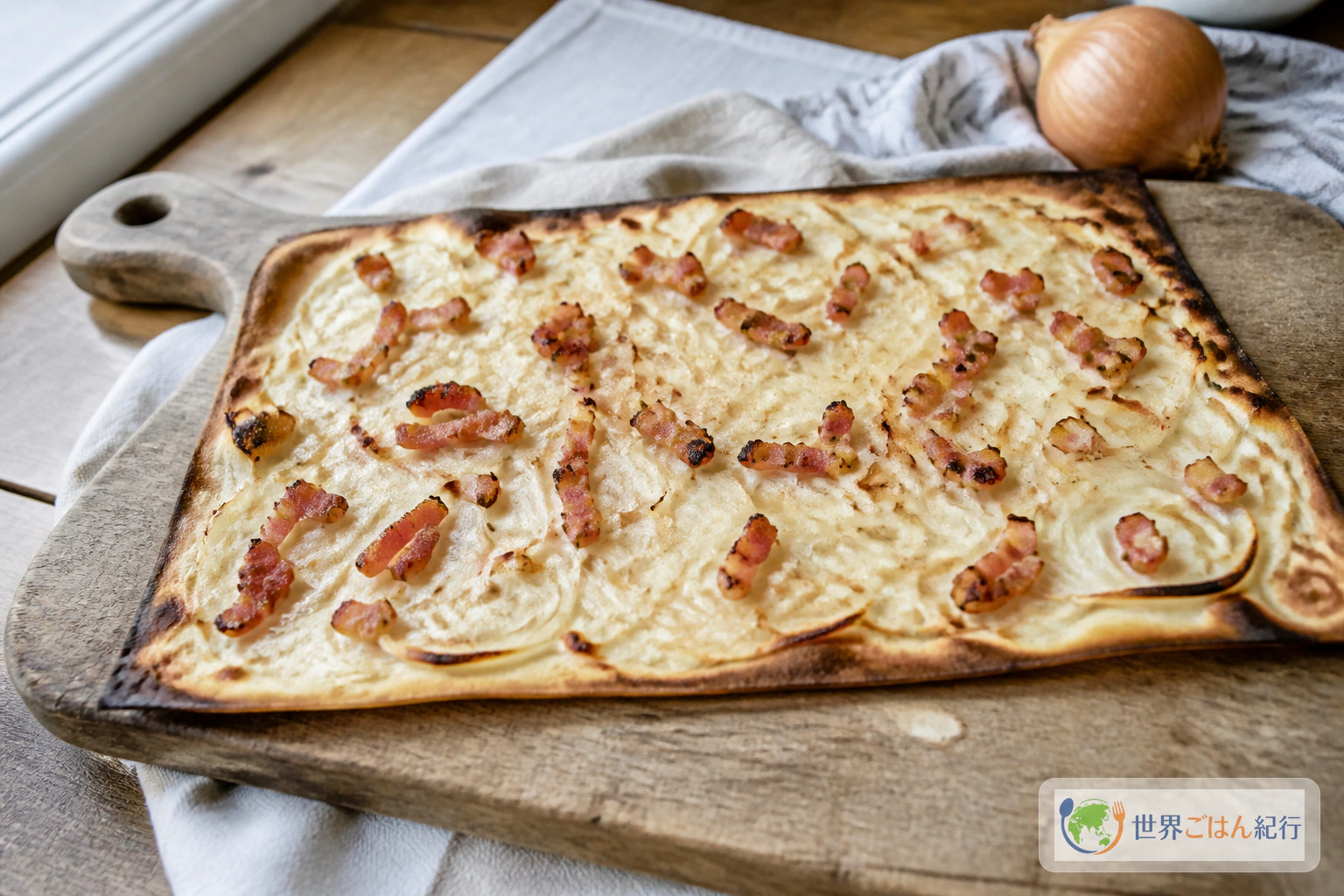
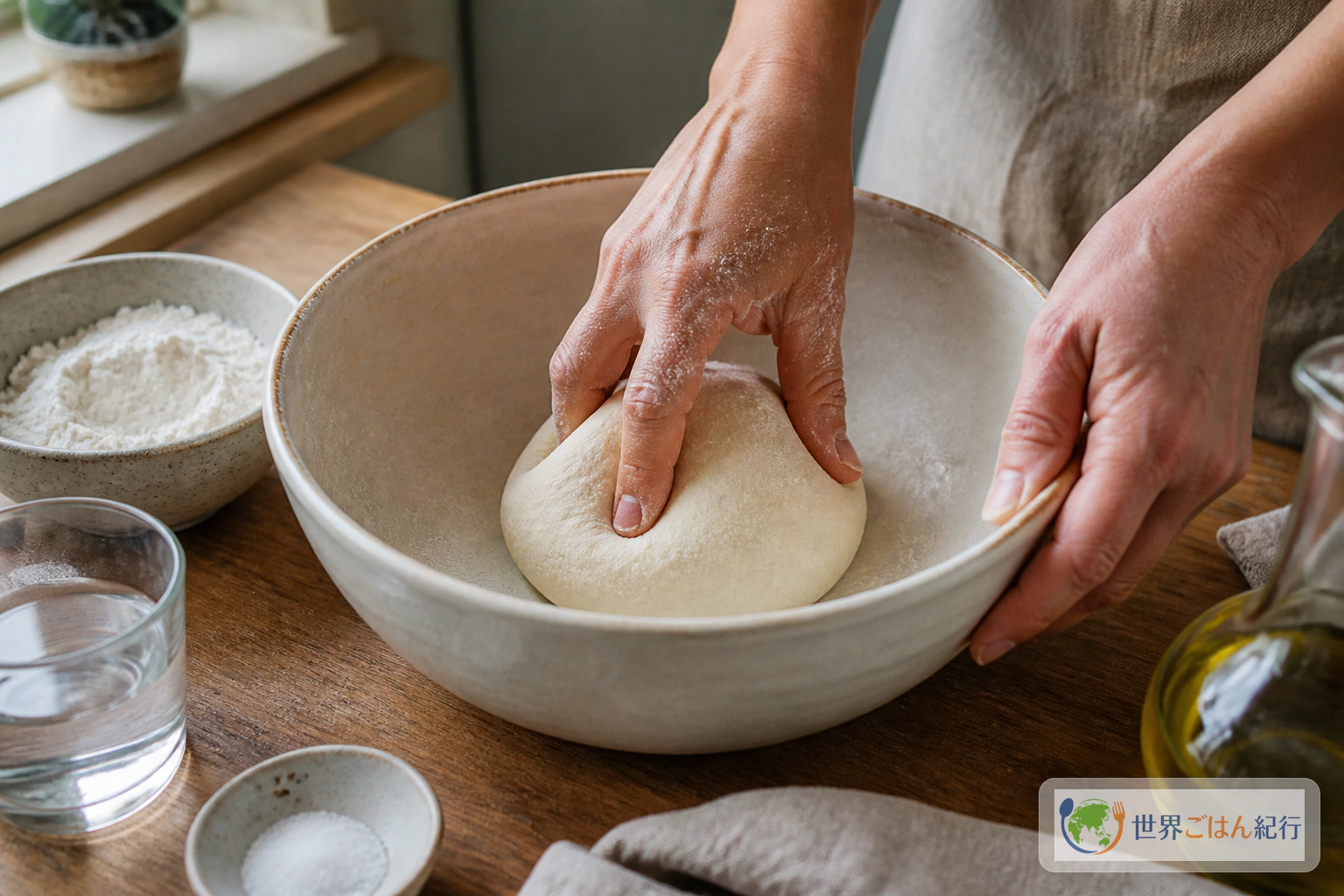
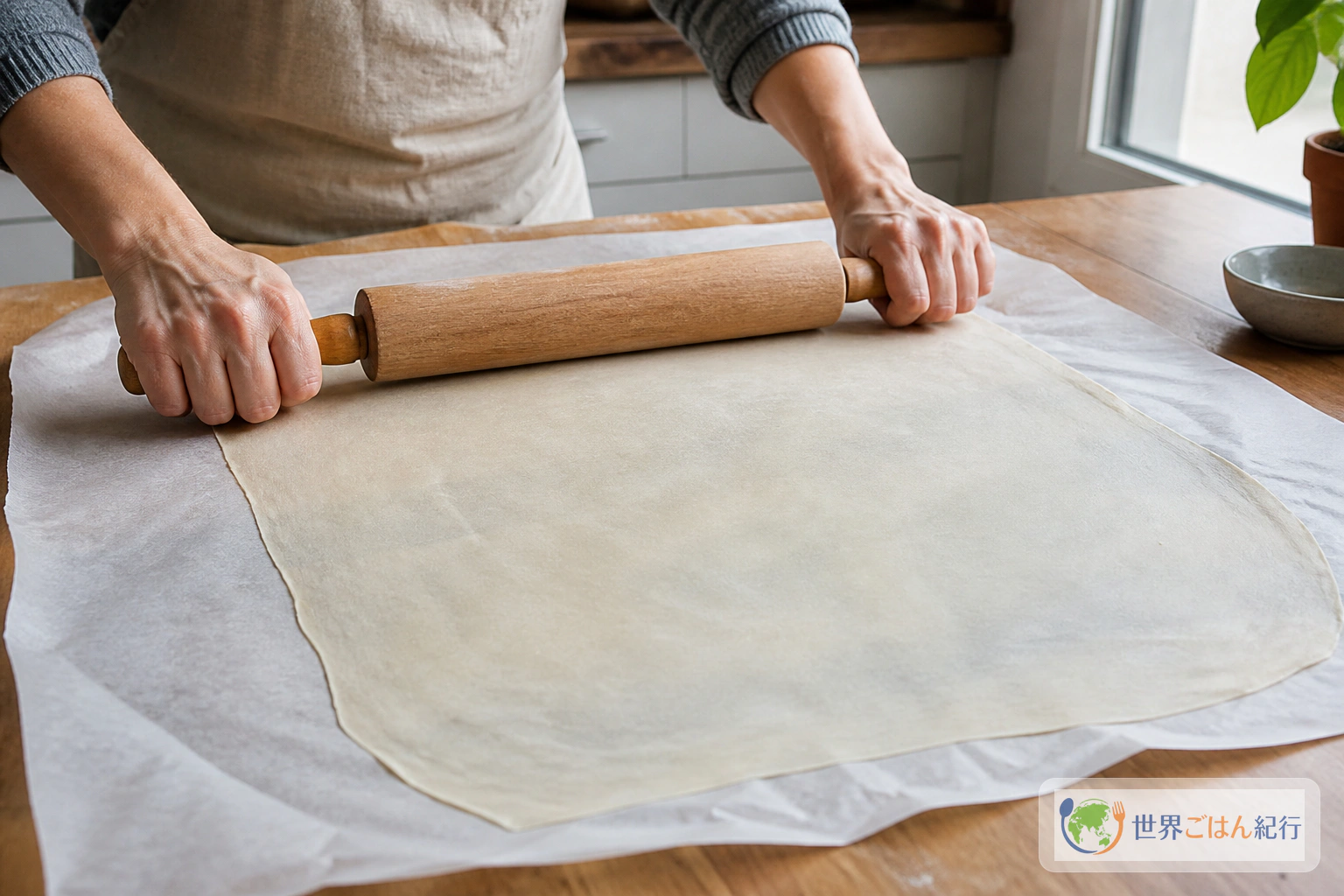
When tarte flambée comes off the baking sheet, the toasted wheat, the sweetness of cooked onion and the fat of smoked bacon all sit very close together. The dough is not allowed to rise. Rolled out to 1–2 mm, it snaps lightly when you bite the edge, while the center stays supple enough to hold the cream.
Tarte flambée is a thin baked flatbread from Alsace in eastern France. It is also called Flammekueche in Alsatian and Flammkuchen in German, and the classic version is a different thing from pizza with tomato sauce and melting cheese. A dough of flour, water, oil and salt is spread with a thin layer of fromage blanc or cream, then topped with onion and smoked pork and baked quickly at high heat.
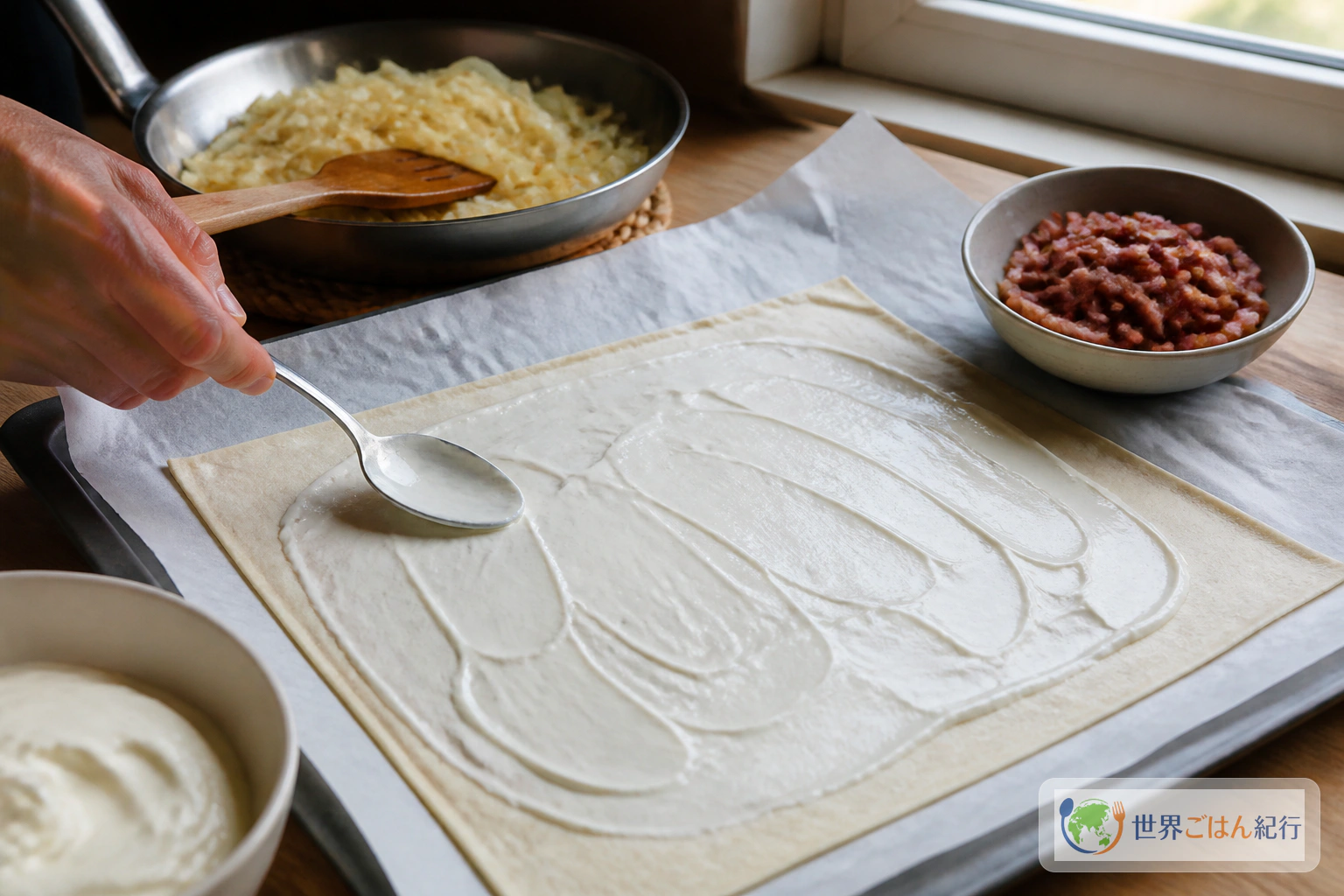
The biggest fork in the road at home is not hunting down unusual ingredients. Roll the dough thin, spread the dairy thinly, and slide the tart straight onto a thoroughly preheated surface. That is what gives you a light bite and good browning. Even without the fromage blanc used locally, you can put it together with drained Greek yogurt and sour cream.
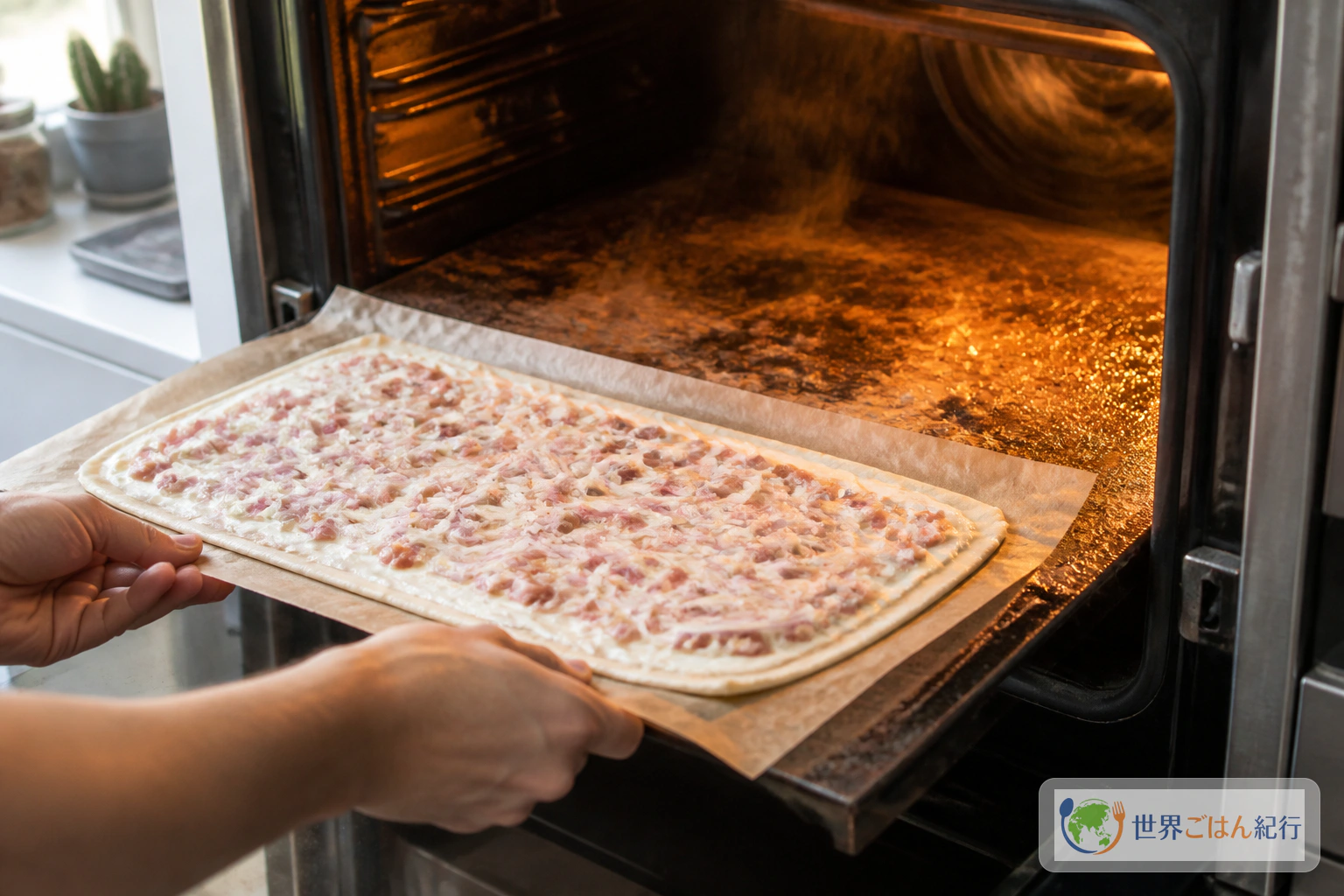
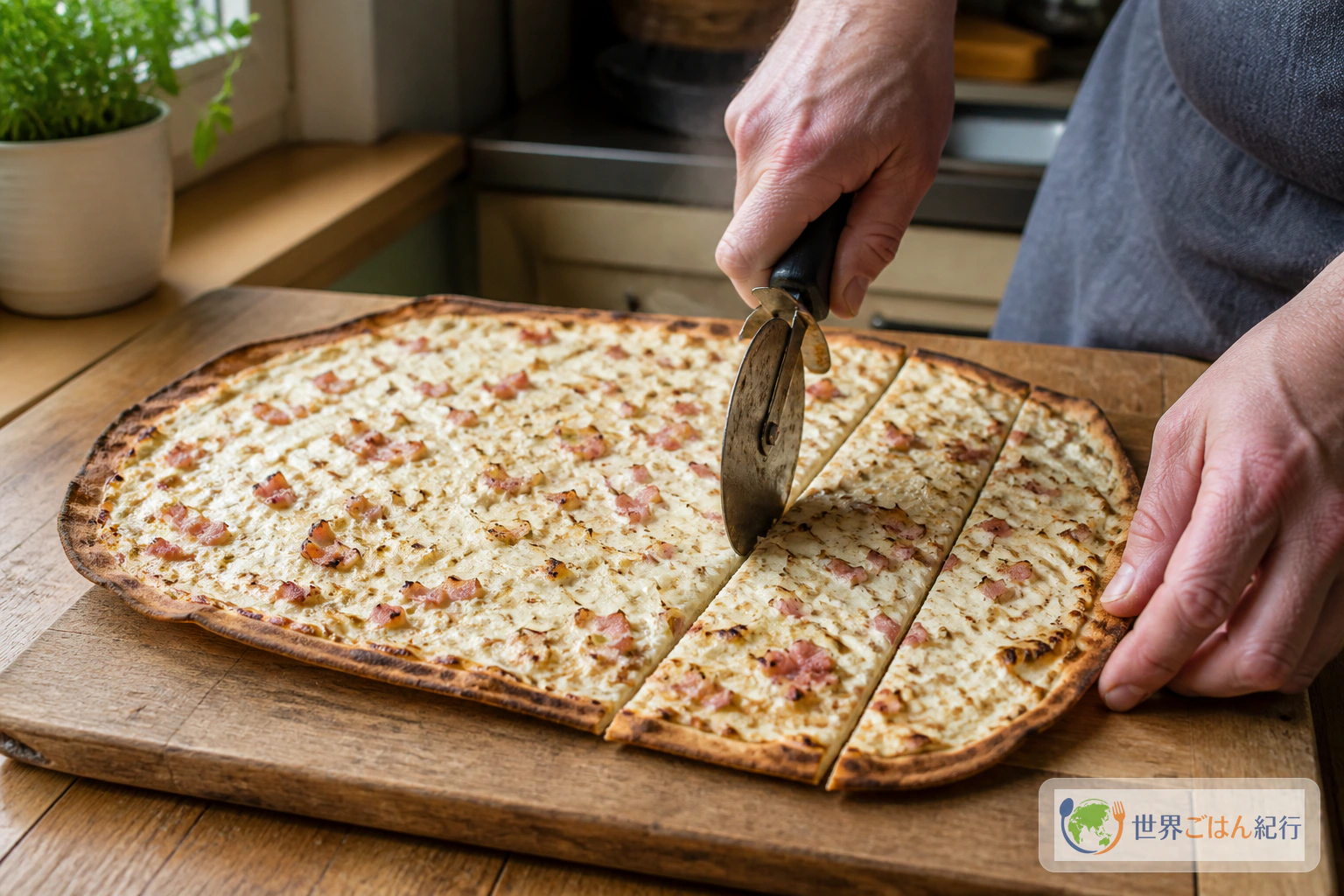
This amount makes two tarts of about 30 × 20 cm. Bake them one at a time in a 250°C (480°F) oven for 6–10 minutes. They are done when the edge is deeply browned with small blisters and the cream in the center no longer runs.
If you want to try another French flour dish, compare the texture with crozets de Savoie, a small buckwheat pasta from elsewhere in France, to see how each region handles flour.
From Leftover Dough at the Communal Oven to the Alsatian Table
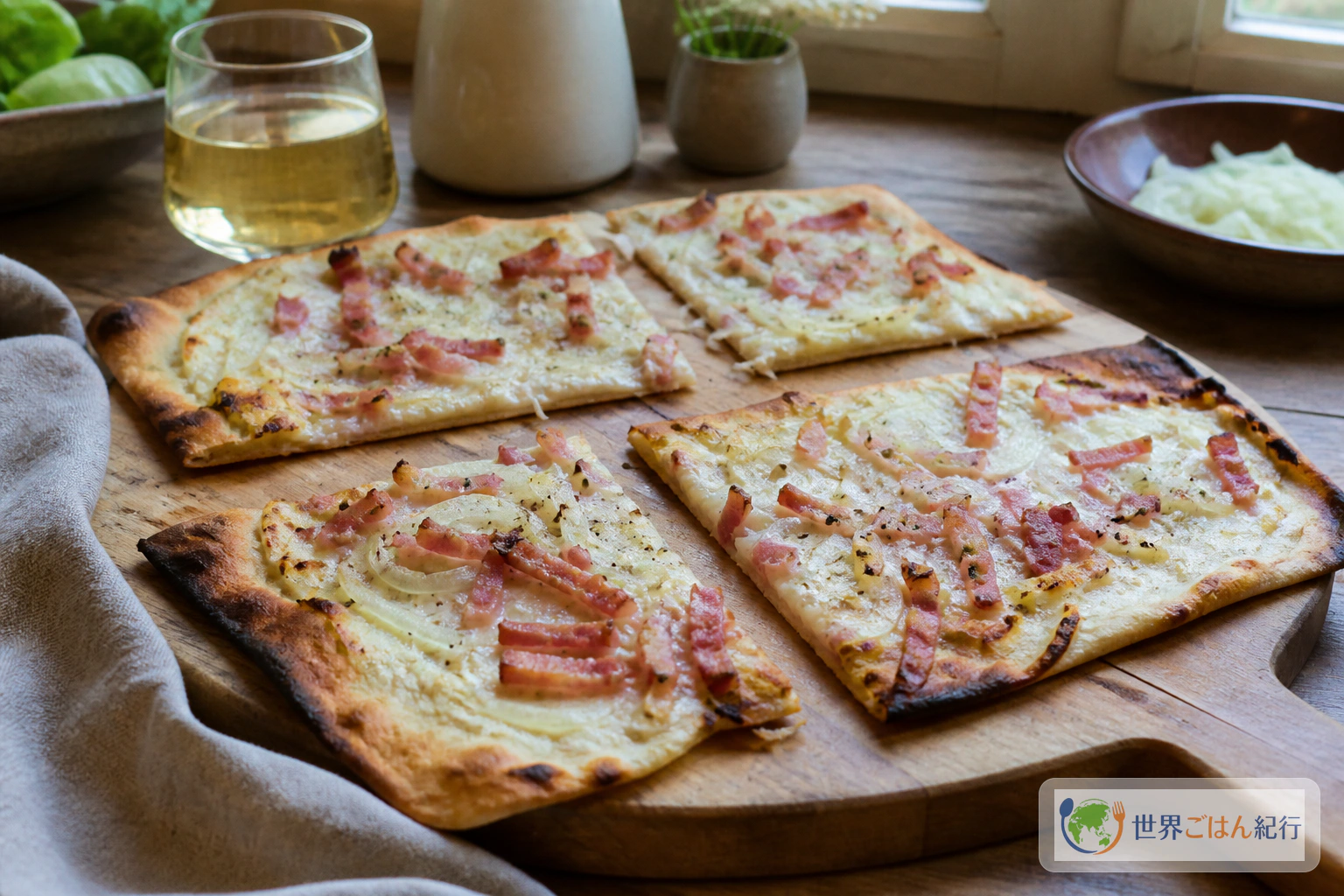
The place best known as the birthplace of tarte flambée is Kochersberg, in northwest Alsace. One account of its origin says that farmers who baked bread in the village's communal oven topped leftover bread dough with the dairy, onions and smoked meat they had on hand, and baked it to check the oven's temperature. Because it uses the oven's high heat before the bread goes in, it is not a dish that bakes for long.
Knowing this, you can see that the short ingredient list is more than a simplification. The dough stands in for bread, the white dairy is the farm's preserved staple, and the onion and pork are everyday fat and sweetness. A test bake to gauge the oven became a dish that families and villagers shared while it was still hot.
In Alsace you also see people cut the hot tarte flambée and fold or roll the pieces to eat them, rather than arranging it neatly on a plate. A regional profile from France Télévisions describes it as a dish loved across generations and eaten both at home and in restaurants. When specialist restaurants spread in the 1960s, a farmhouse oven dish became a regional specialty you could order in town.
Why It Has Two Names: Cultures Overlapping at a Border
Alsace is a region where French-speaking and German-speaking cultures have long met. The French tarte flambée means roughly "tart baked in the flame," and the Alsatian Flammekueche means something like "flame cake." In German-speaking regions it is Flammkuchen, and the spelling and pronunciation vary by place and restaurant.
The word "flambée" does not mean you should imagine pouring alcohol over it and setting it alight. The name comes from the flames of the wood-fired oven, and in a home version the preheated oven and the thin dough play that role.
A Classic Base, and Toppings That Grew in Restaurants and Homes
The basic form is white dairy, onion and lardons, which are thin strips of smoked pork. Restaurants there also serve versions with cheese, with mushrooms, and sweet ones topped with apples and the like. In southern Alsace and the upper Rhine, versions with regional cheeses such as Munster are also known.
If you want to keep the regional character, it is better not to pile on toppings for your first tart. Once you know the balance of the cream's acidity, the sweetness of the onion, and the saltiness and smoke of the pork, adding cheese or fruit will show you why the taste changes.
The Flavor Axis: Tangy Dairy, Onion, Smoke
If you treat tarte flambée like pizza and add mozzarella or tomato sauce, the moisture and weight of the toppings overwhelm the thinness of the dough. The cream is not a thick sauce but a thin film over the dough. The heat sets its surface, it absorbs the water that comes out of the onion, and it keeps the freshly baked edge light.
| Element | Role | How to choose |
|---|---|---|
| Fromage blanc | Tangy dairy flavor and light body | Use the same amount if you can find it. Otherwise drained Greek yogurt |
| Crème fraîche | Rounded richness and a smooth finish | Sour cream, or sour cream with heavy cream |
| Onion | Sweetness and moisture | Yellow onion sliced about 1 mm. If thick, the center turns watery |
| Lardons | Saltiness, fat, smoky aroma | Cut block smoked bacon into 5 mm sticks |
| Nutmeg | Ties the dairy aroma together | A pinch. Do not overdo it |
Fromage blanc can sometimes be found at import grocers and stores with a wide dairy selection. You do not need to hunt for it the first time, though. Drain unsweetened Greek yogurt for about 10 minutes and combine it with sour cream, and you get a spreadable thickness and the right tang. Plain yogurt used as is tends to release water, so do not skip the draining when substituting.
Ingredients (serves 4)
This makes two tarts of about 30 × 20 cm. Each tart is a light meal for two people, or share both among four alongside other dishes.
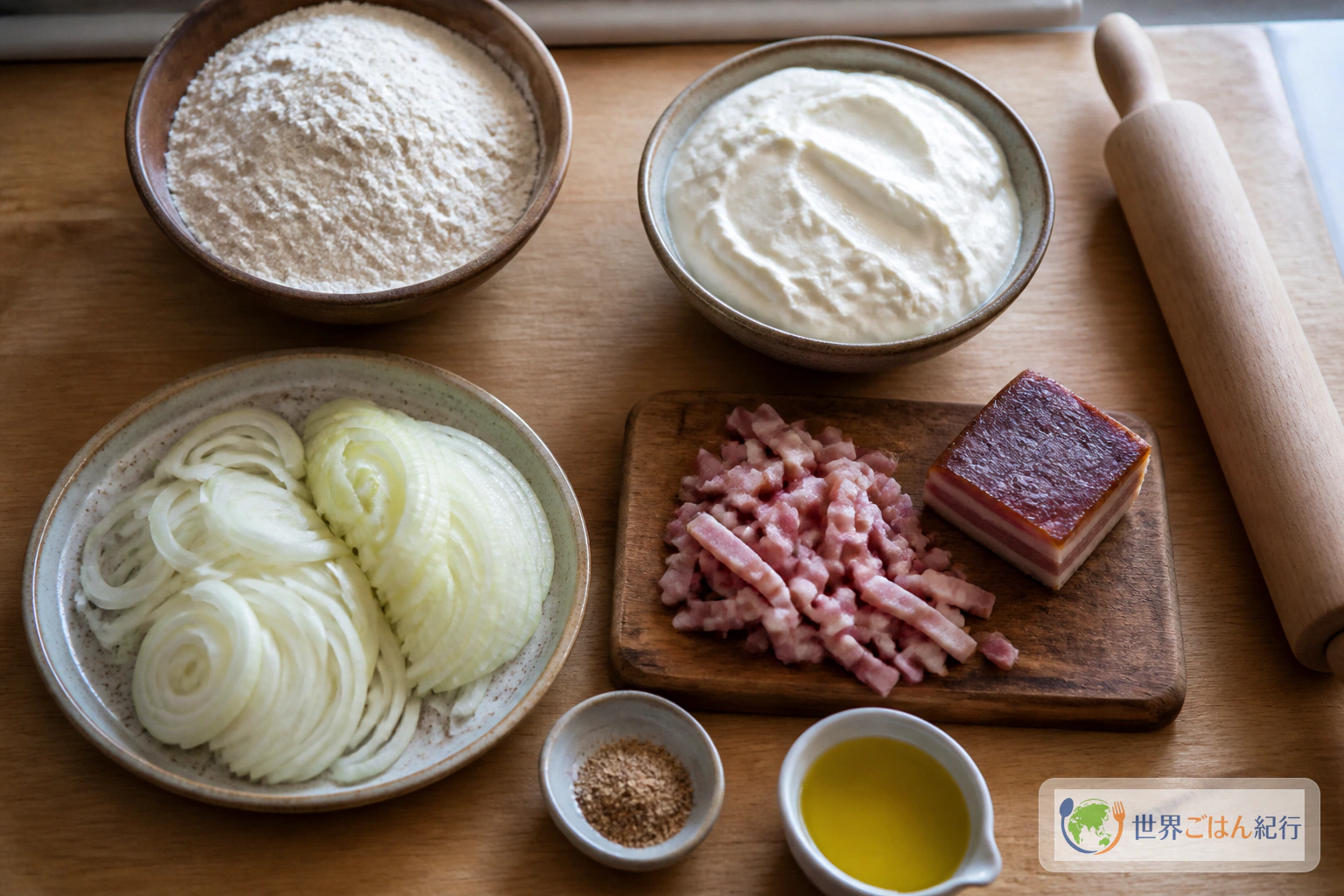
This recipe contains wheat, dairy and pork. Bacon and lardons can contain wheat, dairy, eggs and other allergens depending on the product, so check the allergen label on the package. Do not leave baked tarts at room temperature for long; let leftovers cool slightly, then refrigerate.
Do You Need to Buy a Baking Surface?
If your home oven's sheet pan is thin and the bottom stays pale even after preheating, a flat metal pan that holds heat can help. But you do not need to buy equipment from the start just because you have no pizza stone. An upside-down baking sheet preheated for 45 minutes is enough if you bake the thin dough one tart at a time.
If you are considering a shallow paella pan, check the product page for a diameter of around 30 cm, how the handles are made, and a label confirming it is suitable for a home oven. If oven use is not stated, do not put it in the oven and use the sheet pan you already have. It is for people who will make thin flatbreads like this repeatedly; if this is a one-off, you can safely skip it.
When It Goes Wrong, Check the Moisture Before Rebaking
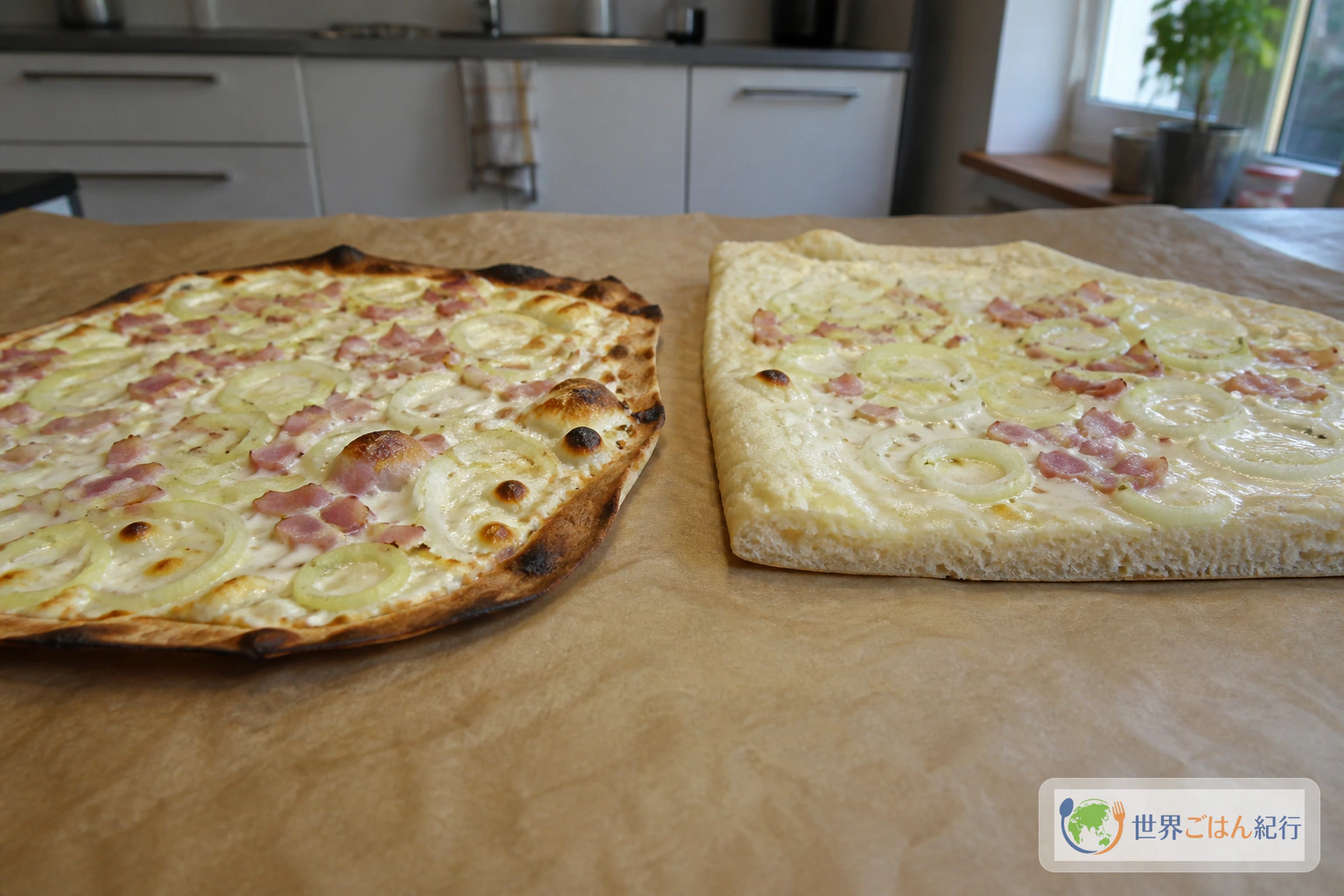
With so few ingredients, the cause of a failure is easy to see in tarte flambée. Look at the result, then change how you spread and bake the next tart.
| Problem | Likely cause | How to fix it on the next tart |
|---|---|---|
| Soggy center | Dough too thick, cream too loose, too much moisture from the onion | Roll the dough back to 1–2 mm, drain the dairy, cool the onion before using |
| Only the edge is hard | Edge left thick, baked too long | Roll evenly to the edge and take it out as soon as it browns |
| Pale, soft bottom | Baking surface not preheated enough, or the tart was moved after topping | Preheat the sheet for 45 minutes and slide the whole thing on the parchment in one go |
| Cream runs | Used only heavy cream, or spread too much | Mix in drained yogurt or sour cream and spread less |
| Too salty | Salt on top of salty bacon and cream | Leave salt out of the cream and use a little less bacon. Do not add salt after baking |
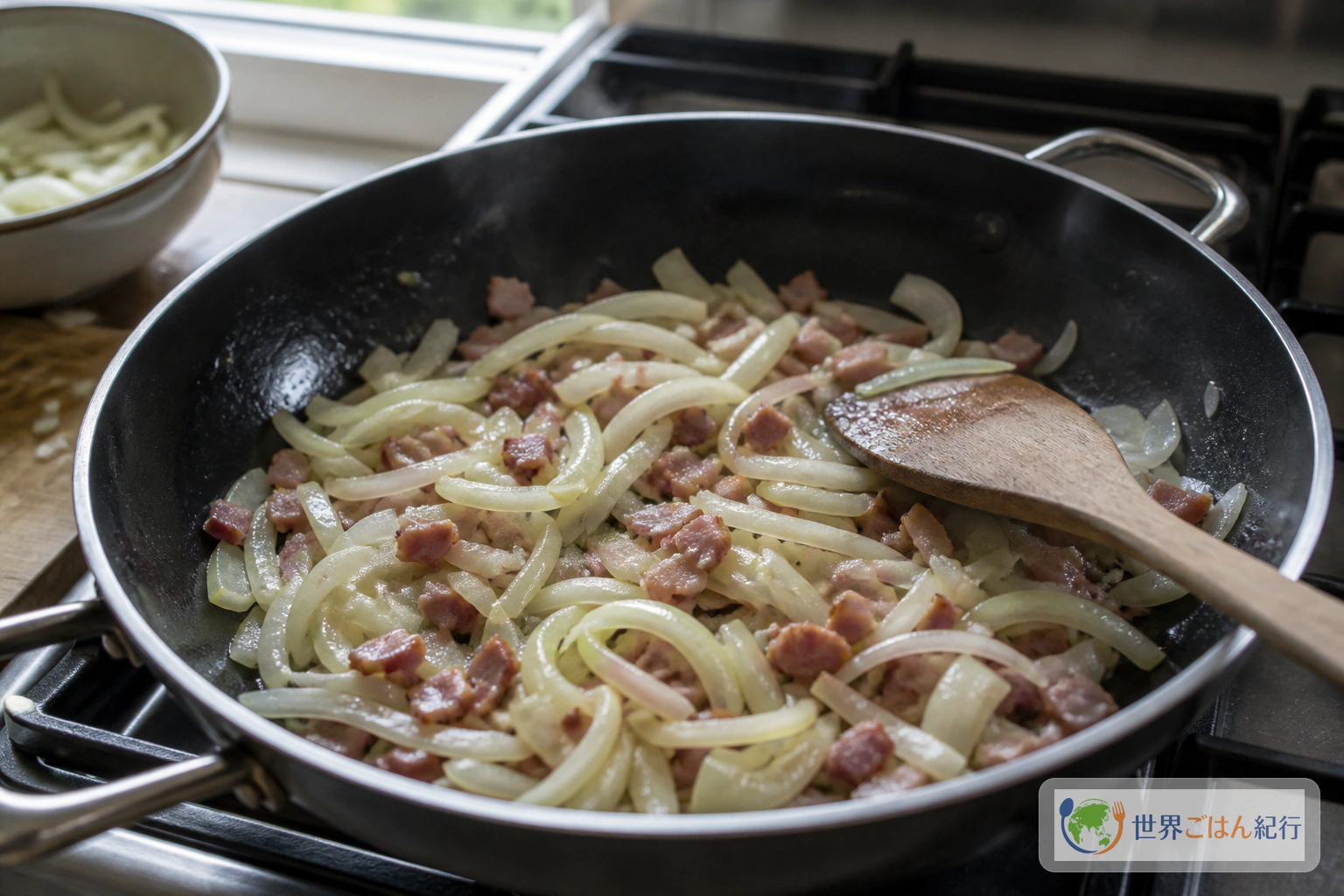
| Onion burnt and bitter | Cooked too long beforehand, or sliced too thin and collected at the edge | Stop when translucent and scatter evenly |
Making the dough thicker and baking longer tends to harden the edge before the moisture in the center has gone. When things go wrong, check "dough thickness," "firmness of the cream" and "moisture of the toppings," in that order, before the baking time.
Five Variations That Keep the Regional Character
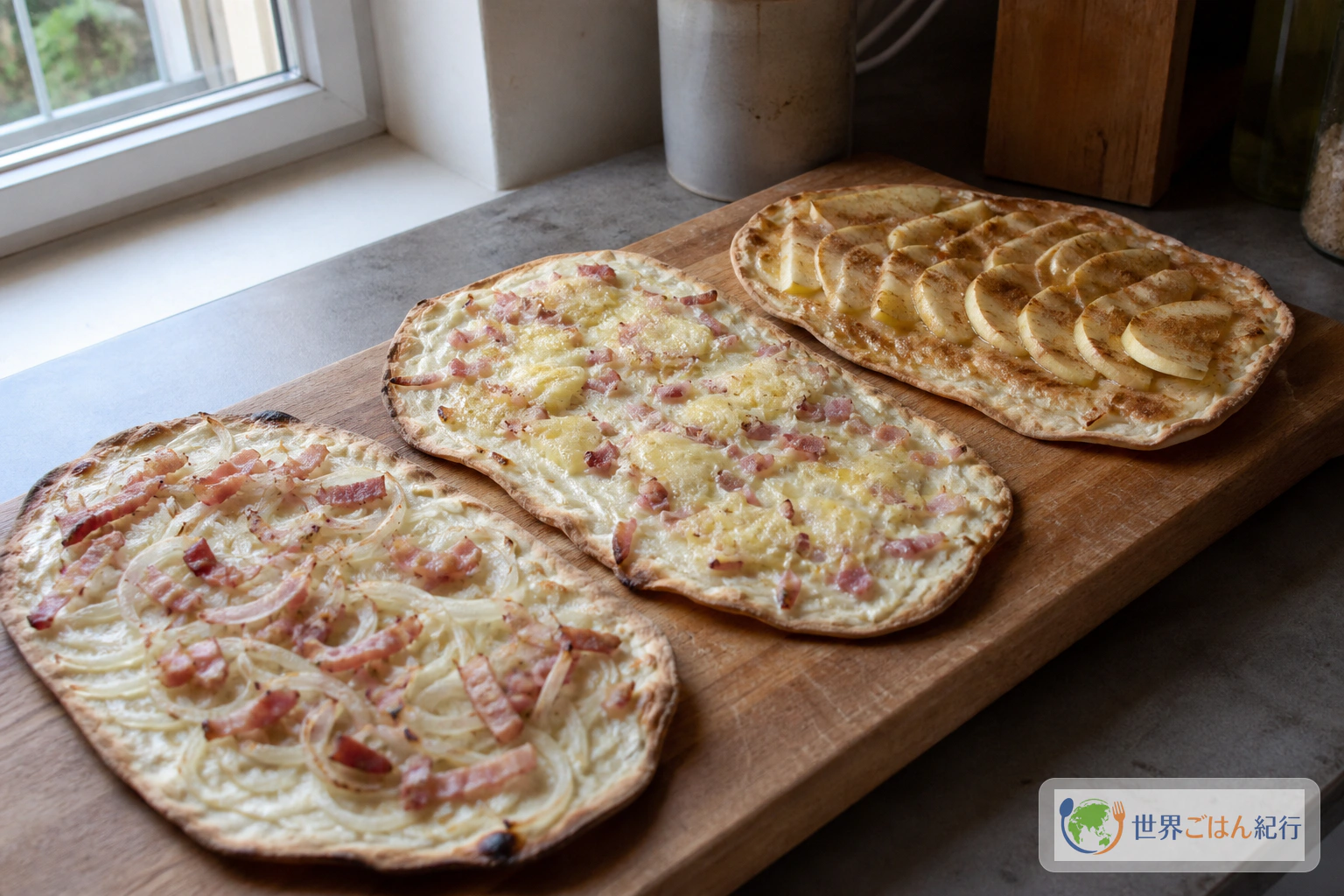
Even when you change the toppings, tarte flambée keeps its thin dough and high-heat baking. But you cannot put just anything on it; consider how each topping changes the moisture and saltiness.
1. A Version With Munster, Closer to Southern Alsace
Add 40–50 g of thinly sliced Munster to the basic onion and bacon. Too much at the start adds fat and moisture, so scatter it thinly over the toppings and check the surface during the last 2–3 minutes of baking. It is for people who like strongly scented cheese; use half the amount if you want to keep the lightness of the classic.
2. A Sweet Version With Apple and Cinnamon
Leave out the onion and bacon, and mix 1 tbsp sugar and a little cinnamon into the cream. Lay one thinly sliced apple on top without overlapping and bake at 250°C as for the savory version. Apples release moisture, so lightly blot the cut slices with paper towels.
Cinnamon is not a classic ingredient and is needed only for sweet variations. If you only make the savory version, do not buy it; you can think of it as a separate thin sweet tart made with the sugar and apples you already have.
3. A Modern Version With Mushrooms and Black Pepper
Sauté 80 g of thinly sliced mushrooms in a pan until the moisture is gone, and use them to replace half of the bacon. If you put raw mushrooms on as is, they release water during baking and loosen the cream. Because the smoky flavor is reduced, use a bit more black pepper and keep the onion at the basic amount.
4. A Version With a Little Beer in the Dough
Replace 30 ml of the 120 ml lukewarm water with room-temperature pale beer. The aroma leans slightly toward grain, but the carbonation is not used to make the dough rise. If you want to avoid alcohol or children will be eating it, make it with water.
5. A Version Without Pork
Leave out the bacon, increase the onion a little, and add mushrooms or thinly sliced leeks. This is a home variation separate from the traditional lardon version. Because it is less salty, grinding black pepper over the finished tart keeps the flavor of the white dairy better than adding more salt to the cream.
At the Table, Gather Around the Tart Before the Plates
Tarte flambée is not a dish you finish by plating individual servings. Move it hot to a board or large platter and eat the strips in turn as they cool enough to pick up; the contrast between the toasty edge and the cream in the center keeps going. If you make several flavors, bake the classic first and then the cheese or fruit versions, so you can compare the changes against the acidity of the dairy.
Let leftovers cool slightly, seal and refrigerate, and use them up within about a day. Reheat in a 230–250°C (445–480°F) oven or toaster oven for 3–5 minutes, until the surface is warm and the edge has crisped again. A microwave alone softens the dough, so if you use one, warm briefly and then always crisp the surface in an oven or toaster oven.
The nutrition figures are estimates for one person eating a quarter of the whole, using this amount of cake flour, bread flour, dairy and bacon. Fat and salt equivalent vary with the bacon and dairy products you use.
Frequently Asked Questions
Can I make it with pizza dough or a store-bought pizza crust?
You can, but dough with yeast gives more thickness and chew, so the texture is closer to a thin pizza than to tarte flambée. If you use store-bought dough, use fewer toppings and roll it as thin as possible. For a first try, when you want to know the real light crispness, the yeast-free dough of cake and bread flour is the better choice.
I do not have fromage blanc. What can I use?
Combine 100 g drained unsweetened Greek yogurt with 100 g sour cream. If it is too tangy, add just 1 tbsp heavy cream; if it gets too loose, add a little more yogurt. Yogurt used without draining tends to spread water during baking.
Won't it feel lacking without cheese on top?
Classic tarte flambée does not make melting cheese the star. With the tang of the cream, onion and smoked pork, the flavor is complete. If you want to try cheese, use a small amount of Munster or similar, and bake your first tart without cheese so you can see the difference.
My oven only goes up to 230°C.
Preheat the baking surface longer, make each tart smaller and use thinner toppings. Plan on 9–12 minutes and watch until the center cream is set and the edge has color. If you try to make up for the lower temperature with thick toppings or a longer bake, only the edge tends to harden, so reduce the moisture first.
Can I make it in a toaster oven?
If you roll the dough small, yes. Preheat a tray inside, keep the cream and toppings thin, and check the color without foil for the first few minutes. If only the top darkens first, cover it briefly with a heat-resistant cover. Temperatures differ a lot between models, so try half a batch the first time and set the time after seeing the result.
Is it not authentic without beer or wine?
A drink is part of the table, not a condition for the dish. A crisp white wine or light beer handles the fat, but sparkling water or apple juice is fine too. What matters is not letting the tart cool too long and sharing the strips by hand.
Sources
- Le Beau Jardin, "The birthplace of tarte flambée" (origin in Kochersberg, basic ingredients; accessed 12 August 2026)
- France Télévisions, "La tarte flambée, une spécialité alsacienne" (how it is eaten at home and in restaurants, and regional culture; accessed 12 August 2026)
- National Geographic France, "Culture générale : gastronomie, non ceci n'est pas une pizza" (name, history, the table, regional and sweet variations; accessed 12 August 2026)
- Atelier des Chefs, "Tarte flambée alsacienne" (proportions for four servings, an example of baking at 250°C; accessed 12 August 2026)
- The French Recipe, "Tarte flambée" (yeast-free dough, thinness, baking in a home oven; accessed 12 August 2026)
- Recettes d'Alsace, "Flammekueche / Tarte flambée" (cooking the onion, differences in proportions, regional ways of eating it; accessed 12 August 2026)