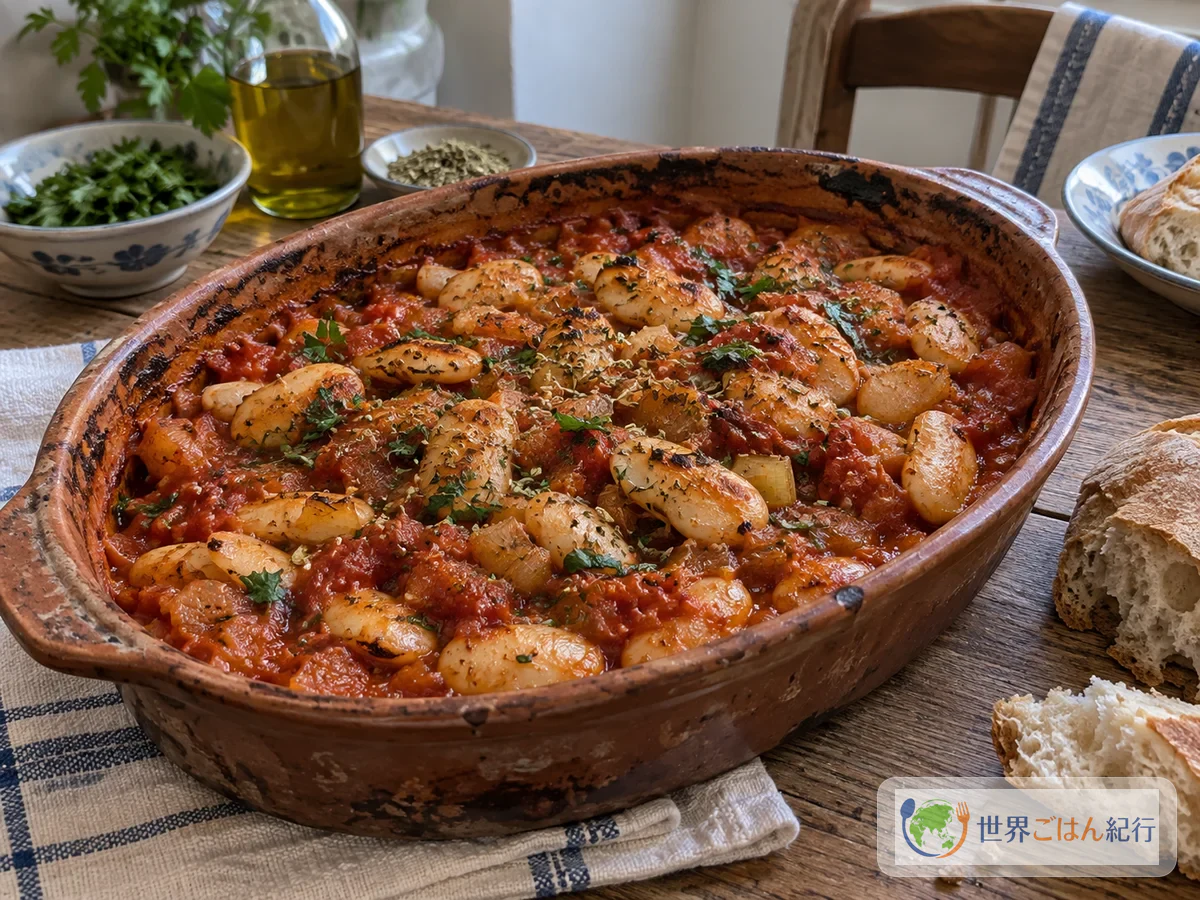
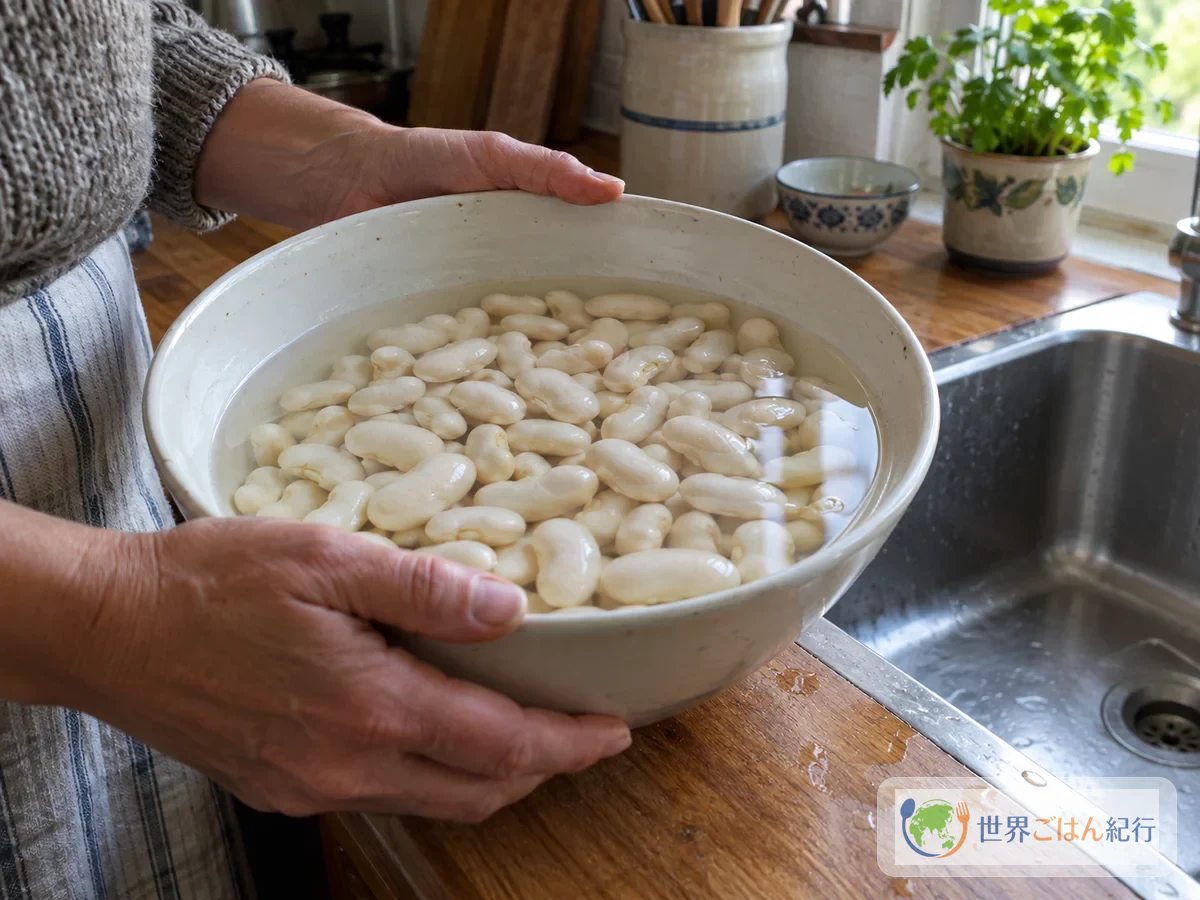
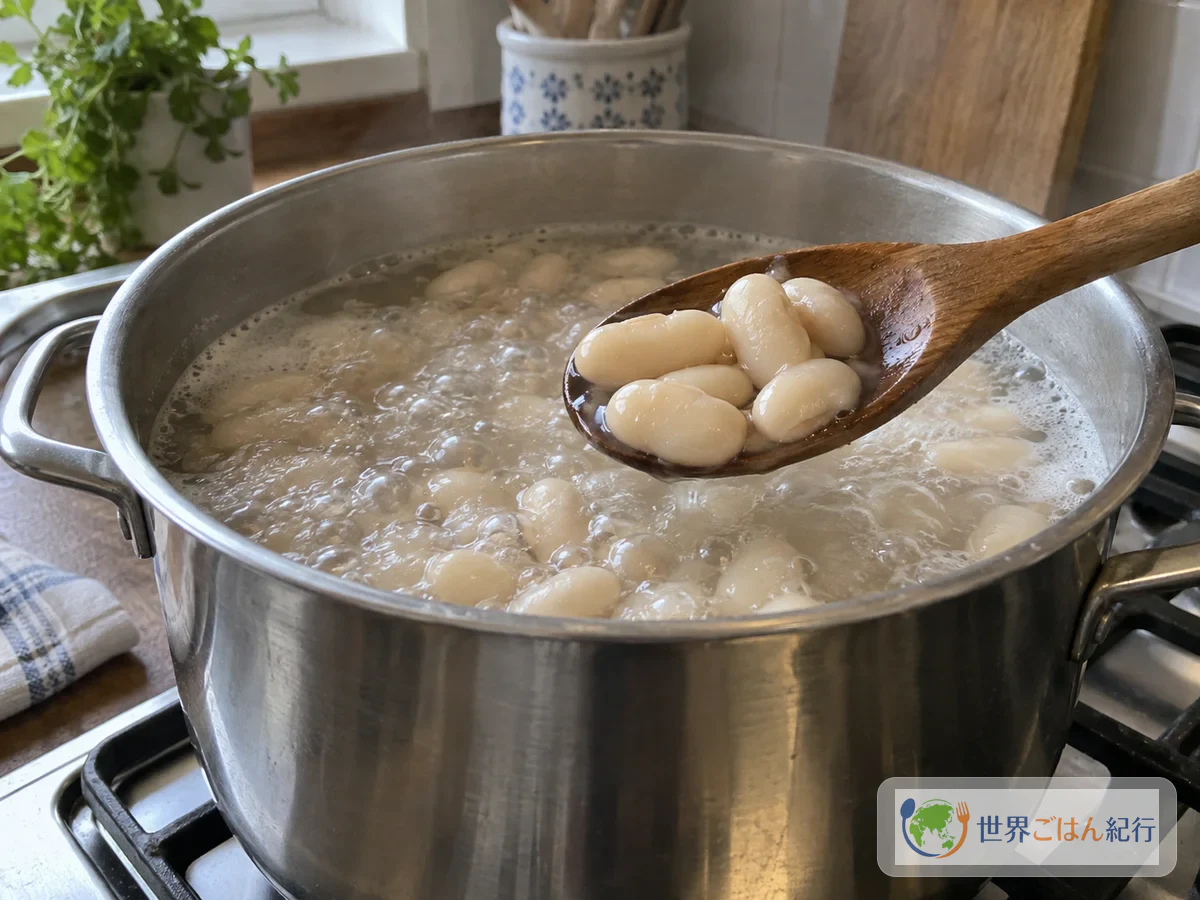
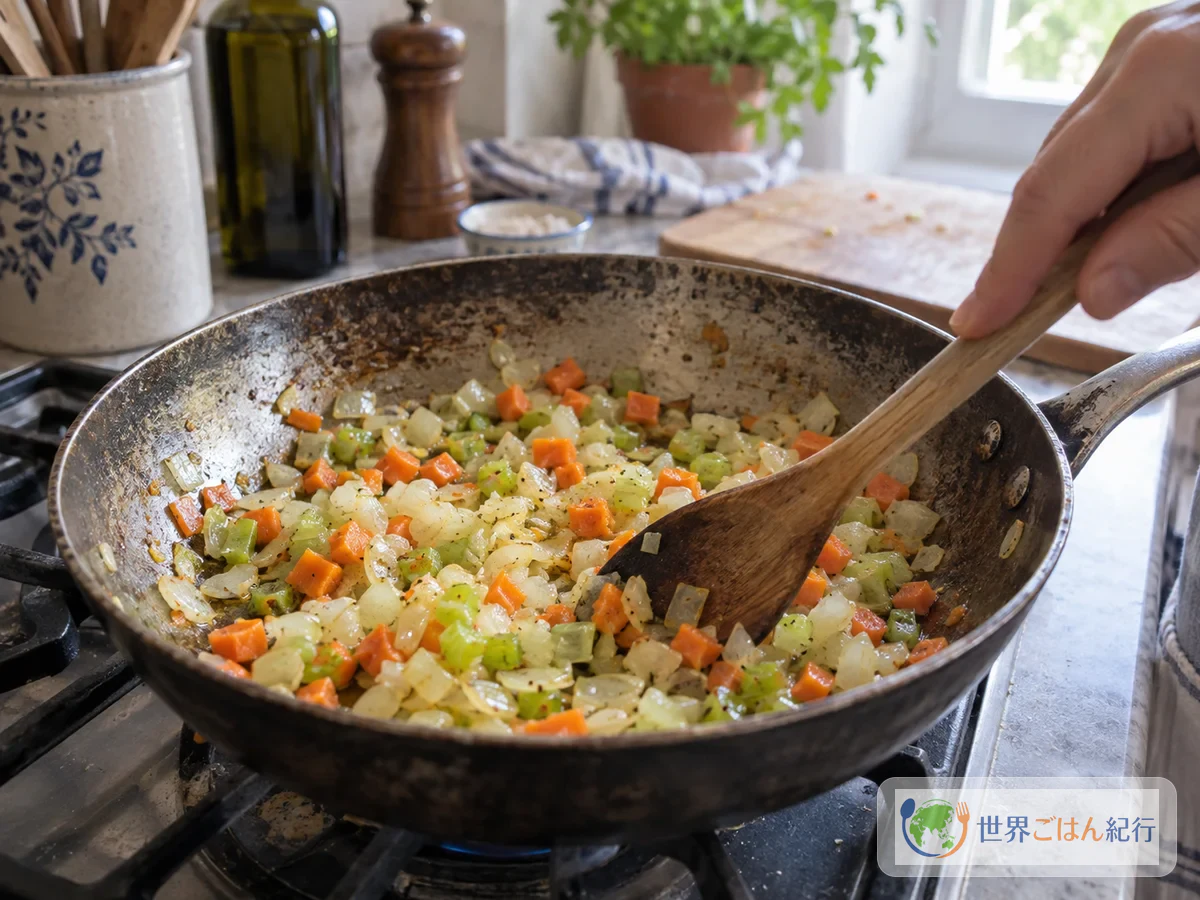
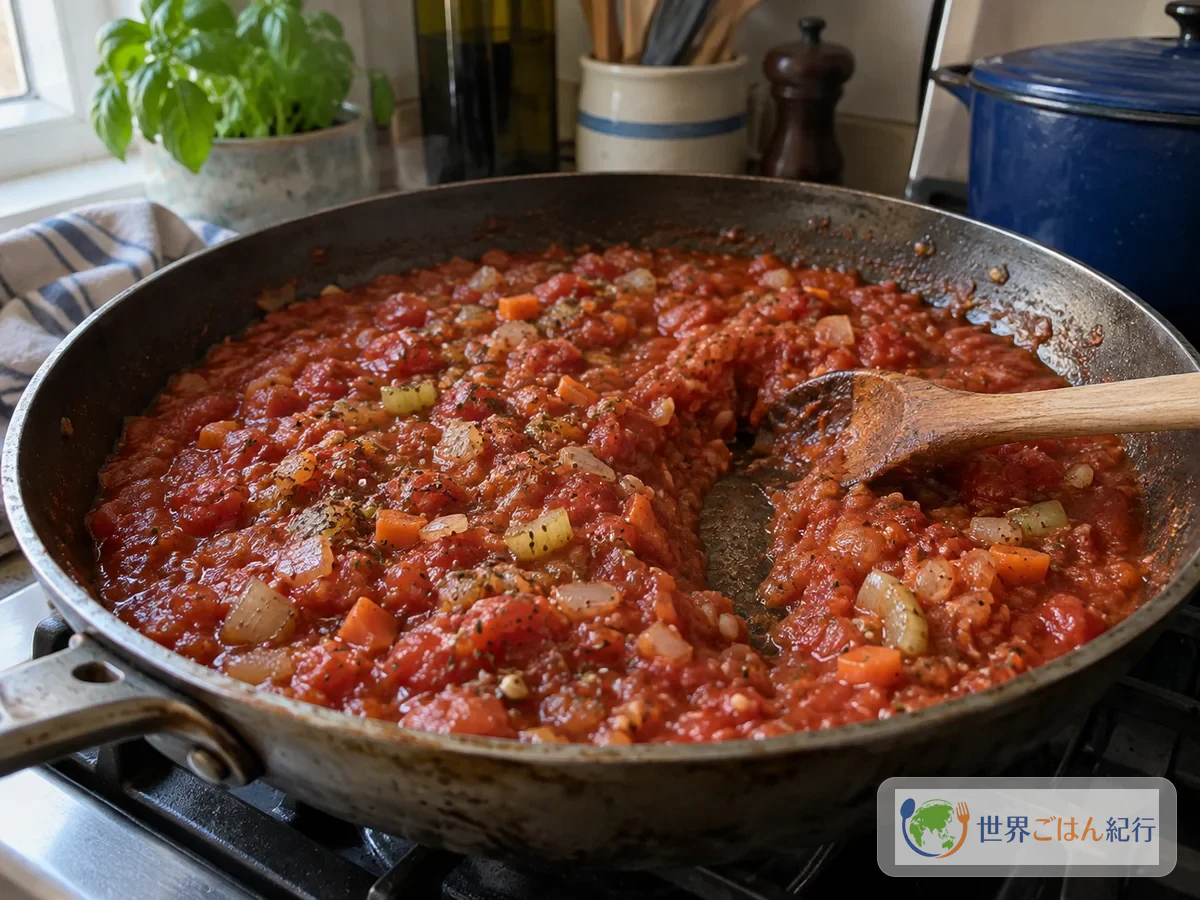
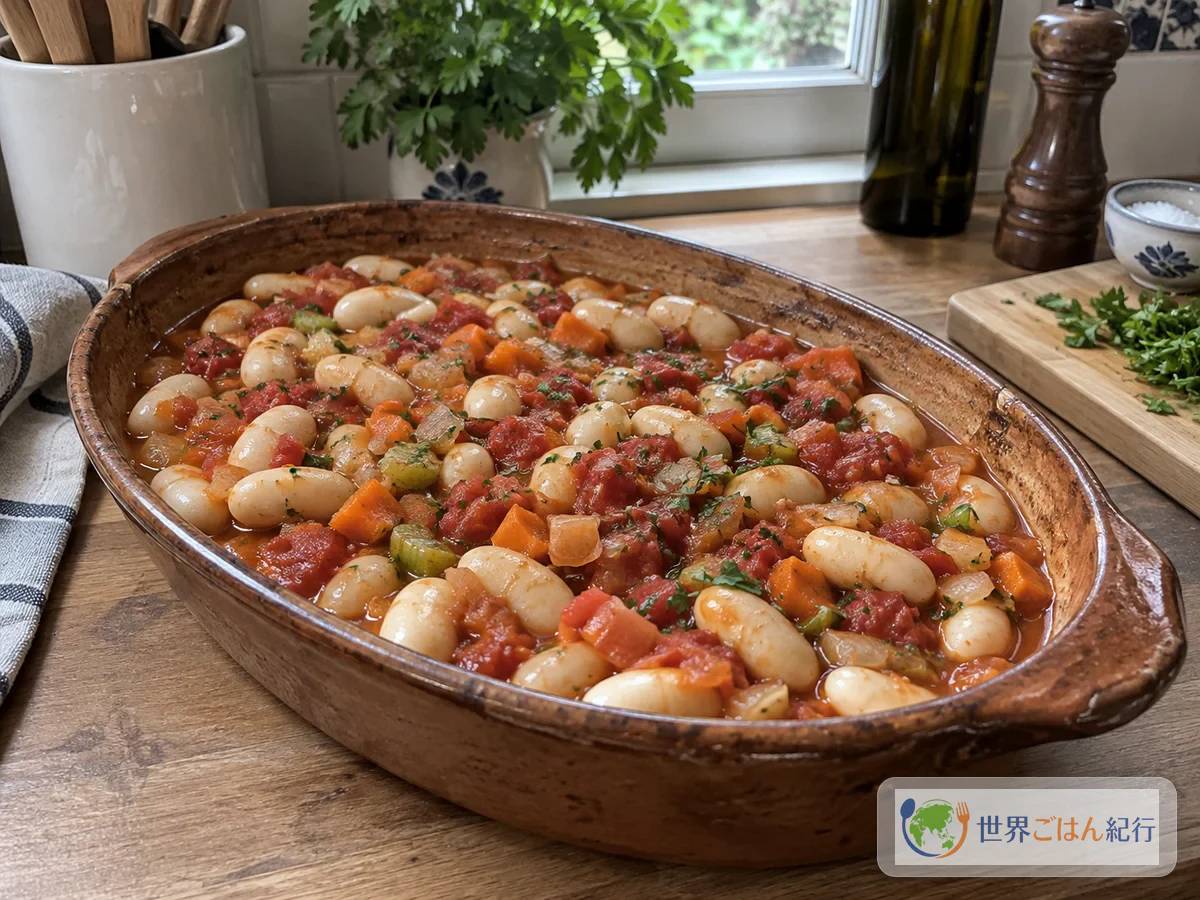
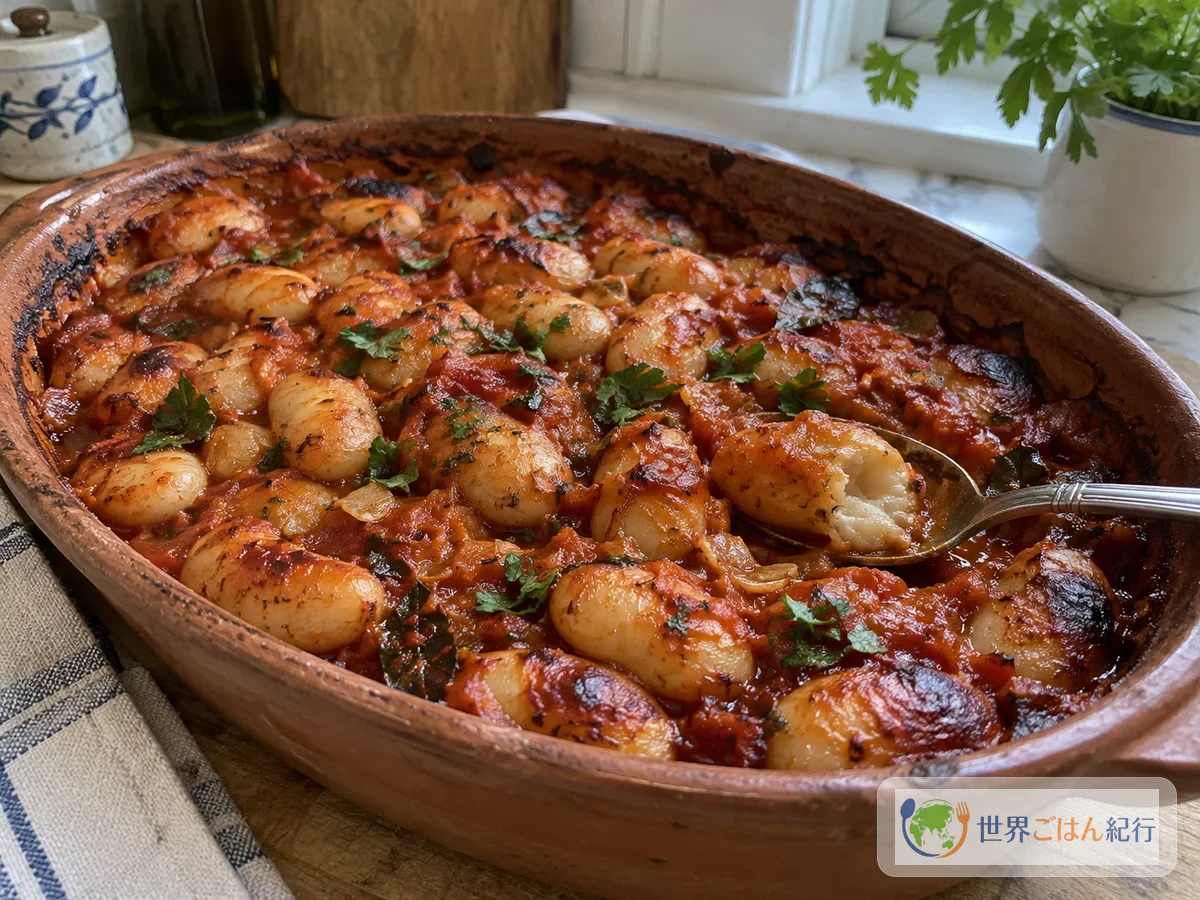
Picture a Greek table. In a baking dish fresh from the oven, a red sauce lingers thick and glossy. Someone wipes it up with the torn end of a piece of bread and scoops it into their mouth along with the beans. Gigantes plaki (Γίγαντες πλακί / Gigantes plaki) is a Greek dish of large beans baked in tomato that suits exactly that gesture. Olive oil and herbs bring the beans and the sauce together.
The goal is a finish where the inside of the beans is creamy, the sauce clings firmly to them, and the edges of the dish are lightly colored. To get there, the two-stage cooking of boiling first, then baking is essential. Soak the dried beans the night before, and allow about 2 hours 20 minutes for the day's work. Depending on the beans, the parboiling can run long. Using canned beans spares you the soaking and parboiling, but the size and texture of the beans change.
At the Prespa Table, There Are Big Beans
In northern Greece, in the Florina region, lie the Prespa lakes. In the lakeside villages of Psarades and Agios Germanos, large beans, Florina red peppers, and carp are presented as local flavors. We tend to picture Greece as seaside scenery, but this is a land where lake fishing and farming sit side by side. A bean-growing food culture by the lake supports the table. That said, we do not mean to claim this as the origin of the dish.
In a cooking guide to the Prespa region, a bean soup and oven-baked large beans are listed as separate dishes. For the oven-baked one, there is a local example blend that adds red pepper, carrot, parsley, and spearmint. It is only one example, and it does not mean the whole region makes it in this form.
Herb use differs by blend. Some use oregano and parsley, some use dill and sweet paprika, and some, like Prespa's, add spearmint. This is a difference between cooks and households, not herbs fixed by island. In your own kitchen, the fun of changing the herbs opens up just as it is.
How you eat it is also free. With bread it is a meatless main, and on bread it can be an appetizer. There is also a way of serving it with feta cheese, but the baking dish of beans and vegetables is enough to be the star of the table on its own. The appeal is the fluffy, hearty bite of the beans and a sauce you want to mop up with bread.
Ingredients (serves 4)
This is a blend adjusted for home cooking, an amount for 4 people with bread and salad alongside. We start from 250 g dried beans. The 8–12 hours of soaking is needed apart from cooking time, so soak the dried beans the night before. If using canned beans, our editorial alternative is to start from 600 g drained weight.
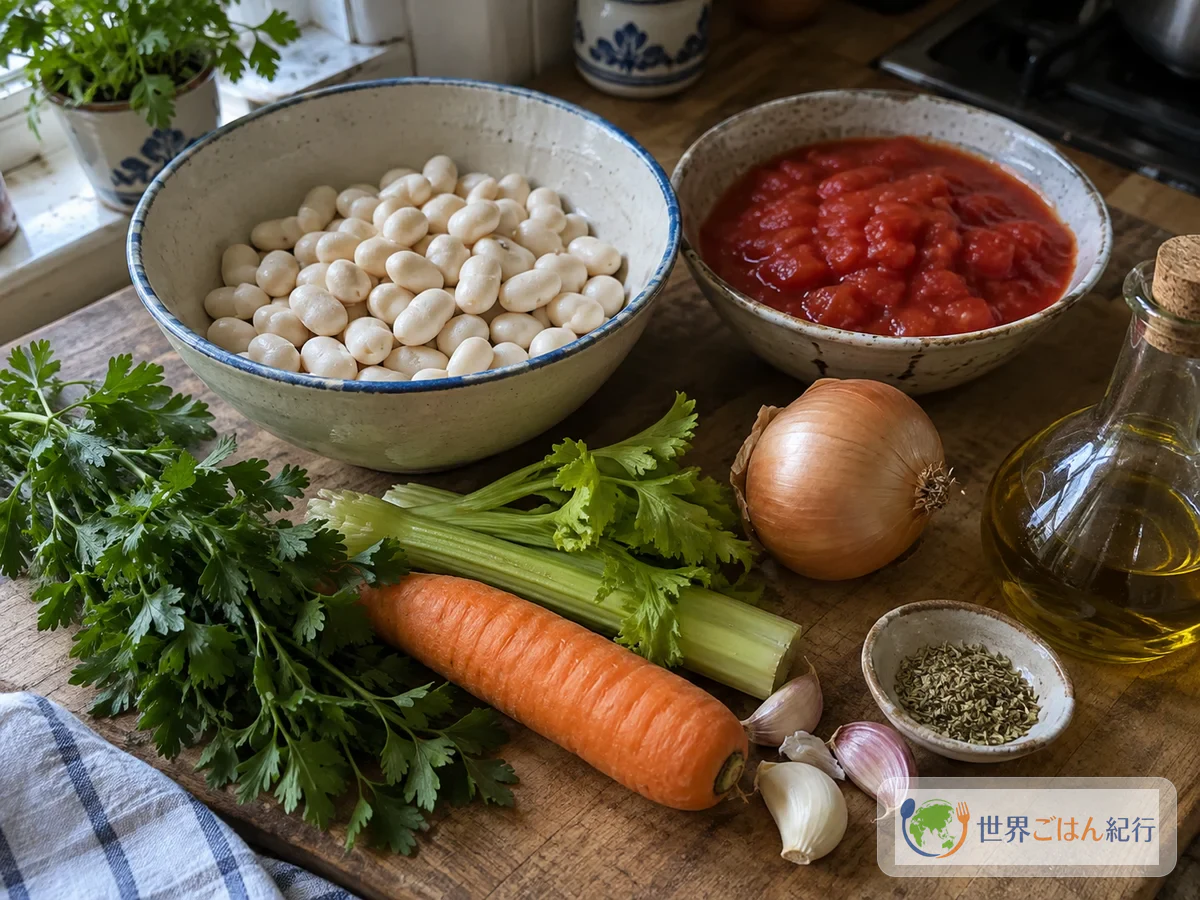
If you use canned white beans, you can start without waiting for the next day's soaking. When buying, the weight of the whole can and the drained weight are different things, so look at the drained weight for canned beans. If choosing dried beans from an online seller, check the labeling such as edible, large, and suitable for stewing, and the cooking method. Beans sold for sowing are not used in cooking. Choose dried oregano leaves. Do not calculate a swap at the same amount as fresh leaves. Take care also not to confuse seedlings for cultivation with seasonings.
Drain canned beans before using. Don't use seasoned simmered beans or sweetened beans. Even with canned beans, the sauce is cooked separately. Start checking the bake at 30–40 minutes and finish before the beans break down; that is our editorial shortcut. Mixing dried-bean and canned-bean dishes in one baking dish leaves them unevenly cooked, so use one or the other.
The equipment is a pot, a frying pan, a colander, and a shallow ovenproof dish. A dish of roughly 24 × 18 cm and 4–5 cm deep is a guide. A dish where the beans pile up deep makes it hard for moisture to cook off, so spread them thinly in a dish with a wide base. If it doesn't fit, divide it into 2 dishes and adjust the baking time by how it looks. We do not cook dried beans in a toaster oven alone. Buying a new pot or ovenproof dish is not essential.
Raw beans or undercooked beans carry a risk of health harm from lectins. Don't eat them after soaking alone; boil in fresh water for at least 30 minutes and then cook until no core remains. Low-temperature cooking or a slow simmer alone cannot replace parboiling dried beans. Treat commercially canned beans as already cooked, and follow the package instructions first. Handle the hot dish with mitts and avoid wet counters and sudden temperature changes. Also check the label that it is ovenproof.
For the sauce before baking, it works better to start from a state with liquid around the beans than to over-reduce it. If the surface of the beans turns wrinkled and dry during baking, it is short of moisture. If red water runs when you tilt the dish, there is still too much. Don't stir violently right after baking; rest it 10 minutes and then serve, keeping the beans' shape.
What Changes When You Use Beans from Elsewhere?
When you cannot get the local gigantes beans, there are recipe examples that use large butter beans and the like. But with a different variety, the size, the skin, and the inner texture all change. Ordinary canned white beans are a substitute for making the same dish, not the same variety as gigantes. Remembering that the variety is not the same lets you enjoy the difference in result.
On a day you use canned beans, don't rely on the liquid from the beans; make the sauce with the water in the ingredient list. This avoids bringing in the salt and viscosity of the can liquid. Sweet-simmered white runner beans add a sugary flavor and are no substitute. If you choose dried edible white runner beans, follow the soaking and cooking instructions on the bag first and don't replace them with a short boil. On days you want to taste the hearty bite of large beans, use dried beans; on weekdays when you want it easy, use unsweetened canned ones.
Put 1 tsp dried oregano in the sauce. Too much and the herb aroma beats the beans, so start from the amount in the ingredient list. Not overdoing the herbs brings out the sweetness of the beans. Divide the parsley into the part mixed into the sauce and the part scattered to finish. Frozen parsley can also be used from the same amount; that is our editorial alternative.
On days you want to eat beans warm with their liquid, there is another Greek dish called fasolada. Soup and baked dish differ in how moisture is left and how they are eaten. Even with the same white beans, there is the pleasure of making them differently.
Changing Herbs and Vegetables to Suit the Table
Red pepper and mint are based on a Prespa recipe example, and dill and paprika on another cook's blend. The table below is a home-cooking editorial suggestion that changes things only slightly from there, not an official regional classification or a new traditional name. Small differences in herbs and vegetables give the same baking dish a different expression.
| How to change it | Amount or action for 4 servings | Difference in result |
|---|---|---|
| Add red pepper | Cut 100 g into 1 cm cubes and sauté in step 3 | Adds the sweetness of the vegetable |
| Use dill | Leave out the oregano and add 5 g chopped fresh dill at the end of step 4 | A green aroma different from parsley |
| Use spearmint | Leave out the oregano and add 2 g chopped fresh leaves at the end of step 4 | A refreshing aroma |
| Use sweet paprika | Add 1 tsp mild paprika powder in step 4 | Deepens the color and aroma of the sauce |
| Serve with feta | 20 g per person, served separately after baking | Adds dairy flavor and saltiness |
Try herb changes one at a time. When serving with feta, taste before adding extra salt to the sauce. Adjusting to the cheese's saltiness keeps the whole from becoming too salty. For the menu, our editorial suggestion is a salad of tomato and cucumber alongside the bread.
Greek-style salad of tomato and cucumber
There are local recipe examples that serve it with feta, but we do not make mixing it into the baking dish from the start a requirement. At a table with someone who avoids dairy, put the cheese on a separate plate and don't share the serving spoon.
FAQ
What if the beans came out hard after baking?
If only the surface is dry, add 50 ml boiling water from the edge of the dish, cover with foil, and add 10–15 minutes at a time at 200°C. Each time, check whether the center has softened. On the other hand, if the parboiling itself was insufficient, or if you didn't boil for 30 minutes or more, don't assume baking alone makes it safe; don't eat it. It is important not to skip the soaking and boiling steps, and the basic rule is not leaving a hard core.
What if the sauce is watery or sour?
If it is watery, remove the foil and bake in 10-minute increments at 200°C. Stir sparingly so the beans don't break. If it is too sour, first check whether the onion sauté and the tomato simmer were insufficient. Rather than automatically balancing with sugar, our editorial suggestion is to soften it through pairing with bread or separately served cheese. A burnt taste doesn't go away by reducing, so don't scrape the burnt bottom and mix it in.
Is it spicy? What about allergies?
The basic blend has no chili. Black pepper is used. If adding paprika, choose a mild one. Check individually for allergies to the ingredients used, such as beans and celery. Bread contains wheat and feta contains milk, so even when served separately, take care about cross-contact. Simply reducing ingredients does not make it allergy-safe. Check package labels and shared equipment too.
Can I make it ahead?
Resting the finished dish for 10 minutes before eating and leaving it at room temperature for a long time are different matters. Divide what you save into portions, cool it quickly, and put it in the refrigerator within 2 hours of cooking. Finish refrigerated portions within 48 hours. Freeze early whatever you can't finish and thaw in the refrigerator. We do not give a guaranteed safe number of days for freezing. Reheat only the amount you will eat, once, until steam rises at the center. In a microwave, stir along the way to prevent uneven heating and follow the appliance's instructions.
Can I make it the same way without an oven?
There is an alternative of combining the softly parboiled beans and the sauce in a pot and simmering 15–20 minutes over low heat with the lid slightly ajar to reduce. Turn occasionally so the bottom doesn't burn. This is a home-style simmered variation and will not have the toasty edge of baking. Even in the pot variation, do not skip the soaking of dried beans and the boil of 30 minutes or more.
Nutrition Estimate
One serving is roughly 360 kcal, 16 g protein, 16 g fat, and 48 g carbohydrate. This is an editorial approximation from 600 g cooked beans, about 54 g oil, and the vegetables in the ingredient list divided into 4, excluding small amounts of herbs and pepper. It was calculated using general values for boiled kidney beans as a stand-in, so it is not a measured value, nor a measurement of the local beans themselves. Please take it as an approximation excluding side dishes, which varies with the amount of beans and oil. Bread and feta are not included. It also varies with the bean variety, the drained weight of the canned beans, and the oil left in the dish. We do not make health claims on the basis of nutrition values.
Sources
- Argiro Barbarigou, "Γίγαντες πλακί" — vegetables and herbs, the process of baking after parboiling, serving with bread and feta. Accessed and checked 16 October 2026.
- My Greek Dish, "Gigantes Plaki recipe" — bean substitutes, a blend using oregano, ways of eating it as an appetizer and a main. Accessed and checked 16 October 2026.
- Visit Greece, "Μικρή & Μεγάλη Πρέσπα" — the Prespa lakes of the Florina region and the large-bean food culture. Accessed and checked 16 October 2026.
- Prespa Resort, "Traditional Recipes" — bean soup and oven-baked beans of the Prespa region, a blend example using red pepper and mint. Accessed and checked 16 October 2026.
- BfR, "Lectins in plant-based foods: Is there a health risk?" — soaking dried beans, boiling in fresh water, cautions about undercooking. Published 23 January 2025. Accessed and checked 16 October 2026.
- Food Standards Agency, "Cooking your food" — cooling, refrigerating, and reheating leftovers. Accessed and checked 16 October 2026.
- Ministry of Education, Culture, Sports, Science and Technology of Japan, "Standard Tables of Food Composition in Japan 2020 (Eighth Revised Edition), 2023 supplement" (in Japanese) — used for the nutrition estimate: boiled kidney beans, olive oil, canned tomatoes, onion, carrot, celery, garlic. Accessed and checked 16 October 2026.