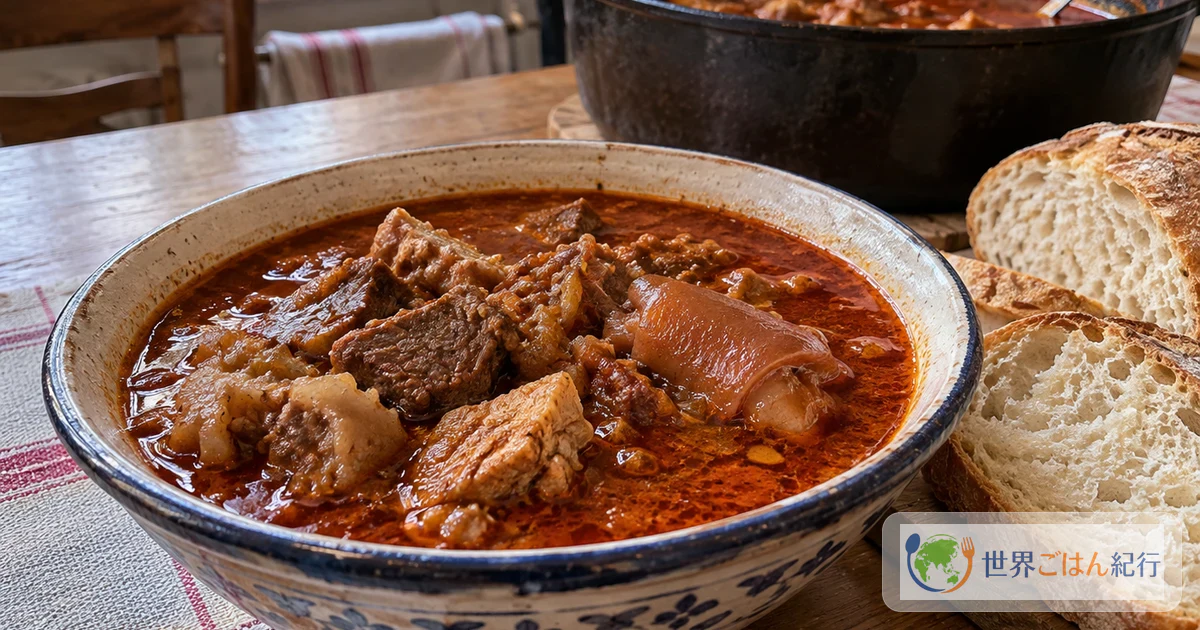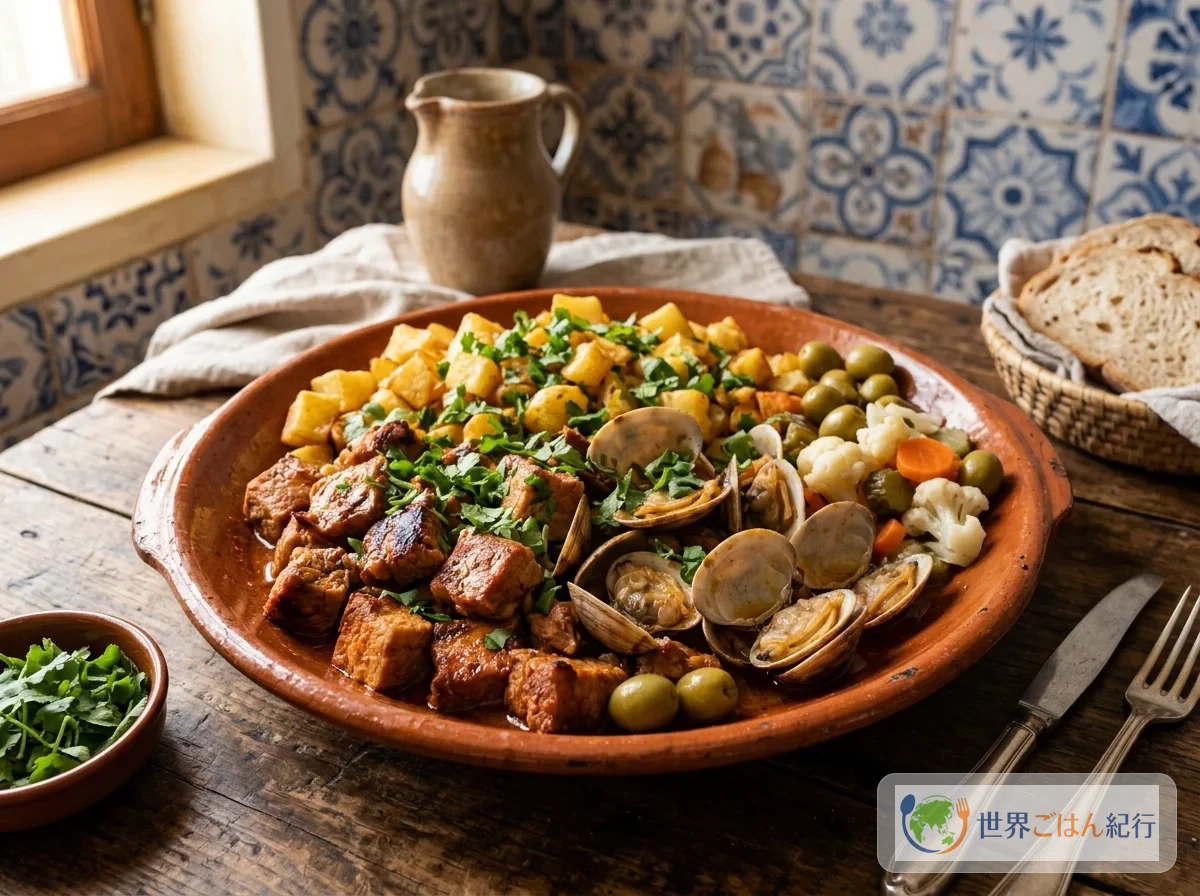
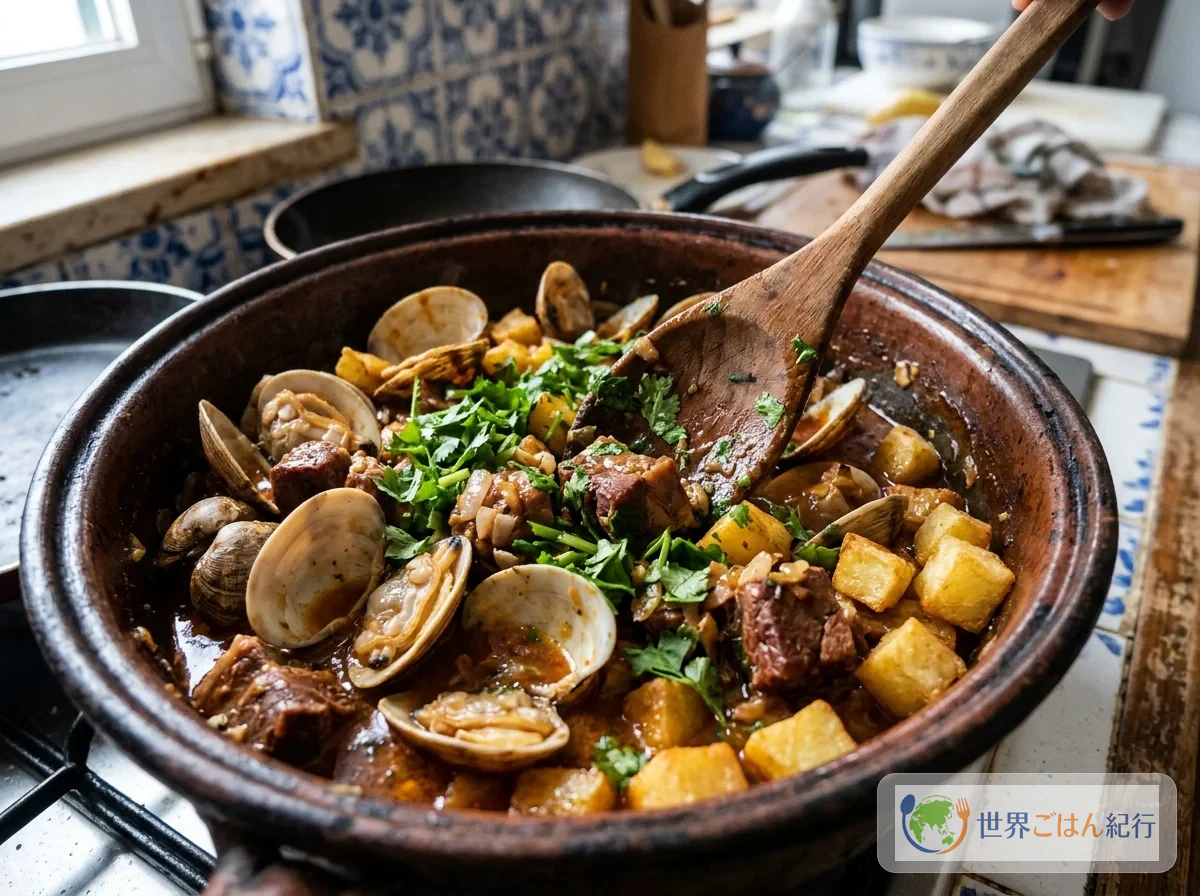
In a Lisbon neighborhood eatery, a large dish arrives in its earthenware pot. Among red-colored cubes of pork, clams have opened their mouths and hold the cooking juices in their shells. On top are crisply fried potatoes and plenty of chopped coriander. Picking at the pickles and olives served alongside, you soak the shell juices into bread. This is carne de porco à alentejana (carne de porco à alentejana), one of Portugal's signature pork dishes.
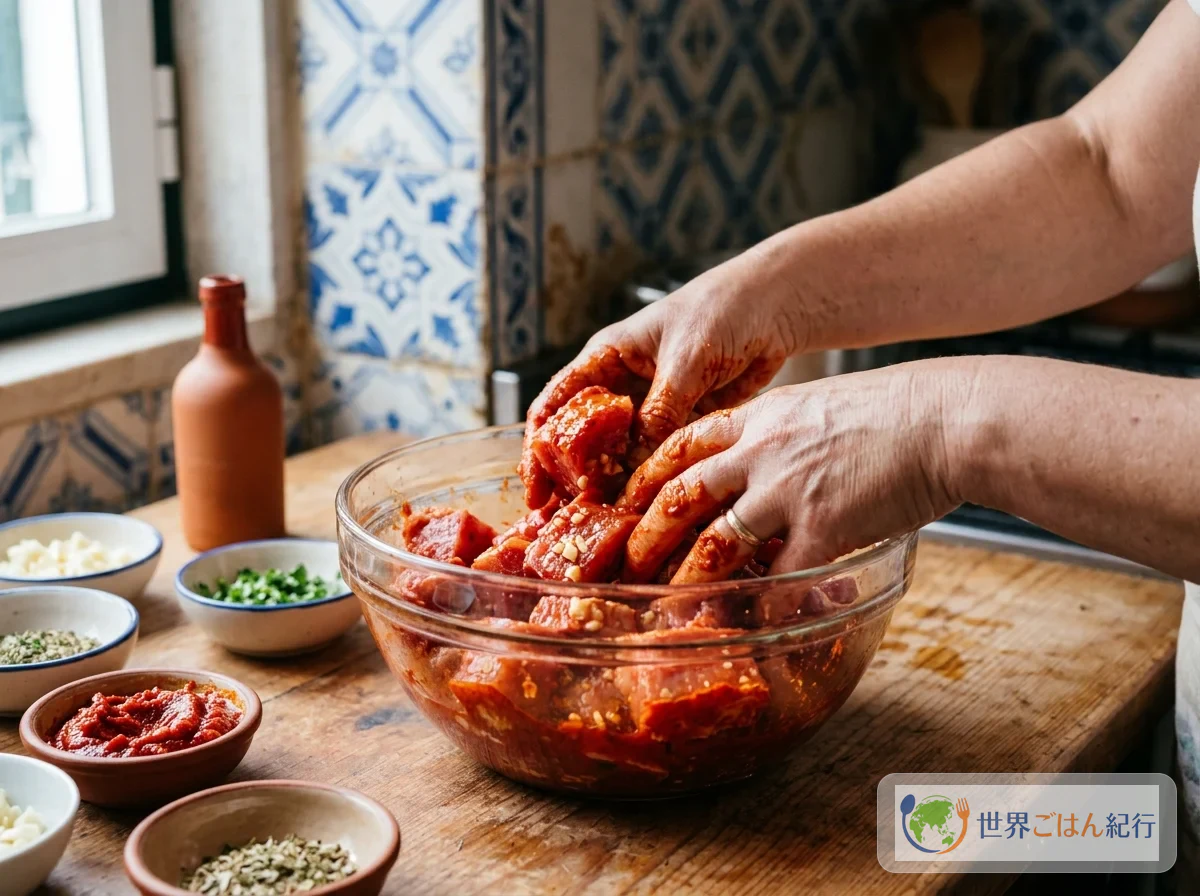
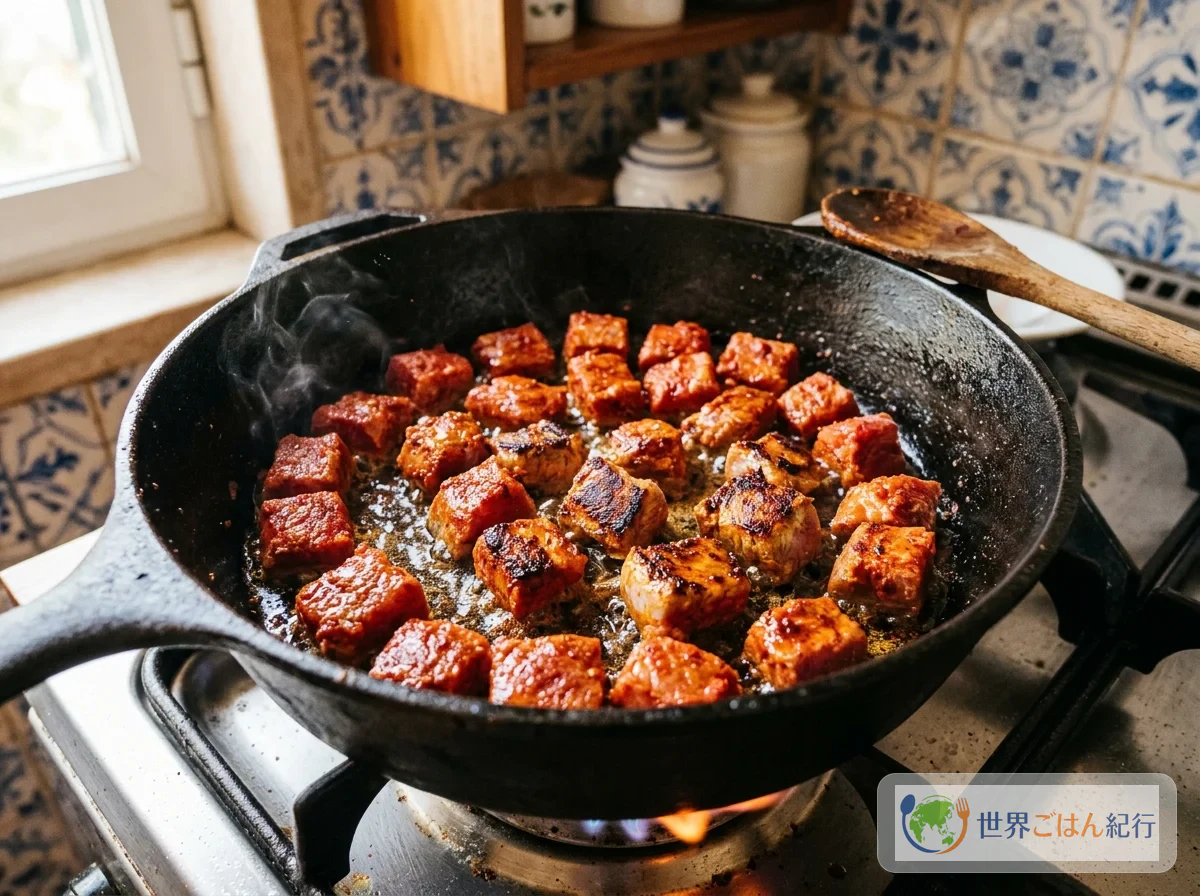
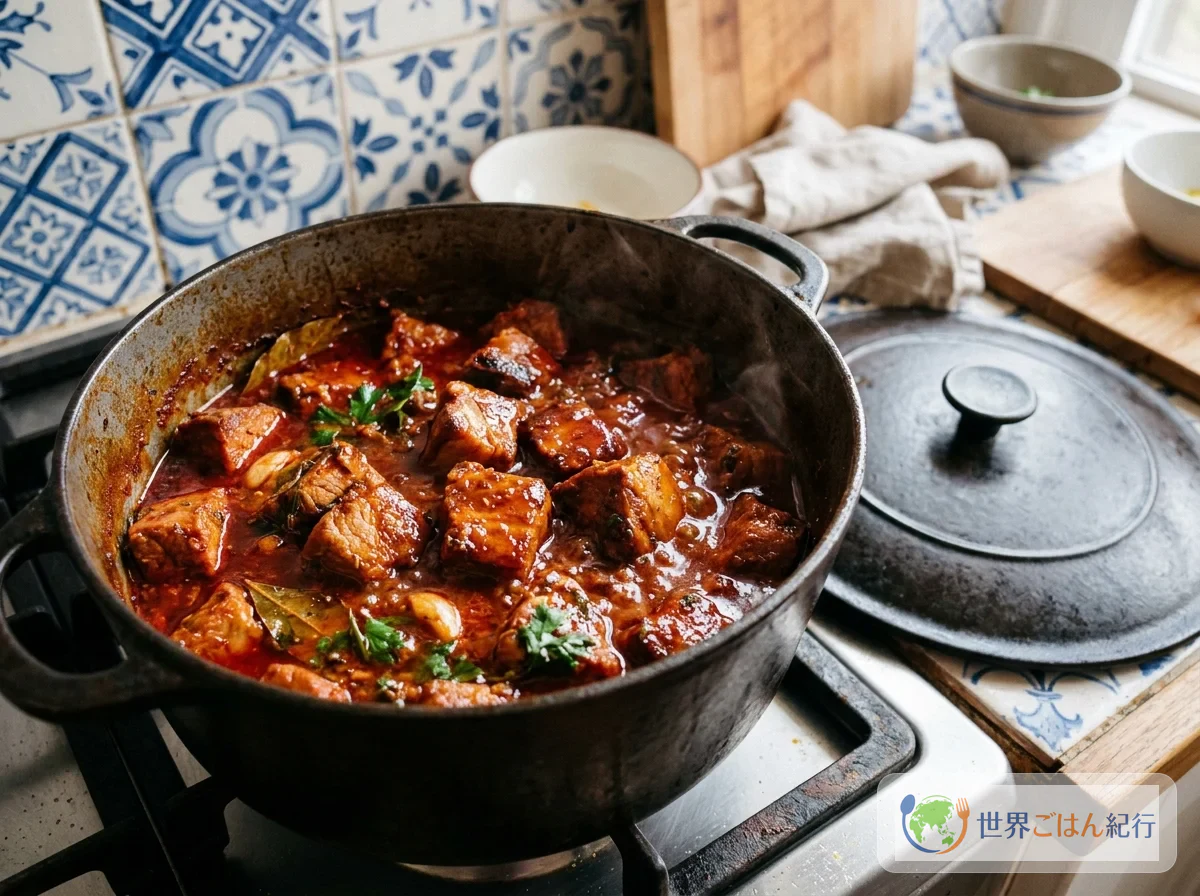
Though the name means "Alentejo-style pork," it contains sea clams. That combination is the interest of the dish, and the official site of the Portuguese cooking show TeleCulinária describes it as the clam juices melting into the sauce, a fusion of land and sea. The two high points when making it are marinating the pork thoroughly in red pepper paste and white wine, and adding the clams last and turning off the heat as soon as they open.
Pork from the Alentejo, clams from the Algarve
The Alentejo is a region of inland plains in southern Portugal. It is known as a producer of pigs raised free-range in cork oak woods and fed on acorns, and its meat had a reputation for quality. Yet about the birth of this dish, a theory is widely told that it comes not from the Alentejo but from the Algarve, the coastal region further south. In the British wine magazine World of Fine Wine, wine writer Joanna Simon presents several theories.
The best known is that Algarve pigs were fed on fishmeal and scraps from fish cannery factories, so the meat took on a fishy smell, and clams at hand were combined to hide it. On the other hand, there is also a tale that an Algarve cook gave it this name to let people know the pork he used was from acorn-fed Alentejo pigs. Simon writes that it is not known when the name was given, or whether Alentejo pork was really used.
There is also a story that in 1496, after King Manuel I forced Jews to convert or leave the country, he tested the faith of converts (New Christians) with this dish, which combines pork and shellfish, ingredients forbidden by Jewish law. Simon, however, says she does not know whether this is a theory, a tale or a fact.
The pork, clams, potatoes and coriander of the present form are a combination that settled over a long time in eateries and homes. The English Wikipedia also notes that there is a theory placing the origin in Alverca near Lisbon.
Ingredients (serves 4)
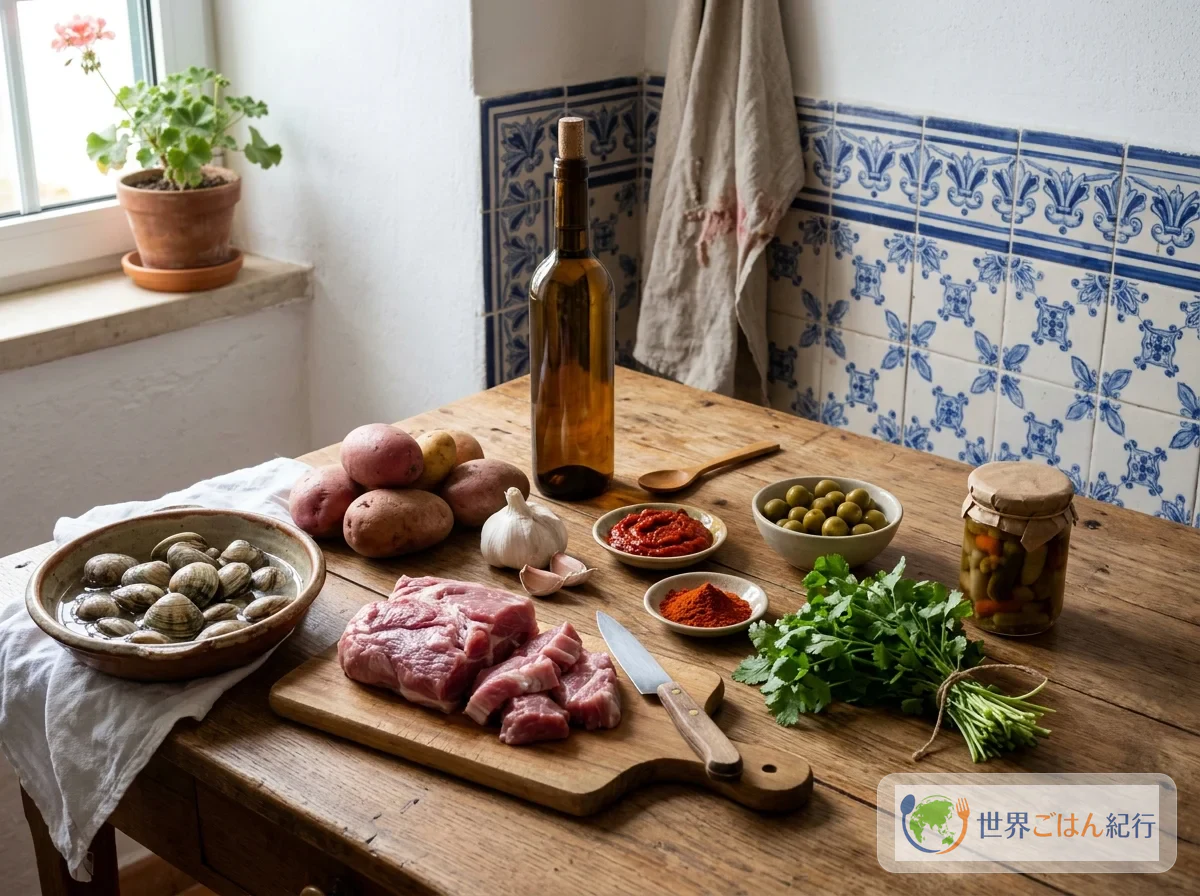
This is a home formula based on the TeleCulinária recipe, with ingredients swapped for those easier to find elsewhere.
Red pepper paste (massa de pimentão) is a seasoning born in the Algarve, made by salting and mashing red peppers. World of Fine Wine lists it among the key ingredients of this dish, along with white wine, garlic, bay leaf and coriander. It is only occasionally seen at Portuguese food shops or online outside Portugal, so making a substitute paste by kneading paprika powder with salt and olive oil is realistic. Most of the color and aroma come from the paprika, so even the substitute gives a result that is very much like the dish.
Soak the clams in salt water about as salty as seawater (1 tbsp salt to 500 ml water), cover them with newspaper or the like to darken it, and leave them 2 to 3 hours to spit out their sand. Rinse by rubbing the shells together and they are ready. If you cut the purging short, gritty sand ends up in the sauce.
How to make carne de porco à alentejana
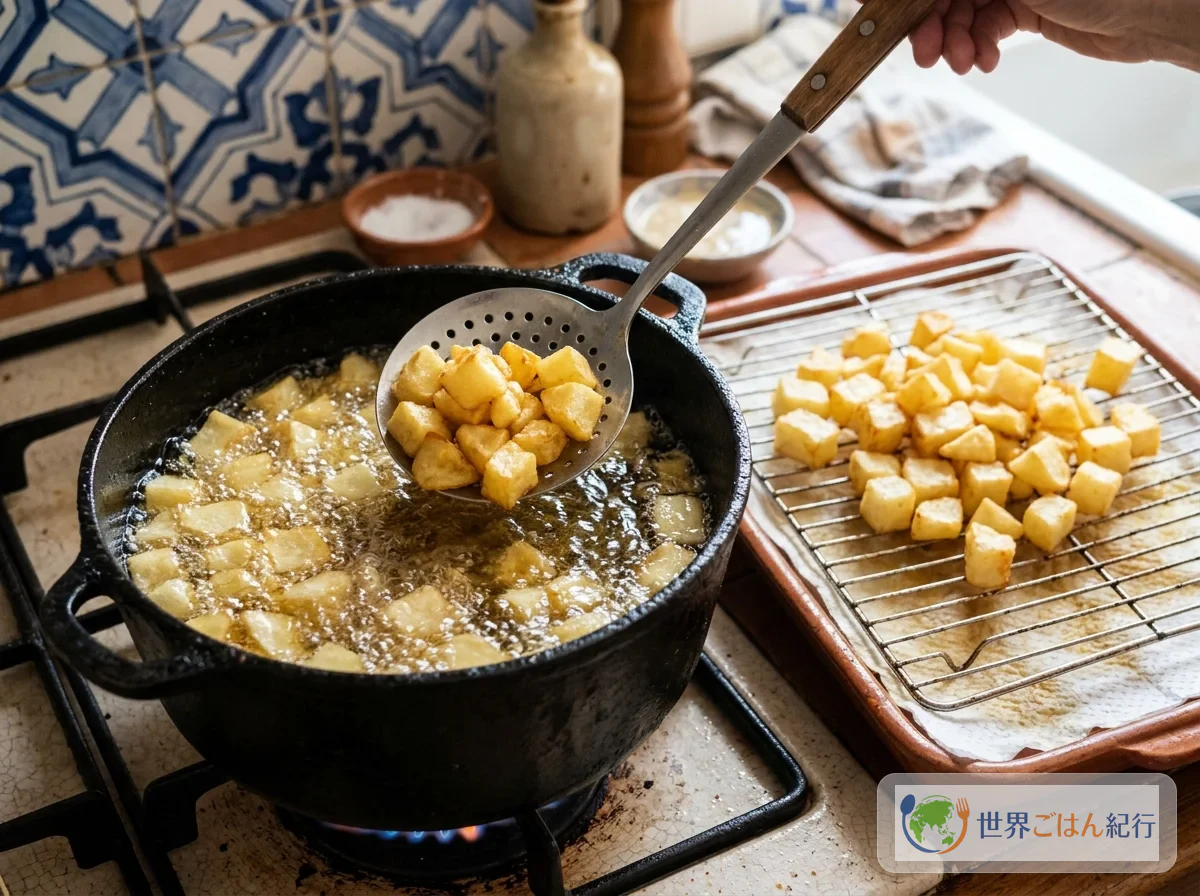
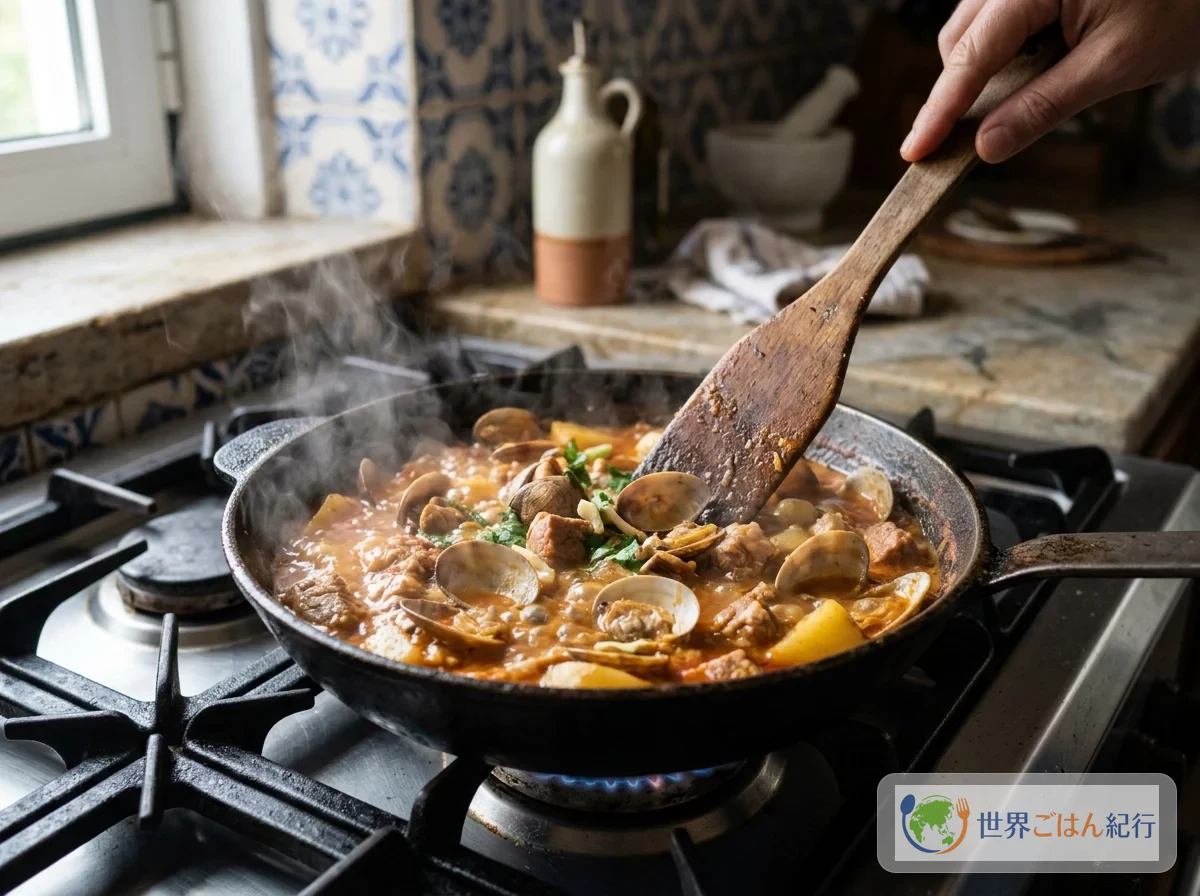
Marinating takes 1 hour (ideally 2 hours or more), frying the potatoes about 15 minutes, browning and simmering the pork about 25 minutes, and cooking the clams about 5 minutes. While it marinates, prepare the clams for purging and the potatoes, so the waiting time is not wasted.
Cook pork thoroughly through to the center. Japan's Ministry of Health, Labour and Welfare advises that heating the center of meat at 75°C for at least 1 minute kills pathogenic microorganisms such as enterohemorrhagic E. coli. When frying potatoes, do not leave the pot, and beware of burns from spattering oil. People with an allergy to shellfish such as clams cannot eat it.
Clams shrink and turn tough if overcooked. The moment they open is the signal to turn off the heat. If the potatoes go in early they soak up the cooking liquid and go limp, so if you want to keep the crisp texture, add them just before serving.
Coriander and pickles make the southern flavor
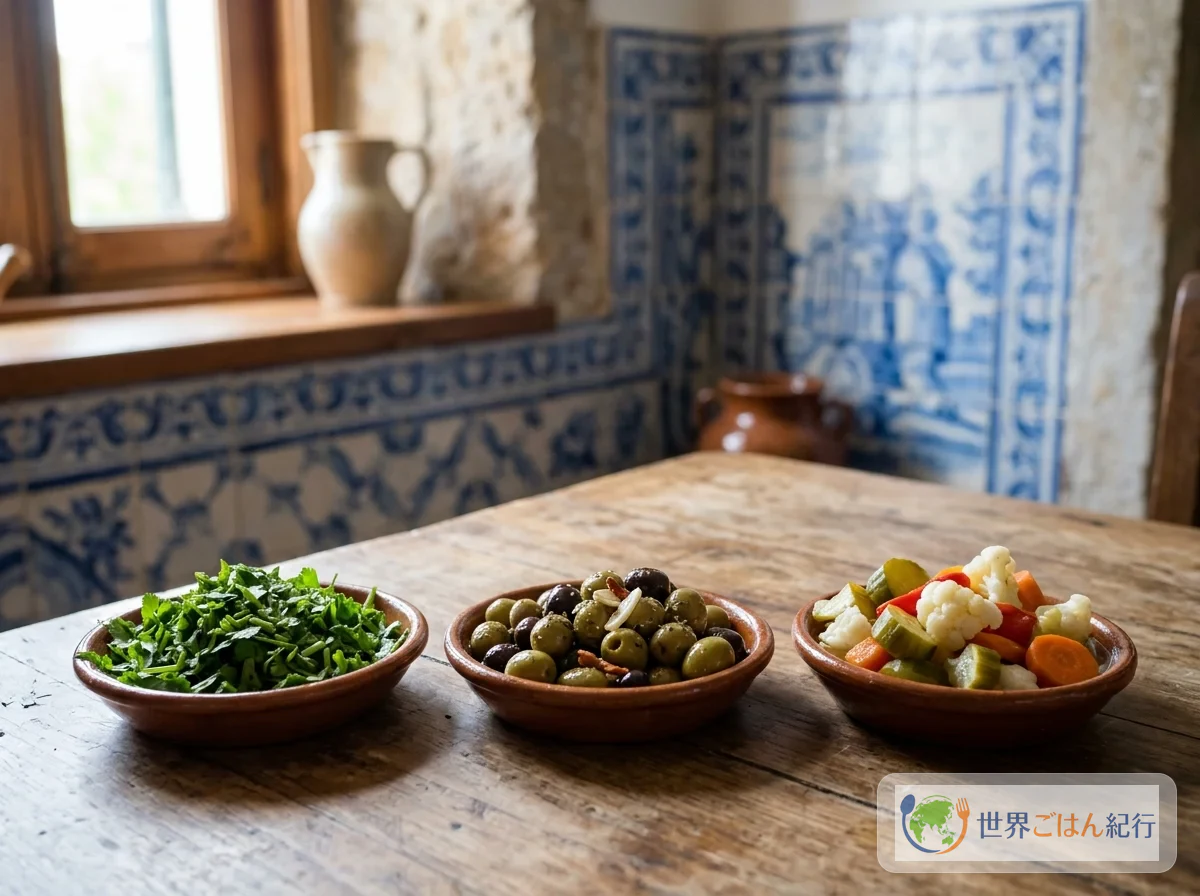
What this dish cannot do without at the finish is fresh coriander. Coriander is often used in southern Portuguese cooking, and the Alentejo bread soup Açorda likewise holds plenty of chopped leaves. Against fatty pork and a sauce rich in the savor of shellfish, a fresh green aroma cuts through at once. Ordinary fresh cilantro works as it is. If you dislike it, the dish can be made with parsley instead.
Olives and pickles are important supporting players too. Against the heavy combination of pork, clams and fried potatoes, their acidity and saltiness reset the mouth. In the TeleCulinária recipe too, olives and pickles are scattered over after it is served on the platter. Always adding a tart accompaniment lets you eat it to the end without feeling it is heavy.
For wine to go with this dish, Joanna Simon of World of Fine Wine mentions a lighter red, a rosé, or a Portuguese white that goes well with the aroma of coriander.
Served on a platter, with the shell juices
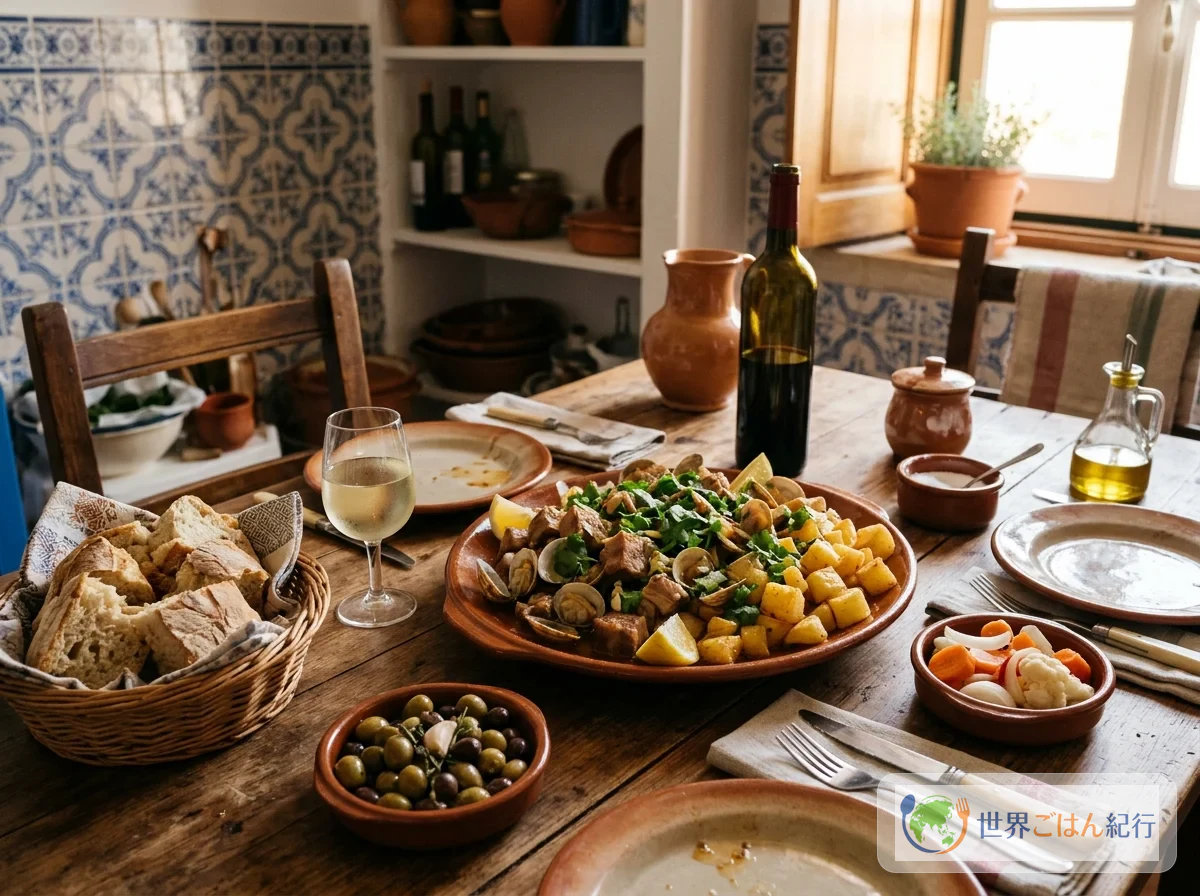
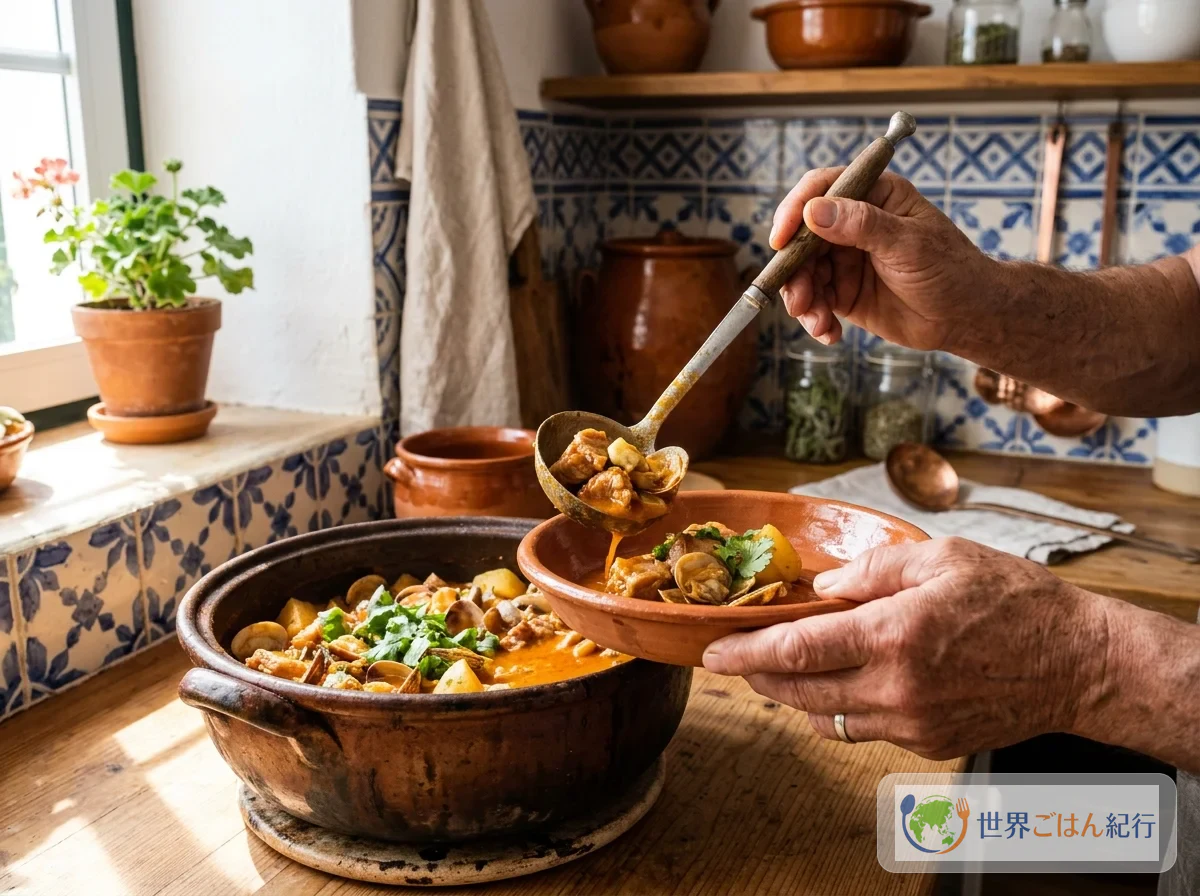
Heap it in the center of a large platter, arrange the open clams on top, and scatter with coriander. Serving from the platter lets each person choose what they like. The juice that collects in the clam shells and the sauce at the bottom of the dish are especially good, so mop them up with bread. The potatoes that have soaked up the sauce are also a flavor particular to this dish.
If eating meat and shellfish together feels fresh to you, try pairing it with another Portuguese dish, Amêijoas à Bulhão Pato (in Japanese), clams steamed with garlic, coriander and lemon. It shows clearly the difference in how clams are used.
Frequently asked questions
What happens if I don't have red pepper paste?
The substitute paste of paprika powder, salt and olive oil is enough. The real paste has the acidity and depth of fermented red pepper, so if it feels lacking, add 1 tsp white wine vinegar to the substitute paste.
Can I use frozen clams instead of fresh?
Yes. Add frozen clams while still frozen and heat until they open. Choosing shell-on ones makes the look and the juices closer to fresh clams.
Can I make it without frying the potatoes?
You can bake them in the oven, or heat them in the microwave and then brown them in a skillet. The crisp texture is weaker than fried, but it is easy to make.
Can I leave the marinade overnight?
You can leave it in the refrigerator overnight. The longer it sits the more flavor soaks in, but the acidity of the wine can turn the surface of the meat a little whitish.
Can I make it ahead?
Cool the pork stew before refrigerating, and when reheating, heat it until everything is simmering well. Clams and potatoes turn tough or sticky over time, so eating it freshly made is recommended. This article does not give a guide for how many days it keeps, because we could not confirm one from a source.
Sources
- TeleCulinária, "Receita de Carne de Porco à Alentejana." Accessed and checked 22 October 2026. https://teleculinaria.pt/receitas/receita-de-carne-de-porco-a-alentejana-teleculinaria
- World of Fine Wine, Joanna Simon, "Carne de porco à Alentejana," 6 April 2022 (updated 7 June 2023). Accessed and checked 22 October 2026. https://worldoffinewine.com/wine-food/carne-porco-alentejana
- Wikipedia, "Carne de porco à alentejana." Accessed and checked 22 October 2026. https://en.wikipedia.org/wiki/Carne_de_porco_%C3%A0_alentejana
- Ministry of Health, Labour and Welfare of Japan, "Cook beef and pork liver and pork thoroughly through to the center" (poster for restaurants). Accessed and checked 22 October 2026. https://www.mhlw.go.jp/file/06-Seisakujouhou-11120000-Iyakushokuhinkyoku/innsyokutenn.pdf