Spanish Churros: The Lightness of Dough Straight from the Oil
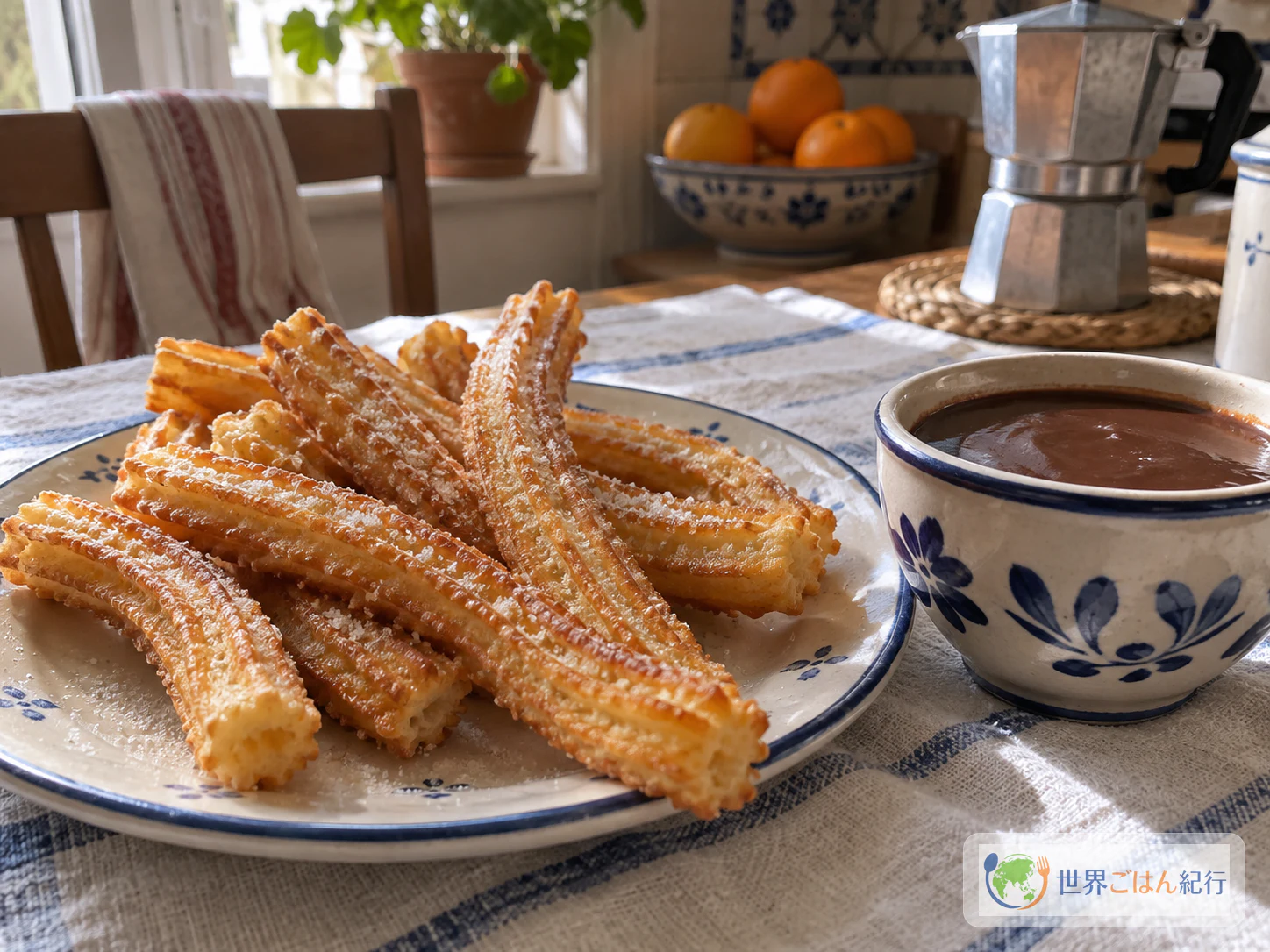
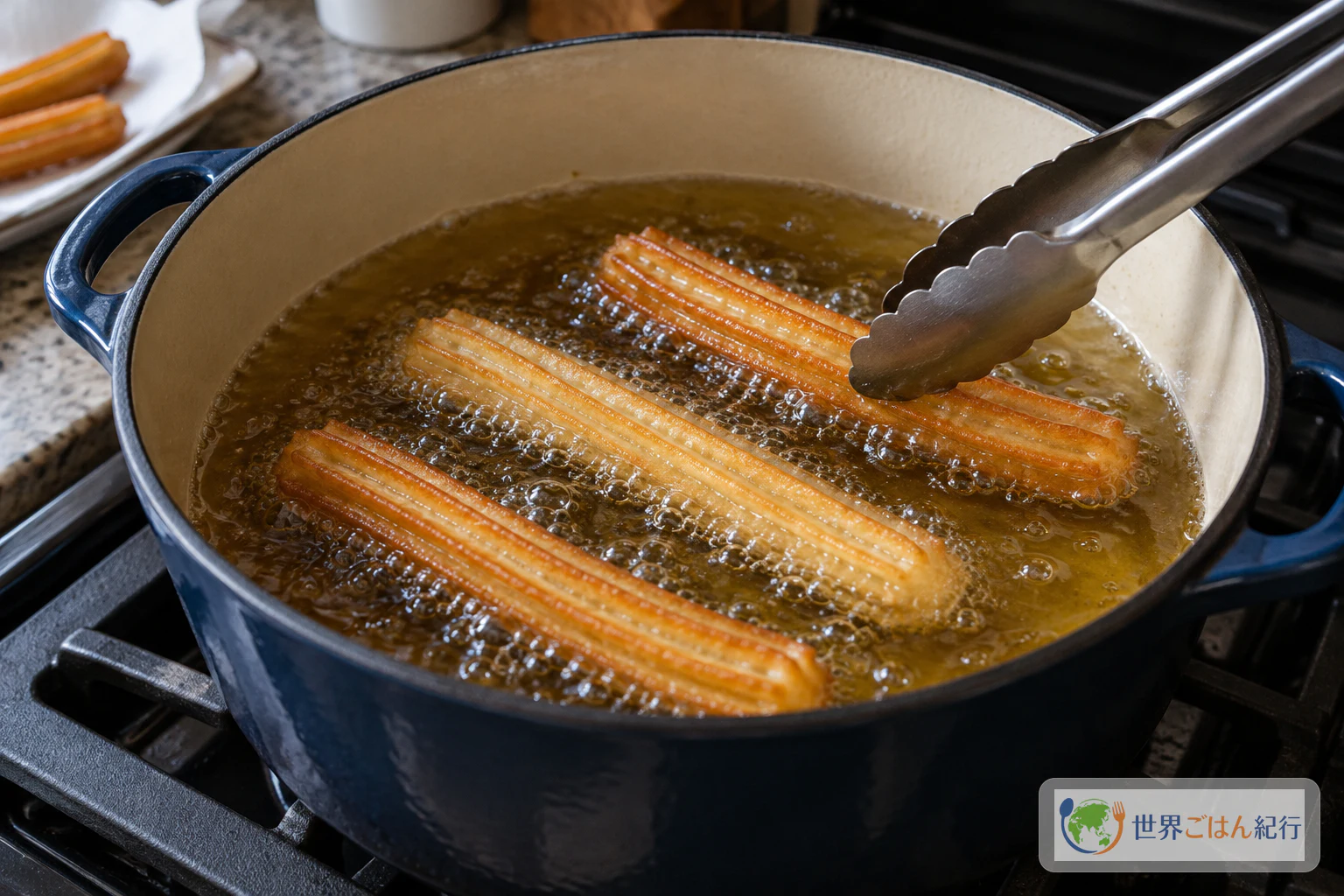
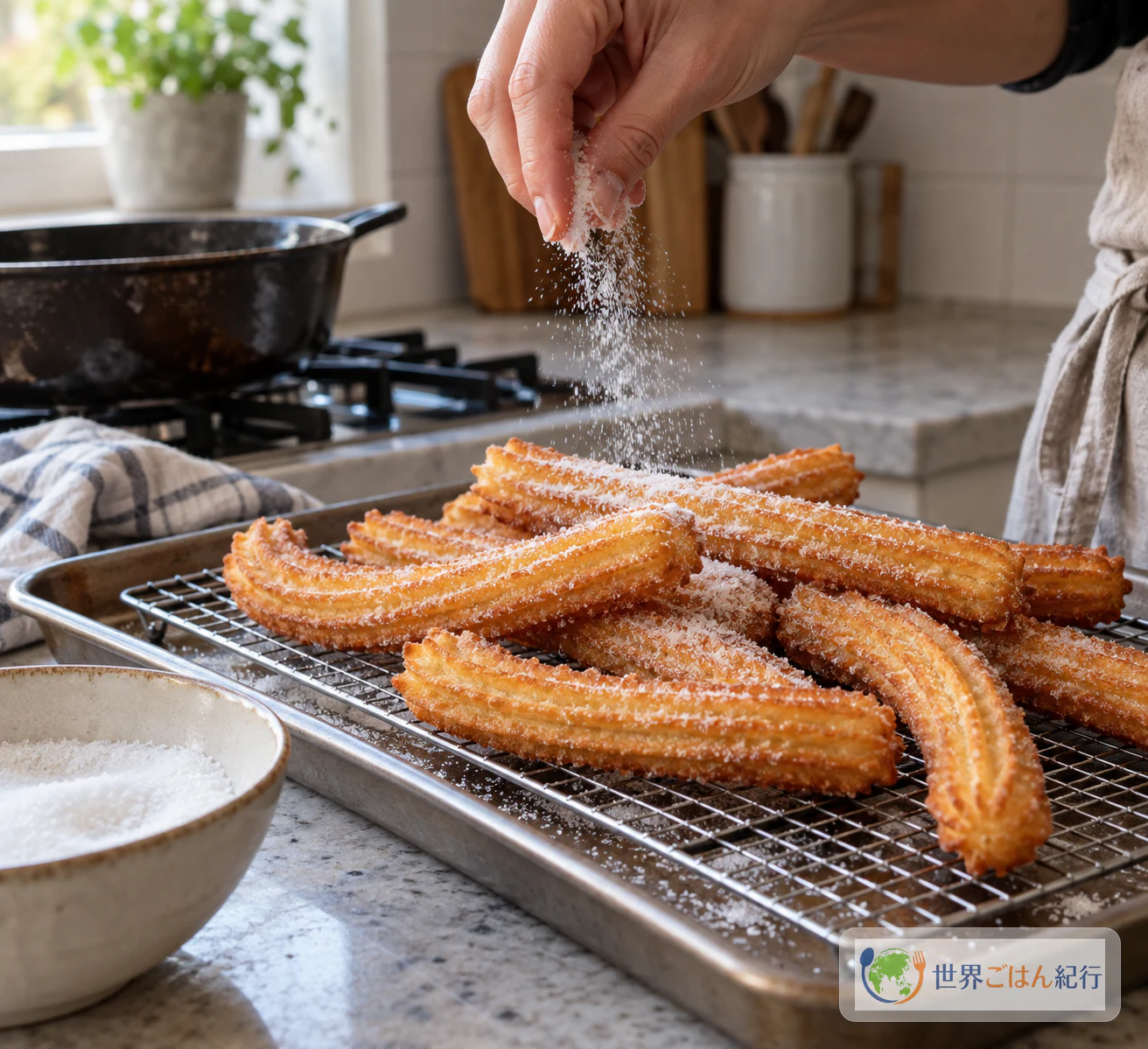
A plain dough of wheat flour, water and salt; ridges from a star-shaped nozzle; an evenly golden outside with the center cooked through; and a light dusting of sugar while the churros are still hot.
In Madrid, slender churros fried to gold are dipped into thick hot chocolate. Spain's tourism board describes churros as a breakfast or snack, and its guide to the cuisine of the Madrid Region mentions churros with chocolate eaten at dawn around Christmas. That is one picture of the table these fried sticks belong to, not a habit every household shares.
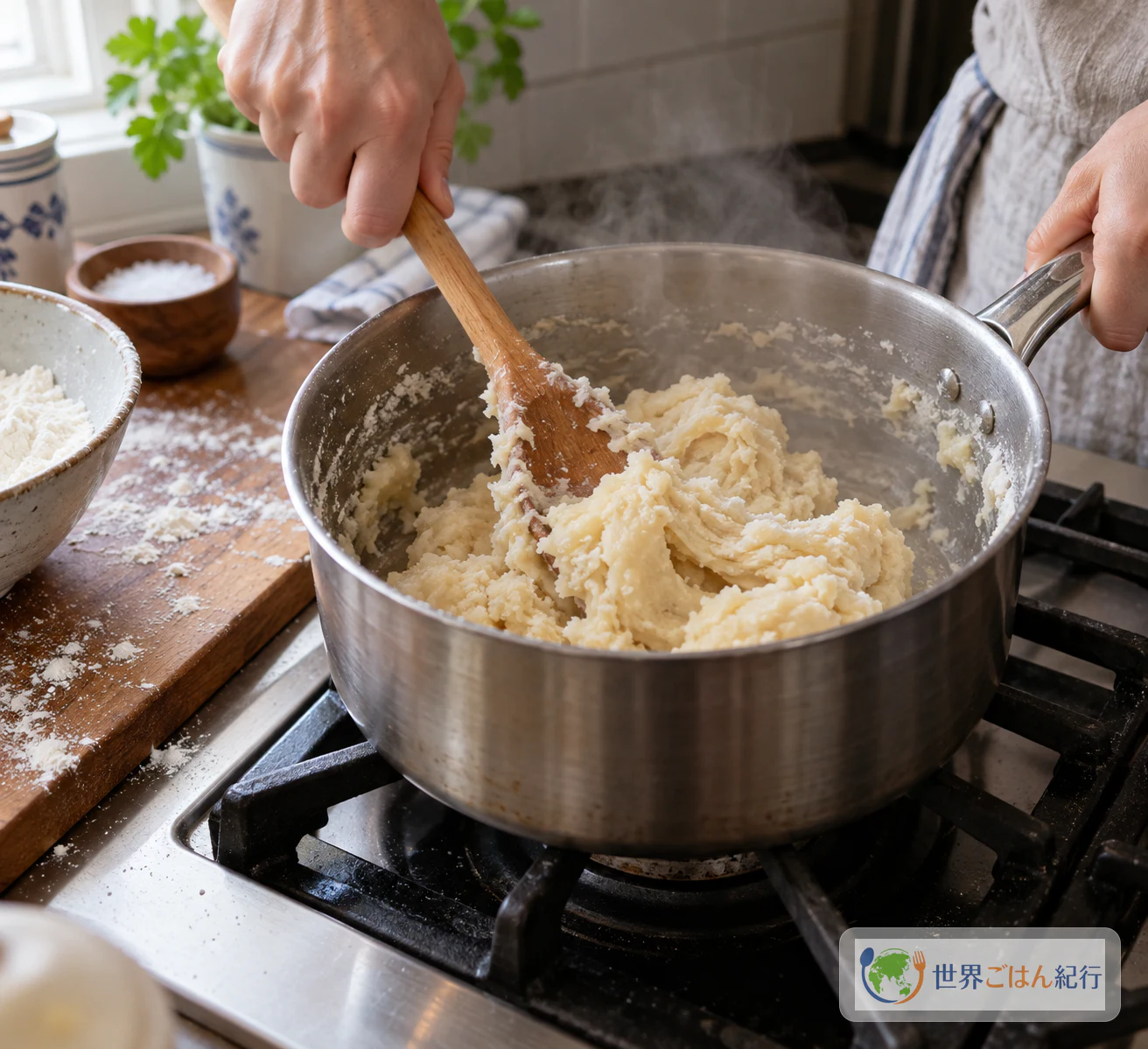
The dough itself has very few ingredients: flour stirred into boiling salted water until it forms a firm, thick dough. That simplicity is what makes churros approachable at home. The real challenge is not the flavor but the handling: the dough is made with boiling water, it has to be pressed through a churrera, and it then goes into hot oil. This recipe follows a published version from the Spanish public broadcaster RTVE, shaping the dough on the counter rather than over the oil.
The amounts and method here follow RTVE's published recipe. It gives neither a serving count nor a churro count. Sekai Gohan has not kitchen-tested this recipe.
Breakfast in Madrid: Thin Churros and Thicker Porras
According to Spain's tourism board, churros are eaten for breakfast or as a snack, and in the Madrid Region they appear alongside chocolate, including at dawn at Christmastime. The tourism board's own churros recipe, labelled as a Madrid-region dish, finishes them with a sprinkle of sugar and serves them right away; chocolate is not part of the recipe itself.
The same guide to Madrid's cuisine distinguishes two shapes: thin, curved churros and larger porras. This article makes the thin churros. A thicker porra changes how the dough fries and how long it takes for the center to cook through, so it is best treated as a separate recipe rather than a resized version of this one.
Many stories circulate about where churros came from, but no reliable source for their origin or the history of the name was confirmed for this article. The focus here stays on how churros are eaten today.
A few Spanish words help when reading recipes or shopping: churro (plural churros), churrería (a shop that makes churros), churrera (the press used to extrude the dough) and porra (the thicker fried dough).
Ingredients for One Batch
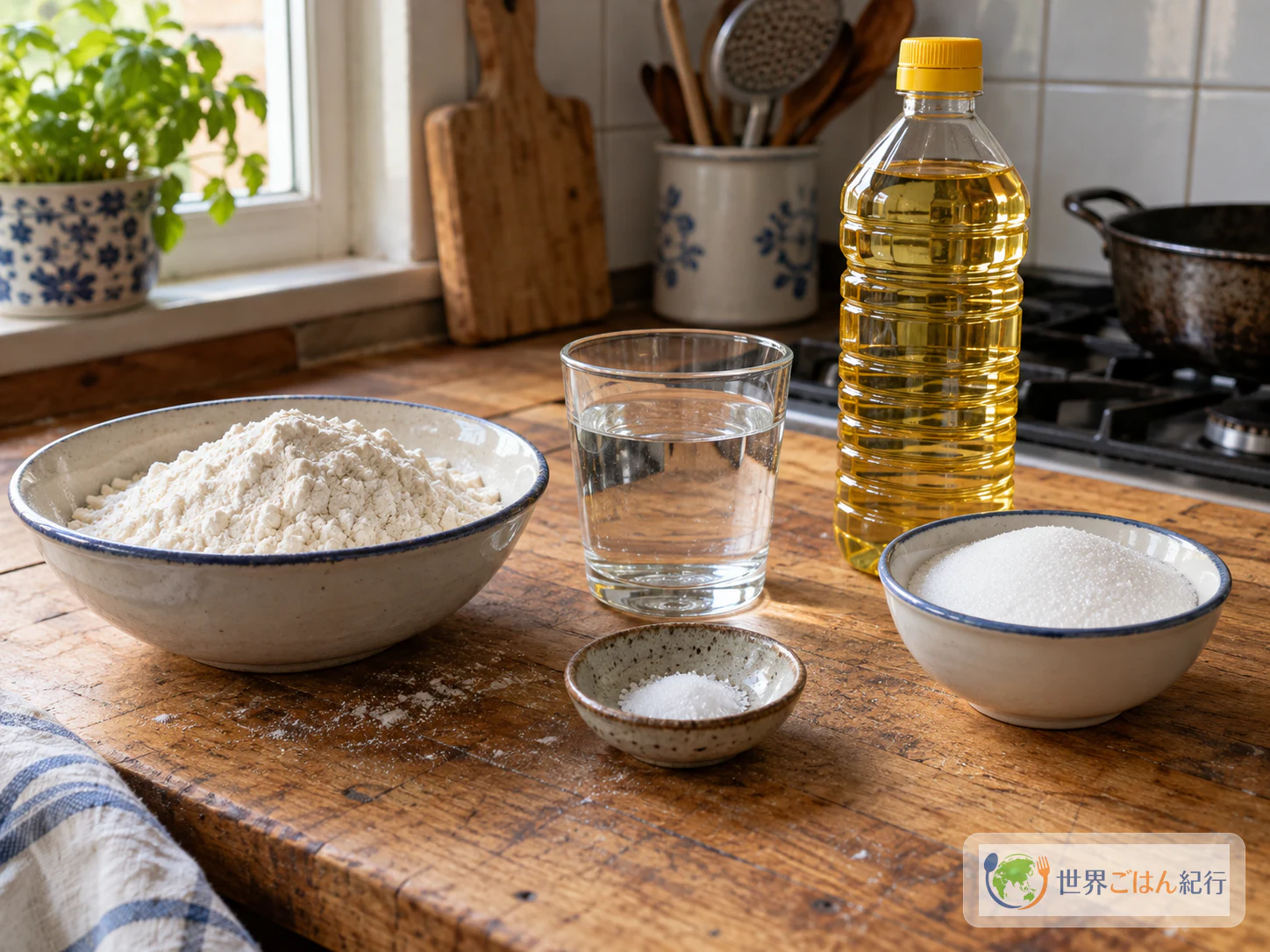
Unlike doughs enriched with eggs or butter, this dough is made by bringing flour together in boiling salted water. The amounts below make one batch; how many churros you get depends on the size of the nozzle and how long you cut them.
Choosing Ingredients and Substitutes
- Flour: Use harina floja, a soft flour. Bread flour is likely to make a tighter, firmer dough. All-purpose flour falls between the two in texture, so treat it as a different formula from this one rather than an exact swap.
- Salt: Use 15g.
- Frying oil: Use sunflower oil. Olive oil carries its own aroma into the churros; a neutral frying oil gives a cleaner, plainer flavor.
- No eggs, butter or spices: This Madrid-style base uses none of them. Leave out the optional cinnamon.
The dough contains wheat. If you serve chocolate alongside, check the product labels for milk and other allergens.
Equipment
- Heavy saucepan for the dough
- Wooden spoon
- Heat-resistant silicone work surface or mat
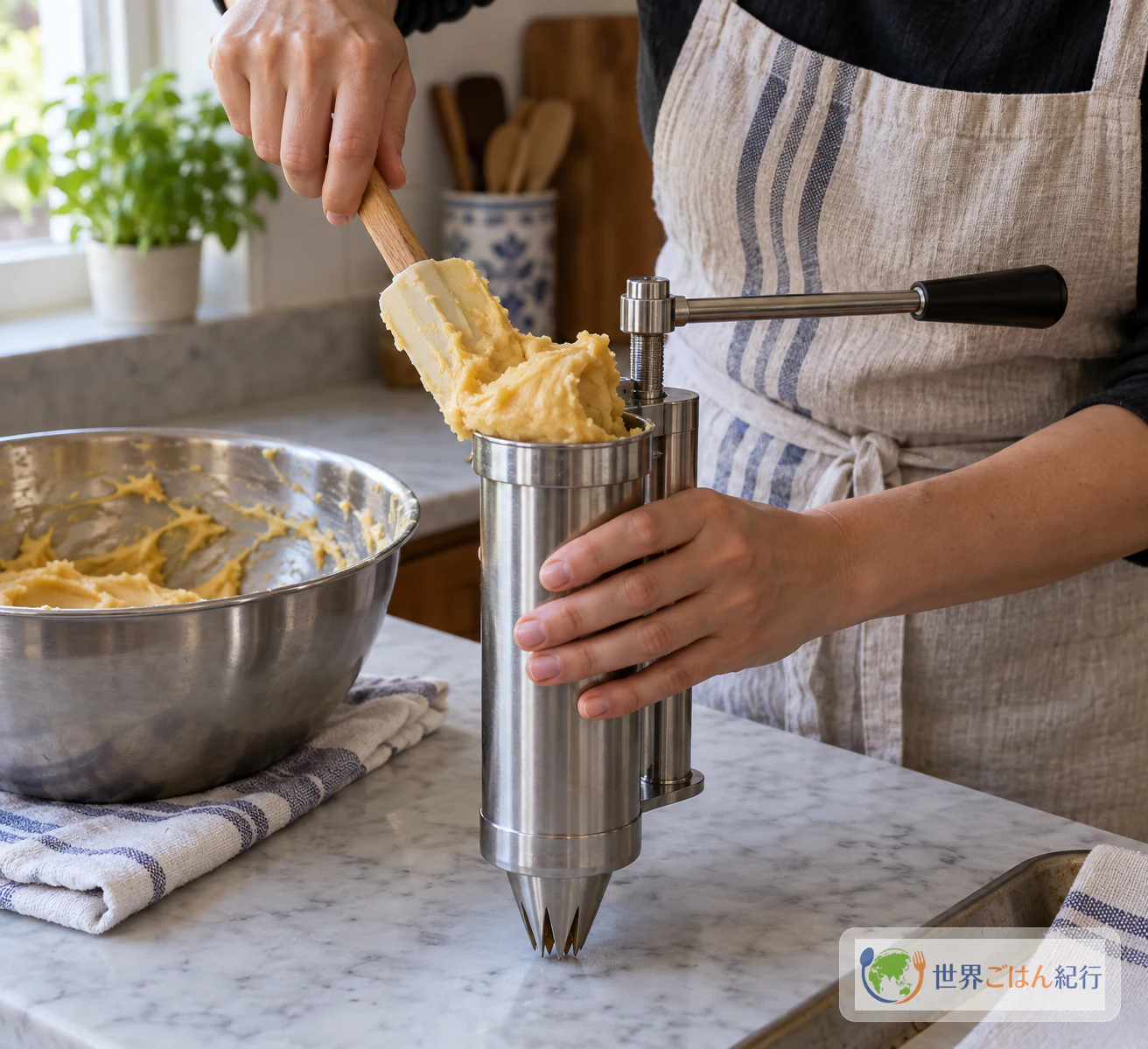
- Spatula for gathering and packing the dough
- Manual churrera with a star-shaped nozzle
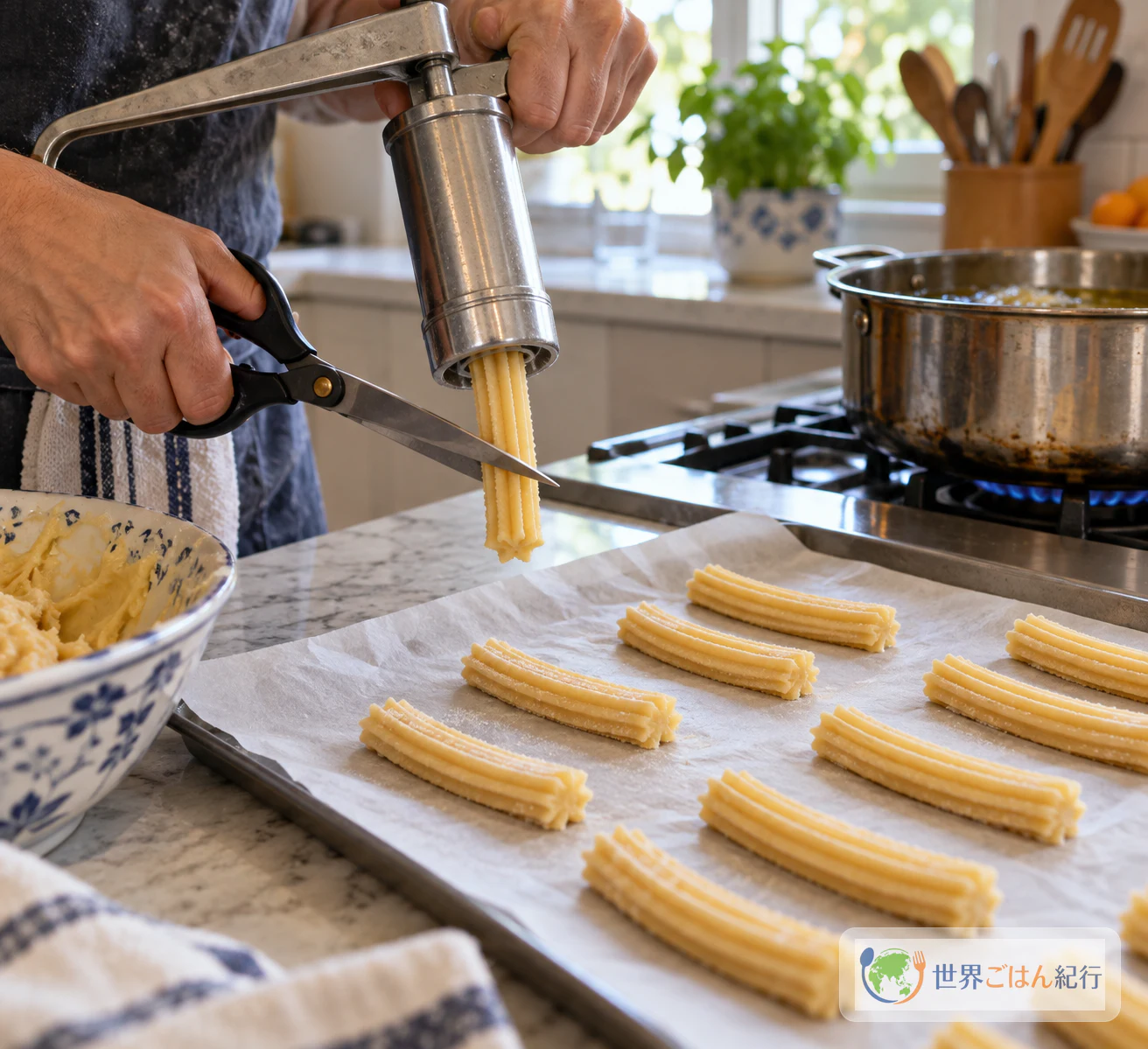
- Kitchen scissors or a knife for cutting the strands
- Deep, heavy pot for frying
- Thermometer for watching the oil
- Long tongs and a wire rack for draining
Use a manual churrera to press out the firm dough. A piping bag with a star tip can help form ridges, but it is not equivalent in strength or ease of handling with this stiff, hot dough, so it isn't recommended as a straight substitute.
Method: Firm Dough, Shaped Off the Heat, Fried in Small Batches
The whole process runs in this order: bring the flour together in boiling salted water, shape the dough away from the oil, fry a few at a time, and dust with sugar while hot. Have everything ready before the water boils, because the dough moves quickly once the flour goes in.
Preventing Spatter and Undercooked Centers
Keep three habits for a calmer fry: don't add extra water to the dough, give the dough its ridges with the star nozzle, and handle the hot dough only with tools.
The sources used here give no specific frying temperature. A thermometer helps you notice when the oil drops after a batch goes in, and frying fewer pieces at once keeps the temperature steadier. Adjust the heat and the batch size while watching the color and checking the center.
| Symptom | Possible cause | What to try next |
|---|---|---|
| The dough won't press out, or breaks off unevenly | Air pockets in the churrera; dough packed loosely | Repack firmly with a spatula, pressing out the gaps |
| The outside browns before the center is cooked | Oil too hot for the thickness; strands too thick | Lower the heat and keep the strands thin; thicker shapes are a separate recipe |
| The churros look pale and soak up oil | Oil temperature dropped from frying too many at once | Fry fewer per batch and let the oil recover between batches |
| Oil spatters when dough goes in | Dough shaped over the oil, or wet tools near the pot | Shape on the counter first and keep everything near the oil dry |
Ways to Vary It
- Madrid-style thin strands (the base recipe): long, slender ridged sticks as above.
- Thicker, porra-style: frying time and how the center cooks will change, so treat this as a separate recipe and don't reuse the base recipe's cues as-is.
- Without sugar: skip the dusting and let the salty dough come forward.
- Sugar, then chocolate: dust with sugar, then dip into hot chocolate, as in the Madrid table scene.
- Spiced or enriched doughs: adding spices, eggs or butter moves away from this base. These are separate recipes rather than variations on the Spanish style shown here.
Dipping in Hot Chocolate
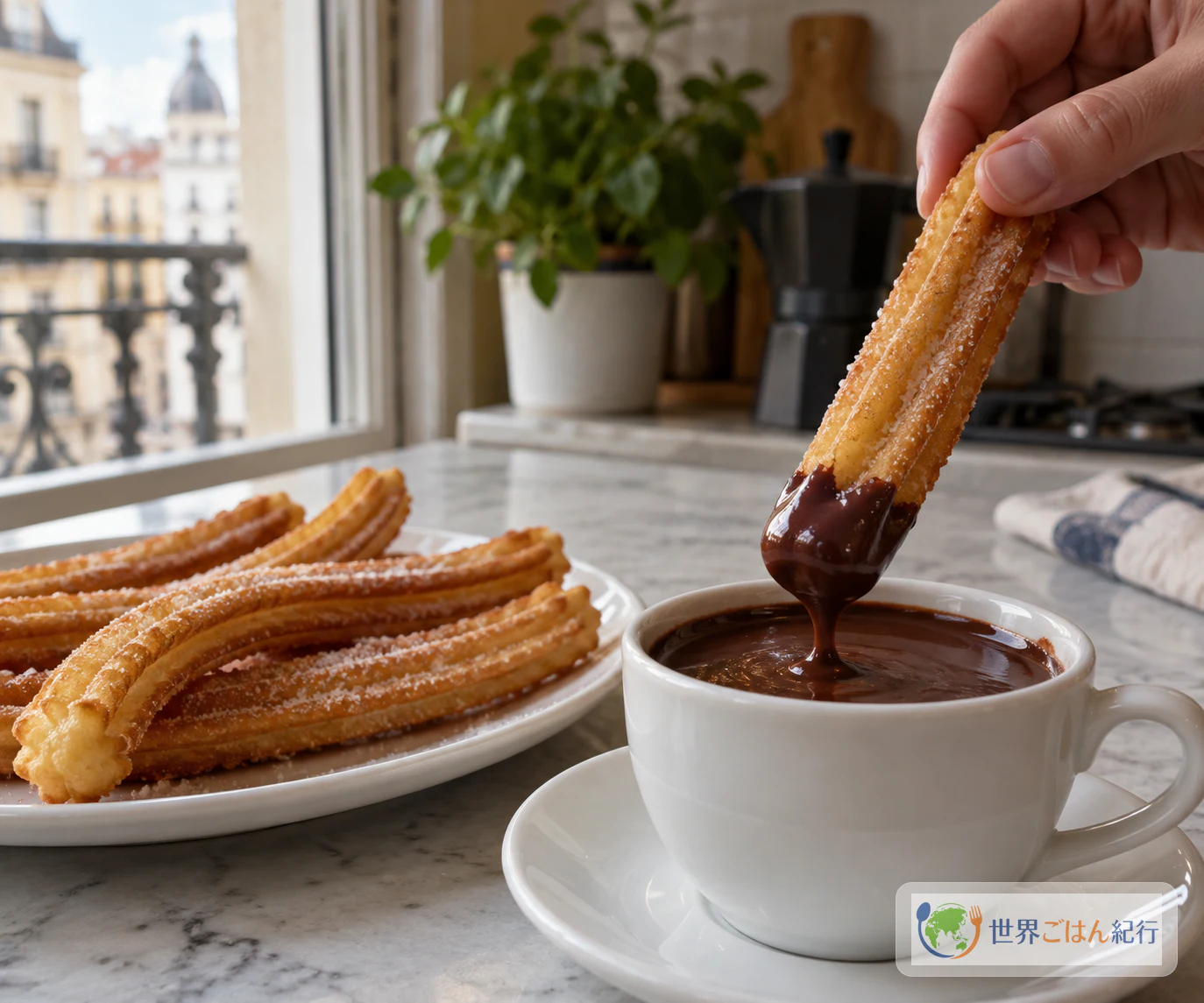
Spain's tourism board serves its churros dusted with sugar and straight away, with no chocolate required. Try one on its own first to taste the crisp, salty dough, then dip the next into a cup of thick hot chocolate, the pairing the tourism board describes for Madrid, including at dawn around Christmas. The chocolate is something served alongside, not part of the dough.
Chocolate is not the same as champurrado, the Mexican masa-based drink. Some recipes pair churros made with cinnamon, nutmeg and vanilla with champurrado; that is a different, spiced style from the plain Madrid dough here. For the drink itself, see champurrado.
Frequently Asked Questions
Can I use a piping bag instead of a churrera?
The recipe followed here uses a manual churrera. A piping bag with a star tip can make ridges, but with this firm, hot dough it is not as sturdy or as easy to handle, so it isn't recommended as an equal substitute.
Can I pipe the dough straight into the hot oil?
Avoid it. RTVE shapes the dough before it goes into the oil to prevent spattering. Press and cut the strands on the counter, then add them to the oil.
Should I add eggs or butter to the dough?
Not for this Spanish base. The dough is only flour, water and salt. Doughs with eggs, butter or spices are different recipes and shouldn't be mixed with this one.
What is the difference between churros and porras?
Spain's tourism board, describing the cuisine of the Madrid Region, sets thin, curved churros apart from larger porras. The difference here is in thickness; a thicker shape fries differently and is treated as its own recipe.
Can I make churros ahead?
They are at their best freshly fried, which is how Spain's tourism board serves them, and one recipe source advises eating them the same day. No storage period is confirmed, so plan to fry them close to serving.
Sources
- Spain.info / Turespaña, "'Churros' (Spanish donuts)." A Madrid-region churros recipe: ingredients of flour, water, oil, salt, olive oil and sugar; adding flour to boiling water to make a thick dough; frying in very hot oil; sprinkling with sugar and serving right away; churros as breakfast or snack. https://www.spain.info/en/recipe/churros/
- RTVE, "Aprende a hacer churros con esta sencilla receta." The recipe followed here: 650g water, 400g soft flour, 15g salt and sunflower oil; shaping the dough before it goes into the oil to avoid spattering; frying until golden. No oil temperature, frying time or yield is given. https://www.rtve.es/television/20241009/aprende-hacer-churros-esta-sencilla-receta/16279397.shtml
- Spain.info / Turespaña, "The cuisine of the Madrid Region." Thin, curved churros and larger porras in Madrid; breakfast and snack culture; churros with chocolate at dawn at Christmastime. A regional overview that does not represent every household or shop. https://www.spain.info/en/gastronomy/madrid-regional-cuisine/
- Larousse Cocina, "Churros y champurrado." A spiced churros recipe served with Mexican champurrado, used only to show how it differs from the plain Madrid style, as an example of a star nozzle, and for the advice that churros are best eaten fresh the same day. https://laroussecocina.mx/receta/churros-y-champurrado/