Crisp Outside, a Ham-Scented Béchamel Inside
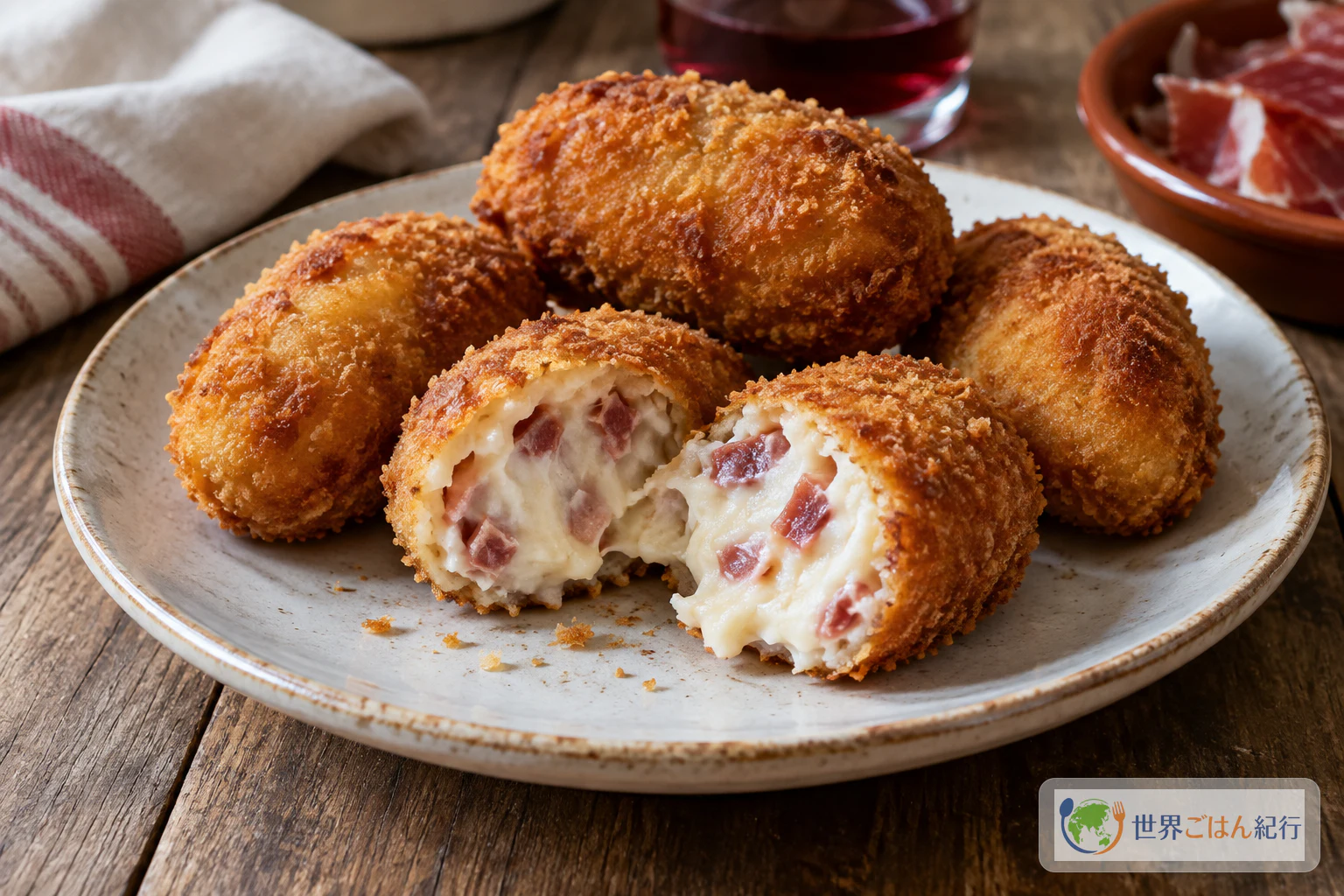
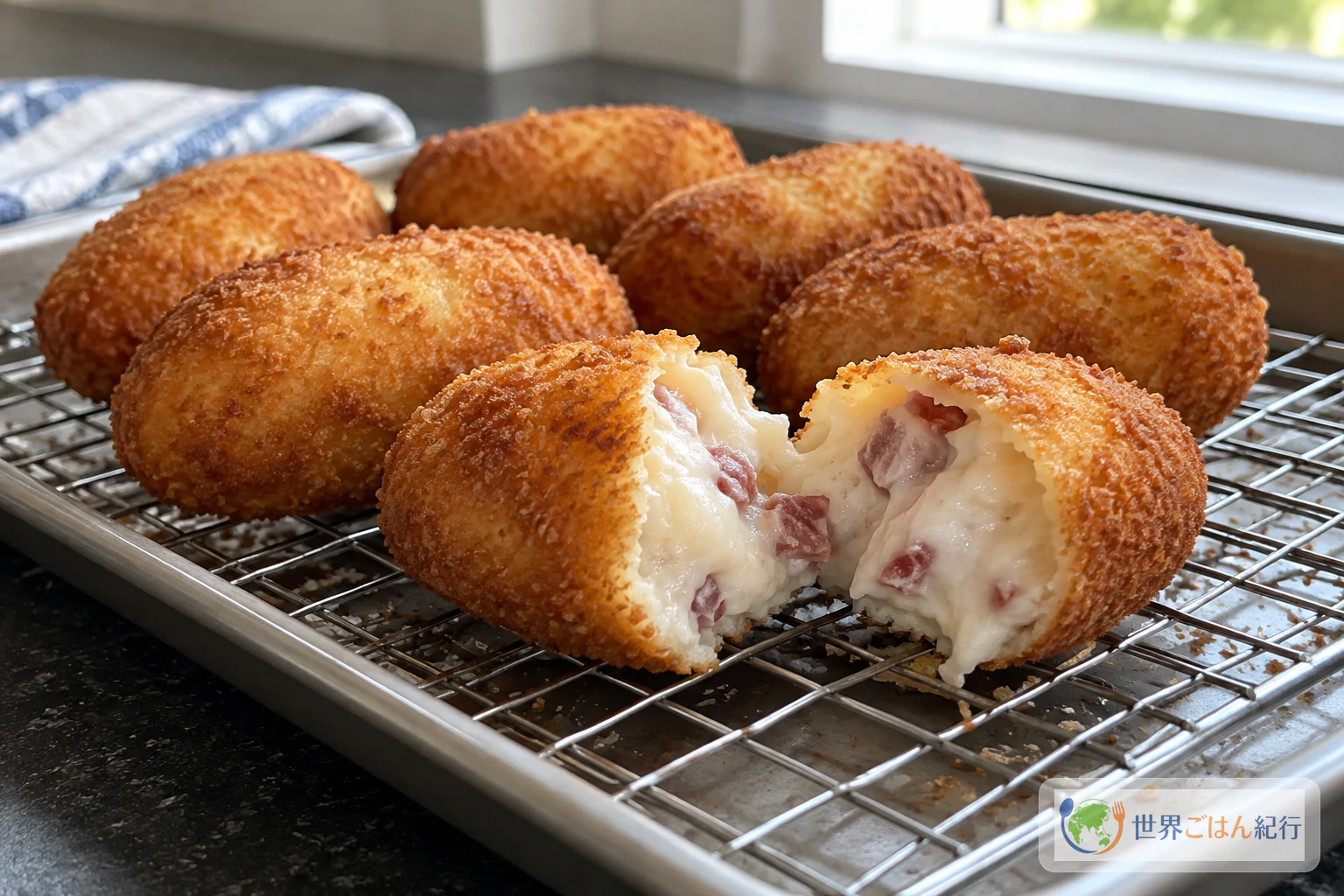
A thin, crisp breadcrumb shell, and inside, a béchamel thick enough to hold its shape yet soft and creamy on the tongue, with small pieces of cured ham running all through it.
You take one from a small plate while it is still hot and break it open. The breadcrumb crust gives way, and inside is a smooth, thick cream flecked with little pink pieces of ham. That contrast, a crisp outside around a creamy inside, is what RTVE's recipe for croquetas de jamón aims for, and it is why ham croquettes are such a familiar sight on Spanish tables.
Croquetas de jamón, "ham croquettes," are small ovals of béchamel mixed with cured ham, coated in egg and breadcrumbs, and fried. Spain.info, Spain's official tourism site, lists croquetas among the country's most popular tapas and describes the ham version as the most traditional. Fillings vary by region and by bar, so there is no single nationwide formula; this article follows one recipe, from Spanish public broadcaster RTVE.
They belong to the way Spaniards eat tapas: ordering a few small plates or larger raciones to share with drinks, and taking one croqueta at a time. Recreating them at home comes down to two things: a béchamel cooked to the right thickness and chilled long enough to shape, and salt kept in check, because the ham and stock already bring plenty.
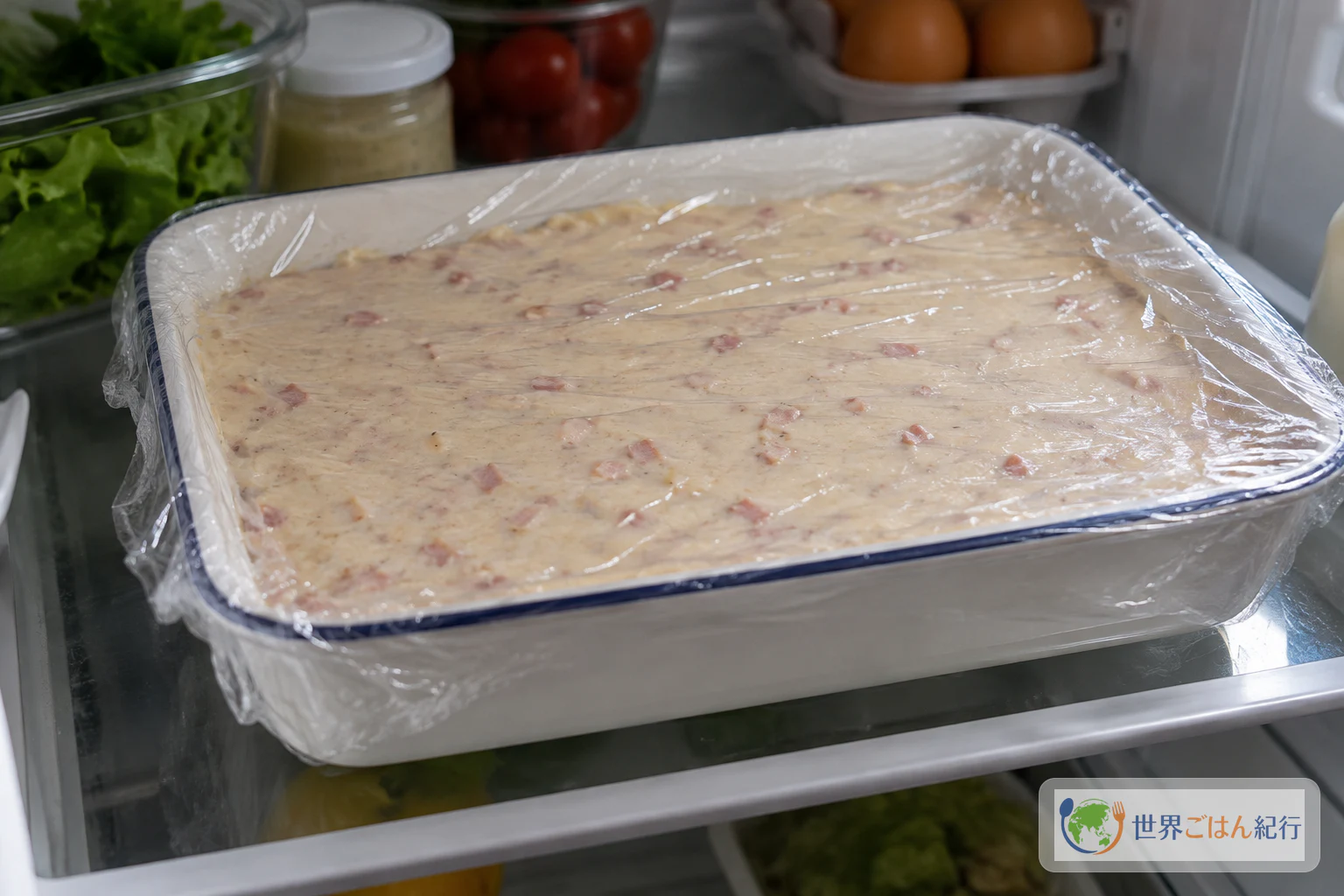
RTVE's recipe rests the croqueta dough in the refrigerator for 12–24 hours. The active cooking happens in two sessions: making the béchamel on the first day, then shaping, coating and frying after the rest.
Ingredients: RTVE's Batch, Built on 1 L of Milk
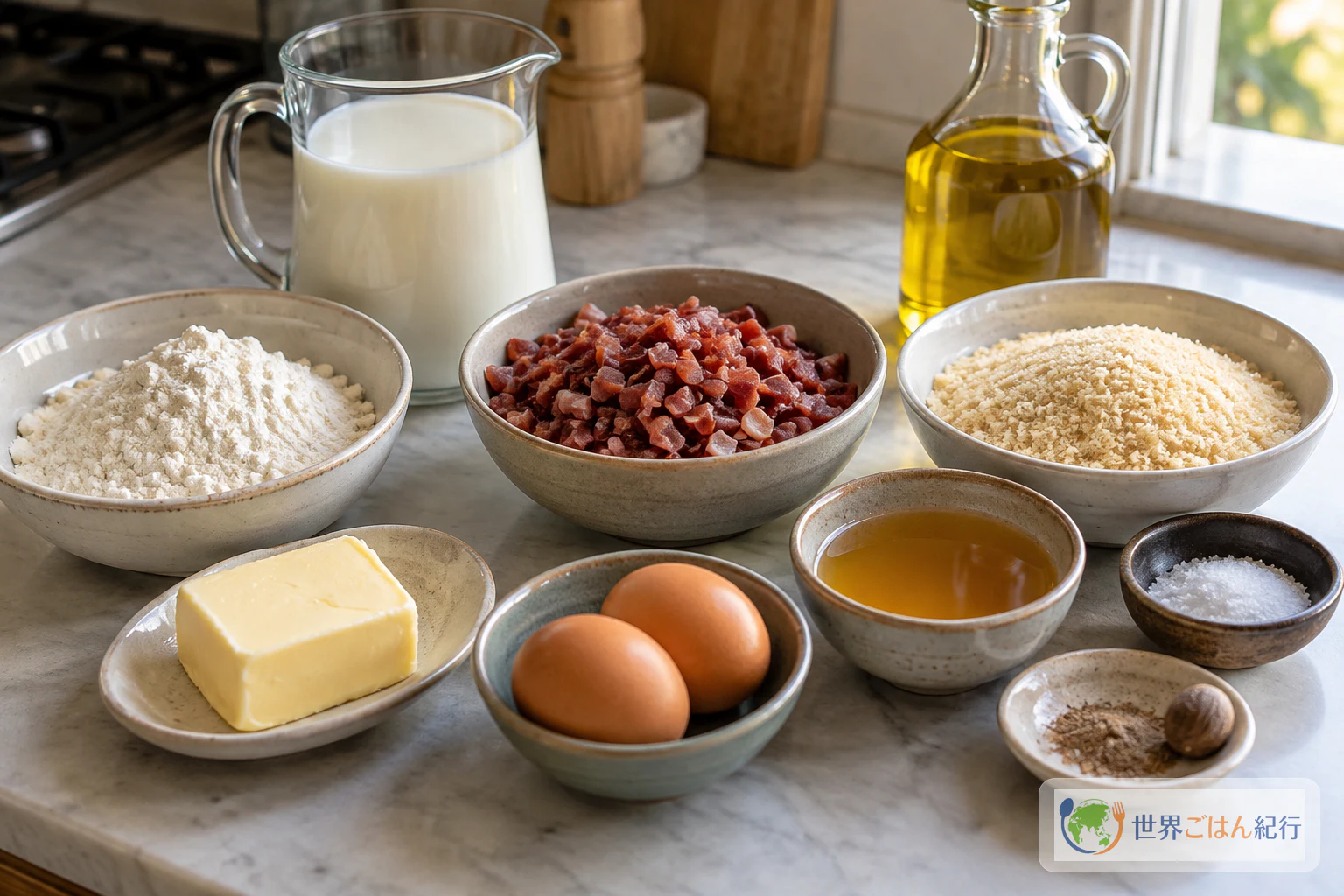
These amounts follow RTVE's recipe as one consistent batch. Other Spanish recipes use different proportions of flour, butter and ham; don't mix them with this one. RTVE does not state how many croquetas the batch makes, and the count depends on the size you shape, so no fixed yield is given here.
These croquetas contain wheat, milk and egg. Check the labels on the ham, the ham stock and the breadcrumbs, and if you use substitute products, read their ingredients and any cross-contact statements.
Equipment
- Knife and cutting board
- Medium saucepan with a heavy base
- Whisk and a heatproof spatula or wooden spoon
- Shallow container for chilling the dough
- Food-safe plastic wrap
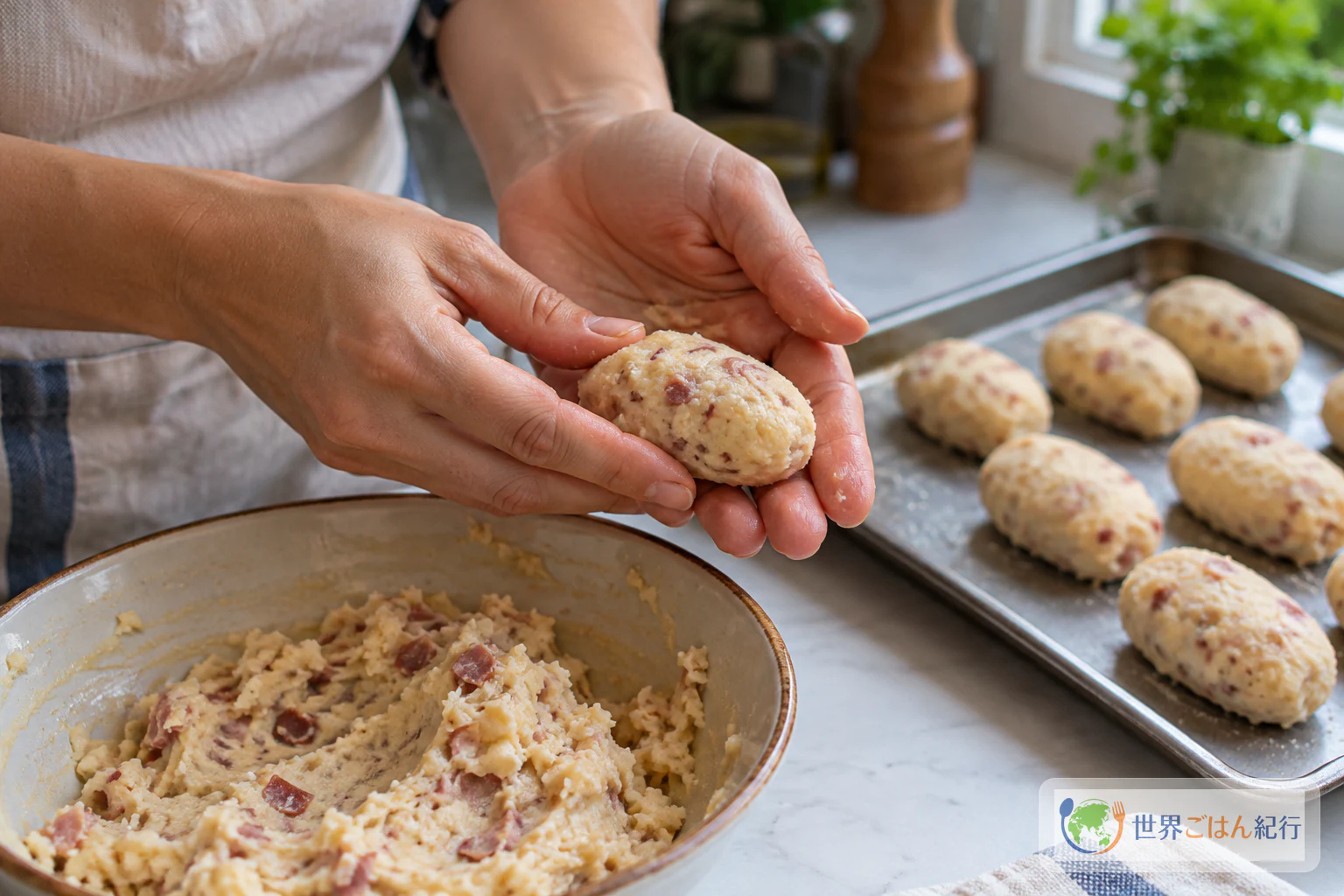
- Tray for the shaped croquetas
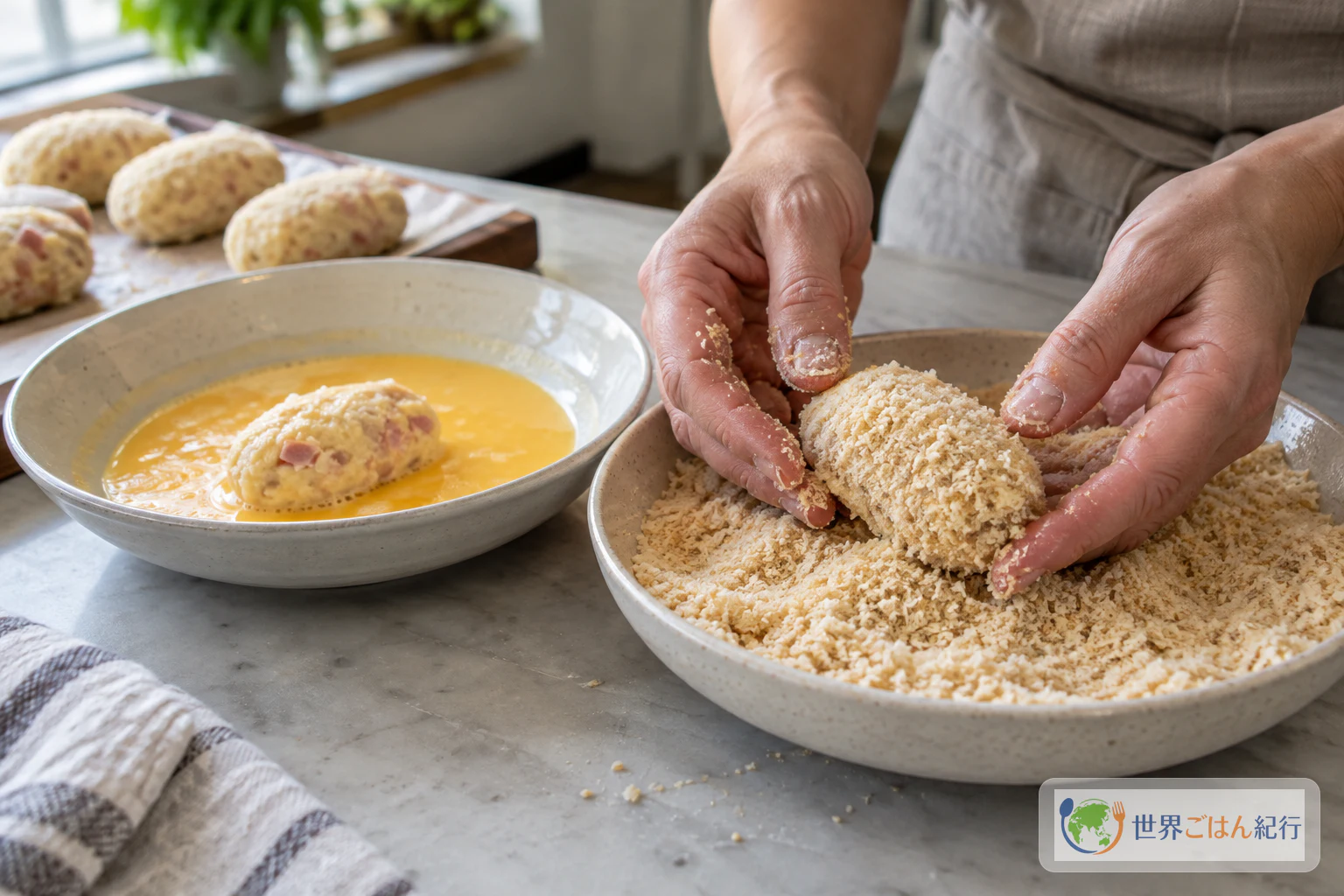
- Two shallow bowls for egg and breadcrumbs
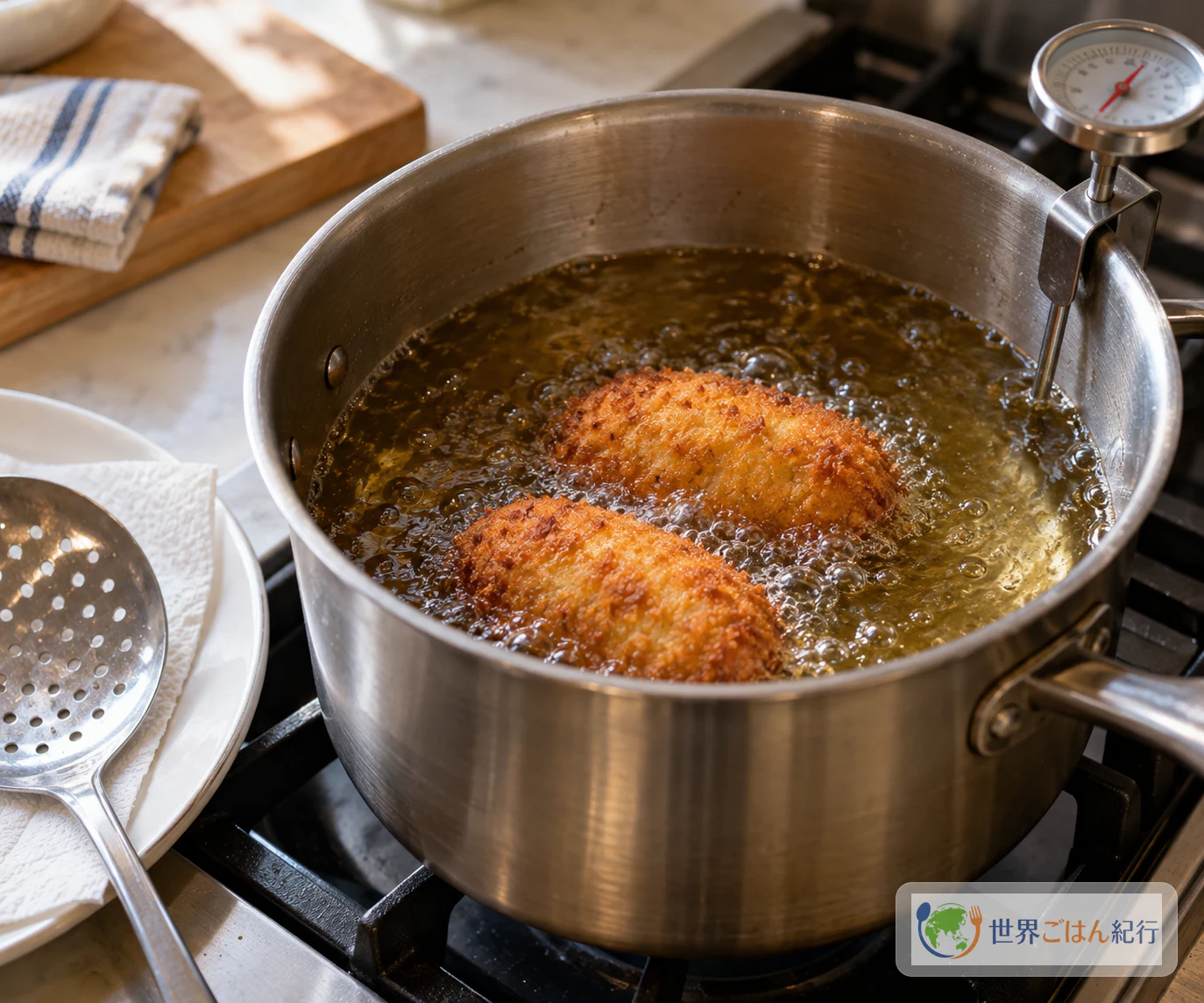
- Deep, sturdy pot for frying
- Frying thermometer
- Slotted spoon
- Wire rack set over a tray
Choosing the Ham, Stock, Coating and Oil
Ham. RTVE's recipe calls for jamón de bellota, from the jamón ibérico de bellota category. Jamón serrano is easier to find outside Spain and works as a practical substitute, but it is a different product: the fat, saltiness and cured aroma differ, and so does the price. Don't treat them as the same ham. If you use another cured ham, read the label to check whether it is suitable for cooking.
Ham stock. The 50 ml of ham stock deepens the ham flavor. If you don't have any, you can replace it with the same amount of milk; the béchamel will taste less meaty and less salty. If you use a bought stock, check its salt.
Breadcrumbs. Fine crumbs give the thin, even shell this recipe aims for. Coarser crumbs, such as Japanese panko, work but change the texture of the crust.
Oil. RTVE uses olive oil. A neutral refined oil such as rapeseed (canola) oil is an alternative; the aroma of the finished croquetas changes with the oil.
Method: Roux, Béchamel, Ham, a Long Chill, Then Frying
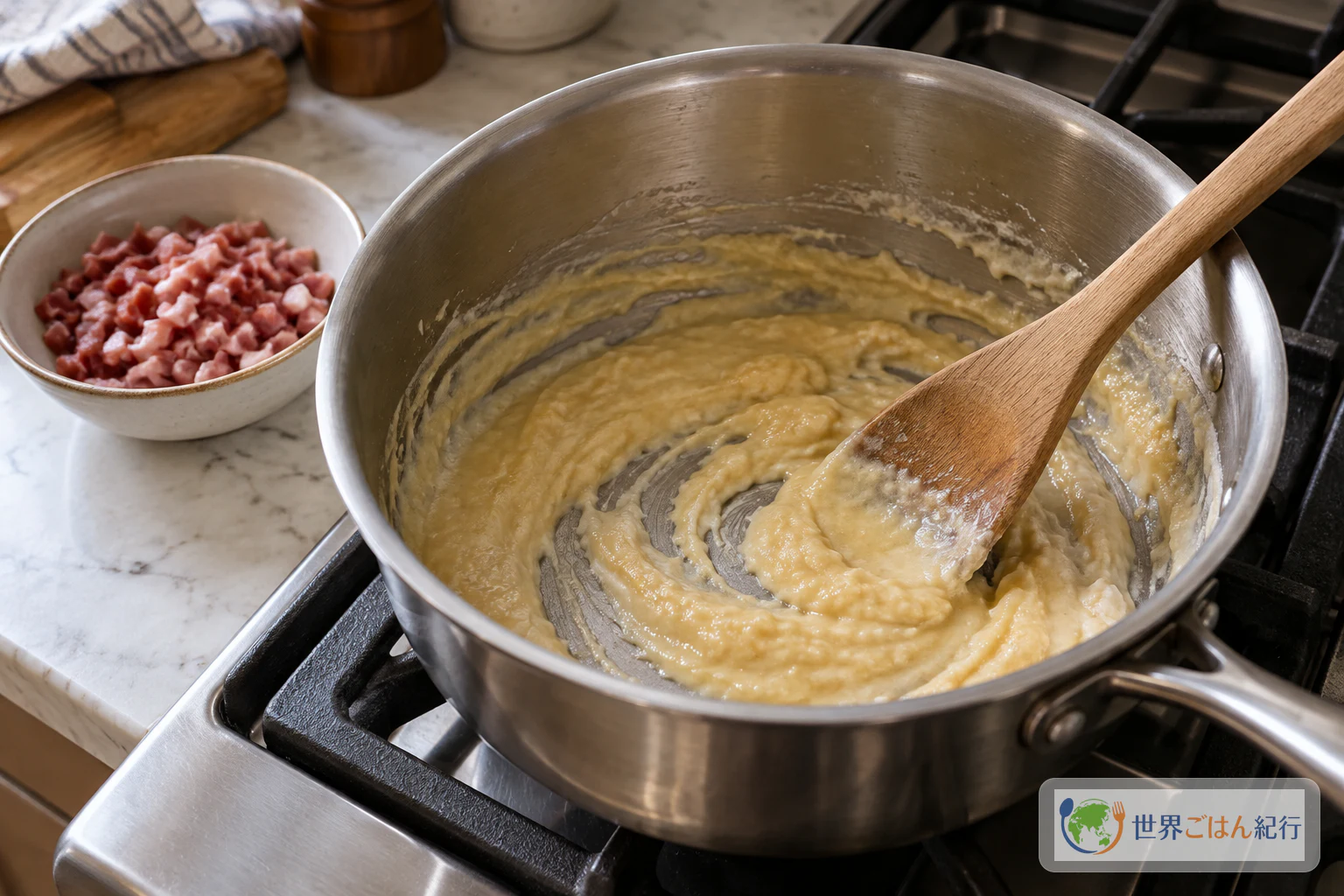
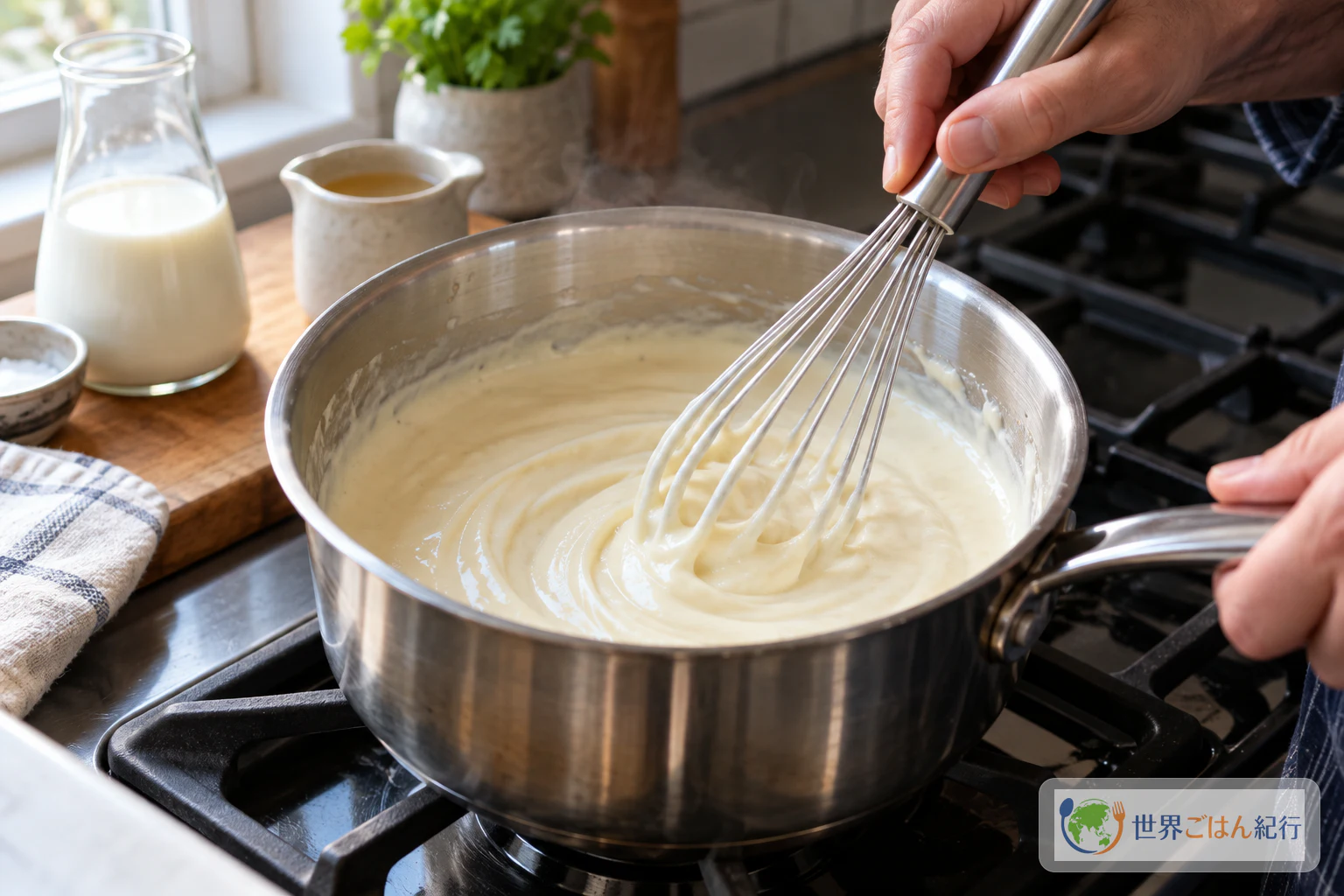
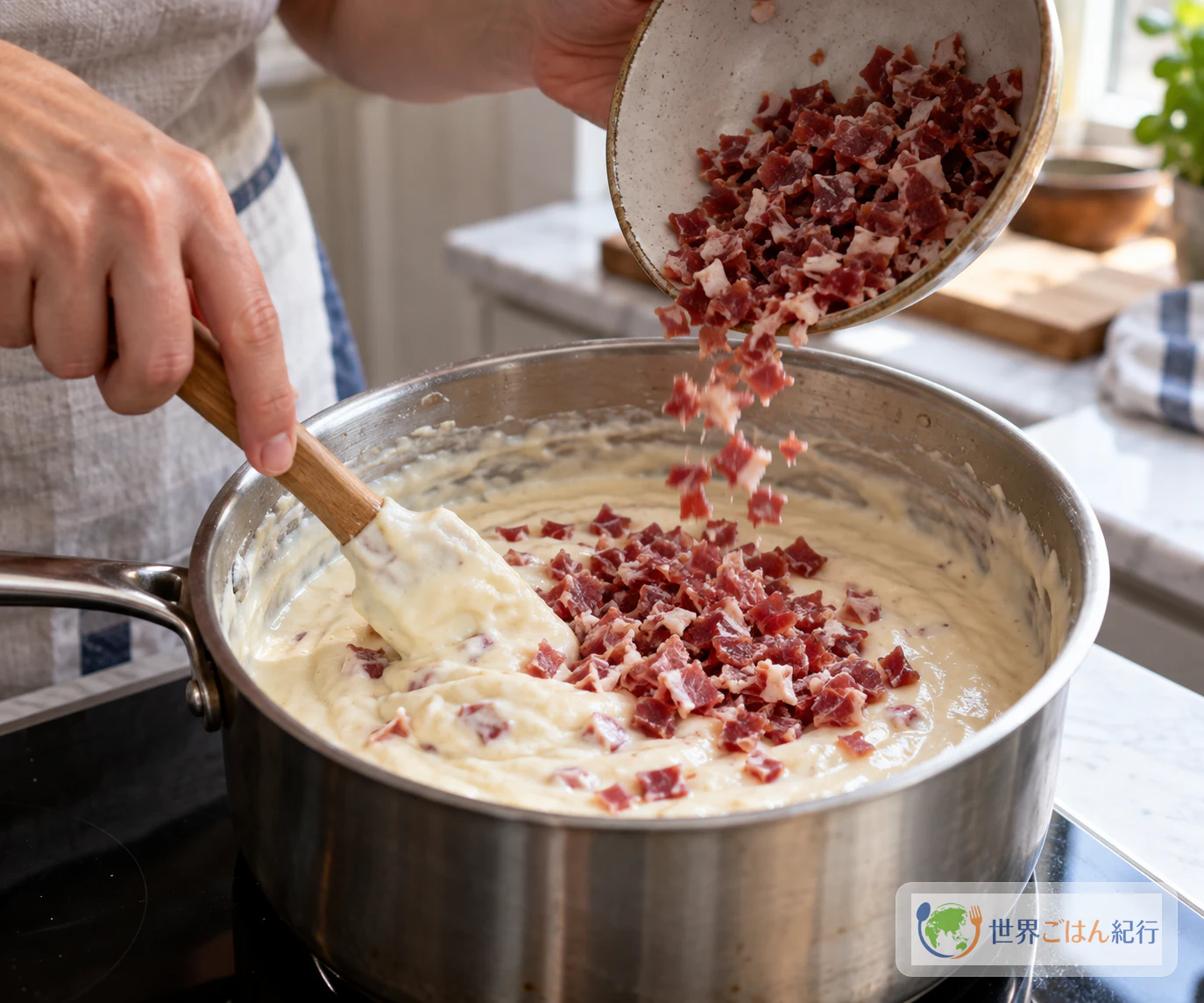
Cook the roux first, whisk in the milk and ham stock and reduce, and only then add the diced ham. The ham goes into the finished béchamel, not into the roux.
Troubleshooting: Bursting, Runny or Too Salty
| Problem | What to check | How to fix it |
|---|---|---|
| Croquetas split or burst in the oil | Dough not chilled enough, gaps in the coating, oil temperature dropping | Chill the shaped croquetas again, cover them fully and evenly with crumbs, and fry fewer at once |
| The filling runs out | The béchamel was not reduced enough | Test a small piece of chilled dough first. If it won't hold its shape, don't fry it: return it to the pan, cook it down further, and chill again. Don't knead in extra raw flour, which leaves a raw taste |
| Too salty | Salt in the ham and stock varies widely | Taste before finishing the béchamel and keep added salt minimal; remember it tastes saltier once cold |
| The crust darkens before the inside is hot | Oil too hot | Watch the thermometer and lower the heat. Cut one open to check the center rather than trusting color |
Variations
These are separate directions; they don't change the amounts in the recipe above.
- Jamón serrano instead of bellota. Easier to find, with a different saltiness, fat and cured aroma.
- Milk instead of ham stock. Replace the 50 ml of stock with the same amount of milk for a simpler version with less ham depth.
- Small round bites. Shape the dough into small balls for one-bite tapas, and adjust the frying time to the smaller size.
- Other fillings. Spain.info mentions croquetas filled with mushrooms, crab, squid, prawns, cod and strongly flavored cheese, and chicken versions are common too. Treat them as different recipes rather than swapping ingredients into this one.
- Olive oil versus a neutral oil. Frying in olive oil or in a refined oil such as rapeseed gives a noticeably different aroma.
Croquetas in the World of Tapas
Spain.info places croquetas among Spain's best-loved tapas and singles out ham croquetas as the most traditional. Yet the same source makes clear that fillings change from region to region and bar to bar, so croquetas are better thought of as a family than as one fixed recipe. Even the coating varies: some cooks use flour, egg and breadcrumbs, others only egg and breadcrumbs.
What links them is the contrast between a crisp crust and a smooth, creamy inside, and the setting they are eaten in. Croquetas are made for tapear, going out for small plates, or for sharing raciones at a table, one at a time next to a drink. At home, they sit naturally alongside other Spanish dishes such as tortilla española, or as a starter before paella valenciana or cocido madrileño.
Frequently Asked Questions
Can I use jamón serrano?
Yes. It is a practical substitute for the jamón de bellota in RTVE's recipe, but expect a different saltiness, fat and cured aroma. Taste the béchamel before salting.
Can I use any breadcrumbs?
Yes, but fine crumbs give the thin, even shell this recipe aims for. Coarser crumbs such as panko make a crunchier, rougher crust.
Is it fine to chill the dough overnight?
Yes. RTVE's recipe rests the dough for 12–24 hours, in the refrigerator, spread in a shallow container with wrap pressed onto the surface. Don't leave it at room temperature overnight.
What oil temperature should I use?
RTVE does not specify one. A separate chef's recipe published by La Vanguardia fries at 180°C; use that as a reference, fry one croqueta first to test, and adjust for your pot and croqueta size.
How many croquetas does this make?
The source recipe does not say, and the number depends on how large you shape them. Keeping each portion the same size matters more for even frying than hitting a particular count.
Sources
- Spain.info / Turespaña, "20 tapas recomendadas y muy populares en España." Croquetas as a popular Spanish tapa, ham croquetas as the most traditional, the variety of fillings by region and venue, and the tapas and raciones context. https://www.spain.info/es/top/tapas-recomendadas-populares-espana/
- RTVE / Ahora o Nunca, "Receta de croquetas de jamón: cremosas y perfectas." The ingredient amounts used in this recipe (110 g butter, 110 g wheat flour, 1 L milk, 200 g jamón de bellota, 50 ml ham stock, egg, breadcrumbs, olive oil), the order of roux, milk and ham stock, then diced ham, the 12–24 hour refrigerated rest, and the egg and breadcrumb coating. The recipe gives no yield, oil temperature or frying time. https://www.rtve.es/television/20240531/receta-croquetas-jamon-cremosas-perfectas/16127465.shtml
- Guía Repsol, "Receta de croquetas de jamón." Cooking the béchamel gently until the raw-flour smell is gone, adjusting liquid because flours absorb differently, seasoning conservatively because ham is salty and the cooled mixture tastes saltier, and the different coating methods. Its own ingredient proportions are not used here. https://www.guiarepsol.com/es/comer/recetas/croquetas-de-jamon/
- La Vanguardia / Miquel Antoja, "Croquetas de jamón: cómo hacer la receta más fácil y cremosa." Used only as the reference for frying at 180°C; this chef's version includes cream and gelatin and is a different recipe. https://www.lavanguardia.com/comer/recetas/20210603/7500481/receta-mas-facil-deliciosa-croquetas-jamon-miquel-antoja.html