Escabeche: Fish, Vinegar and Olive Oil in One Quiet Pan
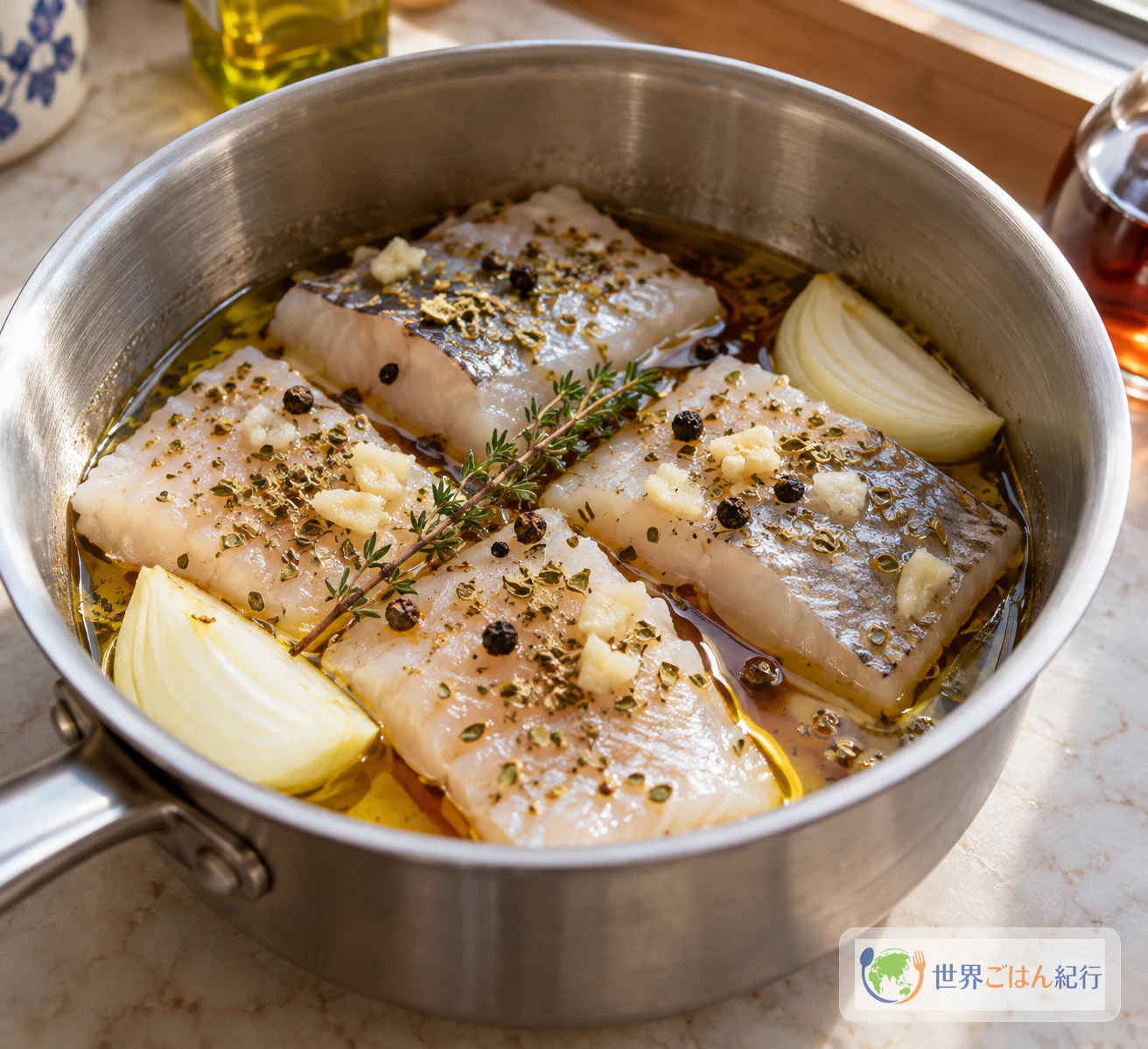
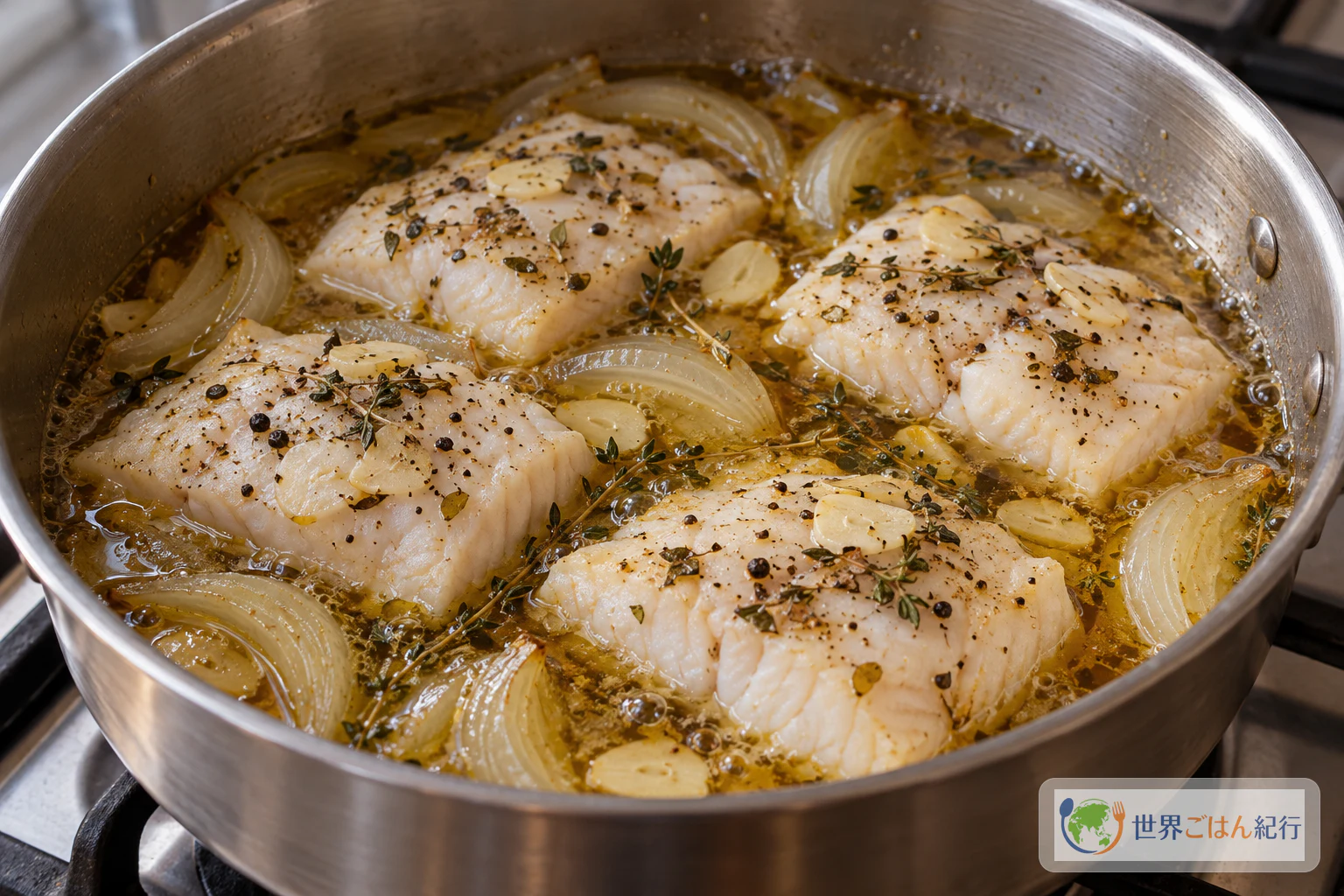
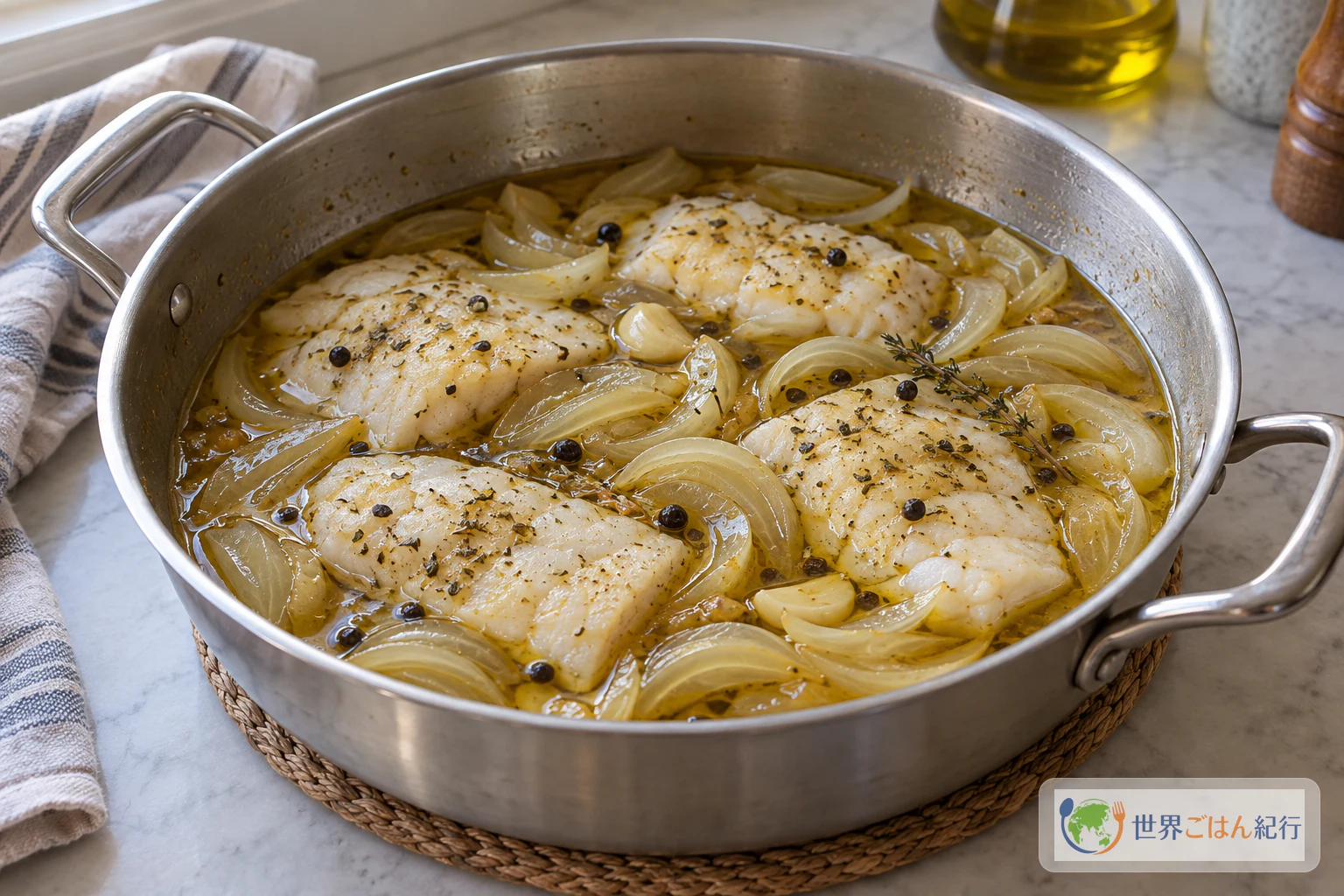
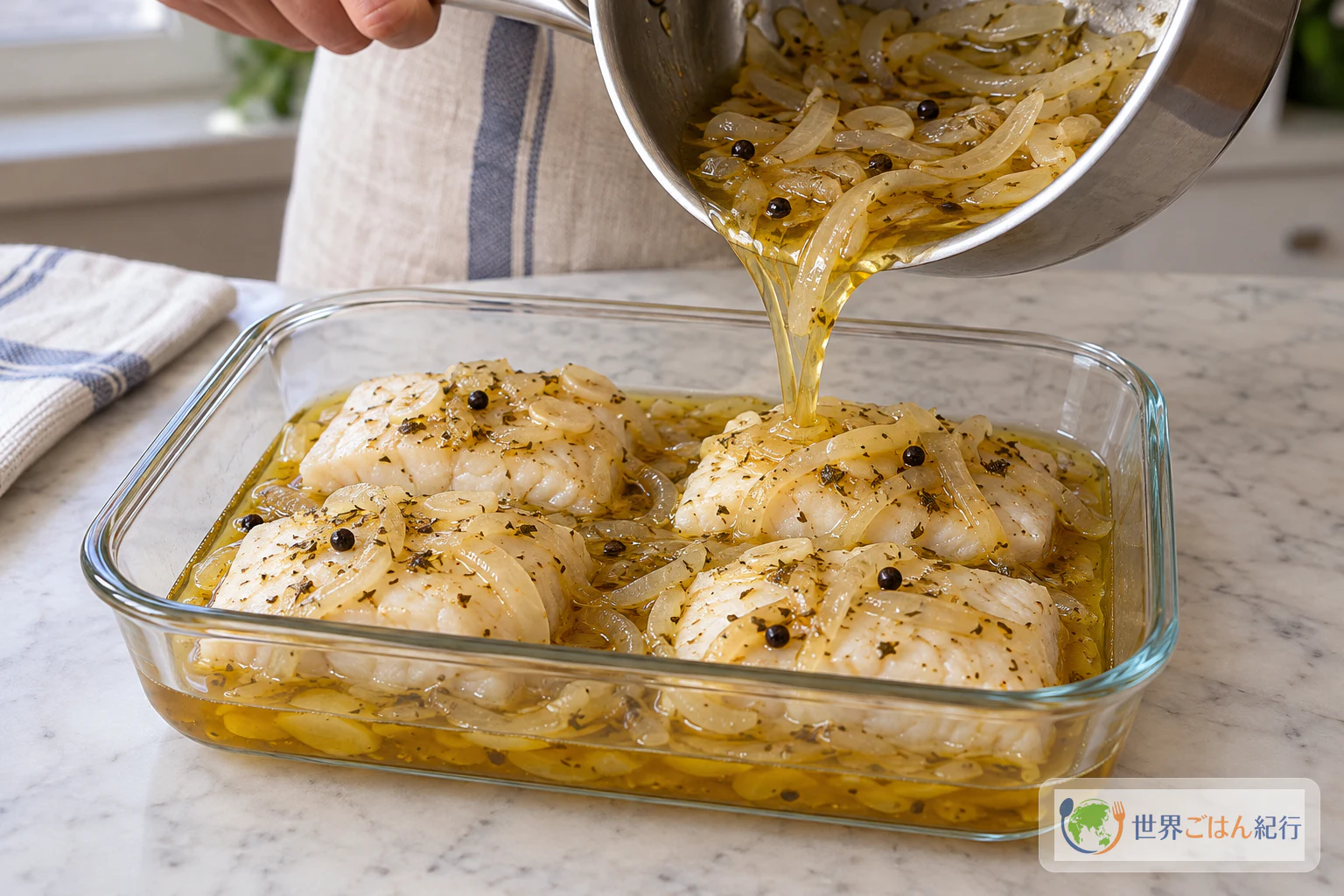
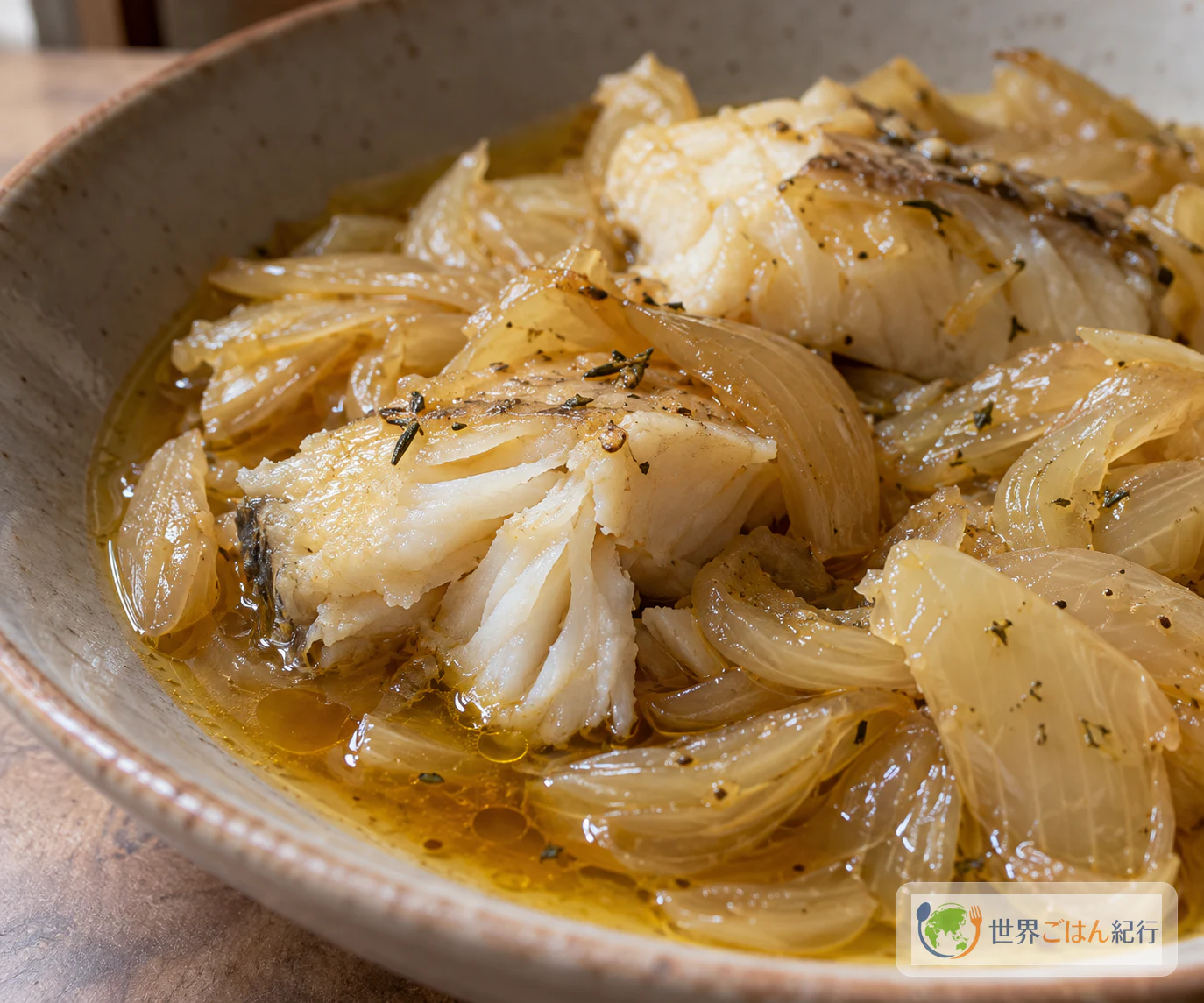
Cook the fish gently until it is opaque and flakes easily, with the onion, garlic, herbs, olive oil and wine vinegar all in the same pan. Serve it soon or refrigerate it quickly. Vinegar and oil do not make this a shelf-stable preserve.
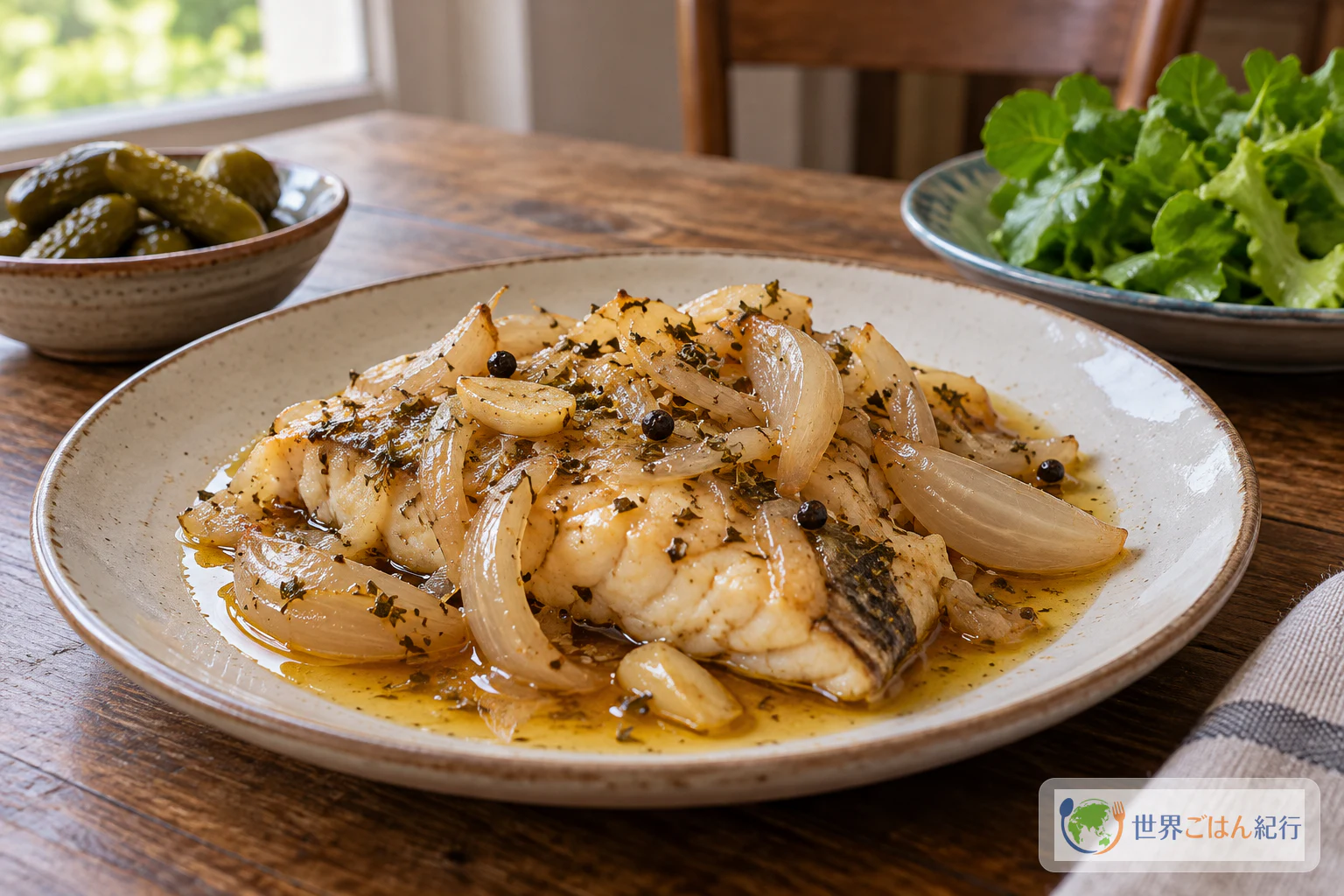
A pan of fish sits over low heat, with the smell of wine vinegar and olive oil rising around wedges of onion. In Madrid, according to the Academia Madrileña de Gastronomía, fish escabeche was once bought from barrels and earthenware basins and eaten as an easy meal or a tapa. That account shows a dish that belonged to casual eating as well as to the moment it left the stove.
The recipe here comes from Spain.info, the Spanish tourism site, which presents its escabechados castellanos as a Castilla y León preparation. Spain.info applies the method to fish, poultry or game, and this article stays with fish. Its version serves four. It does not name a fish species or give amounts for the salt and oregano, so none are invented here.
Escabeche is a family of preparations rather than one fixed formula, and it isn't exclusive to Castilla y León. Dishes called escabeche in the Philippines and escabeche de pollo in Peru are separate dishes and aren't covered here. For more of the country's cooking, see our page on Spain.
Sekai Gohan has not kitchen-tested this recipe. The amounts and main method follow Spain.info. The doneness and refrigeration guidance is an editorial addition based on U.S. FDA food safety advice.
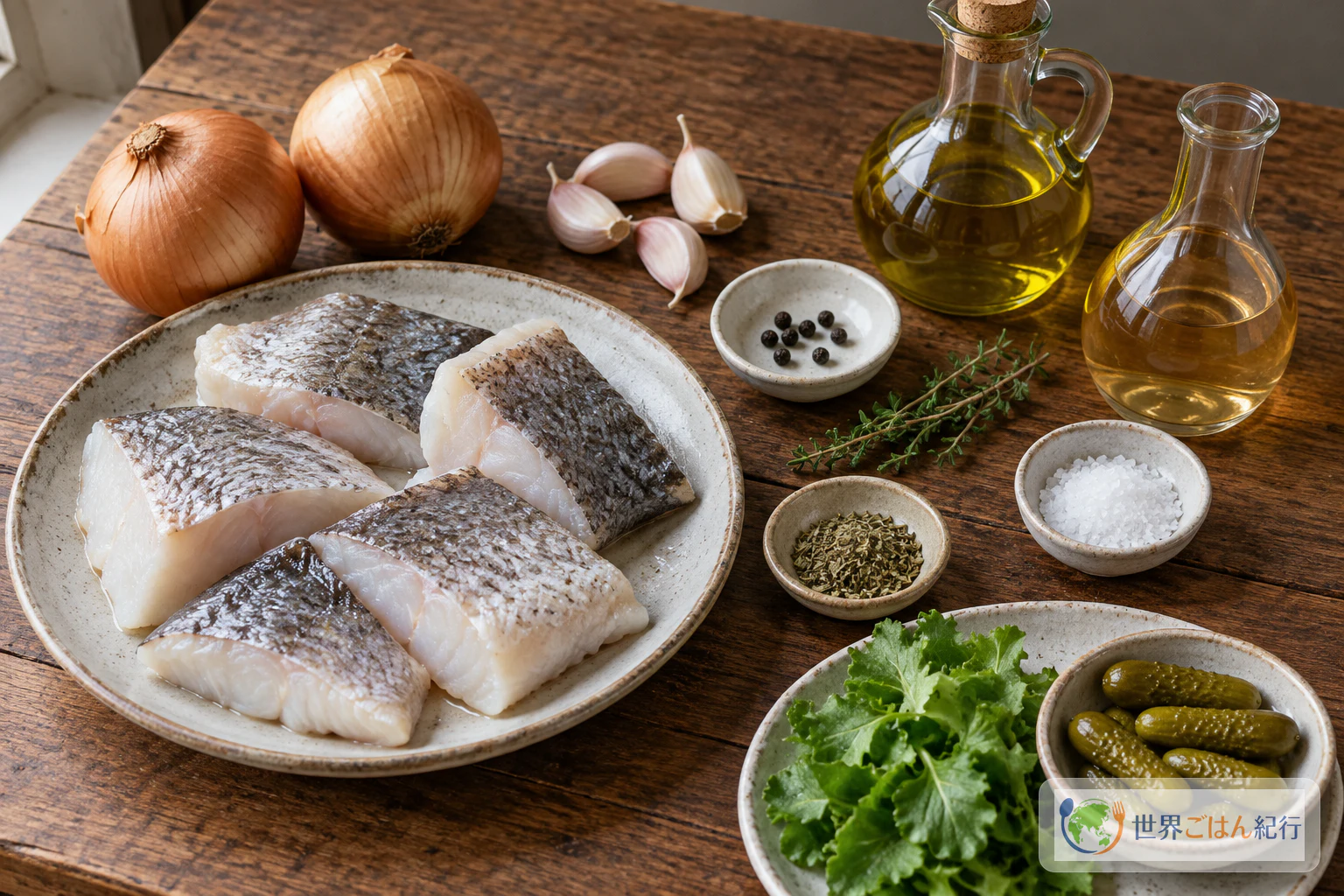
Ingredients for 4 Servings
Equipment
- A narrow, snug saucepan that holds the fish and onion close together
- A cutting board and knife
- A clean cloth for drying the fish
- A mortar and pestle, or another way to crush the garlic and spices
- A fork, plus a food thermometer if you have one
- A clean ceramic or glass container
Choosing the Fish, Vinegar and Greens
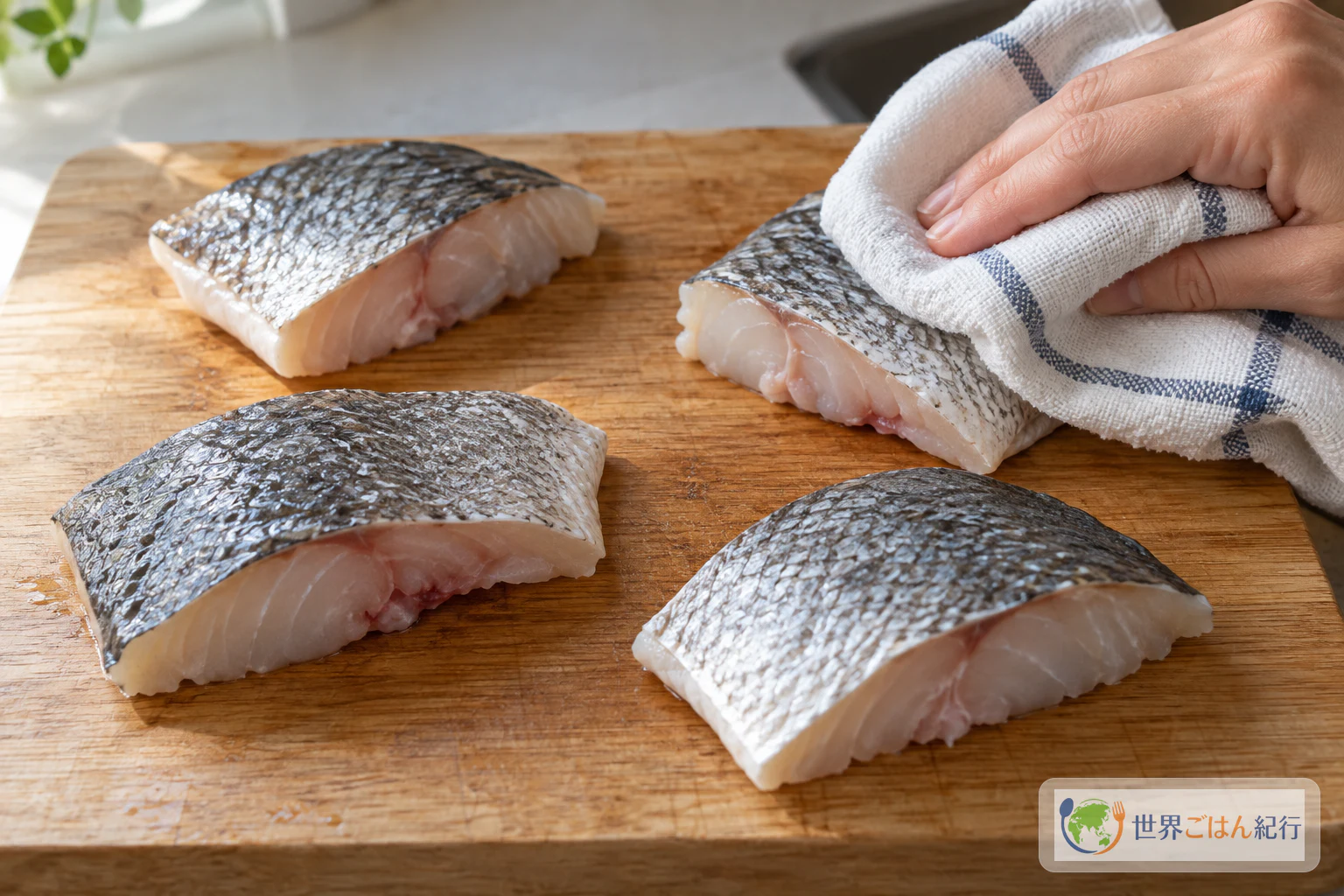
Fish: Look for fresh, firm fish that you can divide into even pieces, as even pieces make doneness easier to judge. Species will affect the result, so don't expect every fish to behave the same way.
Vinegar: Use wine vinegar, without swapping in a different acid as an equal. Grain vinegar would change the aroma and acidity, and it hasn't been tried in this recipe. Keep the proportions of oil and vinegar as listed.
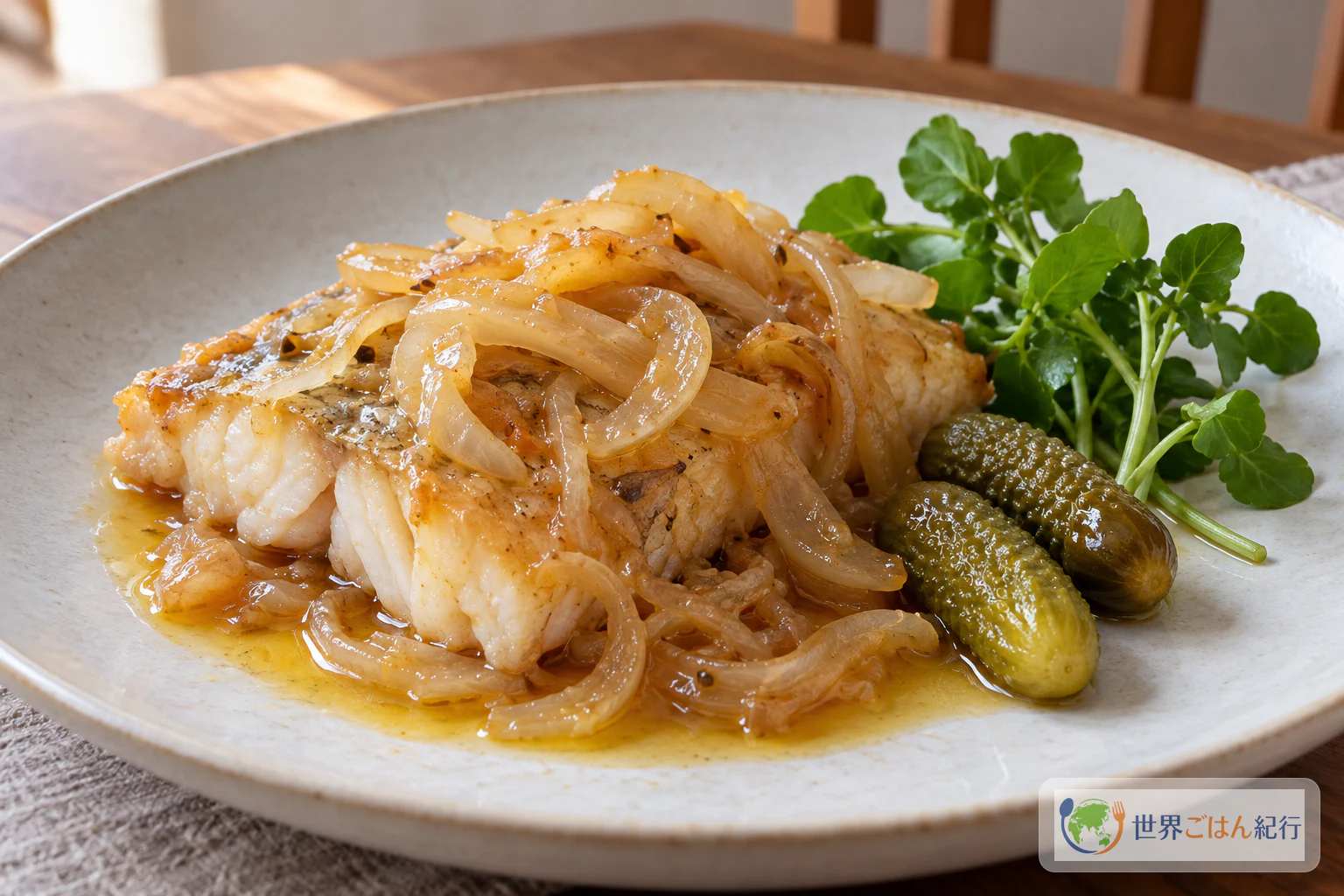
Pickles and greens: Gherkins pickled in vinegar give a different flavor from other cucumber pickles. Choose watercress or escarole, depending on what you can find.
This dish contains fish. Wine vinegar may contain sulfites depending on the product, so check the label on anything you buy.
Cooling and Storing Safely
The instruction to let the fish cool naturally comes from Spain.info, but that isn't permission to leave it out for a long time. The following handling guidance is an editorial addition based on the U.S. FDA:
- Refrigerate the fish within 2 hours of cooking, or within 1 hour if the air temperature is above 90°F.
- Keep the refrigerator at 40°F (about 4°C) or below.
- Store the fish with its liquid and aromatics in a clean ceramic or glass container.
- Eat it soon.
These sources don't establish escabeche as safe to keep at room temperature, and they don't give a number of days for refrigeration, so none is stated here. Treat it as cooked fish, and don't rely on the vinegar and oil to preserve it.
Fixing Problems in the Pan
| Condition | What to consider | What to do |
|---|---|---|
| The fish is still translucent at 15 minutes | Piece thickness and pan heat vary | Keep cooking over low heat, then recheck the thickest part until it reaches 145°F (about 63°C), or is opaque and flakes easily |
| The fish is falling apart | It may have had enough heat | Check smaller pieces earlier next time, keep the simmer quiet, and lift the pieces out gently |
| The ingredients are spread out in the pan | The pan may be too wide | Use a narrower pan rather than changing the amounts |
| You're unsure about the salt or oregano | Both are left to taste | Season cautiously, as the flavor is hard to correct once overdone |
| The fish has been out past the time limit | It has exceeded 2 hours, or 1 hour above 90°F | Don't count on the vinegar and oil to make it safe. The safest choice is not to eat it |
Variations That Stay Honest
These options aren't all the same recipe, so keep their amounts separate.
| Change | What happens | How to treat it |
|---|---|---|
| Watercress or escarole | Changes the greens on the plate | Both are named by Spain.info, so choose either one |
| Leave out the gherkins | Removes their sharp crunch | An editorial serving option, not the Spain.info version |
| Grain vinegar | Changes the aroma and acidity | Untested here and not equivalent to wine vinegar |
| Bonito, fried first | Moves to the Valle del Huecha preparation | A separate recipe, recorded without amounts, so no quantities are adapted here |
| Mackerel with vegetables and peach | Moves to the RTVE recipe | A separate modern recipe, not a swap for this one |
One Word, Many Escabeches
The Academia Madrileña de Gastronomía describes Spanish escabeches that extend beyond fish to poultry and game. It also discusses their spread in the Castillas and on inland tables. Its article reports an Arabic or Persian origin for the word while noting that several explanations exist, so that origin is best read as one account rather than settled fact. The same article cites food historian Ana Vega on religious dietary restrictions and inland access to fish. These are factors discussed in that account, not a proven single cause.
A recipe recorded from the Valle del Huecha, published by the Institución Fernando el Català Católico, shows how far the method can move. It names bonito as especially suitable. The fish is dried, cut into rounds, fried and cooled before it meets a liquid of vinegar, oil and water in a 1:1:2 ratio by volume, with lemon, bay leaf, garlic, clove and black pepper. That is quite different from the low simmer in oil and vinegar used by Spain.info, and it gives no weights or servings.
RTVE offers a contemporary example: fresh mackerel with vegetables and peach, built around sherry vinegar, oil and white wine. Together these recipes show that "escabeche" doesn't point to a single authentic formula.
Frequently Asked Questions
Is escabeche one fixed recipe?
No. Spain.info, the Valle del Huecha record and RTVE each give a different preparation, and the Academia Madrileña de Gastronomía describes a broad range. This article follows only the Spain.info fish version.
Which fish should I use?
Spain.info doesn't name a species, so a firm fish in even, boneless pieces is an editorial suggestion. The Huecha record favors bonito, but within its own separate method. RTVE has its own mackerel recipe with different ingredients. You can use mackerel here, but its result hasn't been tested and the RTVE amounts don't transfer.
Do I really need 750 ml of olive oil?
That is the amount Spain.info lists, along with 250 ml of wine vinegar, and this article doesn't change the proportions. A narrow saucepan helps keep the ingredients together in the liquid.
Is it safe to keep escabeche at room temperature?
Don't assume so. The sources here don't establish it as shelf-stable, so handle it as cooked fish and refrigerate it within the limits above.
How many days will it keep in the refrigerator?
The FDA pages used here don't give a day count for this dish, so this article doesn't state one. Keep it at 40°F (about 4°C) or below and eat it soon.
Can I serve it cold?
Yes. The fish is already cooked, so it can go to the table cold. Just don't leave it out for long after taking it from the refrigerator.
Is this the same as Philippine or Peruvian escabeche?
No. They share a name, but they are distinct dishes and this recipe shouldn't be used to represent them.
Sources
- TURESPAÑA / Spain.info, "Escabechados castellanos." The Castilla y León recipe, its four-serving ingredient list, method, 15-minute fish timing, natural cooling, ceramic or glass container, and accompaniments. https://www.spain.info/es/receta/escabechados-castellanos/
- Academia Madrileña de Gastronomía, "Escabeches." The range of Spanish escabeches, their spread in the Castillas and inland, fish escabeche sold in Madrid, its place in tapas culture, and reported accounts of the word's origin and history. https://academiamadrilenadegastronomia.org/escabeches/
- Institución Fernando el Católico / Diputación de Zaragoza, "Cocina popular del valle del Huecha. Recetario tradicional," recipe 176, "Escabeche de pescado." The bonito preparation, frying and cooling, and the 1:1:2 vinegar, oil and water liquid, used here only as a contrast. https://ifc.dpz.es/recursos/publicaciones/27/46/_ebook.pdf
- RTVE, "Escabeche de caballa fresca y verduritas." A modern recipe with mackerel, vegetables and fruit, used here only as an example of variation. https://www.rtve.es/television/20200720/receta-escabeche-caballa-fresca-verduras/2030485.shtml
- U.S. Food and Drug Administration, "Safe Food Handling." Fish doneness at 145°F or when opaque and easily flaked, refrigerating cooked perishable food within 2 hours, and keeping the refrigerator at 40°F or below. https://www.fda.gov/food/buy-store-serve-safe-food/safe-food-handling
- U.S. Food and Drug Administration, "Refrigerator Thermometers: Cold Facts about Food Safety." The 40°F refrigerator limit, the 2-hour room-temperature limit, and the 1-hour limit above 90°F. https://www.fda.gov/food/buy-store-serve-safe-food/refrigerator-thermometers-cold-facts-about-food-safety