Macaroni Cheese: Milk That Carries Onion and Bay, Under a Crisp Golden Top
Infuse the milk first. Cook the macaroni so it still has a little bite. Make a sauce thick enough to coat a spoon. Then bake until the top is golden and the edges bubble.
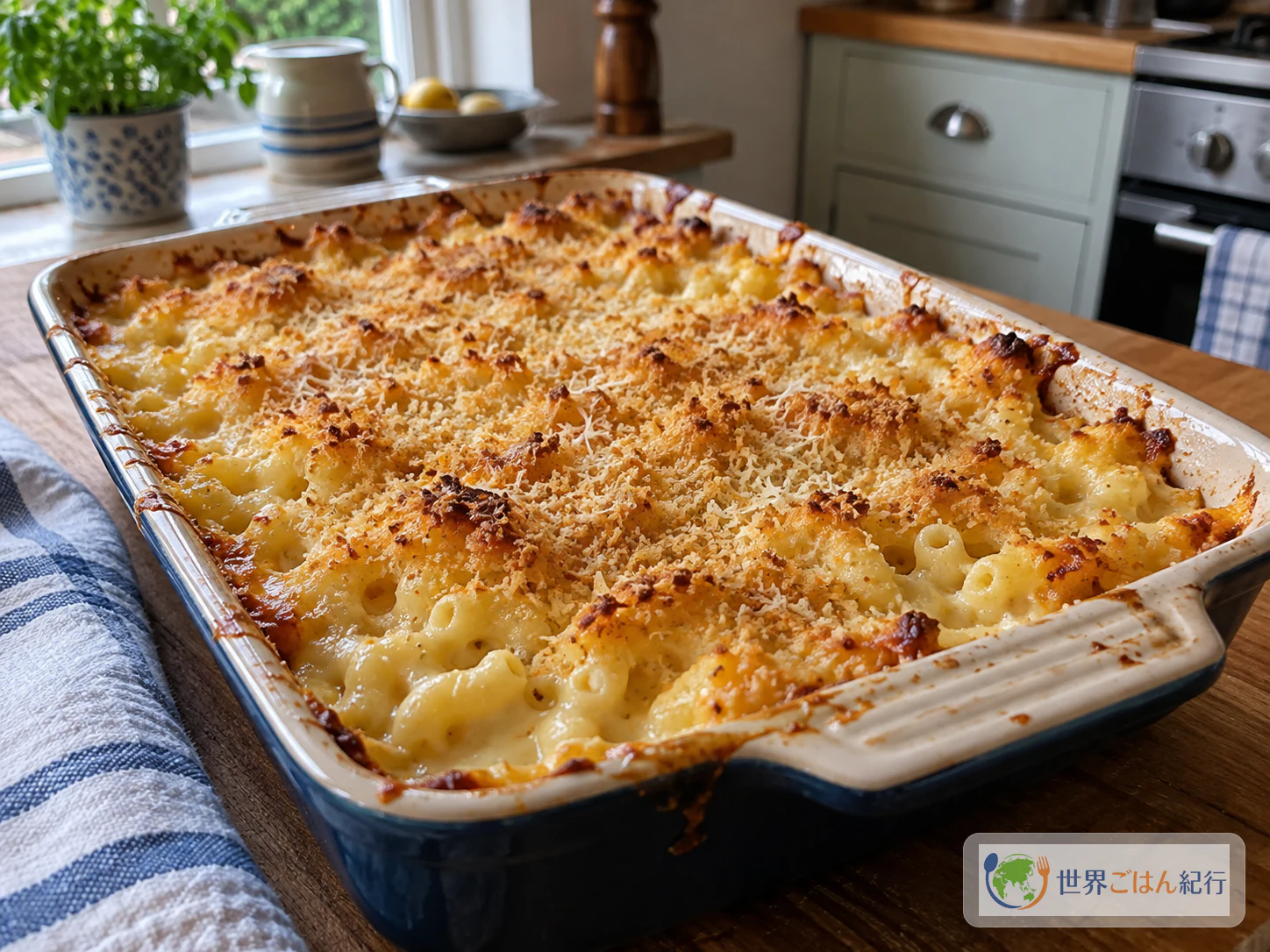
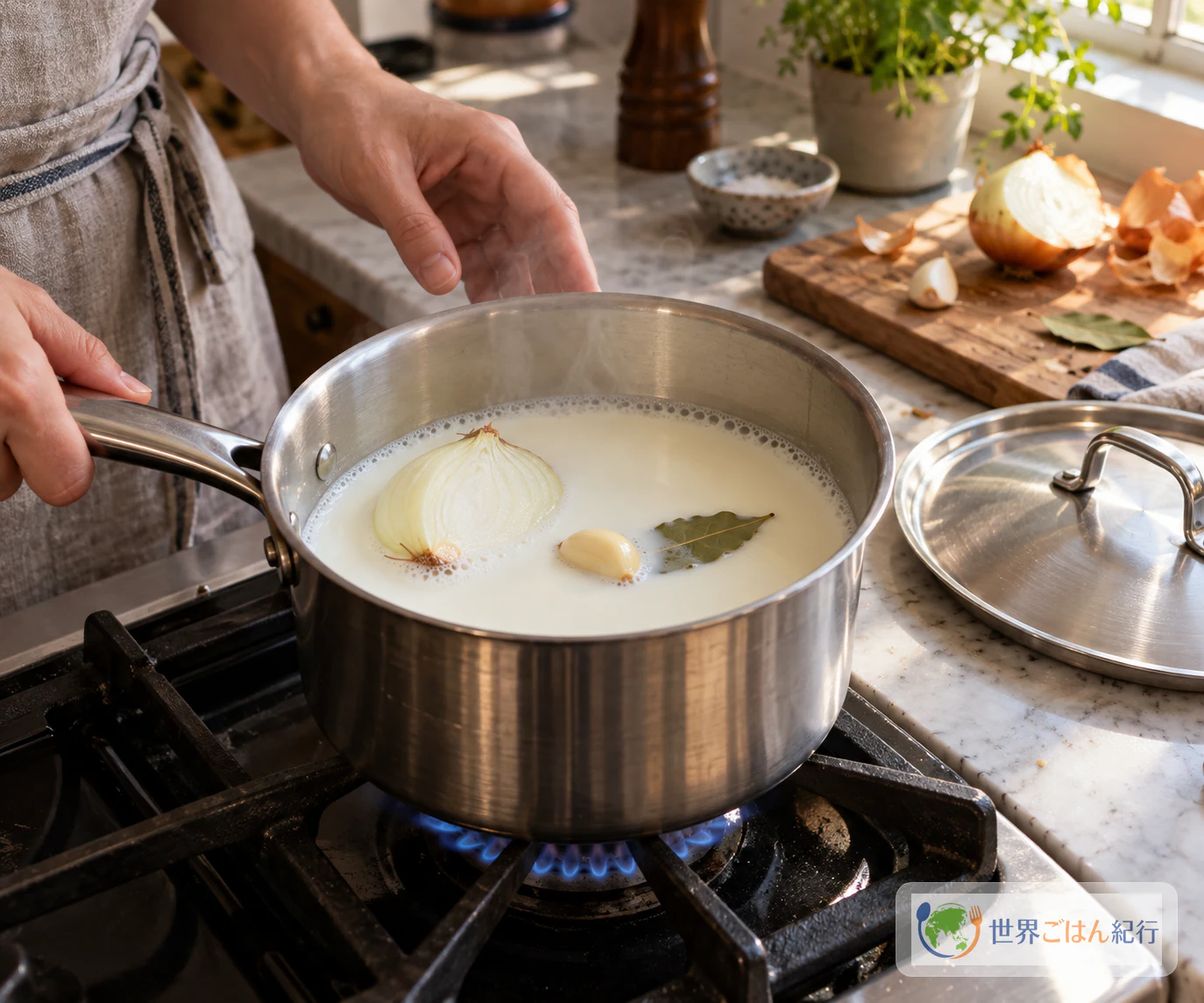
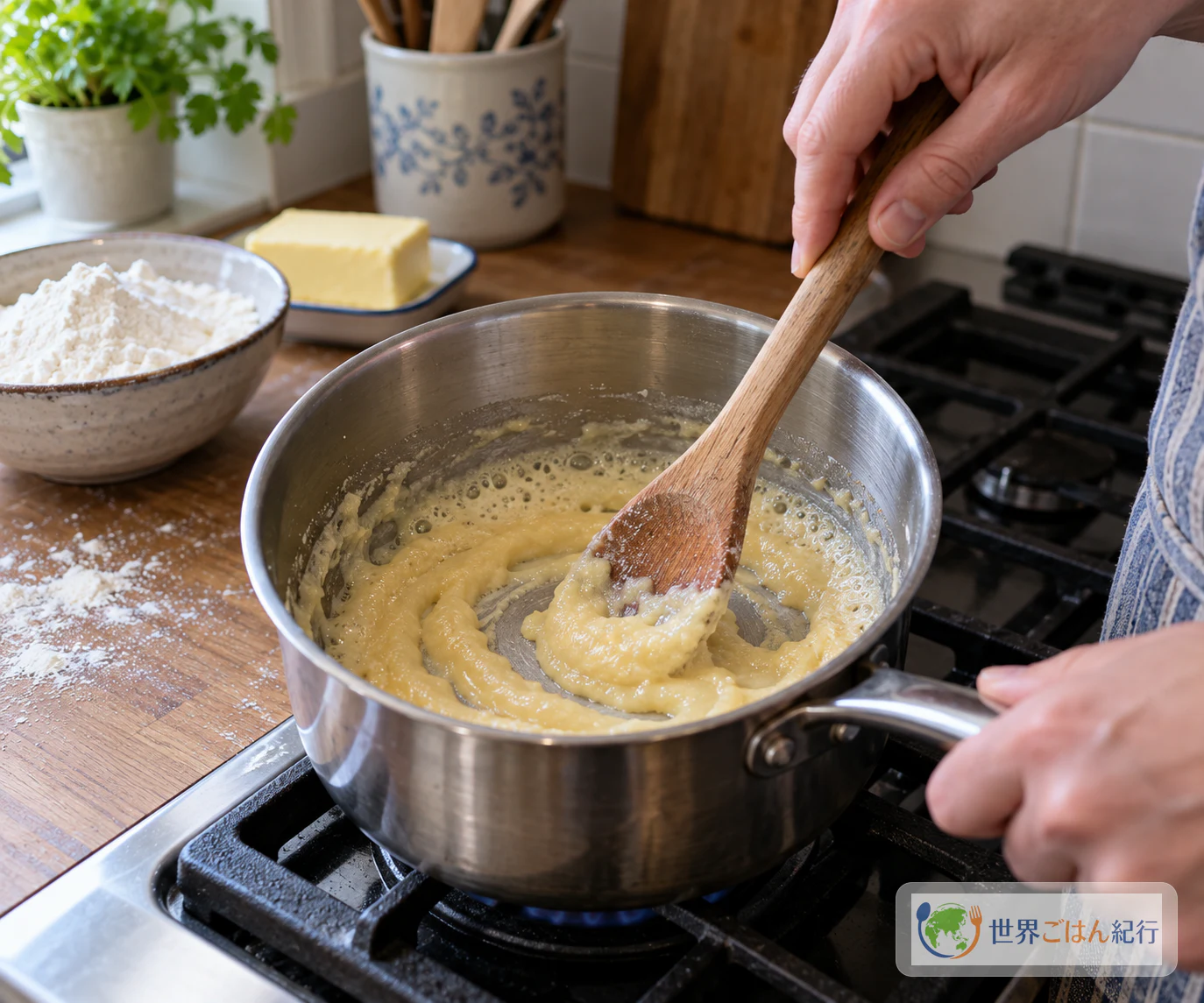
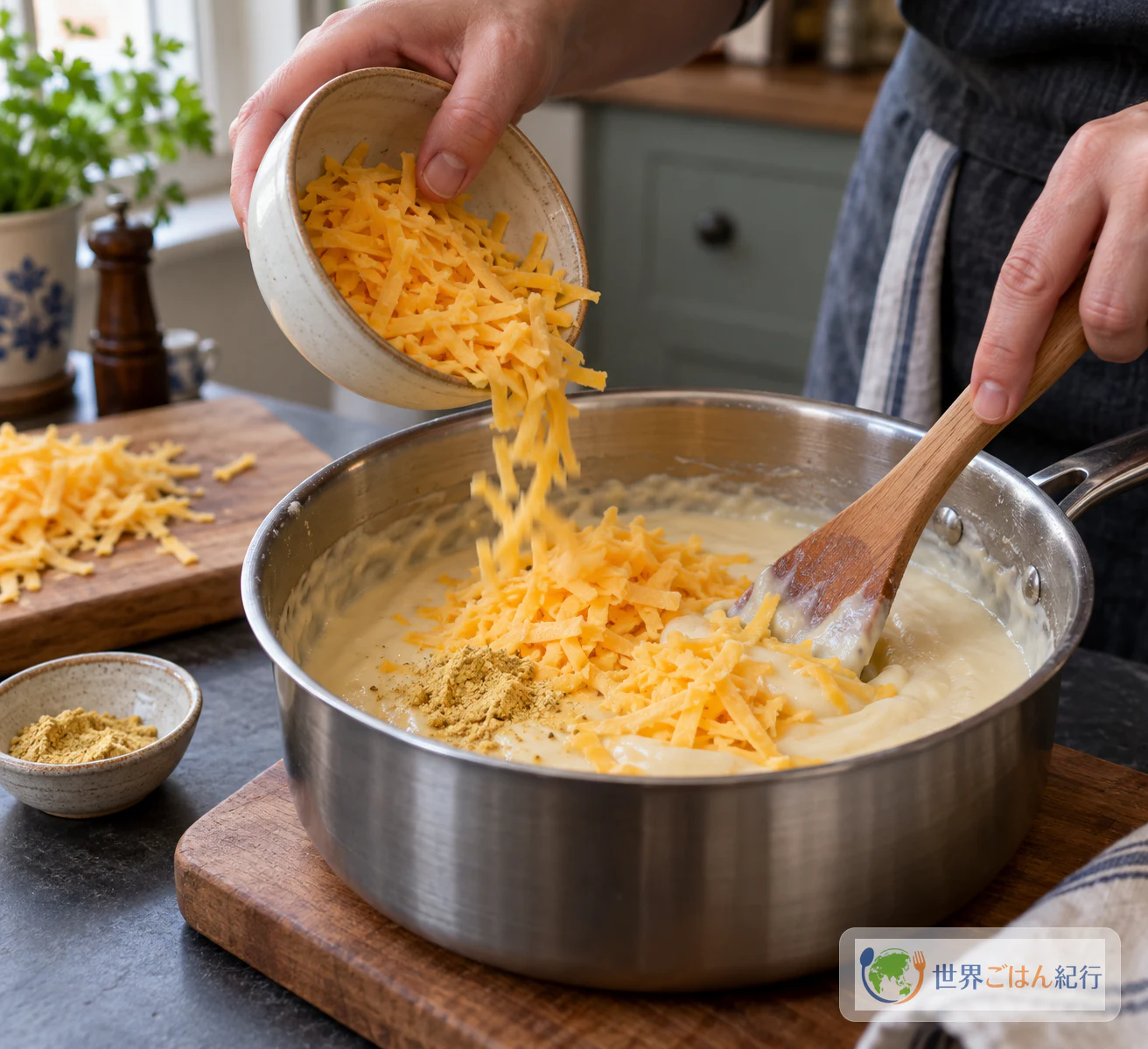
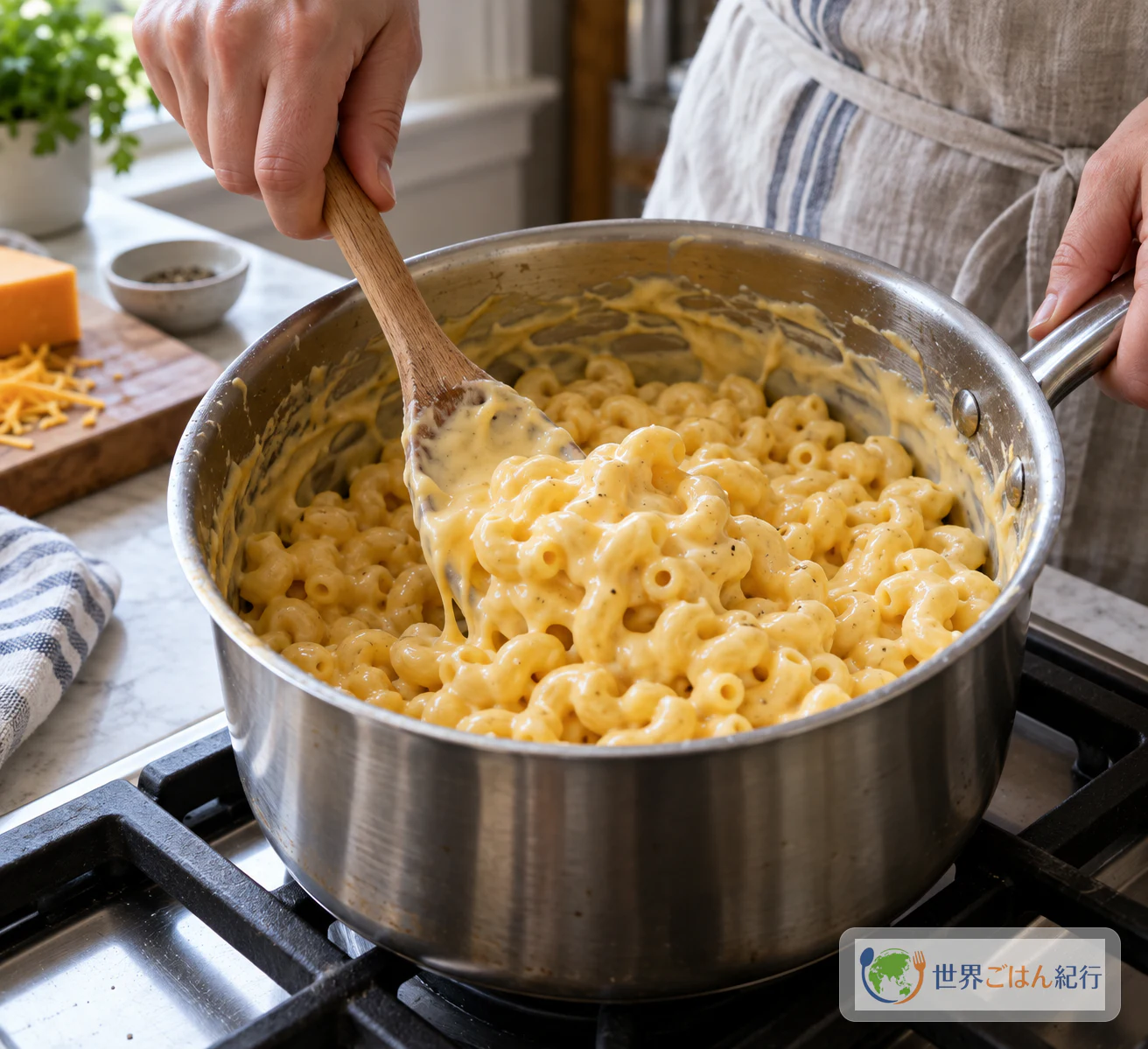
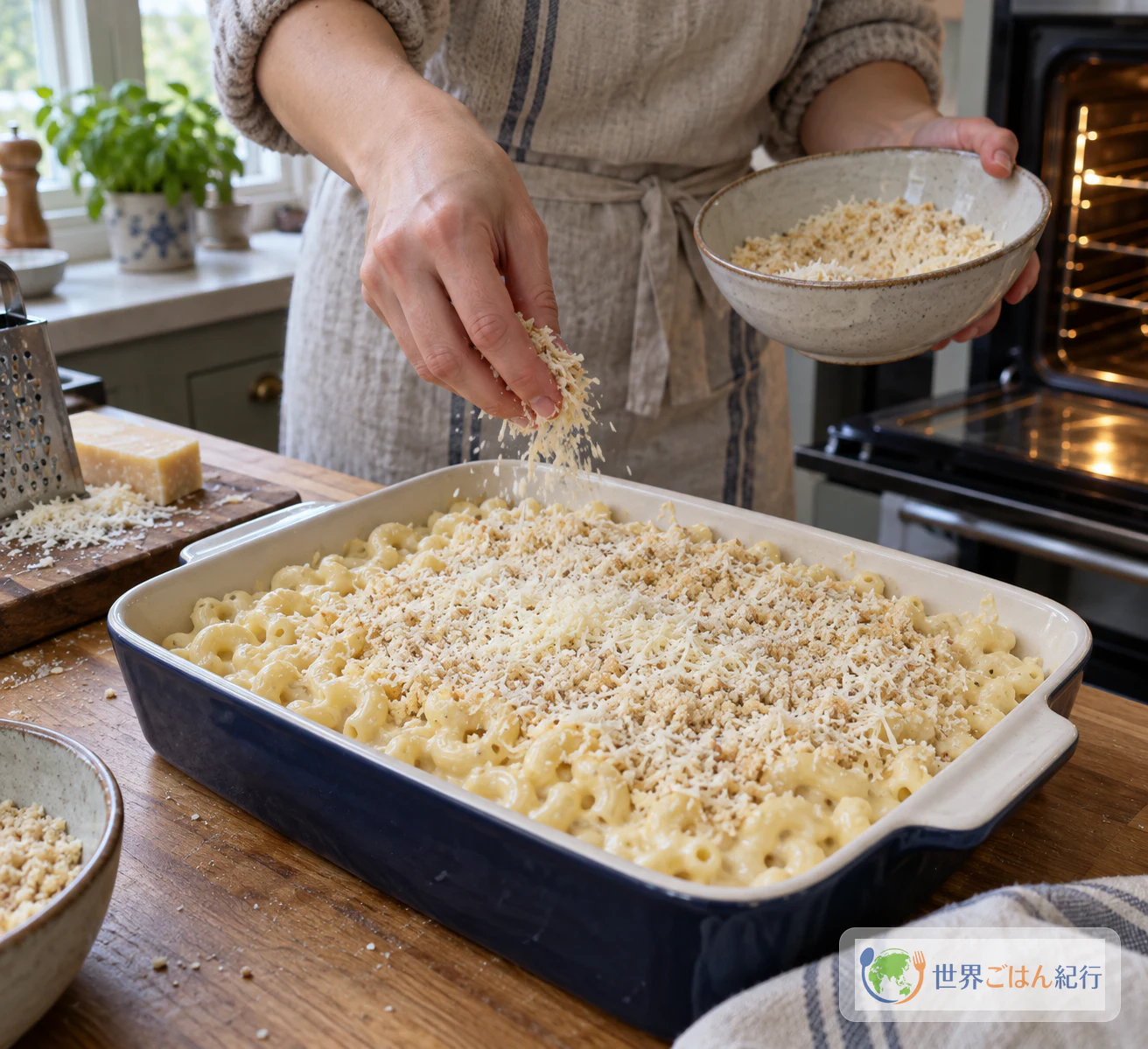
A small pan of milk warms slowly with a halved onion, a peeled garlic clove and a single bay leaf. The pan comes off the heat, the lid goes on, and the aromatics are strained out. The milk is then stirred bit by bit into butter and flour to make a white sauce. Cheddar and mustard melt into it, short macaroni is folded through, and the whole lot goes into a baking dish under a scattering of Parmesan and coarse white breadcrumbs.
This recipe follows BBC Good Food's "Easy mac and cheese", a British recipe for home cooks that serves 4. The amounts, order of steps and oven settings come from that one recipe and are not mixed with others. The finished dish has two textures that play against each other: soft pasta coated in a sauce that tastes of milk and cheese, and a crunchy, browned crust on top.
Many countries have a dish by this name, and the versions differ. This article first sorts out what the British baked version is and how it differs from Scotland's macaroni pie. It then looks at what early records say about pasta and cheese reaching Britain, and finally walks through the cooking.
A Baked Macaroni Cheese from British Home Kitchens
This is one example of a British home recipe, not the single authentic version. The BBC Good Food recipe is a baked dish: a white sauce enriched with cheddar and mustard, a top of Parmesan and breadcrumbs, and a turn in the oven. "Macaroni cheese" is a common name for it in Britain. "Mac and cheese," often seen in the United States, covers many styles, including rich stovetop cheese sauces. The two names overlap, but a name alone does not fix the recipe. Treat this as one British-style baked version among many.
Scotland's macaroni pie is a different food. It is cheesy macaroni packed into a pastry case. Threadinburgh, a site exploring Scottish local history, traces how macaroni and macaroni cheese spread in Scotland through newspaper advertisements and local records. It also mentions a 1920 record of a Dundee bakery selling a macaroni pie in its modern form. That is a record the writer presents, and parts of the article are the author's own conjecture, so it is not proof of where the pie began. This recipe is the baked dish in a plain ovenproof dish, not the pie.
How Macaroni and Cheese Appear in the Records
Early records show the pairing in several places, so the dish should not be credited to Britain alone. Guinness World Records points to the Liber de coquina, an Italian cookbook from the early 14th century, as containing a dish that combines cheese and pasta. In Britain, it notes a detailed macaroni and cheese recipe in Elizabeth Raffald's English cookbook of 1769. Both are early recorded examples, not proof of an origin.
The Fitzwilliam Museum at the University of Cambridge describes British–Italian food exchange that long predates the 20th-century cookery writer Elizabeth David. By the early 18th century, Parmesan could be bought at Italian grocers in London. In 1783, the Welsh painter Thomas Jones is recorded ordering macaroni and cheese for his voyage home. Ingredients from the continent were already reaching British tables through this kind of trade. The Parmesan on top of today's dish is a small reminder of that history.
Ingredients for 4 Servings
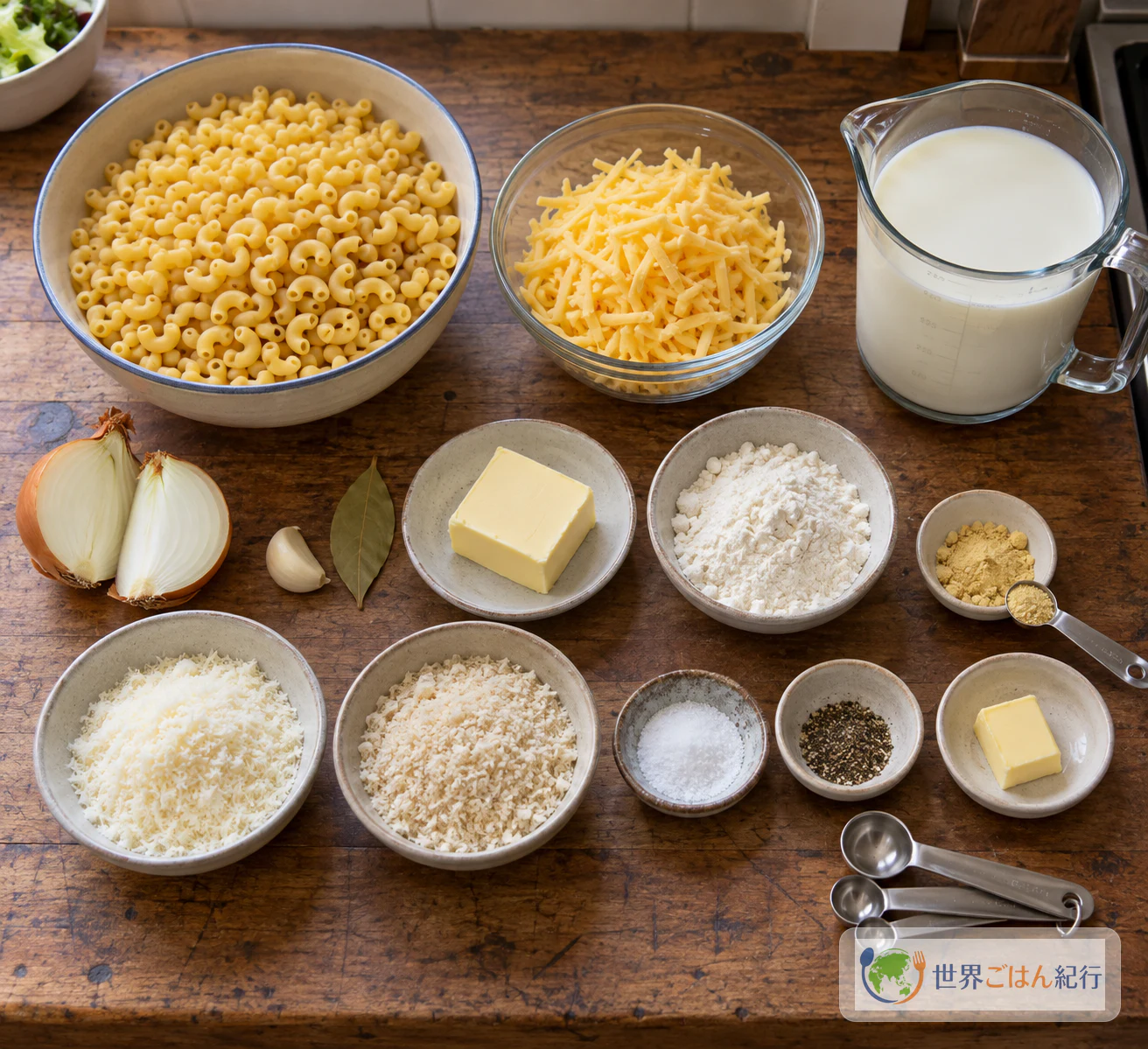
The amounts follow BBC Good Food's recipe for 4. The source's ingredient list says "English mustard 1 tsp," but its method says "mustard powder." This recipe uses 1 tsp of English mustard powder. The water for boiling the pasta and any splash of milk or water used to loosen the sauce are listed separately from the 700 ml of milk.
This dish contains milk (milk, butter, cheese) and wheat (pasta, flour, breadcrumbs). Mustard may also be a labeled allergen. Check the label on every product you use.
Choosing Ingredients and Substitutes
Cheddar: A mature British cheddar keeps the flavor closest to the original. If you can't find cheddar, an aged Gouda can stand in, but it is an editorial substitute. It melts, salts and smells differently, so it is not an exact match. Don't build the sauce mainly from powdered grated cheese.
Mustard: This recipe uses 1 tsp of English mustard powder. Prepared English mustard paste is also sold. It differs by product and does not give the same flavor or strength as powder, so don't treat it as a direct one-for-one swap.
Milk: Use full-fat (whole) milk. Lower-fat milk changes both the richness and the thickness of the sauce.
Flour: Plain flour is the source's choice. A soft wheat flour can be used as an editorial substitute, but it is not guaranteed to behave the same. Start with the same 50 g and give it the full minute of cooking so it doesn't taste raw.
Butter: Unsalted butter makes it easier to judge the salt, since the cheese brings plenty of its own.
Parmesan: Use Parmigiano Reggiano or a similar hard aged cheese. Traditional Parmesan is made with animal rennet. If that matters to you, look for a hard cheese labeled suitable for vegetarians. Its flavor will be a little different.
Breadcrumbs: Coarse crumbs from fresh white bread are what the recipe calls for. Dried breadcrumbs brown faster, so check the top earlier. The pasta and sauce still need their time in the oven, though, so don't decide the dish is done by the color of the top alone.
Macaroni: Any short tubular macaroni works. Follow the cooking time on your pack, because thickness varies between brands.
Equipment
- Small saucepan with a lid (for infusing the milk)
- Sieve
- Large pot and colander (for the pasta)
- Saucepan for the sauce
- Wooden spoon or whisk
- Grater
- 25 x 18cm ovenproof dish
- Kitchen scale and measuring spoons
Method: From Infused Milk to a Bubbling Dish
BBC Good Food gives about 15 minutes of preparation and 30 minutes of cooking, plus the time for infusing the milk. Stoves, ovens and pasta brands vary, so don't rely on the clock alone. Check the sauce's thickness on the spoon, the bite of the pasta, the color of the top and the bubbling at the edges.
Troubleshooting: Sauce, Pasta and Crust
| Problem | Likely cause | How to fix it |
|---|---|---|
| The sauce is thin | The milk went in all at once, or it hasn't simmered long enough | Add the milk a little at a time and keep stirring at a gentle simmer. Aim for a sauce that leaves a trail on the spoon |
| The sauce is too thick | It cooked down, or the pasta absorbed liquid | Stir in a splash of milk or water, a little at a time. Leave it as a loose coating before it goes into the dish |
| The macaroni clumps together | The pasta sat too long after draining | Time the pasta so it is ready close to the sauce, and combine them straight away. If needed, separate the pieces under running water |
| The top burns | Ovens vary; dried breadcrumbs brown fast | From 15 minutes, check the color and the bubbles at the edges. With dried crumbs, check sooner |
| The sauce turns greasy or splits | The cheese went in while the sauce was boiling | Take the pan off the heat before adding the cheese, and don't keep the sauce boiling |
Serving and Pairing
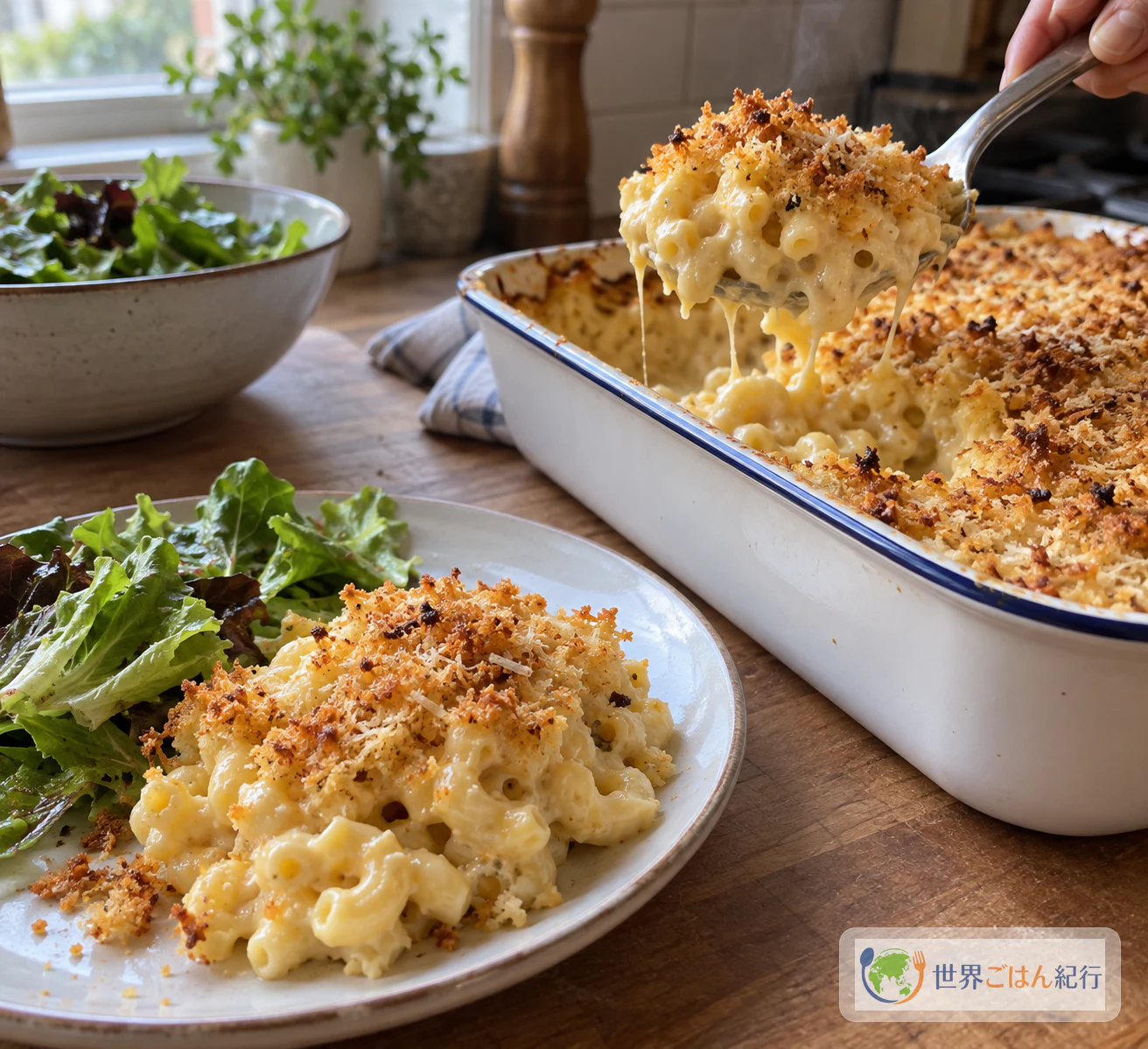
BBC Good Food suggests serving macaroni cheese with a green salad. A simple plate of leaves keeps the meal from feeling too heavy next to the cheese sauce and crust.
If you enjoy dishes that pair cheese with pasta or dough, compare this with Germany's Käsespätzle. Or look at how a different sauce clings to pasta in Italy's carbonara.
Variations
| Variation | What changes | How to approach it |
|---|---|---|
| The base British bake | — | The recipe above |
| Vegetarian-friendly topping | Parmesan replaced with a hard aged cheese labeled suitable for vegetarians | The flavor shifts slightly, and the cheese is made without animal rennet |
| Part Gruyère | Some of the cheddar replaced with Gruyère, as BBC Good Food suggests | Keep the total cheese in the sauce at 175 g and swap within that amount |
| Dried breadcrumbs | Coarse fresh crumbs replaced with dried | They brown sooner, so check the top earlier, but still give the pasta and sauce their full time |
| Scottish macaroni pie | Macaroni cheese baked in a pastry case | A separate dish. The pastry and baking need their own recipe, so it is not covered here |
Frequently Asked Questions
Are macaroni cheese and mac and cheese the same dish?
They overlap. "Macaroni cheese" is a common name in Britain, and "mac and cheese" is the name often seen in the United States. Both cover a range of recipes, from baked dishes like this one to stovetop cheese sauces. The name alone doesn't tell you the recipe.
Why cook the macaroni with a little bite left?
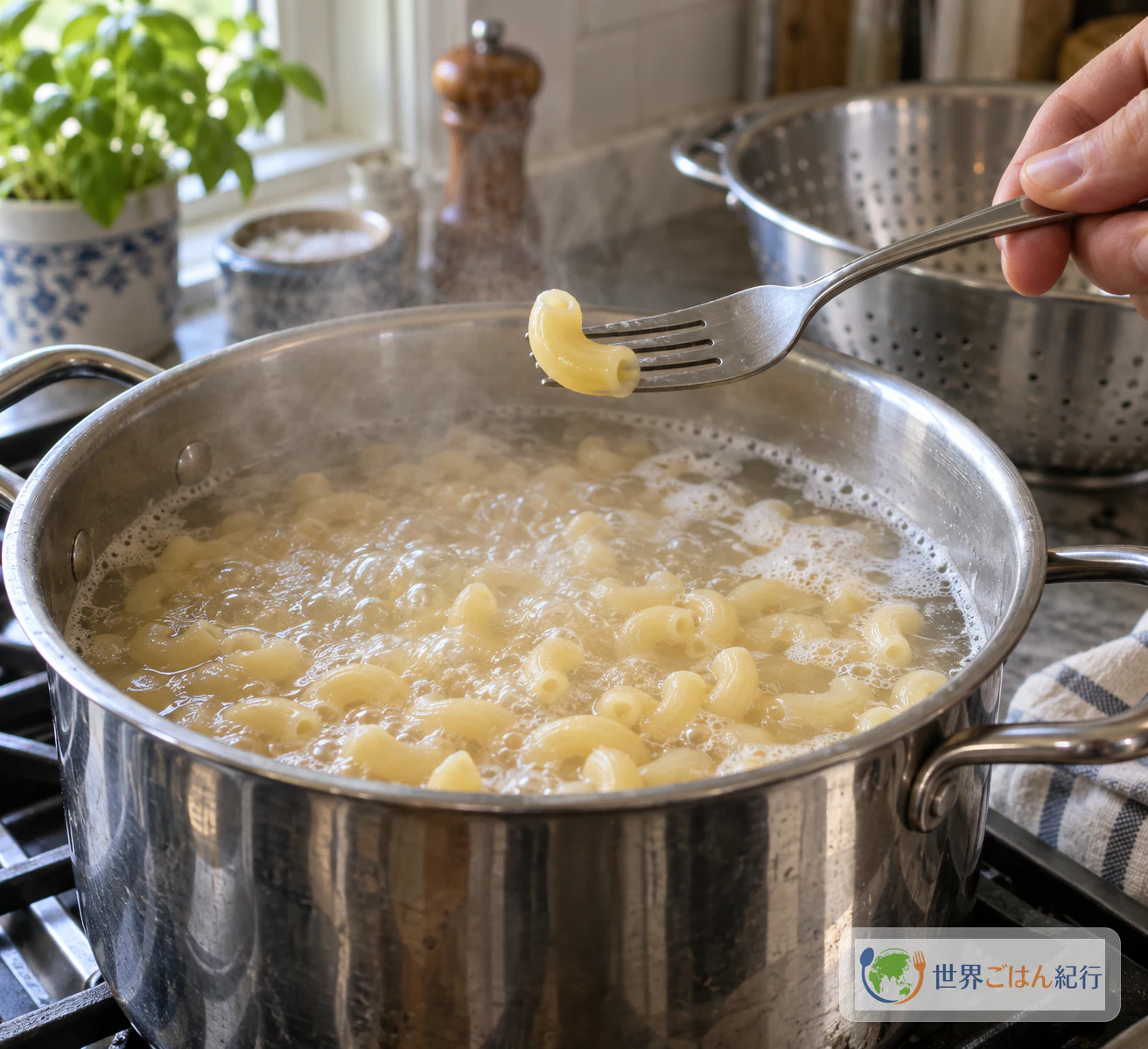
The pasta keeps cooking in the oven. BBC Good Food says to cook it until just soft but still with a little bite, so it doesn't turn mushy by the time the top is golden.
What if I can't get cheddar?
A mature British cheddar is the first choice. An aged Gouda is a possible editorial substitute, but it melts, salts and smells differently, so it is not an exact equivalent. Avoid relying mainly on powdered grated cheese.
Is this the same as Scottish macaroni pie?
No. Macaroni pie is cheesy macaroni baked inside a pastry case, a different food from this dish in an ovenproof dish.
Can I make it ahead?
The recipe this article follows gives no storage or reheating guidance, so no storage times or reheating temperatures are given here. It is written to be baked and served hot. If you want to keep leftovers, follow your local food-safety authority's guidance.
For more dishes from the same country, see British recipes.
Sources
- BBC Good Food, "Easy mac and cheese." The basis for the recipe: the ingredients and amounts for 4, preparation and cooking times, infusing the milk with onion, garlic and bay, cooking the macaroni with a little bite, the roux and sauce thickness, adding the cheese and mustard, the 25 x 18cm dish, baking at 190°C (fan 170°C) for 15–20 minutes, the Gruyère suggestion and serving with salad. Its ingredient list says English mustard and its method says mustard powder; this article uses 1 tsp of powder. https://tollbit.bbcgoodfood.com/recipes/macaroni-cheese-4-easy-steps
- The Fitzwilliam Museum, University of Cambridge, "Eating Italian before Elizabeth David." For Parmesan being available from Italian grocers in London by the early 18th century, Thomas Jones's 1783 order of macaroni and cheese for his voyage home, and British–Italian food exchange before Elizabeth David. It does not establish where the dish was invented. https://feast-and-fast.fitzmuseum.cam.ac.uk/discover/eating-italian
- Threadinburgh, "An unlikely Scottish culinary tradition: the thread about the Macaroni Pie." For distinguishing Scotland's macaroni pie as a separate food, and the 1920 record of a Dundee bakery selling it in modern form. Parts of the article are the author's conjecture, and it is not used to claim an origin. https://threadinburgh.scot/2022/10/10/4119/
- Guinness World Records, "First macaroni and cheese." For the early-14th-century Liber de coquina dish of cheese and pasta, and Elizabeth Raffald's detailed English recipe of 1769. Used as a record of early examples, not as proof of origin. https://www.guinnessworldrecords.com/world-records/630454-first-macaroni-and-cheese