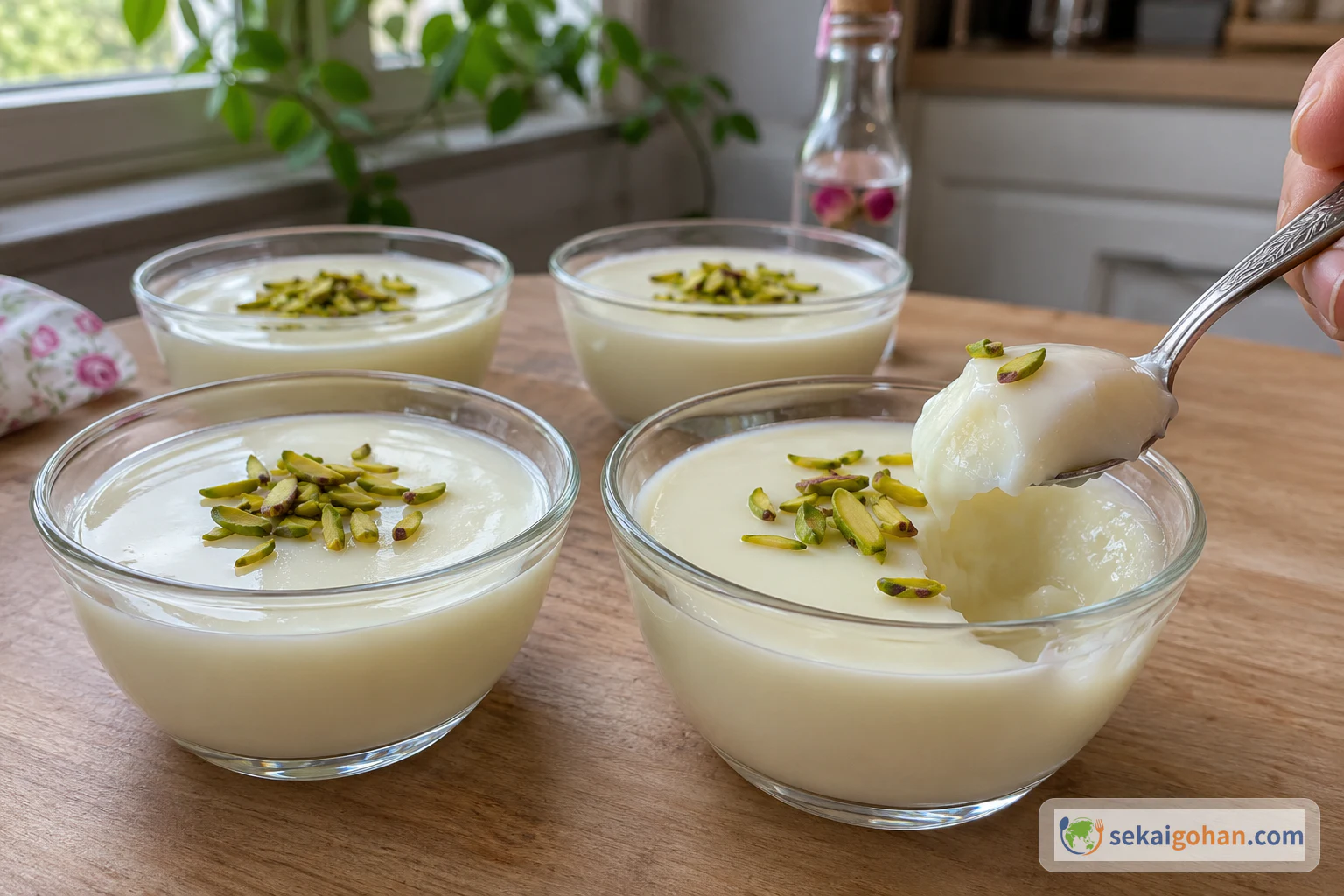
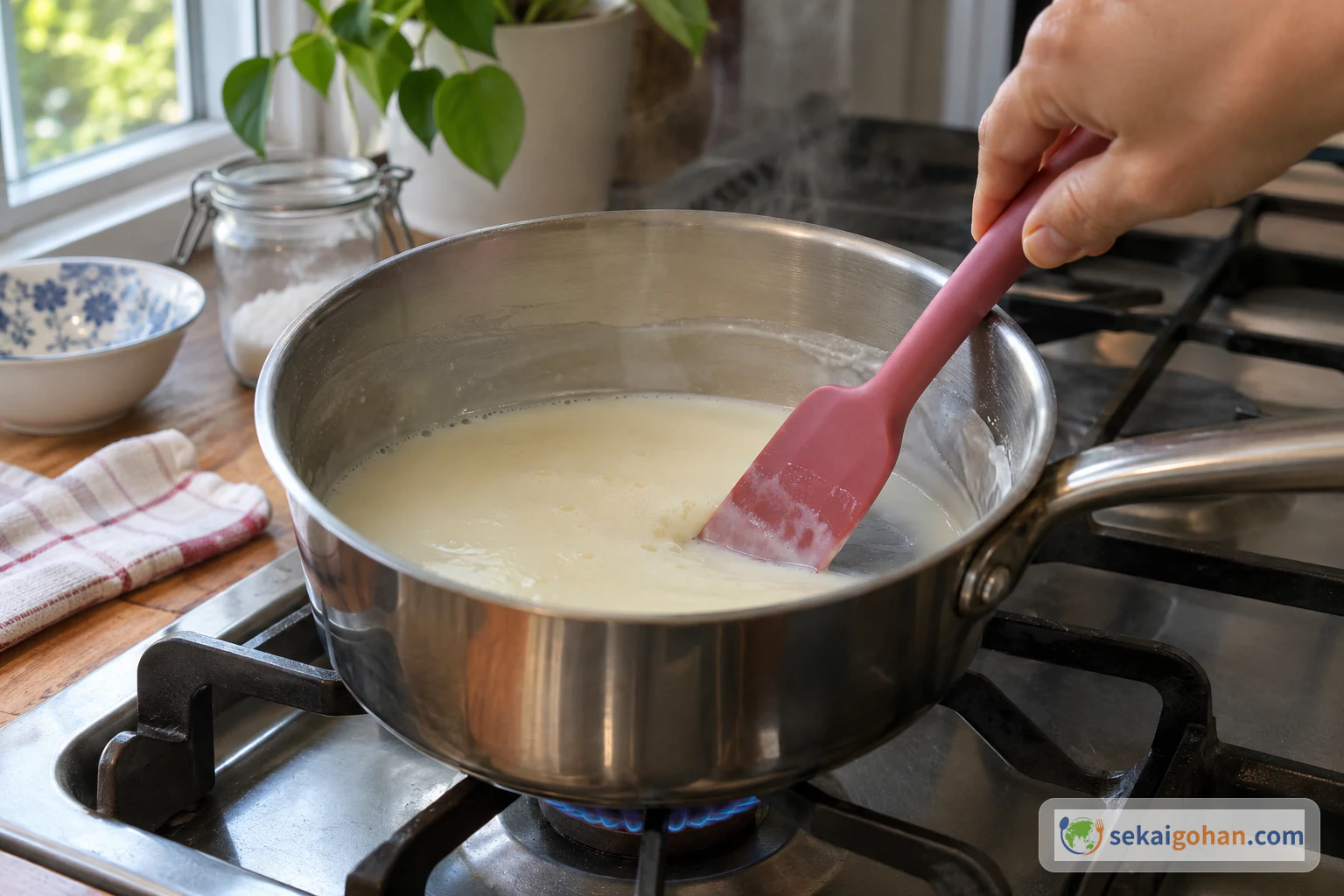
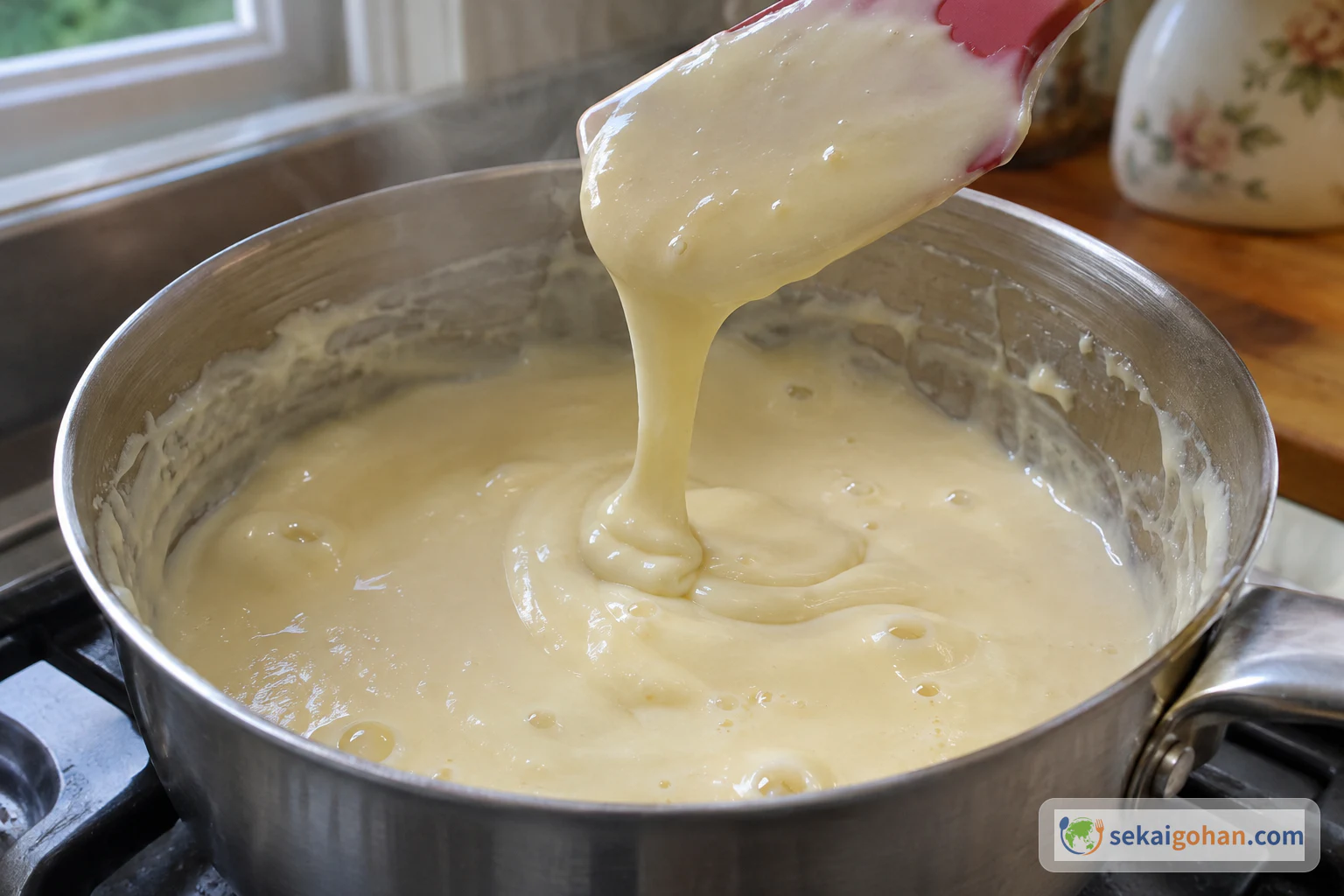
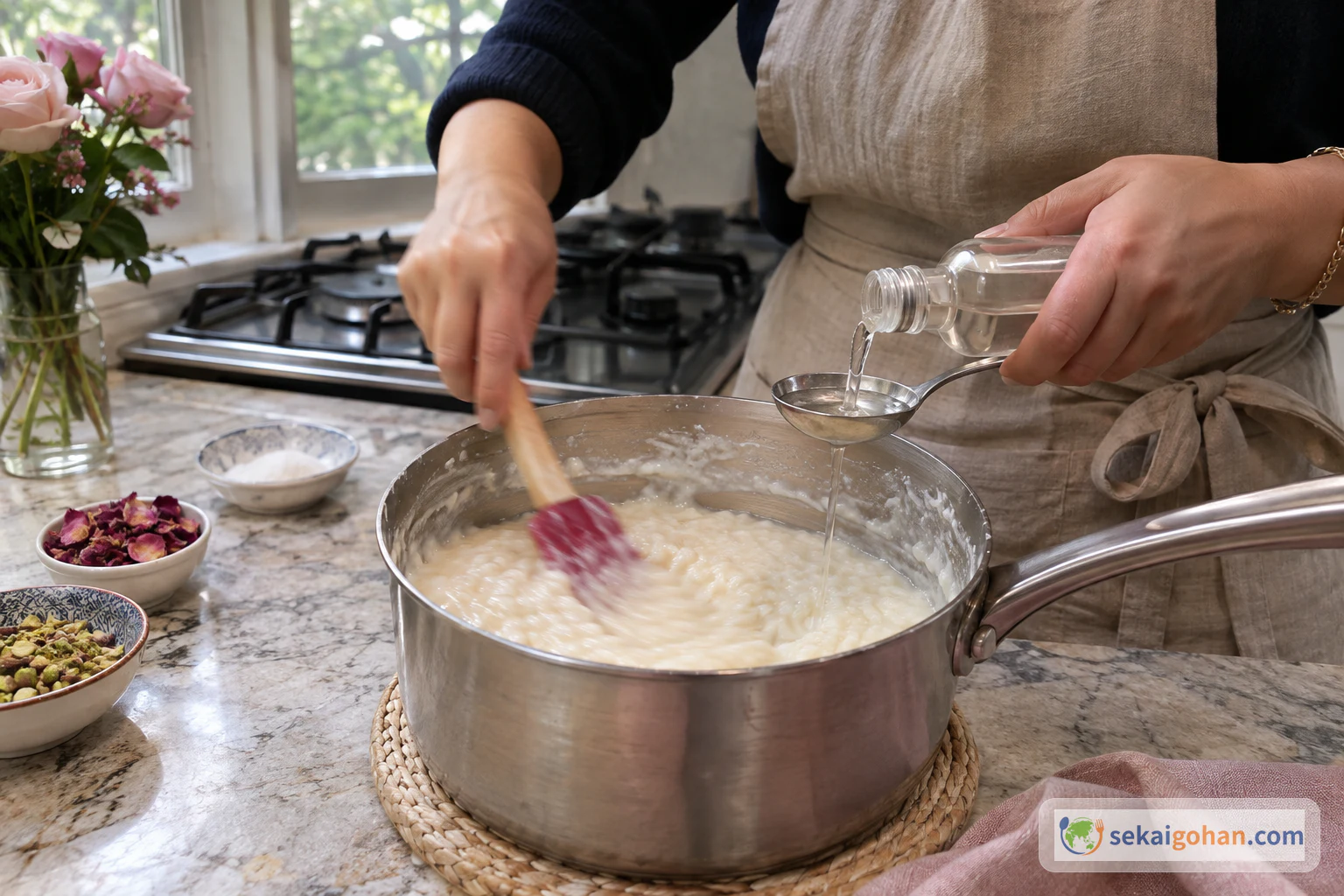
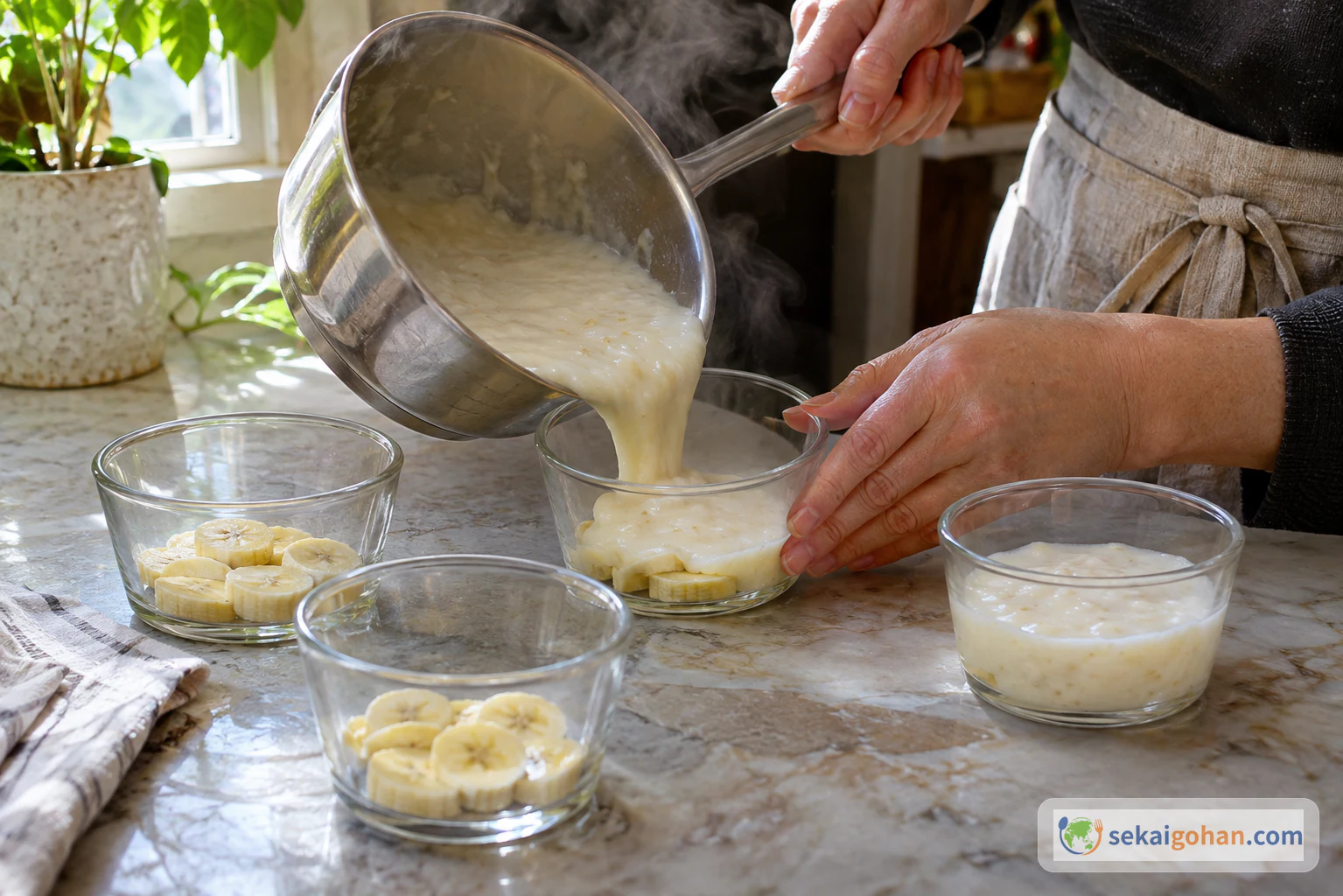
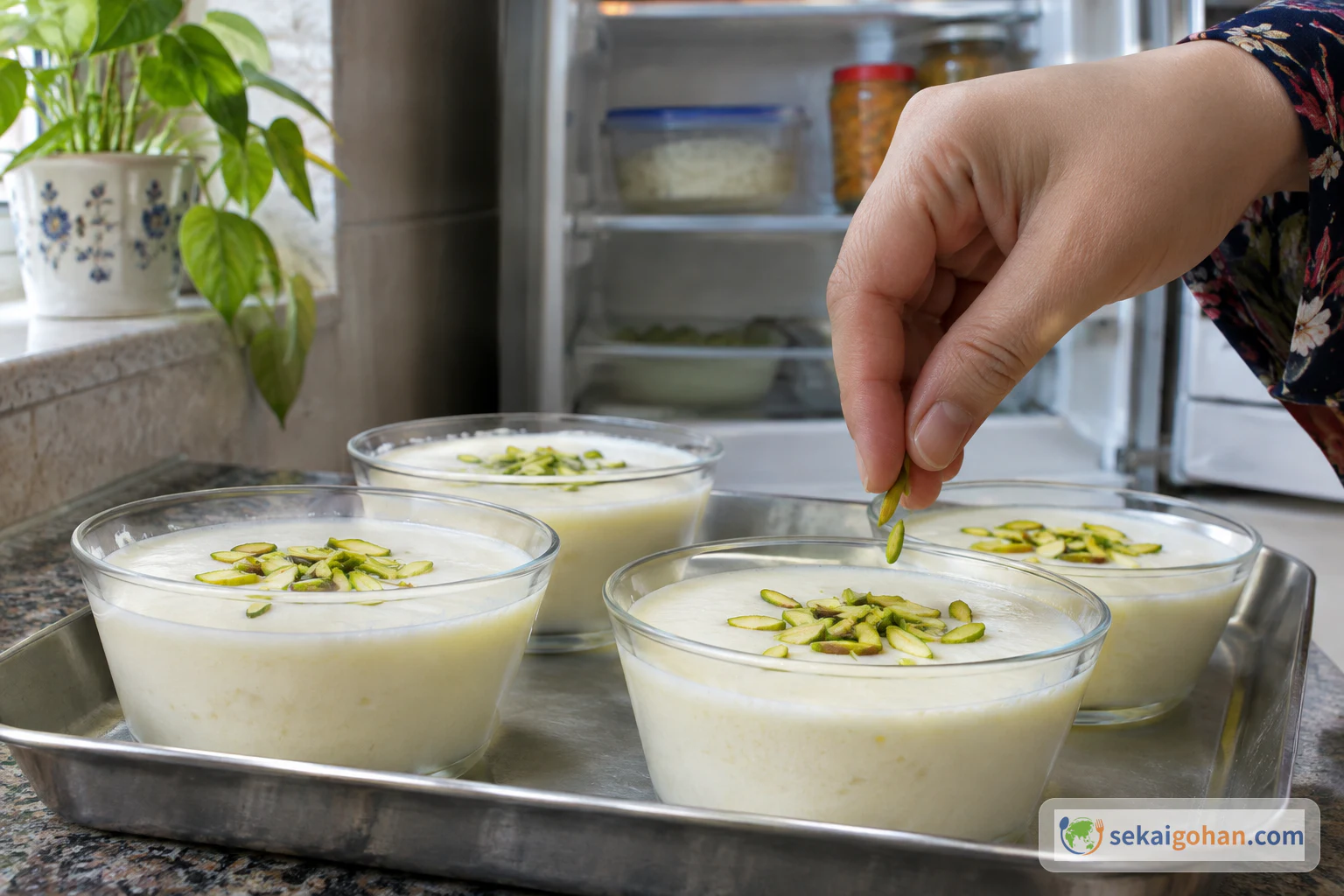
The milk runs thin and quiet under the spatula for the first few minutes, then all at once it pulls heavy and starts to fall from the edge in a thick white ribbon. You lift the pan off the flame, tip in the rosewater, and the steam suddenly smells of roses. Mehallabiyya, written مهلبی and called mahalabi in Iran, is milk thickened with cornstarch, sweetened, perfumed with rosewater and chilled until it sets. Eaten cold from a small glass, it is smooth and gently sweet, with a soft wobble on the spoon and the floral scent arriving before the taste.
A Pudding Named After a General
The name is usually traced to a legend. A cook from Sasanian Persia is said to have made the pudding for al-Muhallab, an Arab general of the late seventh century, and the dish took his name. Another telling ties the name to a seventh-century governor of Khorasan. Neither story can be pinned down, so where mehallabiyya was first made is not settled. What is on record is later: the oldest written recipe sits in a tenth-century Baghdad cookbook by Ibn Sayyar al-Warraq.
Medieval mehallabiyya was cooked from rice, milk and sugar with chicken, a savoury-leaning dish. The meat dropped out over time. Turkey's tavuk göğsü, a milk pudding that still contains chicken breast, is described as a trace of that older form, and the same line of dishes is linked to Europe's blanc-manger.
In Iran the pudding is a home dessert, made in a saucepan and poured into small glasses for the fridge. An Iranian recipe site describes it as an Arab and Turkish sweet that resembles fereni, which makes it one of those dishes the whole region shares. Home versions run wide: fruit pressed in, cocoa, saffron, a pink summer version blended with watermelon, and firmer molded ones set with gelatin. The plain rosewater pudding below is the one to learn first, because every variation builds on its texture. For more of the country's cooking, browse Iranian dishes.
Fereni, phirni and the neighbours
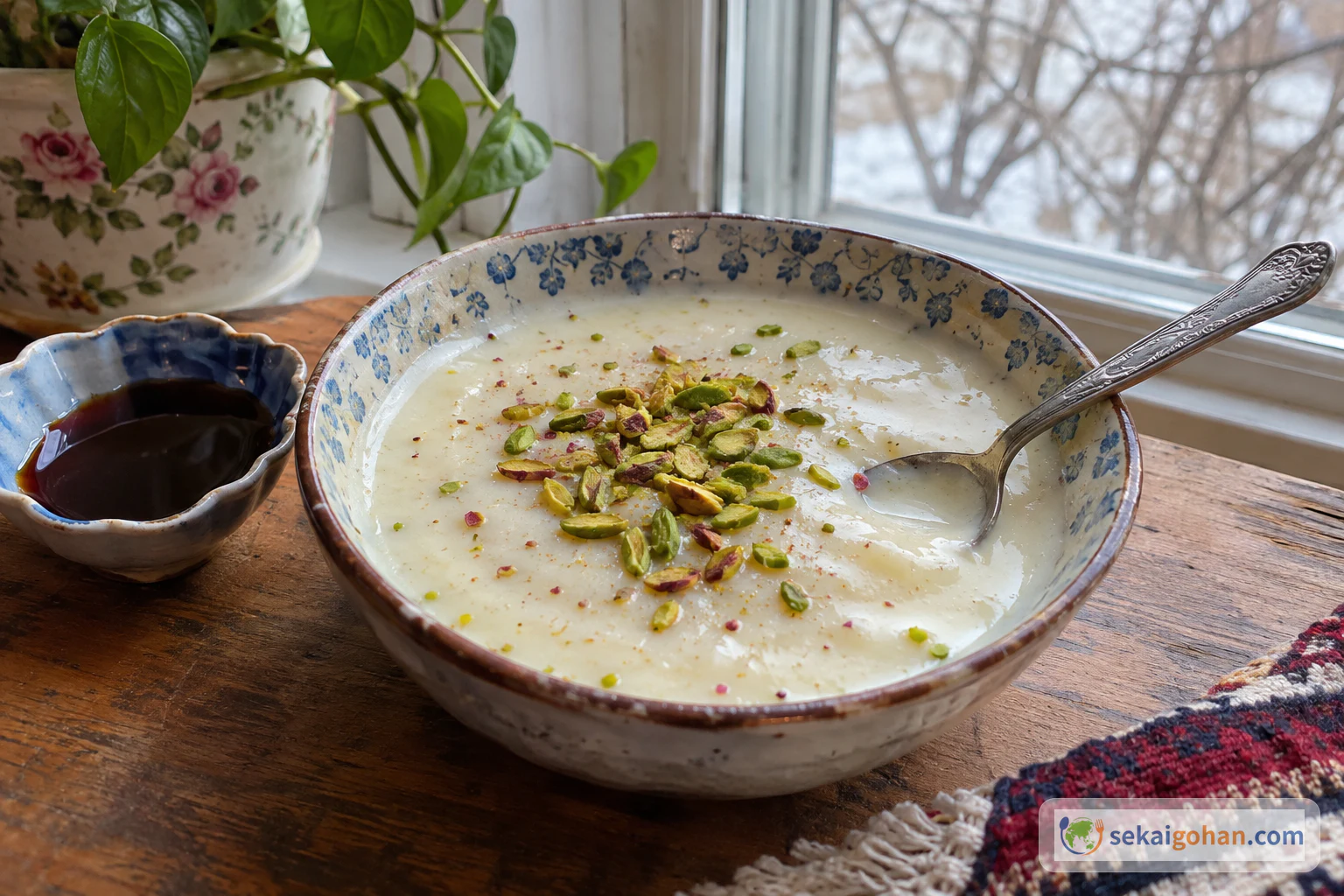
Iran's own fereni is the closest relative. It is cooked from rice flour, milk, sugar and rosewater, stays looser and spoonable, and comes scattered with pistachios, almonds or sesame, with grape molasses or honey on the side. Mahalabi is set a little firmer than fereni, which is the best single picture of its texture. India's phirni goes further toward grain, simmering coarsely ground rice in milk. Lebanese cooks perfume their version with orange flower water, Israel calls the pudding malabi, and Turkey has muhallebi. Lebanon's layali lubnan is a different, layered dessert built on semolina, sharing only the cool milk and floral scent.
Ingredients
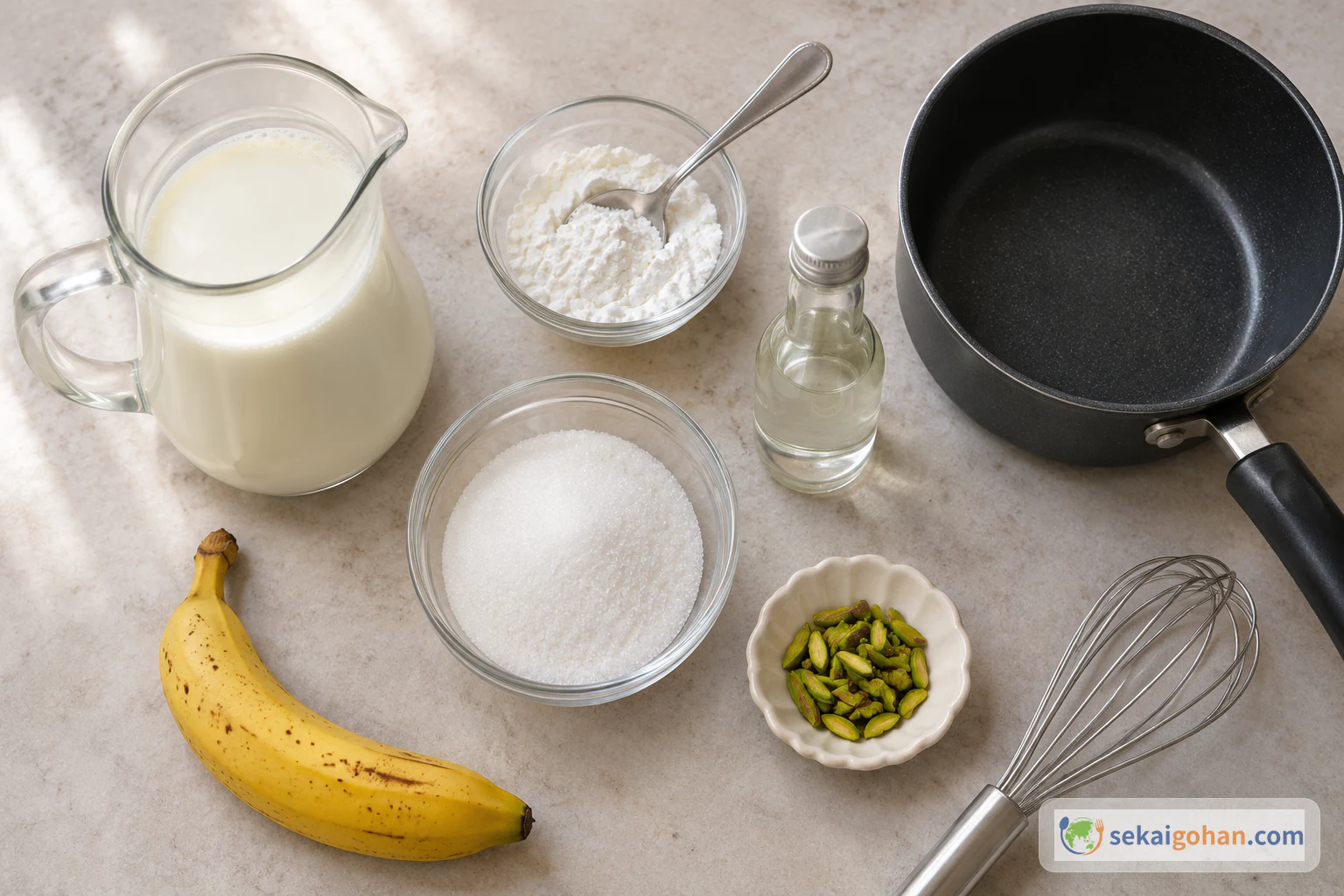
The pudding depends on the ratio of milk to sugar and starch. Measure the milk and the sugar with the same cup, whatever its size, and the balance stays right.
Contains milk. The optional pistachios are a tree nut, and the optional banana is an allergen for some people; leave either out as needed.
Equipment
- Saucepan, nonstick if you have one
- Whisk
- Heatproof silicone spatula
- Small heatproof glass bowls or glasses
- Shallow tray for carrying the glasses to the fridge
Choosing and Substituting
Rosewater decides how this tastes, and it is the one thing worth a special trip. Look in Middle Eastern grocers, baking-supply shops or online, and buy only bottles labelled for food or cooking; rosewater sold as a cosmetic or skin toner does not go into food. Strength differs a great deal from brand to brand, so the first batch with a new bottle tells you whether to nudge the amount next time.
Cornstarch from any supermarket works; it is the fine white powder sold for thickening, and it is what gives the pudding its silky, clean set. Whole milk gives the fullest body. Plain white sugar keeps the colour snowy. For the garnish, unsalted slivered pistachios are the classic, chopped pistachios do the same job, and slivered almonds work when pistachios are hard to find, with a paler, milder look on top.
Method
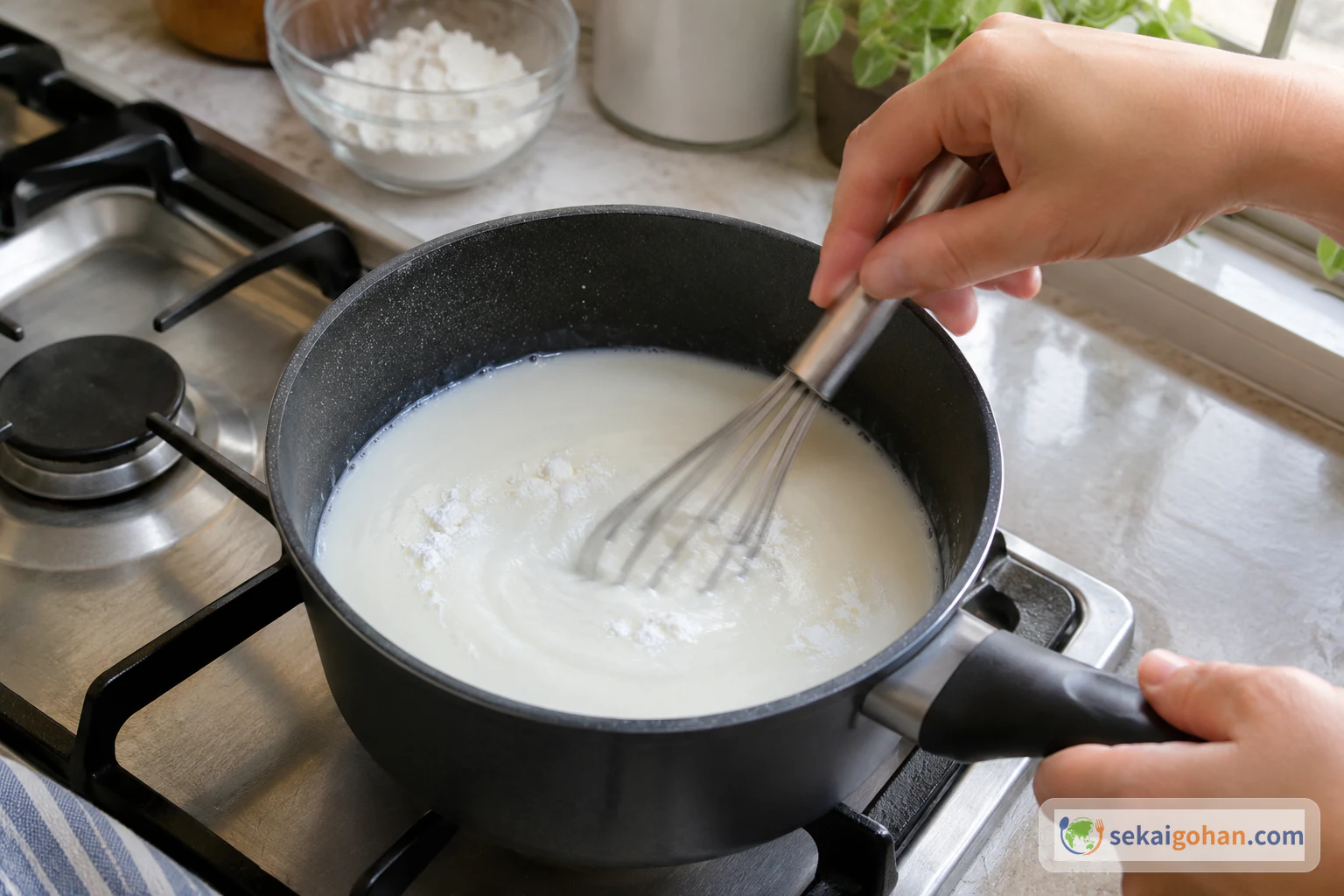
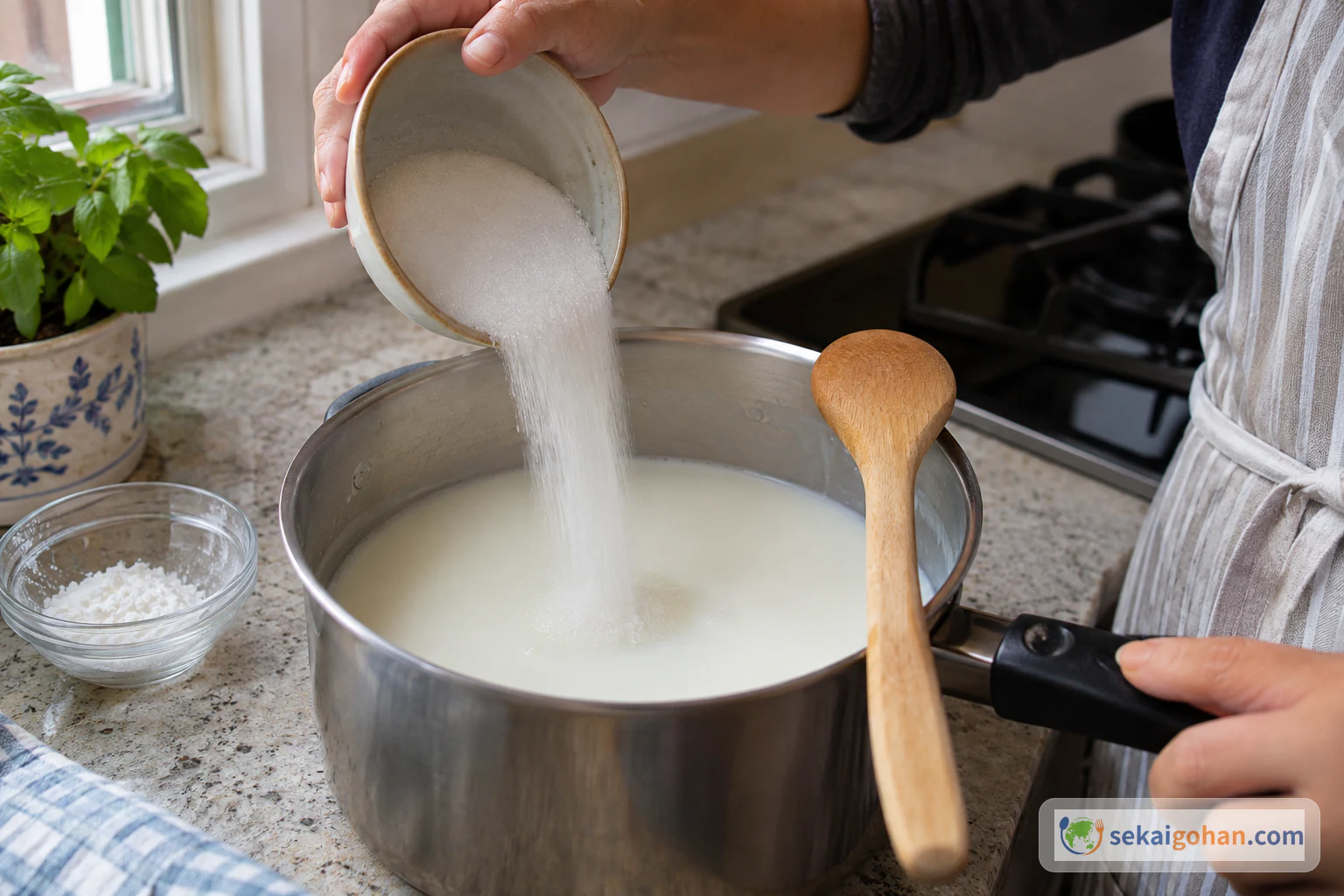
Everything happens in one saucepan in a short burst of attention, so have the glasses out and the rosewater measured before the pan goes on the heat. The work splits into three parts: mixing cold, stirring over low heat until it thickens, then pouring. The hands-off time is the chilling, which takes a few hours.
When It Goes Wrong
| What you see | Why | What to do |
|---|---|---|
| Small lumps through the pudding | The starch was not fully dissolved, or stirring stopped once the pan was hot | Dissolve completely in cold milk next time and stir without pause on the heat |
| Still loose after chilling | The pan came off before the starch had cooked through | Cook until the heavy ribbon forms and the raw starch smell is gone; the pudding firms further as it cools |
| A brown, bitter taste or dark flecks | Starch scorched on the bottom | Keep the heat low, use a nonstick pan, and scrape the bottom and corners on every stroke |
| Pistachios sink out of sight | They went on while the surface was hot and liquid | Wait for the matte skin before garnishing |
| Rose scent faint or soapy-strong | Rosewater strength varies by brand | Start from 2 tbsp and adjust next time; always add it off the heat |
Serving, Variations and Storage
At the table
Serve mahalabi cold, straight from its glass, one small glass per person, with a teaspoon. It belongs at the end of a meal or on a hot afternoon, when a spoonful of cold, rose-scented milk does what nothing else does. The pistachios add a little crunch and colour against the white; the banana layer turns soft and sweet under the pudding by the time it is chilled.
Variations
Each of these swaps the flavouring and keeps the method.
- Orange flower water: replace the rosewater with 10 drops of orange flower essence, the scent the Lebanese version is known for. It turns brighter and more citrusy.
- Vanilla: leave out the rosewater and stir in ¼ tsp vanilla off the heat. More than that turns it bitter. The result is milder and closer to a Western custard.
- Saffron: replace the rosewater with 2 to 3 tsp of strong saffron liquid. The pudding turns golden and takes on saffron's honeyed, slightly bitter perfume.
- Cocoa: add 2 to 3 tbsp cocoa and 100 to 200 g cream, and adjust the sugar. It becomes darker, richer and denser.
Storing leftovers
Do not leave the hot pudding sitting at room temperature for long. Portion it into small, shallow containers or glasses so it cools quickly, and refrigerate it at 10°C or below. Eat it soon.
Frequently asked questions
Can I use potato starch instead of cornstarch?
Stay with cornstarch. Potato starch behaves differently from cornstarch: it thickens at a different point in the heating and sets with a different texture when cold. If cornstarch is all you can find under another name, check that it is the fine white thickening powder made from corn.
Can I eat it warm?
Mahalabi is a chilled dessert, and its texture only comes together once it is cold. If you want a warm milk pudding, make fereni, which is looser and can be eaten warm.
Can I unmold it onto a plate?
The plain pudding is soft and is meant to be eaten from the glass it set in. Molded versions that turn out onto a plate are set with gelatin added to the milk, which makes a firmer, bouncier dessert.