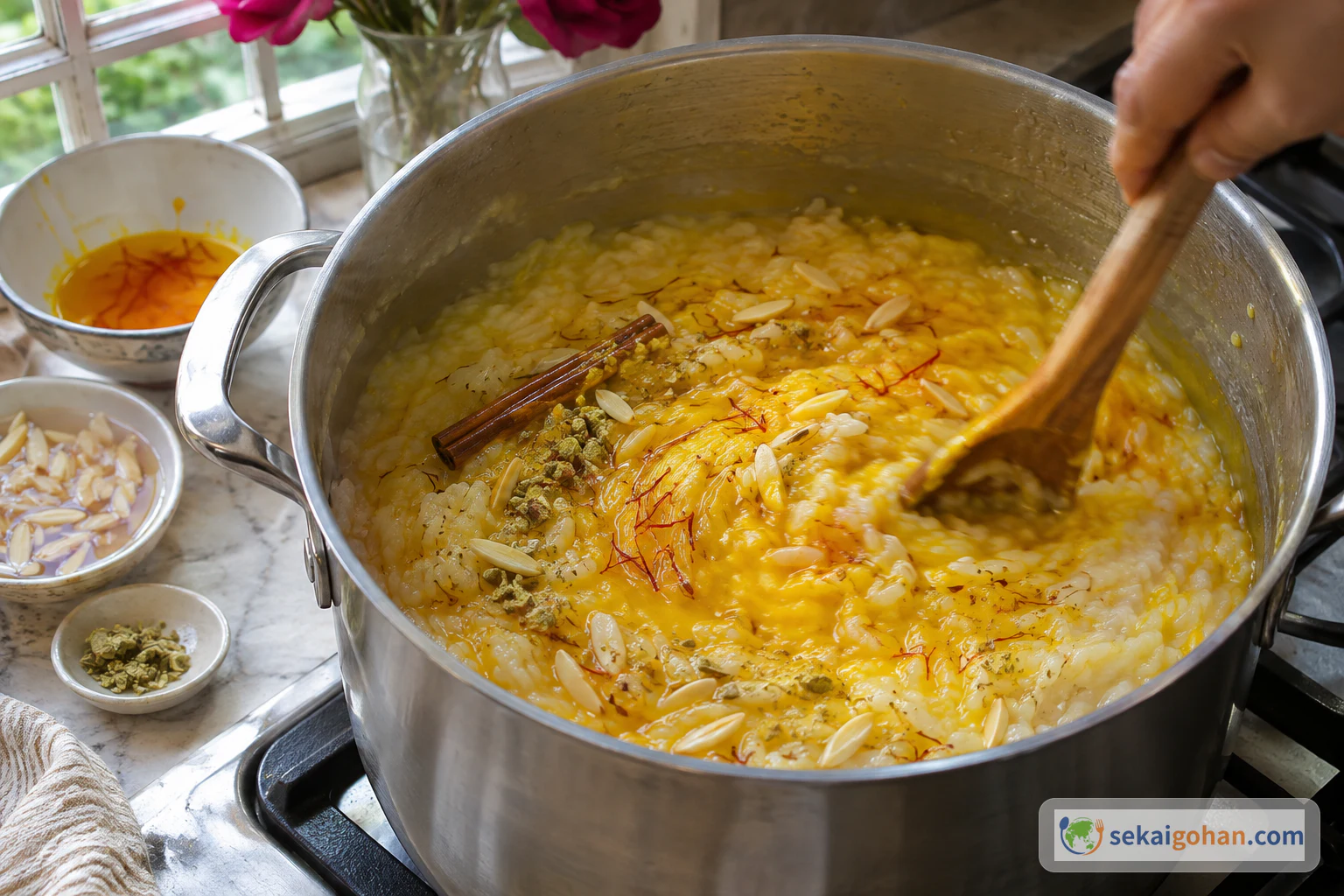
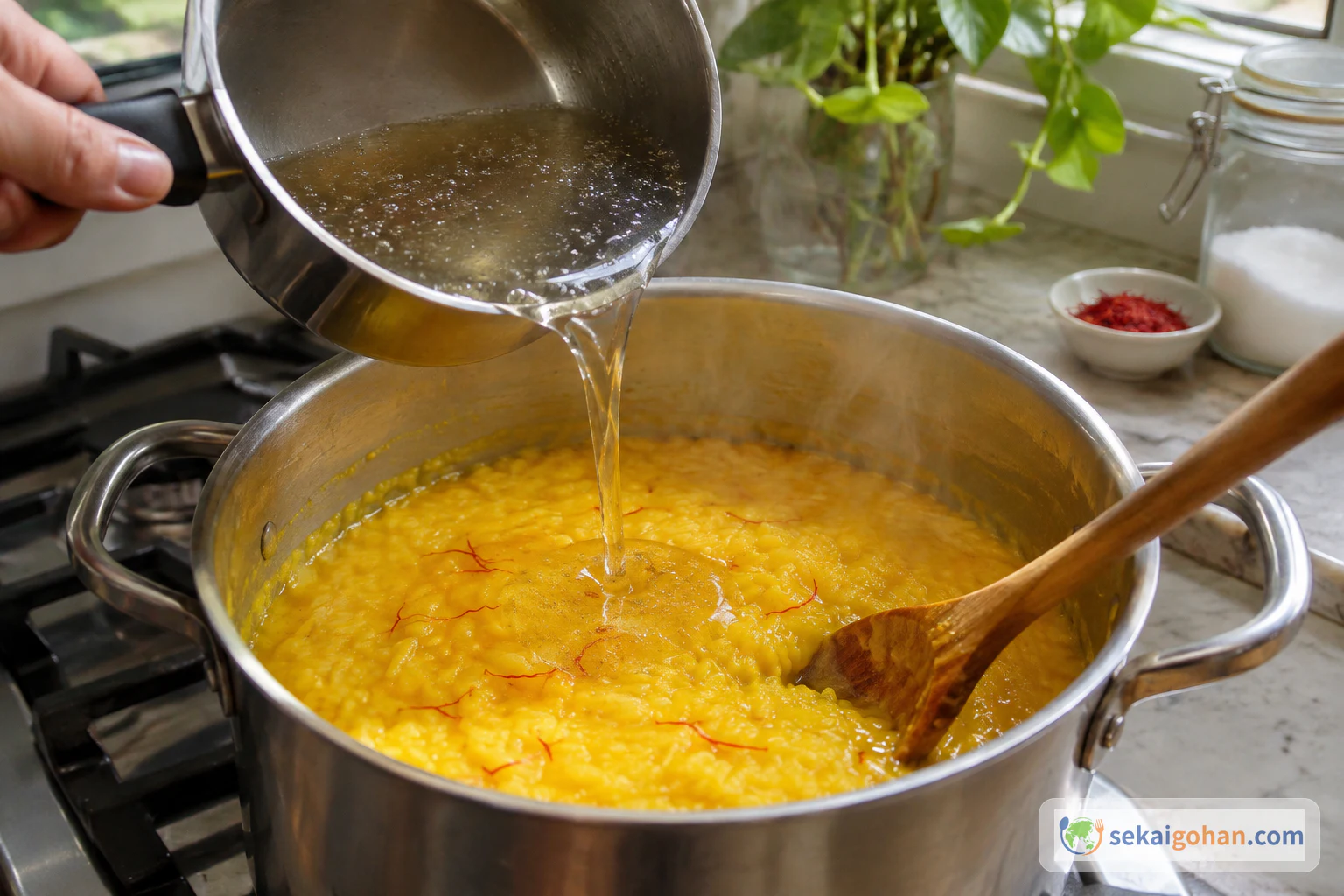
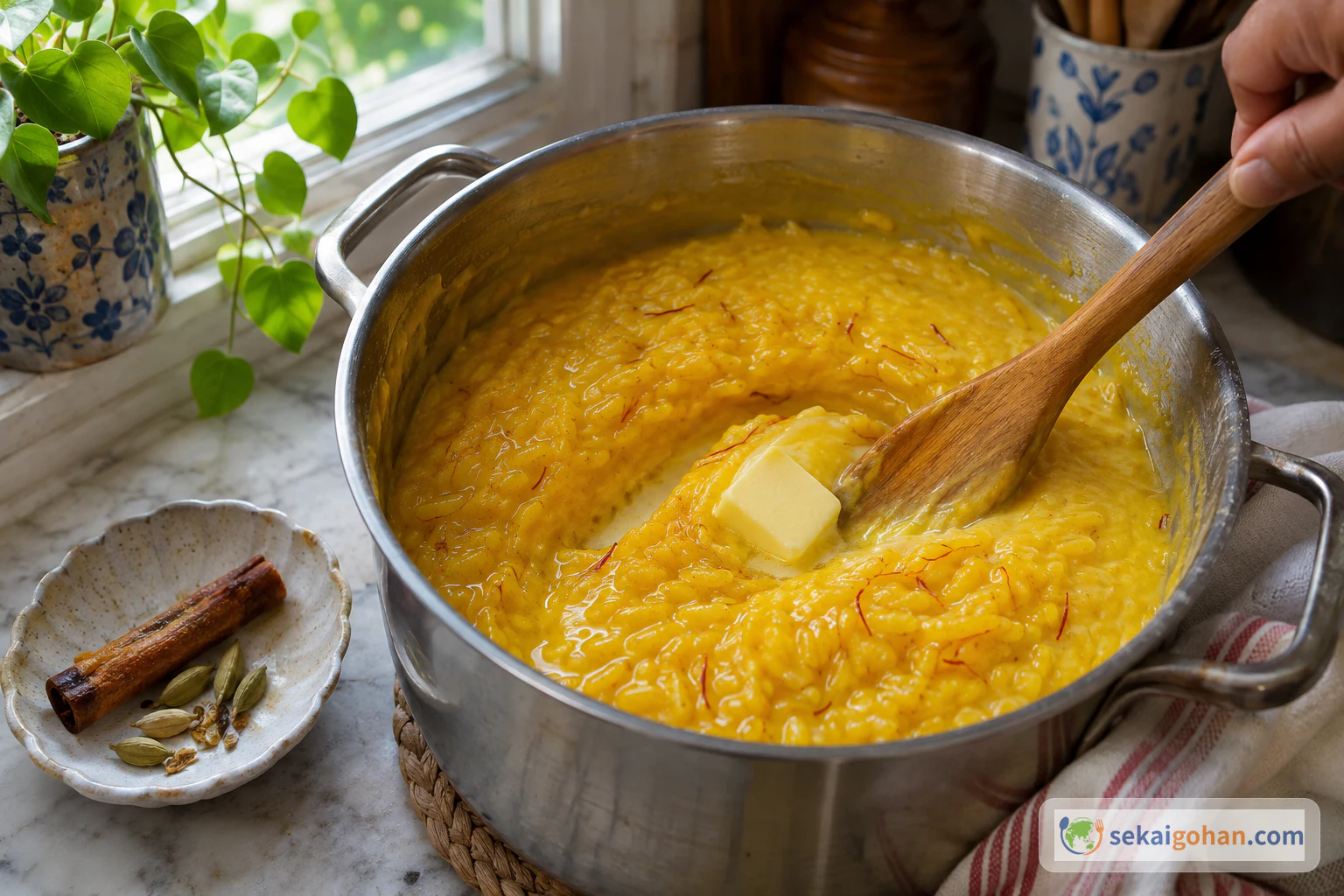
The pot of rice looks plain and white until the saffron goes in. Then the orange liquid spreads through it in streaks, and within a few stirs the whole pot turns gold. Rose water and cardamom rise with the steam. Sholeh zard is Iran's saffron rice pudding. The rice is cooked in water alone, with no milk or cream, so the pudding is smooth and glossy but light. The spoon brings up the floral sweetness first, then saffron, then the soft give of broken rice grains with slivers of almond through them.
Yellow Rice Made by the Potful
The name means "yellow," and the colour is the point. You will also see it written sholezard, shole zard, zard birinj and zard berenj. Every spelling points to the same thing: a pot of rice turned gold with saffron, scented with rose water, sweetened and finished with butter. Saffron carries both the colour and the flavour, so a small amount does a lot of work here.
Sholeh zard is a dish people make in quantity and give away. In Iran it is often prepared as nazri, cooked in a large batch and handed out to neighbours and to people in need, and it is made in large amounts for religious ceremonies. It appears at Nowruz, the Persian New Year, and on Yalda, the longest night of the year. During Ramadan it is tied to breaking the fast at the end of the day, and it turns up at many other gatherings across the year.
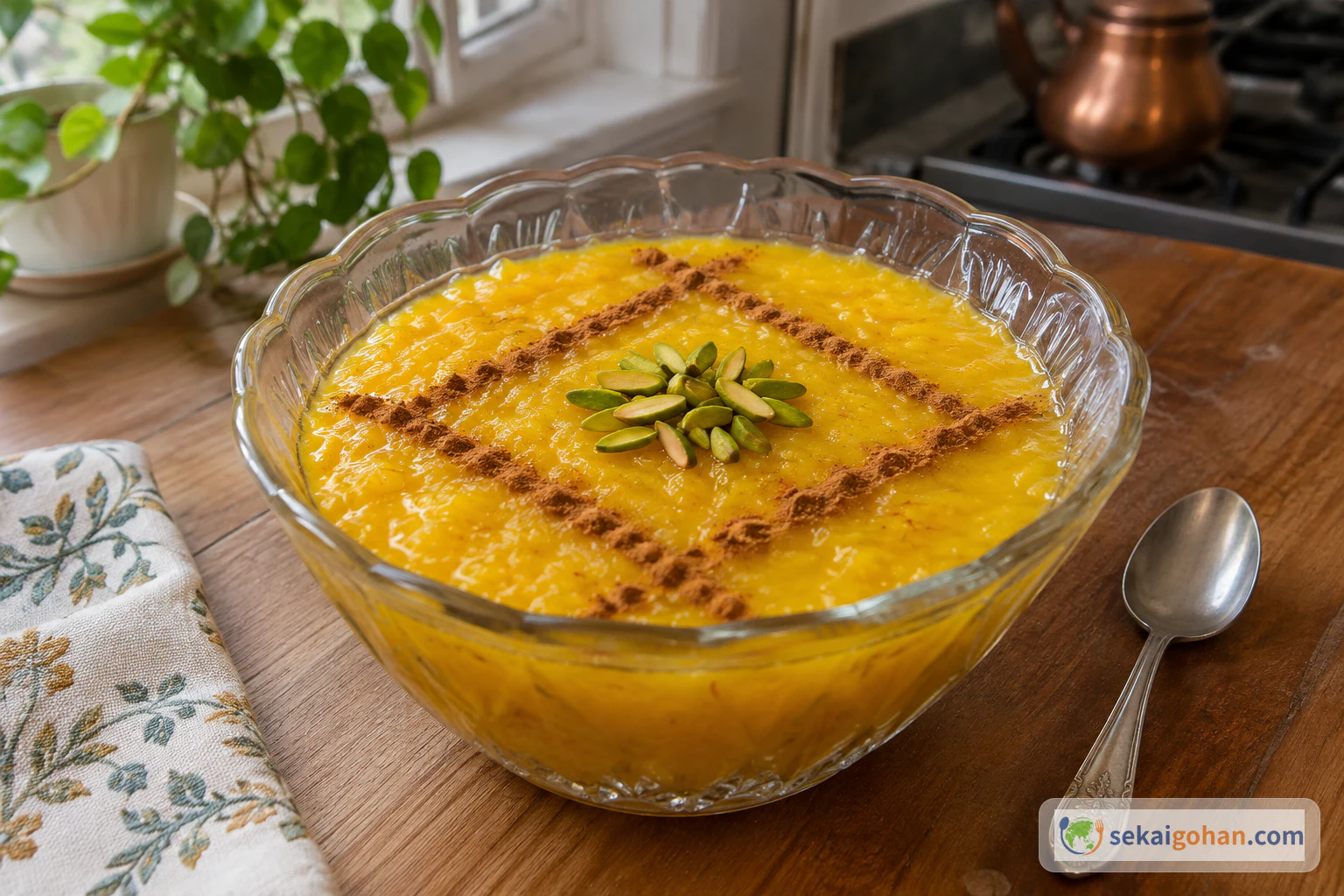
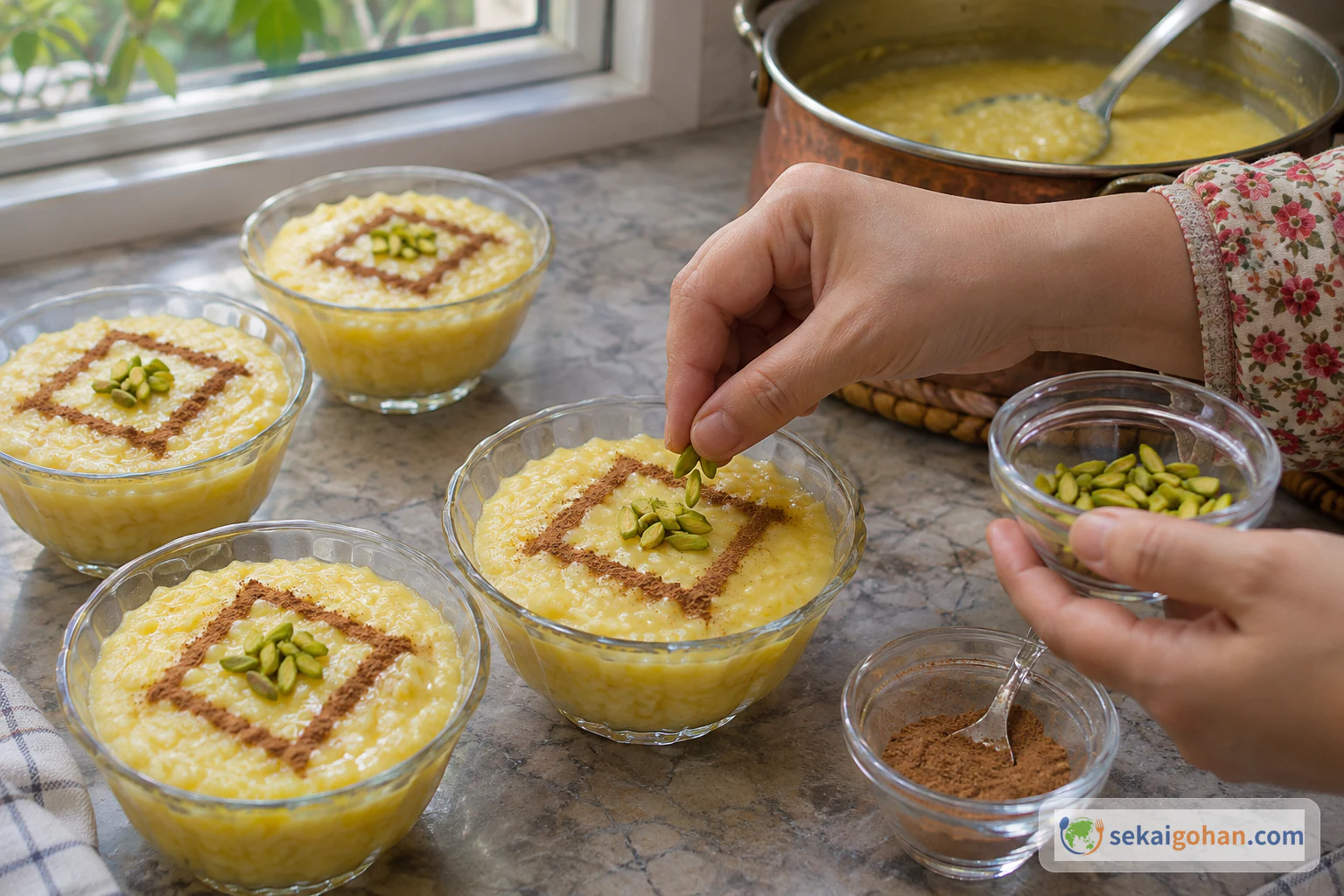
The decoration is part of the dish. In Iran the surface is often finished with ground cinnamon laid down in lines, patterns or letters, so that each bowl handed across a doorway carries its own design. Slivered pistachios add green against the gold. Traditional versions are very sweet; the amounts below keep the sugar more restrained, which lets the saffron and rose water come through clearly.
Zarda, made in India and Pakistan, is a separate sweet rice dish. Sholeh zard is the Iranian saffron rice pudding cooked soft and spoonable.
For more from the same kitchen, see the Iranian dishes on Sekai Gohan.
Ingredients (serves 8)
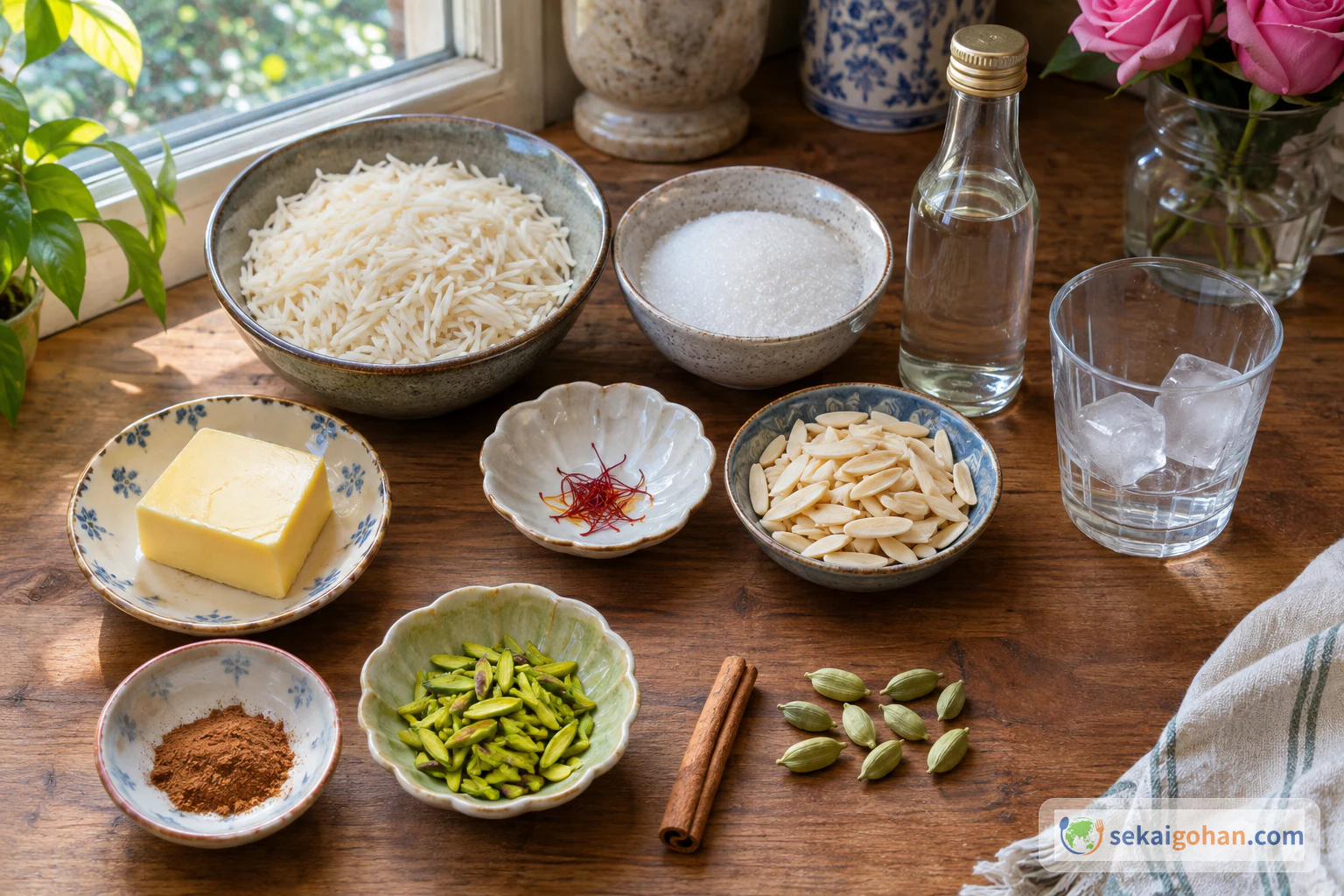
Rose water and rose essence vary a lot in strength from bottle to bottle. With essence, add it a little at a time and smell the pot before adding more. Too much turns the pudding soapy.
This pudding contains tree nuts (almonds and pistachios) and milk (butter). Use only rose water sold for food.
Equipment
- Large bowl and strainer, for washing and soaking the rice
- Mortar and pestle
- Small glass, for the saffron and ice
- Small bowl, for the rose water soak
- Large pot
- Small saucepan, for the syrup
- Wooden spoon and a skimming spoon
- Small serving bowls or glasses
Choosing and Substituting
Saffron is the one ingredient worth seeking out. Buy threads, not pre-ground powder, from a Middle Eastern grocer or a spice specialist online; you will grind them yourself just before cooking. Rose water is sold in the same shops. Choose a bottle labelled for culinary use.
Basmati rice is the rice used in the amounts above. Jasmine rice is also named for this dish elsewhere. Japanese or other short-grain rice can be used, but the stickiness and scent will differ from basmati; the water amount and finish for it have not been worked out here, so treat any change as your own adjustment.
For the butter, vegetable oil works and makes the pudding dairy-free, though it loses some roundness. Ground cardamom can replace the pods; it disperses through the pudding and there is nothing to fish out. There is no real stand-in for rose water. Leave it out and you get a saffron rice pudding with a very different scent.
Method
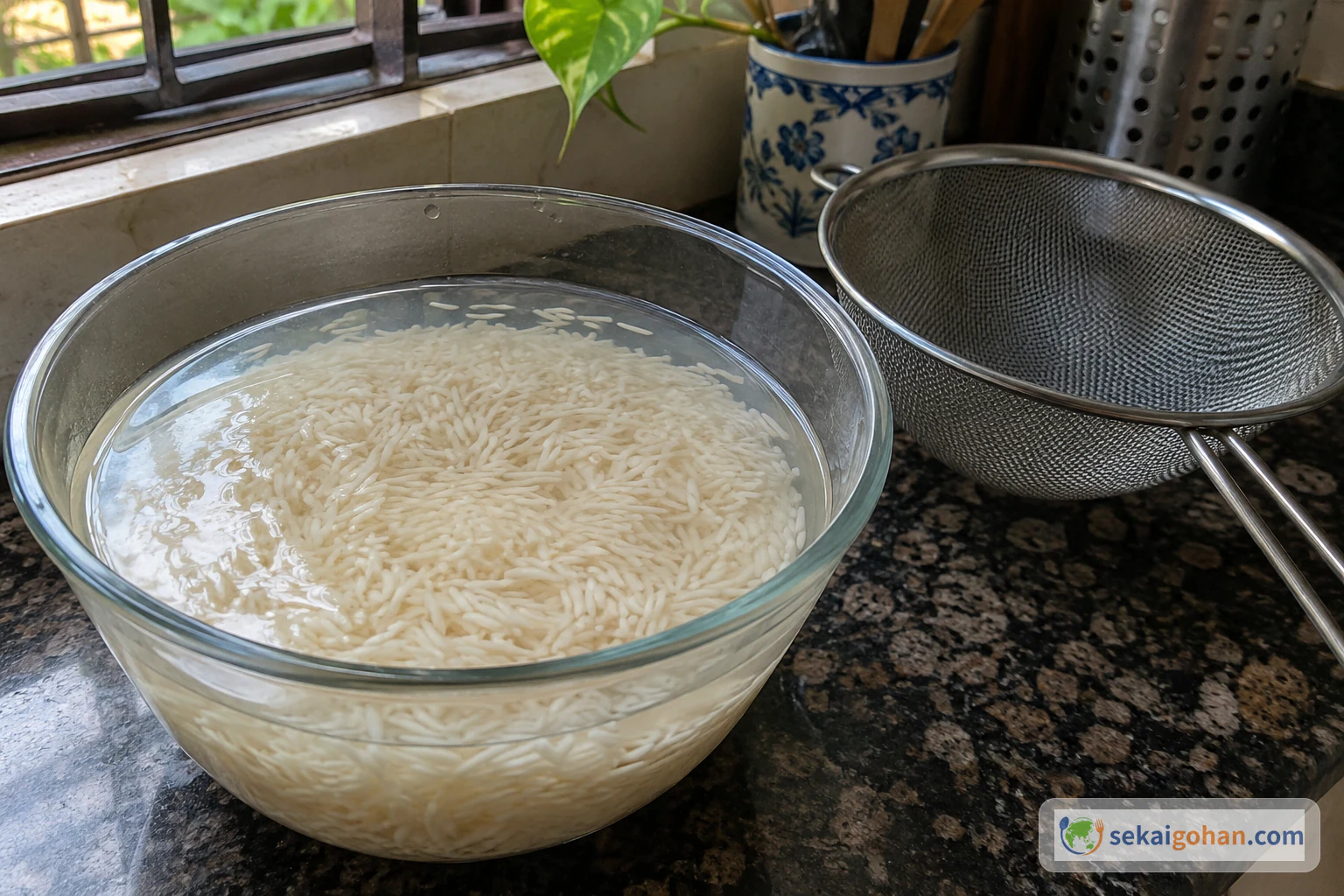
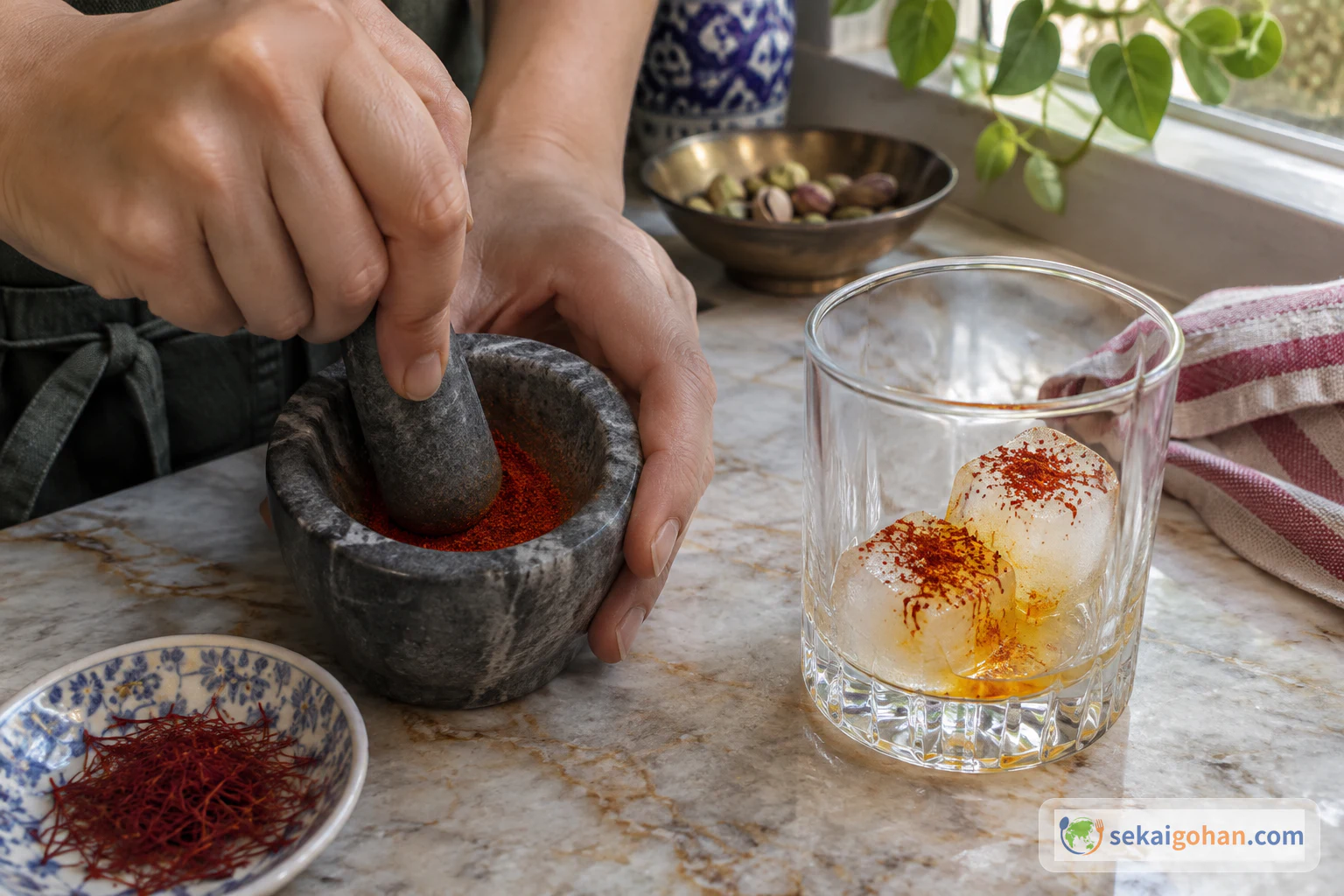
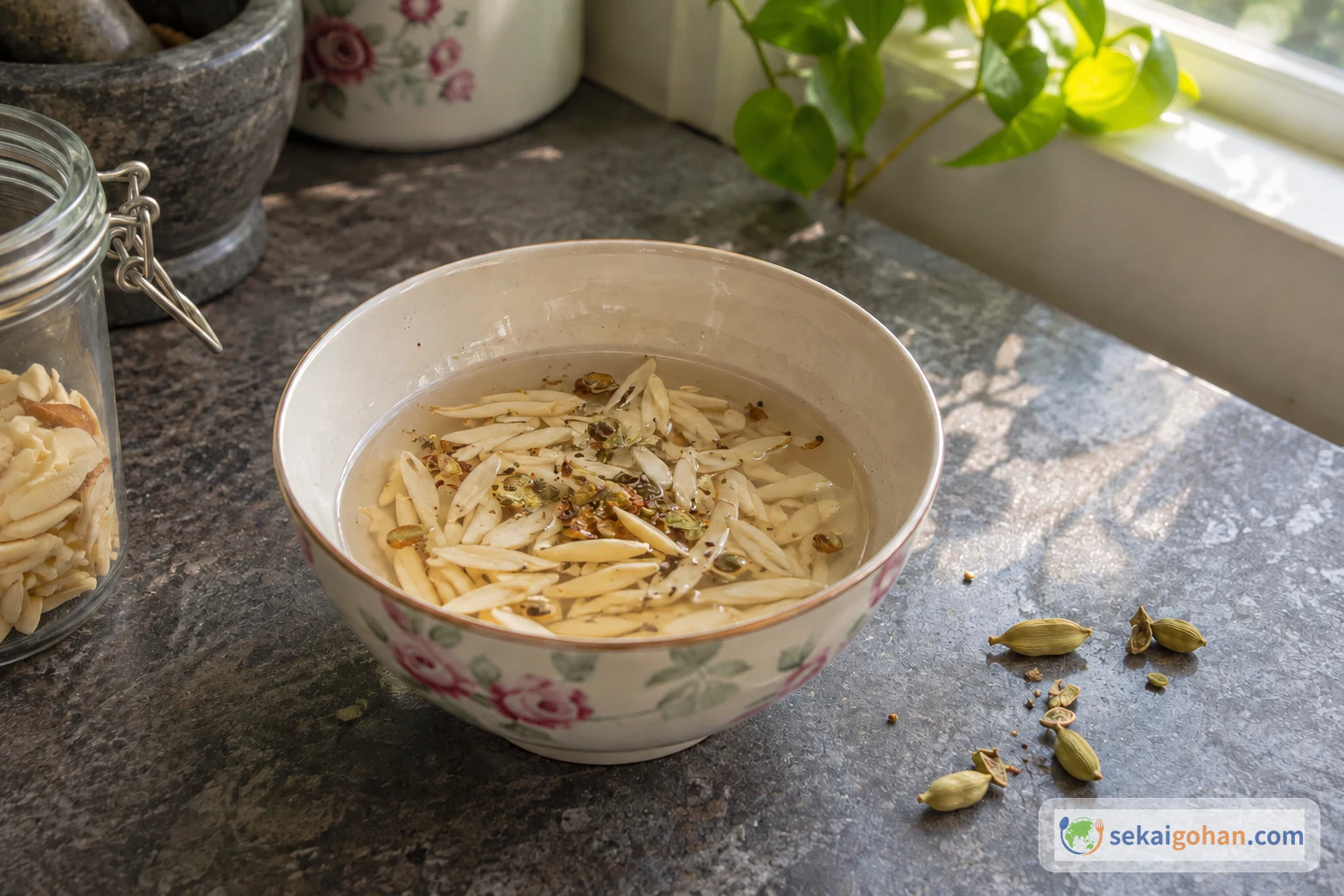
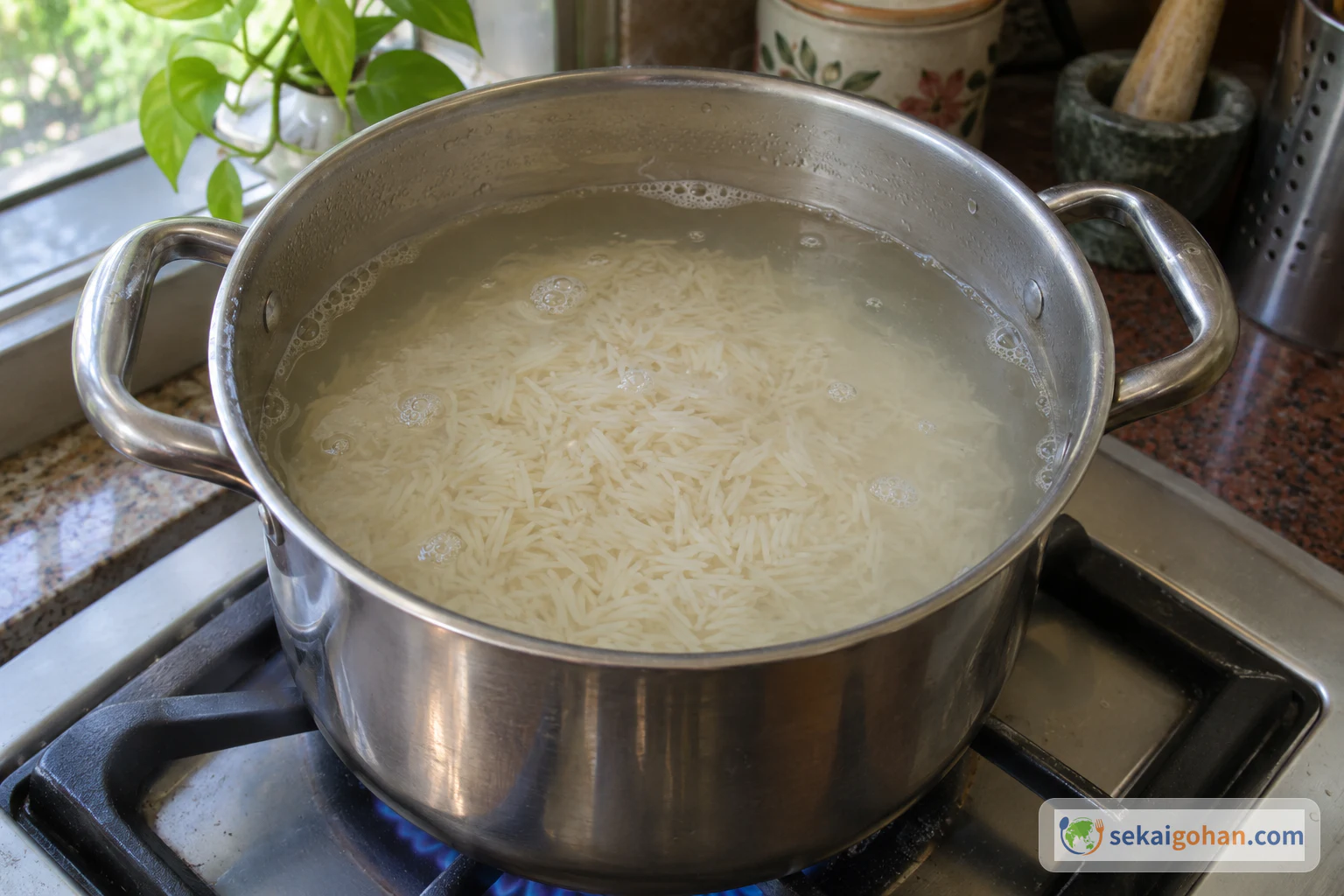
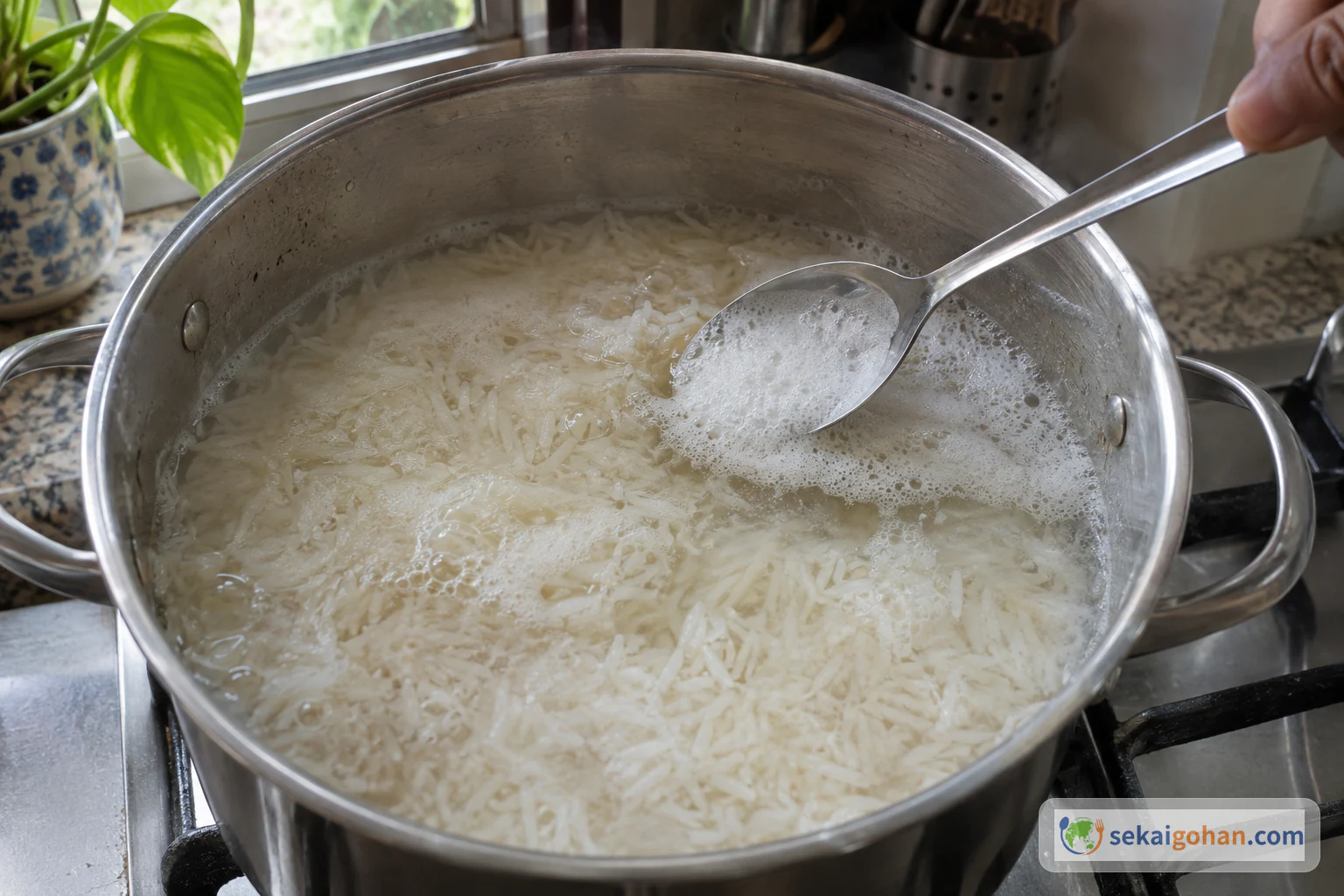
Get three things ready while the rice soaks: the saffron blooming on ice, the almonds and cardamom steeping in rose water, and the rice itself. The simmer that follows is mostly hands-off, with occasional stirring. The last stage, after the saffron and syrup go in, needs you at the pot with a spoon, because the thick porridge catches on the bottom quickly.
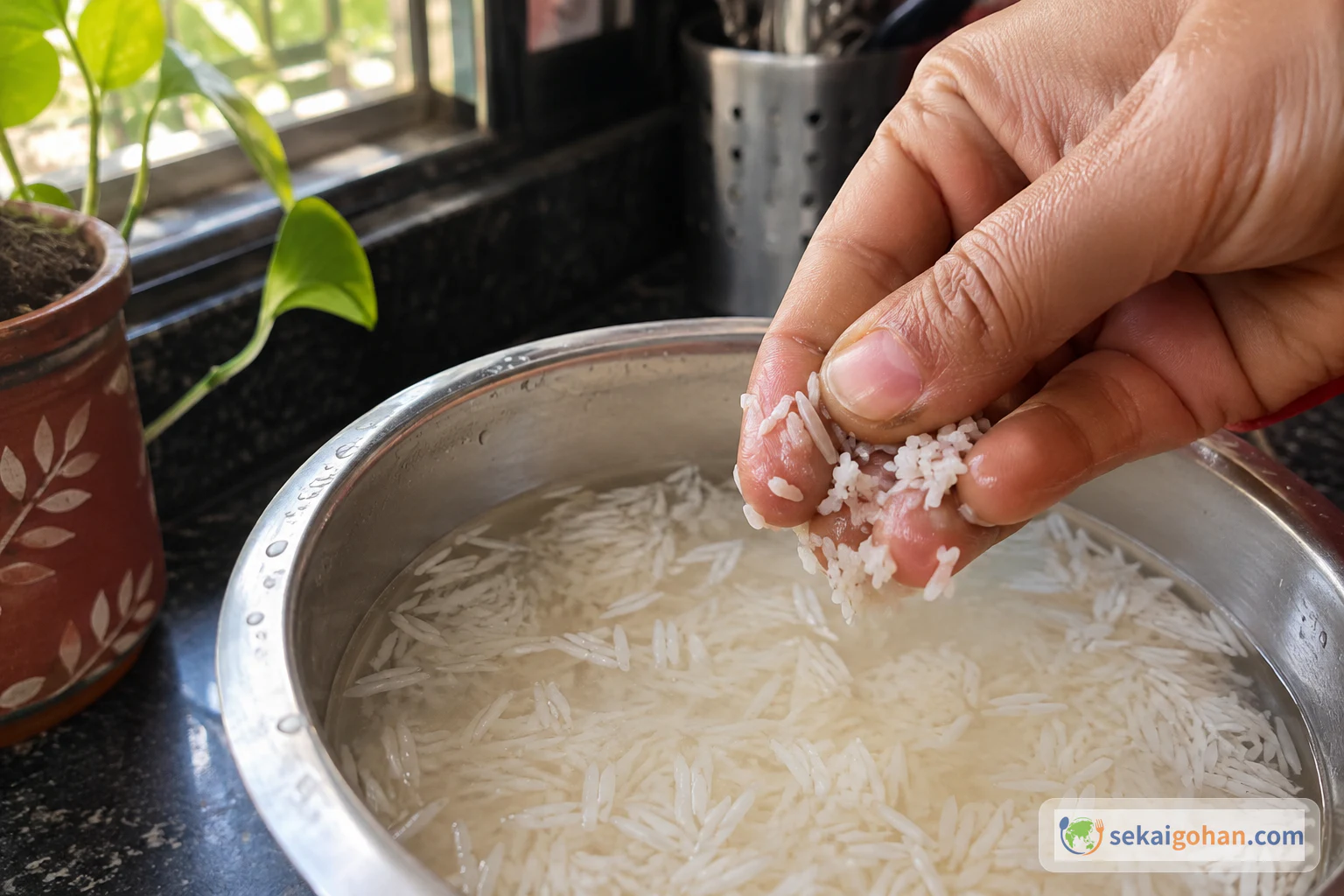
Rubbing the soaked grains between your fingers splits them into pieces. Broken grains release starch and give the pudding its smooth body, while still leaving a soft bite. If you crush them to a powder the texture turns pasty.
Sholeh zard firms up as it cools. A pudding that looks perfect in the hot pot turns stiff in the refrigerator. Turn off the heat when it still flows slowly off the spoon.
When It Goes Wrong
| What you see | Why | What to do |
|---|---|---|
| The grains stay whole when you rub them | Not soaked long enough | Leave them in the water longer, then rub again |
| The pudding is thin and runny | Not cooked long enough after the syrup went in | Keep cooking and stirring until it reaches the thickness you like |
| The pudding is stiff and heavy | Cooked too far | Stir in a little hot water until it loosens |
| A brown, scorched layer on the bottom | The porridge sat without stirring after the saffron and syrup | Keep stirring the bottom constantly from step 7 on |
| Chilled pudding sets hard | It firms as it cools | Next time, stop the cooking while it is still loose |
| Pale colour | Saffron not ground to a powder or not bloomed | Grind the threads to a powder and let the ice melt before adding |
Serving, Variations and Storage
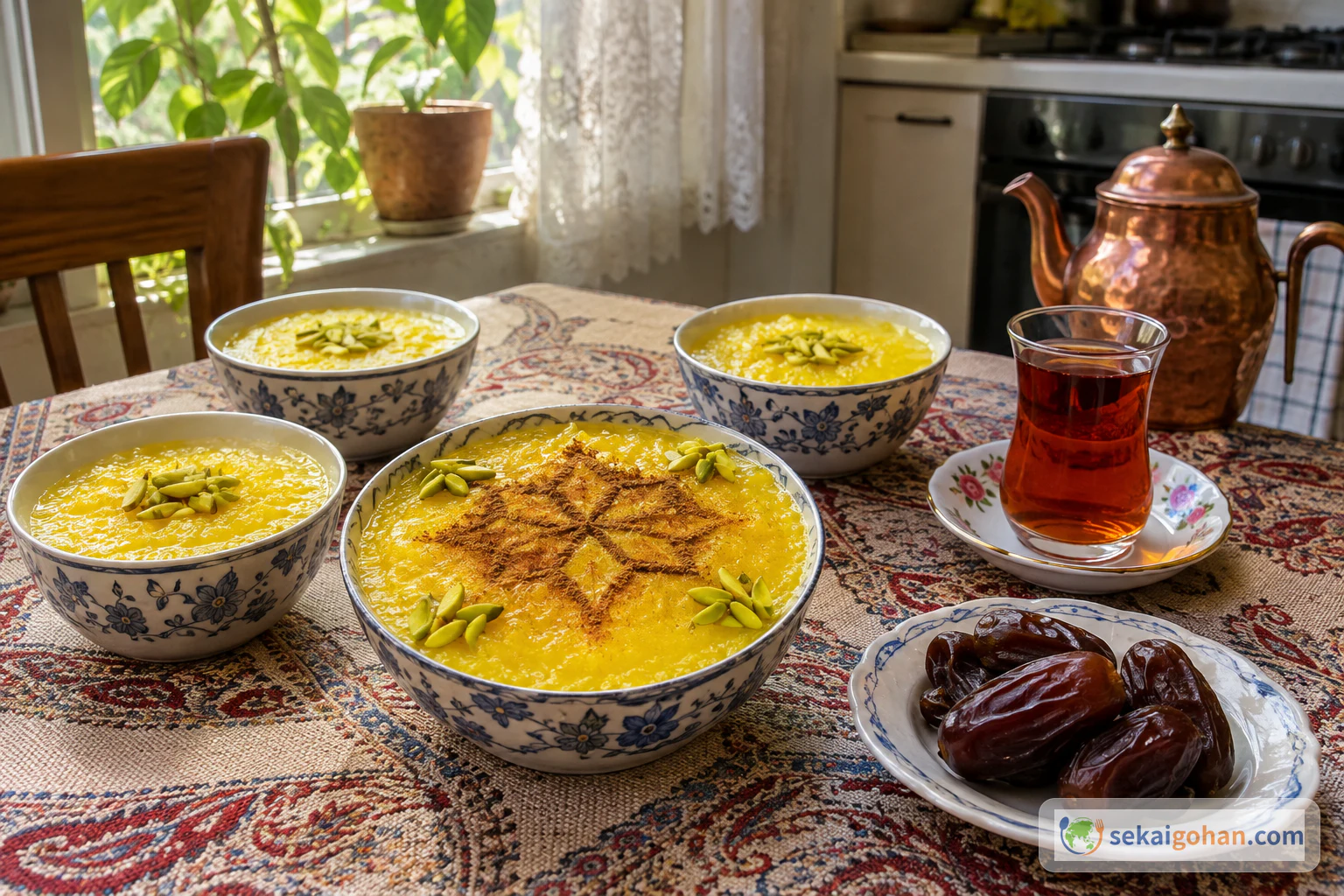
At the table
Sholeh zard is good warm or chilled. Warm, it is soft and loose, and the rose water is strongest. Chilled, it sets to a gentle spoonable firmness and the saffron comes forward. Small bowls suit it, since a few spoonfuls are enough. It belongs to the times people cook for others: a pot made to share with neighbours, a sweet for Nowruz or Yalda, or a bowl after the fast in Ramadan.
Variations
- Sweeter, in the traditional style. Dissolve more sugar into the syrup. The pudding becomes richer and closer to the very sweet versions served at gatherings, and the saffron sits further back.
- Vegetable oil instead of butter. The pudding becomes dairy-free and slightly leaner in taste.
- Ground cardamom instead of pods. The scent spreads evenly through every spoonful and there is nothing to remove.
Storage
Cooked rice can carry spores of Bacillus cereus, and these survive cooking. Cool the pudding as quickly as possible, within about 1 hour, then cover it and refrigerate it. Eat it within 24 hours. If you want it warm again, reheat it only once, until it is steaming hot all the way through.
Frequently Asked Questions
Can I write on top the way it is done in Iran?
Yes. Cut a simple shape or letters from paper, lay it lightly on the set surface, dust ground cinnamon over it and lift it away. Lines and geometric patterns drawn freehand with a pinch of cinnamon work just as well.
Can I make it nut-free?
Leave out the almonds in the rose water soak and skip the pistachios on top. The pudding loses its crunch and green colour, but the saffron and rose water carry the flavour. Decorate with cinnamon alone.
Why grind the saffron instead of soaking the threads whole?
The method grinds the threads to a powder and sprinkles it on the ice so the colour spreads through the melting water and then through the whole pot. Grind just before using.