Hollow out a turnip, and the kitchen's clock slows a little
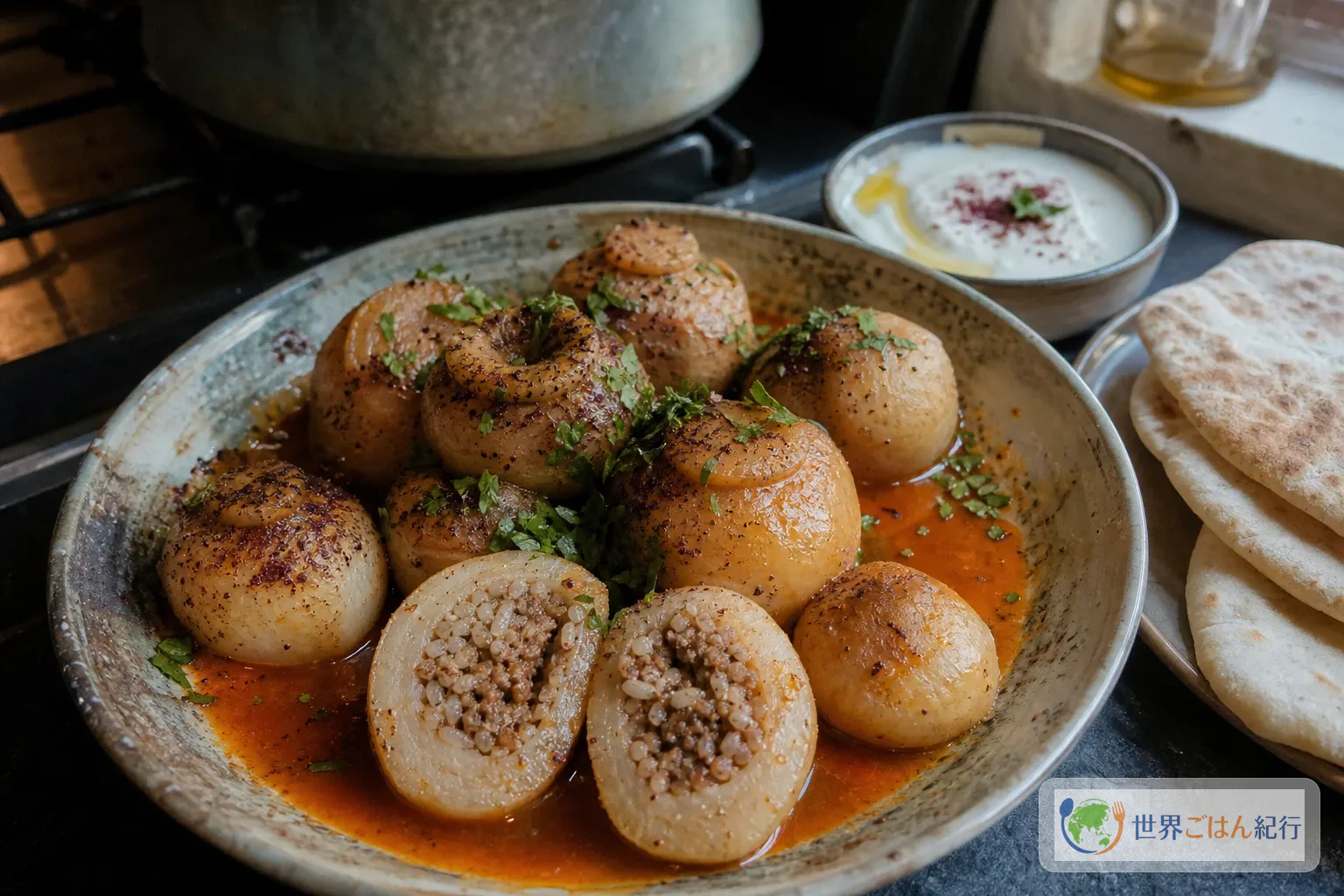
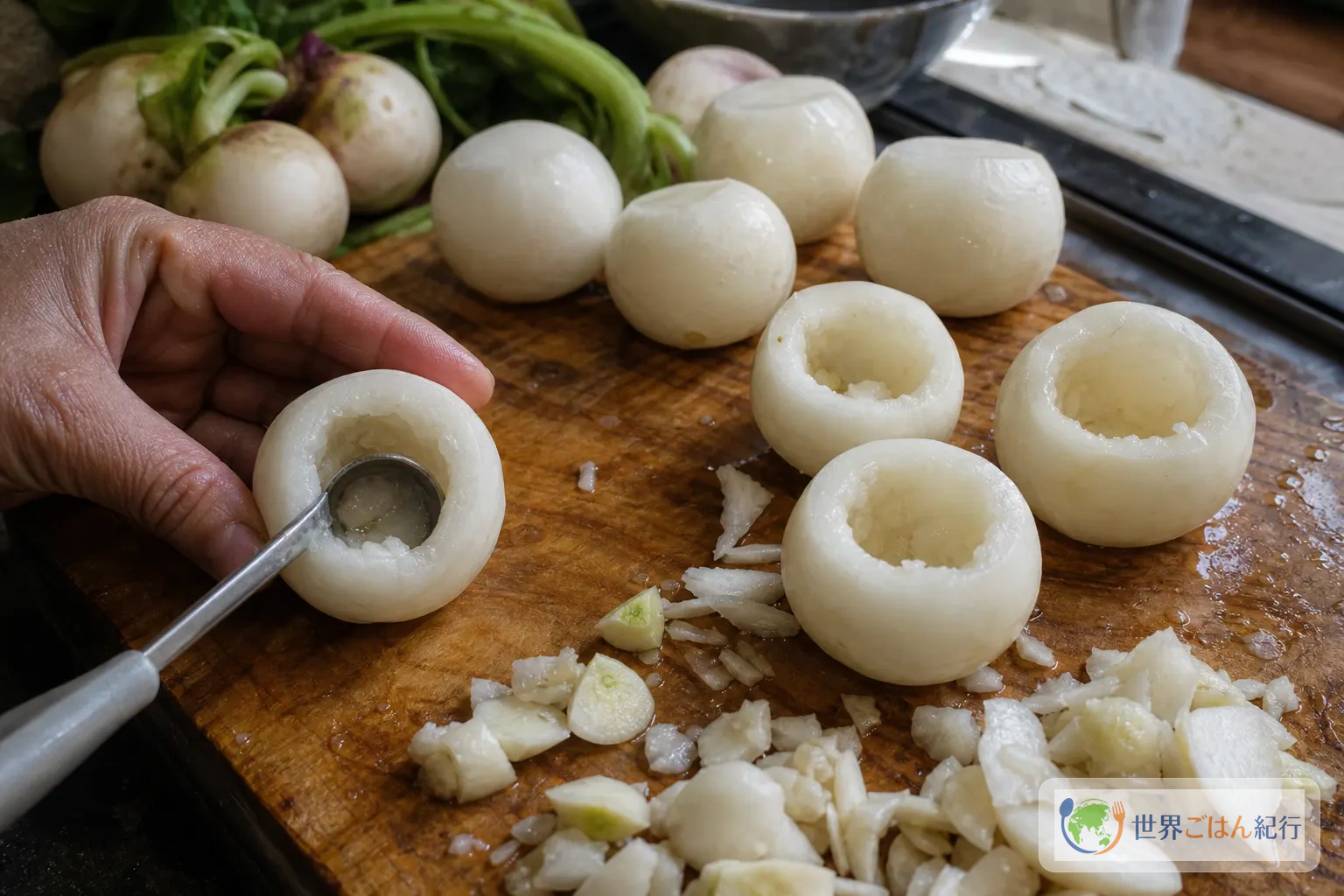
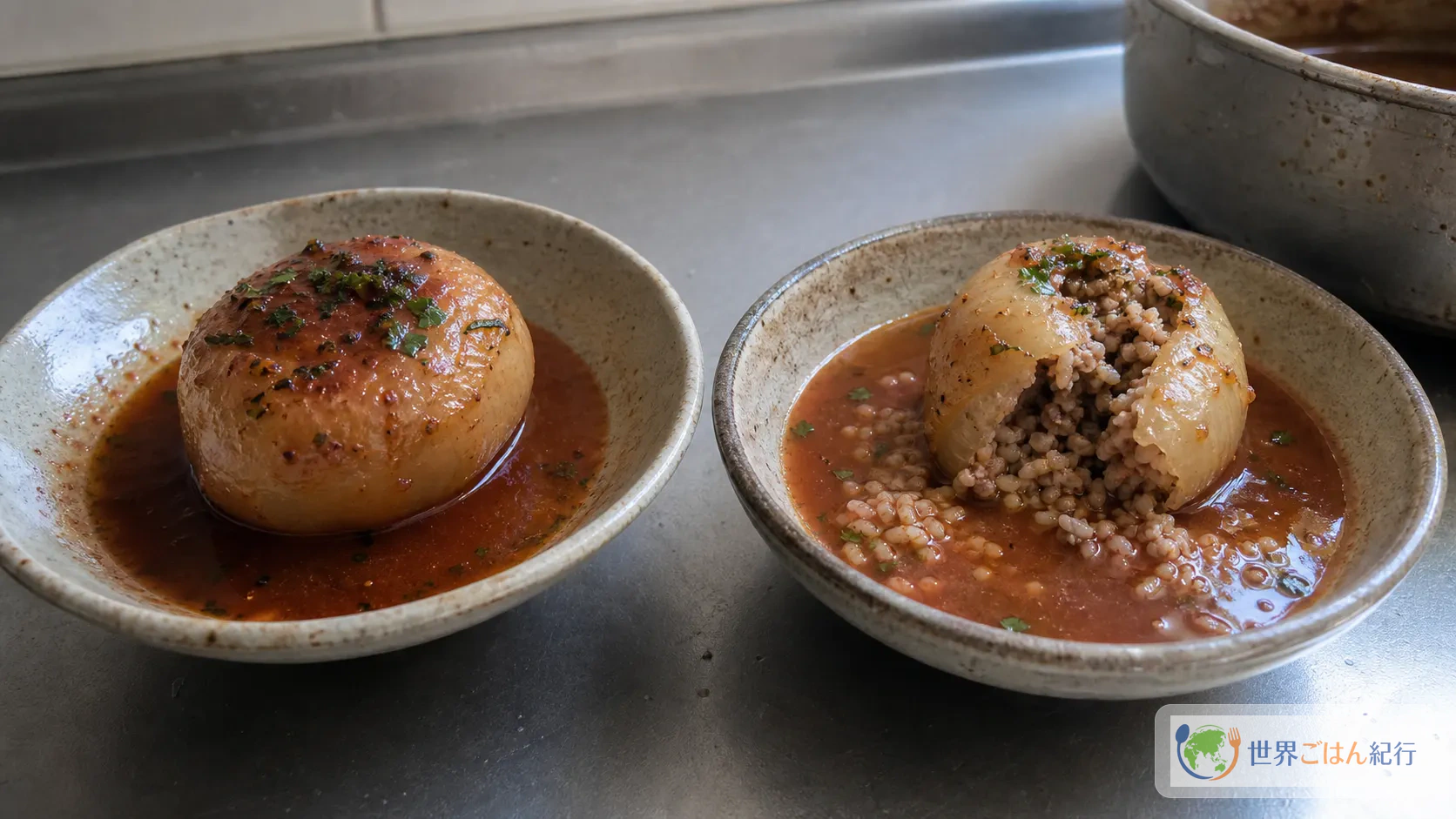
Make a small hole in the top of a round turnip and scoop out the inside bit by bit with a spoon. Hurry and you break through the bottom; be too careful and the day is gone. Mahshi lift is a Palestinian stuffed dish that begins with this humble handwork. Once it is in the pot, the sourness of pomegranate and tamarind bubbles up, and the white turnips slowly take on the reddish-brown sauce.
Mahshi lift (Mahshi Lift / محشي لفت) literally means "stuffed turnips." Turnips are filled with rice, ground meat, and warmly scented spices and simmered in a sour sauce. In English it is called stuffed turnips, and in lists of Palestinian dishes it is sometimes presented in connection with Hebron. Like maqluba and musakhan (in Japanese), the thinking behind how it is made ties back to a culture of rice, meat, sourness, and a big platter shared by the family.
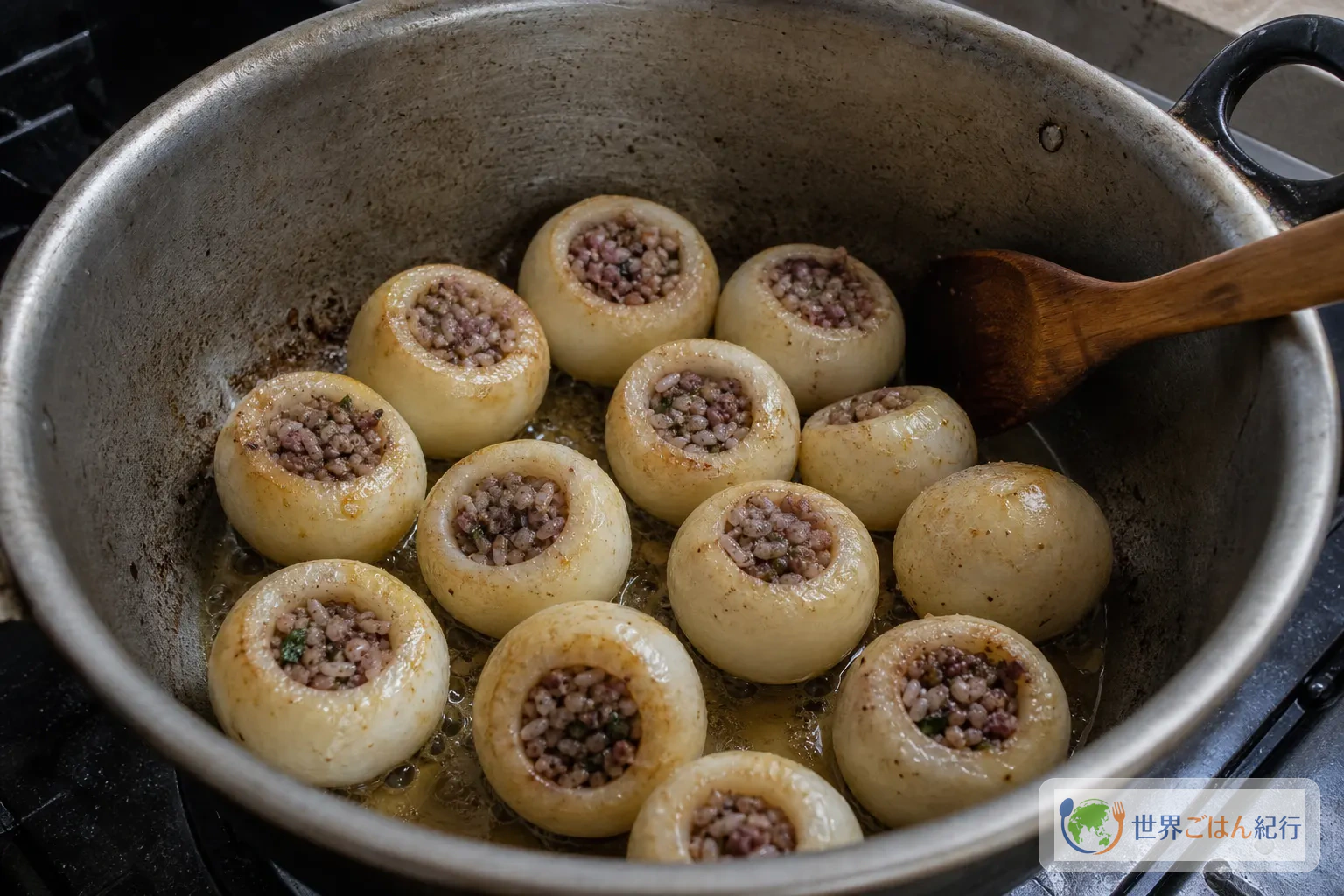
The tricky part is the kind of turnip. Turnips in the Middle East can be firmer than a tender spring turnip and hold their shape better when simmered. To get close with ordinary turnips, choose small, firm ones 5–6 cm across, salt them after hollowing, and sear them lightly first. Skip this and the sauce tastes good, but the turnips split the moment you move them to the plate.
In Arabic, mahshi means "stuffed" and lift means "turnip." In this article we write the dish name as "mahshi lift" and also call it "Palestinian stuffed turnips" so it is easy to find.
Ingredients (serves 4)
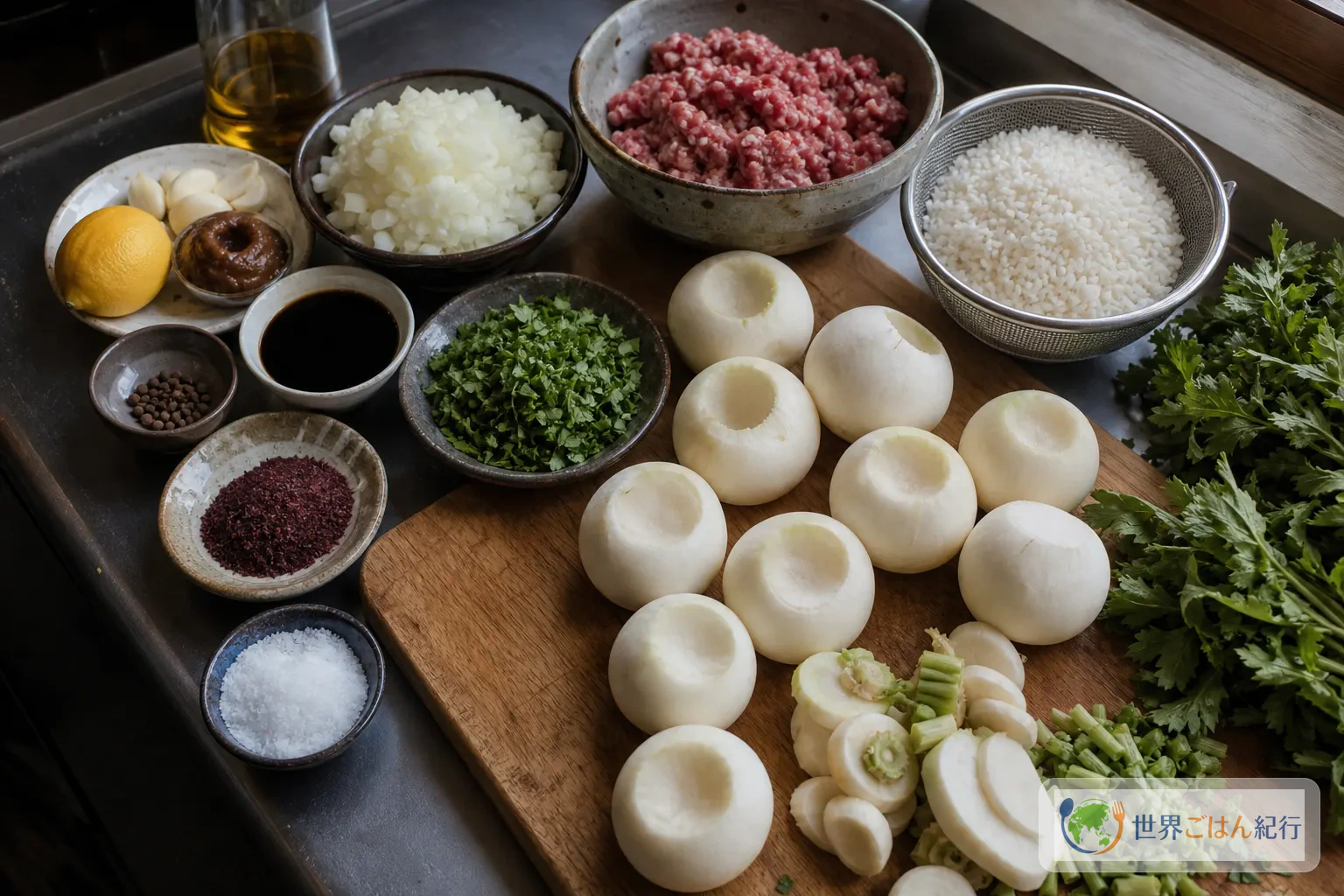
This recipe uses lamb or beef. If you serve yogurt or bread alongside, also check the labels for dairy and wheat. No nuts are used, but spice production lines differ by product, so anyone with a severe allergy should check the labels of what they buy.
What is worth looking for when shopping
Turnips, rice, and ground meat can be found at an ordinary grocery store. What is worth seeking out at Middle Eastern grocers or online are the ingredients that change the outline of the flavor: sumac, pomegranate molasses, and allspice. If you build the sourness with lemon alone, the Middle Eastern depth thins out, so getting small jars at least the first time shows you where the dish lands.
Method: cook the rice through without splitting the turnips
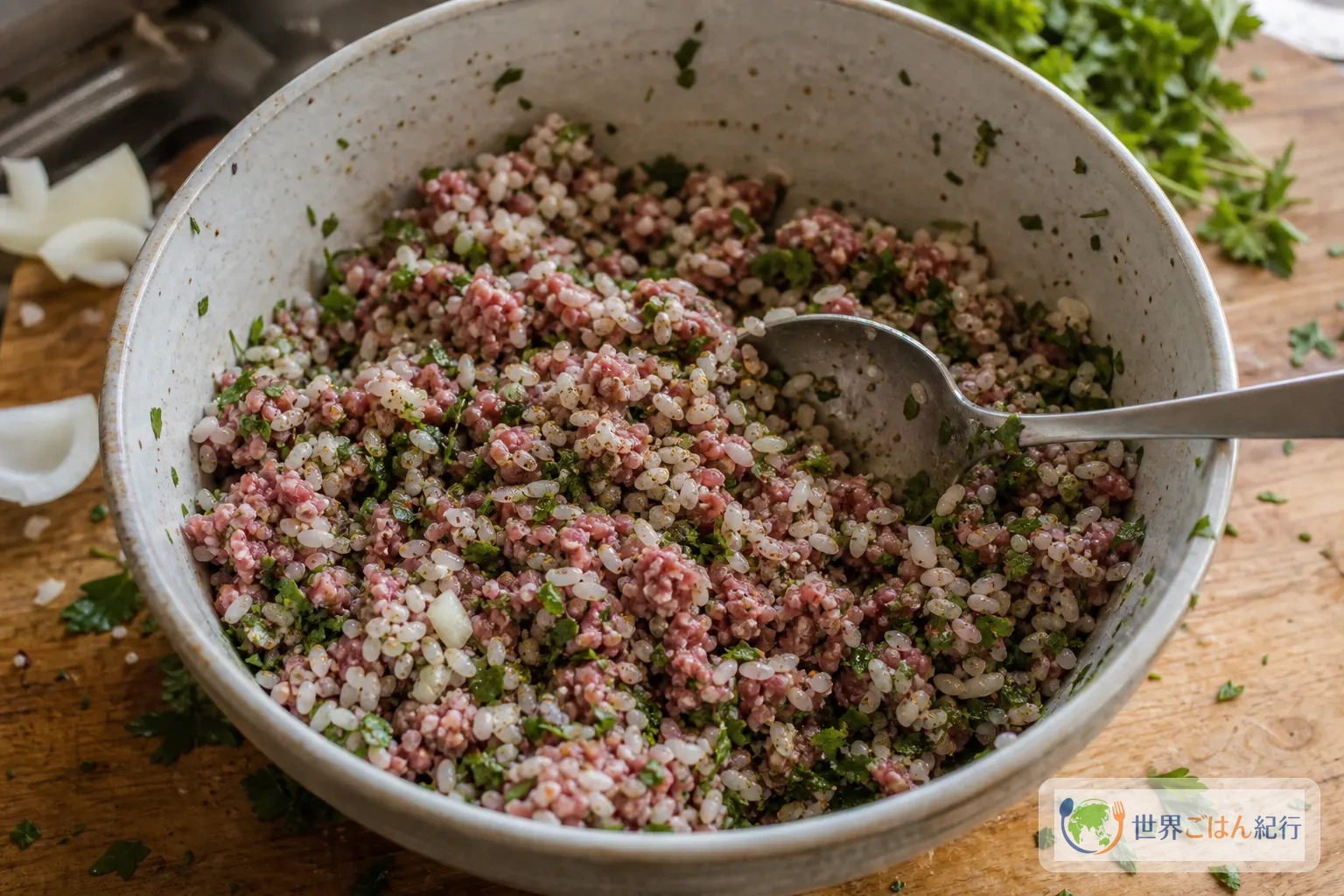
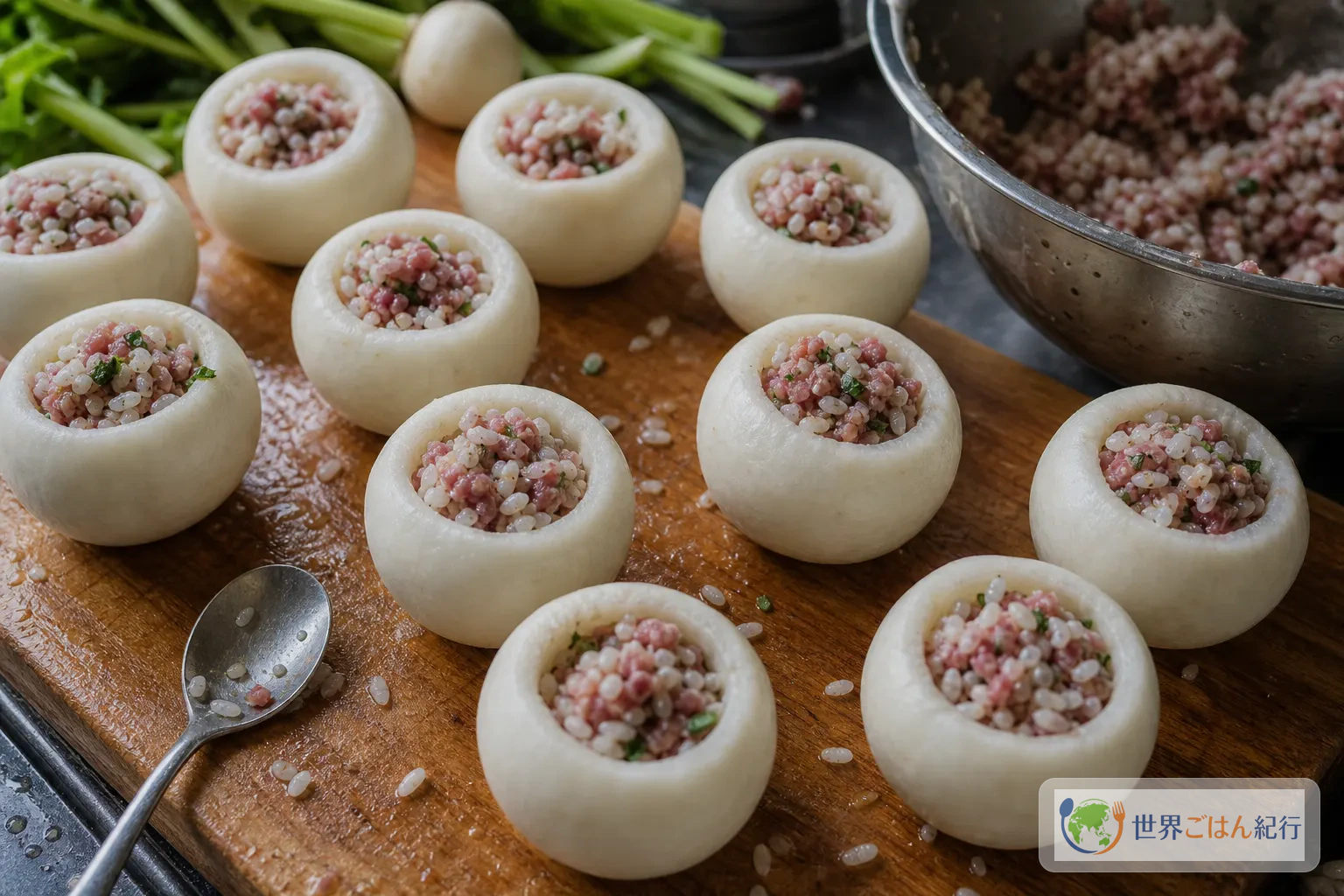
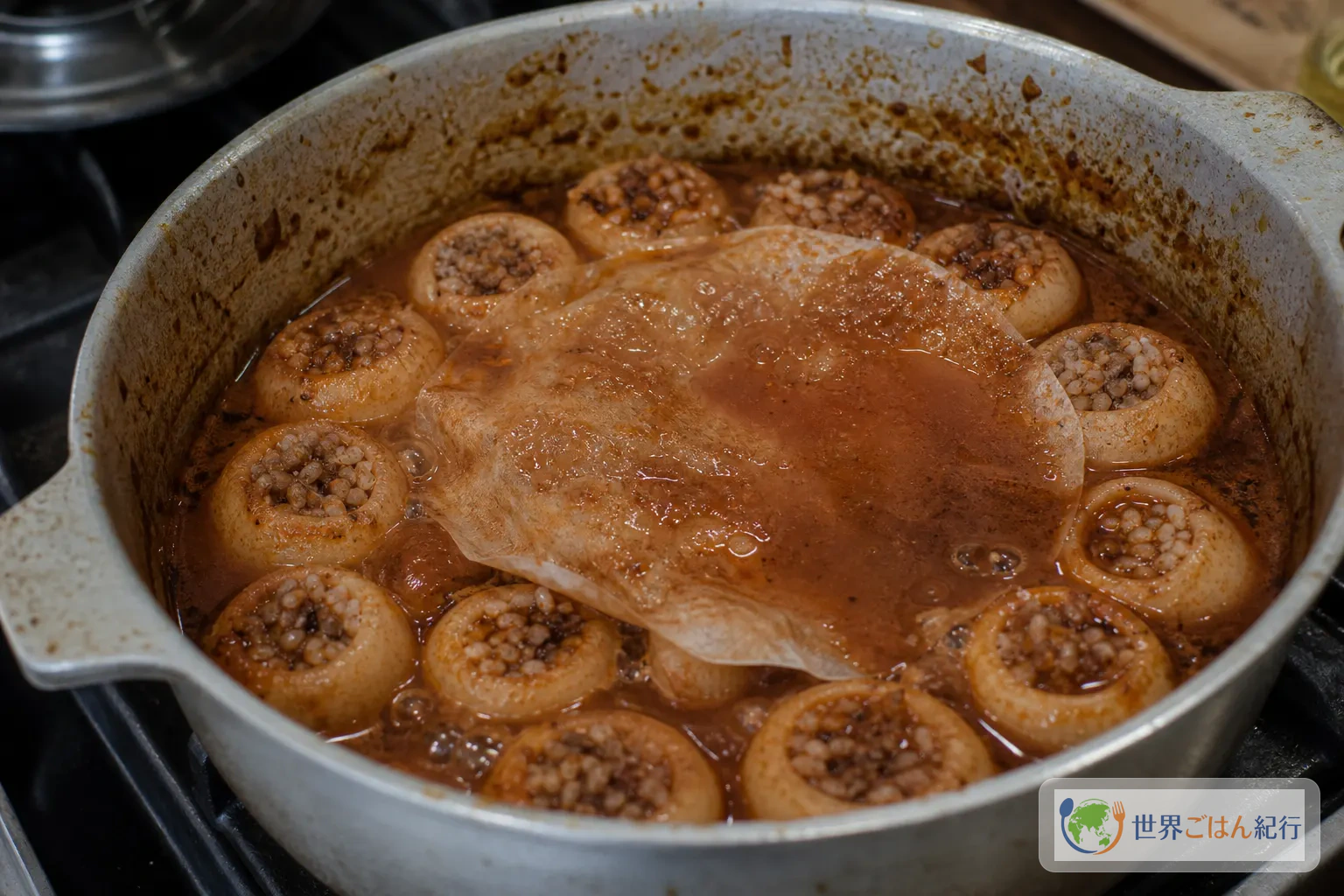
The filling uses raw rice, not cooked rice. Leave room for the rice to swell, do not boil the sauce hard, and simmer quietly at a depth where the shoulders of the turnips still show.
Branch points to bring it into your kitchen
| Where you hesitate | What to protect | Practical branch |
|---|---|---|
| Turnips | They hold their shape when simmered and the inside does not turn watery | Choose firm winter-to-early-spring turnips over tender spring ones. Halve large turnips and use them as cups |
| Rice | Raw rice absorbs the sauce and the filling does not set too hard | Short- or medium-grain is fine. Soak up to 20 minutes; longer makes it split and turn sticky |
| Meat | Adds fat and savor to the rice | Lamb suits the aroma. For beef, use ground beef rather than a fatty mixed grind |
| Sourness | Sweet-sour, cutting the heavy meat aroma | Pomegranate molasses and tamarind are ideal. With only one, make up the acid with lemon juice and rice vinegar |
| Spices | Layer warm aromas lightly | Build on allspice and add the sour fragrance with sumac. If using cumin, no more than 1/4 tsp |
| Cooking | Cook the rice with gentle bubbles | Once it boils, go to low. If the bottom of your pot is thin, shift the pot partway, and stop at once if you smell scorching |
What is interesting about Middle Eastern stuffed dishes is that they use vegetables as containers. Dolma (in Japanese), wrapped in grape leaves, shows the lightness of sourness and rice, and mansaf (in Japanese), served with yogurt, shows layers of meat and rice. Mahshi lift is the one among them where the bitterness of turnip and a sweet-sour sauce come to the front.
Why they split, turn watery, or the rice stays hard
| Condition | Main cause | Fix for next time |
|---|---|---|
| Turnips split | Bottom too thin, too much filling, boiled hard | Leave 7–8 mm walls, stop the filling at three-quarters, simmer over low heat |
| Rice is hard | Not soaked enough, too little sauce, too short a cook | Soak the rice 20 minutes, add sauce to over half the turnip height, check with a skewer and a grain of rice |
| Sauce is watery | Lid dripped a lot, not reduced at the end | At the end push the turnips aside and reduce 3–4 minutes over medium-low |
| Too sour | Pomegranate molasses or tamarind is sharp | Add 1/2 tsp sugar and a pinch of salt to round it |
| Flavor is weak | Not enough salt in the filling, sauce too lightly salted | Put 1 tsp salt in the filling and season the cooking liquid slightly stronger than a light soup |
Serving and storage
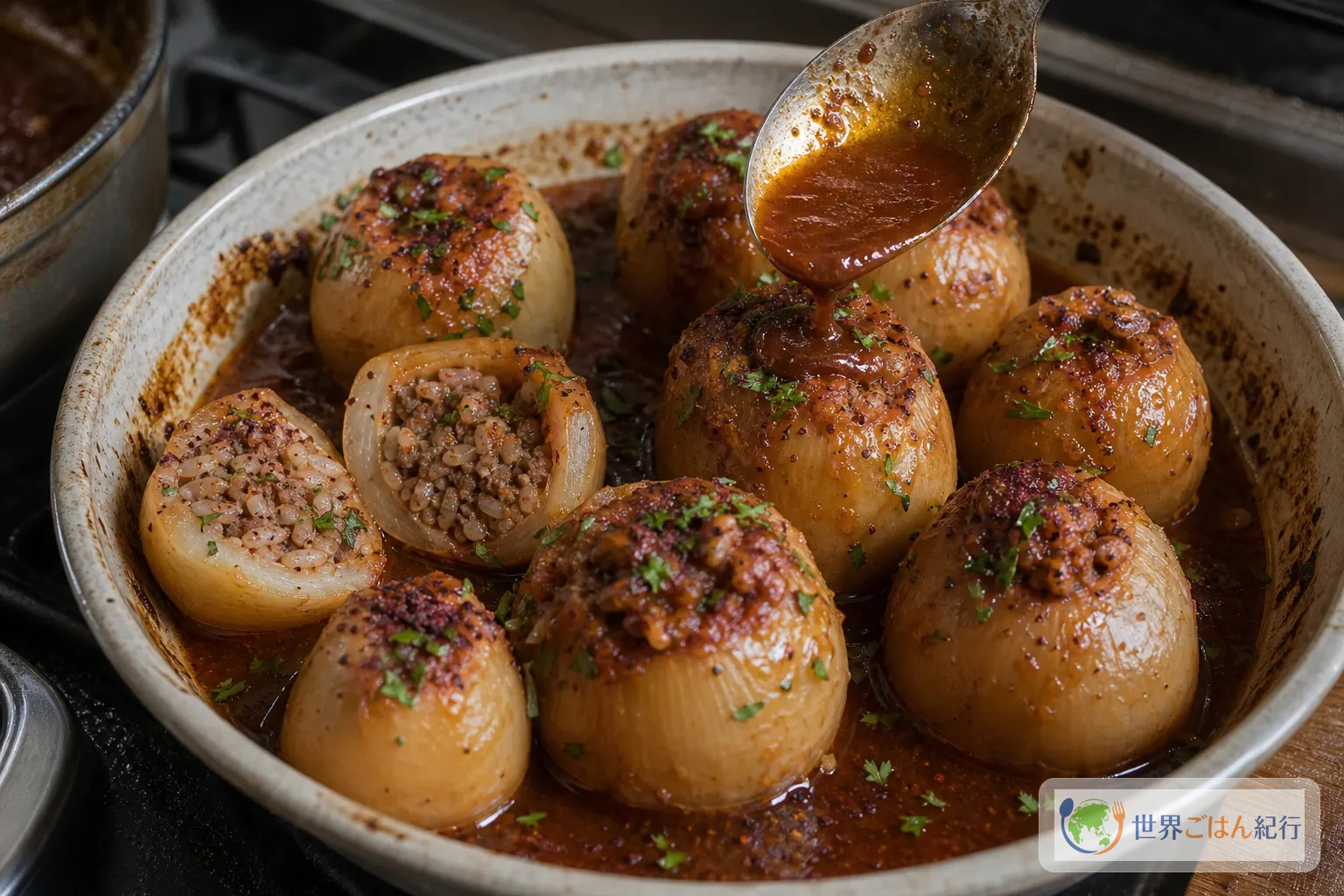
While hot, place two turnips per person on a plate and spoon over plenty of sauce. Rather than cooking white rice separately, serve yogurt, thin bread, and a chopped cucumber and tomato salad, so the sourness and meat aroma stay light. A little lemon squeezed at the table brings out the sweetness of pomegranate and tamarind.
For a full menu, make mahshi lift the main and set small portions of green, herby tabbouleh, smooth bean hummus (in Japanese), and, on a day you want something fried, falafel (in Japanese), so sourness, oil, beans, and herbs each have their role. Rice-stuffed turnips are more filling than they look, so catching them with vegetables and yogurt is lighter after the meal than adding a starch.
To store, put the turnips and sauce together in an airtight container; refrigerate for 2 days. To reheat, move to a pot, add 3 tbsp water, and warm over low heat for 8 minutes. In a microwave, heat at 600 W for 2 minutes, turn the pieces over, and heat another 1 1/2 minutes. Long heating makes the turnips split easily, so stop when the center is warm rather than aiming for piping hot. Freezing tends to break down the turnip fibers and spoils the texture.
Frequently asked questions
Can I really make it with ordinary turnips?
Yes. But tender spring turnips collapse easily when simmered, so choose firm, small ones. A turnip that feels too light in the hand may have lost moisture and will split while you hollow it. It is reassuring to buy two extra the first time.
What if I do not have tamarind paste?
You can make up the sourness with 1 tbsp lemon juice and 1 tsp rice vinegar. With pomegranate molasses alone the sweet-sour taste is round, and the sharp sourness you get with tamarind is weaker. On days when it is hard to find, increasing the tomato paste by just 1 tsp keeps the sauce's body.
Can I make it without meat?
Yes, but the filling loosens more easily. If you leave out the meat, reduce the rice to 100 g and mix in 120 g boiled chickpeas, coarsely mashed. Increase the olive oil by 1 tbsp and reduce the salt to 3/4 tsp. Without the meat's fat, the sauce is a little lighter.
Can I prepare it the day before?
You can do the hollowing, salting the turnips, and making the filling the day before. But if you leave them filled for long, the rice absorbs moisture and swells before cooking. If preparing the day before, refrigerate the turnips, filling, and sauce separately, then fill and cook on the day.