The story of kubba Mosul, a big platter cut into pieces
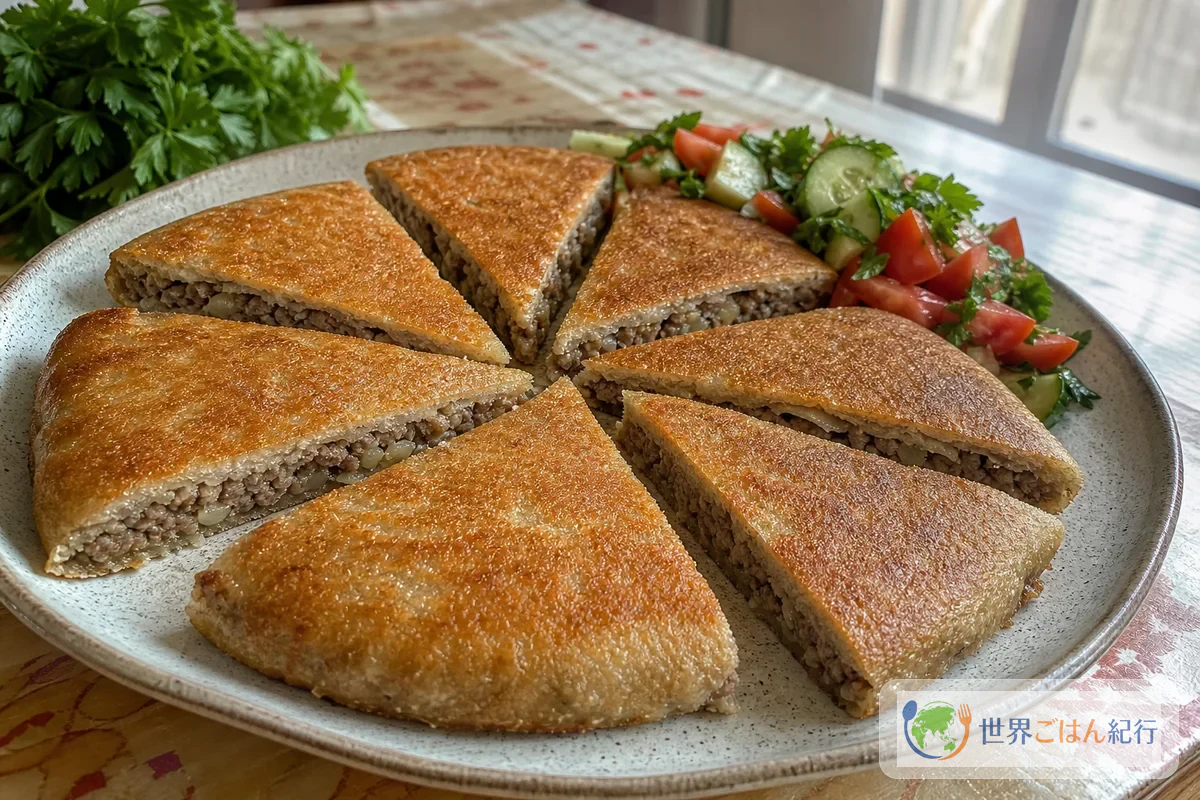
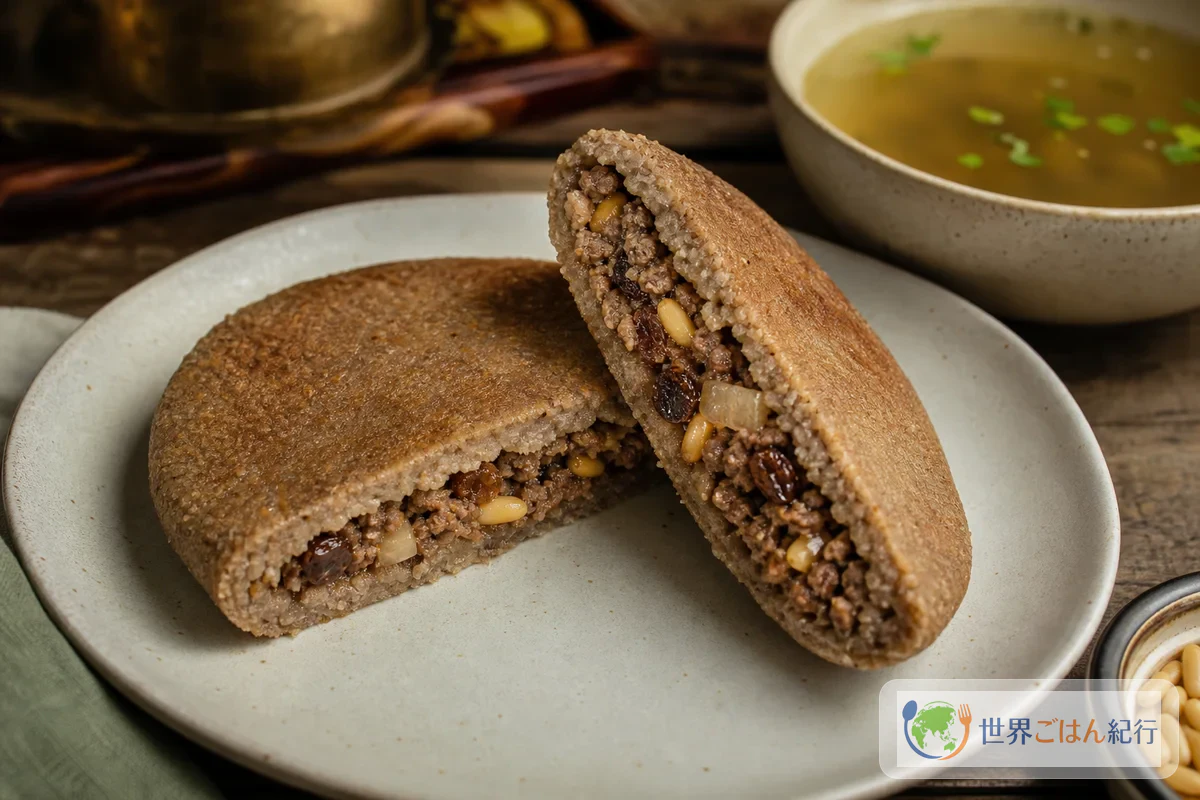
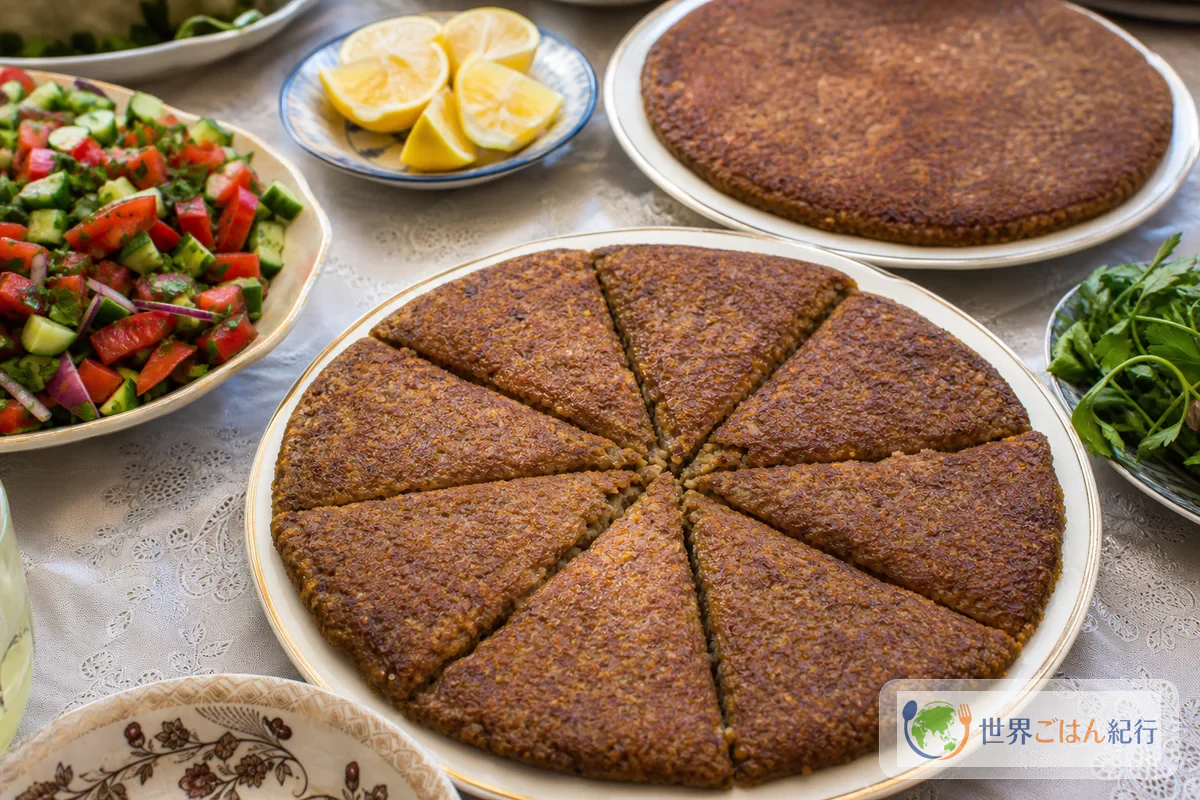
When you put a knife to the baked disc, the thin shell crackles, and the aroma of fried onion and spices rises from the meat filling in the center.
Kubba Mosul is a dish of Mosul in northern Iraq, shaped into a flat disc unlike the kubba rolled into meatballs.
A large single piece cut up by the family looks like a pizza or a pie, but it is not a wheat-flour dough that decides the texture.
The foundation of the flavor is a dough kneaded from fine bulgur and meat and rolled out to the thinnest it can go without tearing.
What puzzles cooks elsewhere is how far to gather the local ingredients.
Even if you cannot find the finely cracked wheat called jarish, mixing a little coarse bulgur into fine bulgur gives a dough that keeps the difference in grain.
But if you add more water to roll it thinner, it will tear before it becomes soft.
What to protect in this dish is not an exact match of ingredients but the order: make the dough firm, and cool the filling before sandwiching it.
The Arabic dish name is written in several spellings in English sources, including Kubba Mosul, Kibbeh Mosul and Kubba Mosuliya.
This article standardizes on "kubba Mosul," which is easy to search.
How the Mosul disc reaches a home kitchen
Kubba has several forms: small fried ovals, shapes floated in soup, and flat discs.
In SBS Food's reporting, an Iraqi family presents the flat round with a bulgur shell as the Mosul style, and the custom of making large quantities with the family and freezing them before Ramadan is also described.
You do not need to bring the method of a household that makes hundreds at a time straight into an ordinary weeknight kitchen.
For home, make two 22 cm discs and cut them into wedges for four people.
Beef is used for the shell and lamb for the filling, but both can be replaced with beef.
The reason for separating beef and lamb is that a leaner meat in the shell and a fattier meat in the filling makes the difference between the thin shell and the moist center easier to get.
Compared with Lebanese kibbeh in the Middle East, the shape after forming is very different in the Mosul style.
Instead of making a long tapered end, the edge of the disc is closed and it is cut up and carried to the table.
To keep the character of a Mosul platter while making it hard to fail at home, it is divided into two from the start rather than made as one large piece.
Gathering the ingredients
The following makes two 22 cm kubba Mosul, serving four.
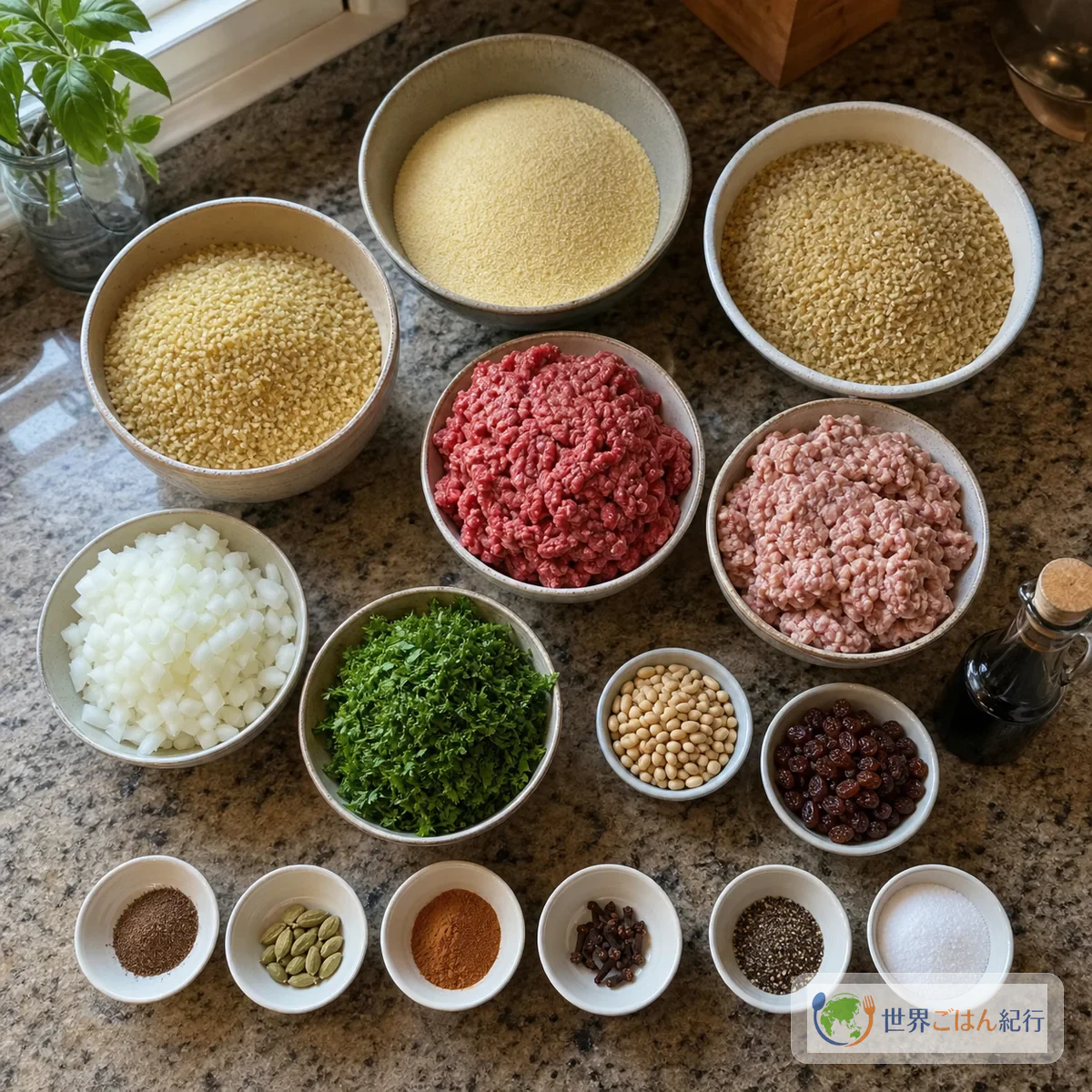
If the coarse bulgur grains are too large, holes remain on the surface of the thin shell.
You can substitute with fine grain only, but mixing in just 80 g of coarse means the grains of wheat do not become a complete paste when you bite.
This is an ingredient for people who already have fine bulgur and want to add a texture of grains closer to jarish.
If you cannot find cracked wheat at your supermarket, check for "coarse" or "cracked" on the label and the package size.
If you will get by with fine bulgur alone, or will try kubba only once, there is no problem skipping it.
Because wheat is used, gluten needs attention.
Pine nuts can be omitted or replaced with almonds, but if you have a nut allergy, do not add them.
Ground beef is mixed into the shell too, so cook it thoroughly through to the center.
Do not decide doneness by color or juices alone; check for an internal temperature of 71°C, in line with the guideline from FoodSafety.gov.
Method: working without tearing the thin dough
Kubba Mosul goes in this order: make and cool the filling, make the dough into a paste, form the discs, parboil, then fry.
1. Cool the onion and meat filling first
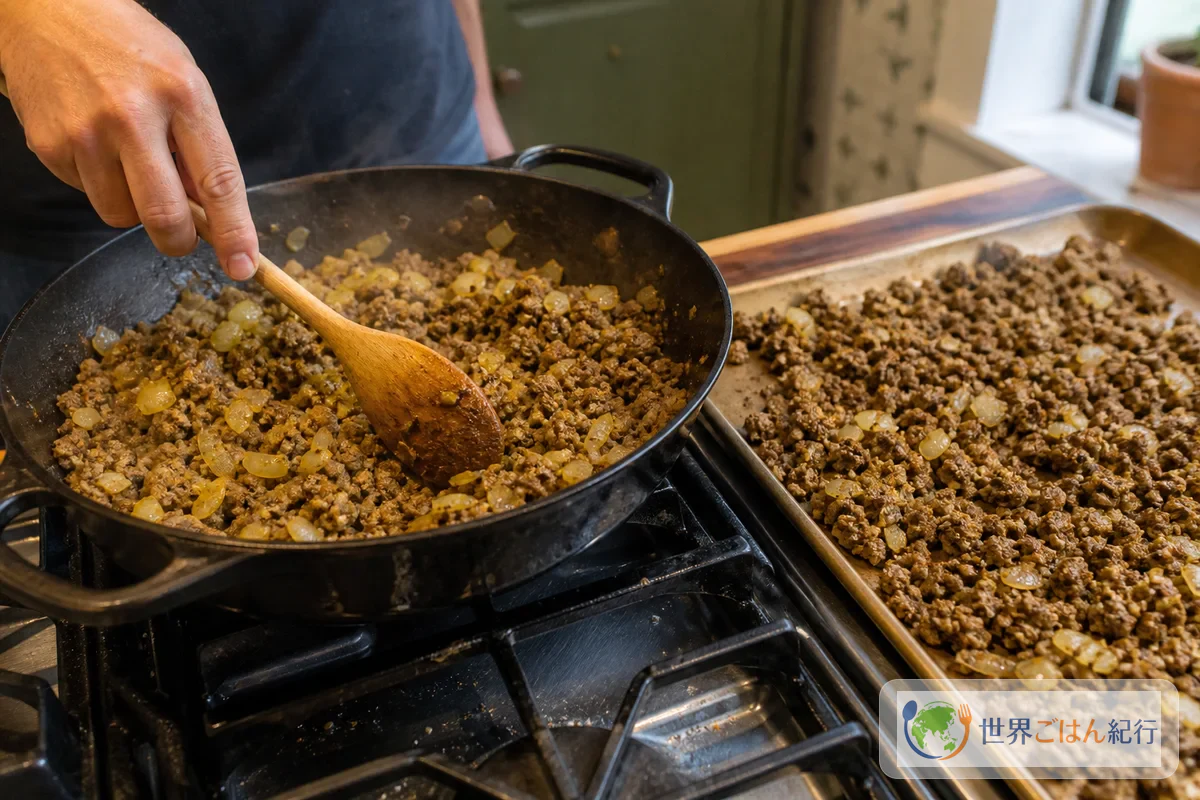
Put 15 ml oil in a skillet over medium heat and fry the onion, minced into 5 mm pieces, for 6–8 minutes.
When it is translucent and the edges are a pale golden brown, add the ground lamb, salt, allspice, cardamom, cinnamon, clove and black pepper, and fry for 5–6 minutes until the red of the meat is gone.
Frying until the meat has broken up and no liquid remains on the bottom of the pan keeps the cooled filling from pushing up the dough.
If adding pine nuts, toast them for only 1–2 minutes in a separate small pan, and mix them into the filling when they turn a pale gold.
Add the parsley and raisins, spread on a tray and cool for 15 minutes or more.
Sandwiching a hot filling steams the shell and makes it tear, so the guide is to bring it down until you feel no warmth when you touch it with a finger.
2. Rehydrate the bulgur and make a paste for the shell
Put the fine bulgur, coarse bulgur, semolina, salt and allspice in a bowl, add 180 ml water and mix.
After 10 minutes, when the grains have soaked up the water, add the ground beef and bring it together by hand, then add the remaining water a little at a time.
Put it in a food processor in 2 to 3 batches and process about 2 minutes each time.
It has worked when the dough, pressed with a finger, closes the cracks fine and does not crumble when lifted, like a firm clay.
If you make it too soft, the edge gives way under its own weight when it is rolled into a disc.
Cover with plastic wrap and rest 20 minutes, and the water in the grains spreads through the whole.
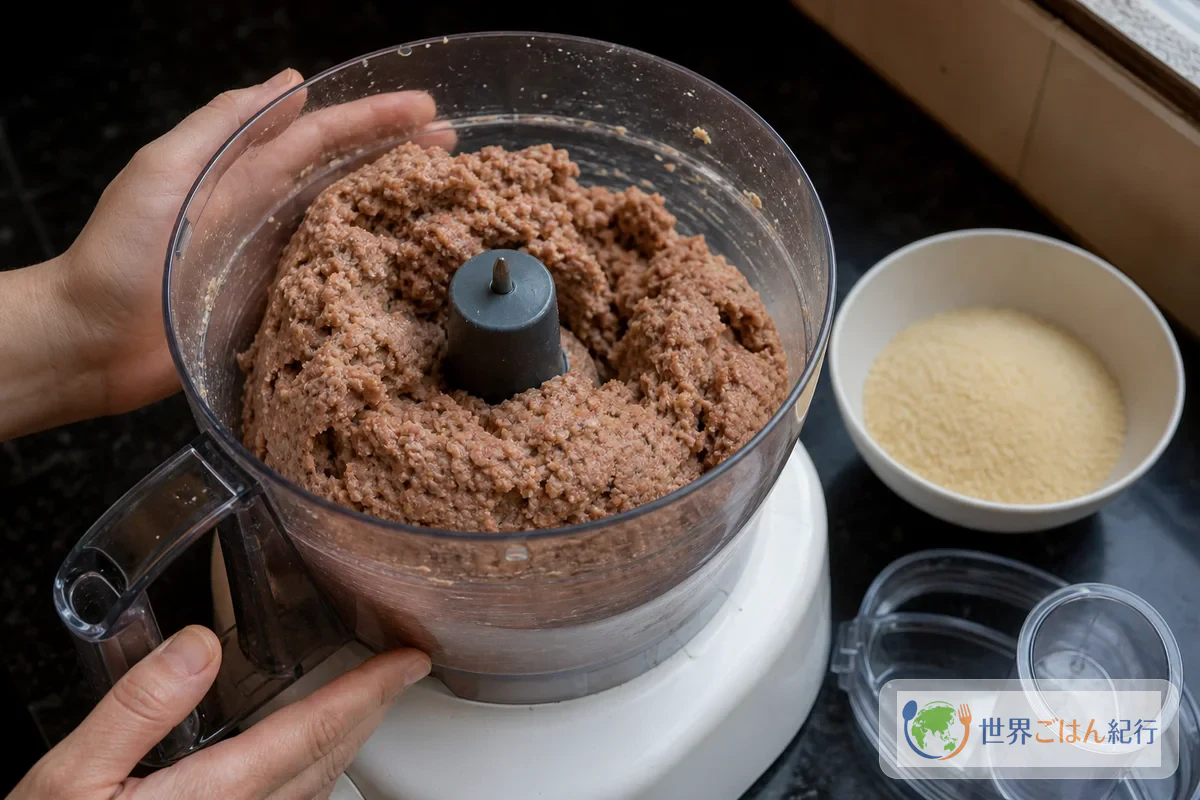
You can also knead the dough by hand, but if too many grains remain, it will tear when rolled thin.
A food processor is worth buying for people who make kubba shells, hummus and nut pastes repeatedly.
For someone trying it once, or who wants to leave a coarse texture, there is a way of chopping finely with a knife and then kneading by hand for longer.
3. Roll the dough into 22 cm discs
Divide the dough into 4 and roll each into a ball with wet hands.
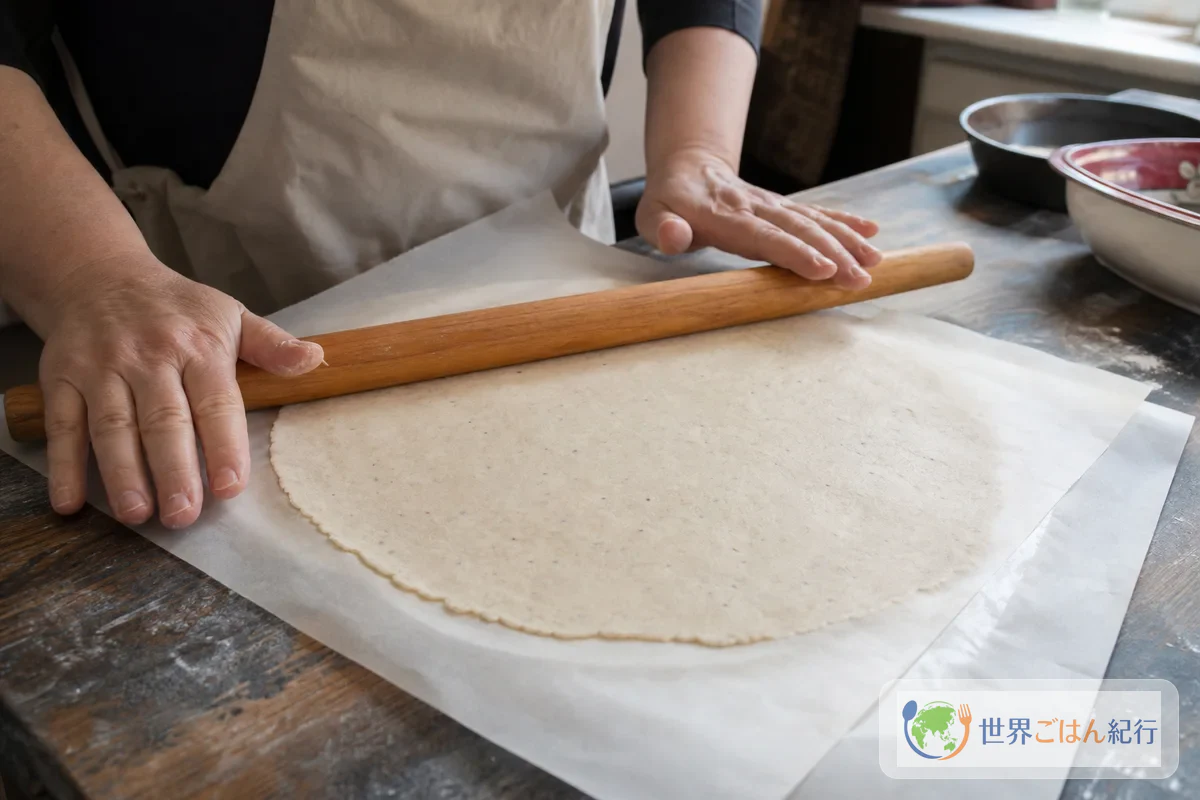
Set a sheet of baking paper on the counter, brush the surface lightly with oil, put one portion in the center and sandwich it with another sheet.
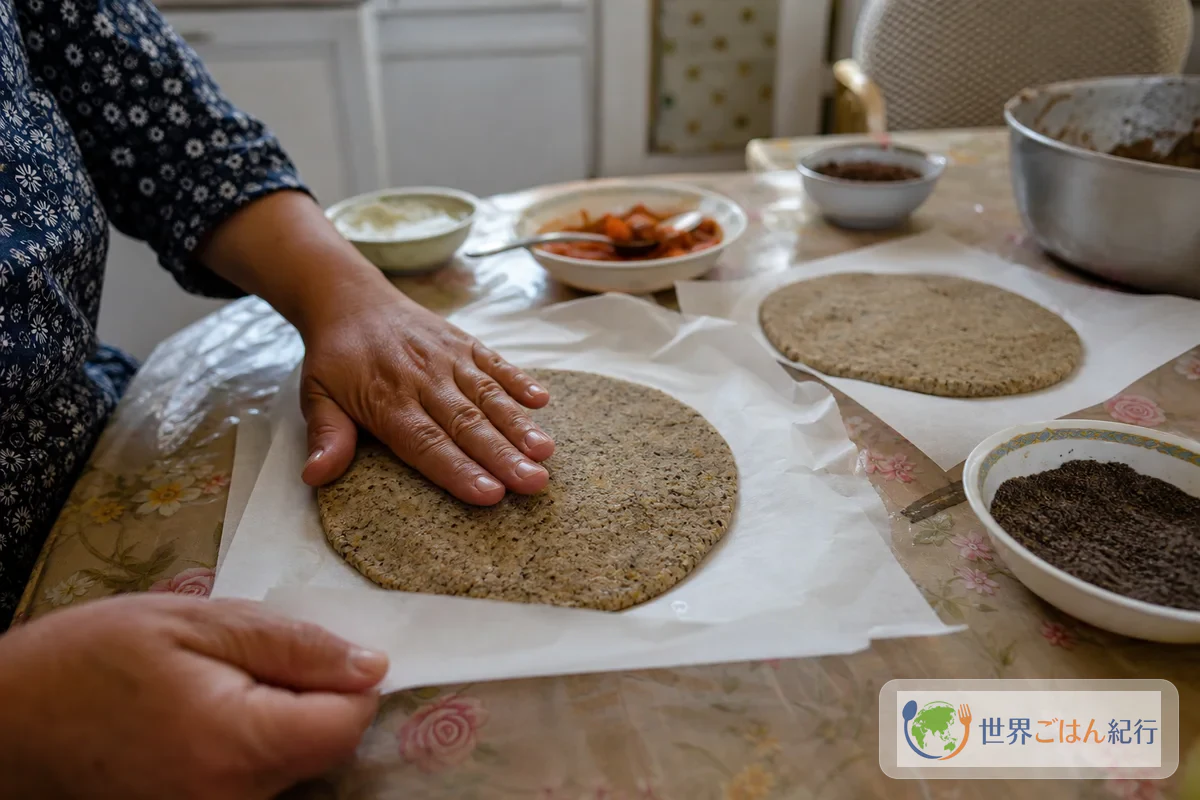
Moving the rolling pin from the center outward, roll it into a circle 22 cm across and 2.5–3 mm thick.
Allow 5–7 minutes per piece; when the surface is smooth and the thickness is 2.5–3 mm to the edge, finish shaping.
To keep only the edge from getting too thin, peel back the sheet partway, press cracked spots with a wet finger, and roll again.
If you set a plate on it to trim the shape, the filling does not shift to one side when it is baked.
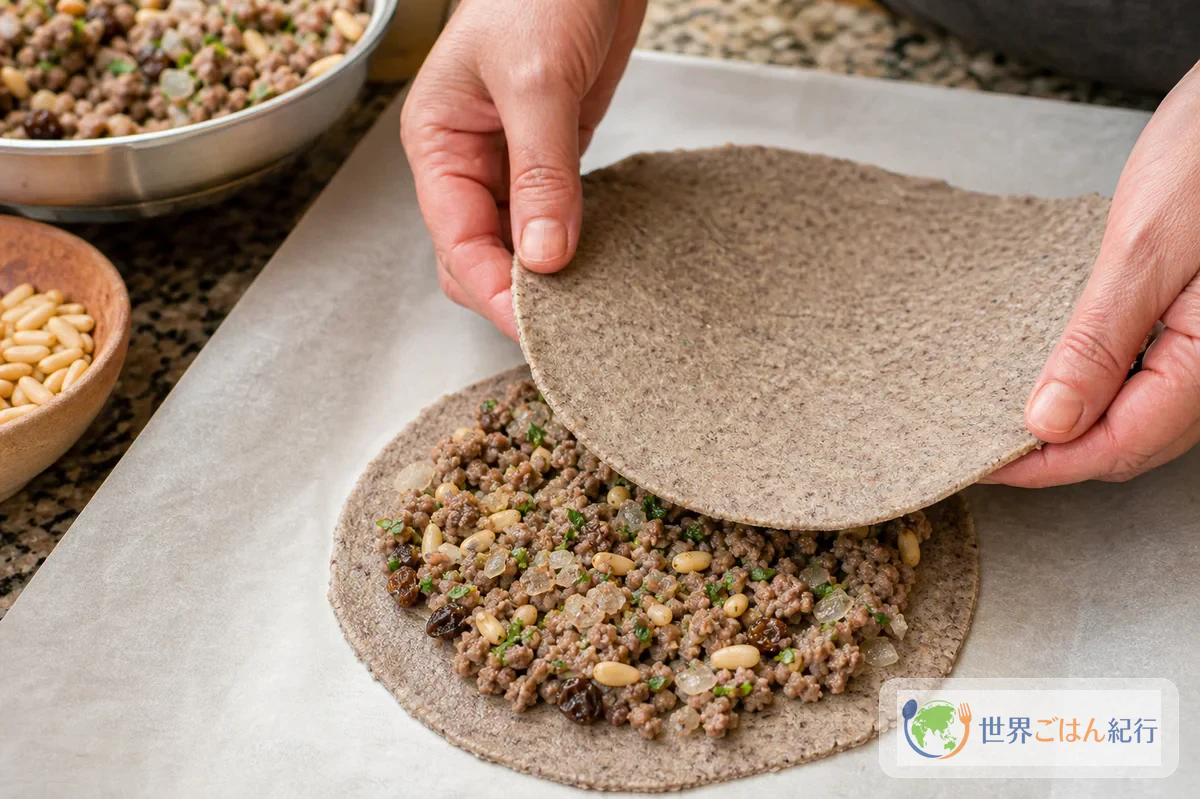
4. Sandwich the meat filling and seal the edge
Put half of the filling on the lower disc and spread it from the center outward.
Spread it evenly to about 18 cm across, leaving 2 cm of plain dough around the edge.
Lay the other disc on top, sheet and all, and press lightly from the center outward to push out the air.
Press the rim with your fingertips and close it until the two layers of dough can no longer be seen.
Allow 7–10 minutes to stack and seal one; if the filling does not seep out and the edge is even, move on.
If the edge becomes thick, push the excess dough inward with a finger, then put the sheet back and roll lightly.
If a hole appears on the surface, thin a piece of leftover shell about the size of two grains of rice with water, patch it on top and press it down.
5. Parboil to firm the dough
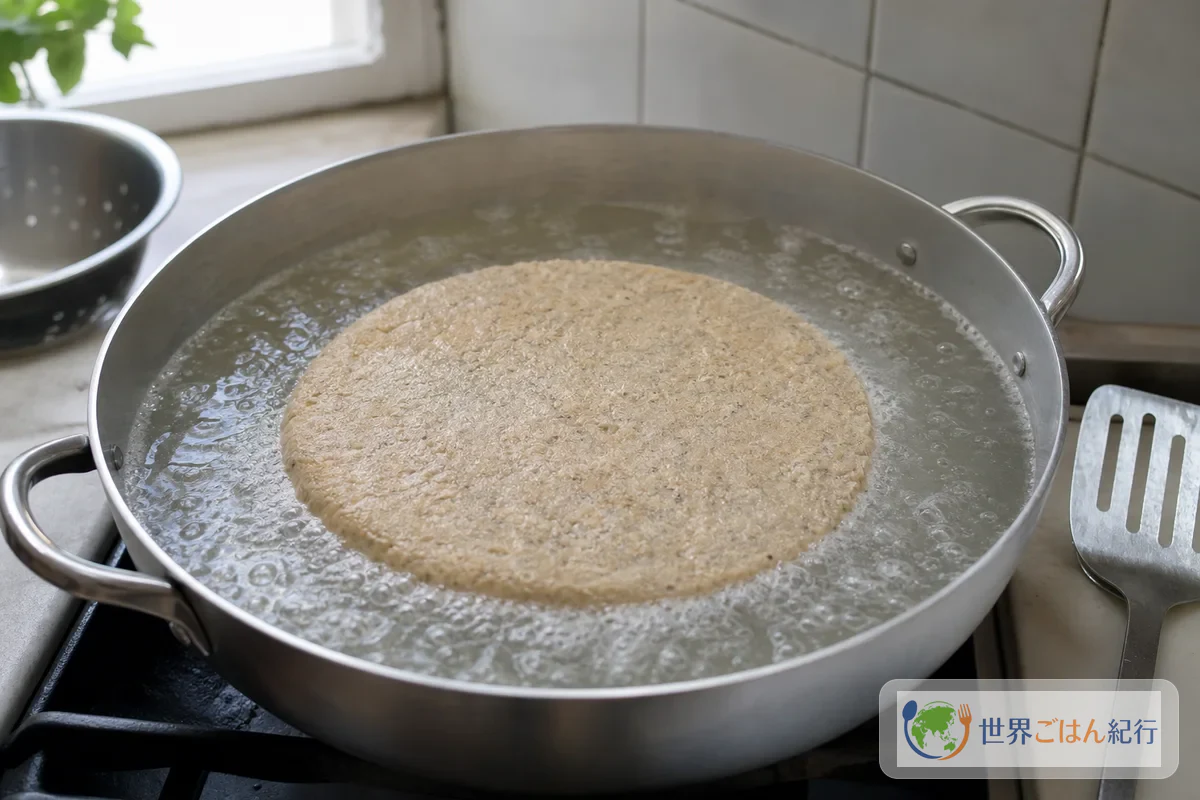
Put 1.5 L water and 5 g salt in a wide pot and bring to a boil, then lower to a medium heat where the boil settles.
Put the kubba in one disc at a time, and stir the water with chopsticks only for the first 30 seconds so it does not stick to the bottom.
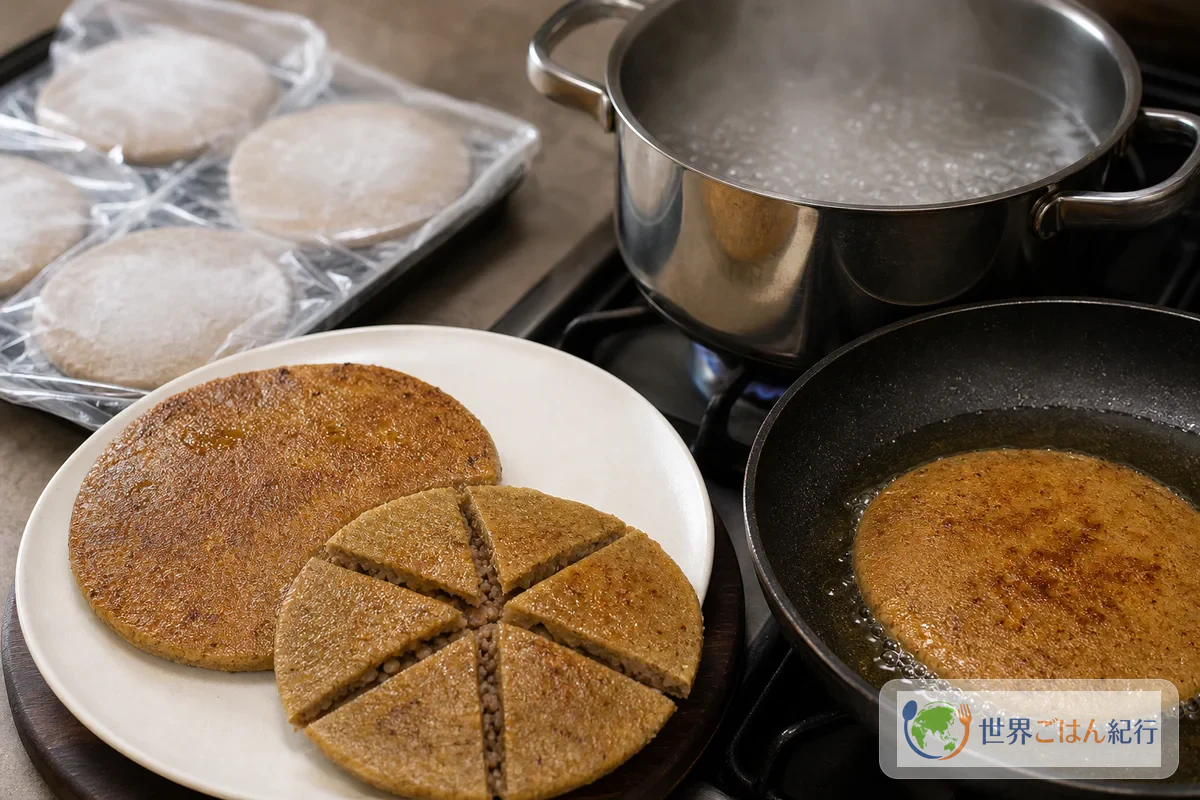
Boil a raw disc for 3–4 minutes and a frozen one for 5–6 minutes; when the surface floats slightly and the edge has firmed, lift it onto a rack.
A hard boil splits it from the edge, so keep the heat where the bubbles do not strike the whole pot violently.
Right after it comes out of the water it is soft, so leave it 2 minutes to let the surface moisture drain.
6. Brown in a skillet and cut
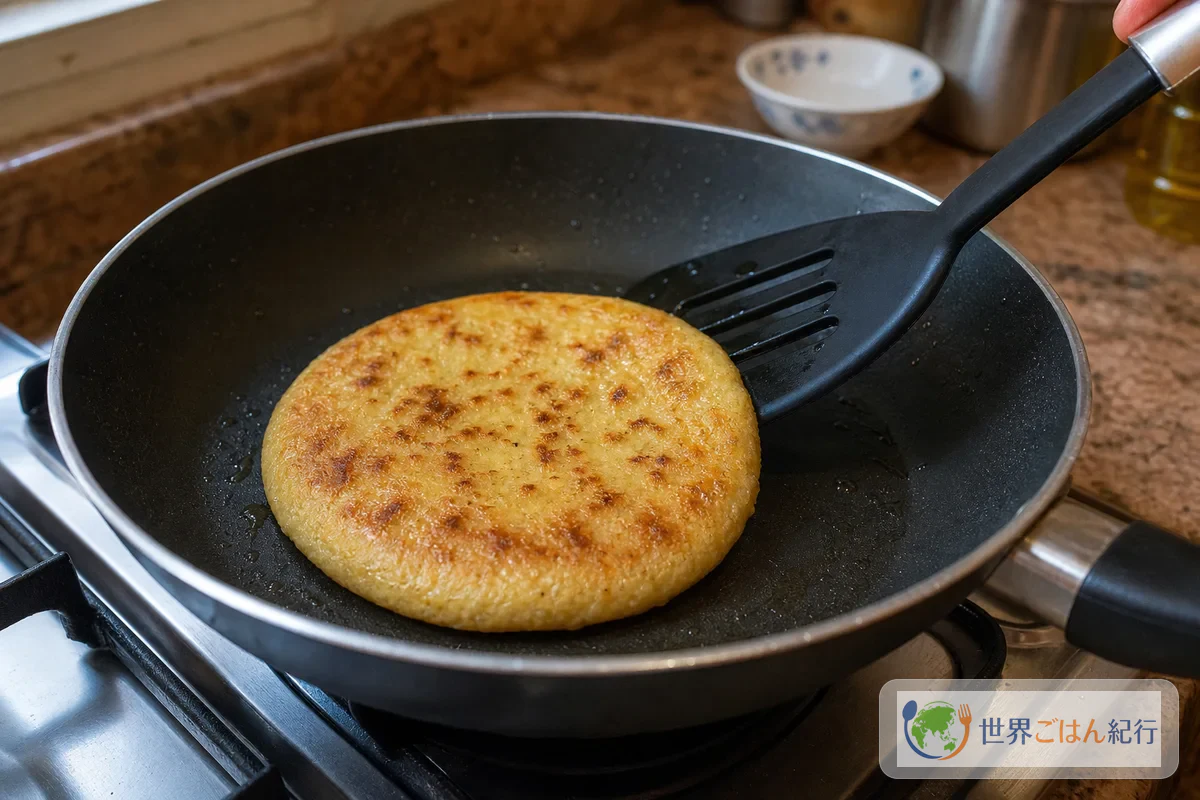
Put 20 ml oil in a skillet over medium to medium-high heat and set one kubba in it.
Fry 2–3 minutes per side, and turn it when pale golden-brown spots appear on the surface.
Insert a thermometer in the center and check that the center of the meat-containing shell and filling has reached 71°C.
Rest it 5 minutes after baking, wet a knife, and cut into 8 wedges.
It is done when the surface is toasty, the dough at the cut is moist, and the filling does not run out.
Four tips that parboiling gives kubba
There is a way to finish it by frying alone, but to handle a thin disc without splitting it, firming the dough in hot water first is more stable.
Rather than adding water all at once, wet your hands and stroke only the surface.
If it still cracks, cover with plastic wrap and rest 10 minutes, then mix in 5 g semolina and knead 2 more minutes.
A hot filling traps steam and pushes up the top disc.
After frying, spread it on a tray, leave it 15 minutes or more, and then fold.
When boiling bubbles strike the edge of the disc directly, it splits from the sealed part.
Keep the surface only slowly moving, and stir the water only right after the kubba goes in the pot.
If the tear is small, thin leftover shell with water and patch the hole, and handle it with the parboiling shortened by 1 minute.
If it has collapsed badly, do not force it back into a disc; switch to a dish of filling and dough stir-fried in a skillet.
Choosing to simmer, fry, or add sourness
Even with the same disc, kubba Mosul changes character with how you finish it.
Eating it boiled
The University of Mosul material also records a method of boiling the disc and eating it as is.
To cut back on oil, rest it 5 minutes after parboiling and brush with 1 tsp olive oil at a time before serving.
The surface is softer than the fried version, and with lentil soup or tomato broth alongside, the spices of the filling connect to the broth.
Baking in the oven
There is also a method without a skillet: brush both sides of the kubba with oil and bake in a 180°C oven for 20–25 minutes.
But Marga's Iraqi Recipes notes that baking alone tended to dry it out, and recommends parboiling and then baking the first time.
If you choose the oven, turn it once partway and check for an internal temperature of 71°C.
Pomegranate molasses is only for those with a reason to buy it
It is not an essential ingredient for making the shell or filling of kubba.
On days the aroma of the meat feels heavy, mixing just 5 ml into a tomato and cucumber salad creates a sweet-sour point at the edge of the plate.
It is an ingredient for people who also use it in Middle Eastern salads and roasted vegetables beyond kubba, and for this recipe alone, substitute 5 ml lemon juice.
Choose one whose ingredients and quantity you can check on the label, and skipping it is a sound decision if you do not want a sweet syrup.
Changing the combination of meats
If the aroma of lamb is not for you, switch the filling to beef and leave the beef in the shell as it is.
Making the shell from lamb too adds richness, but the paste tends to soften with fatty ground meat, so reduce the water by 20 ml.
Pine nuts and raisins are elements that add texture and sweetness.
They are not ingredients that fix one form of tradition, so if you avoid nuts, both can be left out.
Home hands connect the kubba table
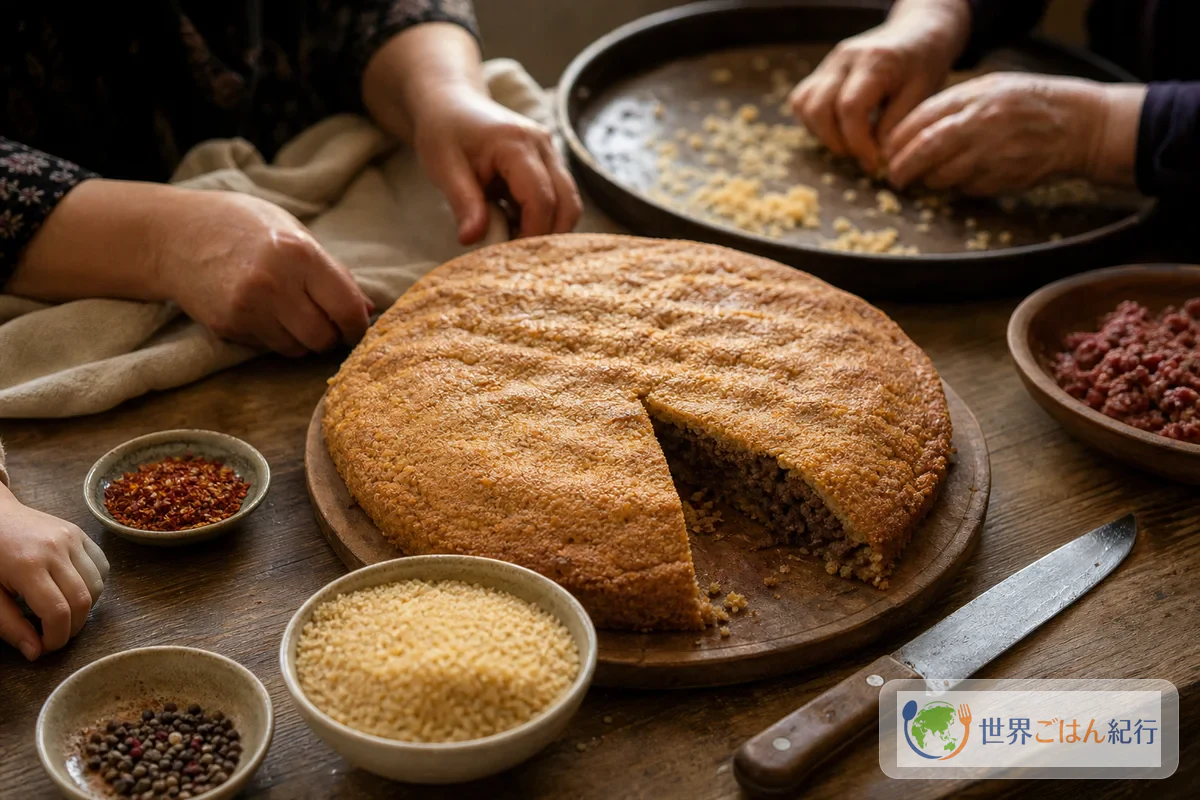
What is interesting about Mosul-style kubba is that, more than the finished dish, the steps of making the disc are the unit of the table.
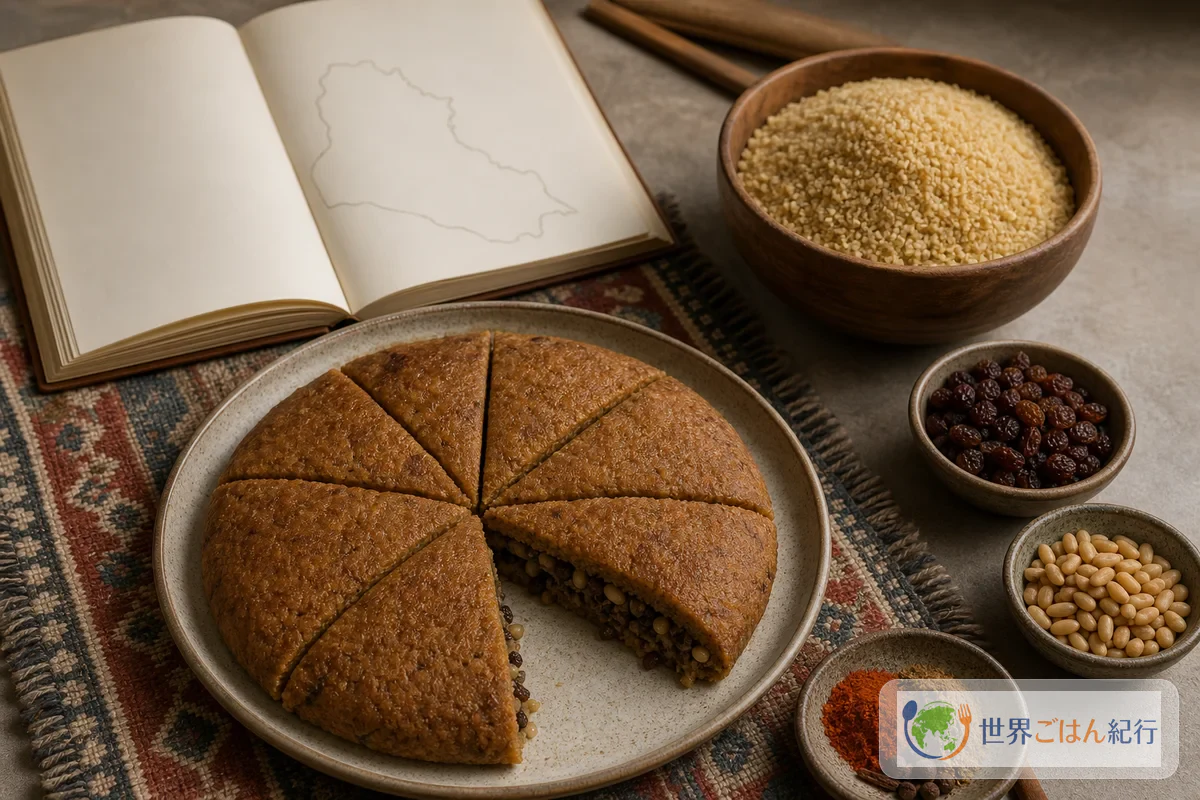
The University of Mosul museum material introduces kubba as a dish touching the Assyrian period (9th century BC), and records the process of crushing cracked wheat and mixing it with meat, rolling the dough softened in a stone vessel into a disc, and sandwiching a filling of meat, onion, nuts, raisins and spices.
This is not material proving that the ancient dish and the modern kubba had the same proportions.
On the other hand, it shows that the work of grinding cracked wheat fine, combining it with meat and shaping it into a form that keeps well has been handed down over a long time together with the tools of the place.
In modern households, a food processor takes the place of the stone vessel.
In the Iraqi families in SBS Food's reporting, relatives gathered, made 100 to 300 pieces, froze them and passed them to later meals and the Ramadan table.
In another SBS Food article, there is also a record of a Yazidi household in northern Iraq making kubba Mosul for the spring new year Ser Sal and sharing the food at school and the market.
What these two records show is that kubba is less a special dish for celebration days only than one that can increase the number of people who make it and eat it. Cut up a large disc and you can adjust the portion of each piece, and if you freeze the dough before forming or the finished dish, you do not need to finish the work in a single day. Making two 22 cm discs is not only shrinking the local platter; it is also a way to carry the idea of many hands and preservation onto a home work counter.
Mosul kubba is not a dish that ends when one person recreates a rare plate.
Because you can divide the roles among the person who fries the filling, the person who rolls the dough and the person who closes the edge, the effort of the dish itself becomes a reason to gather.
If making it for one household, make two 22 cm discs to lighten the burden.
In return, keep three things: do not sandwich the filling while hot, do not roll the dough too thin, and do not roughen the boiling water, and the shape and texture of the Mosul style come quite close.
To continue with the Iraqi table, adding masgouf (in Japanese), fish grilled over charcoal, or arook, fried potato and herbs, makes a difference in the weight and aroma of the plate.
FAQ
I am not confident handling a 22 cm disc
Divide the dough into 6 instead of 4, and make three small discs 16 to 18 cm across.
Keep the filling within 5 mm thick and leave a margin of 1.5 cm or more at the rim, and it is easier to handle when you turn it over.
For boiling time, start checking at 2 to 3 minutes for a raw disc, and lift it out when the surface floats and the edge has firmed.
I cannot find coarse bulgur
You can substitute with 260 g fine bulgur alone.
With less variety in grain, though, the dough becomes a little stickier.
Start with 180 ml water and increase the semolina to 35 g, adjusting to a firmness where a fingerprint pressed into it slowly recovers.
Can it be frozen?
Cool the filling, form and seal the edge of the raw discs, and freeze them one at a time sandwiched between baking paper.
Once the surface has hardened, move them to a freezer bag, and when using, do not thaw; boil in gently boiling water for 5 to 6 minutes, then fry.
Freezing them one by one avoids the accident of breaking when stacked.
The dough split in the boiling water
Suspect one of these: the water was boiling hard, the filling was hot, or the edge of the dough was too thin.
For the next piece, lower the heat, cool the filling and leave 2 cm at the edge.
A small crack can be patched with leftover dough before boiling.
Is pomegranate molasses necessary?
It is not necessary.
Only when you want to add sourness to the aroma of the meat, mix 5 ml into the salad or substitute 5 ml lemon juice.
How should I store leftover kubba?
Cool the fried kubba slightly, seal and refrigerate, and reheat to the center by the next day.
Do not use the sheets or cutting board that touched raw meat for the salad as they are.
Because the safety of ground-meat dishes cannot be judged by color alone, check for an internal temperature of 71°C after reheating too.
Sources
- University of Mosul. "Preparing a typical Mosul dish (Kubba)." Mosul Cultural Museum, PDF. https://uomosul.edu.iq/public/files/datafolder_1395/_20190917_060453_790.pdf accessed and checked: 4 August 2026
- Julia D'Orazio. "Kubba is an Iraqi dish that brings families (and patience) together." SBS Food. https://www.sbs.com.au/food/article/kubba-is-an-iraqi-dish-that-brings-families-and-patience-together/culeepm0a accessed and checked: 4 August 2026
- SBS Food. "Feels like home: Yazidi pie filled with memories of New Year in Iraq." https://www.sbs.com.au/food/article/feels-like-home-yazidi-pie-filled-with-memories-of-new-year-in-iraq/2id116pe5 accessed and checked: 4 August 2026
- Agnieszka Orzel. "Kubba Mosul: an Iraqi meat pie recipe from chef Philip Juma." The Standard. https://www.standard.co.uk/going-out/foodanddrink/kubba-mosul-an-iraqi-meat-pie-recipe-from-chef-philip-juma-a3161886.html accessed and checked: 4 August 2026
- Margarita. "Kubba Mosul." Marga's Iraqi Recipes. https://www.marga.org/food/int/iraq/kubba.html accessed and checked: 4 August 2026
- Food on the Move. "Kubba: Iraqi Specialty of Bulgur and Minced Meat." https://www.jidlonacestach.cz/en/kubba/ accessed and checked: 4 August 2026
- FoodSafety.gov. "Cook to a Safe Minimum Internal Temperature." https://www.foodsafety.gov/food-safety-charts/safe-minimum-internal-temperatures accessed and checked: 4 August 2026