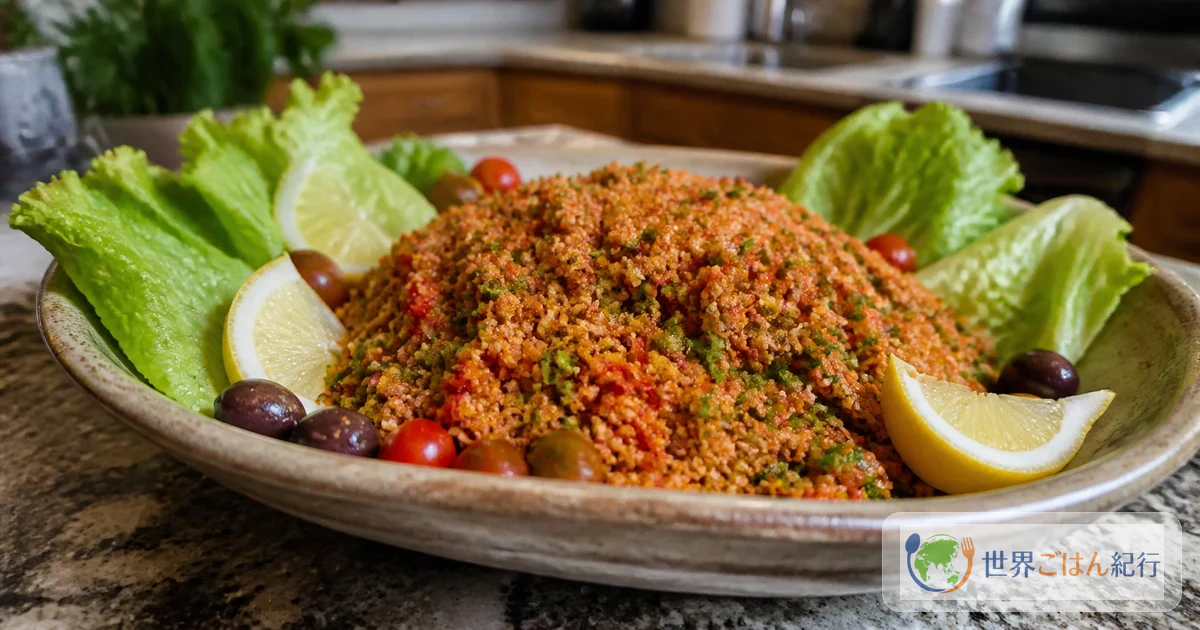
The table goes a little quiet until the pot is flipped

Set a large platter over the pot, press it down with both hands and flip it in one move. Maqluba is a dish for which the air in the kitchen shifts a little for those few seconds. Even before you lift the lid, there is steam from the spice-soaked chicken, the sweet smell of eggplant and the toasty aroma of rice steamed against the bottom of the pot. But success or failure isn't known until it lands on the plate. So the family gathers close.
Written maqluba, maqlooba, makloubeh and more, this dish takes its name from the Arabic word meaning "upside-down." It is a Levantine rice dish in which rice, meat and vegetables are layered in a pot, and after cooking it is turned over and served on a large platter. It is often described as a Palestinian home dish, but Jordan, Syria and Lebanon each have a household form of their own.
"Maqluba" means "upside-down" in Arabic. It is also spelled maqlooba and in other ways, and all of them refer to the same dish.
What is hard at home is not gathering the ingredients but keeping the rice from getting heavy. Layer eggplant or cauliflower raw and they release water and collapse the moment the dish is flipped. Fry them too hard and the rice soaks up the oil and gets heavy. This article leans toward roasting the vegetables in the oven, measuring the chicken cooking liquid, and letting the pot rest well before flipping.
For another Palestinian chicken dish, there is musakhan (in Japanese), which stars sumac and onion. For a comparison in the direction of stuffing vegetables with rice and meat, mahshi lift (in Japanese), turnips simmered in a tangy sauce, sits close by. Along the line of rice dishes, setting it beside Jordanian mansaf (in Japanese) with its yogurt sauce, Saudi kabsa (in Japanese) with its spiced rice and Gulf machboos makes the differences among Middle Eastern rice dishes easier to see.
Ingredients (serves 4)

This dish uses chicken, nuts and dairy. If you have allergies, replace the chicken with 240 g chickpeas, the almonds with 2 tsp white sesame seeds, and the yogurt with the chopped salad alone. If using bouillon cubes, check the label, as some contain wheat or dairy.
Where shopping is worth it
For maqluba, what changes the result is not swapping the chicken or eggplant for pricier ones but not getting the rice and pot wrong. Basmati gives lightness to the rice, allspice gives the warm aroma of the Levant, and a heavy-bottomed pot helps hold the shape before flipping.
Start by washing and soaking the rice, and prepare the chicken and vegetables in the meantime. Counting the 10 minutes of draining, allow 35 minutes for preparing the rice so you are not rushed when it is time to build the layers.
Method: cook the rice light and flip it without collapse
The steps in maqluba are: wash the rice, make the chicken broth, roast the vegetables, layer in the pot, cook, flip, finish. If you finish up to roasting the vegetables beforehand, building the pot goes calmly. A pot 20 to 22 cm in diameter and at least 10 cm deep is easiest to handle.
A decision table for getting closer to the original with ordinary ingredients
Palestinian household maqluba shows the pot, rice and seasonality of vegetables of each home. When recreating it elsewhere, separating what to keep from what to change makes it easier to keep making than moving everything toward imported ingredients.
| Question | What to keep | Practical branch |
|---|---|---|
| Rice | Grains that stay separate and don't turn heavy after absorbing broth | Basmati the first time. For short-grain rice, reduce the water to 450 ml and use it right after washing, without soaking |
| Vegetables | Browning the eggplant and cauliflower first | Roast at 200°C in the oven instead of frying. The aroma comes even with little oil |
| Meat | Making the broth the flavor of the rice | Bone-in chicken is easiest. Lamb in the same amount with a 30-minute simmer |
| Spices | The warmth of allspice and cinnamon | If you have baharat, replace with 2 tsp. If not, the blend here is enough |
| Pot | Packing the layers into a 20 to 22 cm diameter pot | Thin-bottomed pots scorch easily. Use a heavy or cast-iron pot and keep the heat low |
| Flipping | Resting after cooking and pressing the platter tightly | If you lack a large platter, use a flat oven dish. A deep dish makes it hard to remove the pot |
If you can't find basmati, short-grain rice makes the dish work, but it becomes sticky and closer to an "upside-down pilaf." On days you make it with short-grain rice, don't soak it long, reduce the broth a little and extend the steam before flipping to 20 minutes. The shape of the grains changes, but the aroma of vegetables that have absorbed the chicken broth remains.
Before flipping the pot, let it rest 15 minutes with the lid on and tilt the pot gently to see whether the rice moves as one mass. If it does not move, leave it another 5 minutes.
Why it collapses, turns watery or scorches

| State | Main cause | How to fix it next time |
|---|---|---|
| Collapses the moment it is flipped | Vegetables too wet, the pot too loose, too little steaming | Roast the vegetables darker, press the rice and filling lightly, and rest at least 15 minutes before flipping |
| Rice is sticky | Rice broken from hard washing, too much broth, short-grain rice cooked with the same liquid | Wash the rice gently. 500 ml broth for basmati, 450 ml for short-grain |
| Bottom scorches | Too long on medium heat, thin pot, too little broth | Drop to low heat as soon as it boils. If you smell burning, turn it off and finish by steaming |
| Chicken is bland | Too little seasoning, the rice absorbed all the broth and no salt remained in the meat | Salt the chicken first with 1 tsp. Taste the broth too and set it at about a light soup |
| The flipped surface looks sparse | Too little tomato or eggplant, the filling not packed in the bottom | Put tomato on the bottom and eggplant against the sides. Put the ingredients you want to show into the pot first |
Even if it fails, the flavor can be saved. On a day it collapses, don't force it back into shape; serve it as a platter of rice with plenty of yogurt, chopped salad and lemon. On a watery day, warm it uncovered over low heat for 3 minutes, turn off the heat and let it sit 10 minutes to let extra steam escape.
Storage and eating the next day

Move only the rice and filling of leftover maqluba to a container. Cool for about 30 minutes and eat within about 2 days refrigerated. Don't put the yogurt, chopped salad or lemon in with it. Moisture and acidity get into the rice and make it sticky the next day.
To reheat, spread one portion on a heatproof plate, sprinkle with 2 tsp water, cover loosely with plastic wrap and microwave at 600 W for 90 seconds. If the center of the rice is still cold, add 30 seconds at a time. To warm it in a skillet, add 1 tsp oil, cover and heat over low heat for 4 minutes. The bottom browns lightly, so the next day this method is more fragrant.
For making ahead, rather than cooking and flipping everything the day before, stopping just before washing the rice, simmering the chicken and roasting the vegetables gives a nicer result. On the day, just layer the pot and cook, and the grains stay distinct and the shape holds when flipped.
FAQ
Q1. Are maqluba and maqlooba the same dish?
They are different spellings of the same dish. In English too there are several spellings: maqluba, maqlooba, maqlouba, makloubeh and more. Japanese sources also use several katakana spellings.
Q2. Can't I make it without basmati rice?
You can, but the result changes. Basmati has long grains and loosens lightly even after absorbing broth. If using short-grain rice, after washing don't soak it long, reduce the broth to 450 ml and extend the steam before flipping to 20 minutes.
Q3. Won't it be inauthentic if I don't fry the vegetables?
Traditionally many homes fry them, but oven-roasting gives plenty of aroma. What matters is not the amount of oil but driving off the surface moisture of the vegetables and browning them. For home cooks, roasting for 20 to 25 minutes in a 200°C oven is more reliable.
Q4. Can I make it without meat?
Yes. Use 240 g drained chickpeas in place of the chicken and 500 ml vegetable broth for the liquid. Put the chickpeas in the center of the pot where they hold their shape, and the aroma of eggplant and cauliflower makes it satisfying.
Q5. What should I do if I'm afraid to flip it?
Use a flat platter at least 5 cm wider than the pot and press the pot and platter tightly together. The most important thing is to wait 2 minutes after flipping before removing the pot. Don't aim for a tall tower at first; making it to about 80% of the pot's height is safer.
Q6. What should I serve with it?
Plain yogurt, a chopped cucumber and tomato salad, olives and pickles go well. Because the aroma of rice and chicken is rich, serving something cold and acidic keeps you from tiring of it on one plate.