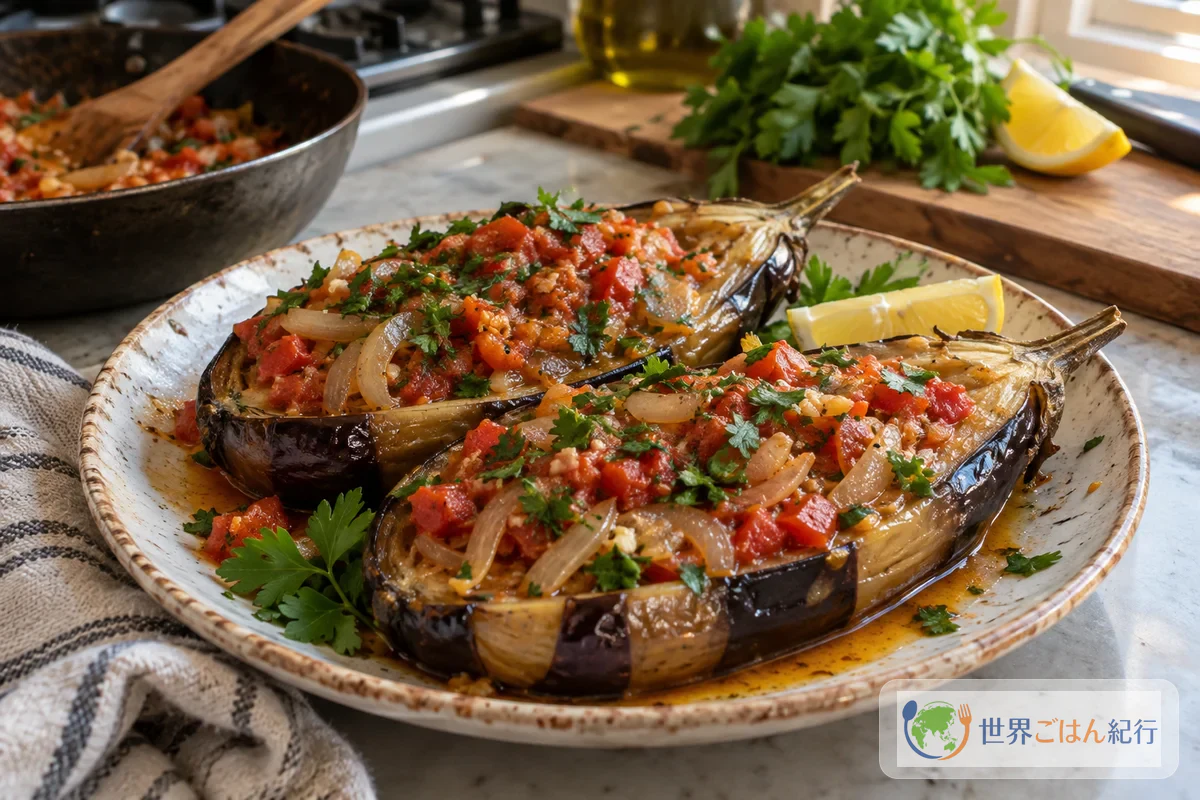
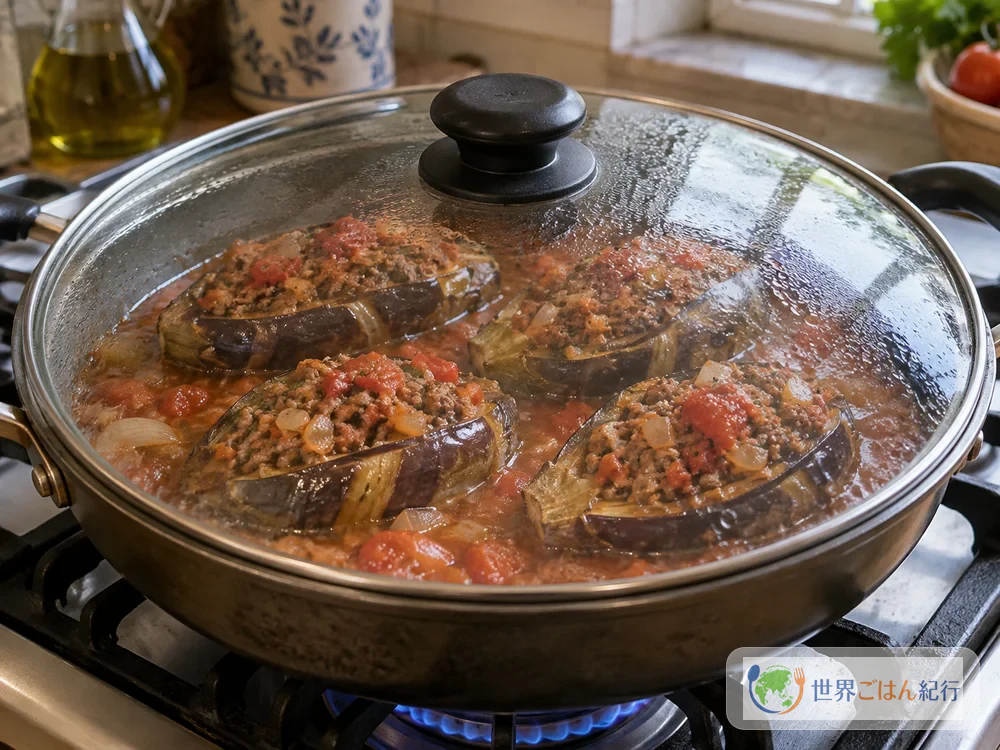
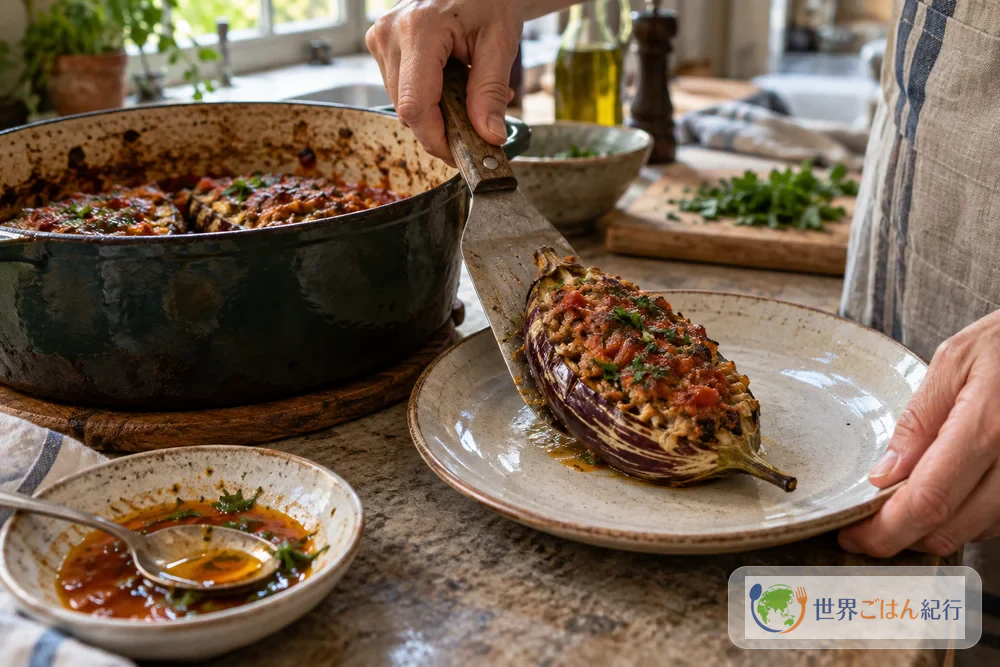
When you lift the lid of the pot, the eggplants lie soft and slumped in a broth of olive oil and tomato. But you don't eat them right away. You leave the pot off the heat in the kitchen and wait for the eggplants to cool all the way and the flavors to settle. İmam bayıldı, long loved on Turkish tables, is a dish of eggplant stuffed with onion and tomato, slowly simmered in olive oil, and eaten cool. The name means "the imam fainted." As a name for a dish, it is quite dramatic.
Why did the imam faint?
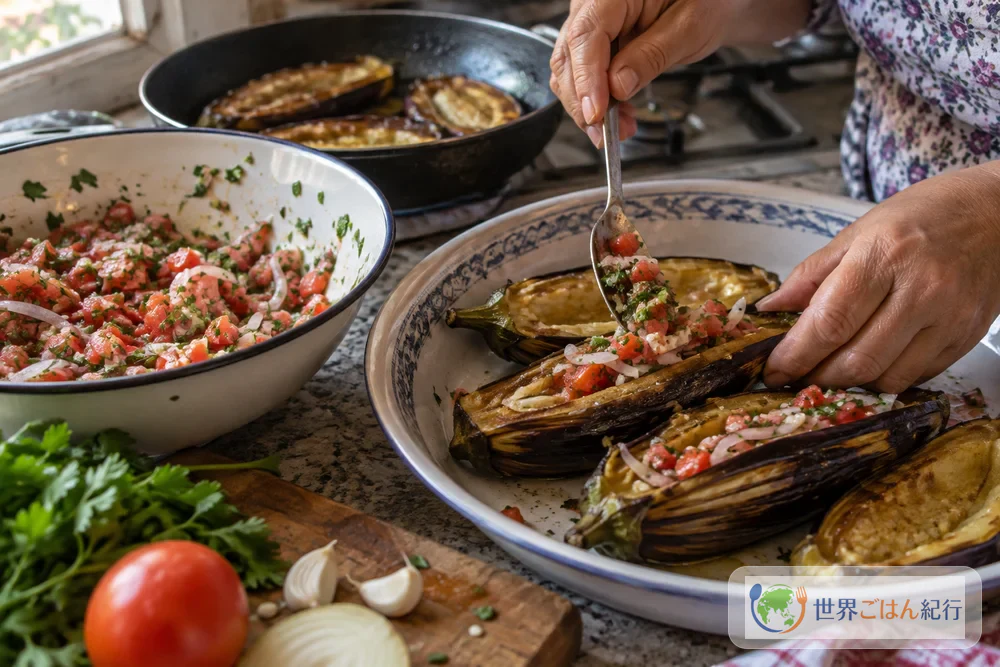
There are several stories behind this odd name. The best known is that an imam was so carried away by the aroma and taste of the dish that he fainted. GoTürkiye, Türkiye's tourism promotion agency, also presents the dish name as coming from this folktale. In another story, the imam fainted not from the deliciousness but from shock at the cost, the amount of olive oil used in the dish. There is even a version in which an imam who married the daughter of an olive oil merchant saw the 12 jars of oil from her dowry used up each night on this dish, and fainted on the 13th day when the oil ran out.
Which is true is not clear. But from the side of language, something interesting emerges. The Turkish verb "bayılmak" means both "to faint" and "to be very fond of something, to be enchanted." Turkish–English dictionaries cited on the English-language blog Language Hat also list both meanings. In other words, "İmam bayıldı" can also be read as the compliment "so delicious you'd faint."
Turkey also has a dish called Karnıyarık, in which eggplant is split open and filled with ground meat. It looks very similar, and it is sometimes explained that karnıyarık is imam bayıldı with ground meat added. Imam bayıldı, made without meat, belongs not to meat-day dishes but to the vegetable dishes simmered in olive oil.
Simmered in olive oil and eaten cool
Imam bayıldı belongs to the family of Turkish dishes called "zeytinyağlı." Zeytinyağlı means "with olive oil" in Turkish, and refers to dishes in which vegetables are slowly simmered in olive oil and a little water. Seasonal vegetables such as celery and zucchini are cooked this way and set out on the table as appetizers (meze).
According to GoTürkiye, the cooking of the Ottoman court long relied on animal fats such as tallow, but with the olive oil trade, olive oil came into the palace kitchens and dishes made with olive oil spread. The tables of the towns on the Aegean coast, where olive trees are abundant, are also deeply tied to these dishes.
Why eat it cool? While hot, the aroma of olive oil is too forward, and the broth has not settled into the eggplant. While it cools in the pot, the eggplant soaks up the juices of onion and tomato, and the broth and the eggplant become one. Özlem Warren, a food writer who conveys Turkish home cooking in English, also recommends letting the cooked eggplants cool and rest in the pot to blend the flavors before plating.
Eggplant in Turkish is "patlıcan." Imam bayıldı is one of the best-known of the many eggplant dishes in Turkish cooking.
For the eggplant, a large globe eggplant is the closest fit
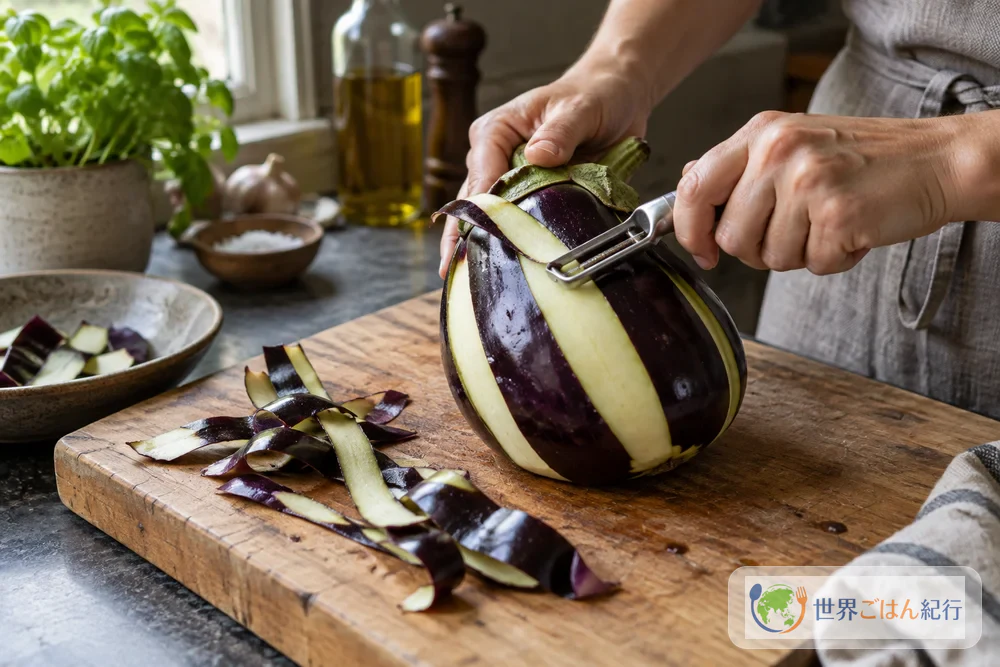
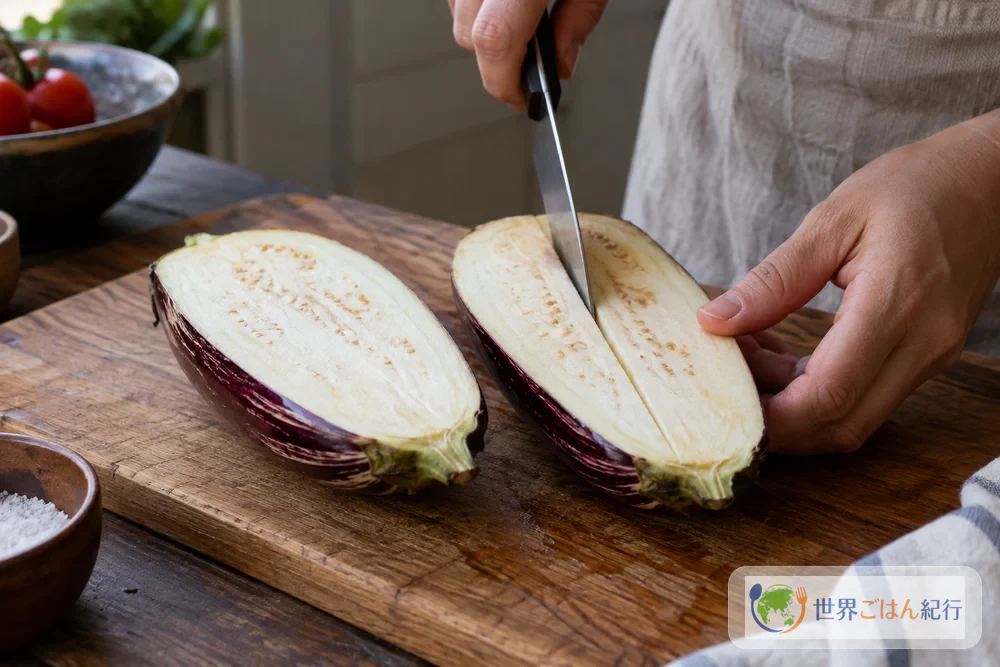
For this dish, which is cut in half lengthwise and stuffed, a large eggplant is suitable. A big, stout globe eggplant suits a dish cut lengthwise and stuffed best. If you can't find one, you may use one slender eggplant per person. Small eggplants need less cooking time, but the gap for the stuffing is also smaller.
When choosing, pick eggplants with glossy, taut skin that feel heavy for their size. Ones with wrinkled or limp skin have been off the plant longer and are prone to bitterness. Özlem Warren writes that eggplants are at their best in summer, from July to September.
For the olive oil, using extra virgin for the stuffing and the cooking liquid, and a mild, easy-to-handle oil such as pure olive oil or canola for pan-frying the eggplant, gets the right balance of aroma and cost. The dried mint added to the stuffing is a fragrance that often appears in Turkish home cooking, and can be found in the spice aisle or the herbal tea shelf.
Ingredients (serves 4)
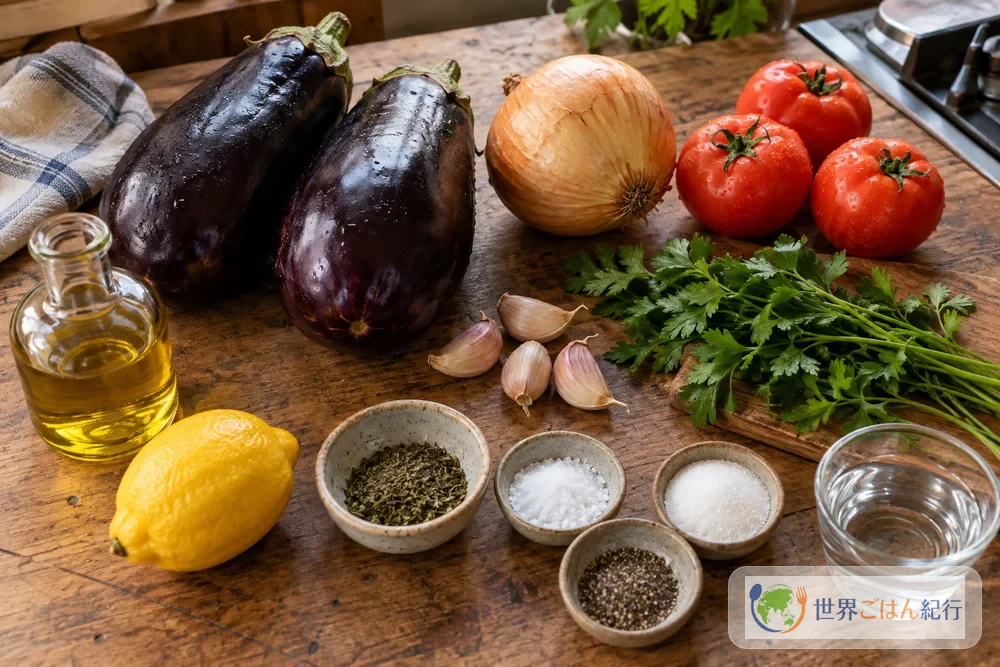
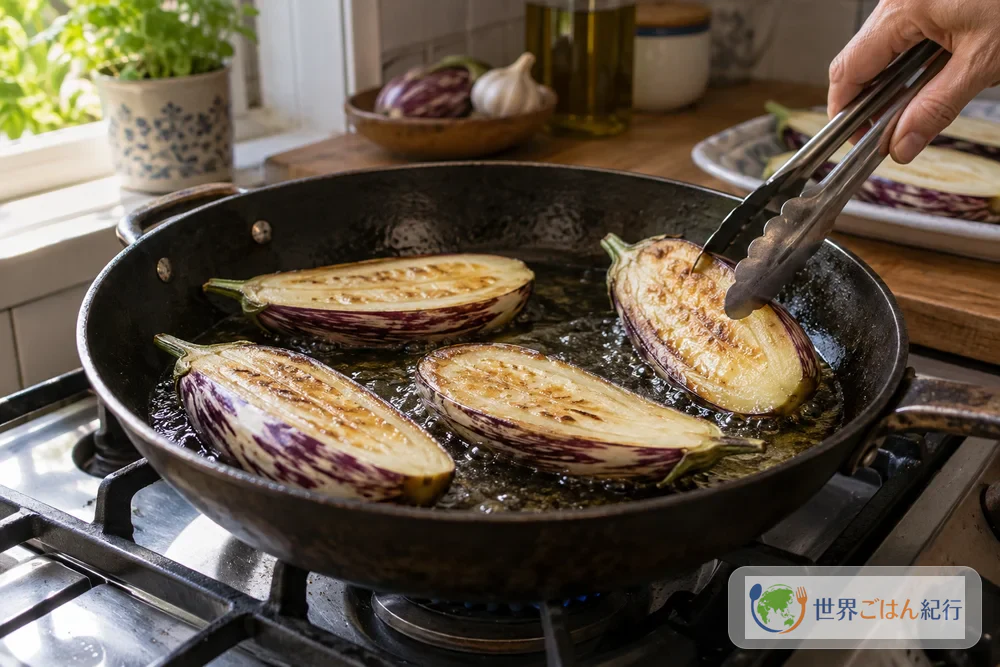
The oil for pan-frying the eggplant is a generous 1 cm deep in the pan, but the eggplant absorbs only part of it. The remaining oil can be cooled, strained, and reused for sautéing. Not skimping on olive oil is the source of this dish's deliciousness, but if that concerns you, you can make it with a little less in the stuffing and cooking liquid.
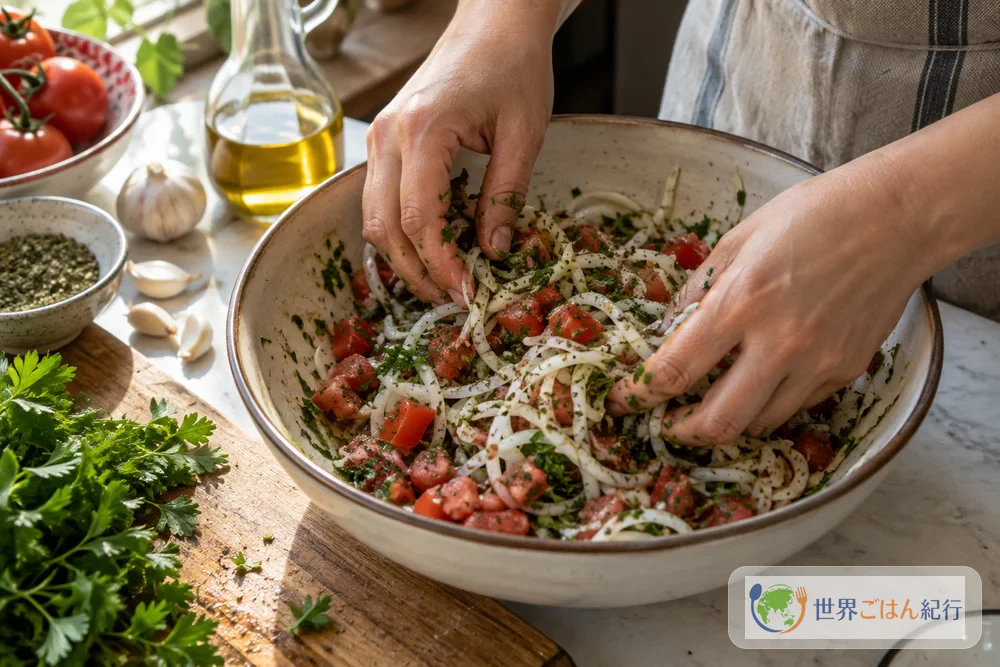
Choosing very ripe, red tomatoes makes the flavor of the cooking liquid much deeper. If you only have watery tomatoes, increase the sugar a little, or use some canned diced tomatoes.
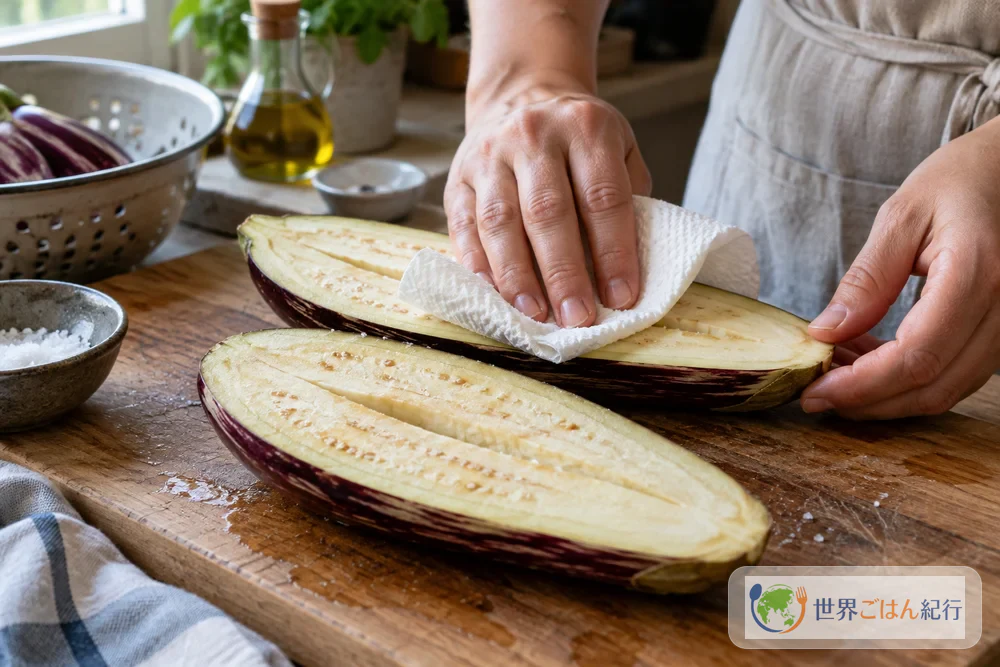
When pan-frying the eggplant, wipe off the moisture before putting it in the oil. If water remains, the oil spatters badly. If the oil gets too hot and starts to smoke, turn off the heat and let the temperature drop.
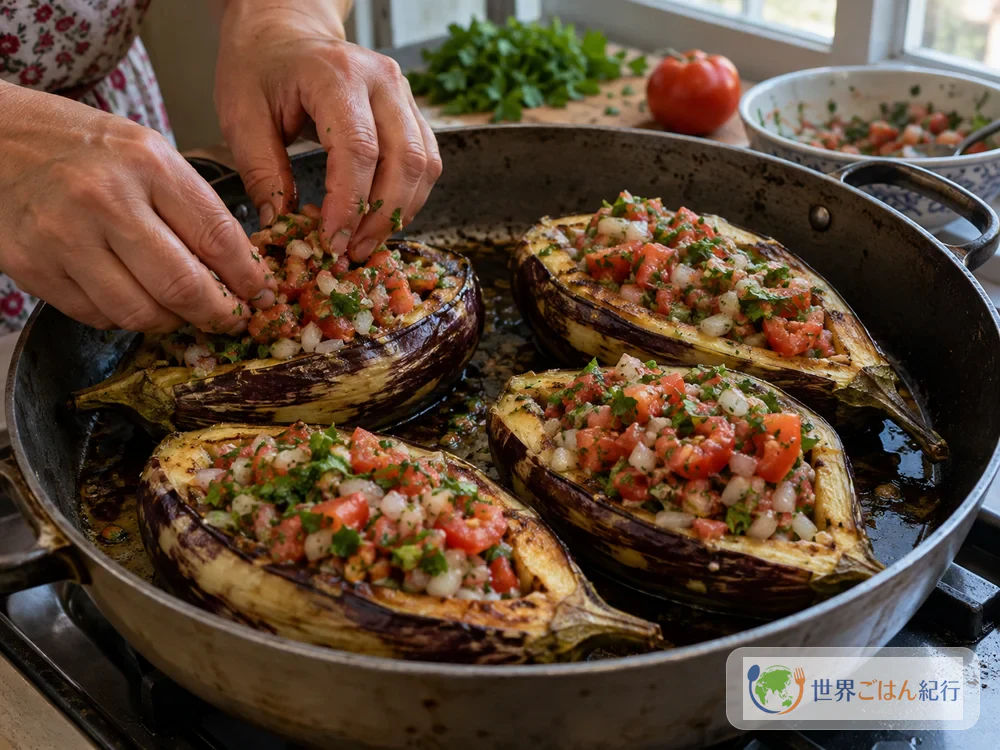
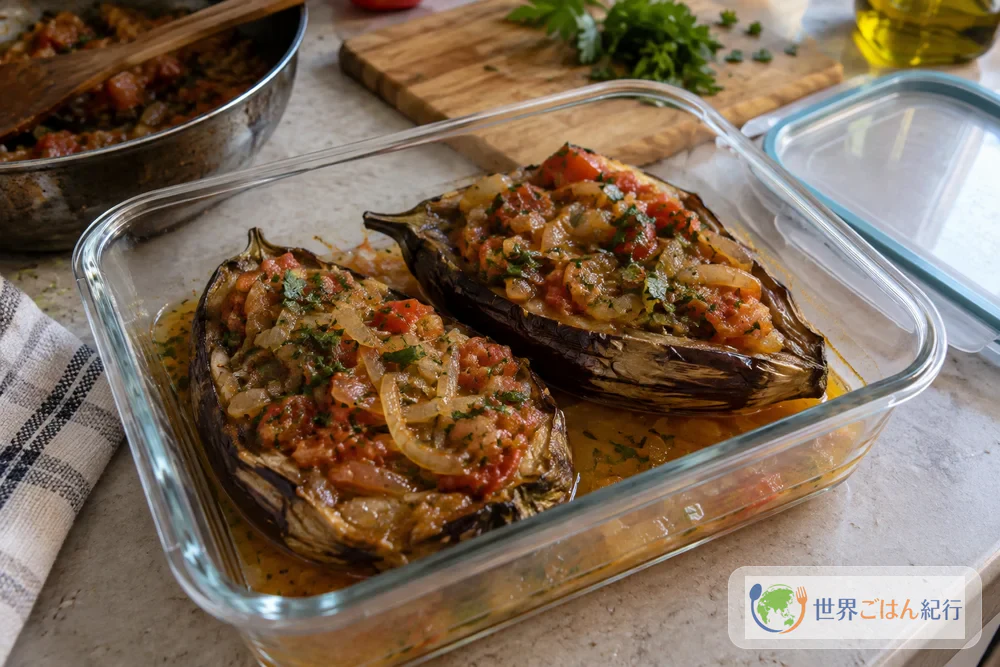
Before rushing it into the refrigerator, give it time to cool to room temperature in the pot. During this time the eggplant draws in the liquid, and the sweetness of the tomato and onion moves into the flesh.
If the eggplants look about to stick to the bottom during simmering, tilt the pot gently to spread the liquid around. Eggplants are soft and fragile, so do not turn them over or move them with chopsticks.
As an appetizer, at room temperature
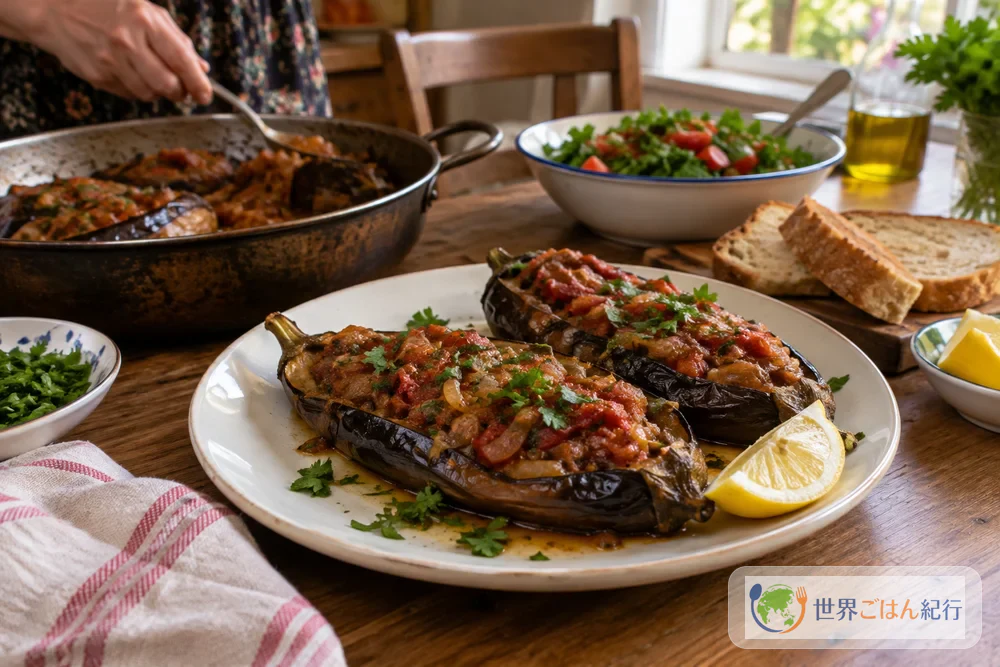
Imam bayıldı is often eaten at room temperature or chilled, as an appetizer (meze). Because it contains no meat, it also suits a vegetarian table. A squeeze of lemon adds a fresh acidity to the richness of the olive oil, so it never feels heavy to the end. Serving bread to wipe up the liquid left on the plate is also recommended.
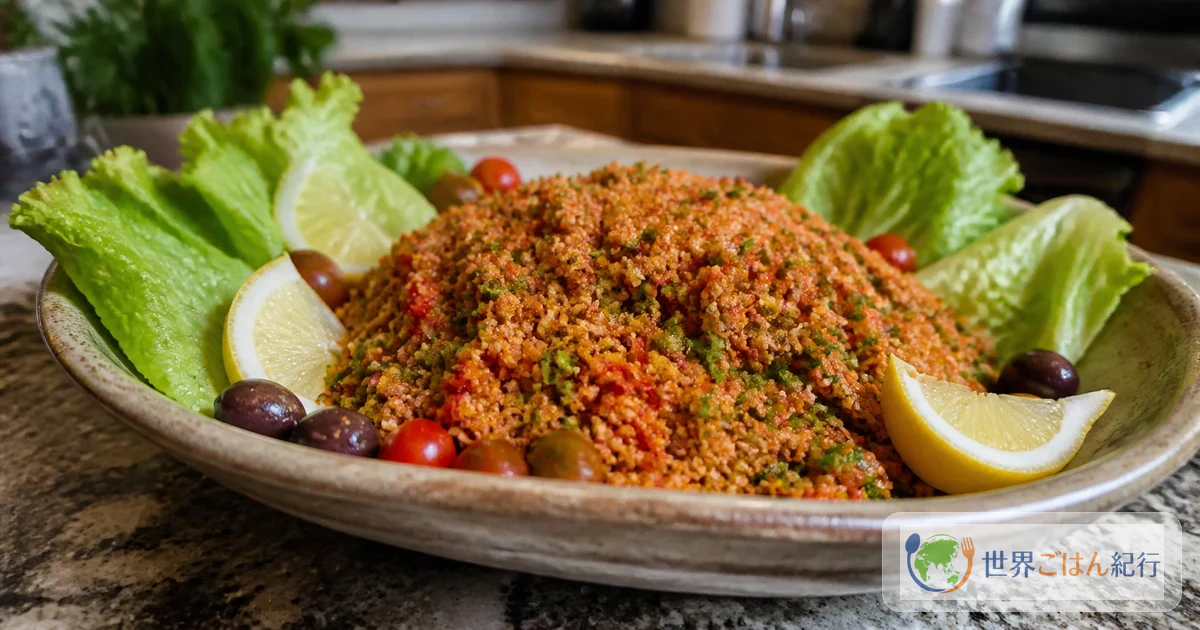
Set beside other mezze, it becomes a Turkish-style plate. A little each of ezme, chopped tomato and chili; kısır, a bulgur salad; and piyaz, a white bean salad, and make-ahead appetizers alone set the start of dinner. For another dish using cooked eggplant, compare it with Turkey's hünkar beğendi (in Japanese).
Frequently asked questions
May I eat it while warm?
You can. It is sometimes served warm, but it is a dish more often eaten after cooling to room temperature. Cooling lets the liquid settle into the eggplant and brings the flavor together. While warm, the aroma of olive oil is forward and the eggplant still holds a lot of moisture, so the impression is a little different.
Can I make it ahead?
Cool it, put it in a storage container, and eat it within 2 to 3 days in the refrigerator. Straight from the refrigerator the olive oil can solidify and turn white, so take it out a while before eating and return it to room temperature for a smoother mouthfeel.
Can I make it without pan-frying?
If you want less oil, you can roast the eggplant in the oven or a frying pan before stuffing. But pan-frying makes the flesh meltingly soft and lets the stuffing's flavor soak in better. If you roast, cook it until the flesh is soft before stuffing.
What if I want it spicy?
Basic imam bayıldı is not a spicy dish. For heat, adding a little chopped green chile or Turkish chile flakes (pul biber) to the stuffing goes well with the sweetness of the tomato.
What if I don't have dried mint?
It can be made without. If you have fresh mint, chop a small amount and add it. If you have no mint, increasing the parsley a little makes up the freshness.
Sources
- Özlem's Turkish Table, "A Turkish classic: eggplants stuffed with onion, garlic and tomatoes in olive oil – Imam Bayildi." (accessed and checked 22 October 2026) https://ozlemsturkishtable.com/2013/07/a-turkish-classic-eggplants-stuffed-with-onion-garlic-and-tomatoes-in-olive-oil-imam-bayildi/
- GoTürkiye (Google Arts & Culture), "Eating Healthy, Turkish Style: The Zingy Zeytinyağlı Menu." (accessed and checked 22 October 2026) https://artsandculture.google.com/story/eating-healthy-turkish-style-the-zingy-zeytinya%C4%9Fl%C4%B1-menu-turkey-tourism-promotion-and-development-agency/CAXxLCnaXoSYFg?hl=en
- Language Hat, "Imam Bayildi." (accessed and checked 22 October 2026) https://languagehat.com/imam-bayildi/
- Wikipedia, "İmam bayıldı." (accessed and checked 22 October 2026) https://en.wikipedia.org/wiki/%C4%B0mam_bay%C4%B1ld%C4%B1