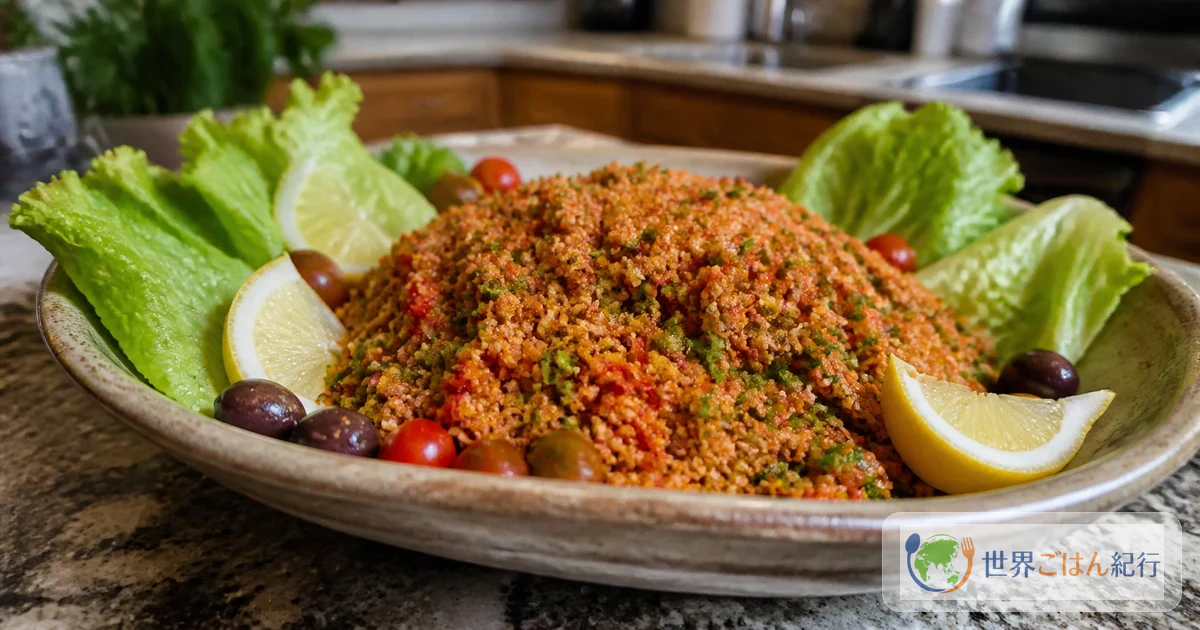
White Beans Under a Generous White Tahini Sauce
Split a white bean with a fork and it falls softly apart from inside its skin. Let it drink up a white sauce of tahini, lemon, vinegar and garlic, then pile on onion tossed with sumac, tomato and a rather firm egg. The sour sauce draws out the sweetness of the beans, and what is left on the bottom of the plate you scoop up with bread. That is the path of flavor in making Antalya-style piyaz.
Turkish piyaz is basically a bean salad of white beans and onion. But the version eaten in Antalya, on the Mediterranean coast, uses plenty of tahini tarator sauce and holds its own on the same plate as grilled meats such as köfte. Official material introducing Antalya's food culture also describes it as a dish where beans, onion, tomato, boiled egg, tahini and vinegar share one table. I have adapted the way of eating described in the Antalya Provincial Directorate of Culture and Tourism's introduction into quantities that are easy to make in a home kitchen.
The key to the Antalya style is not to leave the beans as a salad ingredient but to treat them as the main player that receives the sauce. With canned beans it fits a weekday dinner; with dried beans you can take the time to simmer small beans. Either way, if you wash the beans, drain them well, and adjust the thickness of the sauce at the end, the backbone of the flavor holds.
Called a Salad, but in Antalya It Is the Main Dish
"Piyaz" is a dish name used across Turkey, but the plate does not look the same everywhere. In the Turkish Patent and Trademark Office's geographical indication registry, Antalya Piyazı is registered as a "Mahreç İşareti" (an indication of origin) with Antalya as its source, with a registration date of 29 December 2017. The registry entry and the specification PDF of the certificate record that Antalya piyaz combines beans with tarator, down to the beans used and the presentation.
The official culture portal presents the dish as having a history of about 100 years in Antalya. Outside Antalya some regions eat piyaz as a side dish or salad, while in Antalya it has become established as a dish served next to köfte. Because the beans are eaten with tahini sauce, it is more filling than a leafy salad, and with bread it can be lunch.
Small Beans and Tarator Make the Regional Difference
The registry mentions the small Çandır bean known around Antalya and similar small, thin-skinned beans. Since it is hard to get the same beans everywhere, choose small white beans such as dried navy-type beans, or canned white beans whose grains have not broken down. Large white runner beans are sweet, but their skins split easily and tossed with sauce they make the whole plate feel heavy, so in this recipe the size of the grain and how it cooks come before availability.
Knowing the regional differences also settles how to treat substitutes. The ordinary piyaz of the Marmara region is often described as a light dressed dish with vinegar, lemon, olive oil and onion in front, and tahini is not required. Turkish Foodie's regional comparison and The Mediterranean Dish's standard recipe also separate the tahini-free type from the thick-sauced Antalya style. Leaving out tahini is not a failure; if you think of it as moving toward the piyaz of another region, you will not hesitate in adjusting the flavor.
Almost Turkish Recipes, which records home recipes, also lists differences such as whether the beans are served warm, whether onion goes in, and whether some beans are mashed to give the sauce body. In this recipe, 30 g of beans are mashed so that the sauce clings to the beans without increasing the tahini.
A travel article describing tables in Antalya also records scenes in restaurants toward Korkuteli and Aksu where köfte and piyaz are eaten together. That is not a statistic representing every restaurant, but a clue to the local way of combining meat and bean dishes. You can pair it not only with grilled meat but also with grilled fish or toast; what matters is not to leave too much liquid so the sauce can be eaten with bread.
| What to look for | The state to aim for in Antalya style |
|---|---|
| Beans | Skins not too broken, tender to the center when bitten |
| Tarator | Falls slowly from a spoon and leaves a thin coat on the beans |
| Onion | Sharpness softened, carrying the aroma of sumac |
| Table | Supplies acidity and bean sweetness beside meat, fish or bread |
Ingredients (serves 4)

This dish uses tahini, which contains sesame. If you serve it with bread, watch for wheat as well. Canned beans work, but mixing them right after opening makes it watery. Always wash and drain them, and first set aside 30 g for the tarator before using the rest as the main ingredient.
What You Buy Decides the Texture of the Beans
White beans can be sold in different forms depending on where you shop. They may be found as cannellini beans or as small navy beans. On a rushed day, canned beans; on a weekend when you want the texture of small beans, soak dried beans overnight: that is a realistic division. If you choose dried beans, look for small white beans.
For tahini, plain sesame paste can substitute, but avoid sweetened sesame pastes. When you make the sauce, the oil of the tahini and the lemon and vinegar first separate and then come together, so an unsweetened, unsalted type makes the flavor easier to read. Only 70 g is used for four servings of piyaz, so a large jar suits people who go on to make hummus or other sauces. If you want to try it only once, choose a small jar of unsweetened, unsalted white sesame paste available nearby, and check on the label that the ingredients are sesame (and salt).
Sumac is not essential for turning this into a bean dish, but it adds a dry red acidity and aroma that lemon alone does not give. Working 1 g into the onion and sprinkling 1 g at the end of the plate keeps the aroma from collecting in one place. Some sumac contains salt in its ingredients, so do not put all the 5 g of salt in the ingredient list in at the start; make the onion and sauce with a little salt first and then taste. If you do not want to increase salt, an unsalted type makes the recipe easier to match. Leftover sumac can be used for dishes like balila (in Japanese) and musakhan (in Japanese).
A Failed Plate Can Be Brought Back, in the Right Order
Piyaz has few steps that involve heat, so the moisture and acidity of the ingredients show directly in the result. When using canned beans, wait after washing until no drops fall under the sieve. Just reviewing the draining before adding tahini can restore the weight of the sauce and the sweetness of the beans.
| State | Main cause | Adjustment to make first |
|---|---|---|
| Sauce is watery | Beans not drained enough, liquid added all at once | Wait 5 minutes, then mix in 10 g tahini and 0.3 g salt. If still loose, add tahini 5 g at a time |
| Sauce is stiff and grainy | Acid added to tahini all at once | Add water 5 ml at a time, mixing 30 seconds each time. Stop when it returns to white and smooth |
| Bitterness remains | Garlic is strong, tahini aroma is old | Add 5 ml lemon juice, 10 ml water and 5 ml olive oil. Do not keep using tahini that smells of oil |
| Onion is sharp | Sliced thick, rested too briefly | Add 0.5 g salt and 5 ml vinegar, leave 5 minutes, squeeze lightly before eating |
| Beans are chalky | Dried beans not cooked through to the center | If before combining with the sauce, heat 10 minutes at a time over low heat and check that they mash without resistance with a finger |
When making it with dried beans, soak overnight in three to four times their volume of water. The next day bring to a boil over high heat, lower to a gentle simmer and cook 45 to 70 minutes. When the beans mash without resistance to the center when pressed with a finger, weigh out 480 g and set aside 30 g for the sauce. Split the 5 g of cooking salt into 2 g for the onion and 3 g for the tarator, and do not add salt to the bean cooking water. Cooking time varies with the size of the beans and how long since harvest, so do not stop by the clock; always check for tenderness at the center.
From Beside the Köfte to a Dinner Anywhere
Antalya-style piyaz is a dish that builds the whole plate by sitting next to meat and bread, rather than being complete with beans alone. In a travel article describing local tables, ordering köfte and piyaz together at restaurants toward Korkuteli and Aksu is introduced. One traveler's record is not treated as a rule for every restaurant, but the combination of tahini richness met by the savoriness of the meat, with sumac and vinegar tidying the aftertaste, conveys the role of this dish well.
On a kebab or köfte day, grill the meat while the onion is being worked, and let the piyaz rest 10 to 20 minutes before plating. On a fish day, set it beside salted mackerel or salmon, where the beans and tahini give a staple-like satisfaction and the lemon and onion take on the fat of the fish. Thinly baked bread, baguette or toasted sandwich bread picks up the sauce on the bottom of the plate more easily than white rice.
| Occasion | Pair with | How to build it in your kitchen |
|---|---|---|
| Turkish-style dinner | Köfte, bread, grilled peppers | Let the beans and sauce meld while the meat is grilling |
| Light lunch | Boiled eggs, bread, vegetable soup | Increase to 3 eggs and make the beans more of a main |
| Fish day | Grilled fish, lemon, warm vegetables | Match the vinegar and sumac to the fat of the fish |
| Meze table | Hummus, tabbouleh, balila | Bean dishes overlap, so serve the piyaz in small dishes |
Among bean dishes, warm chickpea balila (in Japanese) suits breakfast or meze, and Greece's fasolada is eaten as a soup in a single dish. Piyaz, served cold or at room temperature, can sit at the point that connects a grilled main and bread.
Five Variations for a Home Kitchen
- Weekday canned version: Use two 400 g cans, wash, and weigh out 480 g. Three minutes of draining gets you the tarator thickness without soaking dried beans.
- Weekend small-bean version: Soak 200 g dried beans the day before, and weigh 480 g from the tender-cooked beans. With small beans, the outline of each grain remains even when coated with sauce.
- Light version without tahini: Remove the 70 g tahini and 60 ml water, and increase olive oil to 45 ml and vinegar to 25 ml. This is not a reproduction of Antalya style but the direction of the light piyaz found around Turkey.
- Plant-based plate without eggs: Remove the 2 eggs and add 120 g grilled peppers. The tahini and beans can be used as they are, but check that the bread contains no dairy or egg.
- Acid-forward version for fish: Keep the amounts of tahini and beans, and add 5 ml more lemon juice when plating. Pouring it on just before eating the fish cuts the fat while keeping the sweetness of the beans.
Storage: Keep the Parts Separate and Assemble Just Before Eating
Piyaz melds better after 10 to 20 minutes than right after making. But if you mix in the tomato and boiled egg and leave it long, the moisture thins the sauce and the acidity of the tomato comes out strongly. If making ahead, keep the beans and sauce, onion, tomato and egg separate, and assemble on the plate just before carrying it from the refrigerator to the table.
| State | Storage | Guide in this recipe | Point |
|---|---|---|---|
| Beans mixed with sauce | Airtight, refrigerated | Within 2 days | Take out just before eating; if stiff, loosen with water 5 ml at a time |
| Onion with sumac | Airtight, refrigerated | Until the next day | If liquid comes out, squeeze lightly before using |
| Peeled boiled eggs | Airtight, refrigerated | Until the next day | Prevents drying and picking up other odors |
| Finished plate with tomato | Refrigerated | Same day | Do not carry to the next day; eat soon after plating |
Straight from the refrigerator the tahini firms up and the aroma seems weak. Leave it about 15 minutes before eating, and if the sauce is stiff, mix in water or lemon juice 5 ml at a time. Microwaving changes the texture of the onion and tomato, so serve it without warming. Because it uses tahini, which contains sesame, and eggs, check ingredient labels and storage condition when portioning, and avoid leaving it at room temperature for long.
Frequently Asked Questions
Should I use canned or dried beans?
Canned beans if you want it on the table in 30 minutes; dried beans if you want to choose the texture of the grain and skin. For canned beans, wash and drain 480 g; for dried beans, soak the day before and weigh 480 g of tender-cooked beans. Dried beans vary in cooking time by product and storage period, so if they are still firm at 45 minutes, keep cooking 10 minutes at a time.
Can I use chickpeas instead of white beans?
You can, but it moves toward a different bean salad from the Antalya style. Chickpeas have a nutty aroma that goes well with tahini. However, the smooth texture of white beans carrying tarator is weaker. With 480 g chickpeas, adding 5 ml more lemon juice and 1 g cumin helps the aroma come together.
Can I make it without tahini?
Yes. Around Turkey there are piyaz finished lightly with vinegar, olive oil, onion and parsley and no tahini. In that case, leave out the 70 g tahini and 60 ml cooking liquid, and increase olive oil to 45 ml and vinegar to 25 ml. It becomes a side dish that goes easily with grilled fish and fried foods, rather than the thick Antalya tarator.
What if I don't have sumac?
Grate 0.5 g lemon zest and add 0.5 g more black pepper. The red color and dry acidity of sumac cannot be fully replaced, but the direction of the aroma gets closer. Pickled plum or yukari (red shiso seasoning) give a different flavor, so do not use them if you want to keep the taste of piyaz.
Is the boiled egg required?
Not required. In Antalya-style plating an egg is often served alongside, but if you serve it beside a meat dish, the beans and tarator stand on their own without the egg. If you eat it as a one-plate lunch, keep the egg. If you cook it too soft, the yolk melts into the sauce and blurs the taste of the beans.
Can I make it the day before and pack it for a lunchbox?
The beans, sauce and onion can be kept separately in the refrigerator the day before. Add the tomato and egg on the day, and in a lunchbox keep the tomato in a separate container. Because it contains sesame and egg, use an ice pack and avoid leaving it at room temperature for long. Do not eat anything past the storage guide or with a change in smell or sliminess.
Sources
- Türk Patent ve Marka Kurumu, "Antalya Piyazı" geographical indication registry page (registration information consulted; URL checked 2026-08-29)
- Türk Patent ve Marka Kurumu, "Antalya Piyazı" registration certificate (PDF) (beans, tarator, ingredients and method consulted; URL checked 2026-08-29)
- T.C. Kültür ve Turizm Bakanlığı Antalya İl Müdürlüğü, "Antalya Piyazı ve Piyazcılık" (Antalya's food culture and the dish's place consulted; URL checked 2026-08-29)
- T.C. Kültür Portalı, "Antalya Piyazı" (ingredients, home method and regional differences consulted; URL checked 2026-08-29)
- Turkey's For Life, "Antalya Style Piyaz Recipe – Made With Love" (record of eating in the Korkuteli and Aksu direction, and recipe comparison consulted; URL checked 2026-08-29)
- The Mediterranean Dish, "Piyaz: Turkish White Bean Salad Recipe" (standard tahini-free structure and handling of acidity consulted; URL checked 2026-08-29)
- Turkish Foodie, "Piyaz" (differences between Marmara and Antalya styles, and onion preparation consulted; URL checked 2026-08-29)
- Almost Turkish Recipes, "Antalya Bean Salad" (household differences in temperature, onion and bean mashing consulted; URL checked 2026-08-29)