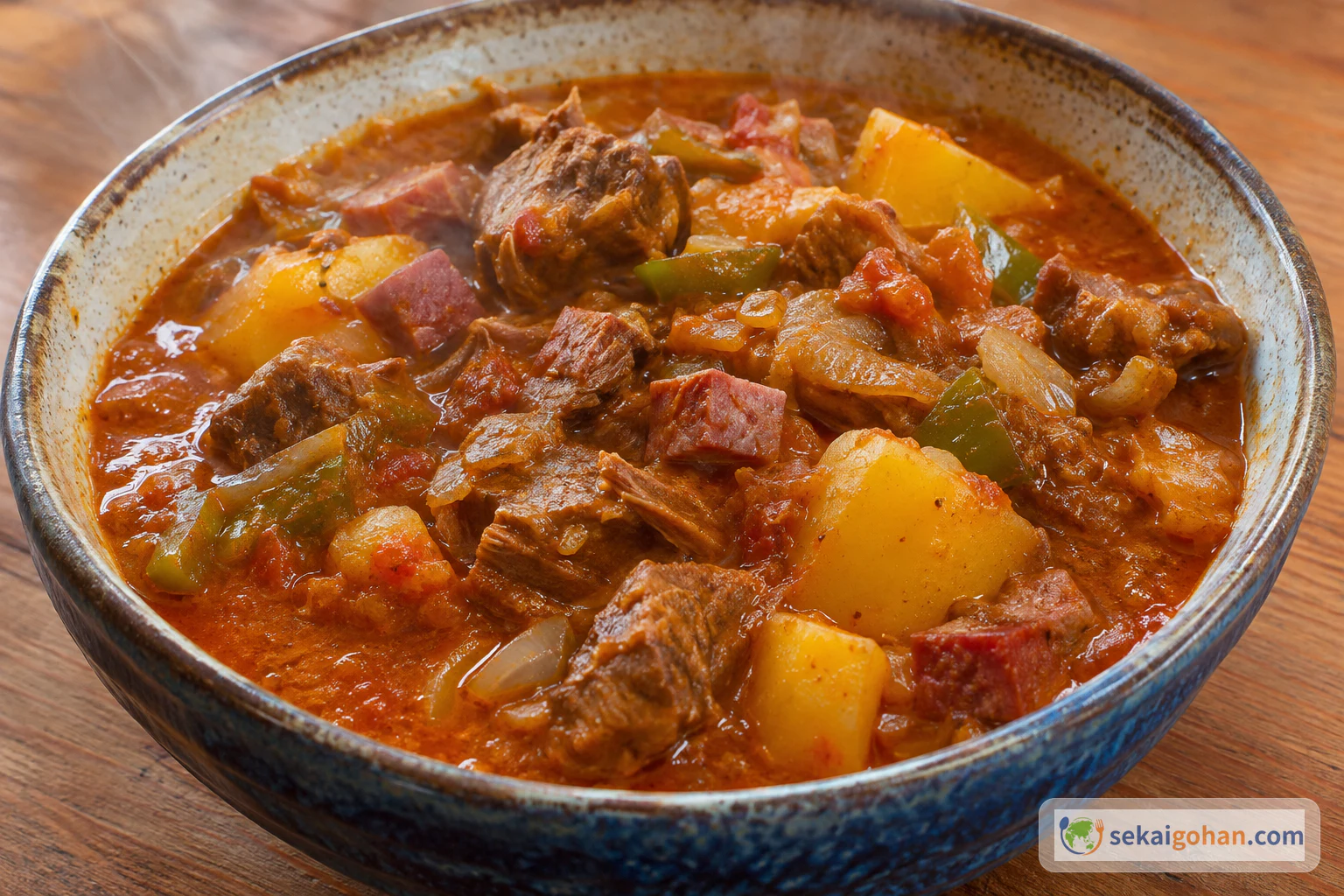
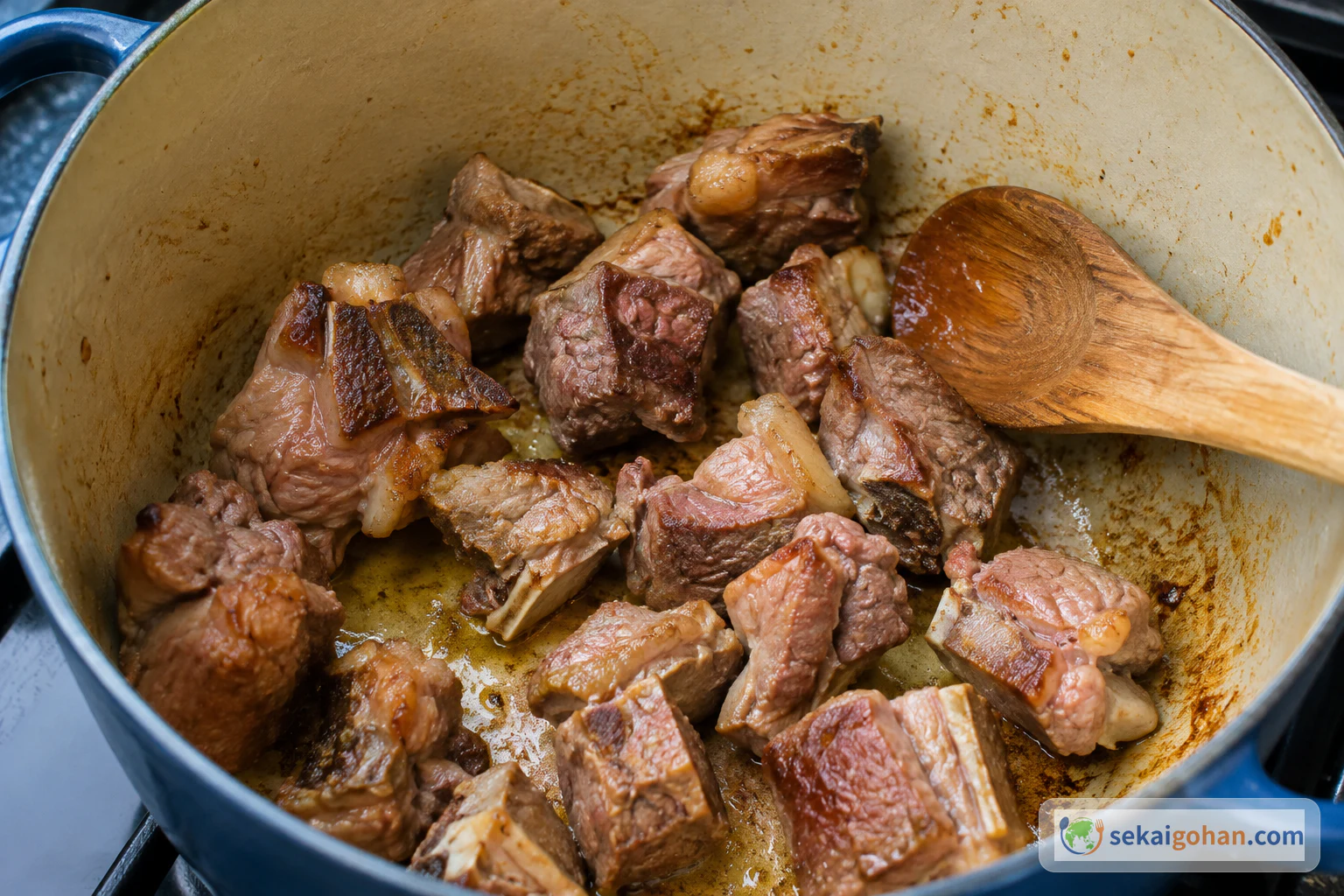
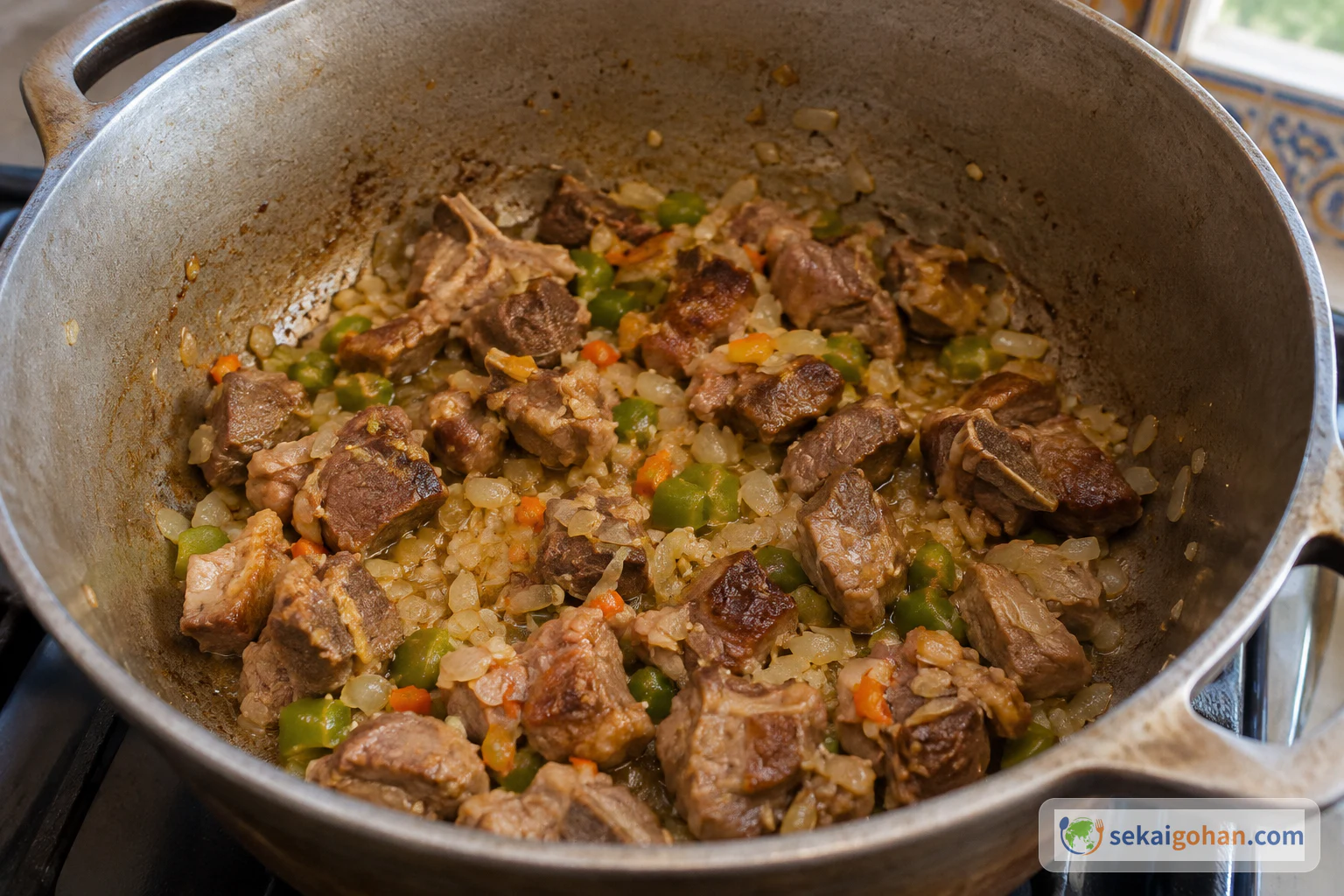
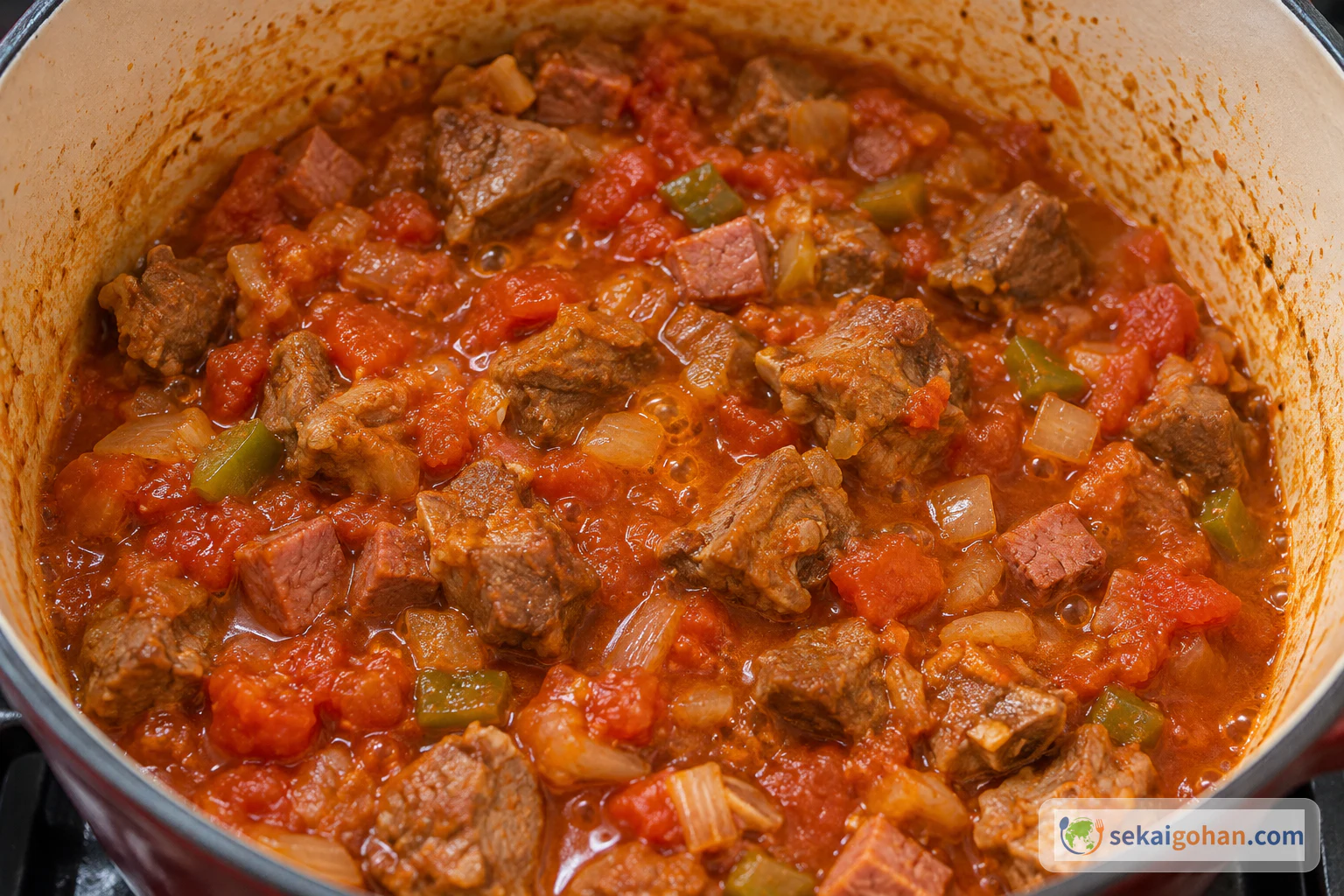
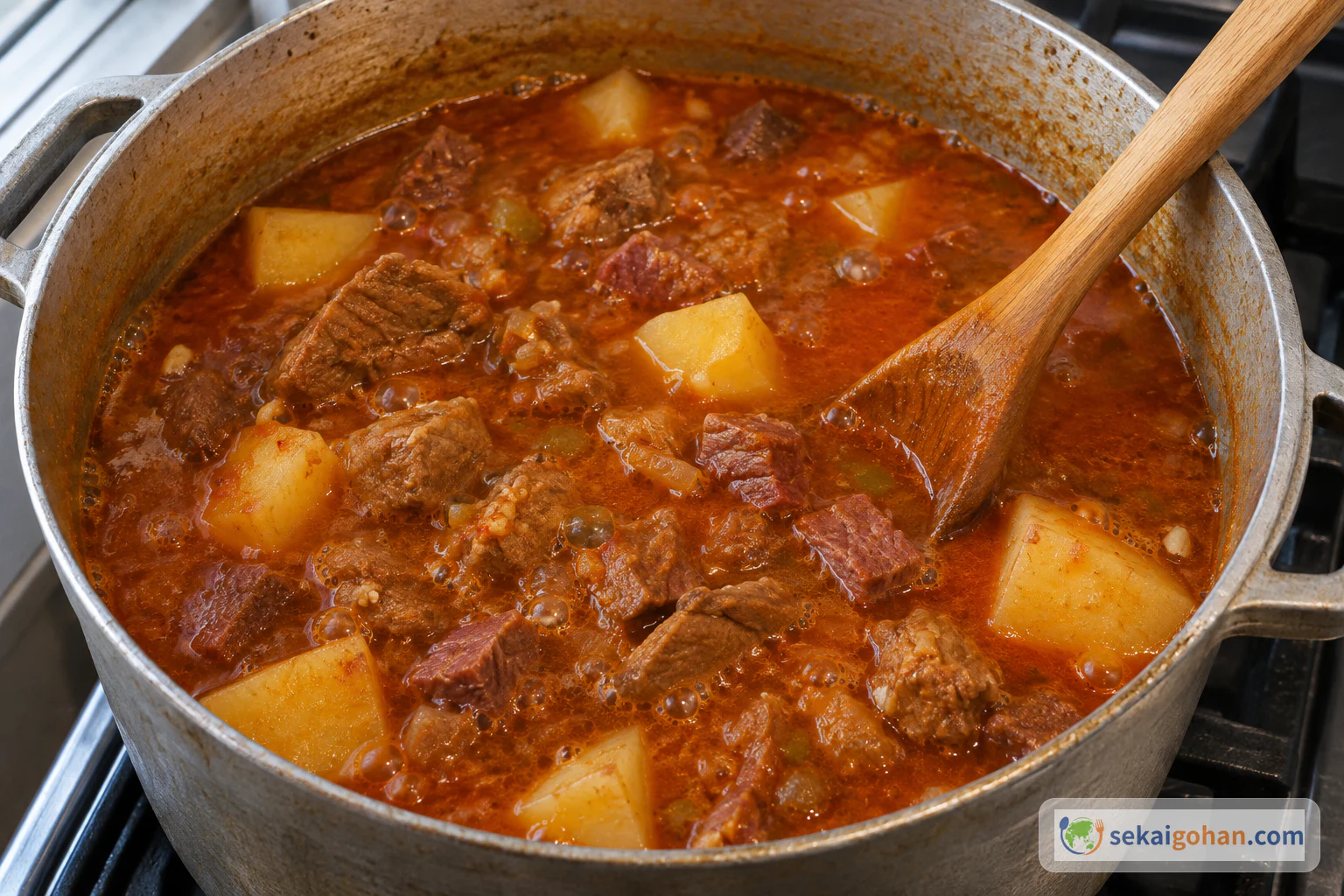
Watch the pot when the peeled tomatoes go in. The goat is already browned, and the onion has slumped into the oil with the green pepper and the habanero. Then the annatto oil goes in and the whole pot turns a deep orange-red, sharpened by lime and warmed by a pinch of nutmeg. Cabrito stoba is the goat stew of Aruba. Small cubes of goat and salt beef cook down in tomato, and the stock from the salt beef and chunks of potato go in at the end. It eats hearty and savory, with the salt beef seasoning the broth and the chile heat building slowly under the sweetness of the tomato.
Goat Stew in the Shade of the Kwihi Tree
Goats roam free on Aruba and its neighbors Bonaire and Curaçao, and goat meat sits in ordinary Aruban supermarkets, so a goat stew there is a household dish. Goat stew is a tradition on Aruba, and it is popular on the other two islands too. In plantation days, the midday meal often meant a stew of beef, goat or fish. Workers ate it in the shade of the kwihi tree.
A chef at Aruba's Gasparito restaurant describes what goat brings to a stew this way: goat is hearty, and it gives more broth than beef does, which is why this pot ends up generous with gravy for spooning over a starch. In Aruban restaurants the stew arrives with funchi, the island's cornmeal polenta, and with banana hasa, fried plantain. At home it goes just as happily with rice or more potatoes.
The pot changes from kitchen to kitchen. One Aruban version uses young kid instead of grown goat. It enriches the stew with butter and ruku and adds concomber, the spiny pale-green cucumber that belongs in the traditional cooks' version. Restaurant kitchens cooking by the ten-pound batch thicken theirs with tomato paste and ketchup and season it with curry and paprika. The recipe here is neither of those. It is a home pot of goat and salt beef in tomato and annatto oil, with potatoes to finish.
You will see it written both ways, stoba di cabrito and cabrito stoba. Stoba is the stew and cabrito is the goat. The same name turns up on Bonaire and Curaçao, but each island's pot has its own recipe. This one is the Aruban version.
Ingredients (serves 4)
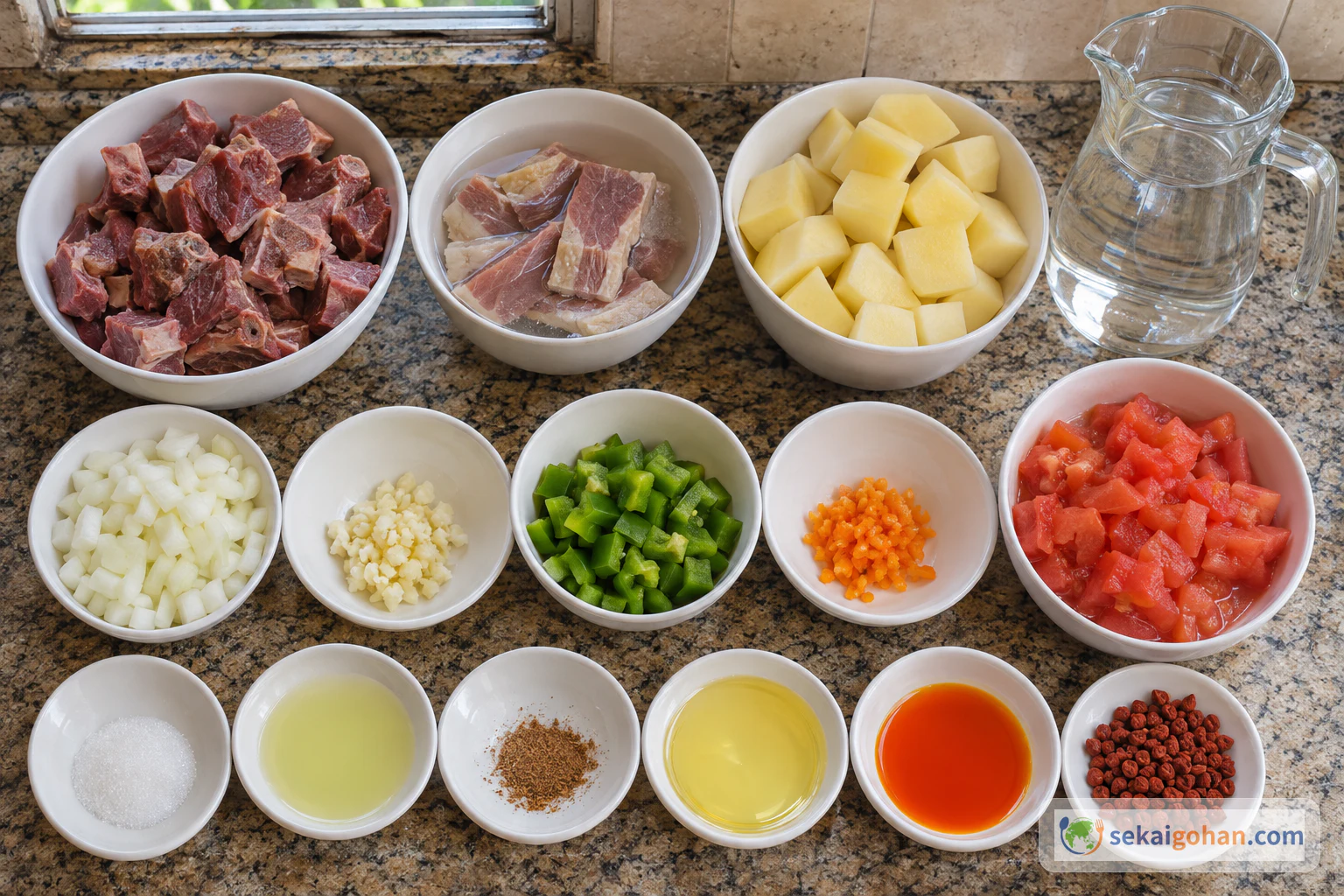
Wear gloves to seed and mince the habanero, and keep your hands away from your eyes and face until the gloves are off. Wash the knife and board before they touch anything else.
Equipment
- Heavy pot or Dutch oven with a lid
- Fine strainer and a bowl for the stock
- Cutting board and sharp knife
- Kitchen gloves for the chile
- Wooden spoon
- Meat thermometer
Choosing and Substituting
Goat is the one ingredient worth a special trip. Look for frozen cubed goat at a specialty butcher or order it online. Good goat is red and has little smell. Lamb is the accepted stand-in and goes in at the same point.
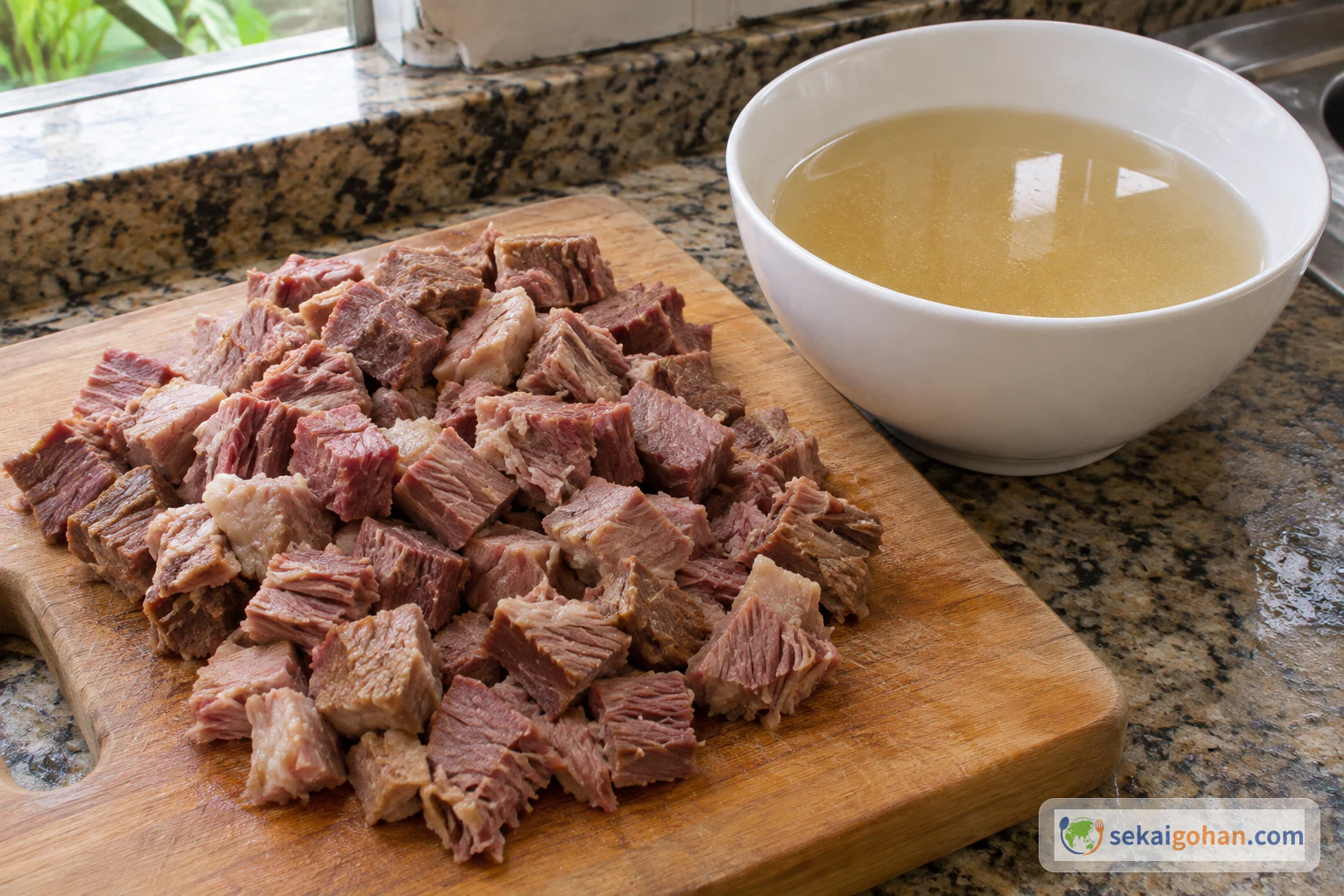
Salt beef is the next hunt. It does two jobs here: it seasons the meat in the pot, and its cooking water becomes the stock. Corned beef is a different product, with a different texture and saltiness, so if you use it, the stock comes out differently and you taste before adding any salt. Leaving the salt beef out makes the stew lighter in both salt and savor.
Annatto oil and seeds are sold online. Paprika can stand in for the color but not for the earthy annatto flavor. If you cannot find a habanero, use another fresh chile, and the heat changes with whatever you choose. The concomber of the old kid version is hard to find outside the islands, and this pot leaves it out.
Give the salt beef its full overnight soak in the refrigerator. The soak draws out salt, so it affects how salty the stock turns out, and the stock goes into the whole stew.
Method
Start the night before by soaking the salt beef. On cooking day, the salt beef simmers for an hour while you dice the onion, mince the garlic and chile, chop the pepper and peel the tomatoes and potatoes. After that the work happens in the same pot, and the last two simmers are mostly hands-off time.
Cook the goat until it is tender all the way through. Goat counts with beef and lamb, and whole cuts are safe at 145°F with a 3-minute rest. Use a meat thermometer in the center of a piece to check the temperature, because color is no proof. Reheat leftovers to 165°F (74°C).
When It Goes Wrong
| What you see | Why | What to do |
|---|---|---|
| The goat is still chewy when the potatoes are soft | Tougher cut or older animal | Lower the heat and keep simmering, checking with a fork, until the goat pulls apart |
| The broth tastes too salty | The salt beef was soaked too briefly | Add a little water and skip any extra salt. Next time give the salt beef its full overnight soak |
| The goat goes gray and watery instead of browning | The oil was too cool or the pot was crowded | Let the liquid cook off, then keep turning the pieces until they color |
| The aromatics scorch | The heat stayed at browning level | Lower the heat and stir. The tomatoes going in will lift the browned bits |
| Too hot to eat | Habanero seeds left in, or a very hot chile | Serve with funchi, rice or plain potatoes. Next time use part of the chile or seed it carefully |
Serving, Variations and Leftovers
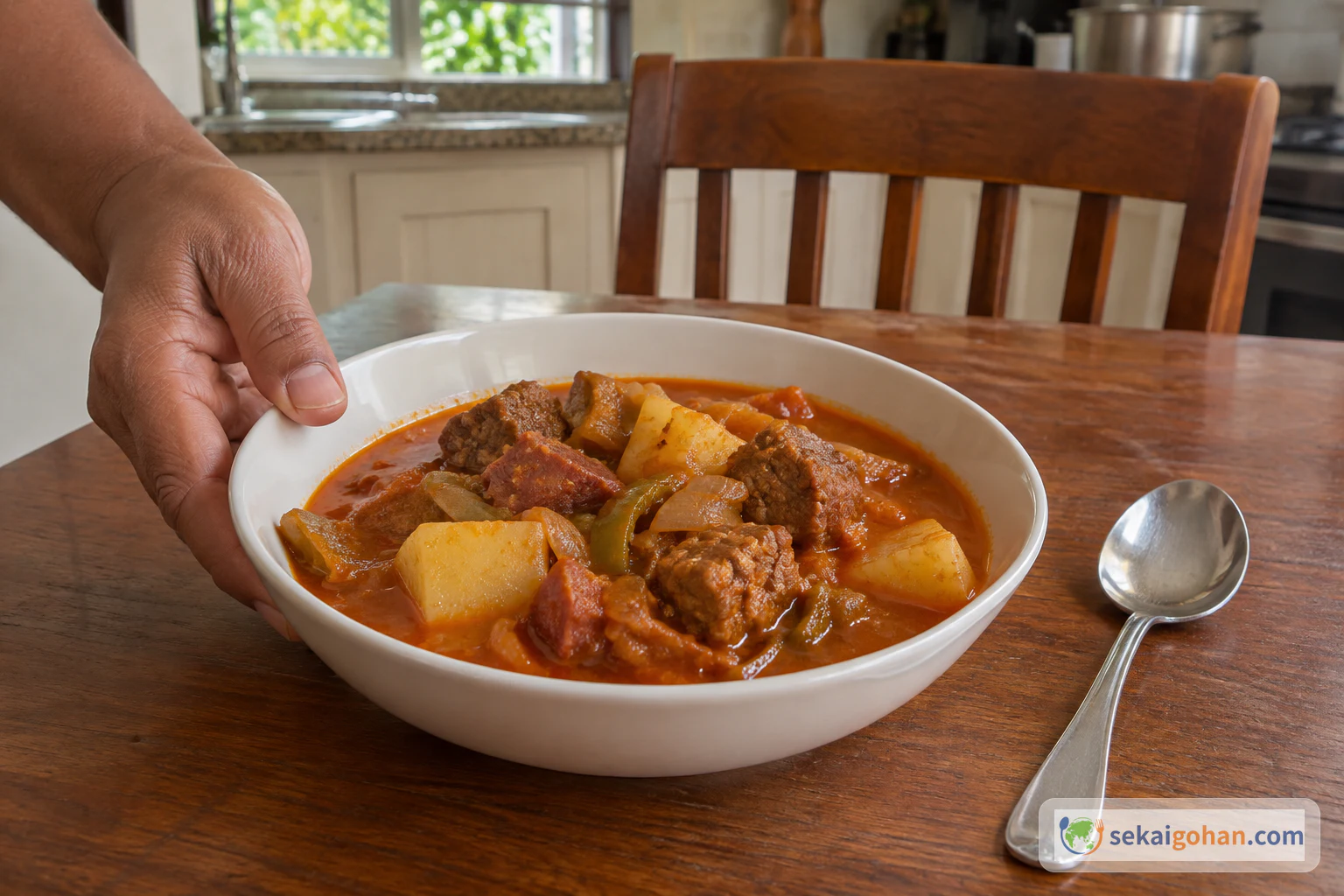
Ladle the stew into deep bowls, with plenty of the orange gravy over every portion. For an Aruban plate, add funchi and fried plantain, or keep it simple with rice. To drink, pour a cold lager or a Radler, or a soft red wine such as Malbec.
Variations
- Lamb instead of goat. Swap it in for the goat cube for cube. The rest of the recipe stays the same.
- Milder heat. Use half the habanero, or a gentler fresh chile. The tomato, lime and nutmeg come forward.
- With pumpkin. One Aruban restaurant menu also lists cabrito stoba with fresh pumpkin. Pumpkin adds sweetness and softens into the gravy.
Leftovers
Cool the stew, then refrigerate it promptly in a covered container. Reheat it until it reaches 165°F (74°C) throughout and is steaming, stirring so the potatoes heat through as well.
Frequently asked questions
Why cook the salt beef on its own first?
The hour in plain water softens the beef and draws its salt and meaty flavor into the liquid. Strained, that liquid becomes the stock that finishes the stew. The salt beef seasons the whole pot twice, once as meat and once as broth.
Does goat taste strong?
Good goat is red and has little smell, and in this stew it tastes rich and hearty. The browning, the tomato and the lime all round it out. A strong smell is a sign of poor meat, so look for better goat rather than masking it.
Is this the same as the goat stew on Bonaire and Curaçao?
The three islands share the name and the love of goat stew, but each pot has its own ingredients. This is the Aruban version, with salt beef, annatto oil and potatoes. Cook the other islands' stews from their own recipes.
Can I use bone-in goat?
The recipe uses goat cut into ½-inch cubes, and those small pieces are what make the browning and simmering stages work. Pieces on the bone take longer to turn tender. Keep simmering them until the meat comes away from the bone, and check the temperature in the meat, away from the bone.