The color of the roux changes the kitchen: Louisiana gumbo
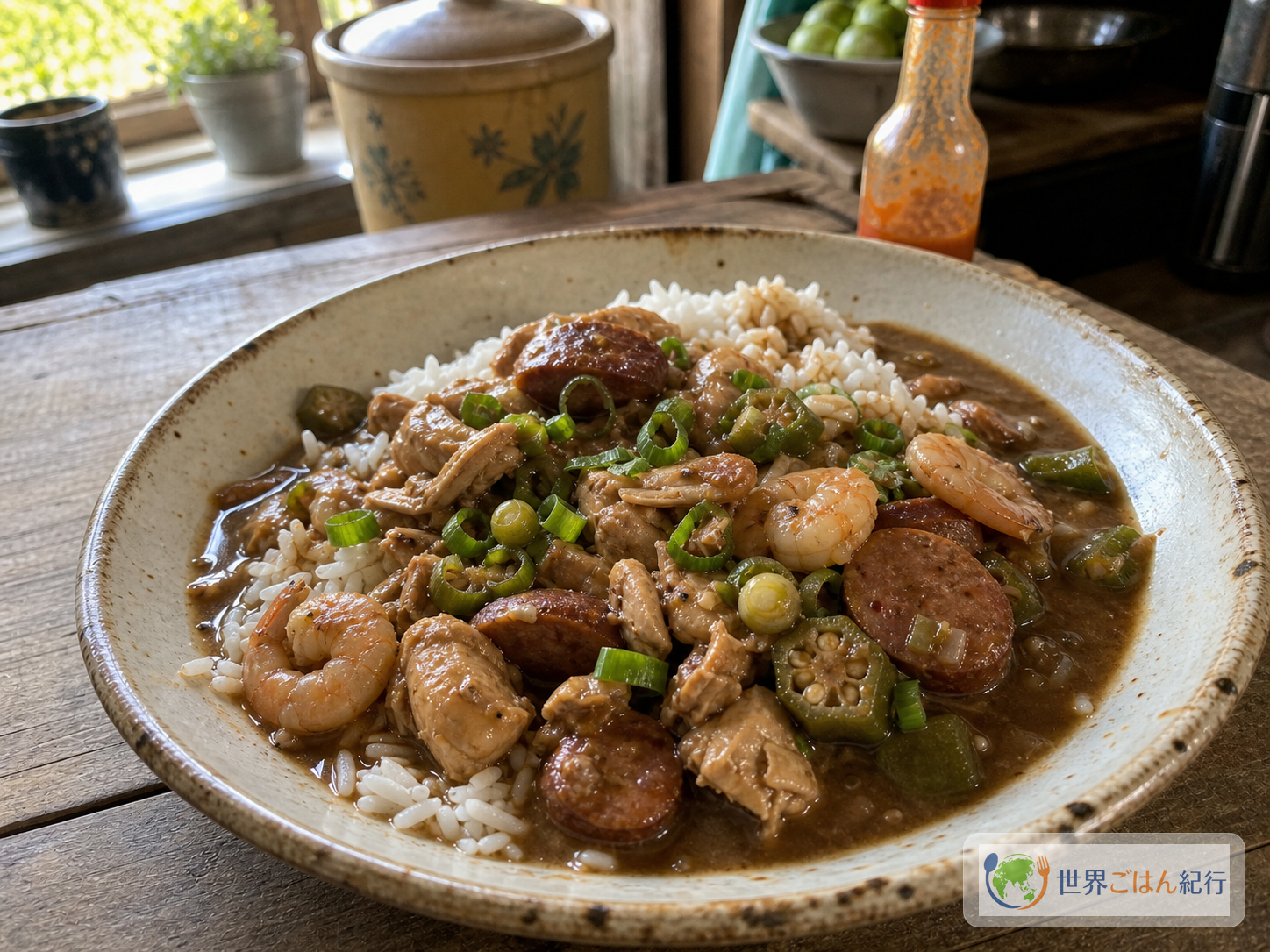
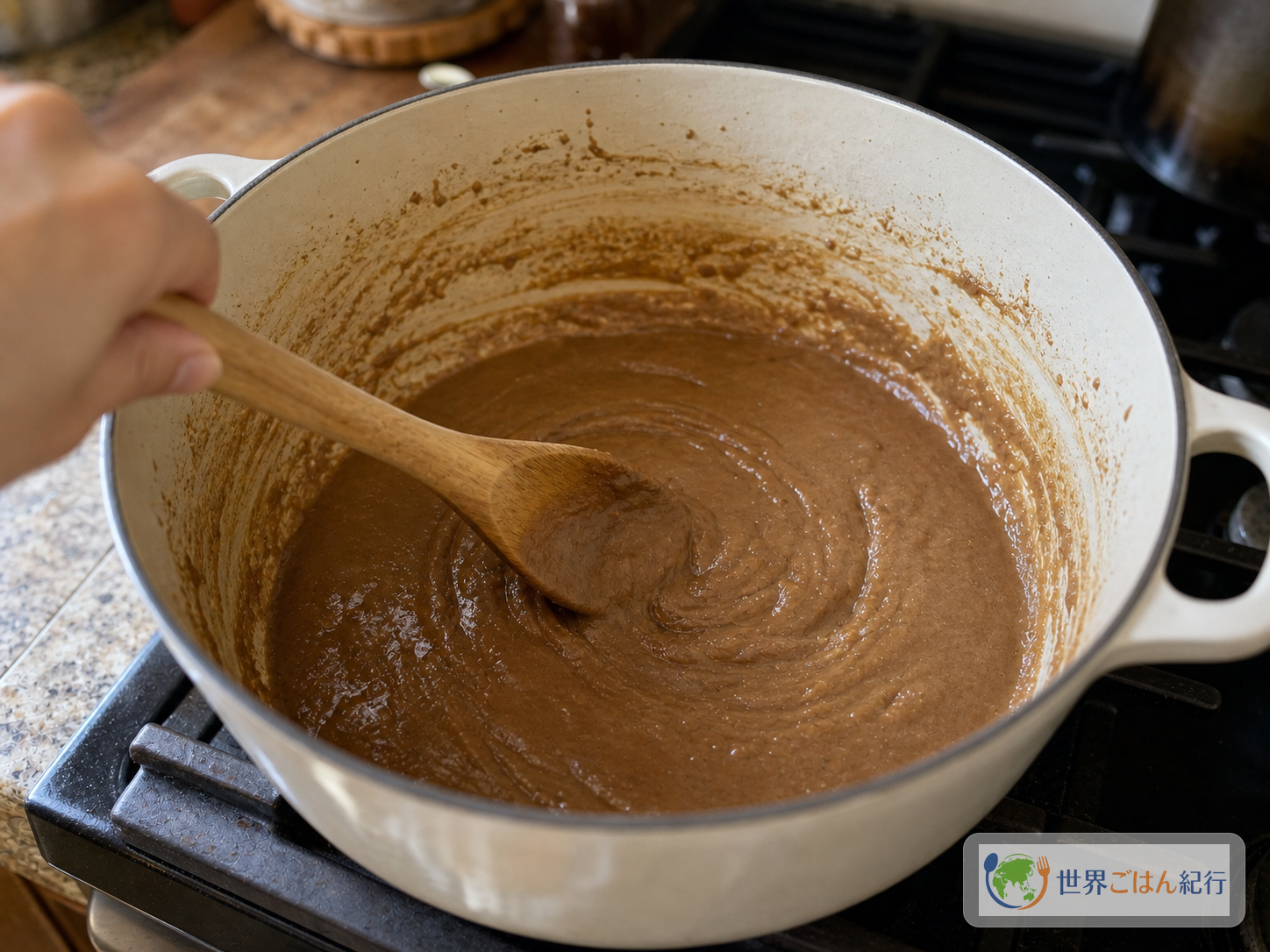
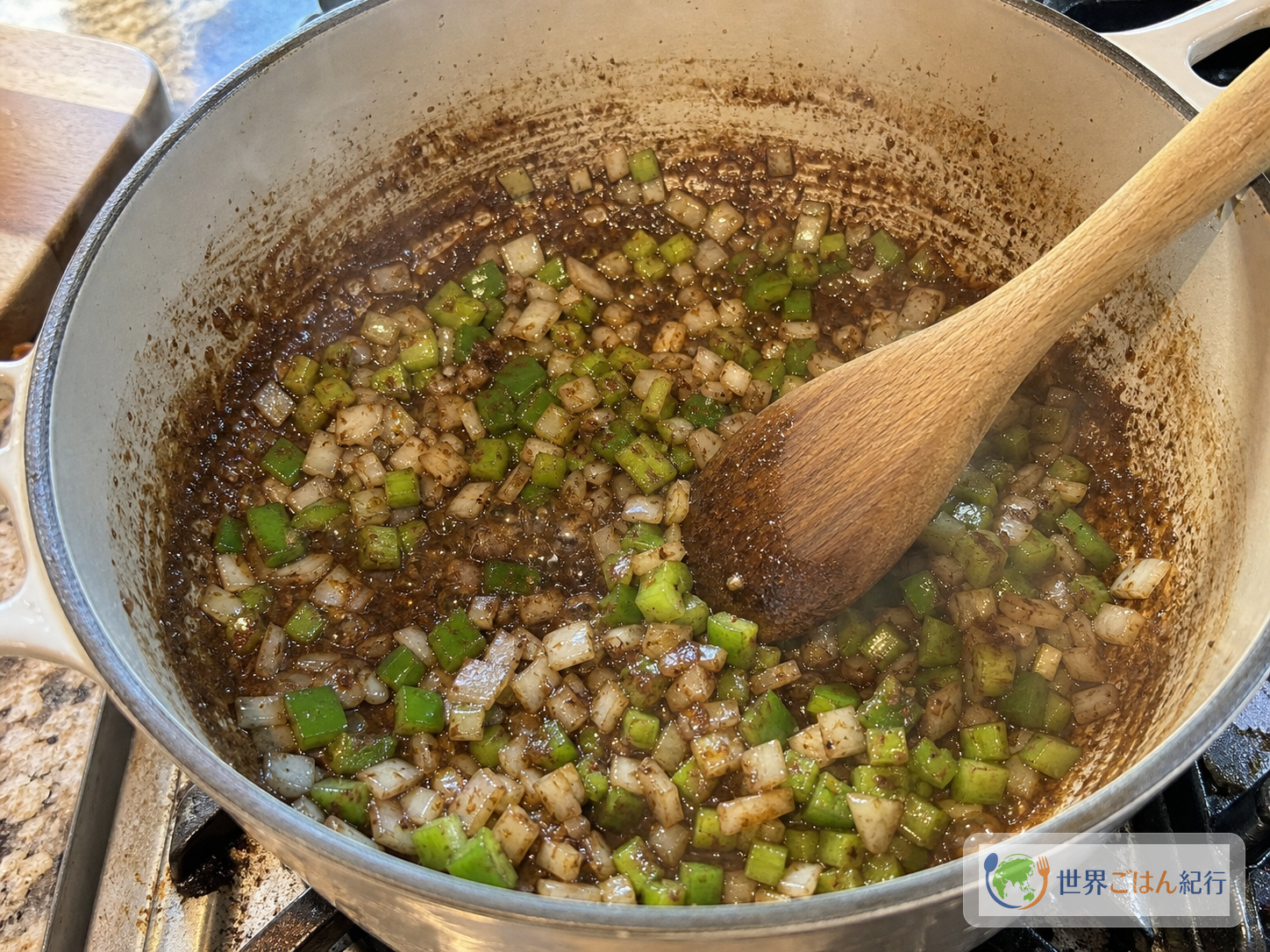
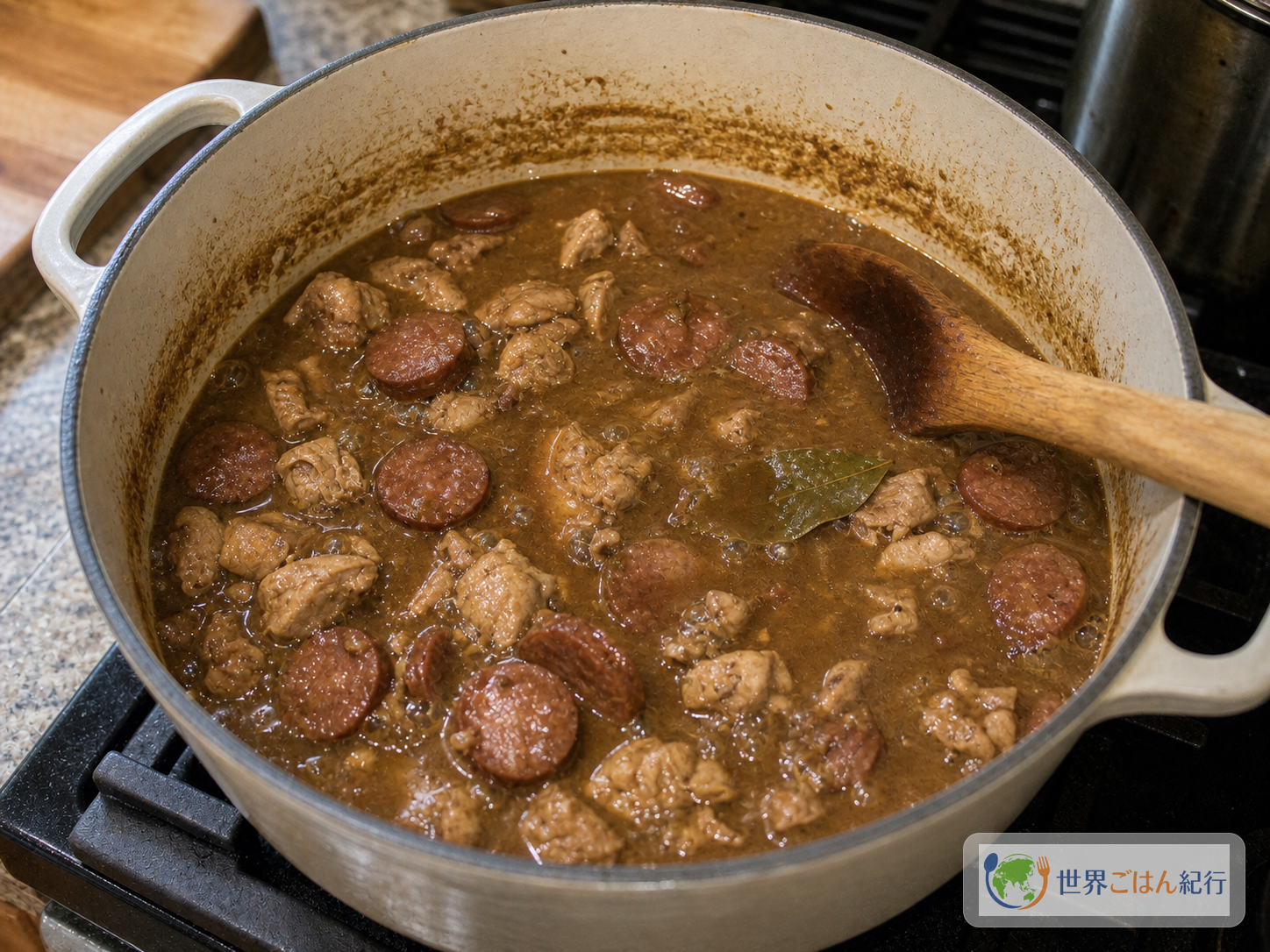
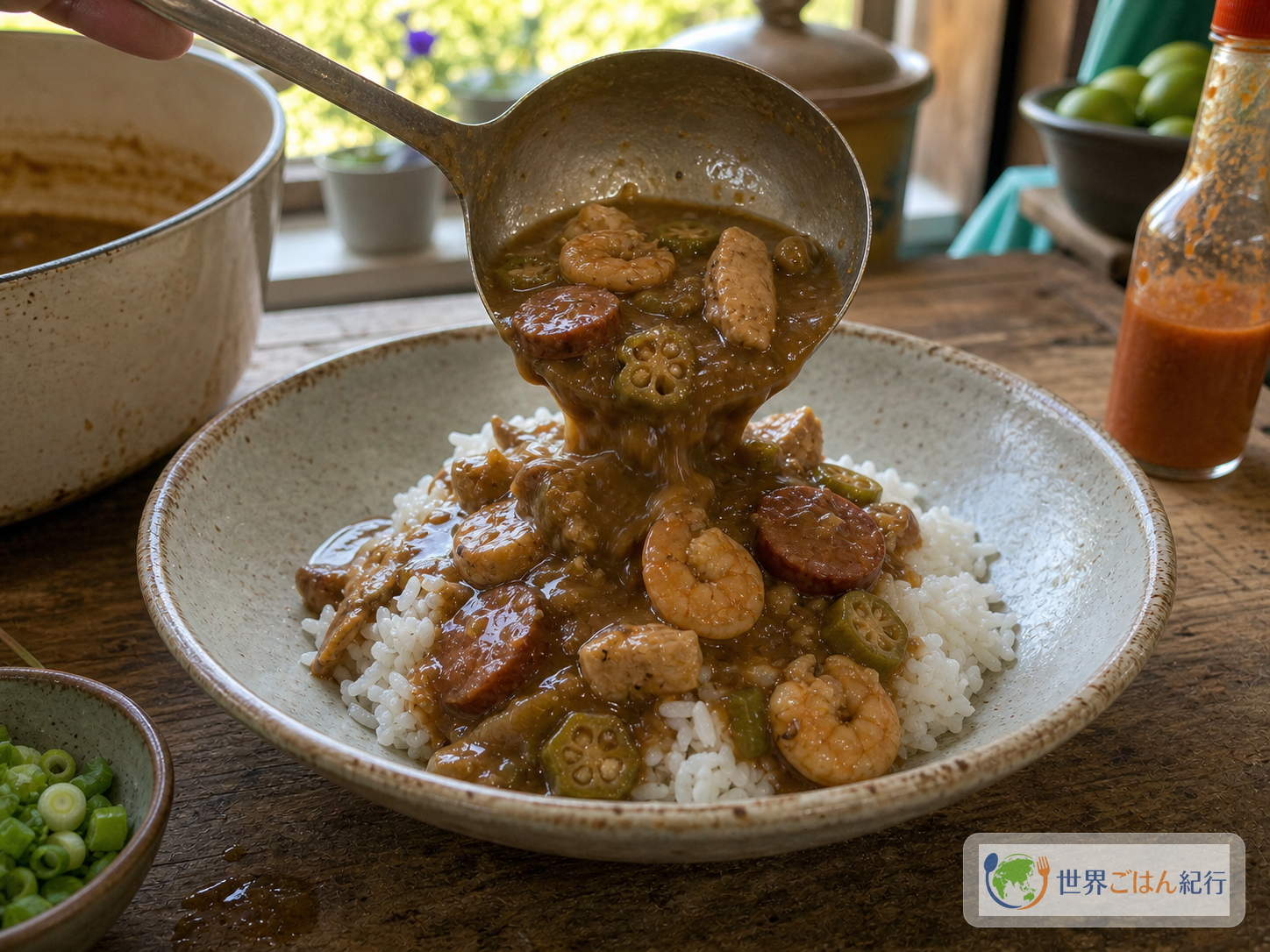
Drag a wooden spoon across the bottom of the pot and the roux of flour and oil is pale at first, then turns peanut-colored, then milk-chocolate brown. Add onion, celery and green bell pepper at that point and the smell of the kitchen goes one level deeper. Gumbo is a dark, thick stew often associated with Louisiana, especially the New Orleans area. It is eaten over white rice, so on a Japanese table it could sit near a hearty curry or stew, but its flavor core is the layering of roux, aromatic vegetables, smoked meat, okra and shrimp.
The combination of onion, celery and bell pepper that appears so often in Louisiana cooking is called the holy trinity there. It is the same base as jambalaya (in Japanese) and dirty rice, but in gumbo the rice is not cooked in the pot; you make a thick soup and pour it over rice. For a direction where a rich shrimp sauce clings to rice, etouffee is close, while gumbo is a pot with more liquid and more ingredients. Where jambalaya seals the aroma of a rice dish in the pot, gumbo sends the aroma reduced in the pot onto the rice on the plate.
The fork in the road for cooking it elsewhere is how far to gather andouille-style smoked sausage, filé powder and long-grain rice. In this article, smoked sausage and smoked paprika make up for the smokiness, and the formula builds body with okra even if you have no filé. If you can get filé, add a little after turning off the heat and the aroma stands up. Keep boiling and the aroma dulls, so the only thing to protect is how you handle it at the end.
If red beans and rice is the gentle Monday pot of beans and rice, gumbo is the pot you raise on a holiday while watching the color of the roux. For a sandwich from the same state, there is the po' boy (in Japanese); as a dish that lets rice catch a rich sauce, compare it with jollof rice and pelau (in Japanese) and you can see how far each region keeps its rice and its stew apart.
Background of gumbo and the skeleton of its flavor
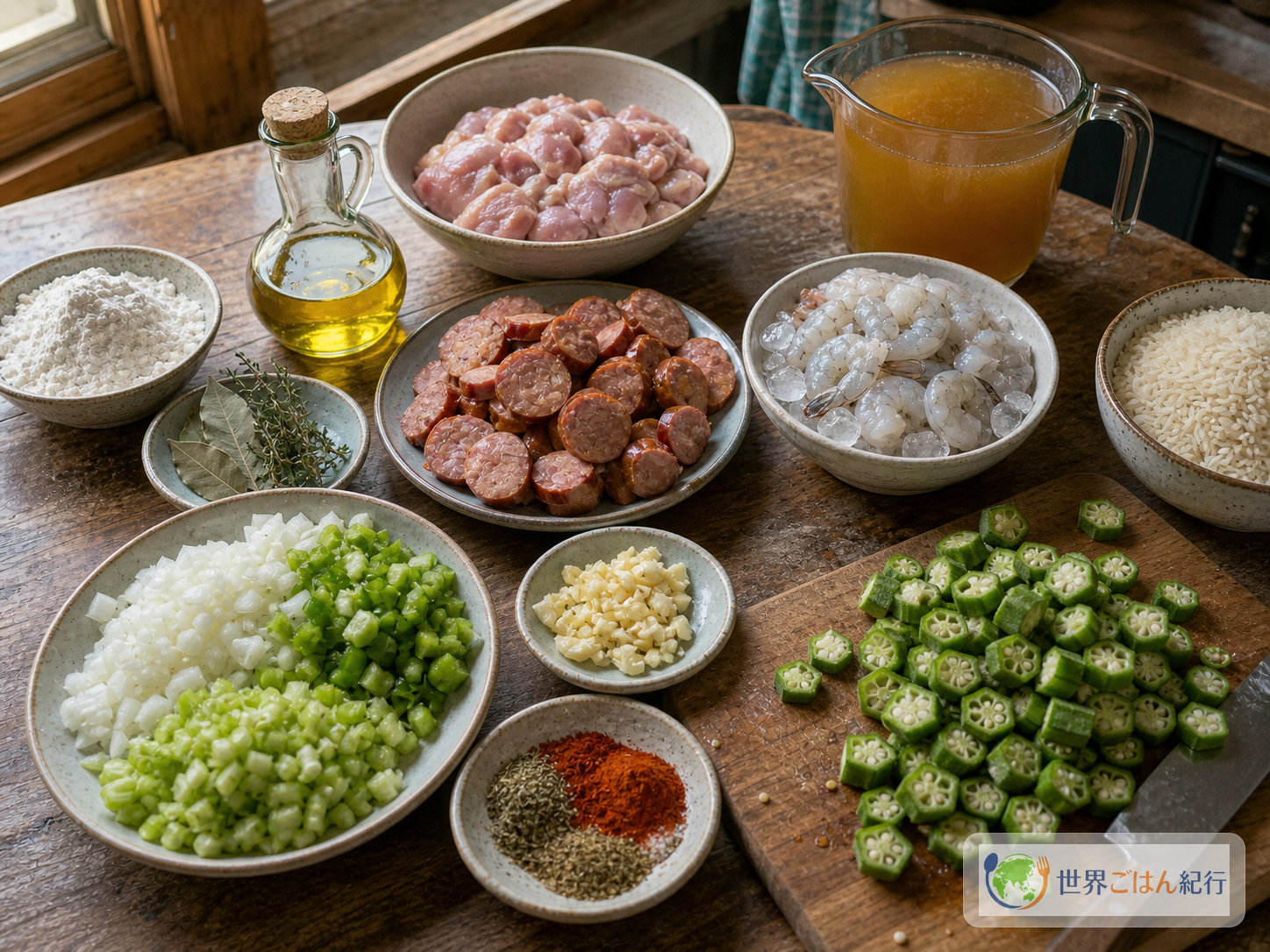
Gumbo is hard to lock into one correct answer. There are brown gumbos of chicken and sausage, and seafood-leaning gumbos with shrimp, crab, oysters and the like. Some households use tomato and some do not. This article uses a formula of chicken, smoked sausage, shrimp and okra, which is easy to gather elsewhere and good practice for roux.
| Element | Role | What to protect |
|---|---|---|
| Dark roux | Base of toasty flavor, color and body | Color it slowly to just short of burning |
| The holy trinity | Sweetness and green aroma | Do not use onion alone: add celery and bell pepper |
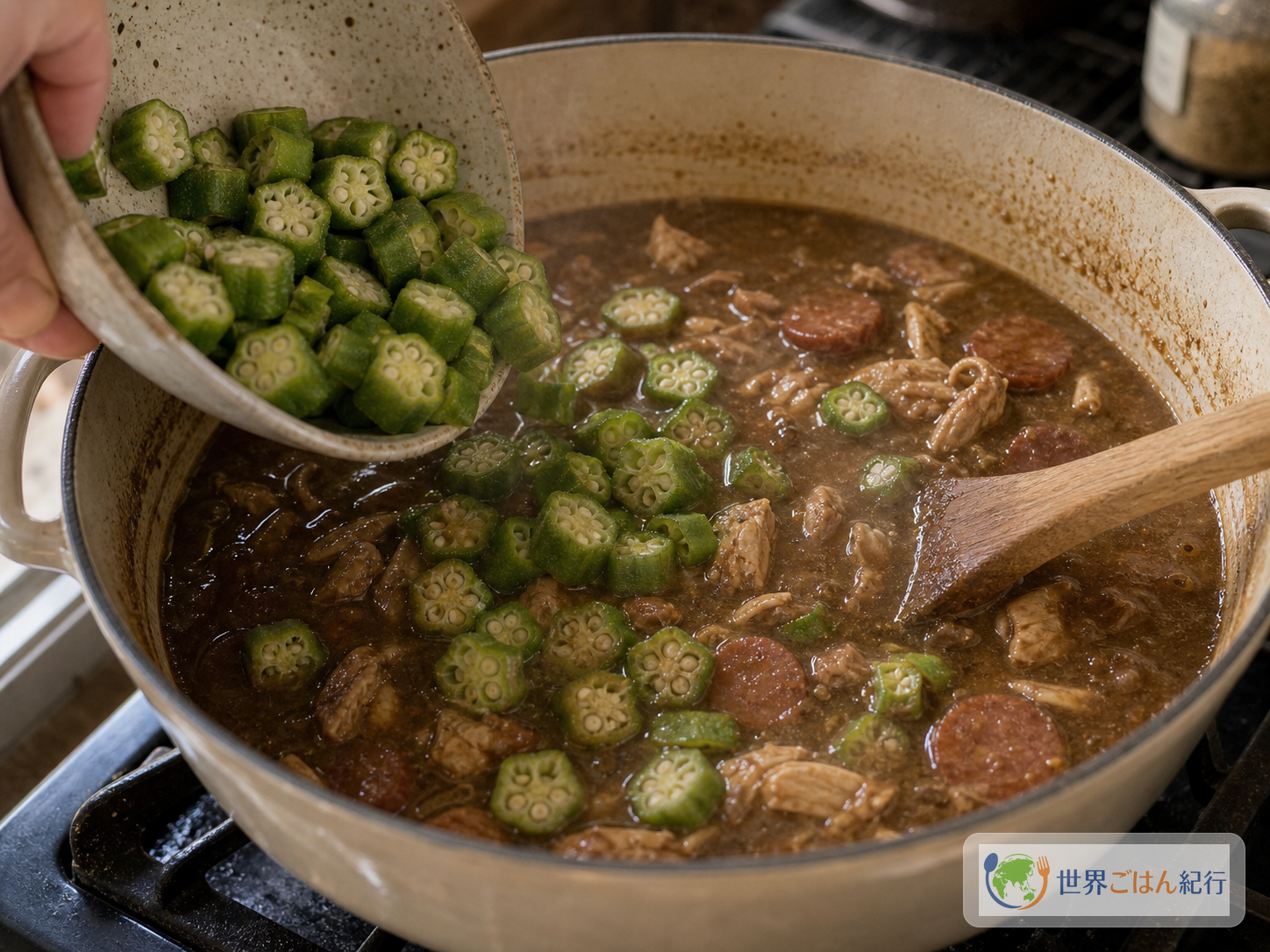
| Okra | Body and green aroma | Frozen is fine; simmer it in the middle |
| Filé powder | Sassafras aroma and light body | If you can get it, a little after turning off the heat |
| Smoked meat | Stock, saltiness, aroma | Make up with thick smoked sausage and smoked paprika |
| Rice | A receptacle for the thick soup | Long-grain rice is ideal. With short-grain, cook it firm |
Okra and filé are both ingredients that come up often when people talk about gumbo. Okra is simmered in the pot to give body; filé suits being added after the heat is off, or sprinkled at the table. You do not have to use both. In a home kitchen, it is less likely to fail if you first make it with okra and think of filé as an added aroma.
For the roux, go not to the pale color of a white stew but to a color from milk chocolate to copper. If you get scared here and stop early, the flavor is floury and flat. If, on the other hand, you scorch it until black grains appear, the bitterness does not come back out in the simmering. Lowering the heat and not letting the bottom of the pot rest is the shortest route.
Ingredients (serves 4)
This is for a heavy pot about 24 cm across. Because you stir the roux for a long time, a cast-iron pot, a heavy stainless pot or a deep skillet suits better than a thin-bottomed pot. After adding the ingredients the volume comes to nearly 1.5 L, so choose a pot with some room.
This recipe uses wheat, shrimp, chicken and pork products. If you have a shellfish allergy, leave out the shrimp and add 150 g more chicken. Cook the chicken to a core temperature of 74 degrees C, and the shrimp until opaque white all the way through and firm. Sausages differ in allergens and salt by product, so check the ingredient labels too.
What to think about when shopping
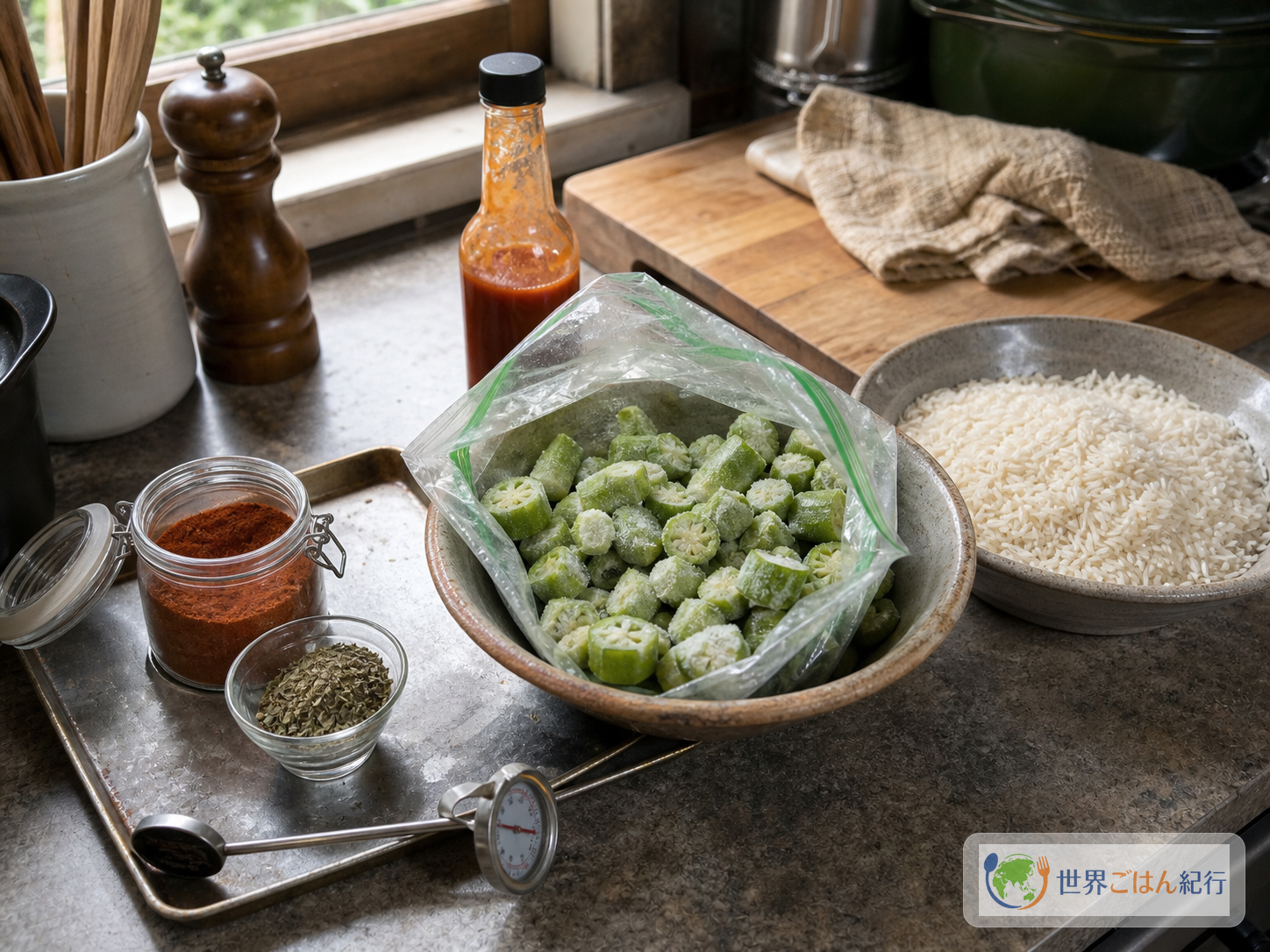
What you buy at a nearby supermarket is chicken thighs, shrimp, onion, celery, bell pepper and okra. These are not things to go out of your way for. The differences come from smoked paprika, which makes up for smokiness when you cannot use andouille; oregano, which cuts the weight of the meat and shrimp; and a thermometer, which lets you see the core temperature of the chicken.
Long-grain rice brings out the gumbo feel if you prepare it even just the first time. Short-grain rice can also catch the thick soup, but cooked soft it gets sticky on the plate. If you use short-grain, cook it with a little less water so it is firm, and spoon it into the bowl right before pouring on the gumbo.
Filé powder is hard to find in many places. If you cannot get it, leave it out. In that case, increase the okra from 120 g to 150 g to make up for the lack of body. Even if you use filé, do not simmer it long in the pot; mix it in after turning off the heat, or sprinkle a little at the table.
For smoked sausage, a thick one with a taut casing, whose cut face gives off the aroma of fat and spice, suits better than a thin, sweet one. If you choose a spicy sausage, reduce the cayenne to 1/8 tsp and add the hot sauce at the plate. On the other hand, on a day when you only have a sausage with weak smokiness, rather than putting it into the soup before browning, take the low simmering time in step 4 properly and add a pinch of smoked paprika at the plate, so only the saltiness does not come forward.
How to make it
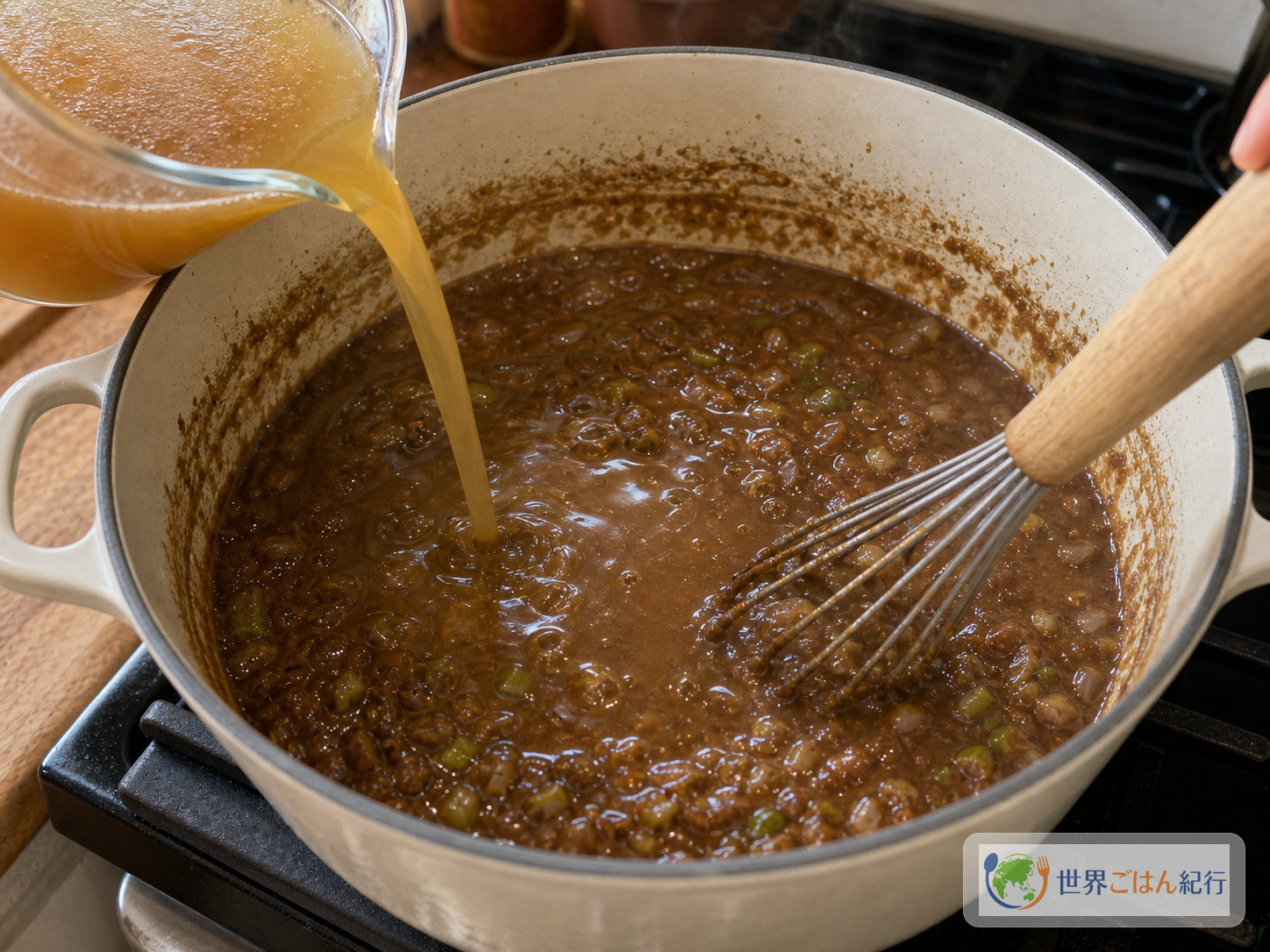
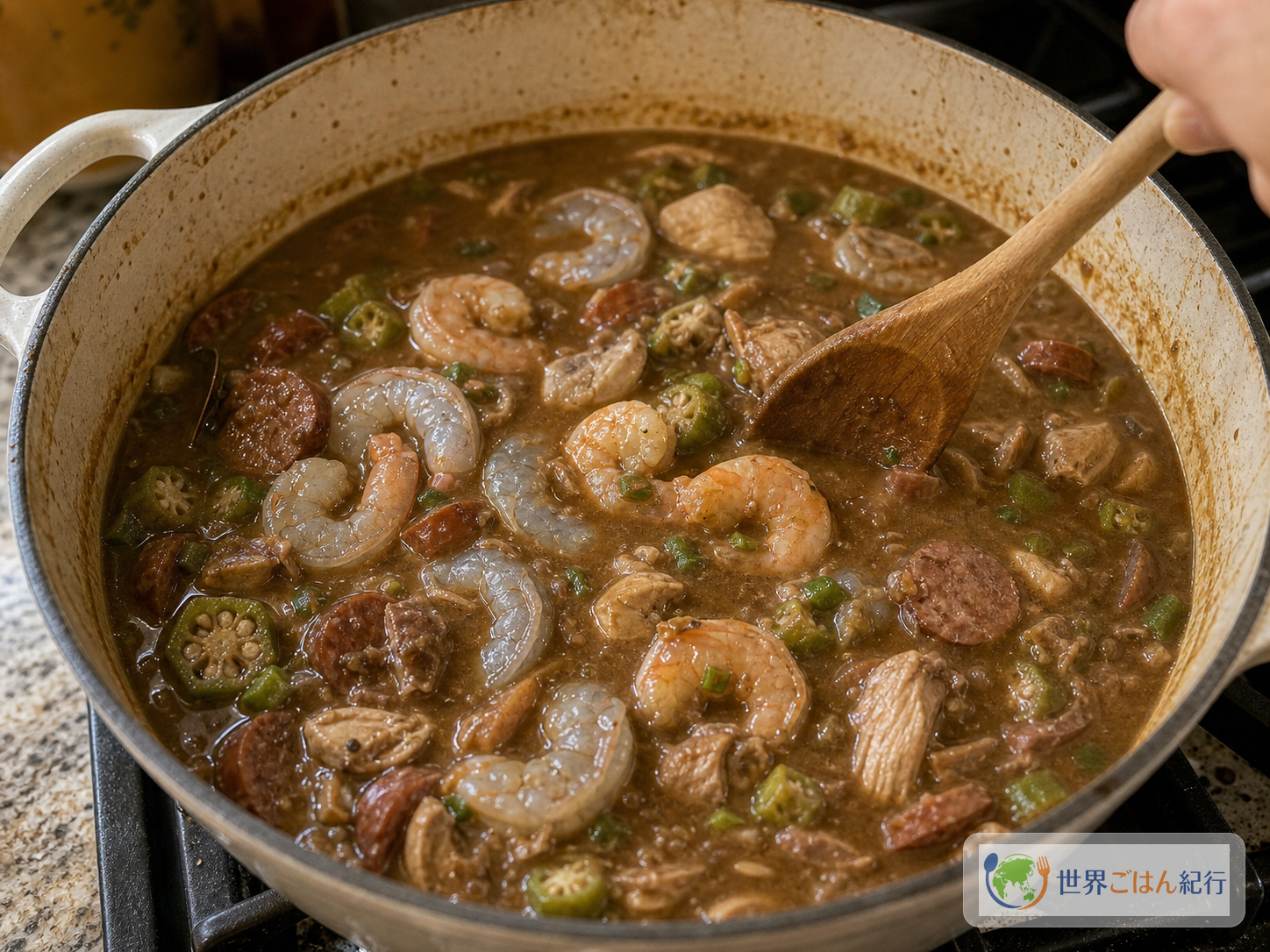
Gumbo is a dish you wait for, watching the color and aroma of the pot, rather than finishing quickly. Hurry the first roux and it is thin; scorch it and it is bitter. After the ingredients go in, do not boil hard; keep a heat where small bubbles rise from the edge, and the savoriness of chicken and sausage settles into the soup.
Branching fixes for roux and body
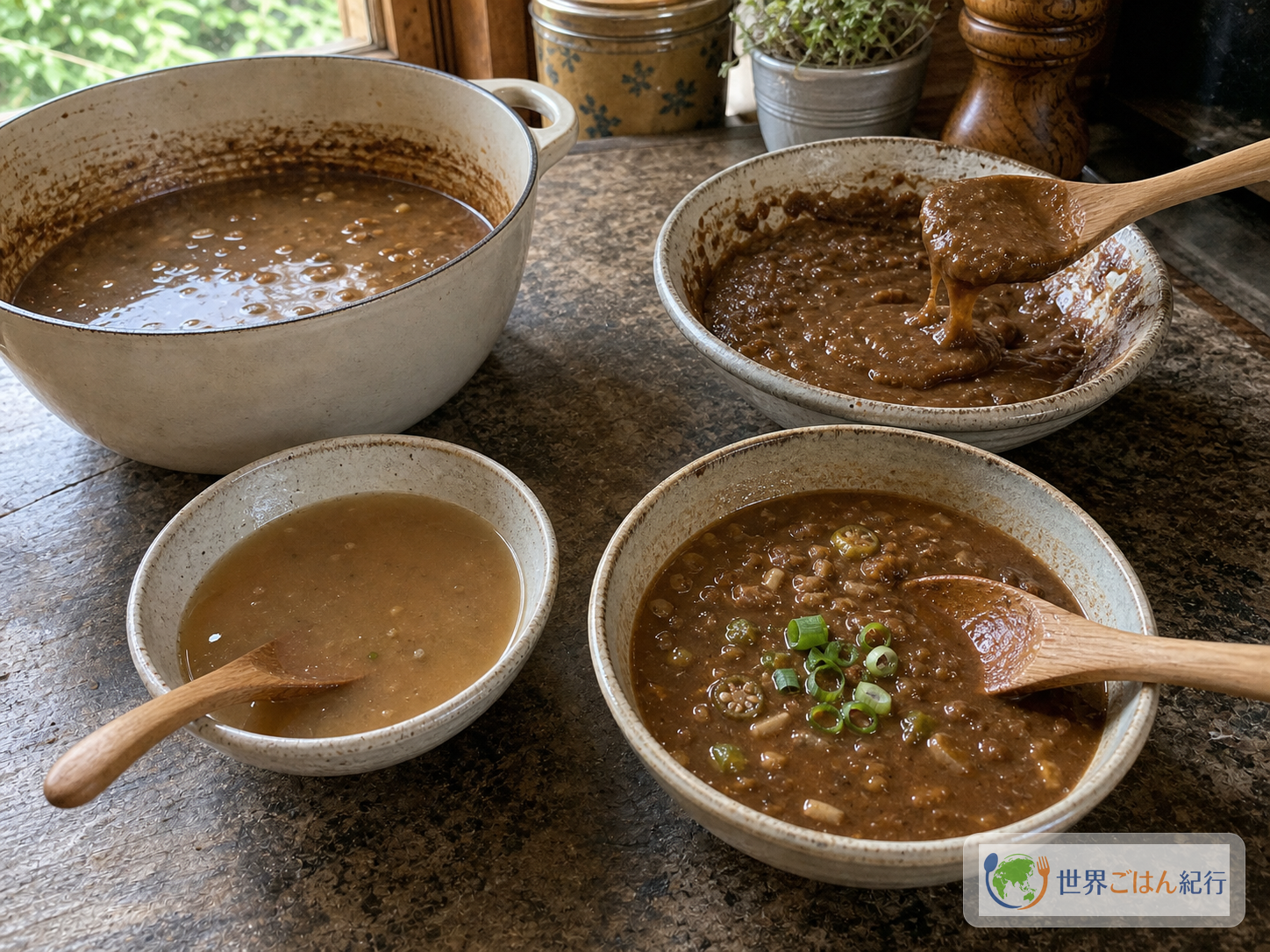
The most common failures in gumbo show up not in seasoning but in the roux and the thickness. A pale roux gives a shallow aroma, a scorched one is bitter, and an over-reduced pot feels heavy poured over rice. See the states separately and the next pot becomes far steadier.
| State | Cause | Fix |
|---|---|---|
| Pale and floury | Stopped the roux early | Next time 18 minutes or more over medium-low heat. This time add 1/2 tsp smoked paprika on the plate |
| Bitter | Black scorched grains appeared in the roux | Bitterness does not come back out in simmering. Start over once it burns |
| Weak body | Too little okra, short simmer | Add 30 g okra and simmer 5 minutes on low. Filé in a little after turning off the heat |
| Thick and heavy | Over-reduced over high heat | Add 100 ml chicken stock or water and let it blend 3 minutes on low |
| Shrimp are tough | Added from the start, or boiled hard | Shrimp go in for the last 5 minutes. Next time stop when opaque white to the center over low heat |
| Too salty | Sausage and stock are salty | Increase the unsalted rice, and add 50 ml water to the pot. Next time leave the salt for last |
A pale roux is still edible, but the depth typical of gumbo is hard to get. For next time, photograph the roux alone at white, peanut and chocolate, and the heat of your own pot becomes easier to read. A roux with black specks, conversely, you should not carry on with, however wasteful. The bitterness does not vanish with chicken or shrimp, and it drags the whole pot with it.
Storage, reheating and menu
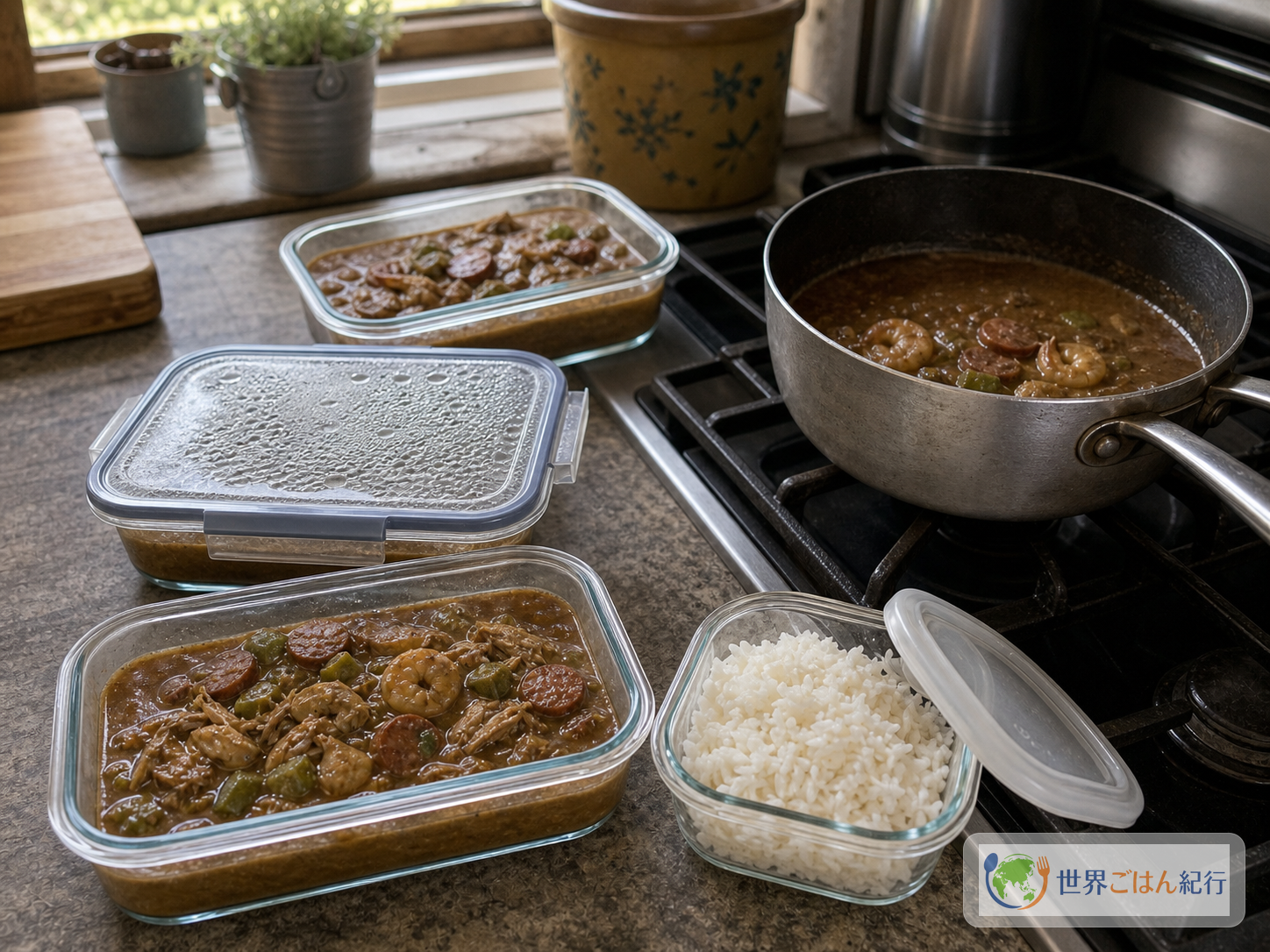
Gumbo is a dish whose flavor blends better the day after than on the day. But because it holds shrimp and chicken, do not leave it at room temperature for long. After it cools a little, divide it into shallow containers and finish it within about 2 days in the refrigerator. Store the rice in a separate container. Kept together, the rice absorbs too much of the soup and turns heavy the next day.
To reheat, in a pot over low heat add 1 tbsp water per serving and warm about 5 minutes, stirring gently from the bottom. In a microwave, put it in a deep dish, cover loosely with plastic wrap and heat at 600 W for 2 min 30 sec, stir once, then add 30 seconds at a time. Check that the chicken is hot to the center, and warm only what you will eat so the shrimp are not reheated repeatedly.
At the table, white rice, green onion, hot sauce and an acidic salad on the side bring it together. If you keep cooking Louisiana food, leftover celery, bell pepper and sausage can go into jambalaya (in Japanese). On a day for beans, red beans and rice; on a day you want to cook the rice first and finish quickly, dirty rice can be made with close ingredients. On a day when shrimp star and you do not simmer as long as for gumbo, linking to etouffee changes the texture even with the same aromatic vegetables.
The next day's gumbo has a rounder aroma. To bring back a sleeping aroma, add a pinch of smoked paprika and more green onion at the end of reheating. If the saltiness stands out, serving acidity from lemon or pickles keeps the whole plate from getting heavy, more than adding hot sauce does.
Frequently asked questions
Can I make it without filé powder?
Yes. The amounts in this article assume that okra provides the body. If you have no filé powder, leave it out and increase the okra from 120 g to 150 g to make up for the lack. If you use filé, mix in 1/2 tsp after turning off the heat and do not bring it back to a boil.
Can I make a seafood-only gumbo?
Yes, but change the order of cooking. If you leave out the chicken and sausage, replace the chicken stock with seafood stock or a thin vegetable stock, and cook shrimp, white fish, oysters and the like in the last 5 to 7 minutes. Simmered long, seafood turns tough and gives more off-smell than flavor.
Does short-grain rice work?
Yes. Long-grain rice keeps its grains better under the soup, but short-grain rice cooked firm is quite good too. Poured over soft-cooked rice, it gets sticky on the plate and as heavy as a stew, so cook it with a little less water.
Isn't there tomato?
Not in this article. Some households and restaurants put tomato in gumbo, but to make the aromas of the dark roux, okra, smoked meat and shrimp easy to read, we build it without tomato first. If you want to add acidity, using a little hot sauce or lemon at the plate keeps the flavor steadier the first time.
Can I make the roux in a microwave?
There is a microwave method, but this article uses a pot method where you watch the color and aroma. For your first gumbo, watching the roux change color makes it easier to adjust next time. If you make it in a pot, keep to one thing: scrape the bottom over medium-low heat and do not let black grains appear.