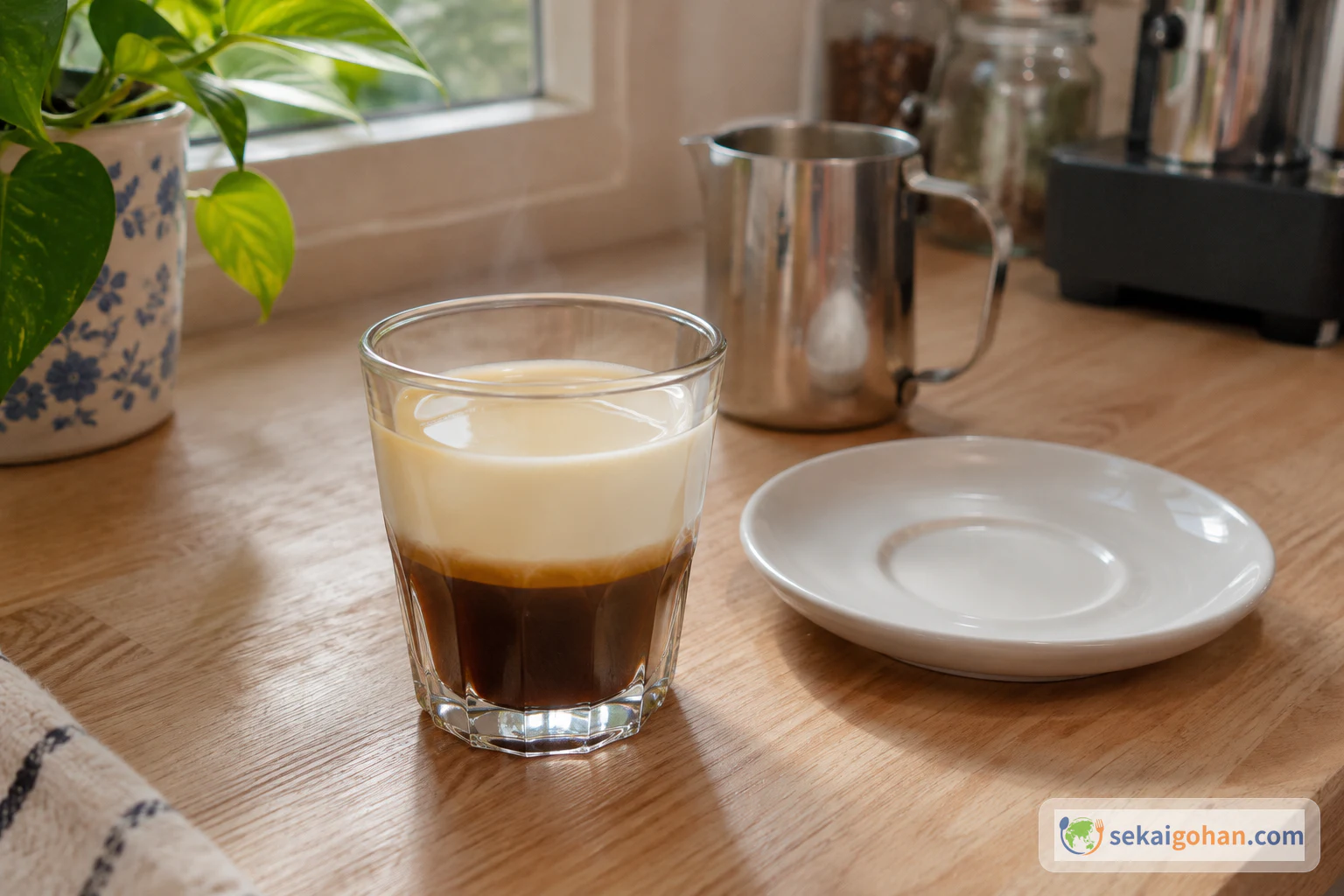
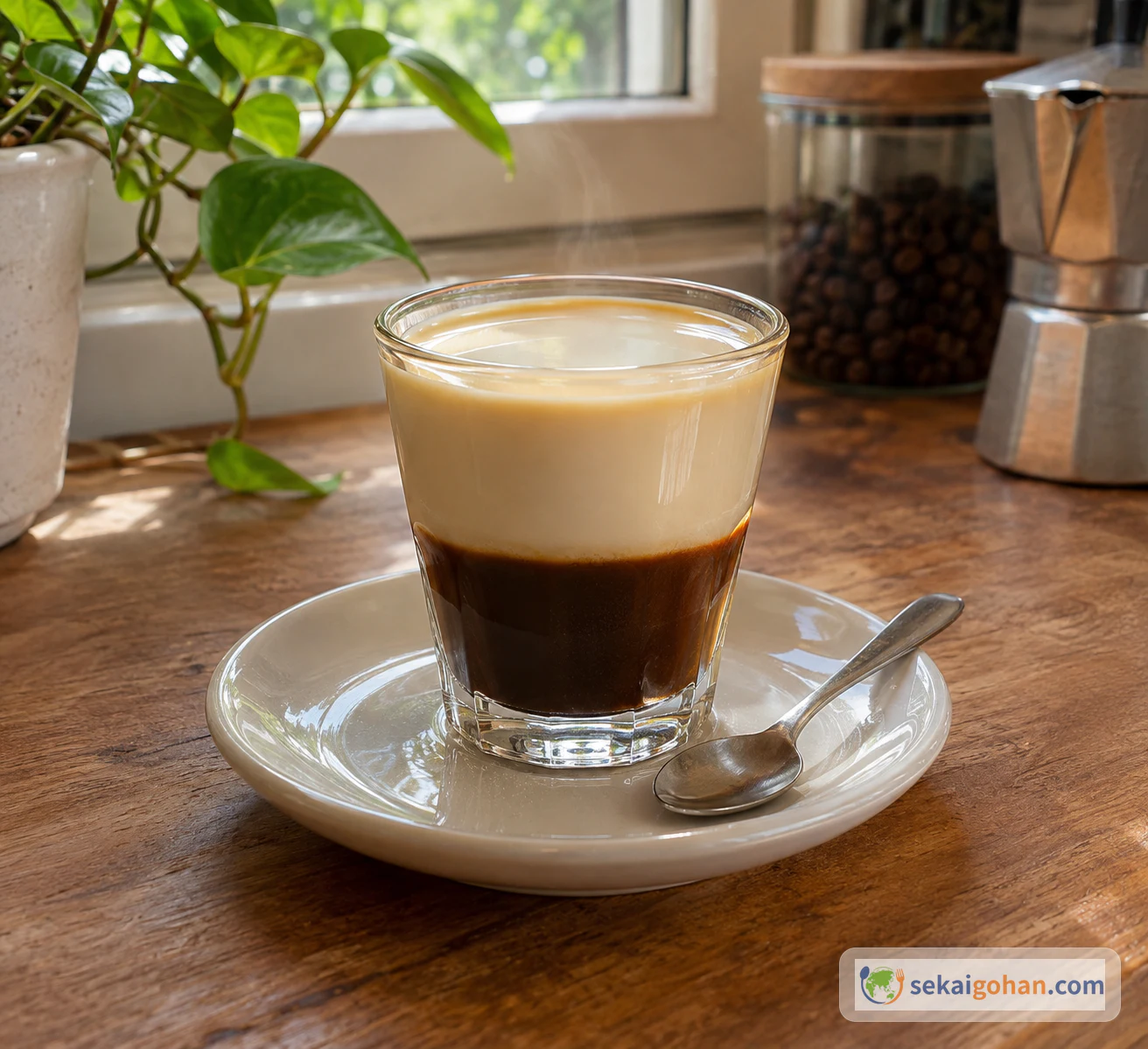
The glass is small and thick, sometimes set in a metal holder with a handle. The dark espresso sits at the bottom and a pale band of milk rests on top of it, and it arrives at the table that way, two layers, after the plates have been cleared and the talk carries on. You drink it straight away, because a glass this small cools fast. A cortado is espresso with an equal amount of steamed milk that has almost no foam. It tastes like strong coffee with the sharp edge taken off, sweeter and rounder than a straight shot and far more concentrated than a café con leche.
A Spanish glass on Australian counters
Cortado comes from the Spanish verb cortar, "to cut". The small amount of steamed milk cuts the sharpness of the espresso and softens its acidity. In the Basque Country the same drink is sometimes called ebaki.
The cortado is Spanish by birth. It is usually traced to the Basque Country, though where it began is not settled, and no year or inventor can be named with confidence. What is certain is how it lives in Spain. Every bar and café can pour three coffees: the solo (a straight espresso), the cortado, and the café con leche. You see it in the cafés of Madrid and Barcelona, and in places like Café Gijón in Madrid, Café Iruña in Bilbao and Els Quatre Gats in Barcelona. Spanish cafés are rooms for sitting down, for conversation and for reading, and a cortado suits that pace. It also has a following in Portugal and Latin America, where it is often an afternoon drink.
How much milk goes in depends on the bar and the customer. In Spain it ranges from a few drops up to half the glass. A common bar standard is 75% coffee to 25% milk, with 50/50 also on offer. The specialty-café cortado follows the 50/50 end of that range: an exact 1:1, which is the drink made below.
Where it sits in an Australian café
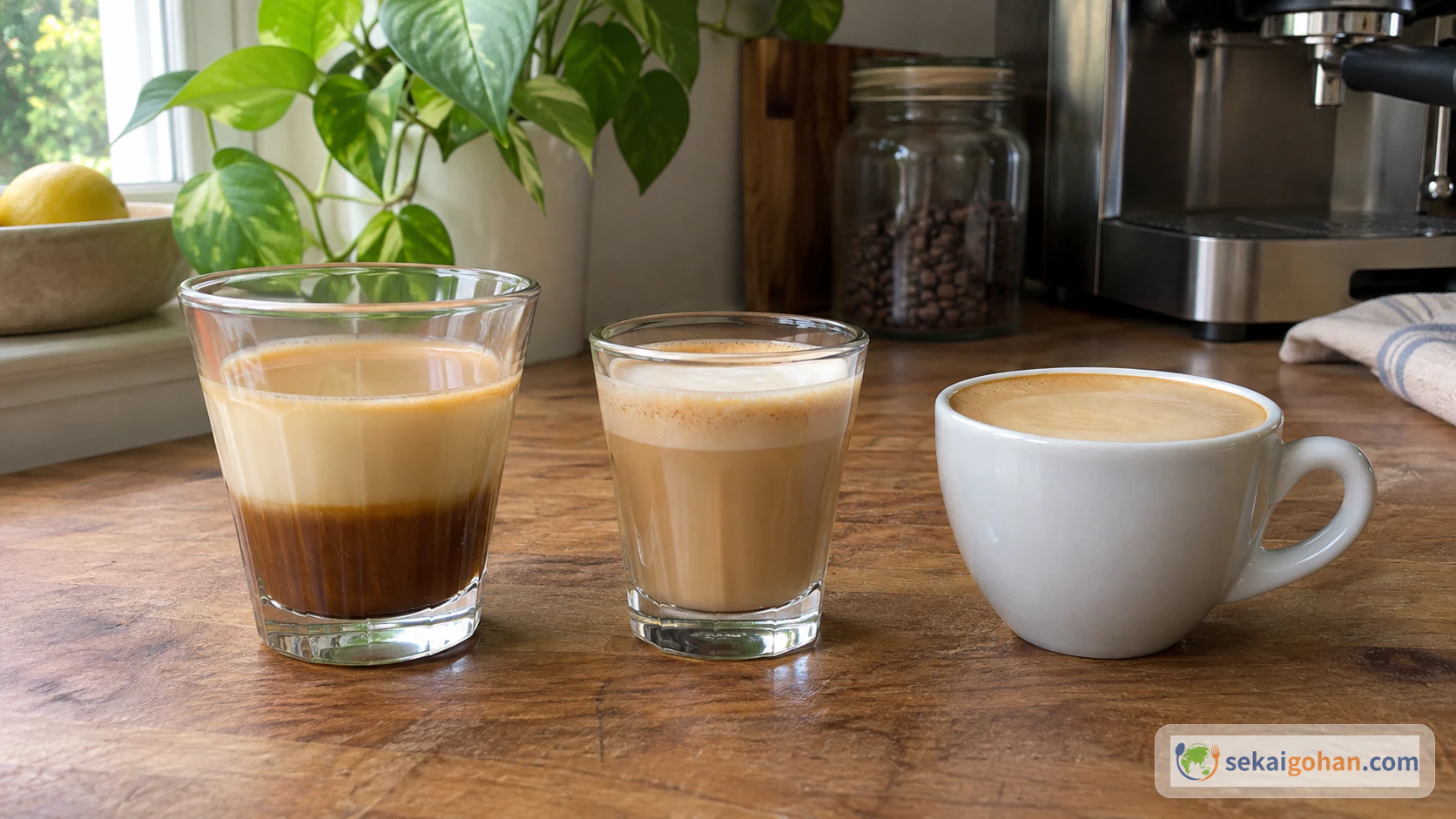
In Australia the cortado shows up as its own line on café menus, listed as a Spanish drink. It joins a crowd of small milk coffees that Australian cafés already pour. The piccolo is the local one. It spread from Sydney's independent cafés in the early 2000s and is now on menus across the country. A piccolo is a small latte. It is usually a single shot, 2 tbsp (30 ml), topped with milk in a 3 fl oz (90 ml) glass, so it carries about twice as much milk as coffee. Some cafés serve it in a 3½ fl oz (100 ml) demitasse glass with about ⅓ cup (80 ml) of milk. Piccolos were first made with a double ristretto, and single shots came later. The magic comes from Melbourne: a double ristretto with steamed milk, served in a 5–6 fl oz (150–180 ml) ceramic cup.
Next to these the cortado is the one with a full double shot and the least milk. Around 2010 it began appearing on modern coffee menus worldwide, as an alternative to the Italian and Australian lineups. In Australia it is ordered less often than the piccolo. The cafés that keep it on the menu do so for people who want a strong coffee with only a little milk. More of the country's food and drink is gathered on the Australia page.
A flat white is a different drink. It is larger, the milk is textured differently, and the coffee comes through less strongly. Further along the family, an Italian macchiato uses even less milk, added as foam, and tastes a little more bitter. A French noisette has a bit more foam and less milk than a cortado.
| Name | Where | What changes |
|---|---|---|
| Cortado / ebaki | Spain, Basque Country | Milk from a few drops to half; 1:1 in specialty cafés |
| Pingado | Portugal | A close relative under its own name |
| Cortadito | Cuba, Miami | Sugar goes in, worked into the first drops of espresso |
| Noisette | France | A little more foam, less milk than a cortado |
| Macchiato | Italy | Even less milk, added as foam |
| Piccolo, magic | Australia | Piccolo: single shot, more milk. Magic: double ristretto in a larger cup |
Ingredients (serves 1)
This drink contains milk. If you use soy, oat or another plant milk, check that product's allergen labelling. A cortado is two shots of espresso, so skip it close to bedtime or if you are sensitive to caffeine.
Equipment
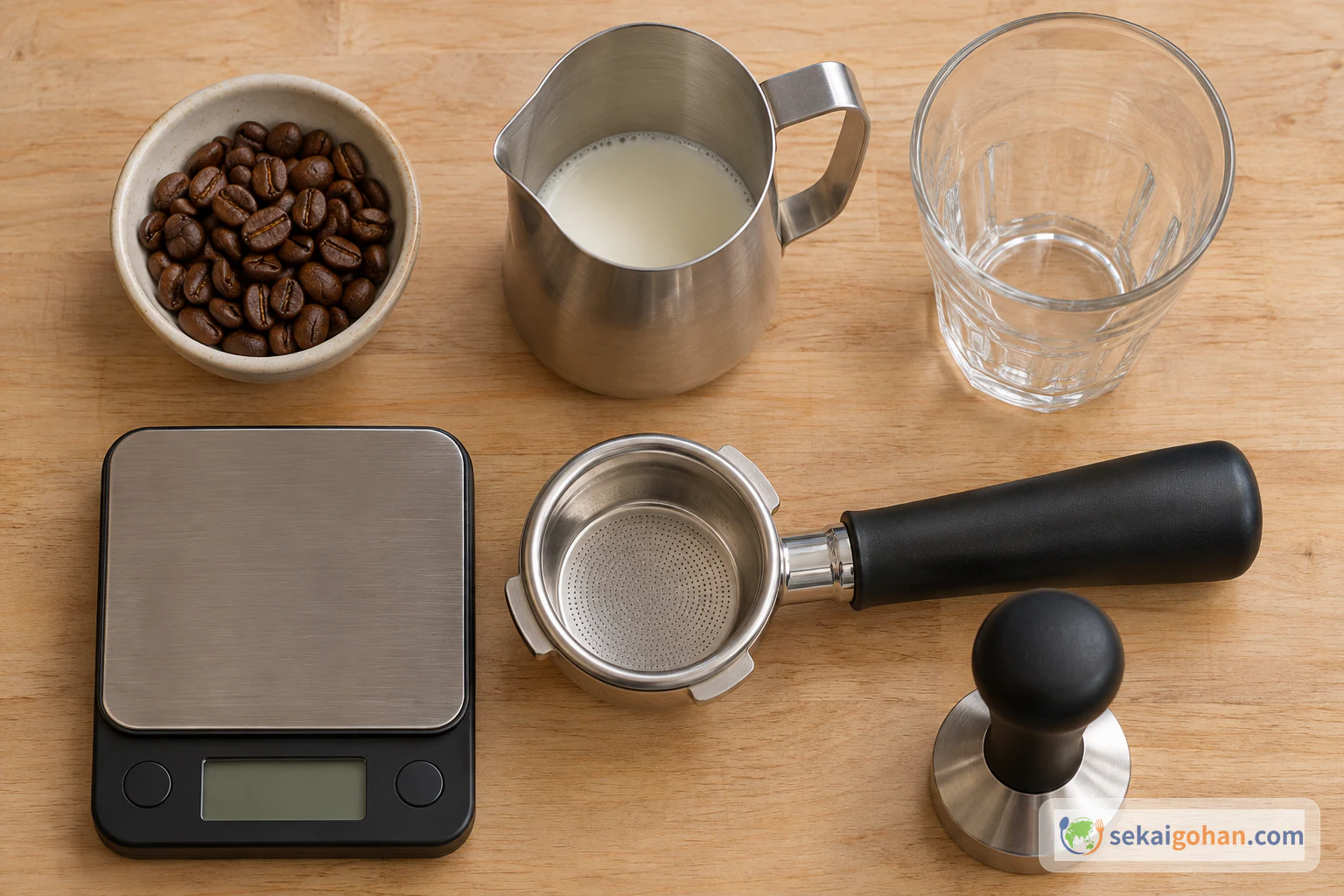
- Espresso machine with a steam wand
- Burr grinder that can grind fine for espresso
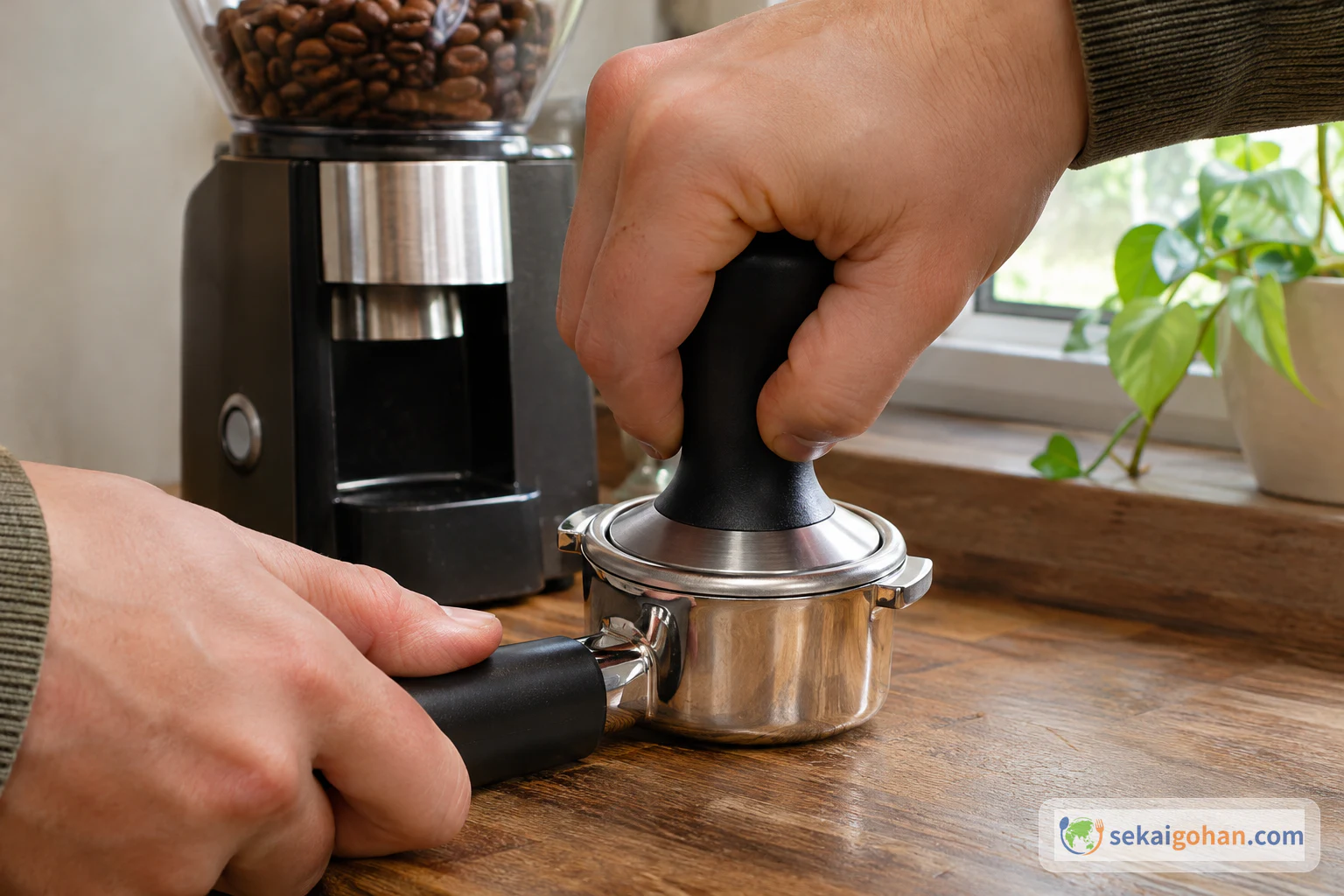
- Portafilter and tamper
- Small stainless steam pitcher
- Heatproof glass, about 4 fl oz (120 ml)
- Coffee scale (optional)
Choosing beans, milk and the glass
The espresso is the whole drink. There is so little milk that a flawed shot has nowhere to hide. Buy espresso beans that have a roast date on the bag. Medium to dark roasts work best. A light roast tastes sour here and gets lost under the milk.
Whole milk gives the sweetness and body the cortado needs. Low-fat milk steams but tastes thinner and less rich. Lactose-free milk is worth trying if regular milk disagrees with you. Soy and oat milks work too, but they foam differently and are sweeter or less sweet than cow's milk, so expect a different balance in the glass.
The glass matters more than it looks. At 4 fl oz (120 ml) it holds the double shot and the milk with a little room at the top, and the two layers stay visible. Australian cafés use glasses from 3 to 4½ fl oz (90–130 ml), and a 3¾ fl oz (110 ml) glass works as well. A larger glass lets the drink spread out and cool, and you lose the layers. A 4.5 oz Gibraltar glass is the classic café choice.
You can use a different system based on weight: about ⅔ oz (18 g) of finely ground coffee, pulled to about 1½ oz (40 g) of espresso in 25 to 30 seconds, then matched 1:1 with milk in a 4.5 oz glass. The drink comes out smaller than the volume version. Pick one system and keep to it. Trying to hit 60 ml and 40 g at the same time will throw both off.
A moka pot or instant coffee will not give you a cortado. Neither produces espresso's concentration, so the milk swamps the coffee. Treat what you get as a different, pleasant milk coffee.
Method
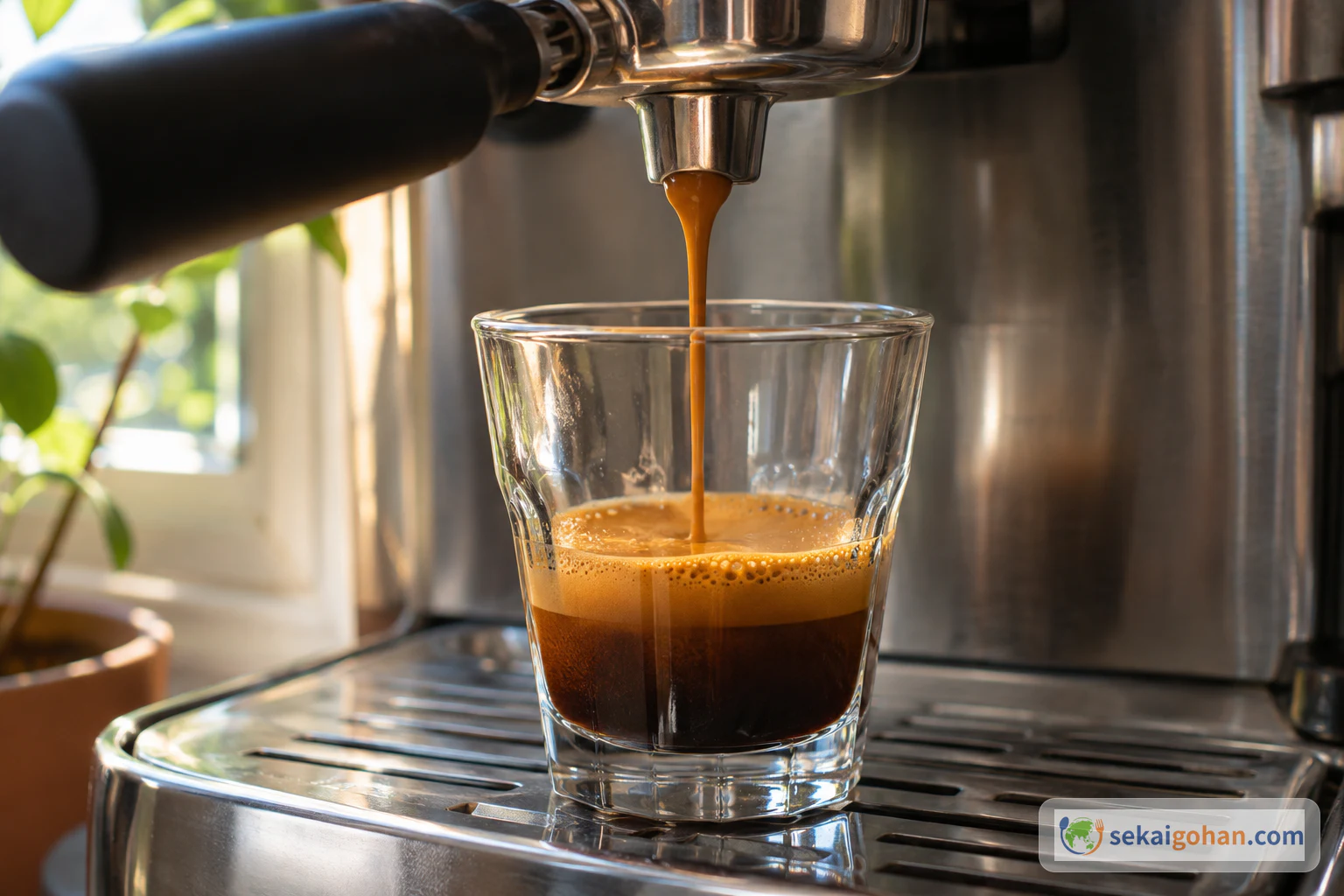
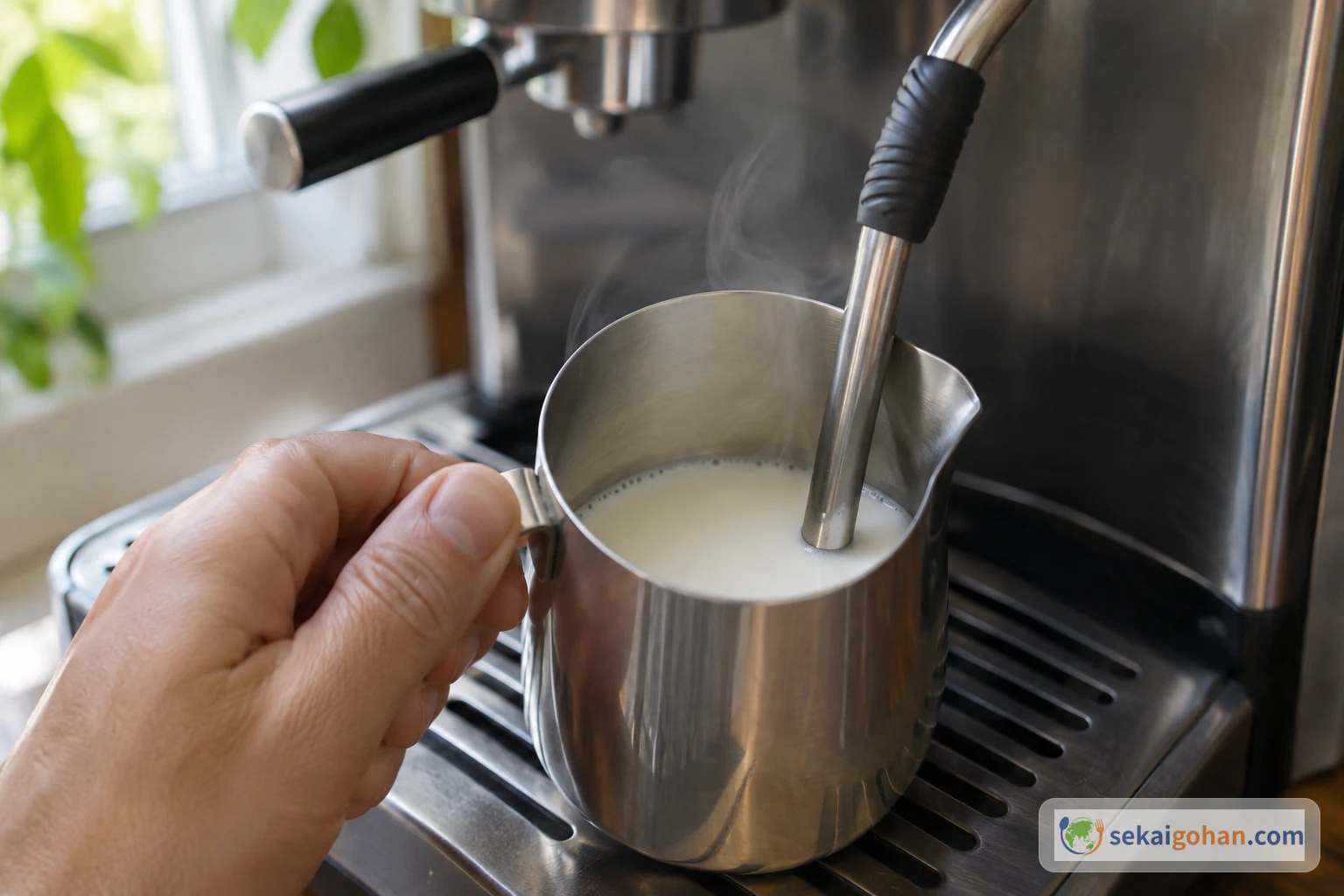
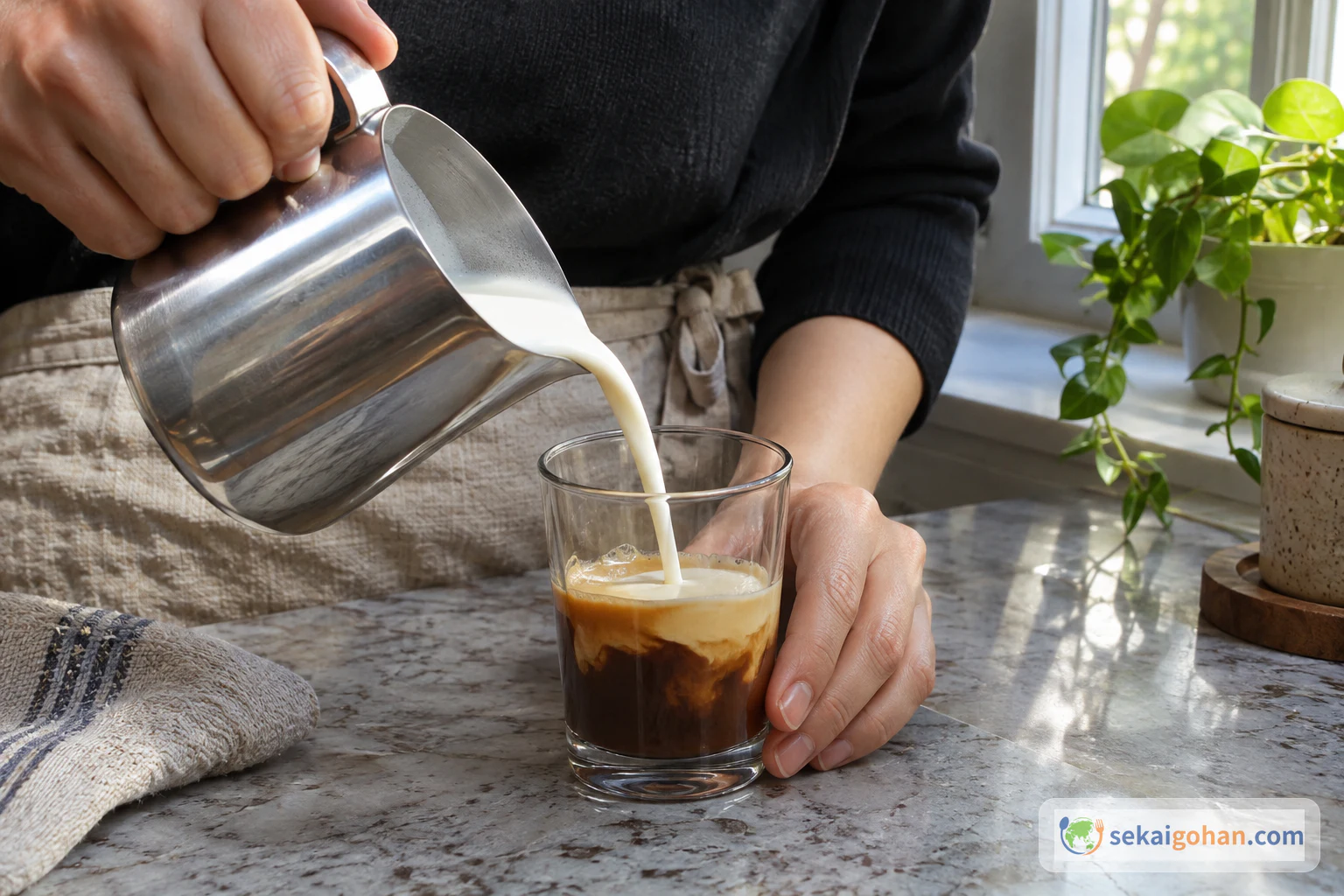
The whole thing takes a few minutes and has no waiting time. Lay everything out first. Pull the shot straight into the glass, then steam the milk at once and pour, so the espresso is still hot and the crema is intact when the milk lands. If you are making two, finish one glass completely, then start the next.
When a cortado tastes wrong, keep the 1:1 milk and change the espresso. Adjust the grind and taste again. Changing both at once leaves you guessing which one fixed it.
When it goes wrong
| What you see | Why | What to do |
|---|---|---|
| The milk turns into big, bubbly foam | Too much air went in | Sink the wand deeper and only heat. Next time let in air for just the first few seconds |
| The milk tastes scorched or is too hot to sip | Overheated | Stop at about 140°F (60°C). Scorched milk does not recover, so start again with fresh milk |
| The espresso tastes sour or thin | Grind too coarse, too little coffee, or the shot ran too fast | Grind finer and aim for 25 to 30 seconds, then judge by taste |
| No layers, the glass is one pale tan | The pour was too hard, or the milk was foamed | Pour slowly from low down, and steam without adding air |
| The drink is lukewarm | The glass is too big, or it sat too long | Use a glass of about 4 fl oz (120 ml) and pour the milk as soon as the shot is done |
Serving and variations
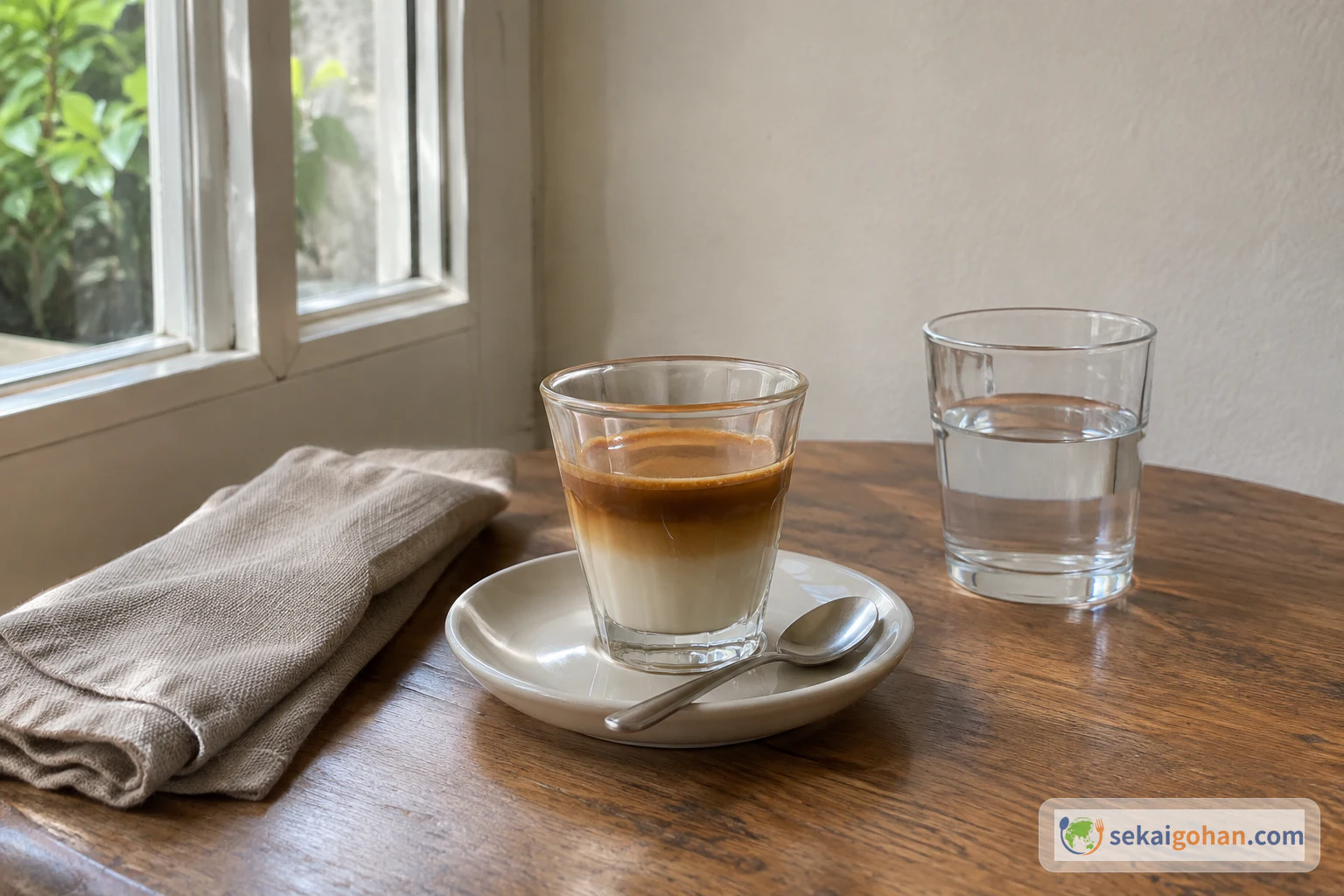
In Spain the cortado comes after a meal, when the table is talking and nobody is ready to leave. It also works as a mid-afternoon pause or a short morning coffee by the window. Put a glass of water beside it. A cortado is made and drunk on the spot. Do not make it ahead and do not reheat it. Warming milk a second time spoils the flavour and is not good hygiene, so make a fresh glass instead.
Variations
- Closer to the Basque glass. Keep the ¼ cup (60 ml) shot and cut the milk to about 2½ tbsp (40 ml). The drink gets denser and the bitterness comes forward.
- Spanish bar standard, 75:25. Use the same shot with about 4 tsp (20 ml) of milk. You get a stronger, darker drink that makes a good side-by-side with the 1:1 version.
- Cuban-style cortadito. Put a little sugar in the glass, let the first drops of espresso fall onto it and stir to a paste, then finish the shot and add the milk. It is sweeter, and the outline of the coffee's bitterness changes.
- Cortado and piccolo side by side. Make a piccolo with a single shot topped with milk in a 3 fl oz (90 ml) glass and taste the two together. The difference in shot size and milk is obvious from the first sip.
For these comparisons, change only the milk side and keep the shot the same each time.
Frequently asked questions
Can I make a cortado with a moka pot?
You can make a pleasant milk coffee with a moka pot, but it will not be a cortado. Moka pot coffee does not have espresso's concentration, so equal milk drowns it. If a moka pot is all you have, use less milk and enjoy it as its own drink.
How do I make two at once?
Make them one at a time. Pull a shot into each glass separately and steam milk for each. Pulling a larger amount into one vessel and dividing it, or steaming milk for two and splitting it, throws the ratio off and leaves the second glass cooler.
Should I add sugar?
A 1:1 cortado has enough sweetness from the milk for most people, but a little sugar is fine if you like it. Stir it into the espresso before the milk goes in so it dissolves. For a deliberately sweet version, make the Cuban-style cortadito above.