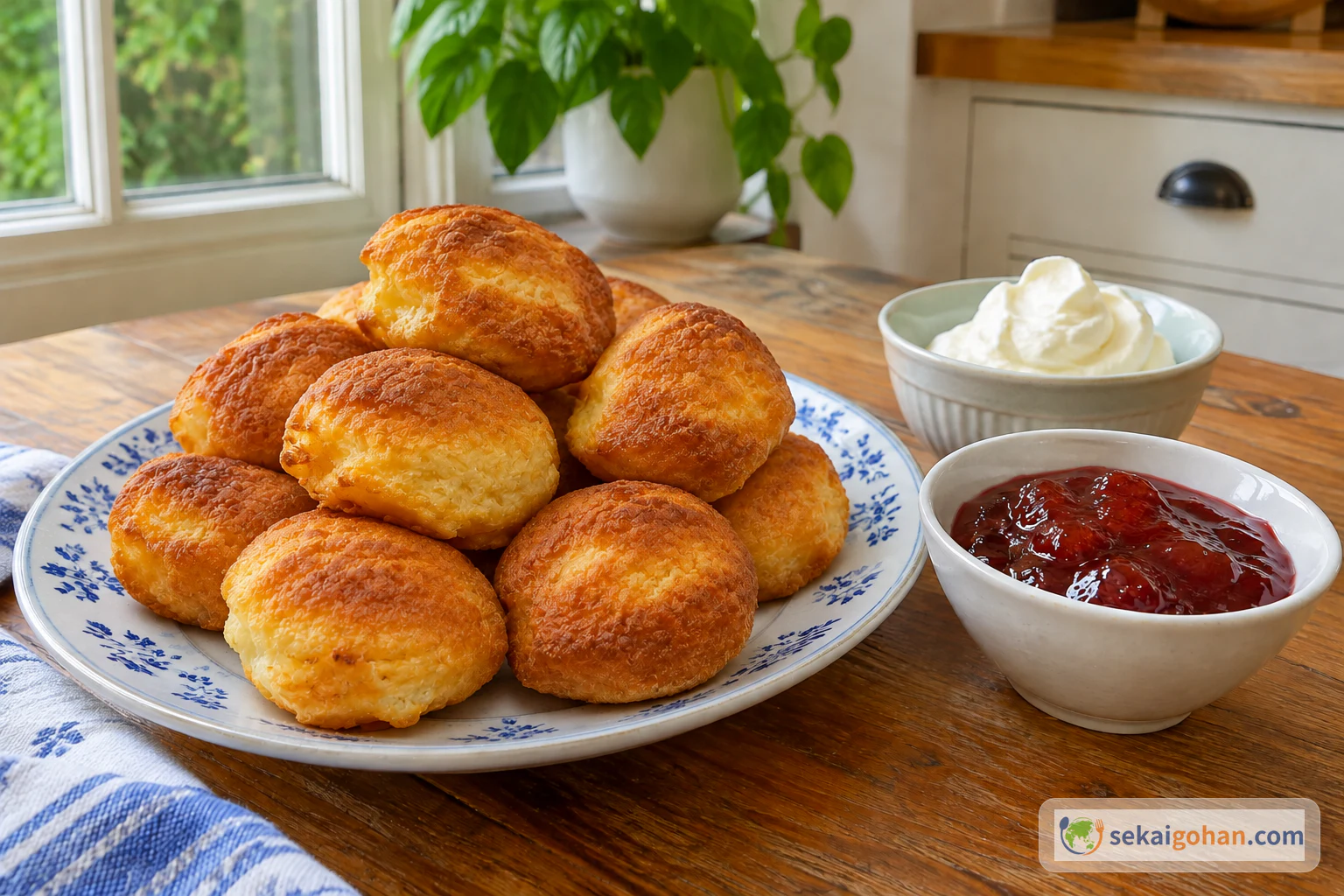
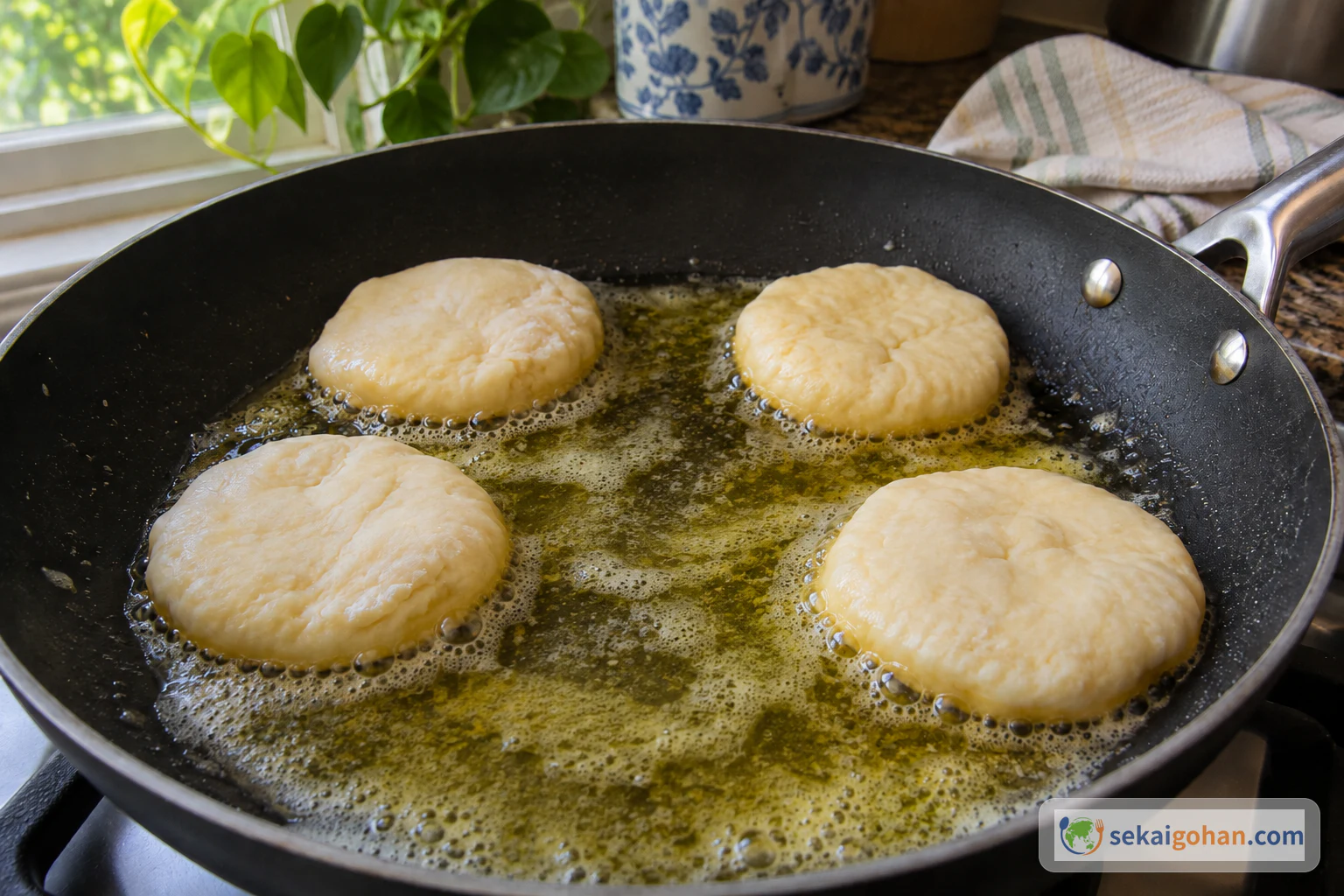
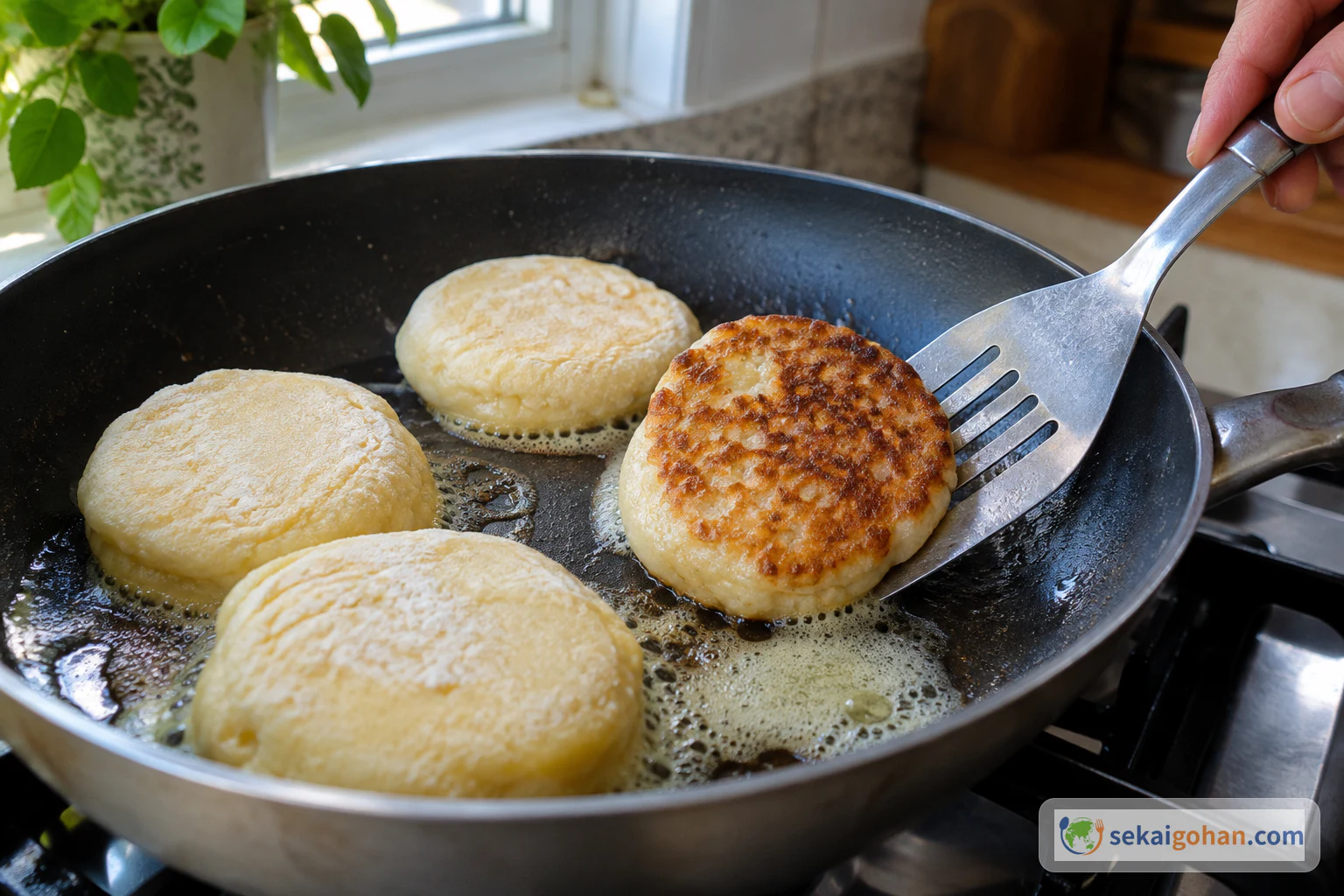
The butter goes into the pan over low heat and melts into a gentle foam. When the pale rounds of dough go in, it bubbles softly around their edges. After a few minutes you turn the first one and see a broad, mottled golden face, and the kitchen smells of browned butter and warm bread. Puftaloons are Australian scones cooked in a frying pan instead of an oven. They come out crisp and buttery on the outside and soft inside. You split them while they are hot and add strawberry jam and a spoonful of whipped cream, or pour golden syrup over the top.
Fried Scones, Moon Balls and Golden Syrup
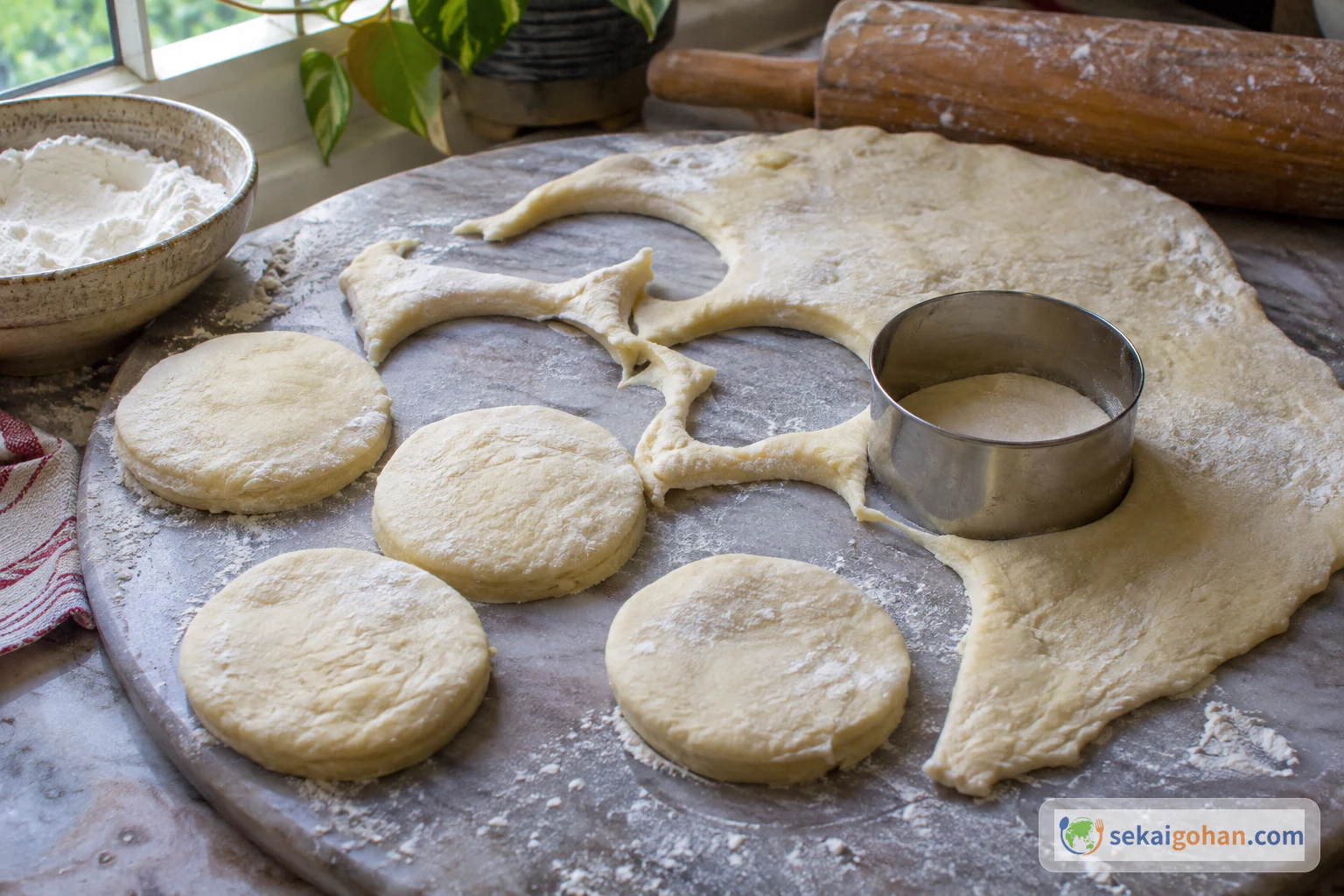
A puftaloon is a shallow-fried scone of Australian origin. Most people simply call them fried scones. The dough is plain scone dough made with self-raising flour, salt and milk. It is patted flat, cut into rounds and cooked in a pan. They are often placed between damper and a scone. Damper is the bush bread of flour and water baked over a fire. The puftaloon has the tender crumb of a scone and the simple, rough-and-ready cooking of damper. A pan, a fire or a stove is all it needs.
Puftaloons have been in print for a long time. A recipe from 1904 already gives the method used today: self-raising flour, milk and salt, rolled out, cut and fried. Puftaloons are said to have been a rare treat during the Great Depression, eaten with golden syrup, but this rests on a single encyclopedia entry and is not well confirmed. You will find them alongside the other country cooking on our Australia page.
Over the years puftaloons have also been called moon balls, puff de lunas and puftaloonies. Today most people simply say "fried scones."
Golden syrup, the cocky's joy
The old way to eat puftaloons is with golden syrup or treacle. In Australia golden syrup earned the nickname "cocky's joy", and small farmers loved it. It cost less than jam and travelled well in tins, and on outback stations it was spread on bread in place of butter. Golden syrup was first mentioned in print in South Australia in 1840. How local production began is still unclear. The syrup has its own story, separate from the puftaloon, but the two belong naturally on the same plate. Today's tea-table version uses jam and cream, as scones do. Puftaloons also go savoury, with bacon, gravy or grilled tomato.
Ingredients (serves 4)
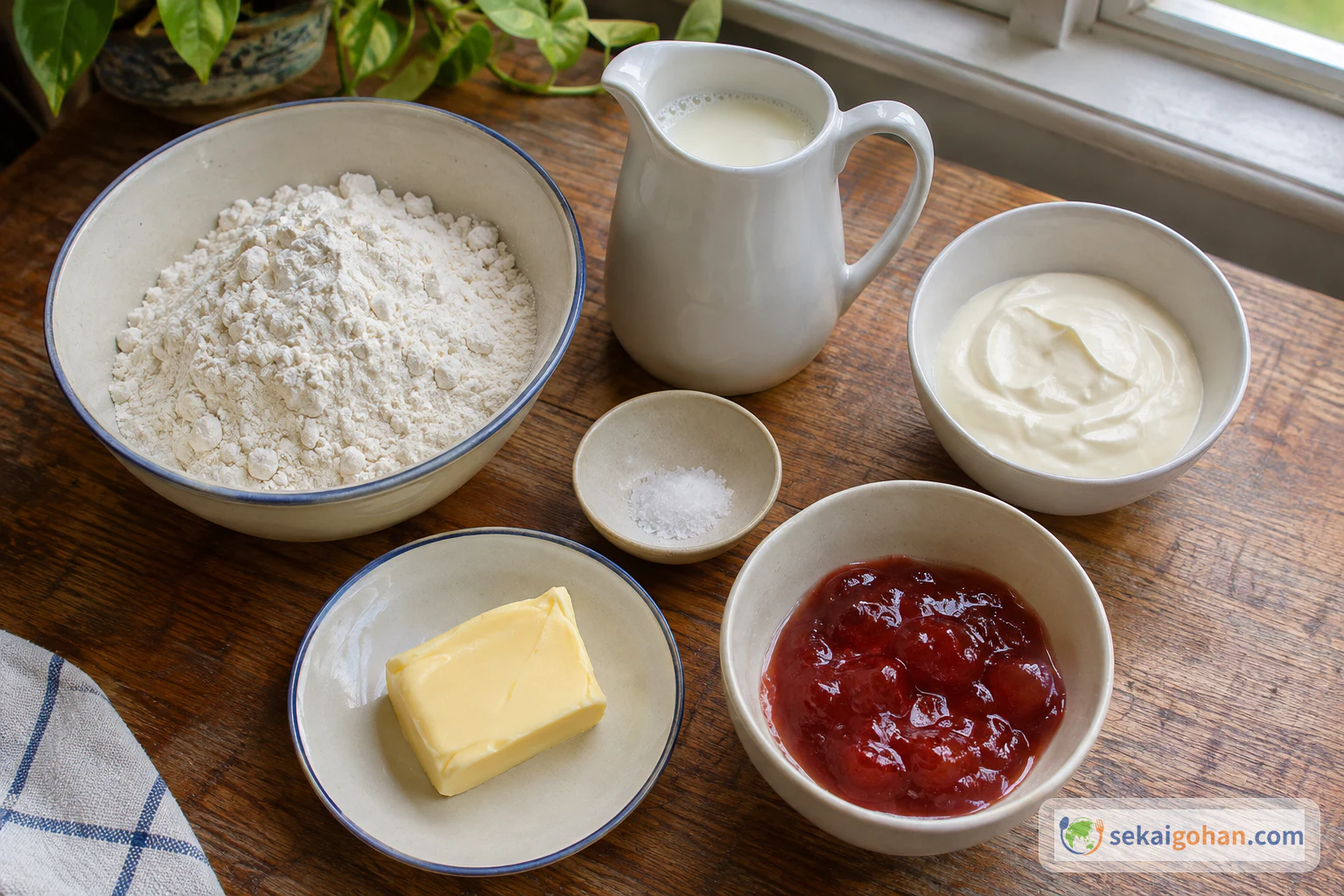
The dough uses three ingredients. All of the fat is in the pan, so the butter decides the flavour of the crust.
Puftaloons contain wheat (gluten) and milk. The butter and cream are dairy too.
Equipment
- Mixing bowl and spatula
- Board or clean counter for patting out the dough
- 3-inch (8 cm) round cutter
- Large non-stick frying pan
- Flat spatula for turning
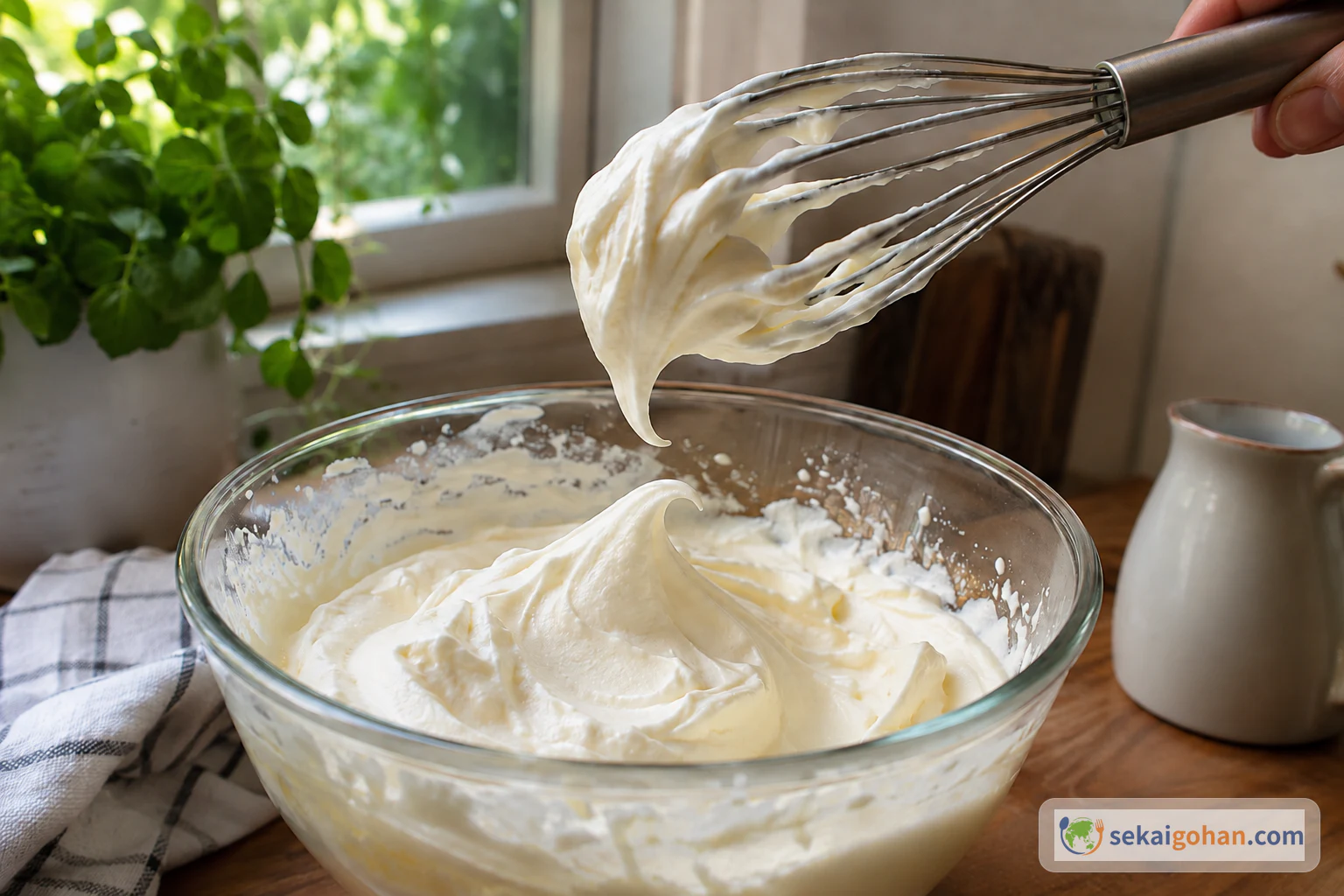
- Bowl and whisk for the cream
Choosing and Substituting
Self-raising flour is the one thing to keep. It already holds the leavening that makes the rounds puff in the pan. Plain flour by itself gives flat, heavy discs. Use self-raising flour (sold as self-rising flour in some places) instead of building your own mix.
Use butter for frying. It gives the nutty smell and the mottled brown face that make a puftaloon taste the way it should. Neutral oil will brown the dough, but you lose that flavour.
Thickened cream is the everyday Australian whipping cream. Any plain cream sold for whipping works the same way here. Whip it without sugar, because the jam brings the sweetness. Strawberry jam is the classic. If you can find golden syrup at an import shop or online, buy a tin. A little goes a long way, and it opens up the old way of eating these, described below.
Method
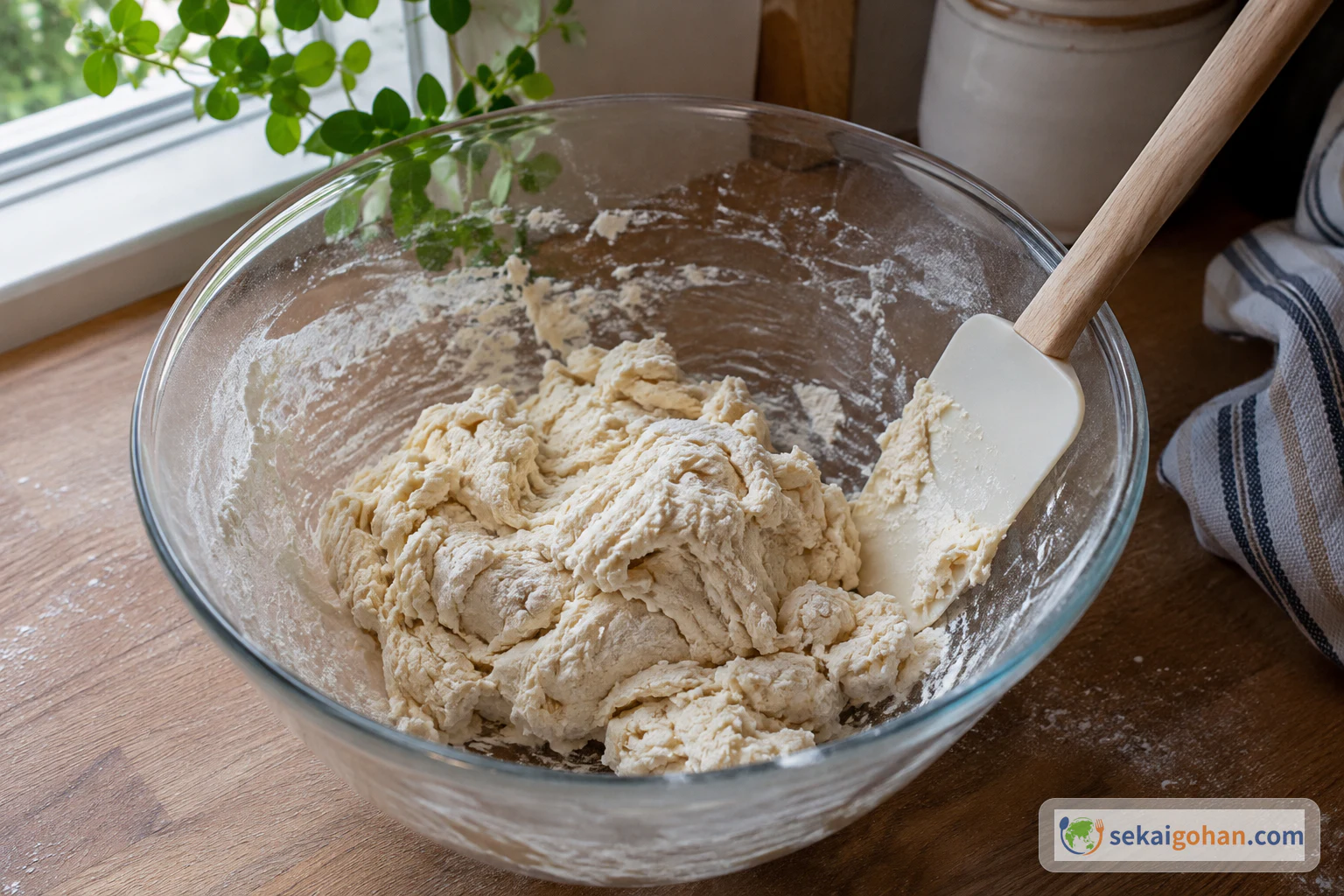
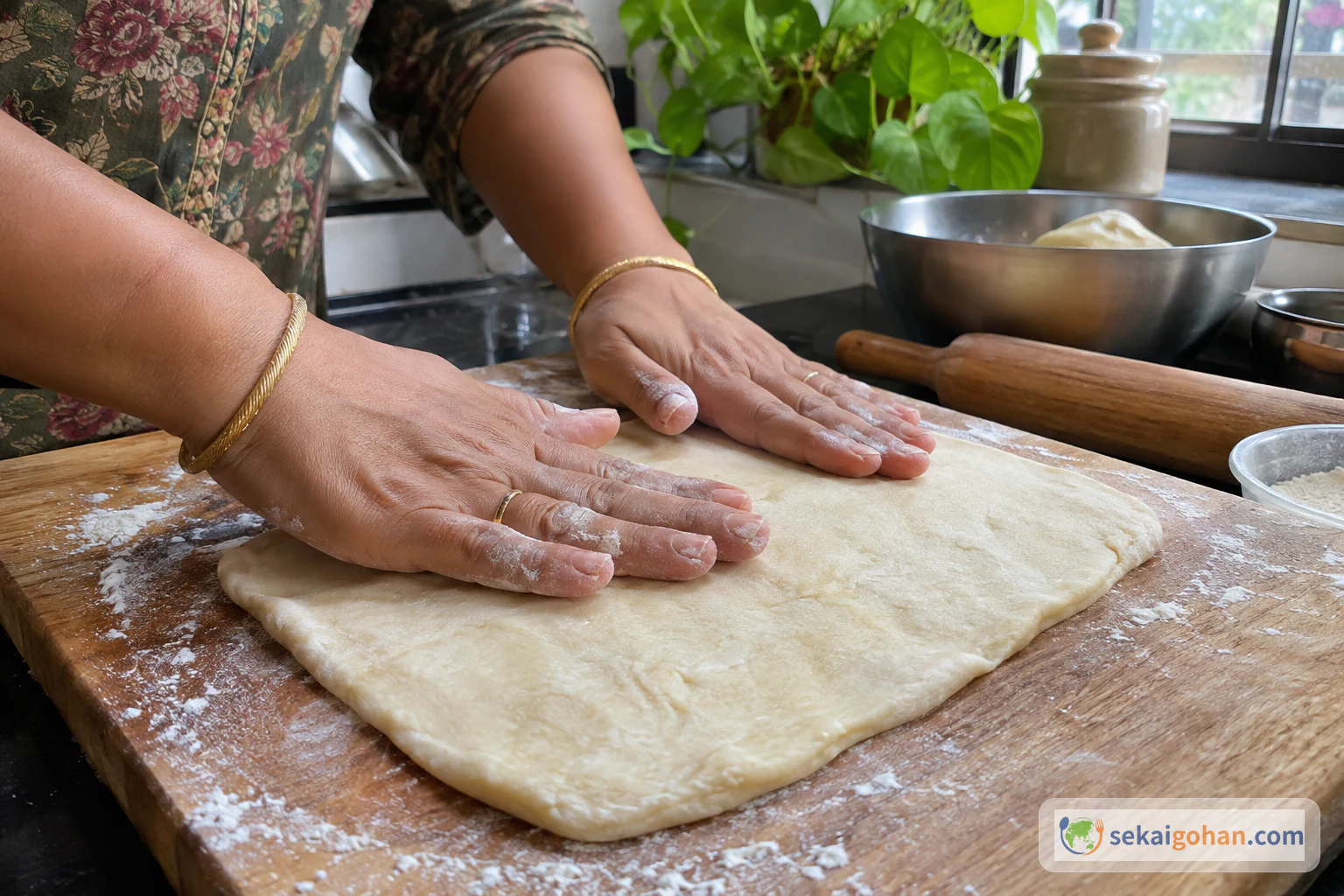
The work moves quickly. Mixing and shaping take about five minutes, and cooking in batches takes about fifteen at the stove. You can whip the cream while the last batch cooks or just after. Keep the heat low the whole time and serve the puftaloons straight from the pan.
When It Goes Wrong
| What you see | Why | What to do |
|---|---|---|
| Puftaloons are tough and flat | The dough was mixed until smooth or pressed hard | Mix only until shaggy and pat gently; recut the scraps without kneading |
| Dark outside, doughy inside | The heat is too high | Lower the heat and give each side the full time; the butter should foam, not smoke |
| Pale and dry-looking faces | Too little butter left in the pan | Add a third of the butter for each batch and let it melt before the rounds go in |
| Rounds puff lopsided | Uneven thickness, or the cutter was twisted | Pat the dough level and cut straight down |
| Cream is stiff or grainy | It was whipped past soft peaks | Stop as soon as the peak folds over |
Serving and Variations
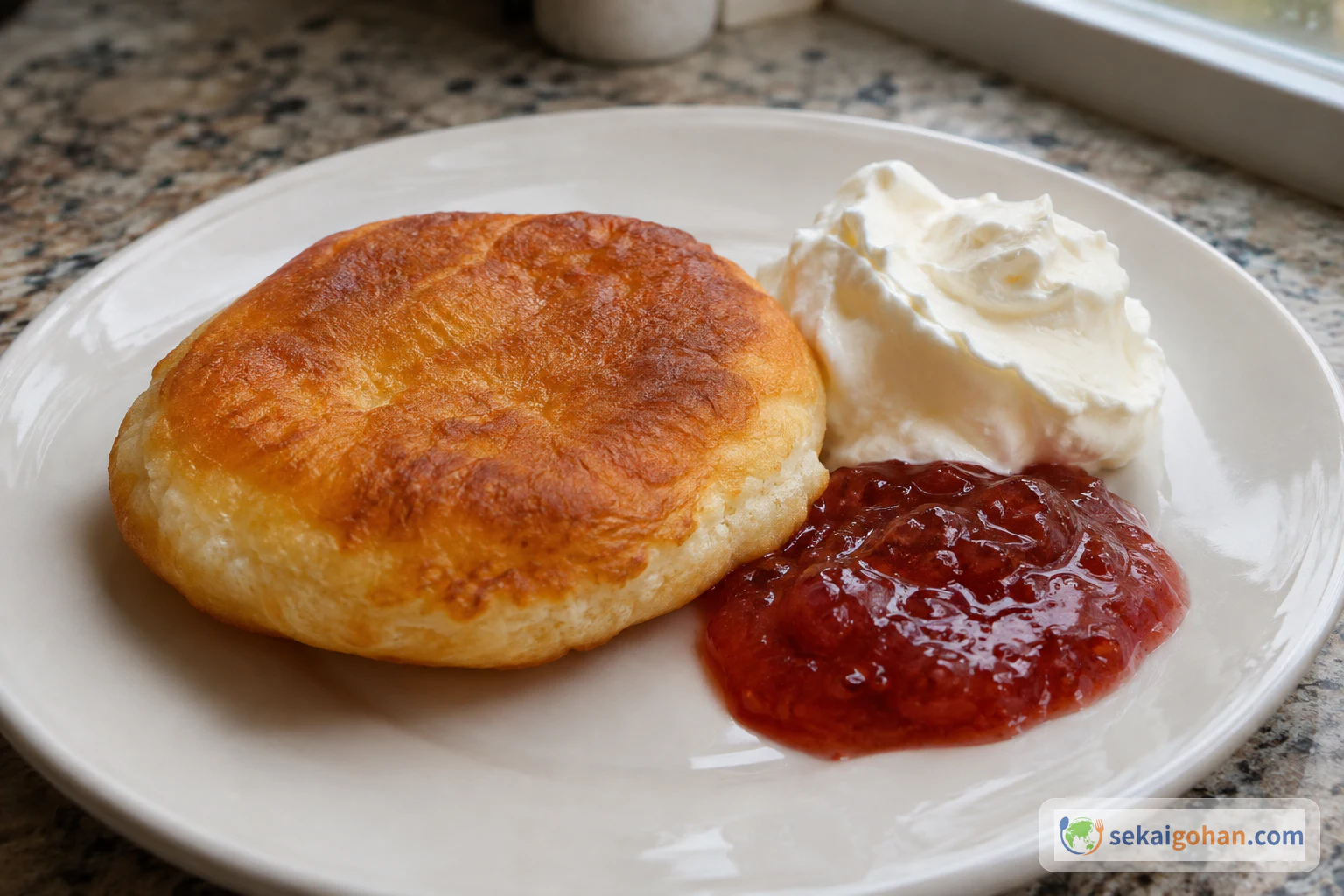
Puftaloons are best eaten hot, straight from the pan, so cook them just before you sit down. Put the plate in the middle of the table with the jam and cream. Everyone splits their own, spreads on jam and adds a spoonful of cream. They make a good afternoon-tea plate or a weekend breakfast, and there is little washing up.
Golden syrup
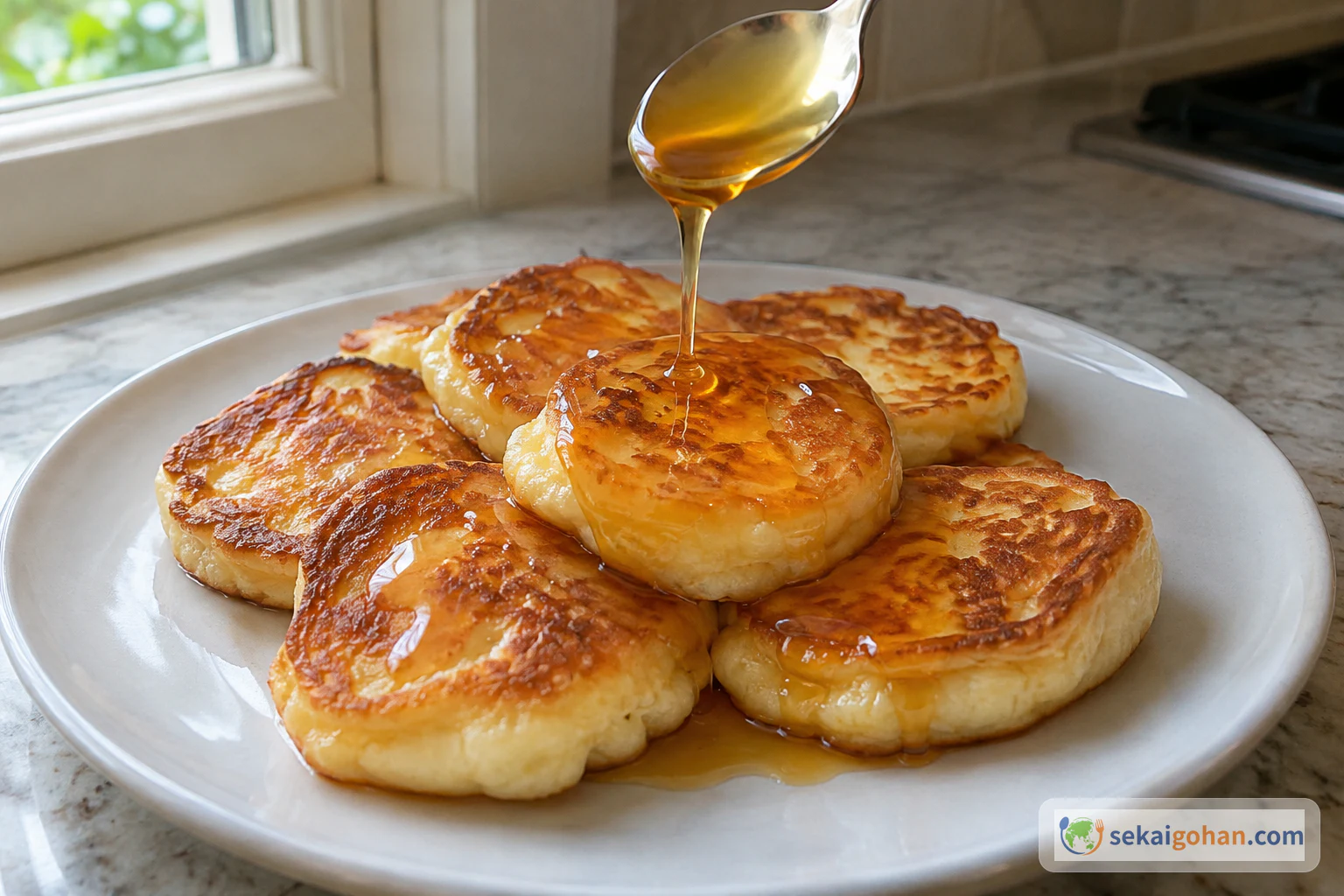
Leave out the jam and cream and spoon golden syrup or treacle over the hot puftaloons. This is the old way. The syrup soaks into the soft middle, and its toffee flavour goes well with the browned butter. The result is sweeter and stickier than jam and cream, and more like bush cooking.
Savoury
Serve the puftaloons alongside bacon and grilled tomato, or pour gravy over them. Leave out the cream and jam. The salted, buttery crust then works like bread, and the plate becomes a breakfast or a light meal.
Frequently asked questions
Are puftaloons deep-fried?
No. These are cooked in a shallow layer of butter in a frying pan and turned once, which is why they are called fried scones. You get two flat golden faces and soft sides instead of a ball crisp all over.
Why does the heat have to stay so low?
The puftaloons are fairly thick and the crumb has to cook all the way through while the outside browns. Low heat also stops the butter burning. On higher heat the faces darken before the middle is done.
How is a puftaloon different from an ordinary scone?
The dough is very close, but a scone bakes in the oven and a puftaloon cooks on the stovetop in butter. The pan gives it a crisp, buttery crust on top and bottom. Oven heat gives a scone a drier, even crust.