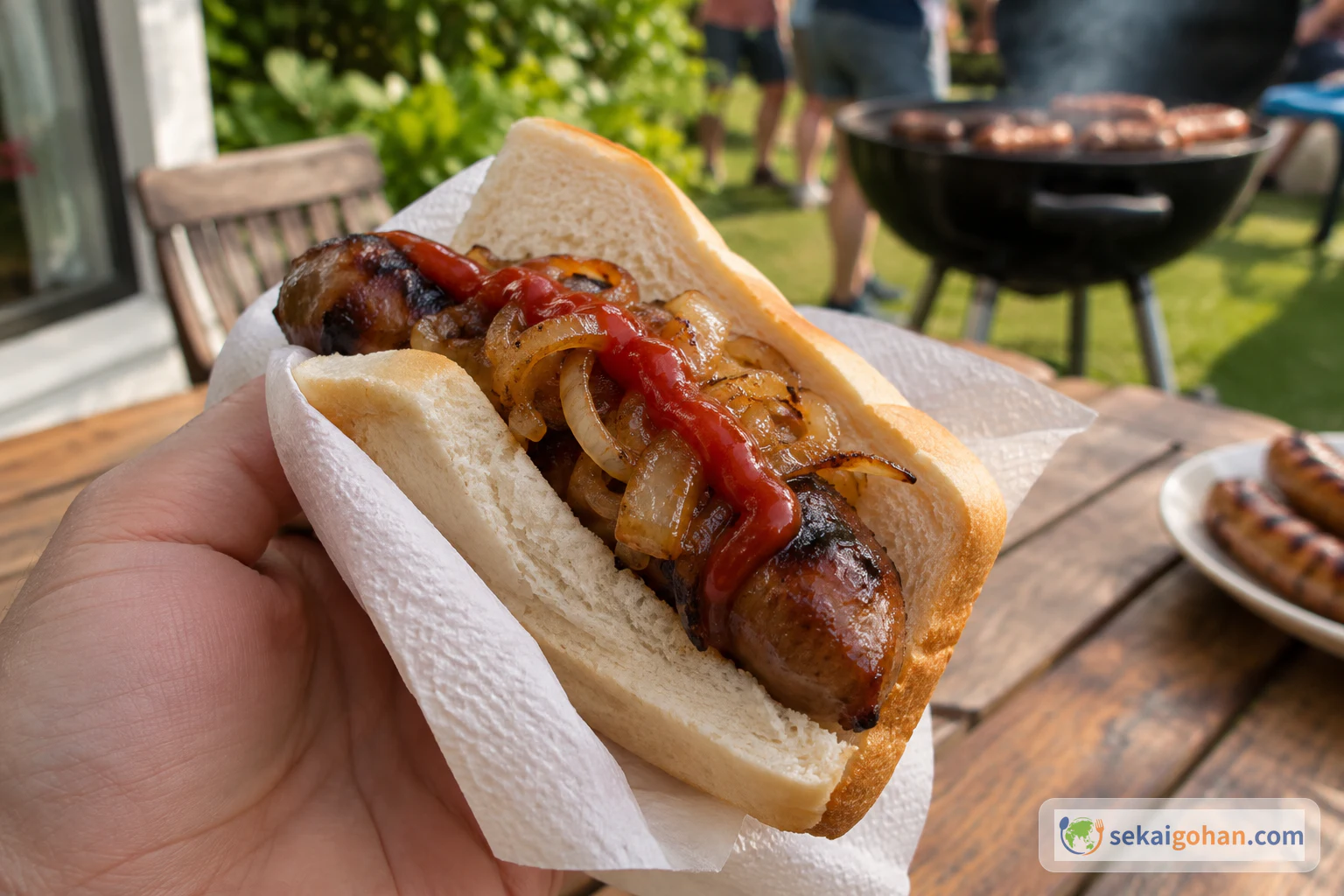
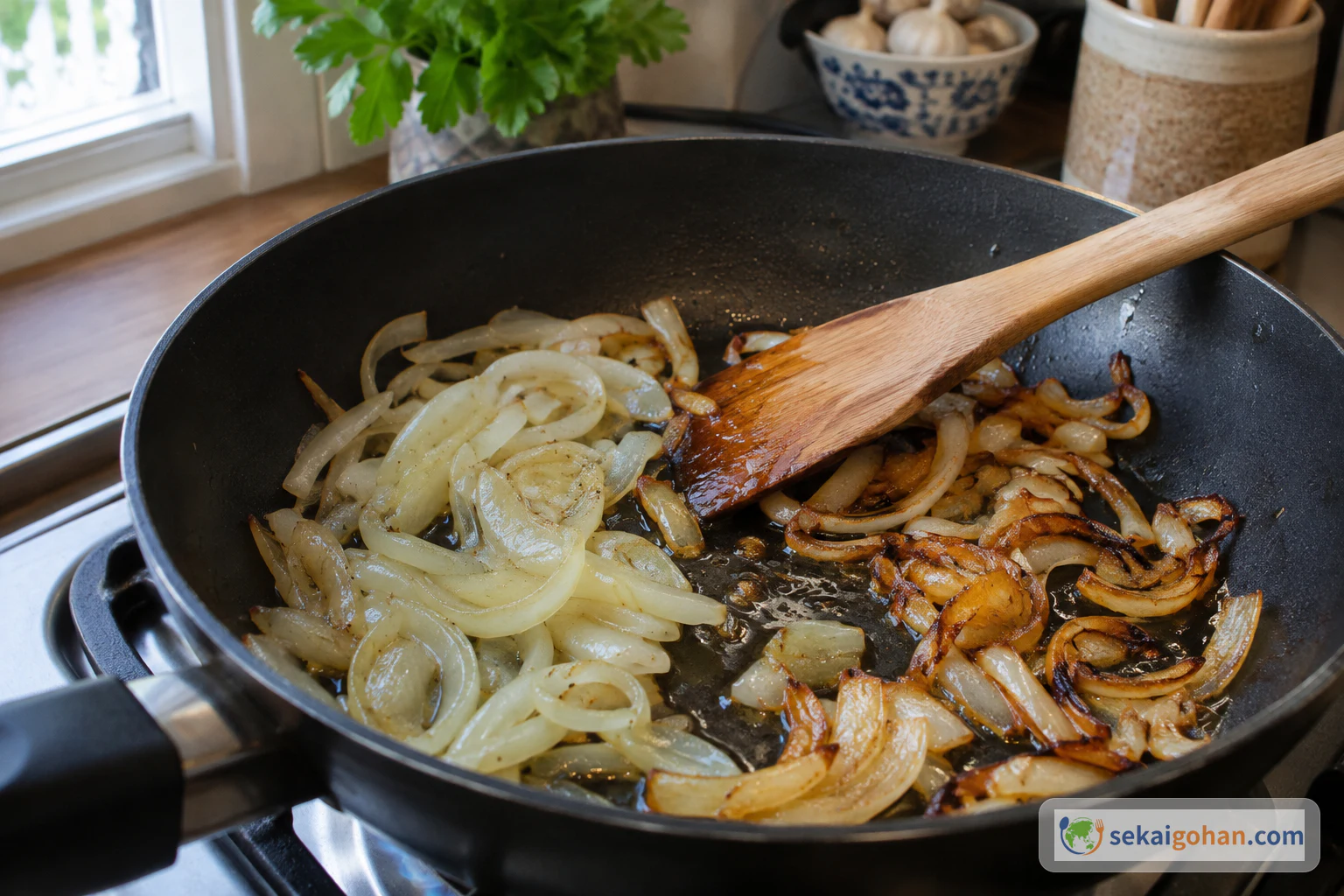
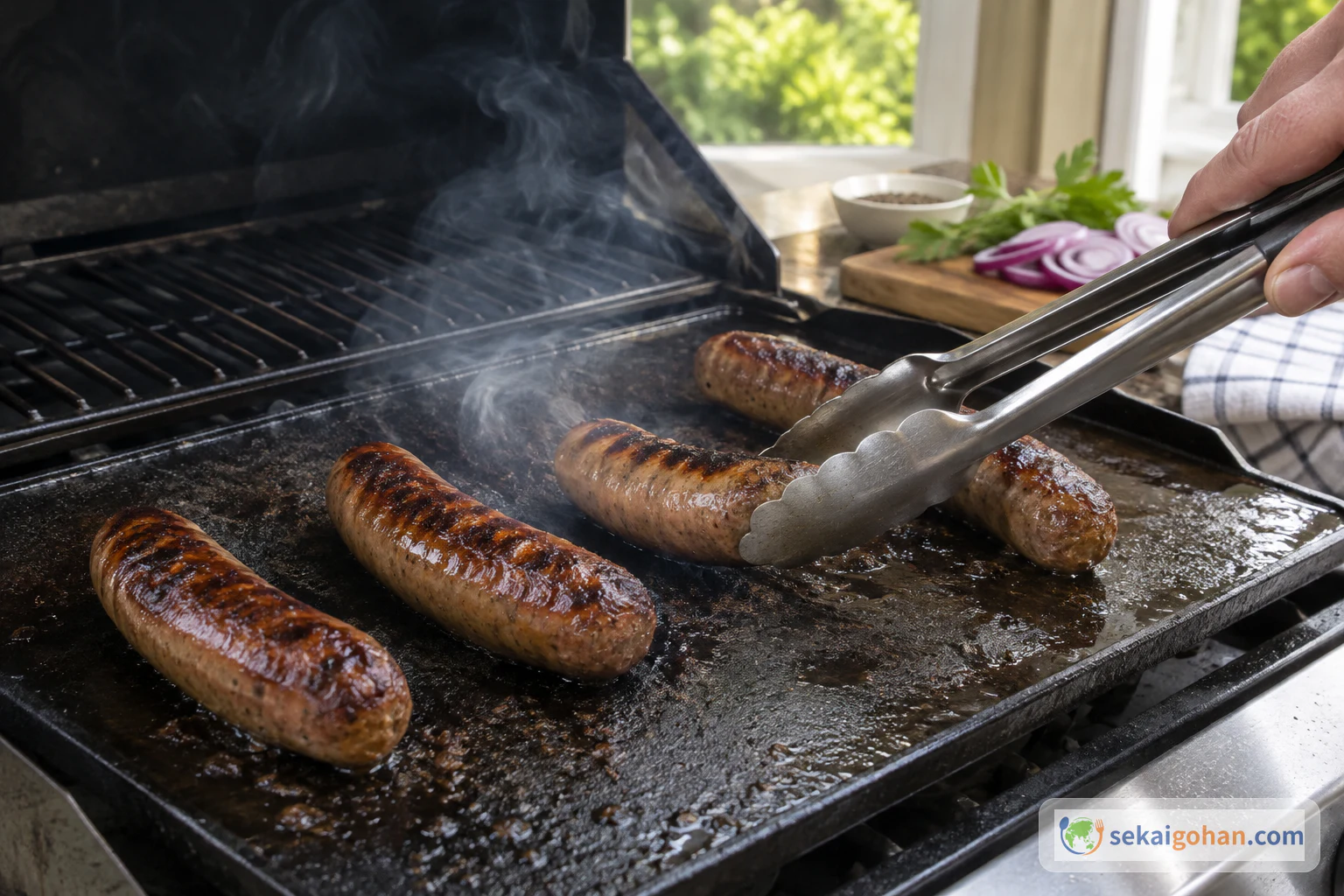
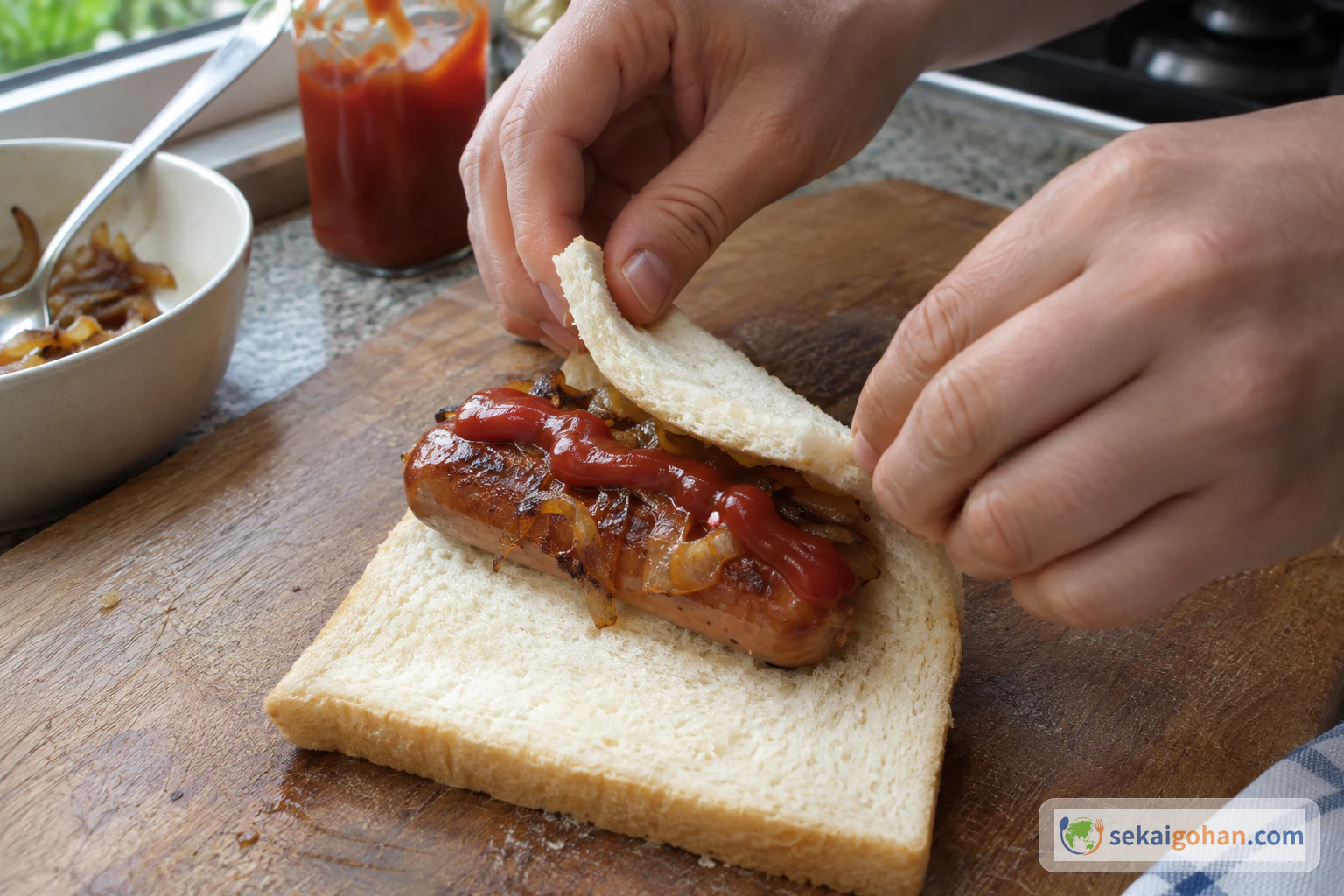
Smoke drifts across a car park from a long flat-plate barbecue. A volunteer with tongs rolls a row of sausages, another keeps a heap of onion moving on the hot plate, and someone at the front takes coins from a queue that stretches back past the trolleys. What you get for your money is one browned sausage laid on a single slice of soft white bread, piled with golden onion, striped with tomato sauce and folded around it so you can eat it standing up. The sausage sizzle tastes of salty, juicy meat and charred skin, softened by sweet onion and the sharp-sweet bite of the sauce, with plain bread soaking up whatever runs out.
Car parks, school events and polling booths
The sausage sizzle is less a dish than an event. In Australia it is the standard way a community raises money: schools, charities and community groups set up a barbecue, cook in bulk and sell sausages in bread to anyone passing. The best-known stage is the car park of the hardware chain Bunnings, where local groups run the barbecue, and where a laminated diagram is posted at each barbecue showing how to assemble one.
The term became common in the 1980s. Where it began is not settled. Australia and New Zealand both claim it, and the two countries share the same habit of feeding a crowd this way, so the question stays open. What is clear is the form: one sausage, one slice of white bread, onion and sauce, a fold.
On election days, sizzles appear outside polling booths, and the sausage you buy on the way in or out has its own name. You can read more about the country's food on our Australia page.
A sausage sizzle run at a polling booth is called a democracy sausage. The barbecue outside the polling booth is part of what election day looks like.
Onion on top or underneath
The one argument every sizzle starts is where the onion goes. Bunnings recommends onion under the sausage, so it is held in place and does not spill. The company has also described that order as a serving suggestion rather than a rule, and in practice you see both at every barbecue. Some volunteers butter the bread, add the onion and lay the sausage on top before folding. Others go sausage, sauce, then onion piled over the top.
This recipe puts the onion on top, followed by the sauce, and uses butter on the bread to keep the onion where it belongs. If your onion keeps sliding off, switch the order and put it underneath.
Bread or roll, east and west
On the east coast, a sausage sizzle is often served on sliced bread. In Western Australia it comes in a bun, a soft hot dog roll. Tomato sauce is the usual condiment, with BBQ sauce and American mustard as other common choices.
Ingredients
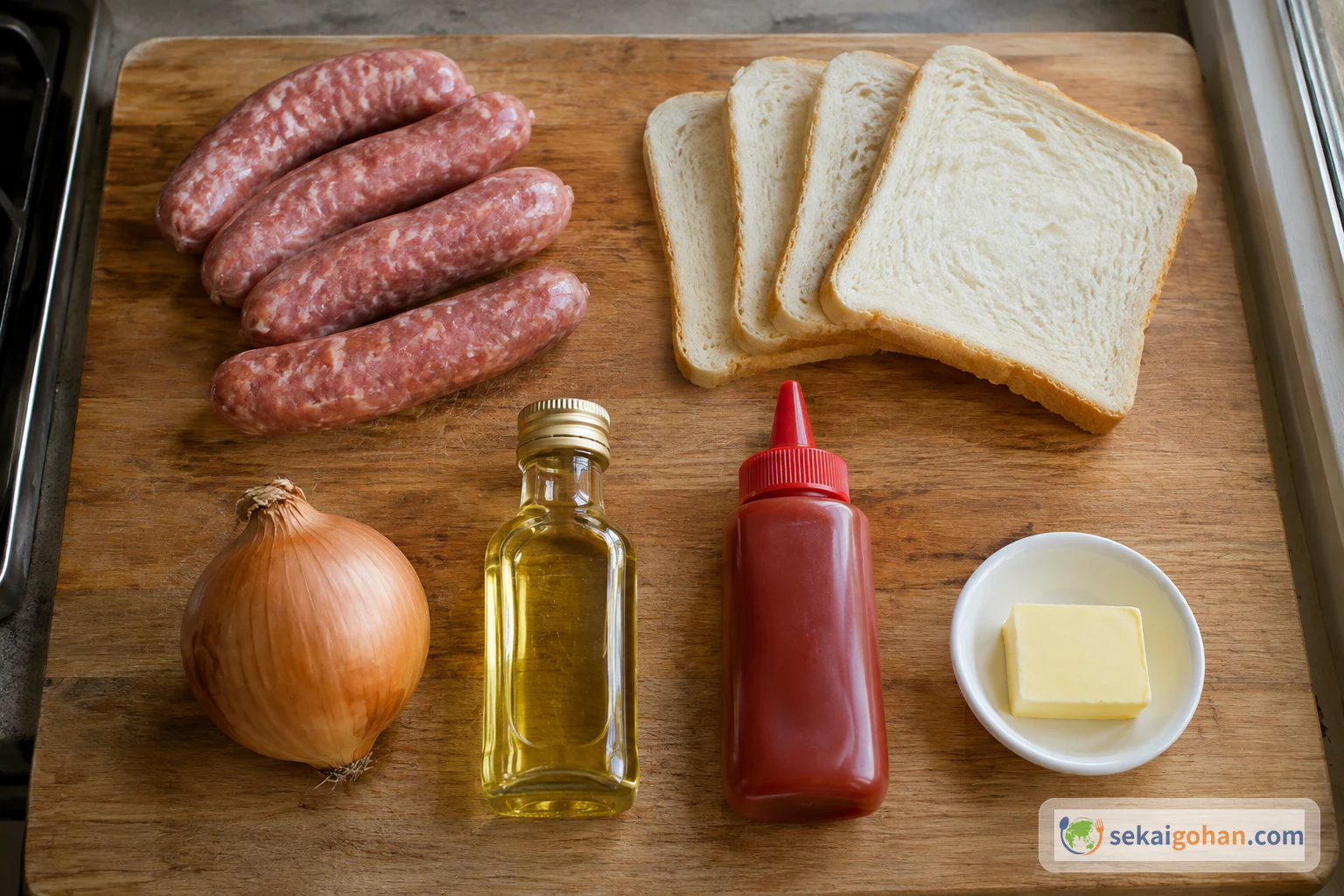
The bread contains wheat and the butter contains milk. Sausages often carry other ingredients such as cereal fillers, soy or spices, so read the label on the pack you buy, and check the sauce label too.
Equipment
- Barbecue with a flat plate, or a frying pan or grill pan for the sausages
- A second frying pan, or a section of the flat plate, for the onion
- Chef's knife and chopping board
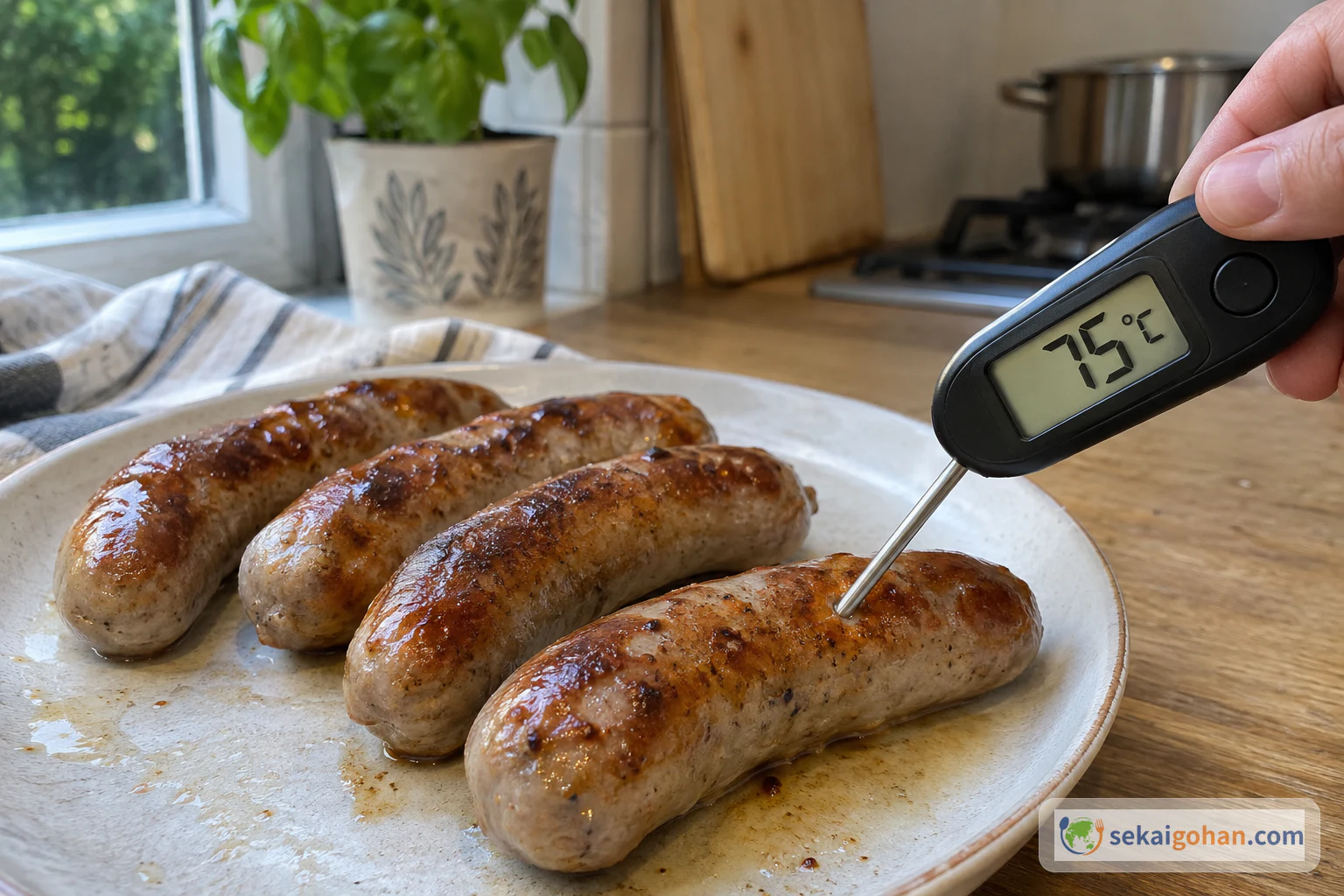
- Digital food thermometer
- Two pairs of tongs: one for raw sausages, one for cooked
- Two plates or trays: one for raw sausages, one for cooked
Choosing sausages, bread and sauce
Buy raw sausages. Coarse-ground beef or pork sausages from the meat counter are what a sizzle uses, and their juices and seasoning carry the whole thing. Precooked frankfurters or wieners are a different product: they heat through rather than cook, they stay smooth and springy instead of browning and bursting at the skin, and the result tastes like a hot dog.
For the bread, any ordinary soft white sandwich loaf works. It should fold without cracking, so avoid thick-cut or very crusty bread for the classic version.
Australian tomato sauce is the bottle on every sizzle table. Ketchup is the closest swap and works well, though its balance of sweet and sour is a little different, so add it a line at a time and taste. BBQ sauce or American mustard can stand in or join it.
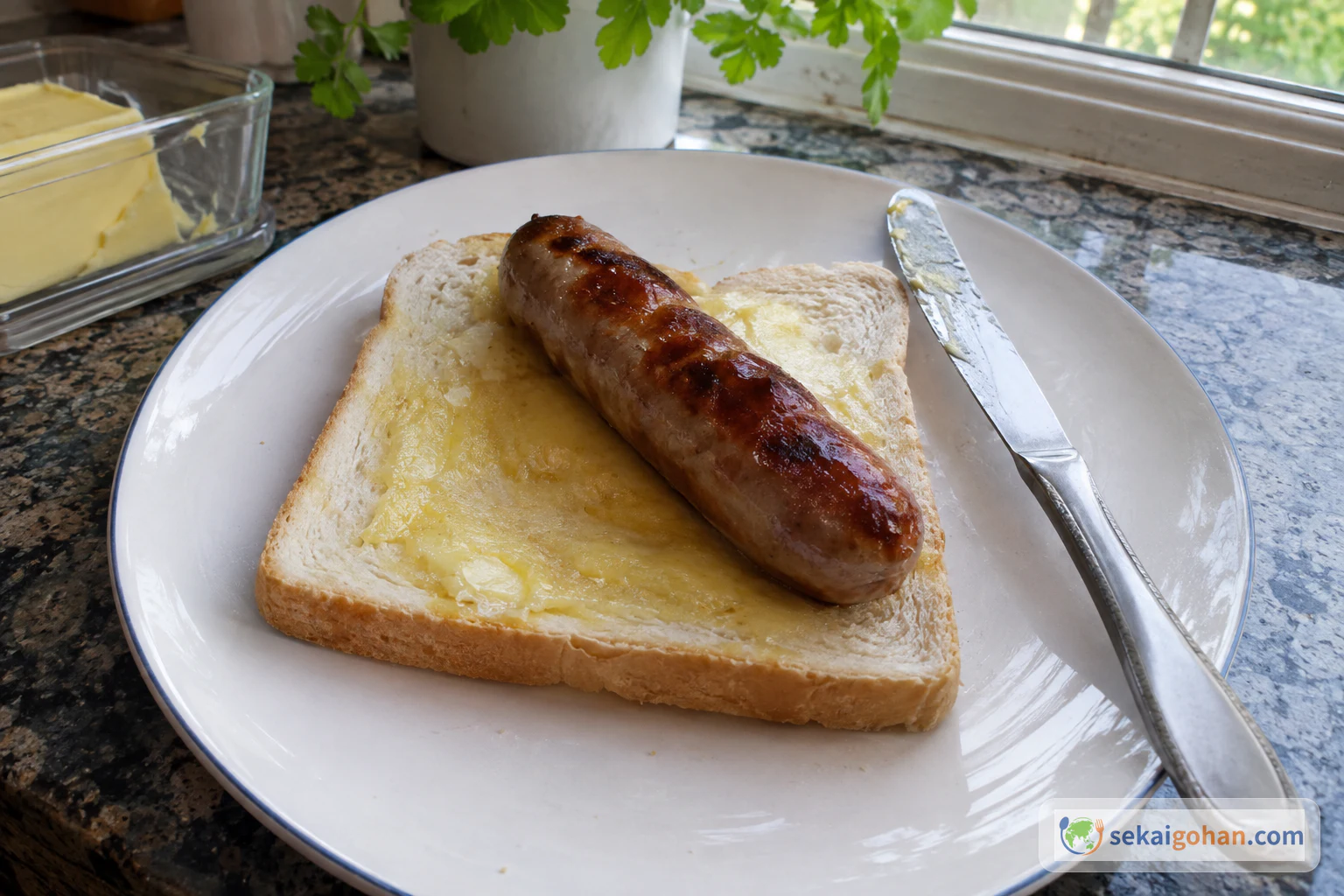
A thin layer of butter on the bread gives the onion something to stick to. Spread it right to the edges, and the onion stays put through the fold and the first bites.
Method
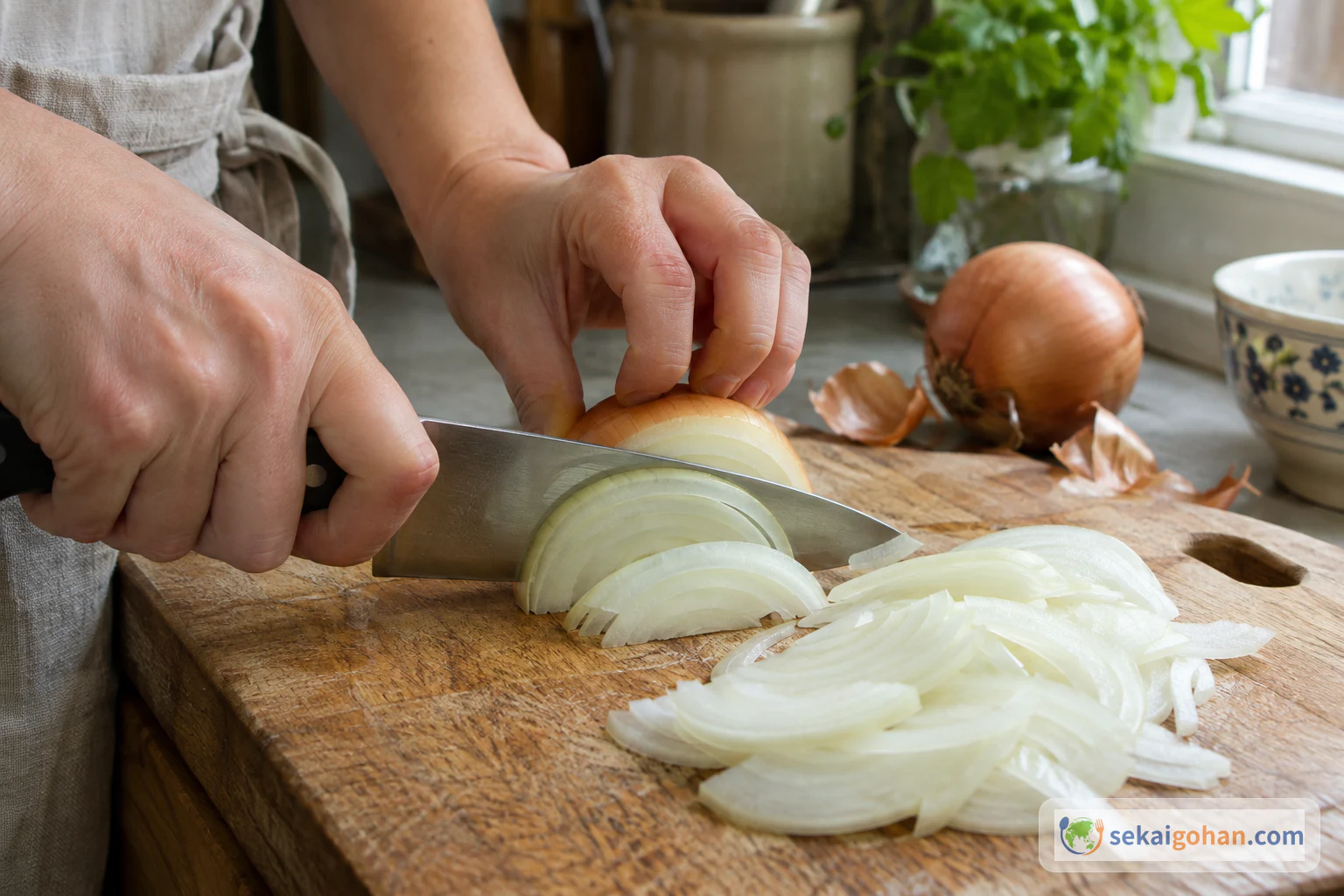
The onion and the sausages cook at the same time on separate heat, so slice the onion first and get it going, then start the sausages. While they turn, set out the bread, butter and sauce, and keep a clean plate and clean tongs ready for the cooked sausages. The thermometer check comes before any sausage touches the bread.
When it goes wrong
| What you see | Why | What to do |
|---|---|---|
| Onion slides out as you fold or bite | The onion has nothing to grip on dry bread | Butter the bread to the edges, or put the onion under the sausage |
| Sausages look done but read under 167°F (75°C) | The skin browns before the centre is cooked | Keep turning over medium heat and check again; serve only at 167°F (75°C) |
| Onion is pale and crunchy | It came off the heat too soon | Keep cooking until soft, limp and golden |
| Onion turns dark and bitter at the edges | The heat is too high or it sat unstirred | Lower the heat and keep it moving |
| Bread goes soggy and tears | Too much sauce, or onion with pooled oil | Use a single line of sauce and let the onion drain on the spatula before topping |
Serving and variations
At the table
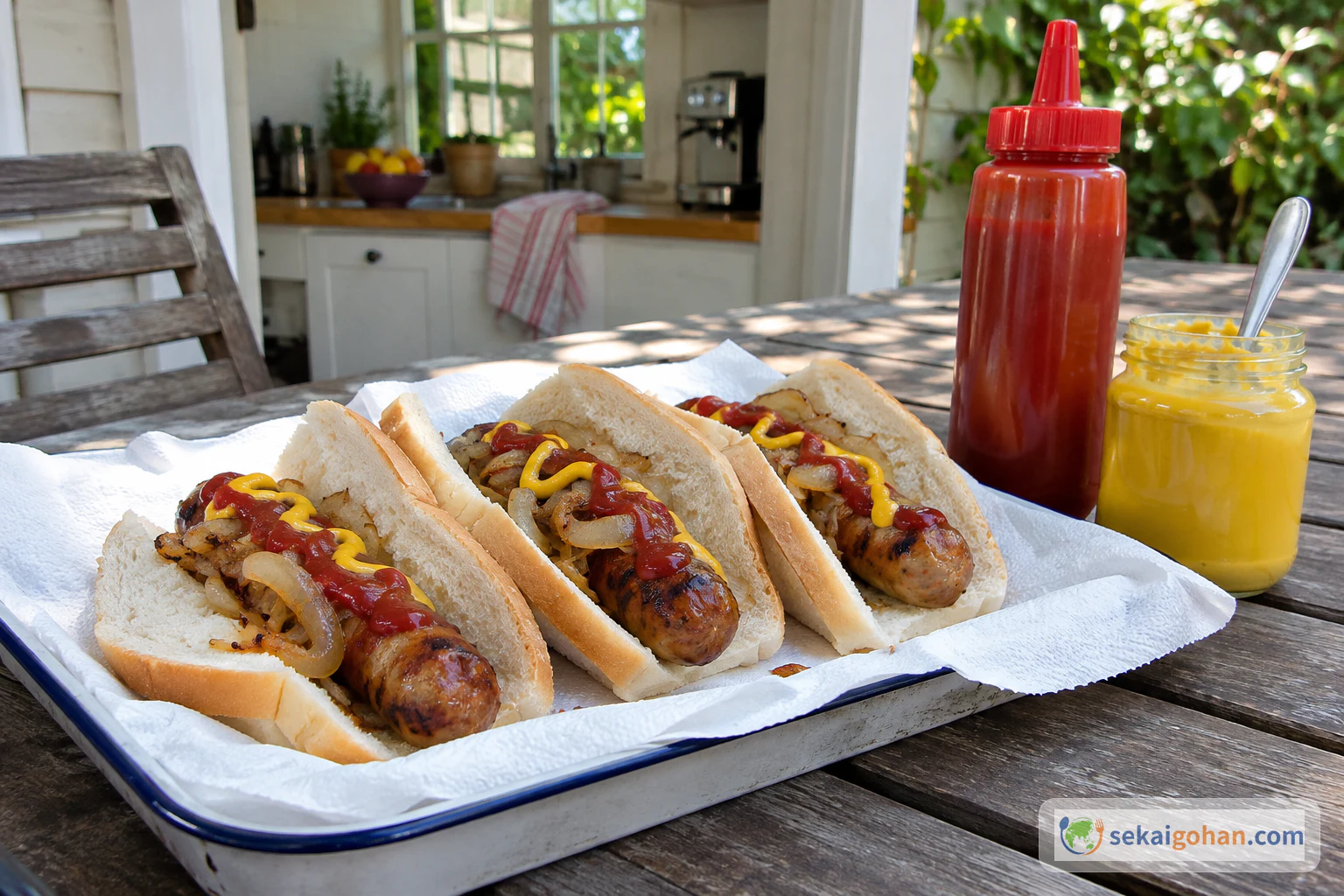
A sausage sizzle is eaten hot and by hand, on a paper napkin, usually standing. At home it suits a backyard barbecue, a school or club fundraiser, or the day you want to feed a crowd without plates. Set out tomato sauce, BBQ sauce and American mustard so people can add more at the table, and keep the onion warm on the edge of the plate as you assemble.
Variations
A Western Australian roll. Put the sausage in a soft hot dog roll with the onion and sauce. The roll holds everything more securely and eats more like a meal than a snack.
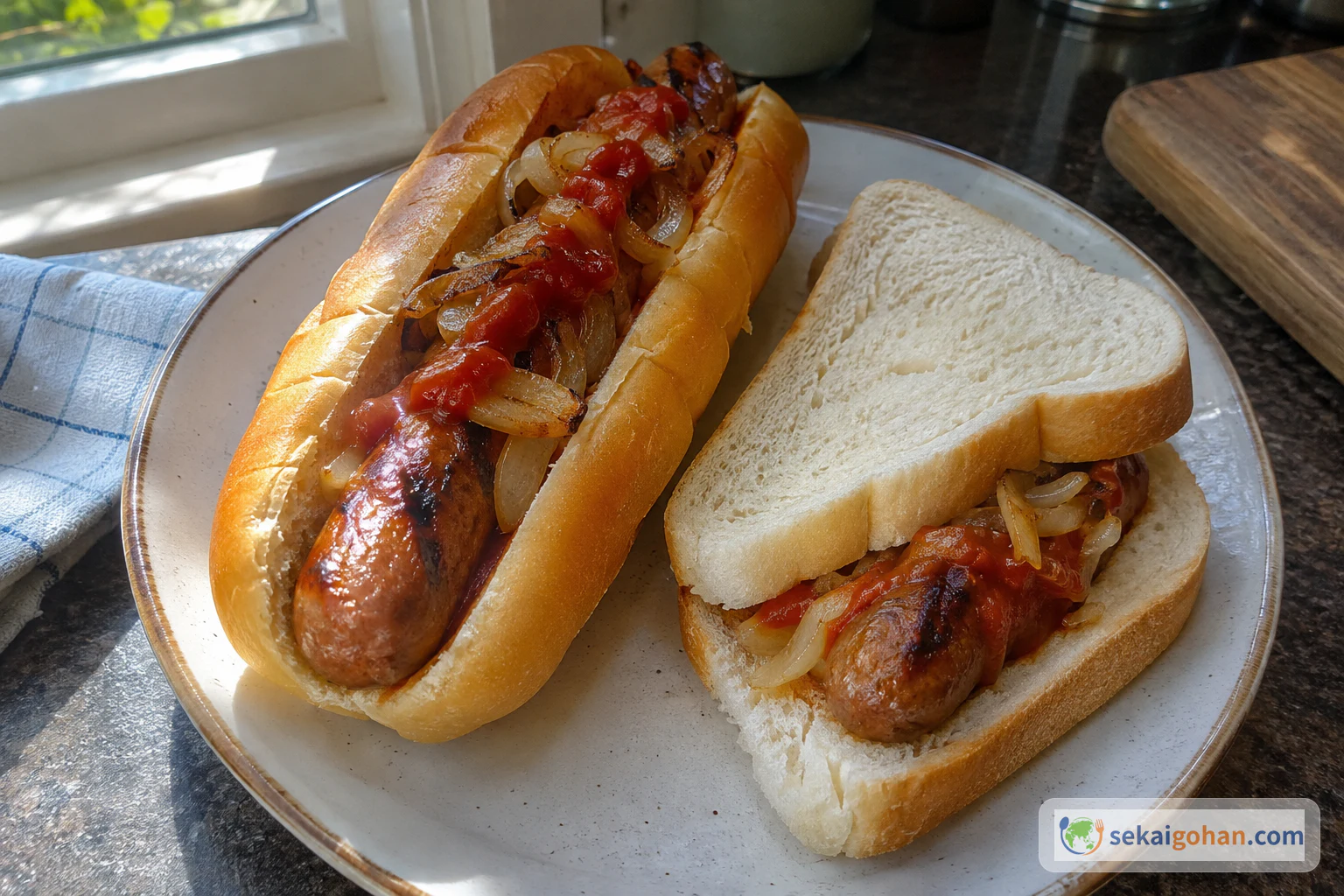
Toasted bread. Toast the slice for 1–2 minutes per side before adding the sausage. It gets a crisp surface and holds up better under sauce, though it folds less easily.
Different sauces. Swap the tomato sauce for BBQ sauce, mustard or chutney. Mustard adds heat that cuts through the fat; BBQ sauce and chutney push it sweeter and smokier.
Leftovers
Cook only what you will eat. Cooked sausages that cannot be cooled quickly are thrown away, not saved.
Frequently asked questions
Do I need a thermometer if the outside is well browned?
Yes. Browning shows you the skin, and the thermometer shows you the centre, which is the part that has to reach 167°F (75°C). Checking the thickest sausage on the plate takes a few seconds and settles it.
Can I leave out the onion?
You can. The sizzle becomes sausage, bread and sauce, saltier and simpler, and it is quicker to make for a crowd. Some recipes treat the onion as optional.
Can I use wholemeal bread or a crusty roll?
Both work. Wholemeal bread adds a nutty taste and a firmer bite, and a crusty roll gives you a chewier, more substantial sandwich. The classic sizzle stays with soft white bread because it folds easily and lets the sausage lead.