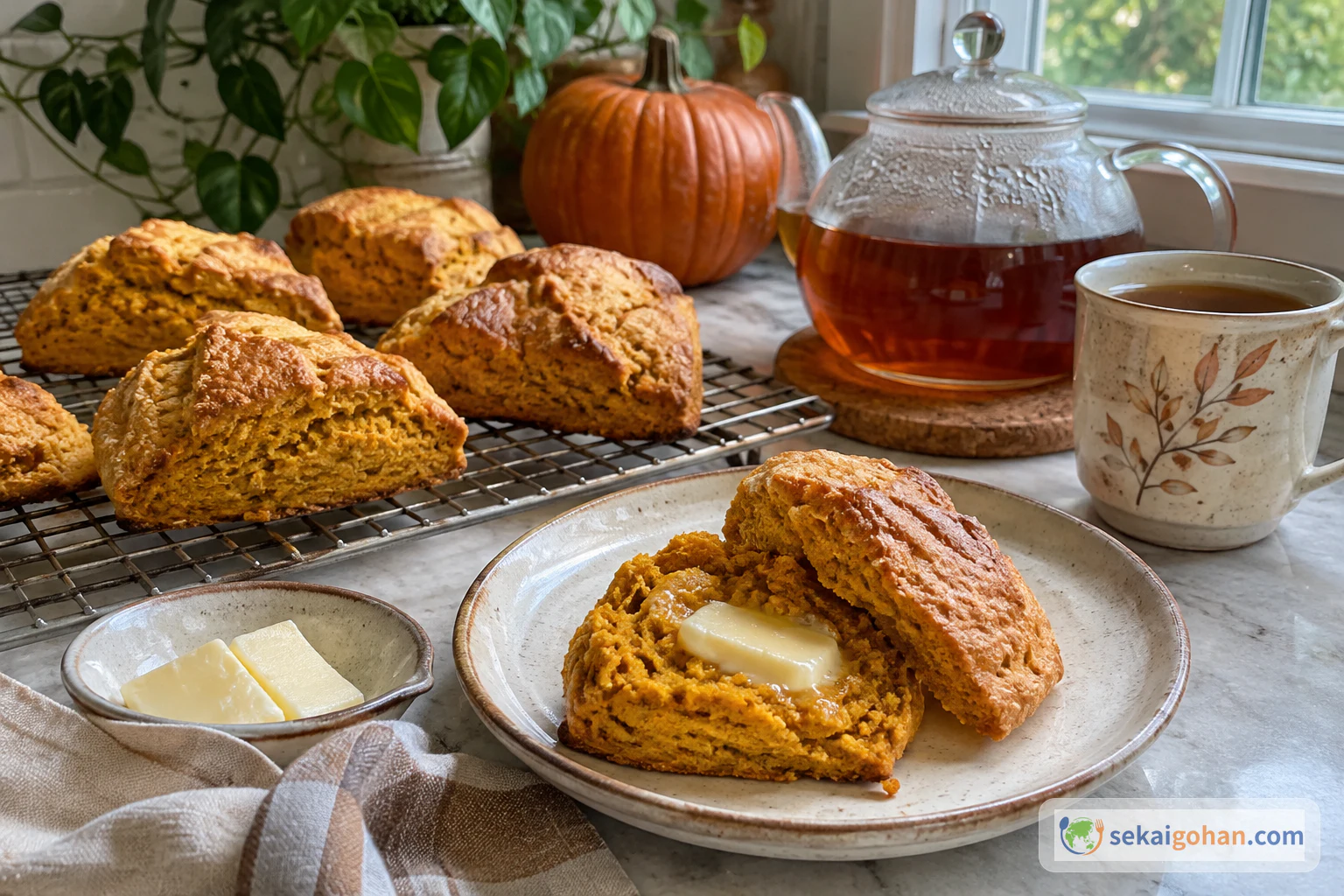
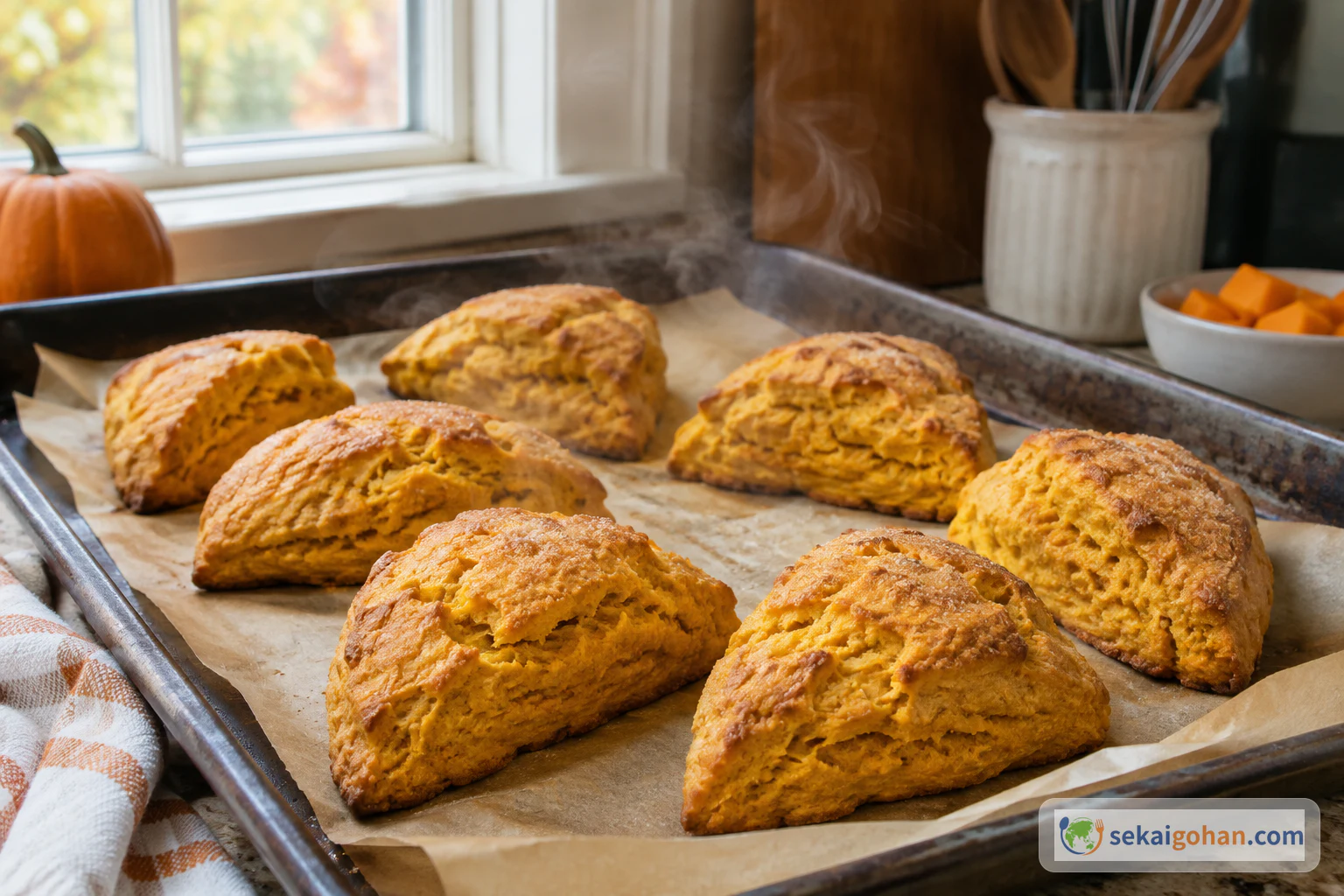
Split a pumpkin scone while it is still warm from the tray and the inside is orange, soft and faintly steaming, and a knob of butter slides straight into it. A pot of tea sits beside the plate, because that is where these belong. They are scones made with mashed pumpkin folded into a sweet, buttery dough, and they are one of Australia's best-known home bakes. The pumpkin gives them colour, a gentle sweetness and a tender crumb. Most of the skill lies in two things: how wet your pumpkin is, and how little you handle the dough.
A Queensland scone that went national
The pumpkin scone shares its method with the scones of Britain and Ireland: a quick dough, a round cutter, a hot oven, butter at the table. What sets it apart is the cup of mashed pumpkin and the noticeably sweet dough, which give it a softer, moister crumb and a colour no plain scone has. In Australia it is a fixture of afternoon tea, as much a part of the country's baking as anything else you will find on a page about Australian food.
Where it began
The scone is usually traced to Queensland, although where it was first made is not settled. The oldest known recipe is generally dated to 1912 and comes from Mitchell, a town in the state's south-west. By 1922 pumpkin scones had made it into an Australian cookbook. The early versions were close to what bakers make today, with flour, sugar, butter, milk, salt and pumpkin, raised with bicarbonate soda and cream of tartar, and sometimes bound with an egg.
What kept the recipe alive was the classroom. Pumpkin scones are recorded as part of Queensland's school home-economics teaching from 1936 to 1984, so generations of children learned to rub, fold and cut them at school before they ever baked them at home.
Lady Flo and the tea towels
From the late 1960s into the 1980s the scone had a second rise in fame, and it is tied to one person. Florence Bjelke-Petersen, known as Lady Flo, was the wife of Joh Bjelke-Petersen, Premier of Queensland from 1968 to 1987, and she later sat in the Senate herself from 1981 to 1993. Her pumpkin scones became famous across the country, and her recipe was printed on souvenir tea towels, two of which are now held in a library collection of Queensland textiles.
A recipe printed on a tea towel has room for very little: the ingredients, the order of mixing, one warning about handling and the oven. That shortness is the point. It is a scone meant to be baked from memory.
Ingredients
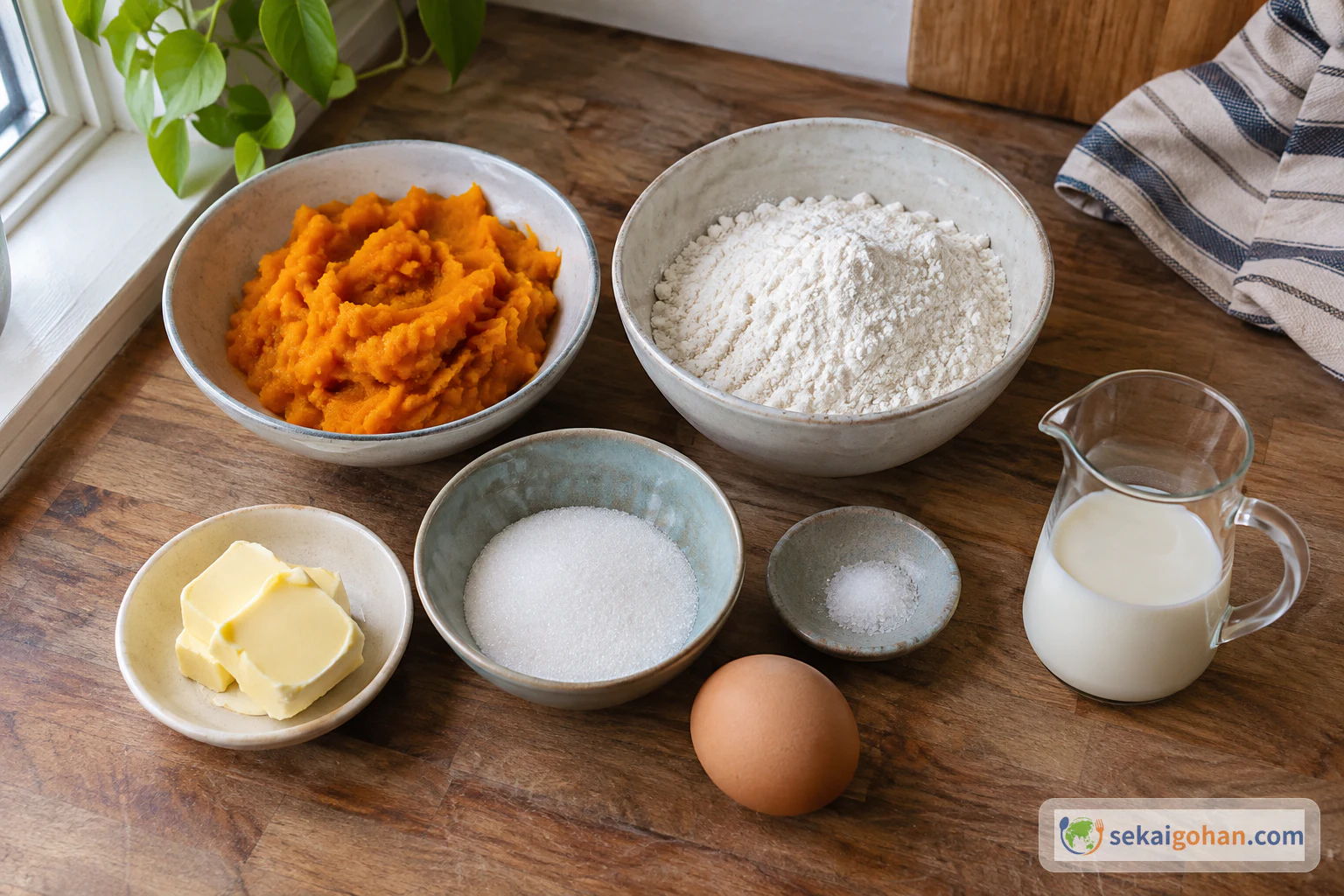
This recipe contains wheat (self-raising flour), egg and milk (butter, and milk if used).
Equipment
- Steamer or a pot with a steaming basket
- Baking dish for drying the pumpkin
- Sieve, for the pumpkin and the flour
- Electric mixer, or a mixing bowl and wooden spoon
- Australian measuring cups and spoons
- Round scone cutter, about 2¼ inches (5.5 cm)
- Baking tray, greased or lined with baking paper
- Wire rack
Choosing the pumpkin and the flour
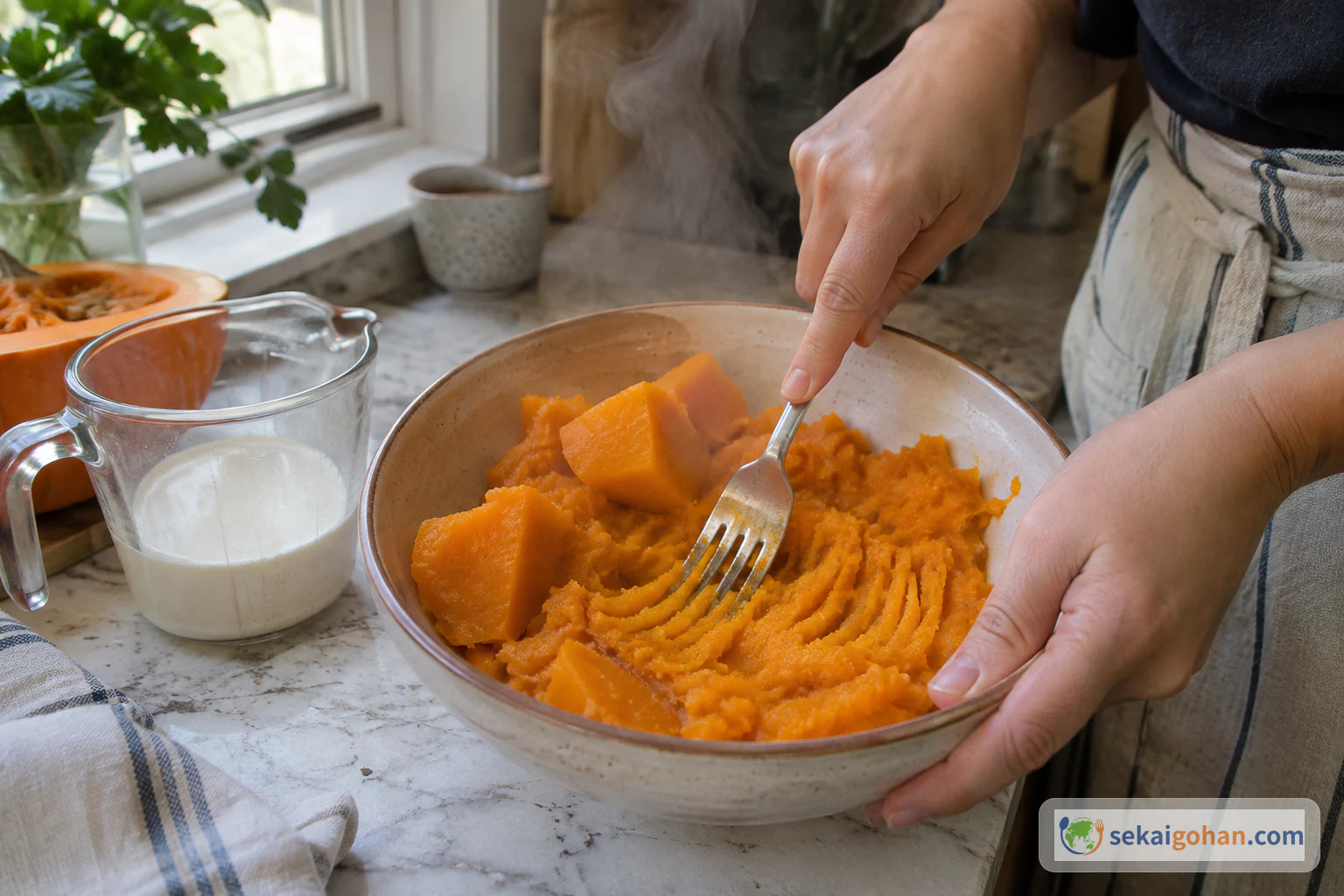
The pumpkin decides the dough. Jarrahdale and Queensland blue are the pumpkins suited to these scones. Pumpkins differ in how much water they hold, and a wet mash makes a slack, sticky dough that spreads instead of rising. Whatever variety you buy, steam it, dry the pieces in the oven and then sieve it, and you control the moisture yourself instead of leaving it to the pumpkin.
Self-raising flour is worth seeking out. All of the rise in this dough comes from the raising agent already in the flour, and no other leavening is added. If your supermarket does not stock it, look in an import grocer or order it online. Plain flour on its own will give you flat, dense rounds.
The sugar is ordinary sugar, and unsalted butter keeps the ¼ tsp of salt in charge of the seasoning. Use whatever egg you have.
Drying the steamed pumpkin in the oven before you sieve it is the move that most changes the result. A drier mash gives a dough you can pat out and cut cleanly, and it means you rarely reach for the milk.
Method
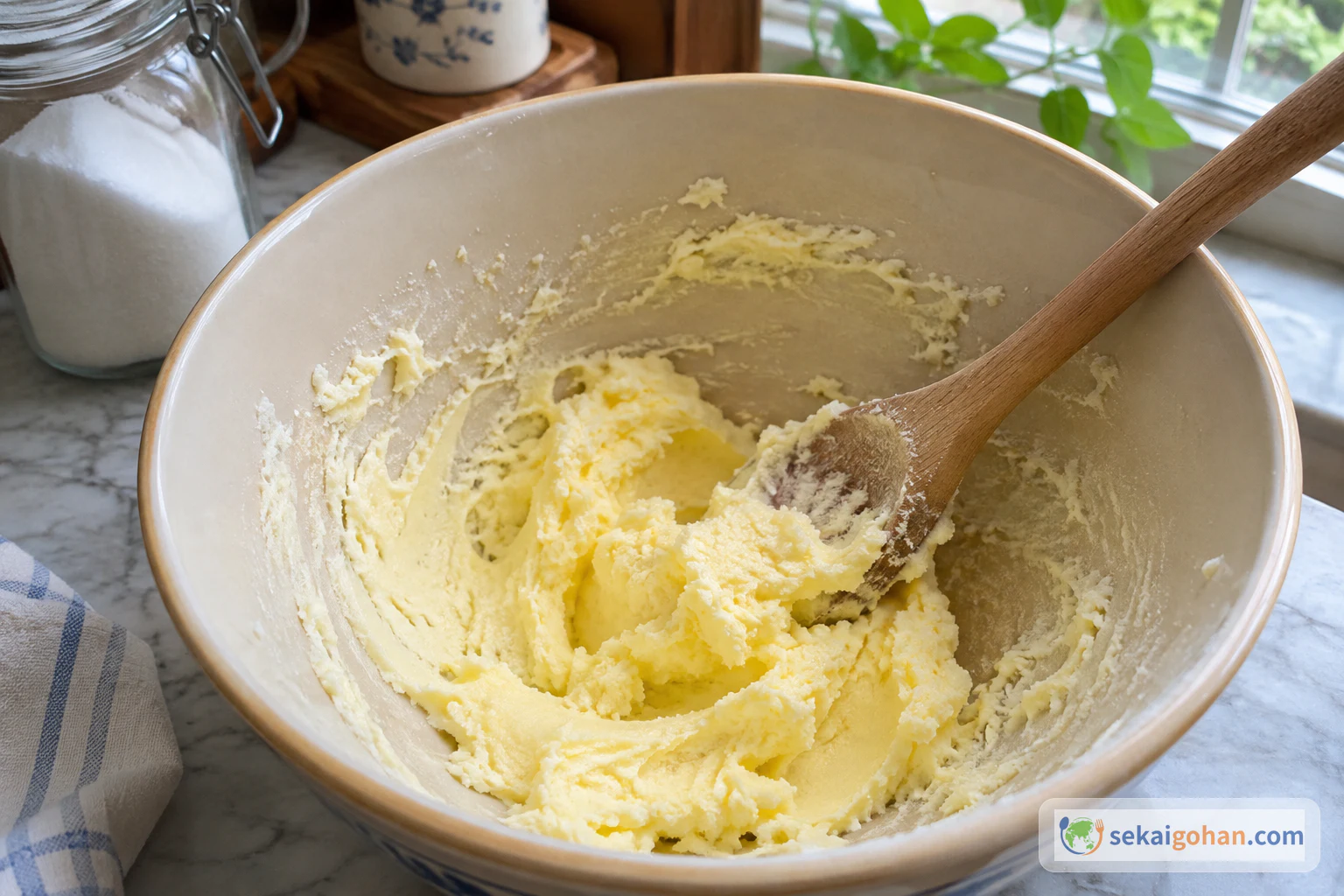
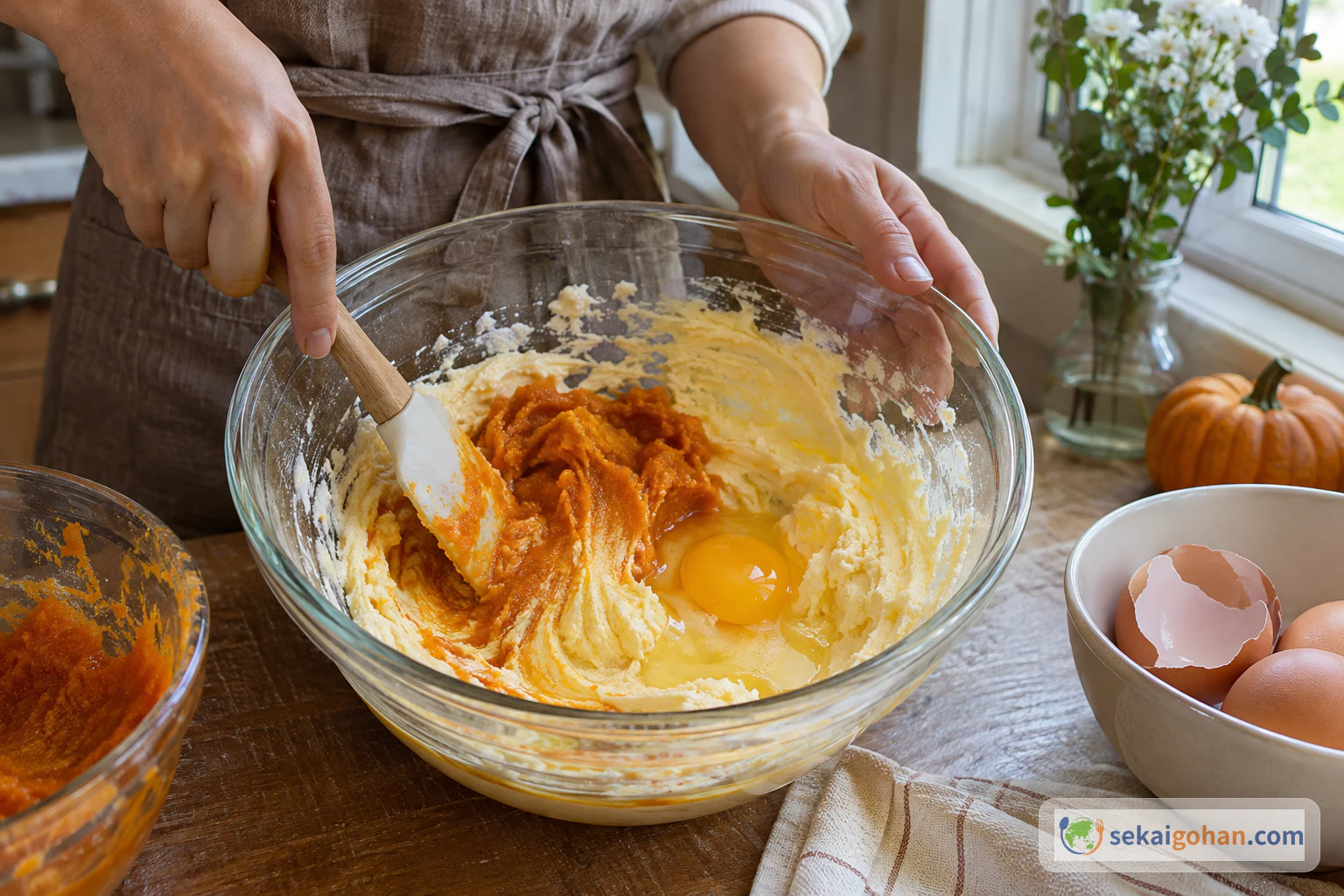
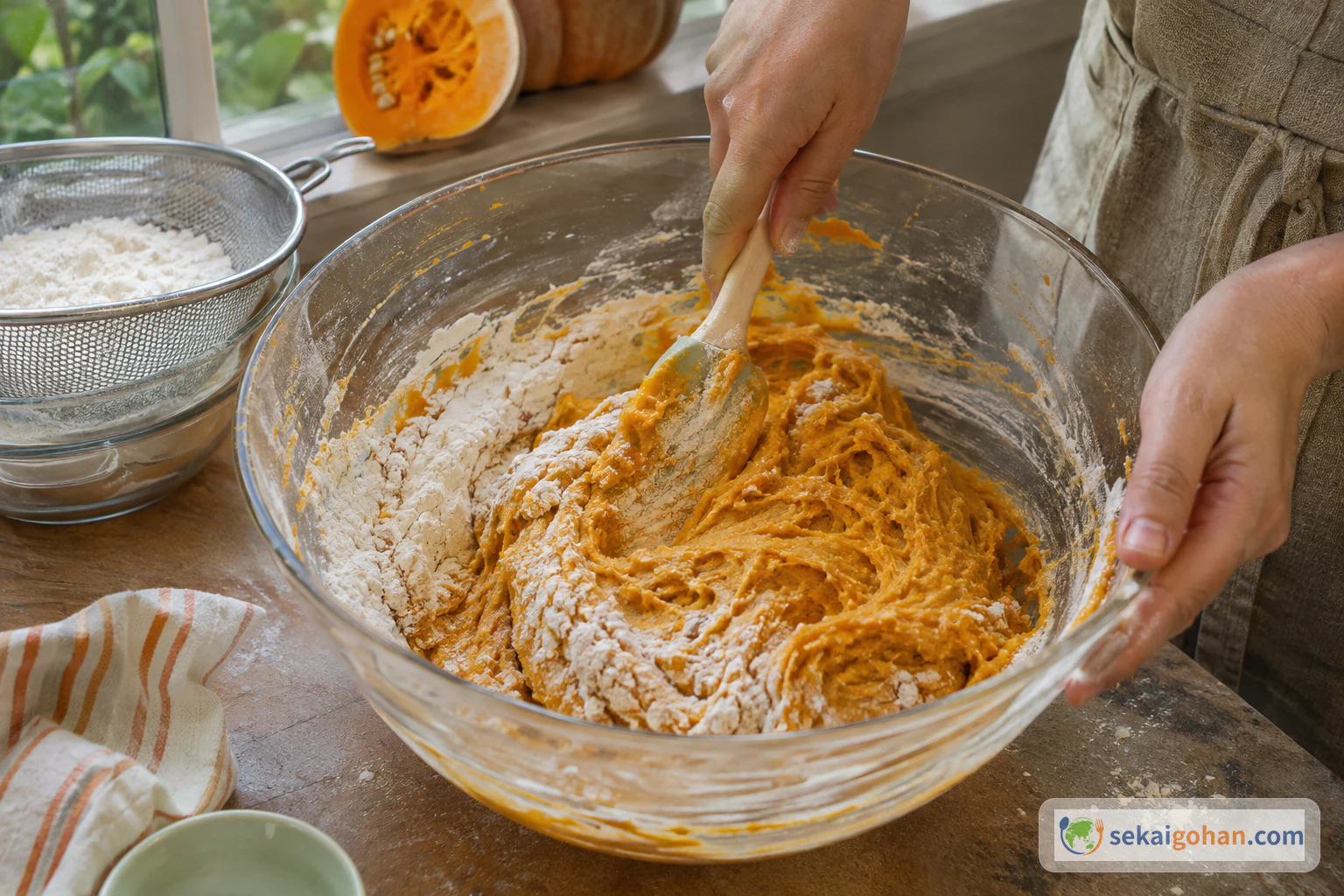
Cook the pumpkin first. It needs to be cold before it goes into the dough, so it is easiest to do this ahead, even the day before. After that the scones come together quickly: cream, add the egg and pumpkin, fold in the flour, cut, bake. Turn the oven up to full heat while you shape, because these go into a very hot oven.
The oven runs at 450°F (250°C). Use dry oven gloves, open the door away from your face, and set the hot tray down on a heatproof surface.
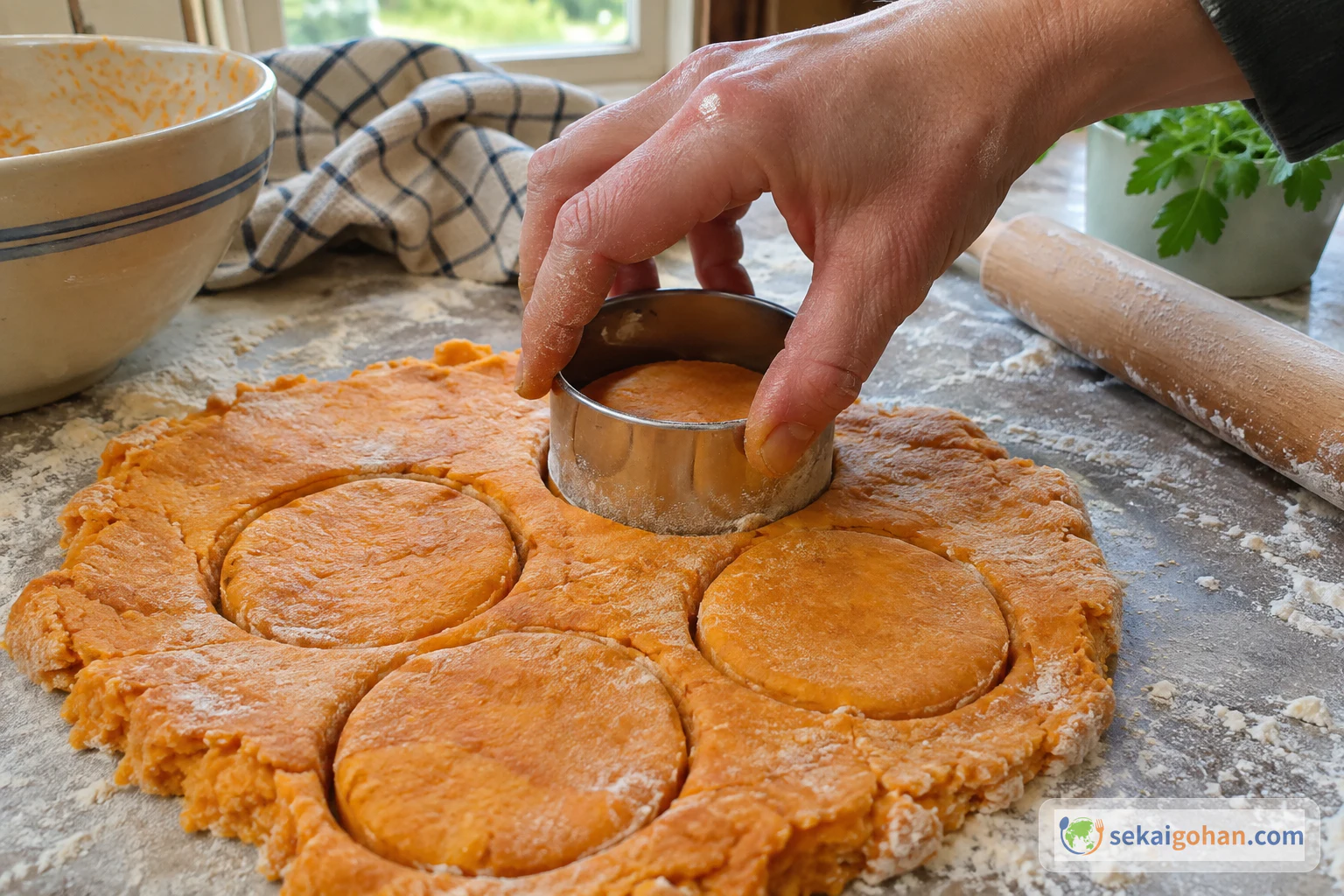
Twisting the cutter pinches the edges of the round shut, and a sealed edge rises unevenly. Push, lift, and move on to the next round.
When it goes wrong
| What you see | Why | What to do |
|---|---|---|
| Dough is slack and sticks to everything | The pumpkin mash was wet | Pat it out on a well-floured bench and handle it with floured hands. Next time, dry the steamed pumpkin in the oven before sieving |
| Dough stays crumbly and will not come together | The pumpkin was very dry | Add the 2 tbsp milk and fold just until it holds |
| Scones are tough and heavy | The dough was handled too much | Fold the flour in only until no dry flour shows, and pat the dough out instead of kneading it |
| Rounds rise lopsided | The cutter was twisted | Press straight down and lift straight up |
| Batter looks streaky after the pumpkin goes in | The egg was not fully beaten in first | Beat the egg in completely before adding the pumpkin |
Serving and making ahead
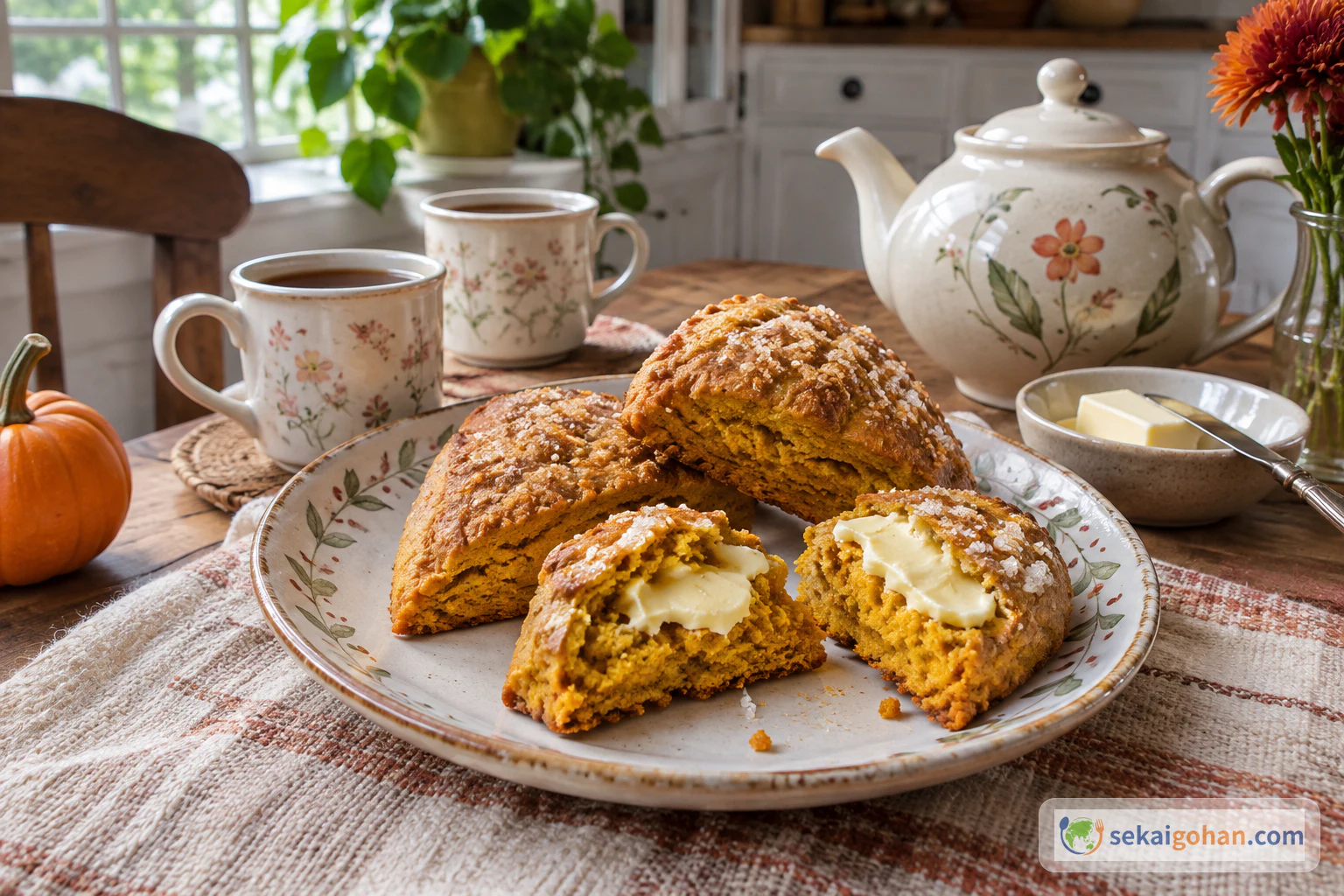
Serve pumpkin scones with butter, either warm from the oven or once they have cooled to room temperature. Warm, the butter melts straight into the orange crumb. At room temperature the sweetness of the pumpkin comes through more. Put them out with a pot of tea, the way they turn up at Australian afternoon teas and kitchen tables.
The pumpkin is the part to do ahead. Steam, dry and sieve it, and chill it in the refrigerator; the next day it is already cold and ready for step 3.
Another pumpkin scone recipe uses icing sugar, an egg yolk instead of a whole egg, and a grating of nutmeg. That dough has a different balance, so make it as its own recipe rather than adding nutmeg to this one.
Frequently asked questions
Can I cook the pumpkin the day before?
Yes. Steam, dry and sieve it, then keep it in the refrigerator. Cold pumpkin is exactly what the dough wants, so you can start straight at the creaming step the next day.
What if I can only find plain flour?
Buy self-raising flour if you can, from an import grocer or online. The dough has no other raising agent, so its rise depends entirely on the flour. The earliest pumpkin scones were raised with bicarbonate soda and cream of tartar, but they are a different recipe from this one.
Can I make the dough in a food processor?
Cream the butter, sugar and salt, and beat in the egg and pumpkin, with a mixer or a spoon. Fold the flour in by hand. A machine overworks the dough in seconds, and overworked dough bakes tough.