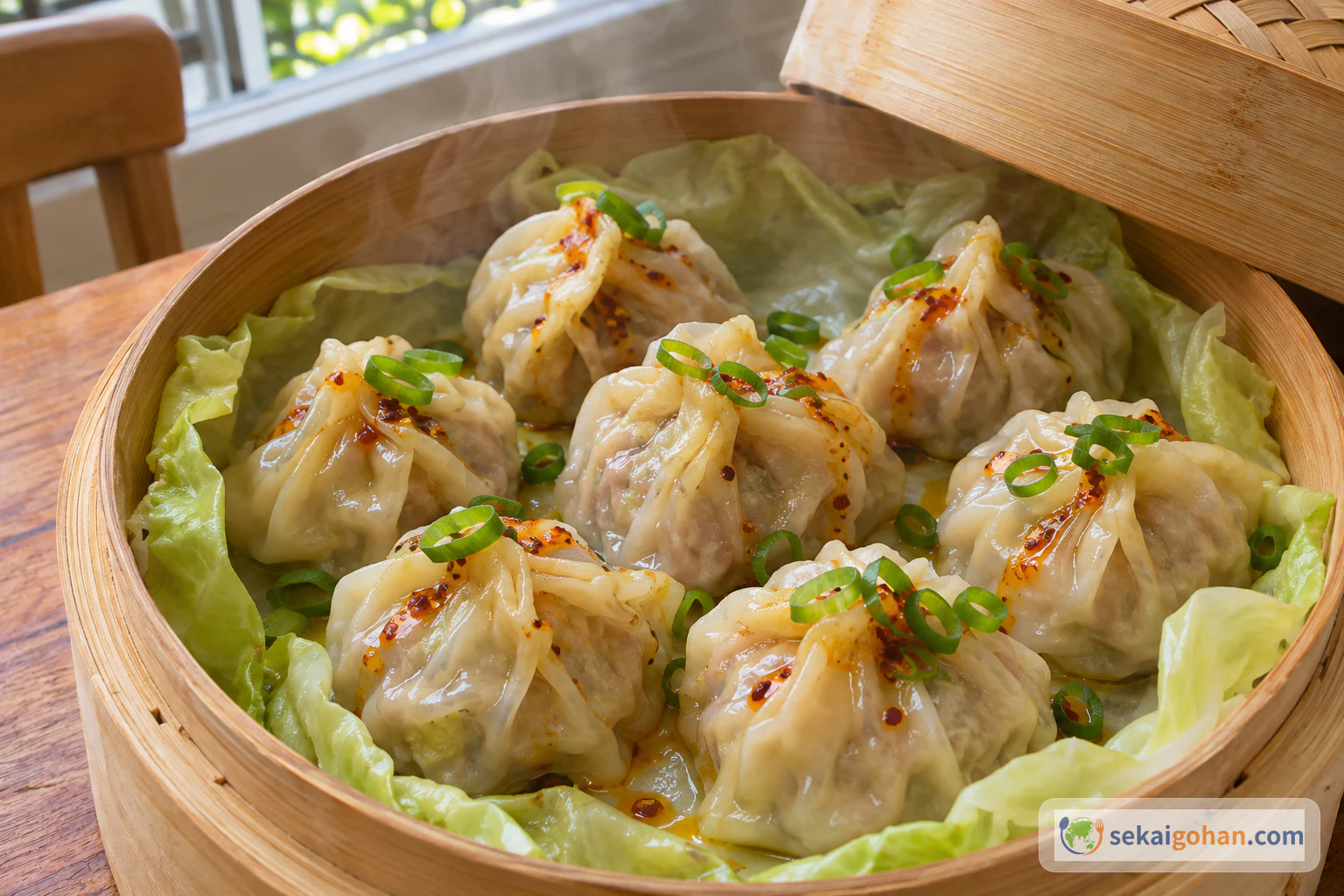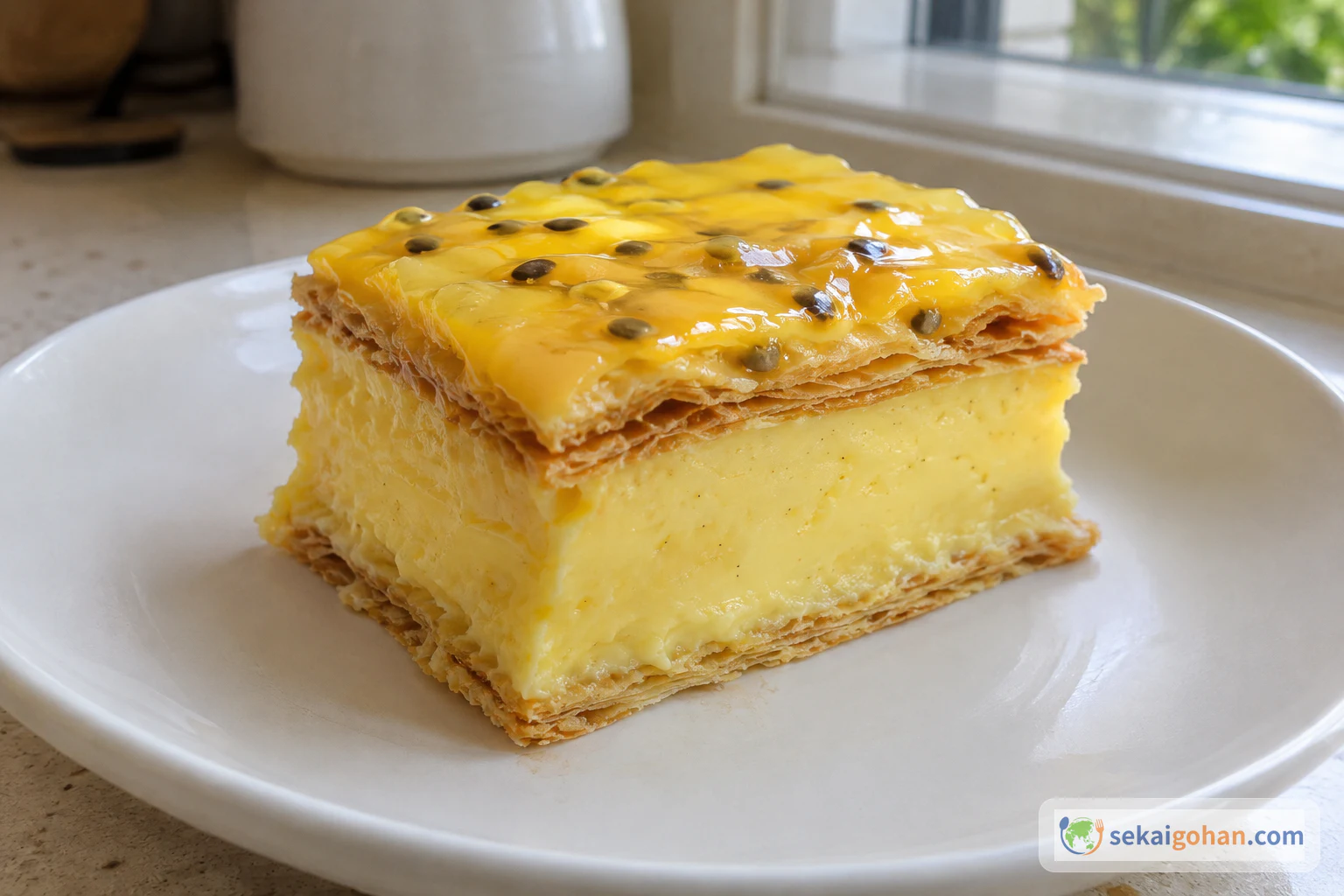
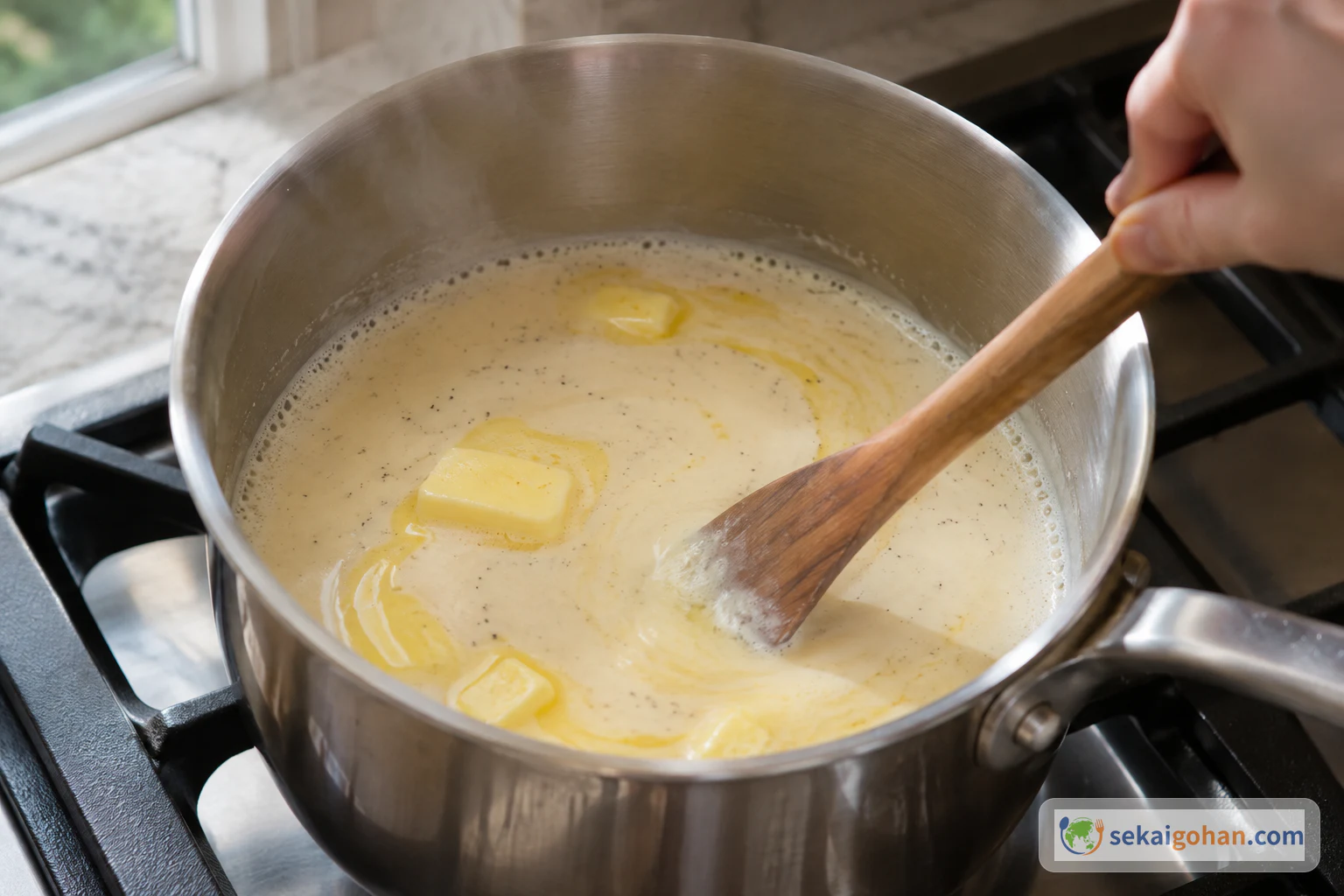
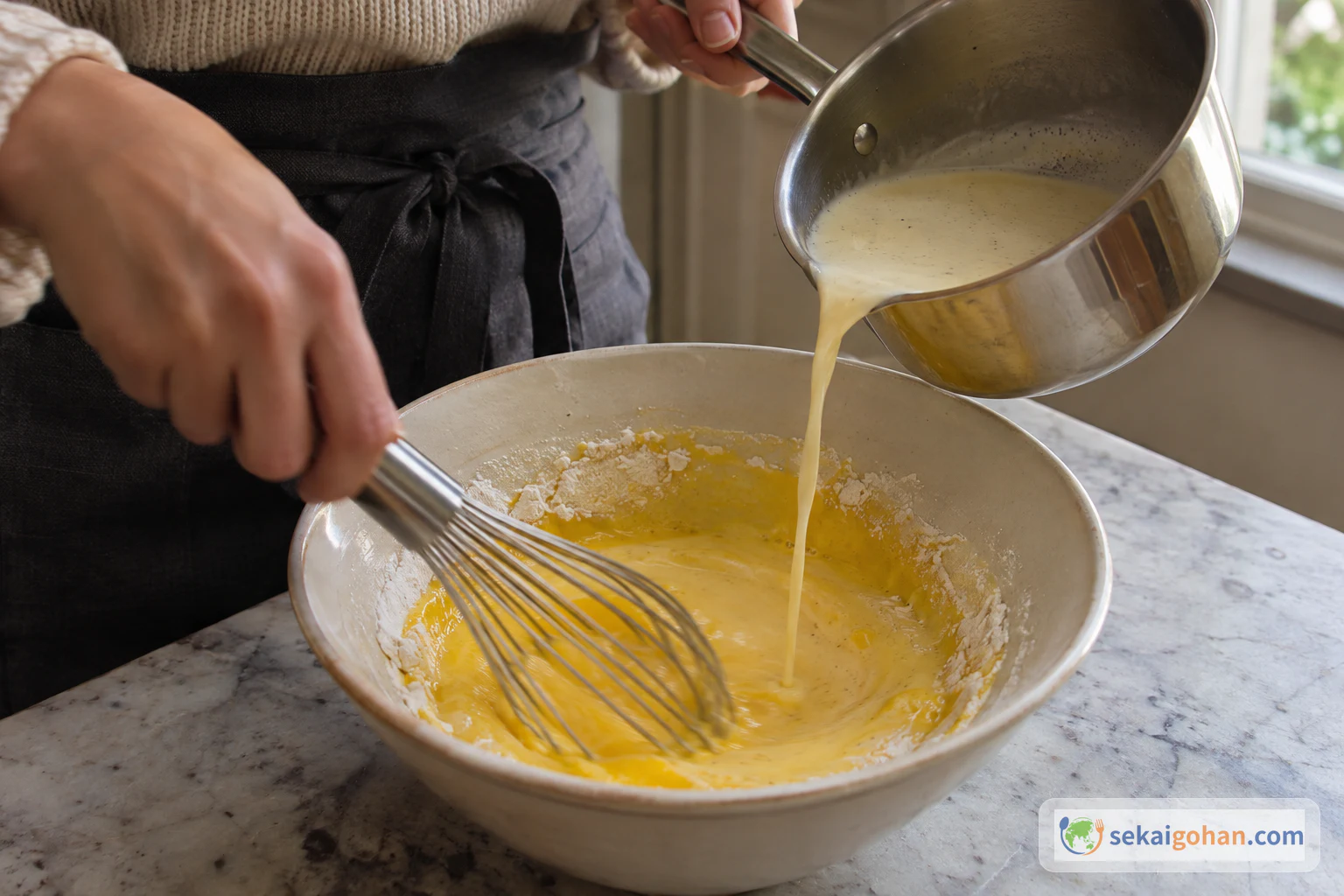
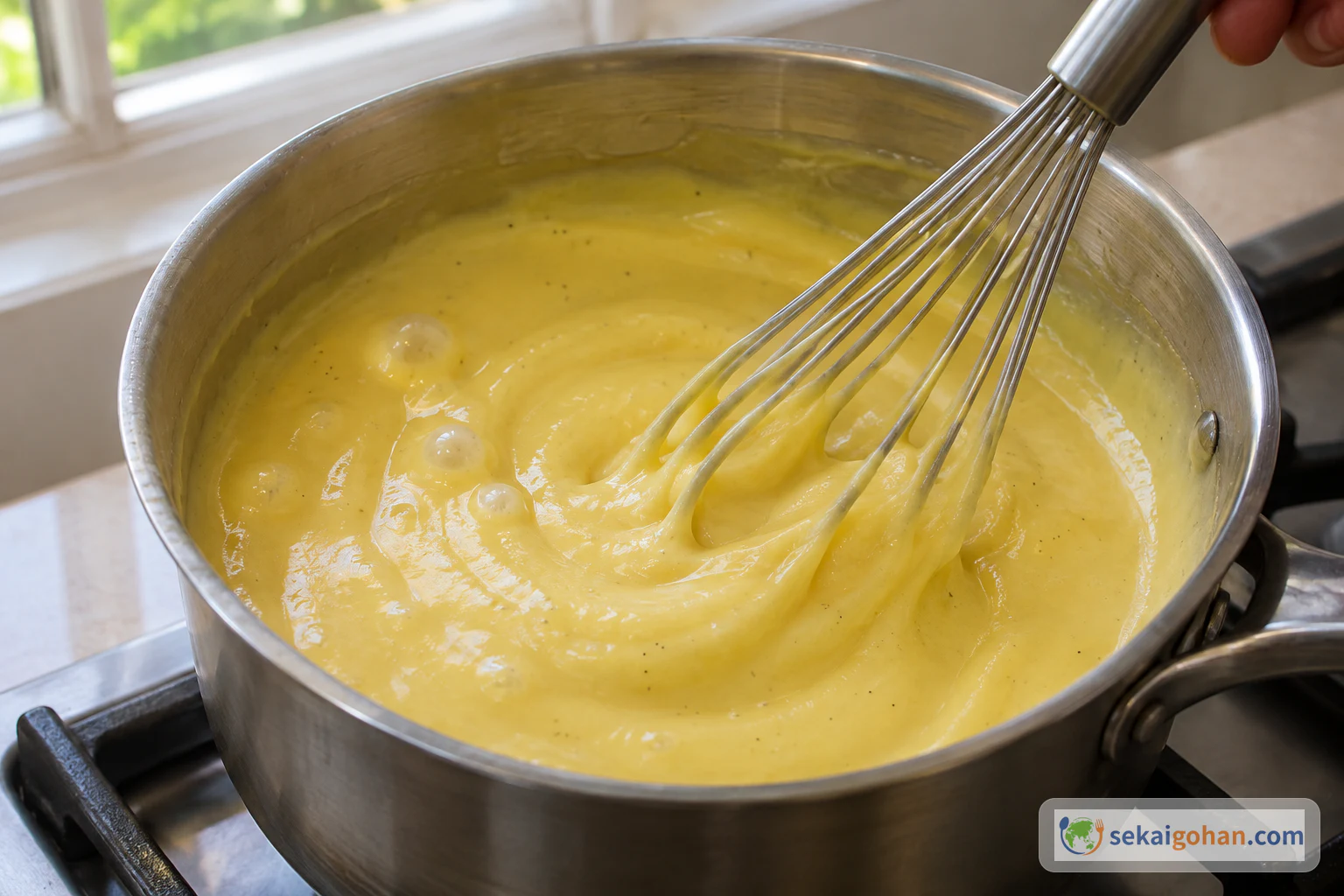
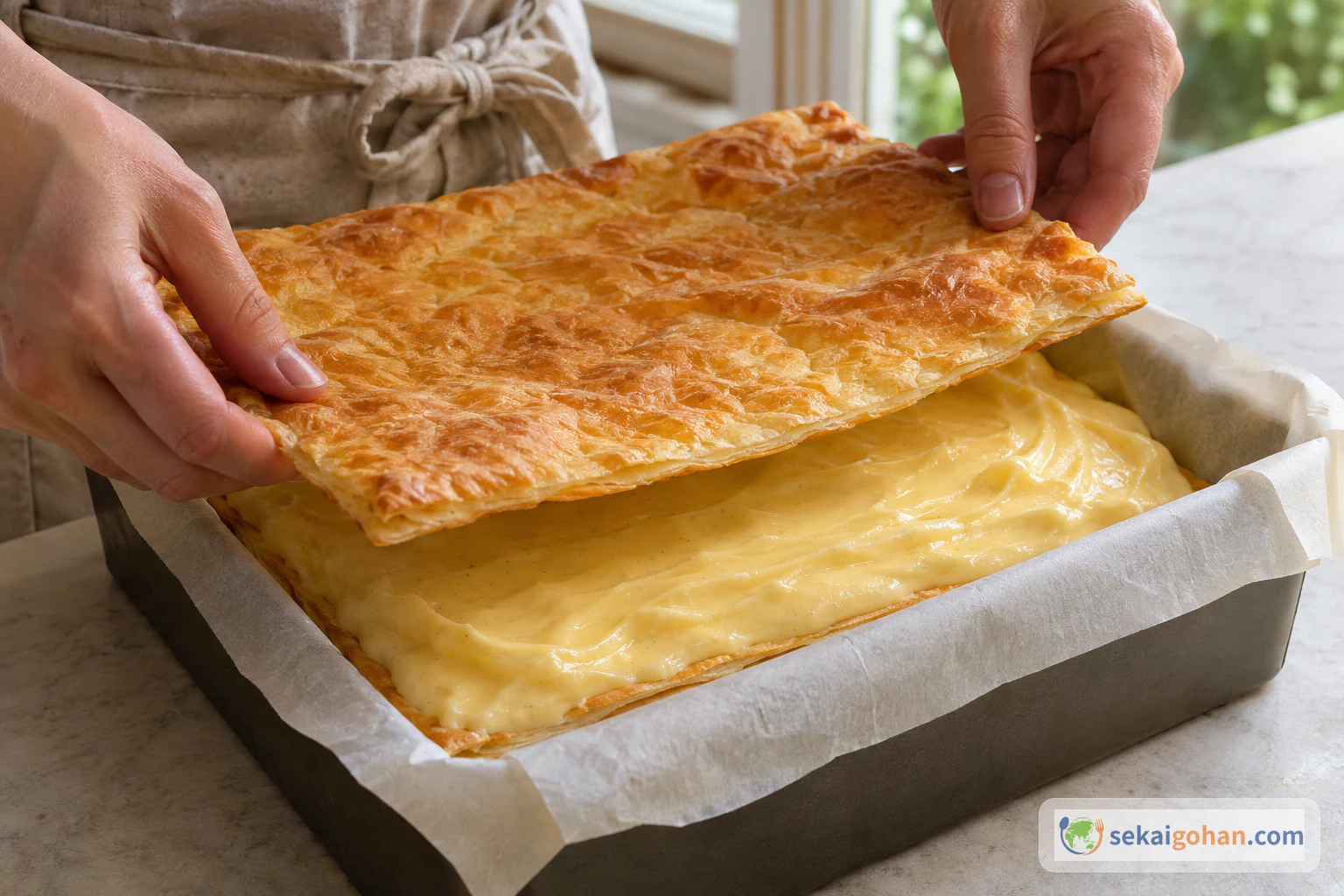
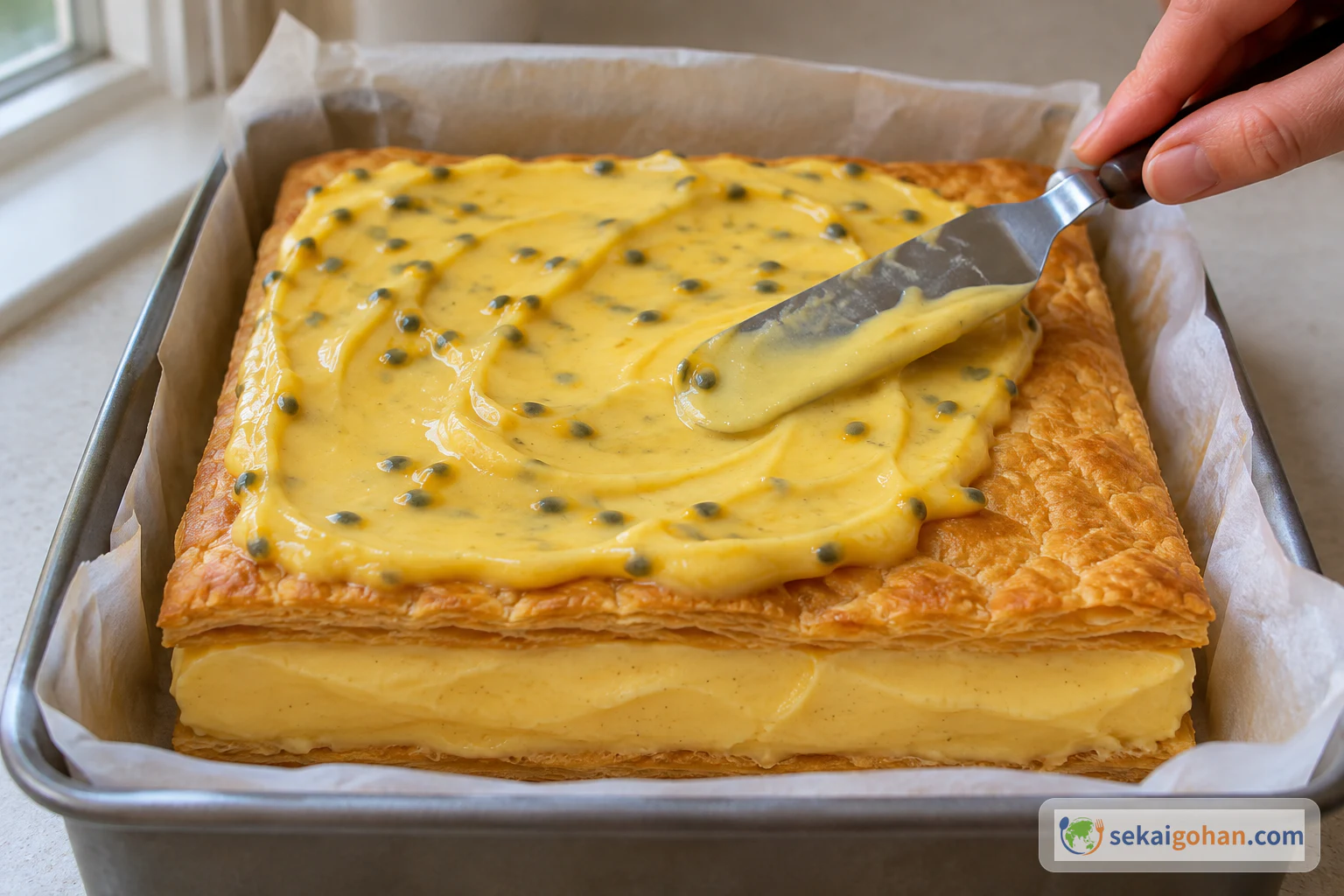
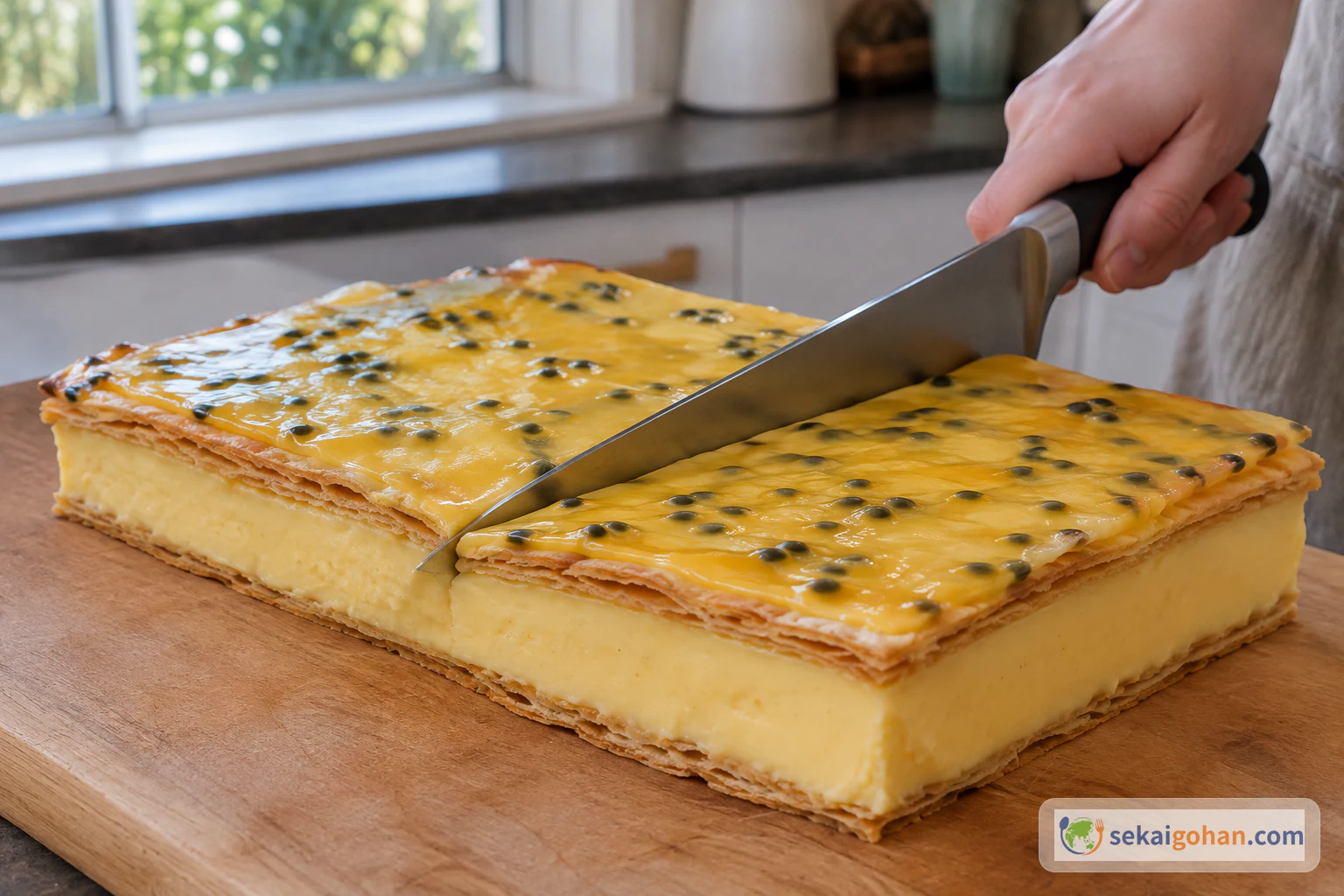
The custard decides everything. It boils in the pan, heavy and glossy, and you keep stirring after it already looks done while fat bubbles burst slowly through the surface. Hours later it comes out of the fridge as a tall, pale-yellow block between two thin sheets of crisp, flat puff pastry, under a passionfruit icing dotted with dark seeds. This is the vanilla slice from the counter of Australian bakeries. It is tall and hard to eat neatly. The yolks, cream and vanilla make the custard rich, the pastry shatters when you bite, and the tart icing cuts through the sweetness.
From mille-feuille to the snot block
Europe has a whole family of pastry-and-cream cakes: French mille-feuille, Polish kremówka, the Napoleon, kremšnita and krempita from the Balkans, and szegedinertorte. The vanilla slice clearly belongs to this family, but nobody has settled which of them it came from. The earliest relative usually mentioned is a gateau with frangipane in a French cookbook from 1651. Whatever its parent was, the Australian slice went its own way. A mille-feuille has a thin layer of custard. The Australian version has a thick one, so a slice stands tall on the plate, and every bite pushes the custard toward the edges.
Australian bakers judge a slice by that custard. They want it light and creamy, and they want it to hold when you bite into it. That is the standard this recipe aims for at home. The custard is thickened with cornstarch and egg yolks, boiled until it can stand up, and chilled firm before anyone picks up a knife.
A premier, a country town and a contest
In 1998 the Victorian premier, Jeff Kennett, praised a bakery in regional Victoria as the best in Australia. He called the vanilla slice "an important Australian culinary delicacy". That July he announced a competition, and on 23 October 1998 the first Great Australian Vanilla Slice Triumph was held in the town of Ouyen. Kennett stayed on as a judge until 2005. The contest later moved to Merbein and kept going, and at the 2016 event more than 18,000 slices were reported eaten. For a dish with no settled origin, it now has a firm place in Australia's food year. You can read more about the country's food on the Australia page.
Australians call it the snot block, the snot brick, phlegm cake and pus pie, all fondly. The nickname is thought to have started as local slang in central Victoria. It is a joke about the wobbling custard.
Ingredients (serves 12)
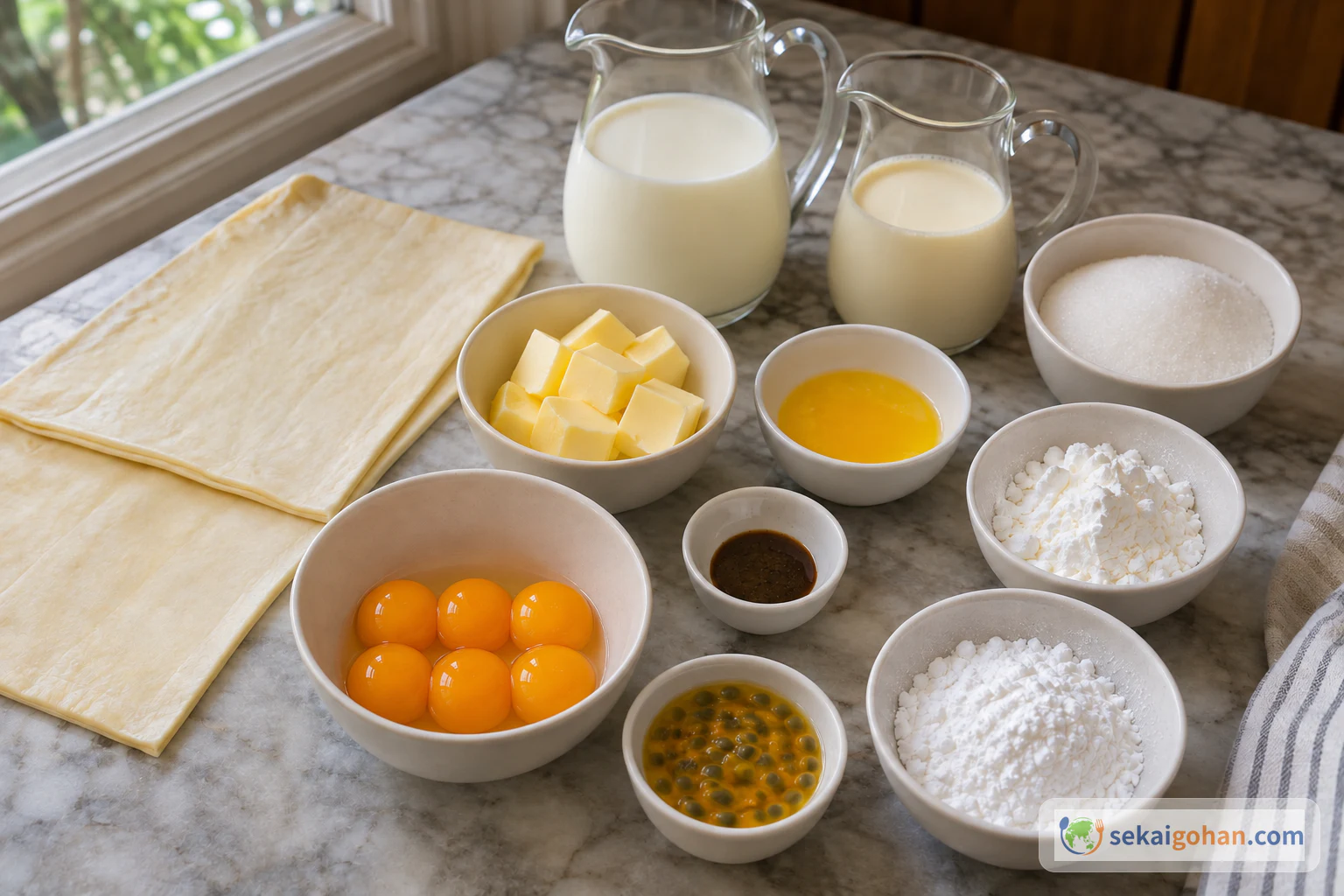
The custard butter and the icing butter go in at different stages. Keep them in separate dishes so you never have to stop mid-method and work out how much to take.
This slice contains egg, milk and wheat (in the puff pastry). Check the pastry label for other allergens and for shared-facility statements.
Use only clean eggs with no cracks. Do not wash eggs. Keep them in the fridge until you separate them. Raw or lightly cooked egg dishes should be avoided by older people, young children, pregnant people and anyone with weakened immunity. This custard is boiled, so give it the full boiling time, chill the slice promptly and keep it cold.
Equipment
- 2 baking trays, plus a third tray or another flat, heavy tray to use as a weight
- Baking paper
- Wire rack
- 8½-inch (22 cm) square cake tin
- Medium saucepan
- Large mixing bowl and a whisk
- Fine sieve
- Hand blender (for rescuing lumpy custard)
- Palette knife or spatula
- Large knife, or a serrated knife if your knife is small (an electric knife also works)
Choosing and substituting
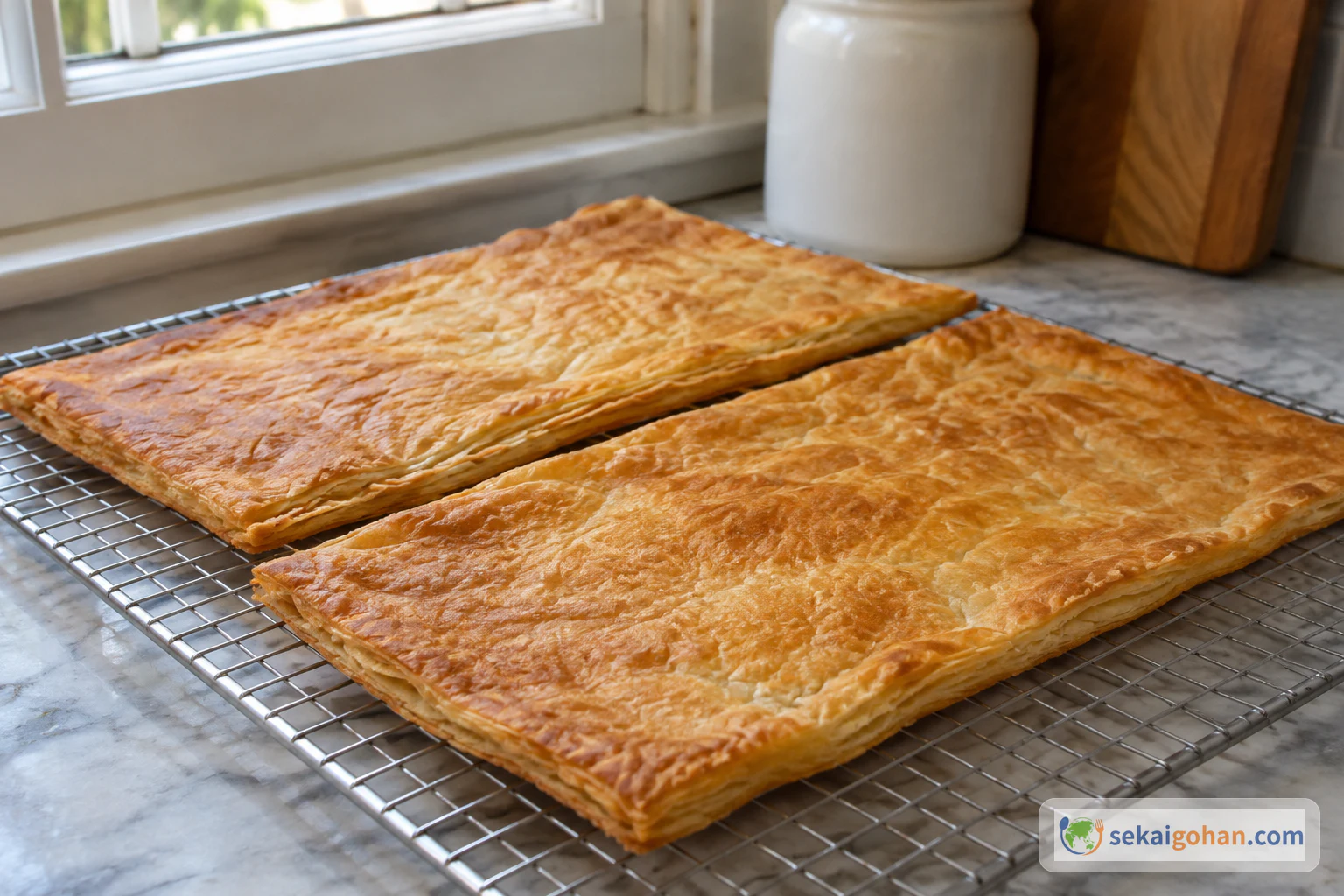
Butter puff pastry is the one thing worth looking for. All-butter frozen sheets bake into crisp, savoury layers that stand up to the sweet custard. Pastry made with margarine or vegetable shortening tastes flatter and greasier. Sheet sizes vary between brands, which is fine, because you trim the baked sheets to fit the tin.
For the cream, buy real dairy cream and avoid "cream" made from vegetable fat, which gives the custard a duller, slightly waxy flavour. Caster sugar is superfine sugar. Ordinary fine granulated sugar dissolves in the warm milk just as well. Icing sugar is the same as powdered or confectioners' sugar.
Fresh passionfruit gives the brightest flavour and plenty of black seeds, which are part of how a vanilla slice looks. Frozen or jarred passionfruit pulp lets you make it all year. Check the label, because some pulps are strained and come without seeds. With those, the icing tastes right but looks plain.
Method
Allow about 45 minutes of hands-on work and 30 minutes of cooking, then a long, quiet stretch in the fridge. Bake and cool the pastry first, so it is ready and trimmed the moment the custard comes off the heat. The custard has to go into the tin warm. The only time you cannot walk away is while the custard is on the stove, so have the bowl, whisk and sieve within reach before you start.
Cut straight from the fridge. A slice that is fully chilled cuts cleanly, and one that has sat out softens and squeezes custard out under the knife. An electric knife does the sawing for you.
When it goes wrong
| What you see | Why | What to do |
|---|---|---|
| Small lumps in the custard | The yolks set unevenly or the base caught | Push it through a sieve. For heavy lumps, blend off the heat with a hand blender, then reheat |
| Custard looks split or watery | It was overcooked | It cannot be fixed. Start a new batch and keep stirring over steady heat |
| The slice collapses or oozes when cut | Not chilled long enough, or the custard did not boil for the full time | Chill until firm. Next time, give the custard its full extra boil |
| Custard squeezes out under the knife | The knife was pressed straight down | Saw back and forth with a large or serrated knife, or use an electric knife |
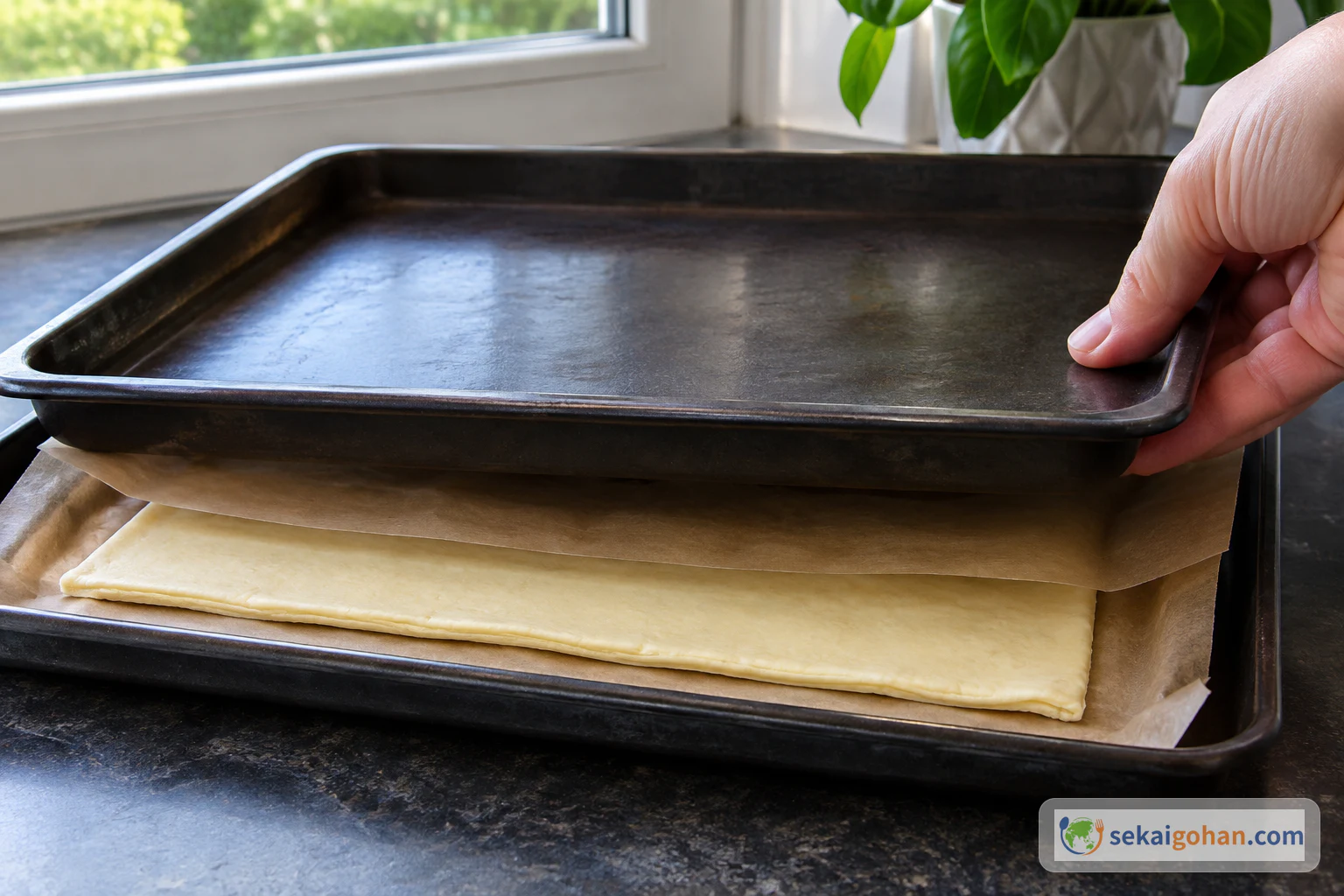
| Pastry is domed and the top sheet rocks | The pastry rose without a weight | Bake under baking paper and a second tray so the sheets stay flat |
Serving and variations
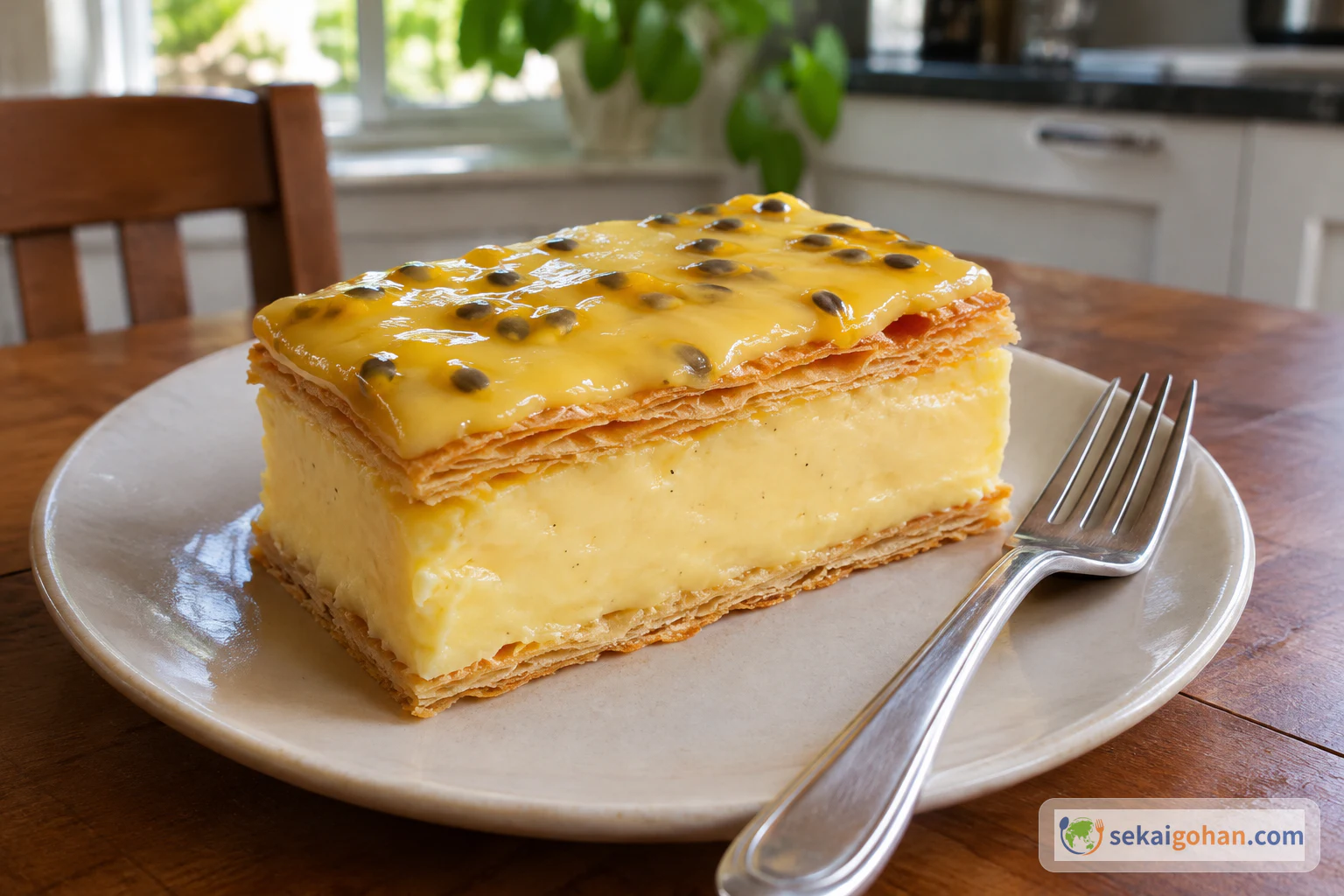
A vanilla slice belongs in the middle of the afternoon, next to a cup of tea or coffee, which cuts through the custard. Serve it cold from the fridge and hand out forks. The custard is soft, so most people end up using one.
Variations
- Lemon icing. Swap the passionfruit for lemon juice in the icing. You get a plain, sharp citrus top with no seeds, and the slice tastes cleaner and less tropical.
- Small café squares. Cut the slice into smaller pieces. They are easier to eat neatly, with more cut edges and a higher share of crisp pastry in each bite.
- Frozen passionfruit pulp. Using frozen pulp lets you make the classic icing out of season. Choose a seeded pulp to keep the look.
Storage
The slice is best on the day it is made. Keep it covered in the fridge below 41°F (5°C) and finish it by the next day. Do not freeze it, because the custard separates as it thaws.
Frequently asked questions
Does vanilla slice need gelatine?
No. The custard sets from the cornstarch and egg yolks, boiled until thick and then chilled for hours. That is why the extra boil and the long chill matter so much. They do the work gelatine would do in other custard cakes.
Is cornflour the same as cornstarch?
In Australia, cornflour means cornstarch, the fine white starch made from corn, and that is what to buy. Do not reach for potato starch or other starches. The thickening and set of this custard are built on cornstarch.
Can I use vanilla extract instead of vanilla bean paste?
Yes. The custard still tastes of vanilla, but you lose the fine black seeds that show through the pale custard. Paste gives you both the aroma and the look, so it is worth buying if you make this slice often.