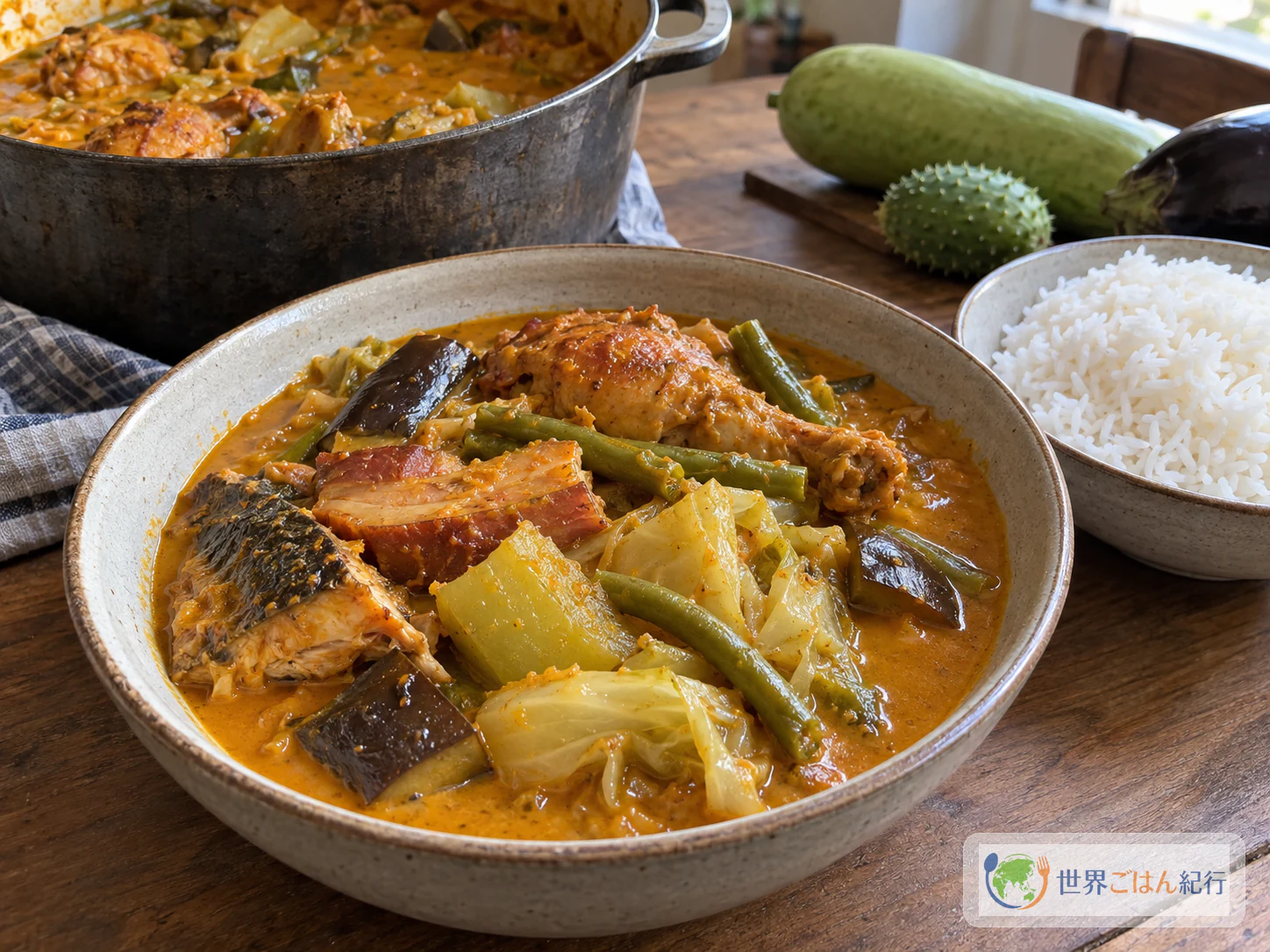
Fritanga: Chuquisaca Pork Ribs in Red Chili Sauce

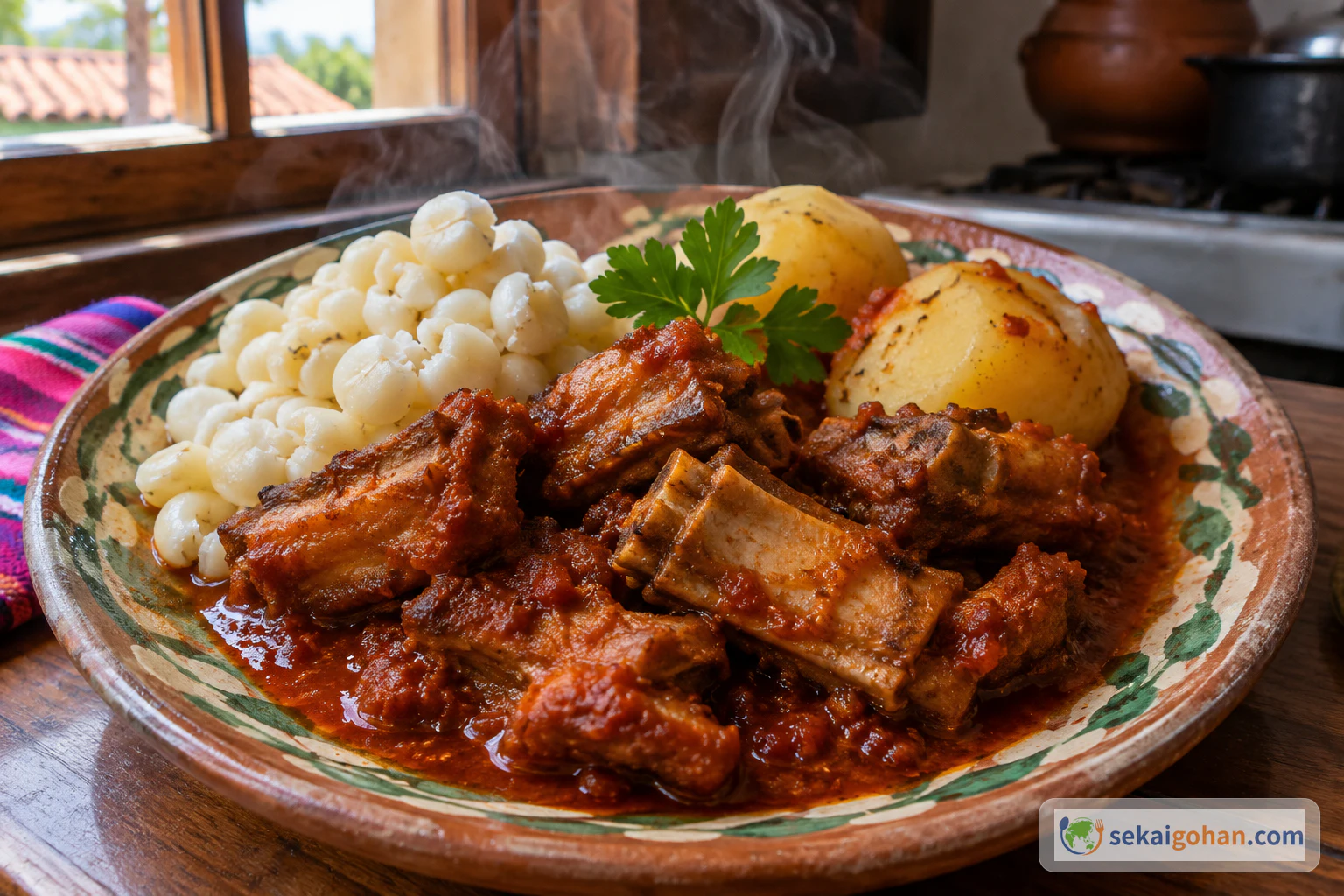
Chuquisaca-style Bolivian fritanga: fried pork spare ribs in red chili sauce with mote and potatoes on one plate
Level
Intermediate
Cuisine
Bolivian

Bolivian fritanga from Chuquisaca: pork ribs boiled, fried and simmered in red chili sauce with mote. Learn the chili cue, thick sauce and hominy swaps.

Cooking flow

Cooking steps

STEP 11 / 10

Soak the mote overnight

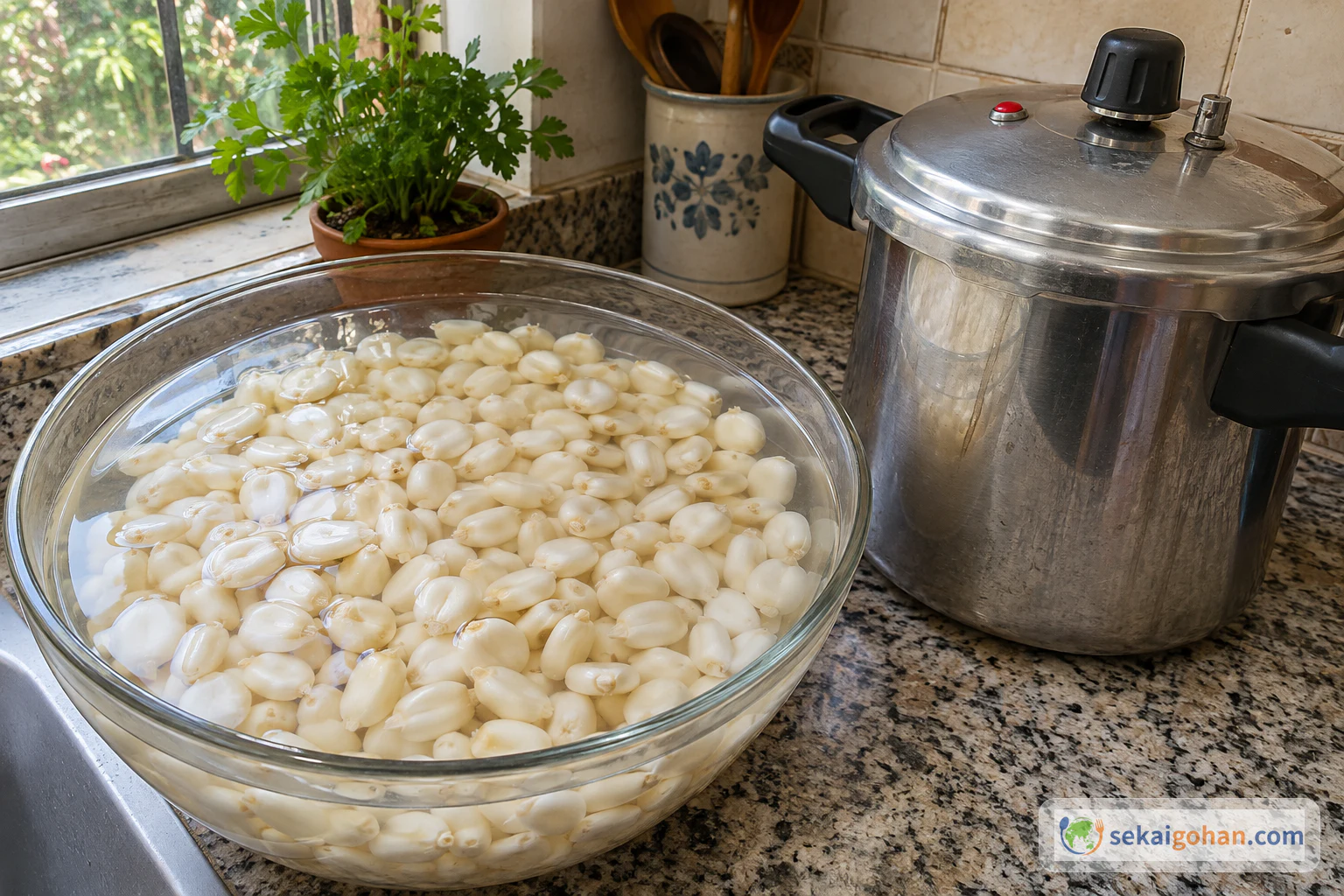
Peeled mote kernels soaking in a large bowl of water, a pressure cooker beside it
Keep the kernels fully under water; any that sit above the surface soften unevenly

Put the mote in a large bowl and cover it well with water, leaving room for the kernels to swell. Leave it to soak overnight. Do not drain it in the morning, because the same water goes into the pressure cooker. The kernels are ready when they look fuller and swollen.

STEP 22 / 10

Pressure-cook the mote without salt

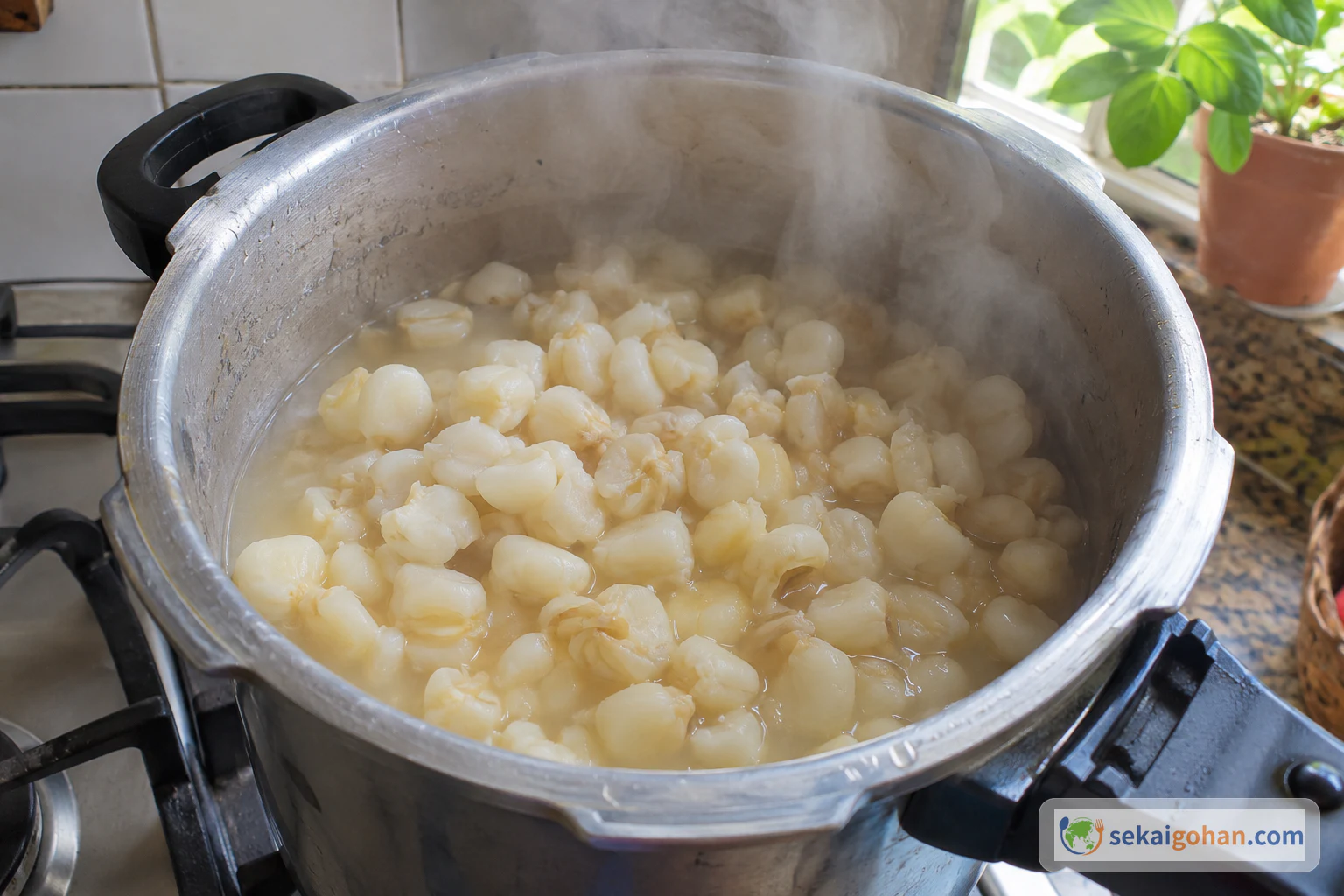
Cooked white mote in its liquid in an open pressure cooker, steam rising
Cooked mote splits open slightly at the top and looks swollen and soft

Tip the mote and its soaking water into the pressure cooker. Do not add salt. Cook it following your pressure cooker's manual and keep the contents below the cooker's maximum fill line. Open it once the pressure has released and bite a kernel. It is done when the kernel is soft and plump all the way through, with a gentle chew.

Pressure cooker

Corn foams and swells as it cooks. Never fill past the maximum line marked for grains and pulses. Let the pressure release the way your manual says before you open the lid.

STEP 33 / 10

Cut and season the ribs

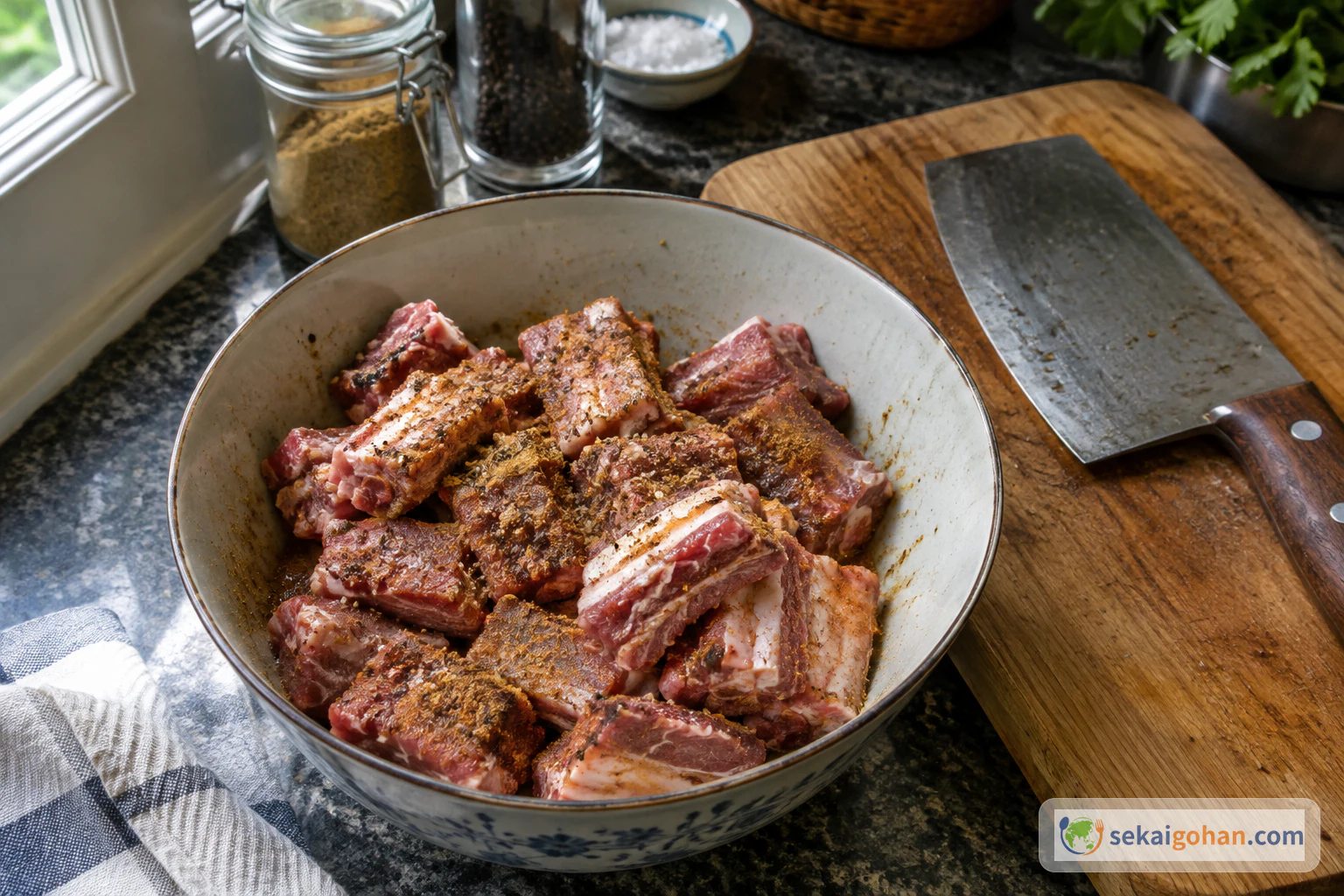
Small pieces of raw pork spare rib in a bowl coated with cumin, black pepper and salt, cleaver and board beside it
Rub the seasoning into the cut faces as well as the outside of each piece

Cut the spare ribs into small pieces, if the butcher has not done it already. Put them in a bowl and season them with salt and part of the pepper and cumin. Toss with your hands until every piece is coated. The meat is ready when you can see the spice speckled evenly over every cut surface.

STEP 44 / 10

Boil the ribs and save the broth

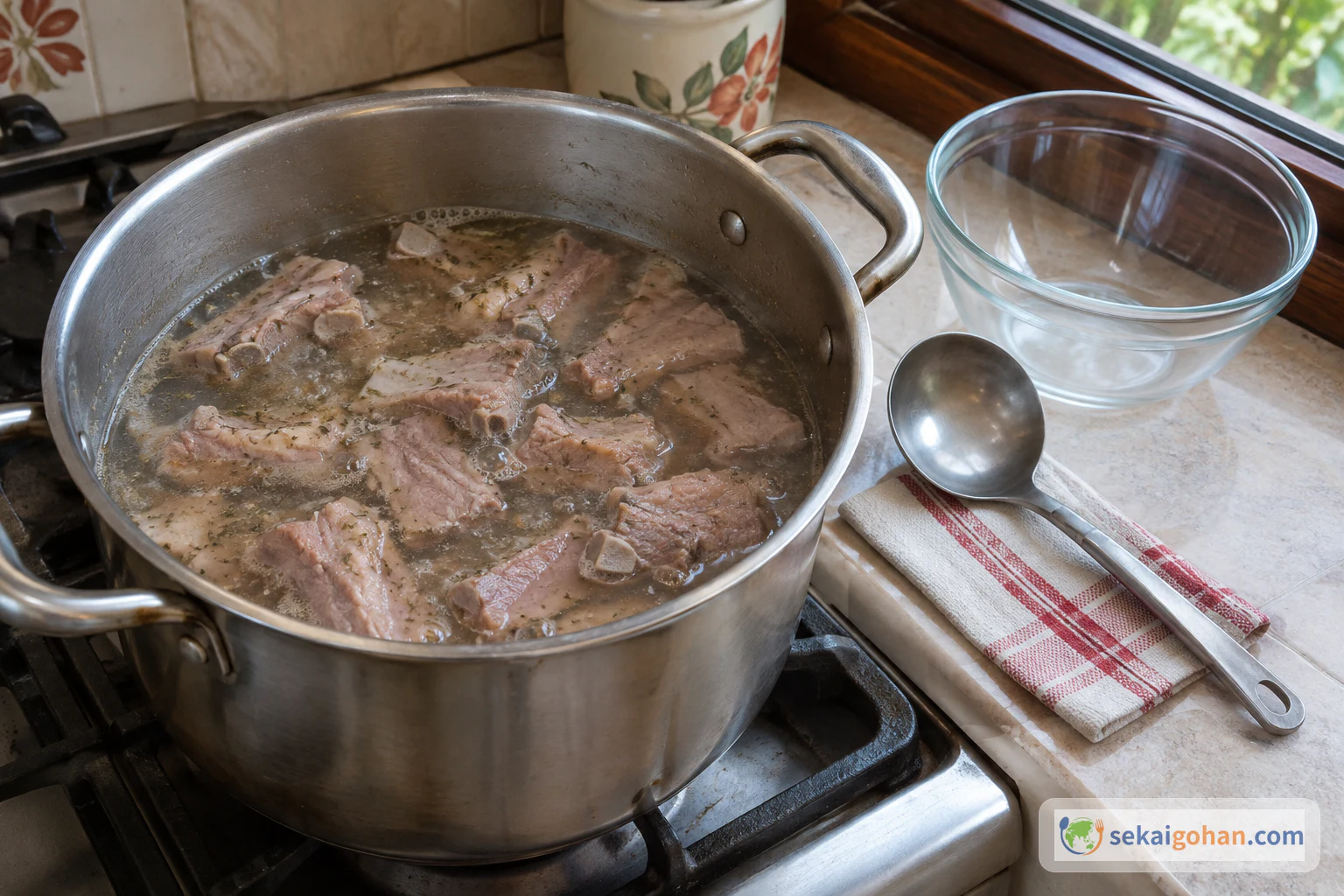
Seasoned pork rib pieces simmering in water that covers them, a ladle and an empty heatproof bowl nearby
A gentle simmer keeps the broth clear and the small pieces whole

Put the seasoned ribs in a pot and add water just to cover. Bring it to a simmer and cook gently until the pork is fully cooked through to the center and tender at the bone. Lift the meat out and pour the cooking liquid into a heatproof bowl. That broth loosens the sauce later, so keep all of it. The ribs are ready when the meat is no longer pink at the bone and comes away easily.

STEP 55 / 10

Fry the boiled ribs

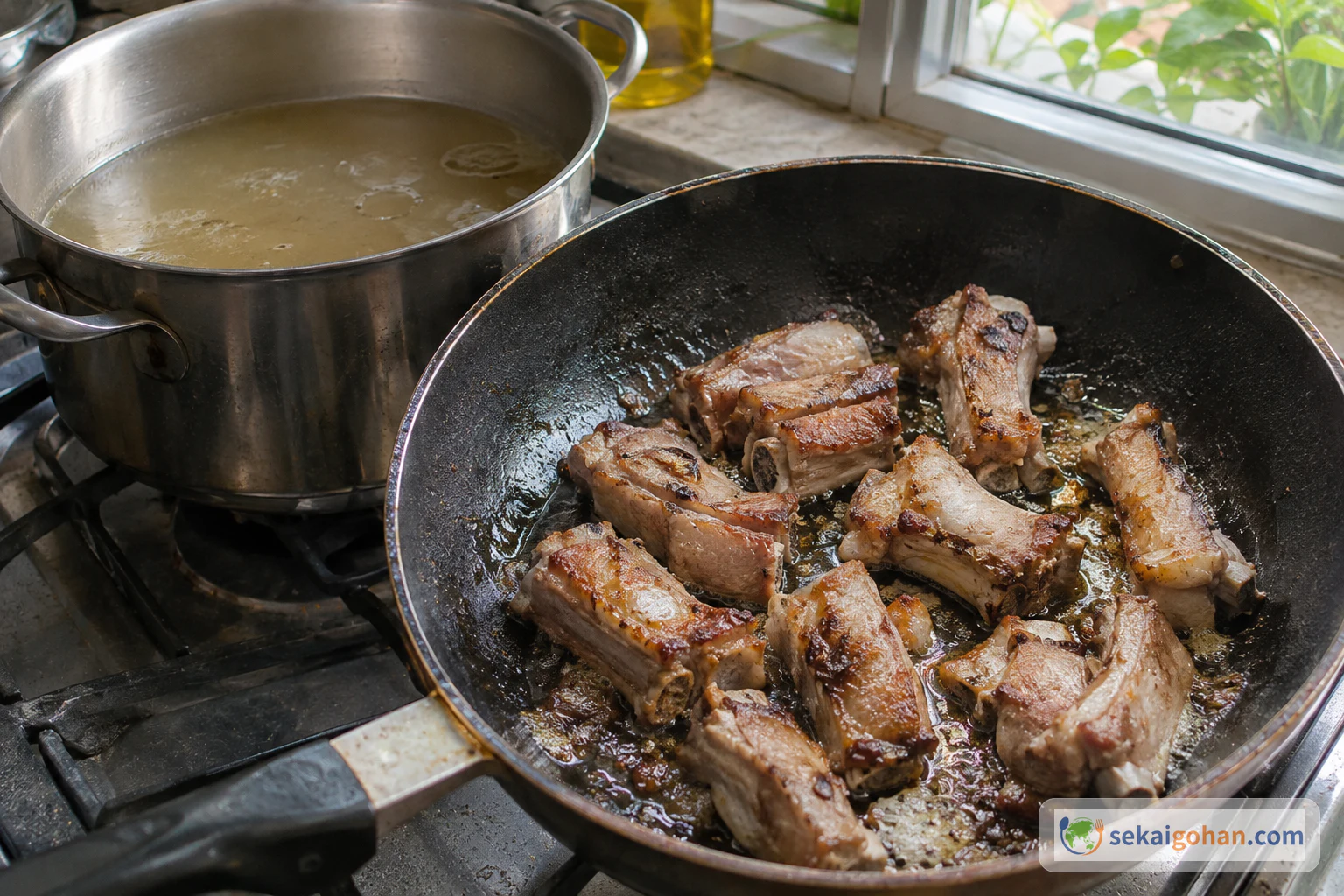
Boiled pork rib pieces browning in oil in a frying pan, the strained broth in a pot beside it
Leave each side alone until it releases from the pan on its own; moving it early tears the surface

Heat some oil in a frying pan and add the boiled ribs in one layer. Dry them first so they do not spit. Turn them as they color, so every side browns. The browning is for flavor; the boiling is what cooks the pork through. Take them off when all sides are browned.

Hot oil

Wet meat makes hot oil spatter. Pat the ribs dry, lower them in away from you, and keep a lid nearby. Keep children and pets back from the stove while you fry.

STEP 66 / 10

Fry the chilies until they darken

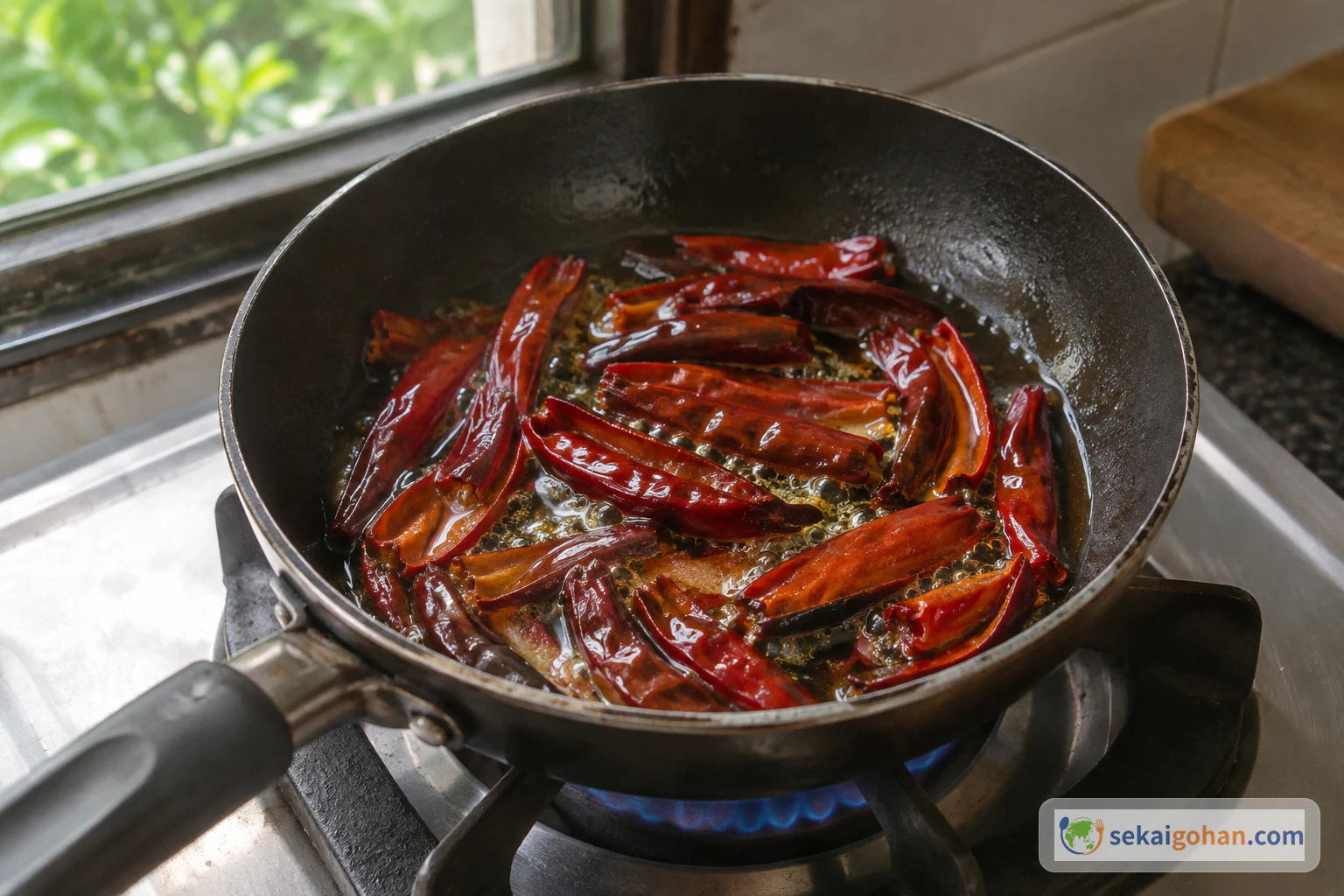
Washed, seeded red chilies darkening in a small pan of oil
The chilies are ready when the color deepens evenly; black spots mean they have gone too far

Wash the red chilies, split them, and scrape out the seeds. Heat a little oil in a small pan and add the chilies. Stir them constantly as they fry. Stop as soon as they turn a deeper red and smell toasted. Burned chili turns bitter and spoils the whole sauce.

The chili moment decides the dish

Watch the pan the whole time. This step goes fast, and it sets both the color and the taste of the sauce. Pull the chilies the moment they darken, and make the sauce only from chilies that smell toasted and sweet, never sharp or acrid.

STEP 77 / 10

Grind the paste and warm it with broth

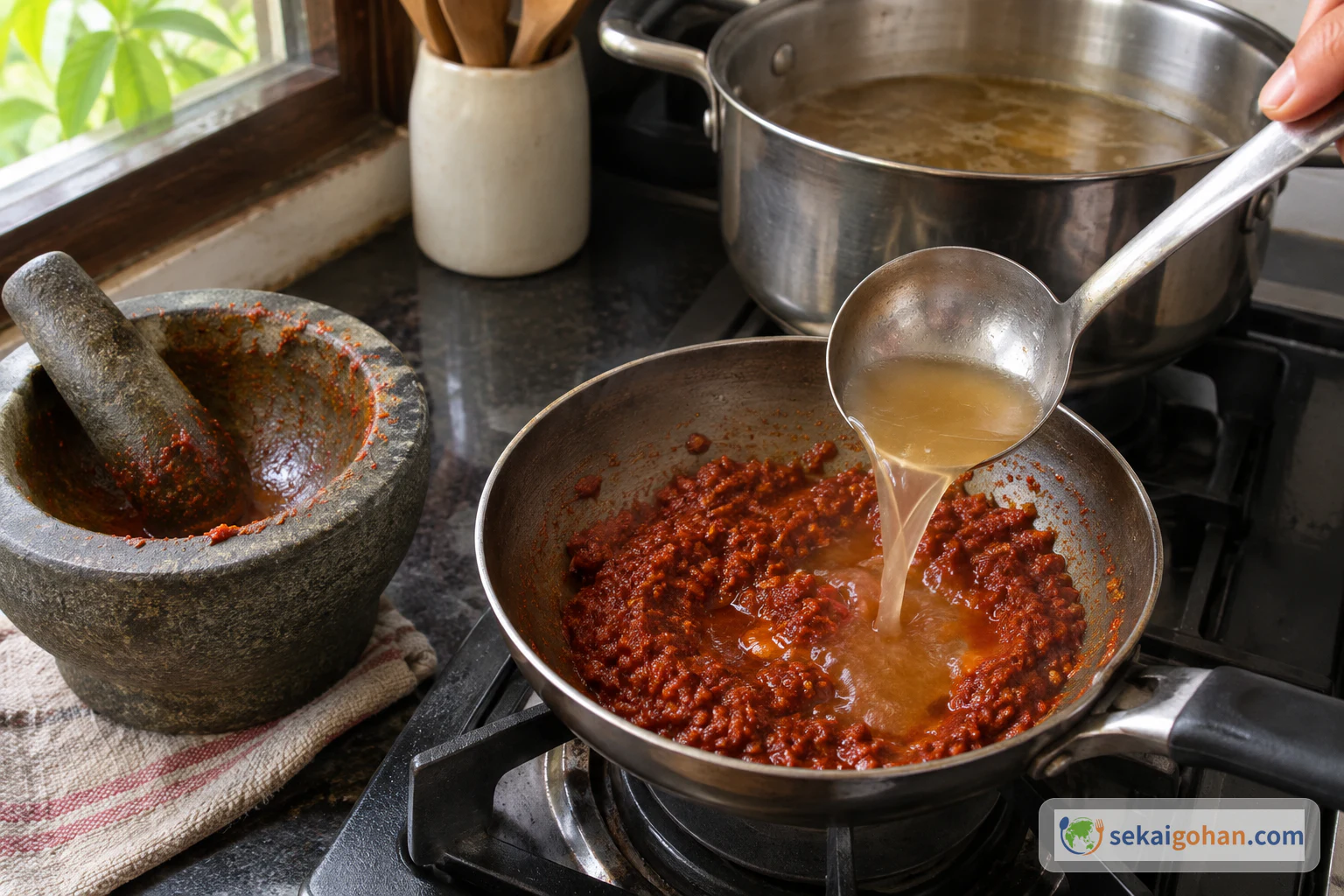
A ladle of reserved pork broth poured into thick red chili paste in a pan, a mortar with traces of paste nearby
Add the broth to the paste a little at a time so the sauce stays thick

Put the fried chilies in a mortar with the garlic and the rest of the pepper and cumin. Grind until you have a thick, even red paste with no large pieces of skin. Scrape the paste into the small pan, add a ladle of the reserved broth, and warm it while stirring. The base is ready when the paste and broth have blended into one smooth, glossy red sauce.

STEP 88 / 10

Simmer the ribs in the sauce for 15 minutes

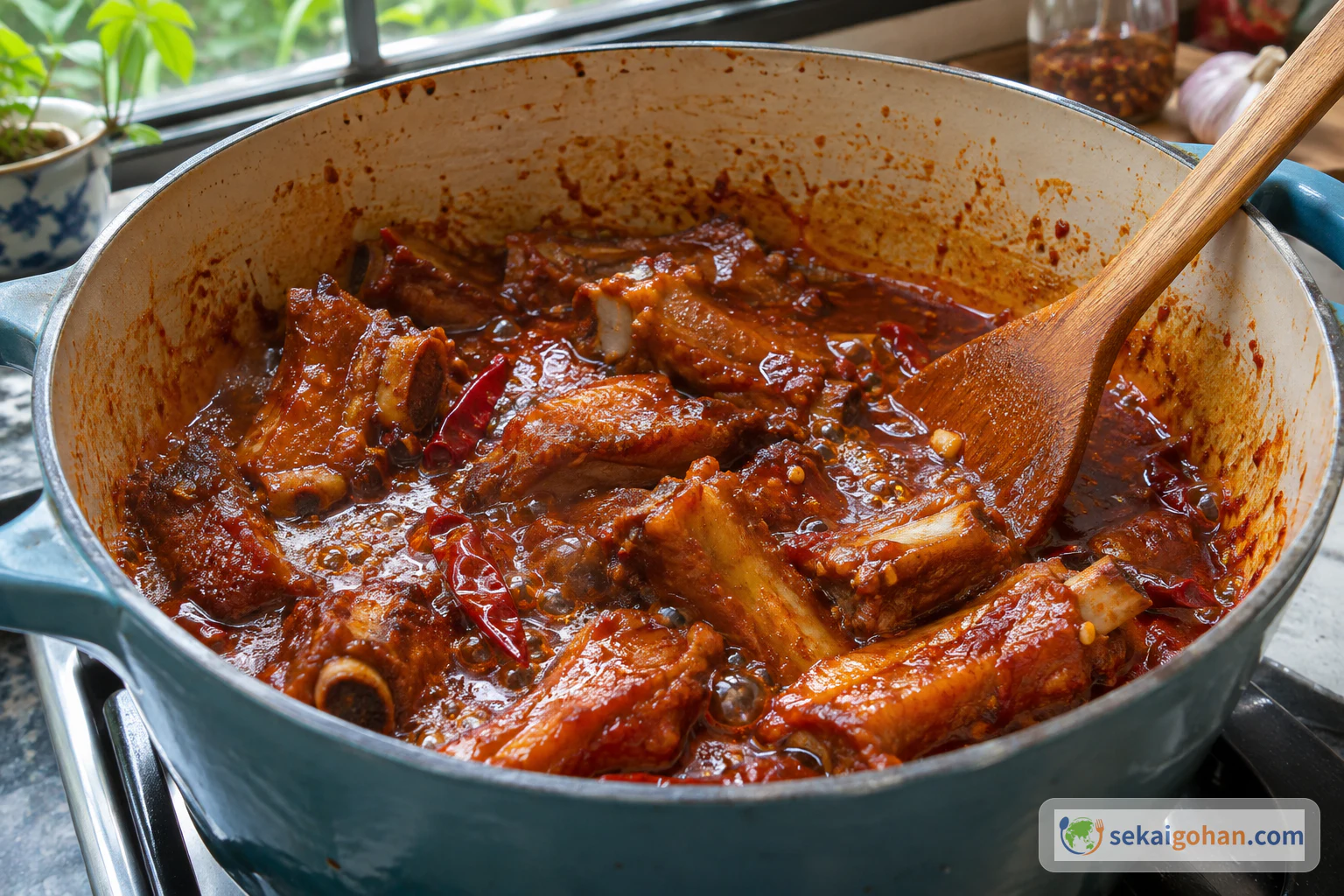
Fried pork ribs simmering in thick, glossy dark red chili sauce in a wide pot, a wooden spoon beside it
When a spoon dragged across the bottom leaves a path that closes slowly, the sauce is thick enough

Move the sauce into a wide pot and add the fried ribs. Stir until every piece is coated. Add more broth if the sauce is too stiff to move, and more pepper or cumin if it tastes flat. Simmer for 15 minutes, stirring now and then so it does not catch. It is done when the sauce is heavy and thick and clings to the meat instead of running off it.

Thick, not soupy

Add broth a ladle at a time and only when the sauce needs it. Fritanga is a coated dish, and too much broth makes a stew. The 15-minute simmer is where the sauce thickens and grips the fried surface of the ribs.

STEP 99 / 10

Boil the potatoes in salted water

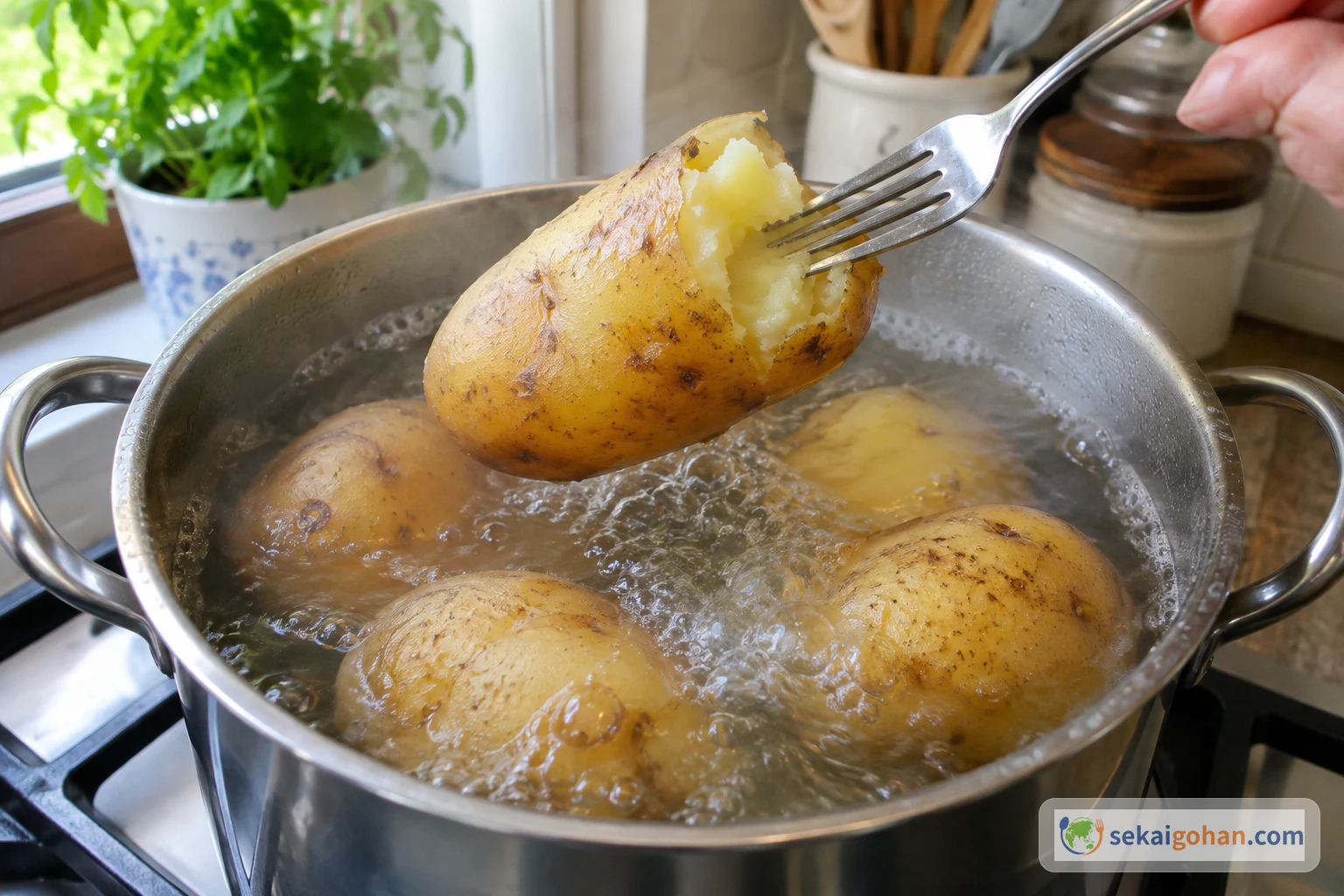
Whole large potatoes boiling in salted water, one lifted on a fork to show its soft inside
Test the largest potato; when it is soft at the center, the rest are done too

Put the large potatoes in a pot, cover them with water, and salt it well. Bring it to a boil and cook the potatoes whole while the ribs simmer. Test the thickest one with a fork. They are done when the fork slides to the center with no resistance.

STEP 1010 / 10

Plate with mote, potato and parsley

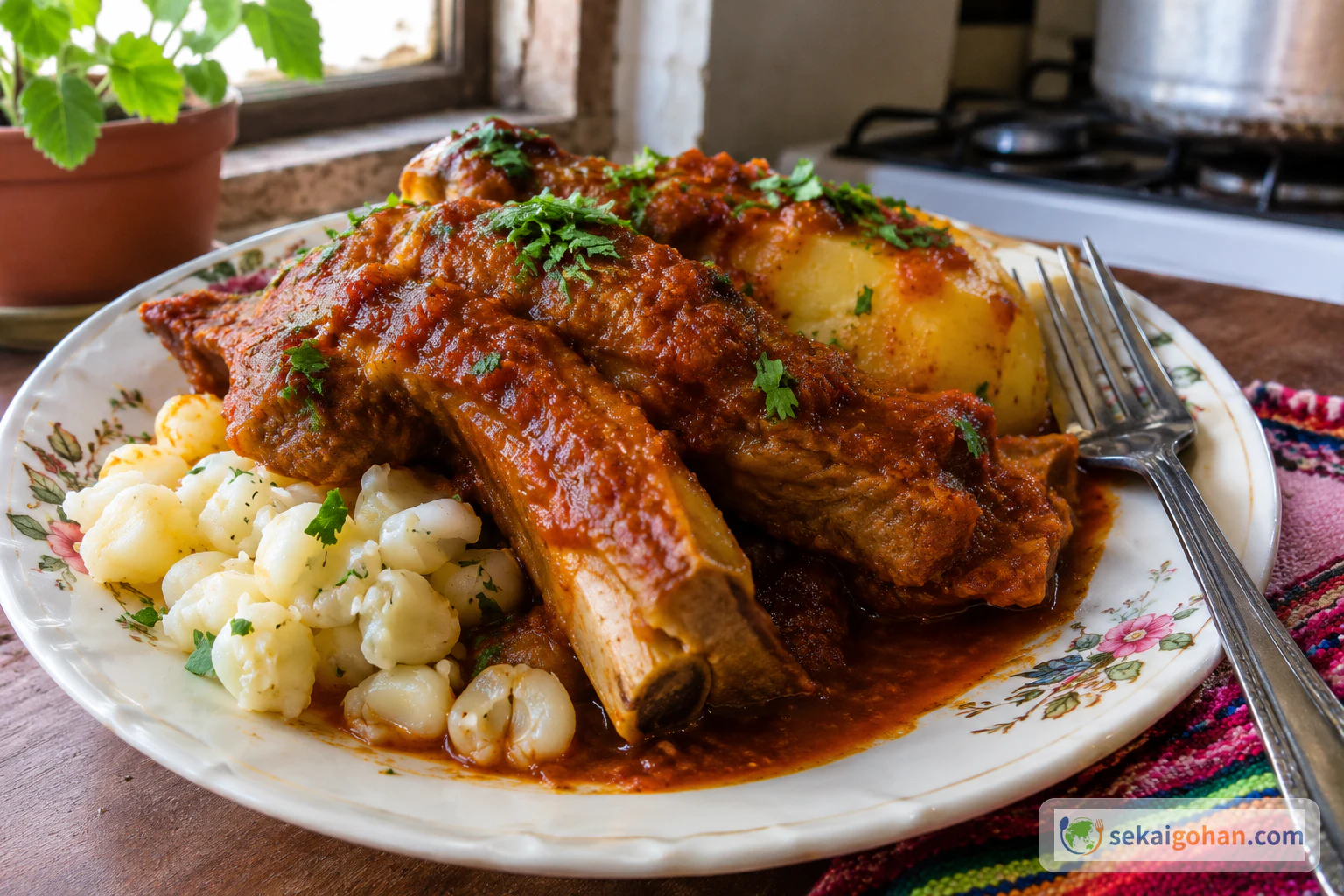
A portion of fritanga plated with mote and boiled potato, parsley on top, a fork beside it
Keep the mote and potato beside the sauce, not under it, so they stay plain

Warm the mote in a little of its cooking liquid and drain it. On each plate, spoon the ribs and plenty of sauce next to a mound of mote and a potato. Scatter parsley over the top. The plate is right when the red sauce sits next to the white corn and the potato rather than covering them, so each bite can take as much as it wants.

0 / 0
Ingredients

Ingredients

1 / 1

Ingredients

Ingredient Amount Role
Mote, peeled corn kernels (mote) 2¼ lb (1 kg) The plain, chewy side. Soaked overnight, then cooked soft
Pork spare ribs (costillas de cerdo) 1¾ lb (800 g) Cut small, seasoned, boiled, then fried
Large potatoes (papa) 4 Boiled in salted water as the second side
Red chili peppers (ají colorado) 6 The color and body of the sauce
Ground black pepper and cumin 3 tbsp Seasoning for the meat and the chili paste
Garlic (ajo) 2 cloves Ground into the chili paste
Parsley (perejil) a little Garnish on the plate
Salt to taste For the meat and the potato water
Oil as needed For frying the ribs and the chilies
0 / 0

The seeded red chilies go into hot oil and darken within moments. The kitchen fills with a toasted, slightly sweet chili smell, and that is the moment to pull them off the heat. Ground with garlic, pepper and cumin and loosened with pork broth, they turn into a heavy, brick-red sauce. Small fried pieces of pork rib simmer in it until it clings to them. In Chuquisaca, the region around Sucre in southern Bolivia, this is fritanga. It reaches the plate with a pile of soft white mote and boiled potatoes. The plain corn and potato are there to soak up the deep, cumin-scented chili sauce.

A Chuquisaca plate built on ají

Fritanga is often called the most representative dish of Chuquisaca, and in Sucre it belongs with the picantes, the dishes built on ají. Cooks there make ají colorado and ají amarillo dishes year after year. Sucre uses chili for flavor more than for heat, and fritanga shows it. The sauce is dark, thick and fragrant, and the ribs come fried and then coated in it rather than drowned. If you want more of the country's cooking around it, the Bolivia country page gathers the other dishes.

The plate always has the same three parts. Pork ribs fried and dressed with ají colorado. Mote, the large peeled corn kernels cooked until plump. Potatoes boiled in salted water. The mote and potatoes stay plain next to the sauce on purpose. The dish lives in the contrast between the heavy red sauce and the plain mote and potato, and every forkful picks up a bit of each.

One word, several dishes

Outside Bolivia, "fritanga" means other things. In Nicaragua the word, as English speakers meet it, names a homestyle eatery. In wider Spanish it means fried food in general, or a mixed platter of fried meats like the one served in Colombia. The Bolivian fritanga here is a single dish: pork ribs in red chili sauce with mote and potatoes. Keep those other platters out of this pot.


Ingredients
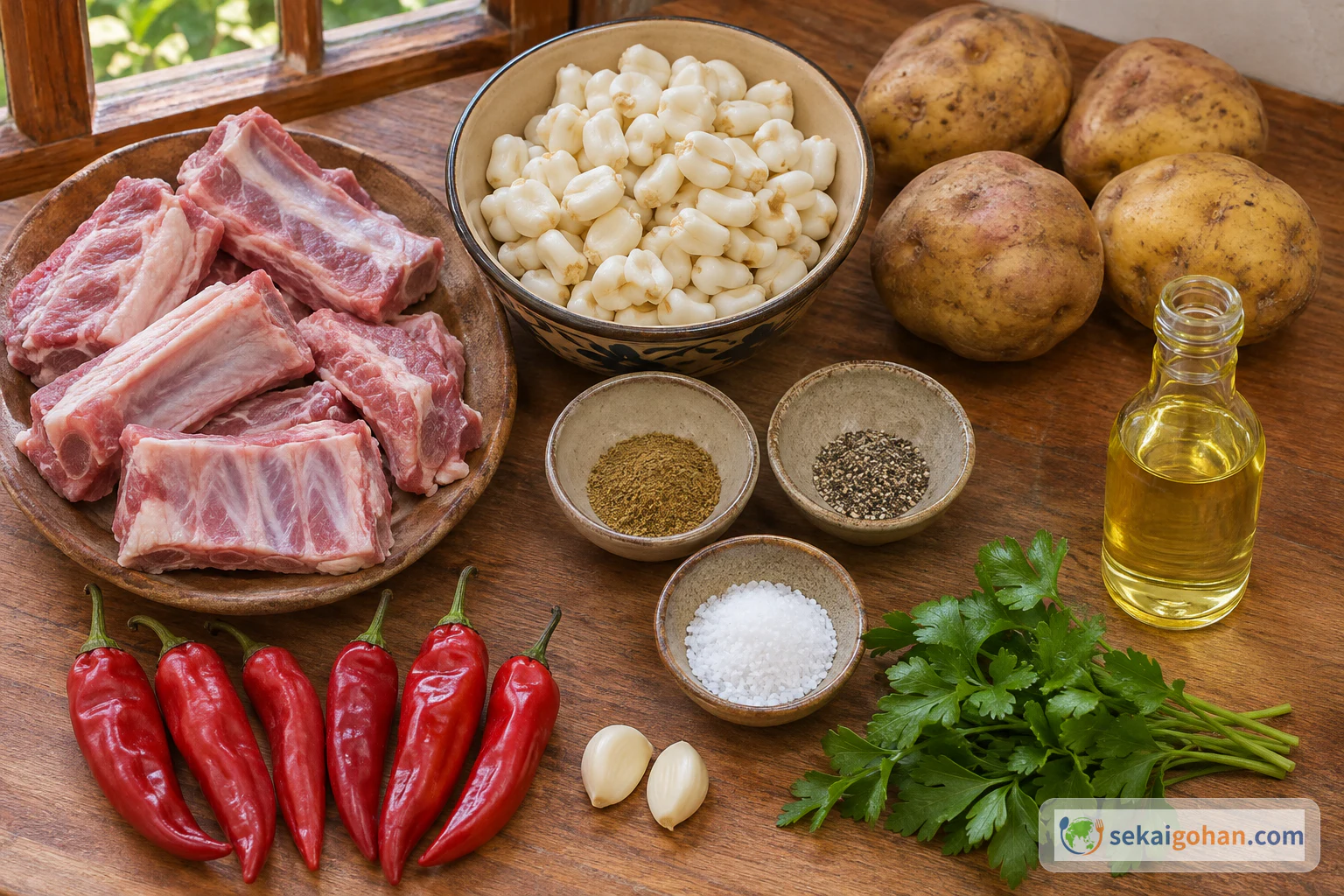
Fritanga ingredients: pork spare ribs, mote, potatoes, red chilies, garlic, cumin, black pepper, parsley
Six chilies and two garlic cloves make the whole sauce, so pick chilies with good color and no soft spots
Split the pepper and cumin before you start

The 3 tbsp of pepper and cumin covers two jobs. Season the meat with part of it, and keep the rest for grinding into the chili paste. Holding some back also leaves you room to add more in the last simmer.

Equipment

  • Large bowl for soaking the mote
  • Pressure cooker
  • Cleaver or heavy knife, and a cutting board
  • Pot for boiling the ribs, plus a ladle and a heatproof bowl for the broth
  • Frying pan
  • Small pan for the chilies and the sauce base
  • Mortar and pestle
  • Wide pot for the final simmer
  • Pot for the potatoes

Choosing and substituting

Mote is the one thing worth tracking down. Latin American grocers and online shops sell it as mote or as dried white hominy. These are large, peeled kernels that soak and cook up plump and chewy. Canned hominy works when you are short on time. It is already cooked, so you skip the overnight soak and the pressure cooker. Drain it and warm it to serve, and use as much as you want on the plate rather than the 2¼ lb (1 kg) weight in the table.

Ají colorado is hard to find abroad. A large dried red chili with good color and moderate heat, such as guajillo, is the closest swap. Any substitute changes both the heat and the flavor. Small hot chilies push the sauce toward fiery and away from the deep, rounded red that Sucre cooks want. Choose chilies for color and flavor, not for heat.

For the pork, ask the butcher to saw spare ribs into small pieces across the bone. Cutting through rib bone at home takes a heavy cleaver and a firm board. What has to stay is the ribs, the dark chili sauce with cumin and garlic, and the plain mote and potato beside it. The exact chili and the corn are where you can bend.


Method

The mote needs an overnight soak, so start it the evening before. On cooking day, put the mote in the pressure cooker first. While it cooks, season and boil the ribs, which also gives you the broth the sauce needs. The frying, the chili sauce and the 15-minute simmer follow one after the other. The potatoes can boil next to the final simmer.

When it goes wrong

What you see Why What to do
The sauce tastes bitter or harsh The chilies burned in step 6 Start the sauce again with fresh chilies and pull them as soon as they darken
The sauce is thin and runs off the meat Too much broth went in Simmer uncovered, stirring, until it turns heavy and clings
The sauce is too stiff or catches on the pot Too little broth, or the heat is too high Add a little reserved broth, lower the heat, and stir from the bottom
The meat is pink at the bone The boil was too short Simmer the ribs in the sauce until they are cooked through to the center. A browned surface does not mean the center is done
The mote is still hard in the middle Too short a soak, or not cooked long enough Cook it again following the manual until the kernels are soft all the way through
The dish is far hotter than expected A small, hot chili was used in place of ají colorado Serve more mote and potato with each portion, and choose a larger, milder red chili next time

Serving, variations and storage

At the table

Fritanga is a full plate on its own: ribs in sauce, mote and potato, with parsley on top. Elsewhere in Chuquisaca cooking, llajua (the fresh table salsa) and lemon sit next to mote and potatoes. A spoonful of llajua or a wedge of lemon on the side works here too. Keep them as optional extras rather than part of the sauce.

Variations

  • Canned hominy in place of mote. It saves the overnight soak and the pressure cooker. The kernels come out softer and a little less chewy, and the plate loses some of its bite.
  • Guajillo or another large dried red chili. It keeps the dark color and gives a fruitier, gentler sauce that stays close to the flavor-first Sucre style.
  • More pepper and cumin in the final simmer. This pushes the sauce toward earthy and peppery. Add it in pinches during step 8 and taste between each one.

Storage

Let leftovers cool. Refrigerate them promptly in a covered container. Reheat the ribs and sauce until they are hot all the way to the center, and add a splash of water if the sauce has set too thick.

Frequently asked questions

Is fritanga very spicy?

It is built for flavor more than burn. The seeds come out of the chilies, and the sauce is meant to taste deep and toasted. How hot it ends up depends mostly on the chili you buy, so a large, moderate red chili keeps it in the Sucre style.

Why boil the ribs before frying them?

The boil cooks the pork through and gives you the broth that loosens the chili paste. The frying then adds a browned, crisp surface that the thick sauce grips during the final simmer. If you skip the boil, you lose both the fully cooked center and the broth.

How do I divide the pepper and cumin between the meat and the paste?

Coat the meat lightly, enough to speckle every surface, and grind the rest into the chili paste. Taste the sauce during the 15-minute simmer and add more if it needs depth. Adding it at the end lets you adjust to the chili you used.
Sources