Anticucho: Bolivian Grilled Beef Heart Skewers with Peanut Sauce

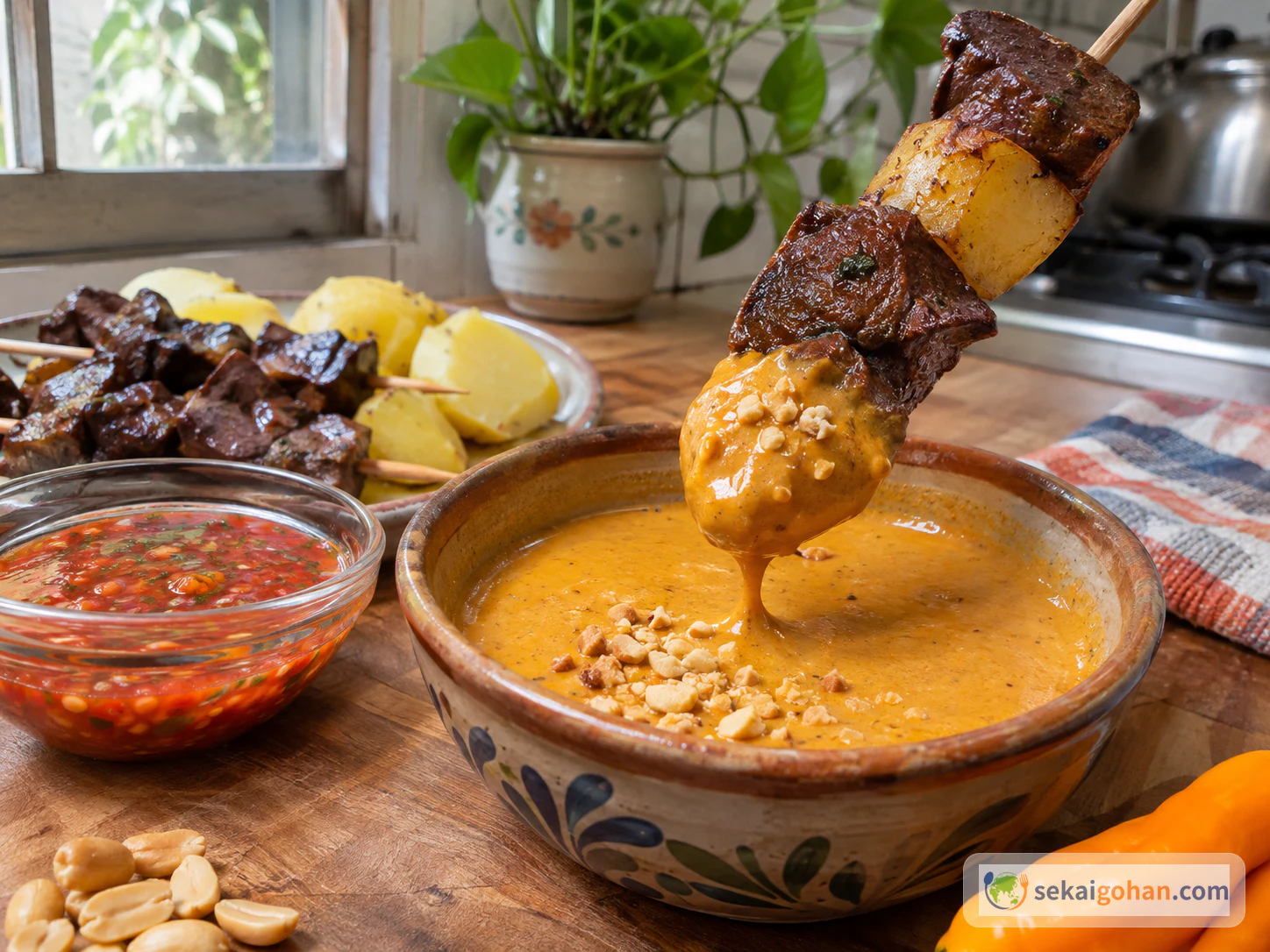
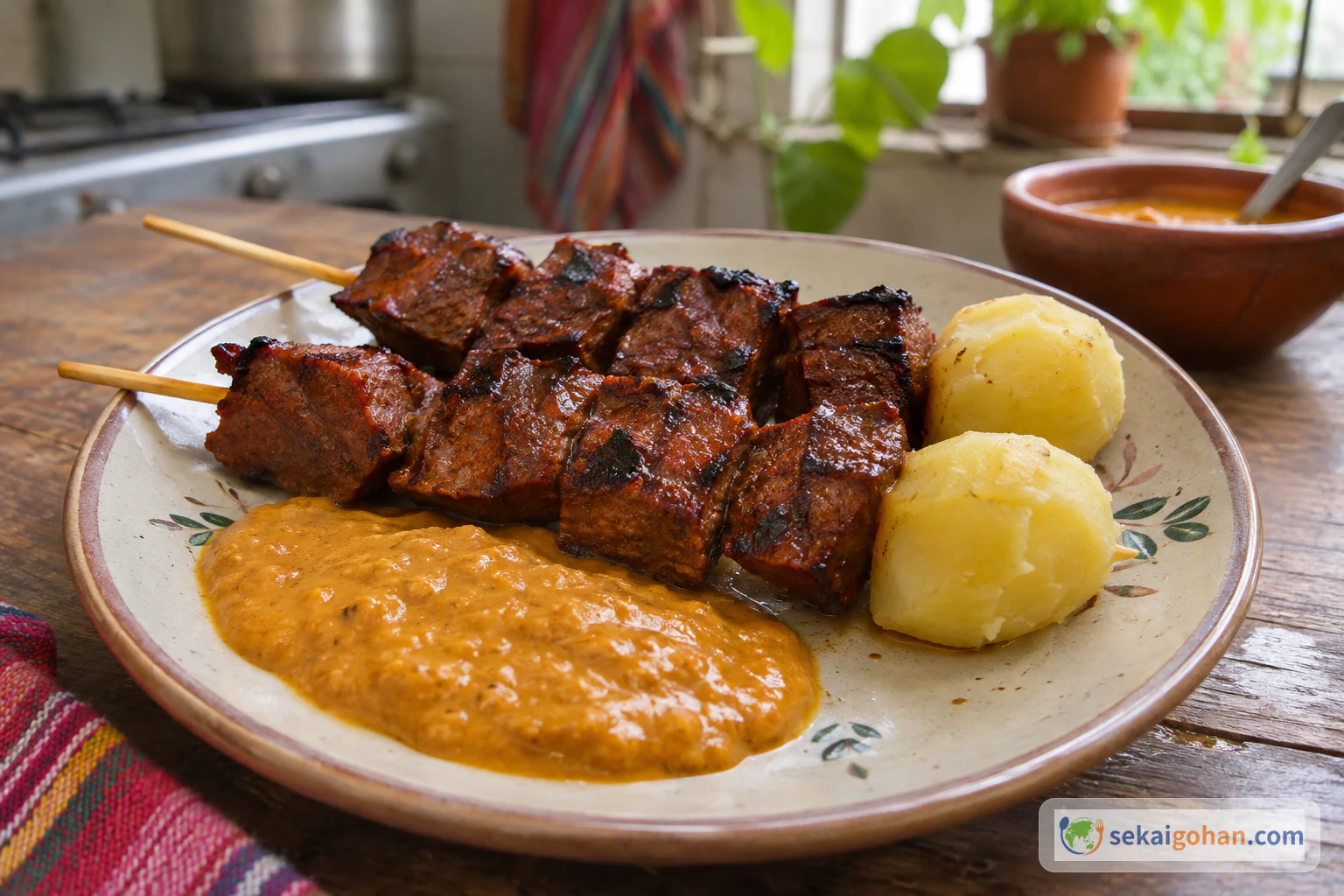
Finished Bolivian anticucho: beef heart skewers with potatoes and peanut sauce
Level
Intermediate
Cuisine
Bolivian

Bolivian anticucho: beef heart skewers ending in a potato, served with peanut and ají amarillo sauce. How to trim the heart, baste safely and swap the ají.

Cooking flow

Cooking steps

STEP 11 / 9

Boil the potatoes and mix the basting liquid

STEP 1

Put the small potatoes in their skins into a pot of water and bring it to a boil. Cook until a skewer slides into the center with no resistance, about 30 minutes for medium potatoes. While they cook, stir together the basting water, oil, lemon juice, grated garlic and salt to taste, then set the bowl aside. Drain the potatoes and peel them once they are cool enough to hold. The skins should slip off easily and the flesh should stay whole.

STEP 22 / 9

Trim the heart and cut it into cubes

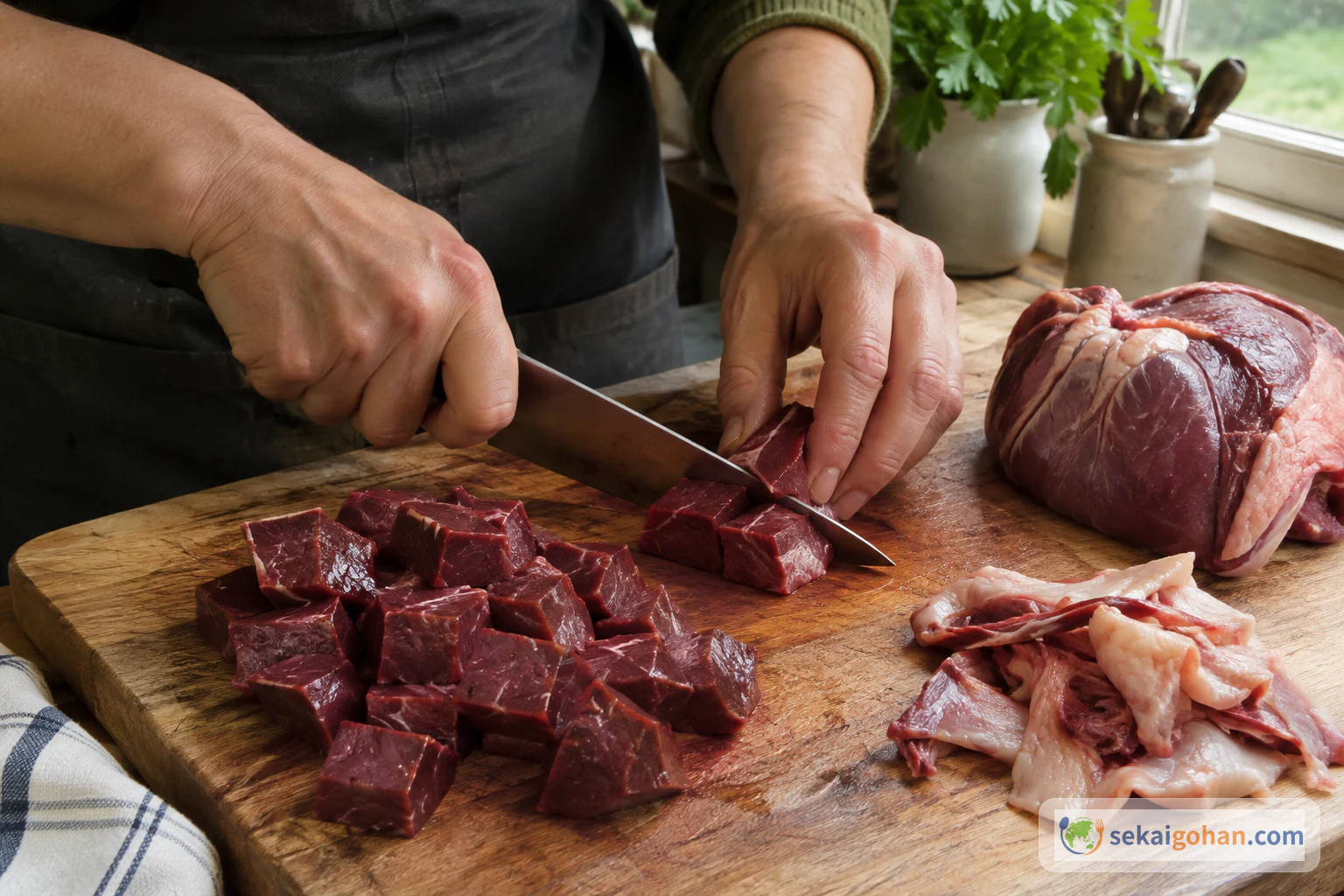
Trimming the sinew and hard fat from beef heart and cutting it into 3 cm cubes
Pile the pale trimmings to one side so you can see what is left on the meat

Lay the beef heart on a board and cut away the membrane, sinew and hard fat. Cut the clean meat into 1¼-inch (3 cm) cubes, which gives about 16 to 20 pieces, enough for five skewers. Keep the cubes the same size so they all cook through at the same pace. The cubes are ready when every face is dark red muscle with no white strands.

STEP 33 / 9

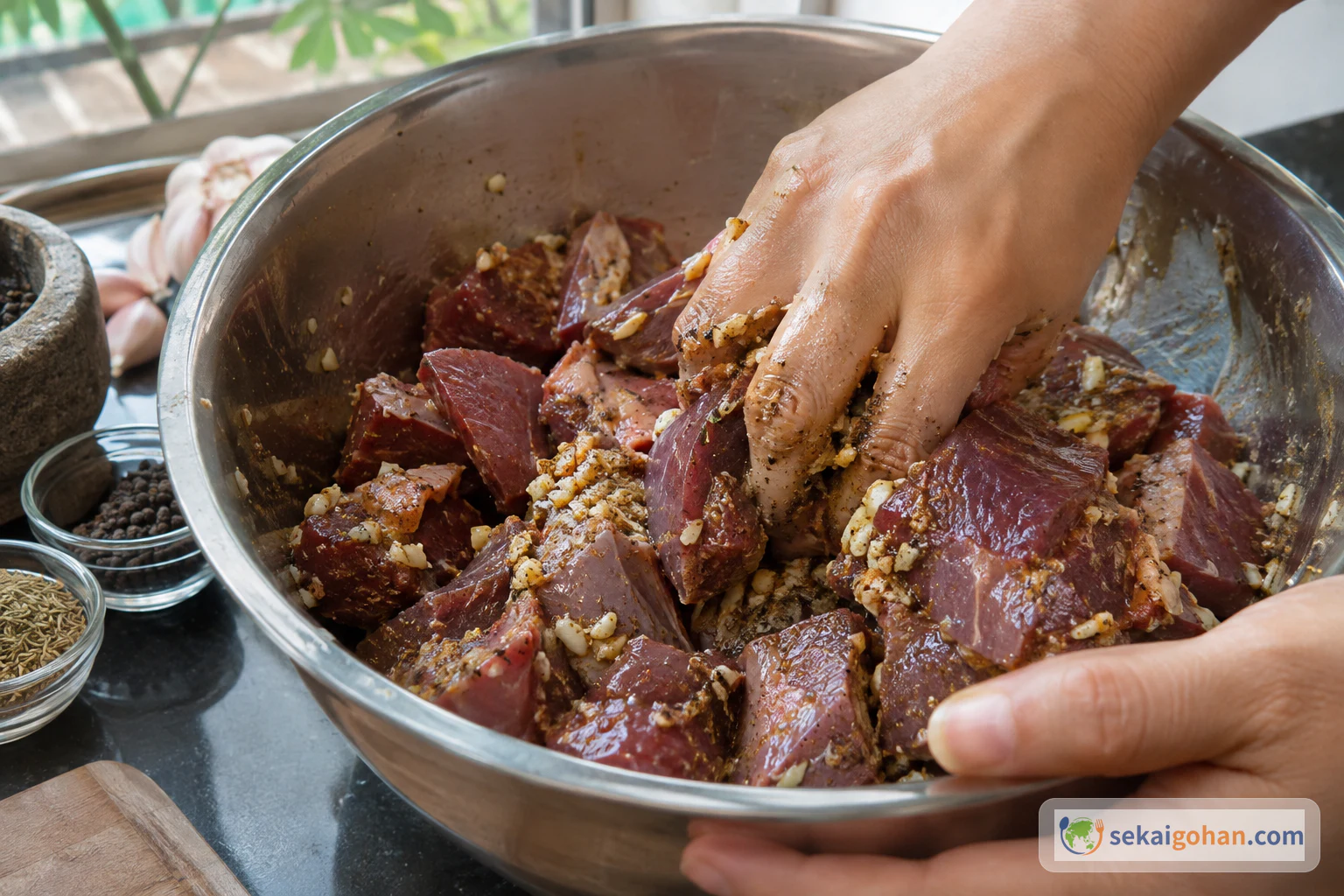
Rub the heart with garlic and spices

Rubbing garlic, cumin, black pepper and salt into cubes of beef heart
Work the paste into the cut faces, where it holds best on the grill

Mix the grated garlic, cumin and black pepper into a paste. Put the cubes in a bowl, add the paste and salt, and rub it into every piece with your hands. Cover the bowl and keep it in the refrigerator until you skewer the meat. The cubes are seasoned when you can see flecks of spice clinging to every surface.

STEP 44 / 9

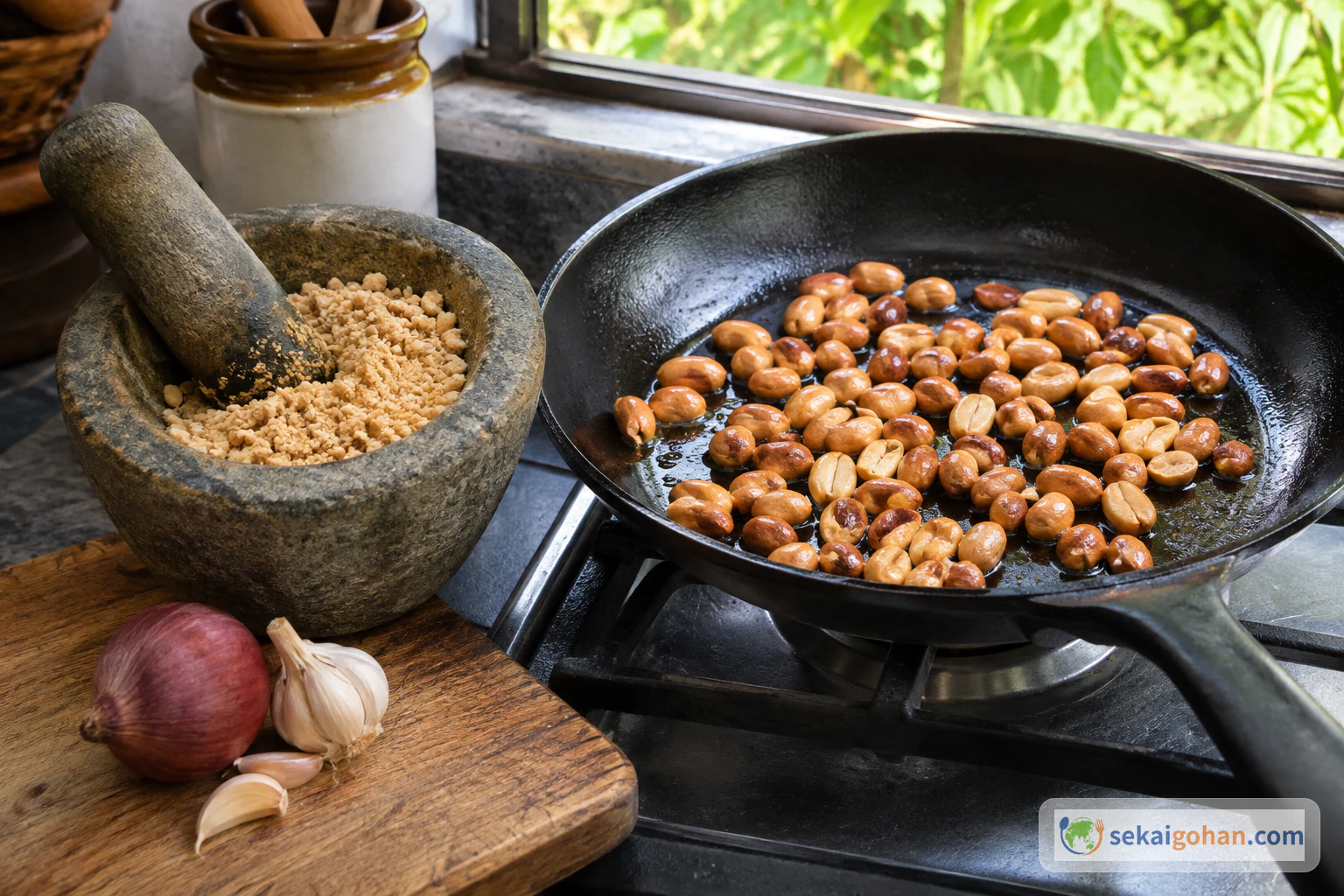
Toast and grind the peanuts

Toasting peanuts golden in oil and grinding them in a mortar
Stop at golden. Dark brown peanuts turn the sauce bitter

Warm a little oil in a skillet and add the peanuts. Stir often until they turn an even golden color and smell toasty, then take them off the heat. Tip them into a mortar and grind them fine. They are ready when they look like coarse, damp sand with no whole halves left.

STEP 55 / 9

Fry the onion, garlic and ají

STEP 5

Heat 2 tbsp oil in a saucepan. Add the chopped onion and crushed garlic and fry until they are soft and golden at the edges. Stir in the ají amarillo and fry it briefly, just long enough to warm it in the oil. You are there when the oil turns deep yellow-orange and the chili smells fruity.

STEP 66 / 9

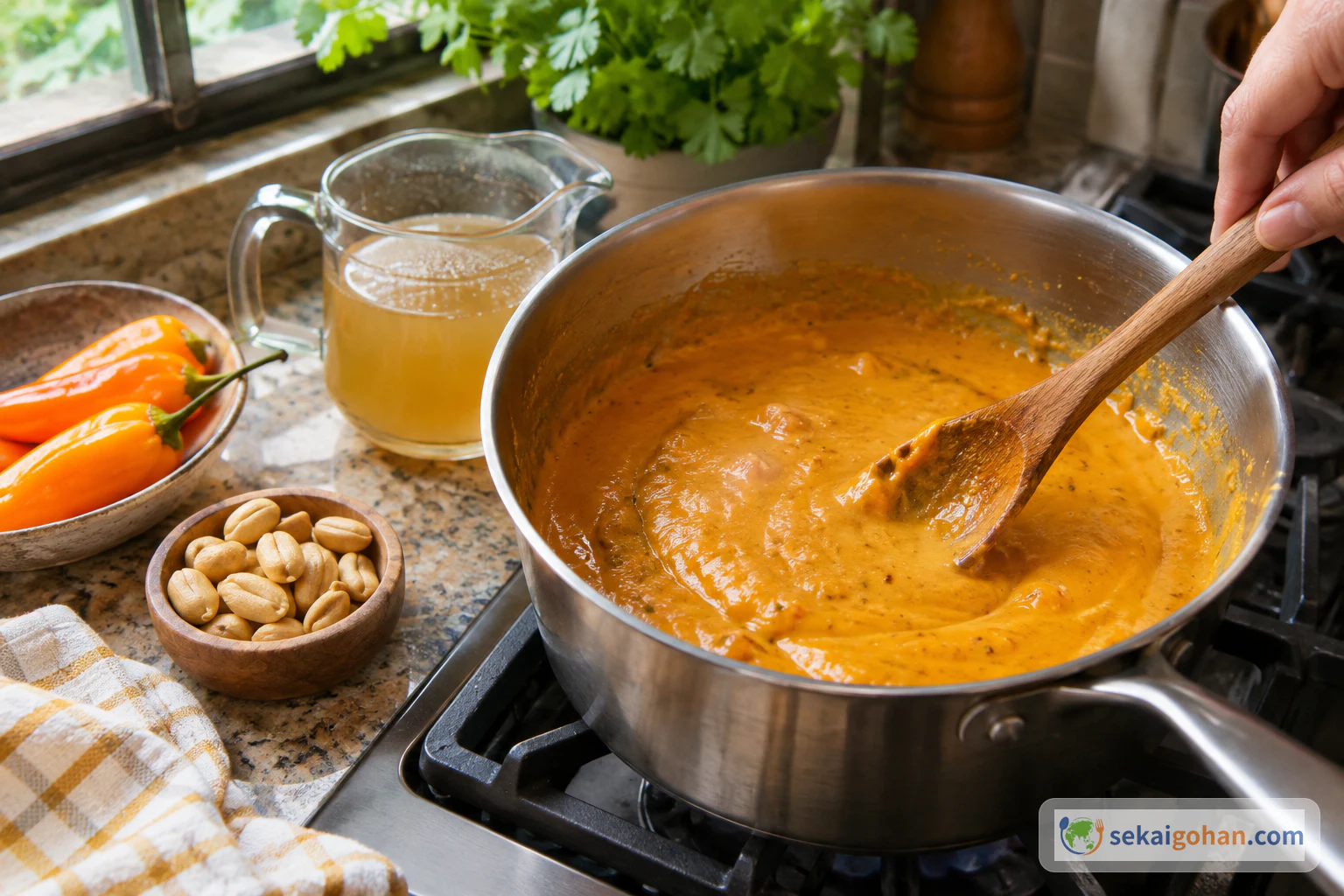
Simmer the peanut sauce

Peanut and ají amarillo sauce simmering in a saucepan with broth nearby
Keep the broth close and add a splash if the sauce thickens faster than it cooks

Add the ground peanuts and the broth or water to the saucepan and stir well. Bring it to a gentle simmer and cook for about 30 minutes, stirring constantly and scraping across the bottom so nothing catches. Season with salt at the end. The sauce is done when it is thick and smooth and coats the back of the spoon in an orange-yellow layer.

The sauce burns at the bottom first

Ground peanuts sink and stick. Keep the spoon moving the whole time. If you smell scorching, pour the sauce into a clean pan without scraping the bottom, so the burnt layer stays behind.

STEP 77 / 9

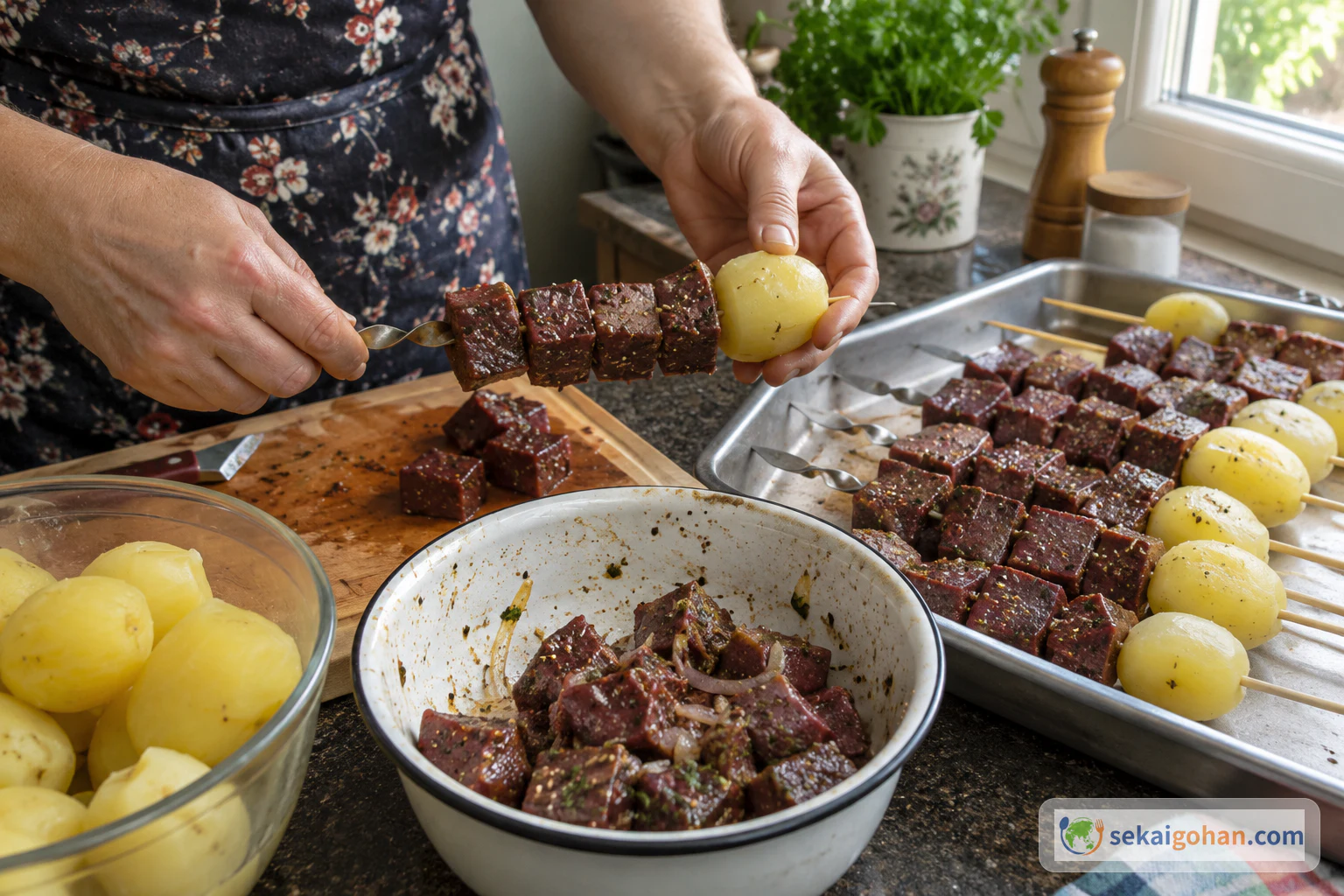
Thread the skewers

Threading four cubes of beef heart and a boiled potato onto each skewer
Pass the skewer through the center of the potato so it does not split on the grill

Take the heart out of the refrigerator. Thread four cubes onto each skewer, then push one peeled potato on last. Press the pieces snugly together without crushing them, and lay the finished skewers on a tray. A skewer is ready when the four cubes sit tight and the potato holds firm on the end.

Potato last, and firm

The potato on the end works as a handle and a side in one. Boil it only until a skewer slides through. An overcooked potato cracks as you thread it and falls into the coals.

STEP 88 / 9

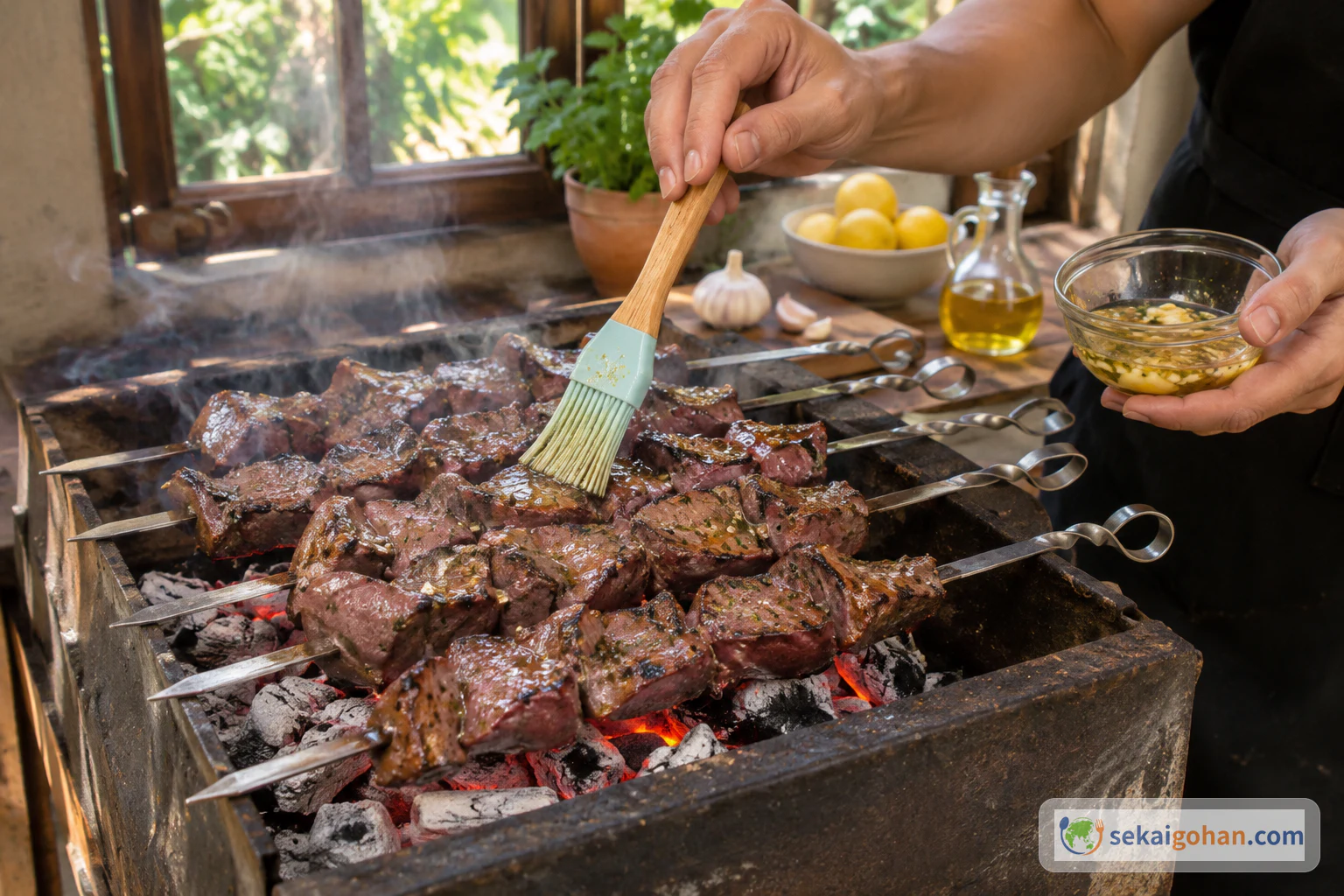
Grill hot, basting as you turn

Grilling skewers over hot charcoal while brushing with the basting liquid
Each brush should make the coals hiss. If it does not, the fire is too cool

Get the charcoal very hot, or heat a grill pan, broiler or barbecue to high. Pour some basting liquid into a second small bowl and brush from that one only. Lay the skewers over the heat and brush them on every turn, letting each coat sizzle off before the next. Stop basting before the final turns so the last coat cooks on the meat. The skewers are done when the outside is browned and lightly charred and the center of the thickest cube is cooked through, with no raw red meat, when you cut into it or check with a food thermometer.

Raw meat, basting and fire

The brush touches raw heart, so anything left in the brushing bowl gets thrown away after grilling. Never spoon it over cooked skewers or stir it into the peanut sauce. Cook the heart all the way through and do not serve it rare or half-raw. Use long tongs over charcoal and keep the oily brush away from open flame.

STEP 99 / 9

Serve straight off the fire

STEP 9

Move the skewers to a plate as soon as they come off the heat. Spoon the peanut sauce over the meat and the potato, or set the bowl beside them. Eat them right away, while the meat is hot and still sizzling at the edges. The sauce should run slowly over the warm meat without turning thin.

0 / 0
Ingredients

Ingredients

1 / 1

Ingredients

Ingredient Amount Role
Beef heart (corazón de res) about 1⅓ lb (600 g) The meat of the skewer. Trimmed and cut into 1¼-inch (3 cm) cubes
Garlic (ajo), for the heart 3 cloves Grated, for the rub
Ground cumin (comino) ½ tsp Earthy warmth in the rub
Black pepper (pimienta negra) ½ tsp Bite in the rub
Salt (sal), for the heart to taste Rubbed into the meat
Small potatoes (papa) 5 Boiled in their skins, peeled, one on the end of each skewer
Shelled peanuts (maní) ½ cup (120 ml) Body of the sauce. Unsalted is best
Oil, for the sauce 2 tbsp, plus a little for toasting the peanuts For toasting the peanuts and frying the aromatics
Onion (cebolla) ½ small onion Finely chopped, sweetness for the sauce
Garlic (ajo), for the sauce 1 clove Crushed
Ground ají amarillo or ají amarillo paste (ají amarillo molido) ½ cup (120 ml) Color, fruitiness and heat in the sauce
Chicken broth or water about 2 cups (500 ml) Simmering liquid for the sauce
Salt, for the sauce to taste Seasoning at the end of the simmer
Water, for basting (salsa para asar) ¼ cup (60 ml) Keeps the surface moist on the grill
Oil, for basting ¼ cup (60 ml) Helps the surface brown
Lemon juice, for basting juice of ¼ lemon Sharpness on the grilled meat
Garlic, for basting ½ clove Grated
Salt, for basting to taste Seasons each coat
0 / 0

The skewers go over the hottest part of the charcoal, and each pass of the brush makes the coals hiss and sends up a puff of garlicky smoke. The cubes of beef heart darken at the edges and the potato on the end picks up brown spots. Then a thick, orange-yellow sauce of toasted peanuts and yellow chili gets spooned over everything. This is the Bolivian anticucho, a night-time street skewer: dense, meaty beef heart seasoned with cumin and black pepper, and a sauce that is nutty, gently hot and rich enough to coat the potato.

It is a different skewer from the Peruvian one. The Peruvian anticuchos are built on an ají panca marinade. The Bolivian skewer here is rubbed with dry spices, basted with a sharp lemon-and-garlic liquid as it grills, and eaten with peanut and ají amarillo sauce.

Beef Heart After Dark: Where the Bolivian Anticucho Belongs

Anticucho is usually traced to the Andes, and both Peru and Bolivia claim it. Where it began is not settled, so it makes more sense to talk about how each country eats it. In Bolivia, anticuchos are street food of the night. The women who run the stalls are called anticucheras. They grill beef heart over charcoal and hand the skewers over with potatoes and either a hot chili sauce or a peanut llajwa.

Cubes or slices, boiled or roasted potato

The details change from cook to cook. One common style slices the heart thin, marinates it in spices, oil and vinegar, and serves it with roasted potato on the side. The version here cuts the heart into chunky 1¼-inch (3 cm) cubes, threads four onto each skewer and ends the skewer with a boiled, peeled potato, so the potato goes over the fire with the meat. In Peru the boiled potato also sits at the end of the skewer. Bolivia's version is set apart by its peanut sauce.

Peanuts turn up all over Bolivian cooking. If the sauce wins you over, the same toasted-peanut depth carries a whole bowl of sopa de maní, Bolivia's peanut soup. Salteñas and silpancho round out a Bolivian table, and the Bolivia country page collects the rest.

Anticucheras

The skewer belongs to the people who grill it. Anticucheras are the women who set up charcoal grills on the street at night. They baste, turn and sauce each skewer to order, so the meat comes to you hot, straight off the fire.


Ingredients
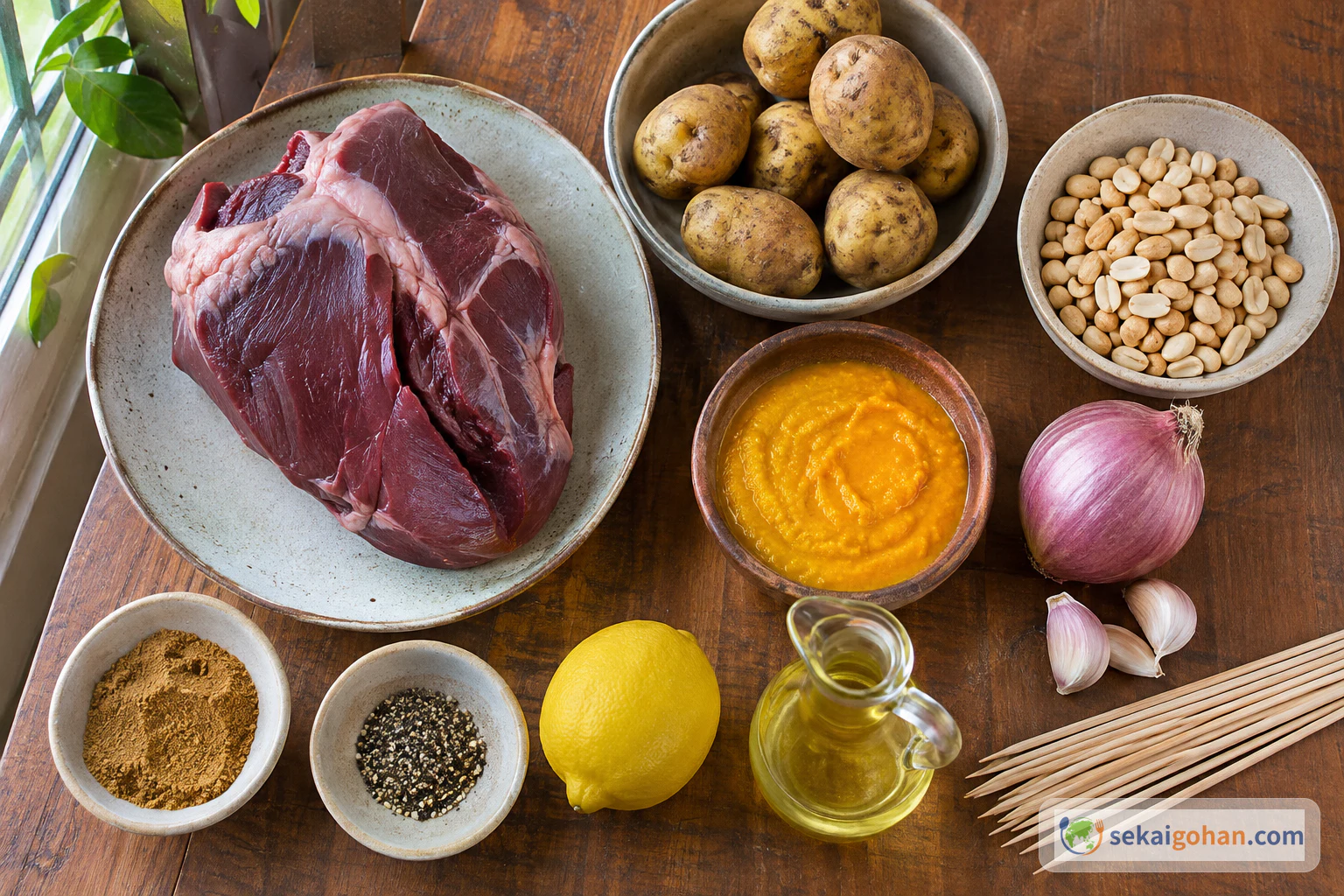
Ingredients laid out: beef heart, potatoes, peanuts, ají amarillo, onion, garlic, cumin, black pepper, lemon, oil and skewers
Keep the three garlic portions apart from the start: one for the rub, one for the sauce, one for the basting liquid

The rub is bold for this amount of heart. If you want a milder skewer, cut back the garlic and salt in the rub and keep the rest as written.

Allergen information

The sauce is built on peanuts. Tell guests before serving and keep peanut-free food away from the sauce bowl and its spoon. Jarred chili pastes and other prepared products can contain sulfites, so read the label on your ají amarillo.

Equipment

  • 5 skewers, metal or wooden (soak wooden ones in water before use)
  • Charcoal grill, grill pan, broiler or barbecue
  • Pot for boiling the potatoes
  • Skillet for toasting the peanuts
  • Mortar and pestle
  • Saucepan for the sauce
  • Wooden spoon
  • Pastry or basting brush
  • Two small bowls for the basting liquid (one to store it, one to brush from)
  • Food thermometer
  • Sharp knife and cutting board

Choosing and Substituting: Heart, Ají and Peanuts

Two ingredients decide whether this tastes Bolivian: the beef heart and the ají amarillo. Beef heart is a lean, firm muscle with a clean, meaty flavor. Ask a butcher for it, or look in the offal section of a shop that sells whole cuts. If you can only get pork heart, use a thick one and expect a different flavor.

Ají amarillo is the yellow Andean chili that gives the sauce its color and fruity heat. Jars of Peruvian ají amarillo paste are easy to find online and in Latin American grocers, and they work in place of the ground chili. If you have neither, sweet paprika with a little cayenne gives a sauce of similar color and heat, but the flavor is different, so treat it as a stand-in.

For the peanuts, buy shelled and unsalted so the salt stays in your hands. Chicken broth makes a rounder sauce than water, and water keeps the peanut flavor at the front.

Keep for the Bolivian taste Fine to change at home
Beef heart, trimmed and cubed Charcoal → grill pan, broiler or barbecue
Peanut and ají amarillo sauce Ground ají → ají amarillo paste
A potato on the end of the skewer Chicken broth → water
Basting on the fire with water, oil, lemon and garlic Wooden skewers → metal skewers
Trim the heart properly

Beef heart has a silvery membrane, tough connective tissue and hard fat. Cut all of it away before you cube the meat. Any that you leave on stays chewy no matter how well the grilling goes, and it is the main thing that separates a tender skewer from a rubbery one.


Method: From Boiling Pot to Charcoal

Start by soaking the wooden skewers and putting the potatoes on to boil. The potatoes cook on their own, and while they do you trim and season the heart, which then waits in the refrigerator. The peanut sauce needs your full attention, because it has to be stirred for about 30 minutes. Skewering and grilling come last, so the skewers reach the table hot.

When It Goes Wrong

What you see Why What to do
Chewy, rubbery bits in the heart Membrane or sinew left on the meat Trim more thoroughly next time. Cut away any obvious strands before serving
Outside dark, center still raw The fire is too hot for the size of the cubes Move the skewers to a cooler part of the grill and keep turning until the center is cooked through
Sauce tastes bitter or burnt Peanuts toasted too dark, or the sauce caught on the pan Toast only to golden. Pour the sauce into a clean pan without scraping the bottom
Sauce too thick to spoon It reduced more than it cooked Stir in broth or water a little at a time until it flows slowly
Wooden skewers burn through They went on the grill dry Soak wooden skewers in water before threading, or use metal skewers
Potato splits or drops off It was boiled too long Boil only until a skewer slides through, and thread it through the center

Serving, Variations and Leftovers

A skewer dipped into thick peanut sauce next to a thin red chili sauce
The Bolivian skewer is defined by the thick peanut sauce, not a thin chili dip

At the table

Anticuchos are eaten hot, as soon as they leave the fire, so cook them in batches that people can finish straight away. Put out extra boiled potatoes and an extra bowl of peanut sauce, and let everyone take a skewer by the end and sauce it how they like. They make the center of an evening grill, the way the street stalls serve them after dark.
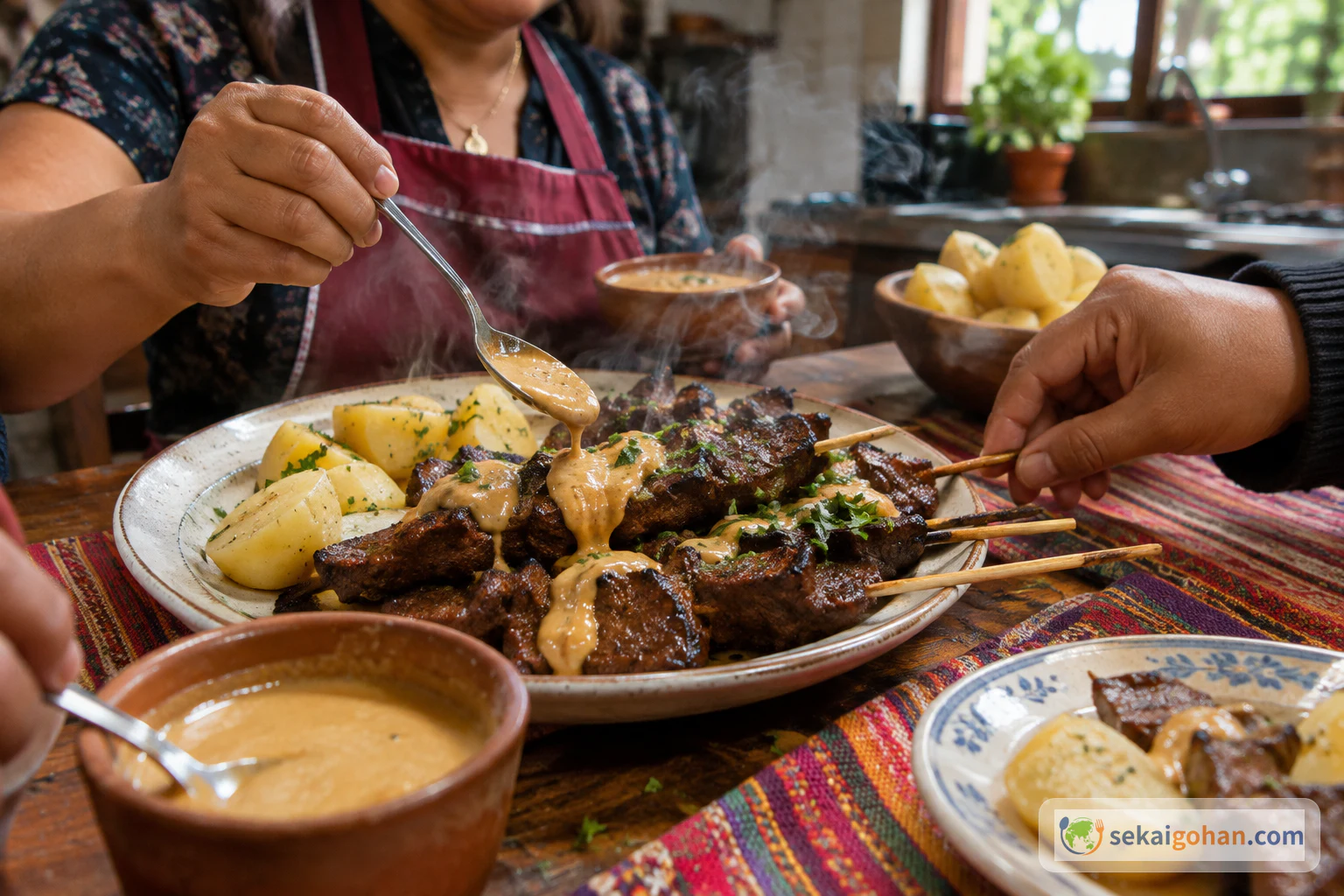
A table of hot skewers with peanut sauce spooned over and hands reaching in
Keep the extra sauce warm so it stays spoonable through the meal

Variations

  • Hotter sauce. Add more ají amarillo, or a little extra chili, to the onion in step 5. The sauce turns sharper and redder, and the peanut sweetness fades into the background.
  • Sauce on the side. Serve the peanut sauce in a bowl for dipping. The browned surface of the meat stays crisp longer, and guests who want less sauce can take less.
  • Roasted potatoes instead. Leave the potato off the skewer and roast potatoes separately, as one street style does. You get more crust on the potato.
  • Thin slices in a vinegar marinade. Slice the heart thin and marinate it in spices, oil and vinegar before grilling. It cooks faster, chars more at the edges and tastes tangier than the cubed, rubbed version.

Leftovers

Beef heart is organ meat, so cook only what you will eat and finish it the same day. Do not save the basting liquid from the brushing bowl.

Frequently asked questions

Can I make it for someone with a peanut allergy?

Leave out the peanut sauce and serve the skewers with a hot chili sauce, another way they are eaten in Bolivia. Cook and serve the peanut sauce away from that plate, with its own spoon. The meat, rub and basting liquid contain no peanuts.

Should I marinate the heart overnight?

Not for this version. Here the dry rub goes on the cubes and the lemon-and-garlic basting does the rest on the grill. Some Bolivian cooks soak the heart overnight in vinegar, soy sauce and cumin, but that is a separate recipe and does not mix with this one.

Can I cook these without an outdoor grill?

Yes. A grill pan on high heat or a hot broiler both brown the heart well. Baste exactly as you would over charcoal. You lose some of the smoky flavor, but the char from a grill pan comes close.

Can I use regular beef instead of heart?

A lean cut such as beef round works with the same rub, sauce and basting. It gives a softer, milder skewer and lacks the firm, dense bite of heart. Cut it into cubes the same size so it fits the skewers the same way.
Sources

  • Opinión (Cochabamba, Bolivia), "Anticuchos (Receta probada)." Beef heart, peanut sauce and potato skewers: ingredients, 3 cm cubes, four pieces and one potato per skewer, the peanut and ají amarillo sauce, and basting with water, oil, lemon and garlic during grilling. https://www.opinion.com.bo/tendencias/anticuchos/20150715193100670107.html
  • recetas.com.bo, "Anticuchos - preparación paso a paso." A separate Bolivian version with an overnight marinade of vinegar, soy sauce and cumin, and basting with water and oil. https://www.recetas.com.bo/receta/como-preparar-anticuchos
  • Decime Qué Cocino, "Anticucho boliviano." Amount of heart, trimming sinew and hard fat and cutting into 3 cm cubes, potato boiling time, peanut and sulfite allergen notes, and not using marinade that touched raw meat for sauce or serving. https://decimequecocino.com/recetas/bo-anticucho-boliviano
  • Wikipedia, "Anticucho." General context: Andean roots, the Bolivian style with marinated heart, roasted potatoes and hot sauce or peanut llajwa, anticucheras and night street stalls, and the Peruvian boiled potato on the skewer. https://en.wikipedia.org/wiki/Anticucho