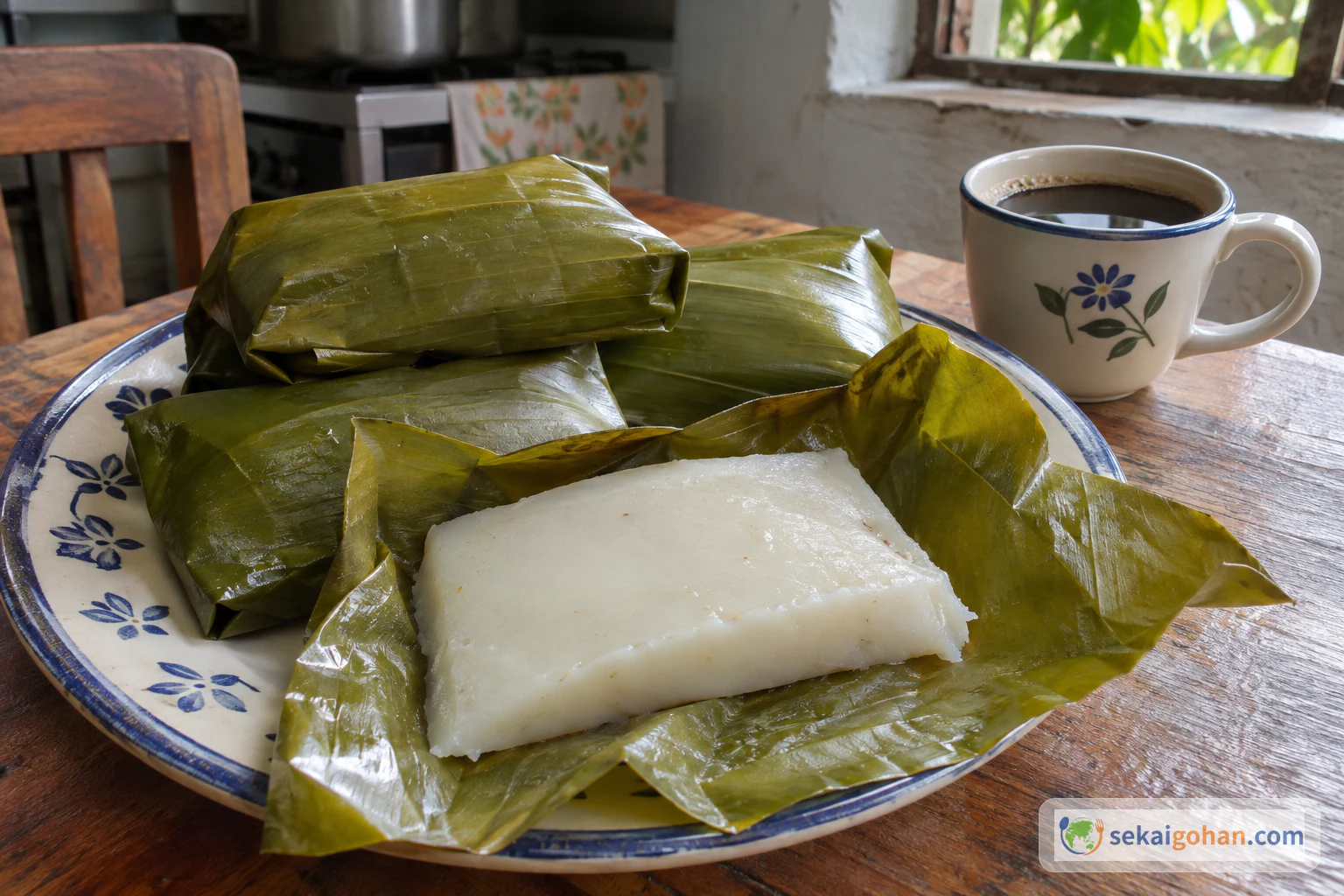
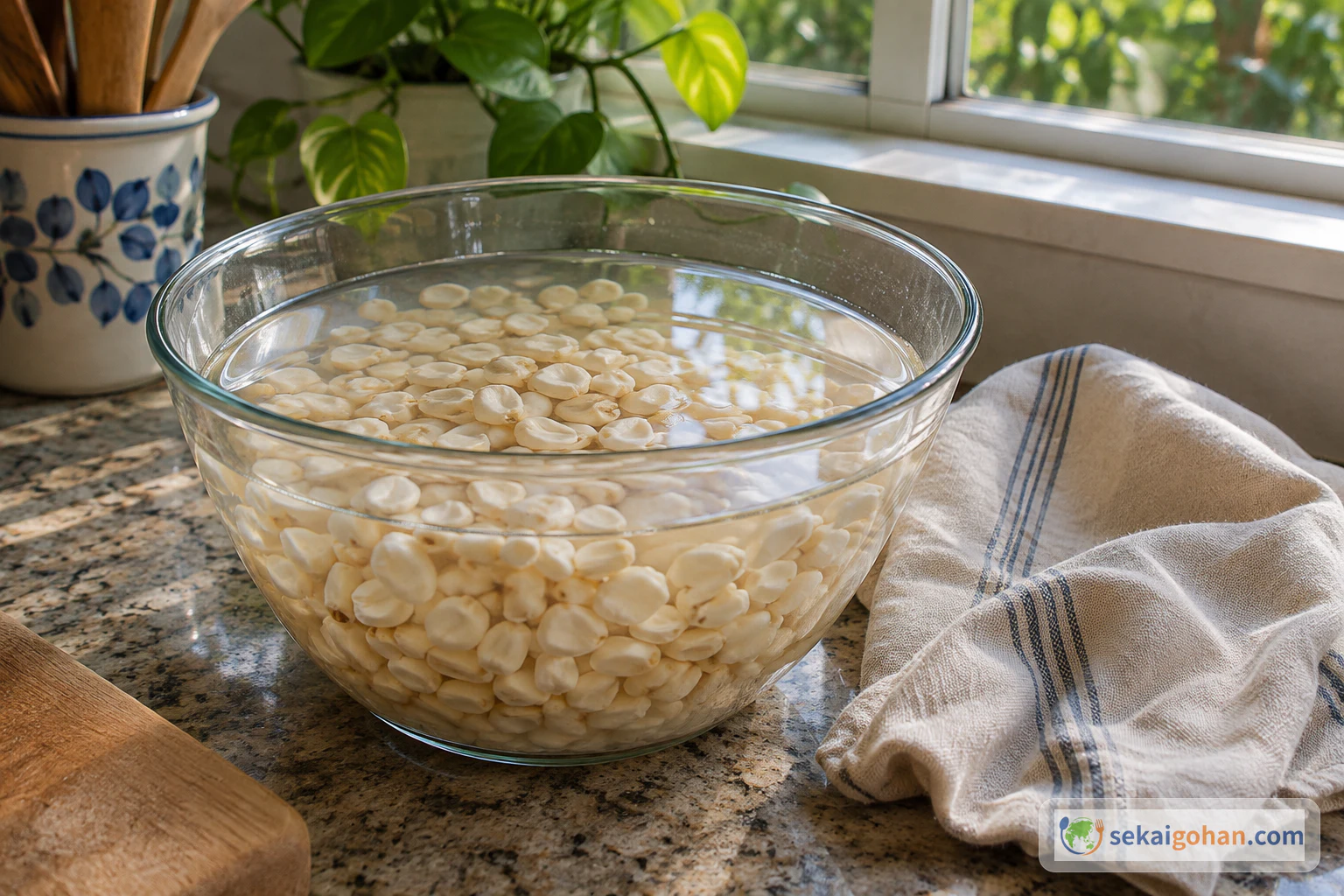
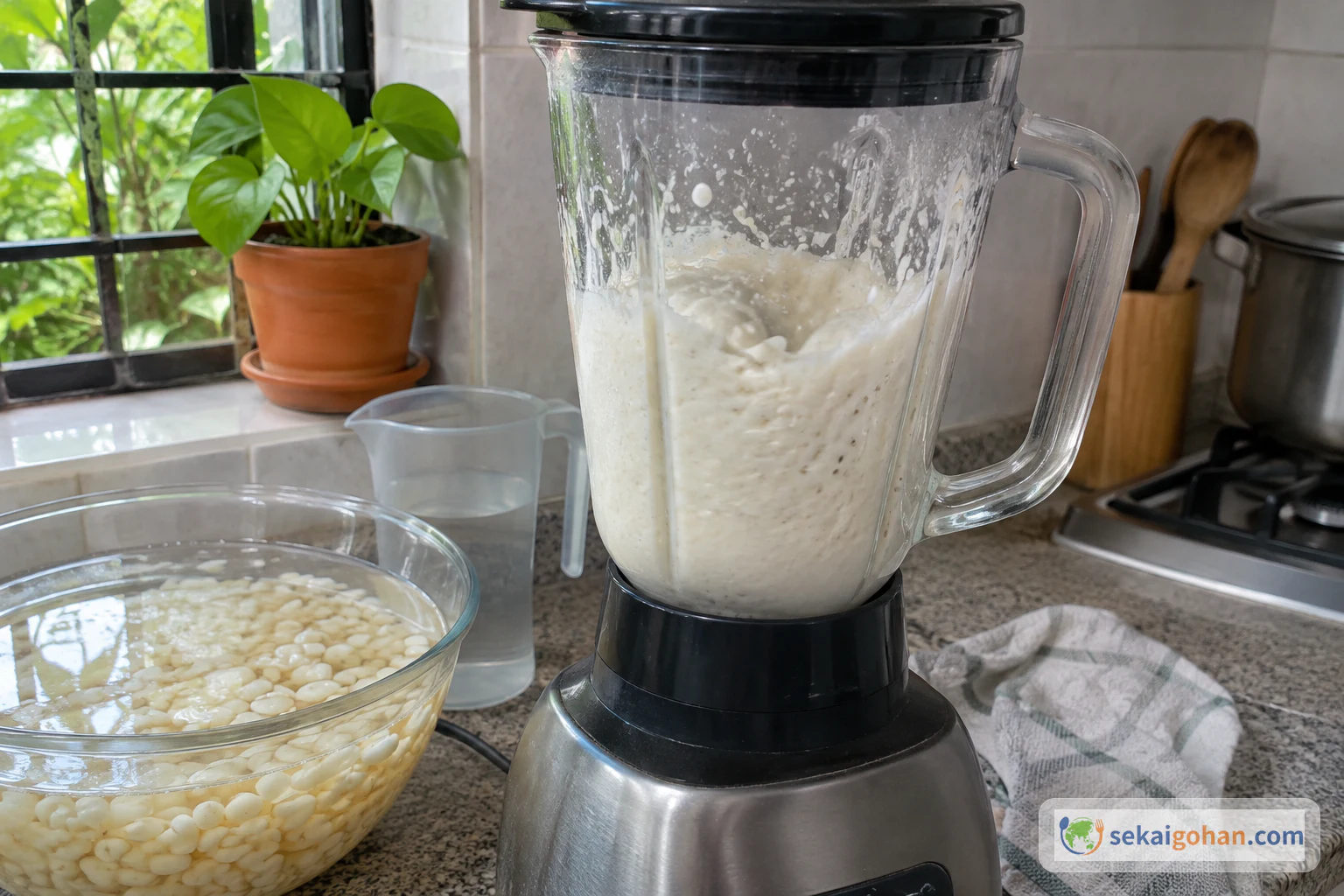
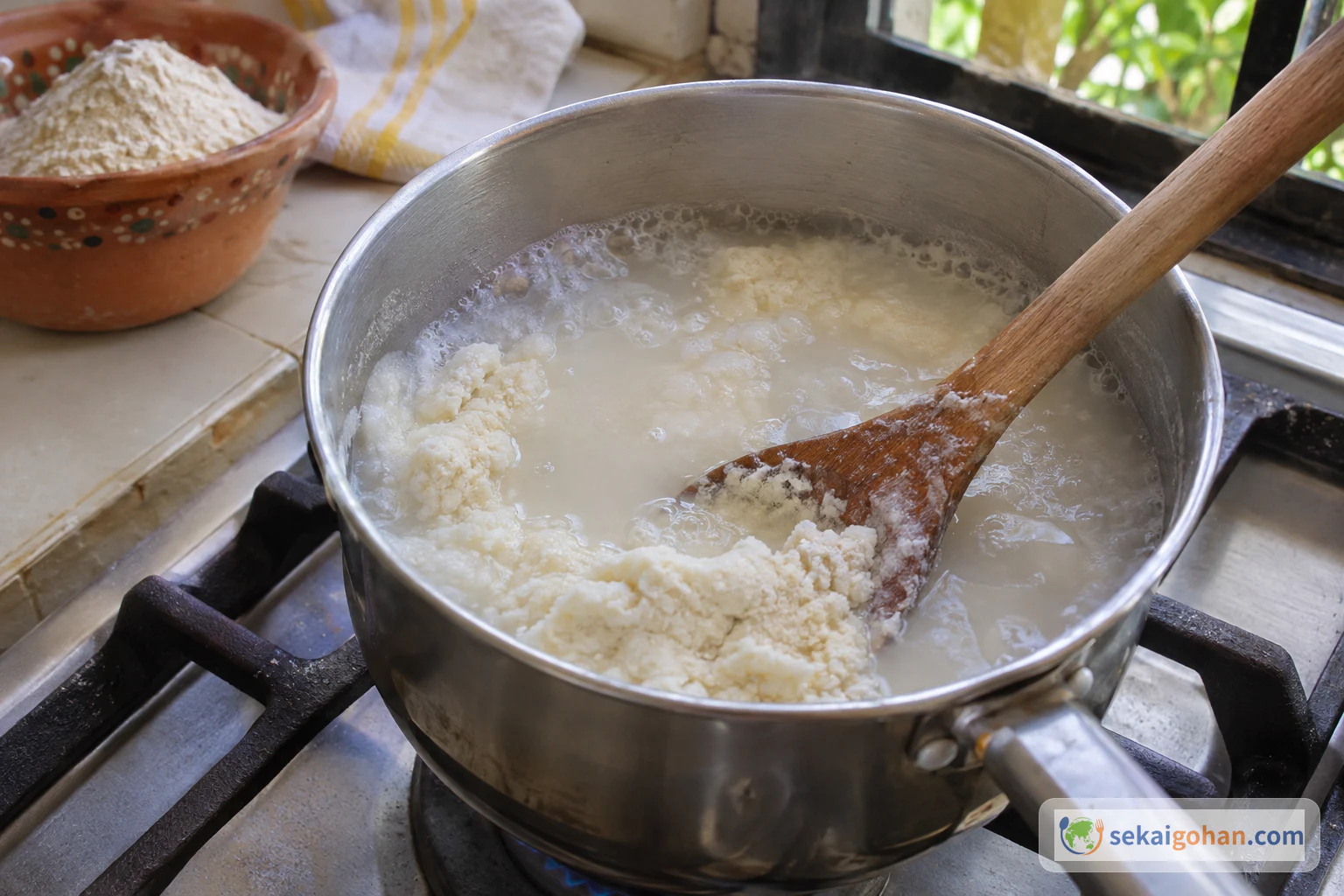
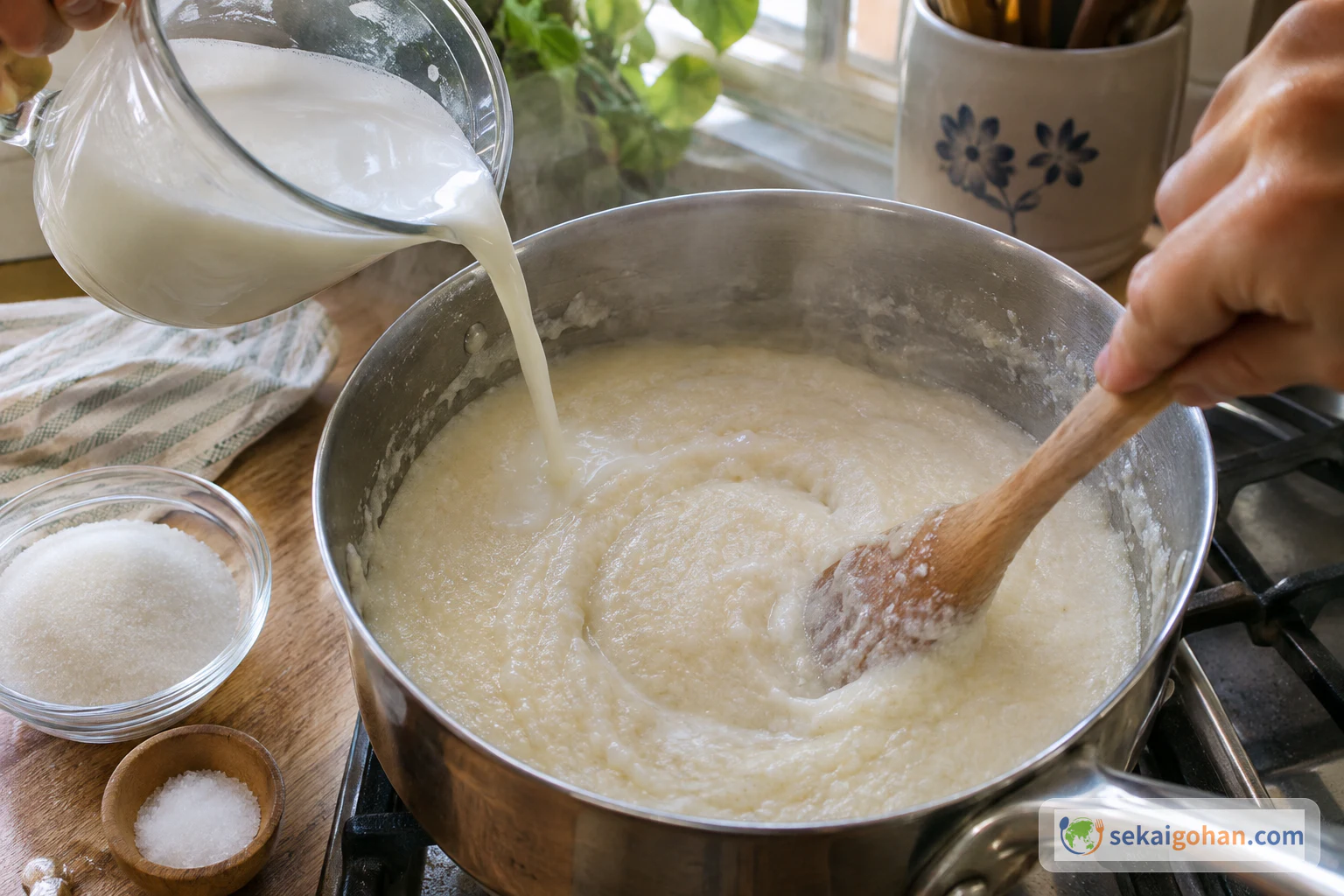
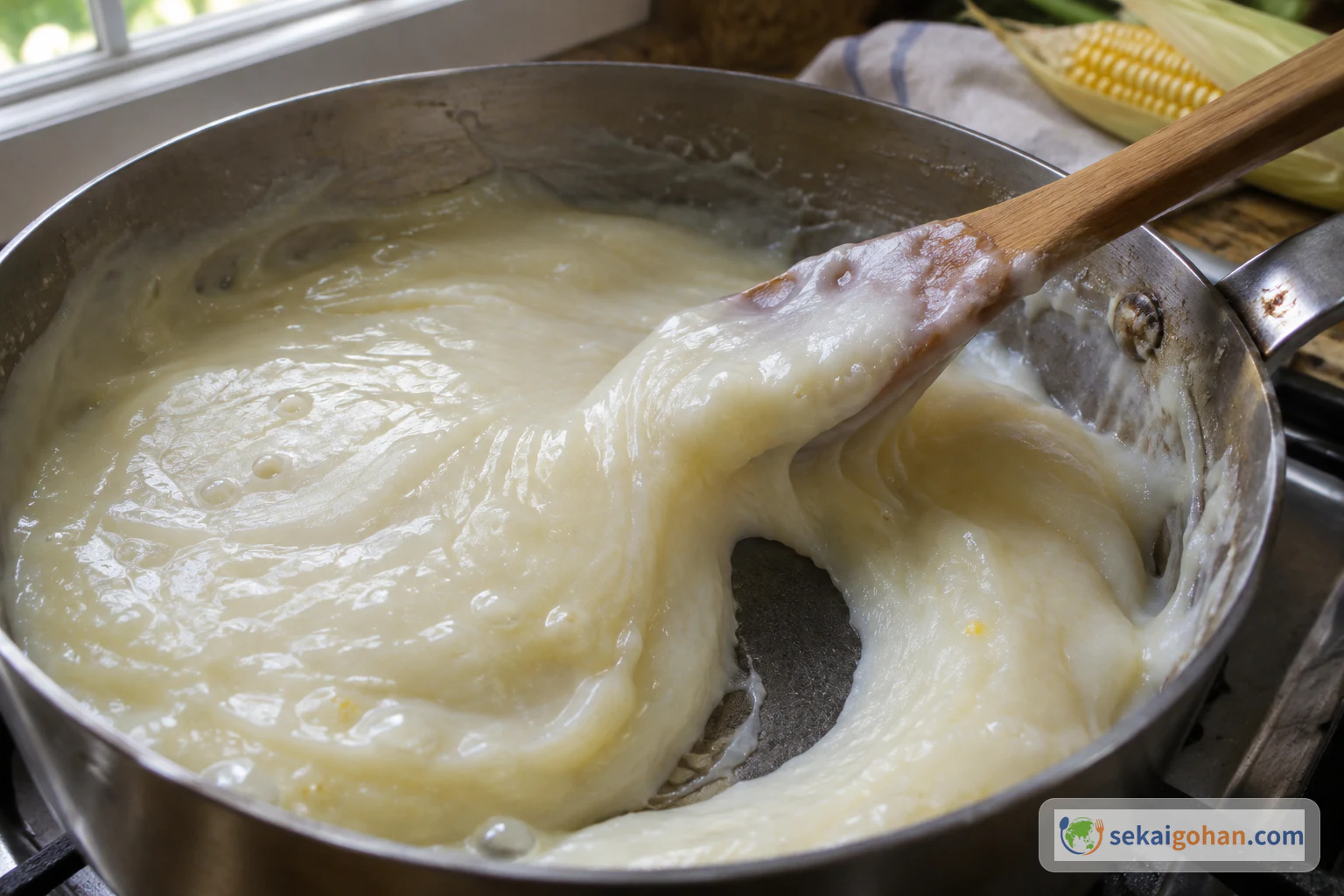
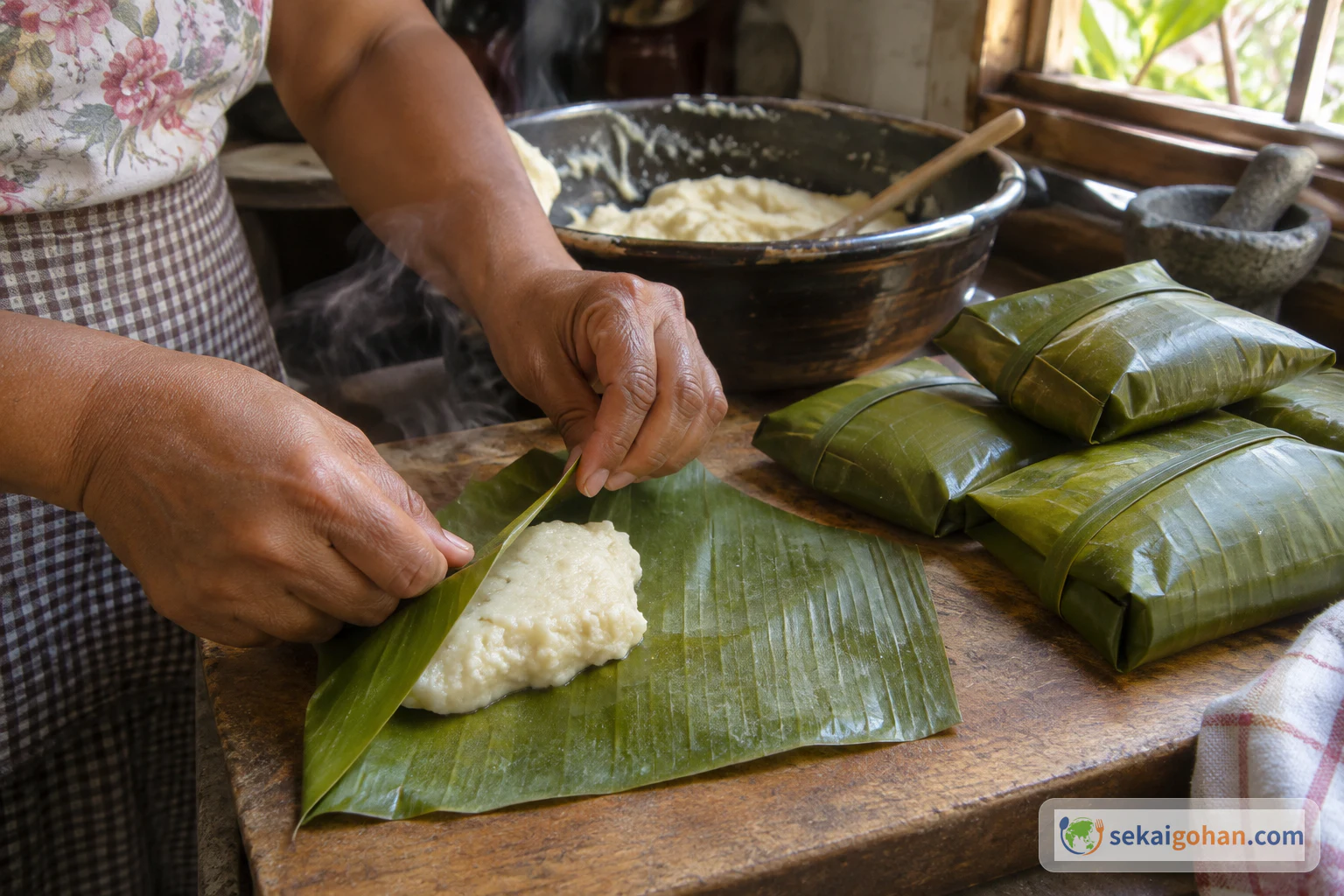
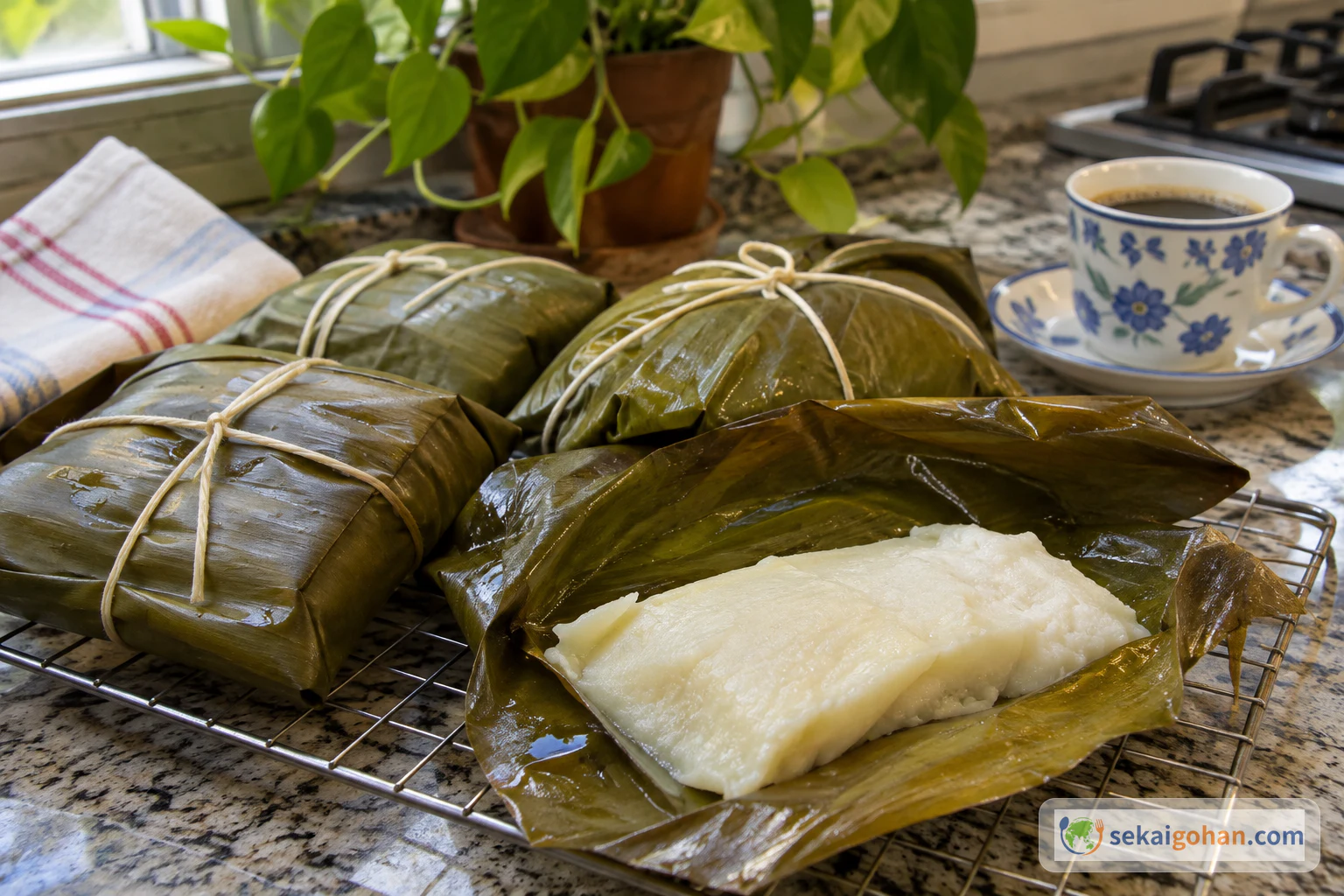
The pot is ready when the pale paste starts to foam and comes away from the bottom in one sheet as the spoon drags through it. It goes into squares of green banana leaf while it is still hot. Then it cools and sets into a smooth, white, firm little parcel. In Bahia this is acaçá. It is made from fermented white corn and wrapped in leaf, and it is served with coffee or beside a stew. The milk version below is gently sweet and soft on the tongue. Plain acaçá tastes of very little, so it takes on the flavor of whatever it is eaten with.
A White Parcel at the Heart of Candomblé
Acaçá goes by another name, ekó. The name is usually traced to the Fon word àkàsà and the Yoruba ẹ̀kọ. Both point across the Atlantic to the West African peoples whose descendants shaped food in Salvador and across Bahia. It is also called a "white pirão." It turns up in Bahia, Pernambuco, Rio Grande do Sul and Rio de Janeiro.
In Candomblé, acaçá is the one food no ritual can do without, and it is offered to every orixá. The leaf is part of its identity. Only once the corn is wrapped in banana leaf does it count as acaçá. A ball or loaf of the same paste left unwrapped is something else. The color of the grain follows the deity. White corn belongs to Oxalá and yellow corn to Oxóssi. A black bean acaçá, known in São Luís, belongs to Ogum.
Practice differs from one Candomblé house (terreiro) to the next. The recipe here is the milk acaçá made for the table. Ritual acaçá follows the rules of each house.
From the home table to the terreiro, and back to restaurants
Acaçá was once everyday food. Over time it disappeared from home tables and survived mainly inside the terreiros, which kept making it. One chef, Paloma Zahir, links that disappearance to cultural racism. Today restaurants are giving acaçá a second look, and it is coming back onto plates outside the ritual setting.
At the table, its blandness is the point. Acaçá sits next to rich, orange, palm-oil dishes like vatapá and moqueca baiana and softens them, much as rice would. The sweet milk version made here belongs with a cup of coffee. For the wider picture of the country's food, see Brazil.
Ingredients
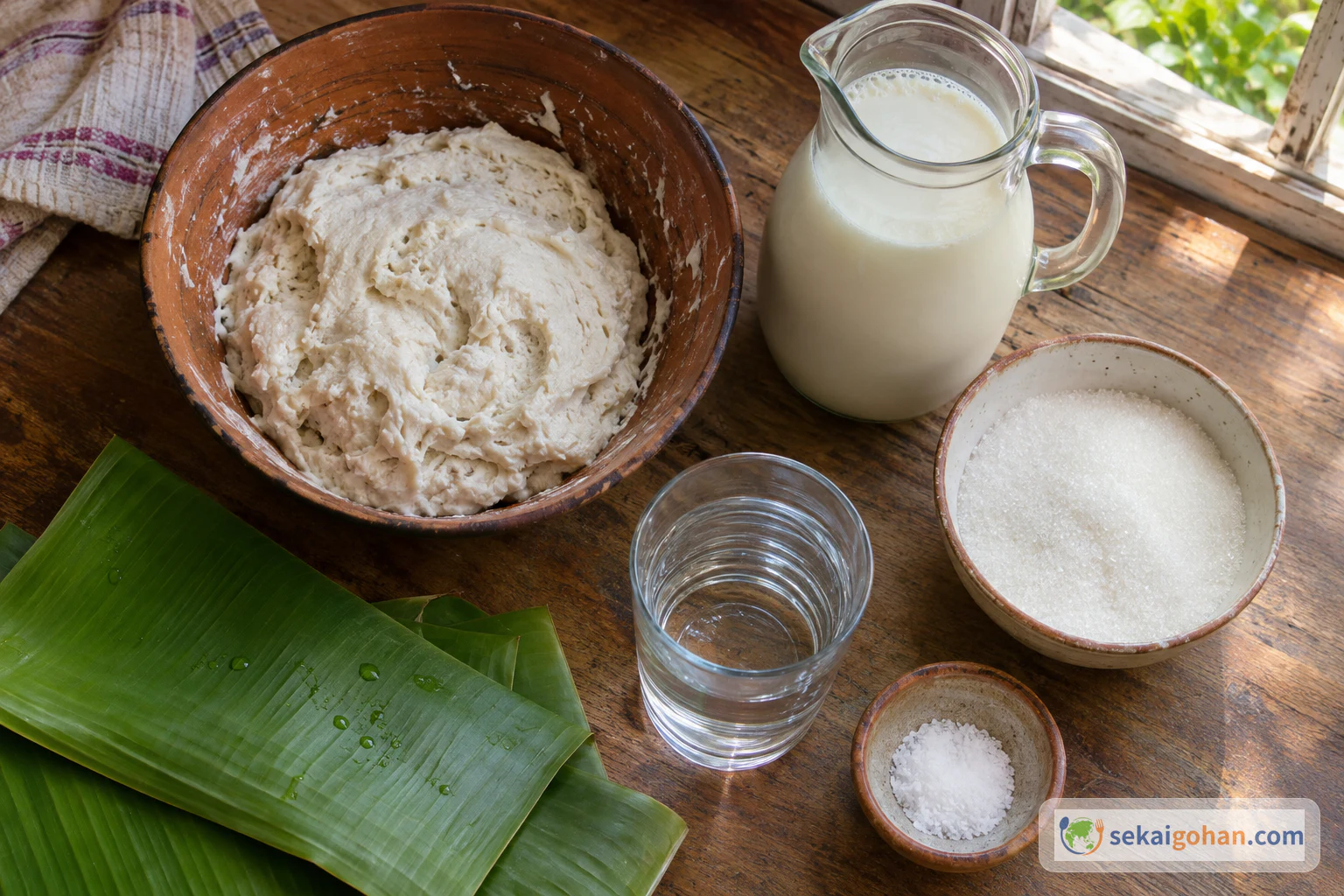
Keep any dough you do not use in a sealed container in the refrigerator, covered with water.
The 9 oz (250 g) measure is for the ground, fermented dough, not for the dry corn.
Contains milk (whole cow's milk).
Equipment
- A large container for soaking the corn
- A blender (or a grain mill)
- A sealed container for storing the dough
- A heavy saucepan, stainless steel works well
- A wooden spoon
- A knife or scissors for cutting the banana leaves
Choosing White Corn and Banana Leaves Abroad
White corn is the dish. Look for dried white corn kernels. In Brazilian and Latin American shops they are often sold as canjica. Yellow corn makes a different acaçá, the one tied to Oxóssi, so use white if you want the pale parcel shown here. If you cannot find kernels, or would rather skip the soak, coarsely ground white corn flour is the accepted stand-in. It skips the ten-day soak and the fermentation that comes with it. Cornstarch and potato starch are refined starches, not ground corn, and do not belong here.
Frozen banana leaves are sold at Asian grocers. Thaw them and cut them into squares. Use whole milk. Plain granulated sugar is what the recipe calls for.
Method
The work splits into two stretches. First comes the dough, about ten days of soaking that mostly takes care of itself, with water changes on a schedule. Then comes the cooking, which keeps you at the stove with a spoon the whole time, followed by wrapping while the paste is hot and leaving the parcels to set.
Soaking grain in water for ten days is a traditional fermentation, not a method tested for food safety. Use a clean container and fresh water at every change. If the corn or its water smells off or shows mold or discoloration, throw it out. If you are unsure about fermenting at home, use coarse white corn flour instead.
When It Goes Wrong
| What you see | Why | What to do |
|---|---|---|
| Brown flecks or a burnt smell | The paste sat still or the heat was too high | Turn the heat to low and stir without stopping |
| The parcels stay soft and will not set | The paste came off the heat too soon | Next time, cook until it foams and comes away from the pan bottom |
| The paste firms up in the pot before you finish wrapping | It cooled too much before wrapping | Cut the leaves before the paste is done and wrap while it is hot |
| It tastes flat on its own | Acaçá is meant to be mild | Serve it with coffee or beside a stew. Adjust the salt next time to balance the sugar |
Serving, Variations and Storage
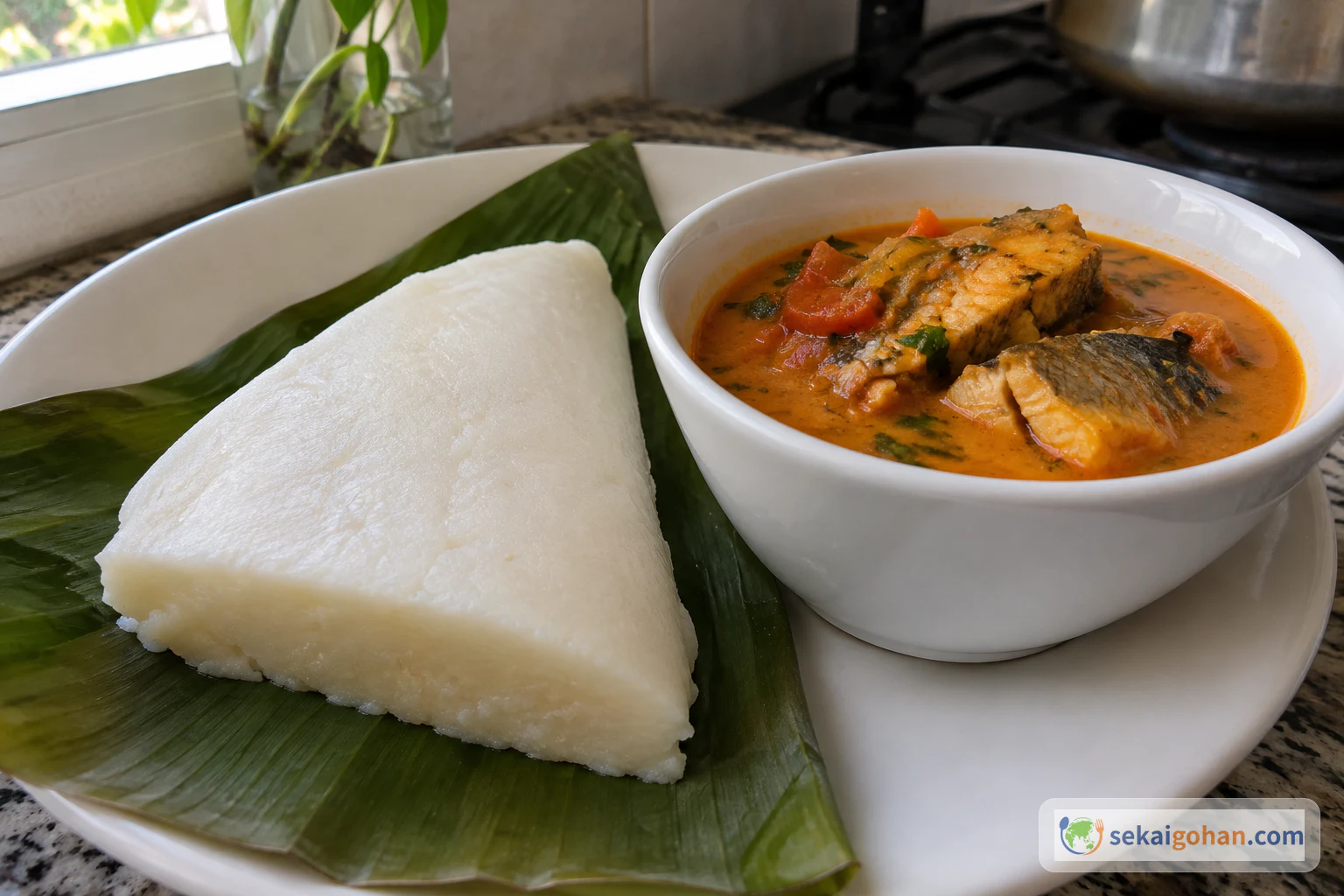
At the table
The milk version is something to have with coffee. Plain acaçá goes on the table beside vatapá or moqueca, where its mildness tempers the richness of the stew.
Variations
- Yellow corn acaçá. Using yellow corn instead of white changes the color, and in Candomblé it ties the dish to Oxóssi.
- Black bean acaçá. This version is known in São Luís and associated with Ogum. It moves the dish away from corn entirely.
- Coconut acaçá. Rio de Janeiro has a version made with coconut, which gives a richer parcel.
- Rice flour acaçá. This is a quicker, savory recipe of its own, so do not mix it with the corn recipe above. Cook 4½ oz (125 g) rice flour, a generous ¾ cup (200 ml) coconut milk, about 2 cups (500 ml) water and 1 tsp salt over medium heat for about 10 minutes, then serve it beside fish stews.
Storage
Acaçá is a cooked dish of milk and starch, and it spoils quickly at room temperature. Once the parcels have cooled and set, refrigerate them promptly in a covered container. Eat them the same day or soon after.
Keep leftover raw dough in its sealed container, covered with water, in the refrigerator.
Frequently asked questions
How is acaçá different from acarajé and abará?
All three are Bahian Afro-Brazilian foods, but they are made differently. Acarajé is a fried bean fritter, and abará is a steamed bean dish. Acaçá is fermented white corn dough set in banana leaf.
Is acaçá sweet?
The milk version here is sweet because of the sugar, with just enough salt to round it out. Ritual acaçá and the acaçá served beside stews are mild.
Can I make acaçá for a Candomblé offering?
Practice differs from house to house. Ask the person responsible at the terreiro how its acaçá is made and offered. The recipe here is for the table.
Can I cook the parcels inside the leaf?
Yes. In some places the paste is wrapped in leaf and then cooked in the wrapper. The method here does all the cooking in the pan and lets the parcels set as they cool.