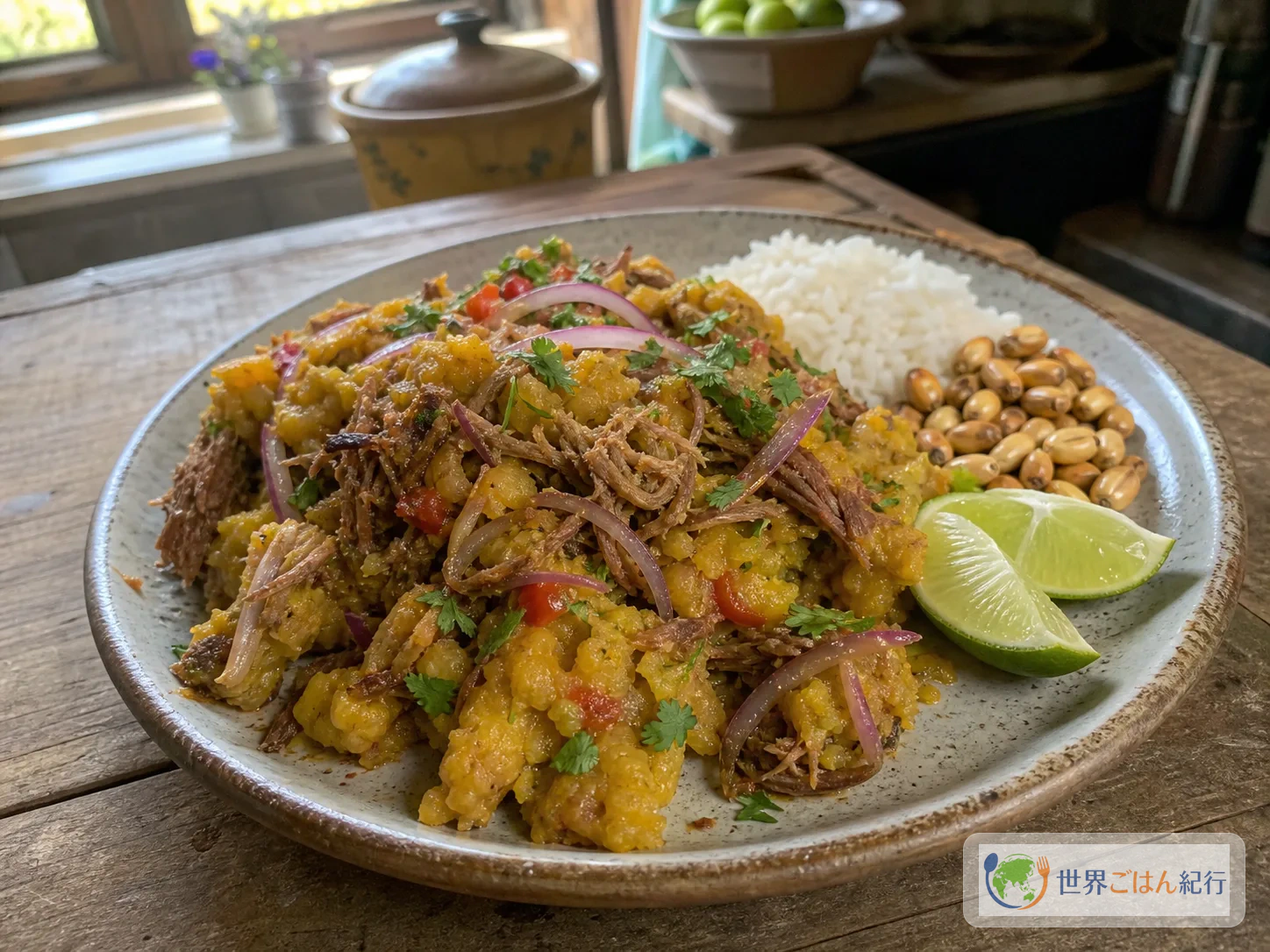
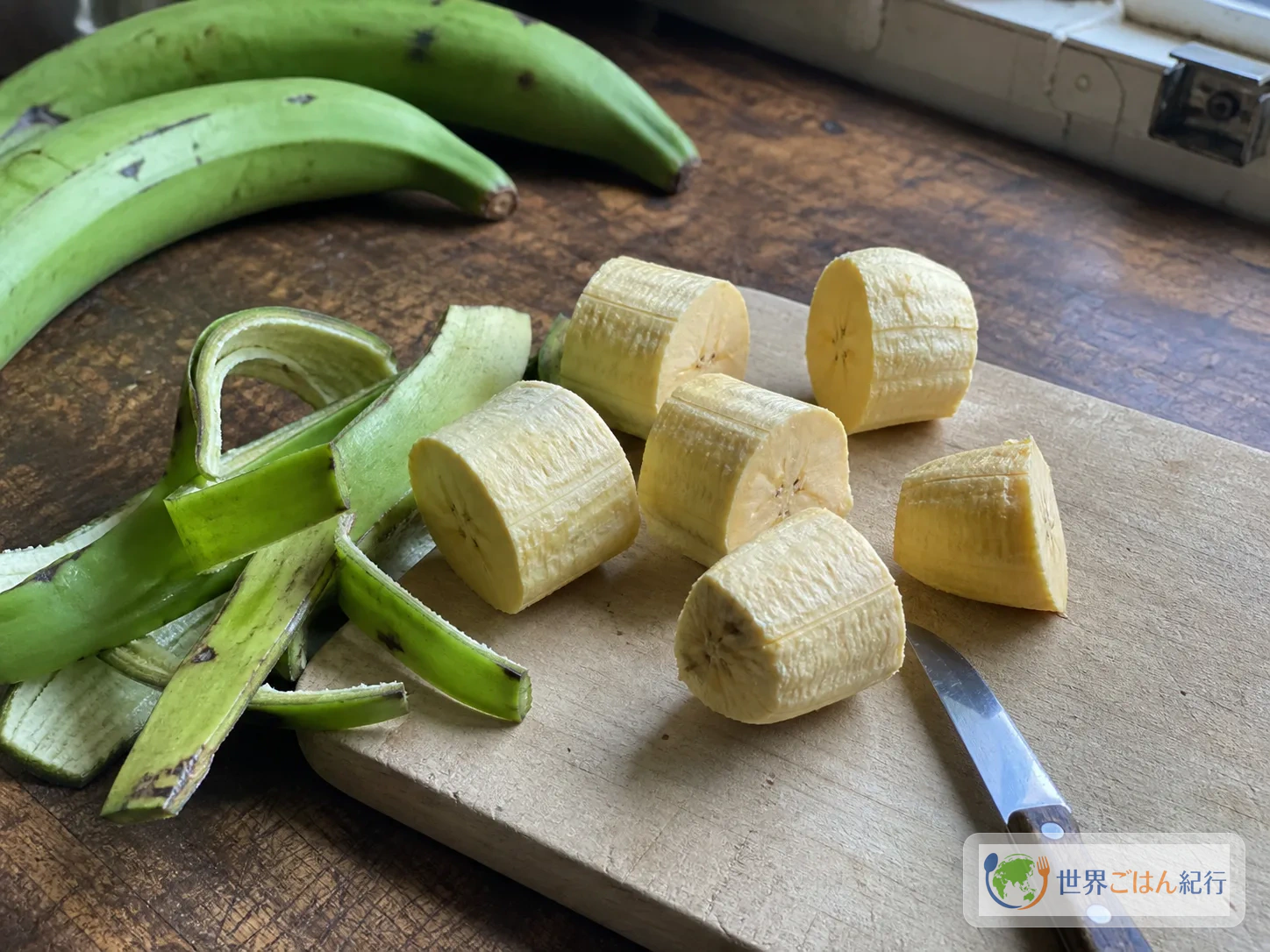
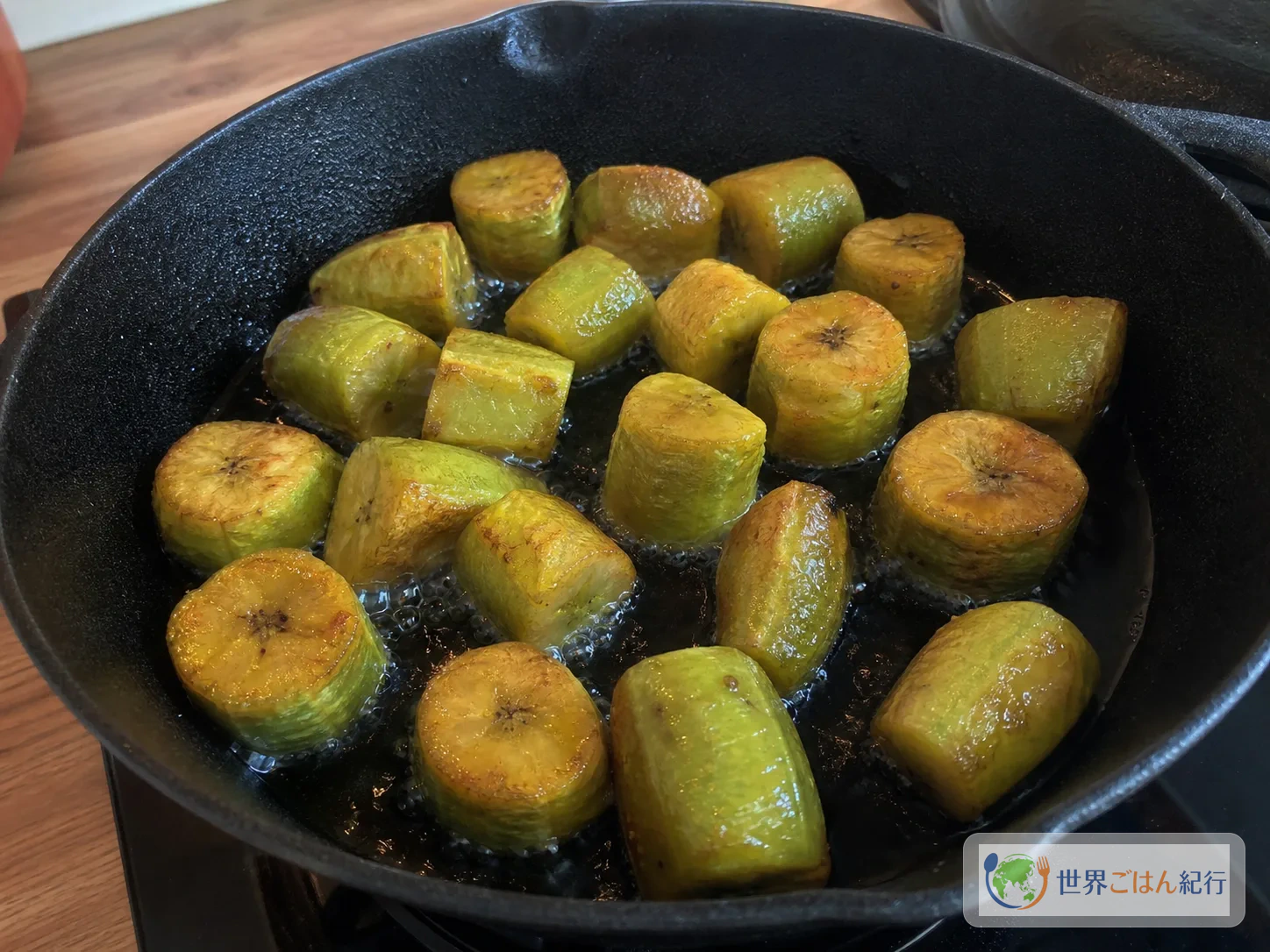
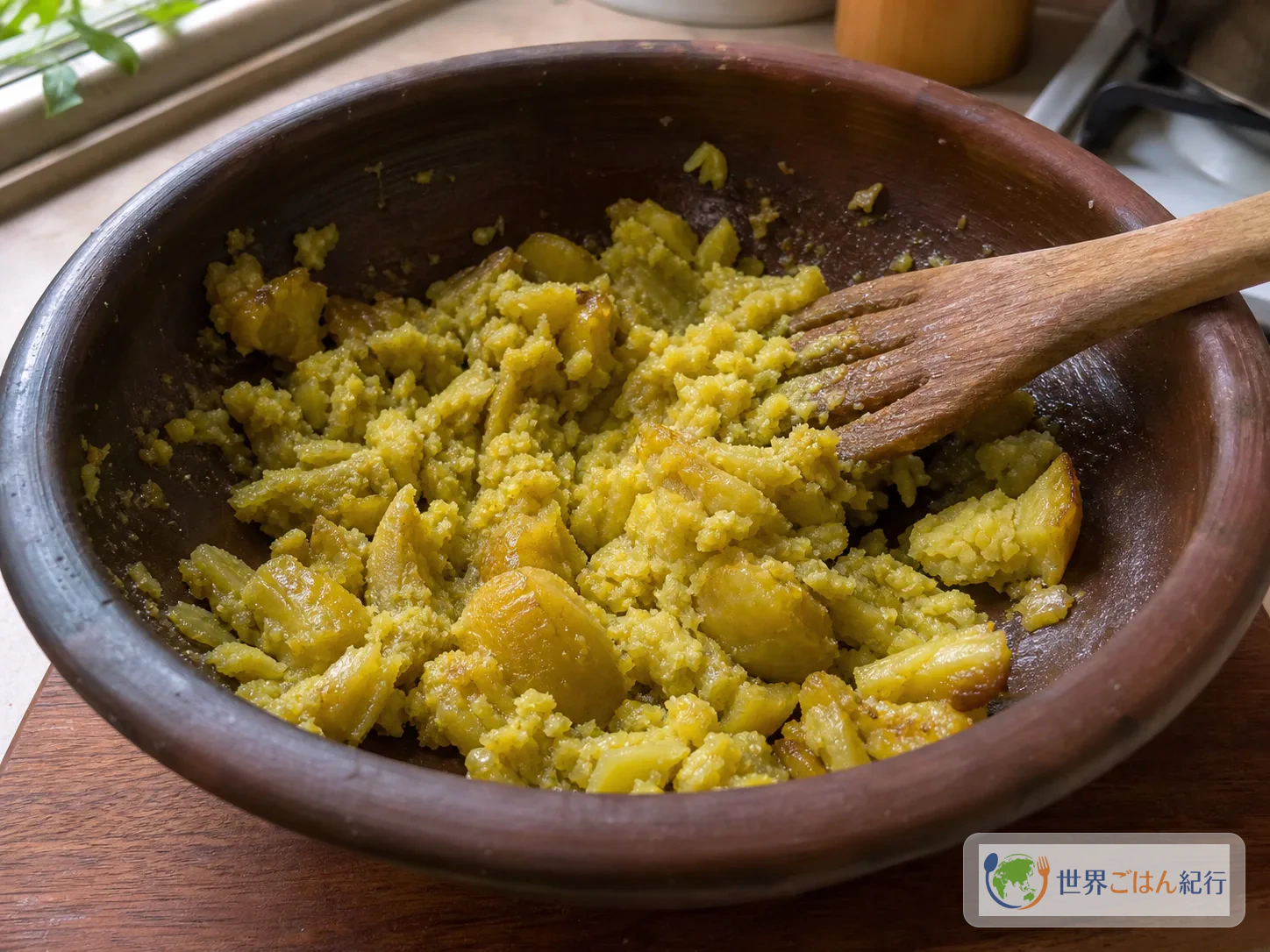
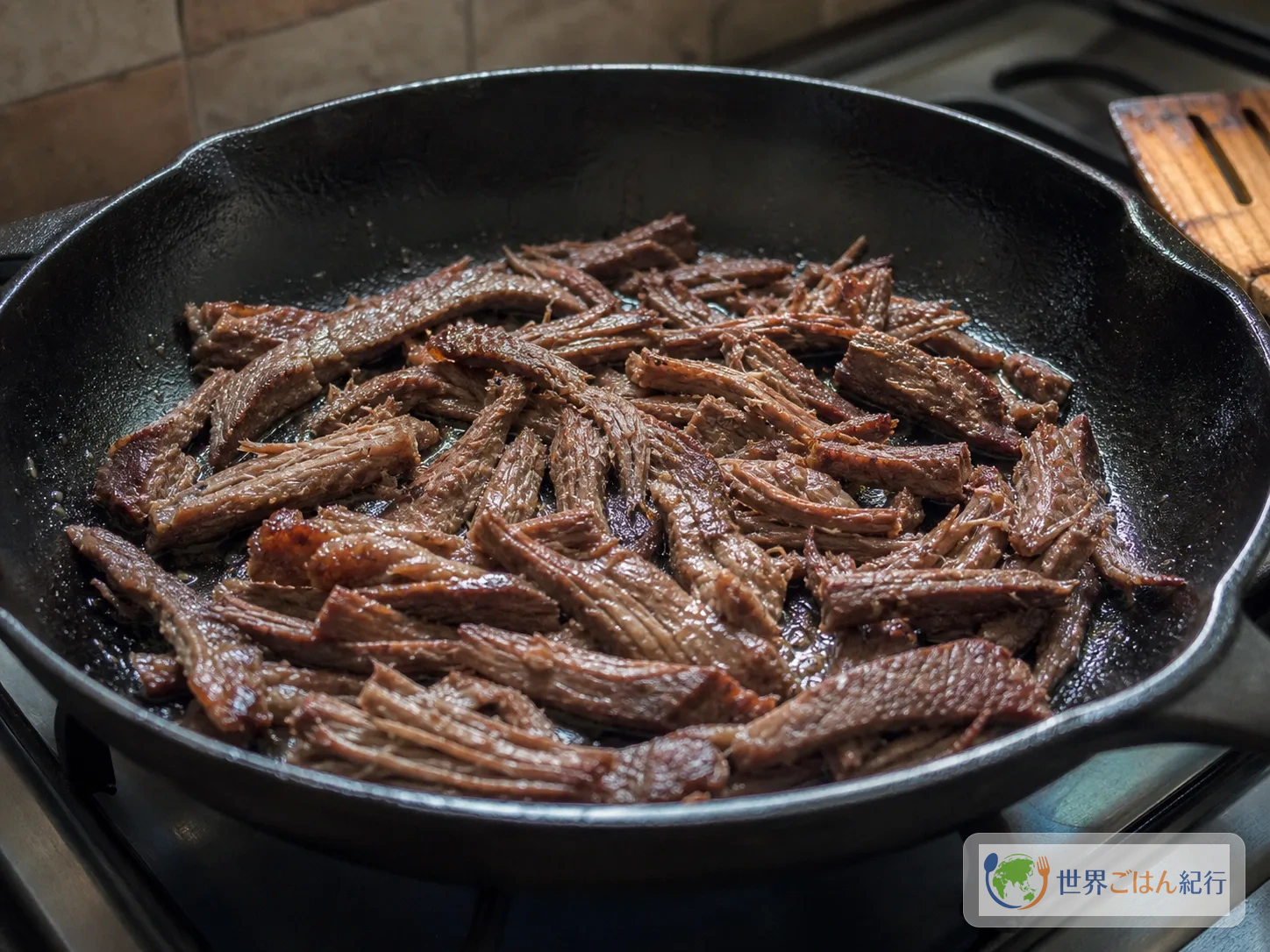
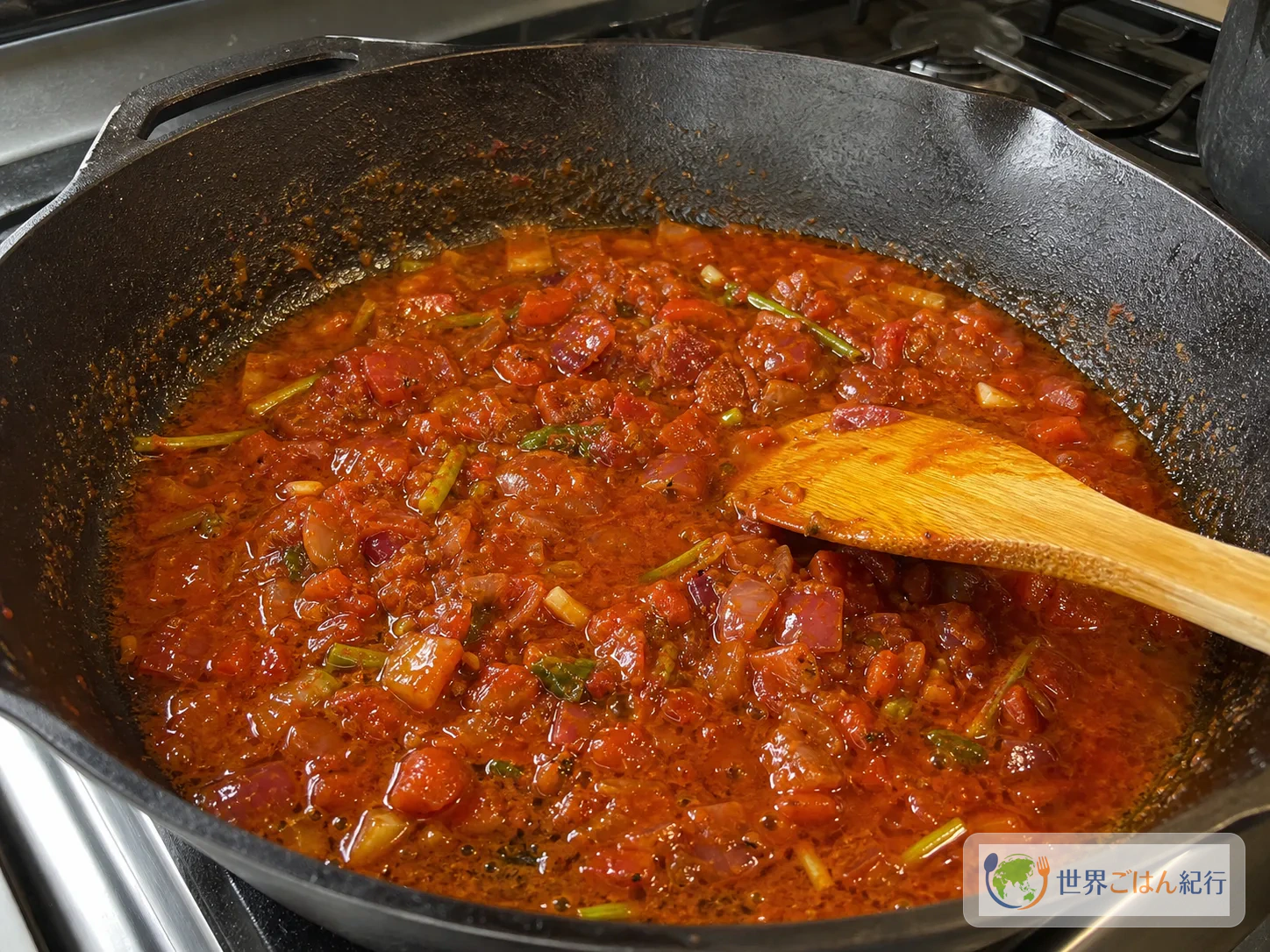
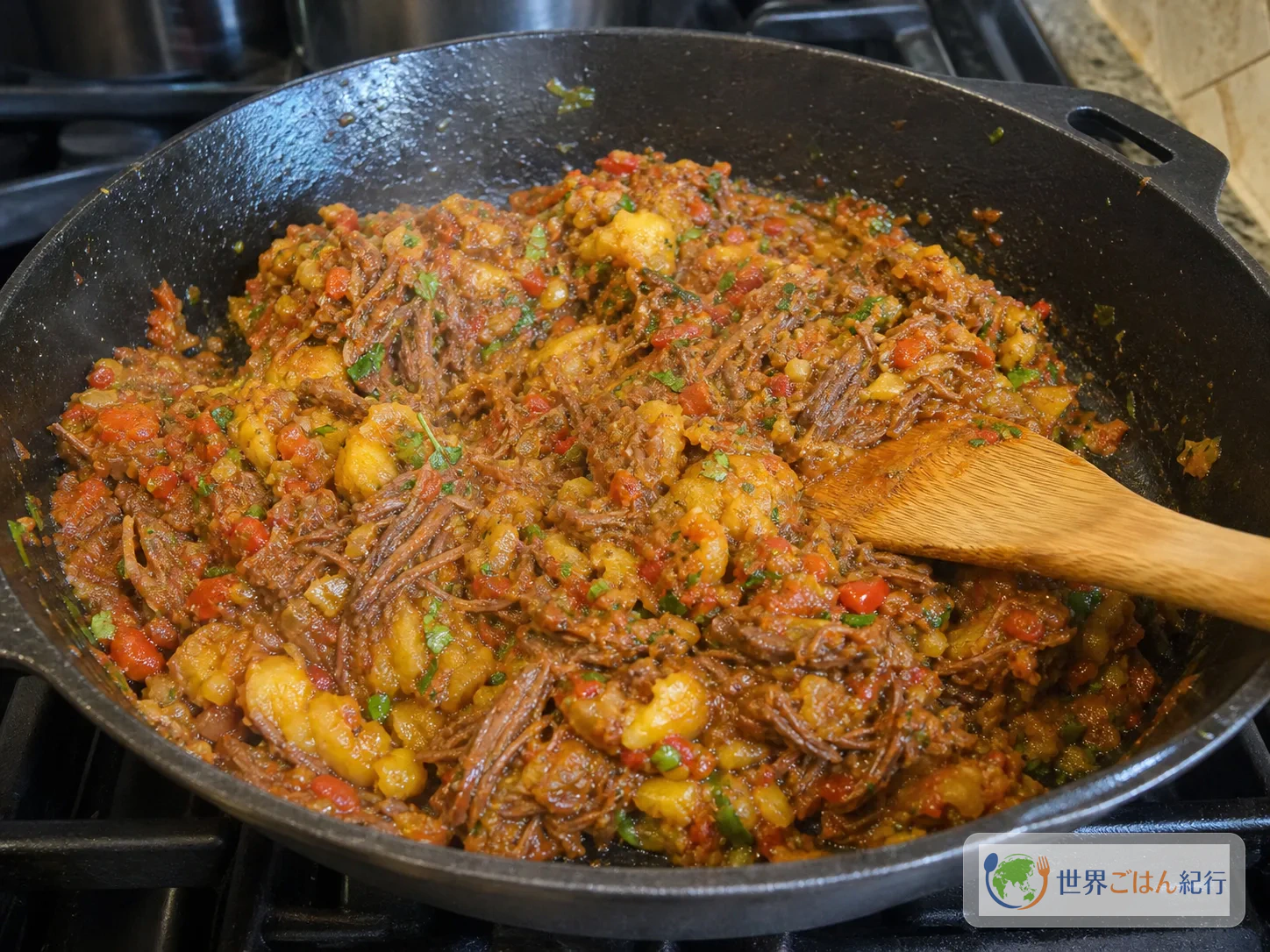
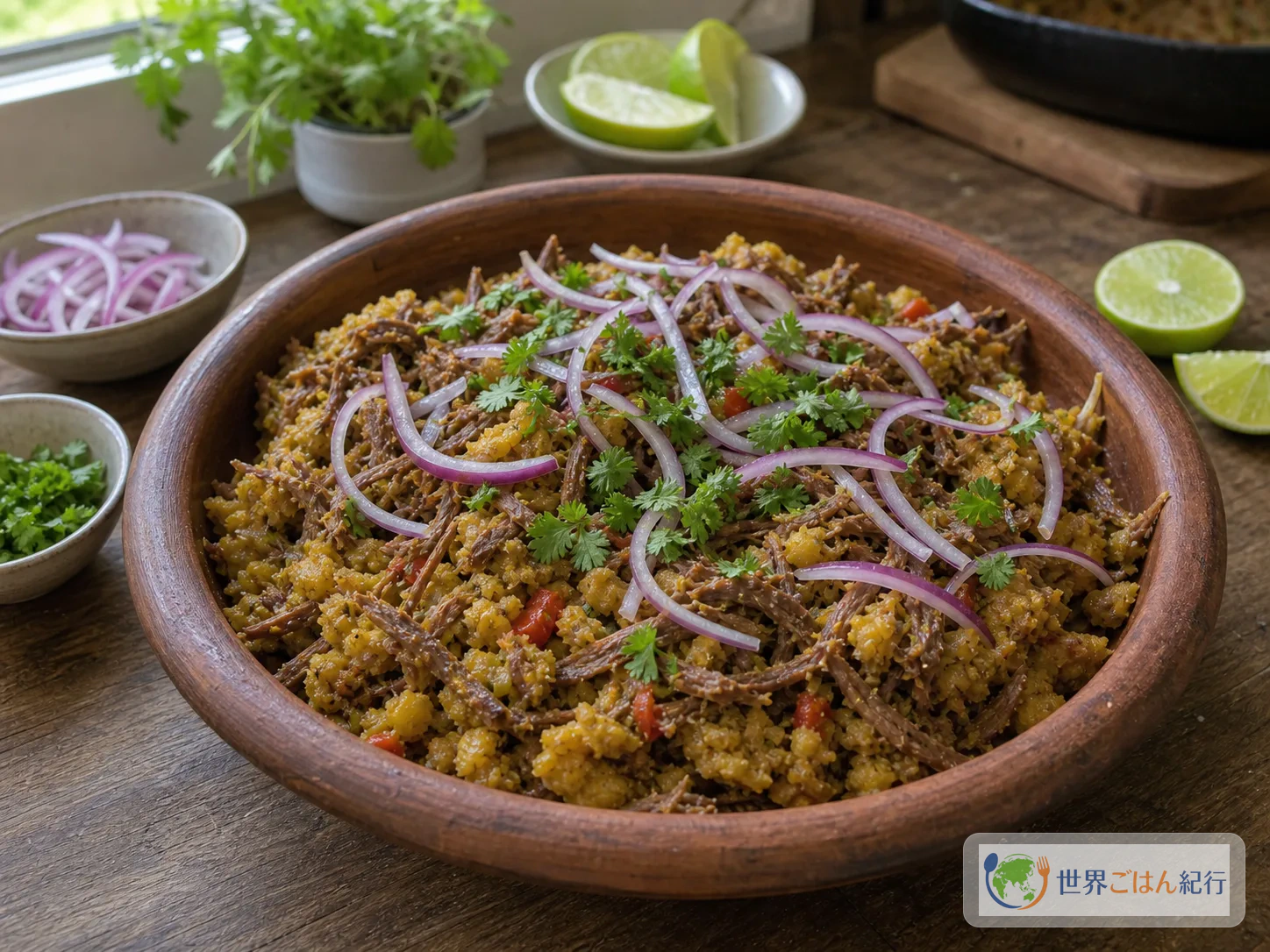
When you put a knife to a green plantain, you feel a hardness no ordinary banana has. There's no sweet smell yet, and the starchy white flesh comes away in a firm lump. Pan-fry the pieces, mash them coarsely while they're still hot, and you get a fluffy, slightly sticky base that is nothing like potato or taro. That's the start of seco de chabelo, a dish from Piura in northern Peru: mashed green plantain mixed with salty beef and a red aderezo, then cooked in the pan until the moisture is gone. It tastes sour and gently hot from the ají, with the fermented aroma of chicha and the saltiness of finely shredded beef.
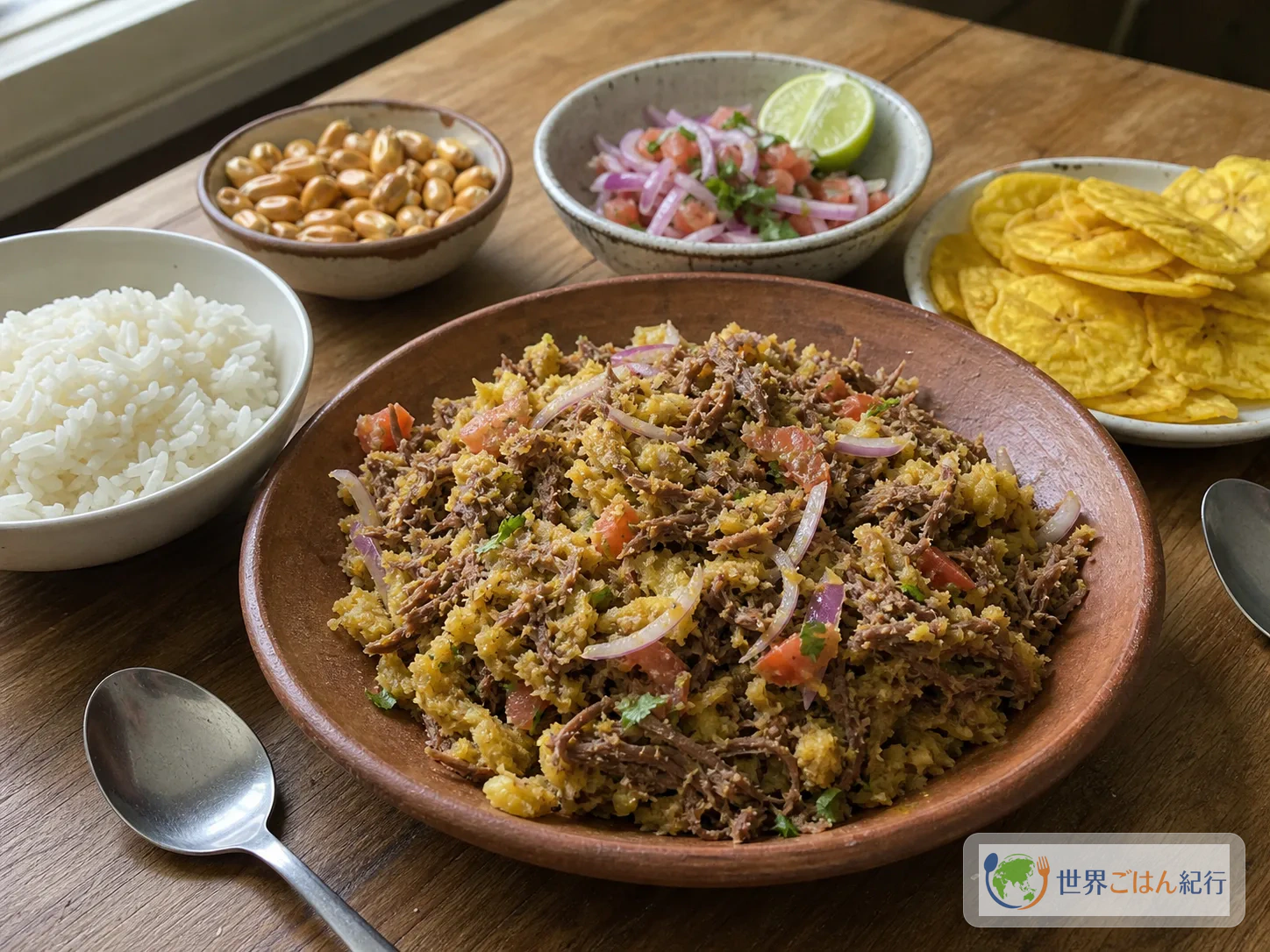
Seco de Chabelo in Piura
From Catacaos to the Rest of the Region
In Catacaos, Piura province, seco de chabelo is built on roasted green plantain and dried beef. The beef can be dried or fresh, and the fat can be oil or lard. The dish took its current form in the 1960s, but oral memory goes back further. It has been passed from person to person across the region, along with the green plantain, the beef, the fermented drink and the tools.
It first appeared as a snack, or piqueo, and is now eaten as a main too. At a December 2009 food fair, a Catacaos stall served about 1,000 portions in three days. Even a plate made in a home frying pan keeps the feel of that table, where dried meat is shredded and green plantain is shared.
On 21 May 2026, seco de chabelo was recognized as an "Especialidad Tradicional Garantizada" (ETG, Traditional Specialty Guaranteed). The listed ingredients are green plantain, dried or fresh beef, ají amarillo, ají panca, onion, garlic, cilantro, and chicha de jora. Tomato, oil, and lard are optional.
How It Compares with Other Plantain and Peruvian Dishes
The Caribbean mofongo helps explain the texture. Mofongo mashes fried plantain with garlic and pork fat into a ball, while seco de chabelo adds beef and red aderezo and loosens into a stir-fry. Aim between the two: looser than a ball, but still holding together, unlike fried rice.
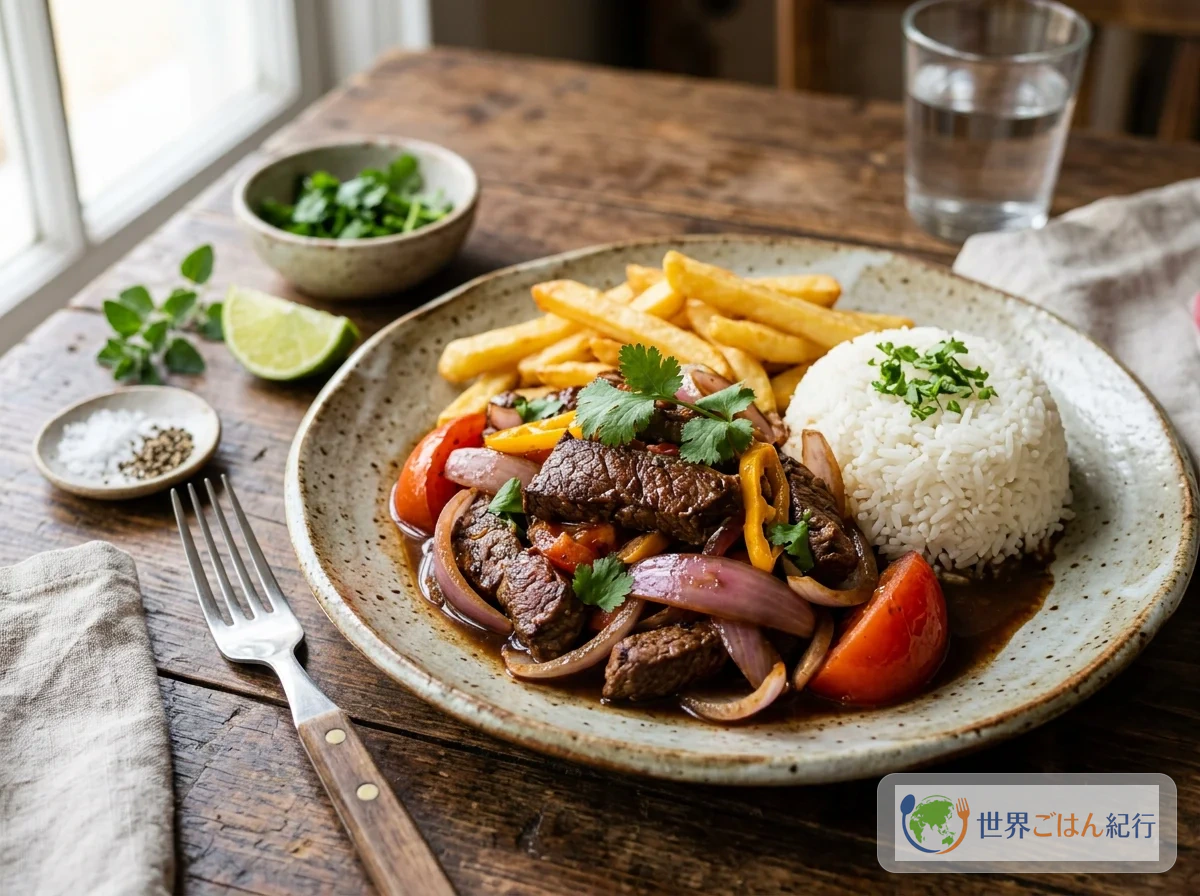
Peru's better-known dishes include lomo saltado, a wok dish of potatoes cooked over high heat, ceviche, a cold appetizer of fish and lime, and papa a la huancaína, a starter in yellow sauce. Seco de chabelo takes you a little further north, to green plantain and the fermented aroma of Piura.
Seco de chabelo and seco de chavelo refer to the same dish. Green plantain is also called cooking banana or green banana, but it is different from the sweet bananas eaten raw.
Ingredients: Gather Green Plantain, Beef, and Fermented Sourness
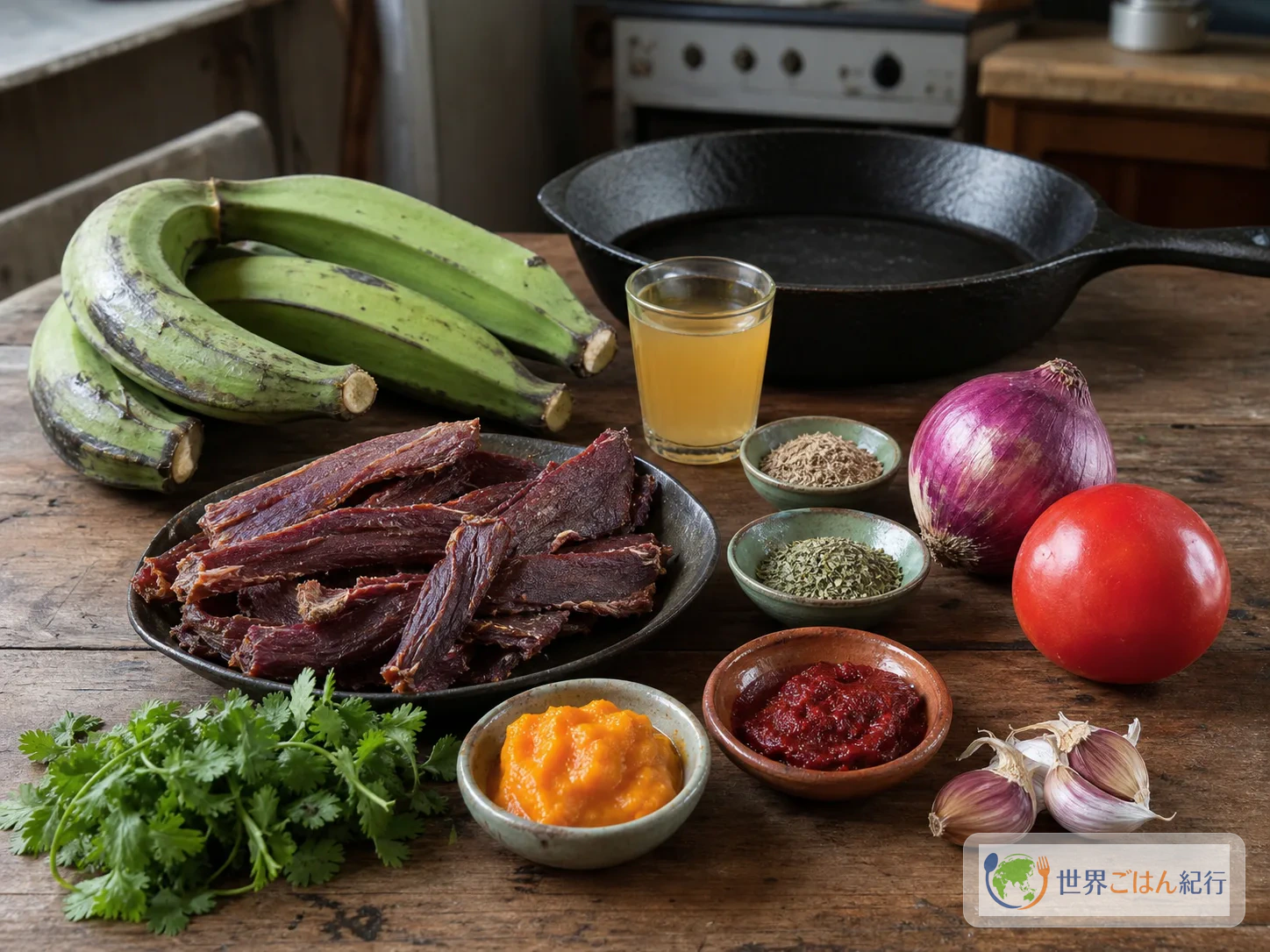
The ingredients you'll hesitate over most are green plantains and cecina. Look for plantains at international grocery stores, South American grocery stores, and online sellers of ethnic ingredients. Choose green, hard-skinned ones that barely give when pressed with a finger. Yellow, ripe ones are sweet and soft, and they lead to a different dish when fried. The roasting method uses the same green fruit.
Cecina gives this dish its northern Peruvian character, but it is hard to find elsewhere. If you can get it, check the label and reduce the added salt. Otherwise, sear beef round for grilling, lean beef chuck, or lean thin-sliced beef hard, then shred it fine. It won't be an exact match, but a fluffy plantain base and red aderezo keep the outline of the flavor.
Ingredients (serves 4)
This recipe uses beef. Wash the cutting board, knife, and hands that touched raw meat before handling the plantain or the finishing cilantro. Salt level and heating differ between cecina products, so check the label. If you substitute raw beef such as beef round, cook it until no red remains and it is cooked through to the center. For details, see this guide on raw meat (in Japanese). If you use a cooking thermometer, check the center of the thickest part.
If You Want to Supplement the Aroma of Ají by Mail Order
Buy onion, tomato, beef, and cilantro nearby, where you can check freshness. Order by mail when you want a paste that gives both the fruity aroma of ají amarillo and a light heat. Even without ají panca, a small amount of ají amarillo adds more Peruvian aroma than paprika and tomato alone.
Buy this paste if you'll use it for seco de chabelo, lomo saltado, and fried rice, so the jar gets used up. For this one plate alone, use 1 tbsp paprika and 2 tsp tomato paste in place of ají panca, and you can skip the ají amarillo. If you're unsure, decide by two questions: do you want the aroma of yellow chili, and can you use up the jar in the refrigerator? Then nothing goes to waste.
A heavy frying pan reduces the chance that only the surface of the plantain browns while the center stays hard. You don't need a dedicated pan for this one dish. If your pan is thin, lower the heat and fry the plantain in two batches. A thermometer for oil temperature or the center of the meat helps on the first try, but it matters less than ají paste.
Choosing Ingredients for Seco de Chabelo
If you can't gather everything, hold on to three points: use green cooking plantains, brown the beef and shred it fine, and reduce the aderezo until it coats everything. Cecina is beef that has been salted and dried. Without it, go for well-browned beef shredded fine rather than trying to match the meat exactly.
Ají panca gives the dish its deep red aroma. When you have none, build the color with paprika and tomato paste and add only 1 to 2 tsp ají amarillo; more than 1 tbsp of ají amarillo on its own gives a yellow, bright heat that pulls away from the dish's red character. Chili flakes make it taste more like a Japanese-style hot seasoning than the fruity heat of Peruvian cooking. If you want more heat, add a very small amount of cayenne and support the aroma with cumin and oregano.
Chicha de jora is a drink made by fermenting corn, and it brings both toastiness and sourness. Leave it out entirely and the dish drifts toward a red tomato stir-fry. Combining 3.5 tbsp (50 ml) unsweetened beer and 2 tbsp apple cider vinegar covers the toastiness and the sourness separately, since beer alone turns bitter and vinegar alone turns sour. For an alcohol-free version, use 3.5 tbsp (50 ml) strong barley tea and 2 tbsp apple cider vinegar, and bring it to a full simmer in the aderezo to round off the acidity.
Method: Don't Simmer; Stir-Fry It Dry with Red Aderezo
Seco de chabelo is not a dish you cook with lots of liquid left. Pan-fry the plantain first and mash it, brown and shred the beef, cook off the moisture of the red aderezo, and then combine. The goal is that when you push with a wooden spoon at the end, it holds together while clinging lightly to the bottom of the pan.
Common Seco de Chabelo Problems
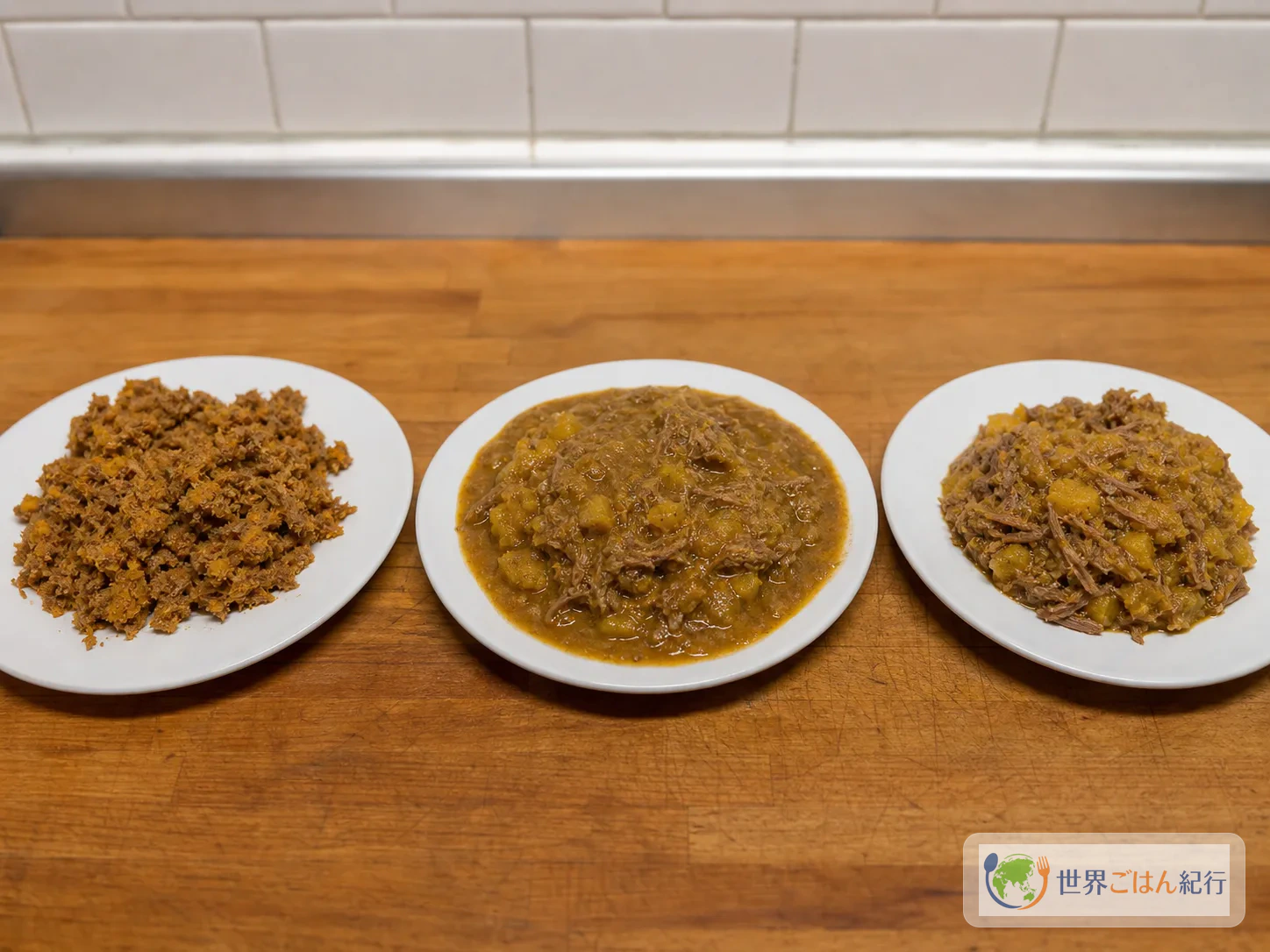
Seco de chabelo sits at a midpoint between a stir-fry and a mash, and most failures come from missing it. Mash the plantain before it has properly softened and a hard core stays in the mouth. Combine it with the aderezo while the sauce is still wet, and the plantain soaks it up and turns sticky.
| Problem | Cause | Fix |
|---|---|---|
| The plantain is hard | The oil was too hot and only the outside colored | Cook through to the center at 165–170°C. Rescue hard cores with 1 minute in the microwave |
| Everything is watery | The aderezo was not reduced enough, or many tomato seeds | Reduce until a line holds on the bottom. Remove half the tomato seeds |
| Dry and crumbly | The mashed plantain sat too long, or the beef was overcooked | Add 1 tbsp chicha or water when combining |
| The beef is tough | Thick meat cooked long over high heat | Sear over slightly above medium heat for color, rest, and then shred fine |
| The aroma is monotonous | Too little ají, or sourness built from vinegar alone | Divide the roles of ají panca, ají amarillo, cumin, and chicha |
| It turns sweet | Ripe bananas were used | Use only green, hard plantains |
Serving and Storing Seco de Chabelo
How It Is Eaten in Piura
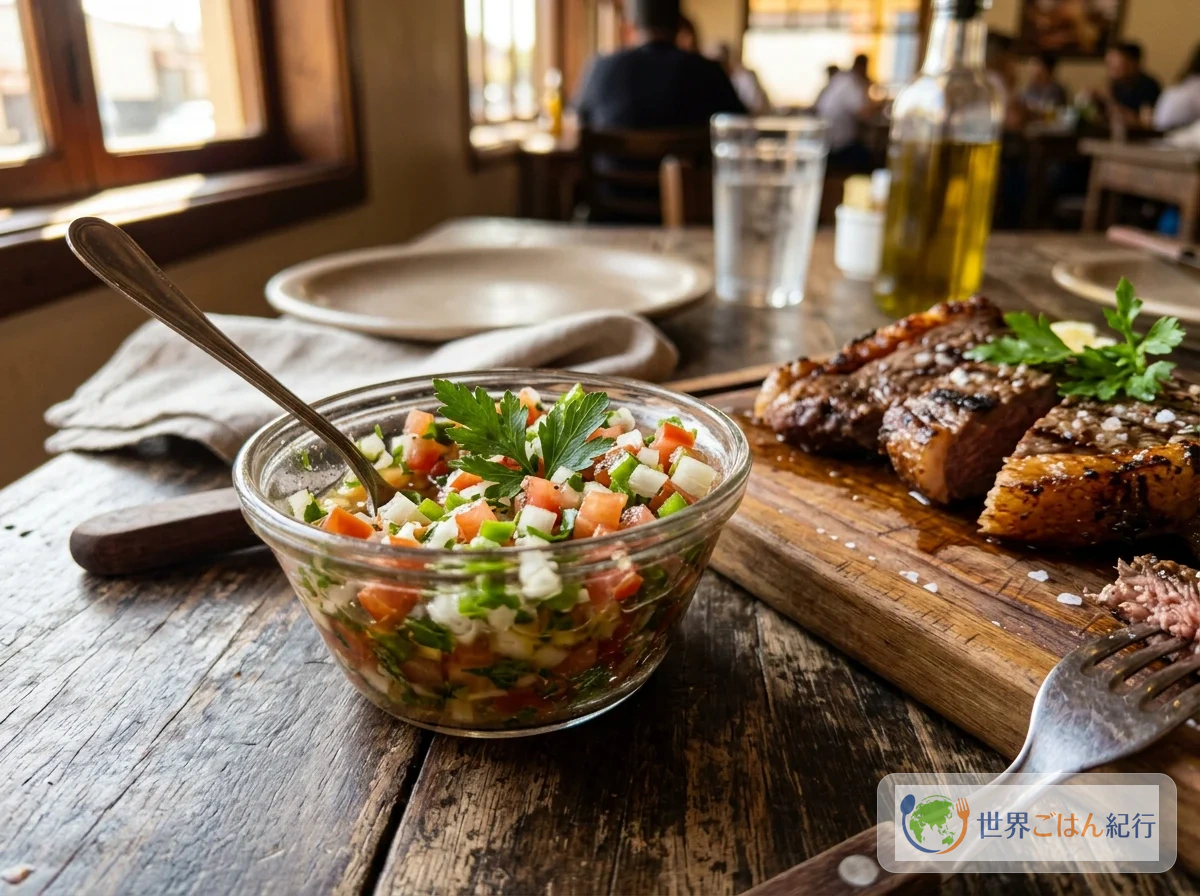
In Piura, seco de chabelo fills you up on one plate. There's a lot of green plantain, so if you serve rice, half a bowl is plenty. Red onion salsa criolla, lime, and dry corn such as cancha cut the heaviness of the beef and plantain. It's also served with plantain chips called chifles, though at home it's easier to eat with extra lime and onion than with more fried plantain.
For a Peruvian menu, a cold causa limeña or papa a la huancaína makes a good starter. On a day you feel like fish, serve ceviche first and make seco de chabelo the warm main. If you're already serving meat, a sour starter keeps the meal lighter than adding anticuchos.
Chicha de jora or chicha morada is the natural drink in Piura. At home, unsweetened corn tea, barley tea, a light beer, or sparkling water with lime all work. Sweet juice pushes the plate toward the taste of ripe bananas, so stick with something sour or toasty, and finish the dish itself with lime and apple cider vinegar rather than a sweet-salty splash of soy sauce.
Storage and Reheating
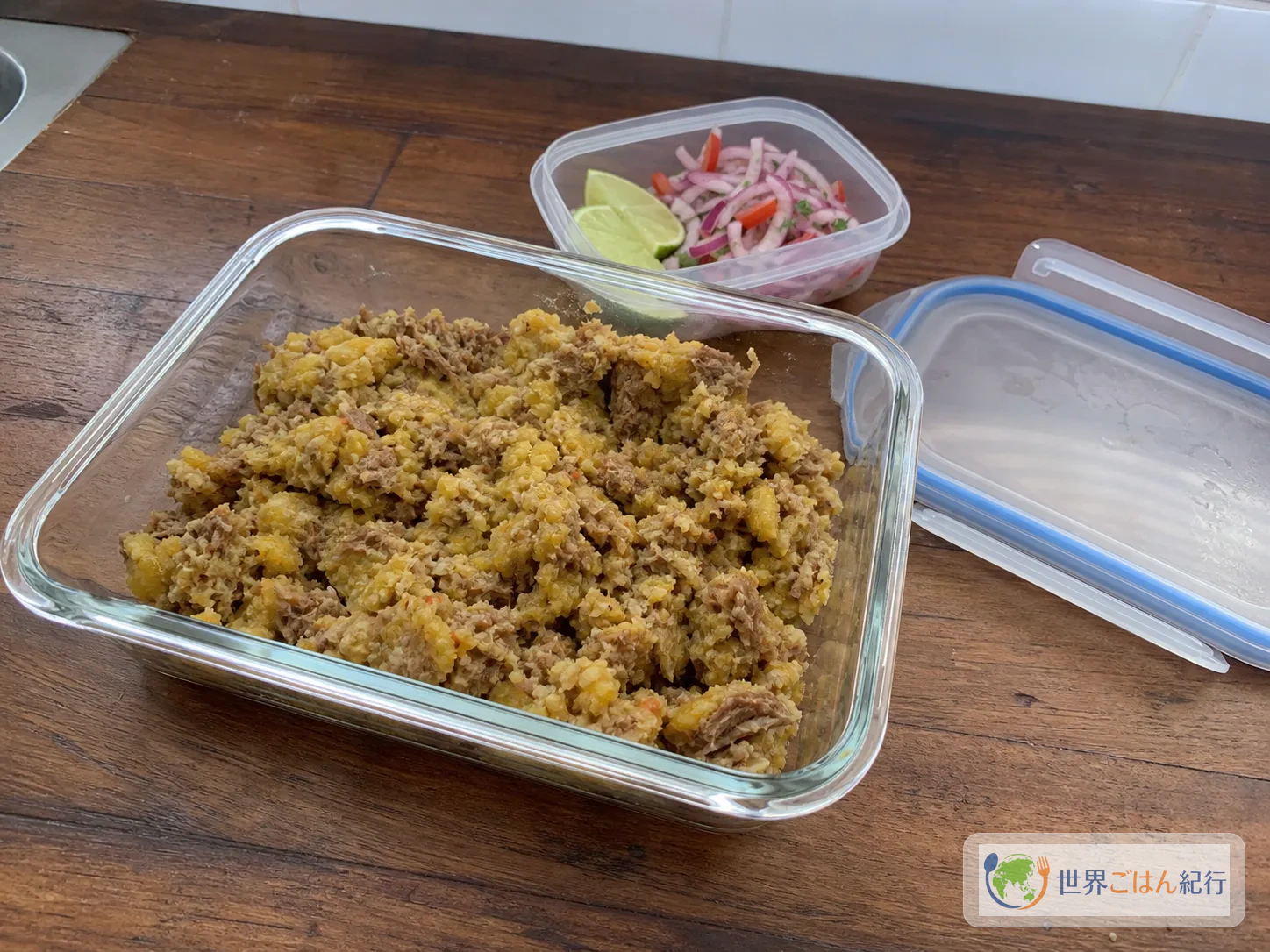
Let the finished dish cool slightly, put it in a shallow container, and eat it within about 2 days from the refrigerator. Red onion and cilantro release liquid once mixed in, so if you're making it ahead, add the raw red onion and cilantro from step 7 right before eating. The chicha and vinegar mellow by the next day, though the plantain firms up a little when cold.
Microwaving alone leaves it sticky. Spread one serving on a heatproof dish, sprinkle with 1 tsp water, and microwave 1 minute at 600 W. Then warm a frying pan over medium-low heat for 1 minute, add 1/2 tsp oil, and stir-fry for only 2 minutes, stopping when a light crust returns on the bottom and a little red oil seeps out. Keep it short; long, hot stir-frying toughens the beef.
You can freeze it, though the plantain loses a little texture. Portion it before mixing in the red onion and cilantro, and use it within 2 weeks. Thaw in the refrigerator for half a day, warm in the microwave, then stir-fry briefly in a frying pan. Squeeze the lime right before eating, since lime added before freezing leaves little behind but sourness.
Variations and Leftovers
The plate shifts a little depending on whether you roast or pan-fry the plantain, and whether you use cecina or brown fresh beef. Pan-frying cooks the plantain through to the center. For a toastier flavor, brush it with a thin coat of oil and roast it instead, until black spots appear on the skin and the flesh softens.
Leftovers are good rolled in a tortilla with red onion and lime. Over rice, brighten it with 1 tsp apple cider vinegar and lime rather than a sweet-salty sauce. If you add an egg, go for a firm fried egg; a runny yolk used as a sauce blurs the aroma of the plantain.
FAQ
Q. Can I make it with ordinary bananas?
No. Sweet bananas turn soft and sweet when cooked and get lost under the red aderezo and beef, while the dish depends on the starchiness of green plantain. If you can't get plantains at all, it becomes a different dish, but coarsely mashing 1.25 lb (600 g) floury potatoes and 9 oz (250 g) taro gets you closer to the texture.
Q. If I have no cecina, which cuts of beef suit it?
Beef round for grilling, lean beef chuck, and skirt steak are easy to handle. Fatty short rib spreads too much fat through the plantain and turns heavy. With thin-sliced beef, pull it apart with chopsticks after cooking so the fibers stay intact, rather than chopping it with a knife; that comes closer to the texture of cecina.
Q. Can I make it with less oil?
You can cut 5 tbsp down to 3 tbsp. Fry the plantain in 2 batches in a smaller pan and add 1 tsp oil along the way, because too little oil dries out the surface and makes it floury when mashed. With an air fryer, toss the plantain with 2 tbsp oil and cook 12 minutes at 375°F (190°C), turning once, then make the aderezo in a frying pan.
Q. Can I tone down the heat for children?
Reduce the ají amarillo to 1 tsp and use 1 tbsp paprika and 2 tsp tomato paste in place of ají panca. The heat drops, but keeping the cumin, oregano, apple cider vinegar, and lime holds the dish together. Soaking the finishing red onion in water for 5 minutes and draining it well softens its bite.