The story of vatapá: bread that catches the scent of the sea
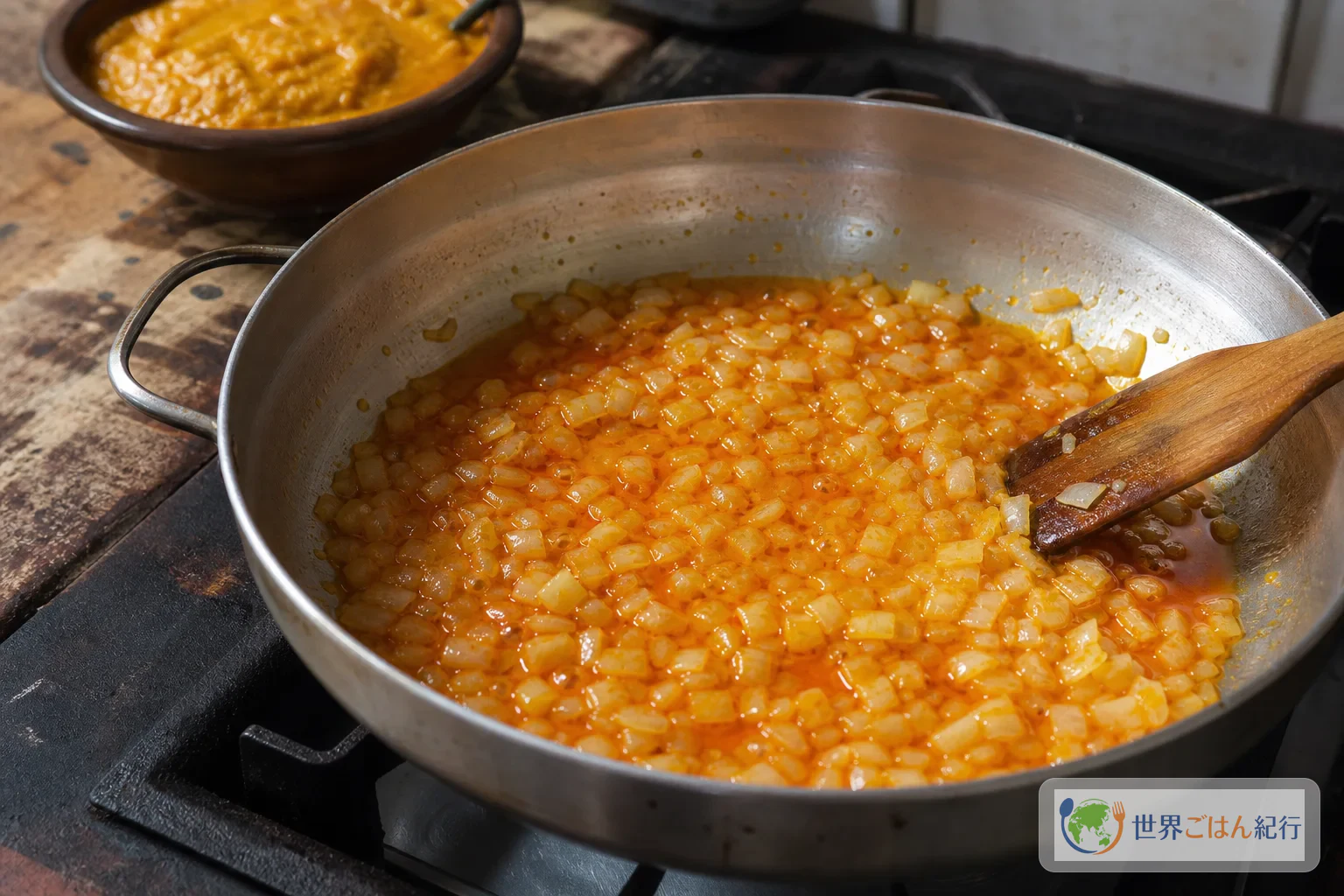
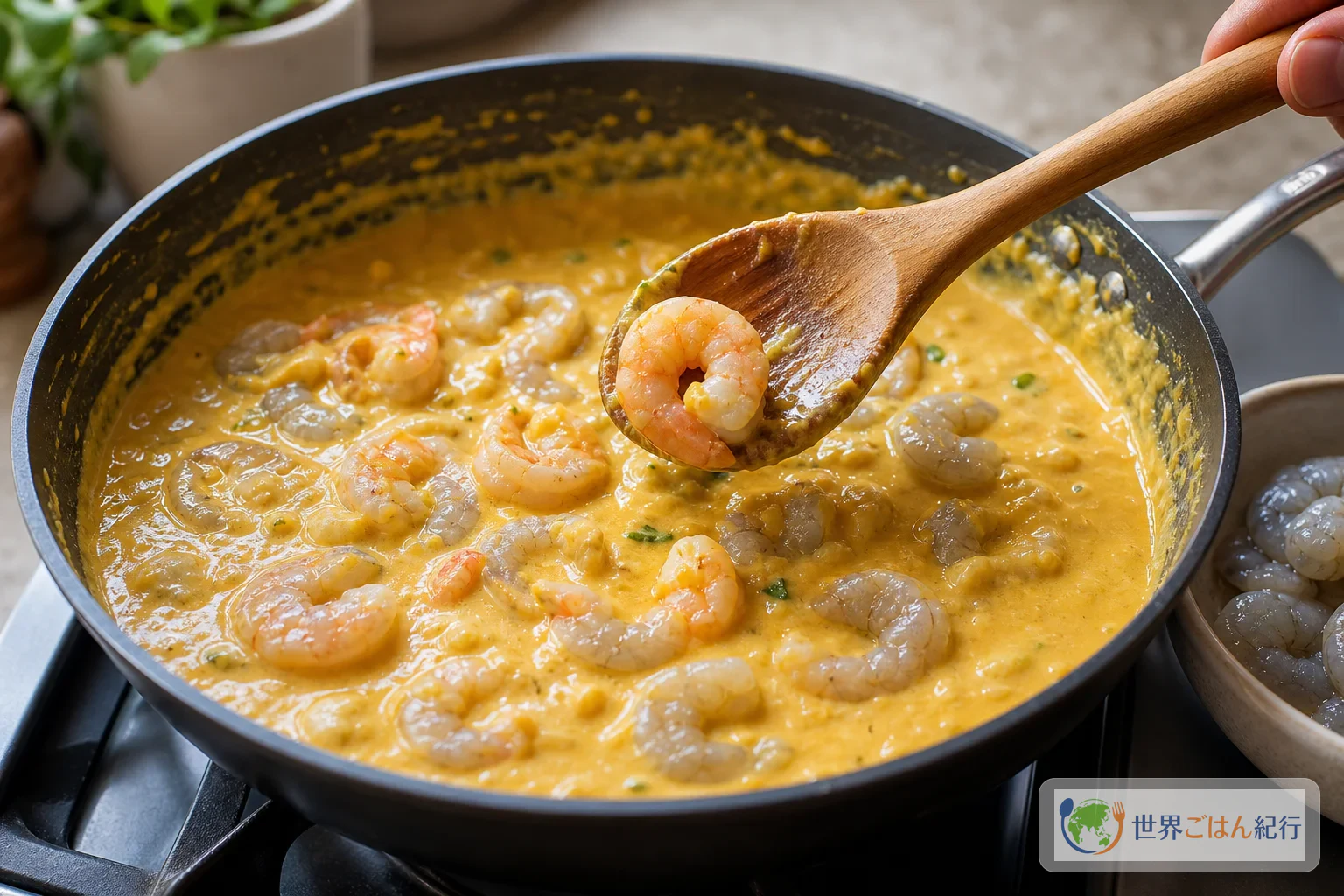
Drop dendê oil into the pot and the reddish oil flows into the gaps between the onions.
The heat is still low, but the smell of dried shrimp rises first, and from the paste of coconut milk and nuts a scent slowly comes out that recalls a seaside table.
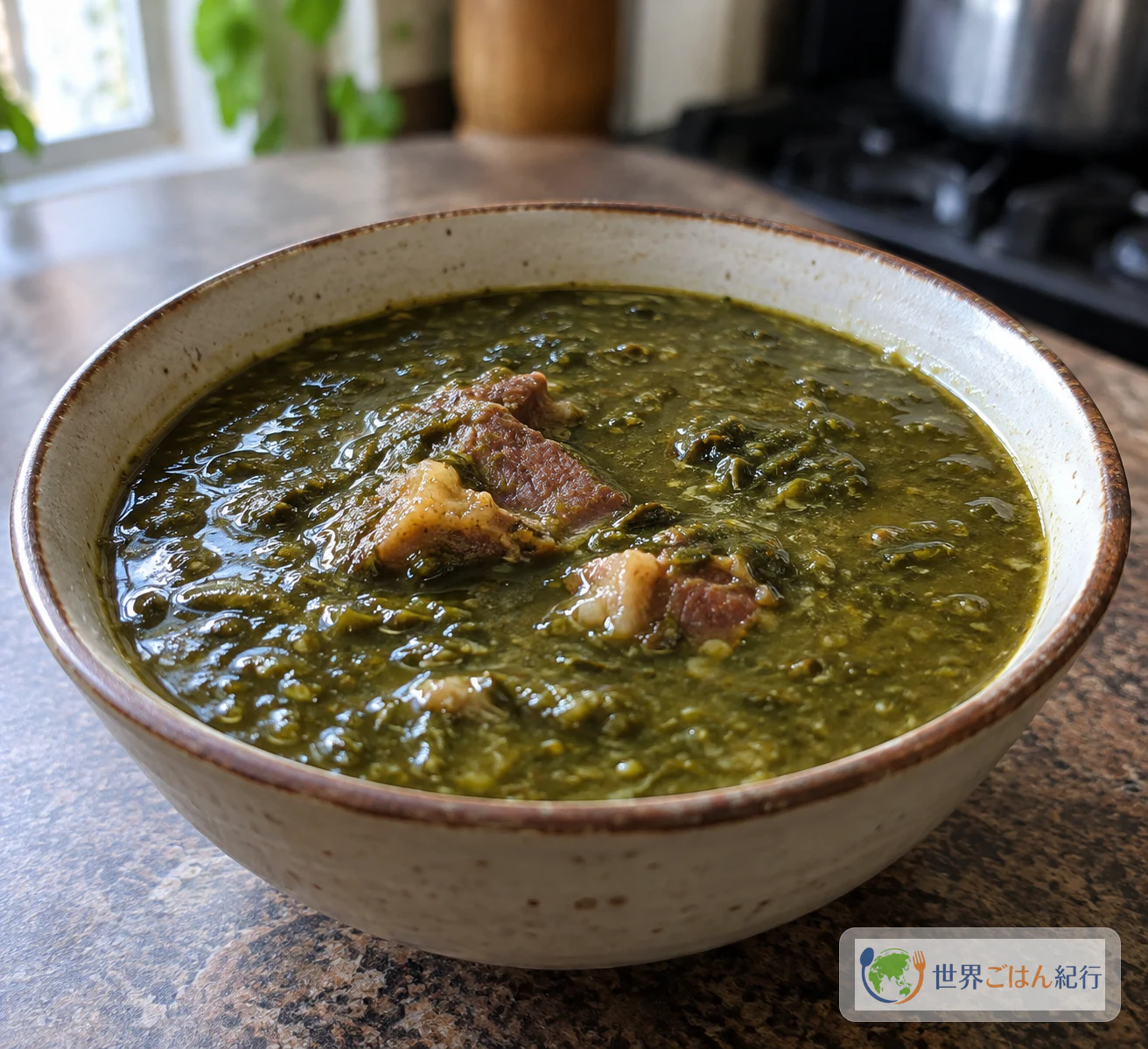
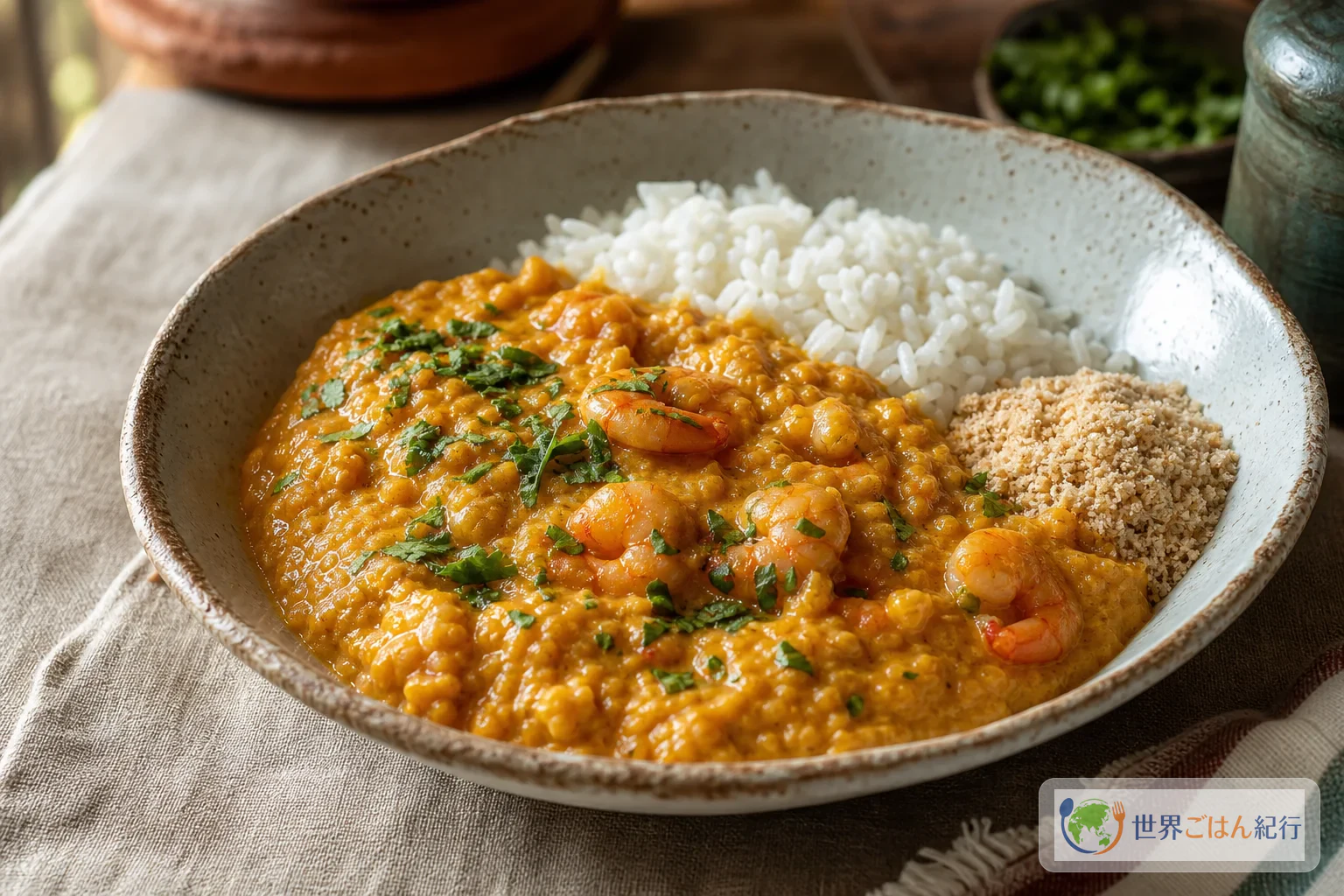
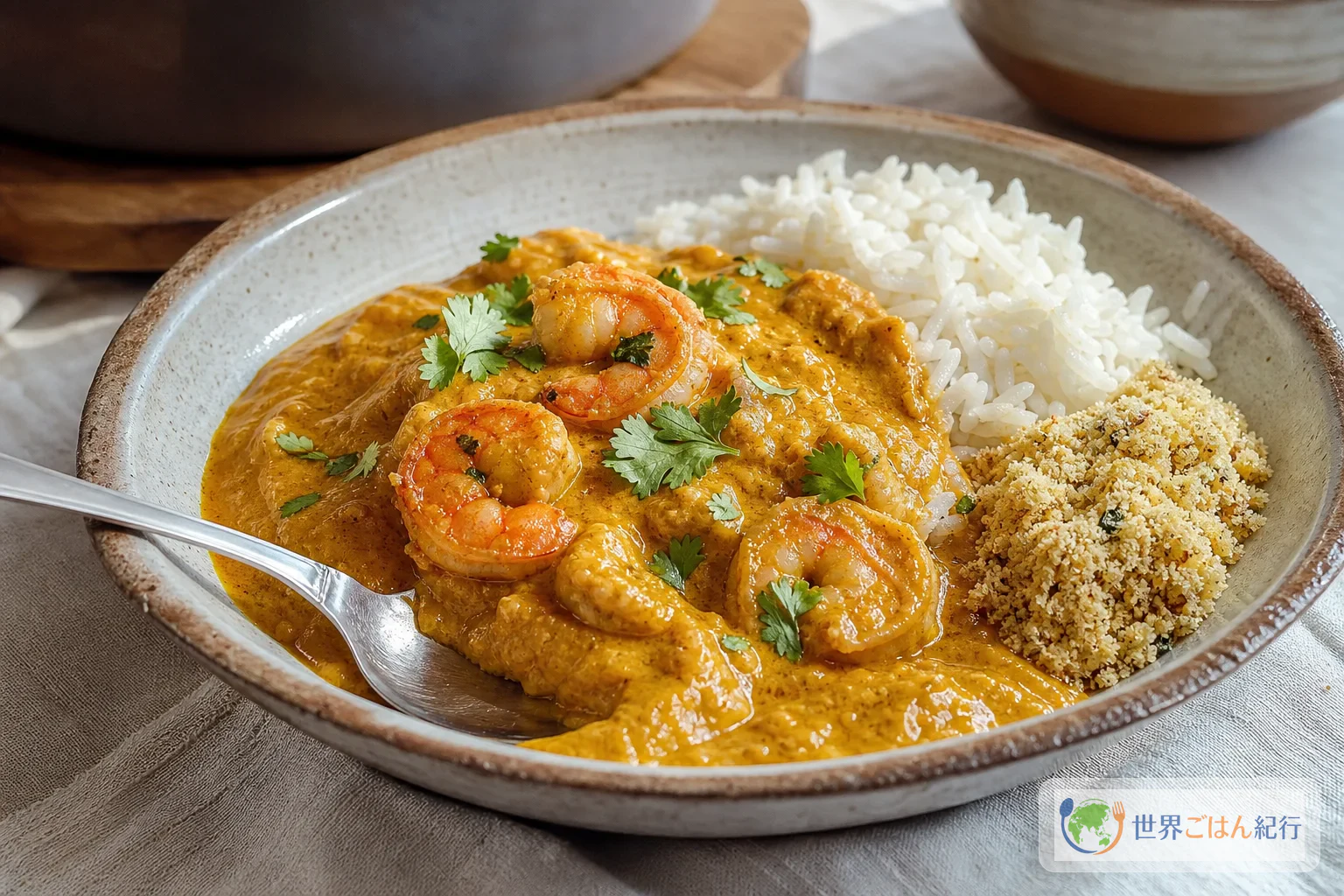
Vatapá is a thick Bahian stew made by combining bread, coconut milk, shrimp, nuts, dendê oil, and more.
It looks closer to a sauce, yet when you put a spoon in there is a little resistance, and it has the thickness to hold up white rice or fried acarajé.
The bread is not left as an ingredient; it becomes the body that holds the shrimp and aromatics.
When you grind the bread fine with the aromatics and let it take up liquid over low heat, the presence of wheat does not come forward.
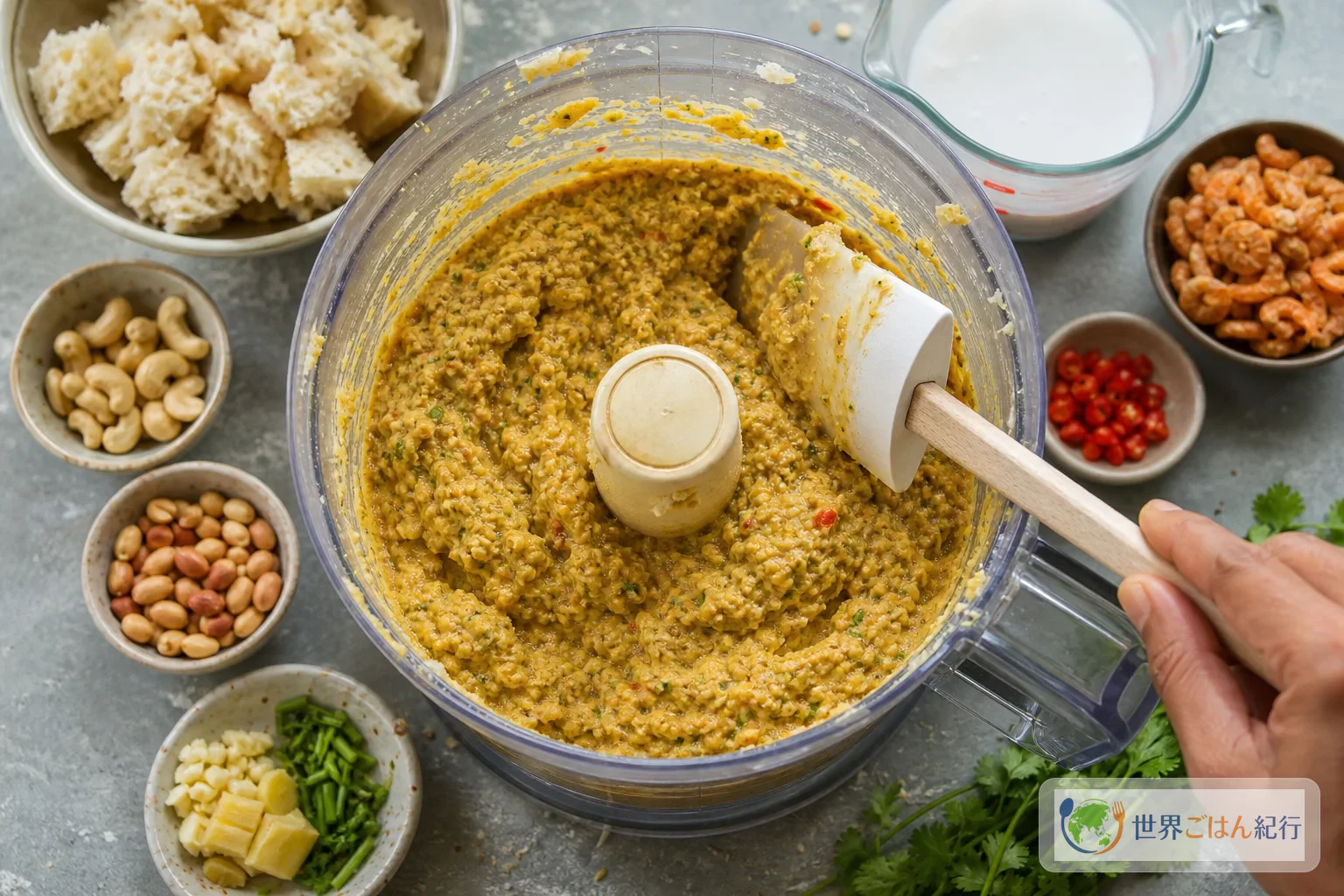
Instead, the saltiness of dried shrimp, the round sweetness of cashews, the sharpness of ginger, and the earthy aroma of dendê oil come together into one paste.
If you eat at a street stall in Bahia, you may meet vatapá not as a stew on its own but as one of the fillings packed into a split acarajé.
The state's cultural institute describes how, on the tabuleiro of the baiana who sells acarajé, vatapá and dried shrimp are laid out.
Thinking of vatapá together with acarajé shows how deeply African knowledge remains on the Bahian table. IPHAN places the origin of acarajé in the Bight of Benin in West Africa, and explains that vatapá and dried shrimp are used in acarajé fillings. Rather than pinning down a single origin for vatapá alone, reading it as a dish of the food culture handed down in Bahia makes it easier to understand the plating at the stalls and the layering of aromas.

Vatapá, loved in Bahia, is not only served beside white rice as a stew on its own; it is also a filling packed into a split acarajé.
Even the same vatapá changes its pot between Bahia and Pará
In the Bahian style, bread and nuts build body and roundness, while dried shrimp and dendê oil are the core of the aroma.
"Vatapá do Pará" also appears in Pará's tourism guides as a regional dish, and the state's tourism materials introduce it as a dish using wheat flour, coconut milk, dendê oil, and shrimp.
With the same name, whether you use bread or thicken with flour changes the texture left on the tongue and how you judge the pot.
This recipe takes the Bahian style, which can also fill acarajé, as its standard. If you want to recreate the Pará style in a home kitchen, treat it as a separate regional dish and adjust the amount of flour and seafood; it keeps the axis of flavor better than adding tapioca flour or tucupi later and drawing it into the same pot.
At home you do not have to go as far as frying acarajé.
Just spoon it over white rice and add a little farofa, and you can see the thickness of vatapá and the order of its aromas.
If you want to make it from the fried bean dough, connect to the acarajé recipe, another Bahian street dish, and it becomes easier to see where vatapá is eaten.
Ingredients: serves 4
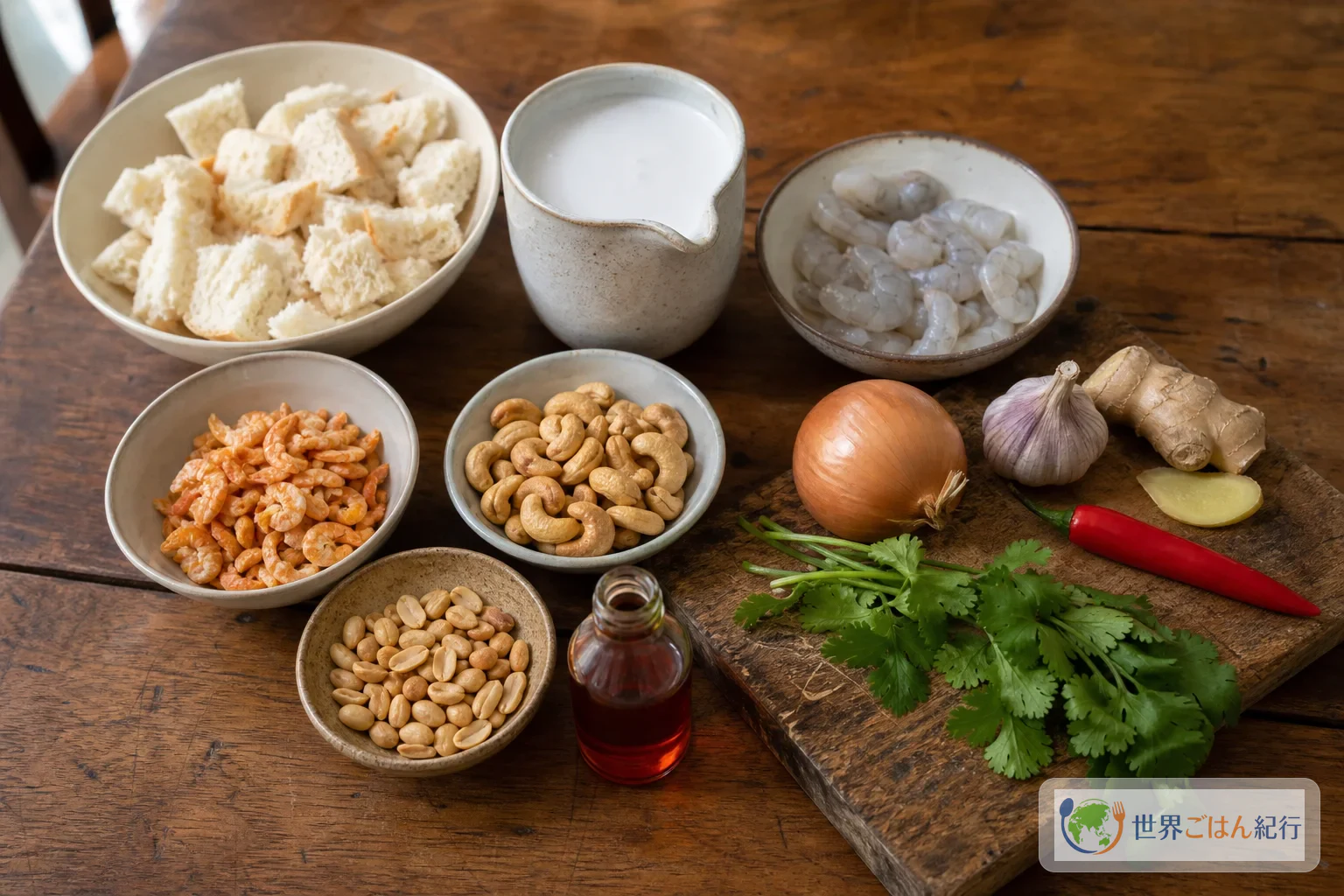
What to serve with it
Prepare 4 servings of white rice, and a small amount of farofa or toasted bread crumbs.
When stuffing acarajé, prepare 4 fried bean-dough fritters.
You don't have to gather everything from the start; white rice alone is enough to check the flavor.
The order of substitutions
Dried shrimp is the core of the aroma, so rather than replacing it first, adding even a small amount keeps vatapá's character. If you have no powder, soak and chop whole dried shrimp, and use the soaking liquid by the teaspoon while watching the saltiness.
You can make it with bread crumbs instead of sandwich bread, but they take up liquid quickly and make the smoothness harder to read. The first time use sandwich bread with the crusts removed, and switch to bread crumbs next time, which makes it easier to judge the difference in thickness.
Cashews and peanuts layer a round sweetness and toastiness. With only one, the flavor gets thinner, but if you keep the dried shrimp and dendê oil the direction of the dish holds. If you have a nut allergy, do not casually swap in another nut; treat it as a home version with both omitted.
Because dried shrimp, nuts, shrimp, and coconut overlap, check the labels for crustaceans, tree nuts, peanuts, coconut, and wheat.
If you are accommodating allergies in the same kitchen, avoid sharing the cutting board, food processor, and oil.
Deciding on the aroma of dendê oil
What is hard to replace in this dish is edible dendê oil, with its red-orange color and distinctive aroma.
You don't have to make the whole dish with dendê oil, but using it for sautéing the onion and as a spoonful at the end keeps the sweetness of the coconut milk from blurring.
If you buy it, check on the product page or label for "edible," "azeite de dendê," or "edible red palm oil," and make sure it is not for cosmetic use.
It suits those who cook Bahian food repeatedly and don't mind using small amounts selectively.
On the other hand, if you dislike strongly scented oils, or want to try the dish just this once, make it with rice bran oil and look for a small bottle next time; it is not too late.
The one point to check is the edible labeling and the net weight.
Method: make the paste, then welcome the shrimp over low heat
Cooking vatapá looks like simply putting ingredients into the pot in order, but in practice you tell apart three states.
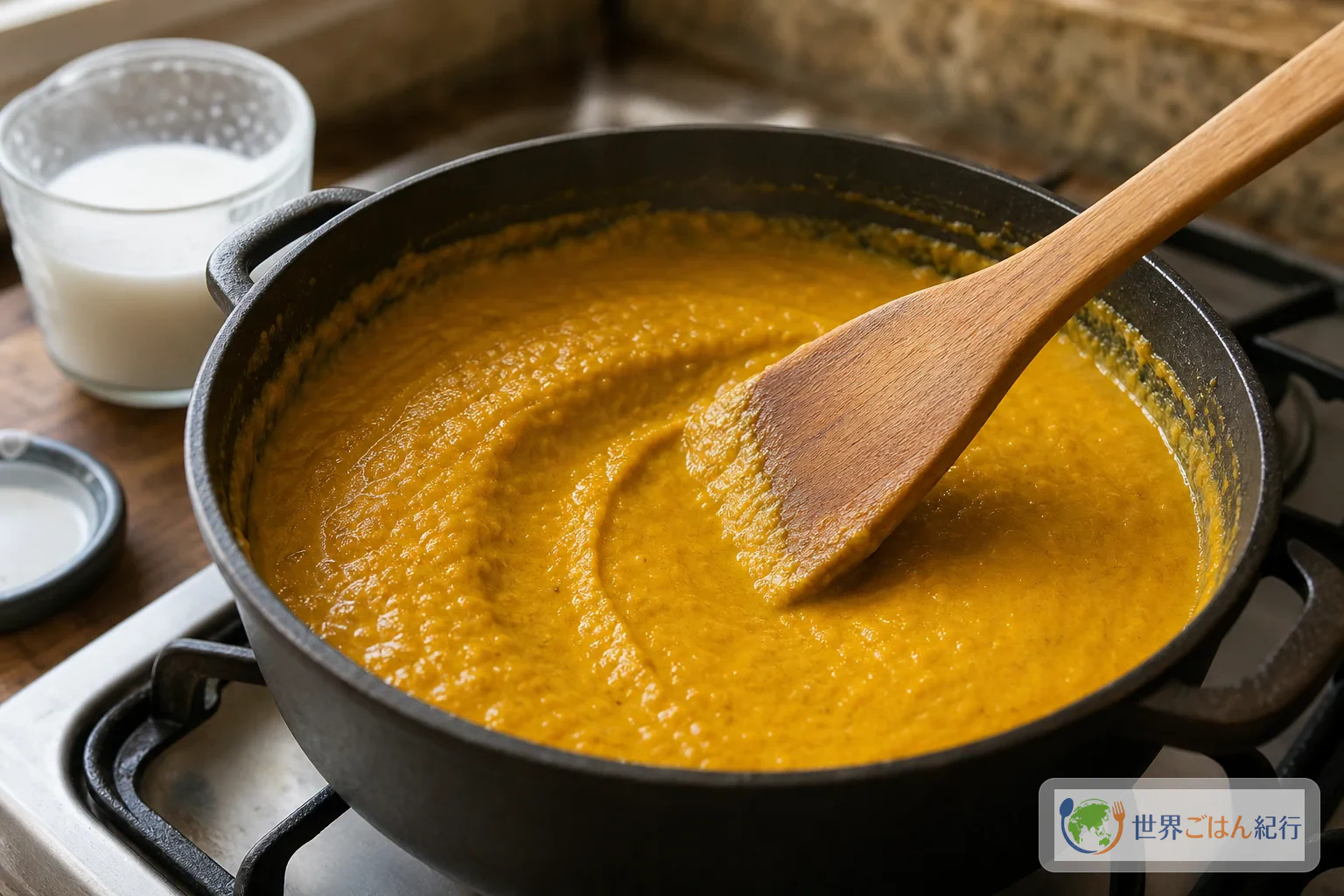
The onion turning translucent, the spatula track in the paste closing slowly, and the shrimp turning opaque to the center.
Checking these three by eye, not only by the clock, makes it easy to recover even if the pot size or the thickness of the coconut milk changes.
Prep: cut the aromatics and shrimp
Of 150 g of onion, cut 100 g into 5 mm dice and 50 g coarsely.
Chop the garlic, ginger, and cilantro stems coarsely, and remove the seeds of the red chili depending on the heat you want.
Devein the raw shrimp, pat the surface dry with paper towels, and if they are a good bite size, use them uncut.
Dried shrimp powder can be used as is.
If you use whole dried shrimp, soak in warm water for 10 minutes, drain in a colander, and chop fine.
The soaking liquid tends to be salty, so don't add all of it to the stock from the start.
Tips: tuning thickness and aroma together
Soak the bread in the liquid while still large, and grind it once it is soft. Rather than chopping it small from the start, coconut milk gets inside the bread more easily, and fewer pieces remain when you work it in the pot. The bread crust has strong color and fiber, so it is removed here.
The 15 ml for sautéing the onion carries the aroma through the whole pot, and the 15 ml at the end leaves the red-orange color and earthy aroma. If you put the full amount in at high heat from the start, the aroma rises only once. If it feels strong, next time use 5 ml at the end and add a little rice bran oil.
If nut pieces remain on the tongue, rather than simmering longer, increase the time you grind the paste. With a small home food processor, repeating 5 seconds of running and scraping the sides, rather than cramming it in at once, gives a more even paste. If you can't use a food processor, a mortar and an immersion blender can substitute.
Fixing failures: loose, firm, grainy, and shrimp doneness
When the spatula track vanishes at once
If you add shrimp while it is too liquid, by the time the shrimp are cooked the stew is still thin enough to run onto the rice. Before adding the shrimp, cook it down 2 minutes at a time over low heat until the spatula line stays about 2 seconds. If the bottom of the pot looks about to scorch, stop reducing, add coconut milk 1 tsp at a time, and lower the heat further.
When it gets firm
Bread and nuts keep holding liquid even after the heat is off. If it gets heavy and stops moving in the pot, add coconut milk 1 tbsp at a time and loosen it, scraping the bottom. Thinning with water alone easily loses the roundness of the coconut, so use coconut milk first.
When grains remain
Even simmering longer won't smooth coarse nuts or bread crust. Before adding the shrimp, turn off the heat, return a small amount to the food processor, run it in 5-second bursts, and return it to the pot. Putting hot liquid into a full container can make it blow out, so do it a little at a time after cooling and follow the machine's instructions.
When the shrimp got tough
Turn off the heat as soon as they turn opaque through the center and finish with residual heat. Shrimp heated until red and curled cannot be returned to their original tenderness, so next time decide the thickness before adding the shrimp, and split just one thick shrimp to check the center. With pre-cooked shrimp, only warm them in the last minute.
Five ways to take it to a Bahian table
Stuff it in acarajé
Split the fried bean dough sideways and put in 1 to 2 tbsp of vatapá. Overstuffing hides the bean aroma of the dough, so keep to an amount where the layers with the dried shrimp and salad show. If you also make the bean dough, check the soaking and frying in the acarajé recipe first.
Set it on the table with rice and farofa
The easiest at home is the combination of white rice as the staple with farofa on the side. The rice catches the thickness of the vatapá, and the dry texture of the farofa switches up the mouth. Don't mix them from the start; changing the amount bite by bite lets you also judge the strength of the dendê oil.
Swap in fish or dried cod
There is also a version of vatapá that uses white fish or desalted dried cod in place of shrimp. Fish breaks up easily, so simmer the paste thoroughly, add the fish at the end, and turn off the heat once the center is warm. This is not the same ingredient list as this shrimp vatapá; treat it as a home-style construction of seafood.
Make it a stew with chicken
If you do not use shrimp, prepare about 350 g of cooked chicken thigh and shred it into the paste after its thickness is set. Use chicken that has been heated to 75°C at the center for at least 1 minute, and only reheat it in the pot. It moves away from a dish centered on the aroma of seafood, but becomes a plate whose lead is the body of bread and nuts.
Make a nut-free home version
If you need to avoid tree nuts and peanuts, omit the cashews and peanuts, and adjust the thickness by adding 10 g more bread. The toastiness and sweetness weaken, so don't expect the same flavor as with nuts; decide the salt while checking the aroma of dried shrimp and dendê oil. For allergy accommodation, also avoid sharing cookware and oil.
If you keep cooking Bahian food, next compare how dendê oil is used in moqueca baiana, and if you want more dry sides, add farofa, and you can enjoy the same aroma in another texture.
Storage and allergies: treat it as a stew containing shrimp
When you finish eating, don't leave the pot at room temperature; move it to a shallow container and cool it quickly. Refrigerated, at home the guide is until the next day; take out only the portion you will eat and reheat it thoroughly through the center.
Japan's Ministry of Health, Labour and Welfare gives a guide of 75°C at the center for at least 1 minute for heating in food poisoning prevention, and advises dividing leftovers into shallow containers for the refrigerator and warming through the center when reheating. Since vatapá contains shrimp, coconut milk, and bread, discard anything that gives you doubt by smell or appearance, rather than judging by tasting.
It uses crustaceans, tree nuts, peanuts, wheat, and coconut. Check the ingredient labels of dried shrimp and seafood stock as well, and if someone in the family has an allergy, also separate the serving spoons and the food processor.
FAQ
Can I replace sandwich bread with bread crumbs?
You can, but bread crumbs absorb liquid faster and set firm even at the same 80 g. At first add a smaller amount, and while watching the spatula track, loosen it with coconut milk.
I don't have dendê oil. Can I make it with rice bran oil only?
Yes. There is also a way of sautéing the onion in rice bran oil and using only a small amount of dendê oil at the end. Leaving dendê oil out completely weakens the color and earthy aroma, so if you want to keep the Bahian axis it is worth looking for a small edible bottle.
The dried shrimp made it too salty.
Stop adding salt and loosen it with unsalted coconut milk 1 tbsp at a time. Rather than hiding saltiness with water or acidity, increasing the amount of white rice to lower the concentration per bite keeps the aroma of the dried shrimp.
Can I make it without a food processor?
With a mortar, crush the nuts finely first, then add the soaked bread and aromatics little by little and crush. If you use an immersion blender, put the ingredients in a deep container and run it in short bursts, preventing splatter. It's fine to finish as a home version with a few grains left.
Can I freeze vatapá?
Freezing tends to change the texture of the bread and coconut milk, so it is easier to make an amount you can finish. If you do store it, don't reheat the whole amount; bring back only what you need over low heat, and if adding more shrimp, put them in at the very end of reheating.
Summary: buy the aroma, or try once with substitutes
What decides the flavor of vatapá is the order in which the body of the bread, the saltiness of dried shrimp, the roundness of nuts, and the aroma of dendê oil each stand up separately and then come together. Deciding the thickness before adding the shrimp, and turning off the heat when the center turns opaque, avoids both a heavy sauce and tough shrimp.
If you make it only once, mixing in rice bran oil and using a small amount of edible dendê oil lets you check the strength of the aroma. If you plan to make acarajé and moqueca too, keeping on hand a dendê oil whose edible labeling and net weight you have checked lets you compare the aroma differences between dishes. For a single plate of vatapá, a substitute for the food processor is enough; only those who will keep making several paste dishes have a reason to buy one.
Sources
- Cultural heritage agency IPHAN, “Patrimônio Imaterial” (accessed and checked 2026-08-26)
- Bahia State Institute of Artistic and Cultural Heritage IPAC, “Ofício das Baianas de Acarajé” (accessed and checked 2026-08-26)
- Santarém Tourism Office, “Culinária Santarena” (accessed and checked 2026-08-26)
- Pará State Tourism Office, “Inventário da Oferta Turística de Parauapebas” (accessed and checked 2026-08-26)
- Saveur, “Classic Brazilian Shrimp Stew” (accessed and checked 2026-08-26)
- TasteAtlas, “Vatapa” (accessed and checked 2026-08-26)
- Instituto Brasil a Gosto, “Basics: Brazilian Recipes Encyclopaedia” (accessed and checked 2026-08-26)
- Ministry of Health, Labour and Welfare (Japan), “Food poisoning prevention” (accessed and checked 2026-08-26)