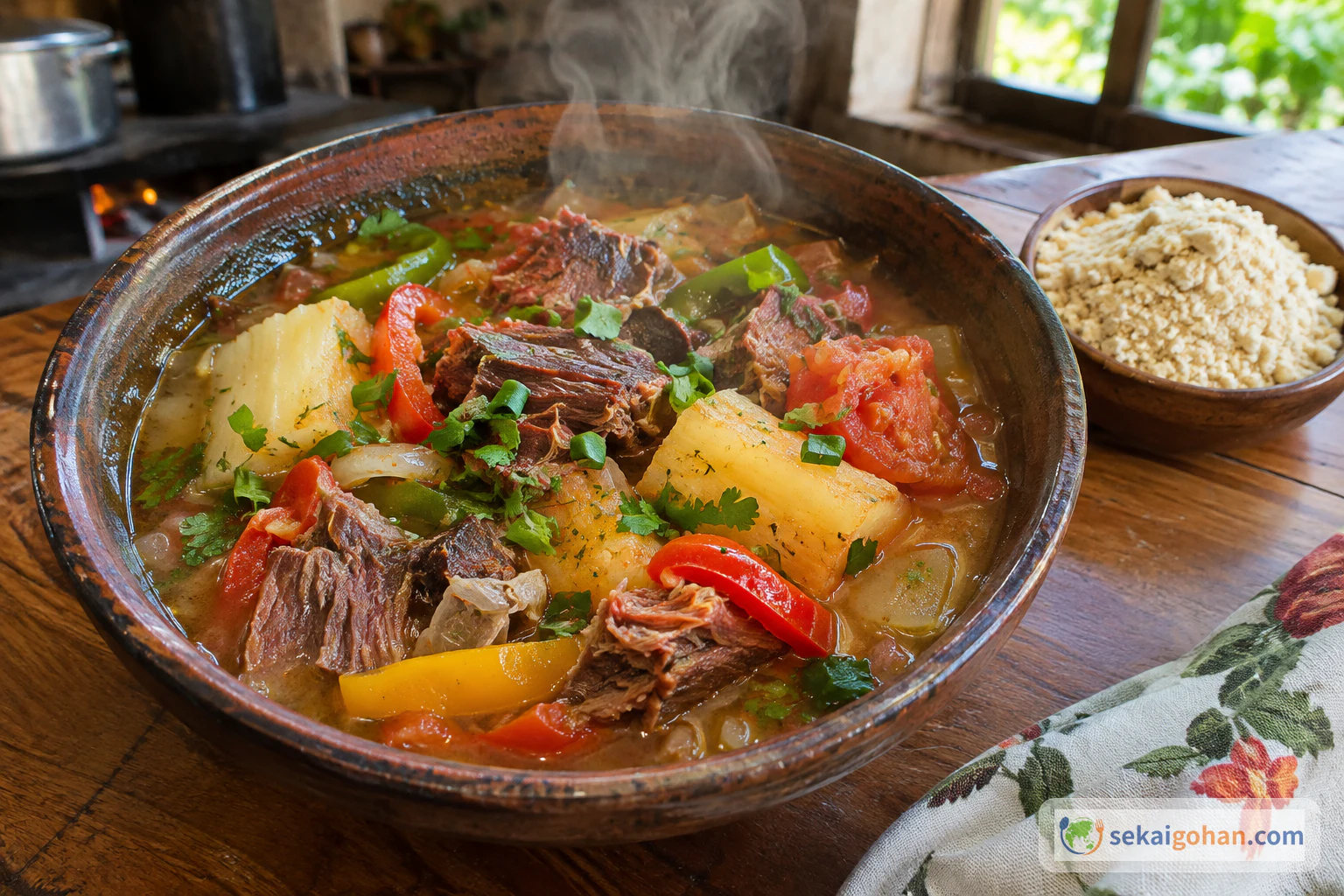
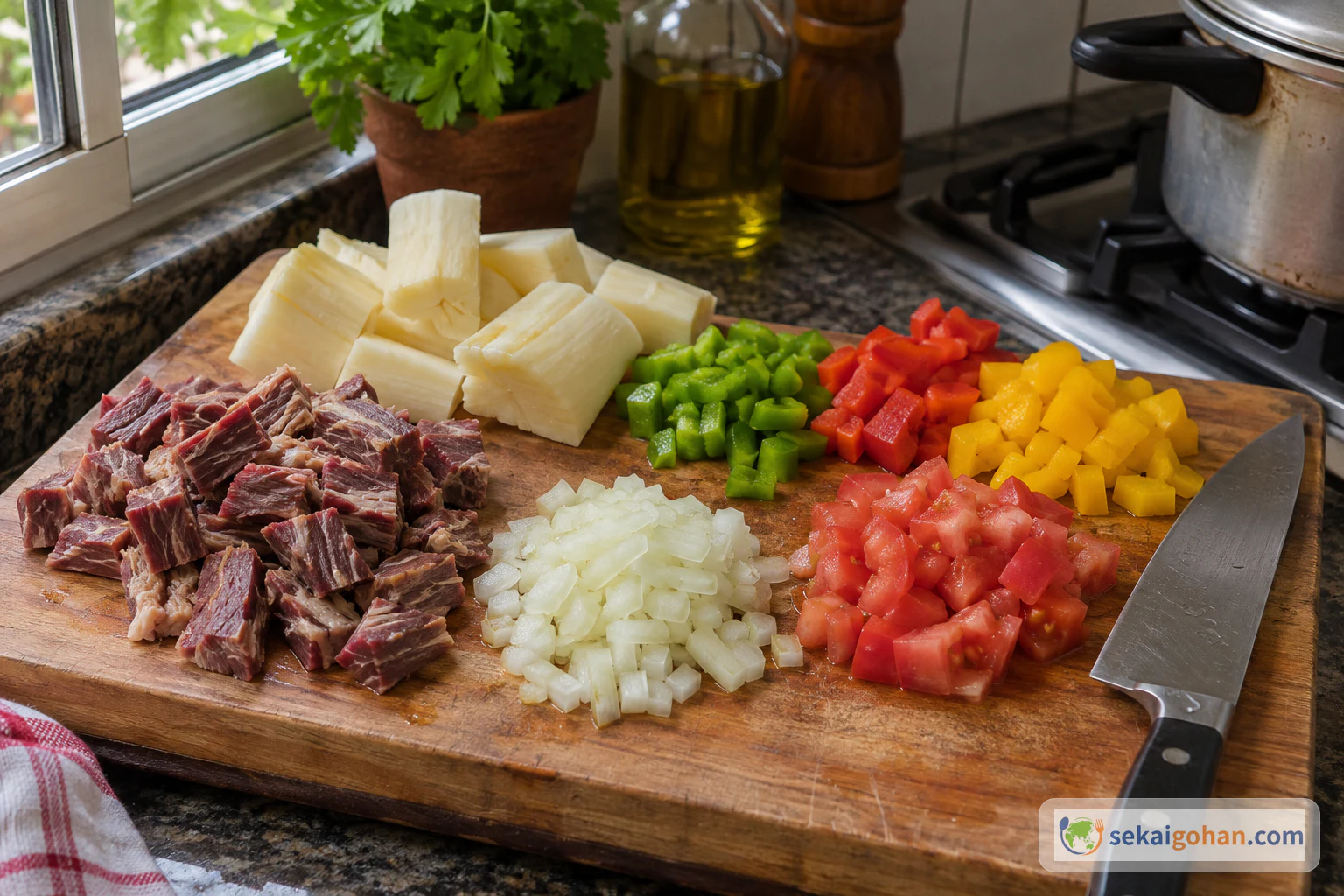
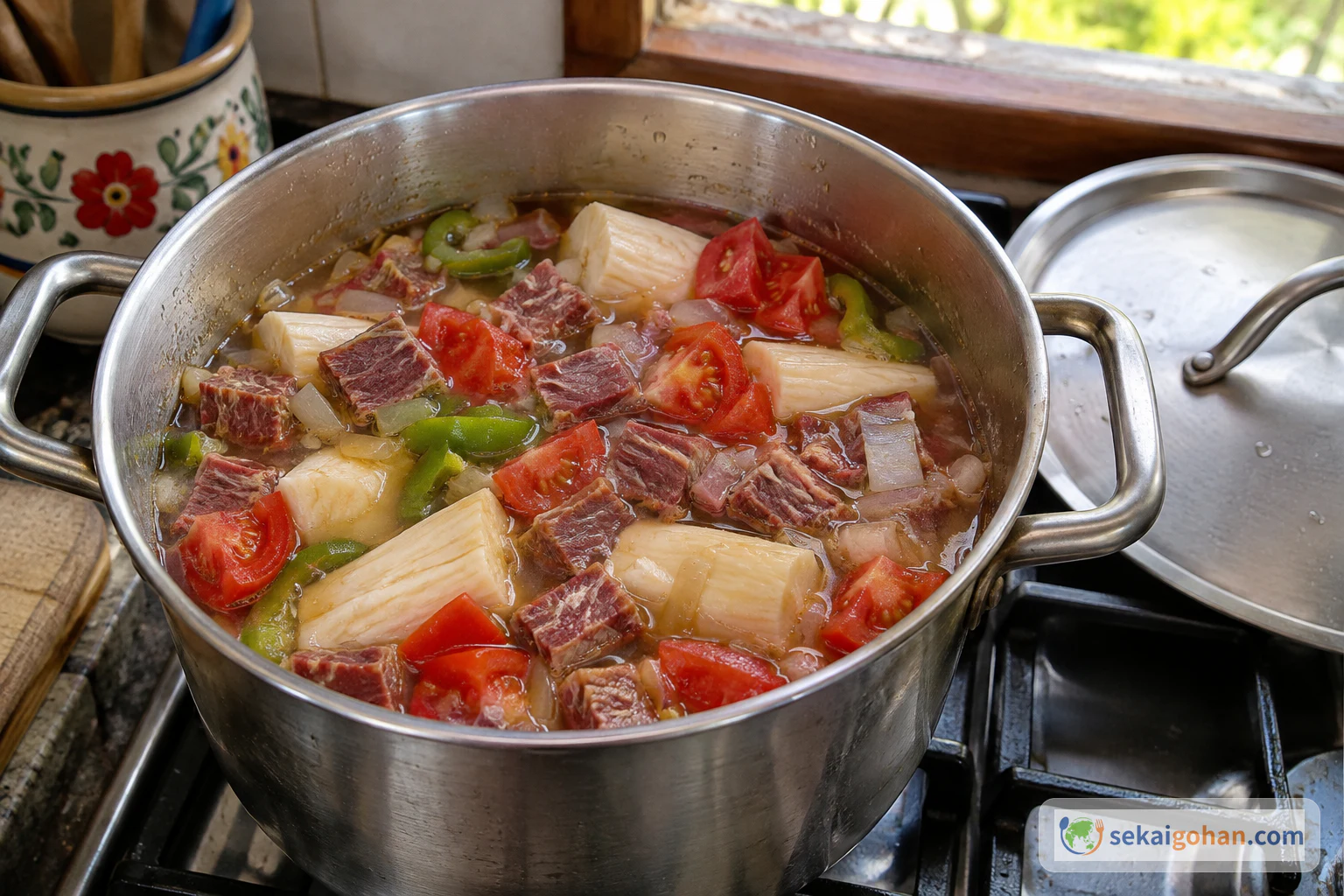
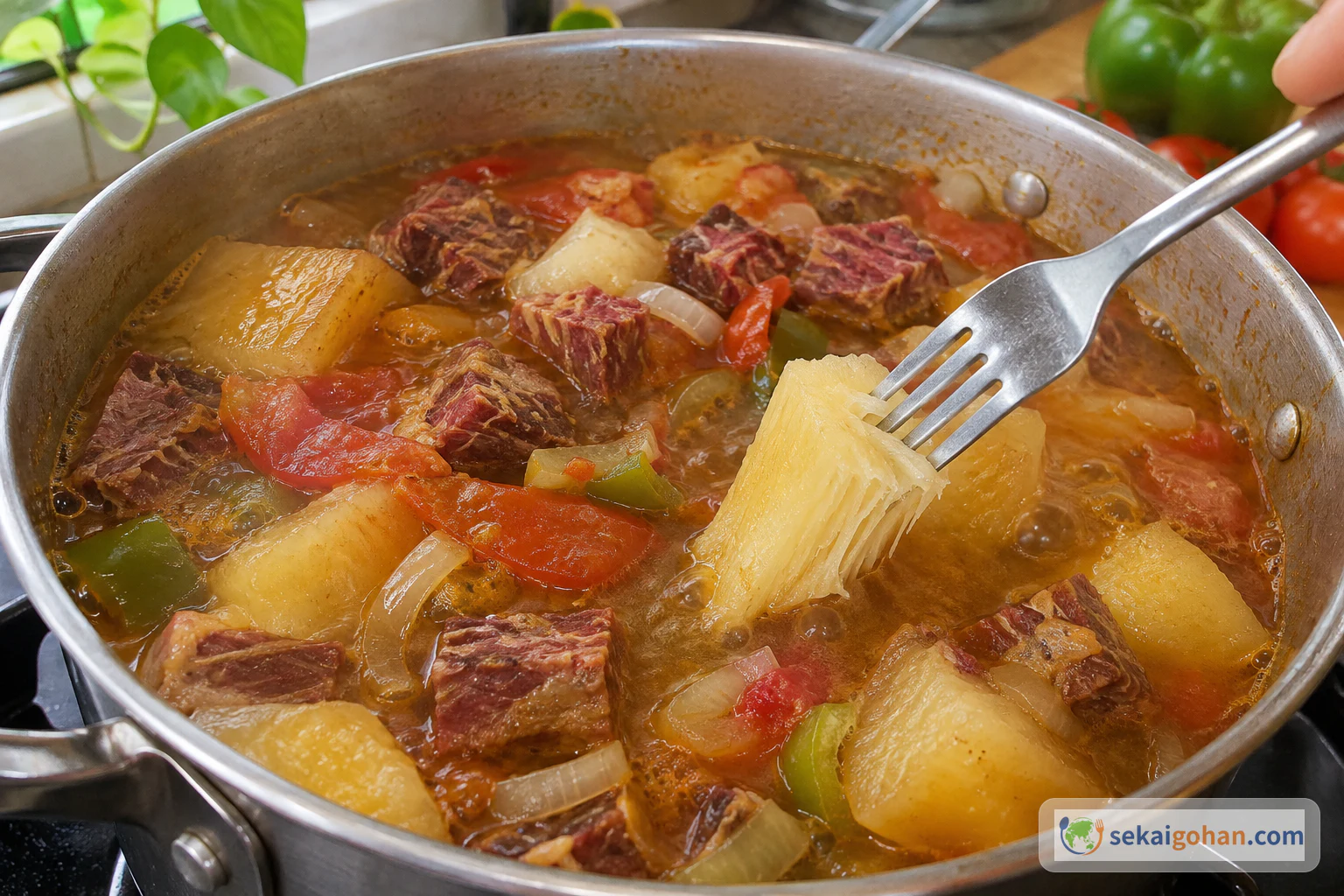
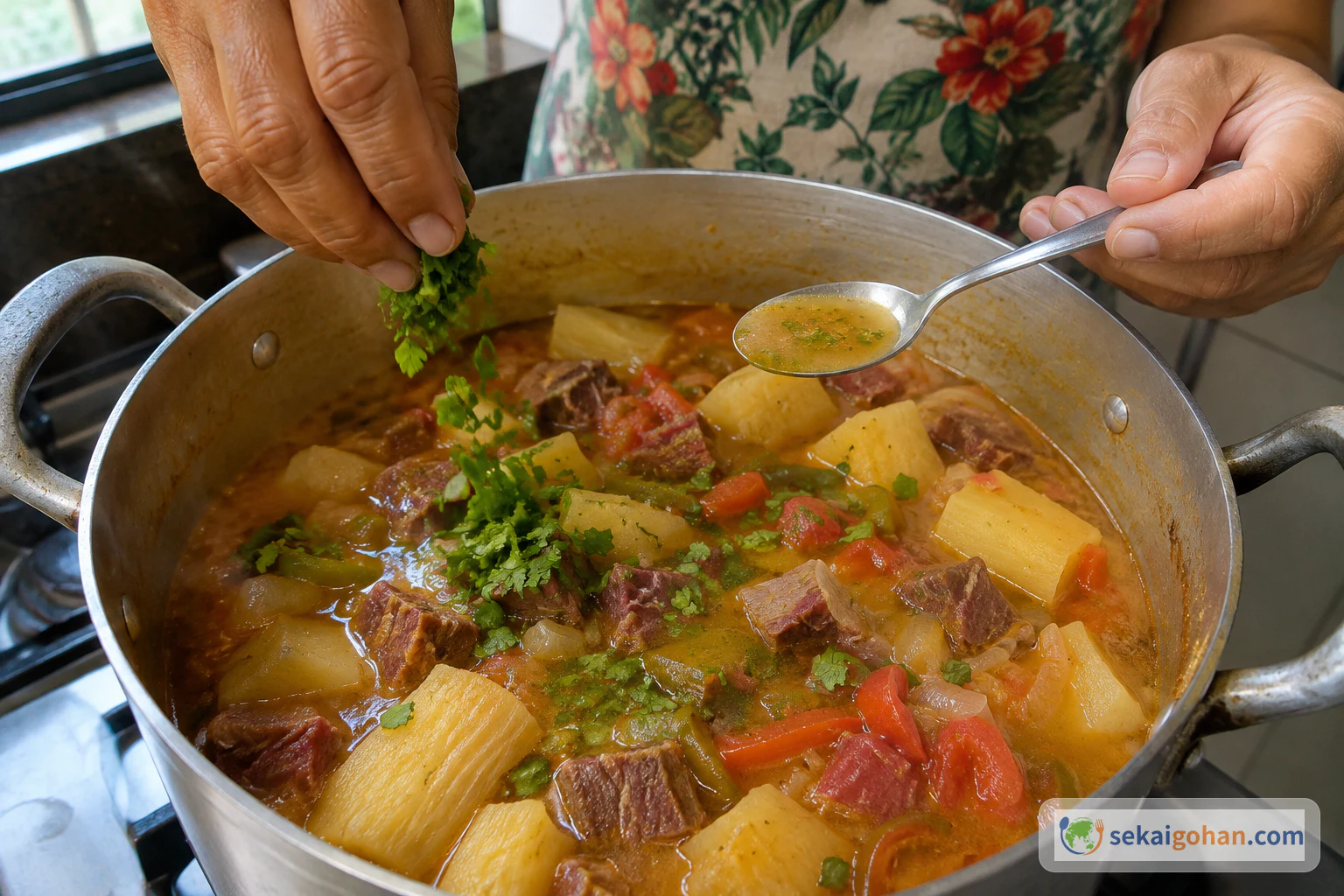
The cassava chunks go translucent at the edges and a fork slips through them, and by then the tomato and the three colors of pepper have slumped into a thin, rosy broth around cubes of dried beef. That is the moment caribéu is ready. It is the everyday stew of the Pantanal, the vast wetland of Brazil's Mato Grosso do Sul, made from salted dried beef and cassava simmered with onion, garlic, tomato and sweet peppers.
It tastes of beef that has been cured and softened again: deep, savory and a little salty, with the cassava turning soft and starchy so it thickens the broth. A heap of fresh green herbs goes on at the end, and a bowl of cassava flour sits beside the pot so everyone can sprinkle it over while the stew is hot.
A Cattle-Country Pot from the Pantanal
Caribéu belongs to the Pantanal and to the homem pantaneiro, the man of the wetland ranches, who lives with cattle across seasons of flood and drought. Dried beef and cassava together make a pot that feeds a household on what is already in the storeroom. One local report describes the dish as Indigenous in origin, but where and when it was first cooked is not settled.
For one family in a regional newspaper story, it is the stew remembered from lean years. Today it is also a dish people make quickly on a weeknight, with meat and cassava that are already partly cooked, which shows how ordinary and how loved it is in the region. You can read more about the wider food of the country on our Brazil page.
How it sits among its neighbors
Caribéu takes its savory base from charque, the salted, sun-dried beef also called carne seca. The same cured meat anchors feijoada, where it cooks with black beans into a dark, heavy stew. Caribéu is lighter and brighter, built on cassava and fresh vegetables instead of beans. It is also a different world from the coastal moqueca baiana of Bahia.
Two dishes share its ingredients and are easy to confuse. Escondidinho de carne seca layers dried beef under mashed cassava and goes into the oven, so it comes out as a baked casserole. In parts of Mato Grosso do Sul, caribéu itself is also made as a fuller soup that adds corn; that version appears under the variations below.
One letter makes a different food. Caribé is a drink made from cassava flour, eaten in other parts of Brazil. Caribéu, with the final "u," is always the stew of dried beef and cassava.
Ingredients (serves 5)
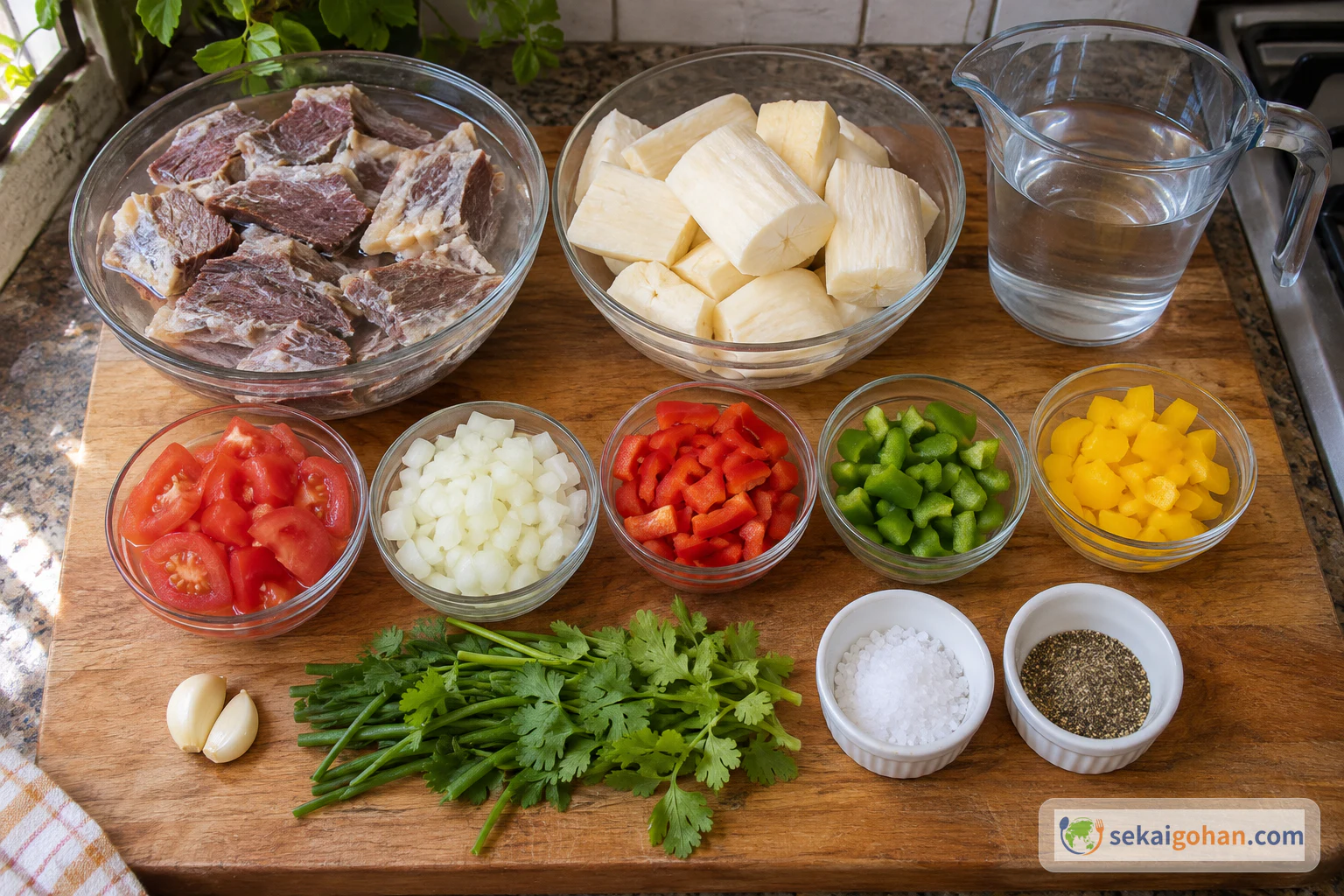
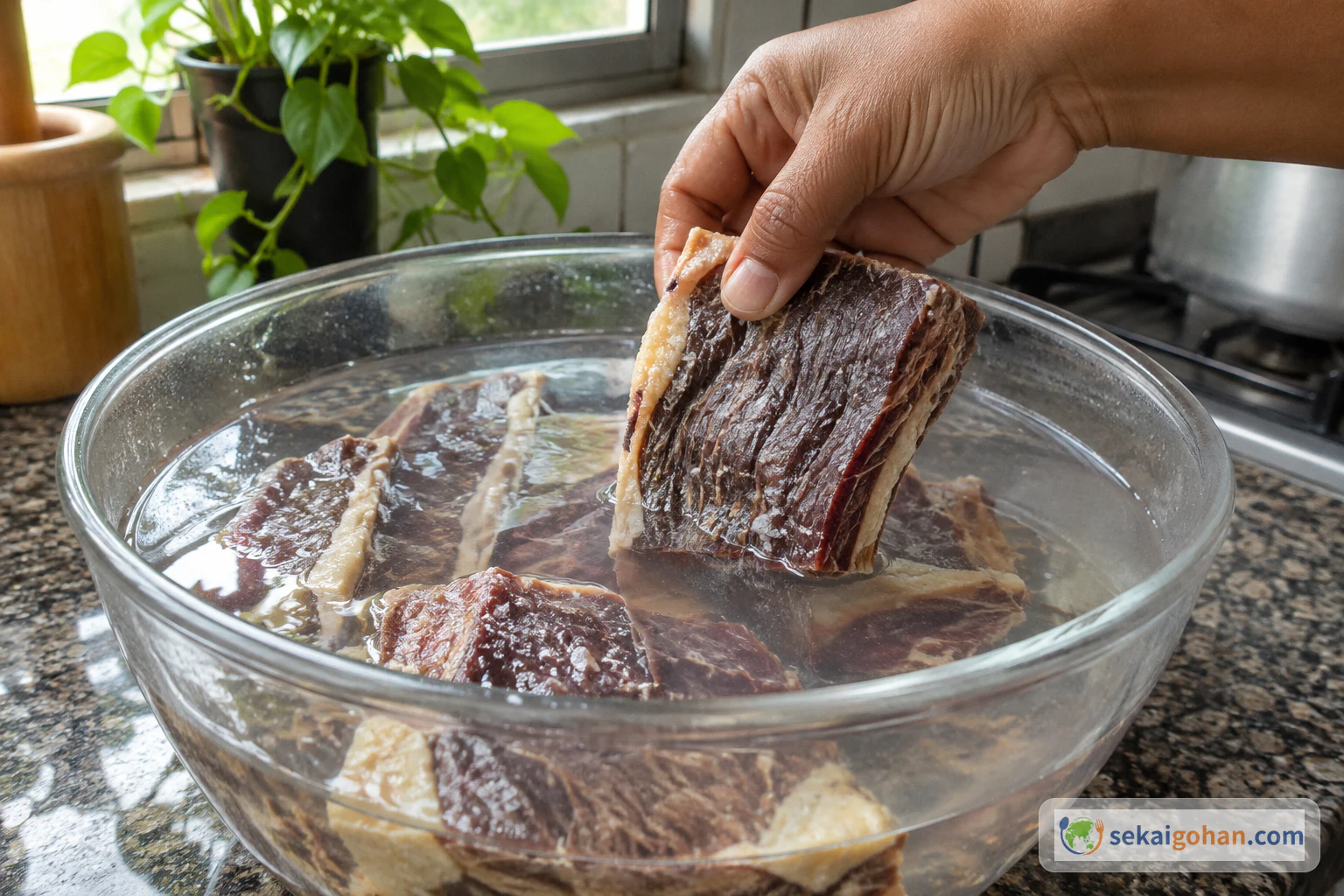
Charque carries almost all the salt this stew needs. Soak it well and hold the salt until the very end; a well-soaked piece gives a broth you can season up, while an under-soaked one gives a pot that is hard to rescue.
Cassava is always eaten cooked through. Never taste it raw, and simmer it until a fork slides through every piece with no hard center.
Equipment
- Large bowl for soaking the charque
- Cutting board and a sharp knife
- Heavy pot with a lid
- Wooden spoon
- Fork for testing the cassava
Buying and Substituting
The two ingredients worth a trip are the meat and the cassava; everything else comes from any supermarket. Look for charque or carne seca at a Brazilian or Latin American grocer. Seasoned beef jerky is a different product, sweet and smoky, and it does not stand in; the stew would taste of the marinade instead of cured beef.
Fresh cassava can be hard to find, so frozen peeled cassava from an import shop or a Latin grocer is the easy route. It is already peeled and cooks the same way; test it with a fork as in the method.
| Ingredient | Easy swap | What changes |
|---|---|---|
| Charque | Carne de sol, a lightly salted sun-dried beef | Milder cure and softer texture; taste for salt even later |
| Fresh cassava | Frozen peeled cassava | Very little; check with a fork |
| Cheiro verde | Green onion and flat-leaf parsley, chopped together | A fresh green finish, though not identical to the Brazilian bundle |
| Three colors of bell pepper | Whatever colors you can find, same total | Less color contrast; green alone tastes sharper |
| Farinha de mandioca | Cassava flour from a Latin grocer, or a ready farofa mix | A seasoned farofa adds its own salt and fat |
Method
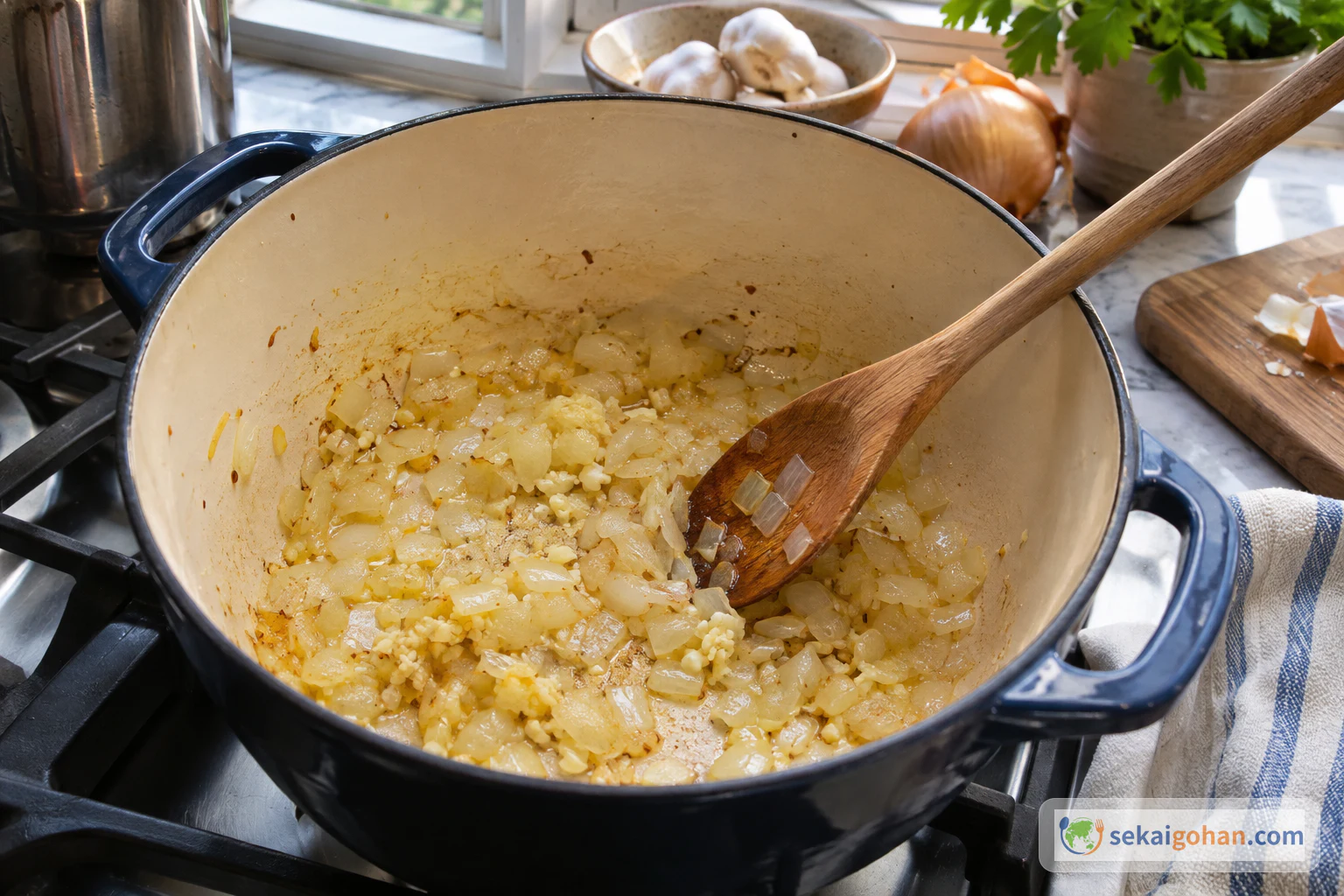
The meat soaks first and does nothing for a while, so start there. While it sits, cut the cassava and vegetables; once the pot is going, the stew needs only an occasional stir, and the recipe is timed at about 50 minutes in all, with the soaking time left up to you.
With so little water and so much starch, the base of the pot is where this stew fails. A slow scrape every few minutes with a wooden spoon keeps the cassava from sticking and scorching.
When It Goes Wrong
| What you see | Why | What to do |
|---|---|---|
| The broth is too salty | The charque did not soak long enough | Add a little water and simmer a few minutes more; next time soak longer and keep salt out until the end |
| The bottom is sticking or smells scorched | The liquid ran low and the cassava starch settled | Stop stirring the scorched layer into the stew, move the rest to a clean pot, add a splash of water and keep the heat low |
| The cassava is still hard in the center | It has not simmered long enough | Keep simmering and test again with a fork; never serve it until every piece is soft through |
| The meat is chewy | The simmer was too short or too hard | Lower to a gentle simmer and keep going until the cubes give easily |
| The broth is thin | The vegetables released a lot of juice | Simmer with the lid off until the cassava starch thickens it |
Serving and Variations
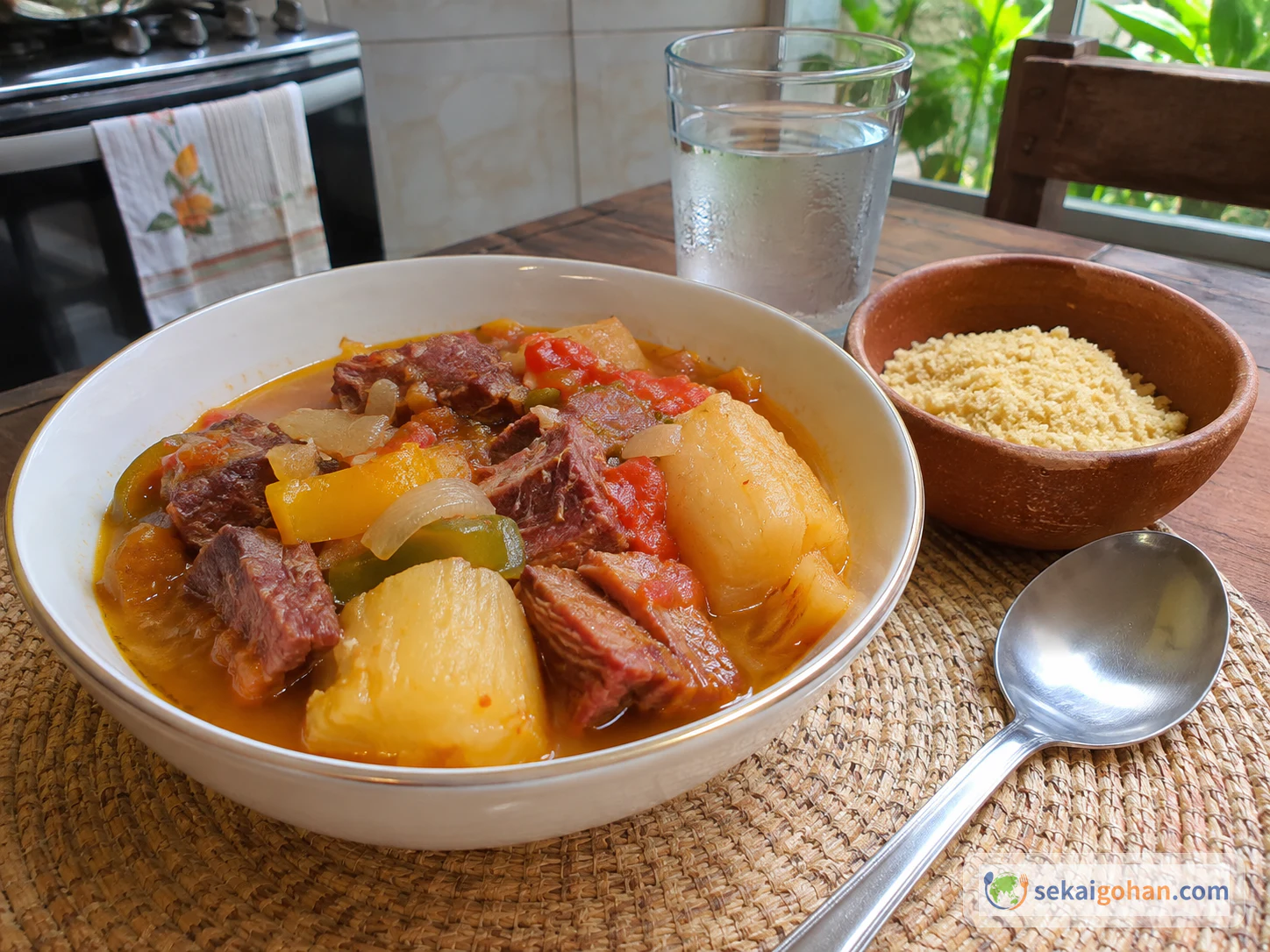
Ladle the caribéu into deep bowls while it is still steaming and set farinha de mandioca on the table. Each person sprinkles the cassava flour over their own bowl while the stew is hot, which gives a grainy contrast to the soft cassava. If you want a seasoned version of that flour, cook up a pan of farofa and pass it around instead. Caribéu is a full meal in one pot, so a glass of water and good company are all it needs.
Soup-style caribéu with corn
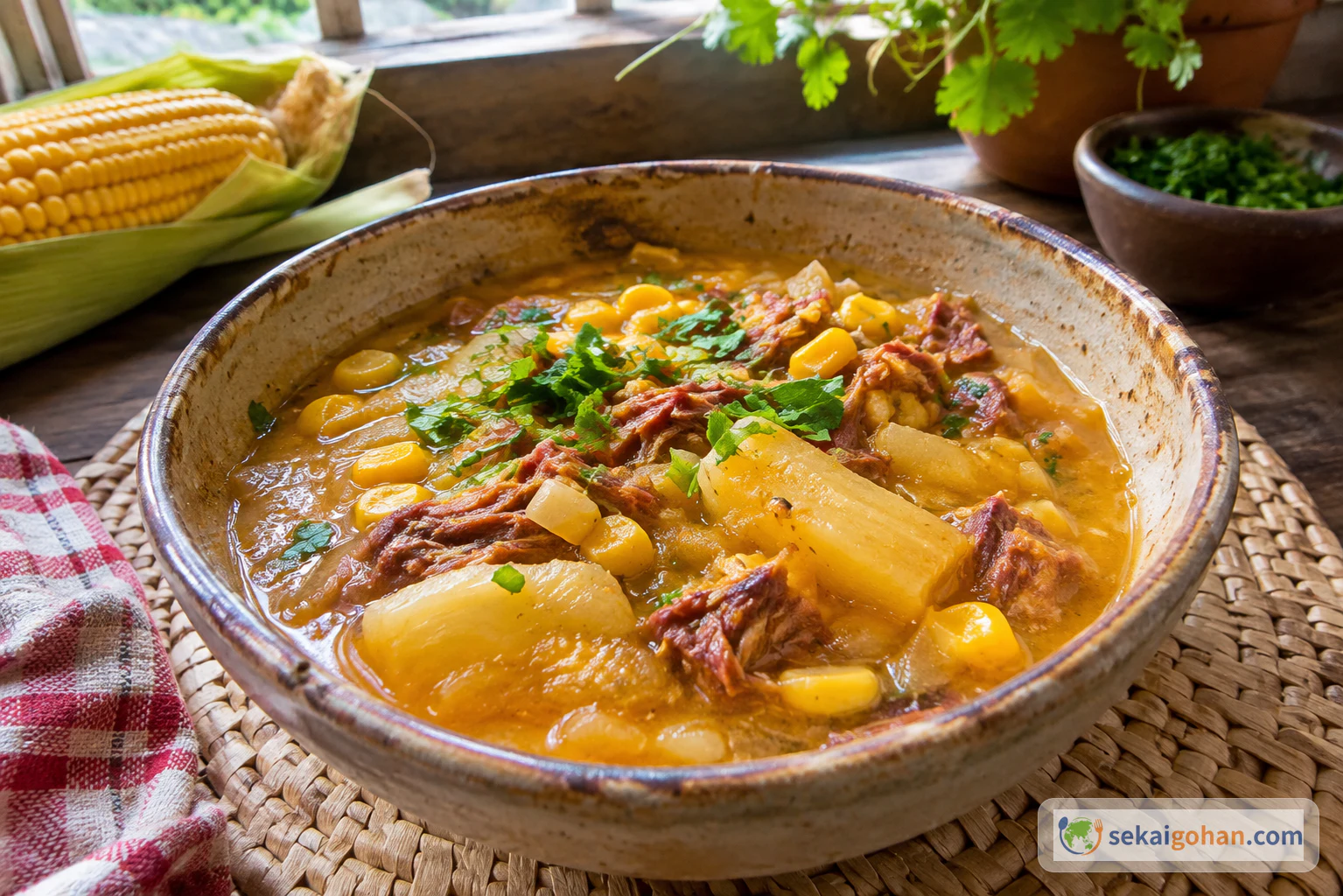
In Mato Grosso do Sul, caribéu also appears as a rich soup of corn, dried beef and cassava. The corn brings sweetness and the broth runs looser and more generous, so it eats more like a soup than a stew. This version is built on its own proportions, so treat it as a separate dish rather than a tweak of the pot above.
Quick caribéu with carne de sol
For a fast weeknight pot, use carne de sol and meat and cassava that are already partly cooked. The stew is ready in 15 minutes in a pressure cooker or 25 minutes in an ordinary pot. Expect a milder cure than with charque.
Frequently asked questions
Why is there so little water?
Caribéu is a stew, so the broth should be short and thick. Tomatoes, onion and peppers release plenty of juice as they cook, and the cassava starch turns that liquid silky. Start with the given amount and add a splash only when the bottom looks dry.
Is caribéu spicy?
No. The only heat comes from black pepper, and the peppers in the pot are sweet bell peppers. If you like heat, put a hot sauce on the table and let everyone add their own.
Can I make it ahead for a crowd?
The recipe does not cover storage or holding times, so none are given here. If you cook ahead, keep the salt and the fresh herbs for just before serving so the herbs stay bright green, and stir from the bottom when you reheat, since the cassava starch thickens the broth.