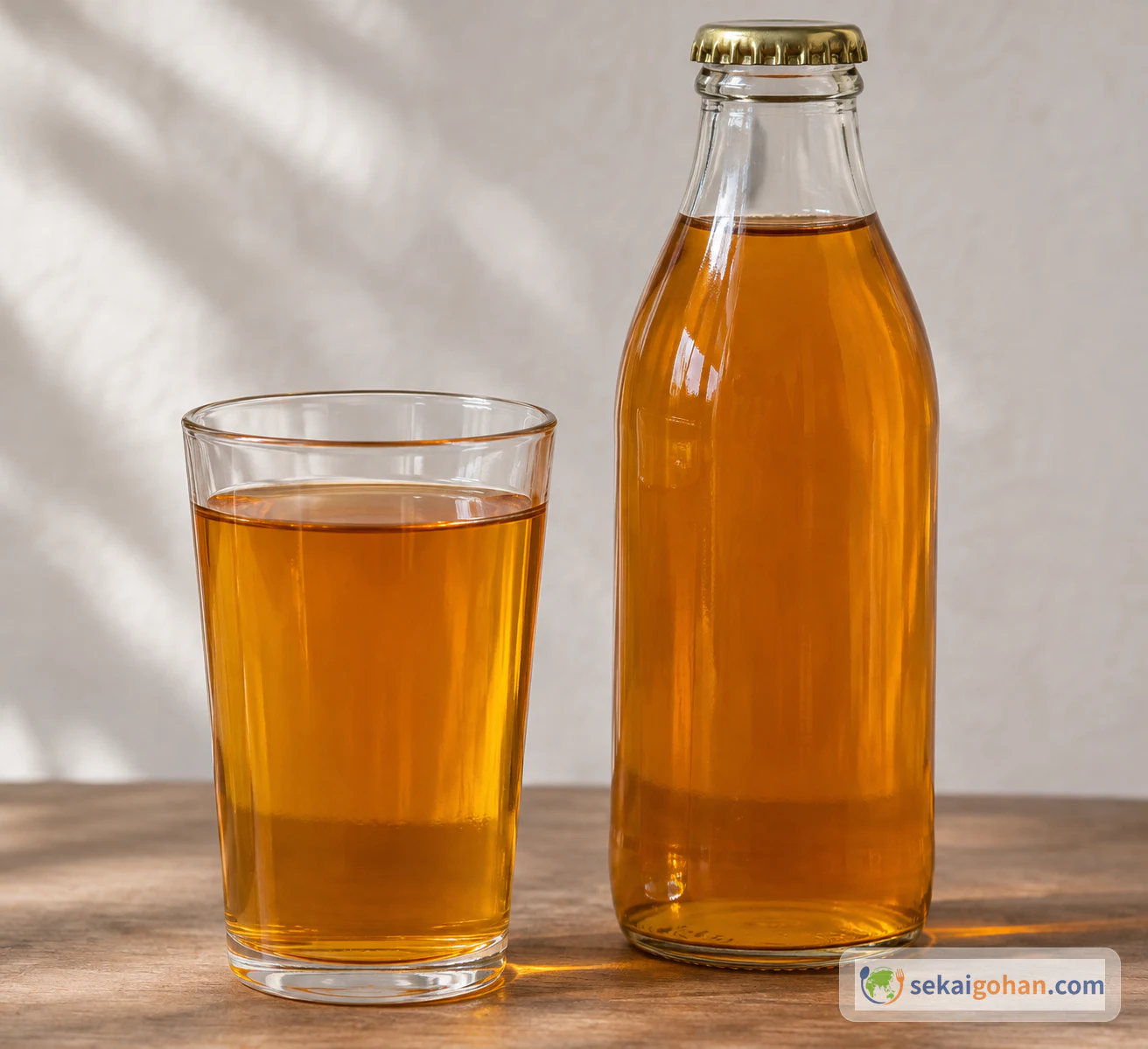
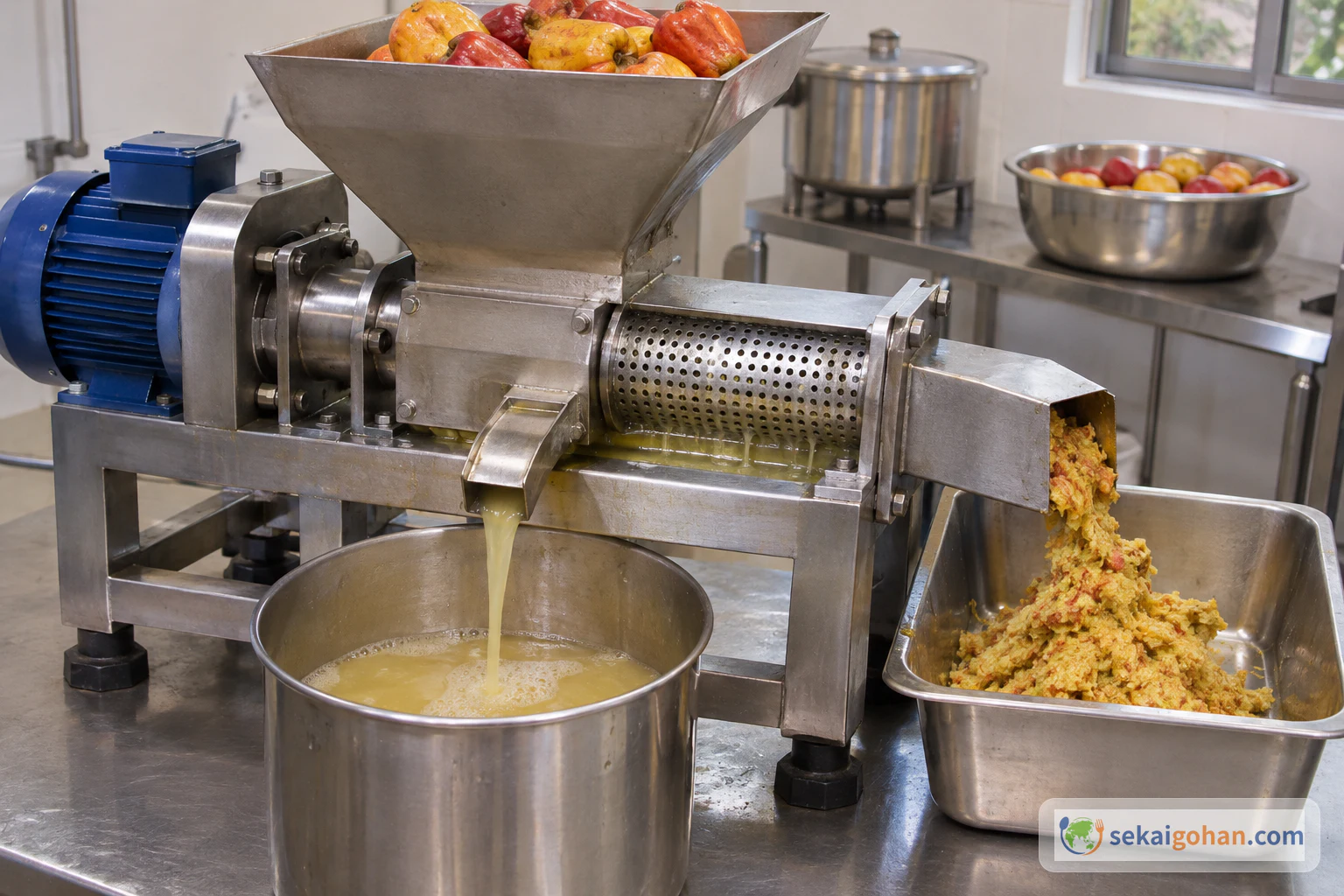
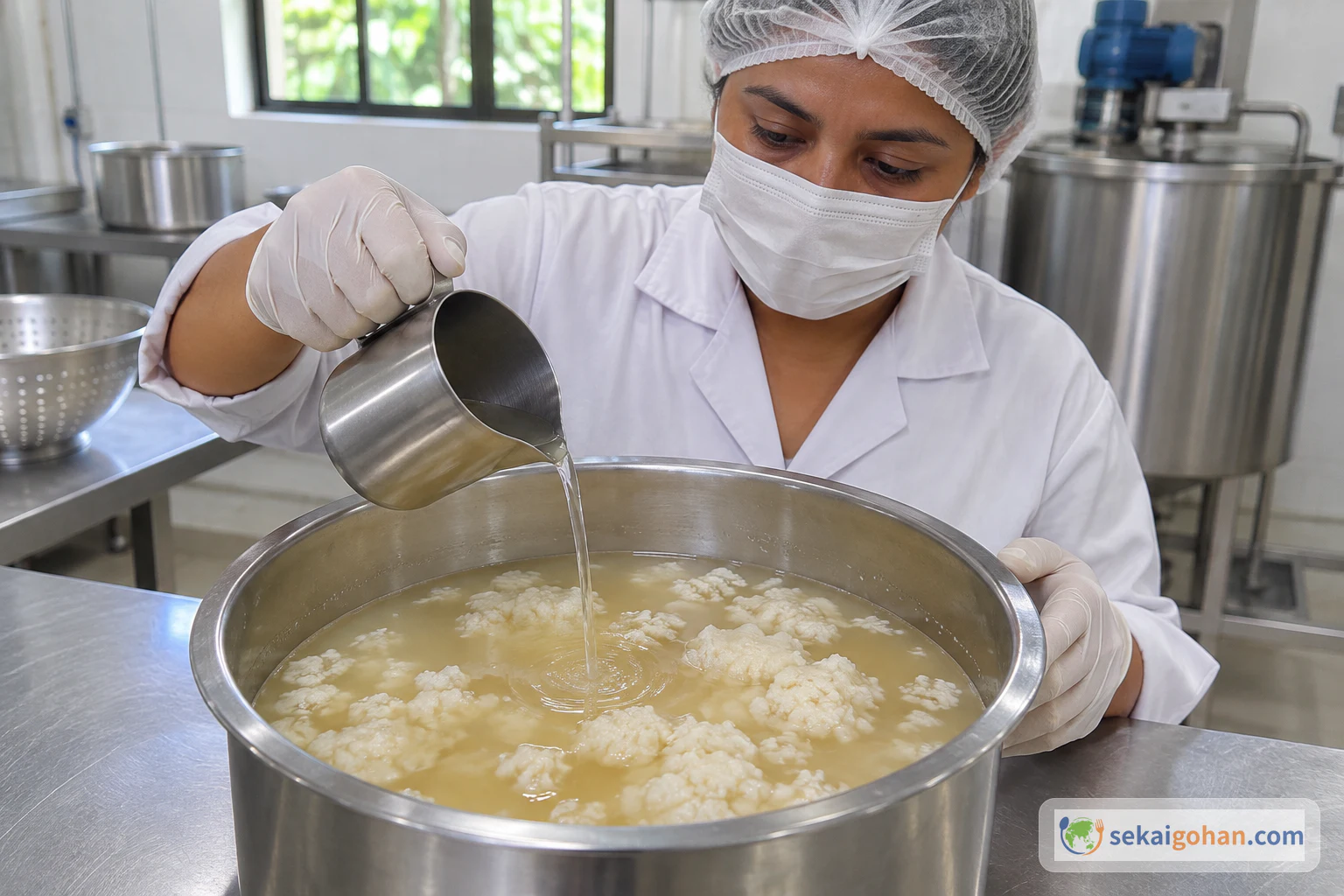
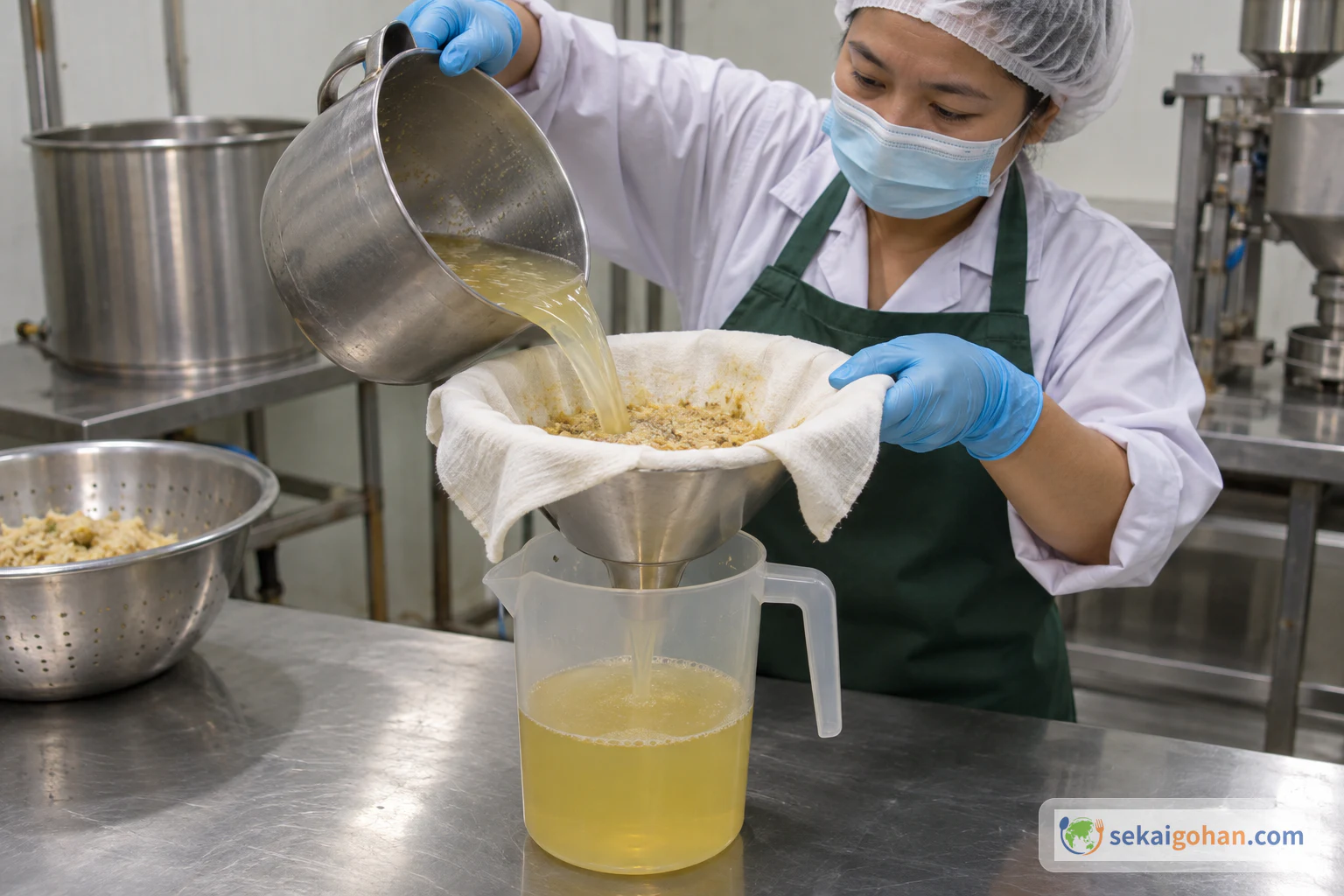
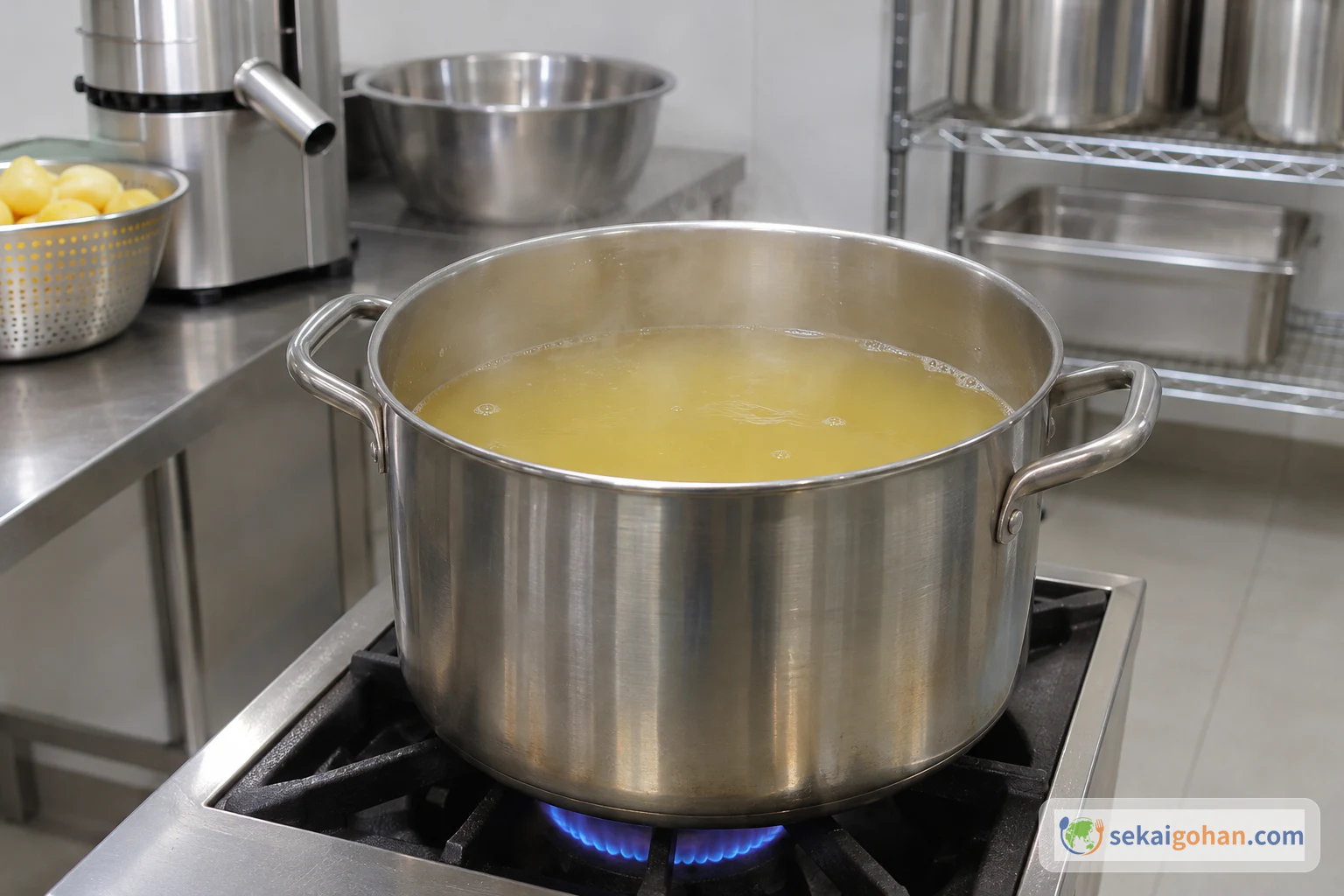
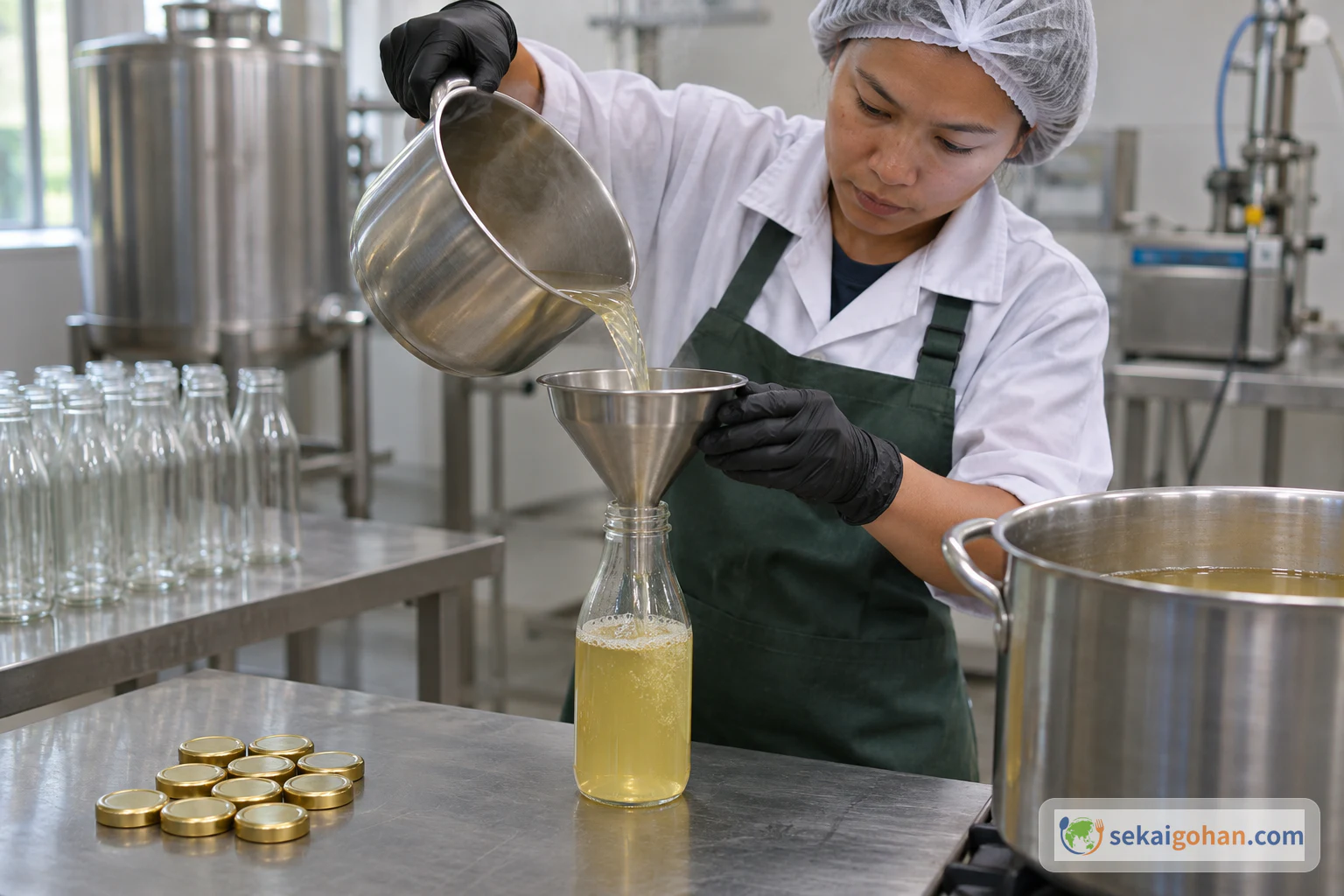
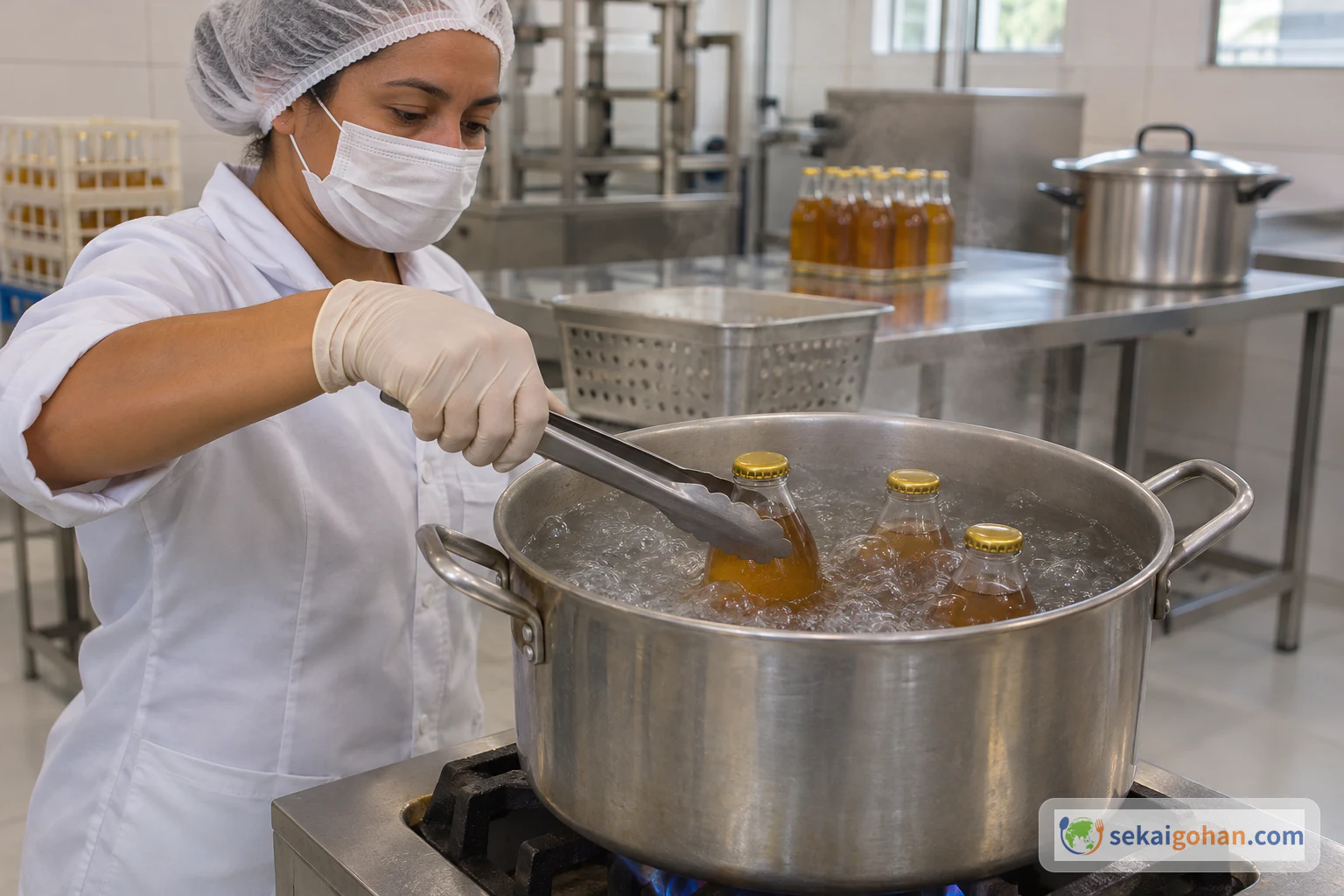
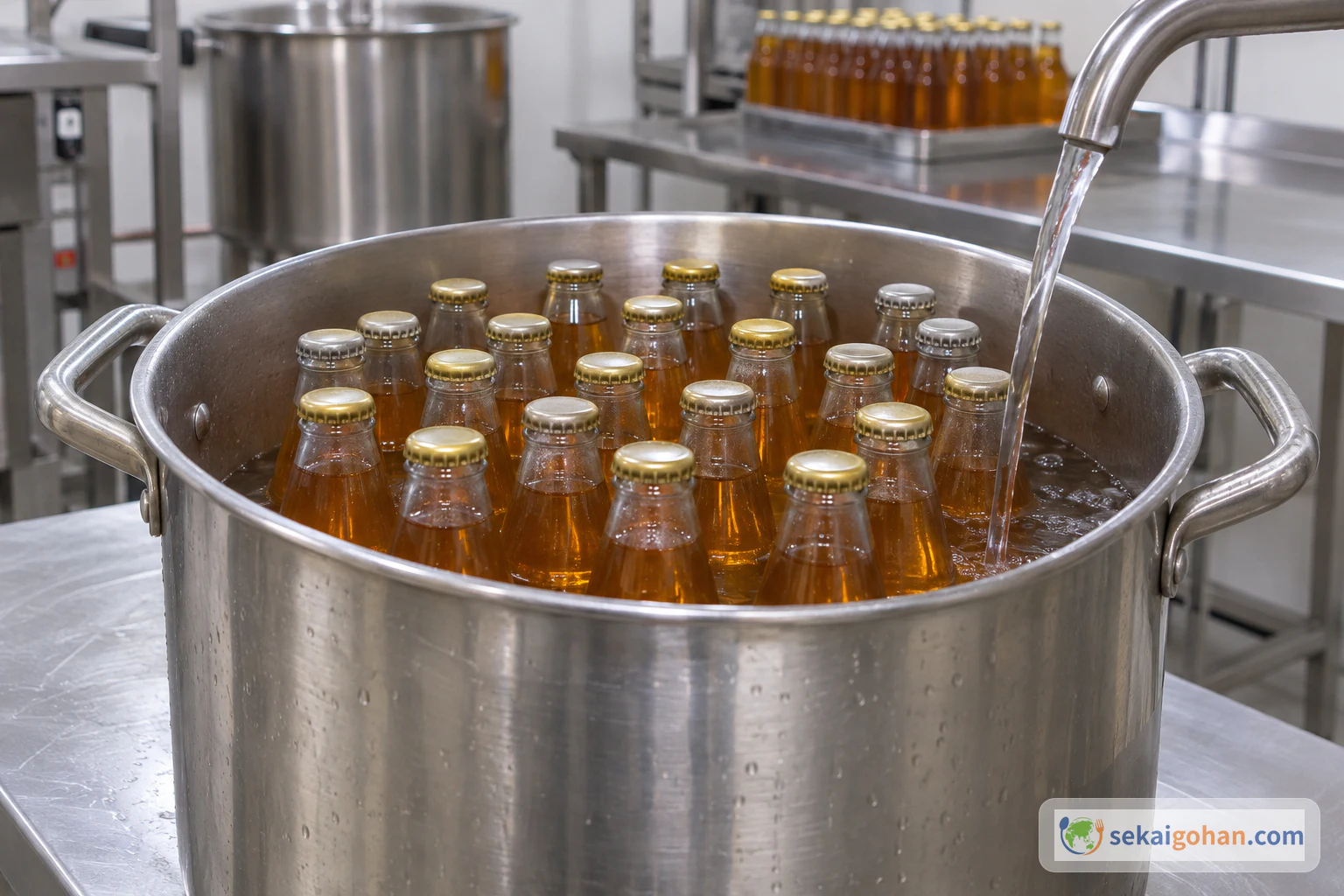
Pressed cashew apple juice comes out pale yellow and cloudy, and it stays that way until gelatin goes in. Then white curds bloom through it, the cloth holds them back, and what runs into the jug below is clear. After a long bath in boiling water inside sealed glass, that clear juice turns amber. This is cajuína, the bottled drink of Piauí in northeastern Brazil. It has no alcohol, no added sugar and no preservatives. Its sweetness is the fruit's own, with a light acidity and a faint astringency, and it is the drink a Piauí household pours when someone comes to the door.
From Cashew Apple to Piauí's Welcome Drink
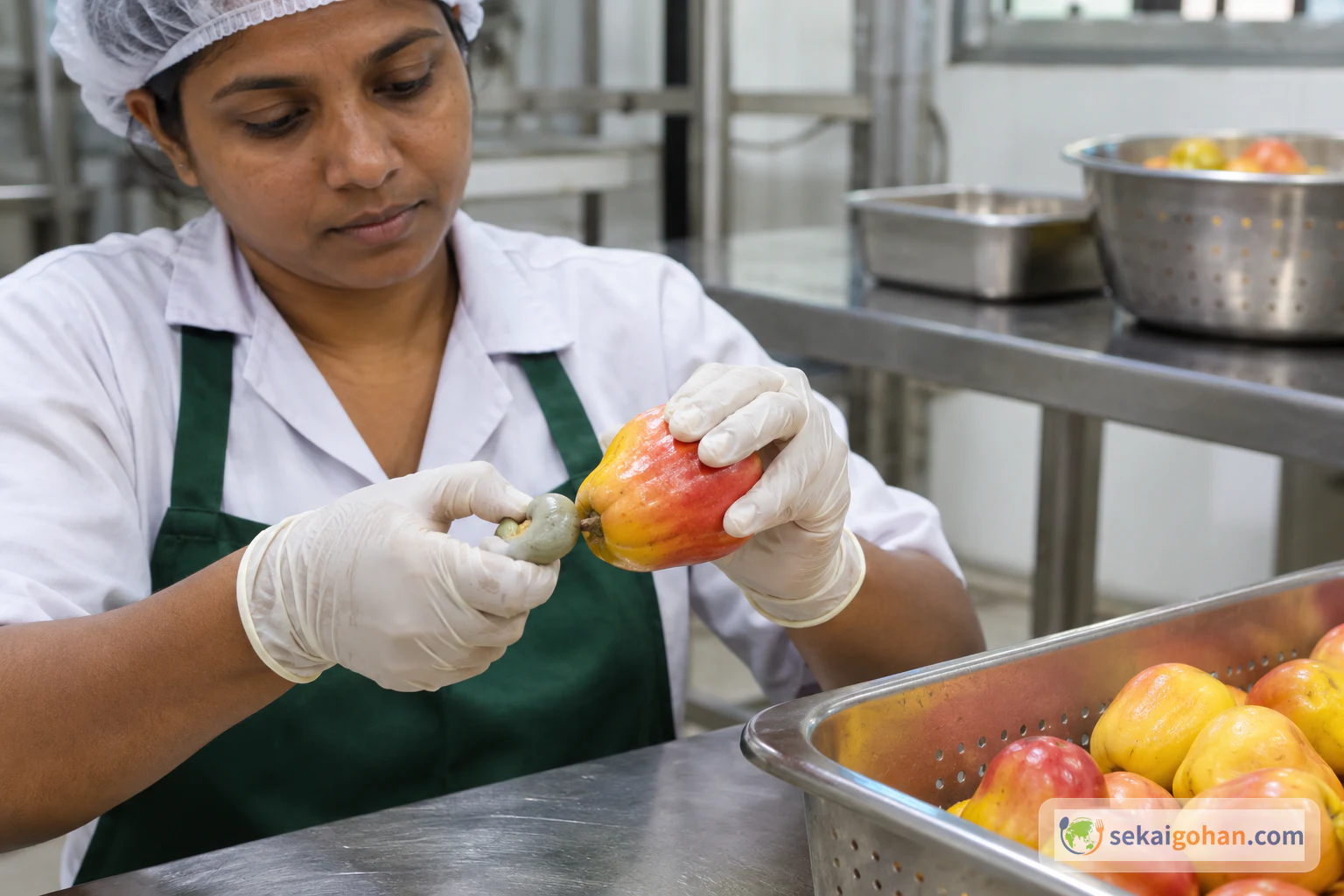
The cashew apple is native to northeastern Brazil. The fleshy, glossy yellow or red "apple" is the swollen stalk of the fruit; the kidney-shaped nut hangs from its base. Indigenous peoples drank its juice long before bottles existed, both fresh and as caoi, a fermented drink. Cajuína belongs to a different family. It is clarified, filtered, sealed and heated in its bottle, and nothing ferments.
In Piauí, cajuína stands for hospitality. Offering a glass is a welcome, and drinking it slowly is part of the pleasure. It is also drunk in the neighbouring cashew-growing states of Ceará and Rio Grande do Norte, and a line of song praises it as cristalina produzida em Teresina, "crystal-clear, made in Teresina", the capital of Piauí.
Where it began
Where cajuína was first made is not settled. One account gives it Indigenous roots. Another credits Rodolfo Teófilo, a pharmacist and writer, at the end of the nineteenth century. In Piauí, written mentions appear around 1930, and a person born in 1927 remembered their mother making it. Dona Maria Veloso is remembered as Piauí's first producer.
Production today is a real part of the state's economy. Piauí alone makes more than ten million liters a year, and around three thousand people work in it. In the town of Altos, one family has bottled it across three generations, about ten thousand liters a year.
Cajuína received its title as intangible cultural heritage of Brazil from IPHAN on 16 March 2014. On 13 April 2014 it was granted a geographical indication (Indicação de Procedência) covering the whole state of Piauí. Find more Brazilian dishes on the Brazil page.
Ingredients
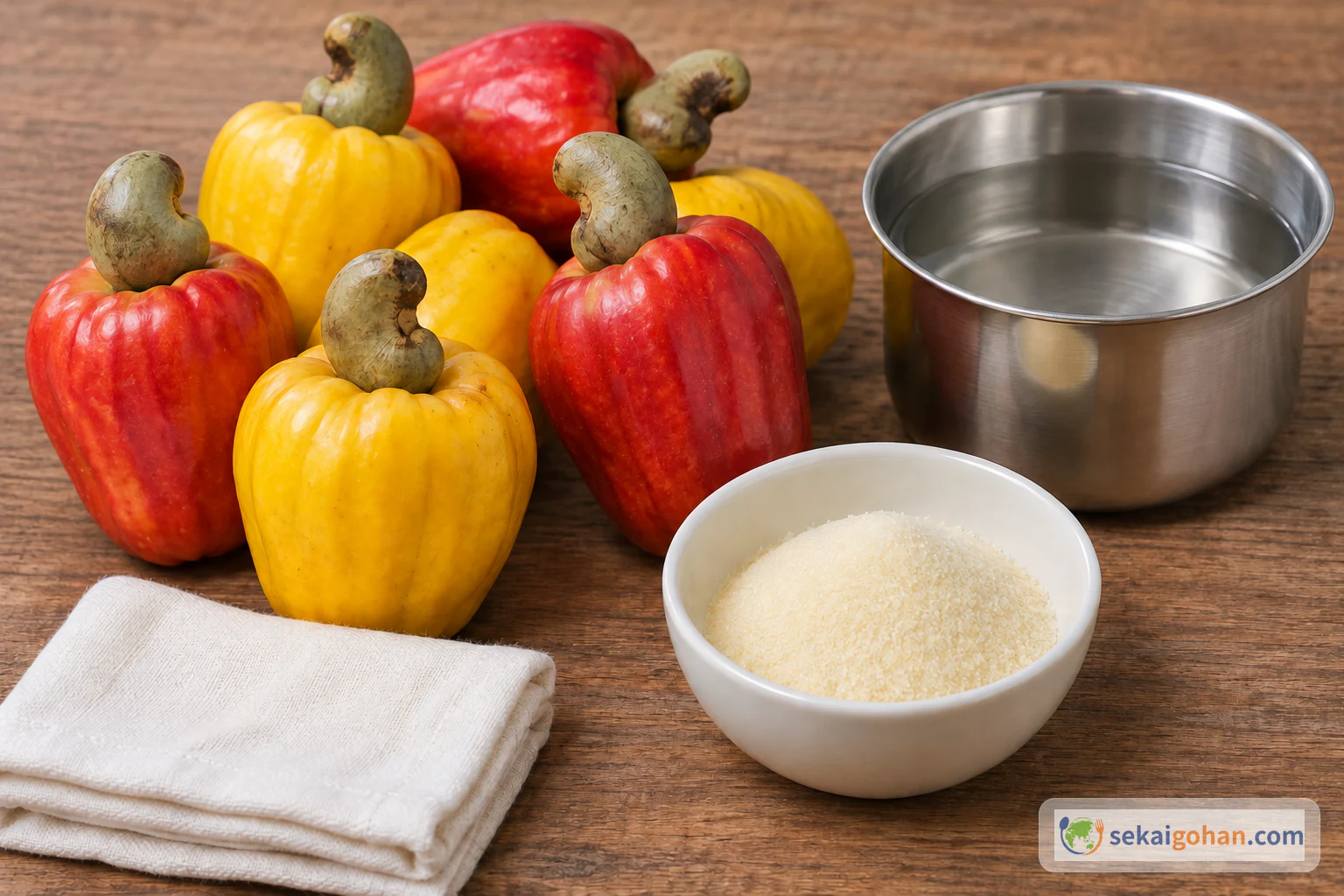
The whole drink is fruit juice. Nothing sweet goes in, so the ripeness of the fruit decides how it tastes.
About 2 quarts (2 L) of juice fills four 17-oz (500 ml) bottles. Have all four bottles and their caps clean and ready before you start heating.
Equipment
- Juice press (expeller type) or a sturdy juice press
- 3–4 cotton cloths, or nonwoven food-grade filter cloth
- Funnel
- Food thermometer
- Stainless steel pot for preheating the juice
- Large pot for the boiling-water bath
- Four 17-oz (500 ml) glass bottles with new metal caps
- Tongs and a timer
Choosing the Fruit and What Stands In
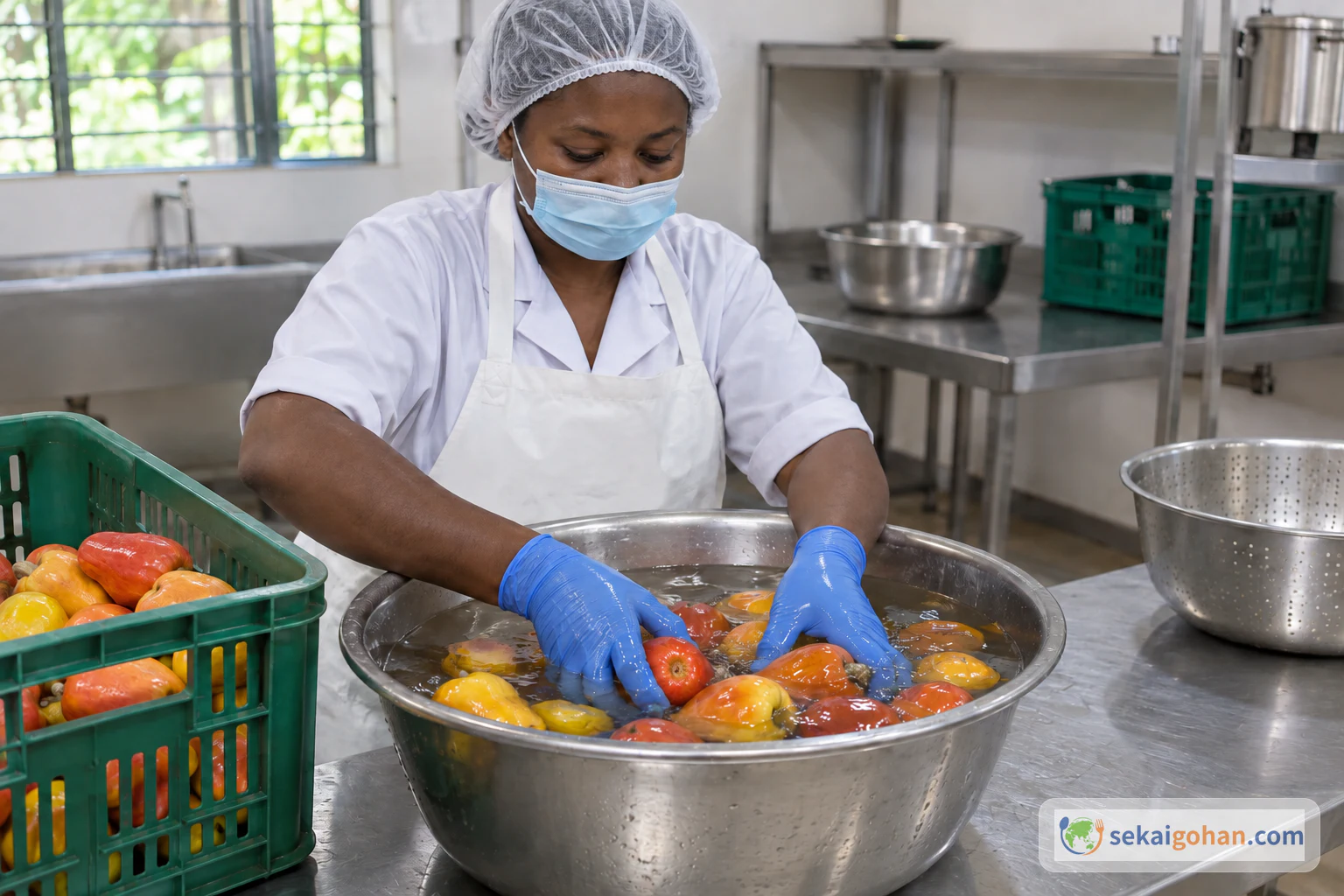
Fresh cashew apples are the one thing this drink cannot do without, and outside Brazil they are close to impossible to find. If you track them down, look for whole yellow or red fruit with the nut still attached and the skin unbroken; unripe or bruised fruit is sorted out before pressing. Brazilian grocers abroad often sell frozen cashew apple pulp. Pulp is a blended product, not pressed juice, so it makes a different drink from cajuína.
The gelatin is ordinary unflavored powdered gelatin, the plain baking kind with no sugar or flavoring. Bottles should be glass with new metal caps, since the seal forms as the hot juice cools. What has to stay for the drink to be cajuína is short: fruit juice only, clarified with gelatin, sealed hot and heated in the bottle until amber.
Method
The work runs in one line from fruit to bottle, so set out everything first: bottles, caps, cloths, funnel and both pots. The fruit is prepared and pressed, then the juice clears during one hour of resting after the gelatin goes in. The long hands-off stretch comes at the end, when the sealed bottles sit in boiling water.
When It Goes Wrong
| What you see | Why | What to do |
|---|---|---|
| The juice stays cloudy after resting | Too little gelatin solution; the flocs never grew large | Add more dissolved solution a little at a time until large curds form, rest again, then filter |
| Flecks of curd in the filtered juice | Too few passes, or a cloth reused when it was already loaded | Pour it through a fresh cloth again until it runs clear |
| A rough, astringent finish | Tannins left in the juice from incomplete clarification | Next time, keep adding solution until the curds are large, and give the full hour of rest |
| Pale color after the bath | Too little time at a full boil | Keep the water at a steady boil throughout, up to the 2-hour limit |
| A bottle cracks while cooling | Cold water reached hot glass too fast | Add the water more slowly, beside the bottles, and let the bath cool gradually |
Serving and Keeping
At the table
Pour cajuína into a plain glass so the amber color shows. In Piauí it is the drink set out for guests, something to sip slowly as you talk. Serve it well chilled, either straight from the bottle or poured over ice for a lighter glass. It also makes a refreshing finish after a meal.
Storage
Factory-made cajuína keeps unopened at room temperature, up to two years for producer bottles. Each bottle's best-before date follows Brazilian labeling rules. This method follows a small-producer process, and safe long-term room-temperature storage of home-sealed bottles has not been confirmed. Bottles sealed at home do not carry that shelf life, so drink them rather than keeping them for later.
Frequently asked questions
Is cajuína the same as caoi or cauim?
No. Caoi and cauim are fermented drinks. Cajuína is clarified and heat-sealed in the bottle, so it never ferments and has no alcohol.
Does the gelatin end up in the drink?
The gelatin binds the tannins and fine pulp into curds. Those curds stay behind on the cloths during filtering. What reaches the bottle is the clear juice.
Why must the bottles be capped while the juice is still hot?
Capping hot traps the steam above the juice. As the bottle cools, that space shrinks into a vacuum, which helps the drink keep. A bottle capped after the juice has cooled forms no seal.
Where does the cashew nut come in?
The nut is the true seed of the fruit, hanging from the base of the cashew apple. It comes off in the first step and is set aside whole. Cajuína is made only from the juicy stalk above it.