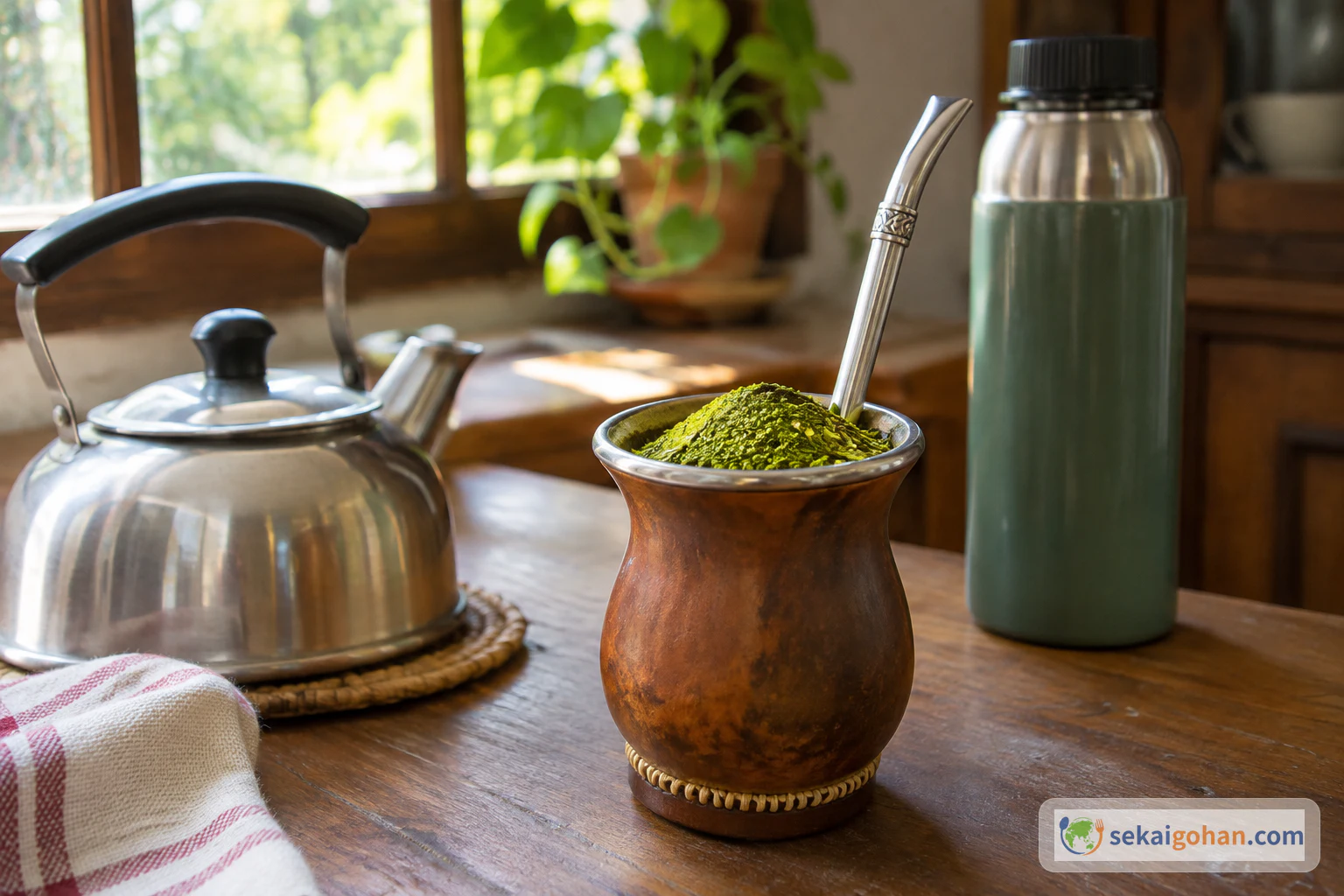
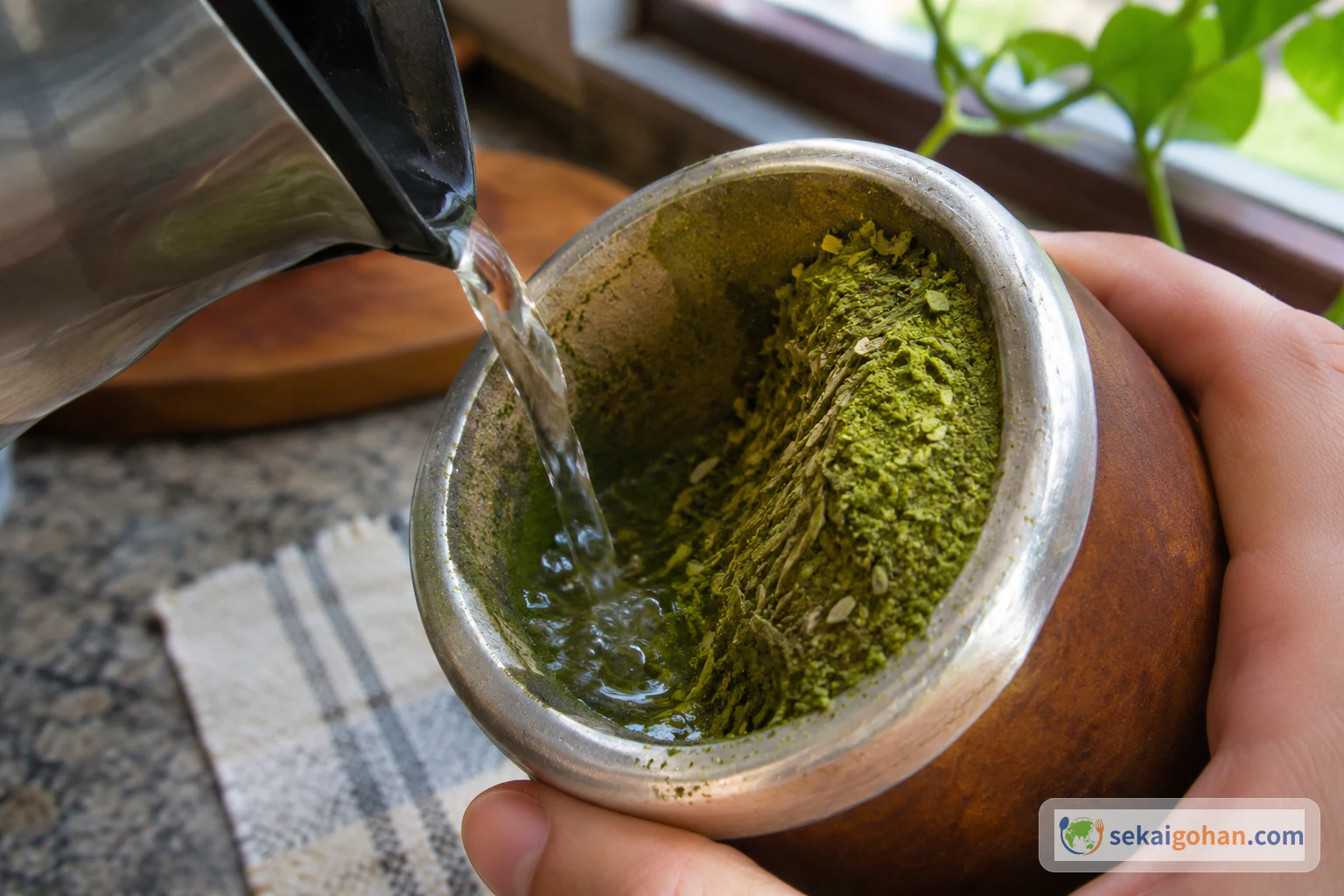
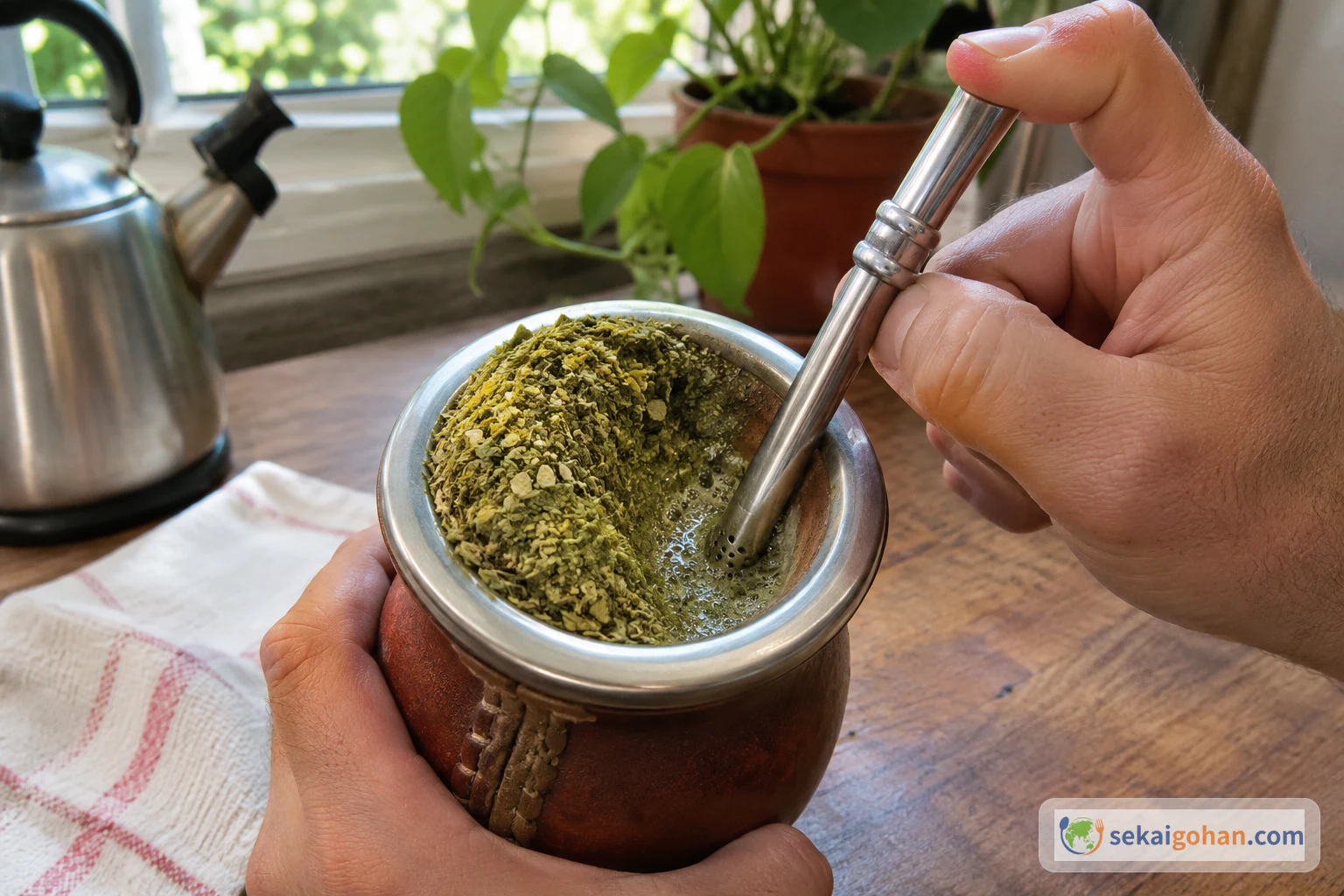
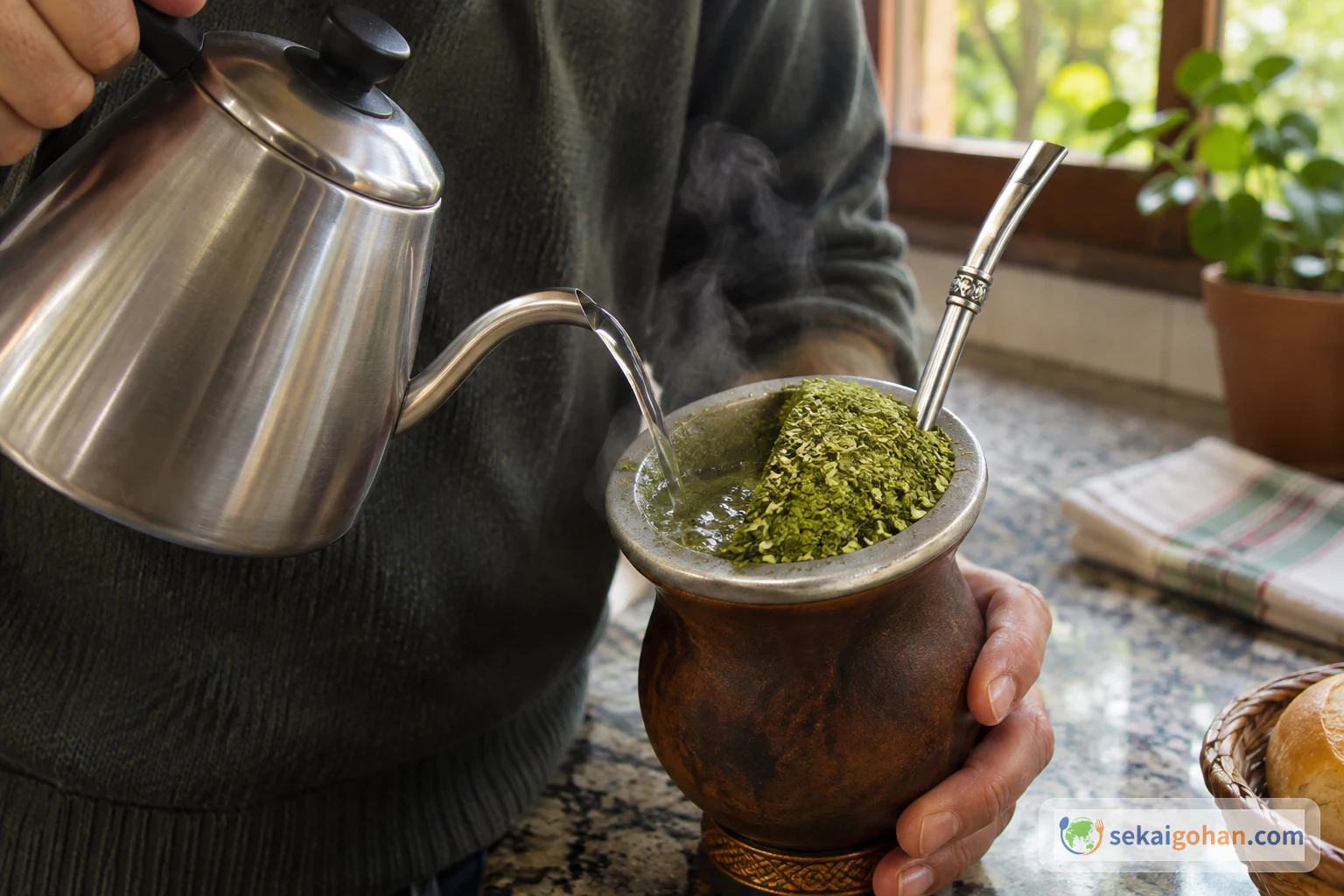
Hot water slides into a small hollow beside a steep green slope of herb, and a thin thread of steam rises from the mouth of the gourd. One person sips through the metal straw until the cuia is drained, tops it up on the same side, and passes it on. Chimarrão is the everyday drink of southern Brazil, above all of Rio Grande do Sul: ground erva-mate in a cuia, hot water poured in beside it, and a bomba to drink through. The same herb takes water again and again over a long conversation. Kept below the boil, the herb gives up its flavor without scorching into a harsh, bitter cup.
A Drink That Moves Around the Table
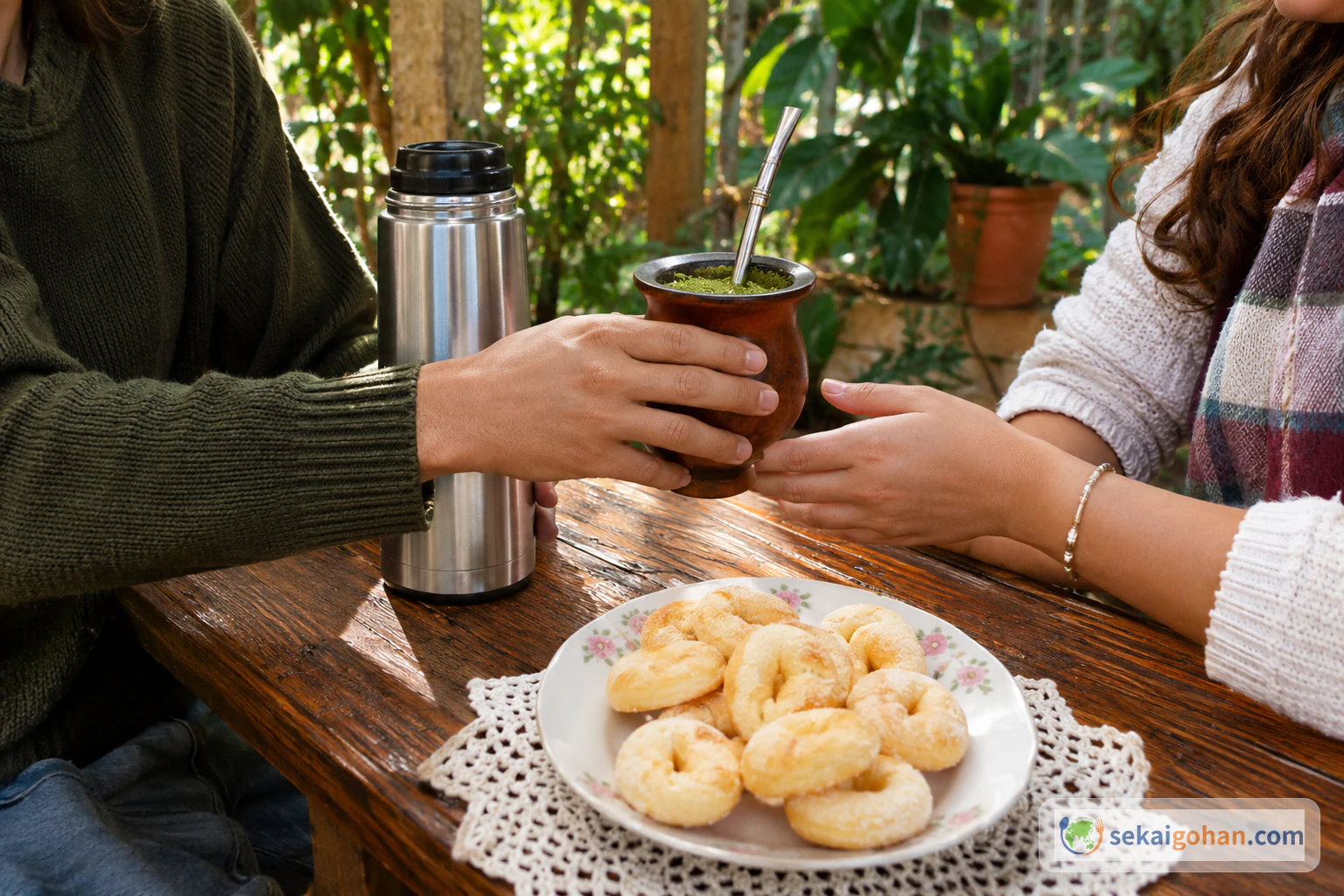
In Rio Grande do Sul, chimarrão is the state's typical drink, and it is described there as a ritual that joins family and friends. Among the gaúchos of the south, sharing the cuia stands for friendship and hospitality. The drink is the reason to sit down together; the cuia moving from hand to hand is what the afternoon is about.
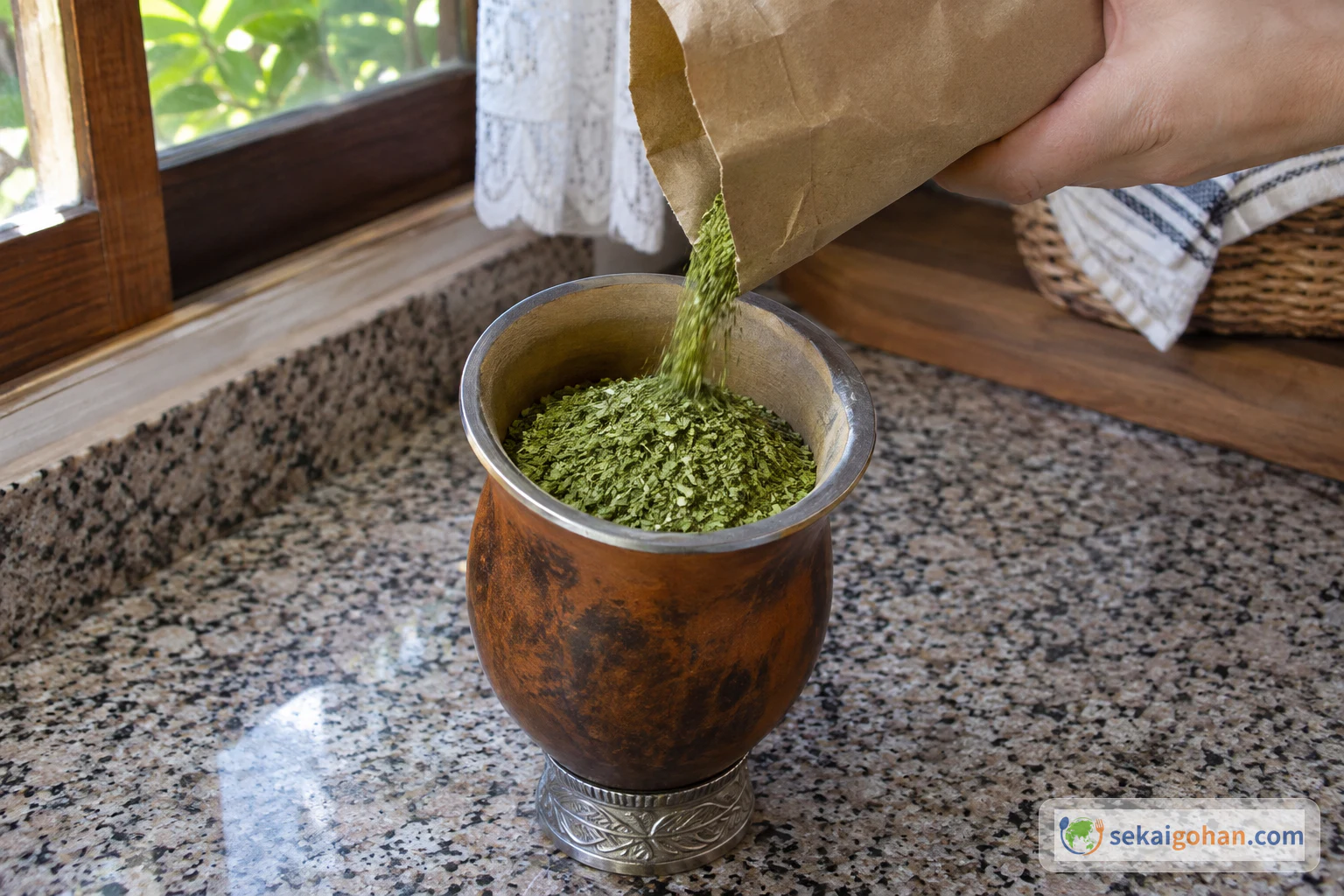
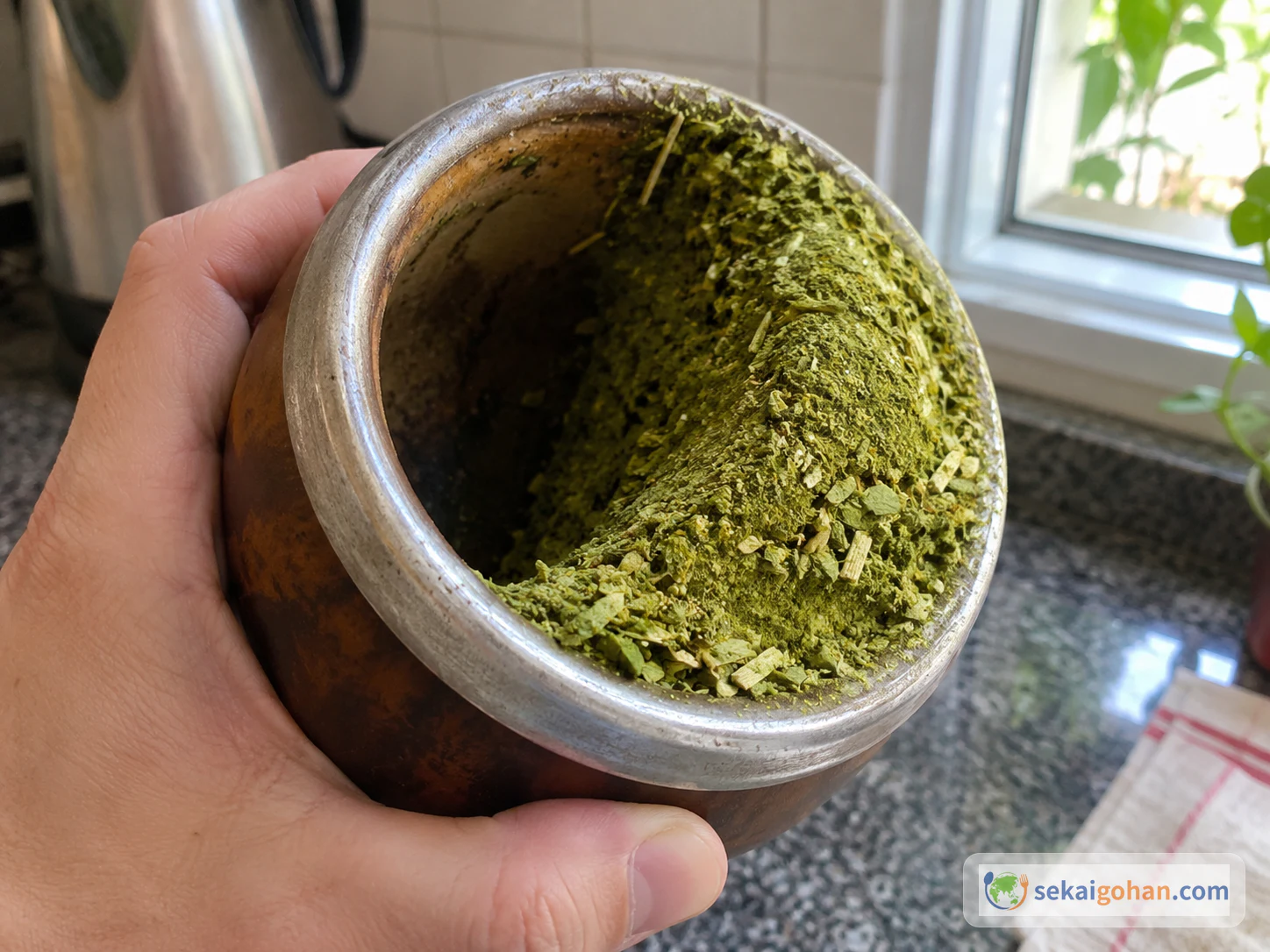
What happens inside the gourd is a partial infusion. The erva is stacked to one side of the cuia, hot water goes into the gap between the herb and the wall, and the drinker sips it through the bomba. Then the water is added again, many times over, from one filling of herb. Each round wets a little more of the slope, which is why the build of that slope matters so much in the method below.
In everyday Brazilian Portuguese, people shorten the name. Tomar um chimas means "to have a chimarrão," the casual way of inviting someone to share a cuia.
Heritage, legend and neighbors
In 2023, Rio Grande do Sul registered the traditional cultural and socio-environmental system of erva-mate, covering how the plant is grown and traded, as the state's first intangible cultural heritage. The technical report was approved unanimously in April of that year, and the registration ceremony took place on 13 June 2023. Mbya Guarani representatives took part, bringing erva made by hand over a carijo.
Where the habit of drinking erva-mate first began is not settled. A story often told in Brazil has Spanish soldiers of the 16th century learning the drink, and another tells of a time when it was banned and called erva do diabo, the devil's herb. These are legends, and they are best enjoyed as such.
Across the borders, the same plant is drunk in other ways. Paraguay is known for tereré, served cold, and in Argentina and neighboring countries the drink is called mate. Chimarrão is the southern Brazilian way, hot water poured over ground erva in a cuia, and it has its own name and its own place in Brazilian food culture.
Ingredients
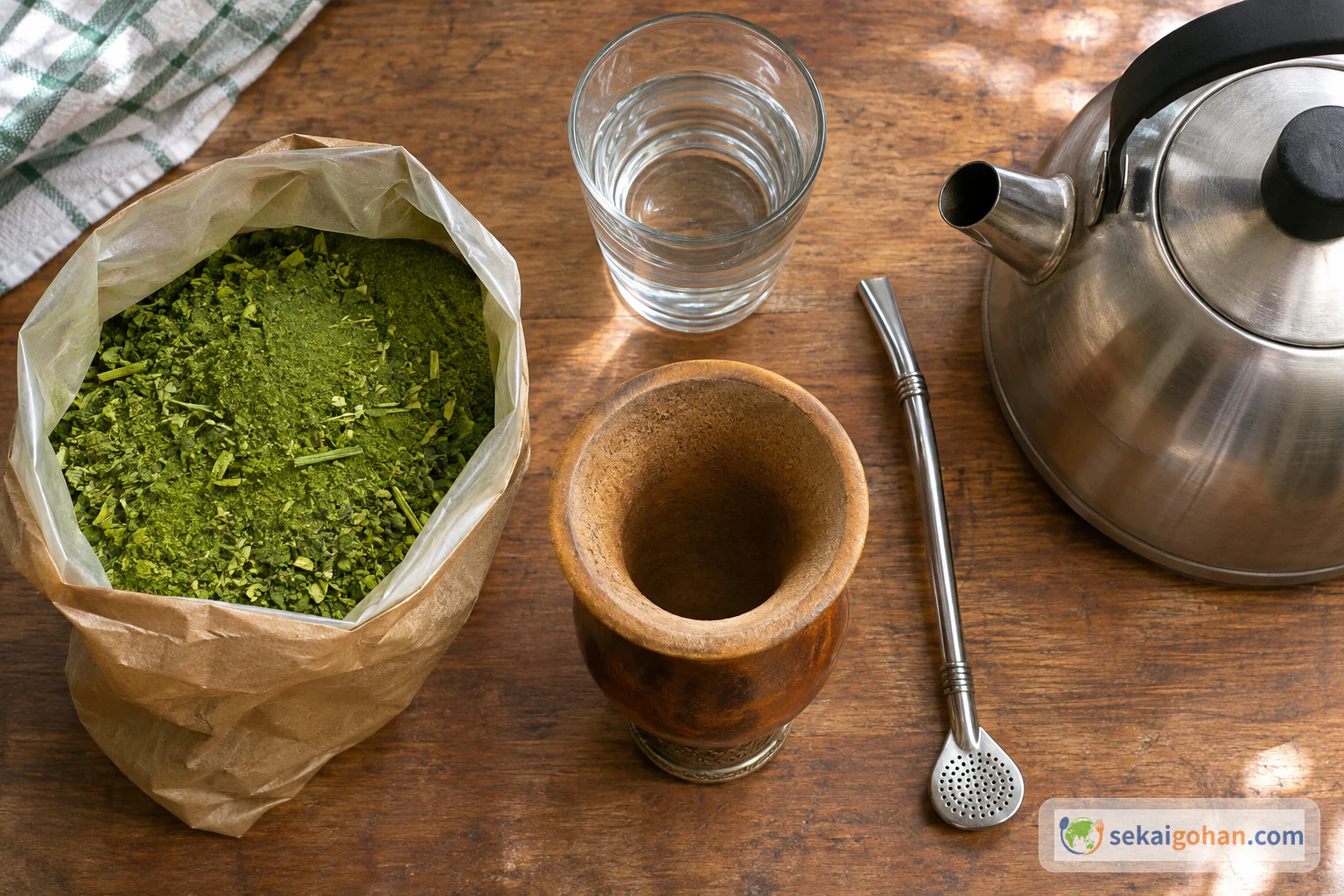
The amount of erva is measured by the cuia, never by weight. Fill to about two-thirds of whatever gourd you have, and the proportions take care of themselves.
Equipment
- Cuia (a gourd vessel; ceramic or stainless steel also works)
- Bomba (a metal drinking straw with a filter at the bottom, usually stainless steel)
- Kettle
Choosing Erva, Water and the Cuia
Look for erva sold specifically for chimarrão, a bright green ground herb, at shops that carry South American groceries or online. The yerba mate tea bags sold in supermarkets are a different product, with a different cut and made for a cup, and they will not build the slope a cuia needs.
Use mineral or filtered water for both the first cool splash and the hot refills, since water is the only other thing in the drink. A traditional calabash cuia is the classic choice, and ceramic or stainless steel cups do the same job if you cannot find a gourd. The bomba should be stainless steel with a filtered end, because the filter is what keeps the herb out of your mouth.
"Erva-mate para chimarrão," "stainless steel bomba" and "cuia" turn up the right products. Erva sold for chimarrão is what this method is built around.
Method
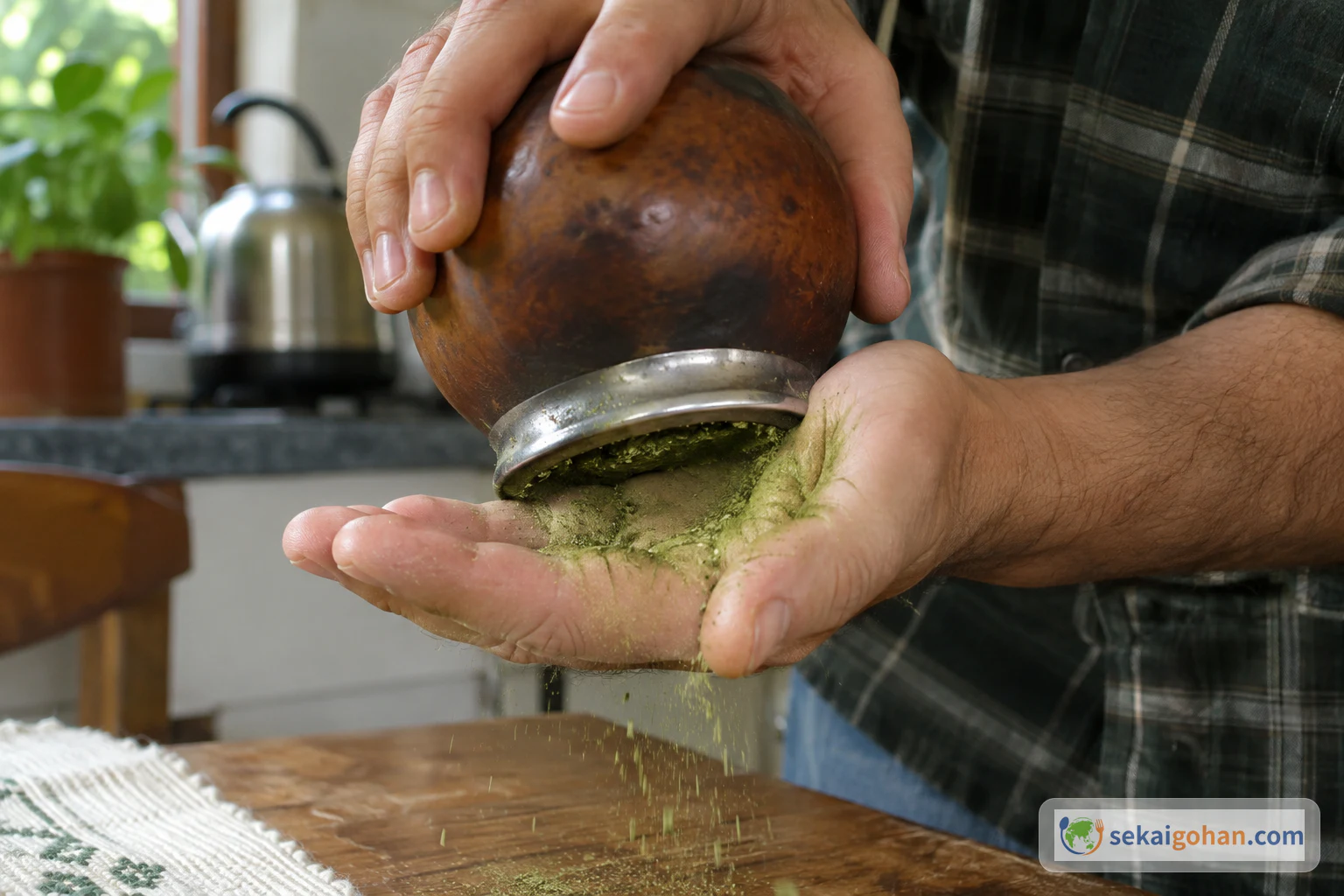
Start the kettle first and bring the water up without letting it boil, so it is ready when the cuia is built. The building happens dry: fill, shake, slope. Then a little cool water and a 30-second rest set the herb before the bomba and the hot water go in. After that, the rhythm is simply drink, refill on the same side, and pass.
When It Goes Wrong
| What you see | Why | What to do |
|---|---|---|
| The bomba clogs and nothing comes up | Fine powder settled near the filter | Empty the cuia and rebuild it, shaking longer with your palm over the mouth in step 2 |
| The drink tastes harsh and bitter | The water was too hot and scorched the herb | Take the kettle off before it boils and keep the water at 160–175°F (70–80°C) |
| The slope collapses and the whole cuia turns soggy | Water was poured over the mound or on the other side | Rebuild the slope and pour slowly into the hollow beside the bomba only |
| Herb shoots up the bomba when it goes in | The top of the bomba was left open | Cover the top with a finger every time you insert it |
| The first sip is too hot to enjoy | The drink is above the comfortable range | Let the cuia stand a little before the next sip |
Serving and Care
At the table
Chimarrão belongs to long afternoons and to company. Set the cuia, the bomba and the kettle on the table and let it move from person to person. Polvilho biscuits (bolachas de polvilho) and homemade bread (pão caseiro) are things to nibble alongside. The drink itself is the center, so keep the food simple and dry, something to hold in one hand while the cuia waits in the other.
Choosing the vessel
A calabash gourd is the traditional cuia, and it gives chimarrão its familiar look in the hand. A ceramic cuia or a stainless steel one makes the same drink with the same method. Whatever you use, the method stays the same: two-thirds herb, a slope, and water on one side.
After the last round
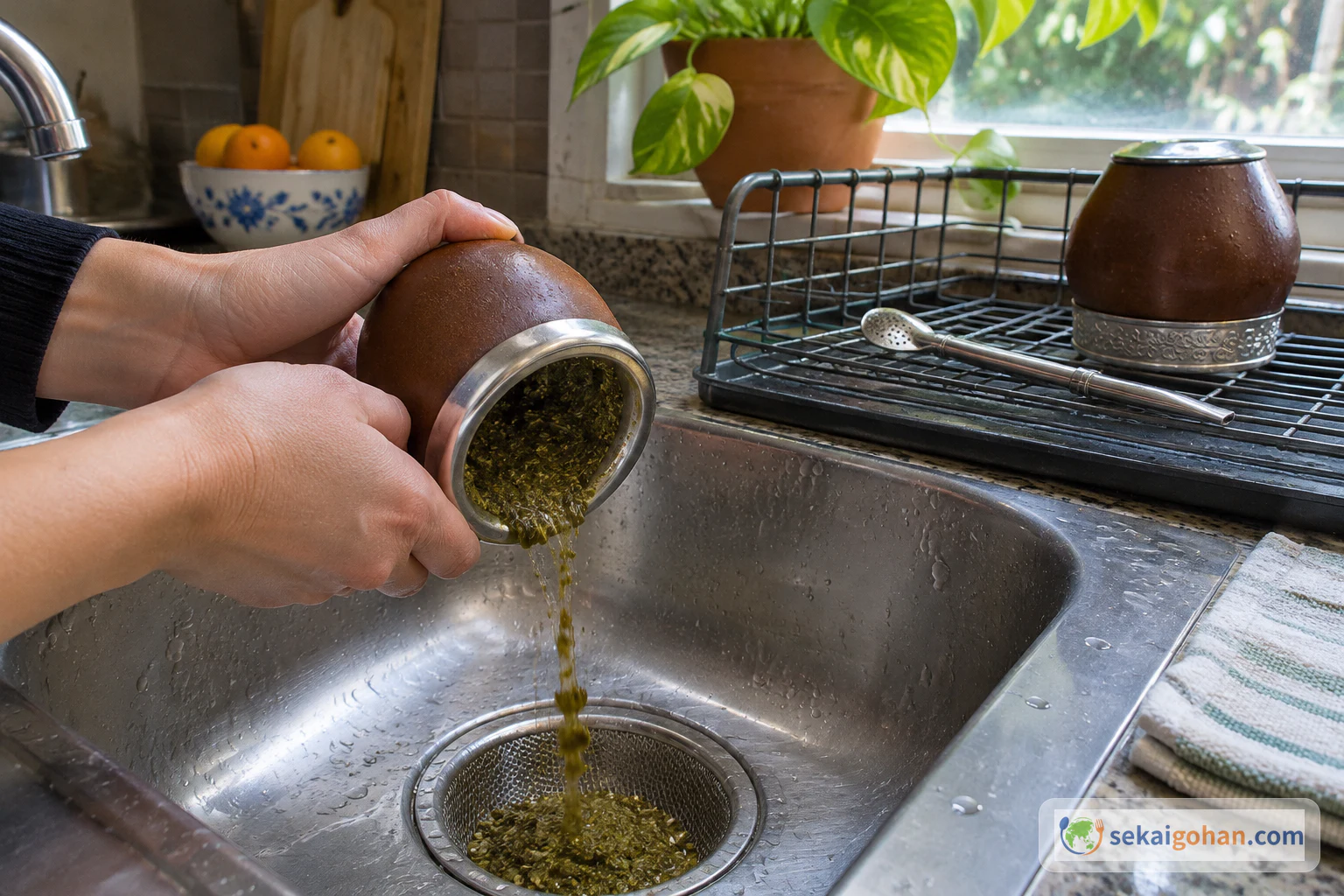
When everyone is done, tip the spent erva out of the cuia into a sink strainer. Rinse the bomba, then stand the cuia and the bomba upside down on a rack to dry completely before the next use.
Frequently Asked Questions
Can I make chimarrão with yerba mate tea bags?
Tea bags are a different product made for steeping in a cup. They cannot form a slope in the cuia, and the bomba has nothing to draw from. For chimarrão, buy loose erva sold for chimarrão.
Can chimarrão be drunk warm or cold?
Mate is also drunk warm or cold. Served fully cold, it is a different drink: tereré, best known in Paraguay. Chimarrão itself is the hot-water version.
Does the grind of the erva change the cup?
Yes. Coarse-ground erva releases noticeably more of its compounds into the water than the traditional grind. With coarse grind, water temperature also has a bigger effect on how much comes out, so keeping the kettle below the boil matters even more.