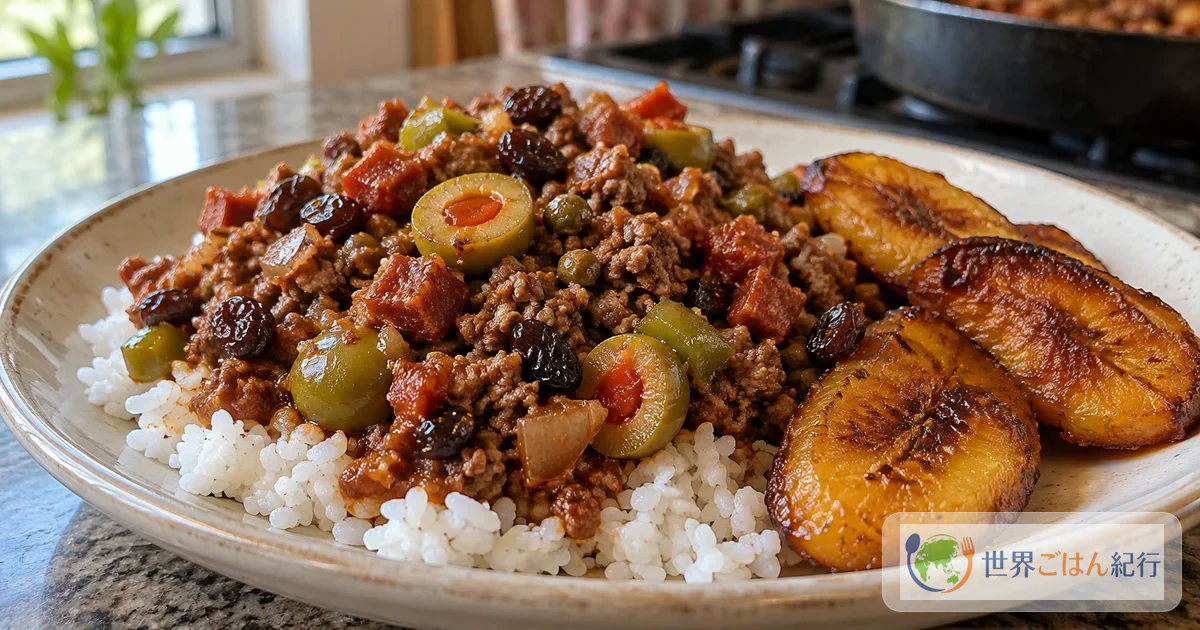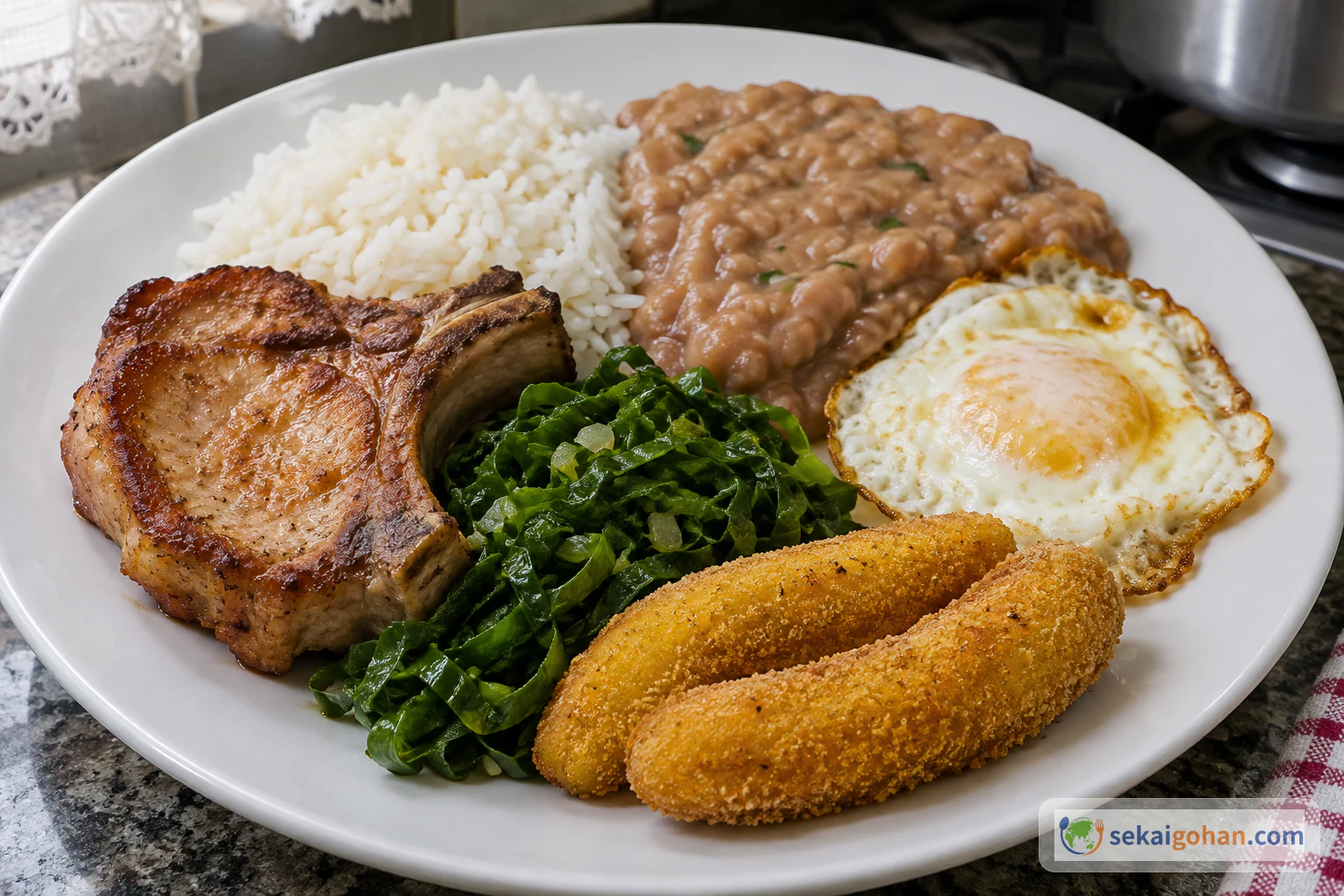
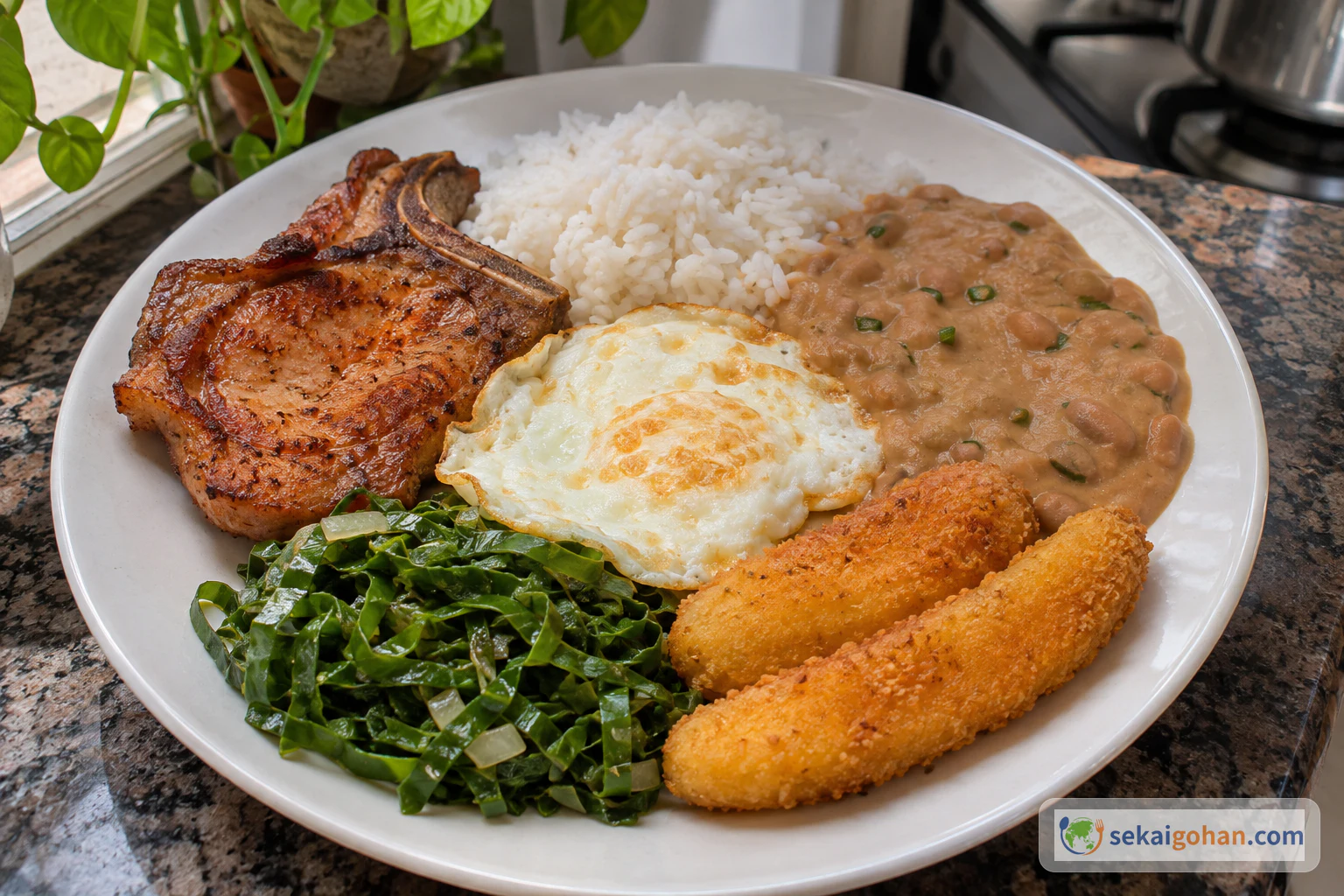
On a Monday in São Paulo, the dish of the day comes as one crowded plate. It holds white rice, a mound of thick brown bean tutu flecked with bacon, a browned pork chop still on the bone, ribbons of garlicky greens, two pieces of banana in a crisp golden crumb, and a fried egg. Virado à paulista is São Paulo's own plate, and it eats like a full meal in one sitting. The beans are soft and smoky from the pork fat. The chop is sharp with lime, and the sweet banana cuts through the salt. Every forkful mixes a bit of everything on the plate.
Virado à paulista on the São Paulo table
The plate is built around something very plain: beans, pork fat and a dry meal stirred in to thicken them. Everything else grew around that core. The earliest form was just beans, farinha and pork fat. Rice, the pork chop, cracklings (torresmo), couve greens, egg, banana and sausage (linguiça) came later, one by one, until the plate looked the way it does at a São Paulo lunch counter today. Anyone who has cooked feijoada or farofa will know the pantry, but virado puts it together its own way, with the beans thickened into a cream and a fixed set of sides around them.
"À paulista" means "in the São Paulo style," and virado is one of the few dishes that carries the state's name. Virado and virado à paulista are the same dish. Tutu à mineira and feijão tropeiro use similar ingredients but are separate dishes.
From the road to the register
Beans, toucinho (pork fat) and farinha de milho (corn meal) show up in the records of the bandeiras and monções, the expeditions that set out from São Paulo into the interior. That is the usual starting point for the dish's story, but the history is partly told the way legends are, and where virado began is not settled. One story says Dom Pedro I ate it, and it belongs to the same legendary telling.
The modern history is firmer. In 2011 a city councillor first asked Conpresp, the city's heritage council, to protect the dish. In February 2018 Condephaat, the state heritage council, registered virado à paulista as intangible cultural heritage of São Paulo. The heritage listing protects the whole combination, not one item on the plate.
The registration describes the plate as banana à milanesa, fried egg, braised couve, rice, linguiça calabresa, hot pepper, pork chop and torresmo. This recipe leaves out the sausage and cracklings; see Variations to add them.
Monday's plate
Virado is the classic Monday prato do dia, the fixed lunch that São Paulo eateries put up at the start of the week. Home cooks make it on other days too, as a full plate for two. Find more of the country's cooking on our Brazil page.
Ingredients (serves 2)
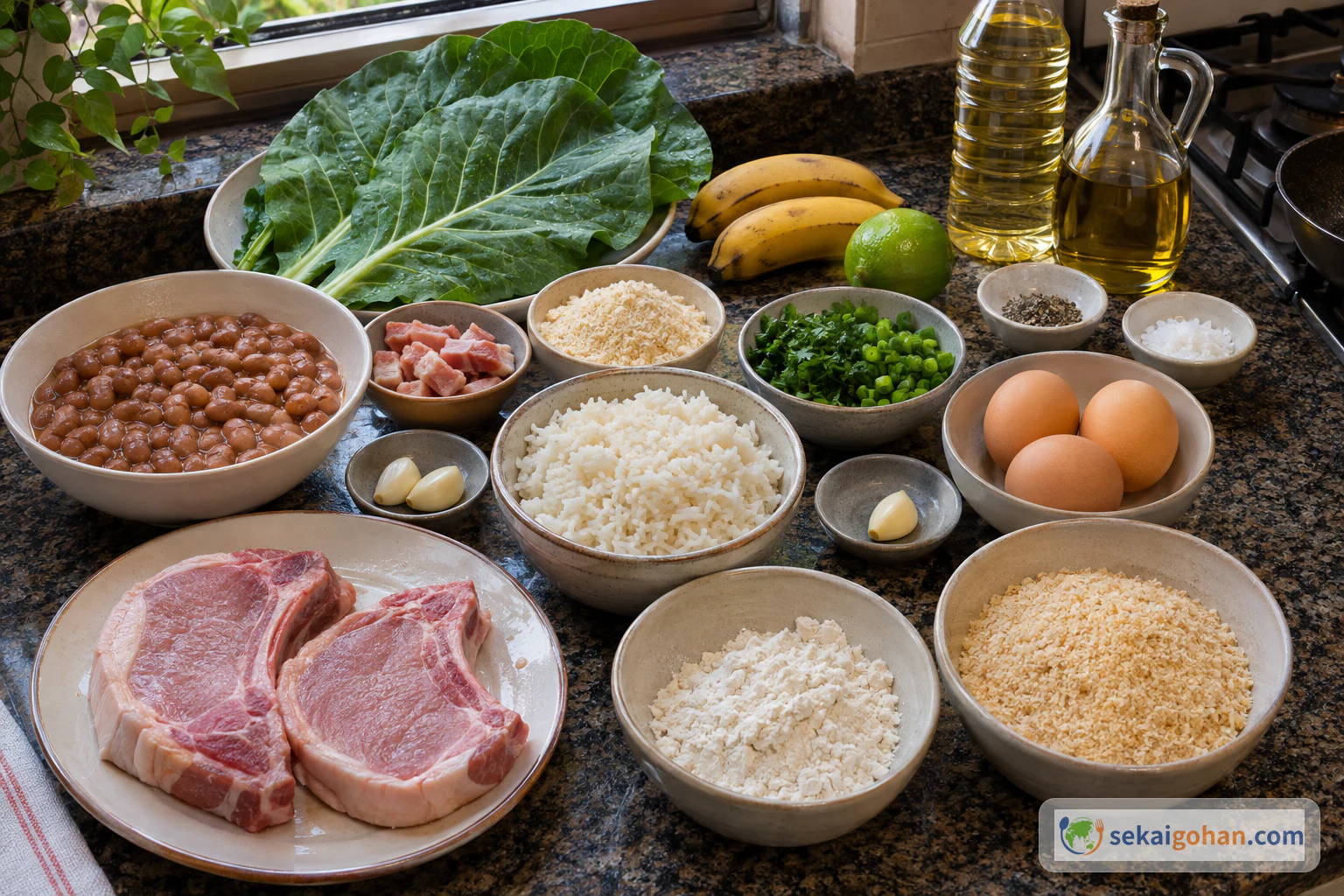
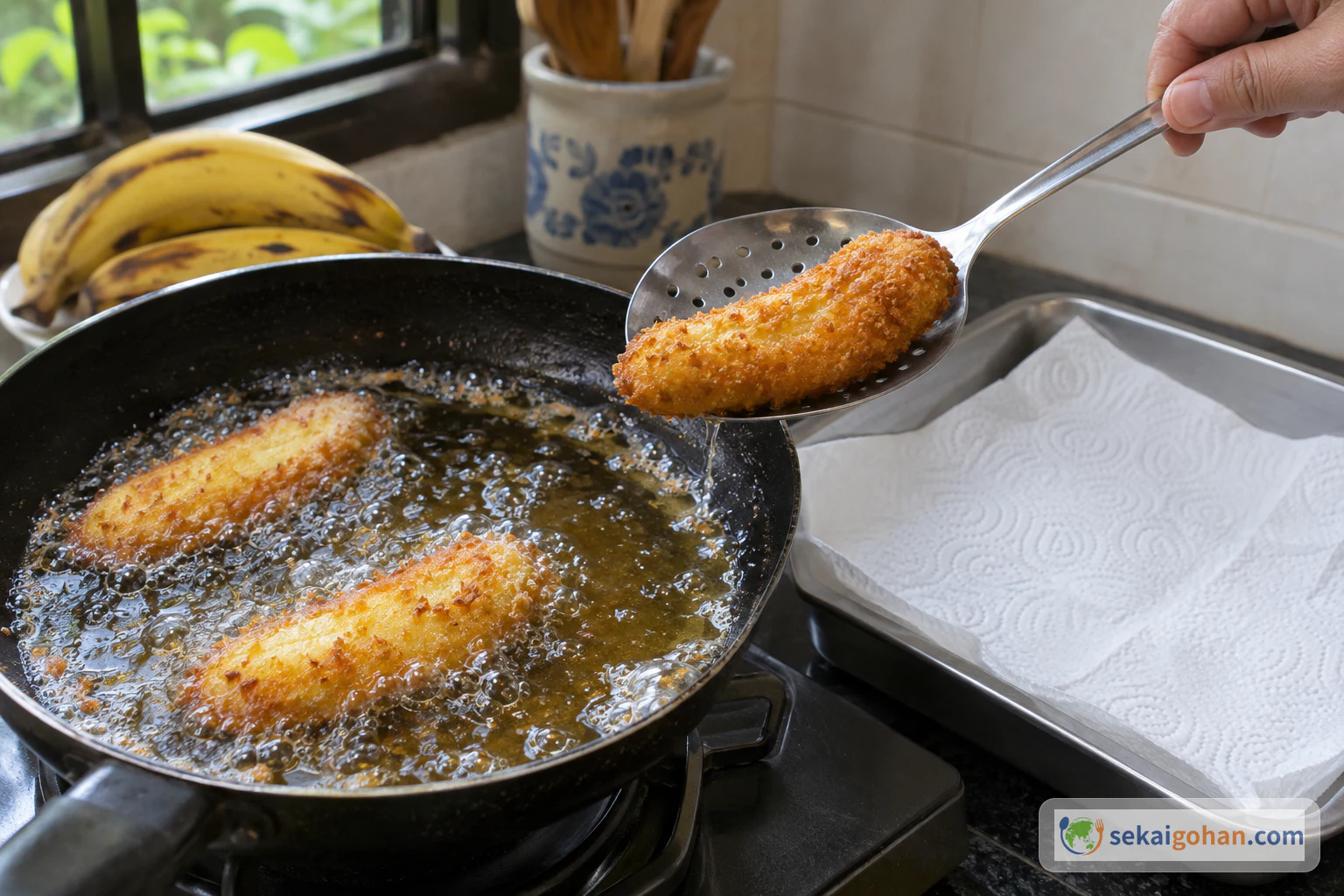
Use small, firm bananas that are a little green and not too sweet. Ripe, soft bananas turn to mush inside the crumb and soak up oil. Firm ones come out tender inside and keep their shape on the plate.
This plate contains wheat (flour, breadcrumbs), egg and pork (bacon, chops). Frying oil is often soybean oil. No dairy goes into the recipe, but check the labels on the breadcrumbs and bacon for milk and other allergens.
Equipment
- Frying pan and wooden spoon for the tutu
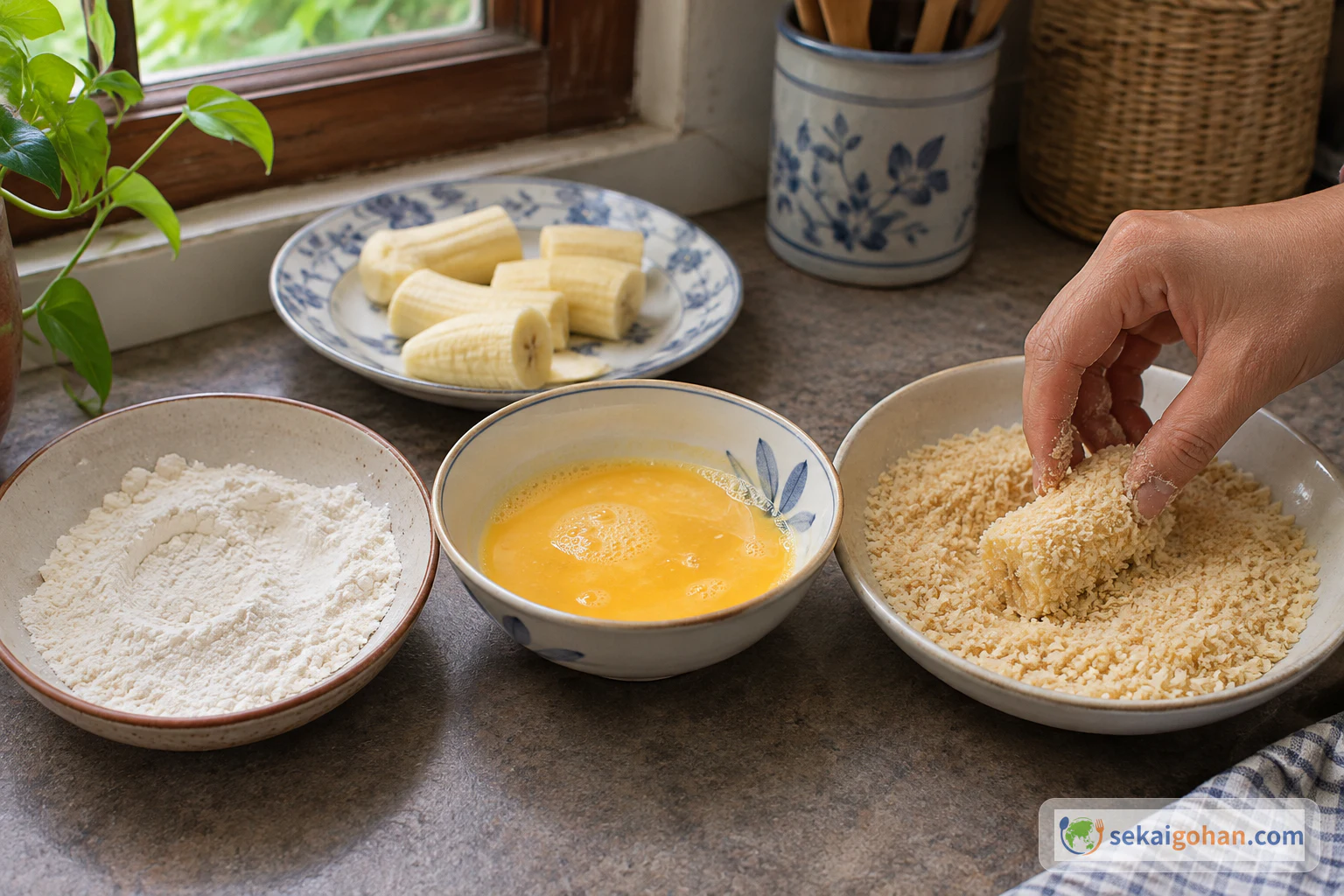
- Three shallow dishes for flour, beaten egg and breadcrumbs
- Small frying pan for the bananas, a slotted spoon, and a plate lined with paper towels
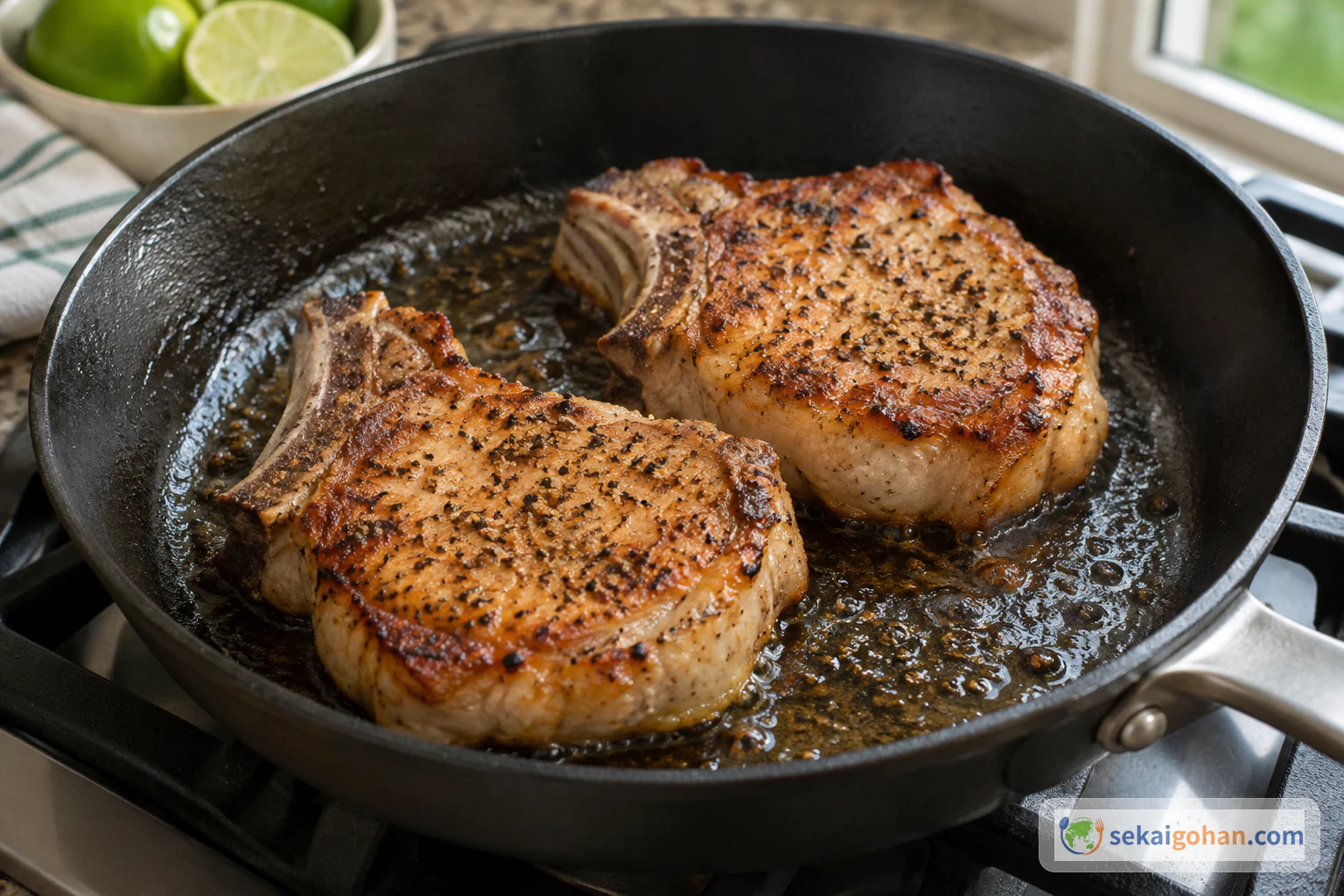
- Skillet for the pork chops
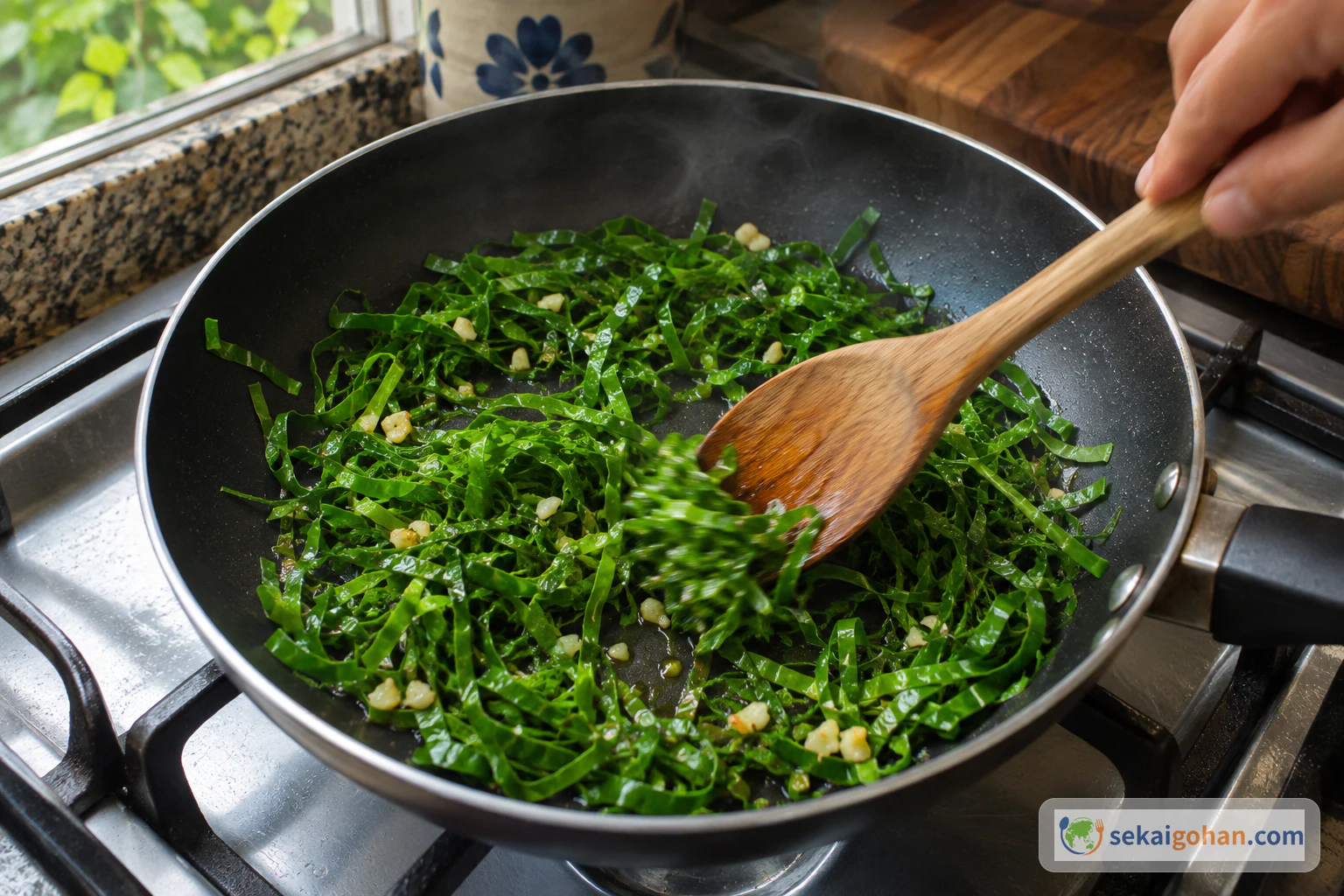
- A separate frying pan for the couve (and the eggs afterwards)
- Pressure cooker, if you cook your own beans from dry
Choosing and substituting
The one ingredient to look for is farinha de mandioca, a coarse, dry cassava meal sold at Brazilian and Latin American grocers and online. It is not tapioca starch and not goma, the wet starch used for tapioca crepes. Tapioca starch changes the taste of the tutu. Cornmeal also works as a thickener, but it moves the dish toward the version made with farinha de milho, which uses a different mix and gives a grainier, corn-flavored tutu.
Carioca beans are light brown and fall apart easily, which is why they cream so well. Abroad, use canned pinto or red kidney beans and drain them so very little liquid is left. Red kidney beans keep more of their skin and give a darker, chunkier tutu.
Couve is collard greens. If you can't find collards, use the tender kind of kale sold for salads, not the tough kind sold for juicing. Komatsuna is softer in fiber than kale and wilts faster, so it gives a silkier side. Cheiro-verde is just chopped parsley and scallion mixed together, so any supermarket has it.
Method
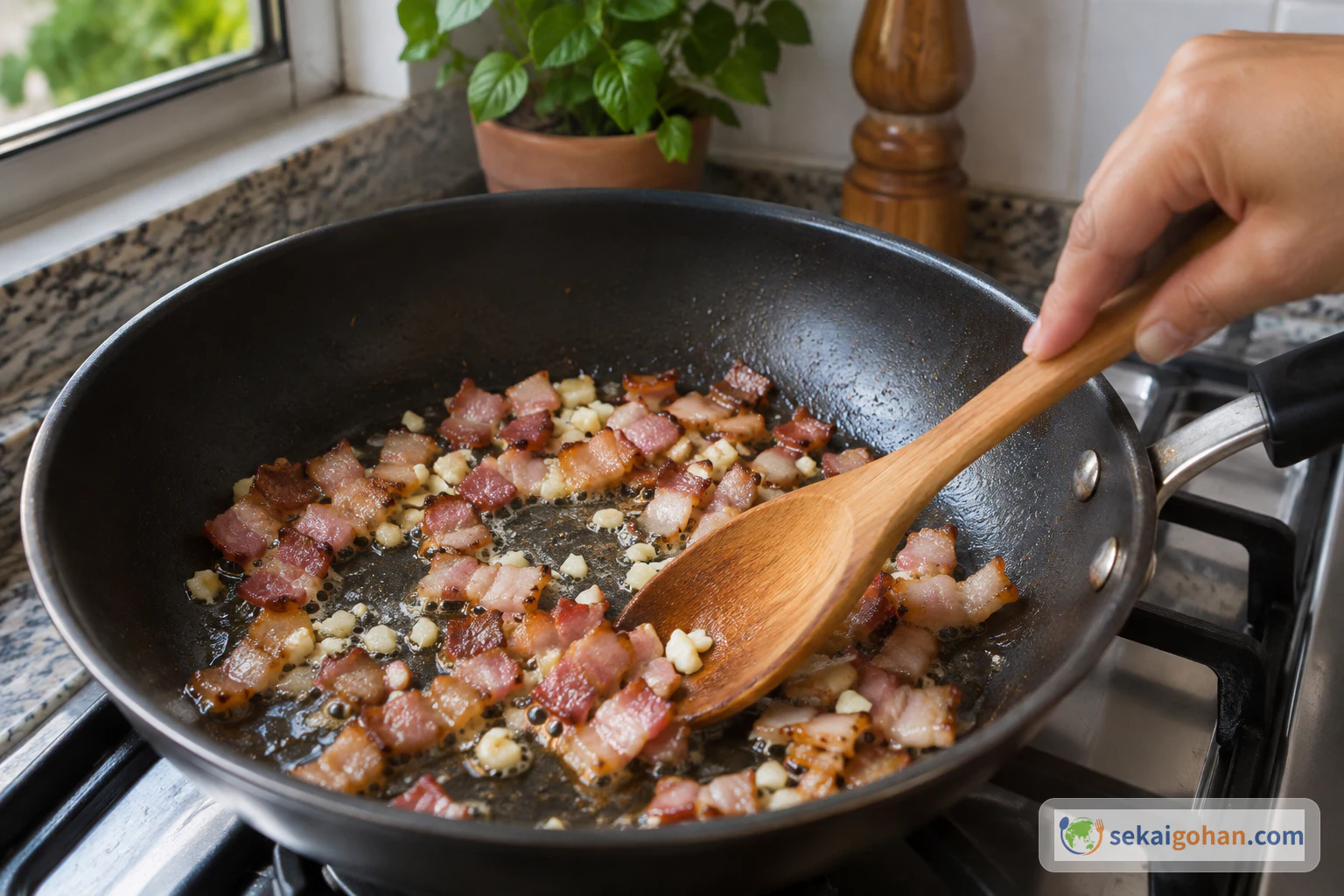
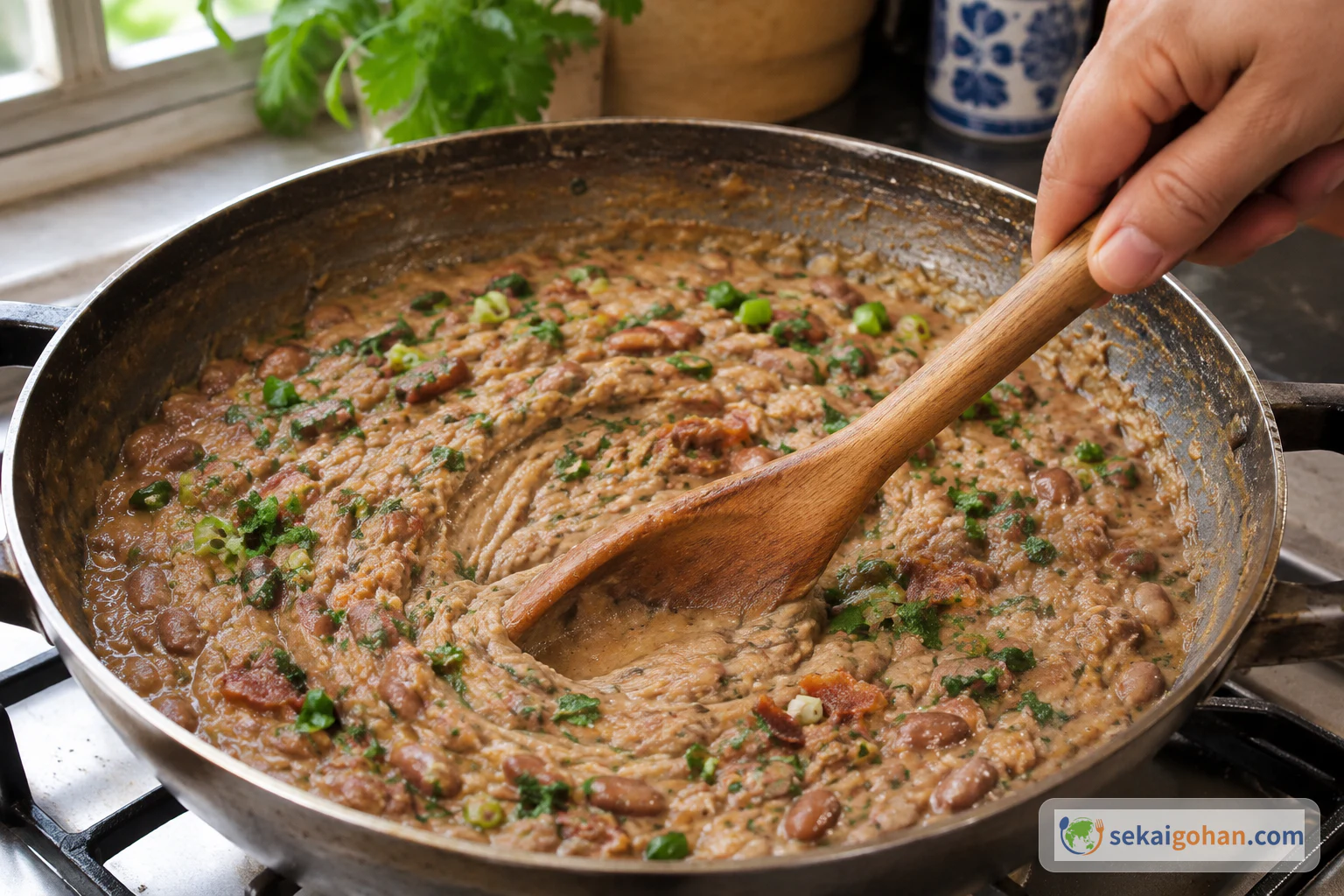
Make the tutu first. It holds well off the heat while you fry the bananas, brown the pork and sauté the couve. Fry the eggs last, right before plating. There is about 15 minutes of prep and 25 minutes at the stove, and the only hands-off moments are while the chops brown.
When it goes wrong
| What you see | Why | What to do |
|---|---|---|
| Tutu is runny and spreads across the plate | Too much bean liquid went in | Stir it longer over the heat to cook it down, or add a little more farinha |
| Tutu is stiff and pasty | Too much meal, or it sat on the heat too long | Loosen it with a spoonful of bean liquid off the heat |
| Bananas are greasy and pale | The oil was not hot enough, or too many pieces went in at once | Let the oil reheat between batches and keep to three pieces at a time |
| Crumb slides off the banana | Bare spots in the egg layer | Coat each piece fully in flour, then egg, before the crumbs |
| Chop is brown outside but not done at the bone | The heat was too high for the thickness | Turn the heat down and keep cooking until the center is cooked through |
| Couve is dark and limp | Cooked too long | Take it off as soon as it wilts and is still bright green |
Serving, variations and storage
At the table
Put everything on one plate and eat it together. A bit of tutu, banana and pork in one bite is how the plate is meant to taste. Hot pepper (pimenta) goes on the side, so each person adds as much heat as they like.
Variations
- Linguiça and torresmo. For the full plate from the heritage listing, add one linguiça and about 1¾ oz (50 g) of torresmo per person. Cook them separately. The sausage adds a garlicky, smoky meat, and the cracklings add crunch and more salt.
- Beans from dry. Cook dried beans in a pressure cooker with a bay leaf and a piece of bacon rind, then use them with little liquid. The tutu tastes deeper and porkier than one made from canned beans.
- Pancetta in place of bacon. This gives the tutu its pork fat without the smoke, so it tastes cleaner.
Storage
Leftover tutu keeps. Cool it, then refrigerate it promptly in a covered container, and reheat it until it is hot all the way through. Fry the bananas and cook the pork, couve and eggs fresh, just before you eat.
Frequently asked questions
Why is virado eaten on Mondays?
It is the custom. São Paulo lunch counters serve virado as the Monday prato do dia, and many people still connect the plate with the start of the week. When the custom began is not settled.
How is it different from tutu à mineira?
Tutu à mineira, the Minas Gerais style, is a separate dish. In virado à paulista, the tutu is one part of a full plate with rice, pork chop, banana, couve and egg around it. The heritage listing protects that whole combination.
Can I leave parts of the plate out?
Yes. The oldest form was just beans, farinha and pork fat, and everything else was added over time. Keep the tutu, made with pork fat and thickened with farinha. Then add as many of the sides as you have time for.