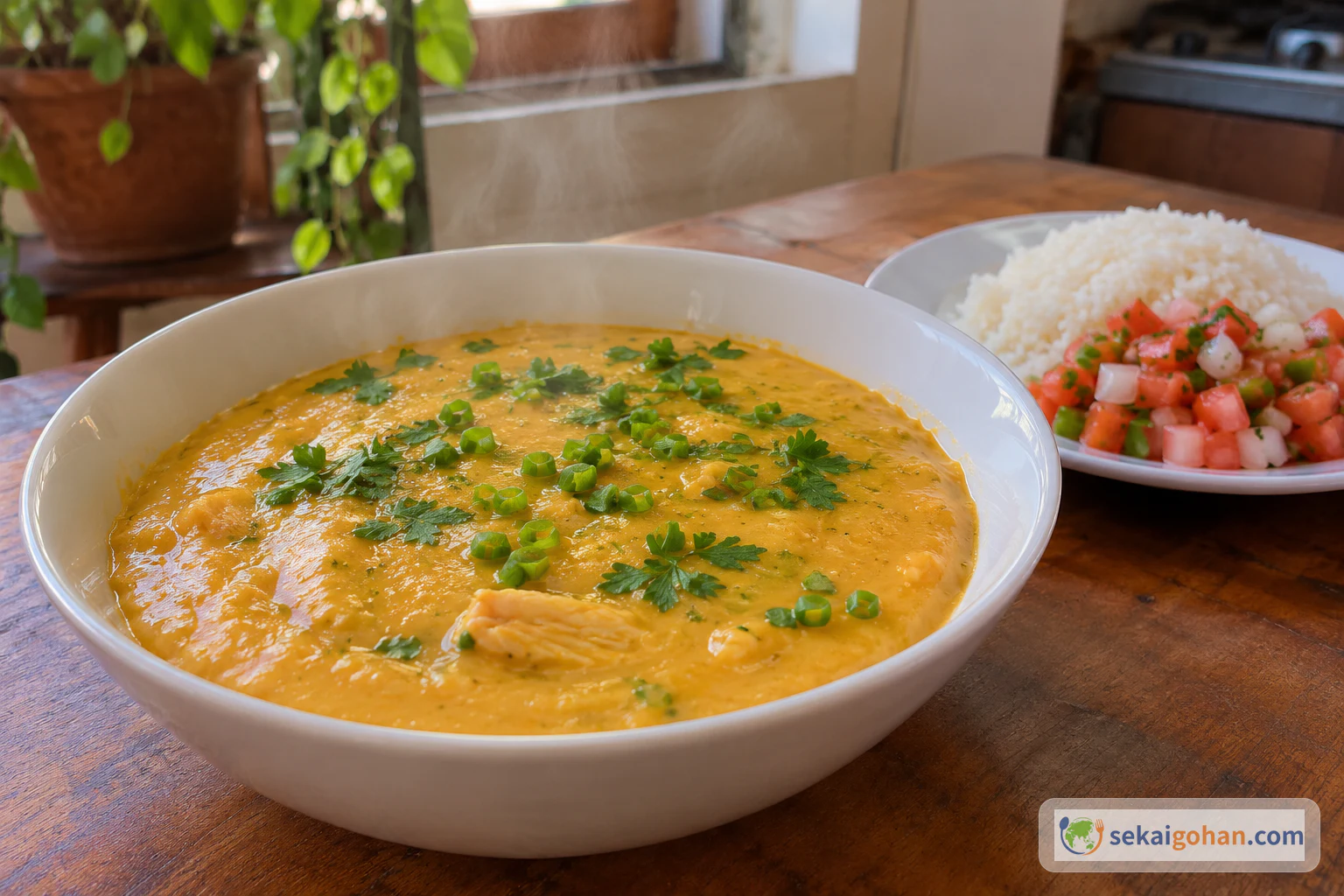
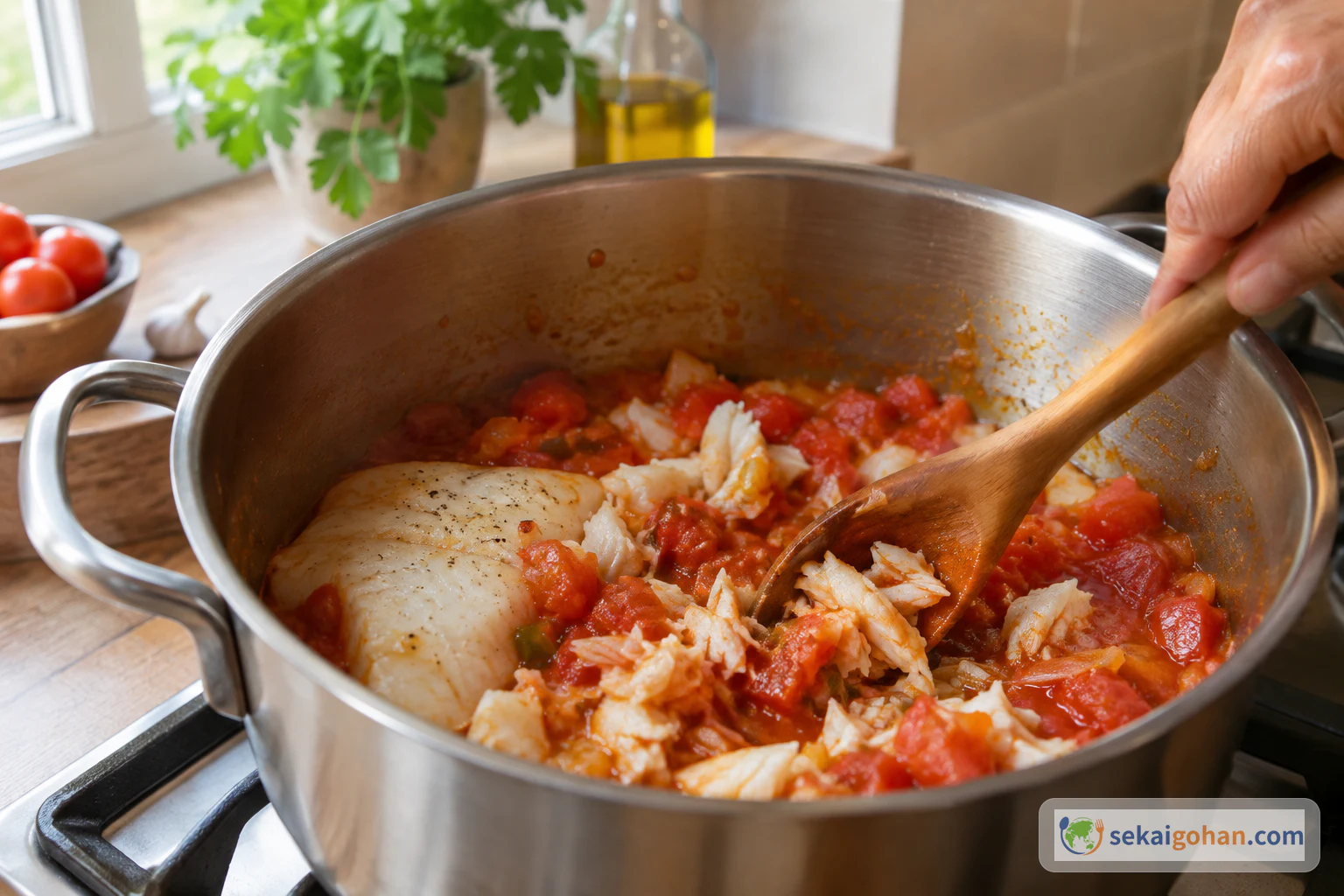
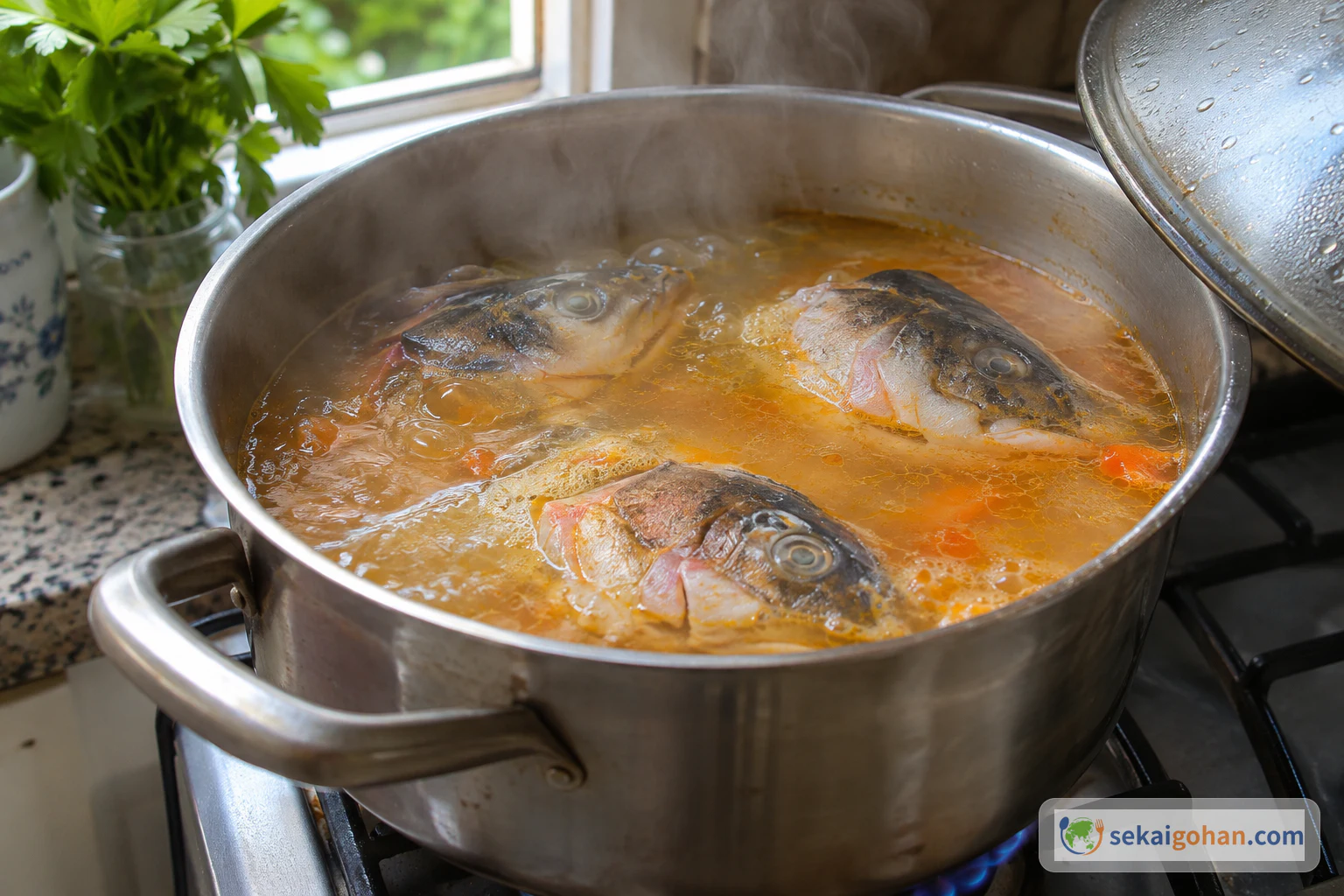
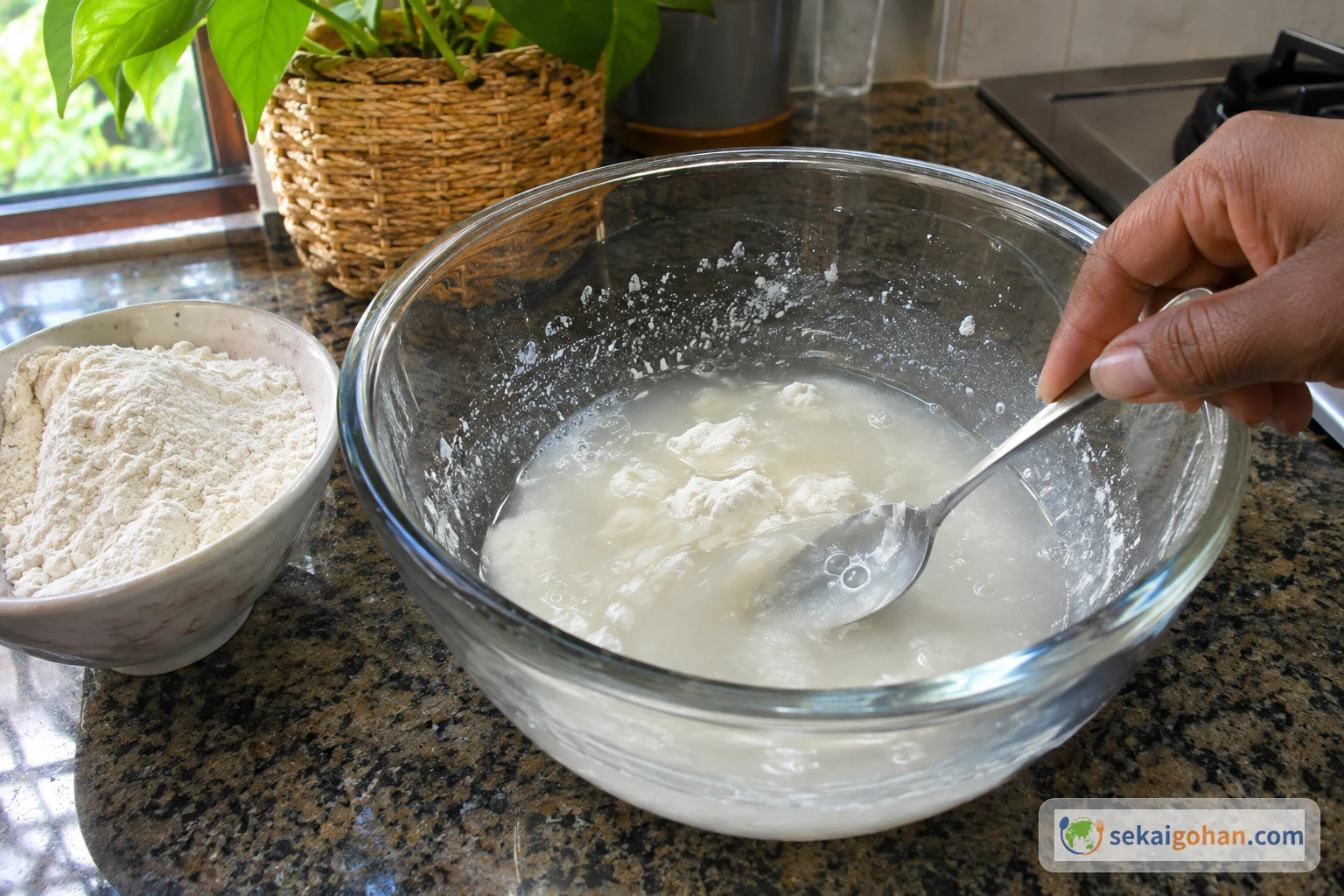
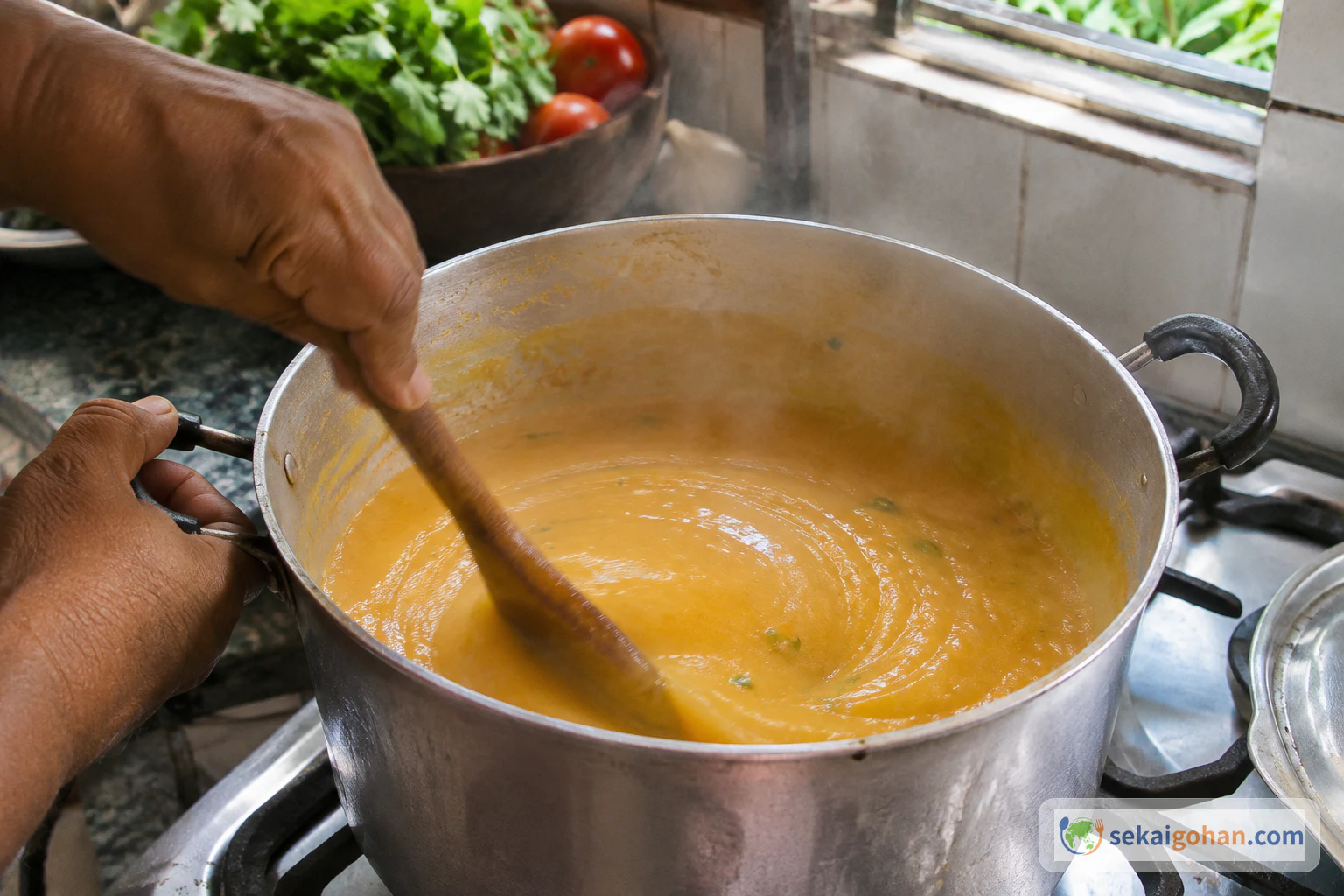
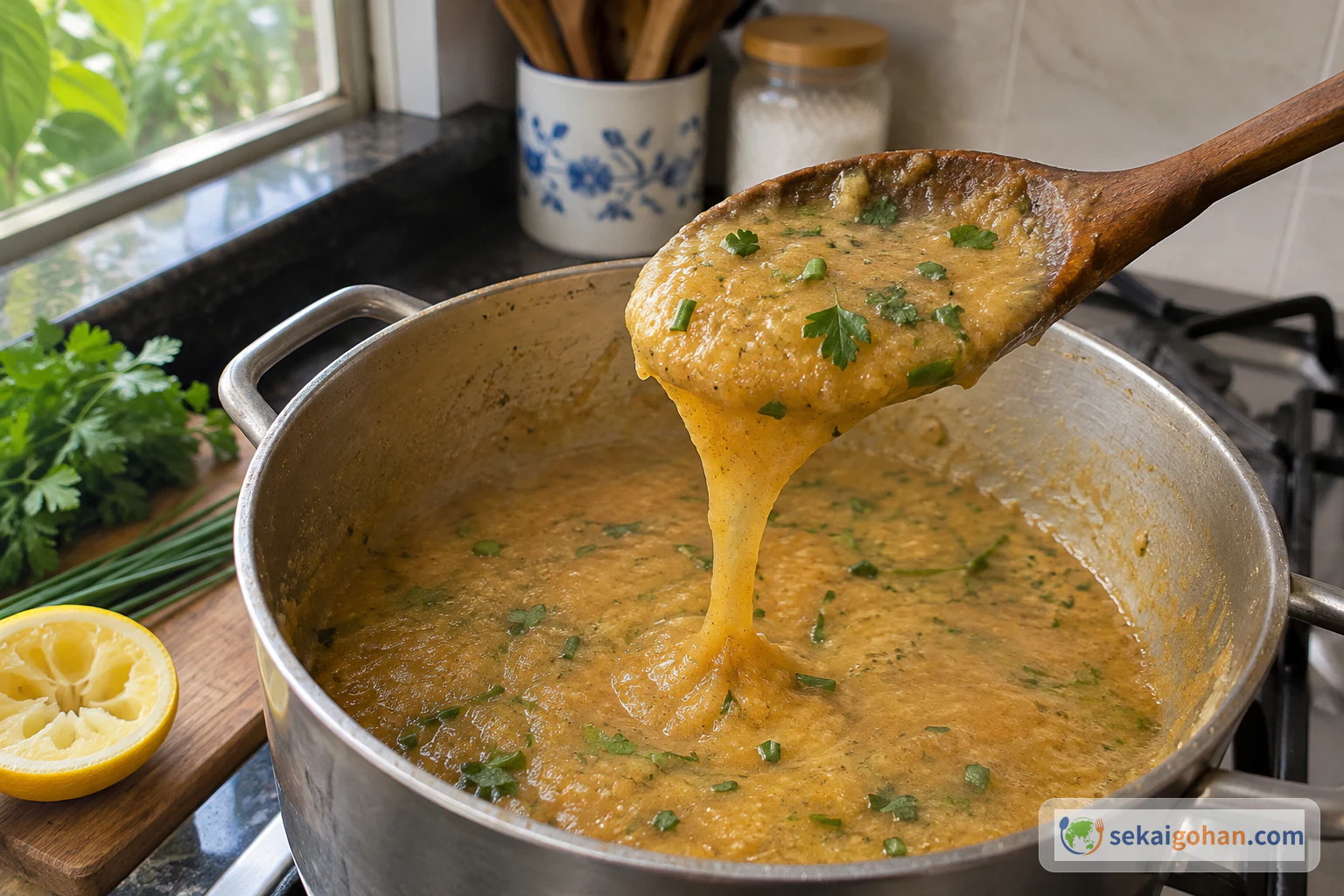
The milky flour-and-water mixture goes into a pot of pale orange fish broth, and for a minute nothing seems to happen. Then the spoon starts to drag. The broth turns glossy and heavy, and by the end of the stirring it falls from the spoon in a slow, thick ribbon. That is pirão: fish broth, made from the heads as well as the fillet, thickened with cassava flour into a soft, spoonable porridge. It tastes of the sea, of sweet onion and tomato, with lemon and green herbs stirred through at the last moment. In Brazil it goes on the table beside the fish, the rice and the sharp tomato salsa, and everyone spoons a little onto their plate.
A Pot That Uses the Whole Fish
Pirão is built on getting everything out of a fish. The heads go into the broth with the fillet, the fillet is stirred until it falls apart, and the broth is not served as soup. Cassava flour is cooked into it until the whole pot turns into something you can put on a plate. What comes out has the depth of a long-cooked fish stock and the body of a porridge, and that is why a small spoonful sits so well next to a piece of fish and a mound of white rice.
It is a side dish, not the main event. On a Brazilian table pirão keeps company with fish stews such as moqueca, with white rice, with vinagrete (the chopped tomato-and-onion salsa) and with a bottle of homemade pepper sauce. It is filling, so the rest of the plate stays light: salad, vegetables, a little seasoned farofa. For more of the country's cooking, the Brazil page gathers the other dishes.
Region by region
The method changes as you move along the coast. In Bahia, pirão is made from the cooking liquid of the moqueca itself, so the side dish tastes like the stew it sits beside. In Ceará, cooks add coconut milk, colorífico and wheat flour. Inland and in the river country, freshwater fish such as pintado and tambaqui take the place of sea fish. Each household picks the fish it trusts, and everywhere the one rule is that the fish must be fresh.
Where it began
Cassava is older in Brazil than the Portuguese. Indigenous peoples grew it before the Portuguese arrived, and the newcomers learned from them how to use the root. Where pirão itself was first made is not settled. Some trace it to Indigenous cooking with cassava, others see a link to Africa, where very similar dishes are made.
Pirão is often set beside African dishes such as funge, fúngi and mfundi, which resemble it. Among these, pirão is the one built on fish broth and cassava flour.
Ingredients
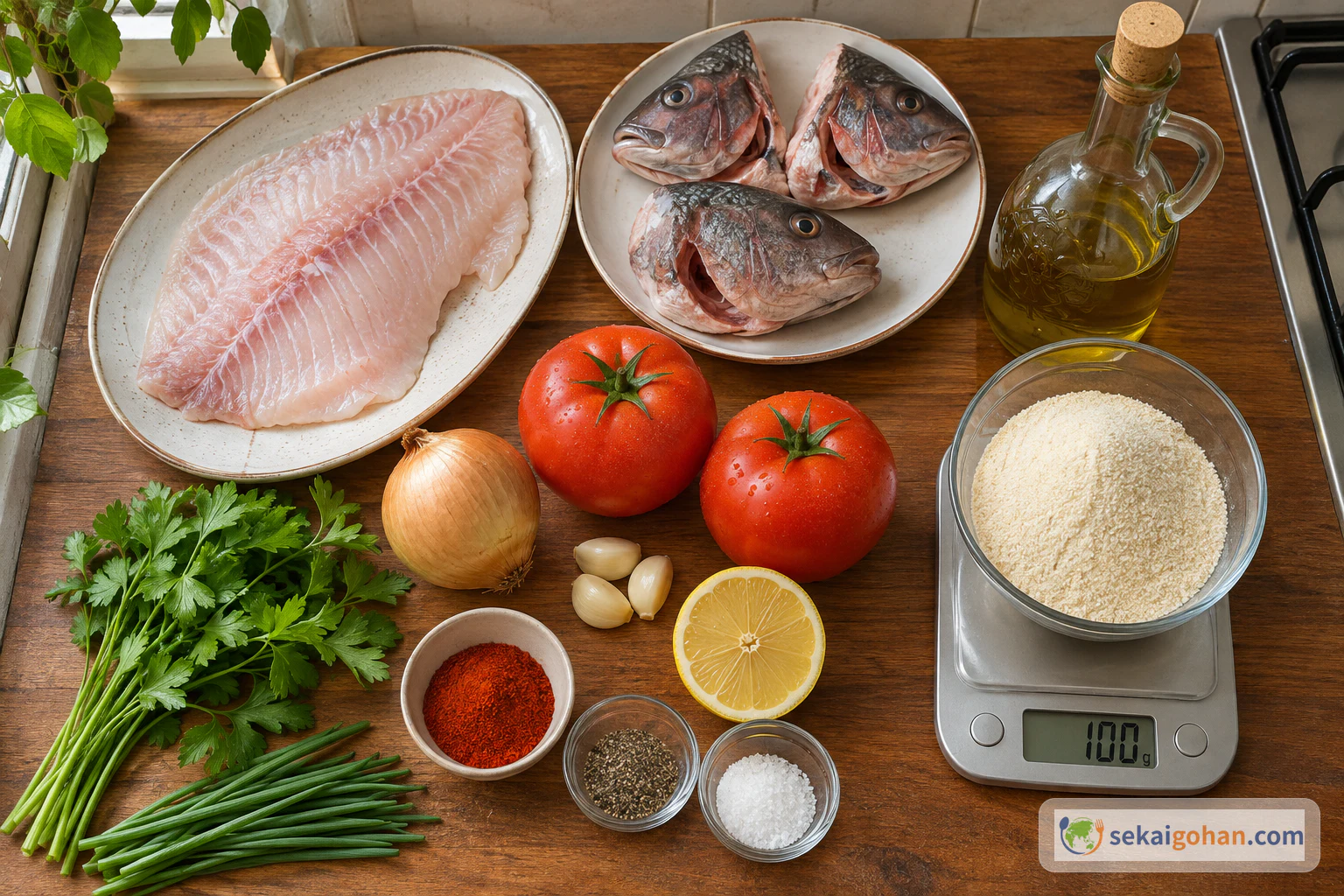
Buy fine farinha de mandioca. The finer the flour, the smoother and silkier the porridge. Coarse flour makes a grainier pot.
Contains fish. If you finish with butter, it contains milk. Use fresh fish and fish heads from a fishmonger you trust.
Equipment
- Large pot
- Wooden spoon
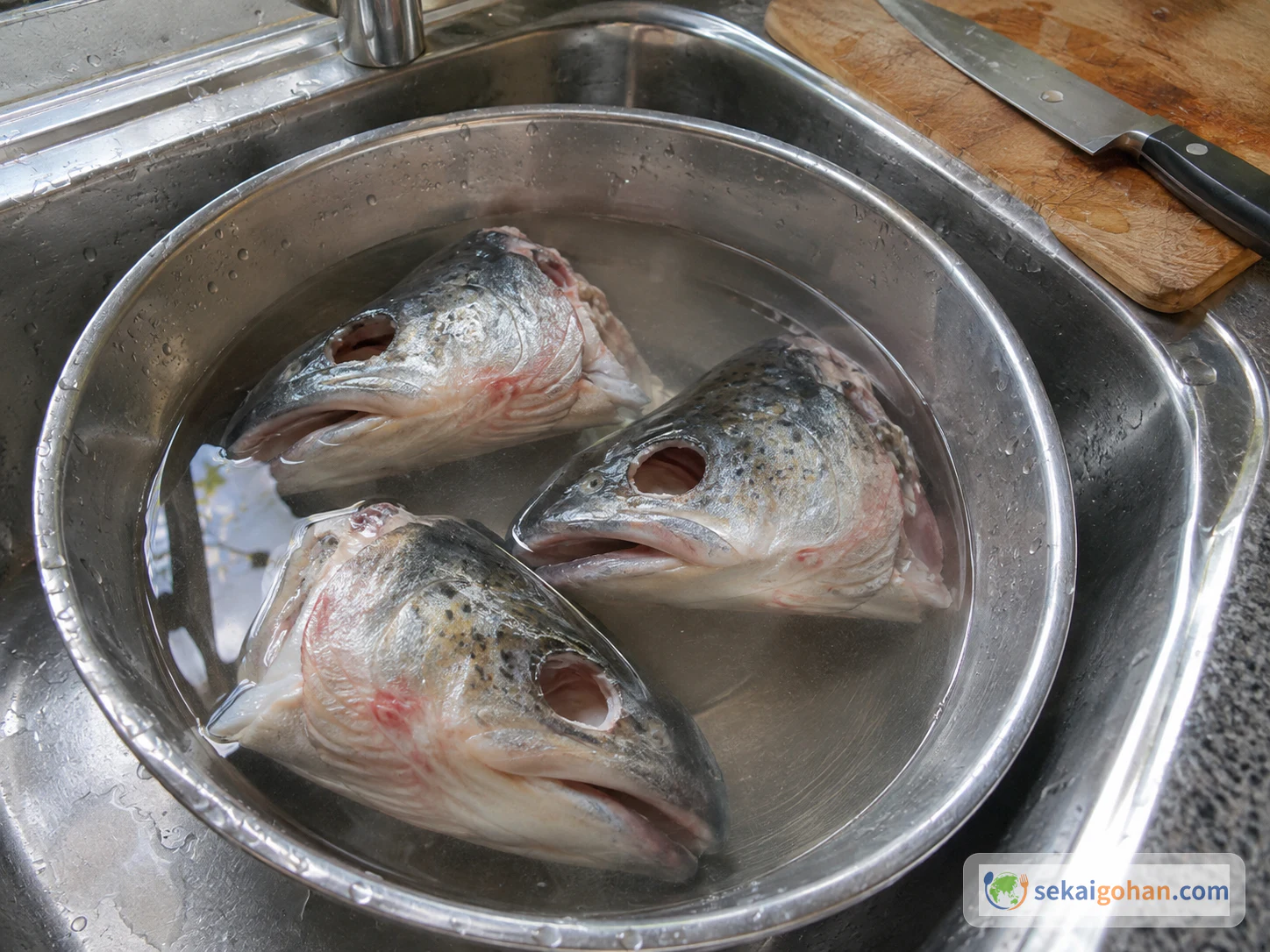
- Bowl for soaking the fish heads
- Bowl for mixing the flour with cold water
- Knife and cutting board
Choosing the Fish and the Flour
The flour is the one thing worth a trip to a Brazilian or Latin American grocer, or an online order. Look for farinha de mandioca and read the description: Brazilian shops sell both a coarse, toasted cassava flour, the kind used for farofa, and a fine one. For pirão you want the fine one. Tapioca starch, the pure white powder sold for baking and bubble tea, is a different product, so keep it for other recipes.
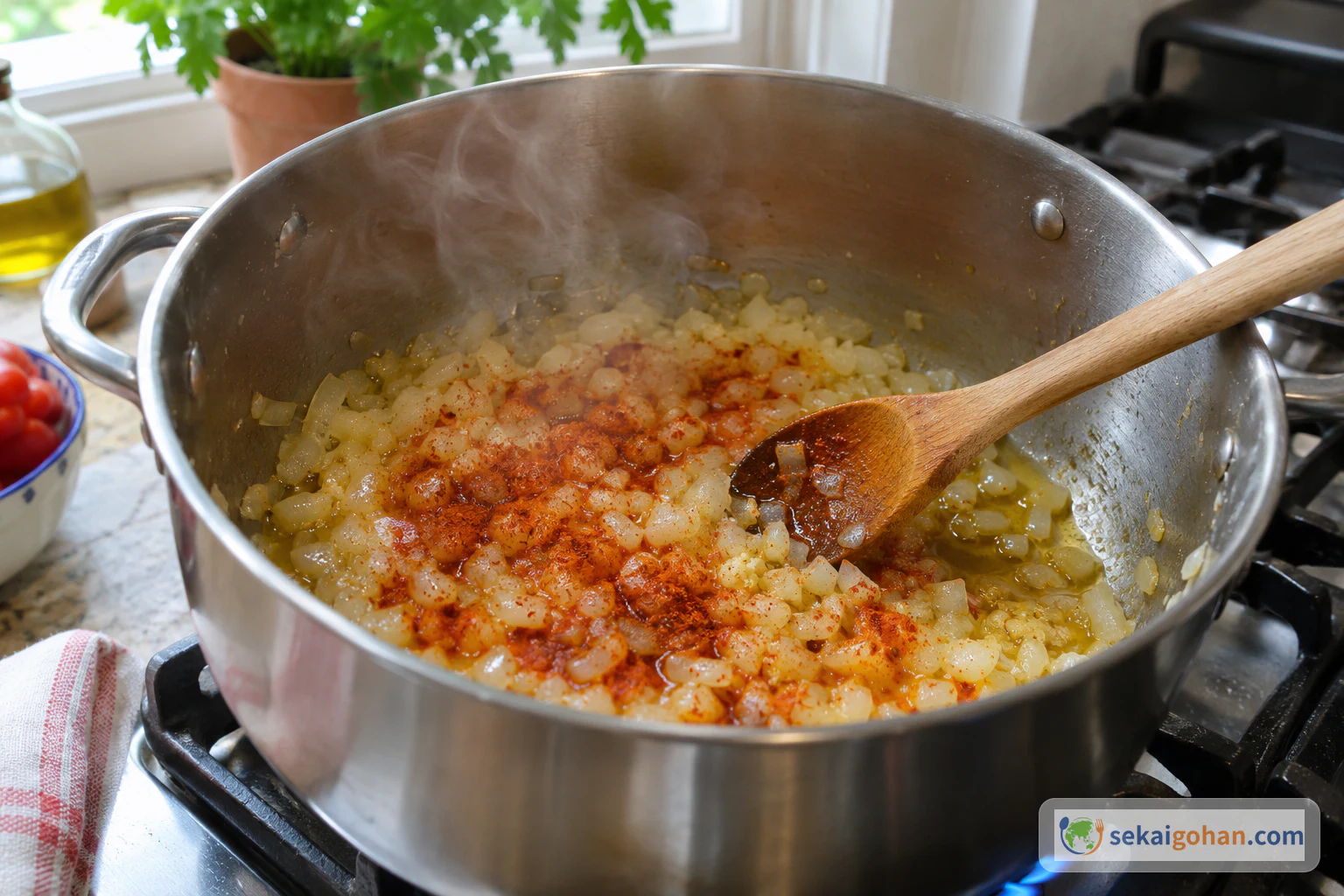
Fish is easier. Brazilian cooks use grouper, hake, snook and tilapia from the sea and lagoons, and pintado or tambaqui from the rivers. At home, any mild, lean white fish does the job. Cod, sea bream and sea bass give a clean broth, and tilapia fillets are sold everywhere. Ask the fishmonger for heads from the same kind of fish (fish frames or "fish heads for stock"). Parsley and chives are easy to find, and so is sweet paprika. Make sure it is the sweet kind and not hot or smoked.
Method
Start with the fish heads, because they soak for an hour while you chop everything else. After that the work is short: a few minutes of frying, then a 20-minute simmer you can walk away from. The last part needs you at the stove. Once the flour goes in, you stir without stopping until the pirão is ready.
Pirão firms up as it cools. Serve it while it still flows slowly from the spoon, and it will be soft and spoonable on the plate.
When It Goes Wrong
| What you see | Why | What to do |
|---|---|---|
| Lumps in the pot | The flour went in too fast, was not fully mixed with the cold water, or the stirring stopped | Keep stirring hard and press lumps against the pot wall. Next time, mix the flour completely with cold water and pour slowly |
| Stiff, holds its shape | Too much flour for the broth, or it has stood and cooled | Loosen with hot broth, a splash at a time, until it falls slowly from the spoon again |
| Thin and soupy | The stirring stopped before the flour had fully cooked into the broth | Keep it on the heat and keep stirring for the full stirring time. It thickens as it goes |
| Strong fishy smell | The fish or heads were not fresh enough | Add the lemon juice and herbs. Next time, buy the freshest fish you can find |
| Dull and flat | Too little salt, or no fat at the end | Salt a pinch at a time, and stir in olive oil or butter just before serving |
Serving, Variations and Storage
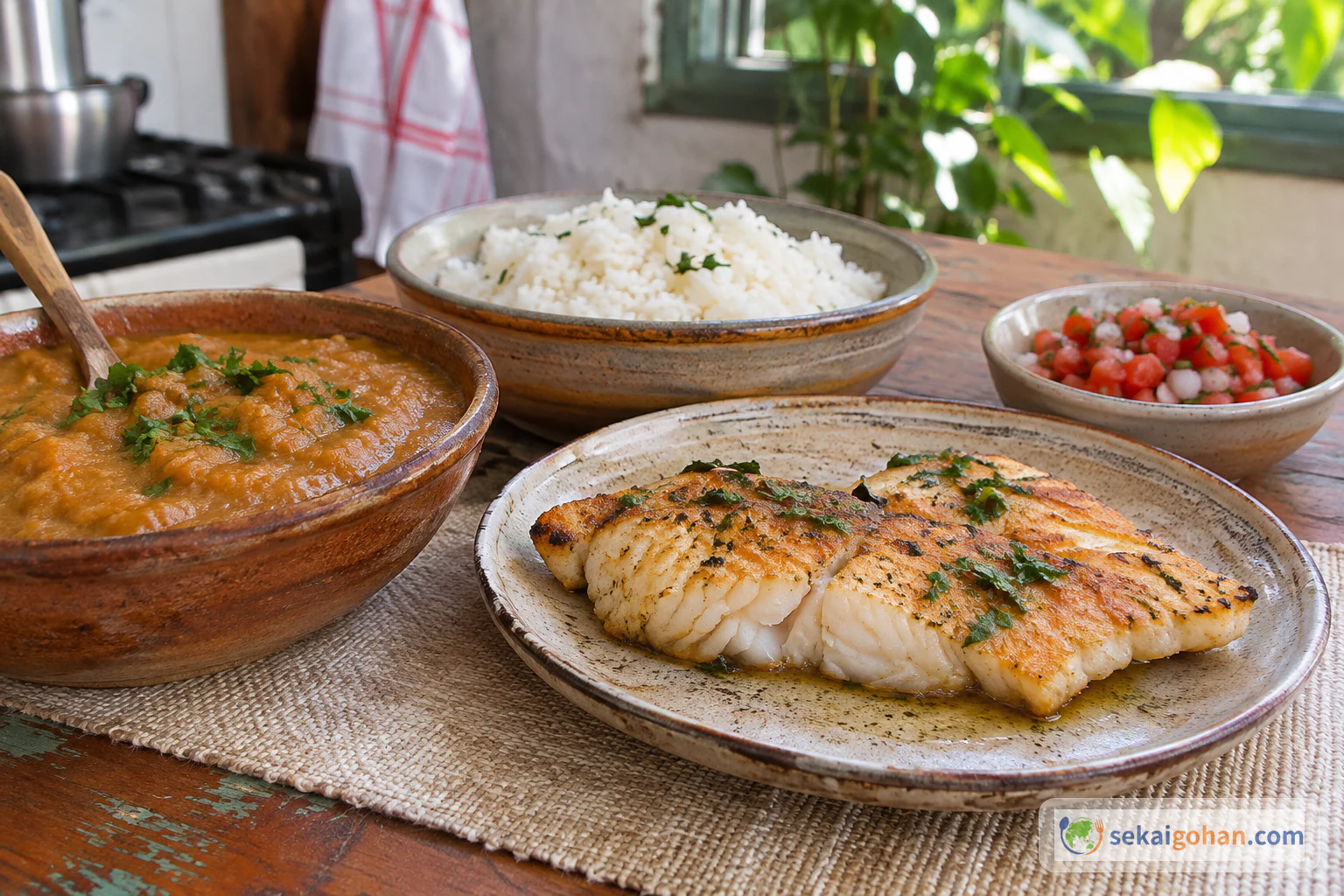
Set pirão out in a bowl with white rice, vinagrete and fish, and pass the pepper sauce. Moqueca is the classic partner, but grilled or pan-seared white fish works just as well. Because pirão is rich and filling, the other sides stay light: a green salad, boiled vegetables, a spoonful of seasoned farofa.
Variations
- From moqueca liquid (Bahia). Take about a glass of the moqueca cooking liquid. Add 2 tbsp tomato paste, cilantro and a glass of water, then add cassava flour a little at a time while stirring. The pirão takes its flavor from the stew's cooking liquid.
- Coconut (Ceará). Coconut milk, colorífico and wheat flour go into the pot. This is the Ceará style.
- Big batch with dendê. For about ten people, cook 10½ oz (300 g) fish in 2 quarts (2 L) water in a pressure cooker for 40 minutes, then strain. Whisk 9 oz (250 g) cassava flour gradually into the broth while it is still cold. Bring it to a boil over medium heat and cook for 10–15 minutes more. This version adds 6 tbsp dendê oil, colorau and a shrimp bouillon cube, and you can use olive oil in place of the dendê.
Storage
Pirão is best on the day it is made. Cool leftovers, then refrigerate them promptly in a covered container and eat them soon. Reheat until steaming hot all the way through, loosening the pirão with a little hot water or broth as it warms.
Frequently asked questions
Can I use tapioca starch instead of cassava flour?
Use farinha de mandioca, the flour this recipe is written for. Tapioca starch is a different product, so do not treat the two as interchangeable.
How is pirão different from farofa?
Both are made from cassava flour. Farofa uses the coarse, toasted flour, fried with fat and seasonings and served dry and crumbly. Pirão uses the flour as a thickener, cooked into fish broth until it turns to soft porridge. They often share a table.
Can I make the broth in a pressure cooker?
Yes. For the large batch, cook the fish in the pressure cooker, strain the broth, whisk the flour into it while it is cold, and then bring it to a boil. The pressure cooker saves time on the broth. The thickening still happens in an open pot, with the spoon in your hand.