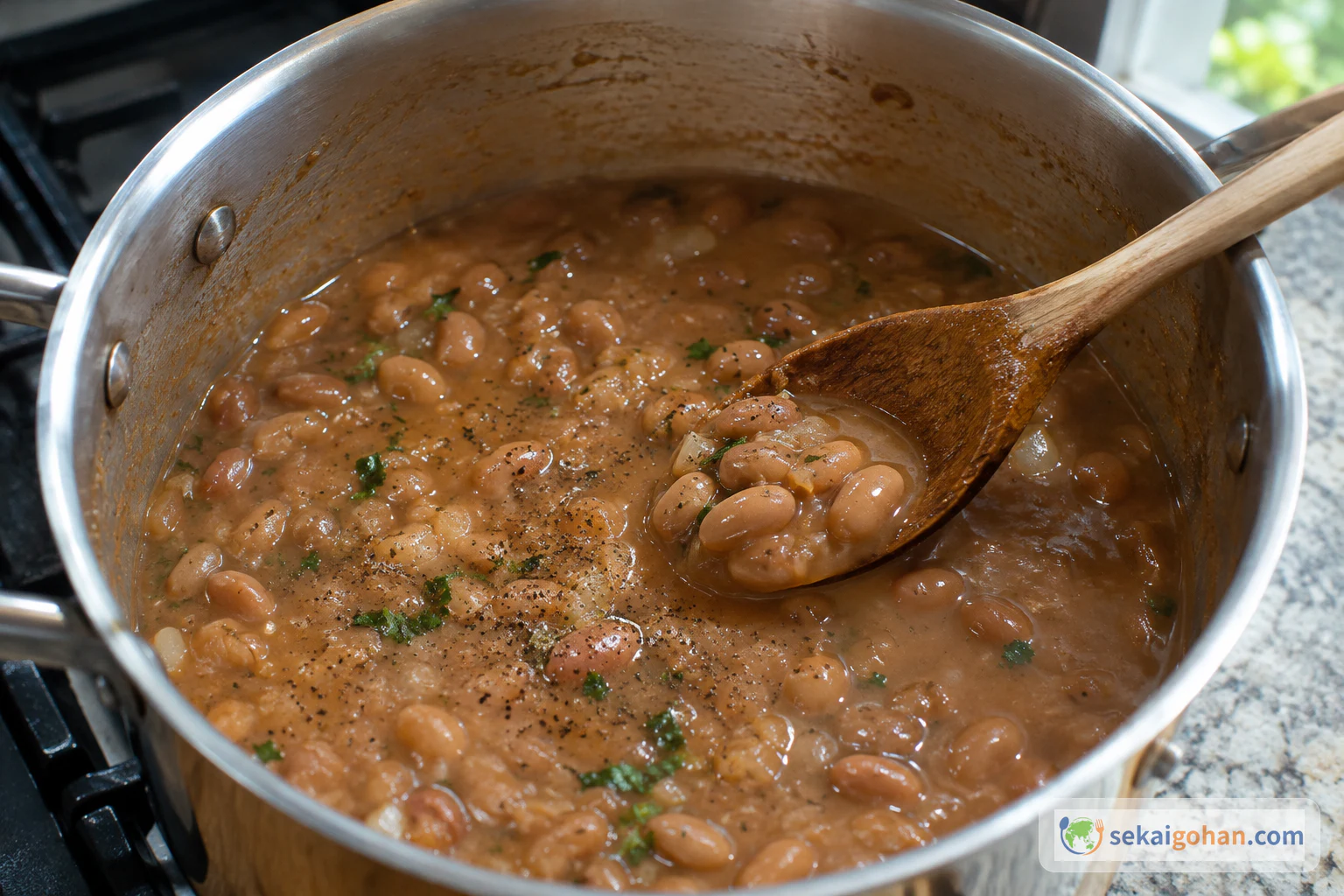
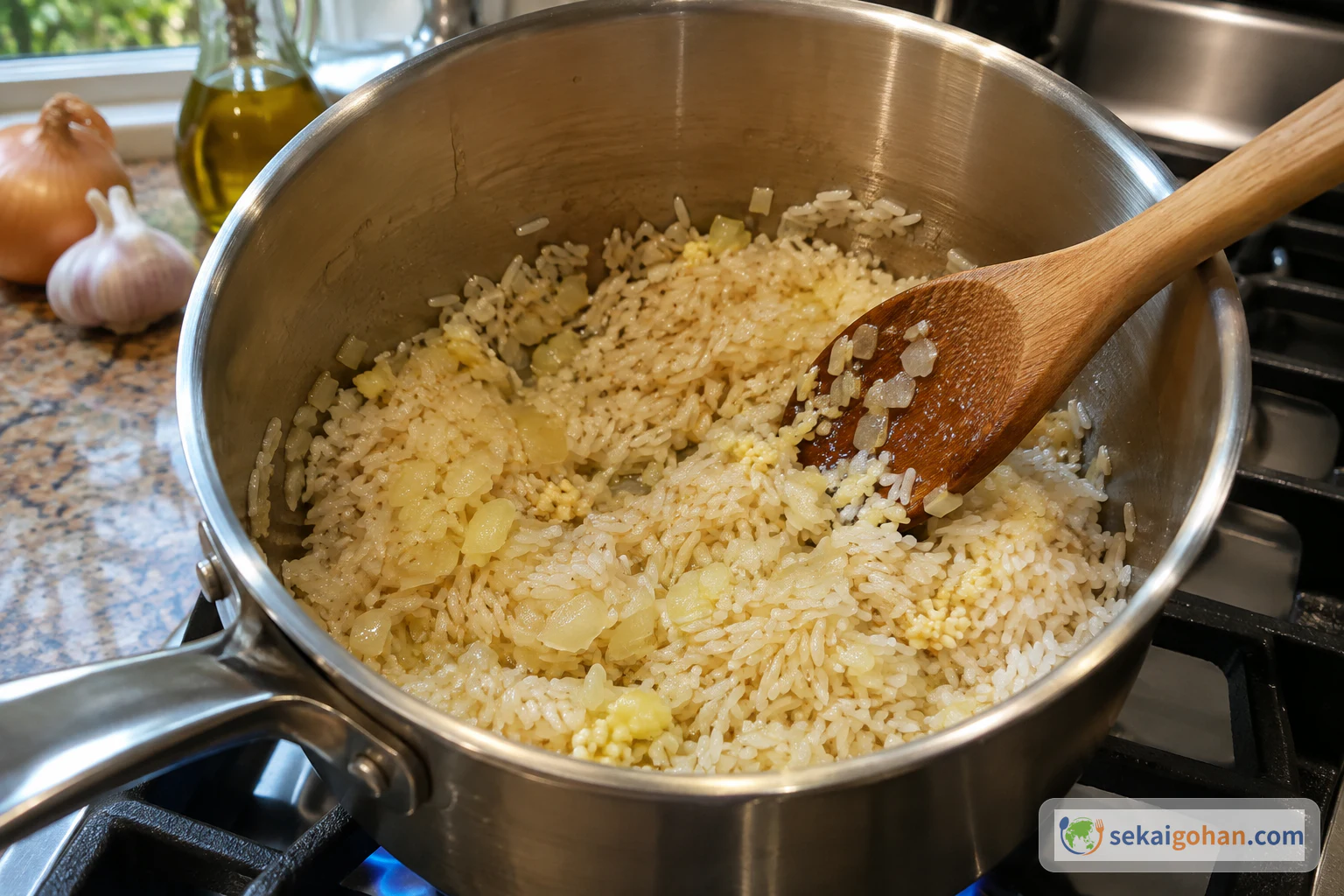
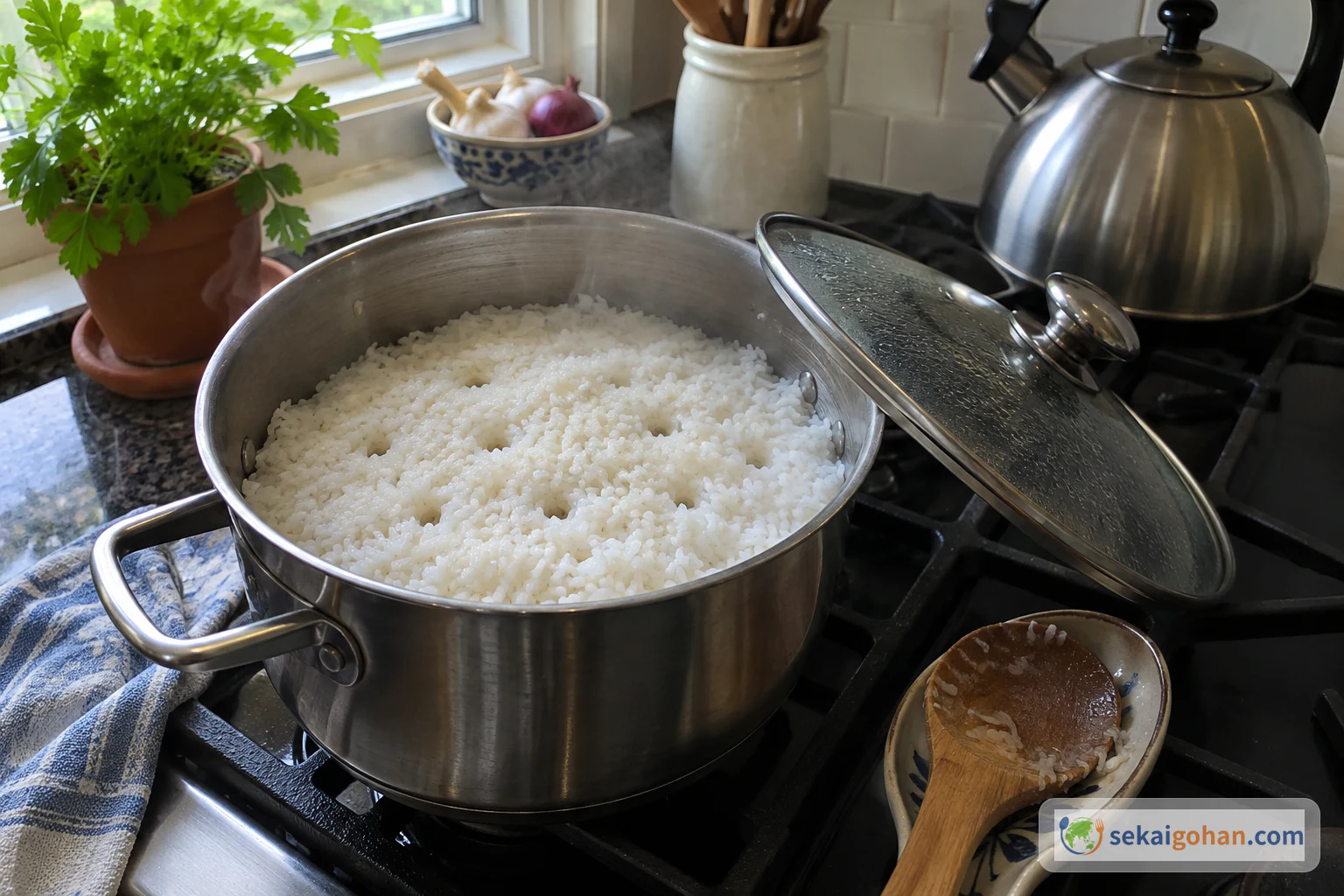
The pressure cooker stops hissing, and you wait for it to settle on its own before you lift the lid. Inside, beige beans streaked with brown have gone soft in a thin broth that smells of bay. You mash a ladle of them into a pan of browned bacon, onion and garlic and stir it back into the pot. Ten minutes later the broth is thick and glossy. Next to it sits a pot of loose white rice, started in olive oil with garlic and onion.
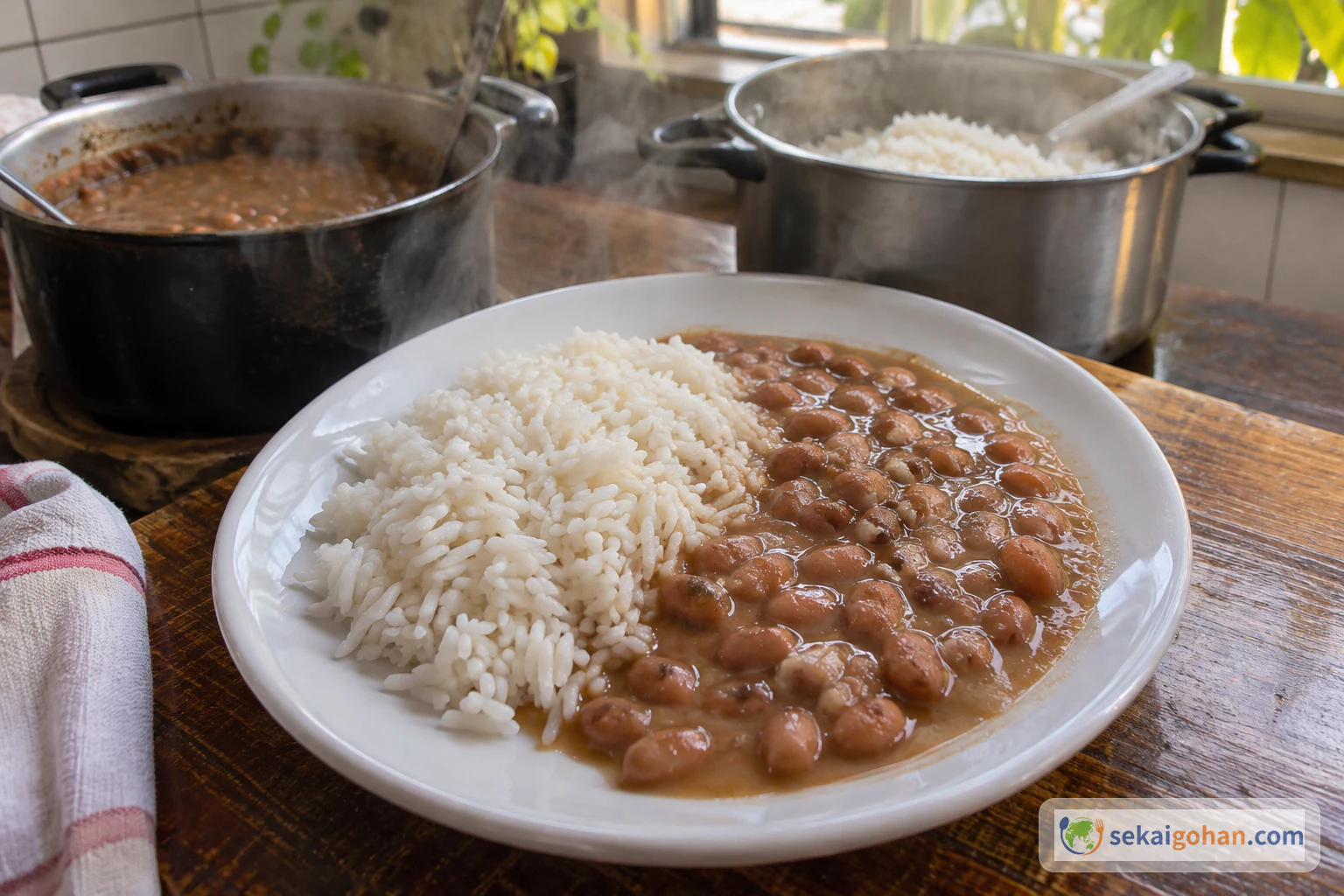
Together they make arroz e feijão, the rice and beans that fill an everyday Brazilian plate. The beans taste savory and a little smoky from the bacon, and the rice is plain enough to soak up the broth. It is mild enough to eat every day.
Two Pots, One Plate
In a Brazilian kitchen, rice and beans cook in separate pots and only meet on the plate. The white rice, arroz branco, is fried briefly in oil with garlic and onion and then steamed until the grains separate. The beans simmer in their own broth until it turns creamy. A serving is a mound of rice with beans ladled beside it, and the broth runs into the grains.
That separation sets it apart from its neighbors. Feijoada is a stew of pork and black beans. Baião-de-dois cooks the rice and beans together in one pot. Ghana's waakye also cooks the two together, and the Caribbean's rice and peas simmer them in coconut. Arroz e feijão keeps each pot simple, so the flavor of the beans and the plainness of the rice stay distinct until the spoon brings them together.
A Health Ministry food-and-nutrition policy official has called the pairing a healthy, complete combination, and it belongs to the ordinary run of meals rather than to special occasions. Even so, Brazilians are eating less of the staples. Bean consumption has fallen by 31%, rice by 23% and bread by 12%. As globalized eating wears away the cultural identity of traditional food, people are being urged to keep eating rice and beans. Find more of the country's cooking under Brazil.
Arroz e feijão is Portuguese for "rice and beans." Feijão-carioca is the beige bean with brown streaks used in this pot. Cheiro-verde, the optional finish, is a bunch of fresh green herbs added at the end.
Ingredients
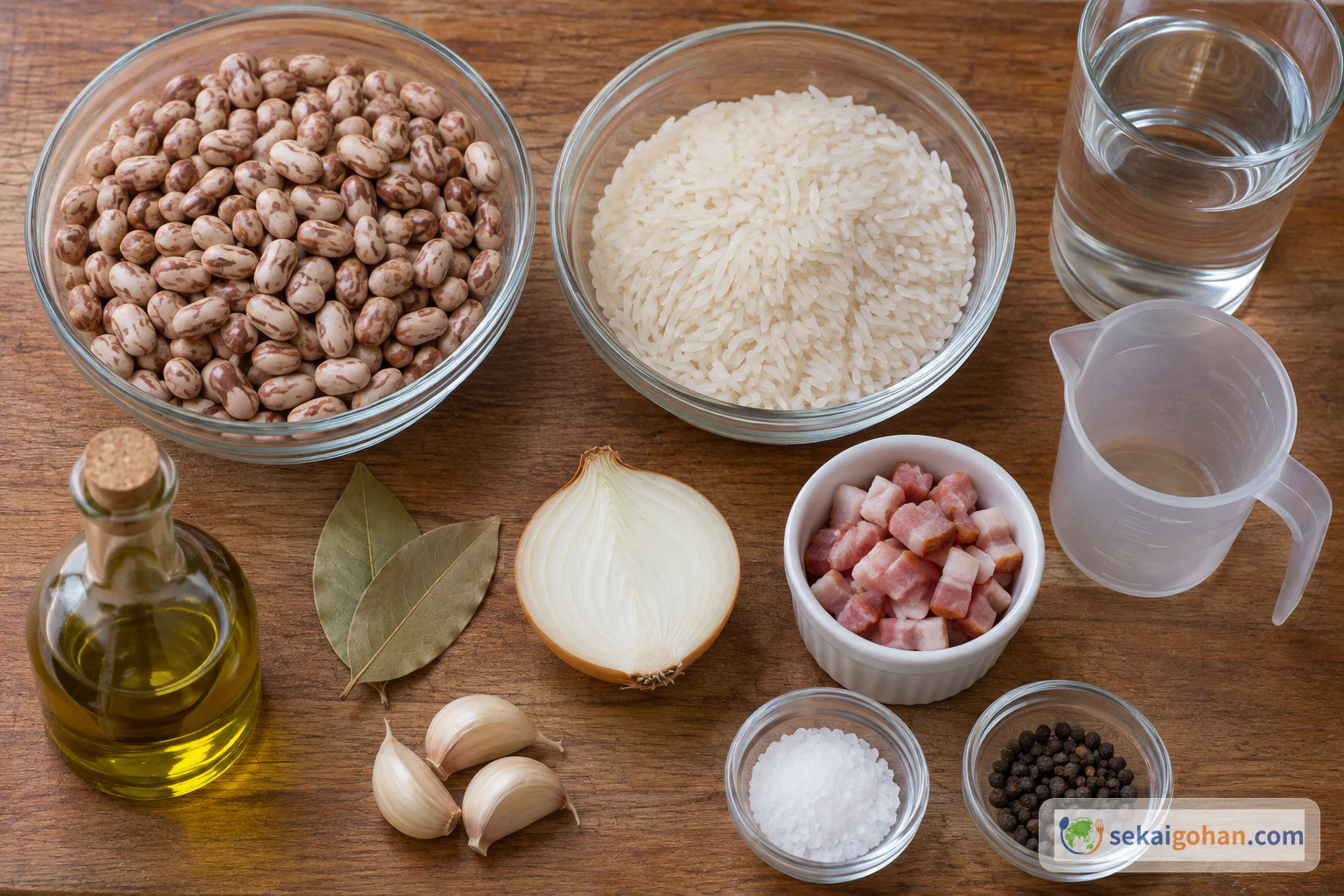
The rice works on a ratio, twice as much boiling water as rice, so the cup you use matters less than using that same cup for both. The bacon brings salt into the bean pot, which is why you taste the broth before the salt goes in.
Measure the rice and then the boiling water with the very same cup. Keeping the 1:2 ratio exact is what gives you loose, tender grains with no water left at the bottom.
Equipment
- Pressure cooker
- Large bowl and colander for soaking and draining the beans
- Frying pan
- Ladle and a fork or potato masher
- Saucepan with a lid for the rice
- Kettle for boiling water
- One measuring cup
- Wooden spoon
Choosing and Substituting
Outside Brazil, carioca beans turn up at Brazilian and Latin American grocers and online. Pinto beans are a close relative and the practical swap. Cook them exactly as below and judge doneness by touch.
| Ingredient | Where to get it or what to use | What it changes |
|---|---|---|
| Carioca beans | Brazilian grocer or online; pinto beans as the swap | Pinto beans give you a pot in the same family. Cook them until soft through. |
| Bay leaves | Dried bay from any supermarket | Same scent. Keep both leaves in. |
| Diced bacon | Any smoked bacon cut into small cubes | Smokier bacon gives a smokier broth and also adds salt. |
| Cheiro-verde | Scallion with parsley | A fresh green lift at the end |
| White rice | Washed white rice | With short-grain rice, use the amount of water you trust for it and keep the garlic, onion and oil start. |
The parts that make the pot taste Brazilian are the bay leaves in the beans, the browned bacon with garlic and onion, and the mashed-bean thickening. Keep those, and the specific bean or herb is the part you can let go of abroad.
Method
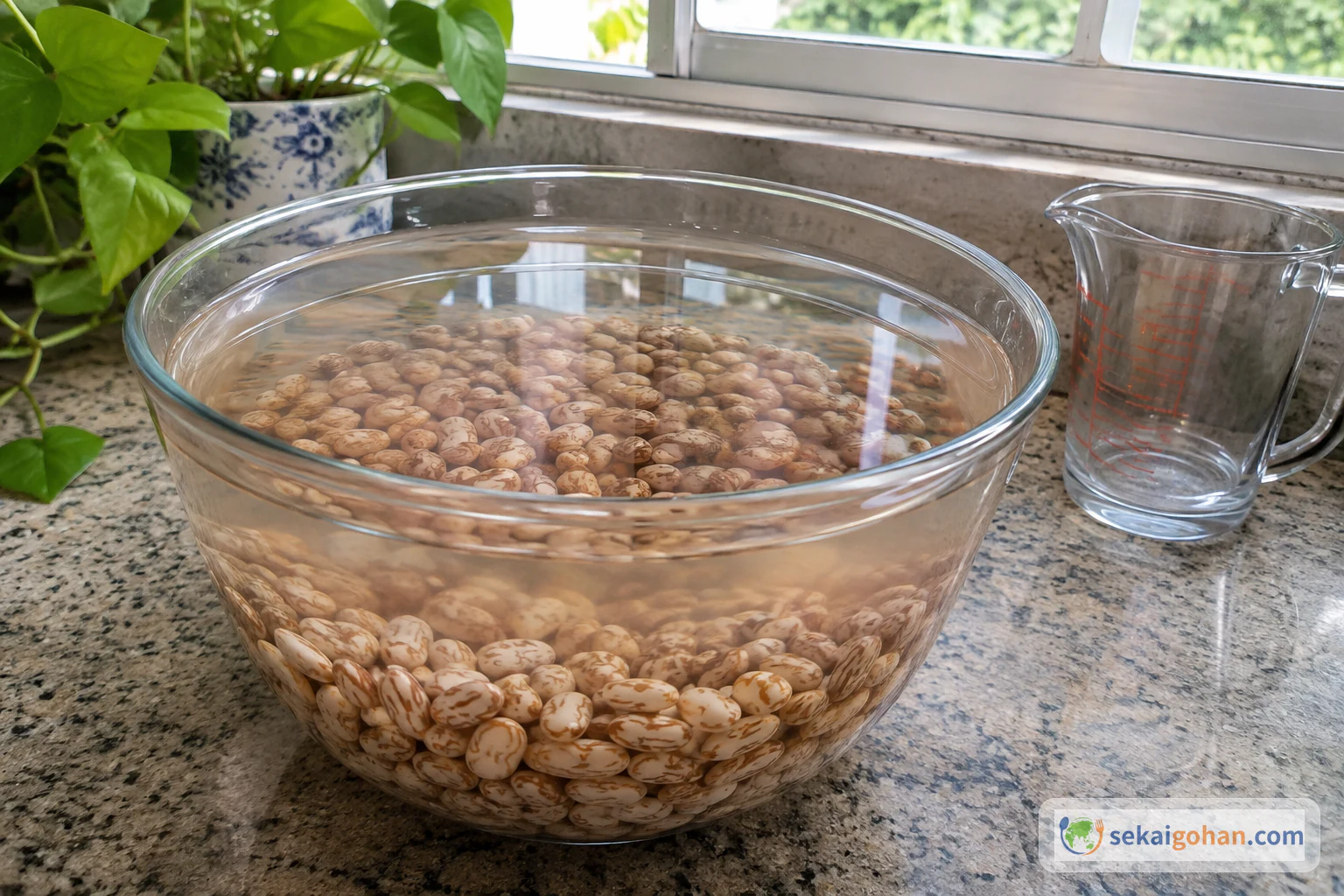
The beans come first. Soak them well ahead, since that is the long wait. The pressure cooker then needs time to release on its own, which gives you a pause to chop the onion and garlic. Once the beans are thickening uncovered, start the rice. Its 20-minute covered rest is the last hands-off stretch before you serve.
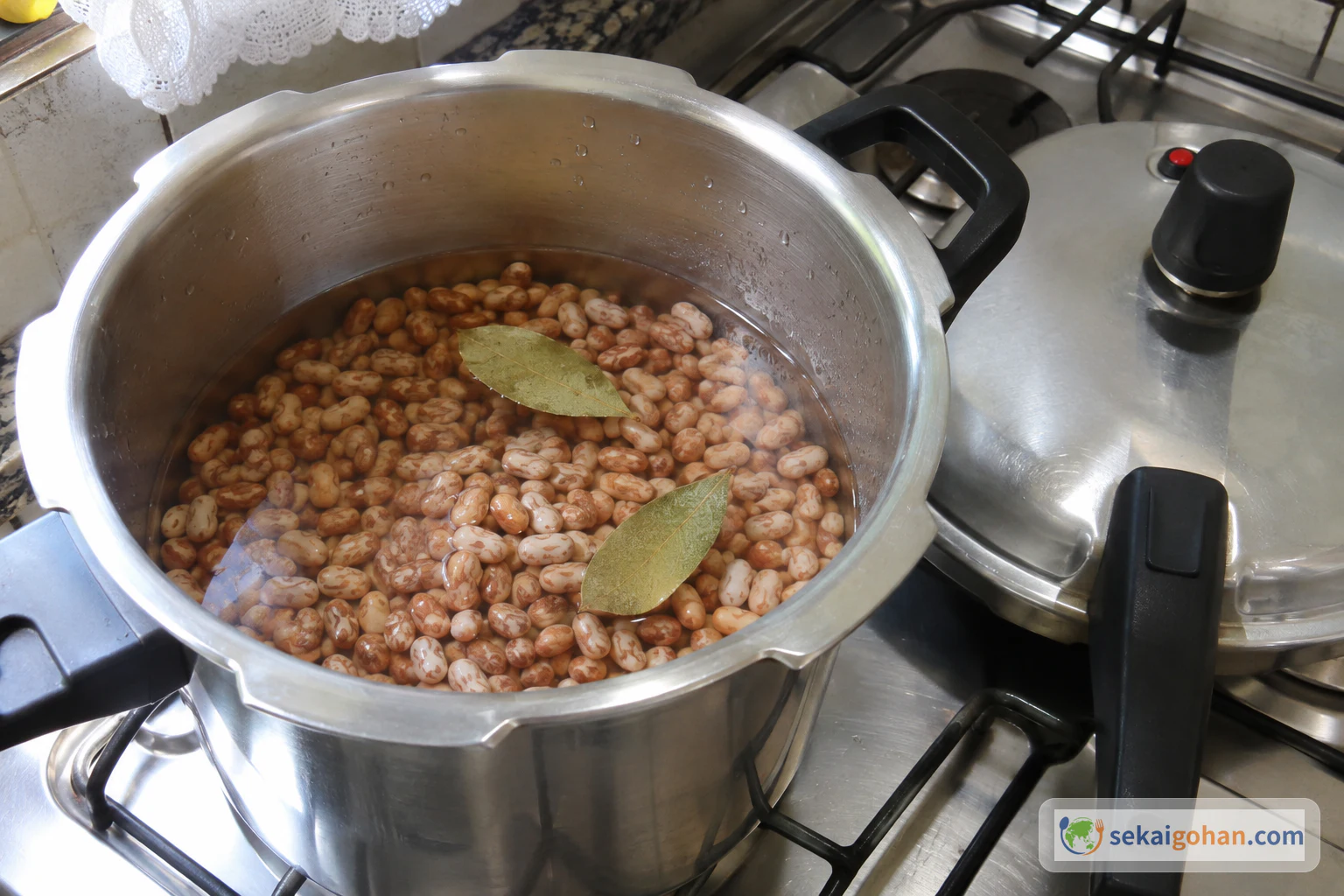
Fill and lock the cooker as its manual directs. When the cooking time is up, turn off the heat and let the pressure fall on its own. Open the lid only once the pressure has fully released, and tilt it away from you so the steam rises away from your face and hands. Never force a lid that resists.
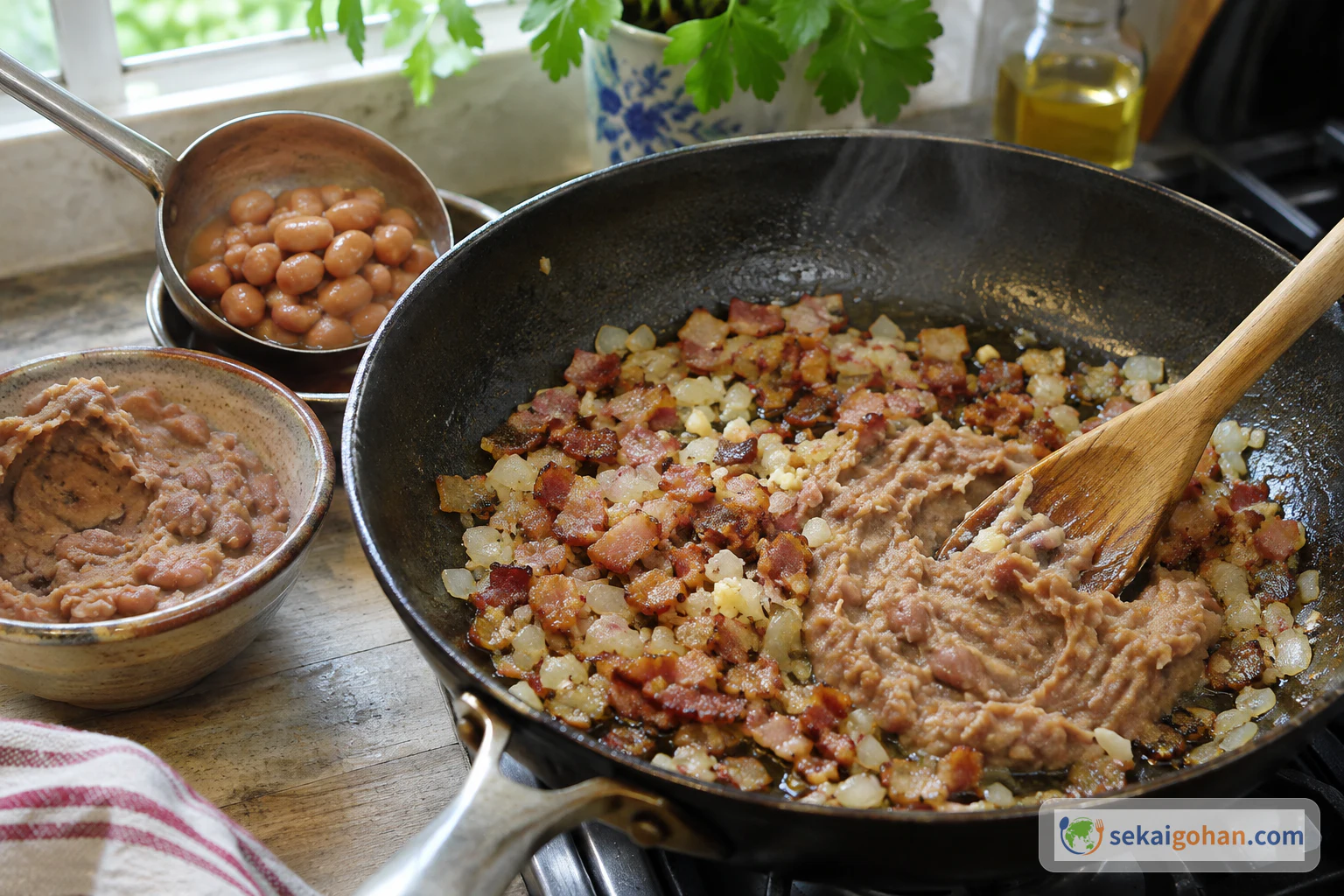
The mashed ladle of beans is what turns the broth creamy. Fry it with the bacon, onion and garlic so it carries their flavor back into the pot, then let the uncovered simmer do the rest.
Leave a gap while the rice simmers so steam can escape and the grains stay separate. Close the lid only when the water is nearly gone, so the rest steams the rice through.
When It Goes Wrong
| What you see | Why | What to do |
|---|---|---|
| Beans still firm at the center after pressure cooking | The soak was short or skipped | Lock the lid, bring the cooker back to pressure and cook again, then release naturally and test a bean. Next time soak for at least 4 hours. |
| Broth still thin after the simmer | The lid was on, or the mashed beans never went in | Keep the pot uncovered on low until it thickens. Mash a few more beans and stir them in. |
| Bean pot too salty | The bacon brought its own salt before the salt went in | Taste first, then salt, once the bacon sauté is in the pot. |
| Rice heavy and wet | The lid was closed while water was still boiling off | Keep the lid ajar during the simmer and cover only when the water is nearly gone. |
| Rice firm in the middle when served | The covered rest was cut short | Give it the full rest with the lid on before fluffing. |
| Pressure cooker lid will not open | Pressure is still inside | Wait for it to release on its own. Never force the lid. |
Serving and Variations
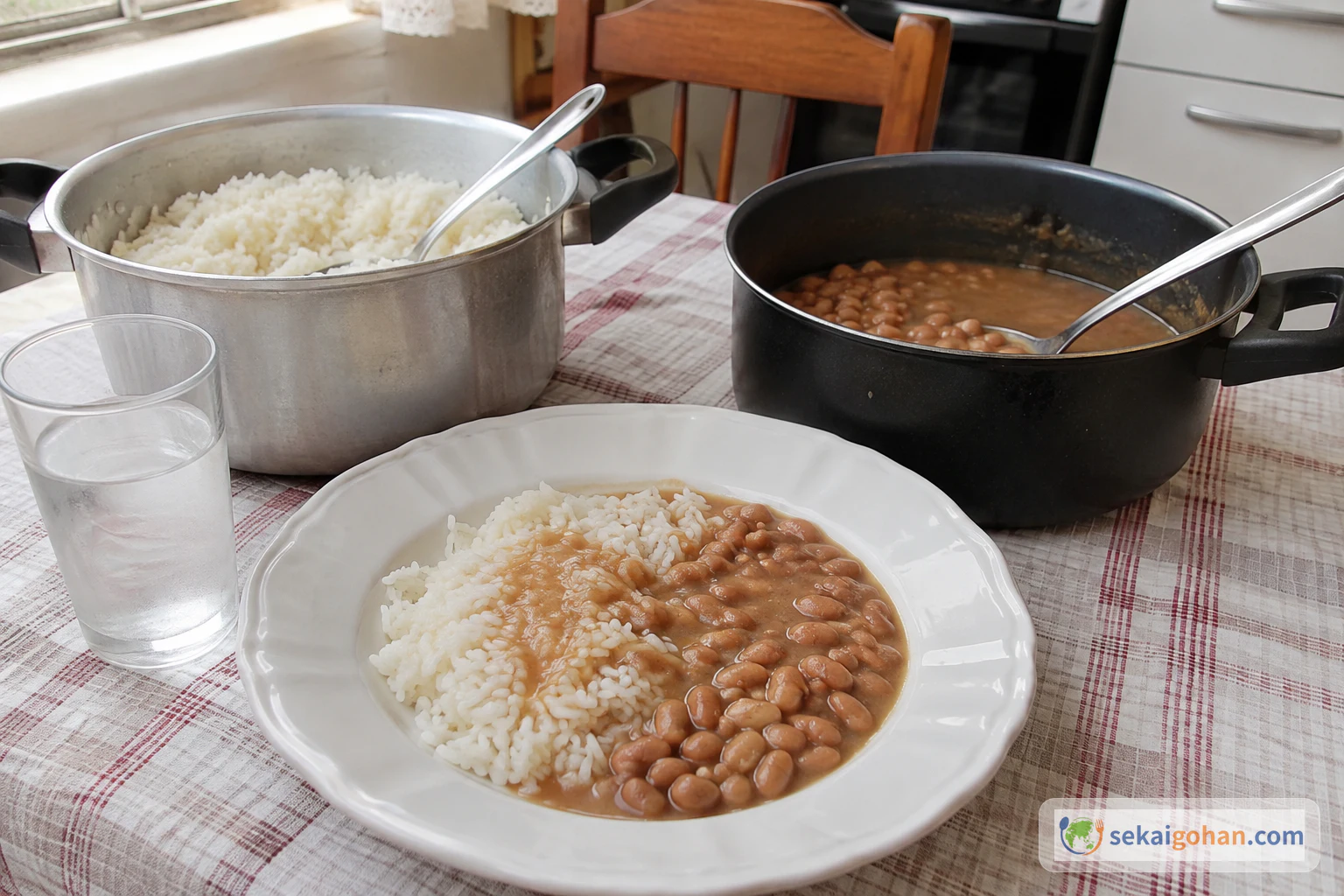
Bring both pots to the table with a serving spoon in each. Put a mound of rice on each plate, set the beans beside it, and spoon some broth over the rice so the grains drink it in. Serve it with a glass of water and eat it with a spoon or fork, mixing rice and beans together as you go.
Without bacon
Cook the onion and garlic in olive oil and fry the mashed beans in that. The pot loses its smoky fat and some of its depth and salt, and the bay leaves and garlic come forward. Season by taste, since the bacon's salt is no longer there.
With a green finish
Stir in a handful of cheiro-verde, or scallion and parsley, just before serving. The fresh herbs cut through the creamy broth and give each spoonful a brighter edge.
Frequently Asked Questions
Why do rice and beans go together so well nutritionally?
Rice brings mostly carbohydrate, and beans bring plant protein, fiber, iron and folate. The amino acids in the two complement each other, which is why the pair is valued as part of a varied diet. Anyone with diabetes, kidney disease or a similar condition should follow the advice of their own health professional.
Can I add sausage or a bouillon cube to the beans?
You can, but sausage and store-bought bouillon raise the salt and saturated fat in the pot, just as bacon does. If you add either, cut back on the salt and taste before seasoning.
Can I cook less rice, or more?
Yes. Keep the same ratio of twice as much boiling water as rice, measured in one cup. A single cup of rice takes 2 cups of boiling water, 1 garlic clove and a quarter of an onion, which feeds three.
What is cheiro-verde, and what can I use instead?
It is a bunch of fresh green herbs used to finish dishes. Abroad, scallion with parsley does the same job. Chop them and add them at the very end so they stay bright.